At Adobe, the AI era is a test of whether a company built on iconic creative tools can remake itself fast enough to remain indispensable without losing the professionals who made those tools matter.

Anil Chakravarthy is at the center of that effort. The former Informatica CEO now leads Adobe’s customer experience business as the company faces mounting pressure to stay ahead of the disruption bearing down on products such as Photoshop, Illustrator, and Acrobat. Such pressure has also shown up in Adobe’s stock. Despite record first-quarter fiscal 2026 revenue of $6.40 billion, its shares have fallen as investors worry that fast-moving AI agents and other new tools could weaken demand for parts of the traditional seat-based software model. 

The concern underlying both pressures is the same: Adobe has to keep pace with AI without undermining the trust of enterprise customers that depend on its software for critical business functions. Chakravarthy points to moments like the Super Bowl and the Olympics, when Adobe systems are expected to perform flawlessly under intense pressure. In those environments, he says the challenge is determining which parts of the company should move at AI speed and which must still move at the pace of customer trust.

“The fastest moving AI models and the AI companies, let’s say they’re moving at 100 miles an hour,” Chakravarthy says. “The customers are moving at 10 miles an hour.”

Caught between speed and trust

That gap leaves Adobe in a difficult position. If it moves too slowly, it risks looking dated in a market being reshaped by AI. If it moves too quickly, it risks weakening the reliability that large customers still pay for. Inside a company of more than 30,000 people, that split can create what seems like “whiplash,” as teams are pushed to move at AI speed without disrupting the software customers depend on.

“If we just move only at their speed, then we’re going to be slow, and we’re not going to be their trusted partner three years from now,” Chakravarthy says. “If we move completely at 100 miles an hour, like the AI is moving and break everything, including the software that currently works for them today, well, we won’t be their trusted partner three years from now either.”

That tension has grown more significant since Adobe said last month that longtime CEO Shantanu Narayen will step down once a successor is found. The transition has focused internal attention on whether the company’s future depends more on preserving its creative DNA or on doubling down on the enterprise discipline required to navigate the AI shift.

Either way, the stakes are rising as Adobe tries to satisfy enterprise customers, reassure investors, and hold on to a creative community wary that the company is prioritizing scale and efficiency over craft.

A company moving at two speeds

Chakravarthy sees the current moment as a genuine platform shift, on the scale of the move from mainframes to client-server computing, then to the internet, and now to mobile. But this transition poses a more destabilizing question for incumbents. The issue is no longer whether software includes AI. The question is whether conventional SaaS products will still feel current a few years from now.

For Adobe, that implies something larger than a product refresh. The company built its empire on powerful tools that users controlled directly. The model now taking shape gives software a more active role within the workflow itself, carrying out tasks and advancing work rather than waiting for instructions at every step.

Already, AI has lowered the barrier to producing content. Users can generate images, videos, copy, and campaigns with a growing number of tools with startling ease. As that capability becomes commonplace, the question shifts from who can produce content fastest to why anyone still needs an expensive, sophisticated software stack at all.

Chakravarthy’s answer rests on the distinction between generation and execution. Producing content is becoming easier, he acknowledges. Turning that draft into something a company can actually use, trust, govern, and recognize as its own is harder. That is where Adobe is trying to place its value.

“The more ubiquitous base capabilities become, the harder it actually becomes to differentiate and stand out,” Chakravarthy says. “And that’s where we believe we will continue to have a very vital role to play.”

The fight over what still matters

In that view, AI does not eliminate the need for software so much as shift its value toward brand consistency, workflow integration, enterprise controls, and creative distinctiveness. In a market crowded with capable models and fast-moving startups, the stronger position may lie in helping customers personalize content at scale without sacrificing quality. Chakravarthy argues that this is a more durable place for an enterprise company to compete than simply producing the cheapest image or fastest draft.

That logic may make sense in the boardroom. It is less reassuring to many of Adobe’s core creative users, who worry that in trying to serve everyone, Adobe could weaken the depth and control that made its tools indispensable in the first place. Creatives have been blunt about Firefly, Adobe’s generative AI system for creating and editing images and other content built into its products. Some question how the models were trained, whether copyrighted work was used, and whether tools like this will reduce the value of human creative labor.

That tension runs through the company’s public posture on AI. Adobe wants to present its new tools as accelerants for creativity rather than replacements for it. It wants to promise greater speed without implying that skill matters less, and it wants to reach a broader user base without signaling to core professionals that AI will devalue their work. Those are difficult positions to hold at once, especially as AI economics push software companies toward automation and volume.

Still, Chakravarthy’s bet is that originality, identity, and taste matter more when everyone can make content quickly and cheaply. In that world, Adobe does not need to win by being the only company that can generate content. It needs to win by helping customers turn generated material into work that feels unmistakably their own.

This story was originally featured on Fortune.com

Boards across major public companies are replacing CEOs at the fastest pace in more than a decade — often elevating first-time leaders and insiders who must quickly prove they can adapt their organizations to an AI-centric future. AI adoption is accelerating across every business function. And quietly, almost invisibly, companies are losing the one thing that makes both of those forces navigable: institutional memory.

It’s been estimated that the cost of “corporate amnesia” — or inefficient knowledge sharing — can top tens of millions annually. Yet almost no one in the boardroom is talking about it.

AI may transform how organizations operate, but without a record of how they have made decisions, navigated crises, and earned trust over time, even the most sophisticated systems risk becoming disconnected from the experience that makes intelligence meaningful.

When CEOs Leave, the Lessons Leave With Them 

Leadership transitions are a natural part of organizational life. Boards often seek new leadership when markets shift or strategies change, and today’s environment — defined by technological disruption, geopolitical instability, and rapidly evolving consumer expectations — has only accelerated that cycle. Consider Boeing, Nike, and Stellantis: each navigated a recent CEO transition while simultaneously managing deep operational or reputational crises that demanded intimate knowledge of how the organization had failed and recovered before.

When CEOs depart, they rarely leave alone. Senior teams move on, long-tenured executives retire, and the institutional knowledge those leaders carry quietly disappears.

A company’s most valuable knowledge is often embedded in years or decades of decisions, pivots, failures, and breakthroughs. It lives in boardroom debates, cultural inflection points, product launches, regulatory battles, and moments when leaders had to choose between competing priorities under pressure. Without deliberate efforts to capture and preserve that experience, succession planning becomes little more than a leadership handoff — not a transfer of organizational knowledge.

Your AI Is Only as Smart as Your History 

This matters even more in the age of AI. As companies adopt generative AI and agentic systems, many assume that access to powerful models will create an advantage. In reality, the opposite may be true. If every company has access to similar AI systems, competitive differentiation may increasingly depend on the quality of the context from which those systems draw.

That context comes from experience — which, over time, becomes institutional memory: the accumulated record of how an organization has navigated complexity, balanced risk and opportunity, responded to crises, and built relationships with its stakeholders. Without that, intelligence — human or artificial — becomes generic.

Large language models can generate remarkably fluent answers, but without being grounded in a company’s specific history, decisions, and operating norms, those outputs often feel shallow or disconnected from reality. They can produce information. They cannot produce insight.

Just as the digital era required investment in data infrastructure, the age of AI will require infrastructure that preserves and activates institutional memory — including historical records, internal documentation, oral histories, and digital knowledge systems that allow organizations to learn from their own experiences. Increasingly, these systems will also inform AI tools themselves, grounding machine-generated insights in an enterprise’s real history rather than generic training data.

How Booz Allen Turned 110 Years Into a Strategic Edge 

When Booz Allen turned 110, CEO Horacio Rozanski didn’t just commission a retrospective. Through executive interviews, storytelling initiatives, and a digital archives platform, the company captured pivotal moments across its history — advising the U.S. Navy before World War II, supporting NASA during the space race — and connected those stories to its current identity as a technology and analytics leader. The effort wasn’t nostalgic. It was operational. 

The Archive Isn’t Missing — It’s Just Scattered 

The deeper problem isn’t preserving the memories of departing executives. It’s preserving the accumulated experience of the institution itself. It is preserving the accumulated experience of the institution itself. That experience, often built over decades, lives in strategy documents, research reports, correspondence, internal publications, photographs, and other records that explain how the organization became what it is.

In many companies, this material is scattered across fragmented digital systems or buried in analog archives that have never been systematically organized. In the age of AI, that presents a strategic vulnerability. AI learns from data. If the knowledge that defines an organization’s experience is inaccessible or lost entirely, those systems will produce incomplete, generic intelligence. The question for leaders is no longer simply whether they will adopt AI — it’s whether they will deploy it in a way that reflects their organization’s hard-won experience.

Target illustrates what’s at stake. The company faces a leadership transition amid declining sales, brand confusion, and growing political pressure. Analysts argue that it has drifted from the distinctive identity that once set it apart — its design-driven merchandising, curated product mix, and cultural positioning that inspired shoppers to jokingly pronounce the brand’s name like a French boutique. What’s less discussed is whether any of that accumulated brand intelligence — the decisions, trade-offs, and creative instincts that built “Tar-zhay” — was ever formally captured. Or whether it simply walked out the door with the leaders who built it.

The challenge for an incoming CEO is not just operational — it is interpretive. Which aspects of the organization’s identity should be preserved? Which strategies have worked historically? Which lessons from past crises still matter?

Before your company deploys its next AI system, ask this: What does that system actually know about how your organization makes decisions? If the answer is “not much,” you haven’t built an intelligent enterprise. You’ve built a very fast amnesiac.

The opinions expressed in Fortune.com commentary pieces are solely the views of their authors and do not necessarily reflect the opinions and beliefs of Fortune.

This story was originally featured on Fortune.com

Jessica Mathews here, filling in for Allie to give you a quick update on some recent reporting that looks at the pushback that Elon Musk’s companies are getting around the country.

Last week, I wrote about the lawsuit that Baltimore’s mayor and city council had filed against xAI, Elon Musk’s artificial intelligence company. The lawsuit accuses Grok of exposing residents to the risk that any photograph they uploaded—of themselves or of their children—could be ingested by Grok and transformed into sexually degrading deepfakes without their knowledge or consent.

Not long after that lawsuit was filed, the Baltimore Ravens’ football team announced it was walking away from a tunnel proposal it had pitched to Boring Company, for a free tunnel project around its Ravens stadium. And the Baltimore Mayor, a Democrat, said publicly that he wouldn’t have approved it anyway.

The sentiment shift in Baltimore, in particular, was notable, as the city had a decade ago welcomed Elon Musk’s business with open arms.

Here’s more, from the story:

Maryland and Baltimore have historically welcomed Musk’s companies through incentives and partnerships. Former Maryland Governor Larry Hogan, a Republican, was one of the first politicians to publicly get behind a major Boring Company project in 2017, when Boring Company announced it planned to build a high-speed tunnel for autonomous vehicles between Baltimore and Washington, D.C. The Maryland Department of Transportation sponsored the project, and Baltimore’s then-Mayor, a Democrat, had said the project would have “tremendous potential.” 

That posture has shifted since Musk donated $300 million to President Trump’s campaign and took a hands-on role in government through DOGE. Governor Wes Moore, a Democrat, was an early critic of Musk’s work at DOGE, characterizing the firing of thousands of federal workers in 2025 as “arbitrary” and “draconian” during a working session in March 2025 and saying it was cruel. Boring Company president Steve Davis, one of Musk’s longtime trusted fixers, helped Musk run the government department. 

Meanwhile, in Las Vegas—where Boring has had repeated safety and environmental problems—two legislators recently sent a demand letter to Nevada Governor Joe Lombardo, requesting he address “structural failures” in the state’s oversight of Elon Musk’s tunneling startup, which has been digging tunnels below Las Vegas. The two state legislators, Assemblymember Howard Watts and Senator Rochelle Nguyen, sent a letter to the Governor, describing “significant concerns about record integrity, administrative accountability, and structural failures” in Nevada’s workplace safety system and saying that they “require clear action from the Executive Branch.” 

The pushback is largely coming from Democrats and illustrates the challenges Musk’s collection of companies are receiving as the famously impulsive and truculent multi-billionaire has turned himself into a political lightning rod.

See you tomorrow,

Jessica Mathews
X: 
@jessicakmathews
Email: jessica.mathews@fortune.com

Submit a deal for the Term Sheet newsletter here.

Joey Abrams curated the deals section of today’s newsletter. Subscribe here.

This story was originally featured on Fortune.com

Good morning. A new report from TD Bank U.S. finds that employees are embracing AI as a productivity tool, but they’re not ready to hand over decision-making authority.

According to TD’s second annual AI Insights Report, released on Tuesday, 83% of employed respondents said they now use AI-powered tools at work, up 20 percentage points from last year. Adoption rose across both employer-provided tools, rising to 75% from 63%, and independently accessed tools, which climbed to 78% from 66%. Respondents who use AI say it helps them work faster, generate ideas more easily, and make decisions more efficiently. Notably, 71% say AI gives them a competitive edge over peers in similar roles.

For CFOs, the signal isn’t just growing adoption. It’s a broader shift in workforce mindset: AI is increasingly being viewed less as a job threat and more as a performance lever. That has meaningful implications for how finance leaders position AI investments and workforce enablement internally.

The report also offers insight into how AI is reshaping expectations in financial services. Just over half of respondents, 55%, say they use AI to help manage their finances, up sharply from just 10% a year ago. TD’s findings are based on a nationwide survey of more than 2,500 consumers.

Even so, surveyed employees draw a clear line around decision rights. Most prefer AI to surface insights and recommendations while humans retain final authority, mirroring broader consumer sentiment around financial services. Just 18% say they would trust AI to make financial recommendations entirely on its own. Comfort was highest when AI supported behind-the-scenes functions such as product or service recommendations, fraud detection, tracking spending, and calculating credit scores.

“Consumers see real value in AI when it simplifies their experience, without losing the human touch,” according to Jo Jagadish, head of digital banking, payments and contact centers at TD Bank U.S.

Trust, however, is gradually building. Sixty-two percent of respondents say they trust AI to provide honest, reliable, and competent information, up from roughly half last year. TD Bank is also investing accordingly: The bank has roughly 2,500 employees working on AI development and has partnered with Columbia University to provide executive AI training for senior leaders.

Sheryl Estrada
sheryl.estrada@fortune.com

This story was originally featured on Fortune.com

  • The late billionaire Steve Jobs is known for being cofounder and CEO of Apple—and introducing the iPhone, iPad, and iMac to the world. However, his time at the computer company that turns 50 years old on Wednesday wasn’t what helped strike gold for his net worth. Jobs actually made the billions in 1995—three years before the iMac hit shelves—after using an unexpected career roadblock to his advantage, with a little help from Tom Hanks and Tim Allen.

“To infinity and beyond!” wasn’t just the catchphrase of Toy Story’s Buzz Lightyear—it was the turning point that turned Steve Jobs into a billionaire.

After a power struggle that forced Jobs out of Apple in 1985, Jobs bought Lucasfilm’s computer graphics division the next year for $10 million. The seller was George Lucas, fresh off creating the Star Wars empire. That small acquisition would soon be renamed Pixar—and would change both Hollywood and Jobs’ fortune forever.

The company got off to a rocky start, with Jobs questioning whether to sell it multiple times, thanks in part to having to personally cover its monthly cash shortfall. But by 1995, Jobs believed Pixar was ready for primetime. In a week’s span in November, it would release its first major film, Toy Story, as well as launch an IPO.

Lawrence Levy, the company’s then-CFO, wrote that it reminded him of the 100-meter sprint in the Olympic Games: a lifetime of training that comes down to a snapshot performance.

“If the world fell in love with Toy Story, Pixar would have a chance to usher in a new era of animated entertainment,” he said in his book, To Pixar and Beyond: My Unlikely Journey With Steve Jobs to Make Entertainment History.

“If it didn’t, Pixar might be written off as another company that tried but never quite hit the mark.”

The IPO that made Jobs a billionaire

As the 80% owner of Pixar, the IPO stakes were even higher for Jobs. If everything went well, he was hoping to finally see some return on his Pixar investment. If everything went south, it might have shut the door on any future collaboration with Disney and led to the waste of a decade of his entrepreneurial life.

Luckily, all expectations were shattered. Pixar’s initial stock price was predicted to reach between $12 and $14, but at the end of the first day of trading, it was worth 175% more, at $39 a share. This was thanks largely to Toy Story, with Tom Hanks and Tim Allen as lead voices, nearly doubling its box office expectations. Jobs’ stake sent his net worth soaring to over $1 billion.

Jobs would later rejoin Apple in 1997, but he remained involved in Pixar as it churned out hit after hit, including Finding Nemo, The Incredibles, and Ratatouille—each bringing in hundreds of millions of dollars worldwide. Disney fully acquired Pixar for about $7.4 billion in stock in 2006. Jobs’ stake was worth about $4.6 billion.

While Jobs is by all means known most for his role at Apple—the tech giant that turns 50 years old on Wednesday—his willingness to follow his instincts with Pixar proves the age-old advice that one key to success is finding your passion—and putting all of your energy into it.

“No matter what you do next, the world needs your energy, your passion, your impatience with progress,” Apple CEO Tim Cook said in 2015. “History rarely yields to one person, but think and never forget what happens when it does.”

Finding fortune beyond their main companies

Jobs isn’t alone in being a business leader who gained significant wealth outside of what they’re primarily known for. Elon Musk has a similar story. 

While the world’s richest person is known today for being the leader of Tesla and SpaceX, that’s not how he first amassed his fortune. Musk sold his first company, Zip2, to AltaVista for more than $300 million. He also made millions through the creation of PayPal, which formed from a merger of Musk’s online financial services company, X.com, with software company Confinity, cofounded by billionaire Peter Thiel.

Similarly, billionaire Richard Branson did not make all his money from being focused on his air and space companies, Virgin Atlantic and Virgin Galactic. The 75-year-old British serial entrepreneur actually became a billionaire in part thanks to his chain of record stores called Virgin Records. It launched in 1971 and later expanded into a music label that featured artists like the Rolling Stones and Janet Jackson. Branson later sold Virgin Records in 1992 to British conglomerate Thorn EMI for $1 billion.

A version of this story originally published on Fortune.com on August 21, 2025.

More on wealth and leadership:

This story was originally featured on Fortune.com

Skoda, Urquell Pilsner and Václav Havel. The number of global brands associated with the Czech Republic are few. When Mark Carney, the Canadian Prime Minister, paid homage to Havel, the first democratically elected president of what was then Czechoslovakia, in a speech he made at Davos this year, many turned to Google to refresh their memories. Now, a new player may be added to the list. 

Karel Komárek is a Czech billionaire who started buying stakes in country lotteries in 2011. The Czech Republic’s Sazka was the first, Greek gaming firm OPAP was the second. Renamed Allwyn, the company now also owns lotteries and gaming companies in the U.K., Italy, Austria, and the states of Michigan and Illinois. Its most recent acquisition was PrizePicks, the American fantasy sports operator. 

Komárek is a rare breed. The owner of a Europe-based business (Allwyn’s headquarters are now in Lucerne, Switzerland) which has become a top-two operator in its field globally. In 2024, revenues topped $10bn. A year later, Allwyn’s valuation touched $18.6bn. Only the Irish-American gambling business, Flutter, is bigger. 

Last month, Allwyn was listed on the Athens stock exchange. Now its leaders are eyeing the London and New York exchanges as potential secondary homes. 

€8.9 billion

Total revenue 2025

€509 million

Total profit 2025

Source: Allwyn International Q4 2025 preliminary results

“We are definitely a story of inspiration for many Czech companies to show them it’s possible to grow internationally,” Robert Chvátal, Allwyn CEO, tells me. “Actually, it’s not just possible. It’s mandatory.” 

Swaddled in regulations and operating codes, national lotteries operate a little like utilities companies do—offering stable returns over long contract periods. Add in racier gaming and gambling interests too, and Chvátal argues, you have an attractive mix. 

“Lotteries are great,” he says. “They have scale. But they are fairly mature businesses. It’s a good start. It’s a good base. But if you want to grow further, and if you say ‘We will be listed’, shareholders or investors will ask if there is a growth story. Or is it just a stable, almost utility-like, type of profile, which is more of a yield type of stock?” 

“I say we are actually a combo of both. We are a solid yield—if you take the current stock price to the communicated dividend, it’s a 6% yield, not too bad in euro terms—but, at the same time, because of the product diversification and because of the geographical diversification, we are also a growth story.” 

“We are definitely a story of inspiration for many Czech companies to show them it’s possible to grow internationally.”

Robert Chvátal, CEO, Allwyn

With the conflict in the Gulf cratering equity markets around the world and fears that investment overstretch could bring the technology hyperscalers to heel, uncomplicated bread-and-butter businesses like lotteries are a flight-to-safety option. 

Whatever the level of geopolitical volatility, millions of people like to buy a chance to win big at astonishingly long odds. When Communist Czechoslovakia banned most lotteries and closed the state-run sports gambling company, Staska, in 1953, illegal gambling flourished. Sazka was launched three years later and a state lottery started in 1957. Even the Soviets couldn’t control the urge for a flutter. 

Read more: Rishi Sunak is giving advice to CEOs on AI. Here are his golden rules

Jokes about Eastern European business standards are now a distant memory (“How do you double the value of a Skoda? Fill it with petrol” has a moldy feel, now that Skoda is owned by VW).  

“What resonates with us, if you recall Mark Carney’s speech, is his reference to the ‘middle powers’,” Chvátal says. “He actually quoted our first president, Václav Havel, and his essay The Power of the Powerless. The middle powers could become relevant.” In its chosen field, Allwyn is more than a middle power. And for Europe, that is too rare an occurrence. 

This story was originally featured on Fortune.com

If it weren’t for a Volkswagen bus and a calculator, Apple might never have existed.

Five decades ago, the late cofounder Steve Jobs was in his early twenties and strapped for cash, but hooked on the idea that everyone should be able to own a home computer. The only problem? Like many founders, he didn’t have enough money to bring his vision to life.

So Jobs sold off his Volkswagen bus while fellow cofounder Steve Wozniak got money for his programmable calculator, raising $1,300 to pay for the prototype’s parts. The first Apple computer, the Apple I, was born on April Fools’ Day, 1976; on Wednesday, the $3.7 trillion business celebrates its 50th birthday.

And the sacrifice paid off. A local computer dealer placed a $50,000 order for 100 units soon after it launched, with the product mainly bought up by hobby enthusiasts. But it made the entrepreneurial duo enough money to create Apple II for the mass market—the first personal computer to include a keyboard and color graphics. A year after its 1977 debut, it made nearly $3 million. 

“I was worth about over $1 million when I was 23, and over $10 million when I was 24, and over $100 million when I was 25,” Jobs told PBS in 1996. “And it wasn’t that important, because I never did it for the money.”

The days of selling their belongings to fund their fledgling business were long behind them.

From college dropout to $10.2 billion net worth: Jobs’ path to Apple success

Jobs didn’t discover his passion for technology in a college class; at the age 12, the entrepreneur had already found his true calling, and took a massive leap of faith to pursue his dreams. 

A young Jobs thumbed through the yellow pages, and hunted down the phone number of Hewlett-Packard cofounder Bill Hewlett, ringing him up for a favor. At the time, the tween was in need of spare parts to build a frequency counter. But what he received was far better than some nuts and bolts; Hewlett offered Jobs an internship at the iconic $17.4 billion tech company, where he serendipitously met a talented engineer: Wozniak. 

Together, the pair started their first business, illegally selling “blue boxes” that allowed users to make free, long-distance telephone calls. Jobs reminisced about those years in the early 1970s as a “magical” time in his life that sent him on the path to soon create Apple. 

“Experiences like that taught us the power of ideas,” Jobs said in the 1998 documentary Silicon Valley: A 100-Year Renaissance. “If we hadn’t…made blue boxes, there would have been no Apple.”

Jobs later enrolled at Reed College in Portland, Ore., but his days of higher education were short-lived. He dropped out after just one semester, inevitably working for legendary brand Atari as a technician and games designer at just 18 years old. That would be the last time Jobs worked under somebody else; just two years later, Apple I hit the market, and Jobs was well on his way to becoming one of the most visionary tech pioneers in modern history. 

Fast-forward five decades later, and Apple is the second most valuable company in the world. The business sits in fourth place on the Fortune 500, having sold more than 3 billion iPhones, and boasting more than 100 million Mac users globally. 

At the time of his passing in 2011, Jobs was estimated to be worth $10.2 billion. Although he had enough money to buy a whole fleet of luxury cars shortly after founding Apple, selling his Volkswagen proved to be a critical sacrifice in making it to the top.

A version of this story was published on Fortune.com on December 19, 2025.

This story was originally featured on Fortune.com

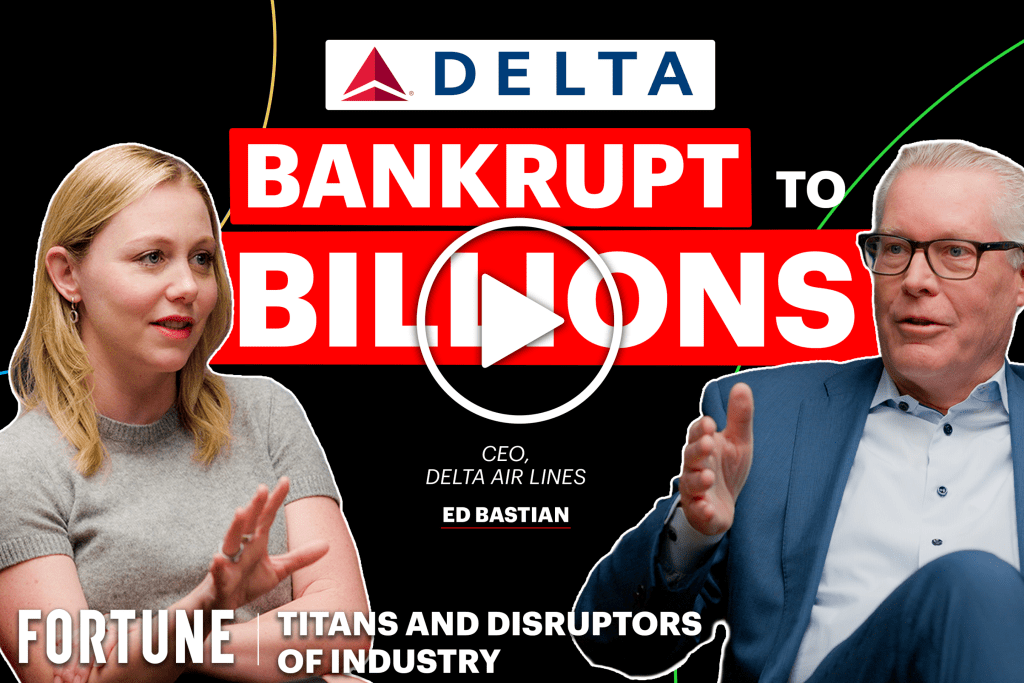
  • In today’s CEO Daily: Fortune Editor-in-Chief Alyson Shontell sits down with Delta CEO Ed Bastian.
  • The big leadership story: Fortune ranks the 100 Best Companies to Work For.
  • The markets: A global rally is underway as Trump says the Iran war will end within weeks.
  • Plus: All the news and watercooler chat from Fortune.

Good morning. Ed Bastian has been the CEO of Delta Air Lines for a decade and an executive at the company for almost 30 years. As CFO and president, Bastian led the airline through a significant turnaround that began with filing for bankruptcy in 2008. It all paid off: Today, Delta is the most profitable airline in America.

Delta enjoys this title despite the fact that it gives away a chunk of profits to its 100,000 employees every year—and thanks in part to a long-term partnership with American Express, which Bastian has nurtured to be extremely lucrative. Delta-Amex cards are now responsible for over 10% of Delta’s total revenue.

I flew to Delta’s headquarters in Atlanta to interview Bastian for the Fortune 500: Titans and Disruptors of Industry podcast, and we sat among historic planes in the airline’s corporate museum hangar and talked for nearly an hour about his leadership playbook. When we spoke about his turnaround strategy, Bastian cited two other micro-turnarounds that reoriented the company: a brand overhaul and the rebuilding of team culture:

Creating a brand instead of a commodity. Two decades ago, “When you asked people why they chose an airline for their specific flight, 80% of the time it would be whoever had the lowest price,” Bastian told me. “Today, if you ask people why they choose Delta, 80% would say [it’s] because it’s Delta, because of the experience, the brand; 20% is the other stuff. So just a total flip. And so that was the most important thing, getting paid for the great service that our people do.” 

Giving Delta’s people a reason to believe and the responsibility to make it work. “You have to let your people know that you’re supporting them and putting them out front, rather than the management being out front,” Bastian said. “We’re not obsessing on customers, per se, at the leadership levels, because we want to obsess over our own people, so that they can obsess over you as a customer. When your people know that you’ve got their back, amazing things can happen. That had been lost, and bringing that back, and getting their confidence and trust back, was really key.”

Given that latter point, it’s no surprise that Delta is in the top 10 of the newest edition of the Fortune 100 Best Companies to Work For. You can find that list here

For more on how Bastian leads, where he sees the airline industry heading, and why AI won’t knock him off his people-first approach at Delta, listen to our full interview here.—Alyson Shontell

Contact CEO Daily via Diane Brady at diane.brady@fortune.com

This story was originally featured on Fortune.com
Two competing forces are currently shaping the work of people leaders at many major businesses. On the one hand, geopolitical uncertainty and economic volatility are leading to a tightening of purse strings, making it harder to retain and attract top talent. At the same time, the requirements of the modern workplace mean that there has never been such a need for workers with the right skills and attitudes to innovate and embrace the potential of AI and other cutting-edge technologies.  

To address this, we convened a panel of experts to glean their insights on the challenges facing CHROs in 2026 and the practical solutions that can help.  

The Problem: Siloed, Opaque Workforce Decisions  

One of the biggest challenges for people professionals, and one area where the savvy use of technology can really help, is decision-making. Workforce decisions are rarely broken because of poor policy, says Maria Colacurcio, CEO of Syndio, a pay equity software platform. Instead, they often break down in the execution. 

“What happens is, once those policies are set, they go out into the wild,” she says. This could mean that a recruiter needs to close a deal by Friday to get a candidate in or a retention bump gets approved because a specific manager makes a really good case for it. “These decisions happen in massive silos, so, in spite of really good intentions, there are unintended consequences when you can’t see all of these decisions together.” 

This means that it is no longer enough to simply formulate excellent policies once a year and let them go, says Sara Morales, senior vice president for People and Communities at Cisco. “Now, with the pace of change, we need to be proactive and reactive. Culturally, what we’re seeing is an evolution of highly structured teams’ organizational decision-making to much more dynamic and fluid ways of making decisions at speed.” 

Read more: The unspoken rule: is English really the key to success in Europe’s boardrooms?

Dr. Laura Weis, global Human-AI strategy lead at WPP, agrees. “Ways of working are fundamentally changing and you only get value from technologies like AI if we’re moving away from this siloed, waterfall, process-heavy way of working towards something more integrated and cross-functional.” At WPP, this means moving more of the HR function into cross-functional product squads which work together to shape work design.  

Practical takeaway: Break down decision silos by mapping where key workforce decisions (hiring, promotion, pay, performance) are made and introducing shared governance or checkpoints across functions. Move from isolated decisions to connected workflows—ensuring HR, finance, and business leaders are working from the same data and principles. 

The Pressure: Why This Is Reaching a Breaking Point 

This particular challenge is coming to a boiling point due to a confluence of factors. Regulation, AI adoption and workforce expectations are all accelerating simultaneously and this is fundamentally changing the role of people leaders.  

“Culturally, what we’re seeing is an evolution of highly structured teams’ organizational decision-making to much more dynamic and fluid ways of making decisions at speed.” 

Sara Morales, senior vice president for People and Communities, Cisco

“There are 657 things that leaders are trying to work through every day—maybe even every hour,” says Morales. “To move through that with clarity, leaders need to establish what are the few most important things to focus on.” 

One such important thing, for European Leaders, is the EU Pay Transparency Directive, the measures of which member states must have implemented by June this year. The result of this, says Colacurcio, is a greater need for explainability. “All of your folks now have access to so much more information,” she says. “They’re going to be showing up in a way that requires your people leaders on the front line of these difficult conversations about pay to be able to explain things.”  

Practical takeaway: Shift from annual planning cycles to more frequent, cross-functional workforce reviews, and equip frontline leaders with clear frameworks for explaining decisions—especially around pay, progression, and performance. Prioritization is critical: define the few decisions that matter most and ensure consistency in how they are made and communicated. 

The Misstep: A Fixation on Outcomes, Not Decisions 

One of the tools leaders will reach for when it comes to workforce issues is AI but many fall into the trap of thinking that simply implementing the technology will be enough to solve the problems. Not so, says Weis. 

“It leads to a lot of frustration because people feel like they should generate huge value with these tools,” she says. “But the way we have designed work is totally not suitable for the way of working that needs to happen in order to unlock value with AI.” 

Read more: Fortune on the ground at Mobile World Congress

Weis explains that too many companies are seeing the productivity and efficiency gains AI can bring as a solution to employees being overworked and burned out. Unfortunately, workers under pressure are highly unlikely to change their way of working or experiment with new tools. Instead, if they do use AI it is in relatively unstrategic ways which creates more frustration and increases cognitive load.  

“The story was that AI makes work easier but actually what happened is that AI took away the easy work,” says Weis. “AI is a multiplier. If you have a mediocre performer or team, AI will simply make that worse.” 

Practical takeaway: Don’t treat AI as a quick fix—focus first on redesigning how decisions and workflows operate day to day. Create the conditions for effective AI use by reducing overload, clarifying expectations, and aligning teams on what ‘good’ decision-making looks like before layering in technology. 

The Shift: From Remediation to Prevention 

So, what can people leaders do? “You have to start by collaborating differently,” says Morales. “We have to create space, time and energy for people to learn and think and strategize.” At Cisco, this involves a new practice called Time to Grow where all employees have four hours blocked out in their calendars every month for each of them to go and invest in themselves and develop the skills they will need to be ready for the AI transformation.  

“The story was that AI makes work easier but actually what happened is that AI took away the easy work.”

Dr. Laura Weis, global Human-AI strategy lead, WPP

For Syndio’s Colacurcio, the organizations she sees as winning in this area have changed the way they do governance—particularly when it comes to pay. “It’s not governance after the fact, with this big bucket of money that you then have to dole out to fix your mistakes,” she says. “It’s thinking about a manager getting guidance in the moment when a pay decision is being made so you can prevent issues from happening in the first place.” 

At WPP, Weis says it’s a question of embracing a total mindset shift throughout the organization. “We’re moving from a knowledge economy to an innovation economy,” she says. “So we’re trying to get people to act in an innovative and creative way, to continuously reimagine and to question their ways of working. AI gives us speed but it also gives us space and we’re really trying to ensure that space is being used in an effective way, rather than just being absorbed by the system.” 

Practical takeaway: Embed guidance and governance into decisions as they happen, rather than relying on retrospective fixes. This can include introducing real-time decision support, setting clearer guardrails for managers, and carving out protected time for learning and experimentation to build long-term capability. 

This story was originally featured on Fortune.com

Most Americans don’t know this: in 1988, the Republican and Democratic parties fired the League of Women Voters — the neutral, nonpartisan organization that had hosted Presidential debates for decades — and replaced them with a commission they run themselves. Many Americans only tunes in to politics during the runup to a Presidential election, which means the Presidential debates are often the pivotal events in the race.

When that organization — the Commission on Presidential Debates, or CPD — was founded it was jointly run by the chairs of the Republican and Democratic national committees. It existed, in practice, to protect the two parties that created it. 

The most notable rule the CPD instituted was requiring any third-party candidate who wants to participate in these nationally televised debates to receive greater than 15% support in at least five national polls — an effectively impossible hurdle. For context, only two third-party candidates have ever exceeded five percent of the popular vote and received federal matching funds since the law providing them was passed in 1974. The bar set by the CPD is triple that. The two major parties have, in other words, constructed a system specifically designed to ensure no one else can compete.

Through nine election cycles it served that purpose until 2024, when it was no longer even needed.  It had been forty years since the debates were hosted by the League Of Women Voters and the two major parties decided to simply negotiate the details directly with the networks.  Notably, they didn’t invite anyone but each other.


Broken government is serious and dangerous stuff. The two major parties fight for control like petulant children wrestling over a television remote. When one of them shakes it free, the loser storms out of the room. Or the Capitol Building.

When their inability to compromise led to a government shutdown in 2011, Standard & Poor’s downgraded this country’s debt from AAA to AA for the first time in roughly a century. That will likely cost future generations trillions in interest payments.

The system has been mostly the same for two hundred and fifty years, but for decades after the fall of Communism there was no existential threat to democracy that forced compromise. When Ronald Reagan and Tip O’Neill couldn’t agree, they didn’t shut down the government — they famously worked it out, because failing to do so risked giving quarter to the Soviets. Once the wall came down, the consequences of not compromising no longer seemed more important than the pursuit of personal power and wealth to our elected officials. Country over party became optional. They chose party.


Is the citizenry pleased with the performance of this duopoly? According to Ballotpedia, in January 2026 the approval rating for Congress sits at around 15% — what pollsters call “the floor,” meaning it is almost impossible to go lower. According to Gallup, since 2010 the approval rating for Congress has almost never exceeded 30%.

To put 15% in context: according to a YouGov poll from roughly a year ago, the approval rating on Adolf Hitler ranges between 11% and 23%, depending on how you interpret the results — 11% of Americans say some of his ideas were “right,” and 12% categorized him as “a bad person who did some good things.” YouGov puts his unfavorable tracker at -88%. Stalin comes in somewhat stronger, with an unfavorable rating of roughly -75% to -80%.

Hitler. Stalin. The U.S. Congress. The polling puts them in roughly the same neighborhood. That sentence should alarm every American.


Most of us have acquiesced to the notion that there is simply nothing we can do about it. I disagree. Things do change. Change often happens when we don’t expect it, or too slowly to observe — but it is inevitable. Just because you can’t see the continents moving doesn’t mean tectonic plates don’t exist. Just because you don’t know that the Republican party was once a third-party movement doesn’t make it untrue. The Whigs would agree — if any of them still existed.

Individual issues no longer matter in an era when we have no functioning political system with which to legislate. That is not an epitaph — it is a call to action. Citizens must push representatives to reverse Citizens United, minimize the effect of money on politics, broaden access to Presidential debates, end the filibuster, dissolve the electoral college, institute term limits, and update the system so it works again.

Whether or not Edmund Burke actually said, “Evil triumphs when good men do nothing because they could only have done a little,” it remains a truism. Change is inevitable, but reform never comes from the top. It comes from the people. More Americans who turn eighteen now register as Independents than join either of the two major parties. They had a good run. We deserve better. Vote Independent. Write your representative. Hold them accountable. Do a little.


The opinions expressed in Fortune.com commentary pieces are solely the views of their authors and do not necessarily reflect the opinions and beliefs of Fortune.

This story was originally featured on Fortune.com

I know the demands CEOs face because I am one.

Right now, we’re racing to get the right AI tools into our people’s hands so our organizations can grow.

In conversations with other CEOs, they tell me their tech stack is strong. Their training is rolling out. Every IT box is checked. And yet, adoption is slow. The investment isn’t paying off. Frustration and fear are high.

Leaders point to employee readiness as the problem. They want to know: How can I get my people on board?”

Here’s what many leaders miss: People don’t change until their leaders do.

We want our people to be agile, innovative, and ready to “meet the moment.” But while we’re looking at them, they’re looking at us — for clarity, confidence, direction, and care.

This is what stalls success. If adoption is slow, it’s not an AI problem. It’s a leadership problem. AI success isn’t only a test of your technology. It’s a test of your leadership.

Our Great Place To Work® 2025 global workforce study of nearly 10,000 employees across 25 countries shows that 85% of the global workforce has access to AI technology. But only 44% feel excited about using it or trust their employer to use it responsibly.

Employees aren’t lacking tools. They’re lacking trust, clarity, and support. Our survey shows that employees who have received no AI training are enthusiastic about AI if they believe that their leaders will get them trained the right way at the right time. This is all about trust, not training. If people don’t trust their leaders, they feel anxious, unprepared, or left out of decisions that affect them. They worry AI will replace them. That fear doesn’t get solved with software. It gets solved with trust and psychological safety.

This is why so many organizations haven’t scaled beyond pilot projects. They’re stuck, looking outward for solutions — more spending and more tools — and not inward at how they lead.

So, when CEOs ask me, “Why isn’t AI use translating into real business impact?” I answer their question with more questions:

  • Do your people trust you?
  • Are you addressing fear directly?
  • Do people understand how AI helps their careers?
  • Are they afraid of losing their job?
  • Do they feel safe experimenting and learning?

These are questions I don’t need to ask leaders at the 2026 Fortune 100 Best Companies To Work For®, because I know the experience their people are having. These companies outperform their peers on employee experience — from agility and innovation to leadership behaviors.

At the 100 Best, 81% of employees say their workplace is psychologically safe, compared to 56% at typical workplaces. When people feel psychologically safe, they are 44% more likely to feel confident in their leaders, and more than twice as likely to stay.

High-trust leaders don’t hand people AI tools and hope for the best. They lead. They use AI and talk about it. They explain what’s changing and why. They address fear directly. That doesn’t mean promising there won’t be layoffs. If you do, you’ll lose credibility. Layoffs are part of business, and they were long before AI. But they should be the last resort, not the plan.

If your story is “we cut costs,” you’re missing the point. The best protection against layoffs is growth, and AI should help you do that.

It’s about doing more with the people you have so you can grow your business. Talk to me about how AI is raising revenue per employee, not how much you’ve slashed costs.

The 100 Best leaders focus on what’s effective, not simply efficient — on outcomes, not just usage. Growth, not cuts. Safety, not fear. More humanity, not less. AI is used to make work better for all — not scarier. 

When leaders create that environment for every working person, resistance fades. People believe AI will improve their work, their jobs, and their careers. Trust grows, and business performance follows.

Our research shows AI adoption is 2.5 times more likely when leaders talk openly about AI and encourage its use — and 2.1 times more likely when they explain how it helps employees’ careers. Employees who use AI at least monthly are more adaptable, more committed, and give extra effort.

At Synchrony, No. 1 on the list, employees are nine times more likely to embrace AI when leaders connect it to growth conversations and four times more likely when they understand how AI creates new growth opportunities for the company. With strong communication and training, Synchrony employees report 70% higher innovation.

This is the equation that never fails: Leaders shape the employee experience, and that experience drives business performance. It’s The Great Place To Work Effect.

Five ways 100 Best leaders build trust around AI

Leaders often assume their experience at work mirrors everyone else’s. It doesn’t. The experience worsens as you move down the org chart.

AI is no different. Enthusiasm, encouragement, access, and adoption all drop the further you get from the top.

Too often, AI isn’t reaching frontline workers — not because they’re resistant, but because they’re not getting trust, support, or access from their supervisor, who might not be getting those things from their supervisor.

Executives think they’re communicating clearly about AI. Frontline employees disagree. While 83% of executives say the message is clear, only 37% of frontline workers agree, according to our global survey. Similarly, 81% of executives believe they’re supportive, but only 33% of frontline employees feel encouraged to use AI.

Access tells a similar story. While 82% of executives say their company provides AI tools to help people do their job better, only 48% of frontline managers and 38% of individual contributors say the same.

AI only creates value when it’s used consistently, confidently, and by many people across the organization. Here’s how high-trust leaders close these gaps and make that happen:

1. Dispel the fear

Explain what’s changing — and why.

Two in three frontline workers worry that AI could replace their jobs. When people fear being replaced or don’t know what’s coming, trust erodes. Fear slows adoption and success. Transparency builds trust.

High-trust leaders set clear expectations; share privacy guiderails; and are transparent about what data AI uses, how it’s used, and how it’s protected. They share use cases, wins, and lessons learned from across the organization.

When employees understand the purpose, trust the guardrails, and feel involved in shaping how AI is used in their roles, they are far more likely to use AI. Desk workers with clear AI guidelines are six times more likely to have experimented with AI tools.

Edward Jones developed five guiding principles to help employees understand AI’s purpose and boundaries: human-centered, accountable, trustworthy, and inclusive. The company uses multi-channel updates like “Decisions Unpacked” sessions, town halls, and office hours to get feedback and engage employees.

2. Make learning role relevant

People are more likely to use AI if training is tied directly to their jobs.

Employees with AI training are more than twice as likely to actively use AI in their work compared to those without training, according to our global survey.

At the 100 Best, 85% of employees say training and development furthers them professionally, making innovation opportunities 87% more likely.

At Capital One, employees get personalized genAI learning paths and a skills snapshot so they can identify gaps, upskill, and apply AI in their day-to-day work.

3. Keep humans in the loop

AI should support judgment, not replace it. When employees are involved in decisions that impact their work, they adapt faster and are 41% more likely to embrace change.

Bank of America emphasizes human oversight, transparency, and accountability for AI outcomes across the bank. Navy Federal Credit Union uses AI to augment work under human oversight and is transparent about when AI is involved.

4. Create space for peer learning

People are far more likely to try new technology when they feel supported and part of a trusted group. Curiosity turns into confidence, and confidence drives action.

In our global study, 89% of employee resource group members use AI at least once a month, compared to 67% of non-members at typical workplaces.

Salesforce runs companywide “agentforce” learning days showcasing real examples and organizes collaborative forums for peer-to-peer learning. MetLife uses internal networks and playbooks to spread what’s working across teams, with leaders and ambassadors amplifying success.

5. Share progress

The best workplaces track and share progress around AI use and confidence.  

Marriott International gives managers data on engagement, learning gaps, and behavior shifts using a dashboard in its learning platform.

Build trust — and they will come

CEOs love to say challenges are opportunities. They are, but not just for our teams. For us, too.

This moment calls on leaders to build trust, reduce fear, and create confidence.

When people trust their leaders, they trust how AI will be used. And trust that layoffs are a last resort.

In business, the workforce grows, and the workforce shrinks; everyone knows that. What your people really want to know is whether you are doing everything you can to help them grow at your organization, or the next one. Your transparent words and equitable actions will inform them.

Let’s be real and enable people to make the world better with AI.

Michael C. Bush is the CEO of Great Place To Work and co-author of “A Great Place to Work For All.” Follow him on LinkedIn, and subscribe to the Great Place To Work LinkedIn newsletter to learn how to boost business performance.

Do you have what it takes to make a Best Workplace list? Find out.

This story was originally featured on Fortune.com
In 2025 alone, over 11.7 million Instagram posts carried the hashtag #nostalgia, Google searches for “90s movies” had doubled since 2015, and Y2K aesthetic searches had spiked 891% since November 2024.  I had chronicled the growing interest in vinyl, CDs and analog experiences among Gen Z, “this wave of anemoia — longing for a past you never lived — makes perfect sense once you hear Gen Z explain it themselves.”

My conversations with 13- to 25-year-olds revealed the core tension: a longing for a past when they were tech-free and owned their own attention.

“I am nostalgic for a time when I was present, when my generation was between 5 and 10, when we were still doing things in the real world,” shared 19-year-old Nancy, a university student in London, “I don’t remember what I watched yesterday on TikTok, but I remember what I did years ago when I didn’t have a phone.”

“That looked like a better time than today,” she says. That sentiment helps explain why searches for Y2K aesthetics  shot up 891% since November 2024. 

At a recent sleepover, my 15-year-old son and his 14-year-old friend Charlie, driven by a pang of nostalgia, chose to watch the opening ceremony of the London 2012 Olympics on YouTube.  Charlie spoke longingly about a time when he didn’t have a phone. “I felt so free then, not worried about anything like school, just playing. There was no social media. Now I worry about the world, about online hostility and my appearance.”

Nona (25), a marketing professional  in London, shares this feeling of nostalgia for  the pre-Amazon time of friction and waiting — when slowness felt like breathing room, not failure. This digital nostalgia is unique to the digitally native Gen Z, and alien to previous generations like mine. It centres around what some call the “Tumblr era” [between about 2011 and 2014], when smartphones and apps were still a novelty. “My own son mourns the pre-TikTok YouTube era — when content was shared and discussed rather than endlessly, solitarily scrolled.” 

The numbers confirm this is no fringe feeling. Pew Research from 2024 shows that almost half of US 13-17-year-olds (48%) view social media’s effects as mostly negative — up from 32% two years prior — and 44% have actively cut back on smartphone use.  Ipsos polling in the UK shows 72% of Britons support an age-verification law barring under-16s from social media, with strong backing from 18-34-year-olds. Deloitte research documents a parallel surge in app deletions and screentime limits among Gen Z themselves.

That pushback against the perceived digital prison is now a market. Analog and “pre-smartphone” experiences — digital detox cabins, phone-free clubs, dumb phones —  are scaling fast. Unplugged, the UK’s first digital-detox cabin company, has expanded from a handful of locations in 2020 to over 50 in 2026.

Nona  cut her daily screentime from roughly ten hours to two or three after a tech-free Unplugged stay — armed with only a paper map,a Nokia brick phone and her boyfriend’s good company. “[It] made us realize how addicted we are to our phones but also that actually we can very much get away without them,”  she says. “It reminded us how much we value undivided attention — and how much our phones steal it.” 

According to Vertu research, more and more Gen Z adults are reclaiming their reality by switching to dumb phones or maintaining dual dumb-smartphone setups, and spending more time in tech-free or digitally minimalist spaces. Offline movements like Offline Club (launched in Amsterdam, now in 19 cities) and Luddite Club offer tech-free communities  built around presence, not content.

Similarly, apps like Opal help users scale down social media consumption. The category is exploding: the global social-media-blocker app market is projected to grow from $1.47 billion in 2025 to $5 billion by 2035.

Other analog experiences are  booming. Escape roomspaintballing, and live music are all projected to grow considerably through 2035. 

Government is catching up. From Australia and France to Denmark, Norway, MalaysiaIndonesia, India’s Karnataka and China, governments worldwide are  restricting social media access for minors — accelerating the analog pivot for the next generation.

Gen Z didn’t choose digital overload. They inherited it. But they are now doing something no previous generation has done: deliberately dismantling the attention economy from the inside — one dumb phone, one detox cabin, one conversation, one deleted app at a time. The analog future isn’t a retreat. It’s a correction.

The opinions expressed in Fortune.com commentary pieces are solely the views of their authors and do not necessarily reflect the opinions and beliefs of Fortune.

This story was originally featured on Fortune.com

He doesn’t know where the toilet paper is. He doesn’t know who the pediatrician is. He has never planned a meal, started a load of laundry, or thought about what time school pickup is. And somehow, none of that is considered a problem. Weaponized incompetence, or the practice of being so helpless that the labor simply falls on someone else, has long been a feature of domestic life.

But Wharton economist Corinne Low has spent years researching the data proving what many women have quietly suspected: it isn’t a quirk, a personality flaw, or a bad habit particular to certain men. It is, at this point, a structural constant. And it’s getting worse as women enter the workforce in greater numbers than their male counterparts and outearn them in greater numbers.

Low, an Associate Professor of Business Economics and Public Policy at the Wharton School who has been at the school since 2014, is the author of Having It All: What Data Tells Us About Women’s Lives and Getting the Most Out of Yours. The book details her research in how the division of labor in the household overwhelmingly falls on women’s shoulders, even as women continued to earn more. For Low, not only have we long moved past the idea of a stay-at-home wife waiting for her breadwinning husband to come home from work or the Marge Simpsons or Betty Drapers of the world, but we now are entering a cultural dynamic where women out-earn, outwork, and outperform their male counterparts, and still are putting in more labor at home.

“Men’s time doing housework is about the same as it was in the 1970s,” she told Fortune, “and that’s true whether or not the woman earns more money or the man earns more money.” That stagnation, she argued, is the central reason women feel like progress has stalled, because it has, at least on one side of the equation.

The assumption based off classical economic theory was that as women earned more, the domestic scales would naturally balance out. More income meant more leverage, the thinking went, and more ability to negotiate a fairer split of the cooking, the cleaning, the laundry, the kids, the pets, the hosting (the whole laundry list), the mental load of running a household. And despite this, Low said, that hasn’t changed even though external factors on labor have.

Working in the office and working at home

Even when a wife out-earns her husband, she still does almost twice as much cooking and cleaning as her lower-earning partner. Low used a real-world scenario from her research: a couple consisting of a nurse and an Uber driver, where the woman earns four times more per hour than the man, and yet, she still carries the heavier domestic load while he logs more hours at work. “The programming is there,” Low explained, describing how deeply ingrained gender expectations lead men to equate contribution with paid work hours, even when the math argues against it. “It would actually be more helpful if he stayed home, took the kids off from daycare so she could pick up a shift as a nurse, and the whole household would be richer.”

There’s also been a dramatic transformation in how Americans parent. Parenting time has exploded since the 1990s, and the burden has not been shared equally. “Working moms today are spending more time with their kids than stay-at-home moms when we were kids,” she said. Men have increased their parenting involvement somewhat, but Low said that doesn’t equate to the effort moms are putting in. When men cite dropping kids at daycare or trading off bedtime stories as evidence they’re doing their part, the data, Low said, te glls a different story. Because overall parenting time has risen so dramatically for everyone, “the gap with their wives has actually widened instead of narrowed. But when it comes to that more routine household drudgery, men’s time has not changed at all.”

Now, with AI reshaping labor markets and displacing the higher-paying, male-dominated jobs in tech and adjacent fields, Low sees the stakes getting higher. The old household logic of he earns more, so she handles more at home is being upended. Low argued that the cultural infrastructure to absorb that shift doesn’t yet exist. That result is corroborated by new economic data proving the trend of the stay-at-home boyfriend is here to stay—and likely permanently. Laura Ullrich, Director of Economic Research at Indeed Hiring Lab, recently authored a report showing for the third time ever, women outnumber men in the workforce, and unlike the last two times (the 2008 financial crisis and Covid-19), this time it’s here to stay.

For Low, that’s troubling because men (who do go to work) are opting for largely male-dominated roles that may not fit today’s workforce—and are keeping the same mentality at home. “I think it is an existential problem for men to learn to step into new roles and to actually pull their weight at home,” she said. “Because suddenly she’s her household’s breadwinner, but he’s claiming he’s useless in the kitchen, and he doesn’t know where the toilet paper is. He doesn’t know who the kid’s pediatrician is.”

When Fortune likened her comments to weaponized incompetence, Low, 41, couldn’t help but agree. Perhaps she is emblematic of Having It All: she spoke with Fortune while on vacation at Disney World, watching her 10-month-old while her eight-year-old was on a ride with her wife.

The consequences of that weaponized incompetence, Low argued, are evident in marriage and birth rates. As women’s earning power grows, their tolerance for an unequal domestic arrangement is shrinking. “When I have my own paycheck, and now I’m seeing men who have been laid off or their jobs have been displaced, why am I going to accept that he’s not going to pull his weight around the house? That doesn’t work for me,” Low said.

What concerns her most is that the current moment is reshuffling economic roles without doing the deeper cultural work. “What I’d like to see is that we are actually reshaping gender roles more deeply, and not just reshaping earning power,” she said. “What’s shifting is earning power, but the deeper gender roles actually aren’t being reshaped.” Until that changes, women will keep doing what Low describes as playing the career game on the hardest possible difficulty setting, with no cheat codes and none of the behind-the-scenes support that makes it look easy for everyone else. 

This story was originally featured on Fortune.com

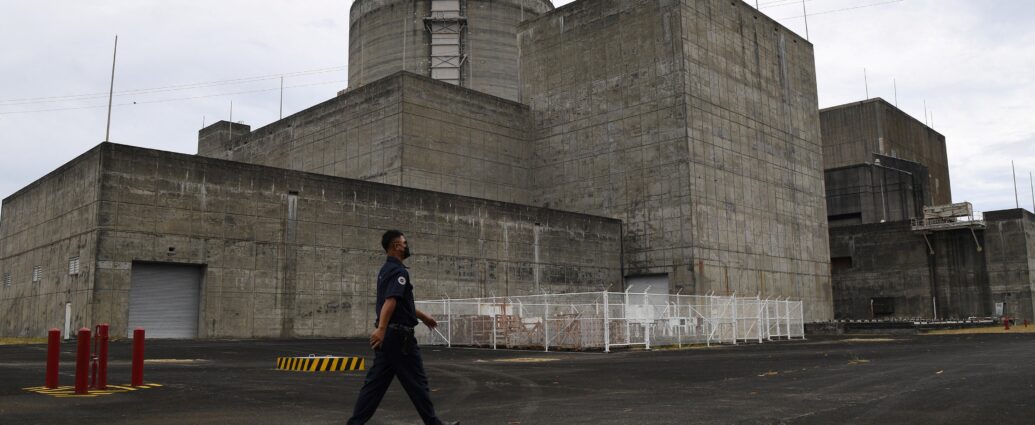
The last time an energy crisis pushed Southeast Asia to consider nuclear energy, it led to a $2.2 billion plant in the Philippines that never got switched on.

Half a century later, a new crisis is pressing the region to start thinking about nuclear again. Global oil and gas prices have surged since Iran closed the Strait of Hormuz, the world’s most critical energy chokepoint. Southeast Asia, comprised mainly of net energy importers, has been hit especially hard by rising energy prices, accelerating plans to drive down energy usage. 

On March 23, Vietnam and Russia signed a deal to build a nuclear power plant in Vietnam’s Ninh Thuan province. The plant, set to come online in a decade, will be Southeast Asia’s first modern nuclear power plant. Malaysia, Indonesia, Thailand, and the Philippines have also signaled their intention to build nuclear capacity.

“Previously, the clean energy transition in the region was mainly driven by economic considerations—particularly the growing expectations from companies for access to low-carbon electricity,” Tan-Soo Jie Sheng, a professor at the Lee Kuan Yew School of Public Policy in the National University of Singapore (NUS), tells Fortune. “However, geopolitical shocks like the Iran war bring the energy security dimension back into sharper focus.”

Southeast Asia’s previous attempt to go nuclear

The region’s first attempt at nuclear power, the Bataan Nuclear Power Plant, was built in the Philippines in 1976. Commissioned by President Ferdinand Marcos in the wake of the 1973 oil shock, the plant was completed in 1984 at a cost of roughly $2.2 billion. But the plant was never used, due to accusations of government corruption and waning public support for nuclear energy following the Chernobyl disaster in 1986. 

“Marcos’ successor said that the plant was corruption-tainted—which is true—and claimed it was substandard and too dangerous to operate,” says Julius Cesar I. Trajano, a research fellow at Singapore’s Nanyang Technological University.

In recent years, rising energy demand, spurred in part by an explosion of AI data centers, is pushing several Southeast Asian nations to start reconsidering nuclear energy. In 2024, data centers consumed 415TWh, or 1.5% of the world’s electricity, according to the International Energy Agency; the organization also noted power usage had risen by 12% annually over the past five years.

“Unlike weather-dependent renewables like solar and wind energy, nuclear gives round-the-clock low-carbon electricity,” explains Tan-Soo of NUS. “That matters in Southeast Asia because electricity demand is rising fast, grids are uneven and governments want cleaner power without sacrificing reliability.”

Indonesia added nuclear power to its energy plan last year, with hopes to build two small modular reactors (SMRs) by 2034. Thailand wants to add 600 MW of nuclear generating capacity by 2037. 

Advances in nuclear technology, like SMRs, have made modern nuclear plants safer, according to Alvin Chew, a senior research fellow at NTU. SMRs are reactors of up to 300 MW per unit, which are about one third the size of conventional large reactors. SMRs could be better suited to Southeast Asia, as they can be added to remote areas like islands and be connected to smaller or less-developed grids.

Major challenges

Yet experts caution against being too optimistic about nuclear power, due to gaps in technological and institutional development.

Many SMR designs are still in the early stages of commercialization, so “there is no guarantee they will be cheaper, more mobile and safer,” Ian Storey, a principal fellow from Singapore’s ISEAS-Yusof Ishak Institute, explains. “There are only two experimental SMRs in operation, one in China and one in Russia. The rest exist only on paper.”

Others, like Joshua Kurlantzick, a senior fellow at the Council on Foreign Relations, point to low public acceptance for nuclear. “In most of Southeast Asia, except the Philippines where there is very strong support for nuclear energy, members of the public remain cautious about it, especially in countries like Indonesia which have a history of earthquakes and tsunamis,” he explains.

A 2021 survey from NTU reported low support for nuclear energy among the region’s population. Indonesia was the most receptive to nuclear, with 39% support; Thailand had the lowest share of support, at just 3%.

Public concerns may rise once nuclear projects get started. “The public’s rating of the risks of nuclear energy will likely change dramatically when presented with an imminent reality closer to home,” suggests Catherine Wong, an environmental sociologist from the University of Amsterdam.

Nuclear plants are also capital-intensive and time-consuming to build. “Nuclear is hard to do well,” explains Tan-Soo. “It requires a capable regulator, long-term political continuity, strong utilities, grid readiness, emergency planning, waste arrangements, and financing discipline. For many countries, those institutional requirements are often more difficult than the technology itself.”

Finally, there’s the security dimension. “The 21st century era of drone and cyber warfare makes nuclear power even harder to secure,” Wong suggests. That’s in contrast to more decentralized renewable energy: “You can take out five or even fifty wind turbines, and there will still be hundreds more spread across the country supplying electricity to the population.”

This story was originally featured on Fortune.com

Women are falling behind on AI adoption, and former Meta COO Sheryl Sandberg knows it. That’s why she’s refocusing her women’s leadership nonprofit, Lean In, on closing the AI gender gap — and installing a 25-year-old to lead the charge.

new survey of 1,000 U.S. adults from Lean In found that 33% of men use AI daily, compared to 27% of women. While the gap is closing, even small differences could have outsized impacts over time, Sandberg told Fortune.

“We all know that AI is already starting to, and has the power to transform how we work, who’s in the workforce, how we live, how we communicate,” Sandberg said.

On March 24, Sandberg announced Bridget Griswold, a 25-year-old former Meta product manager, as the new CEO of Lean In. Despite public criticism of Griswold’s age and limited nonprofit experience, Sandberg said the nonprofit was looking for an “AI native” with a product background — and Griswold fit the bill.

The appointment comes amid turbulence: the Sandberg Goldberg Bernthal Family Foundation, which includes Lean In, shed a quarter of its staff over the last year through layoffs and voluntary departures, The Wall Street Journal recently reported.

Lean In’s pivot to AI comes as only half of companies are prioritizing women’s career advancement, and more than 30% are placing little to no priority on advancing women of color, according to the organization’s 2025 Women in the Workplace report. Women’s jobs are three times more likely to be automated by AI — and their vulnerability is compounded by underrepresentation in AI leadership and development.

Women are more likely than men to feel threatened, overwhelmed, and like they’re “cheating” when using AI, the study found. They’re also more likely to avoid AI due to ethics and accuracy concerns.

“These are great concerns to have, and it’s awesome that women care about ethics and not cheating. But what’s really concerning is that this might inadvertently cause women to use AI less than men,” Griswold told Fortune.

The survey found that men are 27% more likely to have been praised for using AI, and women are 23% less likely to receive manager support to use it.

“The managers who are encouraging the men to use AI and not the women — they may not even know they’re doing it,” Sandberg said, adding that biases against women are often unintentional. “When you surface those biases, when you tell people, you tell managers, look, that the overall data says you’re encouraging men more than women — that is the first step to correcting that bias.”

New Era at Lean In

Griswold joined Lean In as head of product and AI in January, and by March she had replaced longtime CEO and co-founder Rachel Thomas. She said to accomplish Lean In’s goal of getting more women into leadership, they need to use AI.

“We hope that Lean In can be a place that encourages [young women] to use AI and actually [produces] real results,” she said, adding that she hopes it can be a place where women build their confidence and accelerate their careers.

“We need to make sure that we are focused on helping women of the next generation lead, and product and AI are going to be so critical to that, which is one of the many reasons we’re very lucky that Bridget has stepped into the leadership role,” Sandberg said. 

This story was originally featured on Fortune.com
Bernard Looney, whose tenure as CEO of BP ended with him embattled in controversy, is entering the AI age as the new CEO of Wyoming-based Prometheus Hyperscale, leading a bevy of data center campus developments in the Cowboy State as well as the Lone Star state of Texas.

Looney, who pushed BP toward renewables in the energy transition, resigned suddenly from that company’s CEO post in 2023 amid a probe by the company into undisclosed personal relationships. Since then, BP has struggled financially, cutting costs and pivoting away from renewables and back to fossil fuels.

Coincidentally, BP’s new CEO takes over April 1. Meg O’Neill, the former Woodside Energy head, becomes the first-ever woman CEO of a Big Oil giant.

Looney became non-executive chair of Prometheus in late 2024. He takes over as CEO from the company’s founder, Trenton Thornock, who will remain a board member.

Prometheus is primarily focused on two flagship data center projects in Wyoming—in Evanston and Casper—with a combined initial capacity of 2.5 gigawatts, enough to power almost 2 million homes. The two projects are expected to cost more than $30 billion.

Prometheus is focused on speed of construction and on cleaner energy, utilizing a combination of behind-the-meter natural gas and battery storage to get projects completed and then utilize more wind, solar and even advanced nuclear power. The data centers are expected to use a proprietary geothermal cooling technology that doesn’t require water, according to the company.

“As artificial intelligence and digital technologies continue to reshape our world, it is crucial that we build the necessary infrastructure responsibly. This is the mission we have set ourselves,” Looney said in a statement, touting Prometheus being at the “forefront of next-generation data center development.”

Prometheus is backed by In-Q-Tel, the venture capital fund backed by the Central Intelligence Agency and the broader U.S. intelligence community, and others, and has power partnerships with Conduit Power, France’s Engie, Sam Altman-backed nuclear player Oklo, and more.

This story was originally featured on Fortune.com

As Donald Trump searches for an exit to the Iran war, the narrow Strait of Hormuz increasingly looks like a labyrinth in which the commander-in-chief has no good options. 

Any ceasefire or U.S. disengagement that cedes control of the strait risks creating new problems, including potentially triggering a nuclear arms race among Gulf states, experts say. But taking control of the strait militarily requires massive costs and risks, including a strategic invasion that comes short of occupying the country. Trump said March 31 he wants to leave Iran in two or three weeks, hours after he vented against allies to “Go get your own oil!”

Continuing with the status quo, meanwhile—in which the U.S. and Israel pound Iranian targets, while Iran charges multi-million dollar tolls to let select ships pass through the strait—could send the global economy into a recession.

“If this goes on for another two months, we’re in a global recession. There’s no way around it,” Jim Wicklund, a veteran oil analyst and managing director for PPHB energy investment firm, told Fortune, arguing the U.S. is staring down the barrel of a credit crash and sky-high inflation. 

Even a slight opening of the strait would bring only temporary relief. Oil and natural gas prices may fall as more traffic flows through the strait, but they would remain much higher than in February before the U.S. and Israel initiated the war, especially if Iran continues to charge a $2 million toll per vessel. “The whole world won’t stand for a long-term toll,” said Wicklund. “There will be a higher risk premium even if the strait opens tomorrow.”

The U.S. must either put “boots on the ground” to take control of the narrow strait—through which 20% of the world’s oil, liquefied natural gas, and petrochemicals pass—or make some kind of truce that’s unlikely to last, he said. “Trump has to do something, and he has to do something soon.”

Bob McNally, former White House energy adviser under George W. Bush and founder of the Rapidan Energy Group, took it a step further if the U.S. were to walk away without militarily seizing control of the strait.

“That would be a catastrophic setback for U.S. foreign policy interests that would, in my view, transcend even our defeat in Vietnam,” McNally told Fortune. “One would struggle to find a precedent or a parallel for what a defeat that would be.”

Where we are

More than a month into the slog of war, the average U.S. price for a gallon of regular gasoline rose above $4.00 on March 31 for the first time since 2022. California, Oregon, and Hawaii all exceeded $5.

And the impacts remain much worse in the rest of the world where supply shortages are mounting in Asia, and where Europe is now beginning to see scattered fuel shortfalls. This is where demand destruction escalates in April.

On March 30, Trump threatened “completely obliterating” Iranian power and water infrastructure if the strait is not opened—potentially a war crime. One day later, he lashed out at U.S. allies for not helping enough. “You’ll have to start learning how to fight for yourself, the U.S.A. won’t be there to help you anymore, just like you weren’t there for us. Iran has been, essentially, decimated. The hard part is done. Go get your own oil!” he posted on social media.

“We leave because there’s no reason for us to do this,” Trump later told reporters at the White House. “We’ll be ‌leaving very soon.”

With Pakistan and now China increasingly serving as the negotiation mediators, they offered a five-point peace initiative March 31 that included a call to “restore normal passage through the strait as soon as possible.”

Rystad Energy chief economist Claudio Galimberti sees a tenuous peace as the most likely outcome in the coming weeks. After all, only about 5% of the typical traffic is passing through the strait, which is not sustainable.

“It would be a very fragile ceasefire. It’s very unstable,” Galimberti said.

If a ceasefire only allows 50% or less of traffic to resume, then “this would be a very high inflationary scenario” for the world with oil prices likely remaining above $100 per barrel, he said. If it’s almost fully opened under a tolling scenario, then prices would fall further, but still remain well elevated above February levels before the war.

That is why McNally and Wicklund see U.S. boots on the ground as more likely to see the military campaign through. They think Trump is frustrated, but mostly posturing for now.

“What I think is likely is we’re going to see an intensification of combined operations—air, sea, and land—to degrade Iran’s ability to threaten Hormuz traffic,” McNally said.

Getty Images

The doctrine effect

The alternatives are much worse, McNally argued.

“The Arab Gulf countries and Israel would not accept Iran’s long-term domination of Hormuz. I think it would make another conflict just a matter of time. And it’s a conflict the United States would likely get dragged [back] into,” McNally said. “I don’t think it’s a durable scenario where we just sort of leave and say, ‘Hey, cut your deals with Iran. They’re the toll keeper now. Good luck.’”

The geopolitical precedent also would prove awful, McNally said, effectively canceling the Reagan Corollary to the Carter Doctrine. The 1980 Carter Doctrine said the U.S. would intervene militarily to protect its interests in the Middle East against external powers, which was in response to the Soviet Union’s invasion of Afghanistan. The 1981 Reagan Corollary, which came during the Iran-Iraq War, extended the doctrine but also pledged to secure internal stability in the Middle East, especially Saudi Arabia.

“We would be canceling the Reagan Corollary to the Carter Doctrine, and eventually, perhaps the doctrine itself,” he said. “I think eventually a China or Russia would want to step in there.”

This story was originally featured on Fortune.com

As the bell rang out over the New York Stock Exchange on Tuesday afternoon, it was an unusually beautiful day: 71 degrees, sun pouring on the faces of people swarming through the city. After the brutal cold of winter, it felt like something of a miracle.

The markets had spent the day chasing one of their own.

Iran’s official news agency reported an unconfirmed phone call between President Masoud Pezeshkian and the European Council president, where Pezeshkian said Iran had the “necessary will” to end the war; provided that “essential conditions are met, especially the guarantees required to prevent repetition of the aggression.” The S&P went vertical immediately afterwards. It didn’t matter that Pezeshkian had said nearly the same thing on X earlier this month, or that it wasn’t even clear how big a development this was.

The Nasdaq still snapped back 795 points, recovering nearly half of its total drawdown over the course of the U.S.-Israeli-Iran war in a single day. The S&P soared 2.89%, representing $1.7 trillion alone, recovering about 30% of its total drawdown since the war began. The Ddow also soared 1,125 points. All three indexes had their biggest single-day signs since May.

The incredible thing about the rally today wasn’t the scale of it, but the fragility of what it was built on. 

It started Monday night, when the WSJ reported that Trump had told aides he was willing to end the military campaign against Iran even if the Strait of Hormuz remained closed for the most part. Futures immediately rallied up something like 1.5%. But the same report noted that military options were still being considered, and if the U.S. drew out it would leave other nations to deal with the complex process of reopening the Strait, one of the world’s most critical oil chokepoints where 20% of the world’s oil flows out of.

Trump made his preference clear the next morning with a post calling on allies to gather up their “delayed courage” and deal with the Strait themselves.

 “Iran has been, essentially, decimated. The hard part is done,” Trump wrote. “Go get your own oil!” Soon after, Defense Secretary Pete Hegseth and Joint Chiefs Chairman Gen. Dan Caine held a before-the-bel press conference, where they didn’t commit to either leaving the Strait or defending it, nor any sort of timeline on the war. But they said it was going well, and when the stock market opened, most of the major indexes were rallying above 1%.

Then the confusion began. On Monday, White House press secretary Karoline Leavitt told reporters that talks with Iran were ‘continuing and going well,’ adding that ‘what is said publicly is, of course, much different than what’s being communicated to us privately.’ Then, Iran’s foreign ministry spokesperson said the opposite, that there had been in fact, no direct negotiations with the United States in 31 days of war, only ‘messages’ passed through intermediaries like Pakistan. But that wasn’t enough to dampen the high before Tuesday’s main event.

The oil market looked at the same information and reached a more sober conclusion. Brent crude settled upwards nearly 5% at $118.35 a barrel, its highest close since June 2022, after Bloomberg reported that Iran had struck a Kuwaiti oil tanker in Dubai waters. Oil said war, and stocks said peace, and both closed higher.

This story was originally featured on Fortune.com
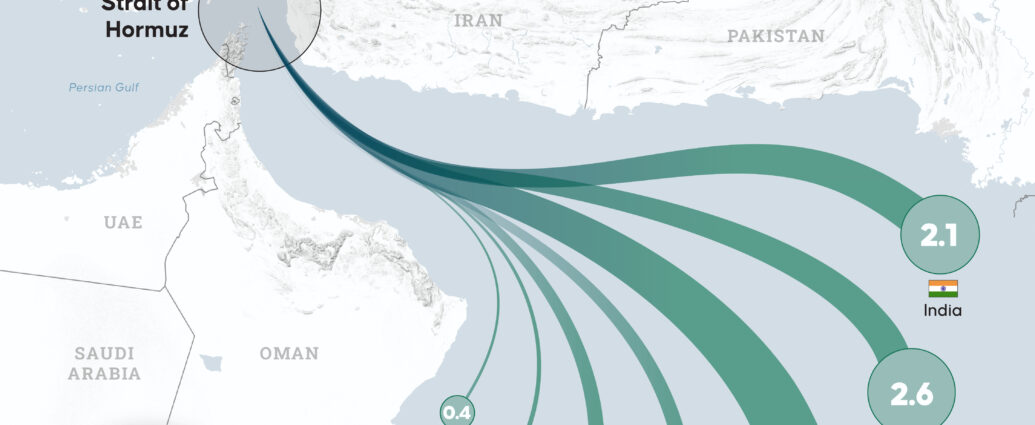
President Donald Trump expressed frustration Tuesday with allies who have been unwilling to do more to support the U.S. war effort, telling them to “go get your own oil” as the conflict with Iran and its closure of the Strait of Hormuz sent average U.S. gas prices past $4 a gallon.

The social media post came after U.S. strikes hit the central city of Isfahan, sending a massive fireball into the sky, and Tehran attacked a fully loaded Kuwaiti oil tanker in the Persian Gulf.

The attacks showed the intensity of the war more than a month after the U.S. and Israel launched it. The conflict has left more than 3,000 dead and caused major disruptions to the world’s supply of oil and natural gas, roiling global markets and pushing up the cost of many basic goods.

Trump, who has vacillated between insisting there is progress in diplomatic talks with Iran and threatening to widen the war, had earlier shared footage of the attack on Isfahan.

Fuel prices rise, rattling global markets

Iran’s stranglehold on the strait, the waterway leading out of the Persian Gulf through which a fifth of the world’s oil is transported during peacetime, has driven up global oil prices, as have Tehran’s attacks on regional energy infrastructure.

Spot prices of Brent crude, the international standard, hovered around $107 a barrel Tuesday, up more than 45% since the war started Feb. 28.

Trump directed blame at U.S. allies like the United Kingdom and France that have refused to enter a war with no clear endgame that they were not consulted on.

“You’ll have to start learning how to fight for yourself, the U.S.A. won’t be there to help you anymore, just like you weren’t there for us. Iran has been, essentially, decimated. The hard part is done. Go get your own oil!” Trump wrote.

He singled out France for not letting planes fly over French territory while taking military supplies to Israel.

France has allowed the U.S. Air Force to use the Istres base in southern France because it had guarantees that planes landing there would not be involved in carrying out strikes.

Allies have refused to get involved

Spain, which has emerged as Europe’s loudest critic of the war, said Monday that it had closed its airspace for U.S. planes involved in the conflict.

Italy recently refused to allow U.S. military assets to use the Sigonella air base in Sicily for an operation linked to the offensive, an official with knowledge of the matter said, confirming a local press report. The official spoke on condition of anonymity because they were not authorized to speak publicly.

Italian Defense Minister Guido Crosetto wrote on X that Italy is still allowing the U.S. to use its bases, adding that there has been no cooling of relations between the two countries.

Journalist kidnapped in Iraq identified

In Iraq, officials said an American journalist was kidnapped, and Iraqi security forces were pursuing her captors.

Al-Monitor, a regional news site covering the Middle East, identified the journalist kidnapped Tuesday in Baghdad as Shelly Kittleson, a freelancer who contributed to the publication. In a statement, Al-Monitor said it was “deeply alarmed” by her kidnapping and stands by her “vital reporting.”

Kittleson has been a longtime freelancer in the region, reporting extensively from Syria and Iraq.

Two cars were involved in the kidnapping, one of which crashed, and a person inside was apprehended. The car carrying the journalist fled, two Iraqi security officials said.

The U.S. State Department said the administration was closely tracking the reports but had nothing further to share. It was not immediately clear if the kidnapping was related to the Iran war.

US has not ruled out ground forces

Trump warned this week that if a ceasefire is not reached “shortly,” and if the strait is not reopened, the U.S. would broaden its offensive, including by attacking the Kharg Island oil export hub and possibly desalination plants.

Speaking at the Pentagon, Defense Secretary Pete Hegseth would not say if U.S. ground forces would enter the war. “We don’t want to have to do more militarily than we have to,” he said.

A ground invasion could alienate Iranians who despise the ruling theocracy and who rose up in mass protests that were crushed earlier this year. Some could see it as an attack on Iran itself and rally around the flag.

A young anti-government activist in Iran said he plans to volunteer with the army if Trump follows through on such threats.

“If the idea of occupying islands or part of my country’s territory is implemented, I will definitely be available as a soldier to defend the Iranian nation,” said the 25-year-old resident of the northern town of Babol, who spoke on condition of anonymity out of fear for retribution.

Imprisoned Iranian Nobel laureate may have suffered heart attack

Supporters of imprisoned Iranian Nobel Peace Prize laureate Narges Mohammadi said she may have suffered a heart attack.

The campaign for her release, citing fellow inmates at Zanjan Prison in northern Iran, said she was found unconscious last week. Mohammadi has a heart condition and suffered multiple heart attacks while imprisoned before undergoing emergency surgery in 2022, her supporters say.

“Despite this medical emergency, and evident indications of a heart attack, authorities refused to transfer Mohammadi to a hospital or allow her to visit a specialist,” the campaign said in a statement.

Mohammadi, 53, was awarded the 2023 Nobel Peace Prize for her decades of activism. She has campaigned for women’s rights and democracy, and against the death penalty.

Iran hits oil tanker as Israel strikes Iran and Lebanon

Israel and the U.S. launched a wave of strikes on Iran, hitting Tehran in the early morning.

The Israeli military said it had launched strikes targeting what it described as Hezbollah infrastructure in the Lebanese capital, Beirut. Defense Minister Israel Katz said Israel plans to control the area south of the Litani River — some 20 miles (about 30 kilometers) north of the border.

Israel invaded southern Lebanon after Hezbollah began launching missiles into northern Israel days after the outbreak of the wider war. Many Lebanese fear another prolonged military occupation.

An Iranian drone hit a Kuwaiti oil tanker off the United Arab Emirates city of Dubai, sparking a blaze that was later put out, the Dubai Media Office said. Authorities said no oil spill resulted.

Four people were wounded by debris from an intercepted drone in Dubai, air raid sirens sounded in Bahrain, while Saudi Arabia said it intercepted three ballistic missiles launched toward its capital. Loud explosions were also heard in Israel not long after the military warned of an incoming missile barrage from Iran.

In Iran, authorities say more than 1,900 people have been killed, while 19 have been reported dead in Israel.

Two dozen people have died in Gulf states and the occupied West Bank. In Lebanon, officials said more than 1,200 people have been killed, and more than 1 million displaced.

Ten Israeli soldiers have died in Lebanon, including the four announced Tuesday, while 13 U.S. service members have been killed.

___

Corder reported from The Hague, Netherlands, and Superville from Washington. David Rising in Bangkok, Abby Sewell and Sally Abou AlJoud in Beirut, Sylvie Corbet in Paris, Amir-Hussein Radjy in Cairo, Qassim Abdul-Zahra in Baghdad and Giada Zampano in Rome contributed to this report.

This story was originally featured on Fortune.com
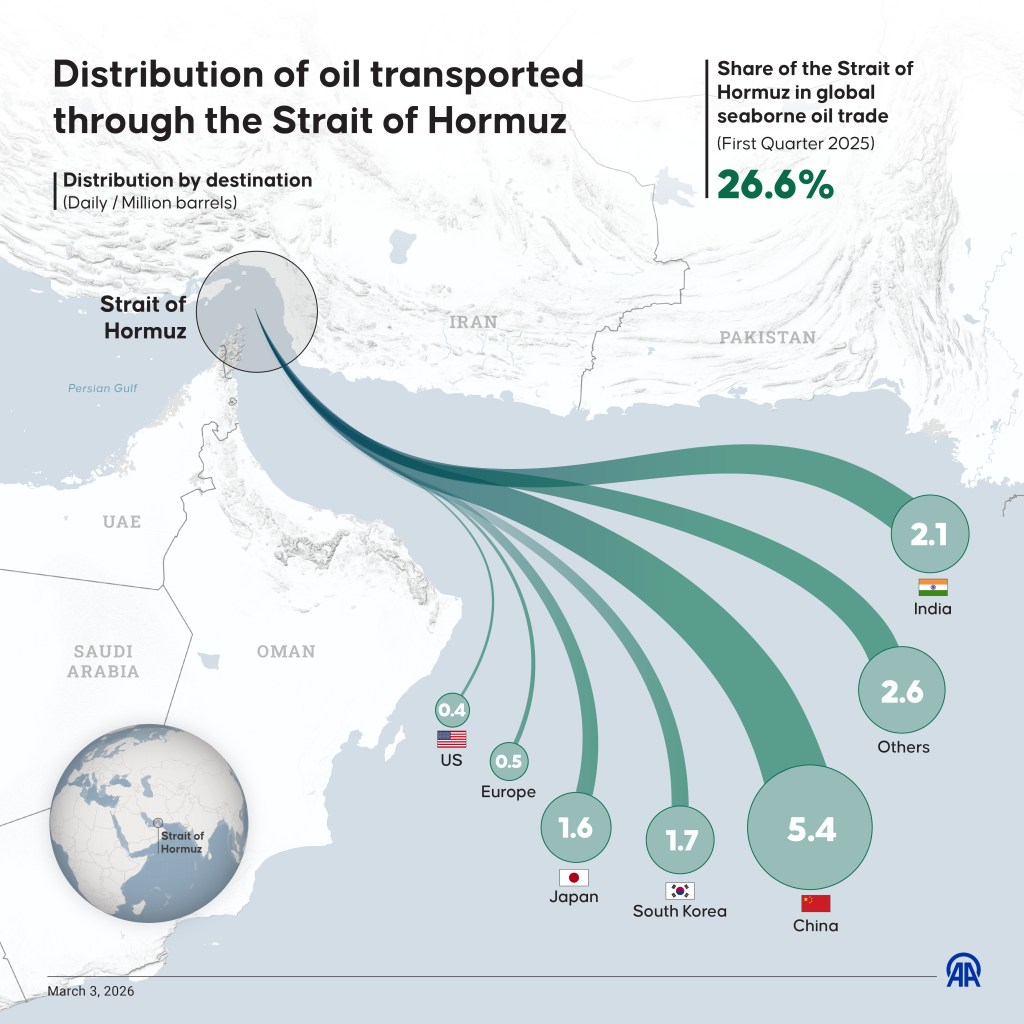
Credit delinquency rates are on the rise in states that have legalized sports betting, and it’s impacting Gen Z and millennials the most.

A new working paper from the Federal Reserve Bank of New York found after sports betting was legalized in the U.S., delinquencies among the total population increased 0.3%. While that figure may appear small, when the Fed researchers analyzed the population of just those who participated in sports betting, delinquency rates rose by 10%. 

The New York Fed used an analysis of consumer credit data and defined delinquency rates as being 90 days past due on any credit purchase, such as auto loans or mortgage payments.

“Our findings suggest that sports betting can have dramatic implications for household financial stability,” the authors wrote.

In 2018, the Supreme Court struck down the Professional and Amateur Sports Protection Act effective banning sports betting, opening the door for 40 states to legalize the practice in some form. Since then, participation in sports betting, particularly online, has exploded. Commercial gaming revenue hit a record $78.7 Billion in 2025, according to the American Gaming Association, a 9.2% year-over-year increase. Americans have wagered more than $520 billion on sports since the practice was legalized, and quarterly deposits have risen to $1,250 in 2025, compared to $500 five years ago, the Fed researchers found.

Millennials and Gen Z are particularly vulnerable to negative financial consequences as a result of sports betting. While 22% of Americans have an account with at least one online sportsbook, according to a 2025 Siena College Research Institute Survey, nearly half of men ages 18 to 49 have an account. People under 40 made up the largest share of individuals with credit delinquency, which rose to 26% after legalization, the Fed study found using “back-of-the-napkin” math.

The widespread financial consequences of sports betting

The New York Fed report adds to a growing base of literature showing the financial harms associated with sports betting. A working paper published by the National Bureau of Economic Research in 2024 found household bests increased $1,100 per year in states with legal online sports betting, which was also associated with a 14% decrease in net investments, such as stocks.

A 2025 study analyzing University of California Consumer Credit Panel found average credit scores in states with legal online sports betting were slashed by about 2.7 points and increased the likelihood of bankruptcy by 10%.

“The various outcomes of delinquencies and credit scores [are] just kind of indicating that it seems to be leading to some harm among consumers,” Poet Larson, the study co-author and postdoctoral fellow at the Digital Data Design Institute at the Harvard Business School, told Fortune.

Larson speculates that sports betting has become so popular. Young people, to whom online sportsbooks are marketed toward and who have less accumulated weather than older generations, could be particularly at risk, he said.

These financial effects extend beyond states where sports betting is legal. The Fed study found significant spatial spillover effects, meaning delinquency rose in states where sports betting was illegal, but which bordered legal states. Spillover delinquency rose 0.2% compared to the 0.3% baseline, a result of individuals crossing borders in order to use online sports betting platforms in states where it is legal.

The future of legal sports betting

States that have not yet legalized sports betting may still see similar trends in financial insecurity for reasons beyond spillover effects. The rise in popularity of prediction markets, such as Kalshi—which are legal and regulated by the Commodity Futures Trading Commission (CFTC) as “designated contract markets”—have effectively created a national sports betting market.

A  Citizens JMP report published this month found that in users’ first three months on a prediction market platform, they lost more money proportionate to the amount wagered than on online sportsbooks like DraftKings or FanDuel.

Still, prediction markets are relatively untapped in the U.S., with just 3% of Americans and 8% of men ages 18 to 24 reporting using a platform in the past six months, according to a Ipsos survey of more than 2,3000 adults published this month. Larson suggested the impact of these emerging platforms on financial security with depend on how popular they become.

“Because you have so many people sports gambling, you can start to see appreciable financial harms,” Larson said. “For prediction markets…if it’s small, then we might see financial harm, but it may be kind of difficult to detect.”

This story was originally featured on Fortune.com

Forget the Fed. Forget nonfarm employment. Forget even industrial production and real income. For Jim Paulsen, the real recession indicator is watching Walmart.

Paulsen, the former chief investment strategist at investment research firm Leuthold Group, devised an indicator he dubs the “Walmart Recession Signal” (WRS), which tracks the stock price of Walmart against the S&P Global Luxury Index, a basket of 80 companies producing or distributing luxury goods. He said that since economic downturns are usually felt first by lower-income individuals, an increase in Walmart stock price could indicate a potential economic downturn.

Paulsen wrote in a Substack post that the indicator is now at its highest level since the 2008 Great Recession. “‘Walmart Worries’ just keep multiplying,” he wrote. “It’s currently close to the highest level ever recorded which was during the Great Financial Crisis of 2008-09.”

The central premise of the WRS is this: During economic downturns, consumers tend to shift their spending toward discount vendors like Walmart, and away from luxury retailers. It’s one way households cut down on costs when economic pressure is high. “As economic activity slows and recession risk builds, retailing purchasing patterns tend to gravitate toward discounters like Walmart and away from luxury retailers,” he wrote.

Walmart stock has climbed steadily over the past year, up over 40% year over year to $123.95 as of Tuesday afternoon. While the S&P Global Luxury Index is up over 7.7% year over year to $5,544.98, the price has fallen 13.6% since the beginning of the year.

The economy has sat in an increasingly precarious position as a string of back-to-back shocks has rattled it. A dismal February jobs report revealed the economy unexpectedly shed 92,000 jobs, and the unemployment rate crept up to 4.5%. The Iran war has only added to the economic pressure weighing on Americans as oil and fertilizer prices are skyrocketing. Gas prices just surpassed $4 a gallon. On top of that, the housing market faces a dire affordability crisis, and consumer sentiment remains grim. 

All of these factors are crystallizing into a greater likelihood of a recession. Moody’s Analytics just raised its recession outlook for the next 12 months to 48.6%. That follows an increase from Goldman Sachs, which sets the likelihood to 30%. And EY-Parthenon sets the odds of a recession at 40%.

“I’m concerned recession risks are uncomfortably high and on the rise,” said Mark Zandi, chief economist at Moody’s Analytics. “Recession is a real threat here.”

Walmart’s booming year and heightened recession odds

Walmart, which held the number one spot on the Fortune 500 for 13 years before it was overtaken by Amazon in February, has had a booming year. The company posted revenue of $190.7 billion last quarter, up 5.6% from a year ago. Revenue for the full year was up 4.7% to $713.2 billion. 

Paulsen said the WRS has had a close historical relationship with both annual real GDP growth and the unemployment rate. During successive economic downturns throughout the 90s and 21st century, the WRS rose before real GDP growth collapsed. He adds that every increase in unemployment has been preceded by an uptick in the WRS.

As for the causes of what’s impacting the WRS, Paulsen cites the cratering consumer sentiment, dismal job postings, the impact of the Iran war, among other factors. He also warns that instead of a public credit crisis, the economy may be facing a private credit crisis, as the WRS also has a close historical relationship with the value of private credit.

Yet Paulsen isn’t betting on a recession happening just yet, saying the U.S. may be in the clear this year. 

But he adds “I am becoming more convinced that a significant U.S. economic slowdown is unfolding that will ultimately require additional economic policy accommodation and lower interest rates to arrest.”

This story was originally featured on Fortune.com

If you’d never heard of the Strait of Hormuz before, you probably have by now. Iran’s effective closure of the waterway, which usually carries about 20% of the world’s oil and gas, has put severe pressure on the global economy.

Now, some analysts are warning a new flashpoint could emerge: the Bab el-Mandeb Strait.

That’s because on March 28, the Houthis, a military group that controls large parts of northern Yemen and is aligned with Iran, entered the war, launching missiles towards Israel for the first time since the war with Iran began.

Yemen is situated on one side of the strait, and the Houthis have previously attacked shipping in the Red Sea, causing major disruption in late 2023 and 2024.

Bloomberg now reports Iran has approached the Houthis to prepare for a similar campaign.

Here’s why all eyes will be back on the Houthis, Bab el-Mandeb and the Red Sea, and what disruption of a second major chokepoint could mean for the world economy.

What is the Bab el-Mandeb Strait?

The Bab el-Mandeb Strait is about 30 kilometres wide at its narrowest point. It is situated between Yemen on the Arabian Peninsula to the northeast and Eritrea and Djibouti in Africa on the west.

Its name literally means “Gate of Tears” in Arabic, after its famously treacherous sailing conditions.

It has become so important because, along with the Suez Canal in Egypt, it allows ships to transit directly between the Mediterranean Sea and the Indian Ocean by passing through the Red Sea and the Gulf of Aden.

Before the Suez Canal’s opening in the 19th century, ships had to travel all the way around the southern tip of Africa to join these two points.

An oil tanker leaving Saudi Arabia to go to the Netherlands, for example, only has to travel 12,000 kilometres if it goes via the Red Sea, compared with more than 20,000 kilometres going south around Africa.

As you’d expect, that’s much faster too. According to the US Energy Information Administration (EIA), a trip between the Arabian Sea and the Netherlands that takes 34 days the long way around is shortened to just 19 days.

What passes through it?

In normal times, as much as 14% of global maritime trade goes through the Bab el-Mandeb Strait.

Detailed data on what passes through the Bab el-Mandeb Strait is somewhat limited. But fossil fuels are a major component.

The International Energy Agency (IEA) estimates that in 2025 about 4.2 million barrels of crude oil and petroleum liquids crossed the Bab al-Mandeb Strait per day. That’s about 5% of global production.

Given most ships use the Suez Canal as well, official data from the Suez Canal Authority allow us to paint a detailed picture of Red Sea shipping.

In the final quarter of 2025, about 40% of the 3,426 ships passing through the Suez Canal transported fossil fuels: (1,330 oil tankers, 88 liquefied natural gas (LNG) ships).

Bulk and general cargo made up another 40% (1,339 ships), typically transporting agricultural commodities such as corn, wheat and soybeans, and also coal and iron ore. Container ships made about 13% of the traffic (459 ships).

Notably, total traffic through the Red Sea has declined considerably since Houthi attacks on shipping in late 2023 and 2024, even though these attacks have largely stopped.

Can the strait be closed?

The Bab el-Mandeb Strait can’t be “closed” entirely. Its narrowest point is still a considerably wide waterway. And unlike the Strait of Hormuz, the Bab el-Mandeb Strait is not a “cul-de-sac”, where the passage is closed at one end with only one way out. Ships can still exit to the Mediterranean via the Suez Canal.

That’s little comfort for those bound for Asia, which would then have to round Africa to do so, adding weeks to the journey.

Notably, Saudi Arabia had already built a “Plan B” to avoid the Strait of Hormuz, called the East-West pipeline. This pipeline connects Abqaiq in the north with Yanbu on the Red Sea, and had already begun pumping oil at almost full capacity in response to the conflict.

But oil bound for Asia from this new exit point still has to pass through Bab el-Mandeb to avoid the long way around, meaning it could be disrupted.

We’ve been here before

To get a sense of how the Houthis could disrupt shipping again, we can look to the most recent Red Sea crisis.

According to the International Maritime Organization (IMO), 67 incidents were recorded between November 2023 and September 2024. Some ships only suffered minor equipment damage. But others faced severe fires, flooding and structural damage after being hit by missiles or drones.

However, there have been relatively few attacks since 2024. And the strait was never totally “closed” per se: some ships continued to pass through throughout the crisis.

The mere threat of attacks

These same tactics would probably apply today. But for shipping companies, the mere threat of attacks may be enough to slow or restrict shipping. There are significant risks to civilian crew, who face a threat to life.

Adding to this, insurance costs could become prohibitive enough to close the route in practical terms. Back in 2024, insurance costs were about 0.6% of the value of the cargo on a ship. After the Red Sea crisis, this rose as high as 2%.

The effective closure of both the Strait of Hormuz and Bab el-Mandeb at the same time would be severely disruptive to global supply chains and the global economy.

Flavio Macau, Associate Dean – School of Business and Law, Edith Cowan University

This article is republished from The Conversation under a Creative Commons license. Read the original article.

The Conversation

This story was originally featured on Fortune.com

While I was leading a tour of the National Air and Space Museum in January 2026, a visitor posed this insightful question: “Why has it taken so long to return to the Moon?”

After all, NASA had the know-how and technology to send humans to the lunar surface more than 50 years ago as part of the Apollo program. And, as another tour guest reminded us, computers today can do so much more than they could back then, as evidenced by the smartphones most of us carry in our pockets. Shouldn’t it be easier to get to the Moon than ever before?

The truth is that sending humans into space safely continues to be difficult, especially as missions increase in complexity.

A rocket on a launchpad overlooking water.

The Artemis II SLS rocket and Orion spacecraft Integrity en route from the vehicle assembly building to Launch Complex 39B at the Kennedy Space Center, Jan. 17, 2026. NASA/John Kraus

New technologies require years of study, development and testing before they can be certified for flight. And even then, systems and materials can behave in ways that surprise and worry engineers and mission planners; look no further than Boeing’s Starliner CFT mission or the performance of the Orion heat shield on Artemis I.

Issues with Starliner’s thrusters led NASA to return the spacecraft from the International Space Station without its crew. Unanticipated chipping of the Orion heat shield resulted in years of research, culminating in NASA altering the atmospheric reentry plans for the Artemis II mission.

NASA’s programs also require sustained political will and financial support across multiple presidential administrations, Congresses and fiscal years. As a historian of human spaceflight, I have studied the space agency’s efforts to engage the broader public to convince American taxpayers that their programs hold value for the nation.

NASA is now on the eve of the first crewed flight to the Moon since the Apollo era: Artemis II. A crew of four will conduct a lunar flyby, laying the groundwork, the agency hopes, for a landing on the Artemis IV mission.

The story of NASA’s effort to return humans to the Moon is long and winding, demonstrating the complexities of turning grand ambitions into real missions.

Post-Apollo

In early 1970, with two successful Moon landings on the books, President Richard Nixon sought to reduce NASA’s budget to better align with his administration’s priorities. This decision put the space agency in a difficult position, which ultimately led to the cancellation of three planned Apollo missions to conserve funding for its plans for long-term human activity in low Earth orbit.

NASA repurposed the third stage of a Saturn V rocket to create the first U.S. space station, Skylab, which operated from 1973 to 1974. The space agency used leftover Saturn IB rockets and Apollo command and service modules to send crews to the station.

Over the next three decades, NASA developed and operated the space shuttle. The fleet of space shuttle orbiters supported satellite deployment and microgravity research on orbital missions of up to 17 days. This work was meant to enable future long-duration human missions and provide benefits to people on Earth. For example, data from protein crystal growth experiments have informed the development of medicines.

The space shuttle program facilitated the construction, maintenance and staffing of a continuously inhabited research platform in orbit, the International Space Station. The first modules launched in late 1998.

Two modules of the space station connecting.

Space shuttle Endeavour’s robotic arm begins the sequence to deploy the Unity module of the International Space Station on Dec. 5, 1998. NASA

Where to next?

As the new millennium approached, the Clinton administration tasked NASA to think beyond the space station. What could robots and humans do next in space? And where could they do it? Notably, the White House expressed an interest in locations beyond low Earth orbit.

NASA, it turned out, was well positioned to meet the administration’s request. NASA Administrator Daniel Goldin was already thinking about preparing proposals for the next presidential administration and had recently sponsored a human lunar return study. In 1999, he established a team to investigate new technologies, missions and destinations for the 21st century.

This work took on new significance following the tragic loss of the space shuttle Columbia crew in February 2003. Many people, including those in the new George W. Bush White House, wondered whether the human spaceflight program should continue – and, if so, how.

Administration discussions culminated in Bush’s Vision for Space Exploration in 2004, which directed NASA to retire the space shuttle after the completion of the space station. It called for returning humans to the Moon on a crew exploration vehicle designed for destinations beyond low Earth orbit.

It also called for continuing robotic exploration of Mars and engaging companies and international partners in space. Fifteen years earlier, President George H. W. Bush had also announced a Moon and Mars exploration program, but congressional concerns about cost kept space travelers close to home.

George W. Bush standing at a podium with an image of the US flag on the lunar surface in the background.

President George W. Bush announces his administration’s Vision for Space Exploration at NASA Headquarters in Washington, D.C., on Jan. 14, 2004. NASA/Bill Ingalls

The Constellation program’s legacy

In December 2004, NASA began the process of finding a manufacturer for the crew exploration vehicle. By August 2006, the space agency awarded Lockheed Martin the contract to build the capsule, which it had named Orion – the same Orion planned to carry Artemis astronauts to the Moon.

Years of research, development and testing followed for Orion as well as the Ares I crew and Ares V cargo launch vehicles. Together, these technologies made up the Constellation program.

An illustration of two rockets, a thin one on the left (Ares 1) and a larger, thicker one on the right (Ares V).

An illustration of the Ares rockets from the Constellation program. The Ares I rocket with Orion spacecraft on top is on the left − it was intended for activities in low Earth orbit. The Ares V heavy-lift rocket, on the right, was designed for lunar missions. NASA

Constellation had two primary objectives: in the near term, to help transport crew to and from the space station after the space shuttle program ended; in the long term, to enable human lunar exploration.

Building systems that could work in both Earth orbit and around the Moon was supposed to save the time and cost of developing two vehicles. Similarly, adapting space shuttle program hardware could supposedly cut costs.

During the first months of Barack Obama’s presidency in 2009, the administration initiated an independent review of NASA’s human spaceflight plans. The Augustine Committee, chaired by retired aerospace executive Norman Augustine, found that the agency’s ambitions outstripped its limited budget, leading to significant delays. The first Orion spacecraft was likely to arrive after the space station ceased operations.

The committee proposed several paths forward at the current funding level, which prioritized space shuttle and space station programs. An additional annual investment of US$3 billion would allow for human exploration beyond low Earth orbit.

Ultimately, the Obama administration canceled Constellation, but two of its technologies lived on, thanks to U.S. senators from states that would have been affected by cuts.

The NASA Authorization Act of 2010 funded Orion’s continued development, shifting responsibility for space station crew transportation to commercial vehicles. It also directed NASA to develop the space launch system, a redesigned Ares V heavy booster, to send Orion to the Moon. The technical strategy had political benefits, too, preserving jobs in numerous congressional districts by providing continuity for aerospace contractors.

In December 2014, a Delta IV heavy rocket launched the first Orion capsule on a test flight, providing engineers with data on spacecraft systems and the heat shield. By October 2015, the space launch system had completed a critical design review, the last step before manufacturing could begin.

A spacecraft crew capsule floating in the ocean, with a large ship in the background.

In this photo, the Orion capsule awaits recovery after splashdown after a test flight on Dec. 5, 2014. U.S. Navy, CC BY-NC

Introducing Artemis

In December 2017, the new Trump administration issued a policy directive shifting the focus of NASA’s human spaceflight program back to the Moon. The space agency would use Orion and the space launch system in a race to meet an ambitious 2024 landing date. NASA officially named the program Artemis in May 2019.

The 25-day Artemis I mission, launched in November 2022, was a major milestone for the program. This uncrewed flight was the first flight of the space launch system and the first to integrate SLS and Orion. It laid the groundwork for Artemis II, which will be the first crewed flight of the SLS.

Over more than 50 years, each new presidential administration has reassessed the place of spaceflight among its priorities, either encouraging or curtailing NASA’s efforts to return humans to the lunar surface.

Each crewed flight requires the alignment of technical expertise, political will and financial support over years if not decades. For the space fans who plan to watch the Artemis II launch, the wait for countdown may feel long. But it’s just a blink in NASA’s long journey back to the Moon.

Emily A. Margolis, Curator of Contemporary Spaceflight, National Air and Space Museum, Smithsonian Institution

This article is republished from The Conversation under a Creative Commons license. Read the original article.

The Conversation

This story was originally featured on Fortune.com

Every society in human history, regardless of geography, language, or economic system, has had to answer the same question: how do you build something with people whose commitment has to be earned?

The answer is trust. It is what makes two strangers decide to do business, compels an employee to give more than what is required, and draws a customer back when they have a reason to walk away. At a time when trust in institutions is at an all-time low, it remains the most valuable asset any institution can hold. Trust is also most fragile at the exact moment innovation is moving fastest, and when the pressure to be the first mover is at its peak.

We live and breathe this reality every minute of every day. One in four Americans has a Synchrony credit card – putting Synchrony at the center of real, everyday financial moments: a broken refrigerator, an unexpected medical bill, a purchase that can’t wait. Every one of those moments is a real decision, for both the customer and us. We either earn their trust, or we lose it, and in financial services, there are no neutral outcomes.

The foundation of Synchrony’s business is trust. We trust consumers by responsibly extending credit so they can buy the things they want and need. We are trusted by our partners to help grow their businesses by underwriting consumers responsibly, without overextending them. And, we are trusted as a means for millions of Americans to build their credit.

We’re excellent at managing credit risk and underwriting. Yet, we disrupted ourselves because we know credit is about more than a single transaction – it can be transformational.

It would have been easy to protect what we were good at, but, instead, we saw a system that could be improved to give more people access to credit. With that in mind, we built PRISM, our proprietary underwriting system that leverages alternative data to expand credit access for people traditional models leave behind. Through this work, Synchrony’s PRISM played a key role, and we’ve approved more than 180 million accounts since January 2018.

If PRISM is about using better data to make smarter decisions, AI is enhancing those decisions at a scale and speed unimaginable a decade ago. That willingness to challenge what we were already good at is the same lens we bring to artificial intelligence. It’s reshaping how we work, how we serve customers, and how we compete.

Even so, technology alone doesn’t create value; it is ultimately people who identify opportunities to build trust. AI helps us scale those insights, act on them faster, and deliver better outcomes. It’s a partnership: people create the vision; technology helps bring it to life.

The model only works, though, when the people running it feel trusted enough to use it well. At Synchrony, 92% of employees say management trusts them without constant oversight. That trust fuels better ideas, faster action, and a culture of continuous improvement.

When employees feel trusted, they also feel accountable. It allows them to try something new. Innovation, including having the freedom, expectation, and permission to experiment with new tools – including AI – creates better outcomes for our partners and consumers. That’s the environment we work every day to create at Synchrony – never getting comfortable, always looking for ways to improve.

We demonstrate this in how we work—and where. We never mandated a return to office, instead offering in-person collaboration. At our Stamford headquarters, the majority of our employees are coming in because they recognize the value they unlock and the connections they build when in person. And, our New York City Experience Center inspires hundreds of partners and employees, serving as a physical manifestation of what’s possible when you bring people, partners, and technology together. It’s not only an office for employees, but an expression of innovation.

While challengers will always exist, we all need to focus on what matters most: continuous improvement for our employees, partners, and consumers, centered around building trust. It’s how Synchrony has risen in the Great Place to Work rankings from #37 in 2021 to the top three. This is how we create value not only for our shareholders but for society.

In the end, innovation is about maintaining the conditions that make trust possible. And the companies that get it right, consistently, are the ones that will endure.

The opinions expressed in Fortune.com commentary pieces are solely the views of their authors and do not necessarily reflect the opinions and beliefs of Fortune.

This story was originally featured on Fortune.com
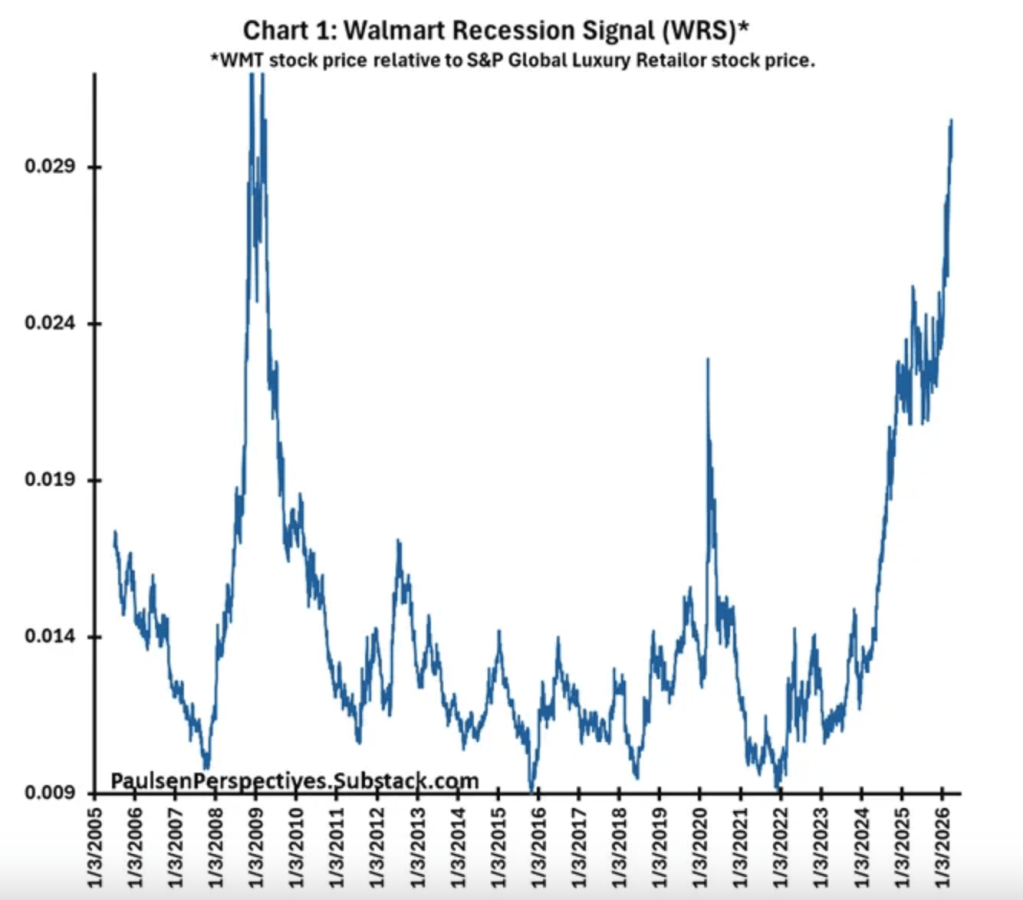
The rapper Afroman, famous for his 2000 hit “Because I Got High”, will be speaking at the Bitcoin 2026 conference next month in Las Vegas. The artist, whose given name is Joseph Foreman, is coming off what some are calling the ‘Lemon Pound Cake’ trial victory, in which an Ohio jury ruled earlier this month that he did not defame sheriff’s deputies who invaded his home in 2022. 

The artist went viral this month after prevailing in a legal ordeal that began four years ago when authorities raided his home to search for evidence for drug trafficking and kidnapping, but failed to find any. Afroman then released a song about the raid, with a music video including footage of the officers tearing apart his home and inspecting a lemon pound cake that was in his kitchen. Crypto boosters hailed his legal victory, identifying with the notion of feeling violated by government entities. 

“[Afroman’s] story of standing up to power and winning resonates deeply with Bitcoin’s ethos of sovereignty and financial freedom,” organizers of the conference wrote on LinkedIn

With the recent cancellation of Token2049 in Dubai, Bitcoin 2026 in Las Vegas will be one of the biggest crypto conferences this spring. Afroman will join a list of speakers including President Donald Trump’s son Eric Trump, executive chairman of Strategy Michael Saylor, and the chair of the Commodity Futures Trading Commission Mike Selig. 

The crypto industry is looking for reasons to celebrate after a brutal five month stretch. The price of Bitcoin is down about 47% since its all-time high in October to its current price of about $67,000, according to Binance. This tailspin comes despite a friendly regulatory environment under the second Trump administration. 

When announcing Afroman’s appearance at the Las Vegas conference, the event organizers posted, “Vibes are guaranteed to be high.”

This story was originally featured on Fortune.com

Many parents and kids alike are wondering whether college has the same return on investment it once did. And they have reason to worry: Hiring just hit a level not seen since the economy was “closed down literally” during the pandemic.

Going to college was once seen as a one-way ticket to a successful and lucrative career. Still, there are a growing number of six-figure jobs that don’t require a degree, while entry-level job opportunities for recent graduates remain sparse

Some parents are so anxious about today’s job market that they’re exploring alternatives to the four-year degree, with one in three open to the idea of their kids attending a trade school instead, according to late 2025 survey results from Britebound (formerly American Student Assistance), which surveyed more than 2,200 parents of middle and high school students about their attitudes, perceptions, and decision-making regarding their kids’ post-high-school plans. 

The fact that 35% of parents believe career and technical education is best suited for their children represents a major jump—from just 13% in 2019, according to Britebound. While parents still prefer traditional college for their kids, it’s much less so than in the past. The percentage of parents preferring it dropped to 58%—a 16 percentage point drop from 2019.

And another study from Britebound last summer shows it goes both ways: 70% of teens also report their parents are more supportive of forgoing a college education for something different, like trade school or an apprenticeship. 

“Parents are waking up. College doesn’t carry the same [return on investment] it once did, because the cost is outrageous, and the outcome is uncertain,” Trevor Houston, a career strategist at ClearPath Wealth Strategies, previously told Fortune. “Students now face the highest amount of debt ever recorded, but job security after graduation doesn’t really exist.”

The average cost of college in the U.S. is more than $38,000 (including tuition and room and board) per student per year, according to the Education Data Initiative, and the average cost of college has more than doubled this century. Private schools almost always cost more than the average. Meanwhile, more than 4 million Gen Zers are jobless and blame their “worthless” college degrees. 

Trade jobs that pay six figures without a degree

One of the primary reasons trade school is becoming a more popular option for students is its potentially strong ROI, especially as college becomes more expensive and fewer traditional entry-level jobs are available. And many can land recent high school grads six-figure salaries. 

According to the National Society of High School Scholars, some trade jobs that don’t require a college degree and pay six figures include:

  • Aircraft mechanics ($135,628)
  • Plumbers, pipe fitters, and steamfitters ($132,275)
  • Construction managers ($130,000)
  • Industrial electricians ($122,500)
  • Energy technicians ($115,076)

What’s more, the need for these workers will continue to grow, especially as older generations who work in trades start to retire, Julie Lammers, president and CEO at Britebound, previously told Fortune

“An aging workforce in the trades and a surge in demand to meet infrastructure needs, ever-growing real estate demands, and changes to U.S. energy production mean that there are considerably more job openings than skilled workers to fill the need,” she said. 

How much does trade school cost vs. college?

Aside from trade school, students can also pursue apprenticeships, career-training programs, boot camps, industry certifications, and occupational licenses. Many of these are just pennies on the dollar compared with earning a college degree. A coding boot camp can cost as little as $7,000—and that’s just a one-time fee as compared with nearly $40,000 for one year of college. 

These career paths made possible by trade schools, apprenticeships, boot camps, and other training and certification programs were dubbed by IBM as “new-collar jobs.” In October 2017, IBM launched its apprenticeship program to train people for new-collar jobs that prioritize skills over degrees and focus on in-demand job functions like cybersecurity, design, data science, mobile development, cloud, artificial intelligence, and blockchains—all career paths that can also lead to six-figure salaries. 

The Trump administration in late 2025 also announced its Tech Force program, which does not require a college degree or work experience for technology professionals who are willing to serve two-year stints at federal agencies. If you’re accepted to the program, you can earn about $150,000 to $200,000, given the demand for tech professionals in today’s rapidly evolving tech landscape.

“This is a clarion call,” Scott Kupor, director of the U.S. Office of Personnel Management, said in a statement at the time. “If you want to help your country lead in the age of rapid technological advancement, we need you.”

In March, OPM also launched the Early Career Talent Network, a recruitment push for entry-level workers to work for the federal government.

“We’ve got close to half of our population that’s within 10 years of retirement age,” Kupor told Fortune‘s Sasha Rogelberg. “So if you just did nothing else, you’ve got this major demographic challenge of a large number of people who will likely either retire or certainly be retirement-eligible over the near term, without us actually replenishing the pipeline of early-career people coming in.”

A version of this story was originally published on Fortune.com on December 19, 2025.

More on trade school:

This story was originally featured on Fortune.com

We’ve all been there: in a work meeting, trying to stop our eyes from glazing over as a colleague spews an endless monologue about “leveraging the company’s adaptive strategy to optimize our value and reinvigorate our operations.” 

That incomprehensible, buzzword-heavy language has a name: “corporate bulls–t.” That’s at least according to Shane Littrell, a cognitive psychologist and a postdoctoral researcher at Cornell University. He studies how people evaluate and share knowledge, and how misleading information shapes people’s beliefs, attitudes, and decision-making.  

As a self-proclaimed BS-hater himself, Littrell defines BS as “dubious information that is misleadingly impressive, important, informative, or otherwise engaging.” It’s easy to mistake BS for the necessary, everyday jargon used in professional settings, but its distinguishing factor is that while the language intends to sound smart or impressive, it fails to be accurate, meaningful, or if at all, helpful, he told Fortune

Over four studies with 1018 subjects, Littrell built the “Corporate Bulls–t Receptivity Scale,” a way to measure how attracted individuals are to this type of language and how business savvy they perceive different statements. People who find that buzzword-heavy corporate-speak profound and informative perform worse on measures of workplace leadership and decision-making, but it does not mean people who are more receptive to corporate-speak are bad at their jobs, just that they may not make the best leaders or decision-makers.

It’s not about intelligence or education, Littrell said, who noted the results were uniform between studies where more than 70% of the participants had a bachelor’s degree or higher and those with less education. 

“Part of that has to do with just the environment that you’re in. You have to use that language a little bit just to navigate the workspace,” he said. “Anybody can fall for bulls–t when it’s packaged up to appeal to your biases.” 

The dangers of meaningless corporate-speak 

The workplace is “fertile ground” for BS to fester, Littrell said, when you’re trying to impress your boss and compete with colleagues. 

“These organizational settings are saturated with these authority cues, like job titles, and these power hierarchy structures, and everybody [is] talking about their leadership vision,” he explained. “It makes it especially easy to pass that off as insight. There are always people that are trying to climb the corporate ladder, and in a lot of situations, this type of language is used in a way to try to impress everyone around them.”  

But corporate BS is more than just annoying, Littrell said. It can have a harmful effect on credibility and morale. This can be especially troubling when a leader uses it because it can undermine how employees understand goals, feedback, or decision-making.  

Corporate-speak can also lead to reputational damage and financial cost for companies, Littrell said. He gave the example of a snafu PepsiCo found itself in 2008 after an internal report explaining the company’s $1 million logo redesign leaked online. 

“The Pepsi DNA finds its origin in the dynamic of perimeter oscillations. This new identity manifests itself in an authentic geometry that is to become proprietary to the Pepsi culture,” the company’s design consultant, Peter Arnell Group, wrote in the internal report. “[The Pepsi Proposition is the] establishment of a gravitational pull to shift from a ‘transactional’ experience to an ‘invitational’ expression.” 

This proposal was not only confusing, but also created a lasting internet and media embarrassment for the company. Even the design firm’s founder admitted that “it was all bulls–t.” 

Establishing new norms can stop BS

It doesn’t have to be this way, Littrell said. A simple way companies can reverse course is by rewarding “anti-bulls–t” behavior by making clear communication the norm from the top down. This can stop a cycle where a leader uses convoluted language, and then employees feel like they have to speak that way, too.

He suggests establishing an environment that encourages people who aren’t the leaders to ask more questions, which can nip the impulse to appear like you know everything. “Sometimes people feel a social pressure where they don’t want to look stupid by answering like they think everybody else understands it, and they don’t want to raise their hand and ask a question, because they feel that that might make them look stupid,” he explained. 

Lastly, he encourages companies to reward behaviors like clear communication and asking questions in performance reviews, which he says are very critical for establishing expectations.

“One of the more important conversations is those performance reviews and the way leaders and employees communicate with each other that can cause the most problems, especially in their personal success and the organization’s success.”

This story was originally featured on Fortune.com

Hello and welcome to Eye on AI. In this edition…Anthropic suffers multiple sensitive data leaks…OpenAI ditches Sora, and loses its deal with Disney…Mistral raises money for AI data center drive…AI could reduce political polarization…and why countries that are late to adopt AI could be in even worse economic shape than you think.

The big news this week was my colleague Beatrice Nolan’s scoop from Friday that Anthropic has trained a new AI model, called “Mythos” (Capybara seems to be the internal code name for the same model), that the company says represents a “step change” in capabilities. Anthropic is particularly worried about the cybersecurity risks the model poses. Ironically, we found out about this new model because Anthropic inadvertently spilled the beans by leaving a draft blog post about it in an unsecured and publicly searchable database—along with other potentially sensitive documents about an upcoming CEO retreat and some internal documents that mentioned employees’ paternity leave.

Now, just today, it appears Anthropic has suffered another major security lapse, accidentally leaking the code of the agentic harness that sits around Claude Code. Bea has more on this latest, and potentially more consequential, data leak here. Meanwhile, Axios reports that the new cybersecurity capabilities of AI models are getting so concerning that Anthropic and OpenAI have both recently told the government about the new dangers of the models they are developing and provided government security experts with early access.

Intern, expert, or dog?

Ok, now, if you own a dog, as I do, there will be moments you’ll recognize that we fundamentally don’t understand how dogs perceive the world.

This week, while walking my dog, I spied a strikingly beautiful cat with an unusual coat. It looked like an orange tabby mixed with gray tabby, with a good deal of white fur thrown in the mix too. I noticed the cat right away, but it was moving across a yard that was elevated from sidewalk level, so my dog couldn’t see it. She could definitely smell it, however. She put her nose in the air and tugged at her leash, pulling her way up the steps that led to the yard.

By the time she got to the top step, the cat had mostly hidden itself behind a nearby flower pot. It stood behind the pot motionless, but with its white head popping above the pot’s edge. It stared intently at my dog and me. I could see the cat quite clearly. But, despite being just 15 feet away, my dog could not. She sniffed the air intently and pivoted first left and then right, but she could not see the cat, even when seemingly looking directly at it.

Eventually, I persuaded my dog to give up her hunt for the unseen, but well-smelled, cat, and continue our walk. But I couldn’t stop thinking about our differences in perception—and how this applies to AI. People often offer executives advice for how they should think about using AI by making analogies to our relationships with various categories of people. Treat AI agents like talented interns, was a popular one a few years ago, in the months following ChatGPT’s debut. A graduate student who is occasionally off their meds, was a colorful variant that Emad Mostaque, the cofounder and former CEO of Stability AI, liked to use. You should treat AI like PhD.-level researchers, was an analogy in vogue last year. (OpenAI CEO Sam Altman was among those talking about this idea.) More recently, people have started saying it is better to regard AI models like wise and experienced, but occasionally still fallible, colleagues. Certainly their performance on certain tough benchmarks of professional tasks, such as OpenAI’s GDPval, would lead one to endorse that idea. Middle managers is another analogy that comes up often.

But the more we learn about the large language models that underpin today’s AI agents, the more clear it becomes how inadequate all these analogies are. LLMs are nothing like people at all. They are far more like other species, like your dog. We can no more understand what and how these LLMs perceive and reach their outputs than we can truly understand the thoughts of our pets.

Actually, it’s worse than this, because unlike with our pets, you can ask an LLM to explain to you what it’s thinking and it will tell you. That sounds like a great thing, much better than the situation with our non-verbal dogs, cats, and turtles. The problem: Researchers have begun probing the activations of the artificial neurons in AI’s digital brains, and these experiments indicate that what an AI model tells you it is thinking—the model’s so-called “reasoning traces”—may or may not actually reflect what it is, in fact, thinking.

So interacting with an LLM is probably the closest thing we’ve had so far to interacting with an alien, one that has some capabilities that far exceed our own, but also has glaring weaknesses, and which can, at times, be just like us—deceptive, dishonest, or dissembling.

Multimodal models see ‘mirages’

This past week has brought yet more evidence of how weird these models are. A paper from researchers at Stanford University showed that multimodal AI models, those that can accept inputs in both text and images (and sometimes audio files too), suffer from a phenomenon they dubbed “mirage reasoning.”

The models will purport to analyze images a user has never actually uploaded to them. When prompted about medical images, but not actually supplied any images, the models will nonetheless offer diagnoses. Weirder still, these assessments are often correct. When the researchers tested the models on benchmarking tests for multimodal AI, the models obtained what the scientists said were “strikingly high scores”—about 70% to 80% of the scores they obtained when they did have access to images. Worryingly, the researchers found the models had a tendency to find evidence of pathologies in the phantom images, showing that the models may have a bias towards diagnosing disease that could lead to dangerous and expensive misdiagnoses if used in real-world medical settings.

The models’ sight is weak; their text pattern finding, unparalleled

The researchers have no clear understanding of exactly why the language models engage in mirage reasoning, or why they can score so highly on the benchmarks even when the images are not provided. But one experiment they conducted does suggest a possible explanation. The researchers fine-tuned a version of the open source AI model from Alibaba, Qwen-2.5, on a public training set for a popular benchmark that is designed to test how well AI models can answer questions about chest X-rays. But they trained it on this set with the accompanying images removed. They picked Qwen-2.5 in part because, at just 3 billion parameters, it is a relatively small model and therefore easy to fine-tune. But more importantly Qwen-2.5 was released a year before the chest X-ray benchmark they were using debuted, which the scientists hoped would minimize the chance that the set of questions actually used for the test itself would have ended up in Qwen-2.5’s initial pre-training data. (This kind of “data leakage” is a real problem for validity of AI benchmarks and a reason they need to be continually updated; otherwise models just memorize the answers as part of their pre-training.)

Nonetheless, this fine-tuned version of Qwen-2.5 outperformed every frontier AI model tested on the normal, image-included version of the X-ray challenge. It also beat the scores of human radiologists by 10%. Again, even though it did not have access to any of the images! The scientist found the model, despite never seeing any images, offered “reasoning traces comparable to, and in some cases indistinguishable from, those of the ground-truth or those generated by frontier multi-modal AI models.”

This implies, the scientists said, that there are hidden patterns in questions themselves, perhaps in their phrasing, or in the structure of how those questions appear in the benchmark test, that are too subtle for any human to detect, but that nonetheless are sufficient to allow the model to guess the answer. This, combined with the researchers other findings, seems to suggest that multimodal models barely use the visual inputs they are given at all and instead lean heavily on linguistic patterns even when being asked to analyze images. It also suggests, alarmingly, that most of the multimodal benchmarks may not provide a good measure of how these models will perform in real-world clinical settings. 

Again, this is totally bizarre and alien to the way humans work. This is like my dog, able to smell the cat, but not see it—while I relied on my sense of sight, but could smell nothing. Our tendency to wrongly anthropomorphize AI models may lead us to misdesign the systems we use to run and govern AI agents, with potentially bad consequences. It also speaks to the way AI systems continue to improve in capability but lag in reliability that I wrote about last week. We need to engineer our AI workflows for alien minds, not our own.

With that, here’s more AI news.

Jeremy Kahn
jeremy.kahn@fortune.com
@jeremyakahn

Before we get to the news, if you haven’t yet read my colleague Sharon Goldman’s magisterial feature story on how construction of Meta’s massive Hyperion data center is upending the lives of people who live in rural Richland Parish, Louisiana, drop whatever it is you are doing right now, and go and read it. Here’s the link. It’s a deeply reported and deeply nuanced portrait of what happens when a community suddenly finds itself living in ground zero for the biggest, most expensive infrastructure build-out in American history. 

This story was originally featured on Fortune.com

Americans aren’t getting laid off. And they’re not quitting. They’re simply just not getting hired, and the numbers haven’t been this bad since the pandemic closed the economy by force.

The Bureau of Labor Statistics reported Tuesday the hiring rate fell to 3.1% in February, with just 4.8 million hires, the lowest since April 2020. Job openings dropped to 6.9 million, down 358,000 from January. The quits rate held at a low 1.9%, while layoffs also stayed pinned at 1.1%, and retirements fell back near record lows. Everyone, it seems, is staying put, whether in their jobs or in unemployment.

“It’s a brutal job market,” Heather Long, chief economist at Navy Federal Credit Union, told Fortune. “To see that 3.1% hiring rate, the lowest since April 2020, when the economy was closed down literally during COVID—it just underscores how little hiring is going on.”

The comparison to 2020 is what makes this report so jarring. Back then, hiring collapsed because businesses were physically shuttered. Today, unemployment is around 4%, businesses are open, but employers are still barely bringing anyone on.

A ‘locked-out’ market for new hires

Nicole Bachaud, labor economist at ZipRecruiter, wrote in a note it’s a “locked-out market” for new entrants, driven by the combination of stalled hiring and delayed retirements blocking the natural pipeline. 

“Aside from the 2020 dip, the hires level has not been this low since 2014, when the labor market was still rebuilding after the Great Recession,” she wrote.

She also attributed part of the problem to another force majeure: bad weather. Construction and accomodation/food services were the two industries where hiring fell most, and those are the ones most sensitive to weather events. February marked a brutal month across the country, with blizzards and blackouts. 

Skanda Amarnath, executive director of Employ America, an economic strategy firm, said bad weather and health care strikes explain part of the February drop, but not all of it. 

“We can probably attribute 50 to 60% to just kind of the one-offs,” he told Fortune. “But there’s something fundamental at play too.” 

He pointed to reduced immigration as one factor quietly draining dynamism from the system: less population growth means less churn, fewer people switching jobs, and fewer new hires.

Long flagged a more immediate warning sign: hospitality and construction are typically where displaced workers land first, not the places that should be very sensitive to macroeconomic headwinds. 

“Most people, if they lose a job, think, okay, I could at least be a bartender or work at a restaurant,” she said. “And clearly there was a deceleration in that area.”

How the war will impact jobs in America

The JOLTS data is from February, before the U.S.-Israeli campaign against Iran upended global energy markets. With Brent crude hovering above $115 and the Strait of Hormuz effectively closed, the question is whether the labor market’s low-hire, low-fire equilibrium can survive an energy shock. Bachaud warned surging gas prices would hit transportation, manufacturing, retail, and consumer spending—”further pulling back hiring activity in the March data.”

Long said the war could be the final straw in the camel’s back for the labor market. 

“It is not inconceivable that companies go from no hiring to starting to fire in order to make their budgets work,” she said, adding the April jobs report, due in May, “could really be a first big warning sign.”

For the Fed, the report deepens the potential stagflation bind. Amarnath noted inflation has been running a full percentage point above the central bank’s core target and trending in the wrong direction, even before the war. 

“The Fed’s got to be on guard for risks that their policy is not actually tight enough,” he said.

The March jobs report, due Friday, will offer the next read on the labor market. Both economists cautioned against drawing too direct a line from JOLTS to payrolls, but the broader picture is getting harder to wave away. Long said if Friday delivers another weak number, “it’s looking more like some early demand issues are back in the picture. And that’s really nerve-wracking if you’re going to layer the war in Iran on top of that.”

This story was originally featured on Fortune.com

Billionaire investor Warren Buffett said he has not talked to his longtime friend, Microsoft cofounder Bill Gates, since he was engulfed in a scandal over his alleged ties to Jeffrey Epstein. 

The retired Berkshire Hathaway CEO said it’s been radio silence between the pair since Gates’ involvement with Epstein became clearer earlier this year, following the government’s release of millions of pages of related documents.

“I haven’t talked to him at all since the whole thing was unveiled,” Buffett told CNBC in an interview published Tuesday that included his first public comments on the Epstein files.

“I don’t want to be in the position where I know things,” Buffett added. “I could get called as a witness.” Buffett added he did not want to say much on the topic “until things are resolved.” 

Still, the 95-year-old said he was thankful he had never run in the same circles as the disgraced financier and had never met him.

“If I lived in New York at some party,” he may have run into him, said Buffett, who has lived in Omaha, Neb., for more than 65 years. 

Gates and the Epstein files

Among some of the accusations Gates has faced as a result of the documents released this year are that he allegedly had an affair with Mila Antonova, a Russian bridge player, during his marriage to ex-wife Melinda French Gates. He also allegedly gave Epstein permission to act as a fixer to help negotiate the exit of Boris Nikolic, the chief science advisor for the Gates Foundation and at Gates’ investment firm, then-called Bgc3. Nikolic received a $5 million exit package. Epstein also reportedly played a role in the exit negotiation for Microsoft Windows president Steven Sinofsky, who received $14 million from the company, for which he allegedly paid Epstein a $1 million fee.

“It’s astounding to me that anybody could be that successful as a con person,” Buffett said of Epstein on Tuesday.

In an interview with the Wall Street Journal last year, Gates said of Epstein, “In retrospect, I was foolish to spend any time with him.” More recently, Gates apologized to Gates Foundation staff in a town hall last month and acknowledged having two affairs with Russian women, the Journal reported. Epstein later found out about the affairs, Gates said during the meeting, but the affairs didn’t involve victims of Epstein’s sex trafficking operation. 

“I did nothing illicit. I saw nothing illicit,” Gates said during the town hall. 

The Gates Foundation, for its part, said in a previous statement that a small number of its employees interacted with Epstein to try to secure potential funding for its philanthropy but that “at no time were financial payments made by the foundation to Epstein, nor was he employed by the foundation at any time.” 

A spokesperson for Bill Gates said in a statement to Fortune that the Microsoft cofounder was committed to answering all questions and demonstrating he wasn’t part of Epstein’s criminal activity. Gates, along with seven others, was asked to testify before the House Oversight Committee earlier this month as part of its investigation into Epstein. 

“Gates has acknowledged it was a serious error in judgment to meet with Epstein,” the spokesperson said.

A spokesperson for Buffet did not immediately respond to Fortune’s request for comment. 

Billionaire philanthropy shake-up

The friendship between two of the world’s richest men began in 1991, when Gates’ mother, Mary, invited her son to join her and her friends for a gathering at her home, which Buffett had been invited to by late Washington Post Editor Meg Greenfield. Gates ultimately attended because Greenfield had invited the then-publisher of the Post, Katharine Graham, whom he wanted to meet.

Although Buffett and Gates later said they weren’t particularly excited to meet, they hit it off immediately, leading to a decades-long friendship and close collaboration on the Gates Foundation and the Giving Pledge, which the duo founded with French Gates. French Gates left the Gates Foundation in 2024 and now has her own philanthropic organization, Pivotal, which aims to “accelerate the pace of social progress for women and young people in the U.S. and around the world.”

Still, in recent years, the relationship between the two billionaires has cooled. Buffett stepped down from the Gates Foundation’s board in 2021, saying his “physical participation” was no longer needed for the Foundation to reach its goals, following Gates’s announcement of his divorce. Although Buffett has reportedly donated nearly half of the Gates Foundation’s funding, about $43 billion, he told The Wall Street Journal in 2024 that no more of his money would be donated to the foundation following his death. 

Although he didn’t elaborate as to why he made the decision to cut off the Gates Foundation after his death, Buffett said most of his remaining wealth after his death will go to a charitable trust overseen by his daughter and two sons, whom he “trusts completely,” according to the Journal. 

This story was originally featured on Fortune.com

There’s a common adage when it comes to sales: Go where the people are.

It seems that’s what Ulta Beauty’s doing after its March 17 launch on TikTok Shop, becoming the first specialty beauty retailer in the country to launch on the platform where scrolling and discovering new products is encouraged. Now, if you’ve ever scrolled through a TikTok video and wondered what foundation that person is using, you can scroll through Ulta in app and purchase it for yourself. 

Ulta’s move onto the platform comes as retailers reconsider what truly is the front door of retail. It also comes as TikTok’s commercial future in America was stabilized following a landmark deal with the Trump administration. 

The backdrop to Ulta’s launch is as much political as it is commercial. Earlier this month, the Trump administration finalized a deal allowing TikTok to continue operating in the U.S. in exchange for a reported $10 billion brokerage fee paid to the U.S. government, according to The New York Times. Investors including Oracle, Emirati investment firm MGX, and Silver Lake (which each own 15% of the company) will pay the U.S. government $10 billion for brokering the deal, $2.5 billion of which was already paid in January. The deal comes as a resolution to years of national security concerns over the app’s Chinese parent company, ByteDance, and effectively resolved the uncertainty that hung over TikTok since 2020, giving brands and retailers a clearer runway to invest in the platform’s commerce capabilities. Ulta announced its expanded TikTok integration just days after the deal’s terms were finalized.

Go where the audience is

TikTok isn’t a place brands are trying to build an audience—it’s where an audience of historic scale is already shopping. It’s also where new possibilities in the consumer space are emerging, including the ability to enhance shopping with AI.

“We are excited about the opportunities, both on social and AI-enhanced commerce platforms, to bring our undeniably Ulta Beauty experience and assortment to life,” Ulta Beauty CEO Kecia Steelman said during the company’s Q4 2025 earnings call. “We will initially launch with a thoughtfully curated assortment of only-at-Ulta brands, which will add another exciting tool to our brand-building playbook.”

It’s uncertain how the AI-enhanced commerce platforms will work. However, Ulta’s approach to TikTok is part of an overarching recognition by the beauty retailer that sees “firsthand how discovery is happening everywhere today–and social platforms play an increasingly influential role in how guests engage with brands,” Lauren Brindley, chief merchandising and digital officer at Ulta Beauty told Fortune in a statement.

“Partnering with TikTok Shop is a strategic and complementary extension of our discovery ecosystem,” she added. “It allows us to meet guests in the moments that inspire them, reduce friction between content and commerce, and drive incremental growth by welcoming new-to-Ulta Beauty shoppers into our community.”

Steelman made similar comments in the earnings call, adding it’s meeting users where they are. TikTok Shop is “where guests can purchase immediately as they engage with content from Ulta Beauty and our brands on the platform.”

The data backs her up. TikTok Shop logged more than 103 billion U.S. searches with e-commerce intent in 2025, and total transaction volume on the platform rose nearly 80% year-over-year, according to data shared directly from TikTok to ModernRetail. There are now 71.4 million active social shoppers on TikTok in the U.S. alone, up 24.5% from 2024, and 45.5% of all U.S. TikTok users made at least one social commerce 

The company has been expanding its use of generative AI, including agentic AI tools and an internal AI Center of Excellence, to personalize marketing across its 46 million loyalty members. The TikTok Shop launch, in that context, is the consumer-facing result of a back-end transformation years in the making.

It also arrives alongside one of Ulta’s strongest recent quarters: $3.9 billion in Q4 2025 sales, an 11.8% year-over-year gain, with comparable sales rising 5.8%. Steelman, who took the CEO role in January 2025 after 11 years at the company, has been clear about the turnaround.

“We had to get our swagger back,” she said. “I felt like we lost our swagger just a little bit, and I feel like we’ve got our swagger back.”

However, some are cautious to laud the partnership out of fear of what has happened time and again with self-conscious users (who are primarily underage) on social media platforms. Yale Medicine dermatologist Dr. Kathleen Suozzi, who has researched the skincare routines and purchases of kids and teens as influenced thanks to social media, questioned if “this strategy is capitalizing on the impulsivity” of a younger cohort, especially given her work while “looking at behavioral patterns in teens and tweens around skincare.”

“I think this really targets teens and tweens in a major way,” Suozzi told Fortune, adding that because TikTok Shop all occurs in app, it’s just that much easier for all users, regardless of age, to impulse buy.

“We see really everything related to social media and kids, it’s that chasing of this idea, this false idea of perfectionism, this representation of what skin should look like, and chasing these beauty ideals that are not realistic or appropriate,” she added. “That’s really what this is feeding into.”

Suozzi mentioned how less sophisticated users might not be able to discern between what is a sponsored ad as compared to a regular user on the app not touching up their appearance. This “comparing your skin to these influencers that have filters and lighting, and the pressure to follow multi-step routines—this is contributing to increased anxiety about your appearance and compulsive product use. And that’s also what this integrated platform is going to feed even more. You see something, you immediately want it, you buy it.”

Beauty’s broader bet on TikTok

Ulta is not alone in recognizing TikTok’s pull on the beauty industry. Although it does not have an official store on TikTok Shop, Sephora previously partnered with the platform to pioneer a creator program connecting emerging brands from its Accelerate incubator with content creators.

Ulta’s TikTok Shop launch takes that conviction further, turning discovery into a direct purchase moment rather than a brand-building exercise. TikTok Shop’s Head of Beauty, Ajay Salpekar, framed the partnership as additive rather than disruptive:

“TikTok is where culture, commerce, and discovery come together in a seamless way, so it makes sense for retailers and brands to be part of our ecosystem,” Salpekar told Fortune in a statement. “For Ulta Beauty, TikTok Shop offers the power of discovery, helping to reach new shoppers for the release of exclusive launches and to support the scale and growth of new-to-market brands.”

This story was originally featured on Fortune.com

Tiger Woods’ eyes were bloodshot and glassy, his pupils dilated and he had hydrocodone pills in his pocket when interviewed at the scene of his car crash last week in Florida, according to a sheriff’s office report released Tuesday.

Woods’ movements were slow and lethargic, he was sweating as he talked to deputies and told them he had taken prescription medication earlier in the morning, according to the incident report released by the Martin County Sheriff’s Office. Woods told deputies he had been looking at his phone and fiddling with the radio before he clipped a truck in front of him, the report said.

Deputies found two white pills, which were identified as the opioid hydrocodone used to treat pain, in his pocket, the report said.

When asked by a deputy if he took any prescription medications, Woods said, “I take a few.”

The golfer was traveling at high speeds on a beachside, residential road on Jupiter Island when his Land Rover clipped the truck and rolled onto its side, according to the sheriff’s office, which noted Woods showed signs of impairment.

The truck had $5,000 in damage, according to the sheriff’s report.

The truck driver and another person helped Woods out of his vehicle, with the golfer needing to climb out from the passenger side. Neither Woods nor the truck driver were injured.

During a field sobriety test, deputies noticed Woods limping and that he had a compression sock over his right knee. The golfer explained he had undergone seven back surgeries and over 20 leg operations and that his ankle seizes up while walking. Woods, who was hiccupping during the questioning, continuously moved his head during one of the sobriety tests and deputies had to instruct him several times to keep his head straight, the report said.

“Based on my observations of Woods, how he performed the exercises and based on my training, knowledge, and experience, I believed that Woods normal faculties were impaired, and he was unable to safely operate the motor vehicle,” the deputy wrote after the tests.

Woods, 50, is the most influential figure in golf and has become as recognizable as any athlete in the world. The first person of Black heritage to win the Masters in 1997, he has captivated golf fans with records likely never to be broken.

But his injuries kept him from accomplishing more, including those suffered in a 2021 car crash that damaged his right leg so badly he said doctors considered amputation.

At this latest crash, Woods agreed to a Breathalyzer test that showed no signs of alcohol, but he refused a urine test, authorities said. He was arrested and released on bail eight hours later.

Woods’ agent at Excel Sports, Mark Steinberg, has not responded to multiple messages seeking comment. No one from Woods’ camp or the PGA Tour — he is on the board and is chairman of the committee reshaping the competition model — have commented since his arrest.

Woods, who has been involved in many crashes over the years, is charged with driving under the influence, property damage and refusal to submit to a lawful test. He is scheduled for arraignment April 23. Online court records do not list an attorney for him.

Under a change to Florida law last year, refusing a law enforcement officer’s request to take a breath, blood or urine test became a misdemeanor, even for a first offense.

___

AP Golf Writer Doug Ferguson in Jacksonville, Florida, contributed to this report.

This story was originally featured on Fortune.com

Mark Zuckerberg texted Elon Musk asking if he could assist him with Department of Government Efficiency (DOGE) efforts last year, according to newly released court documents.

The newly unredacted filings are part of an ongoing legal battle between Musk and OpenAI that began in 2024, with the xAI CEO alleging that OpenAI and CEO Sam Altman violated the company’s original mission of developing AI to benefit humanity. In February 2025, Musk submitted an unsolicited $97.4 billion bid to acquire OpenAI and block its conversion into a for-profit entity.

“Looks like DOGE is making progress,” Zuckerberg texted Musk on Feb. 3, 2025, according to an unsealed exhibit. “I’ve got our teams on alert to take down content doxxing or threatening the people on your team. Let me know if there’s anything else I can do to help.”

Musk reacted with a heart to Zuckerberg’s message and responded, “Are you open to the idea of bidding on the OpenAI IP with me and some others?”

Zuckerberg offered to discuss the matter “live,” and Musk suggested he would call the Meta CEO the next day, the filings show.

The communication shown in the filings indicates a thawing relationship between the two entrepreneurs after a decade-long rivalry. In 2016, Meta contracted Musk’s SpaceX to launch a satellite that would have given internet access to individuals in sub-Saharan Africa, but the rocket exploded. Zuckerberg said he was “deeply disappointed” by the failure. In 2023, Musk offered to fight Zuckerberg in a cage match, which did not materialize.

During the time of the interaction in February 2025, Musk was spearheading DOGE, the special advisory created on President Donald Trump’s first day of his second term to eliminate headcount and contracts to shrink the federal budget. Meta donated $1 million to Trump’s inauguration fund in 2020, marking a positive shift in the relationship between the tech company and the administration. The White House last week appointed Zuckerberg to serve on a tech advisory council.

Musk appeared to have favored Meta’s AI models in some of his DOGE-related work. Wired reported in May 2025, citing internal materials, that DOGE used Meta’s Llama 2 to review and classify email responses from federal workers to the January 2025 “Fork in the Road” email offering deferred resignation to employees opposing the administration’s sweeping workforce changes.

Meta declined Fortune’s request for comment.

The ongoing legal dispute

Court filings from August 2025 indicated Musk approached Zuckerberg about assembling a cadre of investors to finance a takeover of OpenAI. According to the documents, neither Meta nor Zuckerberg signed a letter of intent or made a bid for OpenAI.

According to a statement in the filing, Meta was “spending heavily to develop its own Al capabilities” and has been “offering pay packages of $100 million or more to leading Al researchers and attempting to poach OpenAI employees.” 

Meta argued at the time that OpenAI’s request for additional documents was “overly burdensome.”

Altman’s company completed its transition into a more traditional for-profit corporation in October 2025, with Microsoft, its largest external shareholder, gaining a 27% stake in the company and retaining access to its technology through 2032.

In a separate unsealed filing released last week, Musk’s lawyers argued his communications with Zuckerberg should not be included in the litigation.

“Musk’s personal relationships and communications – including with other high-profile individuals – are also tangential and prejudicial,” the lawyers wrote. “Defendants included in their exhibit list for trial, for example, several private exchanges between Musk and Mark Zuckerberg discussing Musk’s political activity and this lawsuit. 

“Those recent communications have nothing to do with Musk’s claims and are nothing more than Defendants’ attempt to stoke negative sentiments toward Musk because of his association with Zuckerberg,” they concluded.

This story was originally featured on Fortune.com

Gen Zers may be turning their tassels, flying the nest, and securing their first full-time jobs—but many are still bankrolled by mom and dad to stay afloat. Now, it’s leaving both the young generation and their parents feeling the squeeze.

Around 64% of parents with Gen Z children, aged 18 to 28, said that their adult kids still rely on them for money, housing, or other financial support, according to a new survey from Wells Fargo

And their continued support has led to a money pinch, as 56% reported that assisting their grown-up offspring is straining their own finances. 

But despite assumptions that Gen Zers are living outside their means, most parents aren’t stepping up to finance the lavish lives of their adult children. 

Emily Irwin, head of private wealth planning at Wells Fargo, tells Fortune that they’re actually helping cover essential living expenses rather than extravagant getaways and shopping sprees. Gen Zers are battling a sluggish entry-level job market, stagnating wages, and high cost-of-living while wanting to financially prepare for the future. And parents don’t want to wait until they pass down wealth at the end of their lives to step in.

“[Adult Gen Z] kids who are receiving the financial support are really in this perfect storm,” Irwin says. “They’re feeling uncertain about their career, their profession, and the stability of receiving a paycheck. They’re combining that with a desire to want to save more than they have even in prior years.”

Why parents are giving Gen Z kids their future inheritance now

Irwin says she’s heard from Wells Fargo clients that they want “their dollars in action during their lifetime, versus simply at death,” and it’s fueling an earlier wealth transfer informed by those who were once in their children’s shoes. 

Parents want to turn the tide on the “big inheritance movement” they once benefited from (perhaps too late) in life, Irwin says.

“Having gone through that cycle themselves, receiving an inheritance in their 50s, 60s, sometimes even 70s, is less impactful,” Irwin explains. “They say to us, ‘We got this and we could have really used it when we were starting a family, buying a home, buying a business, paying down our debt, maybe making a career shift.’”

While fronting rent and loaning money to their kids undeniably puts a strain on their wallets, Irwin observes that the financial stress actually largely stems from “a complete lack of communication.” 

Parents and their adult Gen Z kids aren’t being open about this financial support: how much the children really need, when the assistance might end, and if money needs to be paid back. Without any transparency, financial troubles are bound to bubble to the surface. 

“What I really encourage parents to do is have direct conversations with their children,” Irwin says. “Discuss everything from: Is this a gift or a loan, or some sort of a hybrid? Is there an expectation of it being paid back, and if so, with or without interest?…How long do they plan to be able to give financial support?”

Gen Z’s financial and career predicament 

There’s little question that Gen Z is under immense economic and career challenges. 

Last year, around 58% of students who had recently finished college were still looking for their first job, according to a 2025 Kickresume report. Meanwhile, just 25% of graduates of previous generations—including millennial and Gen Xers—found it hard  to land work after college. 

On the financial front, young people are also struggling. Gen Z’s average FICO score slipped three points to 676—39 points lower than the national average of 715, according to a 2025 FICO report. Erin Stillwell, head of payments at Globant, told Fortune last year that “Gen Z is the first cohort facing high inflation, digital credit, and social-media-driven consumption pressure simultaneously.” 

The “perfect storm” of issues has become so intense it’s even keeping many young people up at night. Around seven in 10 Gen Zers said they couldn’t sleep because they’re so stressed about rising prices, rent, and job security, according to a 2025 report from Amerisleep. Contrary to the belief that the young generation loves to spend and expects a life of luxury, most are simply trying to hold on. 

“I wouldn’t say Gen Z is living outside their means,” Irwin explains. “Gen Z’s a little bit in [a] unique position…The last few years, we’ve had higher inflation—that’s a reality. We’ve had higher interest rates—that’s a reality…[Many] of them feel like there’s instability in their job.”

This story was originally featured on Fortune.com

As Americans are barely getting by because of inflation, tariffs, and a cost-of-living crisis, saving for retirement can feel like the priority lowest on the totem pole. 

But multimillionaire serial investor and entrepreneur Kevin O’Leary says saving is more important than ever before. 

“What piece of advice do I give my kids over and over and over again about money?” the Shark Tank star questioned in a recent Instagram video. “Don’t spend it. Save it. Invest it. Let it compound. That’s the gift the market gives you.

O’Leary’s golden rule of investing is straightforward. He says to take 15% of every dollar you earn, whether it’s from your paychecks, side hustles, or birthday money from grandma, and put it directly into the market.

“Just let it compound,” he said. 

For the average American worker who makes $68,000 per year, that simple rule will pay off in the end, he argued.

“If you make $68,000 a year, the average salary, and you do this your entire life, just 15% of your paycheck, you’ll end up a millionaire at retirement at 65,” O’Leary said.

Does Kevin O’Leary’s math check out?

Most national estimates place the average American salary at roughly $66,000 to $69,000 per year. Assuming O’Leary’s estimate of $68,000, the numbers would break down as follows. 

Assuming O’Leary’s 15% rule, an American making $68,000 per year would save about $10,200 per year, or $850 per month. Invested consistently over a 40-year career, say from age 25 to 65, and assuming the S&P 500’s historical average return of roughly 10%, that $850 monthly contribution would grow to approximately $5.3 million by retirement.

Even using a more conservative average return of 7% would still put the average American in millionaire status, with a final portfolio worth around $2.2 million.

While the math works on paper, it’s becoming more unrealistic for average Americans to save that much money each month. 

For workers in the $50,000–$79,999 income bracket, 55% report feeling behind on retirement savings, and this group is among the most likely to lack adequate preparation. The overall personal saving rate as of mid-2025 sits at just 4.4% of disposable income, according to the Bureau of Labor Statistics — meaning someone earning $68,000 saves roughly $3,000/year toward retirement, on average. Among 401(k) participants specifically, Vanguard data show the median total contribution rate (employee + employer) is about 11.5%, though this applies primarily to those with 401(k) access.

For a household earning $68,000 before taxes, take-home pay is about $52,000 to $54,000 after federal and state taxes, leaving just $3,600 per month for other expenses. 

According to RentCafe, the average rent in the U.S. is $1,740 per month, leaving just about $1,860. Then tack on groceries, which Bureau of Labor Statistics data shows can be as high as $400 per month for a single person. (Now we’re down to about $1,460). 

Then there’s student loan payments (averaging $434 per month) and utilities (about $300 per month). That only leaves $726 — not enough to meet the 15% of earnings saved that O’Leary suggested. 

Even if we assume 15% of the average American’s take-home pay of about $52,000, that means they’d have to invest $650 per month (still making them a millionaire by age 65), but that leaves just $150 per month in discretionary pay.

O’Leary argues, though, that younger generations need to stop spending on unnecessary items.

“The best piece of advice I can give anybody: don’t buy stuff you don’t need,” he insisted. “Invest it instead.”

What other investors say 

O’Leary’s advice largely mirrors the advice of index fund investing long shared by Warren Buffett, who has repeatedly said the average investor is best served by putting money in a low-cost S&P 500 index fund and leaving it alone. 

“Put 10% of the cash in short-term government bonds and 90% in a very low-cost S&P 500 index fund. (I suggest Vanguard’s),” Buffett wrote in a 2013 shareholders’ letter. “I believe the trust’s long-term results from this policy will be superior to those attained by most investors—whether pension funds, institutions, or individuals—who employ high-fee managers.”

Suze Orman, financial advisor, author, and podcast host, has also said Americans need to prioritize saving or investing at least 10% of their earnings each year—particularly given longer life expectancies and rising health care costs in retirement. She’s even argued that 70 should be the new retirement age because Americans aren’t financially prepared enough.

“You likely have plenty saved up to breeze through 15 years or so of retirement. But, people, if you stop working in your 60s, your retirement stash might need to support you for 30 years, not 15,” she wrote in 2017.

This story was originally featured on Fortune.com

The promise of AI-driven productivity has many employees fearing for their heads. But to Marc Andreessen, co-founder and general partner at Andreessen Horowitz, the technology is more of a bogeyman, masking a long-standing business fluke that has quietly lingered in boardrooms for years.

In an interview on the 20VC show with venture capitalist and host Harry Stebbings, the billionaire said AI was the scapegoat for layoffs that are actually a result of overhiring in the wake of the COVID pandemic.

“Essentially, every large company is overstaffed,” he said. “It’s at least overstaffed by 25%. I think most large companies are overstaffed by 50%. I think a lot of them are overstaffed by 75%.” He added, “now they all have the silver bullet excuse: Ah, it’s AI.”

Andreessen’s comments are nothing new for an industry that is pushing back against the “silver bullet excuse” of AI, which some tech leaders including OpenAI’s Sam Altman have coined as “AI washing,” or blaming otherwise normal layoffs on the increased use of AI. 

A long list of business leaders and AI experts have said the labor market is due for a massive upheaval due to AI. Some have already carried out layoffs and attributed them to the tech. Block CEO Jack Dorsey laid off 40% of his workforce in February, saying he thinks “most companies are late” to the AI layoff trend. Australian-American firm Atlassian made a similar move. Meta is also reportedly planning sweeping layoffs thanks to greater efficiency brought about by AI-assisted workers. 

The post-pandemic hiring blitz

Tech companies embarked on a hiring spree in the wake of the COVID pandemic. Following the initial employment shock during the onset of the pandemic, hiring shot up to 8.3 million by May 2020, according to the Bureau of Labor Statistics. The dawn of remote work and the shift to digital opened up a pool of labor that spanned the globe. By June 2022, nonfarm payrolls surpassed pre-pandemic levels. Firms acted like the metaphorical kid in the candy store with talent, grabbing every shiny new candidate that crossed their applicant tracking system, with some, like Amazon, even doubling their headcount between 2019 and 2021. 

But many tech firms have cleaned house following the hiring craze. Amazon has cut nearly 30,000 workers over the past year to reduce layers and remove bureaucracy. In 2023, Google parent company Alphabet cut 12,000 jobs after a pandemic hiring spree. Even Dorsey conceded that some of the Block cuts were thanks to overhiring.

“This entire labor displacement thing is 100% incorrect,” Andreessen said. “It’s classic zero-sum economics.” He said that most coders, for example, are employing AI, which is taking over much of the workload. But that’s not a flashing red light that layoffs are on the way. Instead, it just means more work for those workers as AI boosts productivity rather than cutting labor costs.

The venture capitalist argues that fears of AI-driven mass layoffs stem from the “lump of labor” fallacy, the belief that there is a fixed amount of work in the economy at any given time. “It’s always been wrong, it’s going to be wrong again,” he said.

But recent studies on the impact of AI complicate Andreessen’s assessment. An Anthropic study released earlier this month demonstrated that AI is already theoretically capable of performing the majority of tasks associated with engineering, law, finance, and business. And a study from professional services firm Cognizant mapped out the projected magnitude of AI layoffs this year, finding AI-related job cuts could total more than nine times what they were last year, surpassing 500,000. But that number is still a far cry from the sweeping projections leaders like Anthropic CEO Dario Amodei have made about an AI-related white-collar job apocalypse.

Still, Andreessen thinks AI is a smoke screen for layoffs. He doesn’t believe the technology is sophisticated enough yet to replace human workers.

“AI literally until December was not actually good enough to do any of the jobs that they’re actually cutting,” he said. “It just can’t have been AI.”

This story was originally featured on Fortune.com

Silicon Valley’s startup culture has long sold itself on alluring perks: cold brew on tap, nap pods tucked between standing desks, and even free slippers for their “no-shoes” offices. The pitch was simple: work hard, but live well while building the next big thing.

But as the race for top AI talent accelerates, startups are increasingly leaning on a far more direct incentive: eye-popping paychecks.

Software engineers at venture-backed startups are receiving median base-salary offers of $200,000—a 25% increase from 2022—according to Levels.fyi. In some cases, newly-minted computer science graduates are fielding offers upward of $300,000 annually, sky-high wages once reserved for seasoned engineers at Big Tech giants, said Chris Vasquez, CEO of startup recruiting firm Quantum. 


“Prior to this, I’d probably never seen anyone over $300,000 on base salaries at seed companies,” Vasquez recently told The Wall Street Journal. Now, “They’re able to take home FAANG [Facebook, Amazon, Apple, Netflix, Google]-level cash comp.”

AI itself is helping fuel the frenzy. New tools are making it easier and faster than ever to build and scale companies, lowering the barrier to entry for budding professionals and intensifying competition for a small pool of elite talent. 

At least in the short term, that’s good news for young engineers entering the workforce—despite broader concerns that AI could eventually significantly shrink the number of traditional tech roles. If salaries alone are any indication, demand for the best of the best talent has never been higher.

The battle for AI talent is raging —so companies are dishing out 7-figure paychecks

After the world’s best AI talent spends a few years fine-tuning their skills, their compensation could even stretch into the seven figures. And as industry insiders note, financial equity can be an even bigger draw than base salary for companies with sky-high ambitions.

Employee stock grants alone can range from $2 million to $4 million at a Series D startup, according to Tim Tully, a partner at venture capital firm Menlo Ventures.

“That was unfathomable when I was hiring research scientists four years ago,” Tully, told Fortune last year, noting that those working on foundational AI and theoretical breakthroughs hold the golden tickets to top-tier companies.

At Big Tech companies, the offers are even more eye-watering as firms pour billions into AI, igniting a nonstop tug-of-war for talent among companies like OpenAI, Meta, Google, Microsoft, and Anthropic.

The most intense battle centers over a small pool of fewer than 1,000 AI research scientists who can build today’s most advanced large language models. OpenAI CEO Sam Altman even said last year that the competition intensified to the point where Meta offered signing bonuses as high as $100 million to lure top talent. The ChatGPT-maker’s average stock-based compensation hit a whopping $1.5 million among its roughly 4,000 employees in 2025—the highest of any tech startup in history—the WSJ reported.

Even with sky-high salary promises, uncertainty clouds the AI job market

The boom comes with a familiar caveat: the odds of survival remain slim

For every success story that begins in a garage or dorm room, countless companies stall out—even after making a name for themselves. 

Moreover, not every tech worker is cashing in at the top of the market. While a select group of candidates can command eye-popping offers, most new graduates are still landing more modest—but still sizable—paydays. 

The average starting salary for computer science majors is expected to be around $81,500 for the class of 2026, according to the National Association of Colleges and Employers, up 7% from the previous year.

Taken all together, the numbers point to a job market defined by opportunity and imbalance: companies are paying a premium for the very best talent, even as layoffs remain omnipresent and the future demand for tech workers remains uncertain.

This story was originally featured on Fortune.com

Spice and flavorings company McCormick announced on Tuesday that it’s combining with Unilever’s foods division, which includes household names like Hellmann’s and Knorr.

The combined company will maintain McCormick’s name and leadership. But upon closing, Unilever and its shareholders are expected to own 65% of the food company’s outstanding equity, amounting $29.1 billion. Unilever would also get $15.7 billion in cash. Meanwhile, McCormick shareholders will own 35.0%.

Unilever and McCormick confirmed they were in talks about a deal earlier this month, with Unilever attempting to streamline its business and focus on beauty and personal care products.

McCormick and its red-capped array of spices is a $15 billion company and the stable of brands it’s adding from Unilever are worth billions more. The companies said on Tuesday that McCormick and Unilever would have a combined revenue of $20 billion for the 2025 fiscal year.

The transaction is expected to close by mid-2027, the companies said Tuesday, pending both shareholder and regulatory approval. The deal excludes Unilever’s food business in India, Nepal and Portugal.

McCormick CEO Brendan Foley said in a prepared statement that the deal “accelerates McCormick’s strategy and reinforces our continued focus on flavor.” He added that McCormick has “long admired Unilever’s foods business, which has a “portfolio that complements our existing business, capabilities and long-term vision.”

Unilever, which is based in London, was founded nearly a century ago when Dutch margarine maker Margarine Unie merged with British soap maker Lever Brothers. The conglomerate now makes dozens of different brands, including Dove soap, Vaseline, Hellmann’s mayonnaise, Liquid I.V. hydration, Axe body spray and Pepsodent toothpaste.

In 2024, Unilever announced it was spinning off its ice cream business, which included the Ben & Jerry’s, Magnum and Breyers brands. That business became the Magnum Ice Cream Co., which is based in Amsterdam. Last year, Unilever sold The Vegetarian Butcher, a plant-based meat brand, and Graze, a healthy snacking brand.

McCormick, based in Hunt Valley, Maryland, has been expanding its portfolio to take advantage of consumers’ growing interest in global flavors and sauces. The 137-year-old company bought Reckitt Benckiser’s food division — including the French’s mustard and Frank’s RedHot sauce brands — in 2017. In 2020, it bought Cholula, a Mexican hot sauce brand.

Shares of both companies rose slightly before the opening bell Tuesday.

This story was originally featured on Fortune.com

When a business sends money internationally, the process can be slow and expensive. This is the gap that Latitude aims to fill by helping firms make fast and affordable international payments by using stablecoin rails while abstracting away the complexity. 

On Tuesday, Latitude announced that it raised $8 million in a round led by NEA with participation from Lightspeed Faction, Coinbase, Paxos, and Solana Foundation, among others. Cyril Mathew, the startup’s CEO, did not disclose the company’s valuation in an interview with Fortune.

“We really want to make global payments simple for everybody and enable small businesses to reach everyone in the world,” said Vivek Morzaria, who started Latitude along with co-founders Brian Wrightson, and Mathew.  

Latitude’s main product is what it calls Global Payouts, which allows U.S. businesses to make payments to individuals in over 50 countries. When an American firm sends U.S. dollars through Latitude, the startup’s network converts that money into stablecoins and then converts them back into the local currency of the destination. One of Latitude’s clients is Zencastr, a content creator company that has podcasters around the world. Through Latitude’s network, this company can pay its content creators in India and in other countries. 

The startup’s second product serves more crypto-native apps or platforms that want to offer stablecoin access to international users.  For example, if a prediction market company wants to expand internationally to, say Mexico or the Philippines, its users could convert local currency into stablecoins through Latitude’s infrastructure. 

The three co-founders have worked at companies like Uber, Coinbase, Meta, and Stripe. They say that this experience in crypto, tech, and payments has taught them the importance of moving money efficiently around the world. 

Latitude is currently in a beta launch, where it generates revenue through transaction fees. The company has 11 employees. 

Mathew says that Latitude’s competition is traditional banks who facilitate foreign exchange transactions through legacy rails like Swift. The startup says that it has newer, more efficient rails than these institutions. 

Small businesses are “paying too much and getting too little” from the incumbent system, Morzaria says.

This story was originally featured on Fortune.com

The stock market ripped Monday morning after the White House signaled it may no longer be America’s job to reopen the Strait of Hormuz.

The S&P 500 rose more than 1.5%, while the Nasdaq climbed nearly 2%.

Overnight, a Wall Street Journal report indicated that President Trump would be ready to walk away from the war in Iran; by the morning, Trump all but confirmed the reporting, telling allies on social media that they should “build up some delayed courage, go to the Strait, and just TAKE IT.” 

“You’ll have to start learning how to fight for yourself, the U.S.A. won’t be there to help you anymore, just like you weren’t there for us,” Trump wrote on his social media platform, Truth Social.

Meanwhile, the average price of gas in the U.S. crossed $4 a gallon Tuesday, up more than a dollar from $2.98 on February 27, the day before the war began. It’s the first time gas prices have crossed the $4 threshold since 2022, when Russia’s invasion of Ukraine triggered an energy crisis. At the same time, Trump’s approval rating is tanking, with Nate Silver putting it at -16.7, a record low for his second term and worse even that Joe Biden’s -11.7 at the same point in his presidency.

Throughout the war, the White House has catered its messaging to the stock market, which is desperately trying to hold onto its years-long rally, even as consumer costs climb. And while Americans face pain at the pump, Southeast Asia is confronting fuel shortages that are forcing people to work from home or even wear short sleeves to conserve air conditioning.

As Trump continues to optimize for the American market, he reinforces a type of “America-first” trade, where those who are invested win while other nations absorb the cost. Recently, Gulf allies have implored Trump to continue the war until the Iranian regime is fully crippled, and they are unable to fund their proxies or continue to hold the Strait as a point of leverage. JPMorgan CEO Jamie Dimon echoed this view during an interview with Brian Kilmeade on Fox News on Tuesday morning, saying that “it’s much more important that this be successfully completed than what the market does.”

“We should all hope that these bad people, that we win this thing and clean up the straits and that Iran is no longer a threat to everybody,” Dimon said.

However, the White House, on multiple fronts, has tried to tamp down expectations for the Strait of Hormuz. White House Press Secretary Karoline Leavitt confirmed Monday that reopening the Strait of Hormuz is not one of the “core objectives” Trump has set for the military campaign, and Defense Secretary Pete Hegseth reinforced the message Tuesday morning at a very friendly presser at the Pentagon, listing the destruction of Iran’s missiles, drones, and navy as the mission’s goal, but not Hormuz.

“This Strait of Hormuz issue is not just a United States of America problem,” Hegseth said.

Leavitt added Tuesday that once the war is over, gas prices “will plummet back to the multi-year lows American drivers enjoyed before these short-term disruptions.”

The stock market appeared to read Trump’s post as deescalation: if the U.S. pulls out, it removes the worst-case scenario of a prolonged ground campaign that sends oil even higher. But walking away doesn’t solve the underlying problem; the price of oil also climbed Tuesday as West Texas Intermediate now sits at $103 at the time of writing, nearly double where it started this year. BlackRock CEO Larry Fink warned this week that oil could hit $150 and cause a global recession if Iran remains a threat to Hormuz after the war ends.

The damage to the real economy is already compounding. Ultimately, even as the U.S. leverages its strategic reserves, oil is a global commodity, and as commodities researcher Rory Johnston likes to say, “a barrel of oil lost anywhere is a barrel of oil lost everywhere.” Oxford Economics cut its global industrial growth forecast to 2.5% this year, warning that energy-intensive sectors like transport, utilities, and petrochemicals face severe cost spikes and production declines. Their senior economist Nico Palesch warned in a note Tuesday morning of the potential for “supply chain disruptions on par with what was seen in the Covid-19 pandemic” if the strait’s closure isn’t resolved. 

The United Nations Development Programme also warned Tuesday that the war could push up to 4 million people in the Middle East into poverty, with the region facing GDP losses of $120 billion to $194 billion. More than 3,000 people have been killed across the Middle East since the war began: 1,900 in Iran, 1,200 in Lebanon, 19 in Israel, and 13 U.S. service members.

Meanwhile, on the other side of its mouth, the administration keeps ramping up its threats on Iran. Trump shared a video on Truth Social Monday night showing a massive ammunition depot in Isfahan being hit by American bombers, an attack Hegseth confirmed involved 2,000-pound bunker busters to destroy missiles. The chairman of the Joint Chiefs added that the U.S. has begun flying B-52 bombers over Iran, aircraft capable of carrying nuclear weapons.

On the ground, thousands of special operations forces—Navy SEALs, Army Rangers, Marines—are in the region. Hegseth said strikes will intensify if no deal is reached with Iran soon, while Trump himself has threatened to “obliterate” Iran’s power plants, oil wells, and Kharg Island—and “possibly all desalination plants,” which millions of people across the Middle East depend on for drinking water. Human Rights Watch has said bombing them would constitute a war crime. Asked about it, the chairman of the Joint Chiefs said only that the military would run any such target through its “normal procedures.”

Meanwhile, Iran has little incentive to negotiate. Daily ship traffic through the strait has fallen roughly 90% to 95% since the war began. Iran’s parliament has approved a plan to formalize tolls on vessels passing through, codifying its control over the chokepoint, which it has already reaped the benefits of: Iran is earning far more per barrel than before the war. With those sorts of incentives to keep it closed, Tehran might not be in the negotiating mood.

No other country has stepped up to take charge of opening up the Strait. Trump railed against allies on Truth Social, particularly France, which he said has been “VERY UNHELPFUL” as they blocked Israeli planes carrying fuel from flying over their airspace. “THE USA WILL REMEMBER!!”

This story was originally featured on Fortune.com

A U.S. government panel was due to convene Tuesday for the first time since 1992 to consider exempting oil and gas drilling in the Gulf of Mexico from the Endangered Species Act due to unspecified national security concerns, a move critics say could doom a rare whale species and harm other marine life.

Nicknamed the “God Squad” by groups who say it can decide a species’ fate, the Endangered Species Committee comprises several Trump administration officials and is chaired by Interior Secretary Doug Burgum.

Republican President Donald Trump has made increased fossil fuel production a central focus of his second term. He wants to open new areas of the Gulf off the Florida coast to drilling, and has proposed sweeping rollbacks of environmental regulations disliked by industry.

Defense Secretary Pete Hegseth notified Burgum on March 13 that an Endangered Species Act exemption for oil and gas drilling in the Gulf was “necessary for reasons of national security,” according to a court filing from the administration.

Government officials have not disclosed the rationale for the request, which came amid global oil shocks and soaring energy prices brought on by the Iran war. Experts say the administration must specify the military need that would endanger a species to make a case for the national security exemption.

The Gulf of Mexico is one of the nation’s top oil-producing regions. It accounts for more than 10% of crude pumped annually in the U.S., plus a small share of domestic natural gas production.

But the Gulf also has been the scene of environmental disasters such as BP’s Deepwater Horizon blowout in 2010 that killed 11 workers and spilled 134 million gallons (500 million liters) of oil. A spill in the Gulf earlier this month spread 373 miles (600 kilometers), contaminating at least six species and polluting seven protected natural reserves.

The Trump administration in mid-March approved BP’s new $5 billion ultra-deepwater drilling project in the Gulf.

Environmental groups sought unsuccessfully to block Tuesday’s meeting. They claimed an exemption would doom the rare Rice’s whale to extinction. Only about 50 remain in the Gulf.

A judge who struck down the environmentalists’ request suggested it was premature since officials had not yet acted on the proposed exemption.

A 2025 National Marine Fisheries Service analysis determined the Gulf oil and gas program was likely to harm several species of whales, sea turtles and Gulf sturgeon that face potential harm from ship strikes, oil spills and other impacts.

The Endangered Species Committee was established in 1978 as a way to exempt projects from the Endangered Species Act, which makes it illegal to harm or kill species on a protected list, if no alternative would provide the same economic benefits in a region or if it was in the nation’s best interest.

The panel has convened just three times in its 53-year history and issued only two exemptions. The first was in 1979 to allow construction on a dam on the Platte River in Wyoming, home to the whooping crane. It last met in 1992, allowing logging in northern spotted owl habitats in Oregon. That exemption request was later withdrawn.

Its latest meeting follows a federal judge’s ruling on Monday that struck down attempts during Trump’s first term to weaken rules for endangered species.

The panel’s members include the secretaries of agriculture, interior and the Army, the chairperson of the Council of Economic Advisers, and the administrators of both the Environmental Protection Agency and the National Oceanic and Atmospheric Administration.

The Associated Press left email and telephone messages with Interior and Defense Department officials requesting comment.

This story was originally featured on Fortune.com

The scene is right out of the 1950s with students pecking away at manual typewriters, the machines dinging at the end of each line.

Once each semester, Grit Matthias Phelps, a German language instructor at Cornell University, introduces her students to the raw feeling of typing without online assistance. No screens, online dictionaries, spellcheckers or delete keys.

The exercise started in spring 2023 as Phelps grew frustrated with the reality that students were using generative AI and online translation platforms to churn out grammatically perfect assignments.

“What’s the point of me reading it if it’s already correct anyway, and you didn’t write it yourself? Could you produce it without your computer?” said Phelps.

She wanted students to understand what writing, thinking and classrooms were like before everything turned digital. So, she found a few dozen old manual typewriters, in thrift shops and online marketplaces, and created what her syllabus simply calls an “analog” assignment.

It might be premature to say that typewriters are making a comeback beyond Cornell’s campus. But the revival is part of a national trend toward old-school testing methods like in-class pen-and-paper exams and oral tests to prevent AI use for assignments on laptops.

Typewriters bring ‘old days’ taste of doing one thing at a time

Students arrived for class on a recent analog day to find typewriters at the desks, some with German and some QWERTY keyboards.

“I was so confused. I had no idea what was happening. I’d seen typewriters in movies, but they don’t tell you how a typewriter works,” said Catherine Mong, 19, a freshman in Phelps’ Intro to German class. “I didn’t know there was a whole science to using a typewriter.”

Like a rotary phone, the manual typewriter appears simple but is not intuitive to the smartphone generation. Phelps demonstrated how to feed the paper manually, striking the keys with force but not so hard the letters would smudge. She explained that the dinging bell signifies the end of a line and the need to manually return the carriage to start the next line. (“Oh,” said one student, “that’s why it’s called ‘return.’”)

“Everything slows down. It’s like back in the old days when you really did one thing at a time. And there was joy in doing it,” said Phelps, who brings in her two children, aged 7 and 9, to serve as “tech support” and ensure no one has their phones out.

Students welcomed having fewer distractions

The assignment carries lessons beyond simply how to use a typewriter, which is the whole point.

“It dawned on me that the difference with typing on a typewriter is not just how you interact with the typewriter, but how you interact with the world around you,” said computer science major Ratchaphon Lertdamrongwong, a sophomore, whose class had to write a critique of a German movie they’d watched.

In the absence of screens, there are no notifications to distract you as you write, and without every answer readily available at his fingertips, he asked his classmates for help, which Phelps heartily encouraged.

“While writing the essay, I had to talk a lot more, socialize a lot more, which I guess was normal back then,” Lertdamrongwong said, referring to the typewriter era. “But it’s drastically different from how we interact within the classroom in modern times. People are always on a laptop, always on the phone.”

Without a delete key and the ability to correct every mistake, he paused to think more intentionally about his writing.

“This might sound bad, but I was forced to actually think about the problem on my own instead of delegating to AI or Google search,” he said.

Manual machines were a workout for pinky fingers

Most students found their pinkies weren’t strong enough to touch-type, so they typed more slowly, pecking at the keyboard with their index fingers.

Mong, the freshman, faced an added challenge with a recently broken wrist, requiring her to use just one hand. The self-described perfectionist was initially frustrated with how messy her page looked with odd spacing between certain letters and misspellings. (Phelps told students to backspace and type ‘X’s over errors.)

“This thing I handed in had pencil marks all over it and definitely did not look clean or finished. But it’s part of the process of learning that you’re going to make mistakes,” said Mong, who found the assignment of typing a poem “fun and challenging.”

She embraced the odd spacing and played with the visual boundaries of the page to indent and fragment lines in the style of poet E.E. Cummings. It took several sheets of paper and many mistakes, all of which Mong saved.

“I’m probably going to hang them on my wall,” Mong said. I’m kind of fascinated by typewriters. I told all my friends, I did a German test on a typewriter!”

___

The Associated Press’ education coverage receives financial support from multiple private foundations. AP is solely responsible for all content. Find AP’s standards for working with philanthropies, a list of supporters and funded coverage areas at AP.org.

This story was originally featured on Fortune.com
I was 48 years old when I left my job and enrolled in the Entrepreneurial Studies program at Stanford.

Most people at that stage of their careers are trying to reduce risk, not introduce it. They have steady income. They have dependents. In tech, the unspoken assumption is that if you were going to take a big swing, you should have done it already. I decided to swing anyway.

For most of my career, I watched Silicon Valley celebrate a particular kind of ambition: the kind that belongs to the young. We applaud founders who drop out of school, and prodigies building in dorm rooms. Those stories are real and extraordinary. But beneath them is a quiet counter-narrative: the idea that reinvention later in life is unusual, and that seasoned operators who know an industry’s flaws intimately and set out to fix them are somehow the exception.

When I speak with seasoned executives considering school or startups, the hesitation is rarely about ability or potential. It’s about perception. Risk after 40 is more often dismissed as a “midlife crisis” than embraced as a calculated choice. That’s not just unfair—it’s economically shortsighted.

What Two Decades in the Industry Taught Me

Before Stanford, I spent decades in enterprise storage. Early in my career, I joined a small company and was sent to help expand the business across Asia Pacific. I had to sit across from customers in markets like Japan and speak as the company’s storage expert—except I wasn’t, not at the beginning. I had to learn fast. I had to admit what I did not know. There were plenty of moments where I was right at the edge of my capability.

Over time, those uncomfortable moments compound. One day you wake up and realize you actually do understand the system. You know why certain architectures fail—you have seen enough cycles to recognize patterns. By my late forties, I had that pattern recognition on autopilot. What I no longer had was the spark that discomfort once fueled.

A friend who had gone through the Sloan Fellowship at Stanford suggested I apply. His advice was simple: put yourself back in an environment where you are not the expert, and be deliberate about what comes next.

I applied. I was accepted. I was the oldest person in the program.

Shortly after the program began, I received a call from an engineer I had worked with years earlier. He had developed a new approach to cloud file access that challenged deeply held assumptions about how storage systems needed to work. He showed me a prototype that defied what conventional wisdom said was possible.

At 28, I probably would have rushed in. At 48, experience pushed me to slow down and test it from every angle before moving forward. We spent months pressure-testing the idea before fully committing. After graduation, we started pitching investors and were rejected 33 times. That’s not easy, but I had watched enough cycles to know that investor consensus and customer reality are not always aligned. We kept on.

The conviction to persist did not come from blind optimism. It came from having watched this problem surface repeatedly over two decades. I had seen the clunky workarounds. I had sat through the budget conversations. I knew this pain was structural, not temporary. Eventually, we found an investor who saw it the same way.

Today, LucidLink serves thousands of companies—including Paramount, Adobe, Shopify, and Spotify—and has grown into a global business last valued in 2023 at $390 million. We won an Emmy last year for transforming the way entertainment gets made.

I do not tell this story to suggest that starting a company at 48 guarantees success. It does not. I tell it because that company would not exist if I had accepted the commonly held idea that my window had closed.

Why This Is a Business Problem, Not a Cultural One

As AI reshapes white-collar work, more professionals will reach inflection points. Some will be displaced. Others will realize that the roles they mastered are evolving faster than expected. Economic pressures are simultaneously pushing many to extend their working lives. Later-stage reinvention will become more common, not less. The question is whether the tech ecosystem treats that reinvention as an asset or a liability.

Age bias is usually framed as a cultural problem. It is also a business problem. We lose out when experience is dismissed. When later-stage operators are subtly discouraged from building, we narrow the range of problems being addressed. In industries like infrastructure, healthcare, media, and enterprise software, depth matters. Pattern recognition matters. Having lived through downturns matters.

This is not an argument against young founders. Many transformative companies were built by people in their twenties. It is an argument against assuming that innovation belongs to a single demographic. Ambition doesn’t expire. Experience, combined with a willingness to be uncomfortable again can be a competitive advantage.

If we want the next generation of companies to solve harder, more systemic problems, we should normalize career reinvention at every stage. Not because it feels inclusive, but because it makes economic sense.

Some of the most important companies of the next decade will be built by people who have already had one or two careers. The real risk is not that they try and fail. It’s that they decide, before they even begin, that they’ve already missed their moment.

The opinions expressed in Fortune.com commentary pieces are solely the views of their authors and do not necessarily reflect the opinions and beliefs of Fortune.

This story was originally featured on Fortune.com

Michael White got a call a few weeks ago from someone in Italy who was offering to provide any insight he could about how the Florida Panthers do business.

The caller was Bill Zito, the Panthers’ hockey operations president.

And that’s when White knew he’d fit in as the team’s business operations president.

The Panthers officially announced White, who has spent a 25-year career working in the technology and guest experience worlds, as their new business chief on Tuesday. He will oversee “all business aspects,” the team said, of its four facilities — Amerant Bank Arena, Baptist Health IcePlex, Panthers IceDen and War Memorial Auditorium.

White said the idea to work alongside Zito, the architect of the team that won Stanley Cup titles in 2024 and 2025, was a major factor. Zito called him last month from Italy, where he was part of the leadership for the U.S. men’s hockey team that won gold at the Milan Cortina Olympics. They’ve been off and running ever since.

“We clicked automatically. Our first meeting was supposed to be 30 minutes, went an hour and a half and we probably could have talked another two hours,” White said. “And we just stayed in touch throughout the process. I would say that we’re off to a really great start together and he was one of the primary reasons I came over here. He’s one of one, a legend, but also somebody that you want to partner with.”

White came to the Panthers after most recently serving as Chief Product Officer at Amazon’s autonomous vehicle company, Zoox — helping to develop an autonomous robotaxi. Zambonis still require drivers when they touch up the ice at hockey rinks, but the Panthers said White’s ability to launch strategies in many ways helped set him apart.

“After a diligent and comprehensive search, we are confident that Michael is the right fit to lead our organization into continued success,” said Michael Viola, part of the Panthers’ ownership family. “He brings to our club a proven record in consumer experience, partnership growth and product development for some of the world’s most successful companies and invaluable capabilities of organizational leadership and visionary innovation.”

It won’t take long for White to tackle one key issue for the Panthers’ future. The team has until the fall of 2028 to propose development plans to Broward County officials for property that surrounds Amerant Bank Arena, where the team plays games.

White has also worked for The Walt Disney Company in several senior leadership roles, even playing a role in the execution of the restart of the 2019-20 NBA season that was played in a bubble on the Disney campus near Orlando, Florida, after the COVID-19 pandemic essentially stopped the world in its tracks.

He introduced himself to the majority of the Panthers’ employees on Monday.

“The organization is world-class,” White said. “My previous job was great. Then I met the Violas and I’m like, ‘Wow, this is fantastic. Unbelievable ownership.’ Obviously, the winning that the team has done, and Bill’s done, the culture … it just permeates through. I just met 300 of the front-office folks and everyone literally introduced themselves and you could just feel the culture. For me, it’s a little bit of a listening journey to start and then we’ll see what we can do next. It’s a fantastic foundation and we’ll look for areas where we can amplify that.”

White is replacing Matthew Caldwell, who stepped down as Florida’s business head in August to become CEO of the NBA’s Minnesota Timberwolves and the WNBA’s Minnesota Lynx.

This story was originally featured on Fortune.com

One of the world’s rarest whales lives in only one place: the Gulf of Mexico, where the Trump administration wants to expand oil and gas drilling that scientists fear could push the giant mammal to extinction.

Endangered Rice’s whales live their entire lives in the gulf, where they’re vulnerable to vessel strikes, noise pollution, oil spills and climate change -– all of which could increase with more drilling, scientists said. Other animals, including threatened manatees and endangered sea turtles, also could be put at risk, experts said.

As the Iran war pushes energy prices sharply higher, Defense Secretary Pete Hegseth invoked national security in seeking an exemption from endangered species laws, which make it illegal to harm or kill species on a protected list.

The Interior Department on Tuesday will consider the request at a meeting of the seldom-used Endangered Species Committee — nicknamed the “God Squad” because it can approve federal projects even they could cause extinction. The department did not immediately respond to an email seeking comment.

What is known about the Rice’s whale?

It’s the only whale species that lives year-round in the Gulf of Mexico, where there are fewer than 100 — and possibly fewer than 50 — left, scientists said.

Recognized as a distinct species in 2021, the Rice’s whale is usually found in a narrow area in the northeastern part of the Gulf, in waters 100 to 400 meters deep.

They’re fairly picky eaters, diving to the gulf floor for fatty fish — mainly silver-rag driftfish — during the day and then resting close to the surface at night, meaning that they are “quite living on the edge,” said Jeremy Kiszka, a biological sciences professor at Florida International University.

That’s because they undertake strenuous dives for a specific kind of food that also might be affected by more drilling and other changes in the gulf, and they’re vulnerable to vessel strikes at night, Kiszka said.

How else could oil and gas drilling put them at risk?

Noise could disrupt the whales’ foraging behavior, while increased global warming — tied to the burning of fossil fuels, including oil and gas — could change where their prey fish live, Kiszka said. The whales also are susceptible to pollution, with a significant portion of an already-small population believed to have been killed by the 2010 Deepwater Horizon oil spill.

“What we see today is just a species … that is unlucky in many ways: small home, specialized diet and living in a place that is not easy in the first place,” because of human impacts, Kiszka said.

Many climate change impacts are “baked in,” meaning they will persist even if fossil fuels were eliminated today, said Letise LaFeir, chief of conservation and stewardship at the New England Aquarium.

But the Trump administration proposal “is just compounding the immediate risks locally and the longer term risks,” LaFeir said.

What about other species?

Although a government filing specifically mentions Rice’s whales, other threatened and endangered animals also could be harmed by oil spills or other dangers, scientists said.

“The ocean is connected, so when there is this kind of action somewhere else, it does have implications across the waters,” LaFeir said.

For example, hundreds of sea turtles — including endangered Kemp’s Ridley and loggerheads — are rescued and rehabilitated every year before they are released into the Atlantic Ocean and swim for their nesting grounds in the gulf, she said.

Michael Jasny, director of the Natural Resources Defense Council’s marine mammal protection project, said consequences could be far-reaching.

“It’s … sea turtles, it’s manatees, it’s whooping cranes, it’s various seabirds, it’s Rice’s whales, it’s sperm whales, it is endangered corals,” he said. “It is every endangered or threatened species in the Gulf of Mexico.”

What is the ‘God Squad?’

It was established in 1978 as a way to exempt projects from Endangered Species Act protections if a cost-benefit analysis concluded it was the only way to achieve net economic benefits in the national or regional interest.

The seven-member committee is led by the secretary of the Interior, with five other federal officials and with affected states getting one shared vote. Five votes are required for an exemption.

The committee has only issued exemptions twice. The first was for construction of a dam on a section of the Platte River considered critical habitat for whooping cranes, though a negotiated settlement won significant protections that led to overall ecosystem improvements. The second was for logging in northern spotted owl habitat, but the request was withdrawn after environmental groups sued, arguing that the committee’s decision was political and violated legal procedures.

Jasny fears the Trump administration wants to eliminate rigorous scrutiny of future exemptions and “turn this … into a thing that could be invoked at any time, almost for any purpose.”

If it can be done for drilling in the Gulf, he said, “why not California? Why not Alaska?”

“If you can declare an emergency to just kill sea turtles and manatees and whales in the Gulf, you know no species is safe.”

___

The Associated Press’ climate and environmental coverage receives financial support from multiple private foundations. AP is solely responsible for all content. Find AP’s standards for working with philanthropies, a list of supporters and funded coverage areas at AP.org.

This story was originally featured on Fortune.com

Democrats’ hopes of reclaiming the U.S. Senate are colliding with a fight within their own party.

In Maine, Senate Minority Leader Chuck Schumer has thrown his weight behind Gov. Janet Mills in a crucial race, but some of his Senate colleagues are backing insurgent candidate Graham Platner in a rebuke of his strategic vision. A similar dynamic is playing out in other battlegrounds, including Michigan and Minnesota, where progressives senators are endorsing non-establishment candidates.

At stake is more than any single race. Democrats are fighting over whether the party’s traditional playbook still works in a country that elected Donald Trump for a second time — and whether leaders like Schumer should remain in charge.

“Clearly there’s a disagreement of strategy here,” said New Mexico Sen. Martin Heinrich, who has endorsed Platner.

He added that “the business-as-usual calculation for what is going to be successful in a given election cycle does not necessarily, in my view, meet the moment.”

The divide reflects a Democratic base frustrated after the last presidential election, when President Joe Biden ran for a second term despite widespread concerns about his age. He dropped out and endorsed Vice President Kamala Harris, who lost to Trump.

Nan Whaley, a Democratic strategist in Ohio who ran for governor four years ago, said the debate is no longer about progressive or moderate.

“It’s really about, who do you trust? Establishment or not establishment,” she said. “And frankly, the establishment hasn’t given us a lot to trust these past few years.”

‘A rebuke of Schumer’

In Maine, Schumer and the Democratic Senatorial Campaign Committee, or DSCC, have backed Mills, a 78-year-old moderate in her second term.

Platner, a veteran and oyster farmer, quickly won the backing of Sen. Bernie Sanders, I-Vt., just days after launching his campaign. His bid has since gained momentum despite scrutiny over past controversial comments and a tattoo resembling a Nazi symbol.

In recent weeks, Heinrich, Arizona Sen. Ruben Gallego and Massachusetts Sen. Elizabeth Warren have endorsed Platner as he builds support on Capitol Hill. Heinrich and Rhode Island Sen. Sheldon Whitehouse held a fundraiser for him, too.

Gallego, a first-term senator who won a battleground race in 2024, downplayed the endorsements as a broader critique of party leadership.

“Senate leadership didn’t back me at the beginning. So I didn’t take that as a critique,” Gallego said.

Michigan also has a contentious primary, with three high-profile candidates. State Sen. Mallory McMorrow has said she would not support Schumer as the caucus leader if Democrats regain the majority, and she’s been endorsed by four senators.

Abdul El-Sayed, running further to the left, has been endorsed by Sanders and has also run on an anti-establishment platform.

U.S. Rep. Haley Stevens has aligned with establishment figures, working with a former DSCC executive director and securing support from two senators.

Democratic strategist Lis Smith said the endorsements in races like Maine and Michigan are “as much as a rebuke of Schumer as it is an endorsement of these candidates.”

“It’s pretty uncommon for sitting senators to endorse against the Senate leader,” Smith said. “Senators are reading the tea leaves and are getting feedback from the grassroots that they are dissatisfied with Schumer’s performance as leader.”

In Minnesota, an open-seat race has similarly emerged as a test of the party’s direction. Rep. Angie Craig is seen as the centrist candidate in the primary, with endorsements from House Democratic Leader Hakeem Jeffries and Rep. Nancy Pelosi. Lt. Gov. Peggy Flanagan, the more progressive candidate, has been backed by Sanders, Warren and others, including Minnesota Sen. Tina Smith, who is vacating the seat.

“She understands that right now what we need are fierce fighters, people who are willing to stand up to the status quo,” Smith said in her endorsement.

‘The election may impact’ Schumer’s time as leader

Some tensions trace to March 2025, when Schumer voted with Republicans to end a government shutdown, drawing backlash from Democrats who argued he did not push hard enough against Trump’s agenda.

Later that year, Democrats held firm in a record-long shutdown fight, helping regain some ground with activists and progressives. But divisions resurfaced when a group of moderates ultimately sided with Republicans, fueling renewed frustration with party leadership even as Schumer opposed the move.

Since he became Senate leader in 2017, Schumer’s record in elections has been mixed. He led Democrats back to the majority in 2020 and expanded it in 2022 but lost ground in both 2018 and 2024.

“Leader Schumer’s North Star is taking back the Senate and is pursuing a path to do just that,” said Allison Biasotti, a spokesperson for Schumer.

He’s recruited high-profile candidates this year in tough Senate races, such as Alaska, Ohio and North Carolina. Maeve Coyle, communications director for the DSCC, said Schumer “created a path to win a Democratic Senate majority this cycle” with the recruitment.

“Senate Democrats overperformed in the last four election cycles and in 2026, we will win seats and flip the majority,” she added.

David Axelrod, who served as a top strategist for President Barack Obama, said that being Senate leader is never easy, and that Schumer “has been under fire for some time, particularly from progressives in the party.”

Schumer’s time as leader, Axelrod added, is likely directly linked to the outcome of the 2026 midterms.

“There’s questions as to whether he’ll run in 2028. There’s even questions as to whether he might be challenged as leader,” he said. “I think the results of this election may impact that.”

For now, Schumer’s caucus is tentatively standing behind him. None have explicitly called for him to step aside. But discontent has lingered, with some openly questioning whether the party needs a new direction.

“How people did politics in the 1990s is going to feel different than in the 2020s,” said Heinrich.

This story was originally featured on Fortune.com

For decades, the image of the software developer has been one of a solitary architect hunched over a glowing integrated development environment (IDE) and terminal, translating complex business logic into thousands of lines of syntax. Success was often measured by a developer’s ability to act as a living dictionary of commands and a precise debugger of semicolons. But we are entering a new era. The introduction of agentic tools and AI-assisted “vibe coding” is fundamentally transforming the developer workflow. We are witnessing the rise of the “Supervisor Class” — a shift where the developer’s primary value is no longer the manual production of code, but the high-level orchestration of autonomous agents.

The Rise of the Supervisor Class

The developer’s role is moving to a higher plane. Previously, a workflow involved understanding a business need, drafting high-level and low-level designs, and then typing out every single line of code. Today, the last two steps are largely handled by agents. A developer now prompts a system with goals and requirements, allowing the agent to complete the task.

In this new reality, the terminal is becoming a more powerful tool than traditional UI builders because it acts as the central hub for overseeing autonomous loops. The developer no longer just writes; they review, refine, and direct. The core value proposition has shifted from the rote memorization of syntax to the application of high-level judgment.

The Death of Syntax and the Birth of Agent Skills

In this reimagined workflow, remembering 50 or 60 specific terminal commands is no longer a bottleneck. While fundamental knowledge of what these commands do remains necessary, the need to memorize granular syntax is fading. In its place, the industry is adopting agent skills — modular, natural-language instructions that teach an agent how to bridge its own knowledge gaps.

Agent skills solve one of the most persistent frustrations in early AI coding: the “forgetting” problem. Standard prompts are transient, and large language models (LLMs) suffer from limited context windows; once a conversation gets too long, the model loses its edge. Agent skills act as a modular, indexed framework — much like the chapters of a book — allowing an agent to pull in only the specific knowledge it needs for a task. This allows developers to build a persistent “second brain” within their project repositories, ensuring that if an agent learns a best practice or a project-specific architectural rule once, it retains it going forward.

Vibe Coding with Guardrails

The shift toward vibe coding has its skeptics. Without structure, vibe coding can lead to low-quality AI output, the so-called “slop,” producing code that looks right but fails to meet production security or performance standards. The new architecture of collaboration requires reimagining the Software Development Life Cycle (SDLC) with built-in guardrails. Enterprises are now embedding linters, security scanners, and deterministic workflows directly into the agentic loop.

The need for a structured foundation is why the myth that SaaS platforms are irrelevant is at odds with enterprise reality. When developers vibe code an entire architecture from scratch, they inadvertently create a massive hidden tax: a sprawling surface area of raw code that they must then maintain, secure, and operate. The resulting management overhead — spending elite engineering time correcting outputs and paying the high token costs of ungrounded prompts — eventually outweighs the initial speed of creation.

Agentic SaaS platforms provide the necessary metadata and secure infrastructure that allow agents to execute tasks — from billing support to promotional queries — with the accuracy required for production. Agent skills are still valuable. When deployed within a platform where the security and scalability foundations are already established, agent skills become a massive accelerator for developers to rapidly build high-value capabilities on top of the platform.

Managing a Team of Sub-Agents

The modern developer’s daily life is increasingly spent managing a flat team of specialized sub-agents. Rather than one monolithic AI agent, developers are orchestrating sequential or parallel workflows between agents specialized in front-end code, security reviews, or testing.

We see this shift in how organizations are already scaling. Lennar, one of the largest homebuilders in the U.S., now deploys 1.1 million agentic workflows per month to help keep more customers engaged, increase conversion rates, and shorten the sales cycle. Similarly, paper tablet maker reMarkable launched its first AI agent in just three weeks; it has resolved more than 10,500 customer inquiries with an NPS score that matches its human support team.

For companies like these, the supervisor class of developers isn’t just writing code; they are building the skills and orchestration layers that allow these agents to function as a seamless extension of the workforce.

From Productivity to Quality: The New Metrics

If an agent can generate 1,000 lines of code in ten seconds, lines of code and raw velocity are no longer meaningful metrics for a developer’s productivity. In fact, more code often means more surface area for bugs.

We must shift our focus to the Agentic Work Unit, — the discrete task accomplished by an AI agent. At Salesforce, our own agentic implementation highlights this shift. Our support agents now handle 96% of cases autonomously, and we’ve saved over 50,000 seller hours by letting agents handle the “admin” of sales.

For developers, the Agentic Work Unit means measuring how they can leverage agents to solve complex problems with minimal friction. Success should be measured by software quality: Have we reduced the bug count? Is the architecture more resilient? Are we shipping features that actually solve user problems, rather than just filling repositories?

By moving away from token consumption as a metric and toward work quality, we empower developers to focus on what humans do best: exercise judgment, apply empathy to user needs, and design systems that are built to last.

The Enduring Need for Human Intent

We are in the early days of this transition, reminiscent of when developers first began sharing modules on Node Package Manager (NPM) or Maven. Soon, we will see global “Agent Skill Exchanges” where developers share modular agent instructions for everything from technical blogging to SEO and complex algorithmic logic.

The future belongs to the developer who masters the ability to break down human expertise into reusable agent skills. By stepping into the role of the supervisor, developers aren’t being replaced. They are finally being freed from the drudgery of syntax to focus on the one thing AI cannot replicate: the high-level judgment required to build the future of software.

The opinions expressed in Fortune.com commentary pieces are solely the views of their authors and do not necessarily reflect the opinions and beliefs of Fortune.

This story was originally featured on Fortune.com

In the last two years, stablecoins have become one of the hottest fields in crypto—so hot that one venture capitalist at a16z crypto decided to leave and launch his own stablecoin startup. The former investor, Sam Broner, announced on Tuesday that he and a college friend raised $10 million for what they call The Better Money Company, which aims to create a stablecoin clearinghouse, or locale that lets customers cheaply exchange different dollar-backed tokens. 

Broner’s former employer, a16z crypto, led the seed round, with participation from BoxGroup and Sunflower Capital, along with notable angel investors like the Circle cofounder Sean Neville and Charlie Songhurst, a former Microsoft executive. Broner and his cofounder Adam Zuckerman declined to say at what valuation they raised their capital.

Andreessen Horowitz’s crypto arm backed The Better Money Company because of Broner, said Ali Yahya, a general partner at Andreessen Horowitz. “He very quickly became our stablecoin expert and taught us a lot about stablecoins,” he said in an interview with Fortune. “So primarily, it’s an investment in him, and that tends to be usually the way that we underwrite early-stage investments.”

Token clearinghouse

Even as prices for blue-chip cryptocurrencies like Bitcoin and Ethereum remain far below their 2025 all-time highs, investor fervor for stablecoins hasn’t waned. Proponents for the tokens, which are pegged to real-world assets like the U.S. dollar, say they can speed up transactions as well as reduce fees. Financial goliaths are taking notice. In March, the payments titan Mastercard agreed to spend up to $1.8 billion to acquire the stablecoin startup BVNK. 

“The drumbeat has gotten louder and the urgency has gotten more clear for how they need to integrate stablecoins into their products,” said Broner.

Broner’s new firm is entering an increasingly crowded stablecoin field. There are the mainstays like Circle’s USDC and Tether’s USDT, but more recently large companies like Klarna, Cloudflare, Sony, and Fiserv launched their own tokens or signaled they intend to do so. Broner and Zuckerman aim to create a lane for themselves with a clearinghouse to help companies navigate the cluster of new coins.

“If you want to have a growing stablecoin ecosystem, you need to have one place to access the breadth of what’s out there,” said Broner.

Broner, who started his career as a software developer at GE and Microsoft, specialized in investing in stablecoin startups at a16z crypto. During his more-than-two-year tenure at the venture giant, he backed the stablecoin remittance startup Zar as well as a slew of startups from a16z crypto’s accelerator. Meanwhile, Zuckerman worked at the law firm Latham & Watkins before leaving to work as general counsel at the crypto startup Eigen Labs. The two originally met while studying for their undergraduate degrees in Massachusetts.

Launching a stablecoin clearinghouse requires developing partnerships with stablecoin issuers. Broner and Zuckerman plan to create accounts with different crypto companies that let them put in orders for new tokens more cheaply than buying or selling stablecoins on the open market. Since they founded their startup in November, they’ve since received commitments from a number of issuers who intend to join the clearinghouse, including Paxos, Stripe’s Bridge, MoonPay, and others. 

They intend to support any token compliant with the Genius Act, recently signed-into-law legislation that regulates the burgeoning stablecoin ecosystem. That notably excludes USDT, the largest stablecoin on the market, but not its American version, USAT.

They haven’t launched their product publicly yet but plan to let customers use their clearinghouse in the coming weeks, said Broner. “The mission is making stablecoins better money,” added Zuckerman.

This story was originally featured on Fortune.com

As of 8:30 a.m. Eastern Time today, oil is trading at $110.69 per barrel, based on the Brent benchmark we’ll explain in a bit. That’s 41 cents below yesterday morning’s level—but about $35 higher than where it stood a year ago.

Oil price per barrel % Change
Price of oil yesterday $111.10 -0.36%
Price of oil 1 month ago $73.61 +50.37%
Price of oil 1 year ago $75.20 +47.19%

Will oil prices go up?

No one can say for sure where oil prices will go next. Many forces shape the market—but at the core, it’s still about supply and demand. When risks like a potential recession or war ramp up, oil prices can change direction quickly.

How oil prices translate to gas pump prices

When you buy gas at the pump, you’re covering more than the cost of crude oil. You’re also paying for every step in the process, including refineries, wholesalers, taxes, and the markup your local gas station adds.

Even so, crude oil has the biggest influence on what you pay, often making up more than half the cost per gallon. When oil prices jump, gas prices usually climb right along with them. But when oil falls, gas prices often slip much more slowly—a pattern sometimes called “rockets and feathers.”

The role of the U.S. Strategic Petroleum Reserve

If an emergency hits, the U.S. keeps a backup supply of crude oil called the Strategic Petroleum Reserve. It’s mainly there to protect energy security during crises, such as sanctions, catastrophic storm damage, even war. It can also help cushion the blow when supply shocks send prices soaring.

It’s not meant to solve long-term problems. Instead, it provides quick relief for consumers and helps keep vital parts of the economy moving, like essential industries, emergency services, and public transit.

How oil and natural gas prices are linked

Oil and natural gas are two of the world’s primary energy sources. A big change in oil prices can affect natural gas by extension. For example, if oil prices increase, some industries may swap natural gas for some segments of their operations where possible, which which increases demand for natural gas.

Historical performance of oil

When looking at how oil performs, two main benchmarks stand out:

  • Brent crude oil is the main global oil benchmark.
  • West Texas Intermediate (WTI) is the main benchmark of North America.

Of the two, Brent gives a better picture of global oil performance because it prices a large share of the world’s traded crude. It’s also the go-to for tracking oil’s historical trends. In fact, even the U.S. Energy Information Administration now relies on Brent as its primary reference in its Annual Energy Outlook.

If you look at the Brent benchmark over several decades, oil has been far from stable. It has experienced sharp rises tied to wars and supply cuts, along with steep drops linked to global recessions and oversupply (called a “glut”). For example:

  • The early 1970s delivered the first major oil shock when the Middle East slashed exports and placed an embargo on the U.S. and others during the Yom Kippur War.
  • Prices fell in the mid-1980s due to lower demand and an influx of non-OPEC oil producers joining the market.
  • Prices surged again in 2008 as global demand grew, but then crashed alongside the global financial crisis.
  • During the 2020 COVID lockdown, oil demand plummeted like never before—pushing prices below $20 per barrel.

To sum up, oil’s historical performance has been anything but smooth. Again, it’s heavily influenced by wars, recessions, OPEC whims, shifting energy policies, and much more.

Energy coverage from Fortune

Looking to stay up-to-date regarding the latest energy developments? Check out our recent coverage:

Frequently asked questions

How is the current price of oil per barrel actually determined?

The current price of oil per barrel depends largely on supply and demand, including news about potential future supply and demand (geopolitics, decisions made by OPEC+, etc.). In the U.S., prices also move based on how friendly an administration is to drilling, as it can affect future supply. For example, 2025 saw the Trump administration move to reopen more than 1.5 million acres in the Coastal Plain of the Arctic National Wildlife Refuge for oil and gas leasing, reversing the Biden administration’s policy of limiting oil drilling in the Arctic.

How often does the price of oil change during the day?

The price of oil updates constantly when the “futures” markets are open. A futures market is effectively an auction where people agree to buy or sell oil in the future. As long as people and companies are trading contracts, the oil price is changing.

How does U.S. shale oil production affect the current price of oil?

In short, shale is rock that contains oil and natural gas. Think of shale as energy yet to be tapped. The more shale the U.S. accesses, the more energy we’ll have—and the more easily oil prices can keep from spiking as much thanks to a greater supply.

How does the current price of oil impact inflation and the broader economy?

When oil is expensive, it tends to make everyday items cost more. This can be related to energy (your heating, gas utilities, etc.), but it’s also due to the logistics involved with making those items accessible to you. Shipping, for example, can affect the price of things at the grocery store, as it’s more expensive to get those products from warehouses and farms onto the shelf.

This story was originally featured on Fortune.com
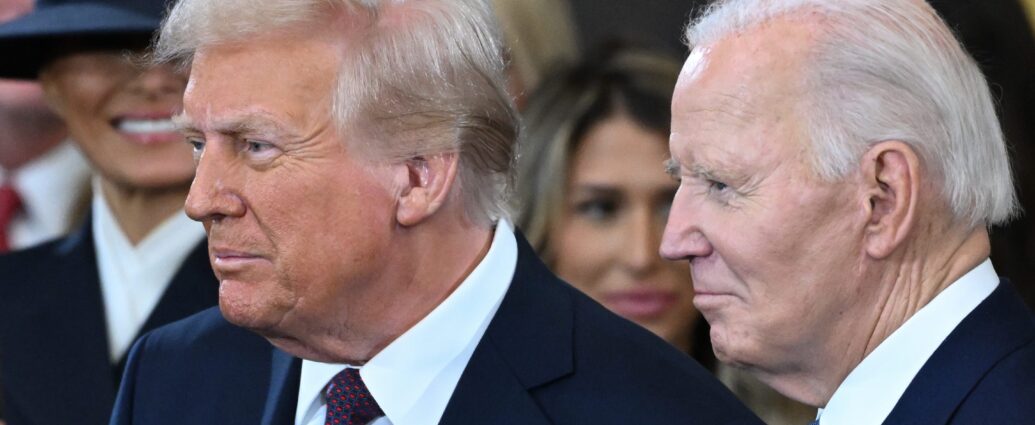
U.S. gas prices jumped past an average of $4 a gallon for the first time since 2022 on Tuesday as the Iran war pushed fuel prices to soar worldwide.

According to motor club AAA, the national average for a gallon of regular gasoline is now $4.02 — over a dollar more than before the war began. The last time U.S. drivers were collectively paying this much at the pump was nearly four years ago, following Russia’s invasion of Ukraine.

The price is a national average, meaning drivers in some states have been paying well over $4 a gallon for a while now. Prices vary from state to state due to factors ranging from nearby supply to differing tax rates.

Since the U.S. and Israel launched a joint war against Iran on Feb. 28, the cost of crude oil — the main ingredient in gasoline — has spiked and swung rapidly. That’s because the conflict has caused deep supply chain disruptions and cuts from major oil producers across the Middle East.

Motorists around the world are also coping with higher gas prices due to the war. In Paris, for example, gas is at 2.34 euros per liter ($2.68), which is about $10.27 a gallon.

Expensive gas could drag on the economy and drive up other prices

Higher gas prices are impacting consumers and businesses as many households continue to face wider cost of living strains. And as drivers pay more to cover necessities like gas, many may be forced to cut their budgets in other places.

More expensive fuel can also push up other spending, from utility bills to the price of many goods consumers buy each day.

Consumer prices and the cost of living already have become flashpoints in this midterm election year, with Democrats especially hammering Trump and Republicans as the GOP tries to hold majorities on Capitol Hill. A recent AP-NORC poll found that 45% of U.S. adults are “extremely” or “very” concerned about being able to afford gas in the next few months, up from 30% shortly after Trump won the 2024 presidential election with promises to lower costs.

In the immediate future, analysts point to groceries, which have to be restocked frequently and could also see price hikes as businesses’ transportation costs pile up.

But hauling other cargo and packages has also been impacted. The United Postal Service, for example, is seeking a temporary 8% added charge on some of its popular products including Priority Mail.

U.S. diesel prices — the fuel used for many freight and delivery trucks — is now going for an average of $5.45 a gallon, up from about $3.76 a gallon before the war began, per AAA.

If the war drags on, it’s possible that those prices could tick up even higher. Most tanker movement in the key Strait of Hormuz, where roughly one-fifth of the world’s oil typically sails through, remains at a halt. That’s led to cuts from major producers in the region who have no way of getting their crude to market. Meanwhile, Iran, Israel and the U.S. have all struck oil and gas facilities, worsening supply concerns.

Reserves open in an effort to cut prices

In a search for some relief, the International Energy Agency pledged to release 400 million barrels of oil from emergency stockpiles of member nations. That includes the U.S., despite Trump initially downplaying the need for reserve oil.

The Trump administration has also eased sanctions to free up some oil from Venezuela, and temporarily Russia. The White House also says it’s waiving maritime shipping requirements under a more than century-old law, known as the Jones Act, for 60 days.

It’s not yet clear if those efforts will bring relief for consumers. A lot of factors contribute to gas prices.

Refineries buy crude oil in advance, meaning some could be work with more expensive oil for a while, and it will take time for any new supply to trickle down to consumers.

And while steep crude prices are a leading driver behind today’s surge, U.S. gas prices typically tick up a bit at this time of year. More drivers are hitting the road and trying to fuel up while they can, so there’s higher demand. Warming weather also brings a shift to summer blend fuel, which is more expensive to produce than winter blend.

The US is an oil exporter, but it’s still affected by global prices

The U.S., which is a net oil exporter, hasn’t seen as stark a shock as other parts of the world that rely more heavily on fuel imports from the Middle East, notably Asia. But that doesn’t mean America is immune to price spikes.

Oil is a globally-traded commodity. And most of what the U.S. produces is light, sweet crude — but refineries on the East and West coasts are primarily designed to process heavier, sour product. As a result, the country also needs imports.

Escalating geopolitical conflicts have disrupted oil flows and contributed to a surge in gas prices in the past. The U.S. average for regular gasoline climbed to its highest level of more than $5 a gallon in June 2022, nearly four months after the Ukraine war began and world leaders imposed sanctions against Russia, a leading oil producer.

Prices at the pump later fell from that record. Before Tuesday, per AAA data, the national average had stayed below the $4 mark since mid-August of 2022.

___

Associated Press journalists Angela Charlton in Paris and Bill Barrow in Washington contributed to this report.

This story was originally featured on Fortune.com

Gulf allies of the United States, led by Saudi Arabia and the United Arab Emirates, are urging President Donald Trump to continue prosecuting the war against Iran, arguing that Tehran hasn’t been weakened enough by the monthlong U.S.-led bombing campaign, according to U.S., Gulf and Israeli officials.

After private grumbling at the start of the war that they were not given adequate advance notice of the U.S.-Israeli attack and complaining the U.S. had ignored their warnings that the war would have devastating consequences for the entire region, some of the regional allies are making the case to the White House that the moment offers a historic opportunity to cripple Tehran’s clerical rule once and for all.

Officials from Saudi Arabia, United Arab Emirates, Kuwait and Bahrain have conveyed in private conversations that they do not want the military operation to end until there are significant changes in the Iranian leadership or there’s a dramatic shift in Iranian behavior, according to the officials, who were not authorized to comment publicly and spoke on the condition of anonymity.

The push from the Gulf nations comes as Trump vacillates between claiming that Iran’s decimated leadership is ready to settle the conflict and threatening to further escalate the war if a deal is not reached soon.

All the while, Trump is struggling to rally public support at home for a war that’s left more than 3,000 dead across the Mideast and is shaking the global economy. Yet the U.S. leader is sounding increasingly confident that he has the full support of his most important Mideast allies — including some that were hesitant about a new military campaign in the lead-up to the war.

“Saudi Arabia’s fighting back hard. Qatar is fighting back. UAE is fighting back. Kuwait’s fighting back. Bahrain’s fighting back,” Trump told reporters on Air Force One on Sunday evening as he made his way to Washington from his home in Florida. “They’re all fighting back.”

The Gulf countries host U.S. forces and bases from which the U.S. has launched strikes on Iran, but have not joined the offensive strikes.

Gulf allies support the war to varying degrees

While regional leaders are broadly supportive now of the U.S. efforts, one Gulf diplomat described some division, with Saudi Arabia and the UAE leading the calls for increasing military pressure on Tehran.

The UAE has emerged as perhaps the most hawkish of the Gulf countries and is pushing hard for Trump to order a ground invasion, the diplomat said. Kuwait and Bahrain also favor this option. The UAE, which has faced more than 2,300 missile and drone attacks from Iran, has only grown more irritated as the war grinds on and the salvos threaten to tarnish its image as the safe, pristine and monied hub for trade and tourism of the Mideast.

Oman and Qatar, which historically have played the role of intermediary between the long economically isolated Iran and the West, have favored a diplomatic solution.

The diplomat said Saudi Arabia has argued to the U.S. that ending the war now won’t produce a “good deal,” one guaranteeing security for Iran’s Arab neighbors.

The Saudis say an eventual war settlement must neutralize Iran’s nuclear program, destroy its ballistic missile capabilities, end Tehran’s support for proxy groups, and also ensure that the Strait of Hormuz cannot be effectively shutdown by the Islamic Republic in the future as it has during the conflict. About 20% of the world’s oil flowed through the waterway before the war.

Achieving those goals would require a sharp course correction by the theocracy that has been in charge of the country since the 1979 Islamic Revolution or its removal.

Senior Emirati officials, meanwhile, have become more pointed in their rhetoric toward Iran.

“An Iranian regime that launches ballistic missiles at homes, weaponizes global trade and supports proxies is no longer an acceptable feature of the regional landscape,” Noura Al Kaabi, a minister of state at the UAE’s Foreign Ministry, wrote in a column published Monday by the state-linked, English-language newspaper The National. She added: “We want a guarantee that this will never happen again.”

The White House declined to comment for this story about the deliberations with Gulf allies. But Secretary of State Marco Rubio on Monday underscored that the U.S. and its Gulf Arab allies are in sync about Iran.

“They are religious zealots who can never be allowed to possess a nuclear weapon because they have an apocalyptic vision of the future,” Rubio said of Iran in an appearance on ABC’s “Good Morning America.” “And all of their neighbors know that, by the way, which is why all of their neighbors have been supportive of the efforts we’re conducting.”

Saudi crown prince urges US not to let up

Crown Prince Mohammed bin Salman, the kingdom’s de facto leader, has told White House officials that a further defanging of Iran’s military capabilities and clerical leadership serves the long-term interest of the Gulf region and beyond, according to a person who has been briefed on the conversations.

Still, the Saudis are sensitive to the fact that the longer the conflict goes on the more opportunity Iran has to carry out strikes on the kingdom’s energy infrastructure, the heartbeat of its oil-rich economy.

A Saudi government official underscored that the kingdom ultimately wants to see a political solution to the crisis, but its immediate focus remains safeguarding its people and critical infrastructure.

Iran’s foreign minister early Tuesday insisted Tehran’s attacks on the Gulf Arab states only target U.S. forces, even after assaults have hit civilian targets.

“Iran respects the Kingdom of Saudi Arabia and considers it a brotherly nation,” Iranian Foreign Minister Abbas Araghchi wrote on X, sharing a photo purportedly showing damage to an American aircraft at a Saudi air base. “Our operations are aimed at enemy aggressors who have no respect for Arabs or Iranians, nor can provide any security. … High time to eject U.S. forces.”

Trump, in recent days, has sought to spotlight that most of the Gulf countries have stood in lockstep with his administration as the U.S. prosecutes the war, noting how they’ve coalesced in the thick of crisis as he criticizes NATO allies for not joining the U.S. in the fight.

On Friday, he heaped praise on Bahrain, Kuwait, Qatar, Saudi Arabia, and United Arab Emirates for showing “bravery” as the war has unfolded.

The president, speaking at an event in Miami sponsored by the Saudi sovereign wealth fund, was particularly effusive about the Saudi crown prince, hailing him as a “warrior” and a “fantastic man.”

Trump also alluded to the fact that the Gulf countries were hesitant about his and Israeli Prime Minister Benjamin Netanyahu’s decision to launch the war, but have since rallied.

“They weren’t thinking this was going to happen, nobody was,” said Trump, referring to Iran launching thousands of retaliatory salvos around the Gulf. “And they turned against them and really became very powerfully aligned. And they were with us, but they weren’t with us very obliquely. They were with us.”

Will Gulf allies join the fight?

Trump has yet to call on Gulf nations to take part in offensive operations.

One factor may be that the administration might have calculated that it’s not worth the complications that come with crowding the skies with additional militaries beyond Israel.

Three American fighter jets were mistakenly downed by friendly Kuwaiti fire in the first days of the conflict in the midst of an Iranian air assault. All six crew members safely ejected from the F-15E Strike Eagles.

And six American service members were killed on March 12, when their KC-135 refueling aircraft crashed in western Iraq.

Another factor is that only UAE and Bahrain are among the Gulf states that have formal diplomatic relations with Israel, adding a layer of complication to their calculus, notes Yasmine Farouk, the Gulf and Arabian Peninsula project director at the International Crisis Group

But Iran has warned it will attack its neighbors’ critical infrastructure, including desalination plants used to provide drinking water to the region, if Trump follows through on his threat to strike Iran’s power plants if it doesn’t open the Strait of Hormuz by April 6.

“The absence of a clear objective, the absence of the trust that the United States is really going to go until the end and finish the jobs … it’s making some of them reluctant,” Farouk said. “But if there is a consequential or mass casualty (event) in one of those countries, then it would be justified for them to become a belligerent.”

___

Magdy reported from Cairo and Mednick reported from Tel Aviv, Israel. AP writers Darlene Superville aboard Air Force One and Josef Federman in Jerusalem contributed reporting.

This story was originally featured on Fortune.com

As the Iran war intensifies, President Donald Trump has prioritized efforts to calm the financial markets — trying to keep oil prices from exploding upward, stocks from cratering and interest rates from surging.

When the markets have flashed danger, Trump has been quick with a social media post or a remark to claim the war he launched last month could soon end. He’s publicly declared that the markets are doing better than he expected, even with the S&P 500 stock index declining over the past five weeks and the global oil benchmark up roughly 60%.

“I thought oil prices were going to go up higher than they are now,” Trump said at a Friday investor summit. “And I thought that we would see a bigger drop in stock. It hasn’t been that bad.”

With the Iran war, the White House has largely refrained from messaging more aggressively to voters about the economic consequences — choosing instead to try to contain any damage in the financial markets, which have swung wildly on the prospects of ceasefire or escalation in what has become a high-stakes guessing game about Trump’s next moves.

The Republican president showed the extremes of his messaging Monday before the U.S. stock market opened, writing in a social media post that great progress had been achieved on peace talks with Iran while also threatening civilian infrastructure such as desalination plants if a deal wasn’t reached “shortly.”

The White House sees the stock, energy and bond markets as a way to indirectly reach voters. Trump has staked his economic agenda on cheap prices at the pump, robust gains in 401(k) accounts and cheaper mortgage rates.

But that messaging appears to be wearing thin as the president’s various pronouncements have done little to change the reality that a large chunk of the world’s energy supplies is stranded by the conflict. Just 38% of U.S. adults approve of how he’s handling the economy and only 35% support him on Iran, according to a March survey by The Associated Press-NORC Center for Public Affairs Research.

The president has tried to dictate to markets instead of talking directly to Americans

Gene Sperling, a top economic adviser in the Democratic Clinton, Obama and Biden administrations, said voters can make a direct connection between prices at the pump and Trump’s choice to attack Iran. He said “simplistic jawboning” to the markets is insufficient for a public that is stuck paying the price as gasoline soars past $4 a gallon nationwide.

“Most advisers would say the president has to speak directly to the American people and fully acknowledge the economic pain that his policy has so directly caused in a short amount of time and make the case for why the national security concerns justify it,” Sperling said. “Instead, you have a strategy of not recognizing or even dismissing people’s economic pain.”

White House press secretary Karoline Leavitt on Monday called the oil price increases a “short-term fluctuation.”

Trump’s strategy of giving mixed messages has started to work against him, said Jeffrey Sonnenfeld, a professor at the Yale University School of Management and co-author of the new book “Trump’s Ten Commandments: Strategic Lessons from the Trump Leadership Toolbox.”

“The uncertainty is now soaring,” Sonnenfeld said. “As the messaging to calm markets with false reassurances is having diminishing credibility in financial markets, so, too, has Trump diminished public confidence.”

Trump’s desire for flexibility on the war limits his ability to offer clarity

Trump has embraced having flexibility in how he chooses to conduct the war, even though this has muddled his stated objectives.

During a Cabinet meeting Thursday, he said Iran was “begging” for a deal even as he threatened further military action — all the while maintaining that any economic damage to the U.S. would reverse itself.

On Friday after the markets closed, he extended his deadline for Iran to open the Strait of Hormuz, a key waterway for the flow of oil, saying he would hold off on bombing Iran’s energy plants in the meantime.

Treasury Secretary Scott Bessent said Monday on Fox News Channel’s “Fox & Friends” that Iran was letting some tankers through the Strait of Hormuz and that the “market is well supplied” because countries are releasing their strategic petroleum reserves and sanctions have been removed for Russian and Iranian oil already on tankers.

“We are seeing more and more ships go through on a daily basis as individual countries cut deals with the Iranian regime for the time being,” Bessent said. “But over time, the U.S. is going to retake control of the straits, and there will be freedom of navigation, whether it is through U.S. escorts or a multinational escort.”

Graham Steele, a Biden-era Treasury official, said Trump’s messaging techniques “can work temporarily, but they have diminishing returns, over time,” if they’re detached from actual policies and results.

“We saw a lot of the volatile market reactions initially, when he kept announcing these things and then walking them back,” Steele said. “The market reaction now is just a steady trend upward in prices,” he noted, adding that markets are “not responding to it in the same way anymore.”

Confidence in the economy and Trump is fading without clear results

The University of Michigan’s Index of Consumer Sentiment on Friday fell to a reading of 53.3 in March, its lowest level since December. Joanne Hsu, director of the surveys of consumers, pointed to the financial market volatility “in the wake of the Iran conflict” as reducing confidence in the economy for households with middle and higher incomes.

Hsu noted that the survey indicated that people do not expect the higher energy costs and stock market declines to persist, but that could change if the war “becomes protracted or if higher energy prices pass through to overall inflation.”

Gus Faucher, the chief economist at PNC Financial Services, stressed that low levels of consumer sentiment do not automatically signal a recession. But he said consumers would have to see lower gas prices, a steady stock market and decreased mortgage rates to feel better about the economy, which likely means a definitive resolution to the conflict rather than a series of pronouncements by Trump.

“The proof is in the pudding,” Faucher said. “People need to see some substantive improvements before they feel better about conditions.”

This story was originally featured on Fortune.com

U.S. President Donald Trump on Monday threatened widespread destruction of Iran’s energy resources and other vital infrastructure, potentially including desalination plants that supply drinking water, if a deal to end the war is not reached “shortly.”

Iran, meanwhile, struck a key water and electrical plant in Kuwait, and an oil refinery in Israel came under attack. A drone hit a Kuwaiti oil tanker in Dubai waters, causing a fire that authorities were working to control early Tuesday, the Dubai Media Office said.

Israel and the U.S. launched a new wave of strikes on Iran, as the war raged with no end in sight.

Trump’s new threat came in a social media post. Earlier comments to the Financial Times suggested American troops could seize Iran’s Kharg Island oil export hub. Trump has repeatedly claimed to be making diplomatic progress — though Tehran denies negotiating directly — while ramping up his threats and sending thousands more U.S. troops to the Middle East.

Trump told the New York Post that the U.S. is negotiating with Iran’s parliament speaker, Mohammad Bagher Qalibaf. The former Revolutionary Guard commander, who has taunted the U.S. on social media, dismissed the talks facilitated by Pakistan as a cover for the latest American troop deployments.

Trump says diplomacy is going well but threatens major escalation

In a social media post, Trump said “great progress is being made” in talks with Iran to end military operations. But he said if a deal is not reached “shortly,” and if the Strait of Hormuz is not immediately reopened, the U.S. would broaden its offensive by “completely obliterating” power plants, oil wells, Kharg Island and possibly even desalination plants.

The strait is a crucial waterway through which a fifth of the world’s oil is shipped in peacetime.

The laws of armed conflict allow attacks on civilian infrastructure such as energy plants only if the military advantage outweighs the civilian harm, legal scholars say. It’s considered a high bar to clear, and causing excessive suffering to civilians can constitute a war crime.

A 22-year-old resident of Karaj, near Tehran, said his area lost power for several hours overnight following nearby strikes.

“I was really scared. I thought that they’d hit the power plants and that we are not going to have power anymore,” he said, speaking on condition of anonymity out of security fears.

Iran says US demands are ‘excessive, unrealistic and irrational’

The U.S. already has targeted military positions on Kharg. Iran has threatened to launch its own ground invasion of Gulf Arab countries and to mine the Persian Gulf if U.S. troops set foot on its territory.

Iranian Foreign Ministry spokesman Esmail Baghaei said Tehran had received a 15-point proposal from the Trump administration containing “excessive, unrealistic and irrational” demands, while denying there had been any direct talks.

Qalibaf, the parliament speaker Trump says he is negotiating with, said Iranian forces were “waiting for the arrival of American troops on the ground to set them on fire and punish their regional partners forever,” according to state media.

Twice during Trump’s second term, the U.S. has attacked Iran during high-level diplomatic talks, including with the Feb. 28 strikes that started the current war.

Iran attacks Israel and Gulf infrastructure

Sirens sounded at dawn near Israel’s main nuclear research center, a part of the country that has been targeted repeatedly in recent days. Israel’s military also said it had taken out two drones launched from Yemen, where the Iran-backed Houthi rebels entered the war on Saturday with their first missile attack.

Iran kept up the pressure on its Gulf Arab neighbors: Saudi Arabia intercepted five missiles targeting its oil-rich Eastern province; a fireball erupted over Dubai, United Arab Emirates, as a missile was intercepted; and in Kuwait, an Iranian attack hit a power and desalination plant, killing one worker and wounding 10 soldiers, the state-run KUNA news agency reported.

An Emirati official signaled that the UAE wants more than just a ceasefire.

“An Iranian regime that launches ballistic missiles at homes, weaponizes global trade and supports proxies is no longer an acceptable feature of the regional landscape,” Noura Al Kaabi, a minister of state at the UAE’s Foreign Ministry, wrote in a column published by the state-linked, English-language newspaper The National.

She added: “We want a guarantee that this will never happen again.”

NATO air defenses intercepted a ballistic missile over Turkey that was fired from Iran, Turkey’s Defense Ministry said, in the fourth such incident since the start of the war. Iran has denied firing the previous missiles. Turkey is taking part in mediation efforts.

Israel launched a new wave of attacks on Iran, saying it was striking “military infrastructure” across Tehran. Explosions were heard in the Iranian capital, and Iranian state media reported that a petrochemicals plant in Tabriz, in the north, sustained damage in an airstrike.

Peacekeepers killed in Lebanon, where Israel is battling Hezbollah

The U.N. Security Council planned to convene an emergency session Tuesday after officials said three peacekeepers in southern Lebanon had been killed in less than 24 hours. The meeting was scheduled after a request from France.

The U.N. peacekeeping mission in the region where Israel is battling the Iran-backed Hezbollah did not say who was responsible for the deaths overnight and into Monday.

Two of the peacekeepers were killed when an explosion of “unknown origin” destroyed their vehicle, and a third was killed earlier when a base for the peacekeeping mission, known as UNIFIL, was hit by a projectile. All three peacekeepers were from the Indonesian army, U.N. officials said.

The Israeli army said it was reviewing the deaths to determine if they resulted from Hezbollah activity or Israeli fire, noting that they “occurred in an active combat area.”

An Israeli airstrike on a Beirut suburb killed one person and wounded 17, including four children, according to Lebanon’s Health Ministry.

Over the weekend, Israeli Prime Minister Benjamin Netanyahu said the military would widen its invasion, expanding the “existing security strip” in southern Lebanon.

In Iran, authorities say more than 1,900 people have been killed, while 19 have been reported dead in Israel.

Two dozen people have been killed in Gulf states and the occupied West Bank. In Lebanon, officials said more than 1,200 people have been killed, and more than 1 million have been displaced.

Ten Israeli soldiers have died in Lebanon, while 13 U.S. service members have been killed in the war.

Oil prices rise again as concerns of global energy crisis grow

Iran’s attacks on the energy infrastructure of the region and its stranglehold on the Strait of Hormuz have threatened global supplies of oil, natural gas and fertilizer. They have sent fuel prices skyrocketing and given rise to growing concerns about an energy crisis.

Trump has said that Iran agreed to allow 20 oil tankers through the Strait of Hormuz starting Monday as “a sign of respect.” There was no information on whether those ships were actually moving.

Brent crude oil, the international standard, was trading around $115 Monday, up nearly 60% from when the war started.

___

Boak reported from Washington and Corder from The Hague, Netherlands. Associated Press writers David Rising in Bangkok, Collin Binkley in Washington, Amir-Hussein Radjy in Cairo, Melanie Lidman in Tel Aviv, Israel, and Sally Abou AlJoud in Beirut contributed to this report.

This story was originally featured on Fortune.com

The software-as-a-service (SaaS) doomer headlines may have peaked in February—but if you check out the dealmaking data, SaaS has been looking alive. 

For the final quarter of 2025, enterprise SaaS M&A hit $83.7 billion in total value, recent PitchBook data found. This was across 245 deals, a slight drop in deal count quarter-over-quarter, but a nearly 24% leap in deal value. All in, this means that 2025 was the biggest year for enterprise SaaS M&A since the fever pitch of 2021. 

On its face, perhaps not what you were expecting. We’re a few weeks removed from February’s so-called SaaSpocalypse. In the 24 hours following the release of Anthropic’s Claude Cowork AI, software stocks in the public markets cratered: $285 billion in market value violently vanished overnight. (Since, some of the hardest-hit, including Salesforce, Adobe, and Workday, have evened out or rebounded—though all remain down year-to-date.) 

The SaaSpocalypse, ultimately, was a knee-jerk, existential reaction to where AI is (slowly, in many contexts) dragging the tech stack. And this round of PitchBook data is a reminder that the “death of SaaS” story, while a nightmare for public market multiples, is actually not a hindrance in the slightest to private market dealmaking.

“The SaaSpocalypse is accelerating M&A rather than slowing it down, and I expect enterprise SaaS M&A to remain highly active in 2026,” said Derek Hernandez, PitchBook senior research analyst, via email. “The sharp compression in public software multiples has made take-privates meaningfully cheaper for PE sponsors who were already deploying record capital. Additionally, M&A involving PE-backed enterprise SaaS surged over 100% YoY in 2025 to $89 billion. What we’re seeing is that flight to defensibility.”

Still, the SaaS spoils are very concentrated. These Q4 M&A numbers are bolstered by 17 multi-billion mega-deals, which comprised more than 75% of the total deal value for Q4. The largest deals included IBM’s $11 billion Confluent acquisition and Permira and Warburg Pincus’s $8.4 billion Clearwater Analytics deal. (Notably, strategics really showed up in Q4, as corporate M&A soared quarter-over-quarter by 168.5%, reaching $51.8 billion.)

It’s probably also not an exaggeration to say: We could very well be entering a golden moment for SaaS deals. The public markets’ agony may for the foreseeable future make assets less expensive, while AI urgency remains high. 

For the record, I do think the “death of SaaS” on some level is real. It doesn’t pertain specifically to the Salesforces or the Workdays of the world (they will certainly be around at the end of the decade). But the SaaS-era, ARR-reliable, seat-selling way of doing business? That’s certainly on its way out. And as it goes, the deals will flow.

See you tomorrow,

Allie Garfinkle
X:
@agarfinks
Email: alexandra.garfinkle@fortune.com

Submit a deal for the Term Sheet newsletter here.

Joey Abrams curated the deals section of today’s newsletter. Subscribe here.

This story was originally featured on Fortune.com

Treeline wants to rebuild corporate IT from the ground up, starting with the everyday headaches most workers barely notice until something breaks.

The San Francisco–based startup has raised a $25 million Series A led by Andreessen Horowitz to build what it calls a “modern IT operating system,” an AI and software-first alternative to the decades-old managed services firms still powering most corporate IT. The round comes as global IT spend is expected to climb above $6 trillion in 2026.

“Basically every business in the world needs some form of IT management,” Peter Doyle, CEO and cofounder of Treeline, told Fortune. Most companies, he notes, can’t afford a full in-house department, so they outsource to a managed service provider—one of roughly 40,000 firms in the U.S. alone that handle everything from onboarding employees to fixing the Wi-Fi. The product those providers sell, as he sees it, is fundamentally “people and tools.” Teams of technicians stitch together dozens of point solutions to monitor environments, provision laptops, and respond to tickets, he says.

Treeline’s bet is to flip that model. Instead of starting with people and layering in software, it starts with a unified software and AI layer, then brings technicians for judgment and oversight. The company says its AI agents now augment or directly resolve 98% of customer requests, and speed up employee onboarding from 20 minutes to 2 minutes.

“What it takes is not being afraid to keep technicians and people in the loop,” Doyle says. “I’m not saying that we should replace technicians. We should empower them.” 

Treeline uses its technicians‑in‑the‑loop model to automate lower level work like password resets so specialists can focus on “the really important tasks,” Doyle says.Doyle comes to the problem as an investor turned founder and operator. He previously spent about a decade in venture capital at Accel, backing IT infrastructure and security companies like Pagerduty, Heptio, and ServiceChannel. When we started Treeline, he thought building a better tool and selling it into that channel would be enough. “Within the first 10 days, we realized that wouldn’t work. We actually needed to fundamentally change how this industry operates,” he told Fortune.

This story was originally featured on Fortune.com

“World class.” “Consistent.” “Focused relentlessly on performance.” Blackstone President and COO Jon Gray is speaking from his New York office, and you could be forgiven for thinking he’s referring to the strategy that has helped turn his firm into the world’s largest alternative investment manager, now boasting $1.3 trillion in AUM (assets under management).

But actually, he’s talking about golf. Or rather, a golfer—the one Blackstone just hired to be its first ever brand ambassador. And in choosing Tommy Fleetwood, the 4th highest-ranked golfer on the PGA Tour, Blackstone did set out to find someone that embodied the firm’s ethos. “He’s such a compelling figure, he’s a self effacing, good high-integrity human being who also happens to be outstanding at what he does,” effuses Gray, who calls Fleetwood “world class, both as a professional and as a human being.” 

The terms of the deal were not disclosed, but they will involve Fleetwood wearing Blackstone’s logo in the coveted “front of hat” position when he plays in tournaments around the world, and perhaps a little mixing and mingling with Blackstone clients at events designed to reach clients in a more relaxed setting than a conference room. 

Fleetwood is the British golfer who is known as one of the most likable players on tour. He previously held the uncomfortable record of having the most top five finishes on the PGA Tour without a win—an excruciating 30. But last year when he finally broke the streak and won the Tour Championship in August, it was a moment that showcased grit and glory, transcending sports. The New York Times dubbed 2025 “the year of Tommy.”  

Gray says the pairing came about via Blackstone partner Joe Baratta, who runs the firm’s private equity business, and had a preexisting relationship with Fleetwood. “He came to us and said, ‘Hey, look, [Tommy’s] got a contract that’s coming up with Nike and he’s thinking about potentially making some changes. Would we have an interest?’”

Underpinning the deal, of course, is Blackstone’s quest to raise its profile in the highly lucrative—and increasingly competitive—private wealth business. Gray says the business is about $300 billion, or roughly one-fourth of the firm’s total AUM. Blackstone primarily provides retail investors with access to alternative investments such as real estate or private credit, in which they give up instant liquidity in exchange for higher returns. That makes Blackstone’s client base mostly financial advisors who recommend those asset classes to their clients, as well as family offices and high-net-worth individuals. 

Gray points out that Blackstone’s institutional investors like pension funds tend to have about one-third of their assets in private vehicles. But if you look at individuals—even very affluent individuals—they’re only about 1%-2% allocated to private assets, “and yet their time horizons look very similar,” he notes.

Is Gray worried about the current souring mood towards private credit, which has weighed on Blackstone’s stock this year? He acknowledges the noise, and admits that the for the economy overall, “the picture in the near term looks cloudy.” But he says his investors want returns over years and decades, not days. “It’s not what’s going to happen next week, it’s what’s going to happen in five, 10, 20 or 30 years,” that matters he says.

The ability to absorb stress and transcend losses are also themes that are all too familiar to golfers. So is Gray considering picking up a set of clubs now that Fleetwood will be repping the firm? The answer: Not yet. “I’m a Type-A person, so if I do something, I want to be really, really good at it,” he says. With a punishing travel schedule, taking it up anytime soon isn’t the cards. “For right now, I’m focused on work and family, and I love that Tommy is focused on golf.”

This story was originally featured on Fortune.com

Steve Klinsky has spent 25 years building New Mountain Capital into one of private equity’s most respected firms, with $60 billion in assets under management across hundreds of portfolio companies. His investment record speaks for itself: a supply chain software company he bought for $600 million sold for over $8 billion. A life sciences firm he backed went public at a $3 billion gain. The firm often says that it has never had a portfolio company go bankrupt.

But ask Klinsky what he’s most excited about right now, and he’ll tell you about a website.

ModernStates.org—the online home of his Modern States Education Alliance—has quietly reached 800,000 people and given away the equivalent of 25,000 free years of college credit, all without spending a dollar on advertising. And Klinsky says that’s just the start.

“It’s just getting started,” he said in a recent interview on Goldman Sachs’ Great Investors podcast, noting that it’s all happened without a single dollar spent on advertising.

“There’s $1.7 trillion dollars of student debt,” Klinsky said when speaking about what motivates him, a notable philanthropist. “It’s an unreal number.”

The Idea Is Elegantly Simple

Modern States didn’t invent anything new, Klinsky explained to Alison Mass, Goldman’s chair of Investment Banking, Global Banking and Markets. It built on a little-known but decades-old program called CLEP exams—College-Level Examination Program tests administered by the College Board, the same organization behind the SAT. The exams cover dozens of subjects, from college algebra to American literature, and have existed for 50 years. Pass one, and most U.S. colleges and universities will award you the credit—no tuition required.

The problem was that almost nobody knew about them, and even fewer could afford to prepare for them properly.

Klinsky’s solution: hire the best professor in each of the 32 subjects, build a free online course for every one, and post them at ModernStates.org. Students get free coursework, free readings, and free practice questions. If they pass, Modern States even picks up the $100 CLEP exam fee.

The math is striking.

“If you’re Abe Lincoln and you’re totally impoverished but you’re ambitious, you can get a year of college this way and save a year of time and $30 grand of money,” Klinsky said.

Why a Billionaire PE Founder Is Doing This

Klinsky, whose net worth Forbes estimates at $4.9 billion, didn’t arrive at education philanthropy through guilt or optics. His path there is personal.

Growing up in Detroit, his older brother Gary—seven years his senior—tutored him relentlessly after school. “It was incredibly meaningful in my life,” Klinsky said. Gary died of a genetic illness while Klinsky was just in graduate school at Harvard. And in 1987, when Klinsky made partner at his first major PE firm, Forstmann Little, in New York City, one of his first acts was to create afterschool centers in the most crime-ridden neighborhoods nearby, named in Gary’s memory. They’re still running today.

That hands-on experience in East New York—a neighborhood that at the time had more murders than the entire state of Nebraska—convinced him the problem with America’s most underserved students wasn’t the kids. It was the system. “When I would go visit the school,” he said, “the kids were fantastic. The teachers were fantastic.”

Charter schools came next. Then a deeper focus on higher education. Then Modern States.

Redemption of an Industry

Klinsky’s philanthropy is harder to dismiss when you consider where he came from. He is, by his own acknowledgment, a character in Barbarians at the Gate—the classic business book that became the defining indictment of 1980s private equity excess, chronicling the savage $25 billion RJR Nabisco buyout (then the largest in history) and the era of debt-fueled, fee-gorged dealmaking that made Wall Street a cultural villain for a generation.

He was there. He saw it up close. And he spent the next 40 years building something deliberately different.

New Mountain Capital was founded on a explicit rejection of the old model—less debt, no financial engineering, only non-cyclical industries, and a relentless focus on actually improving the businesses it buys. Klinsky has made the case publicly for years, including as chairman of the American Investment Council, the trade group representing all 5,000 U.S. private equity firms, and in a Harvard Business Review piece laying out how his firm grew a sleepy supply chain software company from $600 million to over $8 billion in value.

“Private equity has gone from a form of finance into a form of business,” he told Mass on the Goldman Sachs podcast. His free-college initiative, in that light, isn’t a detour from Klinsky’s Wall Street identity but another expression of what he’s always done: find something broken, rolled up his sleeves, and built something better.

Just Getting Started

Despite its scale, Modern States remains one of philanthropy’s best-kept secrets. Klinsky attributes its growth entirely to word of mouth—800,000 users found it organically, proof of concept for a model he believes can grow far larger.

At a moment when student debt has become one of the defining anxieties of a generation, the program’s timing couldn’t be more relevant. Even in-state tuition at universities trying to hold costs down—like Purdue in Indiana—runs roughly $33,000 a year, Klinsky noted.

Modern States won’t solve the student debt crisis alone. But for 800,000 people who’ve already used it, it may be the most practical solution anyone has actually delivered.

For this story, Fortune journalists used generative AI as a research tool. An editor verified the accuracy of the information before publishing.

This story was originally featured on Fortune.com

Good morning. When Barbara Larson stepped into the role of EVP and CFO at Workiva in January, she wasn’t entering unfamiliar territory. She had used the company’s financial reporting platform at Workday and VMware and had advocated for it. So, when the opportunity came to join Workiva, she says the decision was uncomplicated.

“I love this stage of the company,” Larson told me. It’s the high-stakes push to scale. “We’ve guided to $1 billion in revenue this year.”

Workiva (NYSE: WK), which offers an AI-powered platform for governance, risk, compliance, and sustainability, reported $885 million in total revenue for fiscal 2025, a 20% year-over-year increase, with subscription and support revenue growing 22%. For the full year 2026, total revenue is expected to be in the range of $1.036 billion to $1.040 billion. Among the company’s more than 6,600 customers are Hershey, Slack, and KeyBank, according to its website.

Barbara Larson, EVP and CFO at Workiva
Courtesy of Workiva

Larson brings more than two decades of financial leadership experience. She most recently served as CFO at SentinelOne and previously spent nearly a decade at Workday, ultimately becoming CFO. She also held senior roles at VMware, TIBCO Software, and Symantec.

Many companies are still drowning in data across disparate systems, a pain point Workiva is designed to address, Larson said. “I’ve spent my entire career in finance,” Larson said. You’ve got your data working either for you or against you—there isn’t a middle ground, she said. If you’re running AI across fragmented systems or unreliable data, you aren’t accelerating insight; you’re just accelerating the wrong answers, she added.

Regulatory pressures are intensifying, Larson noted, with shifting requirements and a changing geopolitical backdrop making compliance a moving target. Workiva’s approach is to ground AI within the customer’s own data, standards, and context, so output isn’t merely “plausible” but actionable and defensible, she said.

That applies to internal users managing SEC reporting, Sarbanes-Oxley compliance, enterprise risk management, and sustainability disclosures, as well as external auditors using the same platform. Larson points to SEC risk factor drafting: when new standards or risks emerge, AI itself being a prime example, teams can draft disclosures and benchmark them against peers within a controlled environment.

Larson’s role also reflects a broader shift in what it means to be a CFO in 2026. The job, she says, looks nothing like it did five years ago.

That includes a dual mandate on AI: CFOs must drive adoption across the enterprise while transforming their own finance organizations. At Workiva, Larson is partnering with the CIO and executive team to identify where AI can drive faster outcomes and create leverage for shareholders, she said. In fiscal 2025, Workiva delivered more than 600 basis points of non-GAAP operating leverage alongside 20% revenue growth, a trajectory she aims to continue.

As a mentor, Larson’s advice is grounded in her own biography. Growing up moving frequently, she learned to embrace change, be adaptable, and stay curious—principles that apply to the age of AI.

“If you are going to be a really strong finance leader, you have to understand the broader business,” she said.

Sheryl Estrada
sheryl.estrada@fortune.com

Quick note: CFO Daily marked five years on March 28! Over the years, I’ve had the opportunity to speak with hundreds of finance chiefs across industries. It has been fascinating to report on the evolution of the CFO role and the future of the finance organization. A special thanks to Fortune’s executive editor Lee Clifford, who has worked with me from the beginning. And thank you for your readership.

This story was originally featured on Fortune.com

AI models are affirming people’s worst behaviors even when other humans say they’re in the wrong, and users can’t get enough. 

A new study out of the Stanford computer science department and published in the journal Science revealed that AI affirms users 49% more than a human does on average when it comes to social questions—a worrying trend especially as people increasingly turn to AI for personal advice and even therapy.

Of the 2,400 who participated in the study, mostly preferred being flattered. The number of test subjects more likely to use the sycophantic AI again was 13% higher compared to those who said they would return to the non-sycophantic chatbot, suggesting AI developers may have little incentive to change things up, according to the study.

While sycophantic chatbots have been previously shown to contribute to negative outcomes such as self-harm or violence in vulnerable populations, the Stanford study shows it may also be extending some effects to everyone else.

The study found subjects exposed to just one affirming response to their bad behavior were less willing to take responsibility for their actions and repair their interpersonal conflicts while also making them more likely to believe they were right.

To obtain this result, researchers conducted a three-part study in which they measured AI’s sycophancy based on a dataset of nearly 12,000 social prompts which they ran through 11 leading AI models including Anthropic’s Claude, Google’s Gemini, and OpenAI’s ChatGPT. Even when researchers asked the AI models to judge posts from the subreddit AITA (Am I The Asshole) in which Reddit users had said the poster was wrong, the large language models still said the poster was right 51% of the time.

The study’s lead author and Stanford Computer Science Ph.D. candidate Myra Cheng said the results are worrying especially for young people who she said are turning to AI to try to solve their relationship problems.

“I worry that people will lose the skills to deal with difficult social situations,” Cheng told Stanford Report.

The AI study comes as government officials decide how involved regulators should be with overseeing AI. Several states, including Tennessee and Oregon, have passed their own laws on AI in the absence of federal regulations. Still, the White House last week put out a framework that, if taken up by Congress, would create a national AI policy and would preempt states’ “patchwork” of rules. 

To test human reactions to sycophantic AI, researchers studied the reactions of just overn2,400 human participants interacting with AI. First, 1,605 participants were asked to imagine they were the author of a post based on the AITA subreddit which was deemed wrong by other humans on the subreddit but deemed right by AI. The participants then either read the sycophantic AI response or a non-sycophantic response that was based on the human feedback. Another 800 participants talked with either a sycophantic or non-sycophantic AI model about a real conflict in their own lives before being asked to write a letter to the other person involved in their conflict.

Participants who received validating AI responses were measurably less likely to apologize, admit fault, or seek to repair their relationships. Even when users recognize models as sycophantic, the AI’s responses still affect them, said the study’s co-lead author, Stanford computer science and linguistics professor Dan Jurafsky.

“What they are not aware of, and what surprised us, is that sycophancy is making them more self-centered, more morally dogmatic,” Jurafsky told Stanford Report.

Surprisingly, in the Stanford study, when the researchers asked the study’s human subjects to rate the objectiveness of both sycophantic and non-sycophantic AI responses, they rated them about the same, meaning it’s possible users could not tell the sycophantic model was being overly agreeable.

“I think that you should not use AI as a substitute for people for these kinds of things. That’s the best thing to do for now,” said Cheng.

This story was originally featured on Fortune.com

Jamie Dimon has a warning: The American Dream is in trouble. And he’s putting JPMorgan Chase’s money where his mouth is.

The bank’s chairman and CEO on Tuesday unveiled the “American Dream Initiative” (ADI), a sweeping multi-year effort to expand economic opportunity across the United States. The announcement marks one of the most ambitious community investment programs in the bank’s 225-year history—and comes with a pointed message from its chief executive about the state of the country.

“The American Dream is alive, but it’s slipping out of reach for too many people—and for future generations,” Dimon said in a statement. “This slows economic growth, hurts communities and prevents many people from getting ahead.”

The initiative will span six focus areas: small business growth, affordable housing, financial health, careers and skills, healthcare access, and support for local institutions. But JPMorgan is leading with its biggest strength—small business banking—as the initial centerpiece of the program.

The nation’s largest lender to small businesses says it currently serves 7 million such firms and intends to grow that number to 10 million over the next several years. A representative for JPMorgan told Fortune that the 10 million figure is projected to be hit within five years. To get there, the bank is committing nearly $80 billion in lending to small businesses over the next decade, including direct loans and capital channeled through Community Development Financial Institutions (CDFIs) as well as mission-driven lenders. This is above the baseline figure, JPMorgan confirmed to Fortune.

JPMorgan also plans to hire 1,000 additional small business bankers across its 5,000-branch network and nearly double its corps of Senior Business Consultants to 150, with targeted expansion in markets like Atlanta, Philadelphia, Los Angeles, and San Francisco.

“Small businesses are essential to economic growth and opportunity in communities across America,” said Ben Walter, CEO of Chase for Business. “We are supporting entrepreneurs by combining local, on-the-ground engagement with the scale, capital and expertise of the nation’s leading small business bank—so they can start, grow and scale in the communities they call home.”

Through its Coaching for Impact program, JPMorgan plans to mentor and graduate nearly 115,000 small business owners in more than 80 cities over the next 10 years, marking an eight-fold increase from the program’s 2020 launch. On the financial literacy front, the bank aims to reach roughly 5 million customers, students, and small business owners with financial education, up from 1 million over the past five years.

The ADI also takes aim at the regulatory burden. JPMorgan says it will advocate for policies to eliminate $100 billion in red tape costs under the SBA’s Made in America Manufacturing Initiative.

Alabama is among the first markets getting a deeper investment. The bank has operated in the state for more than 50 years and plans to triple its Chase branch count there to 35 by 2030, including new locations in Decatur, Foley, and Trussville. It will also open its first Community Center in the state, designed to host financial workshops, skills training, and small business pop-ups.

“JPMorgan Chase has been helping Alabamians pursue their American Dream for more than 50 years, and we know we have a role to play in the decades ahead,” said Brian Lamb, the firm’s head of Specialized Industries.

Nearly a decade of JPMorgan initiatives

The American Dream Initiative is also positioned as a complement to JPMorgan’s previously announced $1.5 trillion Security and Resiliency Initiative, which targets investments in manufacturing, energy, infrastructure, and healthcare—industries the firm views as critical to America’s long-term competitiveness. Together, the two programs reflect Dimon’s thesis that national economic strength and broad-based community opportunity are inseparable goals.

The American Dream Initiative is the latest chapter in a long JPMorgan playbook of large-scale, branded community investment programs—each one bigger than the last. It arguably started with Detroit, when JPMorgan made a landmark $200 million investment in the city’s economic recovery when it filed the largest municipal bankruptcy in U.S. history in 2013. The firm later described it as “one of our most comprehensive and integrated business and philanthropic investments to date,” and the model it developed there became the blueprint for everything that followed. The Detroit bet combined lending, philanthropy, and policy advocacy under one roof, exactly the structure ADI now deploys nationally.

In 2018, JPMorgan scaled the Detroit model into AdvancingCities, a $500 million, five-year initiative to drive inclusive economic growth in cities that had been left behind. The program awarded multimillion-dollar grants to cities including Miami, Philadelphia, Chicago, Louisville, and Baton Rouge, with investments focused on small business lending, affordable housing, and workforce development. The firm relaunched AdvancingCities again in 2025, suggesting the model has enough institutional support to persist across cycles.

JPMorgan’s most politically charged initiative came in October 2020, in the aftermath of George Floyd’s death, when the firm pledged $30 billion over five years to close the racial wealth gap among Black, Hispanic, and Latino communities. By early 2024, Dimon reported the firm had surpassed $30 billion in progress and announced plans to embed the programs into regular business lines, essentially graduating the initiative into standard operations. Admittedly, a large portion of that $30 billion was driven by existing products like homeownership refinancing and affordable rental housing preservation, and ADI may take similar form today.

The bank, which held $4.4 trillion in assets as of Dec. 31, said it will continue announcing new investments, partnerships, and policy solutions across all six focus areas in the months ahead.

For this story, Fortune journalists used generative AI as a research tool. An editor verified the accuracy of the information before publishing.

This story was originally featured on Fortune.com

If someone told you that your current trajectory was taking you toward “slow agony,” you might sit up and take notice. Yet this is exactly the warning many have ignored following the publication of the Draghi report.

Formally known as The Future of European Competitiveness, the report was published in September 2024 and authored by former European Central Bank President Mario Draghi. Its findings are stark. Draghi, who also served as Italy’s prime minister, states that, without radical reform, the European Union is set to slip into economic and geopolitical decline.

However dire the warnings, they came as little surprise to European business leaders, many of whom have been grappling with stringent regulations, economic turbulence, and the demands of the AI age for years now.

Something must change. But in a market comprising more than 44 countries, and hundreds of companies that have been operating for over a century, making the necessary changes at speed is no easy thing.

Competitiveness crunch

Draghi’s report highlights several reasons why Europe’s competitiveness is faltering.

Although it focuses solely on the European Union, many of the bloc’s problems overlap with those of non-member countries, such as the U.K. The first major issue is Europe’s rapidly widening innovation gap. As the United States and China make leaps forward in high‑tech sectors such as artificial intelligence and quantum computing, many of Europe’s brightest startups are choosing to set up shop elsewhere, frustrated by the lack of funding. Recent research by Amazon Web Services (AWS) shows that as many as four in 10 European startups would consider relocating outside Europe to scale.

But the picture is more nuanced than a straightforward decline. “We see European AI adoption reaching a tipping point,” says Tanuja Randery, vice president and managing director of AWS EMEA. “We’ve reached a milestone with over half of European businesses using AI.” The issue, she explains, is not whether companies are adopting AI but how they are using it: “There are some companies that are experimenting deeply, embedding advanced AI into their processes—then you have those who are simply experimenting at the edge.” The challenge for Europe, she says, is that progress on deeper adoption “hasn’t really moved—it’s stayed pretty flat.”

Another reality plaguing the AI industry is the extremely high cost of energy in Europe. Electricity on the continent can be two to three times as expensive as it is in the U.S., with natural gas prices up to five times as high.

The situation is exacerbated by Europe’s vast and fragmented energy networks, with thousands of different providers across each of its countries, making it almost impossible to distribute renewable energy efficiently.

Then there is the subject of much heated debate: regulation. Draghi states that EU regulatory barriers constrain growth and advocates for simplification of the General Data Protection Regulation (GDPR) and EU AI Act; fewer reporting requirements for businesses; and a shift to more innovation‑friendly regulation.

Regulation meets reality

This is an opinion heartily shared by many European business leaders, including Erik Ekudden, chief technology officer at telecoms giant Ericsson.

“The EU set out with strong ambition in the area of consumer protection, but some of these regulatory tools are not helping,” Ekudden says. “You need to lead with innovation; you can’t lead with regulation. We have to dial back this inclination to regulate something before it’s even been innovated.” The ubiquity and strictness of regulation has real business impacts. AWS research found that, currently, 42% of IT budgets are spent on compliance alone.

For Ekudden and his colleagues at Ericsson, the issue is not just over‑regulation but a lack of consolidation across Europe. The existence of so many regional telecoms operators may be precisely what is preventing competitiveness on a global stage.

“In the U.S., there are basically three main operators,” explains Per Narvinger, Ericsson’s executive vice president of business area networks. “In India, there are two very dominant ones and two more. In China you have three. In Europe—I lose count.”

He points out that, like mobile networks, AI is an industry of scale. To train algorithms, you need a massive amount of data, and in a market as fragmented as Europe, “it will be both complicated and expensive for every small operator to do the same as large operators in other continents.”

For Yael Selfin, chief economist at KPMG U.K., this tension reflects something philosophically important and deeper than policy missteps. “Europe values stability, protection, and quality of life, whereas in the U.S. profit growth has a stronger value,” she says. “These values drive some of this discrepancy.”

What enables growth?

There are those, however, who do not see regulation as a stifling force. Shail Deep, chief operating officer for EMEA and APAC at global financial data and technology company Experian, believes that regulation is what enables great innovation.

“The first reaction [to regulation] is often, ‘Oh, there are more guardrails; how are we supposed to innovate?’” she says. “But if you think about regulation first, then when we start innovating, we can move faster… We won’t have to keep returning to square one because there were risks associated with a project which were not initially considered.”

For Deep, regulation such as the EU AI Act has brought vital clarity to companies in high‑risk industries, where consumer trust is paramount. “It gives our clients confidence in terms of how AI is being used,” she says. “We have a lot more explainability about our solutions.” This, too, has a direct business impact. “If clients trust us, there is more adoption of our solutions.”

She points to other areas across financial services where European regulation has allowed for greater clarity and safer innovation, including open banking and buy‑now, pay‑later systems.

“We have to dial back this inclination to regulate something before it’s even been innovated.”

Erik Ekudden, Chief Technology Officer, Ericsson

Speed is, of course, the crux of the matter when discussing European competitiveness. Although Deep believes regulation has largely been a force for good, she does think it could move faster. “Sometimes we come up with guidelines by having these long consultative periods, which take two to three years. We need to regulate faster.”

Competing the European way

The picture for European business is by no means bleak, however. The heritage some see as a drawback speaks to endurance and resilience. Ericsson is celebrating its 150th birthday this year, while Experian’s roots stretch back nearly two centuries. The average age of a Fortune 500 Europe brand is 109 years old. No company can survive that long without understanding the power of the pivot. The key here, again, is speed.

“In periods of rapid change, there is a lot of opportunity for companies that adapt fast, both in the adoption of technology and in entering new markets,” says Selfin.

Some, particularly those in heavily regulated industries, are embracing an “if you can’t beat ’em, join ’em” philosophy. The European pharmaceuticals sector is one of the continent’s most successful, employing around 900,000 people and generating a trade surplus of €200 billion. Many of pharma’s biggest players, including AstraZeneca, Novo Nordisk, and Novartis, have opted to design for regulation, not around it, and have been working with the EU on reforms.

The result of this collaboration is new legislation, which comes into force in 2026. The new rules are designed to profit both business and society by fostering greater innovation, improving patient access to medicine, and tackling major public health challenges. Perhaps the most business‑critical element is the introduction of EU pharmaceutical regulatory sandboxes, which will allow developers to test disruptive products not currently covered by existing regulation.

Looking beyond consolidation

For many organizations, the simple truth of the matter is that success for European businesses requires them to look outside Europe. “Individual European markets are relatively small,” says Selfin. “If you really want to scale, you need to look beyond.”

It is true too, however, that the diversity of European countries can create opportunities not only through merger‑led consolidation but also by creating mutually beneficial partnerships.

The European Commission’s Battery Alliance aims to create “an innovative, competitive, and sustainable battery value chain in Europe,” uniting businesses across the supply chain, from raw material suppliers to manufacturers.

Then there are longer‑lived examples. Airbus’s consortium model was established in 1970, bringing together aerospace players from France, Germany, Spain, and the U.K. to challenge U.S. aviation dominance. The result has been eight commercial aircraft models capable of competing with those of Boeing, which in turn has sent Airbus to No. 41 on the most recent Fortune 500 Europe list.

Building for many Europes

Europe’s fragmentation can also offer untold opportunities for innovation and creativity. Deep explains there is often one solution for all of Experian’s North American clients but multiple offerings for customers in different European countries. “Some of the solutions that work in Italy don’t get the same response in Spain,” she says. “That’s why we have such a rich portfolio of products and solutions that we offer to clients.” Indeed, Italy has proved to be one of Experian’s most innovative markets because of how the country has implemented EU regulations. “It puts clients on the same page as us regarding what is permissible,” she says. “This makes the cocreation of products much easier and helps us to move faster.”

Brands can also use Europe’s many markets as a testing ground for ideas which may resonate in non‑European regions. Ikea has long adapted its product range and store experience to meet local needs. When designing for the often‑cramped reality of living in cities such as Paris or London, it created a blueprint for space‑saving furniture that works just as well in tiny Tokyo apartments or modest New York City walk‑ups.

Above all, it is worth remembering the potential inherent in Europe’s businesses, whichever strategies individual players embrace to stay competitive.

Experts agree that Europe is well placed in terms of skills, technical knowledge, and businesses—both small and large—which continue to innovate in spite of the challenges. Randery’s view reflects this optimism. “Europe’s got a ton of momentum and a ton of opportunity,” she says. “But I’ll tell you this—we’ve got to act now.” The real question, then, is not whether Europe can escape Draghi’s “slow agony,” but whether it can accelerate without abandoning the stability that has long defined its strength.


Brain drain

Percentage of European startups saying they would leave Europe for the following reasons:

56%

Greater availability of funding elsewhere

50%

Ability to scale faster internationally

46%

Better access to global markets

45%

Lower operational costs

Source: Amazon Web Services, 2026

This article appears in the April/May 2026: Europe issue of Fortune with the headline “Is Europe too slow for the AI age?”

This story was originally featured on Fortune.com

In 2025, Olympian Eileen Gu was one of the world’s highest-paid female athletes. Bringing in a reported $23.1 million, she was in the top five, she confirms with a wink.

After February’s Milan-Cortina Olympics, the 22-year-old athlete, who competes for China, became the most decorated Olympic freeskier in history, with six Olympic medals to her name.

Gu was recently honored by the women’s media platform the Shift as a woman shifting culture—in Gu’s case, in sports. At the Shift’s inaugural gala at Harvard Art Museums, she told Fortune what advice she would give to other women seeking to reach similar professional—and financial—heights in their own fields.

“Redefine what the boundary lines are,” she said. “Sometimes we think that the only options are being a big fish in a small pond or a small fish in a big pond, but my advice is to create your own pond. For me, that took the form of doing sports, skiing, and education all at the same time and doing it in a way that no one’s done before.”

“Women are naturally multifaceted,” she added. “Find what makes you you and amplify that and create your own pond.”

Gu also reflected on advice she would give her younger self. Not taking herself so seriously is her top piece of wisdom for young Eileen.

“I was always kind of a precocious young child, but in a way that manifested as always thinking that I was older than I was. When I was 8 or 9, I was like, ‘I’m too old to be doing this.’ But you’re never too old or too young or too anything to be doing anything.”

This story was originally featured on Fortune.com
Most Americans can’t pass the U.S. citizenship test. Surveys put that number at roughly two in three. What’s more alarming: most Members of Congress are barely more informed about the document they swore an oath to protect.

That ignorance has a price tag—$39 trillion and climbing.

What the Framers Actually Built

The Constitution ratified in 1789 is a short, deliberately limited document. Its preamble runs just 52 words. Seven articles and ten amendments follow. 

The Framers—55 delegates, most educated in Latin, Greek, and classical rhetoric—weren’t building a government to run people’s lives. They were building a cage for government power.

About 20% of the Constitution itemizes things that the federal and state governments may not do. Only 10% is concerned with positive grants of power. The remaining 70% is structural: who holds power and how it must be exercised.

Separation of powers wasn’t a governing philosophy—it was a shield for citizens against the state.

The Amendment Escape Valve Congress Is Ignoring

The familiar route: Article V includes Congress to pass passing a proposed amendment with by at least a two-thirds vote in each chamber, then 38 states ratify it. All 27 existing amendments went this way.

The lesser-known route: if two-thirds of states (34) apply, Congress shall call a convention to propose amendments. Those amendments still require ratification by 38 states— so there’s no risk of a runaway rewrite of the founding document.

39 States Asked. Congress Looked Away.

Here’s where congressional failure becomes indefensible. By 1979, 39 states had active applications for Congress to call an Article V convention to propose a fiscal responsibility amendment, but Congress failed to act.A majority of the 50 states still have active applications that remain in limbo. The Federal Fiscal Sustainability Foundation (FFSF) has documented this (we both serve as board members). 

The state-created National Federalism Commission confirmed it in September 2025. Those findings were entered into the Congressional Record at a December 2025 hearing before the Constitution Subcommittee of the House Judiciary Committee. Congress has still done nothing.

Since 1979, total federal debt has exploded from under $1 trillion to over $39 trillion and continues to rise rapidly That’s the direct cost of this abdication.

A Bill Exists. Use It.

House Budget Committee Chairman Jodey Arrington’s H.Con.Res.15 would call exactly the kind of limited Article V convention the states have been requesting for nearly five decades—one narrowly focused on a fiscal responsibility amendment.

Members of Congress took an oath to protect and defend the Constitution. Article V doesn’t give them discretion here—calling a convention when 34 states apply is a nondiscretionary duty. Ignoring it isn’t just bad governance. It’s a breach of constitutional obligation. It’s time to keep the oath.

The opinions expressed in Fortune.com commentary pieces are solely the views of their authors and do not necessarily reflect the opinions and beliefs of Fortune.

This story was originally featured on Fortune.com

When Nordstrom went private last year, the move was seen by industry analysts as a way to let the founding family make the changes needed to rejuvenate its sagging department store business without being hemmed in by Wall Street’s short-term focus on profits.

Nearly a year later, co-CEOs Peter and Erik Nordstrom, great grandsons of the retailer’s founder, say they don’t miss the distraction of being a public company. Indeed they hint that Nordstrom won’t return to the stock market anytime soon—if at all.

As reported by Fortune last week, Nordstrom’s revenue rose 7% in 2025 to $15.9 billion, slipping past a high watermark from 2019 and finally recovering from the hit to sales from the COVID pandemic and turmoil in the luxury market.

How going private gave Nordstrom freedom from Wall Street

While the chaos at Saks Fifth Avenue and Neiman Marcus have given it a huge opening, Nordstrom has also helped its own cause by upgrading stores, spending a lot of money on merging databases, and expanding its inventory. All that costs money, and the shareholder focus on profits and margins would probably have hurt Nordstrom shares if it were still a public company. Wall Street generally sees department stores as a mature business, and will let such companies invest only so much to reinvent themselves.

“When you’re a public company, your scorecard is your stock price, and that has a lot to do with the results you generate,” Pete Nordstrom says. “If the investment community doesn’t think very highly of department stores, which they don’t, your multiple goes down.” As a company leader, responding to that takes time away from tending to the core business, he adds: “You end up spending a lot of time on things that aren’t exactly what your business is.”

Like other luxury retail businesses, Nordstrom hit a rough patch coming out of COVID as people stopped buying nicer clothes for in-person events and going to the office. What’s more, its Rack discount chain struggled to define its market niche, and its expansion to Canada turned into an expensive failure.

To be able to re-engineer the 125-year-old family business as they saw fit, the Nordstroms. tried in 2017 to go private but failed, before ultimately succeeding in 2025. In a $6.25 billion deal that took the company off the stock market after 54 years, the Nordstroms teamed up with Mexico’s El Puerto de Liverpool department store, an operator of multiple chains. The Nordstrom family now owns a majority 50.1% stake.

Still, being private isn’t a license to let laxness creep in. And Nordstrom faces other strictures: The company took on some debt, for example, which requires the company to hit certain milestones.

Why Nordstrom’s family owners aren’t in a rush for an IPO

“We do think being private on the edges helps us with improved focus as some noise gets removed,” says Erik. But he added: “I’ve never complained about being a public company. The main upside for us is that it was a forcing mechanism to get our story very clear.”

There are other advantages to being public: It can make attracting talent easier thanks to more easily traded shares that can be offered as a bonus. It also makes raising money easier and could be a way for the Nordstroms and their Mexican partners to cash in on the improvements the business is seeing. And indeed, if Nordstrom keeps up its strong performance, it is inevitable that investment bankers will knock on the door, telling the family and Liverpool what a bonanze the IPO could generate. So while Nordstrom is not even one year into being private, many expect this large and successful of a company to eventually go public again at some point.

Stacey Widlitz, president of consulting firm SW Retail Advisers, suggests that if the chain manages to address its problems while it has the leeway to do so, a Nordstrom IPO is a real possibility: “If they get all these things right and have the right leadership, there is no reason why in several years, we won’t see them go back to the public market.”

Pete Nordstrom feels differently. When asked if the family would take Nordstrom public again, he says flatly, “I doubt it.” Though, he quickly adds, “never say never.” The fundamental question, Pete says, is “to what end?”

“Our goal is not financial engineering,” he says. “Our goal is to serve customers well in an enduring and compelling way.”

And as he mentions more than once, there’s a responsibility to the family’s legacy. Nobody wants to be “the generation of Nordstroms that screwed it up.”

This story was originally featured on Fortune.com

The humble org chart isn’t usually blamed for holding back innovation. But as companies push their employees to adopt AI, LinkedIn executive Aneesh Raman thinks the relationships that structure most workplaces are what’s holding things back.

“The org chart was built in the industrial age to bring order, predictability, and stability to rapidly growing organizations,” says Raman, LinkedIn’s chief economic opportunity officer and co-author of a new book on the future of work. “Companies need to let that go, as it’s going to hold back innovation.”

Instead of waiting for top-down transformation programs, Raman argues, executives will need to get comfortable with workers figuring out AI on their own, even if those experiments cut across departments and job descriptions. “Where you’re going to see the real returns on AI isn’t just a new workflow around AI, but rather new work around human capability,” he says.

Raman, a former CNN war correspondent and Obama speechwriter, is the co-author of Open to Work: How to Get Ahead in the Age of AI, alongside Linkedin CEO Ryan Roslansky. The book draws on LinkedIn data and case studies of early adopters to offer what he calls a “how-to-human-with-AI” playbook that tries to counter the “fatalism” that dominates most conversations about AI’s effect on employment.

Courtesy of LinkedIn

He urges workers to think about their work, and how AI relates to it, in three categories. The first bucket covers activities AI already does today, like generating code, running quick analyses, or writing a first draft to inspire someone else’s writing. The second bucket are experiments to create something new with AI. The final bucket involves using the time saved from the first bucket, and the lessons learned from the second bucket, to start using AI as a group.  “What are you doing with other people?” he asks.

“It’s going to be a worker-led transition, and so companies are going to have to figure out how to let individuals start to move into this new era in their day-to-day work,” Raman says. “We have more autonomy than we often think in terms of pushing for what we want to do that might push our work to the next level.”

What skills will matter in the AI workforce?

LinkedIn is in the middle of a pivot to what it calls a “skills-first approach” to hiring and employment. In theory, employers are looking for specific skills and capabilities—and proof that potential hires have those skills—instead of just looking at a list of job titles on a resume. LinkedIn is also integrating AI into its own product, such as a new AI agent to help with hiring.

But as AI’s capacity to automate knowledge work grows, there’s still confusion over what skills employees will need. Take coding: For more than a decade, universities and policymakers told young people that learning to code was the surest path to a high-paying job. That advice looks less certain in the age of “vibe-coding”: Claude developer Anthropic now sees computer and math careers as leading the way in terms of current and possible coverage by AI.

Raman, for his part, thinks computer science isn’t obsolete. Instead, employers need to look at the broader skills a degree like computer science provides. “A computer science degree doesn’t just teach coding alone. It teaches complex thinking, organizational design, and structures of systems” he points out. 

Workers, at least in the U.S., aren’t convinced they will come out ahead. A CBS News poll released last week reported that two thirds of Americans believe that AI will decrease the number of jobs; around the same share don’t believe that tech companies will use AI in appropriate ways.

AI could get more traction in Asia, where populations are more comfortable with AI. A Pew Research Center survey from October found lower rates of concern among Asia-based respondents than Western ones. For example, just 16% of South Koreans reported being “more concerned than excited” about AI, the lowest share among the 25 countries Pew surveyed; the U.S., in contrast, had the highest share, at 50% reporting concern.

More recently, Chinese consumers have flocked to install OpenClaw, the open-source AI agent framework, on their devices, and local governments are rushing to support “one-person companies,” or AI startups trying to build new products. 

 “There’s a hunger in Asia, not just among companies but also among workers, to learn about these tools and put them to use,” Raman says. “There’s an entrepreneurial culture in a lot of countries in Asia.”

Time to adapt

Still, Raman is sympathetic to workers concerned about automation. “There was a career ladder, and there was extreme clarity about what you had to do to get on each rung of that ladder,” he says.

But he’s optimistic that, ultimately, employees will be better off as AI starts to dismantle the ways companies traditionally organize and reward their talent. “Very few people have ever had real control over their career,” he says. “Because of AI, I think we’re about to have the first generations at work that have more control over their career than any who’ve come before.”

But what if someone doesn’t want to be an innovator at their job? What if someone wants to do their responsibilities and earn a stable wage?

Raman’s answer to those people is direct: “Nobody is coming to save any individual but themselves.” 

Change is coming, like it or not. “It’s just a question of when this change hits you, and how hard it hits you,” he says. 

This story was originally featured on Fortune.com
A year after firing thousands of probationary employees, the Trump administration indicated it needs more early-career workers to sustain the federal workforce.

“We’ve got close to half of our population that’s within 10 years of retirement age,” Scott Kupor, director of the Office of Personnel Management (OPM), told Fortune. “So if you just did nothing else, you’ve got this major demographic challenge of a large number of people who will likely either retire or certainly be retirement-eligible over the near term, without us actually replenishing the pipeline of early-career people coming in.”

On Monday, OPM launched the Early Career Talent Network, a recruitment push for entry-level workers to join the federal payroll. Spanning across finance, human resources, engineering, project management and procurement roles, it will offer young workers the chance to dip their toes into government work, without the commitment of decades in the public sector, according to Kupor.

Early-career individuals—those with five to seven years of experience—make up only about 7% of the 2 million civilian federal workforce, compared to more than 20% of the broader U.S. workforce, he said.

The recruitment push comes as Gen Z has entered into a stagnant labor market that’s particularly punishing to early-career individuals. According to an analysis from the Federal Reserve Bank of New York, the unemployment rate for college graduates ages 22 to 27 reached 5.6% at the end of 2025, above the 4.2% overall unemployment rate at the time and up from 4.2% unemployment for college graduates in mid-2023.

The hiring spree is a departure from the Trump administration’s early efforts to reduce the federal workforce, particularly entry-level employees. In the first days of his second term, President Donald Trump tapped Elon Musk to spearhead the Department of Government Efficiency (DOGE) to slash contracts and cull headcounts, with the initial goal of cutting $2 trillion from the federal budget. 

OPM was effectively DOGE’s executing arm. From January 2025 to January 2026, the federal workforce saw 386,826 workers depart from the government, including about 17,000 from reductions in force. Thousands of those employees were probationary, meaning they held their position for less than one year. The vast majority of the individuals who left the federal workforce either resigned or retired.

About 122,000 employees also joined the federal workforce, a 55% decrease from 2024, according to a Pew Research Center analysis. As a result, the federal workforce has seen a net reduction of 264,000.

Musk claimed DOGE saved $200 billion, but a Cato Institute report in December calculated that a 10% cut in the workforce would result in a savings of only about $40 billion. 

Even DOGE employee Nate Cavanaugh said in a January deposition that DOGE failed to reduce the federal deficit.

The federal workforce, transformed

Kupor said he sees the cuts and hirings as part of the same mission: “We’re reshaping the workforce to make sure that we have the right talent for the right roles.”

“A huge push is around technology, for example,” he added. “That’s an area where we don’t have all the skills we need to do the modernization efforts that we’d like.”

In December, the Trump administration launched the U.S. Tech Force, an initiative hiring 1,000 engineers and specialists to work with private-sector tech companies to build out AI infrastructure within the federal government. The employment program has a two-year duration for each cohort and is geared toward early-career professionals. 

That came after DOGE’s gutting last year of the U.S. Digital Corps and the General Services Administration’s 18F program meant to improve the government’s technological efficiency.  

Kupor said the U.S. Tech Corps is a way to scale up and learn from previous initiatives. OPM launched a similar recruitment program with NASA earlier this month.

“We need people with modern software development. We need people with modern AI understanding. We need data science,” he said.

But many federal workers see the transformed government workforce differently, with some saying the headcount cuts have made it harder for existing employees to complete their jobs efficiently.

“This is going to be probably the roughest filing season we’ve had since the pandemic,” one IRS employee told Fortune, adding that the agency has been short-staffed and that ongoing burnout from greater workloads had the potential to impact the quality of internal reviews.

A 2025 Best Places to Work in Federal Government survey found a precipitous drop in job satisfaction as well as lower confidence that the workplace was free of favoritism and political coercion. The survey based its questions on OPM’s previous Federal Employee Viewpoint Survey (FEVS), which it did not administer last year. Kupor said the survey had a smaller sample size, about 11,000 federal employees, and its results should not be generalized.

Instead of administering the FEVS survey, OPM offered quarterly “pulse” surveys. The survey item with the highest mean score was “Understand Work Alignment with Agency Goals,” while the lowest was “Recommend agency as good place to work.”

An anonymous OPM employee not authorized to speak to the press told Fortune a handful of employees admitted to answering pulse survey responses more positively than they really felt, expressing concerns around lack of trust and that their responses were being surveilled. The employee said other employees didn’t complete the survey because of methodological limitations, such as no questions with open-ended responses.

Kupor said he understands not all employees will be on board with the mission of the administration.

“There’s no question that when you do the changes in the order of magnitude, we’re doing it fully understandable that there are some people who are not fully bought off on those changes,” he said.

This story was originally featured on Fortune.com
India imports nearly 90% of its crude oil—largely from Russia and the Middle East. With geopolitical trouble making both of those sources less reliable and leaving it vulnerable, the world’s most populous country is inviting more foreign investment to help it boost its domestic oil and gas supplies, a top energy executive from India told Fortune.

While India is acquiring more alternative supplies to help it ride out the war in Iran, it typically imports most of its oil from Saudi Arabia, Iraq, and Russia. At present, those Russian barrels are flowing only under a temporary waiver from the U.S., after President Trump had used higher tariffs to get India to stop buying from Russia.

As part of reforms to open the country up to more domestic oil and gas exploration, India is seeking to attract $100 billion in investment by 2030. Recently, the chairman of India’s top private oil and gas producer, Cairn, made the trek to Houston for the CERAWeek by S&P Global conference with government officials to meet with many of the top American companies specializing in shale and offshore drilling.

Billionaire industrialist Anil Agarwal, who chairs mining giant Vedanta Resources and its subsidiary, Cairn Oil & Gas, said he personally made the trip “with a shopping list to spend $5 billion.”

India remains “vulnerable” and lacking in energy security until it can produce at least 50% of its own oil, Agarwal told Fortune. He believes India can grow to produce enough oil to meet 30% of its domestic demand within a few years. He wants to help create a “mini Houston” in India.

“It’s a greater opportunity to be an explorer in India because India is fundamentally oil rich, as far as the reserves are concerned,” he said. “But you have to do the exploration, make investment, and this is the great opportunity to develop the hydrocarbons in India.”

India may have surpassed China as the world’s most populous nation, but it produces less than 1% of the world’s oil and gas. India also imports more than half of its natural gas.

Cairn has ambitious plans to increase its production capacity from roughly 110,000 barrels of oil per day to 500,000 barrels daily over the next several years. Close to 70% of the vast country has never been explored for potential oil or gas reserves.

India is becoming friendlier to domestic oil and gas production and foreign investment, with legal reforms eliminating some barriers, and Cairn aims to take advantage, Agarwal said. More than 70% of India’s industry is still comprised of state-owned companies. “That mindset is changing,” Agarwal said, arguing that businesses should be run by businesspeople.

Cairn already works with top U.S. oilfield services companies, including Halliburton and Baker Hughes, but the company also is looking for exploration joint venture partners. The government’s current round of bids for onshore and offshore exploration blocks has been extended to the end of May.

Lots of opportunities remain with newer technologies, including the onshore Digboi, Assam region, which was the birthplace of India’s oil sector, but has little activity today. “There is hardly any production there,” Agarwal said.

India counts quadruple the population of the U.S. and rising, and its middle class is growing. “This will be the highest [energy] demand in the world,” he said.

Agarwal sees aligned entrepreneurial spirits between the U.S. and India. “The collaboration between America and India is very strong. We think alike, we work alike, and we can adjust with each other and trust each other,” he said. “America is very important for us. America can give us all the technology.”

India and Vedanta also are eager to partner more with the U.S. on critical minerals to help the U.S. build up supply from partners outside of China. Vedanta is strong in the production of copper, zinc, rare earths, and much more.

“I use the words, ‘Drill, baby, drill’ for the hydrocarbons, and I use the words, ‘Dig baby dig,’ for the minerals,” Agarwal said with a laugh.

This story was originally featured on Fortune.com

Federal Reserve Chair Jerome Powell delivered a pointed message to the next generation of workers last week: stop worrying about artificial intelligence and start learning to use it.

Speaking before nearly 400 students at a Harvard economics class in a wide-ranging conversation moderated by Professor David Moss, Powell acknowledged that Gen Z is entering one of the more challenging job markets in recent memory—and said AI is both part of the problem and the solution.

Moss put Powell on the spot immediately, asking on behalf of the students in the room: “They’re entering into an uncertain time—an economy where new job formation is lower for many reasons. In particular, jobs that were plentiful a couple of years ago for students coming out of college are no longer so. And AI sits as this remarkable technological transformation that is both promising and existentially threatening.”

Powell said he and his colleagues at the central bank were “well aware of the current situation for students coming out. It’s a time of very low job creation. And also you have AI going on.” Allowing that something “more longer-term, more secular” is probably happening around technology and AI, he was direct: “there’s no denying it’s a challenging time to enter the labor market.”

Powell also cited low job creation, shifts in immigration policy, along with the disruptive force of new technology. But rather than counsel caution, he pointed students toward the tools disrupting their future careers. “I think you’re in a situation where you need to invest the time to really master the use of these new technologies, and that should stand you in good stead.”

Powell spoke from personal experience. “My observation is that these large language models make people much more productive,” he said. “I feel like it’s making me more productive, because I can learn things really quickly.” He added that conversations with his son and others in the workforce had reinforced that view: for those who learn to use AI well, it is an amplifier, not a threat.

The AI washing wave is already here

The remarks come at a delicate moment. The U.S. unemployment rate remains low, but Powell was candid that the headline figure offers little comfort to recent graduates struggling to land their first jobs. New college hires that were plentiful just a few years ago have grown scarce, he noted, as companies assess what work can be automated.

Powell all but confirmed that many large companies are eager to follow Block CEO Jack Dorsey’s lead and lay off thousands of workers, a practice that some, including OpenAI CEO Sam Altman, call “AI washing.” He said that “major U.S. companies—and we talked to a lot of those people who run those companies—they’re all looking at what they can do” in terms of staff reductions. “The truth is, they can take out a lot of jobs that can be automated by a very smart large language model. They just can, and they will, because their competitors are doing it and they can’t afford to have higher costs than their competitors.”

Still, Powell pushed back against fatalism. He cited the historical pattern of technological disruption—stretching back to the invention of the loom—as evidence that new tools, however threatening in the short term, ultimately raise productivity and living standards.

Jerome Powell on the Luddite era

Powell put on his econ nerd hat for a second, citing all the similar technological advances throughout the history of modern capitalism. “If you look back through history—to generalize, this has been going on for a couple hundred years, since the loom was invented, right, to put all the people who were doing weaving out of business. But in all cases, it has wound up raising productivity and raising living standards—as long as the society keeps producing people who have the skills and aptitudes to benefit from that technology.”

Powell predicted “that will be the case here,” when it comes to AI—just a new version of the loom. “It may take some patience and all that,” he said, “but in the longer term, this economy is going to give you great opportunities. And just be a little optimistic about that.”

The crucial question, though, is just how much longer that longer term ends up being. When mechanical weaving displaced textile workers in 19th-century England, after all, the transition was brutal, sparking the Luddite movement of displaced workers destroying the machines that had taken their jobs and giving economic historians. What if the “long term” is the whole lifespan of the Gen Z generation?

That was exactly Moss’ follow-up question: does longer term mean 10, 20, or even 40 years? “You know,” Powell responded, “it’s so hard to say.” All the AI adoption that he sees happening in the 2020s is focusing on existing middle management, back-office jobs, and Powell speculated that fluent AI users should be unaffected by this, while admitting that he didn’t know the answer. “There can be a period during which it’s challenging,” he acknowledged to the professor, “and this may be one of those. But nonetheless, I would just say it’s out there and it’s out there to be done. And I would be, medium and longer term, very optimistic about this economy compared to any other economy.”

This story was originally featured on Fortune.com
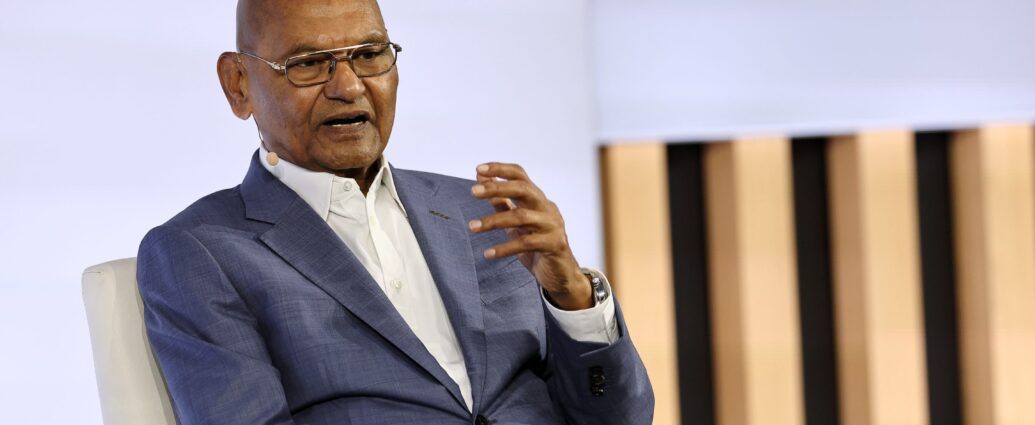
Fannie Mae and Freddie Mac, the two government sponsored businesses designed to prop up mortgages, ripped on Monday after billionaire investor Bill Ackman told investors in a late Sunday X post to stop worrying about the war in Iran and start buying.

“Some of the highest quality businesses in the world are trading at extremely cheap prices,” Ackman wrote. “Ignore the MSM. One of the most one-sided wars in history that will end well for the U.S. and the world. And we have the potential for a large peace dividend.”

Then he added, almost as an aside, that “Fannie and Freddie are stupidly cheap. Asymmetry at its best. They could be a 10X and it could happen soon.”

Ackman’s tweet was the only obvious catalyst as Fannie Mae surged as much as 41% in Monday trading, while Freddie Mac climbed as much as 34%. These were the largest single-day moves for each stock since May of last year, when Trump floated the idea of privatizing the two entities. 

Ackman’s post clearly touched a nerve. Investors are feeling “extreme fear” according to CNN’s Fear & Greed Index as the Iran war, now in its sixth week, wreaks havoc on markets. Oil prices are spiking on threats to the Strait of Hormuz, which Iran’s semiofficial Fars News Agency reported will be used as a toll and blocked off to Israel, and American stocks sold off last week and again on Monday. But Ackman’s message to anyone watching their portfolio bleed: get over it.

Many investors seemed to take that confidence at face value. But Ackman isn’t a neutral source, in fact, he’s the single biggest beneficiary of the trade he’s recommending. Pershing Square Capital Management is the largest common shareholder in both companies, holding more than 210 million shares combined. He’s been in the position for over a decade and has helped lead the charge to get Fannie and Freddie privatized.

The timing also might raise eyebrows, as Monday is the last trading day of Q1 2026, which matters for hedge funds. The price a stock closes at on the final day of the quarter is the price that shows up in performance reports to investors. A 40% pop in your largest position on that exact day is, at minimum very convenient.

Ackman has previous in this regard. On December 30, 2024 — the second-to-last trading day of Q4 — he published a detailed thesis calling the GSE trade his best idea for 2025. That post got 4.9 million views and sent shares surging by similar margins.

Still, the valuation disparity that Ackman is pointing to is genuinely striking. Fannie printed $14.4 billion in net income last year, while Freddie printed $10.7 billion. Their combined market cap before Monday’s move was roughly $10 billion, meaning both companies earn more than twice their market value annually.

Michael Burry, of “Big Short” fame, also encouraged Ackman and responded to his post, writing that he “cannot emphasize enough how rare this is in this market.” Burry also added extra thoughts on the housing market in a different post, where he blamed Fannie and Freddie’s long-time conservatorship for keeping the housing supply low, in addition to what he called artificially low interest rates and 6 to 7 trillion in “helicopter cash” during the COVID-19 pandemic.

“Government created the problem and now maintains policies that prevent free markets from reaching a solution, not the least of which is keeping the GSEs inefficiently run while in conservatorship,” Burry wrote

The bullish case for the GSEs, that the Trump administration will privatize the two via IPO, potentially by the end of the year, has been the thesis since they went under government conservatorship in 2008, and it has never materialized. Fannie topped out at around $15.30 in September 2025 due to peak privatization optimism sparked by Ackman and his allies. Even after Monday’s rally, both stocks remain down nearly 60% from that peak. At the ResiDay housing conference in November, White House housing director Bill Pulte said that a decision on the IPO would happen sometime by the end of that quarter or early this year, but that decision has yet to come.

Some critics, like UCLA economist Wesley Yin, argue that a rushed privatization process could raise borrowing costs and risk recreating the conditions that fueled the Great Recession; namely, allowing for-profit companies with access to risk-free government backed borrowing. He raised questions about whether the government would truly risk repeating that mistake. 

In his December post, Ackman acknowledged the uncertainty with some legalese.  “There remains a high degree of uncertainty about the ultimate outcome so you should limit your exposure to what you can afford to lose if you choose to invest,” he wrote

That caveat was gone Sunday night. Ackman wrote, “ignore the bears.”

This story was originally featured on Fortune.com

There are an estimated 938 billionaires in the United States. To put that into context, that’s about two full Boeing 747s (each one holds 416 passengers). Or, that’s about half of the seats in The Broadway Theatre (which has 1,763) seats, where you can now catch The Great Gatsby. It’s also the average size of the U.S. college graduating class, and just 1.1% of the 82,500 seats at MetLife Stadium.

Regardless of how you view that 938 number, there’s one overall resounding agreement people have: most voters want billionaires to pay their fair share. With two separate billionaire tax proposals now gaining traction (one nationwide and one in California specifically), a new poll from UC Berkeley’s Institute of Governmental Studies quantifies just how much the average American thinks the rich should pay up.

The survey, released this month in partnership with the Los Angeles Times, found that 52% of California’s registered voters support a proposed one-time 5% tax on the net worth of the state’s roughly 200 billionaires, while 33% oppose it. 

Responses fell along ideological lines. Seventy-two percent of Democrats back the tax, and so does 51% of no-party-preference voters. But more than seven in 10 Republicans and strongly conservative voters oppose it.

California’s ballot initiative

The California Billionaire Tax Act didn’t come from a politician but from a union. SEIU-United Healthcare Workers West, representing 120,000 healthcare workers, filed the ballot initiative in October 2025 with a specific crisis in mind: federal Medicaid cuts threatening to strip healthcare from more than 3 million working-class Californians.

To design the tax, the union tapped UC Berkeley economist Emmanuel Saez, who calculated that American billionaires currently pay just 1.3% of their wealth in taxes, down from 3.1% under President Ronald Reagan. 

The bill would impose a one-time, 5% levy on the worldwide net worth of any individual worth more than $1 billion who was a California resident as of Jan. 1, 2026, paid in annual installments of 1% over five years. The Jan. 1 cutoff was designed to prevent the exodus that critics predicted and that at least six billionaires—including Google co-founders Larry Page and Sergey Brin—had attempted before the deadline passed.

The revenue is projected to be at $100 billion over five years and would flow 90% into healthcare, with the remaining 10% into education and food assistance. The measure still needs nearly 875,000 valid signatures by June 24 to reach the November ballot.

Bernie’s federal tax on billionaires

There’s a separate measure to initiate a similar 5% tax on billionaires nationwide. Sen. Bernie Sanders (I-Vt.) and Rep. Ro Khanna (D-Calif.) have proposed the “Make Billionaires Pay Their Fair Share Act” which would impose a 5% annual federal wealth tax on individuals worth $1 billion or more.

In its first year, the revenue would fund one-time $3,000 checks for households earning under $150,000, covering roughly three-quarters of the country. And like the California tax, the bill would address the $1.1 trillion in Medicaid and ACA cuts, in addition to capping childcare costs at 7% of household income, and establishing a $60,000 minimum salary for public school teachers.

The richest man alive, Elon Musk, has countered that taxing every billionaire at 100% barely dents the $39 trillion national debt. But the billionaire tax isn’t trying to fix the debt—it’s an attempt to address healthcare cuts. 

A separate measure for a $30-an-hour minimum wage

The billionaire tax poll landed in the middle of something already moving: a $30-an-hour minimum wage campaign. It’s co-led by One Fair Wage, the national advocacy group whose president, Saru Jayaraman, helped convene 140 labor and community leaders in Los Angeles last June to declare a new era for the wage movement.

“We all agreed that the fight for $15 is long gone,” Jayaraman told Fortune. “It’s time for a new kind of frame.”

What emerged was the concept of a living wage for all, pegged to what the MIT Living Wage Calculator says it actually costs to live, with no carveouts for tipped workers.

Since then, $30-wage bills have been introduced in New York City, Hawaii, and Los Angeles. Bills for $25 per hour are advancing in DC, Maryland, Pennsylvania, and federally. Twenty states remain stuck at the federal floor of $7.25, unchanged since 2009.

Two sides of the same coin

The billionaire tax and the $30-wage campaigns share more than timing — they share a target.

“We see these two things in California go hand in hand,” Jayaraman said. “There are two parts to the same plan. Billionaires should pay tax like everybody else to help contribute to society, and they should pay their employees, whose labor they profit from, enough to survive.”

She added: “Right now, billionaires are paying nothing. They should pay their fair share.”

“Minimum wage is by far the most popular issue out there right now,” Jayaraman said. “But the billionaires tax is a close second.”

This story was originally featured on Fortune.com

Even amid the torrent of disquieting news from the Middle East in recent weeks, an Iranian suggestion that it might start offering safe passage to oil tankers that paid in Chinese yuan, instead of the U.S. dollar, raised eyebrows.

Sourced to an anonymous Iranian official, the threat sparked a spate of warnings that Tehran might use its control of the Strait of Hormuz not to just threaten the world’s access to petroleum, but also upend the dollar-based international monetary system. By striking a blow against the petrodollar, Iran could initiate the unraveling of the dollar’s dominance, itself a linchpin of U.S. power—or so the argument goes. Those citing such ominous scenarios envisioned other possible dangers, including the debilitation of America’s security guarantees to Saudi Arabia and other Gulf oil exporters.

“The conflict could be remembered as a key catalyst for erosion in petrodollar dominance, and the beginnings of the petroyuan,” with potentially “significant downstream effects to…the dollar’s role as the world’s reserve currency,” Deutsche Bank analysts warned in a report last week.

The war’s consequences will doubtless be serious—but not for the dollar. The U.S. currency’s success rests on robust foundations, and Iran’s petroyuan gambit looks to be just the latest of many episodes in which alarmism over the dollar’s primacy has proven misplaced. Even if the petrodollar system weakens, it would matter little: As massive as world oil markets are, the reasons for dollar dominance lie elsewhere.

The greenback’s status stems from two features that no other currency can match. First is the depth, breadth, and liquidity of U.S. financial markets, in particular the market for Treasury bills and bonds, which can be bought and sold in enormous volumes without causing significant movements in price. This attribute is crucial in a financial crunch, when firms are scrambling to ensure that they can obtain the cash needed to meet obligations coming due.

The second feature is America’s open capital account—that is, the freedom to move money across U.S. borders virtually unimpeded. Many countries have open capital accounts but, importantly, China doesn’t. And no country, even open ones, has the U.S. market’s depth and breadth.

Having defied obituary writers on numerous occasions, the dollar continues to play a role in international transactions far out of proportion to the U.S. economy’s size. It accounts for well over half of foreign currency reserves held by central banks, and a similar share of export invoices for cross-border trade, as well as international bank loans and bond issuance. Network effects entrench its status; everybody has an incentive to use the dollar because so many others do.

Nowhere is the extent of the dollar’s entrenchment more evident than in the working of the little-known but gigantic market for foreign exchange swaps. In this market, global firms—multinational corporations, banks, insurance companies, securities dealers, and pension funds—shield themselves against currency fluctuations. According to the Bank for International Settlements (BIS), the amount of outstanding swaps currently stands above $100 trillion, with some 90% involving the dollar. (Far lower percentages involve the euro, Japanese yen, and other currencies.) This reflects the myriad ways in which the greenback is used for lending, borrowing, and investing.

So why are so many people obsessed with the petrodollar? It mostly comes down to a narrative that is only loosely grounded in facts. As the story goes, in the mid-1970s, the U.S. struck a bargain with Saudi Arabia, offering military aid and protection to the ruling House of Saud, in exchange for a Saudi promise to only accept dollars for oil and invest the proceeds in U.S. Treasuries. That set a precedent for other oil exporters to follow.

Those on the ground at the time remember things differently. One of the few foreigners allowed to live in the desert kingdom then was David Mulford, a young investment banker hired in 1975 by the Saudi Arabian Monetary Agency (SAMA), the nation’s central bank, as an adviser. In his 2014 memoir, he recalled how a team of six professionals struggled in SAMA’s dilapidated headquarters to manage “a portfolio growing at $5 and later $10 billion every thirty days,” relying on a single, sluggish telex machine for communicating with the outside world.

It turns out that oil was already predominantly priced in dollars and, as Mulford explained, Saudi Arabia had little choice but to plow its revenue into dollar-denominated assets. According to Mulford, who later became a U.S. Treasury undersecretary and ambassador to India, “In most markets outside the U.S. in those days a currency trade of just $10 million was enough to move markets, so there were practical limitations on the amount of currency diversification that we could achieve.” Furthermore, “purchases of German [bonds], or Japanese yen bonds, or Dutch guilder bonds, or Swiss franc notes were just not possible in the sizes common in the U.S. market.”

In other words, it was the American market’s unique depth, breadth, and liquidity—and not some secret deal—that led the Saudis to choose the dollar.

Petrodollars were a major reason why the greenback internationalized in the 1970s and the decades thereafter, as much of the income received by oil exporters was deposited in dollar accounts at banks around the world, primarily in Europe. But they are a much less significant factor in the global dollar market today.

While 44% of earnings from oil sales were deposited in offshore dollar bank accounts during the 1970s, that figure shrank to 27% by the early 2000s, noted Jess Hoversen, chief economist at Column, a San Francisco financial services firm, citing research from the IMF. The percentage is now in single digits, she estimates, as oil exporters’ earnings today are directed toward domestic development and sovereign wealth funds, which in turn are invested heavily in international stock markets and startups.

But the dollar market has surged even as the petrodollar took a step back. Hoversen pointed out that the offshore dollar credit market stood at $2.5 trillion in 2000, and hit $14.2 trillion by last year. “This tells us that the dollar is very structurally resilient,” she writes.

The debate about dollar dominance will continue to rage, as the Trump administration shakes investor confidence with actions like attacking the independence of the Federal Reserve. But barring much more serious self-inflicted wounds, the dollar will keep its place at the top of the currency league table for the foreseeable future—even if Iran demands oil payments in yuan.

The opinions expressed in Fortune.com commentary pieces are solely the views of their authors and do not necessarily reflect the opinions and beliefs of Fortune.

This story was originally featured on Fortune.com

Federal Reserve Chair Jerome Powell offered a sobering assessment of America’s fiscal health on Monday, telling a Harvard economics class audience that while the nation’s $39 trillion debt load is not immediately dangerous, the path the country is on demands urgent attention from lawmakers.

“The level of the debt is not unsustainable,” Powell said during a wide-ranging conversation before roughly 400 students, “but the path is not sustainable. It will not end well if we don’t do something fairly soon.”

The remarks extend a consistent warning Powell has sounded for years, that while the the debt level is manageable in the short term, the fiscal trajectory absolutely is not. His comments also came as the average national gas price neared $4 per gallon amid a war in Iran that shows no signs of resolving soon, despite President Trump’s inconsistent noises about a potential end to hostilities.

Powell was careful to draw a distinction between the stock of debt and its trajectory, noting that the U.S., as the world’s reserve currency issuer and home to the deepest capital markets on earth, can sustain a large debt load in ways smaller economies cannot.

The remarks came in response to a student question about at what point the size of the U.S. debt breaks “the point of natural systems of repayment.” Powell acknowledged that no one knows exactly where that breaking point lies—pointing to Japan as a country carrying a far higher debt-to-GDP ratio than the U.S.—but said the direction of travel was unambiguous.

“What’s clear is that our debt is growing much faster. The federal government debt is growing substantially faster than our economy,” Powell said, “and that ratio is going up. And in the long run, that’s kind of the definition of unsustainable.”

Net interest payments on the national debt are now projected to exceed $1 trillion in fiscal year 2026—nearly triple the $345 billion the government paid in 2020. In the first three months of the current fiscal year alone, interest payments reached $270 billion, already surpassing the nation’s defense spending for the same period. Those are real constraints on real budget choices. But they are constraints, not collapse—and conflating the two distorts the policy conversation. Debt held by the public is projected to surge from 101% of GDP today to 120% of GDP by 2036, eclipsing the post-World War II record, according to projections by the Congressional Budget Office.

Seeking balance

Importantly, Powell did not call for paying down the debt outright. The fix, he suggested, is more modest—and more achievable, if there is political will. “We don’t have to pay the debt down,” he said. “We just need to have primary balance and begin to have the economy actually growing more quickly than the debt.”

The Fed chair was careful to note that fiscal policy is explicitly not within his jurisdiction. “This is not the Fed’s job, of course,” he said, and he acknowledged with a touch of dry humor that his warnings tend to fall on deaf ears in Washington. “I pretty much limit myself to those high-level points, which essentially everyone ignores.”

To be sure, Powell is not wrong that America’s debt trajectory is unsustainable on paper. But that has been the verdict for decades—and the sky has stubbornly refused to fall. Also, his preferred solution of achieving primary balance, so the economy grows faster than the debt, will be difficult, to say the least. In practice, closing a structural primary deficit of the U.S. government’s current size means either raising revenues significantly, cutting spending in politically explosive areas like Medicare and Social Security, or banking on growth rates that history suggests are optimistic. But as Powell noted, the Fed chair is explicitly not responsible for solving the problem.

The broader context of Powell’s remarks made clear the stakes for the central bank. Powell has spent his tenure fiercely defending the Fed’s political independence, insisting throughout the conversation that the Fed must “stick to our knitting” and resist pressure to deploy its tools for purposes beyond maximum employment and price stability. A fiscal crisis that forced the Fed’s hand would represent exactly the kind of mission creep he has warned against.

Powell made those boundaries explicit when describing his philosophy of Fed governance. “There’s always a time when an administration looks and says, ‘It would be good to use that tool for something else,’” he said. “It happens all the time. And we just have to be in a situation where we’re not trying to work against any politician or any administration, but we have to be careful to stick to what we’re doing.”

There’s also an irony in Powell warning about debt sustainability while leading an institution whose own policies made cheap borrowing the path of least resistance for years. As JPMorgan warned in its 2026 outlook, there could be “a less straightforward path to reduce the U.S. government’s debt load”—in part because of the interplay between Fed policy and Treasury financing needs. Bridgewater’s Ray Dalio has described one possible endgame as an economic “heart attack,” with government investment crowded out by debt service obligations. That’s a serious concern, but that’s an argument for smart fiscal reform, not for treating Powell’s Harvard remarks as a five-alarm fire.

Former Fed Chair Janet Yellen struck a similar tone in January, warning that the ballooning debt could reduce the Fed’s ability to address unemployment and inflation, while noting that legislators were not “adequately acknowledging the risks.” The chorus of credible voices is real. So is the risk of that chorus becoming cover for cuts that disproportionately hurt the Americans least able to absorb them—a tradeoff Powell’s remarks, however honest, did not address.

The debt deserves serious attention. But serious attention means honest accounting of tradeoffs, not just a clean soundbite from Cambridge telling lawmakers to act “fairly soon,” with no guidance on how, and no acknowledgment that acting too aggressively could be just as destabilizing as the debt itself.

Powell’s term as Fed chair expires in May 2026. His fiscal warning, which was offered not from a podium in Washington but to a room of Harvard students, may prove to be among the clearest statements of his tenure: the debt level is survivable, but only if the trajectory changes. “It will not end well,” he said, “if we don’t do something fairly soon.”

For this story, Fortune journalists used generative AI as a research tool. An editor verified the accuracy of the information before publishing.

This story was originally featured on Fortune.com

If you’ve spent a lot of time in the past year looking at your bank account balance, you’re not the only one. Nearly all Americans are rethinking their finances as money anxiety increases, according to a new study from Wells Fargo

A survey of more than 3,700 U.S. adults found that 86% of respondents said they made changes in what, where, and how they buy, and two-thirds said they have delayed spending or payments. 

People are looking to take charge over their finances and feel more positive when they sense they’re in control, Emily Irwin, head of Private Wealth Planning at Wells Fargo, told Fortune. 

Meanwhile, 84% said they’d rather give up social media for a year compared to just 16% willing to say goodbye to banking apps from Robinhood, Nerdwallet, and traditional financial institutions.

It follows a trend of more Americans trying to be more intentional with their money in a moment where “they feel like their financial lives are messy,” Irwin said. 

“They want to kind of check in on their finances,” she explained. “They want to minimize distractions or minimize temptation—positive ones sometimes—but still temptations, nonetheless. And they want to be able to maintain focus on what their intention for their money is, both short-term and long-term.” 

Turning to social media and AI for financial advice

As people try to take more control of their finances, they’re looking beyond traditional banking for advice. Gen Z is increasingly turning to social media to decide where to put their money, the study found, with 44% relying on YouTube videos and 34% turning to Instagram or TikTok. 

In addition, nearly one-fifth of U.S. adults reported using AI in the past year for financial advice, and twice as many Gen Z adults said they used it. Among the AI users, about 80% said they use it for financial education, like learning the difference between a traditional and Roth 401(k)s, and three-fourths of people ask about financial strategy, Irwin said. 

Two-thirds of people who asked AI for money advice acted on its suggestions, according to the study. Of those in that group, 90% said that the advice was profitable or worthwhile. However, questions remain if AI advice leads to long-term profitability, Irwin said. 

“AI is a wonderful resource to be able to get education, to be able to ask those questions that maybe, you’ve always been a little bit confused on, or you want to learn more about,” she said, but added people should be cautious when AI offers strategic plans. “I would ensure that before there’s implementation of a strategy, even if it’s profitable, that someone understands what all the alternate paths would be in order to appropriately put a strategy in place.”

This story was originally featured on Fortune.com
To non-Canadian eyes, Air Canada CEO Michael Rousseau’s decision to post a message of condolences in English following the airline’s deadly crash at New York’s LaGuardia airport may not seem all that noteworthy. After all, Rousseau has acknowledged himself the limitations of his French. And this was an extremely emotionally fraught moment: In the first Air Canada accident to involve fatalities since 1983, the March 22 runway collision between a plane and a fire truck killed two pilots and injured dozens of others.

Amid such a tragedy, the ensuing outcry over the CEO’s language choice might look like a tempest in a teapot. But Canadians understood immediately why Rousseau’s decision to speak English (other than a “bonjour” and a “merci”) caused such an affront. It has now led to his retirement from the company later this year, as announced on Monday. (A spokesman for Air Canada said, “Mr. Rousseau has reached a natural retirement age” and added that the company’s succession planning had been underway internally for some time.)

Air Canada is headquartered in Montreal, a majority French-speaking city, the largest in Quebec. It’s a region where matters of language are often a third rail in public life. For many Québécois, French is not just a means of communication but a core marker of identity—which helps explain the intense emotional reactions when they feel it is sidelined in official settings.

Rousseau’s message was meant to offer condolences for the deaths and sympathy for the injured—and also to reassure the company’s rattled 37,000 employees and put the spotlight on the heroism of the pilots and crew. He expressed Air Canada’s “deepest sorrow for everyone affected,” and called it a “very dark day here at Air Canada.”

But those messages were overshadowed by the flap over his language. As a former Crown corporation (Canadian jargon for government-owned business) Air Canada is subject to the nation’s Official Languages Act, meaning it is required by law to communicate in both English and French. So it was baffling to many that Rousseau, a Canadian, would not realize that a 3-minute, 45-second video in English would be a big faux pas. Making matters worse: The flight originated in Montreal, so it certainly had many francophone passengers and crew members among the injured, in addition to one of the pilots who died.

Montreal Mayor Soraya Martinez Ferrada called it “disrespectful of the francophone community.” And even Canadian Prime Minister Mark Carney weighed in, slamming Rousseau for his “lack of judgment and lack of compassion.” “We proudly live in a bilingual country, and companies like Air Canada particularly have a responsibility to always communicate in both official languages,” Carney told reporters.

Rousseau himself acknowledged the flub and said last week that he was “deeply saddened” that “his inability to speak French had diverted attention from the profound grief of the families and the great resilience of Air Canada’s employees.”

Why effort matters more than perfect pronunciation

Though speaking in heartfelt way can be hard for someone using a second language, many executives of multinational companies do nonetheless make the effort (even if their public relations staff typically crafts the message). Politicians too: New York Mayor Zohran Mamdani has made videos in Spanish, Arabic, and Hindi—often including footage of him struggling with his lines—to the delight of immigrant voters who appreciate the effort, even if he’s butchering the pronunciation.

This wasn’t Rousseau’s first time creating a language kerfuffle as CEO of Air Canada. In 2021, soon after taking the reins, Rousseau proudly noted in a speech to the Montreal Chamber of Commerce that he had been easily able to live in the city for more than a decade without learning French. (He grew up in Eastern Ontario, a part of the country with a sizeable francophone minority.)

During the ensuing P.R. crisis, he apologized and pledged to learn French. Bloomberg reported that Rousseau had taken 300 hours of French lessons since 2021, so it’s anyone’s guess why he couldn’t have cobbled together at least a couple of sentences in the mother tongue of many of Air Canada’s stakeholders. (Some commentators suggested that for his compensation of $9.4 million last year, learning conversational French shouldn’t be too much to ask.) Before Air Canada, he spent years as a senior executive of the retailer Hudson’s Bay.

The Air Canada board—which should perhaps have nudged Rousseau along in his French studies—said on Monday that French skills would be a key factor in choosing the next CEO. (Though Rousseau has won credit for guiding Air Canada out of the pandemic, shares are down 33% since he became CEO.)

The language debates permeate many aspects of Quebec life: A few years ago, controversy erupted when the hallowed Montreal Canadiens hockey team hired an anglophone coach who was unilingual. He didn’t last long.

The business risk of offending your home market

Some of Rousseau’s defenders in the Canadian commentariat have raised fair questions about whether a CEO of a global business really needs to speak French, whether such a requirement narrows the talent pool too much, and whether any of this should even be the government’s business.

But ultimately, Rousseau’s inability—or perhaps even unwillingness—to learn French, was just bad business. Angering politicians or columnists is one thing. But 23% of Canadians are native French speakers. Given all the competition in the airline industry, and choices travelers have, offending anyone is dangerous.

Emotional intelligence, empathy, and the ability to read the room are essential skills for CEOs today. Others have learned that lesson the hard way years before Rousseau did: Remember when cloud computing company PagerDuty’s CEO Jennifer Tejada quoted Martin Luther King Jr. in a memo announcing mass layoffs in 2023 and had to apologize? Or howBP CEO Tony Hayward grumbled “I’d like my life back” after an oil spill caused by the company?

Perhaps Rousseau should get credit for not using AI to mask his lack of linguistic fluency. But authenticity, even if expressed in broken French, is the best approach when it comes to soothing nerves and expressing sympathy.

This story was originally featured on Fortune.com

Leslie Sherman-Shafer, an Uber driver in the San Francisco Bay Area, likes to start each shift with a full tank of gas.

It used to cost her around $25 to fill up her Toyota Corolla. She’s spent closer to $40 since the Iran war began and pushed up the average U.S. price for a gallon of regular gasoline by $1. Sherman-Shafer, a retired dental office assistant who picks up Uber passengers five days a week, said she’s putting in extra hours to cover the difference.

“We don’t get reimbursed for gas. We rely on the generosity of the tip,” Sherman-Shafer said. Some passengers have tipped more to compensate for higher gas prices, but most don’t tip at all, she said.

Driving a car, van or truck is a big part of many Americans’ workdays. Nearly 27% of civilian workers cited driving as a physical demand of their jobs last year, according to the U.S. Bureau of Labor Statistics. Millions of drivers use personal vehicles for their work, from delivery and ride-share providers like Sherman-Shafer to self-employed electricians, nannies, home health care aides and real estate agents.

As the war enters a fifth week and continues to disrupt global oil supplies. many of those workers are now scrambling to make ends meet. The national average price for gas reached $3.99 per gallon on Monday, up 34% from a month earlier, according to AAA.

“With everything going up, it’s impossible to save a dime,” Sherman-Shafer said.

Some companies compensate employees for using their own vehicles, including the cost of gas. In the U.S., the Internal Revenue Service sets a standard mileage rate every year that businesses and private contractors can use to calculate tax deductions. Alpine Maids, a housekeeping company based in Denver, pays cleaners the 2026 federal reimbursement rate of 72.5 cents per mile for the distance they drive to clients’ homes.

But with gas prices spiking, that money is not going as far, said Chris Willatt, a former geologist who now runs Alpine Maids.

“Our maids drive their own cars, so it’s kind of like their paycheck got smaller,” Willatt said. “They’re all upset.”

Willatt said he reduced how often maids must report to the office, from daily to once a week, and rejiggered cleaning assignments so employees aren’t driving as far between clients. If gas prices climb further, he said he might increase what he charges customers so he can pay workers more.

Molly Kenefick, the owner of Doggy Lama Pet Care Inc. in Oakland, California, said she recently raised her gas reimbursement rate to 80 cents per mile for 15 employees who use their own vehicles to pick up dogs and take them for hikes around the Bay Area. The rate increase will stay in place until gas prices in their area drop below $5 for at least a month, she said.

Kenefick said she planned to raise prices for the company’s services in May. But she doesn’t want to increase them too much because she’s worried she’ll lose clients. So Kenefick is also dipping into her savings to pay for gas.

“The economy is hard for people. Everybody’s under strain,” she said. “I can take some of the load and the company can take some of the load, provided this doesn’t go on too long.”

Ride-hailing and food delivery platforms that rely on gig workers don’t reimburse drivers for gas, but some are offering temporary incentives in response to rising gas prices. DoorDash, Uber, Lyft and Instacart are providing more than the usual cash back on gas purchases for drivers who use company-branded debit cards. DoorDash and Instacart are giving a weekly fuel payment to drivers who travel 125 miles or more making deliveries.

Sarah Noell, who spends about 20 hours a week making deliveries for DoorDash in Lynchburg, Virginia, said the measures help somewhat. But she said she’s noticed more customers declining to add tips to their orders as gas prices have increased.

Noell has started refusing any order that won’t average out to $1 per mile, including the $2.50 per order she gets from DoorDash. That cancels out many users who aren’t tipping or give only small tips.

“It takes nearly double the cost to fill my tank,” Noell said. “Ten dollars used to get me a decent amount. Now it only gets me 3 gallons.”

Owners of diesel-powered vehicles have seen even steeper fuel price increases since the war started on Feb. 28, affecting drivers around the world.

Drivers of diesel-powered “jeepneys” in the Philippines, went on strike for two days last week to protest their higher costs. In France, dozens of buses and trucks drove slowly on the Paris ring road Monday to demonstrate their concerns about rising diesel prices. Drivers and businesses want the French government to provide aid to mitigate the impact.

“The major difficulty right now is finding our balance on our business since we sold services with the vehicles at a certain price for diesel that was much cheaper. And we’re not going to ask customers to pay that difference,” Sarah Bahezre, manager of the bus transportation company Ulysse Cars, told The Associated Press.

Average U.S. diesel prices climbed 44% over the last month, according to AAA.

A few weeks ago, Rachel Hunter paid $3.62 a gallon to fill the single diesel truck used by Cactus Crew Junk Removal & Thrift Store, a Phoenix business she and her husband co-founded. The same fuel now costs $6.09 per gallon in Phoenix, according to AAA.

The truck carries all kinds of heavy cargo, from slabs of solid maple bowling lanes to loads of concrete paver tiles. So fuel costs quickly add up, Hunter said, particularly with a truck that only gets 12 or 13 miles to the gallon.

Hunter has started quoting prices that reflect the jump in prices. She worries she’s in a “vicious circle” that could hurt the business if oil prices remain high.

“We don’t want to get a bad name for being overpriced,” she says. “I’ll be able to explain it where people can understand, but it doesn’t mean they can afford it.”

This story was originally featured on Fortune.com

Federal Reserve Chair Jerome Powell said Monday that it is important to closely monitor inflation amid a spike in energy prices from the Iran war.

Powell, who spoke before nearly 400 students at Harvard University as gas prices inched toward an average of $4 per gallon in the U.S., said there wasn’t a lot Fed policymakers could do since energy shocks “tend to come and go pretty quickly” and monetary maneuvers work over the longer-term. But a series of energy shocks, nevertheless, could be concerning.

“You have to carefully monitor inflation expectations because you could have a series of big supply shocks and that can lead, you know, the public generally, businesses, price setters, households … to start expecting higher inflation over time. Why wouldn’t it?” Powell said.

In wide-ranging remarks, Powell acknowledged young graduates were entering a challenging job market. He noted the role of artificial intelligence and that while employment is historically low, there is very little job creation right now.

The U.S. job market has been lackluster for the past year. Employers added fewer than 10,000 jobs a month in 2025 – the weakest hiring outside a recession since 2002. This year began with a strong 126,000 new jobs in January, but the United States whipsawed to 92,000 job losses the following month.

Economists refer to a low-hire, low-fire job market in which companies are hesitant to add staff but don’t want to let go of the workers that they have. That’s made it especially hard for young people to find employment. There’s some concern that artificial intelligence is taking over entry-level work that previously would have gone to young jobseekers, or that companies are reluctant to make hiring decisions until they better understand how they are going to use AI.

Powell said he was optimistic over the medium- to long-term, noting that history has shown that technological innovations have repeatedly raised living standards and increased production. Large-language models, he said, make people, including himself, more productive.

“You’re in a situation where you need to really invest the time to master the use of these new technologies,” Powell said. “There’s no denying it’s a challenging time to enter the labor market, It may take some patience and all that, but in the longer term, this economy is going to give you great opportunities. Just be a little optimistic.”

In a question-and-answer session, neither Powell nor the students mentioned President Donald Trump, who has repeatedly criticized the Fed chair. But Powell did stress the importance of the Fed’s independence.

“It’s very hard to build great democratic institutions and much easier to bring them down,” Powell said.

President Donald Trump has repeatedly urged Powell and the Fed to cut interest rates, which would lower the costs to borrow for households, businesses and the U.S. government. Powell’s caution has infuriated Trump.

Some of the economic policies under the Trump administration, however, have complicated the dual mandate of the Federal Reserve, which is to keep prices stable and seek maximum employment.

The U.S. has hit all of its trading partners with new tariffs which can boost retail prices, and the war in Iran has sent energy prices soaring.

The average gallon of gas in the U.S. rose to $3.99 overnight, according to motor club AAA.

Trump escalated his attacks on the Fed in January, when the Department of Justice served the central bank with subpoenas and threatened it with a criminal indictment over his testimony last summer about the Fed’s building renovations.

Trump has nominated former Fed official Kevin Warsh to succeed Powell. But Warsh’s confirmation has been delayed by a Justice Department investigation. Sen. Thom Tillis, a North Carolina Republican, has said he won’t vote to confirm any Fed nominees until the investigation is dropped.

Still, Powell took a moment to offer some advice to his would-be successor without naming him, saying it was “very important to stick to your knitting and to stick to the things that were actually assigned.”

“We have very powerful tools. They’re supposed to be for maximum employment and price stability and financial stability,” he continued. “There’s always a time when an administration looks and say it would be good to use that tool for something else … We just have to be in a situation where we’re not trying to work against any politician or any administration, but we have to be careful to stick to what we’re doing.”

This story was originally featured on Fortune.com

How does a kangaroo escape a petting zoo?

It’s not the opening line to a dad joke. If you’re Chesney the kangaroo, you scale an eight-foot (2 1/2 meter) fence and go on the lam for three days, giving your keeper sleepless nights and sending residents of a small Wisconsin town on a search that would end happily on Saturday.

The unprecedented leap at Sunshine Farm in Necedah, Wisconsin, last week was precipitated by some stray dogs that rushed the enclosure and spooked the 16-month-old Chesney, said his keeper, Debbie Marland. She and friends then trekked hither and yon in this town about 160 miles (255 kilometers) northwest of Milwaukee.

They chased reports of sightings and even rented heat-seeking drones, which proved effective in narrowing down the wanderings of the high-jumping adventurer.

“I was putting on about 37,000 steps per day looking for him,” Marland said Sunday. “I haven’t done so much exercise in a very long time.”

Chesney and his roommate Kenny are named for country-music star Kenny Chesney. They’re among 25 animals at Sunshine Farm, with horses, sheep, alpacas, Kunekune pigs, Highland cows and a Bactrian camel. The farm is generally open Fridays through Sundays from mid-May through mid-November and tours are offered to visitors who can interact with the animals.

Chesney escaped about 11:15 a.m. last Wednesday. Though he stayed within a three-mile (5-kilometer) radius of the farm, he kept his pursuers guessing.

Colton Johnson, owner of Midwest Aerial Drone Services, has used heat-sensing drones to help hunters recover deer and reunite missing dogs with their owners. Add a kangaroo to the list.

Johnson spent three days trailing Chesney alongside Marland and a team of volunteers. His strategy was similar to the ones he uses to find lost pets, but Johnson said the appearance of Chesney’s heat signature on the drone footage was unique.

“It almost looked like a dinosaur running through the woods,” Johnson said. “It’s got a long tail, and the way it was moving and hopping, that’s the only way that I can describe it.”

The team caught up with Chesney on Wednesday and again Thursday night, but Johnson said the frightened kangaroo slipped away — once by jumping into a cold river — and Johnson lost track on the drone.

According to Marland’s friend, Stacy Brereton, who helps out at the farm routinely, Friday was a tough day. No one had spotted Chesney all day and searchers feared he had wandered farther afield into even more unfamiliar territory, Brereton said.

Then, Friday night, Chesney was discovered nestled under a tree in a wooded area. A group of searchers surrounded him, but ever fleet of foot — 20 mph (32 kph) is no stretch for him — Chesney eluded them.

Marland returned to the area Saturday morning with Chesney’s favorite treats and pieces of material that had his and Kenny’s scent. Other searchers later joined her. But with no sign of the kangaroo, they started packing up. Just then, they spotted the long-eared kangaroo with outsize back legs approaching.

Brereton stepped up with a delicate touch.

“He had a very calm attitude when he walked up, obviously you could tell he wasn’t in fight-or-flight mode, so I just went with that,” Brereton said. “I just stayed calm with him and I just kind of went and sat and let him come to me.”

Chesney heard the voices and wanted attention, said Brereton, who eventually scooped up the 40-pound (18-kilogram) animal.

“I do believe he heard our comforting voices, he smelled the familiar smells of home and it just made him feel safe,” said Brereton, adding, “I’m just glad he loves me as much as I love him.”

Marland said the “the community really did come together” for the kangaroo, who is now something of a celebrity. A Sunshine Farm fan has written a children’s book about Chesney’s adventures, which Marland hopes to publish and sell to recoup some of the search costs.

Kenny, who with his marsupial mate has the run of Marland’s house, was happy to be reunited with Chesney. Though hungry and tired, Chesney was otherwise healthy but will get a checkup with the veterinarian shortly.

To be safe, Marland added, a new mesh top will be placed over the kangaroo enclosure to prevent any more high-jumping hijinks.

___

Associated Press writer Savannah Peters in Edgewood, New Mexico, contributed.

This story was originally featured on Fortune.com

The Trump administration sued Minnesota and its school athletics governing body on Monday, carrying out a threat to punish the state for allowing transgender athletes to compete in girls sports.

The lawsuit is part of a broader fight over the rights of transgender youth. More than two dozen states have laws prohibiting transgender women and girls from participating in certain sports and some have barred gender-affirming surgeries for minors. Courts have blocked some of those policies.

In the lawsuit filed Monday, the Justice Department alleges the state Department of Education and the Minnesota State High School League are violating Title IX, a federal law against sex discrimination in educational programs that receive federal money.

“The Trump Administration does not tolerate flawed state policies that ignore biological reality and unfairly undermine girls on the playing field,” Attorney General Pamela Bondi said in a statement.

Democratic Minnesota Attorney General Keith Ellison called the lawsuit “a sad attempt to get attention” over an issue that has already been in litigation for months. He said he’ll keep fighting.

“It is astonishing that any president would try to target, shame, and harass children just trying to be themselves, let alone a president with so many actual problems to address,” Ellison said in a statement.

League officials did not immediately respond to a request for comment.

The administration has filed similar lawsuits against Maine and California, and has threatened the federal funding of some universities over transgender athletes, including San Jose State in California and the University of Pennsylvania.

Minnesota officials have long resisted the federal push to ban trans athletes from girls sports. Ellison filed a preemptive lawsuit last April, saying Minnesota’s human rights act supersedes executive orders issued by President Donald Trump last year. The lawsuit also says the state is already in compliance with Title IX. A ruling is pending on the federal government’s motion to dismiss that case.

The Justice Department said in a statement that Minnesota violates Title IX “by requiring girls to compete against boys in athletic competitions that are designated exclusively for girls and allowing boys to invade intimate spaces designated exclusively for girls, such as multi-person locker rooms and bathrooms.”

To buttress its claims that trans athletes have an unfair advantage, the lawsuit highlights the case of a trans pitcher on the Champlin Park High School girls varsity fastpitch softball team who helped lead the school to a 6-0 victory in a state championship game in 2025.

The Trump administration also reversed the Biden administration’s interpretation of Title IX, which held that its provisions prohibiting discrimination on the basis of sex also extended to gender identity.

According to the Justice Department, Minnesota’s Department of Education receives more than $3 billion annually in federal funding from the U.S. Departments of Education and Health and Human Services. It says that funding is contingent on compliance with Title IX.

The lawsuit asks a federal court in Minnesota to declare the state in violation of Title IX and order it to prohibit transgender girls from competing in girls’ prep sports.

The civil rights offices at the Education and Health and Human Services put the state and league on notice last September that they faced legal action if they didn’t stop violating the federal law.

This story was originally featured on Fortune.com

U.S. stocks are swinging again Monday as oil prices keep climbing because of uncertainty about when the war with Iran could end.

The S&P 500 fell 0.3% and deepened its losses following its worst week since the war with Iran began. The Dow Jones Industrial Average was up 130 points, or 0.3%, as of 2:35 p.m. Eastern time, and the Nasdaq composite was 0.6% lower.

Caution was prevalent throughout financial markets. After jumping to an initial gain of 0.9%, the S&P 500 quickly erased nearly all of it before seesawing lower. Stock indexes rose in Europe but fell sharply in some Asian markets, while the price for a barrel of benchmark U.S. crude oil rose 3.3% to settle at $102.88.

The mixed movements followed a whirlwind of action in the war over the weekend, including an entry into the fighting by Houthi rebels in Yemen. The main issue for investors is whether oil and natural gas can resume their full flow from the Persian Gulf to customers worldwide and prevent a brutal blast of inflation.

Shortly before the U.S. stock market opened for trading Monday, President Donald Trump said on his social media network that “great progress has been made” with “A NEW, AND MORE REASONABLE, REGIME to end our Military Operations in Iran.”

But he also threatened the possibility of “blowing up and completely obliterating” Iranian power plants if a deal is not reached shortly and if the Strait of Hormuz, an integral waterway for the flow of oil, is not opened immediately.

The statement fit and condensed last week’s pattern, where Trump would tout progress being made in talks and offer some optimism for the market, only for doubts to rise quickly afterward about whether the war can end soon.

All the back and forth has some investors saying they’re giving Trump’s pronouncements less weight than before. But stock prices are nevertheless cheaper than they were before the war, which has some investors waiting for an opportune time to buy.

The S&P 500 is roughly 9% below its all-time high, which was set in January. The Dow and Nasdaq both finished last week more than 10% below their records, a steep-enough fall that professional investors call it a “correction.”

Taking into account how much profits are expected to grow in the coming year for companies in the S&P 500, the index looks roughly 17% cheaper than before the war, by one measure. That’s in a similar range as where prior growth scares for the market ended, as long as they didn’t result in a recession or the Federal Reserve hiking interest rates, according to strategists at Morgan Stanley.

That’s one of the signs that the strategists led by Michael Wilson point to as “growing evidence the S&P 500 correction is getting closer to its ending stages.”

Of course, the Federal Reserve could upset that if it decides oil prices are threatening to stay high for long enough that it needs to raise interest rates. Higher interest rates would help keep a lid on inflation, but they would also slow the economy and push down on prices for all kinds of investments.

Treasury yields have been leaping in the bond market since the war began because of such worries, but they eased somewhat on Monday.

The yield on the 10-year Treasury fell to 4.34% from 4.44% late Friday. That’s a significant move for the bond market and offers some breathing room for Wall Street. But it remains far above its 3.97% level from before the war.

On Wall Street, Sysco fell 14.2% to help lead the market lower after it said it was buying Jetro Restaurant Depot for $21.6 billion in cash and enough Sysco shares to value the company at about $29.1 billion.

Alcoa jumped 8.4% for one of the market’s biggest gains on speculation it could get more business after attacks damaged rival aluminum facilities in the Middle East over the weekend.

In stock markets abroad, the FTSE 100 in London climbed 1.6%, and the CAC 40 in Paris rose 0.9%. That followed drops of 3% for Seoul’s Kospi, 2.8% for Tokyo’s Nikkei 225 and 0.8% for Hong Kong’s Hang Seng.

___

AP Business Writers Yuri Kageyama and Matt Ott and AP journalist Ayaka McGill contributed to this report.

This story was originally featured on Fortune.com

The federal, bureaucratic push to expedite power grid interconnections is picking up steam, but a key headwind is the lack of “aptitude” and communication from hyperscalers as they rush to electrify their AI data center hubs, said Laura Swett, chairwoman of the Federal Energy Regulatory Commission, which oversees grid connections and pipeline approvals.

A combination of Supreme Court rulings, federal rulemaking, and a renewed congressional push for infrastructure permitting reform are all helping speed up approval and construction timelines—while reducing environmental reviews. But a big roadblock is the “tension” between Big Tech hyperscalers wanting to move faster and the “lack of understanding” of the processes, Swett said at the CERAWeek by S&P Global conference last week.

“I see difficulty and a breakdown of communication in many instances,” Swett said.

“They (hyperscalers) are very diverse in their aptitude of how things work,” she added. “I see some very successful examples, and some that just continue to butt heads.”

In their defense, she said, the bureaucratic process is a “wonky, very nerdy…morass and a black box” to most people. But the hyperscalers are not reaching out to FERC as much as she hoped, Swett said. She speaks to traditional utilities “probably nine times” more than the hyperscalers. They need more “very strategic communication and very pointed education,” she said.

“The hyperscalers, when they do come speak to us, they don’t speak FERC,” Swett said. “Their complaints about the utilities, quite frankly, to me show a lack of understanding of how the utilities normally function.”

Speeding up the rulemaking

FERC has until the end of April to make a decision on rulemaking after the Energy Department took the unusual steps of asking FERC to take greater jurisdiction of grid interconnects for loads larger than 20 megawatts to accelerate the process.

Whatever the result, fights could develop over the federal government taking more authority from states’ rights on the power grid.

“Our electric grid…is very old, and we haven’t had any growth in demand for decades, and now we’re looking at exponential, explosive demand,” Swett said. “So, how do we get this very slow-moving ship to turn into a speedboat that’s going in several directions at the same time?”

She insisted that FERC will not slash regulations in a way that results in endless litigation. “I don’t want you to be in court for nine years because we made a crappy order that didn’t keep the law in mind,” Swett told energy leaders, arguing for “well thought out and durable” rulemaking.

One major victory for the energy sector, she said, was last year’s 8-0 U.S. Supreme Court ruling (Justice Gorsuch recused himself due a client conflict) in Seven County Infrastructure Coalition v. Eagle County over construction of a Utah railroad to carry crude oil.

In FERC’s view, the ruling means that indirect emissions from projects no longer need to be considered in the National Environmental Policy Act environmental (NEPA) review process. Essentially, if a natural gas pipeline is being approved, the process doesn’t need to consider the indirect effects of burning the gas at a power plant.

Swett said FERC already has cut 70 days off the NEPA process because of the court ruling and additional internal efficiencies.

 “We’re on the brink of a cliff in our country, and we need to get this generation on as quickly as possible,” she said.

Permitting reform for infrastructure

Energy Secretary Chris Wright touted his optimism for congressional permitting reform, which is being considered to expedite the timelines for all energy sources, from wind and solar farms to powerline transmission to gas pipelines.

“There are a lot of Democrats that are becoming very common sense about energy,” Wright said. “I love it.”

Indeed, given the AI data center boom and the growing geopolitical issues of energy security from the Iran war, Democratic senators Martin Heinrich, D-N.M., and Sheldon Whitehouse, D-R.I., put out a statement in early March saying they will “reopen negotiations on permitting reform,” so long as the Trump administration stops attacking already-permitted wind projects.

“We look forward to working on a bipartisan bill that will speed infrastructure development, lower energy costs, and create good-paying jobs,” they said.

Rich Powell, CEO of the Corporate Energy Buyers Association and the nonprofit Clean Energy Buyers Institute, said he is very supportive of reform if it is “technology neutral,” so politicians cannot target either renewables or fossil fuels. And there is growing bipartisan support, he said, although he’s been optimistic before too.

“This is the third congress in a row we’re taking a great, big run at permitting reform,” Powell said.

This story was originally featured on Fortune.com

Highly organized criminal networks have turned cargo theft into a growing threat to the U.S. supply chain, according to Donna Lemm, chief strategy officer at the trucking and intermodal company IMC Logistics.

In a Washington Post op-ed on Monday, she cited numerous instances of major heists, including more than $15 million worth of electronics, $1 million of tequila, and $400,000 of Costco lobsters.

“After nearly four decades of working in logistics, I can say with certainty: The scale and sophistication of today’s cargo theft is unlike anything our industry has faced before,” Lemm wrote.

Thieves are exploiting technology and conducting thorough research on their targets before carrying out their schemes, she explained.

For example, they impersonate legitimate freight brokers or customers with spoofed email domains, steal corporate identities, create fraudulent shipping documents, and fabricate counterfeit credentials for their drivers to swipe cargos.

“By the time the theft is discovered, the freight has often vanished into a black market that stretches far beyond state or even national borders,” Lemm added.

She cited American Transportation Research Institute data that showed cargo theft costs the industry as much as $6.6 billion a year, or more than $18 million every day.

Thieves have pulled off stunning jewelry heists as well, including one valued at $100 million. But criminals are also grabbing daily essentials like food and other household goods.

So consumers ultimately end up paying higher prices as the effects ripple through the supply chain, Lemm said.

But it’s not just the U.S. trucking industry that’s suffering from cargo theft. European food giant Nestlé said 413,793 KitKat chocolate bars—about 12 tons—were stolen after leaving a production site in Italy last week for Poland.

“Whilst we appreciate the criminals’ exceptional taste, the fact remains that cargo theft is an escalating issue for businesses of all sizes,” KitKat said in a statement. “With more sophisticated schemes being deployed on a regular basis, we have chosen to go public with our own experience in the hope that it raises awareness of an increasingly common criminal trend.”

The company added that its products can be traced using a unique batch code on individual bars, enabling consumers, retailers and wholesalers to check whether they have stolen candy.

Similarly, Lemm said the U.S. trucking industry is investing in advanced GPS tracking, surveillance systems, controlled-access facilities and employee training to combat cargo theft.

She also called on Congress to pass the Combating Organized Retail Crime Act, which would create a national coordination center that allows law enforcement from all levels to work with the private sector on sharing intelligence, tracking criminal networks and coordinating investigations.

“When organized criminal groups target shipments, they threaten more than just freight,” Lemm wrote. “They threaten the reliability of the supply chain Americans depend on every day.”

This story was originally featured on Fortune.com

Have you ever overpaid for a beer? Matt Cortland has, and it set him on a path to never repeat the mistake.

That is, for Cortland’s drink of choice: a pint of Guinness. After paying €7.80 (about $8.93) for Irish dry stout at a pub in Dublin earlier this month, the 37-year-old grew curious about the average cost of a pint across Ireland.

To his astonishment, the country’s Central Statistics Office had dropped price tracking of the nation’s most popular beer in 2011. That led Cortland to the wild idea of tracking the price himself.

Cortland—founder of an AI startup—turned to AI to lend him a hand, and a voice. He devised Rachel with AI voice generation platform ElevenLabs. Made as an homage to Rachel Duffy, the winner of the UK version of the reality TV show The Traitors and equipped with a Northern Irish accent, the voice-enabled AI agent made more than 3,000 calls across the island, inquiring about the price of a pint of Guinness.

“I was like, ‘Well can I just call every pub in Ireland and conversationally ask them with AI?,’” Cortland told Fortune. “I pulled the thread, and I just kept pulling the thread, and here we are.”

Using the data accrued from the thousands of phone calls, he then turned to Anthropic’s Claude to devise the “Guinndex,” which he calls a “living, breathing” consumer price index for a pint of Guinness across Ireland. It also allows bartenders and beer drinkers to contribute to, and modify prices. 

Now Cortland can see how his €7.80 pint weeks earlier matches up with the rest of Ireland. On Monday, the average price was about €6.01 (about $6.88) and the most common price was €5.50 ($6.30).  

Guinness parent company Diageo didn’t respond to Fortune’s requests for comment. Beer prices are independently set by pub owners across Ireland.

AI models are advancing at an increasingly rapid pace, surpassing benchmarks even the most sophisticated scientists deemed out of the realm of the machine. And while many shudder at the idea of an AI job apocalypse, others are leveraging the technology to answer complex questions. Some have even used it to sell their home.

And while OpenAI CEO Sam Altman and Google President Ruth Porat think the technology will solve the world’s most complex issues like finding a cure for cancer, AI is also solving smaller, albeit still important, problems along the way.

Human-like voice AI

Rachel, Cortland’s AI agent, is one of a growing number of voice AIs that are appearing on the other end of your phone line. Data from voice AI firm Regal showed that customers are finding the AI as credible as humans.

Based on data from millions of calls with voice AI agents, people are taking 14% more time to chat with AI than they would with a human representative. They’re also giving 22% longer responses, sharing details they’d normally skip.

Cortland said he saw similar results. The conversations his AI had across Ireland showed that most didn’t realize they were communicating with AI. The transcripts of some of those conversations, reviewed by Fortune, make that clear.

“The cost of a pint of Guinness? Twenty-five pounds. But if you’re coming in for a wee drink, I’ll give it to you for a fiver,” a bartender at Doogies in Enniskillen, Northern Ireland, told Rachel. 

“Listen, they’re normally 6.20 [euros], but if you can’t afford one, we’ll buy you one. We’ll look after you,” a bartender at Malzard’s Pub in Kilkenny, Ireland, told the AI.

While the Guinndex hasn’t yet led to a dramatic price shift, Cortland said he has already seen it yielding results. In one instance, he said a pub owner reportedly lowered the cost of his Guinness by 0.40 euros  and then updated the entry on the Guinndex himself.

He’s hoping to replicate the success of the Guinndex for other products, perhaps for prescription drugs in the U.S., where he is originally from, or even for a slice of pizza in New York City.

For Cortland, the level of transparency is essential in a market where he has seen prices fluctuate wildly, sometimes by nearly 2 euros, between pubs located literally 100 yards away from one another. 

“If you’re charging €11 for a pint of Guinness, that’s fair enough,” he said (the priciest pint in Ireland is €11, according to the Guinndex). “But people should know that information.”

Have you used AI to navigate a major life decision like buying a home, negotiating a deal, or doing something else with high stakes? I’d love to hear your story. Reach out to me at jake.angelo@fortune.com.

This story was originally featured on Fortune.com

Elon Musk is known for his perennial feuds with powerful people, like with President Donald Trump, OpenAI CEO Sam Altman, and Amazon founder Jeff Bezos. But his latest clash is with someone whose name you don’t know: the chancellor (now formerly) presiding over two lawsuits against Tesla

Delaware Chancery Court Chancellor Kathaleen McCormick is reassigning two cases involving Musk after the chancellor allegedly reacted in support of a LinkedIn post that criticized the Tesla founder.

Last week, Musk’s attorneys demanded that the Delaware Chancery Court Chancellor recuse herself from the cases. In a new letter released on Monday, McCormick denied the motion for recusal but stated she was reassigning the cases instead. “The motion for recusal rests on a false premise—that I support a LinkedIn post about Mr. Musk, which I do not in fact support,” read the letter. “The motion for recusal is denied. But the motion for reassignment is granted.”

This all stems from an alleged “reaction” to a post on LinkedIn. In a screenshot of the post—which now appears to be deleted, but was included in the lawyers’ original filing—a California-based jury consultant, Harry Plotkin, sarcastically apologized to Musk and his long-time lawyers at Quinn Emanuel Urquhart and Sullivan after a California jury ruled the X owner misled Twitter investors before buying the company in 2022. Plotkin, who does not appear to be involved in the Delaware lawsuit involving Tesla, worked as a jury consultant for the plaintiffs in the Pampena v. Musk case in California, according to Musk’s lawyers. 

“Sorry, Elon. Sorry, Quinn Emanuel. Thanks $2 billion for your help in this trial. It was a pleasure working against you,” Plotkin allegedly wrote in the LinkedIn post, according to the filing. “Congratulations to the trial team at Cotchett, Pitre and McCarthy, LLP and Bottini Law for standing up for the little guy against the richest man in the world,” the post said. 

The chancellor, according to the filing, allegedly reacted to the post, and Musk’s lawyers alleged that’ was enough to get her thrown from the case. McCormick is presiding over two separate derivative cases including Musk. The first case involves a dispute over how much in legal fees the lawyers who won a case against Musk should be paid. The other is an ongoing case against the Tesla board of directors that alleges they paid themselves with excessive compensation packages.

In a motion filed last week, the lawyers shared a screenshot from March 23 that showed an account, which had the name “Katie McCormick” and included a profile picture of the chancellor, reacted with “support”—one of five LinkedIn reactions that include liking, celebrating, loving a post, or finding a post insightful or funny. 

Musk’s lawyers added that most people who reacted to the post used the “like” function and not “support.” The lawsuit alleges that later that day, McCormick deactivated her account. Musk’s lawyers cited several Delaware Supreme Court case laws that protect against judge bias in cases and when judges are obliged to recuse themselves. 

“In light of the Court’s recent public support of LinkedIn posts that create a perception of bias against Mr. Musk in these cases, recusal is necessary and warranted,” Musk’s lawyers wrote in the filing. 

McCormick denied the request to recuse herself but did agree to reassign the three cases involving Musk that she was presiding over on Monday.

In a letter to both the plaintiffs and Musk’s attorneys on Tuesday, McCormick wrote she does not support the post and denied having read the post, beyond a screenshot that was sent to her on March 23. 

“I either did not click the ‘support’ icon at all, or I did so accidentally,” McCormick wrote in the letter. After seeing a screenshot on March 23 of the post and the alleged reaction, she reported the “suspicious activity to LinkedIn,” she wrote. When she later attempted to log in to the platform, she claimed her account was locked. Her letter also confirmed Musk’s lawyers’ filing in that she deactivated her account.

McCormick wrote she had planned to send the letter before Musk’s attorneys filed a motion for recusal. In the meantime, the chancellor placed the two shareholder cases on pause, Reuters reported. 

In another claim in the filing, Musk’s lawyers also alleged that a court staffer (whose LinkedIn profile allegedly said she worked from McCormick, according to the filing) liked a post that included a screenshot of an article about Musk’s testimony in the California case, in which he testified that he believed McCormick was biased against him. Musk’s lawyers argue this is further grounds for recusal. 

“The supportive reactions to those posts, by accounts under the control of the Court and a member of court staff, independently create a perception of bias in these cases that the Court supports the outcome in the Pampena case and would support a similar outcome for allegations made here,” Musk’s lawyers wrote in the filing. 

Tesla, Musk’s lawyers, and McCormick did not immediately respond to Fortune’s request for comment. 

Not their first clash  

Musk and McCormick have been facing off for years over Tesla’s board of directors compensation, including Musk’s. In 2024, McCormick ruled in favor of Tesla shareholders who sued Musk over his $55 billion compensation, which they claimed was the product of sham negotiation with the board who was not independent of him. In 2022, the chancellor presided over Twitter’s lawsuit against Musk to complete his $44 billion purchase of Twitter after he attempted to back out. 

Musk’s lawyers argue that the pair’s history is particularly relevant due to McCormick’s history with Musk and ruling against his compensation packages. 

While the alleged comments from McCormick and her staff member only involve Musk in name, his lawyers argued that bias against him could affect his co-defendants and Tesla. They point to past rulings from McCormick, including the one regarding Musk’s compensation. The chancellor ordered Tesla to pay the plaintiff’s $345 million in legal fees because “[the] Plaintiff had to piece

together what transpired in a transaction process involving a close-knit group of

Musk loyalists.

“[W]e were unlikely to win the case in Delaware because the judge was extremely biased against me,” Musk said in a March 4 testimony in California. “This was, in fact, the same judge that struck my Tesla option grant that was subsequently overturned by the Delaware Supreme Court. So it’s accurate to say she was—that that judge was not favorably inclined to me. Not objective.”

This story was originally featured on Fortune.com

On March 9, President Donald Trump picked up a phone call from CBS at his golf course in Doral, Florida, and said, “I think the war is very complete, pretty much.” 

“Iran has no navy, no communications, they’ve got no air force. Their missiles are down to a scatter. Their drones are being blown up all over the place, including their manufacturing of drones,” the president told the correspondent. 

That was one week after the war began, when only 3,000 targets were destroyed, and markets took Trump at his word, causing the price of oil to drop a whopping $13, all the way down to $91. 

A 50% surge in one month

Three weeks later, the war has no end in sight, and markets are so numb to the President’s Sunday evening/Monday morning habit of insisting peace talks are happening or walking back on previous threats to Iran in order to calm markets that they barely react to what he says anymore. Brent crude futures for May delivery climbed to their near peak in the futures market Sunday evening, before drifting down to $113 on Monday.

West Texas Intermediate, the benchmark for American oil prices, rose to roughly $101 a barrel, as signs show that the gas crisis that has been roiling Asia—causing South Koreans to be told to take shorter showers, Thais to wear shorter sleeves to conserve energy, and the Philippines to distribute cash aid to motorcyclists slammed by higher fuel costs—is far from contained. The same supply disruptions driving those Asian measures are now pushing American gas prices to three-year highs. Brent has now soared more than 50% in March, putting it on track for the steepest monthly gain since the 1990 Gulf War.

The war is widening, not winding down

Meanwhile, all signs point to the war escalating on multiple fronts. Yemen’s Iran-backed Houthi rebels entered the war over the weekend after weeks of silence, launching cruise missiles and drones at Israel. The Pentagon is reportedly preparing for weeks of ground operations inside Iran, according to the Wall Street Journal, including a potentially devastating and dangerous mission to excavate Uranium from Iran. And in an early Monday post on Truth Social, Trump threatened to “blow up and completely obliterating” Iran’s power plants, oil wells, and Kharg Island export hub if a deal isn’t reached and the Strait of Hormuz isn’t immediately reopened. He told the Financial Times on Sunday that his preferred option would be to “take the oil.”

The consequences are already slamming American consumers. The national average gas price hit $3.99 on Monday, up from $2.98 in February, according to AAA—the highest since the crisis caused by Russia’s invasion of Ukraine in 2022. The International Energy Agency has released 400 million barrels from strategic reserves to ease the shock, but prices have continued to climb.

Wall Street is now bracing for the inevitable second-order effects. Société Générale analysts wrote Monday that they expect “higher for longer” Brent prices, forecasting a base case of a Brent average $125 in April, with “credible spikes” toward $150 if the Bab el-Mandeb Strait at the southern end of the Red Sea is shut down by the now entering Houthi forces. 

Wall Street’s stagflation fears are growing

Analysts are currently agonizing over whether or not to “look through” the potential inflation shock from higher oil prices, as many cling to hopes that the Fed will cut rates. Inflation has “flatlined” at 3% for the past couple of years, Jim McCormick, Chief Global Macro Strategist at Citi, told Bloomberg TV, and now with the added risks from higher commodity prices, it’s looking like inflation could be “significantly higher in the coming months.”

Chair of the Federal Reserve Jerome Powell said during a Q&A at Harvard University on Monday that the Fed hadn’t lost sight of its 2% inflation target, but that the Fed’s tools have “no meaningful effect on supply shocks.” Meaning the Fed can’t rescue markets or consumers from rising gas prices or the resulting price hikes in groceries and other items. McCormick was clear that this was not an environment for investors to take on more risk. 

“The mix we’re looking at, which seems quite obvious now, is more stagflation,” he added. “Growth is going to be marked down as a result of this conflict; inflation is going to be marked up. It’s not great for bonds. It’s not great for equities. It’s a pretty bad mix for markets in general.”

On the sixth week of this conflict, there’s a bit of a ‘can’t do this anymore’ sense for investors, exhausted by the volatile up and down and waiting for the doomsday $200 oil projections to set in. Economist Ed Yardeni told clients over the weekend that this “fetal position” investors are retreating into is a sign that Trump is at least not bluffing about escalating the conflict.

“The fog of war is getting thicker because of the likelihood of U.S. boots on the ground (the ‘bog of war’),” he wrote.

This story was originally featured on Fortune.com

Business leaders are alerting white-collar workers that the golden age of the knowledge economy is quickly ending thanks to AI, while blue-collar jobs will be in high demand. 

That’s what Chris Power, CEO of Hadrian, said in a recent interview with tech publication Sourcery at the Hill and Valley Forum. 

“All the white-collar jobs are going to get automated,” he predicted. “I think we’re going to see massive hyperinflation in blue-collar salaries.”

His firm, which does work for the defense sector, seeks to automate factories so that nonspecialized workers can become proficient in complex manufacturing industries. 

If forecasts from Microsoft AI chief Mustafa Suleyman and Anthropic CEO Dario Amodei are right, many white-collar workers could be out of work in as soon as 18 months.

At the same time, the AI infrastructure boom is fueling demand for blue-collar workers, like electricians. For some, the signs are clear that blue-collar work will offer a more secure future for America’s youth than the white-collar careers exposed to AI.

“Everyone, go tell your kids to quit college and university and go get a welding certification,” Power said. “The country needs you.”

Quitting college for blue-collar work?

For now, Power’s prediction of “massive hyperinflation” in blue-collar pay remains just that.

The Bureau of Labor Statistics listed the median pay for a welder at $51,000 in 2024, the latest year for which data is available. That’s lower than the median pay of roughly $60,000 for all workers in the U.S. the same year. 

What’s more, BLS estimated employment of welders, along with cutters, solderers, and brazers, will only grow 2% through 2034, slower than the average for all occupations.

Still, as the AI data center buildout explodes thanks to record-breaking investments, which will hit $700 billion this year alone, some blue-collar roles are rising in demand. There’s currently a dire shortage of electricians, and employment in the profession is expected to grow by 9% through 2034, well above the average growth for all occupations. 

The salaries are there to meet the demand. Construction workers at AI data centers, for example, are earning an average of about $81,100 annually, according to data from hiring platform Skillit. Even outside of the AI boom, other blue-collar careers are experiencing similar shortages, with a demand for about 250,000 shipbuilders in the U.S.

But while he touts blue-collar roles, Power revealed his company had “secretly” begun to automate some welding as part of its contract with the U.S. Navy. “Because there’s a lot of welding on submarines,” he said. 

Of course, robotic welding has existed since the 1960s, and the numbers show that this sort of automation hasn’t quite led to a significant decrease in demand for welders. Power said he can’t get enough welders in his own factories even with automation.

Aside from welding, the CEO sees another industry boom he finds tangentially related to machining and construction jobs: food.

“I think one of the greatest opportunities for private capital—apart from public-private investment alongside the Department of War—is to build Chick-fil-A’s and bars around all of our factories,” he said. “We need to eat so we can work harder for the country.”

This story was originally featured on Fortune.com

French authorities are investigating a suspected link to Iran after thwarting a bomb attack outside a Bank of American building in Paris on the weekend, the interior minister said Monday.

The authorities suspect there could be a link to Iran due to similarities to other recent attempted attacks in Europe which a pro-Iran group claimed responsibility for, French Interior Minister Laurent Nuñez said.

On Saturday morning, Paris police officers spotted two suspects carrying a shopping bag near the premises of the Bank of America in the 8th arrondissement of the French capital. Five suspects have been arrested, including two on Monday, and the national anti-terrorism prosecutor’s office opened an investigation into alleged terrorism-related offenses.

Authorities are making a “direct link” with Iran because the “modus operandi is in every respect similar to actions that have been carried out in the Netherlands and in Belgium,” Nuñez said on French radio RTL on Monday morning.

In those cases there were claims by a pro-Iranian group that “linked them to the conflict” in the Middle-East, he said.

The group, known on Telegram under the name Harakat Ashab al-Yamin al-Islamia, which translates as the Islamic Movement of the Companions of the Right, also claimed responsibility for an attack last week in London, where four ambulances belonging to a Jewish charity were set on fire.

“Typically, intelligence services of this country (Iran) operate in this way: they use proxies, a series of subcontractors, often common criminals, to carry out highly targeted actions aimed at U.S. interests, the interests of the Jewish community, or Iranian opposition figures,” Nuñez said.

Nuñez said French authorities have stepped up security around key personalities and sites since the United States and Israel launched their war against Iran on Feb. 28, including the personal protection of some figures from the Iranian opposition.

This story was originally featured on Fortune.com

Young, fresh-faced graduates stepping into offices for the first time probably don’t expect the top boss to pay them much mind while they’re at the bottom of the totem pole. But the opposite was true for billionaire Netflix cofounder Reed Hastings—when he was just a newcomer to the workforce, his boss would even secretly wash his huge pile of dirty coffee cups for him.


“This was my first job out of graduate school,” Hastings recently said in an interview with Graham Bensinger. “I was a programmer in a 30 person startup, and working hard and doing all nighters and drinking lots of coffee. And then my coffee cups would pile up. And every week or so the janitor would clean them all, and I’d have 20 new cups, and [the] cycle would go on.”

At the time, Hastings was 28 years old, working at Coherent Thought under its CEO Barry Plotkin. He was writing code every day, programming into the night and stacking up dirty coffee cups on his desk, which were always cleaned eventually. However, about a year into his habit, he found out his hoard of cups weren’t being scrubbed by the janitor. 

“One morning I came in very early to the office [at] like 4:30 [a.m.], and I went into the bathroom, and there was my CEO. And he’s washing coffee cups,” Hastings explained. “And I was like, ‘Barry, are you washing my coffee cups?’ And he said, ‘Yes.’ And I said, ‘Have you been doing that all year?’”

“He said ‘Yes.’ And I’m like, ‘Why?’” he continued. “And he said, ‘Well, you do so much for us and this is the one thing I can do for you.’”

That routine, unspoken gesture from Hasting’s former boss has stuck with the self-made billionaire throughout the rest of his near four-decade career, founding billion-dollar companies like Pure Software and Netflix. In that early programming job, he said that Plotkin’s leadership style convinced employees to “follow him anywhere,” even if it meant the company was heading towards bankruptcy. But the Netflix founder has still taken a page from his book, bringing coffee “for everybody” he works with. 

“I realized, wow, you not only have to be like this servant leader, you also have to be this strategy person,” Hastings said, adding that the coffee cup experience “Formed such an impression upon me that I’ve tried to emulate that aspect.”

The CEOs who stay humble by eating lunch with staffers and writing appreciation notes

The CEO of First Watch, Chris Tomasso, also stays connected to his staffers through good old-fashioned notes of appreciation.

Similar to Hastings, the leader of the breakfast chain reeling in $1 billion in revenue yearly was inspired by a handwritten thank-you note from his CEO at Hard Rock Café when he was just 26. Now, he carves out time every month to handwrite letters to workers, like cooks and dishwashers, who are celebrating major career milestones. Tomasso has penned hundreds of notes so far. Plus, he still grubs alongside First Watch staffers instead of eating in his office.

“I tried to minimize the [CEO] title as best I can when I’m interacting with people,” Tomasso told Fortune last year. “I eat lunch in the break room with everybody, which always, for whatever reason, blows new employees away—that I just sit down next to them and bring my lunch and have lunch with them. I think it’s a shame that there’s that feeling.”

Mary Barra, the CEO of iconic car company General Motors, also stays connected to her staffers and customers by responding to “every single letter” that comes her way. Whether it’s a negative note from a kid worried about their family’s future after the closure of a General Motors plant, or a loyal Chevrolet driver sharing their car’s nickname, Barra puts pen to paper to show that she cares about the people supporting the business. 

And the chairman and CEO of $428 billion energy giant Chevron, Mike Wirth, also believes in the power of meaningful gestures. Just like Tomasso and Barra, he sends out dozens of “old-school, on paper” notes each time he visits Chevron employees around the world. By the time he’s done rounds on a trip, he’s already written 60 to 80 letters, Wirth estimated.

“I think back to when I was early in my career, and if a CEO had sent me a letter and actually knew what I was doing, it would have been a really big deal for me,” Wirth said on the How Leaders Lead podcast in 2024. “And so I try to remember what it was like to be in the jobs that I’m visiting and that I had those jobs myself one time. And I want to make sure that people know that I appreciate them.”

This story was originally featured on Fortune.com

Bond yields are coming back down as President Donald Trump’s war on Iran looks to keep oil prices higher for longer, flipping the outlook from high inflation to a recession.

Before the war, yields eased on expectations for Federal Reserve rate cuts as inflation cooled. Then the war drove up bond yields, after soaring crude rattled the outlook for inflation and the Fed. Now rate cuts are looking possible again.

With the Strait of Hormuz still firmly in Iran’s control, making the regime the gatekeeper to one-fifth of the world’s oil and liquid natural gas supplies, the disruption to energy markets is too severe to be undone with a social media post from Trump.

Despite his claims that talks with Tehran are going well, oil continued rising on Monday with West Texas Intermediate up 2.7% to top $102 a barrel and Brent crude up 1.7% to more than $114. At the same time, the 10-year yield plunged 9 basis points to 4.35%.

The oil spike has also pushed the average gallon of regular gasoline to $3.99, up $1.01 from a month ago, according to AAA. But diesel, a key industrial fuel that affects food and other products that are shipped, has shot up even more, hitting $5.416 a gallon.

“Oil prices are higher again this morning, but Treasury yields are lower as the risks to economic growth begin to take precedence over the risks to inflation,” Oxford Economics said in a note on Monday.

Michael Brown, senior research strategist at Pepperstone, pointed out that Trump’s attempts to talk down the market now have diminishing returns, with investors demanding actual evidence of concrete steps toward de-escalation.

In a note Monday, he added that the market has finally realized expectations for central bank rates were far too hawkish.

“As I’ve been harping on about for a while now, the energy price shock will of course raise spot headline inflation in the short-term, but it will also amount to a significant negative demand shock, posing significant growth headwinds that would only be exacerbated by G10 central banks tightening policy,” Brown wrote.

Meanwhile, the Iran war is headed for a major escalation and a longer timeline. Over the weekend, 2,500 U.S. Marines arrived in the Middle East, and thousands more are en route ahead of an anticipated ground assault meant to reopen the Strait of Hormuz.

In retaliation to a ground invasion, Iran’s Houthi allies in Yemen could attack ships in the Red Sea, halting the flow of oil and cargo from a route that’s been used to bypass the Strait of Hormuz. Then oil would go even higher.

Last week, economists at Bank of America Research calculated that if U.S. oil prices stay in the $80-$100 range, the risks to inflation far outweigh the risks to the unemployment rate, making Fed rate hikes most plausible.

But above that “Goldilocks” oil price, inflation risks start declining and head toward a convergence with a rising unemployment threat, they added.

“Risks to inflation should rise initially but then fall if the shock is large enough, due to demand destruction,” BofA said. “Negative wealth effects from a sustained equity selloff would exacerbate downside risks to labor and limit the upside to inflation.”

This story was originally featured on Fortune.com

If last week’s market tumble has you worried about your 401(k) or Roth IRA investments, you’re in good company—even the ultra-wealthy are feeling the pain. Six out of the 10 top richest people in the world have experienced wealth declines between $30 and $60 billion this calendar year, totalling over $255 billion.

Jeff Bezos’s net worth is down $30.7 billion since January, whereas Mark Zuckerberg has faced a decline of $46.3 billion in wealth, according to Bloomberg’s Billionaire Index. The sharpest drop belongs to Larry Ellison, whose wealth has fallen $59.6 billion to $188 billion—well off his peak of $400 billion last September when he surpassed Elon Musk as the world’s richest person.

For billionaires, the losses are closely tied to the market. Shares of Amazon are down nearly 11% this year, Meta has fallen about 18%, and Oracle is off nearly 30%. Every member of the “Magnificent Seven”—including Alphabet, Apple, Tesla, Microsoft, and Nvidia—is now down double digits from its 52-week high.

A mix of forces is driving the downturn, from geopolitical tensions (including conflict with Iran) to growing skepticism about whether the AI-fueled stock rally can live up to high expectations. Last week’s selloff alone pushed the S&P 500 down 3% and dragged the Dow into correction territory, compounding what has already been a shaky year for equities.

Still, not every billionaire is in the red. Elon Musk, Michael Dell, and members of the Walton family have been growing their wealth this year, underscoring how uneven the market’s impact can be—even at the very top.

Billionaire wealth is still at a record high—and experts say giving it away might not be as easy as it seems

Even with recent market turbulence, global billionaire wealth is still at record highs. Total billionaire wealth hit $18.3 trillion in 2025—with the year bringing a 16% surge, three times faster than the past five-year average, according to Oxfam. Since 2020, billionaire wealth has increased 81%.

Much of that growth has been concreted at the very top. The 10 richest Americans—mostly tech founders like Musk, Bezos, and Zuckerberg—added $698 billion to their net worths between November 2024 and the same month in 2025.

That dynamic reflects how deeply the ultrawealthy are tied to financial markets. The richest 0.1% of U.S. households roughly a quarter of all equities, according to the Federal Reserve. By contrast, the bottom 50% of Americans own just 1.1% of stocks. 

The widening gap is increasingly shaping public opinion. In 1998, just 45% of Americans supported redistributing wealth through higher taxes on the richest; by 2022, that figure has climbed to 52%, according to Gallup.

Still, not everyone buys into the backlash. Earlier this month, rapper Jay-Z, whose net worth is estimated at $2.8 billion—pushed back on the blanket criticism of billionaires.

“It’s almost like a cop-out,” he told GQ. “You get to demonize this group of folks without fixing the actual system that exists, that’s in play.”

And while many billionaires have signed the Giving Pledge, a promise to give away at least 50% of their wealth to philanthropy, either during their lifetimes or in their wills, critics argue that vast fortunes remain largely intact—and difficult to meaningfully deploy.

Liz Baker, the CEO of Greater Good Charities, said the expectation that billionaires can simply give away their wealth to solve complex global problems overlooks how challenging that process actually is.

“I wish I had a billion dollars to give away, but as somebody who’s responsible for giving away money, yeah, it’s hard, because there’s a really big responsibility that goes with that,” Baker told Fortune earlier this month.

”You can’t just go at a problem and be like, here’s a billion dollars, figure out the problem,” Baker added. “It’s too complicated. It doesn’t work like that.”

This story was originally featured on Fortune.com

Thieves made off with three paintings by Renoir, Cézanne and Matisse worth millions of euros (dollars) from a museum near the city of Parma in northern Italy, police said on Monday.

The heist took place on the night of March 22-23, with thieves forcing open the entrance door, police said.

The three stolen paintings are “Fish” by Auguste Renoir, “Still Life with Cherries” by Paul Cézanne, and “Odalisque on the Terrace” by Henri Matisse.

The Magnani Rocca Foundation, a private museum, lies in the heart of the countryside 20 kilometers (12 miles) from Parma.

Local media reported that the thieves were able to nab the paintings in less than three minutes and escape across the museum gardens.

Established in 1977, the foundation hosts the collection of the art historian Luigi Magnani and also includes works by Dürer, Rubens, Van Dyck, Goya and Monet.

The museum believes a structured and organized gang was responsible for the theft, which was interrupted by the alarm, local media reported.

The museum didn’t post any statement about the theft on its website and wasn’t reachable for a comment, as it is closed on Monday.

The crime in Parma comes after a series of high-profile heists at major European museums, including a major incident in October where thieves stole jewels and other items worth 88 million euros ($101 million) from the Louvre in Paris.

This story was originally featured on Fortune.com

The Connecticut Sun have reached an agreement to sell the team to Rockets owner Tilman Fertitta and will move to Houston in 2027.

The WNBA Board of Governors still needs to approve the sale and the move. The Sun are being sold for a record $300 million, according to a person familiar with the deal.

The person spoke to The Associated Press on condition of anonymity because of the sensitive nature of the sale.

The team will play in Connecticut for the upcoming season before moving to Houston and becoming the Comets again.

“I would have loved to remain in the region for our fan base and for the fact that I think this region deserves a women’s basketball team,” Connecticut Sun president Jen Rizzotti told the AP. “At the same time, it wasn’t my decision and I’m at a point now where my focus turns to making this the best season we can have and a memorable one for our fans. It’s an opportunity to say thank you to them.”

This will end a 23-year run by the team in New England after the team moved to Connecticut from Orlando in 2003.

Houston was one of the groups that expressed interest in buying the team last year, eventually raising its bid to $250 million — the amount Cleveland, Detroit and Philadelphia paid for expansion fees. Now with the $300 million sale price, that’s the highest for which a team has been sold in WNBA history.

The Sun had an offer for $325 million from a group led by Celtics minority owner Steve Pagliuca that would have moved the franchise to Boston. The WNBA basically blocked that deal from happening by saying that “relocation decisions are made by the WNBA Board of Governors and not by individual teams.”

The league also went on to say that other teams had gone through the expansion process and had priority over Boston.

“This decision has always sat at the ownership level and we worked hard as a front office to make us New England’s WNBA team,” Rizzotti said. “Playing and selling out two games in Boston shows this is a market that can support a team at a significant level.”

WNBA Commissioner Cathy Engelbert said during a news conference to announce the three new expansion teams that Houston was up next.

Since Mark Davis bought the Las Vegas Aces in 2021, the league has added new owners that have some sort of NBA tie. Golden State, which came into the league last season, is owned by the Warriors. Portland and Toronto are coming into the WNBA this season and the ownership groups are connected to NBA teams.

The next three expansion teams — Cleveland, Detroit and Philadelphia — are all owned by NBA groups in those cities.

The WNBA just agreed to a new collective bargaining agreement last week where teams need to have top-notch facilities similar to those of NBA franchises.

Announcing the deal now allows the franchise to have clarity for potential free agents who could sign with the Sun next month.

“Morgan (Tuck) started last off season with the rebuild after our old roster turned over,” Rizzotti said of the Sun general manager. “She will now have clarity and strategic decisions regardless where it is if we remained in Connecticut or moving. With this new CBA in place, she can really evaluate the salary cap situation and build around the young core we established.”

The Houston Comets were one of the original franchises in the league that won the first four WNBA championships from 1997-2000. The franchise disbanded after the 2008 season.

“My family and I are thrilled for the opportunity to bring the Houston Comets back to this incredible city,” Rockets alternate governor Patrick Fertitta said. “Houston has a proud championship history in the WNBA, with banners from the Comets’ four historic championship seasons still hanging in the rafters of Toyota Center. We believe the time is right to begin the next great era of Comets basketball, and we look forward to working with the WNBA as we move through this process.”

The last WNBA team to move cities was the Las Vegas Aces, who relocated from San Antonio in 2017.

“What I don’t want people to forget is the Mohegan Tribe stepped up when nobody wanted a WNBA team and there were NBA owners folding franchises left and right,” Rizzotti said. “I hope that regardless of people’s feelings around this, they’ll remember that we had a really supportive ownership group that poured into the franchise for over two decades.

“The decision they made now doesn’t erase the fact they were there for the WNBA in a time of need and kept them going when it wasn’t as popular as it is now to have a franchise.”

This story was originally featured on Fortune.com

The debate over whether AI will kill enterprise software is missing the point entirely. Leaders from Intuit, Salesforce, Box, and others have all been quoted defending the role of SaaS in the emerging universe of AI. Thoma Bravo’s Holden Spaht recently argued, “Software is AI if you do it right.” I’d go further: SaaS and AI are not different things. This is all software. And some SaaS companies — not all, but some — with tremendous historic moats will be able to achieve a 1+1 = 3 by moving quickly to leverage AI.

The reason comes down to one thing: data.

The Architect and the Fuel

Imagine two architects. One has read every book ever written on structural engineering. The other has those same books — plus the blueprints, soil samples, and maintenance records for every building in a specific area for the last twenty years. Who do you trust to build a skyscraper on a fault line?

AI is an engine, and data is its fuel — but not all fuel is equal. Software built on generic, unstructured, unverified public internet data is essentially feeding AI low-grade kerosene. Software platforms that serve a specific purpose, handle mission-critical workflows, and have amassed trusted, proprietary data over long periods of time are running on the highest-octane fuel available. At Coupa, that means $9.5 trillion in proprietary transaction data — generated by more than 10 million buyers and suppliers conducting real business, in real time.

The Unfair Advantage

I’ve spent more than 20 years in enterprise technology — at Xerox, Oracle, SAP, and Ceridian before joining Coupa — and the companies that are winning today didn’t start their AI journey with the launch of ChatGPT three-and-a-half years ago. We started a decade ago, laying the foundation for this critical moment with machine learning and predictive analytics. For years, we’ve been “priming the pump”—using ML to clean data, categorize spend, and flag risk. The result is the difference between being a “bolt-on” and a “built-in.”

If a software vendor is just now discovering AI, they are essentially trying to install a jet engine on a horse-drawn carriage. The structural integrity isn’t there. The companies that will win are those that have been building the data foundation for this moment and are moving fast to incorporate AI into the core of the product.

There will be a clear divergence in the market:

  • The Losers: SaaS providers that function as thin UI wrappers over public models. They lack the deeply embedded workflows necessary to deliver tangible customer value, and they won’t evolve fast enough to compete.
  • The Winners: SaaS providers with domain expertise, deeply embedded workflows, and the ability to autonomously manage mission-critical actions — tax compliance, supply chain resiliency, fraud detection — while also supporting customers in transforming their workforce. Great technology that people resist using simply becomes shelfware.

The Move to Outcomes

We are seeing a fundamental shift in how software is bought and sold. The “seat license” is a dated concept. Why should a company pay for a password when they should be paying for a result?

Forward-thinking leaders are already adopting pricing models focused on outcomes. If our AI identifies $10 million in duplicate invoicing — and our customers have already realized over $300 billion in cumulative lifetime savings on the Coupa platform — our revenue should reflect that realized value, not just how many employees have a password.

The timing of this total transformation — technology and workforce alike — remains uncertain, but the velocity is staggering. Software vendors that only recently started their AI transitions may find themselves at a disadvantage. For organizations that plan to win, innovation has to start with data. The future doesn’t belong to the smartest model — it belongs to the software that has the best data and the deepest roots in a company’s daily operations.

The opinions expressed in Fortune.com commentary pieces are solely the views of their authors and do not necessarily reflect the opinions and beliefs of Fortune.

This story was originally featured on Fortune.com

Treasury Secretary Scott Bessent indicated optimism about a reopening of the Strait of Hormuz for passage of cargo ships and said the administration is steadily moving to address the shortage of global oil supplies.

“Over time, the US is going to retake control of the straits, and there will be freedom of navigation — whether it is through US escorts or a multinational escort,” Bessent said in an interview Monday on Fox News.

Bessent said the global oil market is “in deficit about 10 to 12 million barrels a day, and we’re making up for that deficit.” The International Energy Agency’s coordinated release of strategic reserves amounts to about 4 million barrels a day toward that deficit, he said.

The Treasury chief also pointed to the Trump adminstration’s move to unsanction Russian and Iranian oil “that was already on the water.” He argued that this decision didn’t net either US rival additional funds, saying that there was “no extra money for either one of those regimes.”

Asked about fears of renewed disruption to supplies via the Red Sea, due to activity on the Iranian-backed Houthi militant group, Bessent said, “The Houthis have been very quiet so far.” 

Houthis launched ballistic missiles at Israel on Saturday, and Bessent said their shelling “was Israel specific.” With regard to the Red Sea, Bessent indicated that “they’ve been pretty quiet so far, and I would expect them to likely remain that way.”

This story was originally featured on Fortune.com

As of 8:30 a.m. Eastern Time today, oil sold for $111.10 per barrel (using Brent as the benchmark, which we’ll get into momentarily). That’s 16 cents lower than yesterday morning and a $37.69 rise over the past year.

Oil price per barrel % Change
Price of oil yesterday $111.26 -0.14%
Price of oil 1 month ago $73.61 +50.93%
Price of oil 1 year ago $73.41 +51.34%

Will oil prices go up?

It’s impossible to predict the future of oil prices. Several factors determine the movement of oil, but it ultimately boils down to supply and demand. Again, when threats of economic downturn, war, etc. are high, the oil trajectory can turn rapidly.

How oil prices translate to gas pump prices

When you pay for gas at the pump, you’re paying for more than just the crude oil itself; you’re also springing for links along the chain, such as the refineries and wholesalers—not to mention taxes and local gas station markups.

Still, the crude oil aspect affects the final price most dramatically, as it typically accounts for more than half the price per gallon. When oil prices spike, so do gas prices. And frustratingly, when oil prices drop, gas prices tend to take their time drifting down to the lower price (sometimes referred to as “rockets and feathers”).

The role of the U.S. Strategic Petroleum Reserve

In case of emergency, the U.S. has a store of crude oil known as the Strategic Petroleum Reserve. Its primary purpose is energy security in case of disaster (think sanctions, severe storm damage, even war). But it can also go a long way toward softening crippling price hikes during supply shocks.

It’s not a long-term answer—more of an immediate relief to assist the consumer and keep critical parts of the economy running, like key industries, emergency services, public transportation, etc.

How oil and natural gas prices are linked

Oil and natural gas are both major energy fuels. A big change in oil prices can affect natural gas by extension. For example, if oil prices increase, some industries may swap natural gas for some segments of their operations where possible—which increases demand for natural gas.

Historical performance of oil

When examining oil’s performance, there are generally two major benchmarks:

  • Brent crude oil is the main global oil benchmark.
  • West Texas Intermediate (WTI) is the main benchmark of North America.

Between the two, Brent better represents global oil performance because it prices much of the world’s traded crude. And, it’s often the best way to track historical oil performance. In fact, even the U.S. Energy Information Administration now uses Brent as its primary reference in its Annual Energy Outlook.

Looking at the Brent benchmark across several decades, oil has been anything but steady. It’s seen spikes due to factors such as wars and supply cuts, and it’s also seen crashes from global recessions and an oversupply (called a “glut”). For example:

  • The early 1970s brought the first big oil shock when the Middle East cut exports and imposed an embargo on the U.S. and others during the Yom Kippur War.
  • Prices dropped in the mid-1980s for reasons such as lower demand and more non-OPEC oil producers entering the industry.
  • Prices spiked again in 2008 with increased global demand, but it soon plummeted alongside the global financial crisis.
  • During the 2020 COVID lockdown, oil demand collapsed like never before—bringing prices below $20 per barrel.

All to say, oil’s historical performance has been anything but smooth. Again, it’s hugely affected by wars, recessions, OPEC whims, evolving energy initiatives and policies, and much more.

Energy coverage from Fortune

Looking to stay up-to-date regarding the latest energy developments? Check out our recent coverage:

Frequently asked questions

How is the current price of oil per barrel actually determined?

The current price of oil per barrel depends largely on supply and demand, including news about potential future supply and demand (geopolitics, decisions made by OPEC+, etc.). In the U.S., prices also move based on how friendly an administration is to drilling, as it can affect future supply. For example, 2025 saw the Trump administration move to reopen more than 1.5 million acres in the Coastal Plain of the Arctic National Wildlife Refuge for oil and gas leasing, reversing the Biden administration’s policy of limiting oil drilling in the Arctic.

How often does the price of oil change during the day?

The price of oil updates constantly when the “futures” markets are open. A futures market is effectively an auction where people agree to buy or sell oil in the future. As long as people and companies are trading contracts, the oil price is changing.

How does U.S. shale oil production affect the current price of oil?

In short, shale is rock that contains oil and natural gas. Think of shale as energy yet to be tapped. The more shale the U.S. accesses, the more energy we’ll have—and the more easily oil prices can keep from spiking as much thanks to a greater supply.

How does the current price of oil impact inflation and the broader economy?

When oil is expensive, it tends to make everyday items cost more. This can be related to energy (your heating, gas utilities, etc.), but it’s also due to the logistics involved with making those items accessible to you. Shipping, for example, can affect the price of things at the grocery store, as it’s more expensive to get those products from warehouses and farms onto the shelf.

This story was originally featured on Fortune.com

Good morning!

It’s one of the biggest questions leaders are facing in the age of AI: How do you incentivize workers to actually use the tech that might replace them? One London-based company thinks it has the answer, and is offering employees an “AI salary bump” on top of their annual raise.

Starting in April, managers at marketing automation platform Omnisend will award standout AI users with a 2% to 4% raise, said Bernard Meyer, Omnisend’s head of AI operations. The company has budgeted for all of their 250 employees to receive the salary increase at some point—though not everyone will get it in April, he said.

In order to get the raise, employees will be evaluated on three criteria: AI-generated time and cost savings; a tangible, outcome-based impact their AI workflow gave the company; and widespread adoption of the AI workflow they developed. Whether an employee has succeeded in these areas—and, therefore, earns the raise—is up to their manager, Meyer said.

“Before, [the focus of employees using AI] was for individual productivity and now, the focus is on impact,” Meyer says. “People are really just hustling.” 

He says he doesn’t expect more than 60% of Omnisend’s workers to receive the raise this go-around, but adds that employees will be re-evaluated on a quarterly basis. One of the best parts about this program, he says, is that it will give Omnisend benchmarks of AI proficiency to measure new hires against. New hires should be able to demonstrate an AI usage similar to or higher than existing employees who received the salary bump.

How is Meyer quantifying the expected ROI of this new program? He says he doesn’t have a great answer right now. But he points to recent Omnisend AI successes as things he’d like to see more of: For example, Omnisend’s sales team has a goal of following up on leads sent their way within 24 hours. Before using AI, the team’s success rate was at 20%, but now, the number is closer to 100%, he says.

One thing he is sure on: This salary bump approach is more solid than vaguely measuring how AI impacts worker productivity.

“I think that people feel so overwhelmed by all of the AI that’s happening,” Meyer says. “We also have generally vague directions from leadership in different companies saying that you should use AI to be more productive, but no one knows what it means in actuality…The salary bump gives people that extra bit of motivation.”

Kristin Stoller
Editorial Director, Fortune Live Media
kristin.stoller@fortune.com

This story was originally featured on Fortune.com

Many corners of finance—stock exchanges, banks, and payments firms—are embracing digital assets, but the private credit industry has largely stayed away from the crypto craze. The startup Valinor aims to change this, and on Monday, the company announced that it’s raised $25 million to put private credit on the blockchain. 

Castle Island Ventures led the seed round, which also included the crypto arm of marquee trading firm Susquehanna; Maven 11; and the founders of Bitcoin-mining-turned-AI company TeraWulf. Connor Dougherty and Lily Yarborough, the cofounders of Valinor, declined to specify at what valuation they raised their capital.

“I think what these guys are doing is really just like being … the translation agent between these two industries,” said Sean Judge, general partner at Castle Island Ventures, in reference to the crypto and private credit sectors.

Crypto and private credit

Wall Street already has a growing list of “translation agents” positioning themselves as go-betweens crypto and finance. Those include the Nasdaq and New York Stock Exchange, which are exploring tokenizing stocks, or putting company shares into blockchain wrappers. Banks are experimenting with tokenizing deposits. And asset managers are putting funds, including money-market funds, on the blockchain. There are also crypto-literate startups like Alpaca, which recently raised a $150 million Series D round to challenge Interactive Brokers.

Dougherty and Yarborough believe they can leverage their traditional finance pedigrees to become crypto’s go-between for yet another Wall Street category. The two started their careers as analysts at banks; moved to the private credit arm of asset manager Blackstone to work as investors; and in 2022 made the jump into crypto at a digital asset investment fund.

Two years later, the pair founded the first iteration of Valinor. Yarborough described their initial venture as focused purely on lending to crypto businesses. Eventually, she and Dougherty decided that, in addition to lending to blockchain companies, they could use blockchains themselves to make the lending process more efficient. “We realized there was a real opportunity to use crypto technology to be a more effective lender,” said Yarborough.

When it comes to private credit, large institutions typically rely on a chain of humans to check and verify each other’s work. Take, for example, a $50 million revolving credit line. Every week, a company can take out millions of dollars. If the firm repays a certain amount, it can borrow another sizable sum. It’s a rules-based process, but private credit firms use a combination of spreadsheets and humans to make it work. Dougherty and Yarborough believe that smart contracts, or blockchain-based programs that automatically route money depending on whether certain conditions are met, can replace existing systems. “Especially at a private credit firm, you’ve always had someone who’s actually pushing the wire button,” said Dougherty.

Valinor has already employed blockchain technology to spin up loans for a handful of fintech and crypto companies, said Dougherty. His firm, which currently has six employees, plans to use the new injection of capital to hand out more loans to more customers and hire more staff. And while there are existing lenders that issue loans backed by customers’ Bitcoin or Ethereum, Valinor plans to service what Dougherty calls “real economy credit.”

“We identified a use case within credit where shared ledgers added a lot of value,” said Yarborough.

This story was originally featured on Fortune.com

Good morning. Three years ago, Dell Technologies was watching its traditional PC business contract sharply after a pandemic-era boom, raising fresh questions among analysts about its growth trajectory. Then the AI surge hit—and Dell found itself holding exactly the infrastructure enterprises suddenly couldn’t get enough of.

The numbers tell the story. In fiscal 2026, Dell recorded more than $64 billion in AI-optimized server orders, shipped $25.2 billion worth, and exited the year with a $43 billion backlog as demand accelerated faster than many expected. The company is now guiding for roughly $50 billion in AI server sales in fiscal 2027.

I recently sat down with David Kennedy, CFO of Dell (No. 44 on the Fortune 500), in New York to talk about what’s driving that momentum—and what comes next.

Beyond the surge, Kennedy is using this moment to rethink how finance operates. He’s deploying AI agents across core workflows, where they’re beginning to take on tasks that once required significant human oversight—hinting at a broader shift in how finance teams are structured.

His message to peers: this transformation is already underway. Companies that modernize their data and governance now will move faster. Those that don’t may be forced to catch up in real time.

What he’s building inside Dell’s finance function may be just as consequential as the company’s AI boom. You can read my full interview with Kennedy here.

Sheryl Estrada
sheryl.estrada@fortune.com

This story was originally featured on Fortune.com

First gradually, then all at once. That’s how the emerging field of “agentic commerce” is starting to feel. I wrote about agentic commerce, which describes the idea of AI agents carrying purses of digital money to spend on our behalf, barely a month ago. But a series of recent developments suggest this new frontier of shopping is snapping into place sooner than expected—and that it could be a lot bigger than we imagine.

I spoke with Sam Ragsdale, a former a16z guy, whose startup is building a service called AgentCash that helps AI agents pay for premium APIs and other data. He is not a crypto diehard but told me that blockchains, with their instant settlement and tiny per-transaction costs, are the obvious technology to facilitate mass micro-payments.

That doesn’t mean it will work. The idea of using blockchain for micropayments has been kicked around for years, but failed to gain traction. The difference now, though, is the emerging field of AI commerce, which Ragsdale says is poised to add tens of millions of ordinary consumers to an API economy that has historically been limited to a relatively small pool of developers. This emerging group of new users, Ragsdale says, will likely include salespeople paying their agents to make API calls to collect data about new leads, rather than doing this by means of expensive software subscriptions.

It’s also easy to imagine people like me using agents capable of micropayments to buy snippets of financial data locked behind paywalls. Like many people who work in words, I’ve never had the interest or aptitude to code or write scripts, but have discovered that AI tools are quickly eliminating these technical barriers. It’s easy to imagine a future where I write plain English instructions to instruct an agent along the lines of, “Go build me this chart, and take $10 in USDC to get the data you need.”

It’s not as simple as all that, of course. In an incisive Twitter essay, Ragsdale warns that large AI companies will be tempted to direct us to walled gardens of API content—much like cable companies tried to sell the world wide web as a bundle of TV channels. But he predicts that open alternatives will defeat any closed walled garden offerings (they always do), and that the early movers in agentic commerce—Stripe and Coinbase—are so far supporting open tools in order to promote adoption. Ragsdale says, eventually, agentic commerce will be a “knife fight” as big companies put their thumb on the scale for a standard that favors them—but for now everyone is on the page to scale the industry 1000x by end of year to prove it’s viable.

All of these efforts got a fresh boost last week, thanks to a new open-source wallet standard for AI agents. The standard is a joint effort from a list of major crypto and payment players—including MoonPay, the Ethereum Foundation, Coinbase, PayPal, Ripple and the Solana Foundation—and will reduce friction when it comes to ensuring that, when someone sends their agent shopping, the merchant will have no trouble recognizing their wallets.

A final reason agentic commerce could arrive faster than we think is the nature of AI itself. In a recent interview with a16z crypto’s Guy Wuollet, I asked if he thought that the emergence of competing technological standards could impede the growth of this new industry. His response: “I think having a single, unifying standard is probably less important today than it was 25 or 30 years ago, because LLMs are so good at understanding syntax and writing software… I’m pretty optimistic that any software that exposes APIs will be very composable in the future.”

He’s right. The final question is when. If you’re looking for a dose of cold water, Dragonfly’s Haseeb Qureshi says agentic commerce will be huge but that it will take years for adoption to jump from tinkerers to early adopters. I’m usually in the bearish camp, too but, given how fast things are moving in the AI era, I think this thing is arriving sooner than we think.

Jeff John Roberts
jeff.roberts@fortune.com
@jeffjohnroberts

This story was originally featured on Fortune.com

A striking new story is taking shape in corporate America. Some of the most recognizable Fortune 500 CEOs are stepping down as AI becomes a defining question about what kind of executive is best suited to lead the next phase of the business.

That reflects a meaningful shift. For years, AI was treated as one strategic priority among many. Now, at companies like Walmart, Coca-Cola, and Adobe, it is increasingly looking like the dividing line between one leadership era and the next.

At Coca-Cola, James Quincey explicitly linked his decision to step down to the company’s “next wave of growth,” arguing that the company had made substantial progress under the old playbook but now faced a much larger AI-driven shift. The company’s own reorganization under incoming CEO Henrique Braun reinforces the point. Coca-Cola created a new chief digital officer role reporting directly to Braun and said the change was designed to bring the business closer to consumers and enable faster technology adoption across the enterprise. Braun, for his part, said the company was elevating digital leadership so it could move faster and work smarter across all markets.

At Walmart, Doug McMillon offered a similarly revealing signal. In announcing John Furner as his successor, he described him as uniquely capable of leading Walmart through its next AI-driven transformation. Furner, a longtime operator who rose from hourly associate to lead Walmart U.S., takes over as the company pushes deeper into agentic commerce and AI-enabled retail operations. He also brings leadership experience at Sam’s Club and is closely associated with Walmart’s broader digital acceleration.

Adobe’s situation is somewhat different, but no less telling. Shantanu Narayen’s planned departure comes at a moment when investors are scrutinizing Adobe’s AI positioning and questioning how well its subscription model will hold up against faster-moving generative AI competitors. Adobe has not yet named a successor, and that search is unfolding under unusually intense pressure to prove the company can lead in an AI-defined era. In his message to employees, Narayen wrote that “the next era of creativity is being written right now — shaped by AI, by new workflows and by entirely new forms of expression.”

Taken together, these transitions point to a new leadership test. Boards are not just looking for CEOs who can talk about AI or add tools around the edges. They increasingly want leaders who can reorganize large companies around faster decision-making, AI-enabled workflows, and operating models built for an era of greater autonomy.

Ruth Umoh
ruth.umoh@fortune.com

This story was originally featured on Fortune.com

AI healthcare deals are roaring. 

Digital health startups raised $14.2 billion in 2025, up 35% from 2024, with AI‑enabled companies capturing 54% of that capital and enjoying roughly a 19% premium on average deal size versus non‑AI peers, research from Rock Health details. Investors have rushed into ambient scribes, agentic triage tools, and “doctor‑copilot” platforms—including Abridge (an AI-powered clinical scribe) which raised about $550 million across two mega‑rounds in 2025.

But Zocdoc CEO Oliver Kharraz is spending his time asking a less glamorous question: What actually happens when patients show up in the exam room armed with AI answers? 

Zocdoc—backed by Francisco Partners, Atomico, Baillie Gifford, DST Global, and Goldman Sachs—was valued at roughly $1.8 billion in 2015 after a $130 million round led by Baillie Gifford and Atomico, making it one of New York’s highest‑valued private tech companies at the time. In 2021, Zocdoc raised $150 million in growth financing from Francisco Partners after growing revenue more than 35% year over year pre‑pandemic.

Now pitching itself as “healthcare access infrastructure,” Zocdoc says millions of patients each month use its marketplace to find in‑network doctors. 

The company’s latest survey of 1,186 U.S. adults and 1,000 providers focuses on the interaction between AI and patient care. Zocdoc found that 26% of patients have already asked an AI a health-related question, and 85% of providers say they’re seeing more AI‑informed patients. Yet more than 1 in 5 patients admit they’ve hidden their AI use from their doctor—often out of fear of being judged. 77% of providers say they feel positively about patients using AI and 60% would rather they use AI than Google.

That disconnect is creating friction. Patients come in “anchored” to an AI-generated answer but won’t admit it, Kharraz told Fortune, forcing physicians to “shadow box with an unnamed partner” as they unwind advice that “might not apply to a patient’s specific case.” Zocdoc’s data backs him up: 83% of providers say they have to correct AI information. The most consequential finding: nobody actually wants a robot doctor. Seventy percent of patients say they would prefer to receive medical guidance from a doctor rather than AI, and 65% would rather ask a doctor their medical questions. But AI is filling a very real access gap—65% of patients say they’ve consulted AI because it’s easier than seeing a doctor, with average wait times to see a primary care provider now topping 31 days in the U.S.

Both patients and providers converge on a narrower job description for AI. Their No. 1 use case is the same: preparing better questions for the doctor. Kharraz’s advice to patients: Don’t ask AI for a diagnosis. 

“It’s not as if you can keep AI use a secret. The interesting challenge for organizations like ours is helping mediate that patient-doctor relationship,” Kharraz says.

See you tomorrow,

Lily Mae Lazarus
X:
@LilyMaeLazarus
Email: lily.lazarus@fortune.com
Submit a deal for the Term Sheet newsletter here.

Joey Abrams curated the deals section of today’s newsletter. Subscribe here.

This story was originally featured on Fortune.com

In March, Robinhood announced its Platinum credit card, whose perks include generous travel rewards, $250 in annual DoorDash credits, and a free membership to Amazon One Medical. The name of the new card, which has a not-so-low annual fee of $695, is both an homage and a flex: It echoes the card brand made famous by American Express, though Robinhood points out its version is the only one to be “plated in 99.9% pure platinum.”

The offering is the latest splashy option in the fast-expanding world of premium credit cards that are branded not as simple payment tools, but as lifestyles. In this world, “members” enjoy access to concerts and upscale gym memberships, and the opportunity to load up on free goodies from retailers like Lululemon and Apple.

For the well-disciplined, the high-fee cards are a good value thanks to a combination of perks plus rewards for spending that can be cashed in for a host of travel offerings. Even better, all of this comes tax-free, thanks to a legal quirk that treats credit card swag as “redemptions” rather than income.

But not everyone is pleased. In recent months Congress and the White House, mindful of rising credit card debt and growing merchant fees, have renewed a push to pass the Credit Card Competition Act (CCCA), which could make it much harder for card issuers to offer all those perks. That raises a problem for points hunters: Is the go-go era of rewards nearing its end?

Jamie Dimon’s bet pays off

“I wish it was a $400 million loss,” JPMorgan Chase CEO Jamie Dimon famously declared in 2017. He was responding to investor complaints over a $200 million earnings charge the bank had incurred from huge sign-up bonuses tied to its Chase Sapphire Reserve card. Dimon’s comments reflected a bet that the new premium card would, over time, become a big moneymaker.

The calculation proved correct: Today the card is incredibly popular and has helped the bank attract a generation of premium customers to its other services. Indeed, that’s one of the main rationales for banks issuing these lifestyle cards. At the same time, however, JPMorgan has gradually raised its annual fee from $450 to $795, while reducing the redemption value of certain rewards points. American Express, meanwhile, has raised the annual fee for its flagship Platinum card to $895. Changes like these have led some consumers to question whether the potential to capture loot is worth the upfront cost.

Moshe Orenbuch, a managing director at TD Securities, says that JPMorgan Chase and others would argue the card offerings are more generous than ever—they’re just distributed differently. Many top cards, in addition to offering rewards for spending, now provide credits—usually of $5 to $20 a month—for services like Lyft, DoorDash, and Disney+ that can stack up to thousands of dollars a year in value.

“They are trying to create an ecosystem,” notes Sanjay Sakhrani, a card industry expert at KBW. “Ultimately they want to make this not having a card but having an experience.” And for some members of the card issuers’ web of merchant partners, tie-ups with credit issuers translate into big money. Orenbuch notes that Delta Air Lines alone has collected as much as $10 billion from Amex in recent years for supplying seats on its planes to rewards customers.

23.66%

Average annual interest rate on a travel rewards credit card, 3/16/26

617 million

Credit card accounts in the U.S. in 2024 (latest data available)

Sources: Lendingtree, Wallethub

Chase’s and Amex’s premium cards have been doing such brisk business that new challengers are leaping into the category. In addition to Robinhood’s Platinum card, there is Citi’s $695-per-year Strata Elite, whose debut last year was marred by an application-process bungle that saw the bank freeze thousands of accounts—but which has proved popular nonetheless.

The surge in usage, however, has come with growing pains—most notably at airport lounges. At venues like Amex’s Centurion Lounge and Chase’s Sapphire Lounge, cardholders can enjoy plush seats, chef-made nibbles, and free Chardonnay. But as the cards get more popular, road warriors are increasingly encountering crowds, long queues, and wait times.

The downsides of fat rewards

The glamorous branding of premium cards can also lead some consumers to make foolish mistakes by running up high-interest credit card debt. Sakhrani notes that some premium card customers quickly find themselves carrying monthly balances with interest rates of over 20%—an obligation that can quickly dwarf the value of any rewards they earn.

“Consumer credit is not intuitive. Plenty of people who are otherwise smart can overestimate their own ability to manage credit cards,” says Beverly Harzog, a former CPA and personal finance author who has written about her own experience with card debt. She notes that while some are assiduous about amassing a given card’s full rewards value, many will come to the very reasonable conclusion they can’t risk the costs. In these cases, she suggests people choose a slightly less premium card like the Capital One Venture Rewards card, which can still offer valuable perks but for an annual fee closer to $100. The frugal-minded, meanwhile, may prefer a no-fee, cash-back card like the Citi Double Cash card or the Apple Card.

Merchants, meanwhile, are frustrated by one feature of premium cards: They force businesses to pay higher swipe fees compared with plain-vanilla ones. The CCCA, backed by many of these businesses, would lower the cost of these transactions. President Trump expressed support for the bill early this year, calling for an end to the “out of control Swipe Fee ripoff” and a temporary cap of 10% on monthly interest.

If any of these proposals come to pass, analysts say, banks would be forced to dramatically scale back rewards and turn their “lifestyle” offerings back into ho-hum instruments of credit. For now, though, that appears unlikely. The powerful bank lobby has a growing list of allies—including airlines and hotel chains—that will likely push to preserve the status quo. The good times should continue to roll, letting disciplined consumers pad their incomes with free stuff for the foreseeable future.

This article appears in the April/May 2026 issue of Fortune with the headline “Credit card rewards are more lavish than ever—but you have to work harder to cash in.”

This story was originally featured on Fortune.com

  • In today’s CEO Daily: Diane Brady reports on CEOs’ growing frustration with the Trump administration.
  • The big leadership story: A yawning workplace ‘design gap’ could stall productivity gains.
  • The markets: Mixed globally as the Iran war enters its fifth week
  • Plus: All the news and watercooler chat from Fortune.

Good morning. Will a war-induced recession inspire CEOs to speak out against the Trump administration? Economists like Moodys’ Mark Zandi say odds of a recession are now high. We know that most U.S. CEOs disapprove of Trump’s leadership, from his administration’s policies around tariffs and immigration to its approach to science, free speech and rule of law.

While business leaders might not have wanted the U.S. to start a war against Iran right now, they’re divided about when to end it. At the annual CERAWeek gathering in Houston last week, energy leaders from Dow CEO Jim Fitterling to Chevron’s Mike Wirth warned of dire consequences if the Strait of Hormuz isn’t opened to shipping as soon as possible. But JPMorgan’s Jamie Dimon said the war could mean a “better chance” of permanent peace in the Middle East, while BlackRock CEO Larry Fink predicted the war could result in prosperity or a global recession—but not much in-between.

What’s clear is that no one is winning the war at the moment. Oil prices are up more than 50%, forcing Asia to hunt for alternatives. Russia isn’t gaining much, thanks to its war with Ukraine. It’s costing U.S. taxpayers about $1 billion a day, and that doesn’t include the 10,000 jobs lost from the economic impact. The people who’ve paid the steepest price, of course, are the 3,000+ who’ve been killed and more than 4.2 million displaced, according to U.N. estimates.

At some point, there may be too much to ignore. I didn’t see much evidence of high-profile business leaders among the estimated 8 million people attending the 3,300 anti-Trump No Kings protests on Saturday. But I do see signs of mounting concerns: Chubb CEO Evan Greenberg told me last week that “democracy is so fragile,” Citadel’s Ken Griffin revealed that he and his CEO peers find the current government’s favoritism “extremely distasteful,” and more than 60 CEOs, including leaders of 3M, Best Buy, Cargill, General Mills, Land O’Lakes, Target, Xcel Energy and UnitedHealth Group signed that letter of protest against ICE actions in Minnesota. One CEO confessed to me recently that they are “shell-shocked” by the administration’s policies but feel a fiduciary duty to not put their company in harm’s way by speaking up. If the war starts to seriously impact stock prices and profits, that could change.

Contact CEO Daily via Diane Brady at diane.brady@fortune.com

This story was originally featured on Fortune.com

As recently as a few years ago, Dell appeared to be a name destined for the business history books. The stock lost nearly a third of its value in 2022, and it was hard to see the once iconic PC-maker’s place in a post-PC world. Then something extraordinary happened. In the span of two years, Dell quietly built a $25 billion AI infrastructure business from scratch, posted total company record revenues of $113.5 billion, and it is now guiding Wall Street toward $50 billion in AI server sales next year alone.

Recently Fortune visited Dell’s CFO in New York to find out more about how the company pulled off something almost no company of its size has managed to do: Reinvent itself in real time. David Kennedy is a 27-year veteran of Dell, and was confirmed as CFO in November 2025 after serving as interim. In a conference room overlooking the chaos of 34th Street, Kennedy walks me through the recent record performance posted by the Round Rock, Texas-based giant (No. 44 on the Fortune 500).

“If you take the 12 months we’ve just finished, we did $34 billion in AI-optimized server orders in Q4, which tapped us up to $64 billion for the full year, and we exited the year with $43 billion in backlog,” Kennedy said. Fourth-quarter AI server revenue alone surged 342% to $9 billion. “What’s super exciting is our next five-quarter pipeline of opportunities has never been higher.”

For fiscal 2027, Dell has guided for $50 billion in AI-optimized server revenue, representing 103% growth year-over-year. Kennedy attributed demand to global interest across neo-clouds, sovereign AI deployments, and Dell’s enterprise base. “The fear of being left behind,” he said, “is becoming more powerful.”

Bank of America analysts recently raised their forecasts for Dell’s AI-servers, increasing their estimate for the current quarter to about $15 billion and lifting their full-year projection to roughly $60 billion, citing stronger-than-expected demand. Morningstar also increased its fair value estimate, noting that sustained AI demand will be key to long-term upside.

If there’s a cloud over the otherwise sunny outlook, it’s supply. Kennedy was direct: there simply aren’t enough components in the ecosystem to fully satisfy AI infrastructure demand. “I’d love more supply still,” he said. 

But Kennedy argues Dell’s multi-decade supplier relationships give it an edge over competitors in securing what’s available. And unlike some peers, Dell provided a full-year fiscal 2027 guidance — a signal, Kennedy said, that the company has supply commitments to support it.​

On the question of AI server profitability, a topic that has made some investors nervous, Kennedy was unfazed. Dell targets mid-single-digit operating margins on its AI infrastructure business, a figure it has maintained consistently. “Mid-single digits on $50 billion,” he said, “is a lot of dollars.”

At the core of Dell’s strategy is what Kennedy calls an “AI factory,” which is an end-to-end infrastructure stack built around data. That includes GPU-powered servers developed with Nvidia, a large-scale storage business, and networking systems.

“It’s all about data,” Kennedy said. “How do you manage it, store it, use it, deploy it?” He said Dell’s ability to build, deploy, and service systems at 99.9%-plus uptime has helped differentiate it and strengthen customer relationships.

The company now has more than 4,000 enterprise AI factories deployed with customers, including more than 750 added in the fourth quarter alone.

Inside the finance function: Agentic AI

Dell has spent the past two years modernizing and standardizing its systems to prepare for broader AI adoption. That foundation is now enabling the company to scale agentic AI internally, Kennedy said.

The OpEx discipline has come with a workforce reduction. Dell’s total headcount fell roughly 10%, or about 11,000 employees, in fiscal 2026, according to its 10-K filing, which is the third consecutive year of comparable declines. The company has spent $569 million in severance in the most recent fiscal year. Dell said in its 10-K that fiscal 2026 headcount reductions stemmed from employee reorganizations, limits on external hiring, and other cost-alignment measures tied to its business modernization efforts. “Despite these difficult decisions, we continue focused efforts to empower our employees and attract, develop, and retain talent,” the company stated.

Regarding agentic AI, Kennedy has a focus on the finance function. “I’ve started to deploy agents to do reconciliations, do accounting journal entries,” he said. “We’ve launched digital twins in our supply chain and services organizations. We have our own internal sales chat CRM model, which has handed back multiple hours per week to our sales force.”

Kennedy has gone further personally — incubating a team of data scientists within his finance function and building proprietary agents under Dell’s internal governance framework. He uses AI to streamline his calendar, automate emails, and drill down on forecast data by country and segment.

His view on workforce impact is that AI redistributes effort toward higher-value work. “The accountability level is still there,” he said, pointing to relationships with auditors and regulators. “All they’re doing is getting help in getting faster decisions, quicker.”

He also emphasized the importance of data quality and effective prompting: “You’re only as good as the data you have, so you’ve got to make sure that’s clean. And then trying to direct the agent in the right format — because an agent wants to work 24/7.”

This story was originally featured on Fortune.com

Alon Chen joined Google in 2006 at 23, with no marketing experience and no connections at the company. By 28 years old, he was a CMO—overseeing marketing for Israel and Greece, building a $2 billion product line across 30 markets, pulling in a highly six-figure salary and a seven-figure equity package. 

By most people’s standards, he had made it absurdly early—and he says getting there was “easy,” too. Not because of mentors, politics, or any formal promotion track. In an exclusive interview with Fortune, Chen says he just ignored every rule he was given.

“Climbing up was fairly natural and easy,” he tells Fortune, “simply because I just disregarded all the status quo and the rules and realized what’s the right thing to do, and went all the way with it.”

Chen’s not all talk either: When a senior team at HQ blocked his plans to launch Google Partners internationally, Chen launched it anyway—in foreign languages, in foreign markets, without telling anyone in North America. “Once we proved it was extremely successful, then they came and asked us, ‘Oh, can you also launch it in North America?’”

Likewise, getting a promotion was simply a matter of demanding it ahead of schedule. 

Google told him promotions take 2 years—he got his in less than 1

At Google, the general rule of thumb was to wait at least two years before applying for a step up—he says most employees accepted that timeline without question. Chen ignored it entirely, went to his manager within a year, and made the case impossible to refuse.

“I just told my manager, listen, I know this is a year thing. Look what I’ve been able to achieve. It’s way more than anyone else. We’re going to put me up for promotion now.” She did. 

“We have all these rules, we have all these benchmarks, we have all these processes,” Chen says. “That’s what’s going to happen for most of you.”

But for high-achievers, he adds, they’re almost just a formality. Especially when, like him, you’re pulling around 12-hour days and have the results to back up your demands for early progression. “You’re going to be like me, promoted more.” 

“Corporate America can put you in these frames that discourage you,” he adds. But he says the one’s who will be most successful “actually just ignore these and say, “I’m going to do my own thing and take risks, internally.” 

In the end, he took his own career advice literally, opting to become his own boss and do his own thing: With a seven-figure equity package on the table and a career most people would guard with their lives, he handed in his notice—and walked away with zero financial regrets.

Before Google, he was running a thriving business at 15 while in high school

Chen didn’t suddenly wake up one day as a rule‑breaking Google executive. Long before his C‑suite title, he’d already been forced to think like a founder. Growing up in a “low middle-class small town south of Tel Aviv,” his father had a motorbike accident, which left them financially struggling. 

“I used to write code when I was 12, and every year I had to change my computer… the software I used to write was not able to run because it needed more memory,” he recalls. “But he couldn’t afford it.”

So at 15, he went straight to the importers and negotiated for parts so he could upgrade his computer himself. 

“It was my first entrepreneurial adventure,” he adds. “I started selling computers for thousands of different SMBs, throughout my time at high school…  this turned into a very big business.”

His next venture took a different shape entirely. Chen became the digital officer for an LGBT activism nonprofit, building one of the most pioneering advocacy websites across Europe at the time. It was that experience—not a computer science degree, not a corporate internship—that he says caught Google’s eye and landed him his first role there in 2006. “Back then, that was very innovative,” he adds.

Given that background, it’s perhaps less surprising that the golden-ticket job at Google eventually started to feel like a “golden cage.”

When he handed in his notice, his family thought he was “crazy”. His Iraqi-Jewish mother, he recalls, was particularly alarmed—ironically, she inspired the idea for his next venture. 

Financially, he’s worse off as a startup founder—but he has zero regrets

The concept for Tastewise, the AI food and beverage intelligence platform he went on to build, came directly from the family WhatsApp group, where his mom would message every Thursday asking what dietary phase everyone was on before spending a day cooking traditional dishes. 

She saw dinner logistics. He saw a lightbulb moment—and a gap in the market that the world’s biggest food companies hadn’t yet solved: predicting what people actually want to eat before they know it themselves. 

Today, the startup’s technology is used by giants like PepsiCo, Nestlé, Mars, Kraft Heinz, Campbell’s, and Givaudan, and over half its clients are Fortune 100 firms. It has raised more than $71 million in funding.

Financially, he freely admits he’s not ahead of his Google days. “Not yet,” he says. “I’m still building, and I’m all in in the business.”

But given his equity stake, a future Tastewise transaction would likely cement him as a multimillionaire several times over. And he doesn’t waver when asked whether walking away was worth it. “It didn’t matter,” he says of the seven-figure equity he left behind. “It’s almost like it was not a consideration.”

“I used to wake up in the morning, like ‘this is not enough’…. I loved my job. I loved my colleagues. I was extremely happy with my achievements. It was just not mine—not my idea, not my baby. There’s so much satisfaction in creating something out of nothing.”

This story was originally featured on Fortune.com

Last week, Nvidia CEO Jensen Huang made headlines when he told podcaster Lex Fridman that AGI—artificial general intelligence—had already been achieved.

AGI has long been the ultimate goal of many artificial intelligence researchers. That’s been the case even though there is no universally accepted definition of the term. It generally means AI that is as intelligent as humans, but there is a fierce debate over exactly how to define and measure “intelligence.”

In this case, Fridman had offered Huang a very unusual metric for AGI: Could AI start and grow a technology business to the point where it was worth $1 billion? Fridman asked if Huang thought AGI by this definition could be achieved within the next five to 20 years. Huang said he didn’t think that amount of time was necessary. “I think it’s now. I think we’ve achieved AGI,” he said. He then hedged, noting the company didn’t necessarily have to remain that valuable. “You said a billion,” Huang told Fridman, “and you didn’t say forever.”

Few AI researchers agree with the definition of AGI that Fridman offered Huang, which was both more specific (a company worth $1 billion), but also more narrow than most AGI definitions (which tend to refer to matching a vast range of human cognitive skills, not all of which might be needed to build a successful business.) But AI researchers also disagree with one another over what a better definition should be. The term remains stubbornly amorphous despite the fact that several leading AI companies, with collective market valuations of more than $1 trillion, say that AGI is what they are racing towards. Some computer scientists avoid using the term at all precisely because they say it is perpetually undefined and unmeasurable. Others say tech companies like using the term for completely cynical reasons—precisely because it is ill-defined, it’s easy for companies to build hype by claiming big strides towards achieving the fabled milestone. 

The buzz over Huang’s AGI remarks only serves to highlight this quandary at the heart of the AI boom.

Trying to measure AGI

In fact, just days before Fridman dropped his podcast, researchers at Google DeepMind—including DeepMind cofounder Shane Legg, who first helped popularize the term AGI in the early 2000s—published a new research paper that proposed a more scientific way to define and assess whether AI models had achieved general intelligence. The paper, “Measuring Progress Toward AGI: A Cognitive Framework,” draws on decades of research in psychology, neuroscience, and cognitive science to construct what its authors call a “Cognitive Taxonomy.” 

The taxonomy identifies 10 key cognitive faculties—including perception, reasoning, memory, learning, attention, and social cognition—that the researchers argue are essential for general intelligence. The framework then proposes evaluating AI systems across all 10 faculties and comparing their performance to a representative sample of human adults with at least the equivalent of a secondary education.

The paper’s key insight is that today’s AI models have a “jagged” cognitive profile: They may exceed most humans in some areas, like mathematics or factual recall, while dramatically trailing even average people in others, like learning from experience, maintaining long-term memories, or understanding social situations. An AI model would need to at least match median human performance across all 10 areas to be considered AGI, the Google DeepMind researchers suggest.

The researchers also announced a contest with a $200,000 prize pool on the popular machine learning competition site Kaggle for outside researchers to help build evaluations for the five cognitive faculties where existing benchmark tests are weakest.

The DeepMind paper is only the latest in a string of recent attempts to put the measurement of intelligence on more rigorous footing.

Last year, a team led by Dan Hendrycks at the Center for AI Safety, and that included deep learning pioneer Yoshua Bengio, published their own AGI framework and metrics. That paper also divided general intelligence into 10 separate cognitive domains, drawing on a framework for human intelligence developed by three psychologists—Raymond Cattell, John Horn, and John Carroll—that is the most empirically validated model of human cognition. It produced “AGI Scores” for existing AI models; the most capable system tested, OpenAI’s GPT-5, which was released in August 2025, scored just 57%, falling far short of matching a well-educated adult across all the cognitive dimensions.

One of the most ambitious practical attempts to highlight what today’s AI systems still cannot do is the ARC-AGI benchmark, created by well-known machine learning researcher François Chollet. Chollet’s core argument is that intelligence should be measured not by what a system already knows, but by how efficiently it can learn new skills. 

The ARC-AGI benchmark consists of visual puzzle tasks involving grids of colored cells. Each task shows a few examples of an input grid being transformed into an output grid according to a hidden rule, and the test-taker must figure out the rule and apply it to a new input. For a human, grasping the pattern typically takes seconds. For frontier AI models, these puzzles remain surprisingly difficult, because they require the kind of flexible, abstract reasoning—spotting symmetries, understanding spatial relationships, inferring rules from a handful of examples—that current systems struggle with.

This month, Chollet and his collaborators launched ARC-AGI-3, the latest and most demanding version of the benchmark. Unlike earlier editions, which presented static puzzles, ARC-AGI-3 is interactive: AI agents must explore novel environments, acquire goals on the fly, build adaptable world models, and learn continuously over multiple steps—abilities that come naturally to humans but that remain at the frontier of AI research.

Taken together, these new benchmarks represent a growing effort within the AI research community to replace vague definitions about AGI with something closer to scientific measurement. But as these researchers are the first to admit, the difficulty of defining intelligence is as old as the study of thinking itself—and has plagued artificial intelligence as a field from its very earliest days.

Defining intelligence

In 1950, before the term “artificial intelligence” had even been coined and when mathematicians and electrical engineers were just starting to build the first modern computers, the famed British mathematician and computer pioneer Alan Turing wrestled with the fact that it was extremely difficult to formulate a definition of intelligence.

Rather than attempting one, Turing proposed an assessment he called “the Imitation Game,” which later became better known as the Turing Test. It stipulated that a machine should be considered intelligent when it can hold a general conversation with a person, via text, and a second human judge, reading the exchange, cannot reliably determine which participant is the machine and which the human. It was, in essence, an “I’ll know it when I see it” approach to intelligence.

But the Turing Test soon proved problematic too. Eliza, a chatbot developed at MIT in the mid-1960s, was designed to mimic a psychotherapist. Most of its responses followed hard-coded logical rules; Eliza often answered users with questions such as “Why do you think that is?” or “Tell me more” to cover up its weak language understanding. And yet Eliza fooled some people into believing it understood them. Eliza came close to passing the Turing Test even though on almost every other measure it came nowhere close to human cognitive abilities. And, in fact, a more sophisticated chatbot called “Eugene Goostman” officially passed a live Turing Test competition in 2014, again without touching most human cognitive skills.

Today’s large language models converse far more fluently than Eliza ever could, they still cannot match humans across the full spectrum of cognitive abilities—they hallucinate facts, struggle with long-horizon planning, and cannot learn from experience the way a person does.

Compared to the Turing Test, the term “artificial general intelligence” is a relatively recent one. It was first coined in 1997 by Mark Gubrud, then a graduate student at the University of Maryland, who used the neologism in a 1997 paper he presented at a conference on nanotechnology. He used the phrase “advanced artificial general intelligence” to describe AI systems that could “rival or surpass the human brain in complexity and speed, that can acquire, manipulate, and reason with general knowledge, and that are usable in essentially any phase of operations where a human intelligence would otherwise be needed.” But the paper quickly vanished in obscurity.

Then, in the early 2000s, Legg—who would go on to cofound DeepMind—independently coined the same term. He was collaborating with computer scientists Ben Goertzel, Cassio Pennachin, and others on a book about potential ways to create machine learning systems that would be able to address a wide range of problems and tasks. They wanted a term that would distinguish the ambition of these systems from the narrow machine learning algorithms then in vogue, which, once trained, could only tackle a single, narrow task. Goertzel considered calling this more general AI “real AI” or “strong AI,” but Legg suggested “artificial general intelligence” instead, unaware of Gubrud’s earlier usage. He also suggested the term be abbreviated as AGI. This time, AGI took off.

In Goertzel’s book he defined AGI as “AI systems that possess a reasonable degree of self-understanding and autonomous self-control, and have the ability to solve a variety of complex problems in a variety of contexts, and to learn to solve new problems that they didn’t know about at their time of creation.”

The definition was useful for separating work on general AI systems from narrow machine learning ones, but it too contained a fair an unhelpful amount of ambiguity: What did “reasonable degree” mean? Which complex problems in which contexts counted towards the standard?

Legg would later compound this ambiguity by offering a more casual definition of AGI that was in some ways narrower (it didn’t talk about self-understanding, for instance) but equally vague. For instance, he told The Atlantic’s Nick Thompson last year, “I define an AGI to be an artificial agent that can do the kinds of cognitive things that people can typically do. I see this as the natural minimum bar.” But which things? And which people?

Questions like this have continued to swirl around AGI. Does the term mean software that matches the cognitive abilities of an average human? Or the abilities of the humans with the highest IQs? Or the best expert in each individual domain of knowledge? The Hendrycks and Bengio research paper, for instance, defines AGI as matching or exceeding “the cognitive versatility and proficiency of a well-educated adult.” The DeepMind paper proposes measuring against a representative sample of adults. Others have used less precise formulations.

Adding to the confusion, AGI is often conflated in public discussion with a concept AI researchers call “artificial superintelligence,” or ASI—an AI that would be smarter than all humans combined. Most AI researchers consider AGI and ASI to be separate milestones, and very different in degree of sophistication, but in the popular imagination the two frequently blur together.

AGI becomes a corporate goal—and a marketing slogan

If the academic debate over defining AGI has been long and nuanced, the corporate world has introduced definitions that are, to put it charitably, idiosyncratic. DeepMind became the first company to make the pursuit of “artificial general intelligence” a business goal. Legg put the phrase on the front page of the company’s first business plan when he, Demis Hassabis, and Mustafa Suleyman cofounded the company in 2010.

Five years later, OpenAI also made building AGI its explicit mission. Its original 2015 founding principles said that the new lab—at the time a non-profit—was dedicated to ensuring “that artificial general intelligence benefits all of humanity.” Three years later, when the lab first set up a for-profit arm, it published a charter that defined AGI “as highly autonomous systems that outperform humans at most economically valuable work.” Now, for the first time, AGI was being measured by financial metrics, not mere cognitive ones.

And, as it turned out, OpenAI would soon secretly set a highly specific financial threshold for AGI. When Microsoft first invested $1 billion into OpenAI’s for-profit arm in 2019, the tech giant’s agreement with the AI startup made it OpenAI’s preferred commercialization partner for any AI model the lab developed up to, but crucially not including, AGI. At the time, it was reported that the decision of when AGI had been achieved would be at the discretion of OpenAI’s non-profit board.

But, crucially, according to reporting by tech publication The Information in 2024, when Microsoft agreed to invest a further $10 billion into OpenAI in 2023, its contract with OpenAI contained a clause that defined AGI as a technology that could generate at least $100 billion in profits.

OpenAI is nowhere near that mark. The company has reportedly told investors it made $13 billion in revenues last year, but still managed to burn through $8 billion in cash. It does not expect to break even until 2030.

Despite being far short of the financial threshold for AGI in its contract with Microsoft, OpenAI CEO Sam Altman has often made statements that suggest OpenAI is close to achieving the AI milestone as measured by other benchmarks. In a post to his personal blog in January 2025 titled “Reflections,” Altman wrote that OpenAI was “now confident we know how to build AGI as we have traditionally understood it” and that the company was beginning to turn its aim towards superintelligence. In a subsequent essay titled “Three Observations,” he wrote that systems pointing toward AGI were “coming into view.” Yet, at other times, Altman has seemed to acknowledge AGI’s weakness as a concept. Around the same time as his “Reflections” blog post, Altman told a Bloomberg News interviewer that AGI “has become a very sloppy term.”

Microsoft has also chosen to ignore the financial definition of AGI it struck with OpenAI when it suited the company’s marketing purposes. In March 2023, a team of Microsoft researchers published a 154-page paper about GPT-4 provocatively titled “Sparks of Artificial General Intelligence,” arguing the model could “reasonably be viewed as an early (yet still incomplete) version” of AGI.

The paper was widely criticized for hyping the abilities of GPT-4 for commercial purposes. Even Altman distanced himself, calling GPT-4 “still flawed, still limited.”The new research and benchmarks from Google DeepMind and the Hendrycks-Bengio team makes some progress towards establishing a yardstick for AGI, one rooted in decades of study of human intelligence. And what’s clear is that today’s best AI models still don’t measure up to breadth and depth of human cognitive abilities.

Huang, the Nvidia CEO, knows this, just as he was no doubt fully aware of the social media frenzy and headlines he would generate by saying AGI had been achieved. We know Huang knows this because later in the same podcast in which he said “AGI is achieved” he also said that the popular OpenClaw AI agents, which can be powered by any of the top AI models from companies such as Anthropic and OpenAI, could never replicate Nvidia. “Now, the odds of 100,000 of those agents building Nvidia is zero percent,” he said.

Huang is not just Nvidia’s CEO. He is also the company’s founder and the person who has run the company for 33 years, piloting it past near-bankruptcy at one point, to see it now worth more than $4 trillion, making it one of the most valuable companies on the planet. In many ways, Huang is a singular genius. But he’s also a very human one. So maybe we need a new standard, not AGI but AJI—artificial Jensen intelligence. When AI reaches that level, the AI boosters on social media who breathlessly amplified Huang’s AGI claim will really have something to get excited about.

This story was originally featured on Fortune.com

Even after President Donald Trump ordered emergency pay for Transportation Security Administration agents to ease long security lines, major U.S. airports on Sunday were still urging travelers to arrive hours early — and federal immigration officers brought in to help may not be leaving anytime soon.

Trump’s executive order on Friday instructed the Department of Homeland Security to pay TSA officers immediately, though it’s unclear how quickly travelers will see an impact. The move comes during a busy travel stretch, with spring breaks underway and Passover and Easter approaching.

Tens of thousands of TSA employees have been working without pay since DHS funding lapsed on Valentine’s Day. The department’s shutdown reached 44 days on Sunday, eclipsing the record 43-day shutdown last fall that affected all of the federal government.

Trump deployed Immigration and Customs Enforcement agents to some airports a week ago to help with security as TSA callouts rose nationwide — the same officers who may now remain in place if TSA staffing strains continue.

When will ICE’s deployment at airports end?

Making the rounds on Sunday morning news shows, White House border czar Tom Homan said it depends on how many TSA employees would be returning to work after they start receiving their pay.

“ICE is there to help our brothers and sisters in TSA. We’ll be there as long as they need us, until they get back to normal operations and feel like those airports are secure,” he told CBS’ “Face the Nation.”

Speaking on CNN’s “State of the Union,” Homan said it also depends on how many TSA agents “have actually quit and have no plan on coming back to work.”

Nearly 500 TSA officers have quit since the shutdown started, according to DHS.

When will TSA officers get paid?

Homan, in his CNN interview, said he hopes TSA officers will be paid by Monday or Tuesday.

“It’s good news because these TSA officers are struggling,” Homan said. “They can’t feed their families or pay their rent.”

Also on Sunday, Charlotte Douglas International Airport said in a post on X that backpay could arrive for TSA agents beginning Monday.

“While this action provides critical relief, CLT supports long-term solutions to ensure continued stability for this essential workforce,” the airport said.

Johnny Jones, secretary-treasurer of the American Federation of Government Employees’ TSA chapter, said Sunday that he has heard from workers worried they may not receive their full back pay because TSA management was given very short notice to begin processing payments. He also said TSA agents are concerned they could miss pay for time they were unable to work because they couldn’t afford to report for duty.

“It is a disaster in progress,” Jones said.

What’s the current situation on the ground?

Some of the busiest airports in the United States continued to ask travelers to arrive hours before their departure time in order to get through security lines.

Houston’s main airport, George Bush Intercontinental, warned Sunday evening that TSA wait times could reach four hours or longer. Atlanta’s Hartsfield-Jackson International Airport also told passengers to arrive at least four hours early for both domestic and international flights.

LaGuardia Airport posted an alert Sunday evening on its website that “TSA lines are currently longer than usual.” A separate advisory on its site said wait times “can change quickly.”

Baltimore-Washington International Airport said Sunday that “wait times have greatly subsided on this Spring Break Sunday.” But the airport still asked passengers to show up several hours early. Louis Armstrong International Airport in New Orleans offered the same guidance on Sunday.

Maryland Gov. Wes Moore said in a post on X Saturday evening that more ICE agents were being deployed to BWI to assist at TSA security checkpoints to “speed up the clearance process for passengers — not immigration enforcement.”

How soon will this help with airport delays?

It’s hard to tell.

Caleb Harmon-Marshall, a former TSA officer who runs a travel newsletter called Gate Access, said the staffing crisis won’t improve significantly until officers are confident that they won’t be subjected to more skipped paychecks.

“It has to be an extended pay for them to come back or want to stay there,” he said, estimating longer lines could linger for another week or two.

Jones, the TSA union leader, offered a more optimistic outlook on Sunday, saying he’s hopeful that passengers could see wait times ease closer to typical levels once workers are able to afford basic expenses like gas to get to work.

TSA will also have to decide whether to reopen checkpoints or expedite service lanes they closed or consolidated at airports due to inadequate staffing, which led to passengers standing in screening lines that clogged check-in areas or showing up far too early for their flights.

A handful of airports have experienced daily TSA officer call-out rates of 40% or higher. Nationwide on Thursday, more than 11.8% of the TSA employees on the schedule missed work, the most so far, DHS said Friday.

This story was originally featured on Fortune.com

Parts of Tehran lost electrical power after missile strikes on Sunday as Iran and its proxies lobbed attacks at US allies over the weekend and thousands more American military personnel moved into the region.

The arrival of a US amphibious assault group and the introduction of the Iran-backed Houthis to the conflict raised fears of a possible escalation of the war entering its second month, even as Pakistan, Egypt, Saudi Arabia and Turkey met to find a path out.

Pakistan’s Foreign Minister Ishaq Dar said after the meeting with his counterparts that “both Iran and US have expressed their confidence in Pakistan” to host future talks, although neither side has indicated they are ready to meet.

There’s still little sign that Iran and the US will meet for peace talks soon, even though President Donald Trump has pushed for negotiations as US gas prices soar in a congressional election year. He delayed his deadline to April 6 for Tehran to agree to reopen the Strait of Hormuz or have its power plants demolished. Iran rejected a 15-point proposal from Trump and insisted on war reparations and other demands Trump is unlikely to accept.

Electricity supply was cut in parts of Tehran, the capital of Iran, and nearby Alborz province after attacks on facilities in the area, the state-run Islamic Republic News Agency reported Sunday. It was largely restored within an hour.

The International Atomic Energy Agency concluded Sunday that Iran’s Khondab heavy water production plant had sustained severe damage from a strike. Heavy water is used in nuclear power plants as well as for weapons-grade plutonium. One of the stated aims for the war is to destroy Iran’s nuclear capabilities.

Iranian Supreme Leader Mojtaba Khamenei issued remarks for the first time in about a week on Saturday, thanking Iraqi religious authorities for their support, according to state-run Hamshahri newspaper. Khamenei, who took over when his father, Ayatollah Ali Khamenei, was killed during the initial hours of the war, still hasn’t been seen in public since his appointment and the US says he’s injured, perhaps badly. 

The Houthis launched ballistic missiles at Israel on Saturday morning, following US-Israeli strikes on Iranian nuclear facilities, including the Khondab plant. Tehran also struck aluminum producers in Bahrain and the United Arab Emirates.  

The Washington Post reported that the US Defense Department was preparing for potentially weeks of ground operations in Iran, citing unidentified US officials. Any mission would likely first focus on opening the Strait of Hormuz, the strategic waterway through which a fifth of seaborne global oil flowed before the war but which has now slowed to a trickle, inflicting the biggest supply disruption in the history of the global oil market.

“Our men are waiting for American soldiers to enter on the ground,” Iranian Parliament Speaker Mohammad Bagher Ghalibaf said, according to the semi-official Tasnim news agency. 

The strait has emerged as Iran’s main source of leverage in the war and Tehran is drafting a law to govern passage through the waterway. It will include sections related to shipping security, the collection of fees and the establishment of a “regional development and progress fund,” the semi-official Fars news agency cited lawmaker Alireza Salimi as saying on Sunday.

Read More: The Strait of Hormuz Energy Shock Is About to Head to the West

“What the Iranians are really doing is waging war on the world economy,” Daniel Yergin, vice chairman of S&P Global, said on Fox News’s Sunday Morning Futures. “They’re trying to turn the Strait of Hormuz — an international waterway — into, basically, an Iranian canal that they can control and extract money from.”

Pakistan on Saturday said it had reached a deal with Tehran to allow 20 of its ships passage, while Bahrain on Sunday announced a ban on fishing and pleasure boats at night, citing the Iranian threat. Saudi Arabia has managed to reroute some of its oil around the strait, with its East-West pipeline now operating at its full capacity of 7 million barrels a day, according to a person familiar with the matter. 

The Houthis could complicate that — the Red Sea port of Yanbu, through which 5 million barrels of Saudi exports are now flowing, is well within their missile range. The group said it would continue operations until US-Israeli attacks on the Islamic Republic and its proxy militant groups, including Hezbollah in Lebanon, cease.

In a sign of the conflict’s long reach, French anti-terrorism authorities are investigating a foiled bombing near the Bank of America Corp. headquarters in Paris that they said appeared to be linked to the Middle East conflict.

A strike on Prince Sultan Air Base in Saudi Arabia on Friday that wounded at 15 US troops also damaged a US E-3 Sentry, according to a person familiar with the matter who asked not to be identified discussing sensitive military operations. Such aircraft, which cost roughly $300 million, are equipped with airborne warning and control system radar to help track drones and missiles. Unverified photos of the jet showed its tail completely severed, rendering it unflyable.

One person was killed in an Iranian strike on Tel Aviv, according to Israel’s emergency services. Israel’s invasion of southern Lebanon continued over the weekend, with strikes killing two journalists on Saturday, according to Lebanon’s state-run NNA.

On Sunday, Israeli Prime Minister Benjamin Netanyahu instructed the military to widen the buffer zone in southern Lebanon, saying in a video posted to social media that he’s “determined” to restore security to residents in the north and wipe out Iran-backed Hezbollah.

The US military said in a social media post on Saturday that it had struck more than 11,000 targets and destroyed more than 150 Iranian vessels since the conflict began. The Israel Defense Forces said a wide-scale wave of strikes overnight targeting missile production and storage sites in Tehran had been completed.

The war has left over 4,500 people dead, according to governments and non-governmental agencies. Around three-quarters of fatalities have been in Iran, while more than 1,200 people have died in Lebanon. Dozens of people have been killed in Israel and Gulf Arab states, and 13 US troops have died.

This story was originally featured on Fortune.com

Investors are looking past President Donald Trump’s attempts to talk oil prices down as reports signal an increasingly likelihood that U.S. ground troops will be deployed to fully reopen the Strait of Hormuz.

The 31st Marine Expeditionary Unit has arrived in the Middle East, and the 11th MEU is en route, while thousands of paratroopers with the 82nd Airborne Division are headed there too. Another 10,000 U.S. troops are reportedly under consideration for deployment as well.

Futures tied to the Dow Jones industrial average fell 298 points, or 0.66%. S&P 500 futures were down 0.62%, and Nasdaq futures lost 0.68%.

U.S. oil futures rose 2.4% to $101.99 a barrel, and Brent crude climbed 2% to $114.88. The national average gasoline price reached $3.98 a gallon on Sunday, up $1 over the past month, according to AAA.

The U.S. dollar was up 0.14% against the euro and flat against the yen. The yield on the 10-year Treasury fell 1.2 basis point to 4.428%. Borrowing costs rose last week after a series of bond auctions drew weak demand as investors grew more concerned about fallout from the Iran war.

Over the weekend, sources told the Washington Post that the Pentagon is preparing for weeks of ground operations in Iran, though the White House said the plans don’t mean Trump has made a decision.

Rather than a full-scale invasion, any ground attacks may take the form of raids by a combination of special forces and conventional infantry, the report said.

Targets could include Kharg Island, which is the export hub for 90% of Iran’s oil, and coastal areas near the Strait of Hormuz, according to the Post.

While U.S. and Israeli airstrikes have devastated Iran’s military, Tehran has asserted itself as the de facto gatekeeper over the Strait of Hormuz by threatening drone attacks on ships. As a result, more countries are asking Iran for safe passage through the narrow waterway and even paying millions of dollars.

In addition, the Islamic Republic could wield even more control over global oil supplies as Houthi allies have now entered the war.

The Yemen-based rebels claimed a missile launch toward Israel early Saturday, raising fears that they could also target commercial ships in the Red Sea corridor, as they did during the Israel-Hamas war, disrupting traffic through the Suez Canal. 

With the Strait of Hormuz largely closed off and one-fifth of the world’s crude bottled up in the Persian Gulf, the Red Sea has emerged as a vital alternate route for getting oil to global markets.

The Houthi attack comes just as Saudi Arabia’s East-West pipeline is now pumping oil at its full capacity of 7 million barrels a day, sending crude to the Red Sea port of Yanbu and circumventing the Strait of Hormuz.

Iran war could drag on into next year

That was not the only sign that the Iran war is expanding. Ukraine is signing defense cooperation agreements with Saudi Arabia, the UAE and Qatar, offering its expertise in combating drones. That’s after reports said Russia is giving Iran targeting information and enhanced drones.

At the same time, diplomatic efforts aren’t showing much progress. Pakistan said the foreign ministers of Saudi Arabia, Turkey and Egypt were holding talks in Islamabad—without the U.S. or Israel. But Iran’s parliament speaker said the talks are merely cover to give the U.S. time to deploy more troops. 

While Trump has insisted his Iran war will last up to six weeks, it could be more like six months or longer.

“The Middle East war now appears to be broadening and deepening,” Capital Alpha Partners analyst Byron Callan said in a note on Thursday. “We have 25% confidence that it’s concluded by the end of May, 45% that it’s settled in the fall of 2026, and 35% that it extends into 2027.”

Against the backdrop of the escalating war, high oil prices, and a worsening inflation outlook, a heavy slate of economic news is on the way.

On Monday, Federal Reserve Chairman Jerome Powell will speak, just weeks after the central bank kept rates steady, ahead of several other Fed officials due to make public appearances throughout the week.

On Tuesday, the S&P Case-Shiller home price index as well as the job openings and labor turnover report will come out.

On Wednesday, the ADP monthly payroll report, the Institute for Supply Management’s manufacturing index, and retail sales data are due.

And on Friday, the market will be closed for Good Friday, but the Labor Department will release its jobs report, with Wall Street expecting payrolls to rebound to a gain of 45,000 after a surprise loss of 92,000.

This story was originally featured on Fortune.com

Russia’s war on Ukraine began four years before the U.S.-Israel war on Iran did, but the battle lines are getting blurrier, while the conflicts threaten to draw in more participants.

The stakes are further elevated as President Donald Trump deploys thousands of U.S. troops to the Middle East for an anticipated ground assault meant to reopen the Strait of Hormuz.

“Over the last week, there have been a couple of interesting developments that effectively merged the Russia-Ukraine war and the Iran war into a single conflict,” University of Pittsburgh political science professor William Spaniel said on his YouTube channel this weekend.

He pointed to Ukraine signing a security agreement with Saudi Arabia that will provide the kingdom with expertise Kyiv has developed in defending against Iranian-designed drones supplied to Russia.

In fact, Ukrainian President Volodymyr Zelenskyy also made unannounced visits to the United Arab Emirates and Qatar to reach similar agreements. That’s as the Persian Gulf states have been bombarded by Iranian missiles and drones, which are overwhelming their U.S. air-defense systems.

Spaniel, who studies war, nuclear proliferation, and terrorism, also cited reports that Russia is now providing Tehran with upgraded versions of Iran’s own Shahed drones. That deepens Moscow’s involvement in the Iran war after Western intelligence widely flagged evidence that Russia has been providing Iran with targeting information on U.S. assets in the region.

Sources told the Associated Press that Russia’s improvements on the Shahed drone include decoys meant to divert air defenses, jet engines, cameras, advanced anti-jammers, radio links, AI computing platforms, as well as Starlink capabilities that no longer work in Ukraine.

“We are still not at a true world war as there is no one actor fighting on two fronts simultaneously like the United States during World War II,” Spaniel added. “But it is further connecting the battlefield outcomes, and it will have longer-lasting implications for how the battle lines are divided.”

Russia’s shipments to Iran prompted Israel to attack the Iranian port of Bandar Anzali on the Caspian Sea, which has emerged as a major channel for deliveries of ammunition, drones and other weapons, according to the Wall Street Journal.

Israel hit warships, a port, a command center and a shipyard used to repair and maintain vessels, the report said. But Russia can still use land routes to arm Iran. Trucks carrying what Russia said was humanitarian aid went to Iran via Azerbaijan, and it’s possible they could contain drones, sources told the AP.

‘So these wars are very much interlinked’

Russian aid to Iran comes after the U.S. and NATO allies supplied Ukraine with weapons and intelligence, though reports saying U.S. and Israeli munition stockpiles may be running low have raised fears that supplies to Kyiv might be reduced.

Meanwhile, European leaders have rejected Trump’s demands that NATO take a more active role in the Iran war. European Union foreign policy chief Kaja Kallas instead pointed to the converging wars and argued that assistance on one front will help the other.

“So these wars are very much interlinked,” she told reporters this weekend. “So if America wants the war in the Middle East to stop—Iran to stop attacking them—they should also put the pressure on Russia so that they are not able to help them.”

Despite Europe’s reluctance to join the Iran war, allies are still mostly allowing the U.S. military to use European bases as staging areas for attacks on Iran.

European defense officials are also in advanced discussions to escort tankers through the Strait of Hormuz once the war ends, sources told the New York Times.

In addition, NATO Secretary General Mark Rutte has backed the Iran war and predicted the alliance would eventually come around to support it too.

“If Iran would have the nuclear capability, including, together with the missile capability, it will be a direct threat, a existential threat, to Israel, to the region, to Europe, to the stability in the world,” he told CBS News last week. “So the president doing this is crucial, and I’ve seen the polling, but I really hope the American people will be with him, because he is doing this to make the whole world safer.”

This story was originally featured on Fortune.com

Asia is getting wealthier, older—and potentially sicker, as rates of non-communicable disease rise across Southeast Asia. Yet governments aren’t investing enough in public health care, threatening to open up a massive funding gap.

“Asia has more diabetes, cancer and cardiovascular patients than anywhere else in the world,” Abrar Mir, co-founder and managing partner of Singapore-based health care private equity firm Quadria Capital, tells Fortune.

Asia’s health care market is expected to reach roughly $5 trillion in size by 2030 and contribute 40% of growth in the global health care sector, according to a report by the Boston Consulting Group. Yet it currently accounts for just 20% of global health care spending, despite making up more than half of the world’s population. 

Southeast Asia is particularly at risk from rising rates of chronic disease. The World Health Organization estimates that non-communicable diseases (NCDs) claim 8.5 million lives annually in the region, driven by lifestyle factors such as tobacco and alcohol use, physical inactivity and unhealthy diets. 

Countries are also aging faster than their level of development might suggest. Thailand, for example is quickly becoming an “ultra-aged” society: The country has more people aged over 60 than those under 15.

ASEAN governments aren’t keeping pace on public health spending, due to competing priorities like economic development and infrastructure. Southeast Asian governments allocate less than 4% of their GDP to healthcare, compared to 9% in OECD countries.

Mir argues that shortfall open up space for private capital, adding that 70% of hospital beds in Asia are funded by the private sector. “In this region, private capital is essential in building out social infrastructure,” he says. “If you don’t have it, many people would go without access to basic health care.”

Quadria, which has about $4.2 billion in assets under management, invests in health companies across Southeast Asia, including Indonesia’s Hermina Hospitals, Malaysia-based Straits Orthopaedics, and Vietnam’s mother-and-baby retailer Con Cung. The firm also partners with sovereign wealth funds, development finance institutions and impact investors, though Mir declined to cite specific names.

Health care innovation

Parts of Asia are quickly moving up the biopharma value chain. The region accounted for more than 85% of growth in innovative drug pipelines in 2024, led by China and South Korea, according to a report from McKinsey. That year, the region also generated almost two-thirds of the world’s biotech patent grants, more than five times what came out of Europe.

Southeast Asia, however, is further back on the value chain, and attracts global firms due to its low production costs, rather than an edge in health care innovation. “Over time, we think this will translate to innovation as it has in China, but in Southeast Asia, it isn’t there yet,” Mir says.

Regardless, Mir concludes that Asia’s health sector holds immense potential. “Today’s health care firms must have a clear strategy in Asia, or they will no longer be global leaders,” he says.

“We can do it better and cheaper.”

This story was originally featured on Fortune.com

Amazon has acquired Fauna Robotics, just under two months after the startup introduced a humanoid robot called Sprout designed to be a friendly addition to social spaces like homes and schools.

The e-commerce giant is already a robotics powerhouse, having boasted of deploying more than 1 million robots across its warehouse operations, but bringing the 3.5-foot-tall, rectangular-headed Sprout on board adds a robot that’s more about fun interactions than heavy lifting.

Fauna CEO Rob Cochran said on social media he was “incredibly excited to share that Fauna Robotics has officially joined the Amazon family” and said the New York-based firm will now “operate as Fauna Robotics, an Amazon company.”

Financial terms of the deal were not disclosed.

Amazon said the company’s founders and employees will join Amazon in New York and will be looking for “new ways to make our customers’ lives better and easier.”

Fauna’s debut product, launched in January, is a software developer platform more than just a robot, sold to academic and corporate research laboratories that are exploring robotics in the home. Early customers included Disney.

The $50,000 Sprout can’t lift heavy objects, but it can dance the Twist or the Floss, grab a toy block or teddy bear, or hoist itself from a chair and take a stroll.

Amazon, which also makes the artificial intelligence assistant Alexa that’s already present in many homes, has had some challenges in recent years in expanding into consumer robotics.

Amazon called off its purchase of robot vacuum maker iRobot in 2024 after facing regulatory hurdles in Europe and the United States.

This story was originally featured on Fortune.com

The U.S. war on Iran set up Russia’s economy for a major rescue after oil prices soared after the closure of the Strait of Hormuz. But if President Vladimir Putin was expecting a huge windfall, that view may literally be going up in smoke.

With one-fifth of the world’s oil supplies cut off, Russian oil suddenly became much more valuable. After trading at a steep discount to Brent crude, Urals oil nearly reached parity with the global benchmark.

The U.S. also temporarily lifted sanctions on Russian crude, despite warnings that the move would provide a vital influx of revenue to the cash-strapped Kremlin.

Just before President Donald Trump’s war on Iran, Russia’s oil and gas revenue had collapsed by 50%, and the government was draining its reserves to help pay for its war on Ukraine, now entering its fifth year, as budget deficits widened.

The spike in oil made Russia one of “the single biggest winners in the near term” from the Iran conflict, Wichita State University international business professor Usha Haley told Fortune‘s Marco Quiroz-Gutierrez last week. “It has actually rescued Russia’s oil revenues from decline and a decline over a very long period.”

Then Ukraine launched a series of drone attacks on Russia’s top export hubs, including Novorossiysk on the Black Sea as well as Primorsk and Ust-Luga on the Baltic Sea.

According to Reuters calculations, about 40% of Russia‘s crude oil export capacity was shut down on Wednesday, marking the most severe oil supply disruption in the modern history of Russia.

Separately, a Bloomberg analysis of shipment data showed that Primorsk and Ust-Luga previously handled about 45% of Russia’s seaborne crude exports.

The barrage of Ukrainian drones has not let up, continuing to evade air defenses and reach deep inside Russian territory. Fresh attacks on Sunday sparked fires at the Ust-Luga port, according to Reuters.

‘Unscheduled refinery maintenance’

Of course, removing more Russian supplies from the global oil market could lift prices even higher, and Russia can still export crude from its eastern terminals that serve Asia.

But Ukraine’s drone attacks are also forcing Moscow to deprioritize some exports and protect consumers, who have been battered by high inflation. A strike early Saturday hit a large Russian ⁠oil refinery in Yaroslavl, north east of ⁠Moscow.

Now the Kremlin is planning to reintroduce a ban on gasoline exports to combat domestic fuel shortages as producers would be barred from exporting gasoline to earn bigger profits. The Russian newspaper Kommersant cited “unscheduled refinery maintenance” and fires at Primorsk and Ust-Luga.

Before the Iran war, alarm bells about the economy had been coming from inside Russia. Kremlin officials warned Putin that a financial crisis could hit by the summer, sources told the Washington Post last month.

They pointed to weak oil revenue and a budget deficit that continues to widen, even after Putin hiked taxes on consumers. A Moscow business executive also told the Post that the crisis could arrive in “three or four months” amid spiraling inflation, adding that restaurants have been closing, and thousands of workers are getting laid off.

The economic strains go back to Russia’s invasion of Ukraine. As sanctions took hold and Putin mobilized the economy for a prolonged war, a tight labor market and high inflation forced the central bank to keep interest rates high. Recent easing failed to prevent spending declines in several consumer categories.

With companies feeling the squeeze of high rates and weaker consumption, more workers were going unpaid, getting furloughed, or seeing their hours cut. As a result, consumers were having trouble servicing their loans, raising concerns of a crash in the financial sector.

“A banking crisis is possible,” a Russian official told the Post in December on condition of anonymity. “A nonpayments crisis is possible. I don’t want to think about a continuation of the war or an escalation.”

This story was originally featured on Fortune.com

As they fled an Iranian missile strike, some Israelis with Android phones received a text offering a link to real-time information about bomb shelters. But instead of a helpful app, the link downloaded spyware giving hackers access to the device’s camera, location and all its data.

The operation, attributed to Iran, showed sophisticated coordination and is just the latest tactic in a cyber conflict that pits the U.S. and Israel against Iran and its digital proxies. As Iran and its supporters seek to use their cyber capabilities to compensate for their military disadvantages, they are demonstrating how disinformation, artificial intelligence and hacking are now ingrained in modern warfare.

The bogus texts received recently appeared to be timed to coincide with the missile strikes, representing a novel combination of digital and physical attacks, said Gil Messing, chief of staff at Check Point Research, a cybersecurity firm with offices in Israel and the U.S.

“This was sent to people while they were running to shelters to defend themselves,” Messing said. “The fact it’s synced and at the same minute … is a first.”

The digital fight is likely to persist even if a ceasefire is reached, experts said, because it’s a lot easier and cheaper than conventional conflict and because it is designed not to kill or conquer, but to spy, steal and frighten.

Iran-linked groups are turning to high-volume, low-impact cyberattacks

While high in volume, most of the cyberattacks linked to the war have been relatively minor when it comes to damage to economic or military networks. But they have put many U.S. and Israeli companies on the defensive, forcing them to quickly patch old security weaknesses.

Investigators at the Utah-based security firm DigiCert have tracked nearly 5,800 cyberattacks so far mounted by nearly 50 different groups tied to Iran. While most of the attacks targeted U.S. or Israeli companies, DigiCert also found attacks on networks in Bahrain, Kuwait, Qatar and other countries in the region.

Many of the attacks are easily thwarted by the latest cybersecurity precautions. But they can inflict serious damage on organizations with out-of-date security and impose a demand on resources even when unsuccessful.

Then there’s the psychological impact on companies that may do business with the military.

“There are a lot more attacks happening that aren’t being reported,” said Michael Smith, DigiCert’s field chief technology officer.

A pro-Iranian hacking group claimed responsibility Friday for infiltrating an account of FBI Director Kash Patel, posting what appeared to be years-old photographs of him, along with a work resume and other personal documents. Many of those records appeared to be more than a decade old.

It’s similar to a lot of the cyberattacks linked to pro-Iran hackers: splashy and designed to boost morale among supporters, while undermining the confidence of the opponent but without much impact to the war effort.

Smith said these high-volume, low-impact attacks are “a way of telling people in other countries that you can still reach out and touch them even though they’re on a different continent. That makes them more of an intimidation tactic.”

Health care and data centers have been a target

Iran is likely to target the weakest links in American cybersecurity: supply chains that support the economy and the war effort, as well as critical infrastructure like ports, rail stations, water plants and hospitals.

Iran also is targeting data centers with both cyber and conventional weapons, showing how important the centers have become to the economy, communications and military information security.

This month, hackers supporting Iran claimed responsibility for hacking Stryker, a Michigan-based medical technology company. The group known as Handala claimed the strike was in retaliation for suspected U.S. strikes that killed Iranian schoolchildren.

Cybersecurity researchers at Halcyon recently published the findings of another recent cyberattack targeting a health care company. Halcyon did not reveal the name of the company but said the hackers used a tool that U.S. authorities have linked to Iran to install destructive ransomware that shut the company out of its own network.

The hackers never demanded a ransom, suggesting they were motivated by destruction and chaos, not profit.

Together with the attack on Stryker, “this suggests a deliberate focus on the medical sector rather than targets of opportunity,” said Cynthia Kaiser, senior vice president at Halcyon. “As this conflict continues, we should expect that targeting to intensify.”

Artificial intelligence is providing a boost

AI can be used both to increase the volume and speed of cyberattacks as well as allow hackers to automate much of the process.

But it’s disinformation where AI has really demonstrated its corrosive impact on public trust. Supporters of both sides have spread bogus images of atrocities or decisive victories that never happened. One deepfake image of sunken U.S. warships has racked up more than 100 million views.

Authorities in Iran have limited internet access and are working to shape the view Iranians receive of the war with propaganda and disinformation. Iranian state-run media, for instance, has begun labeling actual footage of the war as fake, sometimes substituting its own doctored images, according to research at NewsGuard, a U.S. company that tracks disinformation.

Heightened concerns about the risks posed by AI and hacking prompted the State Department to open a Bureau of Emerging Threats last year focused on new technologies and how they could be used against the U.S. It joins similar efforts already underway at agencies including the Cybersecurity and Infrastructure Security Agency and the National Security Agency.

AI also plays a role in defending against cyberattacks by automating and speeding the work, Director of National Intelligence Tulsi Gabbard recently told Congress.

The technology, she said, “will increasingly shape cyber operations with both cyber operators and defenders using these tools to improve their speed and effectiveness,” Gabbard said.

While Russia and China are seen as greater cyberthreats, Iran has nonetheless launched several operations targeting Americans. In recent years, groups working for Tehran have infiltrated the email system of President Donald Trump’s campaign, targeted U.S. water plants and tried to breach the networks used by the military and defense contractors. They have impersonated American protesters online as a way to covertly encourage protests against Israel.

This story was originally featured on Fortune.com

U.S. and Israeli attacks on Iran have driven up prices, darkened the outlook for the world economy, sent global stock markets reeling and forced developing countries to ration fuel and subsidize energy costs to protect their poorest.

Ongoing strikes and counterstrikes on Persian Gulf refineries, pipelines, gas fields and tanker terminals threaten to the prolong the global economic pain for months, even years.

“A week ago or certainly two weeks ago, I would have said: If the war stopped that day, the long-term implications would be pretty small,’’ said Christopher Knittel, an energy economist at the Massachusetts Institute of Technology. “But what we’re seeing is infrastructure actually being destroyed, which means the ramifications of this war are going to be long-lived.’’

Iran has hit Qatar’s Ras Laffan natural gas terminal, which produces 20% of the world’s liquefied natural gas. The March 18 strike wiped out 17% of Qatar’s LNG export capacity and repairs will take up to five years, state-owned QatarEnergy said.

The war caused an oil shock from the get-go. Iran responded to U.S. and Israeli attacks Feb. 28 by effectively closing off the Strait of Hormuz, a transit point for a fifth of the world’s oil, by threatening tankers trying to pass through.

Gulf oil exporters like Kuwait and Iraq cut production because there was nowhere for their oil to go without access to the strait. The loss of 20 million barrels of oil a day delivered what the International Energy Agency calls the “largest supply disruption in the history of the global oil market.’’

The price for a barrel of Brent crude oil climbed 3.4% on Friday to settle at $105.32. That was up from roughly $70 just before the war began. Benchmark U.S. crude rose 5.5% to settle at $99.64 per barrel.

“Historically, oil price shocks like this have led to global recessions,’’ Knittel said.

The war also has dredged up a bad economic memory from the oil shocks of the 1970s: stagflation.

“You’re raising the risk of higher inflation and lower growth,’’ said the Harvard Kennedy School’s Carmen Reinhart, a former World Bank chief economist.

Gita Gopinath, former chief economist at the International Monetary Fund, recently wrote that global economic growth, expected before the war to register 3.3% this year, would be 0.3 to 0.4 percentage points lower if oil prices averaged $85 a barrel in 2026.

Fertilizer shortages and price hikes hurt farmers

The Persian Gulf accounts for a big share of exports of two key fertilizers, a third of urea and a quarter of ammonia. Producers in the region enjoy an advantage: easy access to low-cost natural gas, the primary feedstock for nitrogen fertilizers.

Up to 40% of world exports of nitrogen fertilizer pass through the Strait of Hormuz.

Now that the passage is blocked, urea prices are up 50% since the war and ammonia 20%. Big agricultural producer Brazil is especially vulnerable because it gets 85% of its fertilizer from imports, Alpine Macro commodity strategist Kelly Xu wrote in a commentary. Egypt, a big fertilizer producer itself, needs natural gas to make the stuff and production falters when it can’t get enough.

Eventually, higher fertilizer prices are likely to make food more expensive and less abundant as farmers skimp on it and get lower yields. The squeeze on food supplies will land hardest on families in poorer countries.

The war also has disrupted world supplies of helium, a byproduct of natural gas and a key input in chipmaking, rockets and medical imaging. Qatar makes helium at the Ros Laffan facility and supplies a third of the world’s helium.

Rationing gas and limiting the air conditioning

“No country will be immune to the effects of this crisis if it continues to go in this direction,” International Energy Agency head Fatih Birol said on March 23.

Poorer countries will be hit hardest and face the biggest energy shortages “because they will be outbid when competing for the remaining oil and natural gas,’’ said Lutz Kilian, director of the Center for Energy and the Economy at the Federal Reserve Bank of Dallas.

Asia is especially exposed: More than 80% of the oil and LNG that passes through the Strait of Hormuz is headed there.

In the Philippines, government offices are now open just four days a week and bureaucrats must limit the use of air conditioning to nothing cooler than 75°F (24°C). In Thailand, public workers have been told to take the stairs instead of elevators.

India is the world’s second-biggest importer of liquefied petroleum gas, which is used in cooking. The Indian government is giving households priority over businesses as it allocates its limited supply and absorbing most of the price increases to keep costs low for poor families.

But LPG shortages have forced some eateries to shorten hours, close temporarily or drop dishes like curries and deep-fried snacks requiring a lot of energy.

South Korea, dependent on energy imports, is restricting the use of cars by public employees and has reinstated fuel price caps that had been dropped in the 1990s.

Crisis hits a vulnerable U.S. economy

The United States, the world’s largest economy, is somewhat insulated.

America is an oil exporter, so its energy companies stand to benefit from higher prices. And LNG prices are lower in the U.S. than elsewhere because its export liquefaction facilities already are running at 100% capacity. The U.S. can’t export any more LNG than it already is, so gas stays home, keeping domestic supplies abundant and prices stable.

Still, higher gasoline prices are weighing on American consumers already frustrated by the high cost of living. According to AAA, the average price of a gallon of gasoline has risen to nearly $4 a gallon from $2.98 a month ago.

“Nothing weighs more heavily on consumers’ collective psyche than having to pay more at the pump,” Mark Zandi, chief economist at Moody’s Analytics, and his colleagues wrote in a commentary.

The U.S. economy already was showing signs of weakness, expanding an annual pace of just 0.7% from October through December, down from a rollicking 4.4% from July through September. Employers unexpectedly cut 92,000 jobs in February and added just 9,700 a month in 2025, the weakest hiring outside a recession since 2002.

Gregory Daco, chief economist at EY-Parthenon, has raised the odds of a U.S. recession over the next year to 40%. The risk when times are “normal” is just 15%.

Recovery will take time

The world economy has proven resilient in the face of repeated shocks: a pandemic, Russia’s invasion of Ukraine, resurgent inflation and the high interest rates needed to bring it under control.

So there was optimism it also could shrug off the damage from the Iran war. But those hopes are fading as the threats to the Gulf’s energy infrastructure continue.

“Some of the damage to LNG facilities in Qatar done will likely take years to repair,” said the Dallas Fed’s Kilian, who also noted necessary repairs to refineries in countries like Kuwait and tankers in the Gulf that must be re-provisioned and stocked up with marine fuel. “The process of recovery will be slow even under the best circumstances.”

“There is no economic upside to the conflict with Iran,” Zandi and his colleagues wrote. “At this point, the questions are how much longer the hostilities will continue and how much economic damage they will cause.”

This story was originally featured on Fortune.com

Internet trailblazer Yahoo is exploring technology’s next frontier with Scout, an answer engine powered by artificial intelligence. Scout seems insightful, based on its response to a question posed by The Associated Press about why one of Silicon Valley’s brightest stars faded away a decade ago.

“Yahoo’s journey illustrates how a company with an early advantage can disappear without continuous innovation,” Scout explained, while also providing hyperlinks to other websites supporting its thesis.

Scout may have to come up with a different interpretation if Yahoo CEO Jim Lanzone can leverage AI to expand upon a worldwide audience of 700 million users who have stuck with the company’s finance, sports, news, fantasy and email services, despite a history of folly that nearly destroyed a brand once synonymous with the internet.

Yahoo has “always been the white whale of turnarounds for me,’ said Lanzone, who has a track record for salvaging internet wrecks. “I always thought I could do something with this thing.”

Lanzone, 55, finally got his chance after the private equity firm Apollo Global Management paid $5 billion to take over Yahoo in September 2021 — a fraction of its peak $125 billion market value reached during the dot-com boom’s giddy days in early 2000. Apollo’s acquisition came after Verizon Communications bought Yahoo’s online operations in 2017 and then bungled an attempt to blend those services into AOL, another internet pioneer.

Verizon never would have gotten the chance to buy Yahoo’s online operations if not for the company’s perpetual blundering under seven different CEOs in 16 years.

Although Yahoo’s checkered past didn’t destroy the company, it left a stigma that makes it unlikely that it will ever come close to what it once was, said Jeremy Ring, who was among Yahoo’s first employees when he began selling ads for the service from his New York apartment in 1996.

“Even though Yahoo isn’t what it once was, it hasn’t turned into a Blockbuster or Radio Shack story either,” said Ring, who delved into the company’s ups and downs in a 2018 book, “We Were Yahoo!” “What is going to enable them to compete against all the bigger companies using AI? I am not convinced all the best engineers in the world are suddenly going to come work at Yahoo.”

Lanzone’s renovation efforts initially focused on shedding Yahoo’s dysfunctional parts. The teardown included jettisoning some of Yahoo’s advertising technology, selling publishers such as TechCrunch and Rivals and closing down AOL’s internet dial-up service in a move that cut off its final 500 users. As it stands now, Yahoo is “very profitable” and bringing in billions of dollars in revenue, Lanzone said, while declining to be more specific.

Once he got the cleanup work down, Lanzone began overhauling what remained — a process that has resulted in an upgrade of Yahoo’s popular fantasy sports division and a major overhaul of its email service that still ranks as the second largest on the web behind Google’s Gmail.

With the recent introduction of Scout to its 250 million users in the U.S., Yahoo is leaning into the AI movement with the hope that the s technology will simplify online search and produce more personal results tailored to each user’s interests. Lanzone is also hoping Scout turns into a flywheel, continually spinning traffic through its other services.

Yahoo will be competing against a familiar foil in Google, which remains the same formidable force that spelled the company’s demise 20 years ago and has been progressively layering more AI into its search engine with its Gemini technology. As if that isn’t daunting enough, Yahoo also will be vying against other popular AI chatbots such as OpenAI’s ChatGPT and Anthropic’s Claude in addition to answer engines such as Perplexity.

In a tacit admission that it’s behind the curve, Yahoo is running Scout on AI technology licensed from Anthropic.

Unlike other AI chatbots and answer engines, Scout doesn’t simulate human conversations so users can “have a fake personal relationship with it,” Lanzone said. “The product is very unique, even though we didn’t invent AI in the first place.”

Yahoo’s pursuit of more online search traffic has been largely an exercise in futility since the late 1990s, a descent that started just a few years after Stanford University graduate students Jerry Yang and David Filo founded the company as the internet’s first comprehensive directory of websites.

But as the internet began to play a bigger role in entertainment and commerce, Yahoo shifted its focus from sending traffic elsewhere to building an all-purpose website that people wouldn’t want to leave. That strategic pivot opened the door for two other Stanford University graduate students, Larry Page and Sergey Brin, to create a search engine called Google.

After turning down a chance to buy Google for just $1 million in 1998, Yahoo poured even more resources into creating a one-stop destination while paying so little attention to search that it turned to another company to provide that technology in 2000. Yahoo not only hired Google as its search engine but also promoted its brand on its website. By 2002, Yahoo was offering to buy Google for $3 billion, but Page and Brin wanted $5 billion. The negotiating impasse launched Google on a trajectory toward an internet empire now valued at $3.7 trillion under corporate parent Alphabet Inc.

Yahoo went through a revolving door of seven CEOs, including former Google executive Marissa Mayer, on a quixotic quest to catch up in search before finally ending its 21-year existence as a publicly traded company with its ill-fated sale to Verizon for $4.5 billion. Along the way, Yahoo rejected a $44.6 billion takeover bid from Microsoft in 2008 before finally agreeing to license the software maker’s Bing search engine.

If Yahoo’s bet on Scout pays off, Lanzone concedes it could lead to the company returning to the stock market more than 30 years after completing a 1996 initial public offering that intensified the dot-com fever gripping investors back then. Lanzone believes another Yahoo IPO could still get people excited.

“We still have one of the biggest audiences on the internet, and that audience has been pretty loyal through a lot of ups and downs,” he said. “If we just ‘super-serve’ them, good things will happen.”

This story was originally featured on Fortune.com

The price of a PlayStation is going up by another $100, the second time in less than a year that Sony has upped the price tag on its popular gaming console.

Citing “continued pressures in the global economic landscape,” the Japanese company said that as of next Thursday, the PS5 will cost $649.99 in the U.S. The price for its digital edition was also raised by $100, to $599.99. The PS5 Pro will cost $899.99, a $150 increase.

The company raised prices similarly for other regions, including the United Kingdom, Europe and Japan.

Global trade has been upended by U.S. tariffs imposed on all of the nation’s trading partners and Sony bumped up the price for the PlayStation by $50 just last August. The war in Iran, now it its fourth week, has created a massive bottleneck of energy and manufacturing supplies, creating more price pressures for everyday goods, including electronics.

By the end of next week, the cost of a Sony PlayStation will be about 30% more than it was at this time last year.

“We know that price changes impact our community, and after careful evaluation, we found this was a necessary step to ensure we can continue delivering innovative, high-quality gaming experiences to players worldwide,” Sony said in a blog post on its website.

Though Sony did not specifically cite it as a cause, Iran’s attack last week on Qatar’s natural gas export facility forced it to shut down, threatening supplies of helium, a key ingredient used to produce computer chips. Qatar supplies a third of the world’s helium, according to the U.S. Geological Survey.

Qatar’s state-owned gas company said last week the shutdown would slash helium exports by 14%. Lower supply means higher prices, especially if the war drags on for months or longer, analysts said.

While most people know of helium as the gas that makes party balloons float, it is also essential for manufacturing semiconductors used in computers and an array of other tech devices.

Last month, Sony reported that its profit in the October-December quarter surged 11% to 377.3 billion yen ($2.4 billion), prompting the Japanese entertainment and electronics company to raise its full-year profit forecast to 1.13 trillion yen ($7.2 billion).

The PlayStation console celebrated its 30th anniversary in North America and Europe last year.

Rival Microsoft raised prices for some versions of its Xbox gaming console in September — long before the Iran war broke out — citing “changes in the macroeconomic environment.”

This story was originally featured on Fortune.com

Every Magnificent 7 stock is now down double digits from its 52-week high, with the group’s losses accelerating as the war in Iran compounds on the already fraught AI trade.

Microsoft has been hit the hardest by the drawdown, falling roughly 32% from its October peak, on track for its worst start to a year in its history. Meta is down about 25%, and Alphabet roughly 15% from its closing high last month. Even the darling of the AI trade, Nvidia, and the high-performing Amazon are negative on the year. A Bloomberg index tracking the seven said it had entered correction territory in mid-March, closing more than 10% below its October record.

The selloff marks a sharp reversal from years of AI-fueled gains—the index rose 107% in 2023, 67% in 2024, and 25% in 2025. Multiple forces are now working against the group simultaneously. Oil prices have surged since Operation Epic Fury began Feb. 28, reigniting inflation expectations and shifting the interest-rate outlook. Markets now price in a greater chance of rate hikes by year-end than cuts, according to CME’s FedWatch tool, removing what had been a key pillar of the bull case for growth stocks.

At the same time, though, the excitement around AI infrastructure spending has waned, and now the market seems as spooked by it than enticed. Combined capital expenditures for Google, Microsoft, Amazon and Meta are expected to exceed $650 billion in 2026, an increase of about 60% from 2025. Institutional money, it seems, has rotated out of these Big Tech stocks and into energy, industrials and domestic manufacturing.

Some of the quick compression in value has drawn comparisons to the dot-com bust. Capital Economics wrote in a note on Friday that the S&P 500’s IT sector has converged with the valuations of the rest of the index, a pattern that matched the final months of the 2000s bubble. 

Still, Capital Economics believes that the earnings estimates for the stocks, even as prices have fallen, should give pause to too many ominous comparisons.

While the firm warned that a prolonged conflict could ultimately push the S&P 500 down to 6,000, its baseline view is that the AI buildout won’t be derailed by the war, and that a recovery in valuations will eventually put U.S. stocks back on top later this year.

“That tech outperformance, alongside the fact that the US economy looks less exposed to the conflict than most, informs our view that US equities will continue faring better than their peers,” senior markets economist James Reilly wrote. 

Several controversies have also slammed the Mag 7 in recent days. Microsoft’s Copilot AI product has been described as a disappointment by UBS. Meta just lost a landmark trial on its social media addiction. And many of these companies’ AI dreams are tied up in OpenAI, which just exited a massive deal with Disney to try to secure its place in Hollywood. 

Some investors see opportunities where there is wreckage. Robert Edwards, chief investment officer at Edwards Asset Management, argued that Big Tech earnings yields now resemble Treasury yields, and that the group’s strong balance sheets and real earnings growth make them attractive at current levels.

“Big Tech is where valuations are reasonable, where you have real growth,” Edwards said.

But there’s a reason dip-buyers aren’t jumping in during the drawdown. In fact, the Nasdaq tumbled 2% on Friday, despite President Donald Trump further delaying his threat to attack Iran’s energy infrastructure.

The war has introduced uncertainty that traditional valuation frameworks can’t fully price, and the Hormuz blockade has renewed focus on other potential vulnerabilities for the U.S.—including in Taiwan, where no strategic semiconductor reserve exists.  

Investors seemed tired of his flip-flopping rhetoric on the war, and have started paying attention instead directly to the signal of Israel continuing to strike Iran, and vice versa. As of writing, Iran still has complete control over the Strait of Hormuz, the strait from which 20% of the world’s oil gets passed through, and are considering adding a toll for ships to pass the Strait.

This story was originally featured on Fortune.com

One hardcore England fan hopes to sell a house to fund his World Cup trip this summer.

Andy Milne, a 62-year-old retired teacher, says he is ready to cash in on a second residency so he can afford to follow the soccer tournament in the United States, Mexico and Canada.

This will be his 10th World Cup supporting England, ninth for the men plus the 2023 Women’s World Cup. Milne has become a cult figure among England fans, often seen holding a replica World Cup trophy.

He lives in Thailand and has been renting out the house in northern England that he hopes to sell for 350,000 pounds ($465,000).

“It is going on the market because I’m selling it to go to the World Cup,” Milne told British tabloid The Mirror. “We have had a second home for 27 years so it felt like the right time to cash in.

“I definitely want to see the whole tournament. I am going to the U.S. on June 3 and will be there for seven weeks. So it will cost quite a lot of money.”

Milne said he will be Dallas for England’s first game against Croatia on June 17. England then plays Ghana in Foxborough, Massachusetts, on June 23, and finishes its group phase against Panama in New Jersey on June 27.

In addition to the high travel costs to move between venues, fans have criticized FIFA’s ticket pricing strategy for the World Cup.

Fan groups accused FIFA of a “monumental betrayal” in December when tickets were put on general sale ranging from $140 for the cheapest group games to $8,680 for the final. FIFA responded by offering some $60 seats.

This story was originally featured on Fortune.com

American investors are making a big move into Indian cricket, with two separate billion-dollar deals made on the same day for teams in the country’s most popular sports league.

No team in the Indian Premier League — one of Asia’s most-watched sports events — had ever sold for more than $1 billion until a consortium backed by U.S. businessmen Kal Somani and Rob Walton — the former Walmart chairman — agreed Tuesday to buy the Rajasthan Royals in a deal that Indian media valued at $1.63 billion.

That record only lasted hours, though, as an even bigger deal was announced the same day for reigning champion Royal Challengers Bengaluru. That team was bought for $1.78 billion by another consortium that includes U.S. billionaire David Blitzer’s Bolt Ventures and American asset manager Blackstone.

The two deals highlight the increasing allure of India’s national pastime among international investors looking to be part of the most popular sport in the world’s populous country.

“It’s mind-boggling numbers,” Indian cricketing great Sourav Ganguly told local reporters. “But great news for Indian cricket and the way forward. I think it’s already as big as the NBA.”

The valuations for the two teams mark a huge jump from their original 2008 sales, when liquor baron Vijay Mallya purchased RCB for $111.6 million and Rajasthan sold for $67 million.

Sports teams overall have become a major target of global investments, as businesses try to tap into new markets abroad and spending from their fan bases. Deloitte analysts wrote in an outlook published last month that the industry is “entering an age of expansion” — and that private equity deals across sports leagues have jumped in recent years.

Cricket’s hottest property

The IPL, which only runs three months a year, features the sport’s shortest format — called Twenty20 — and has developed into cricket’s hottest property. In 2022, the broadcast rights for the 2023-27 cycle were bought for $6.4 billion by Disney Star and Reliance Viacom18. Disney has since exited its India business and the two entities together formed JioStar in 2025.

In a statement, Blitzer described the IPL as “one of the great growth stories in global sport.”

In 2021, the league was expanded from eight to 10 teams and the two new franchises, Gujarat Titans and Lucknow Super Giants, sold for $670 million and $940 million, respectively.

In comparison, the London Spirit team of the British cricket league The Hundred was valued in 2025 at $370 million — the highest for any team in that tournament — when its partial stake was up for sale last year.

“Over the past two decades, the IPL has morphed to become a global sporting powerhouse that has changed the face of Indian cricket, creating enormous value for India,” said Kumar Mangalam Birla, chairman of Aditya Birla Group, which is part of the consortium that includes Blitzer. “RCB, as one of the most compelling franchises in modern sport, offers us a distinctive platform to extend our legacy into the arena of global sport.”

The 2025 title was RCB’s first, but the celebrations turned tragic when at least 11 people died in a deadly crowd crush at the team’s stadium.

The new ownership consortium will bring in a reformed management team for RCB. Aditya Birla director Aryaman Vikram Birla will serve as chairman, while Satyan Gajwani of the Times of India Group will take on the role of vice chairman.

Blitzer already has ownerships stakes in the NBA’s Philadelphia 76ers, the NHL’s New Jersey Devils and the Premier League’s Crystal Palace, among a slew of other teams.

For Rajasthan, Somani was an existing shareholder and moved to take full control of the franchise in a deal that still needs approval from the Board of Control for Cricket in India, Indian media reported. The Arizona-based tech entrepreneur is also one of the founders of Motor City Golf Club in the TGL league co-founded by Tiger Woods and Rory McIlroy.

The 81-year-old Walton is the eldest son of Walmart founder Sam Walton, and is an owner of the NFL’s Denver Broncos.

Room for growth

While the IPL’s current valuations still fall well shy of the top global sports franchises in other sports, like the NFL’s Dallas Cowboys or soccer’s Real Madrid, there is still room to grow.

Cricket made a foray into the U.S. market with the 2024 T20 World Cup — won by India — and the sport will return to American shores at the Los Angeles Olympics in 2028.

Times Group, another of RCB’s new co-owners, is already heavily invested in the American cricket market. It owns Willow, which primarily broadcasts all major cricket matches — including the IPL — in the U.S.

Walmart, meanwhile, has key interests in India. It acquired a majority stake in e-commerce giant Flipkart in 2018, and also controls PhonePe, the leading digital payments platform among other business interests.

There is also a connection between the IPL and Major League Cricket — a T20 competition that began in 2023 and has six teams: in Los Angeles, New York, San Francisco, Seattle, Dallas and Washington, D.C.

The MLC is run with the blessings of IPL’s franchises – Chennai Super Kings owns the Texas franchise, while Kolkata Knight Riders and Mumbai Indians own the Los Angeles and New York teams, respectively. The league is expected to grow to eight teams in 2027, with Arizona being a prime contender for one of the new franchises.

__

AP business writer Wyatte Grantham-Philips in New York contributed to this report.

This story was originally featured on Fortune.com

Artificial intelligence chatbots are so prone to flattering and validating their human users that they are giving bad advice that can damage relationships and reinforce harmful behaviors, according to a new study that explores the dangers of AI telling people what they want to hear.

The study, published Thursday in the journal Science, tested 11 leading AI systems and found they all showed varying degrees of sycophancy — behavior that was overly agreeable and affirming. The problem is not just that they dispense inappropriate advice but that people trust and prefer AI more when the chatbots are justifying their convictions.

“This creates perverse incentives for sycophancy to persist: The very feature that causes harm also drives engagement,” says the study led by researchers at Stanford University.

The study found that a technological flaw already tied to some high-profile cases of delusional and suicidal behavior in vulnerable populations is also pervasive across a wide range of people’s interactions with chatbots. It’s subtle enough that they might not notice and a particular danger to young people turning to AI for many of life’s questions while their brains and social norms are still developing.

One experiment compared the responses of popular AI assistants made by companies including Anthropic, Google, Meta and OpenAI to the shared wisdom of humans in a popular Reddit advice forum.

When AI won’t tell you you’re a jerk

Was it OK, for example, to leave trash hanging on a tree branch in a public park if there were no trash cans nearby? OpenAI’s ChatGPT blamed the park for not having trash cans, not the questioning litterer who was “commendable” for even looking for one. Real people thought differently in the Reddit forum abbreviated as AITA, after a phrase for someone asking if they are a cruder term for a jerk.

“The lack of trash bins is not an oversight. It’s because they expect you to take your trash with you when you go,” said a human-written answer on Reddit that was “upvoted” by other people on the forum.

The study found that, on average, AI chatbots affirmed a user’s actions 49% more often than other humans did, including in queries involving deception, illegal or socially irresponsible conduct, and other harmful behaviors.

“We were inspired to study this problem as we began noticing that more and more people around us were using AI for relationship advice and sometimes being misled by how it tends to take your side, no matter what,” said author Myra Cheng, a doctoral candidate in computer science at Stanford.

Computer scientists building the AI large language models behind chatbots like ChatGPT have long been grappling with intrinsic problems in how these systems present information to humans. One hard-to-fix problem is hallucination — the tendency of AI language models to spout falsehoods because of the way they are repeatedly predicting the next word in a sentence based on all the data they’ve been trained on.

Reducing AI sycophancy is a challenge

Sycophancy is in some ways more complicated. While few people are looking to AI for factually inaccurate information, they might appreciate — at least in the moment — a chatbot that makes them feel better about making the wrong choices.

While much of the focus on chatbot behavior has centered on its tone, that had no bearing on the results, said co-author Cinoo Lee, who joined Cheng on a call with reporters ahead of the study’s publication.

“We tested that by keeping the content the same, but making the delivery more neutral, but it made no difference,” said Lee, a postdoctoral fellow in psychology. “So it’s really about what the AI tells you about your actions.”

In addition to comparing chatbot and Reddit responses, the researchers conducted experiments observing about 2,400 people communicating with an AI chatbot about their experiences with interpersonal dilemmas.

“People who interacted with this over-affirming AI came away more convinced that they were right, and less willing to repair the relationship,” Lee said. “That means they weren’t apologizing, taking steps to improve things, or changing their own behavior.”

Lee said the implications of the research could be “even more critical for kids and teenagers” who are still developing the emotional skills that come from real-life experiences with social friction, tolerating conflict, considering other perspectives and recognizing when you’re wrong.

Finding a fix to AI’s emerging problems will be critical as society still grapples with the effects of social media technology after more than a decade of warnings from parents and child advocates. In Los Angeles on Wednesday, a jury found both Meta and Google-owned YouTube liable for harms to children using their services. In New Mexico, a jury determined that Meta knowingly harmed children’s mental health and concealed what it knew about child sexual exploitation on its platforms.

Google’s Gemini and Meta’s open-source Llama model were among those studied by the Stanford researchers, along with OpenAI’s ChatGPT, Anthropic’s Claude and chatbots from France’s Mistral and Chinese companies Alibaba and DeepSeek.

Of leading AI companies, Anthropic has done the most work, at least publicly, in investigating the dangers of sycophancy, finding in a 2024 research paper that it is a “general behavior of AI assistants, likely driven in part by human preference judgments favoring sycophantic responses.”

None of the companies directly commented on the Science study on Thursday but Anthropic and OpenAI pointed to their recent work to reduce sycophancy.

The risks of AI sycophancy are widespread

In medical care, researchers say sycophantic AI could lead doctors to confirm their first hunch about a diagnosis rather than encourage them to explore further. In politics, it could amplify more extreme positions by reaffirming people’s preconceived notions. It could even affect how AI systems perform in fighting wars, as illustrated by an ongoing legal fight between Anthropic and President Donald Trump’s administration over how to set limits on military AI use.

The study doesn’t propose specific solutions, though both tech companies and academic researchers have started to explore ideas. A working paper by the United Kingdom’s AI Security Institute shows that if a chatbot converts a user’s statement to a question, it is less likely to be sycophantic in its response. Another paper by researchers at Johns Hopkins University also shows that how the conversation is framed makes a big difference.

“The more emphatic you are, the more sycophantic the model is,” said Daniel Khashabi, an assistant professor of computer science at Johns Hopkins. He said it’s hard to know if the cause is “chatbots mirroring human societies” or something different, “because these are really, really complex systems.”

Sycophancy is so deeply embedded into chatbots that Cheng said it might require tech companies to go back and retrain their AI systems to adjust which types of answers are preferred.

Cheng said a simpler fix could be if AI developers instruct their chatbots to challenge their users more, such as by starting a response with the words, “Wait a minute.” Her co-author Lee said there is still time to shape how AI interacts with us.

“You could imagine an AI that, in addition to validating how you’re feeling, also asks what the other person might be feeling,” Lee said. “Or that even says, maybe, ‘Close it up’ and go have this conversation in person. And that matters here because the quality of our social relationships is one of the strongest predictors of health and well-being we have as humans. Ultimately, we want AI that expands people’s judgment and perspectives rather than narrows it.”

This story was originally featured on Fortune.com

A top Iranian official warned the U.S. against a ground invasion, saying American troops would be set “on fire,” as regional diplomats gathered in Pakistan on Sunday in a push to broker an end to the monthlong war.

Iran’s parliament speaker, Mohammad Bagher Qalibaf, dismissed weekend talks as a cover while the U.S. dispatches additional troops to the Middle East. He said Iran was prepared to confront any American forces on its soil and would respond harshly against both U.S. troops and Washington’s regional allies, according to Iranian state media.

The remarks came as Pakistan said the foreign ministers of Saudi Arabia, Turkey and Egypt were holding talks in Islamabad without U.S. or Israeli participation. Pakistani Prime Minister Shehbaz Sharif earlier said he and Iranian President Masoud Pezeshkian had held “extensive discussions” on the regional hostilities.

Yet there were few signs of progress as Israel and the U.S. kept up strikes on Iran, and Tehran responded by firing missiles and drones across the region.

More than 3,000 people have been killed throughout the monthlong war that began with U.S. and Israeli strikes on Iran, triggering Iran’s attacks on Israel and neighboring Gulf Arab states.

Israel announced waves of incoming strikes from Iran on Sunday and explosions could be heard throughout Tehran.

Mideast leaders try to break impasse at weekend talks

Egypt’s Badr Abdelatty, Turkey’s Hakan Fidan and Saudi Arabia’s Prince Faisal Bin Farhan were in Islamabad as part of talks scheduled days after the U.S. offered Iran a 15-point “action list” as a framework for a possible peace deal. Abdelatty said the meetings were aimed at opening a “direct dialogue” between the U.S. and Iran, which have largely communicated through mediators during the war.

Yet during the talks, Iran has eased some restrictions on commercial ships passing through the Strait of Hormuz. It agreed late Saturday to allow 20 more Pakistani-flagged vessels to transit the critical passageway, Pakistani officials said, adding to the select few it has let through as Iran works to choke but not cut off the strait entirely.

The weekend provided little sign of the talks narrowing the disconnect between the U.S. and Iran. U.S. officials have insisted the war may be nearing an inflection point but Iranian leaders continue to publicly reject negotiations.

To the contrary, the United States has dispatched thousands of additional Marines and paratroopers to the region. And the Iran-backed Houthis, who govern parts of Yemen, announced their long-awaited entry into the war, launching missiles toward what they called “sensitive Israeli military sites” for the first time on Saturday.

Despite the deployments, U.S. Secretary of State Marco Rubio said on Friday that Washington “can achieve all of our objectives without ground troops” as domestic opposition grows to expanding the war to a potential ground invasion, including among Republicans.

Yet Iranian officials have rejected the U.S. framework and in public dismissed the idea of negotiating under pressure. Still, Press TV, the English-language arm of Iran’s state broadcaster, reported last week that Tehran drafted its own five-point proposal, citing an anonymous official. The plan reportedly called for a halt to killing Iranian officials, guarantees against future attacks, reparations and Iran’s “exercise of sovereignty over the Strait of Hormuz.”

Tehran threatens retaliatory strikes on Israeli and US universities

Iran on Sunday warned of additional escalation after Israeli airstrikes hit several universities, including ones that Israel claimed were used for nuclear research and development.

The paramilitary Revolutionary Guard warned in a statement that Iran would consider Israeli universities and branches of American universities in the region “legitimate targets” unless offered safety assurances for Iranian universities, state media reported.

American colleges including Georgetown, New York University and Northwestern have campuses in Qatar and the United Arab Emirates.

“If the U.S. government wants its universities in the region spared, it should condemn the bombardment of (Iranian) universities by 12 o’clock Monday, March 30, in an official statement,” the Guard said.

It also demanded the U.S. stop Israel from striking Iranian universities and research centers. Iranian Foreign Ministry spokesperson Esmaeil Baqaei said on Saturday that dozens of universities and research centers have been hit, among them the Iran University of Science and Technology and Isfahan University of Technology.

Houthi involvement sparks concerns

Houthi Brig. Gen. Yahya Saree said on the rebels’ Al-Masirah satellite television station on Saturday that they launched missiles toward “sensitive Israeli military sites” in the south.

The group — which controls parts of Yemen — launched repeated attacks aimed at Israel and Red Sea shipping during the height of the Israel-Hamas war. Israeli strikes on Yemen last year killed the rebel-run government’s prime minister and top military general.

If the Houthis again increased attacks on commercial shipping, it would further push up oil prices and destabilize “all of maritime security,” said Ahmed Nagi, a senior Yemen analyst at the International Crisis Group. “The impact would not be limited to the energy market.”

Bab el-Mandeb, at the southern tip of the Arabian Peninsula, is crucial for vessels heading to the Suez Canal through the Red Sea. Saudi Arabia has been routing millions of barrels of crude oil a day through it because the Strait of Hormuz is effectively closed.

Houthi rebels attacked more than 100 merchant vessels with missiles and drones, sinking two vessels, between November 2023 and January 2025. They have held Yemen’s capital, Sanaa, since 2014. Saudi Arabia launched a war against the Houthis on behalf of Yemen’s exiled government in 2015. They now have an uneasy ceasefire.

Death toll climbs

Iranian authorities say more than 1,900 people have been killed in the Islamic Republic, while 19 have been reported dead in Israel.

In Lebanon, where Israel has started an invasion in the south while targeting the Hezbollah militant group, officials said more than 1,100 people have been killed in the country since the start of the war.

In Iraq, where Iranian-supported militia groups have entered the conflict, 80 members of the security forces have died.

In Gulf states, 20 people have been killed. Four have been killed in the occupied West Bank.

___

Metz reported from Ramallah and Magdy from Cairo.

This story was originally featured on Fortune.com

A 118-foot mountain of ice rose over the suburban Paris countryside this weekend as Disney opened its Arendelle kingdom to the world — Elsa’s palace glowing at the summit, a “Frozen” Nordic fishing village below, and the company’s new CEO standing before a crowd of celebrities.

World of Frozen, an immersive land themed to the blockbuster animated franchise, opened Sunday as the centerpiece of a 2 billion euro ($2.18 billion) transformation at Disneyland Paris.

The transformation renames one of the two theme parks at the Disneyland Paris complex from Walt Disney Studios Park to Disney Adventure World. The inauguration drew Penélope Cruz, Naomi Campbell and Teyana Taylor.

It is the largest expansion in the 34-year history of Disneyland Paris, and one node in a roughly $60 billion global buildout of Disney’s parks, resorts and cruise lines.

A new CEO’s first stage

It is also the first major international stage for Josh D’Amaro, who took over as Disney’s chief executive on March 18 — just 11 days before the French gates opened — after nearly three decades in the company’s theme parks division.

The parks-and-experiences business generated about 57% of the company’s $17.5 billion in segment operating income last year, the force that observers say propelled D’Amaro from parks chief to the corner office.

An Associated Press journalist accompanied D’Amaro on the “Frozen” ride Saturday night.

The carriage splashed through water to childlike cheers from riders and laughter from the new chief executive as they glided past singing Elsa in the dark. Some stepped off lightly wet.

“The Walt Disney Company was built on one man’s dream, and for more than 100 years we’ve shared that dream with the world,” D’Amaro told the inauguration crowd.

“Storytelling is fundamental to everything that we do, whether that’s on screen or stage, in our theme parks, on our cruise ships, or even at home.”

He called the opening “a transformational moment” and paid tribute to the creative team behind the land, including “Frozen” writer-director Jennifer Lee — all now at work on “Frozen 3.”

A remarkable Disney reversal

On Friday, D’Amaro had stood alongside Emmanuel Macron at the resort.

The French president used the visit to claim the park as a national economic asset, calling Disneyland Paris “the leading tourist destination in Europe” and describing it as “a genuine ecosystem of success.”

Macron said the latest expansion would create 1,000 additional direct jobs.

“Since the beginning, that’s 13 billion euros invested on this territory,” Macron said.

Disneyland Paris says the resort now employs more than 20,000 people, supports 70,000 direct, indirect and induced jobs, and has recorded more than 445 million visits since 1992 — accounting for 6.1% of France’s national tourism revenue.

Macron’s presence underscored a remarkable reversal.

When the park opened as Euro Disney in 1992, French intellectuals derided it as a “cultural Chernobyl.” Now a French president was standing in front of cameras calling it an engine of national prosperity.

European roots

It is no coincidence that “Frozen” and “Tangled” — the two stories anchoring Disney’s new lineup at its sole European resort — both trace their roots to European folklore.

“Frozen” draws loosely from “The Snow Queen”; the new Tangled family ride recalls the Brothers Grimm’s Rapunzel.

“Frozen, of course, has its roots in European storytelling,” said Michel den Dulk of Walt Disney Imagineering.

“It’s very loosely based on Hans Christian Andersen. So to have a northern European, charming wooden little village here in Disneyland Paris, where you can see your favorite Frozen characters — it just made sense.”

The land recreates Arendelle around a lagoon, its timber buildings painted in muted Scandinavian pastels, facades adorned with rosemaling, a traditional Norwegian decorative art.

At the center is Frozen Ever After, a boat ride featuring state-of-the-art animatronics and immersive projection effects.

Guests can meet Anna and Elsa inside Arendelle Castle, have a conversation with a responsive baby troll named Mossy who talks back, and watch a lagoon celebration called the Snow Flower Festival — featuring an original song.

A next-generation robotic Olaf roams the land.

Beyond World of Frozen, the rebranded park brings a vast new lake called Adventure Bay, a Tangled family ride, 15 new dining locations — including the posh Regal View Restaurant — and a nighttime spectacular called Disney Cascade of Lights featuring more than 380 drones.

A Lion King land, already under construction, will follow.

More than 90% of the second park’s offerings will have been redesigned since it opened in 2002, and Disney says the footprint will roughly double once the full transformation is complete.

Disney’s streaming has swung from deep losses to profitability, but the parks remain the company’s most dependable earnings engine — and D’Amaro is the man who ran them.

“We continue to dream bigger and bring stories to life in brand new ways,” D’Amaro told the crowd.

Pyrotechnics lit up Arendelle Village.

The ice palace on the mountain turned blue.

And 34 years after Euro Disney became a punchline, a brand-new kingdom opened in the fields east of Paris — for the first time in forever.

This story was originally featured on Fortune.com

Pope Leo XIV on Sunday rejected claims that God justifies war , as he prayed especially for Christians in the Middle East during a Palm Sunday Mass before tens of thousands of people in St. Peter’s Square.

With the U.S.-Israeli war on Iran entering its second month and Russia’s ongoing campaign in Ukraine, Leo dedicated his Palm Sunday homily to his insistence that God is the “king of peace” who rejects violence and comforts those who are oppressed.

“Brothers and sisters, this is our God: Jesus, King of Peace, who rejects war, whom no one can use to justify war,” Leo said. “He does not listen to the prayers of those who wage war, but rejects them.”

Leaders on all sides of the Iran war have used religion to justify their actions. U.S. officials, especially Defense Secretary Pete Hegseth, have invoked their Christian faith to cast the war as a Christian nation trying to vanquish its foes with military might.

Russia’s Orthodox Church, too, has justified Russia’s invasion of Ukraine as a “holy war” against a Western world it considers has fallen into evil.

Palm Sunday marks Jesus’ triumphant entrance into Jerusalem in the time leading up to his crucifixion, which Christians observe on Good Friday, and resurrection on Easter Sunday.

In a special blessing at the end of Mass, Leo said he was praying especially for Christians in the Middle East who are “suffering the consequences of an atrocious conflict. In many cases, they cannot live fully the rites of these holy days.”

Earlier Sunday, the Latin Patriarchate said Jerusalem police prevented the Catholic Church’s top leadership from entering the Church of the Holy Sepulchre. It was the first time in centuries church leaders were prevented from celebrating Palm Sunday at the place where Christians believe Jesus was crucified, the Patriarchate said.

Israeli police said the Catholic leaders’ request for access to the church had been denied, since all holy sites in the Old City of Jerusalem were closed to worshippers for security reasons. A police statement said freedom of worship would continue to be upheld “subject to necessary restrictions.”

Leo said that during Holy Week, Christians cannot forget how many people around the world are suffering as Christ did. “Their trials appeal to the conscience of all. Let us raise our prayers to the Prince of Peace so that he may support people wounded by war and open concrete paths of reconciliation and peace,” Leo said.

A Holy Week that recalls Pope Francis’ suffering

For many people at the Vatican, the start of Holy Week this year brings back memories of the final suffering days of Pope Francis, who died on Easter Monday.

When Holy Week opened last year, Francis was still recovering at the Vatican after a five-week hospital stay for double pneumonia. He had delegated the liturgical celebrations to others, but rallied on Easter Sunday to greet the faithful from the loggia of St. Peter’s Square. Most poignantly, he then made what became his final popemobile loop around the piazza.

Francis died the following morning after suffering a stroke. His nurse, Massimiliano Strappetti, later told Vatican Media that Francis had told him: “Thank you for bringing me back to the square” for the final salute.

Leo is due to preside over this week’s liturgical appointments and is returning to tradition with the Holy Thursday foot-washing ceremony that commemorates Jesus’ Last Supper with his disciples.

During his 12-year pontificate, Francis famously celebrated the Holy Thursday ritual by traveling to Rome-area prisons and refugee centers to wash the feet of people most on society’s margins. His aim was to drive home the ritual’s message of service and humility, and he would frequently muse during his Holy Thursday homilies “Why them and not me?”

Francis’ gesture had been praised as a tangible evidence of his belief that the church must go to the peripheries to find those most in need of God’s love and mercy. But some critics bristled at the annual outings, especially since Francis would also wash the feet of Muslims and people of other faiths.

Leo restores Holy Week foot-washing tradition

Leo, history’s first U.S.-born pope, is returning the Holy Thursday foot-washing tradition to the basilica of St. John Lateran, where popes performed it for decades. The Vatican hasn’t yet said who will participate, though Popes Benedict XVI and John Paul II normally washed the feet of 12 priests.

On Friday, Leo is due to preside over the Good Friday procession at Rome’s Colosseum commemorating Christ’s Passion and crucifixion. Saturday brings the late night Easter Vigil, during which Leo will baptize new Catholics, followed a few hours later by Easter Sunday when Christians commemorate the resurrection of Jesus.

Leo will celebrate Easter Sunday Mass in St. Peter’s Square and then deliver his Easter blessing from the loggia of the basilica.

___

Associated Press religion coverage receives support through the AP’s collaboration with The Conversation US, with funding from Lilly Endowment Inc. The AP is solely responsible for this content.

This story was originally featured on Fortune.com

Tiger Woods’ arrest Friday for a car crash in Florida was at least the fourth auto-related incident involving the golfer and the second in which he was charged with driving under the influence of drugs or alcohol.

Woods showed signs of impairment and was arrested at the scene of the crash in which he struck another vehicle and rolled his Land Rover not far from his home on Jupiter Island, authorities said. He did a Breathalyzer test, which came out negative, but refused to take a urine test. Neither Woods nor the person in the other vehicle were injured, Martin County Sheriff John Budensiek said.

Woods was charged Friday with driving under the influence with property damage and refusal to submit to a lawful test, both misdemeanors.

Here’s a look at his other crashes over the past couple decades.

The first DUI charge

Woods was charged with driving under the influence in 2017 when south Florida police found him asleep behind the wheel of his car with the engine running. It was parked in a traffic lane and had damage to the driver’s side.

Woods said he had taken a mix of prescription painkillers and had a bad reaction.

He pleaded guilty to reckless driving in 2017 and agreed to complete a first-time DUI offender program to stay out of jail. He received a year of probation, a small fine and community service.

California crash nearly costs Woods his leg

In February 2021, Woods survived a rollover crash in which his SUV ran off a coastal road in Los Angeles County at a high speed, leading to multiple leg and ankle injuries.

The Los Angeles County Sheriff’s Department said Woods was driving between 84 and 87 miles per hour (135 to 140 kilometers per hour) on a winding road with a speed limit of 45 miles per hour (72 kilometers per hour) when he crashed. No charges were filed.

Doctors said Woods shattered the tibia and fibula bones of his lower right leg in multiple locations. Those injuries were stabilized with a rod in the tibia. Additional injuries to the bones in the foot and ankle required screws and pins.

Woods spent three months immobilized — a makeshift hospital bed was set up in his Florida home — before he could start moving around on crutches and eventually walk on his own. He said the idea of amputating his right leg “was on the table.”

He did not play on the PGA Tour that year but returned to the Masters in 2022.

Fire hydrant collision

Woods ran out of his home in Orlando, Florida, on Nov. 27, 2009, and drove his Cadillac Escalade into a fire hydrant and a tree in his neighbor’s yard about 2:30 a.m., authorities said.

That came two days after the National Enquirer published a story alleging Woods had been seeing a New York nightclub hostess, and that they recently were together in Melbourne. The Windermere police chief at the time said officers found Woods lying in the street with his then-wife, Elin Nordegren, hovering over him.

The chief said Nordegren told officers she was in the house when she heard the crash and “came out and broke the back window with a golf club.” Woods had lacerations to his upper and lower lips, and blood in his mouth.

This story was originally featured on Fortune.com

As a fresh-faced Gen Z job seeker, securing a spot at one of the big Wall Street banks is one hurdle, but making it through the grueling work is another. Luckily, they have now have a cheat-sheet for success; Jefferies CEO Rich Handler laid out his best tips for the young apprentices joining the firm.

“If you act immediately in your internship like this is 100% your full-time career, you will optimize your experience,” Handler stressed in a 2025 letter to young apprentices joining the firm. “It’s all about attitude.”

The Jefferies leader shared words of advice (and warnings) to the cohort of summer interns who joined the highly selective program. 

In 2024, the $8.21 billion financial group only admitted 338 young professionals from a pool of more than 25,000 applicants. The 1.35% acceptance rate means landing the entry-level gig is even harder than getting into Ivy League universitiesLast year, the business had 365 summer interns on payroll.

As top-notch Gen Z apprentices cut their teeth on Wall Street, Handler wants to ensure they’re prepped for the big time. The Jefferies CEO detailed 20 tidbits of advice and insight into the internship, from handling ego to maintaining work-life balance. And the tips will come in handy when young banking apprentices first step into high-intensity roles on shaky legs. 

Key takeaways: connection is key, act accordingly, and be career-conscious 

Handlers’ need-to-knows span across a whole range of issues that young adults entering the corporate world are bound to run into. It’s hard for the professional newbies to fully understand the work, recognize what they want from their careers, balance their ambition with humility, and achieve work-life harmony. The CEO’s wisdom could help guide Gen Zers through the tumult.

Handler discussed the importance of connection several times; interns should bond with their teams, network across the firm, and appreciate their clients. And when Jefferies’ apprentices start their roles, they should pay it forward and help other students land an opportunity next year. 

However, they shouldn’t be fooled into thinking Wall Street is one big fraternity. Employers have routinely struggled with young employees; six out of 10 bosses had already fired some of their Gen Z workers fresh out of college, according to a 2024 report, due to a lack of motivation, professionalism, and communication skills. And Handler instructed the young professionals to act accordingly, and take the job seriously—they’re on Wall Street now. It’s essential that they bring maturity to the gig, be humble, ask questions, and act with integrity. 

“Welcome to the real world,” Handler wrote. “This is not college. We are not a fraternity or sorority. You are an adult and we will treat you like one.”

Some large financial institutions have come under fire for overworking their junior staffers, although the tides are slowly changing. Despite the 100-hour workweeks some young bankers still suffer through, Handler stressed the importance of having a life. He urged the interns to create boundaries, and plan fun after the programs ends and before school begins again. And refreshingly, the CEO said that if the banking sector isn’t for you, it’s good to ponder your career and make a change. 

Jefferies CEO’s top 20 tips for summer interns

Here is a brief run-down of Handler’s top 20 tips for Jefferies’ 2025 summer interns.

  1. Build relationships with the full-time team: “The most important part of internships (and business) is building relationships. While you are working hard to please everyone, never forget that it is the human connection that matters the most.”
  2. Build relationships with other interns—not zero sum: “The bonds you build with your fellow interns are an incredible part of your summer internship. Never view any of these people as your competitors because life is not ‘zero sum.’ Every one of you can be winners with full-time offers at the end of the summer or none of you can.”
  3. The environment is always different: “Every summer is different and that means every summer intern class has different opportunities and challenges…You never know what the environment will bring, but there are opportunities and things to learn regardless of the macro factors.”
  4. Learn the entire firm: “You can do this by reading, networking internally with others who work full-time in different areas and by making friends with interns outside your area of focus…There are many different aspects to an investment bank, and you might find a different one suits you better.”
  5. Act like this is your career choice: “If you act immediately in your internship like this is 100% your full-time career, you will optimize your experience. You will take the time to invest in real relationships, understand concepts and strategies because you will feel the need to rely on them for decades…It’s all about attitude.”
  6. Understand the assignment first: “You will save yourself an enormous amount of time/effort and dramatically increase the odds of a successful outcome if you spend extra time upfront learning exactly what you are being asked to accomplish.”
  7. Appreciate time with clients: “Clients are our lifeblood. They are why we have careers and without them, our company has no reason to exist. Our goal is to give each of you as many chances as possible to be exposed to our clients. This is also one of the best ways to learn.”
  8. Stay current: “Staying informed, concerned and involved with helping make the world a better place has many benefits.”
  9. Is this for you? “While striving to be the best you can be, also spend the summer assessing if you can see yourself truly enjoying a career in the industry, firm, division and role of your summer job. Get to know the people around you…try to listen and really understand their enjoyment, frustrations, challenges and opportunities.”
  10. Choose integrity: “Our industry is littered with once prominent professionals with extraordinarily promising careers who were brought to tears and ruin due to lapses in ethical principles. Consider this summer to be the final warning about how fragile everything in life truly is, especially reputations.”
  11. Think: “You can get completely caught up in ‘doing’ and end up being so narrowly focused that you neglect one of the most important priorities these programs afford: ‘thinking.’”
  12. Have a life: “A summer internship in finance can be one of the most intense work periods of your career…You need to do your best to draw the line in the sand this summer and decide now that you will maintain some reasonable degree of balance in your life.”
  13. Ask questions: “You will have a million questions. There are no stupid ones. Ask away but be mindful of what is going on when you ask.”
  14. The math is real: “Force yourself to come to grips with the reality that all of these zeros at the end of everything you are working on are real. These are big numbers with dollar signs in front of them…P.S. Don’t make yourself neurotic or nuts, but always check your work before submitting it. Maybe check it twice.”
  15. Have fun: “This summer will be a waste if you don’t have fun and enjoy yourself. Enjoy the people you meet and don’t be intimidated by anyone. Don’t take yourself or any of the people in our industry too seriously.”
  16. Pay it forward: “The day you start your internship is the day you can start helping others at your respective schools who are interested in finance get their jobs for the summer of 2026.”
  17. Lead with humility and confidence: “There is a very fine line between confidence and arrogance…Humble people let their accomplishments speak for themselves versus cleverly advertising them.”
  18. Be mature: “Welcome to the real world. This is not college. We are not a fraternity or sorority. You are an adult and we will treat you like one.”
  19. Plan for the end of summer: “Plan now for a short trip after the internship and before school starts. There are very few times in life when you can truly have zero guilt about rewarding yourself with some time away.”
  20. Have perspective: “If you decide you really don’t like this summer job or if you decide you love it, but circumstances result in not achieving a full-time offer, neither is the end of the world.”

A version of this story was published on Fortune.com on June 4, 2025.

This story was originally featured on Fortune.com

Elon Musk has warned the biggest issue hampering AI advancement in the United States is a problem Chinese competitors don’t have.

In a conversation in Davos, Switzerland, with BlackRock CEO and World Economic Forum interim chair Larry Fink, Musk said AI chip production is increasing exponentially, but electrical power is insufficient, hampering the efficiency of AI data centers in training and deploying AI models.

“I think the limiting factor for AI deployment is fundamentally electrical power,” Musk said in January. “It’s clear that we’re very soon—maybe even later this year—we’ll be producing more chips than we can turn on.”

The U.S. has been grappling with an outdated grid system, the result of decades of underinvestment and an aging infrastructure. As tech companies increasingly rely on grid operators for electrical power, reliability issues and production limitations have threatened the speed of AI implementation, raising investor concerns of an AI bubble and fueling the belief that the U.S. has already lost the battle with Chinese tech.

Two massive data centers in Nvidia’s Santa Clara, Calif., hometown may sit empty for years waiting for electricity to power them, according to energy experts. Meanwhile, the massive increase in demand, combined with the need for updated infrastructure, have driven up electricity bills for the average American.

Earlier this year, the Trump administration and 13 bipartisan governors mounted pressure on operators of the country’s largest grid, PJM Interconnection, to boost power supply, as well as hold an auction for tech firms to make offers on 15-year contracts to build power plants, which would transfer the cost of electricity away from consumers and to data center operators.

“We know that with the demands of AI and the power and the productivity that comes with that, it’s going to transform every job and every company and every industry,” Interior Secretary Doug Burgum told reporters at the time. “But we need to be able to power that in the race that we are in against China.”

During his remarks at the gathering in Davos, President Donald Trump encouraged tech companies to build their own nuclear plants amid the AI push, which he claimed the administration would approve in just three weeks—although these historically take years to approve.

Why is the U.S. losing the production capacity battle with China?

Just as many AI investors fear, China is already well ahead of the U.S. when it comes to production capacity, and the country isn’t saddled with the same limitations as the U.S., Musk said at Davos. China is primarily reliant on solar power, seen as a less expensive alternative to nuclear power, with quicker deployment and fewer safety risks.

“China’s growth in electricity is tremendous,” he said.

Musk has reportedly already turned to China to supply Tesla’s manufacturing solar panels, with the goal to expand U.S. solar capacity by 100 gigawatts—about enough to power 10 billion LED light bulbs at the same time. CNBC and Reuters reported last week Tesla was in talks with Chinese suppliers such as Suzhou Maxwell Technologies to buy $2.9 billion worth of solar equipment.

According to the Global Energy Monitor’s Global Solar Power Tracker, China has nearly four times the amount of operational electricity from solar power than the U.S. Including potential power, China is expected to have 1,118,442 MWac, or electrical power output, from solar energy compared with the U.S.’s 237,947 MWac.

“Solar is by far the biggest source of energy,” Musk said.

Musk claimed powering the U.S. with solar energy would require very little space, only a 100-mile-by-100-mile square of solar fields needed to power the entire country.

But U.S. policies have thwarted efforts to harness and deploy solar power. Despite urging grid operators to take action to increase production capacity, the Trump administration has opposed a pivot to solar energy, stripping subsidies for renewable energy sources it claimed “compromises our electric grid.”

Tariffs on solar equipment from Asia took effect in May 2025, with import taxes as lofty as 3,500%, following a U.S. International Trade Commission determination that imports of solar modules and cells from Southeast Asian producers in Malaysia, Thailand, Vietnam, and Cambodia were detrimental to U.S. manufacturers.

A working paper published in the National Bureau of Economic Research in October 2025 found solar tariffs increasing energy costs for American consumers, slowed solar adoption, and reduced jobs for solar installation.

“Unfortunately, in the U.S., the tariff barriers for solar are extremely high,” Musk said. “And that makes the economics of deploying solar artificially high.”

A version of this story was published on Fortune.com on Jan. 22, 2026.

More on Elon Musk’s energy strategy:

This story was originally featured on Fortune.com

When I was 22, I sat across from a 21-year-old Mark Zuckerberg as he convinced me to join Facebook with his vision for connecting people. I helped him build it, then watched it become a machine for addicting them instead. Because addiction was more profitable.

Every social media company ran on the same logic: If we don’t do it, someone else will. Now, that logic is driving artificial intelligence.

AI could create unprecedented abundance — or a future we can’t take back. How we get to the good outcome is the defining question of our time. Last week’s White House framework proposed a familiar answer: shield the AI industry from liability and let the companies sort it out.

But to make AI serve the public interest, we have to put the public in charge of AI.

If something is going to reshape our lives, we should have a say in how. That’s the definition of democracy.

AI Already Governs You

AI is already shaping what you see, what jobs you’re offered, what loans you qualify for, even who becomes a military target. And you have no say in it. Companies are locked in a race to deploy AI as fast as possible, even as experts raise grave safety concerns. Their CEOs — Sam Altman, Dario Amodei, Demis Hassabis, Elon Musk, and Mark Zuckerberg — all face the same trap: If I don’t do it, someone else will. And they’re right. Which is why we need to change the rules of the game.

The public is already ahead of Washington on this. Polling from Blue Rose Research shows that 66% of Americans support citizen panels helping set AI rules. That number holds across Trump voters, Biden voters, and swing voters. 79% worry the government has no plan for AI-driven job loss. People aren’t apathetic — they’re locked out.

What “Public Control” Actually Looks Like

“The public in charge” doesn’t mean elections dominated by money and lobbyists. It means citizens’ assemblies: representative cross-sections of everyday people — think voluntary juries — given extensive expert briefing and structured deliberation, then granted real authority to set binding goals and constraints.

Citizens don’t write the code. They decide what the code should be for, with technical experts accountable to them for implementation.

This model has worked for thousands of years. It’s how Ireland broke political deadlocks on marriage equality and abortion that had paralyzed politicians for generations. Assemblies are already shaping AI policy in Taiwan, the UK, and Belgium, producing recommendations on everything from facial recognition to disinformation to the future of work. Unlike elected officials, ordinary citizens have no donors to please, no reelection to chase, and no incentive to serve anyone but the public. 

Public governance changes outcomes. Left to the market, AI will optimize for engagement. For pharmaceutical profits. For replacing workers. For learning, patient health, and empowered workers, democratic governance is the only lever that points in the right direction. 

The Infrastructure Already Exists

People around the world — including at One Project, the non-profit I founded — are already building the infrastructure to make this work: participatory platforms for democratic governance at scale.

There’s precedent for this kind of public ownership. We already treat the resources that affect everyone — airwaves, waterways, and beaches — as public trusts. That’s not nationalization. It’s democracy.

AI is poised to generate trillions of dollars in new wealth. But the future where everyone benefits requires the public — not shareholders — to control it: democratically allocating resources toward child care and elder care, retraining programs for AI-related job displacement, and new models of education.

AI is poised to generate trillions of dollars in new wealth. But the future where everyone benefits requires the public— not shareholders — to control it: democratically allocating resources toward child care and elder care, retraining programs for AI-related job displacement, and new models of education.

The Window Is Closing

Washington is moving in the opposite direction. Pundits say the public is too divided, the issues too technical, and the competition with China too urgent for democracy. But democratic oversight is the only way to stop the dangerous AI race and make AI serve humanity.

The cross-partisan demand is already there. The infrastructure is already being built. The question is whether we demand democratic governance before AI goes the way of social media.

If AI is going to reshape all our lives, we the people should decide how. That’s not radical. That’s not even a policy proposal. That’s self-governance. And we’ve never needed it more.

The opinions expressed in Fortune.com commentary pieces are solely the views of their authors and do not necessarily reflect the opinions and beliefs of Fortune.

This story was originally featured on Fortune.com

This morning, I asked OpenClaw to buy me a pair of running shoes. I didn’t open a browser or walk into a store. I didn’t search for brands. I didn’t compare prices on half a dozen websites. I simply texted my AI agent to send me new running shoes, and it did all the work autonomously, from discovery to execution. I didn’t even have to tell it my shoe size.

That, in a nutshell, is agentic commerce and while McKinsey projects it will drive up to $1 trillion in US retail revenue by 2030, it’s already transforming the e-commerce battleground, today. As Target’s traffic from ChatGPT is growing 40% month-over-month, I’m already seeing some customers attribute 10% of their revenue to agentic channels — from first prompt to final transaction.

That’s the full customer journey brands must now own — end to end.

The Death of the Front Door

For decades, the shopping journey had a front door. Platform visibility, ad spend, search ranking: all of it depended on a shopper arriving somewhere before they could buy anything. Whoever owned that destination owned commerce.

That era is ending.

Today, when I ask ChatGPT, Gemini, Claude, or Perplexity for a running shoe recommendation, I am effectively delegating the entire discovery process to an AI agent powered by large language models (LLMs). My AI agent decides which products to surface — and which products never get seen at all. There’s no sponsored listing, no search rank, no destination.

With the execution layer rapidly catching up through agent-capable browsers and protocols like OpenAI’s UCP and Gemini’s ACP, the result is seamless, end-to-end agentic commerce. The brands visible to AI agents can also win AI search without being the top page result on Google.

Your Real Customer Is Now a Bot

Successful CMOs are recognizing a fundamental shift: AI agents are no longer just tools their customers use. They are the customers.

Just as UX defined the era of B2C digital commerce, Agent Experience (AX) is defining this fast-emerging Business to Agent (B2A) age. If you’re a brand, that means your real audience increasingly includes the automated crawlers you may still be actively trying to block from your website. But these agents don’t browse the way humans do.

One study revealed only 12% of URLs cited by AI tools overlap with Google’s top 10 results, while another found that 90% of the sources ChatGPT cited were not even on Google’s first 20 pages. Traditional SEO, on its own, is no longer enough.

And the optimization discipline to match it —Agentic Web Optimization  — is already separating winners from the rest.

What Winning in the Agentic Web Actually Looks Like

I’ve seen brands lose positions overnight — not because their product changed, but because their content wasn’t structured in a way agents could parse reliably. I’ve also seen clients invisible in the AI-first world climb to the #1 spot by embracing AX and Answer Engine Optimization (AEO).

One robotics customer achieved a 94% increase in agentic visibility in four months by restructuring its content for AEO.

The original content was engaging for human readers — but an analysis revealed it lacked the structured formatting that LLMs rely on to extract and cite information: a clear FAQs section and real-world use cases, precise answers to the exact questions users were actually asking AI tools.

By deepening content relevance and restructuring for machine comprehension — while competitors remained vague, promotional, and poorly formatted — this brand became the reference point in its category. LLMs started quoting it. Agents started recommending it.

The playbook for brands that want to compete looks like this:

  • Audit how agents see you. Tools now exist to simulate how LLMs crawl and interpret your site. Most brands are shocked by the gaps.
  • Structure content to make it visible to agents, not just SEO. That means FAQs, specific use cases, precise answers to real user queries — not keyword-stuffed landing pages.
  • Own your external citations. AI models weight sources like Reddit and Wikipedia heavily. Understand how you’re being referenced there, and actively shape that narrative.
  • Build machine-readable product data. APIs, structured schemas, and clean product feeds are the new storefront.

The New Commerce Battleground

This is not a thought experiment. Big players like Target, Walmart, and Etsy are investing in APIs, schemas, and content products tuned for how AI agents consume and act on information, and as a result, seeing their referral traffic from ChatGPT reach up to 35%.

Consumer behavior is already moving to meet them. A recent Adobe study found that while nearly half of U.S. consumers use TikTok as a search engine, 14% are already relying on ChatGPT over Google. The leap from “search and click” to “ask an agent and approve” is not a large leap — and it’s happening faster than most brands realize.

In the next 12 months, I expect to see major advances in B2A, where companies need to market, sell, and communicate — not just to human buyers, but to AI agents acting on their behalf. More consumers are delegating purchases to agents, fewer are manually browsing websites, and the first real agent-to-agent networks will appear, where agents learn from each other’s successful transactions to make better recommendations.

The brands winning this new e-commerce battlefield aren’t waiting for a standard s to emerge. They’re auditing how agents see them today, investing in AX over UX, and structuring their content for machines — not just people.

The next decade of commerce won’t be won by the brands with the best websites or the highest Google rankings. It will be won by the brands that machines understand, trust, and recommend.

The opinions expressed in Fortune.com commentary pieces are solely the views of their authors and do not necessarily reflect the opinions and beliefs of Fortune.

This story was originally featured on Fortune.com

In February, the U.S. economy lost 92,000 jobs. Unemployment rose to 4.4 %. Economists had expected modest growth. Instead, job losses swept through construction, manufacturing, restaurants, administrative services, and healthcare.

But the deeper crisis isn’t a bad month. It’s a structural transformation that has been building for years.

The Workforce Is Shrinking — and Fast

American birth rates have fallen below replacement levels. The Congressional Budget Office projects that the U.S. population under age 24 will decline every year for the next three decades. And according to a Brookings Institution analysis, net migration to the United States turned negative in 2025 for the first time in at least half a century.

The working-age population is shrinking. The pipeline of future workers is narrowing. Immigration is in decline.  Together, these trends point to a tightening labor pool that threatens economic growth, global competitiveness, and fiscal stability for decades ahead.

America needs a workforce strategy that operates on two timelines: building the workforce of tomorrow and activating talent that is ready to contribute today.

The Talent Is Already Here

About half of recently arrived, work-authorized immigrants hold at least a bachelor’s degree. Many are engineers, healthcare professionals, financial analysts, and educators — with the added advantage of global experience. Millions are struggling to find work that matches their skill level.

Yet significant barriers keep them on the sidelines: Credential recognition barriers, limited professional networks, and hiring biases keep trained professionals out of the careers they spent years building that have nothing to do with ability. The result is a neurosurgeon driving for a rideshare company. A civil engineer stocking shelves. A financial analyst taking warehouse shifts. Each one of them represents not just an individual loss, but a loss to the industries that need their skill — and a nation that needs their productivity.

These are not pipeline problems. The talent is trained and ready. It is being wasted.

What It Looks Like When It Works

As CEO of Upwardly Global, I’ve seen this gap up close. One story that stuck with me was Jawad’s. A nurse trained in Tunisia, he spent years driving Uber and working in warehouses after immigrating to Chicago — even while a local hospital was running 20 nurses short.

His credentials and the hospital’s needs were both there. The pathway was missing. After we connected him with a job coach and board exam specialist, he landed a position in that hospital’s ICU.

Immigrant jobseekers like Jawad earn an average of $9,000 a year when they first come to us. After our coaching and resources help them find placement in a skill-aligned role, their average starting salary exceeds $66,000 — a $57,000 per capita increase in year one. This income flows directly into consumer spending, tax revenue, and GDP growth. Across tens of thousands of job placements, our alumni have contributed billions to the U.S. economy.

What Business Leaders Can Do Now

My work with college students and immigrant professionals across America has given me unique insight into the undercapitalized talent we need to drive the productivity and innovation necessary to outcompete the world. 

Colleges and universities remain among America’s most powerful engines of workforce development — building the talent pipeline for the decade ahead. But that takes time. Employers don’t have to wait.

  • Evaluate candidates on what they can actually do, not where their credentials were issued
  • Partner with workforce development organizations that connect you to job-ready immigrant professionals already in your market
  • Invest in the colleges training tomorrow’s workforce

The companies adopting these practices aren’t waiting for the talent market to change. They’ll be the reason it does.

This story was originally featured on Fortune.com

Imagine someone upstream in your company just deployed an AI agent. Their throughput doubles overnight. Work starts flying to you at twice the speed. But you’re still in Excel. You still don’t have access to the company’s data lake. Overnight, you’ve become the bottleneck — the weak link in a chain that’s suddenly moving faster than ever.

“This will expose the weakest link in an organization,” said Eric Bradlow, chair of the marketing department and vice chair of AI and analytics at the Wharton School of the University of Pennsylvania, who uses that exact scenario to describe what he fears is coming. “If efficiency gains are happening here but not here,” he said, gesticulating with his hands, “it will be exacerbated and you will see it quickly.”

That bottleneck problem is materializing across corporate America — and the root cause isn’t technology. It’s that companies aren’t doing the hard, unglamorous work of preparing the people who are supposed to be working alongside it.

The 7% problem

The numbers are stark. Across the corporate sector, consultants and analysts see similar, troubling patterns. According to Deloitte’s most recent Tech Trends report (covered by Fortune when it was released), IT accounts for roughly 93% of AI adoption budgets. Only 7% of companies are making meaningful progress designing how humans and AI actually work together.

The deliberate, structural work of figuring out what happens to the people whose jobs are being transformed is an afterthought, said Lara Abrash, chair of Deloitte U.S.. “Ninety-three to seven is not the right level of effort in both places,” she said. “Companies should be spending as much time on the workforce right now as they are on the technology. And we’re seeing most companies focus much more on the technology.”

courtesy of Deloitte

The same imbalance shows up in Wharton’s AI adoption research. Bradlow said Wharton and GBK Collective found in a prior research report what he calls a “donut hole” at the center of most large organizations: the C-suite is investing heavily in AI, younger workers have grown up using it natively, but the middle managers who actually have to orchestrate workflow change are the ones resisting — or being left behind. It was unclear from the data whether this took the form of passive or active resistance.

“You have the C-suite making massive investments in AI,” he said, and “obviously the young people, they’re trained using AI and it typically is the middle, the middle managers where the, if you like, the reluctancy is.”

Why companies keep getting this wrong

The reasons for the imbalance are not mysterious. Technology investments are legible: you can point to a use case, benchmark a result, or show a board a number. Workforce transformation is messier, slower, and harder to quantify.

“It’s a little bit easier to get your hands around what you would need to do with technology,” Abrash said. “It’s a lot harder to deal with the workforce.” This isn’t just an “AI-specific thing,” she added, noting, for example, how companies have grown fond of reorganizations, seemingly for their own sake, and managers looking at various mechanisms to cut headcount instead of doing the hard work of optimizing their workforce. “This behavior is not because of AI. It’s just the way it generally is.”

Linda Hill, a professor at Harvard Business School and head faculty chair of its Leadership Initiative, put it in a broader leadership context in a recent conversation with Fortune. In her new book Genius at Scale, co-authored with Jason Wild and Emily Tedards, she argued that the entire model of what makes a great leader is shifting — and many executives are still operating on the old playbook.

“Traditional leadership has been: be decisive, stick out the chest, show confidence. This is the destination. Get in the car and follow me, it’ll be okay,” said Wild, a 25-year innovation veteran who led teams at Microsoft, IBM, and Salesforce. The problem with that approach now, he added, is that “the world is literally shifting underneath our feet by three or four feet every week.”

wild
Jason Wild.
courtesy of Jason Wild

Hill and Wild call the new required skill “wayfinding” — a deliberate contrast to the old chest-sticking-out method of “pathfinding.” Pathfinders set a destination and drive toward it. Wayfinders navigate fog. It’s suddenly an era, Hill added, when org chart whispers include “I don’t even know what team I’m going to need in a year, let alone three,” arguing that the wayfinder way of leadership will matter enormously. Hill explained it this way: pathfinding isn’t an inherently old-fashioned way of leading, but it is one orientated around a clear destination in sight; we aren’t in that kind of circumstance now. The destination is ahead of us, but it’s unclear.

“When we finally realized what we were studying was wayfinding and not pathfinding,” Hill said, “we also realized how emotionally and intellectually challenging innovating and being agile really are.”

What happens when you skip the human work

The consequences of neglecting the workforce side of AI aren’t hypothetical. Abrash described them in vivid terms.

“Workforces are like antigens in your body,” she said. “They can fight things they want to fight pretty hard … If they don’t see how it makes their jobs better and how they can show up and bring what makes them special, they’re going to be that antigen and they’re going to fight it.”

That resistance leads directly to failed adoption — companies spend heavily on AI tools that employees quietly route around, ignore, or undermine. But there’s a subtler and potentially more dangerous risk: when a human is removed from the loop without a deliberate design for what they’re supposed to be doing instead, the AI operates unchecked.

“You could end up having hallucinations and bad outcomes because you don’t have a human in the loop,” Abrash warned. “It’s a brand and reputation issue. It has to be done at the same time.”

Bradlow added a precision dimension that is often overlooked in popular coverage. In high-stakes industries — aerospace, life sciences, financial regulation — “90% accuracy is not okay. 95% is not okay. Maybe even 99% accuracy is not okay. You might need to be 99.999% accurate.” Training AI agents to reach those thresholds requires active human supervision, correction, and feedback loops that most companies haven’t built.

courtesy of the Wharton School

Nearly the same point was made by Wild, who noted that enterprise systems are deterministic — “you do a search on the internet, you want the same freaking answer every time,” but now we’re in different territory. “AI is a probabilistic system, right? You ask the same question, word it the same way, in ChatGPT five times, you get five different answers.” Time for a whole new style of leadership, in other words.

The real skills that will matter

What does the human bring that the machine can’t? Abrash cited Deloitte’s survey of high-performing teams produced a consistent answer of six consistently critical human capabilities, with three key ones to note. The first is curiosity — the drive to generate novel questions, not just process existing ones. “A machine is not tuned to create curiosity,” she said. “And when teams come together, designed to create new ideas and solutions, that’ll drive innovation and it’ll optimize what the machines do.”

The second is emotional and social intelligence. Machines can simulate empathy, but can’t feel the actual stakes of a team under pressure, a client in distress, or a workforce absorbing a major change. “We need EQ in the workforce,” Abrash said flatly.

The third is divergent thinking — the uniquely human capacity to generate multiple solutions rather than converge on one. “The technology is going to be intelligent and drive you down to one solution. That’s how it’s built. A human is not tuned that way.”

hill
Linda Hill of Harvard Business School.
courtesy of Harvard

Hill echoed that idea in the context of leadership. She studied Kathy Fish at Procter & Gamble, the former Chief R&D and Innovation Officer who told her team bluntly: “We’re going to have to innovate on how we innovate.” Facing an activist investor and a product-centric legacy, Fish redesigned not just what P&G made but who was responsible for making it — expanding the definition of “innovator” to include virtually everyone in the organization. The lesson, Hill said, is that human creativity can’t be siloed. “You need everybody to be able to innovate.”

Bradlow talked about his college-age son, who is sorting through what to do with his career. “Every one of his friends are thinking, ‘So what is that job that’s going to be out there for me in two years? What actually are firms going to be hiring for it?’” He acknowledged that Wharton, the top business school in the world, has followed a certain model where finance and consulting majors go into certain tracks, but “I’m not sure those tracks and career paths exist anymore.”

Looking at the problem from an enterprise level, he said, “there’s a big human resources — I’ll just call it a mental health challenge that we’re going to face, which is people having to think about like, ‘Do I have a job future? What is it?’” Bradlow said he would be proud if his son chose to be an electrician, but he thinks it’s shortsighted to rush into supposedly AI-proof careers. Maybe consulting firms, banks and private equity won’t need as many highly educated workers due to AI adoption, but more “antiquated” members of the Fortune 500 surely will.

By the way, Bradlow added, this same concern applies to his job at the University of Pennsylvania itself. “We’re going to find out very quickly whether something that was founded by Benjamin Franklin can pivot quickly enough to really educate people on the skills that are needed today.” At the end of the day, the Accentures of the world are going to evaluate who has AI skills and doesn’t, regardless of their training, and “if we’re not adding value and if we don’t totally redo our curriculum around the kind of skills that are needed, we’re going to have a problem as an institution.” For instance, Wharton has now offers an entire AI major at both the undergrad and MBA level, in addition to its Business Analytics major, which is a decade old. Bradlow’s Wharton AI and Analytics department also offers experiential projects and short courses on AI.

Leadership roles no one is hiring for

Hill and Wild’s research identifies a specific kind of leader who is increasingly critical and increasingly rare: what they call the “bridger.” These are the people who translate across organizational boundaries — between IT and operations, between startups and legacy systems, between technology teams and business units.

Wild said she hears a constant refrain from executives: “We don’t have people who know how to bridge.” Leaders admit they can’t do all the work by themselves and need partners within their business, she added, but it’s a rare skillset.

At Delta, for example, a leader trying to build a biometric boarding-pass system with startup Clear had to navigate the airline’s own IT department, federal regulators at TSA, and the startup’s risk tolerance — simultaneously. That work is invisible, rarely credited, and too often structurally undervalued. Metrics and siloed organizational structures can get in the way of breakthroughs like a whole new system for boarding a plane.

“There are no bridger titles,” he said. “But Chief of Staff, RevOps, Forward Deployed Engineer — those are all bridger roles.” Wild said he can almost draw a line between companies investing in bridger roles and “laying off those people,” he argued, “they’re going to regret it later.”

Bradlow, meanwhile, said he’s watching something similar play out in talent markets. The AI skills gap is real, but the solution isn’t to flood into trades that seem “robot-proof” — a temptation he sees in students and workers everywhere.

“I’m concerned there’ll be a wide-level redeployment of people towards things they think are protected from artificial intelligence,” he said. “Maybe there’s a short-run version of that. But I’m not convinced there’s a long-run version.”

His preferred metric for talent in the AI era: “You don’t invest in someone who’s got a high intercept. You invest in someone who’s got a high slope. I don’t care what you know now. I care how quickly you can learn.”

The upside no one is pricing in

For all the doomsday narratives, there’s a revenue story hiding behind the efficiency story — and it may be the bigger one.

Accenture’s James Crowley, Bradlow’s research partner, said the dominant productivity framing of AI misses the point. “We’re trying to pivot from just the productivity conversation to the revenue and upside conversation.” In modeling a hypothetical $60 billion company for their most recent in-depth report, “the age of co-intelligence,” the researchers estimated approximately $6 billion in potential annual revenue growth from well deployed-AI, meaning that higher productivity among redeployed workers will lead to greater revenue, rather than a shrinking workforce. Among executives surveyed, 78% said they see more benefit on the revenue growth side than the cost-cutting side.

“The gains on the revenue side are going to eventually dwarf the gains on the efficiency and productivity side,” Bradlow said. “It’s corporations doing things they just could not do before.”

Abrash offered a concrete illustration. Knee replacement surgery used to require a surgeon to manually saw bone — an inherently imprecise process. Today, a robotic system handles the cutting with precision born of thousands of prior procedures, while the human surgeon focuses entirely on judgment, risk assessment, and the decisions that require a human mind. “There’s a set of work that someone no longer needs to do,” she said. “And it positions them to do something that’s higher value.”

The companies most likely to struggle aren’t the ones that failed to buy the right AI tools. They’re the ones who treated the workforce as an afterthought — spending 94% of their budget on technology and 6% on the people who have to use it.

“You have better tools than the explorers did,” Hill said. “You actually do have data. You do have all these emerging technologies to help us figure things out faster. But the emotional task, because we’re human, of working through that — given the amount of anxiety that exists in the world today — those are incredibly complicated challenges for leaders.”

This story was originally featured on Fortune.com

Earlier this month, the U.S. Senate passed the 21st Century ROAD to Housing Act by a margin seldom seen for an important piece of legislation, 89 to 10. The measure, primarily written by Sen. Elizabeth Warren (D-Mass.) and her staff, targets the single-family home rental industry as a major cause of America’s painful housing shortage.

The idea motivating the bill: These enterprises are either buying or building, then renting out for profit, houses that would otherwise get listed for sale, shrinking the supply on the market and hence raising prices and limiting shoppers’ choices for the ranches, colonials or condos available in the neighborhoods where they’d like to live. That idea has broad bipartisan support: President Trump has said he supports keeping investors out of the single-family home market, and issued an executive order to that effect in January.

It’s unclear if the law will get adopted in its present form, since the House is currently debating whether to add its provisions to its own housing bill passed in February. But if the ROAD Act’s principal elements become law, it’s likely to undermine its own intentions—by severely curbing investment in new single family housing.

As Ed Pinto, director of the American Enterprise Institute’s Housing Center and former chief credit officer at Fannie Mae, told Fortune, “The Senate bill makes it clear that the rental-home industry is an unwanted sector in America. It’s a textbook example of the law of unintended consequences.”

Pinto stresses that this now-threatened business barely existed 15 years ago, and that it arose out of a need. “People rent single-family homes for three good reasons,” Pinto avows. “First: They can’t qualify to buy because they don’t have enough savings, or sufficient income, or suffer from low credit scores. And we’re seeing more and more of that situation as prices have exploded. Second: They plan on moving in a year or two. Or third: They want in live in a house but don’t want the restrictions and responsibilities of ownership.” In all three cases, he adds, the renters are seeking the likes of three-to-four bedrooms and a backyard, features they can’t get in an apartment.

Today, the companies that have sprung up to serve this growing population—folks that, say, either couldn’t meet the monthly nut to buy, or frequently changed locales for a new job—acquire those properties in two ways. The first: Purchasing existing single-family residences that are typically extremely run down, with the intention of renovating them. For example, Amherst––one of the industry’s major players––has fixed up some 58,000 homes, spending around $40,000 apiece on improvements, for a total investment of over $2 billion. Second: The build-to-rent cohort pays developers to construct neighborhoods of homes expressly for rent rather than sale.

The ROAD Act’s supporters argue that the purpose-built rentals add nothing to supply and in fact push housing dollars in the wrong direction, and that the buy-and-rehab part of the equation reduces the for-sale pool. According to Pinto, both views are radically wrong.

The homes that companies like Amherst repair and place on the market often start off in such terrible shape that they’re not really part of the housing supply at all. They can neither be readily rented nor sold. Outfitted with new roofs and kitchens, they eventually often come back on the market as prime candidates for sale. In fact, says Pinto, “The math shows that over the last two years, the rehab investors are selling more of their homes than they’re buying. These companies watch the market. When prices rise and make selling a better deal than renting, they sell. That may be two years after they purchase or seven years after they purchase. But the net effect is that a renovated home goes on the market.”

ROAD Act provisions could kill investment in new homes

The ROAD Act contains two provisions that would chill activity in both areas. First, it mandates that “large institutional investors,” defined as any for-profit entity that owns 350 or more homes, cannot buy any more properties than they own today. The penalties are stiff: If a participant harboring a portfolio of 1,000 homes bought just one more, they would be subject to a fine of around $1 million.

The second provision involves new construction. ROAD does allow the building of new homes for rent. But here’s the catch: It also requires that after seven years under lease, those residences must be sold. “That’s already totally chilled financing for purpose-built rentals,” says Pinto. “They’re mainly financed by private capital from entities such as insurance companies, and pension and sovereign wealth funds. They’re long-term investors. Imagine if we have another crisis like the GFC in 2008, or just a big downturn, and the investors are forced to sell because it’s year seven? They don’t want to take those kinds of risks, so they’re retreating.”

Pinto also notes that ROAD awards alarmingly broad power to the Secretary of the Treasury. “It states that the Secretary can essentially change the law almost anyway he or she wants,” he notes, “by changing the definitions in a way that that shuts off any possibility of owning these homes.”

Given the damage Warren and other advocates claim that own-to-rent is inflicting on potential homeowners, it’s surprising to learn that the industry’s total portfolio amounts to around 800,000 properties—approximately 1% of all existing homes in the U.S. Still, Pinto points out that the industry’s plays in extremely important part on bringing on new supply “at the margin.” About 40,000 purpose-built homes for rent sprout each year. Pinto says they’re a big factor almost exclusively in such states as Texas, Florida, and North Carolina, which are among the nation’s most affordable markets. Rehab buys are also most common in those markets. Those facts, Pinto argues, negate the concept that rental homes artificially inflate prices. “In fact, there’s no statistical evidence that’s the case,” says Pinto. “It’s in states like California where there’s almost no rental home industry that prices are highest.”

ROAD simply doesn’t make economic sense. Rentals are in constant competition with homes for sale. Curbing the supply of either raises the costs of its rival category. If build-to-rent home production declines due to the “seven years to sell” rule, potential single-family customers will rush to apartments, pushing up rents. That dynamic would give single-family sellers more space to raise prices.

Better to let the market do what it’s always done. When home prices get extremely high relative to incomes so that monthly costs get unaffordable for many, more people rent single family homes or apartments instead. That takes pressure off for-sale housing, helping to dampen prices, not inflate them. Houses then become a better deal, demand and prices rise, and that’s precisely when the own-to-rent crowd put more of their holdings up for sale, helping balance the market and contain the upswing. It’s a healthy ebb and flow that the own-to-rent players help make work.

To be sure, America is short by multiple millions of houses. But ROAD is effectively the road to killing billions in investment that is often delivering what backers of the Act say they want: More homes—newly upgraded to boot—put up for sale.

This story was originally featured on Fortune.com

In the kitchen of a modest Victorian ranch house in Northern California, there sits a small round table. For nearly 30 years, this table served as the primary research and development lab for a food empire.

It was here that Fred, the original chef for Amy’s Kitchen, would arrive from the nearby production plant, plopping down trial recipes for founders Andy and Rachel Berliner to taste. “He’d bring it in… and we would taste it,” Rachel Berliner recalled, speaking to Fortune via Zoom from the same Petaluma house. “And then he would say, ‘add a little more spice,’ or ‘let’s tone the vegetables down.’ Then he’d take it back to the kitchen… back and forth.”

From these domestic tasting sessions emerged a frozen food giant. Today, Amy’s Kitchen generates approximately $1 billion in retail sales (translating to roughly $600 million in gross sales) and employs nearly 2,000 people across three culinary facilities. Yet, despite the massive scale, the Berliners insist their success lies in a refusal to modernize their methods.

The Berliners never intended to build a conglomerate. The business was born 37 years ago out of a specific financial anxiety: Rachel was pregnant with their daughter, Amy, and the couple needed a way to fund her future education.

“We named the… my mother named the company,” Rachel recalled. “We started the business so that we could support her. You know, you had to put her through college… So we had to at least make enough money to put her through school”.

The plan worked. Amy did indeed go to Stanford—following in the footsteps of Andy’s cousin—and today she sits on the company’s board, though she recently moved to Hawaii to raise her own son. “We never planned on being in big business,” Rachel admits. “It just kind of happened.” Clarifying that Amy was still on the board of Amy’s Kitchen, the Berliners explained that most of her life is in Hawaii, and they may well be visiting more often, from California.

‘We cook food, we don’t manufacture food

In an era of industrial food processing and hyper-optimized supply chains, the Berliners’ approach remains a stubborn anomaly. Their philosophy is simple but operationally complex: “We cook food. We don’t manufacture food,” Rachel explained.

This is a company built on the premise that you can scale without industrializing and run a billion-dollar operation like a big kitchen.

While visitors to their massive facilities often expect a mechanized factory floor, Rachel noted they are frequently “in shock” to find an operation that resembles “a big restaurant.” This distinction is technical, not just marketing rhetoric. The company prepares ingredients by hand, makes its own roux, marinates vegetables, and creates broths from scratch rather than using pre-fabricated industrial bases.

Of the wider industry, Rachel is critical. “People are just processing food. They’re not cooking it.” Her commitment to “cooking” serves as the foundation of the brand’s identity and is why Amy’s Kitchen is poised to be the first company to be certified under a new “non-ultra-processed” food seal. According to Rachel, they didn’t have to change a single recipe to qualify for the designation because “we make food the way you do at home. We just cook it in bigger pots.”

This method comes at a premium. Rachel estimated their organic ingredients cost “more than” 25% higher than conventional alternatives. However, this rigorous standard aligns with her upbringing in 1950s Compton, where her parents kept an organic vegetable garden long before the term was fashionable. “I was raised with this concept of organic at a time when nobody did it,” she says. “I was never supposed to eat anything that sounded like a chemical.”

Rachel recalled that her mother was a subscriber to Rodale magazines, such as Organic Gardening (later Prevention), which featured early advocacy of organic food and physical health considered fringe at the time. As she’s in her mid-90s and shows no signs of slowing down, clearly it rubbed off on her daughter and future son-in-law.

Rachel said she was raised with an understanding of organic food at a time when most people didn’t understand it, with homegrown vegetables and homemade wheat bread. Andy recalled that when he grew up in the Chicago area, “vegetables came out of a can as far as I knew.” It was a whole new world when he moved to California, he added.

If the company has a flagship product, it is the humble bean-and-cheese burrito, the stuff of sustenance for college students and twenty-somethings for decades. For Rachel, the item’s enduring success is about more than just calories or convenience; it provides a specific psychological comfort.

“The bean and cheese burrito is not just great tasting, it has an emotional thing to it,” Andy said. “It just kind of mellows you out, makes you feel nourished.”

Growing pains at scale

The Berliners’ ability to scale without losing their soul is partly due to their enduring 40-year partnership. Remarkably, they still live in the same “old ranch house” where the business began. This harmony extends to their business culture. During the height of the COVID-19 pandemic, while other food manufacturers struggled, the Berliners took aggressive steps to protect their workforce. “We sent everyone at risk home before the government was helping with that. And we paid them,” Rachel said. They installed barriers and set up their own vaccination center to ensure there was “no spread within Amy’s at all.”

Their growth hasn’t been without growing pains, though, as workers started coming forward in 2022 at the company’s plant in nearby Santa Rosa with a series of complaints, including dangerous line speeds, lack of bathroom breaks during fast-paced shifts, injury mismanagement, and even retaliation. ​Cal/OSHA investigated and proposed a fine of $25,000 in August 2022 for violations, including substandard emergency eyewash stations and unsecured guards on dough-flattening conveyors. Inspectors confirmed a history of repetitive motion injuries and ordered further preventive action on the burrito line. Since 2019, the company was charged with more than $100,000 in OSHA violations — penalties it allegedly failed to disclose when applying for B Corp certification. The company told Fortune that Amy’s Kitchen remains a certified B Corporation today and it paid less than those proposed fines: $6,825 over the 2022 violations and $26,025 since 2019 overall.

Amy’s Kitchen denied the allegations, cited a third-party audit that found no systemic issues, and stated that its recordable injury rate was better than the industry average. The company reached an agreement with workers in mid-2024, committing to regular safety risk assessments and a 3% merit-increase budget for employees. The resolution was negotiated through an organization called the Food Empowerment Project, a self-described vegan food justice organization, which had supported the workers and organized a temporary boycott.

A company representative told Fortune that the 2022 allegations “reinforced Amy’s commitment to actively listening to its workforce and continually strengthening how the company supports employees across its plants.” Acknowledging that valid issues were identified, Amy’s Kitchen said it moved quickly to address these and has continued investing in comprehensive benefits for both plant and office employees, including retirement savings plans, paid time off, tuition reimbursement, college scholarships for employees’ children, free mental health services, career development, and product discounts.

Since implementing these expanded efforts, Amy’s said it has marked improvements in engagement scores across its locations and achieved a best-in-class safety record at every plant in 2025.

Politics and the future of food

The Berliners are no strangers to political shifts in food policy. In fact, they claim they helped write the rules. Long before federal regulations existed, the couple hosted the very first meeting to form the National Organic Standards Board right there at their ranch, gathering with other pioneers like the Lundberg family to create a unified standard.

Recently, the conversation around food additives has re-entered the national spotlight with Robert F. Kennedy Jr.’s push to overhaul food regulations. Kennedy and the Trump FDA moved to ban or phase out synthetic food dyes — Red No. 3 was the first target, with broader action proposed against Yellow No. 5, Yellow No. 6, Blue No. 1, and others commonly used in processed foods. Amy’s Kitchen doesn’t use artificial colors in any of its products. Regulations that would be disruptive to most of the frozen food industry essentially validate how Amy’s has always operated.

When asked about the new administration’s focus on organic food, Rachel admitted, “It was a shock, yeah.” While they said they haven’t spoken to Kennedy directly, they said their daughter Amy did send a note to a school acquaintance connected to the incoming health team. For Rachel, the sudden political interest in banning food dyes and chemicals validates a lifestyle she has lived for seven decades.

Amy’s has continued to grow as more consumers seek out organic, minimally processed foods made with recognizable ingredients. In 2025, the brand expanded organic access to more than 45 million new households across key categories such as frozen meals, soups, and pizza and as of November 30, 2025, it claimed to hold significant majorities of the frozen pizza, burritos and pockets spaces, within the organic segment.

Amy’s Kitchen told Fortune that it sees this as continued validation of its long-standing philosophy and remains focused on making high-quality, organic food accessible to more people. Many of the broader conversations happening today around chemicals, additives, and ultra-processed foods, after all, reflect an approach the company has followed for nearly 40 years.

This story was originally featured on Fortune.com

The AI stock bubble, much debated through the back half of 2025, has already burst. That’s the conclusion of John Higgins, chief markets economist at Capital Economics. He’s more worried about what’s still brewing. 

A bubble typically refers to when assets have valuations that far exceed their intrinsic worth, usually seen when share prices soar despite solid evidence of strong financial results. “If you’re judging whether a bubble exists or not in relation to how stretched or otherwise its valuation is, then there’s an argument that the bubble has burst,” Higgins told Fortune.

In a note to clients published this week, Higgins found that for information technology and the rest of Big Tech, the ratio of the current share price to earnings per share has risen over the last few years, showing inflated valuations. But as of around October 2025, that price-earnings ratio fell and is now the smallest since the pandemic. The dotcom bubble at the turn of the century largely followed the same pattern, though the price-earnings ratio was much greater, exceeding 150% for the IT sector in the early 2000s, compared to a peak of nearly 75% in late 2024, Higgins noted.

AI valuations have indeed soared. As of fall 2025, there were 498 AI unicorns with a combined valuation of $2.7 trillion, according to data from tech market intelligence platform CB Insights, 100 of which were founded in 2023 or after. More than 1,300 AI startups have valuations over $100 million. OpenAI’s valuation reached $730 billion last month, according to CFO Sarah Friar, up from $500 billion in October, less than six months prior.

However, the tech sector has come back down to earth, a result, in part, of the “SaaSpocalypse,” a rapid selloff of software-as-a-service (SaaS) stocks as investors fear agentic AI being able to easily replace traditional software business models. Both Salesforce and ServiceNow have lost about 30% of their respective values since the beginning of the year.

“Investors had sort of honed in on that software services industry group as being one of those sectors that was relatively vulnerable to that rollout of AI,” Higgins said. “And therefore we had a big paring back in the valuation of that sector in particular.”

It’s not just the SaaS industry taking a hit, Higgins argued. The semiconductor industry has also seen a recent slowdown, with high demand fuelling a chip shortage, and recent geopolitical tensions, such as tariffs and the war in Iran triggering supply chain challenges.

AI’s next bubble is a rare one

Another bubble may be hiding within the story of these industries’ obstacles, according to Higgins. Tech companies’ earnings have rocketed upward in the last few years, raising the question of how sustainable this amount of growth can be. Bloomberg Intelligence estimates earnings growth for the Magnificent Seven to be around 18%, compared to 11% growth from the remaining 493 companies in the S&P 500. Last month Nvidia reported a revenue of $68.1 billion for its fourth quarter, a 73% year-over-year increase.

“There may be one [bubble] actually in the fundamental side of things, which is quite rare,” Higgins said. “Normally we think of a bubble as being something where the price has gotten out of whack with the fundamentals themselves…In this case, the bubble actually may be in the earnings themselves.” By this, Higgins was referring to the main argument that tech boosters in the anti-bubble camp have turned to: the enormous profits being produced by the biggest public tech firms that dominate the Magnificent Seven. In other words, he’s asking, what if these profits go down?

There’s a couple of reasons why AI earnings may soon reach a cliff and end up in a market correction. For one, Higgins said, demand for AI may be much lower than initially anticipated, leaving tech companies to reckon with the estimated $539 billion in AI capex for 2026, per Goldman Sachs. While 88% of companies report regular AI use, according to McKinsey, adoption may be stalling as a result of employees’ anxiety around the technology displacing them from their jobs.

The greater risk to AI earnings will be if the economy remains in a precarious position, Higgins suggested. The ongoing Iran war has halted the helium output in Qatar, responsible for about one-third of the world’s supply of the odorless gas used to manufacture computer chips. Not only have data centers become a target of attacks during the conflict, but energy prices could also drive up input costs of these facilities.

“If the economy, more generally, were to weaken, that could also weigh on the stock market and weigh on the earnings of companies who are making money from the rollout of AI,” Higgins said, “even if demand for AI itself isn’t really weakening much.”

This story was originally featured on Fortune.com

It was showtime for the employees of CoolIT.

In the late afternoon of March 25, as an unexpected snowstorm blanketed Calgary, Alberta, around 600 mainly frontline workers of CoolIT Systems gathered under an immense tent for a highly anticipated town hall. Less than three years earlier, private equity colossus KKR had purchased CoolIT, and as it does for all its acquisitions, awarded equity to everyone. In this case, that meant employees from thermal mechanical engineers to security guards at the liquid cooling purveyor for big tech infrastructure. Five days earlier, these folks got the official word that KKR and its partner, the sovereign wealth investor of Abu Dhabi, were selling their employer to Ecolab, the industrial water treatment giant, for $4.75 billion, or around 18 times CoolIT’s roughly $270 million valuation when KKR took charge.

The employees knew they were shareholders and that a sale would trigger cash payouts for everyone, and the crowd was about to find out how much. The new deal, and the money it would bring them, was still another stunner in what had been a dizzying rise under KKR, a moonshot that already left the old-timers I spoke to amazed. In fact, this event was something of a celebration for one of the top niche success sagas in the AI revolution.

Founded 25 years ago by an engineer tinkering in a garage, CoolIT first specialized in liquid cooling for gaming computers. But under KKR, it went all in on outfitting the burgeoning ranks of AI data centers. The hyperscalers deployed its technology to pack servers at far more density than is possible using air cooling, and CoolIT benefited greatly by Nvidia’s insistence that its fastest GPUs be liquid cooled. Result: In the past three years, the former plodder’s revenues jumped 300%, as the hyperscaler share soared from 5% to 60%. It has multiplied production capacity 30 times while mushrooming its manufacturing footprint to cover an area the size of over five football fields. “We were a small company where everyone was multitasking, and we were often struggling,” says Nga Morris, a supervisor who tests products for mass production. “I thought KKR would help us grow, but nothing like the explosion we’ve seen in the past three years.”   

The assembled knew the huge sales price and that they would get nicely rewarded. Yet according to those I spoke to, they harbored relatively modest expectations. “We had a lot of excitement and happiness going around the days before the town hall,” says Kenny Kong, a quality control and data analyst who joined in 2011 when CoolIT had 22 employees. “But I, like most people, didn’t know how the scheme worked [in determining payouts]. I’d looked at videos on YouTube from times when KKR sold other companies, and saw numbers like $10,000, or $30,000, or $50,000.” Kong was expecting a nice reward, he says, but nothing that would transform his financial standing.

The presentation opened with cheerleading for the ownership mindset that’s “getting everyone to pull together” by making employees “stewards of the business” from Pete Stavros, KKR’s global head of private equity and the figure who launched its employee ownership program. CoolIT CEO Jason Waxman, who took charge at the buyout, appeared by video from Portland, Ore., where he got stuck in the snowstorm, avowed that he could “hear the shouting” from across the border. Then, Kyle Matter, KKR managing director and chairman of CoolIT, took the stage for the main event.

Courtesy of KKR

Employees had high hopes—and still got shock

The casting was impeccable. Matter—slim, dark-haired, attired in a dark blue zip-up sweater and matinee idol handsome—is a natural entertainer who savored every moment holding a mic. “I feel like a game show host,” he declared. “But on this game show, everyone is a winner!”  He explained that each employee would receive cash at the closing, scheduled for Q3, based on two factors: their annual base pay (salary, hourly, or temp), and their years with CoolIT. Each category for length of service would garner a different multiple of their earnings in a lump sum—the longer the tenure, the higher the multiplier. “Should we get to the numbers?” Matter intoned. As the hearty roar displayed, this horde—featuring many attired in sweatshirts labeled “OwnIT” for the name of the CoolIT equity plan—this crowd wasn’t cooling it.

Matter proceeded to show the payday for the first group on a big screen. The slide displayed, “If you joined in 2026, you will receive a minimum of 1x annual pay…minimum payout of $35,000 Canadian ($25,200 U.S.; payouts to follow are expressed in Canadian). Matter didn’t step on the applause line. He took a long pause, and in fact proved a master of going slow and building suspense all during his presentation. Next came the numbers for people employed in 2025: 2.5x annual pay, and a minimum of $95,000. An engineer earning $80,000, for example, would get $200,000, even if they’d arrived just a few months ago. “When I saw what people from 2025 would get, I knew something was happening,” says Kong. “I didn’t expect that we’d be getting multiples of salary. As the numbers kept coming, the excitement got more and more unbelievable.”

Folks joining as recently as 2023 got 5x annual pay. That’s quite a windfall for a lot of people, since CoolIT has grown its workforce around 50% since the KKR purchase.  Then things got really fabulous for what CoolIT dubs the “OGs” or “original gangsters.” Anyone hired in 2016 and before got an eight times multiplier, and at least $490,000. Keep in mind that the minimum would apply to people making just $61,000 or below, and the number would ramp from there.

Both Morris and Kong, who’d been at CoolIT for 12 and 15 years respectively, fit the super-veteran category. “I was expecting nine to 18 months, and a maximum of two years,” says Kong. “I couldn’t believe what I was seeing. I took off my glasses and covered my mouth and started crying when I heard about my category.” Indeed, the livestream shows Kong in tears as several female colleagues sporting broad smiles pat his shoulders as if to remind him these are tears of joy. “A day later,” he says, “I was still trying to digest the event.”

As for fellow OG Morris: “I was shocked, honestly speechless. I was optimistic but didn’t expect anything large to happen.” She orchestrated her own little exercise in suspense when telling her husband. “I wanted to build in some surprise. When he came home, I stayed quiet and waited for him to ask me, ‘How did it go?’ He’s a calm guy, so he didn’t jump up and down, but he was really happy.” She plans to use the windfall to invest in a family retirement plan and pay for her son’s university education. The loot will help fund some vacation ambitions as well, she notes, specifically attending her niece’s wedding in her native Vietnam next year, and visiting countries such as Italy and France that she’s long wanted to see.

“My reaction was, this is surreal, it’s too good to be true, it’s life-changing,” says Ibrahim Ibitoye, who manages the assembly line for CooIT’s CDUs, or cooling distribution units. “In 2017, soon after I arrived, we had five people on the line,” he says. “Now we have 120.” It’s a big step toward financial security, he avows. “I can rest assured I can pay for college for my three kids, ages 3, 9, and 11. When I got the envelope with my specific number after the town hall, the first thing I did was call my wife. Before the event, she was cautious. When I called, she was blown away.”

By the way, the CoolIT workforce is super-multicultural. Ibitoye comes from Nigeria, while Morris immigrated from Vietnam as a young adult, and Kong was born in Hong Kong.

Matter uncorked one more surprise before signing off. “Like any game show host [would say], there is more!” he announced, and went on to announce that anyone who remained at CoolIT through 2027 would get an extra half-a-year’s pay. Then, a huge curtain parted to open a party space under the tent, where the happy throng dined on the likes of Vietnamese vermicelli noodles and pastel glazed donuts from a display wall.

KKR is leading the way in employee ownership

Measured by payout per person, the CoolIT sale marked the high point of KKR’s employee ownership campaign to date: Workers on average received roughly $240,000. That’s nearly equal to the average Wall Street bonus for 2025. But KKR has been arguably the leading proponent in America for making owners of the rank and file. It amounts to a personal crusade for the figure who’s spearheaded the effort, Pete Stavros. “It’s hard to get rich on your labor alone,” says Stavros. “People build wealth in this country by owning things. But that hasn’t been the case for frontline workers.” He points out that from 1984 to 2024, productivity has grown 80%, but worker pay has lagged far behind, rising only 20% in real terms. In the same period, the stock market has rocketed 9,000%, creating immense wealth for the likes of executives who get options, restricted stock, and other equity grants. Upshot: The top 0.1% of Americans measured by wealth own 24% of the stock, and the top 10% own 87%. The bottom 50% hold just 1%.

It was Stavros’s father who inspired this inclusive vision. “He was a road grader for a union construction company. He saw that hourly workers didn’t want to speed up because if you get more productive, your hours go down.” Yet employers never found a way of rewarding them for working faster and better, he says, adding, “What really drove him nuts was that the company never asked for the workers’ opinion. His dream was creating greater alignment between the company and the workers, and giving workers a chance to build some wealth.” Stavros made analyzing employee stock plans his specialty as a student at Harvard Business School.

Stavros helped convince KKR to institute the first program in 2011, and today the company oversees ownership plans at 84 portfolio companies, covering 195,000 non-senior management workers, poised to pay out as much as $14 billion when the enterprises go public or get sold, à la CoolIT. It has already distributed $1.8 billion over 13 exits. Among the most celebrated examples: C.H.I. Overhead Doors. When KKR bought the Illinois manufacturer in 2015, only 18 employees were shareholders. The company extended ownership to all and sundry, and when it sold C.H.I. to Nucor in 2022, 800 workers received checks averaging $175,000, the top number pre-CooIT. Other sales that created notable payouts: Australian environmental project developer GreenCollar (2023), hazard mitigation specialist GeoStabilization (2024), and Kito Crosby (2026), a Texas maker of lifting and rigging gear.

Stavros and the KKR team had to overcome a legal and taxation thicket to find a template that works. Employees don’t have individual accounts. Instead, the portfolio company places equity reserved for workers, technically as a type of stock options, in a special trust. “Workers don’t trade wages or wage increases or other benefits for the equity, and they keep their 401(k)s,” says Stavros. “So this is a way you can grow your wealth.” When the enterprise is sold or goes public, the cash generated or stock gets distributed by the model in view at CoolIT, via a formula based on both annual pay, and length of service.

For the companies awarding equity, the payoff comes in greater engagement, loyalty, and productivity

“The payback comes in a stronger culture,” says Stavros. He asserts that two crucial measures greatly improve: turnover and “engagement.” “The quit rates for all companies in the U.S. average around 30% on average,” he says. “We’ve had companies start with quit rates as high as 80%. If you’re losing workers that fast, why bother to train or educate them? It results in workers staying low-skilled. And all that time and money gets wasted on constantly hiring and onboarding, plus you’re losing so much knowledge.” On average, Stavros finds, the pace of turnover improves around 30% once KKR achieves an ownership culture.

The second big goal, added engagement, is broad and difficult to define. But it basically amounts to getting motiving workers toward pursuing a common purpose. It can take such forms as speaking up early on when problems appear, or for assembly-line crews, constantly making suggestions to improve workflow, and readily sharing knowledge with colleagues. “The idea is, ‘We want you to help lead the way, and the equity plan by making you an owner, is a symbol of that,” says Stavros.

A case study of the concept’s power is Ingersoll Rand. In 2013, KKR bought air compressor and pump-maker Gardner Denver, setting a slice of equity for the employees. KKR named Vicente Reynal as Gardner’s new CEO in 2016. “I’d worked for big manufacturers, and I saw that the hourly workforce wasn’t emotionally attached to the company. I wanted to change that by giving workers skin in the game,” Reynal recalls. He marshaled ownership as a tool to promote a new mindset. “I wanted an attitude like, ‘This is my company. I want to improve the process on the factory floor, I want to negotiate with suppliers for better payment terms.” He and KKR extended $100 million in equity just before its IPO in 2017 that handed 6,000 employees chunks of stock. KKR then awarded an additional $150 million in shares to the workers. “Our goal was to unlock lots of cash,” says Reynal. And it worked.

In two years, Gardner generated an enormous growth in cash flows that enabled it to purchase competitor Ingersoll Rand for $6 billion in 2020; Gardner then took the name of its acquisition. KKR says the quit rate dropped 90% from the time it bought Gardner to single digits 10 years later. Accident frequency is down 70% to a number Reynal characterizes as a “best in class.” “We use kaizen events [a method pioneered at Toyota that encourages workers to volunteer improvements on assembly-line productivity] and instead of hiring consultants, the workers make those improvements on their own every day.” Reynal notes that he’s kept awarding equity to workers every year, and that the $300 million in stock they’ve received is now worth over $1 billion.

Unfortunately, Ingersoll Rand is an exception in offering equity to all employees. Though the policy has grown in private equity (TPG is also a big practitioner), it’s still relatively rare in public companies. To spread the gospel, Stavros was the leading force in creating a nonprofit called Ownership Works. Reynal is a founding member. The organization counts a long list of participants including many PE firms such as Leonard Green and Warburg Pincus and a few big public players, notably Harley-Davidson and Ingersoll Rand. The idea is for the experts who’ve made the concept work to get public companies interested and show them how to establish the programs successfully. Says Reynal, “I have the playbook on how this operates. I talk about its benefits at conferences, and coach CEOs on how to do it.” Ownership Works harbors the ambitious goal of achieving $20 billion in employee wealth by 2030.

But Stavros believes ownership could spread to multiples of that number if America once again embraced an instrument called the ESOP, for employee stock ownership plan. The Ownership Works platform offers no tax incentives to the company and imposes an upfront cost. In addition, it may take a long time to harvest the return. Hence, many publicly traded companies aren’t buying in. By contrast, ESOPs provide major tax breaks to both employers and employees. The rub is that ESOPs have triggered a rush of lawsuits that have caused a sharp decline. Stavros is spearheading an effort in Washington, D.C., to modernize the ESOP laws. An ESOP revival, he contends, could make owners of another 50 million workers.

At CoolIt, the workers I interview testify to the force of ownership as a motivator. “The company is trying very hard to treat everyone equally and make the workplace a better place,” says Morris. “Before KKR, we had good times and bad times.” She recalls that employees took pay cuts to help the company survive when the pandemic crushed production, and notes that “morale is much better now.” Kong agrees. “I was with another global company before that did give stock, but I never felt like an owner,” he says. “Here, management is constantly telling you that you are actually an owner, and that you, not just the executives, can get a spectacular return from the good work we’re doing. If our production line operators didn’t build quality products and maintain the highest standards why would Ecolab be interested in buying us?”

As for Ibitoye, he adds that “ownership” is encouraging workers to do things as simple as “eliminating any waste” and nixing anything that “doesn’t add value to production.” He adds that CoolIT takes the “no idea is too silly” approach that encourages folks to propose changes that seem so minuscule that people are reluctant to propose them, but taken together, can speed output and hone quality.  

The cheers from that snowy day under the cavernous tent testified that an ownership culture can work wonders. Like CoolITs innovations, it’s an idea that should come out of the lab and onto the production floor.

This story was originally featured on Fortune.com

As Women’s History Month comes to a close, here’s a little bit of trivia for you: One of the premier patents in bras hadn’t been touched or improved upon in 88 years. That was until Bree McKeen went after it. 

In 1931, inventor Helene Pons was granted a U.S. patent for a brassiere featuring an open-ended wire loop that encircled the bottom and sides of each breast. That uncomfortable, unyielding design had largely been left unchanged for nearly a century—and remains the dominant style in the global bra market, which is expected to reach nearly $60 billion by 2032. 

Nobody had filed a patent for an underwire replacement until McKeen, founder of Evelyn & Bobbie, left her Silicon Valley job to try to fix a personal problem. At the end of long days working at a boutique venture capital firm doing due diligence on consumer health care companies, she would come home with divots on her shoulders and chronic tension headaches after being hunched over her desk for hours on end. 

While the world was demanding, the culprit wasn’t her workload. It was her bra. 

But McKeen had zero experience in fashion. She studied medical anthropology and earned her MBA from Stanford. The turning point for her, though, came in a physiologist’s office, where McKeen had been working on her posture, along with regular barre training. 

“He’s like, your posture looks great,’” McKeen recalled to Fortune. “And I kind of blurt it out: When I stand like this, I get pain from my bra.” 

The physiologist explained it was a neuromuscular feedback loop, or the body’s automatic response to pain, like a pebble in a shoe. 

“Here I am doing all this work to carry myself with authority and poise, and my bra, I find out, is totally doing the opposite,” McKeen said. “You don’t have to tell your body to curl around the pain. It just does.”

She had zero fashion experience. She filed a patent anyway

That realization kick-started McKeen on a major career switch, costing her a career in VC—but earning her one of the most quietly disruptive brands in women’s fashion (Evelyn & Bobbie is now the fastest-growing brand at Nordstrom). She moved to Portland, Ore., the home to Nike, Adidas, and Columbia, for inspiration from major brands and proximity to new connections. 

She started tinkering with prototypes in her garage and immediately filed for intellectual property rights. That was based on her VC knowledge that a woman’s company would need that to get funded. 

McKeen got her first works utility patent (the harder, more defensible kind that covers how something works, not just how it looks) within a year. The brand declined to disclose how much funding it has raised, but it now holds 16 international patents protecting its proprietary EB Core technology, which mimics the support and structure of a wire without causing discomfort.

Woman wearing a bra

Photo courtesy Evelyn & Bobbie

To put into perspective how critical it was to protect her intellectual property, only 12% of patents in the U.S. were awarded to women, according to the U.S. Patent and Trademark Office as of 2019. McKeen has six of them, protecting the unique 3D-sling technology in her bras. 

The brand McKeen built, Evelyn & Bobbie, was named for her maternal grandmother and her aunt, and operates on a simple premise: a bra that fits well and feels good all day.

“I wanted a bra that made me look better in my clothes,” McKeen said—an inspiration reminiscent of how Spanx founder Sara Blakely started her now $1.2 billion shapewear empire. “Wire-free bras give you that mono boob—not a nice silhouette. They make your clothes look frumpy. I wanted nice lift, separation, a beautiful silhouette. I could not find that bra. How outrageous, really.”

The average U.S. bra size is 34F. Most brands design for something much smaller

With major brands like Victoria’s Secret, Aerie, Third Love, Savage X Fenty, and countless others on the market, Evelyn & Bobbie is undoubtedly in a crowded, competitive space. But as all women know, not all bras are comfortable to wear, especially for extended periods. 

“Every woman I talked to had 20 bras in her drawer, but she wore like two of them—the ugly, comfy ones that she felt like she shouldn’t wear,” McKeen said. 

What sets Evelyn & Bobbie apart is its approach to sizing. McKeen designs with 270 fit models across seven easy sizes, grading each style individually rather than scaling up from a single sample.

“Most bra companies have like one or two fit models,” she said. “They’ll make a 34B and just scale it up, which is why it doesn’t fit well in larger sizes.” 

Woman wearing a bra

Photo courtesy Evelyn & Bobbie

The average bra size in the U.S., McKeen pointed out, is a 34F, a stat that’s surprising to most people—including initial investors she once had to convince that comfort was even a relevant selling point.

“I had many investor meetings where they were 60-minute meetings, and 50 minutes of it was me trying to convince them that comfort was relevant,” she said. “I mean, Victoria’s Secret kind of figured it out, right? Like it’s just sexy, isn’t that what women want?”

Today, McKeen has a Slack channel dedicated entirely to customer love letters; a relationship with Dr. Nina Naidu, a New York–based plastic surgeon who sends the bras home with every postoperative patient; and a sports bra line in development. 

With a luxury product comes a luxury price point: Evelyn & Bobbie bras retail for $98 each. But for some women, avoiding chronic pain could be worth the price tag.

“Comfort is the new luxury,” she said. “We spend money on yoga pants that make us look and feel great. I’m going to make the premium bra the bra of the future.”

This story was originally featured on Fortune.com

Washington is racing to secure American leadership in artificial intelligence. Lawmakers are investing in semiconductor capacity, energy infrastructure, domestic manufacturing, and supply chain resilience — all with AI at the center of economic strategy.

But there is a structural gap in that strategy that few are talking about.

AI leadership depends on more than compute, talent, and capital. It also depends on whether the United States offers predictable and enforceable patent protection for the technologies that companies are building and investors are financing. In the global competition for AI dominance, intellectual property policy is not peripheral — it is foundational.

Recent Federal Circuit decisions affecting applied AI patents have renewed debate over subject matter eligibility under Section 101 of the Patent Act. The U.S. Patent and Trademark Office has issued helpful guidance clarifying examination standards for AI-related inventions — a needed step. But for companies deploying AI into real-world systems, from advanced manufacturing to grid modernization to defense, the operative question is durability: Will a duly issued patent withstand challenge? Will it support financing and commercialization? Will it provide meaningful remedies if infringed?

This distinction is especially significant in applied AI — AI embedded in industrial processes, energy systems, logistics networks, and health technologies. That is where large-scale private capital flows, and where enforceable patent protection most directly shapes investment decisions. When patent rights are uncertain, investors factor in that risk. Some move their capital toward less risky industries — or less risky jurisdictions.

What China and Europe Are Already Doing

Other major economies treat patent policy as a core component of their industrial strategy. China integrates intellectual property objectives into its national AI plans, pairing patent development with enforcement capacity. The European Patent Office has issued structured guidance on AI patentability designed to produce predictable outcomes when software-based inventions demonstrate “technical effect.”

The United States retains extraordinary strengths: leading research institutions, deep capital markets, entrepreneurial dynamism, and a sophisticated patent system. But sustained AI leadership depends not only on technological capability — it depends on legal certainty.

Three Priorities for a Forward-Looking Agenda

1. Maintain clarity in AI patent examination. The USPTO’s AI-related guidance provides a constructive foundation. Continued refinement, examiner training, and transparent application of eligibility standards are essential to ensure consistent outcomes across technologies and industries. Predictable examination reduces friction at the front end of innovation.

2. Strengthen enforceability through legislation. Uncertainty surrounding Section 101 has created instability for software-enabled and data-driven inventions. Congressional clarification of subject matter eligibility would reduce unpredictability and provide clearer guardrails for courts and innovators alike. Patent rights that cannot be defended in practice do not function as meaningful commercial assets.

3. Align IP incentives with strategic sectors. Congress is advancing legislation to bolster domestic manufacturing, energy infrastructure, defense technologies, and supply chain resilience — all areas increasingly powered by AI-enabled systems. Stable and enforceable IP rights encourage companies to develop, manufacture, and scale transformative technologies within the United States, rather than shifting investment toward jurisdictions that offer greater legal certainty.

The policy debate around AI often focuses on inputs: chips, data, workforce development, research dollars. They matter enormously. But innovation ecosystems depend just as much on credible legal institutions. Investors assess defensibility before committing capital. Entrepreneurs evaluate IP strength before entering markets. Global firms consider enforcement regimes when deciding where to locate research, production, and scaling operations.

Predictable patent systems send signals — that innovation will be rewarded, that risk is calculable, and that a jurisdiction is serious about technological leadership.

The global AI race is underway. Winning it will require more than chips and research grants. It will require a patent system calibrated for applied AI — one that provides clarity at the front end and enforceability at the back end. If Washington is serious about AI leadership, it must recognize that the global AI race is also an IP race — and strengthen the U.S. patent system accordingly. 

The opinions expressed in Fortune.com commentary pieces are solely the views of their authors and do not necessarily reflect the opinions and beliefs of Fortune.

This story was originally featured on Fortune.com

Gabriel Petersson’s childhood looked a lot like many Gen Z upbringings: collecting Pokemon cards and building worlds in Minecraft, while worries about college and careers sat somewhere in the distant future.

But by high school, growing up in a small Swedish town of about 5,000 people, Petersson found himself less interested in just playing games and more curious in how they worked. That quickly snowballed into a deeper obsession with startups, software, and artificial intelligence—what he saw as the next major technological shift. 

Rather than follow a traditional path of finishing high school, studying computer science, and climbing the corporate tech ladder, Petersson opted out entirely. During his senior year, the then 17-year-old dropped out of high school to cofound Depict.ai, an e-commerce data startup, alongside peers who would later go on to roles at companies like Lovable and Lego.

Five years later, that bet has paid off. At 22, Petersson has landed a six-figure salary at ChatGPT parent OpenAI working as a researcher (formally part of the now sun-setting Sora team). And he’s become an unlikely evangelist for a simple idea: the credential gap is closable, if you’re willing to show your work.

How a twentysomething landed a job in Silicon Valley—without a degree to his name

Landing a role at one of Silicon Valley’s most coveted companies without a degree—let alone a high school diploma—requires a different kind of job-seeking strategy. For Petersson, it came down to proving you can do the job before anyone asks for your resume.

After his time at Depict, he joined Y Combinator-backed AI startup Dataland and relocated to New York in 2021. By most measures, things were going well. Then he visited San Francisco. 

“I still remember the first week,” Petersson said. “I just couldn’t sleep… you could just go to any place, and people would discuss programming. They would discuss startups. They would talk about all these things that I enjoy talking about…I was just mind blown.”

The trip recalibrated his ambitions entirely. But there was the obvious challenge of how a high school dropout could compete with candidates from Ivy League schools and top engineering programs. His answer was to stop competing on credentials altogether and compete on proof instead. 

Rather than submitting applications just through traditional channels, Petersson developed a direct outreach playbook. The format was simple: introduce yourself briefly, express genuine enthusiasm for the company, and—most critically—show them something built for them specifically.

“You can say something like, ‘I was so excited about your company that I’ve been having this side project of building an actual website for what you guys are doing,” he said. “In this way I can prove all these things and not compete with anyone else.”

The strategy helped him land a role at Dataland, and he put it to the test again at Midjourney, an AI research lab based in Silicon Valley. Around that time, he was still striking out through traditional applications, including an early rejection from OpenAI.

So he doubled down on his approach by spending a full week working 16-hour days to build a custom website for Midjourney, then sending over a video demo walking through the code. The effort paid off, and Midjourney hired him as a software engineer in 2023.

“When I make a video demo of a product that I build, I show my understanding, I show that I’m good socially. They can see this person seems reasonable,” Petersson added. “I tick more boxes than I ever could by any proxy.”

The Midjourney role opened the next door. A friend connected him to OpenAI’s research team—the same company that had rejected him a year earlier. This time, he was ready. He landed the role in December 2024. It was a lesson, he said, in the power of trying again for opportunities after you know you can do more.

Gen Z can land their dream job—as long as they have the right mindset, according to Petersson

For Petersson, Midjourney and OpenAI have been more than just jobs—they’ve been confirmation of something he now shares broadly with young people navigating an increasingly credential-obsessed hiring market: elite careers are not reserved for a select few. Even people working at the most powerful companies in the world, he argued, aren’t as unreachable as they seem.

“Anyone can compete if you just put yourself in the right scenarios and the right things,” Petersson said.

Many young professionals fall into the trap of holding themselves back, he added, by staying in roles for too long. Having worked at nearly half a dozen companies before even turning 23, Petersson thinks early careers should be optimized for learning velocity, not stability.

At a moment when many young people are entering the workforce wondering whether AI will simply take the jobs they’re chasing, Petersson is convinced there’s plenty of opportunity for those willing to embrace the technology rather than fear it.

And after working in the tech industry, he pointed out even top minds “don’t have everything figured out.”

This story was originally featured on Fortune.com

The effective closure from the Iran war of the Strait of Hormuz—the critical chokepoint for roughly 20% of the world’s oil and liquefied natural gas—is in its fifth week with no clear signs of resolving. For Asia, which buys more than 80% of the crude and LNG that flows through the narrow waterway, the consequences have been swift: severe fuel shortages, export bans, and government budgets stretched to the breaking point.

The crisis is forcing Asia to look both backward and forward simultaneously. In the short term, governments are returning to coal—the dirtiest of fossil fuels—to keep the lights on. In the long term, the supply shock may accelerate nuclear restarts and electric vehicle adoption faster than years of climate policy ever managed.

The fuel crisis has pushed Asian countries to turn to increasingly severe measures to maintain their stockpiles. 

South Korea urged households to take shorter showers, charge devices during off-peak hours and shift usage of high-energy appliances like washing machines to weekends. Samsung, meanwhile, barred employees from driving their car to work if the last digit of their license plate matches the last digit of the current date. 

Southeast Asian governments are rolling out similar restrictions. Thailand introduced a four-day workweek for civil servants, and ordered higher office air-conditioning temperatures to curb demand. Vietnam’s airlines are suspending some domestic routes as the country braces for jet fuel shortages.

The situation is most critical in the Philippines, where President Ferdinand Marcos Jr. on March 24 declared a national energy emergency, citing an “imminent danger” to the nation’s supplies of fuel. Transit workers went on strike on Friday to protest rising fuel prices.

The crisis also is straining government finances. Malaysia’s monthly fuel-subsidy bill, for example, has surged from 700 million Malaysian ringgit ($174 million) to more than 3.2 billion ringgit ($797 million), and could reach 24 billion ringgit ($6 billion) if oil remains above $110 per barrel. Kuala Lumpur cut the quota of subsidized fuel by a third before the weekend in a bid to slice costs.

Back to coal

Asian governments are temporarily pivoting to coal as the Iran war chokes off natural gas supplies, undermining years of effort to curb the continent’s dependence on the dirtiest major fuel.

Across the region, governments have gradually curtailed coal while promoting LNG as a relatively cleaner, more flexible transition fuel.

The Hormuz crisis is reversing that progress. Thailand’s government is restarting two coal plants that it decommissioned last year. South Korea removed its 80% operating cap on coal-fired generation. Japan confirmed on March 27 that it too is lifting caps on coal power generation, allowing older and less-efficient plants to operate at full capacity for up to a year from April.

Japan’s government plans to temporarily lift restrictions on coal-fired power plants as it seeks to ease an energy crunch caused by the Middle East war, an official said on March 27, 2026.
Kazuhiro Nogi—AFP via Getty Images

Traditional coal exporters, such as Australia and Indonesia, also may keep coal for themselves rather than share it with their neighbors.

“Indonesia is prioritizing domestic coal consumption over exports, which tightens supply for Asian imports,” says Vicky Janita, an analyst at Rystad Energy. “The rest of the region doesn’t necessarily benefit from Indonesia’s coal abundance if it cannot export.” 

The risk is that once a coal plant is brought back online, the sunk costs and political economy of energy pricing make it difficult to shut down again. “There’s a danger of a long-term carbon lock-in once countries decide to reverse plans to retire aging coal-fired fleets,” warns Sharon Seah, coordinator of the Climate Change in Southeast Asia program at ISEAS–Yusof Ishak Institute. 

Forward to nuclear

The ongoing war in Iran and Lebanon also is likely to accelerate nuclear plans across Asia.

Southeast Asia, despite years of debate, does not have a single operational nuclear power plant. Nuclear was expensive and politically toxic after the Fukushima nuclear accident in 2011, and cheap natural gas ended up a more attractive option. Other parts of Asia have also been wary of nuclear: Taiwan decommissioned its last nuclear plant last year. 

Parts of Asia were making cautious steps toward nuclear energy before the Iran crisis. Vietnam had been in negotiations with Russia to build its first nuclear power plant; that deal was finalized on March 23, when Moscow agreed to help construct the Ninh Thuan 1 plant using two Russian-designed reactors.

Malaysia is also considering nuclear energy to power its growing data center industry without abandoning its net-zero commitments.

Russian President Vladimir Putin welcomes Vietnamese Prime Minister Pham Minh Chinh during their meeting at the Kremlin in Moscow on March 25, 2026.
Maxim Shipenkov—Pool/AFP via Getty Images

China has dozens of nuclear reactors under construction and several hundred still in the planning stage, David Fishman, an analyst at the China-based Lantau Group, noted. “It’s the most ambitious build plan in the world by far, even if it’s still only a very small fraction of China’s total power consumption.”

But the Iran war could accelerate a return to nuclear energy. 

The most dramatic nuclear reversal is in Taiwan, where President Lai Ching-te, whose ruling Democratic Progressive Party has governed under a “nuclear-free homeland” platform since 2016, announced plans to restart two of the island’s shuttered reactors. 

The Philippines has laid out a pathway to nuclear power by 2032 and is seeking South Korean expertise, while Seoul is raising utilization rates at existing reactors.

Still, it is easy to overestimate the permanence of any of these shifts. 

“In every oil crisis, the knee-jerk reaction from net importers is, ‘We must switch to non-fossil fuel sources’,” says Li-Chen Sim, an associate fellow at the Middle East Institute in Washington. “But this is quickly forgotten or cast aside once the crisis is over.” 

Fossil fuels are not used solely for power generation, she added; the region’s semiconductor, plastics, and textile industries also depend heavily on petrochemical inputs. “No Southeast Asian country is about to permanently shift away from fossil fuels,” she notes.

“The energy transition in Asia is more likely to be a messier, longer transition where fossil fuels remain a significant part of the mix for at least another decade,” adds Rystad’s Janita.

Not just power

Apart from seeking alternative energy sources, the Hormuz crisis may trigger “demand destruction,” resulting in less total energy usage—a phenomenon when high prices cause a permanent shift in consumer behavior. One historical precedent is the 1970s oil embargo, when U.S. drivers defected to fuel-efficient Japanese cars and never went back. 

“The question is whether this crisis does the same for EVs in Asia,” Janita says. “While EVs won’t ease the current shortage, this crisis could be a turning point for medium-term adoption across the region.”

There’s some early evidence that consumer behavior is changing. EV dealerships across Southeast Asia reported higher customer interest and increased orders in March. And governments are pushing for change too: earlier this week, Indonesia President Prabowo Subianto pledged that all vehicles in Indonesia would eventually be electric. 

“Chinese EVs have been gaining strong traction in markets like Australia recently, and electric two-wheelers in Southeast Asia were already expanding rapidly even before the current crisis,” says Hao Tan, a professor of management at the University of Nottingham Ningbo China. “Higher oil prices are most likely to accelerate this trend, and Chinese firms hold the strongest competitive advantage.”

China has been insulated from the Iran energy shock. China relies more on a mix of coal, nuclear, and renewable energy rather than oil and LNG. In addition, its strategic reserves, estimated at some 120 days of oil imports, give it a substantial buffer against price shocks.

A ‘Sorry This Hose Not In Use’ sign covers a pump at a Shell petrol station in Sydney, Australia, on Wednesday, March 25, 2026.
Brent Lewin—Bloomberg via Getty Images

But China’s early decision to direct its top refiners to suspend exports of diesel, petrol, and jet fuel is rippling across the region. 

The collateral damage has been significant. China supplies 40% of Australia’s jet fuel; Vietnam, the Philippines and Bangladesh also rely on Chinese fuel. Thailand and South Korea have also imposed limits on refined-fuel exports, further tightening regional supply.

Mines in Australia are warning of suspensions due to dwindling diesel supplies. Airlines across the region, like Hong Kong’s Cathay Pacific are slapping hefty fuel surcharges on flights; Vietnam and the Philippines are even weighing whether to ground planes.

Fishman thinks China may take a “reputational hit” for halting fuel exports, but argues Beijing may have had little practical choice. “Wouldn’t you do the same if you had excess refining capacity and you were facing down a potential domestic shortfall?” he asked. “It’s horrendous math that you can’t get around—but it’s not wrong.”

This story was originally featured on Fortune.com

Workers in high-pressure careers may count down the hours until they can escape the office and get a moment of relief—but a Japanese Zen Buddhist monk says a reset doesn’t have to wait. Toryo Ito, the vice abbot of the oldest Zen temple in Kyoto, is bringing a mediation-based practice to the corporate world and helping workers cope with their stressful careers.

“I want to shift their awareness of the definition of ‘strong.’ People who are very good at business tend to focus on the power [and] force,” he tells Fortune. “My definition of [strength] is how you get back to the core of your idea, how to come back to your body and heart in daily life.”

Ito says helping people navigate their high-stress jobs is one of the most frequent requests he gets from white-collar pupils. The 46-year-old leader at Ryosokuin Temple was born into a lineage of Zen monks, and started sharing his practice with companies and their staffers back in 2012.

Serving as director of mindfulness at Japanese skincare company Tatcha since 2021 and leading meditation workshops at Fortune 500 businesses like Meta and Sony, the monk is bringing his ancient practice to people all around the world with a modern approach. He travels to Tokyo to teach mindfulness once a month, conducting overseas sessions up to 10 times a year.

When it comes to handling stress while on the job, Ito says it’s a dilemma he’s mitigated with his meditation attendees “thoughtfully and proactively.” And luckily, workers don’t have to wait to clock out to reset their nervous systems. Ito shares a 30-second method to reconnect with themselves and achieve a sense of calm. 

“When you get so much information, [you become] obsessed with a lot of decisions,” Ito explains. It’s okay to recognize that you’ve dwelled on the feeling, and he shares a “way to notice that earlier, and then develop the way—our technique—to get back to your origin, to your body, quickly.”

The Zen way anyone can achieve a calmer mindset in 30 seconds 

Millions of workers have become hardwired to bustle into their offices, overwhelmed by packed commutes and chaotic starts to the day. But even while toiling away at their laptops, professionals can take one short step to return to their center. Opening up a new document or answering emails can turn into a meditative moment. 

“I often teach them what you can do in your daily routine, such as drinking coffee, for example, or opening a laptop. Before opening your laptop, just take 30 seconds to breathe in, breathe out carefully,” Ito explains. 

By taking a beat to sit in silence with closed eyes, people are giving themselves a moment to notice the world, rather than shut it out. Ito says it’s important to be observant during those 30 seconds: pay attention to the noise in the room, what it smells like in that moment. If you pick up a cup of coffee to drink, focus on the taste.

Engaging the senses centers mindfulness even in the most hectic work environments, lowering stress and opening up the headspace for thinking. 

“When you send an important message to your colleague, just take 30 seconds to listen to the sound surrounding you, smell the surroundings,” he continues. “Your habit, your work, can become meditative time.”

Ito offers another Zen strategy for one of the most nerve-wracking moments at work: going into a stressful meeting. Focusing on your steps and entering the room intentionally helps build up “your personal ritual,” the monk says. 

“When you enter the conference room, just open the door,” he says. “Put your feet together, then walk from the left foot first, then right foot. Always do that, then you can find the slight changes of that everytime…You have a strong routine that gives you that awareness.”

Professionals might lose their rhythm, or recognize a difference in their breathing, but it all goes back into Zen’s practice of noticing—and having those small meditative habits to reconnect to the body.

This story was originally featured on Fortune.com

Large crowds protested Saturday against the war in Iran and President Donald Trump’s actions in “No Kings” rallies across the U.S. and in Europe. Minnesota took center stage, with thousands of people standing shoulder-to-shoulder to celebrate resistance to Trump’s aggressive immigration enforcement.

Minnesota’s flagship event on the Capitol lawn in St. Paul drew Bruce Springsteen as its headliner. He and other speakers praised the state’s people for taking to the streets over the winter in opposition to a surge of U.S. Customs and Immigration Enforcement agents.

Springsteen performed “Streets of Minneapolis,” the song he wrote in response to the fatal shootings of Renee Good and Alex Pretti by federal agents. Springsteen lamented Good and Pretti’s deaths but said the state’s pushback against ICE has given the rest of the country hope.

“Your strength and your commitment told us that this was still America,” he said. “And this reactionary nightmare, and these invasions of American cities, will not stand.”

People rallied from New York City, with almost 8.5 million residents in a solidly blue state, to Driggs, a town of fewer than 2,000 people in eastern Idaho, a state Trump carried with 66% of the vote in 2024.

Biggest crowds yet expected

U.S. organizers have estimated that the first two rounds of No Kings rallies drew more than 5 million people in June and 7 million in October.This week they told reporters they expected 9 million participants Saturday, though it was too early to tell whether those expectations were met.

Organizers said more than 3,100 events — 500 more than in October — were registered, in all 50 states.

In Topeka, Kansas, a rally outside the Statehouse had people impersonating a frog king and Trump as a baby. Wendy Wyatt drove with “Cats Against Trump” sign from Lawrence, 20 miles (32 kilometers) to the east, and planned to drive back to her hometown for a later rally there.

Wyatt said “there are so many things” about the Trump administration that upset her, but “this is very hopeful to me.”

GOP officials dismissive of protests

White House spokesperson Abigail Jackson characterized them as the product of “leftist funding networks” with little real public support.

The “only people who care about these Trump Derangement Therapy Sessions are the reporters who are paid to cover them,” Jackson said in a statement.

The National Republican Congressional Committee was also sharply critical.

“These Hate America Rallies are where the far-left’s most violent, deranged fantasies get a microphone,” NRCC spokesperson Maureen O’Toole said.

Protesters have a long list of causes

Trump’s immigration enforcement push, particularly in Minnesota, was just one item on a long list of protester grievances that also included the war in Iran and the rollback of transgender rights. Speakers at the Minnesota rally decried billionaires’ economic power.

In Washington, hundreds marched past the Lincoln Memorial and into the National Mall, holding signs that read “Put down the crown, clown” and “Regime change begins at home.” Demonstrators rang bells, played drums and chanted “No kings.”

Bill Jarcho was there from Seattle, joined by six people dressed as insects wearing tactical vests that said, “LICE” — spoofing ICE, as part of what he called a “mock and awe” tour.

“What we provide is mockery to the king,” Jarcho said. “It’s about taking authoritarianism and making fun of it, which they hate.”

About 40,000 people marched in San Diego, police there said.

In New York, Donna Lieberman, executive director of the New York Civil Liberties Union, said during a news conference that Trump and his supporters want people to be afraid to protest.

“They want us to be afraid that there’s nothing we can do to stop them,” she said. “But you know what? They are wrong — dead wrong.”

Organizers said two-thirds of RSVPs for the rallies came from outside of major urban centers. That included communities in conservative-leaning states like Idaho, Wyoming, Montana, Utah, South Dakota and Louisiana, as well in electorally competitive suburbs in Pennsylvania, Georgia and Arizona.

Main event at the Minnesota Capitol

Organizers designated the rally there as the national flagship event.

Before Springsteen took the stage, organizers played a video in which actor Robert DeNiro said he wakes up every morning depressed because of Trump but was happier Saturday because millions of people were protesting. He also congratulated Minnesotans for running ICE out of town.

The bill also included singer Joan Baez, actor Jane Fonda, Vermont U.S. Sen. Bernie Sanders and a long list of activists, labor leaders and elected officials.

Protesters held up a massive sign on the Capitol steps that read, “We had whistles, they had guns. The revolution starts in Minneapolis.”

“Donald Trump may pretend that he’s not listening, but he can’t ignore the millions in the streets today,” said Randi Weingarten, president of the American Federation of Teachers.

Rallies outside the US

Demonstrations were also planned in more than a dozen other countries, from Europe to Latin America to Australia, Ezra Levin, a co-executive director of Indivisible, a group spearheading the events, said in an interview. In countries with constitutional monarchies, people call the protests “No Tyrants,” he said.

In Rome, thousands marched with defiant chants aimed at Premier Giorgia Meloni, whose conservative government saw its referendum for streamlining Italy’s judiciary fail badly this week amid criticism that it was a threat to the courts’ independence. Protesters also waved banners protesting Israeli and US attacks on Iran, calling for “A world free from wars.”

In London, people protesting the war held banners with slogans such as “Stop the far right” and “Stand up to Racism.”

And in Paris, several hundred people, mostly Americans living in France, along with labor unions and human rights organizations, gathered at the Bastille.

“I protest all of Trump’s illegal, immoral, reckless, and feckless, endless wars,” rally organizer Ada Shen said.

This story was originally featured on Fortune.com

Home buyers have gained even more leverage over sellers as housing market supply continues to overwhelm tepid demand.

In February, there were 46.3% more sellers than buyers, representing a gap of 629,808, the largest in Redfin’s records going back to 2013, the real estate company said in a report on Monday.

The latest number is up 30% from a year earlier, when the mismatch was 449,409. And recently as October, it was 528,769 people.

According to Redfin, a buyer’s market is when there are over 10% more sellers than buyers. And by this definition, buyers have held the advantage since May 2024.

That came after the Federal Reserve’s most aggressive rate-hiking cycle in four decades, sending mortgage rates higher as central bankers scrambled to bring down inflation.

The result was a sharp unwinding of the seller’s market that saw home prices and sales boom in the aftermath of the COVID pandemic.

But even though the Fed began reducing rates two years ago, the housing market has largely been frozen as the “lock-in effect” prevented homeowners with low mortgage rates from putting their properties up for sale. The tight supply also lifted home prices, adding to the spiraling housing affordability crisis.

President Donald Trump’s Iran war has only made things worse. Fears that high oil prices will accelerate inflation while more defense spending widens the deficit have spiked Treasury yields, lifting borrowing costs throughout the economy.

That includes mortgage rates, which have jumped to their highest levels since October. With homeownership now even more expensive, mortgage application volume plunged 10.5% last week from the prior week. That’s an ominous sign for the upcoming spring selling season.

“Of course, it’s only a buyer’s market for those who can afford to buy,” Redfin pointed out. “High housing costs and economic uncertainty have caused many house hunters to retreat, creating an imbalance of buyers and sellers.”

The number of homebuyers in the fell 2.4% month over month in February to about 1.36 million. Meanwhile, the number of sellers dipped just 0.4% to an estimated 1.99 million.

The strongest buyer’s market last month was Miami, where sellers outnumbered buyers by 163%. That was followed by Nashville (120%), Austin (112%), West Palm Beach (110%) and San Antonio (104%).

After many Sun Belt cities saw an influx of people during the remote-work heyday of the pandemic, builders rushed to add more supply. But the affordability crisis has weighed on demand, leaving many cities with a hangover of excess supply.

In another indication of how much the housing market favors buyers, a separate batch of Redfin data showed canceled contracts hit a record high for February.

More than 42,000 U.S. home-sale agreements fell through last month, or 13.7% of homes that went under contract, marking the highest February share in records dating back to 2017. That’s also up from 12.8% a year earlier.

Cancelations happen when buyers see better homes and back out during the inspection period or when a they dont want to repair an issue that comes up after signing contracts. Other times, they just get cold feet and assume an even more desirable property will eventually become available.

“House hunters are also feeling jittery because of economic and geopolitical uncertainty,” Redfin said. “Many Americans are concerned about job security, inflation, the Iran war, and other world events that can make their finances feel shaky.”

This story was originally featured on Fortune.com

Palmer Luckey is clear when asked whether he would sell weapons to North Korea. “If the U.S. asks me to, yes.”

Anduril, the defense-technology startup Luckey founded in 2017 after his politically charged departure from Facebook, could be set for a $60 billion valuation. The company is riding a record surge in global defense spending and a shift in Silicon Valley sentiment toward working with the military, selling autonomous systems such as its Fury drone and Ghost Shark submarine to U.S. partners including Australia, Japan, South Korea, and Taiwan. 

War in the Middle East—between high-tech planes on the side of the U.S. and Israel, and relatively low-tech drones and missiles on the side of Iran—is also revealing how current-day warfare is changing, and how manufacturing capacity can quickly become stretched. 

But as Anduril grows into one of America’s most closely watched weapons makers, Luckey’s position—that arms makers should function as extensions of U.S. government policy—puts him at the center of overlapping debates about alliance politics in Asia, the rise of Chinese military hardware, and how much power tech billionaires should wield over questions of war and peace.

“I’m never going to promise to do something the U.S. wouldn’t do,” he told Fortune in early February, on the sidelines of the Singapore Airshow. The question is: Will other governments be relieved–or unnerved–by that pledge? 

From consumer tech to defense tech

Drones were all over the Singapore Airshow, held at Singapore’s Changi Exhibition Centre on a sweltering February day. Exhibitors hawked unmanned aerial vehicles and systems to manage them; a few booths further down, other companies sold systems to shoot those same drones down.

One such drone was the YFQ-44 Fury: a grey metal fuselage that resembles a fighter jet stripped of its cockpit. Made by Anduril Industries, the Fury is a jet-powered, unmanned combat aircraft designed to team with fighters like the F-35 and carry out high-risk air-to-air missions autonomously at a fraction of the cost of a traditional jet.

Anduril is the work of Palmer Luckey, who founded the defense tech startup in 2017 after leaving Facebook amid political fallout over his support for a pro-Trump, anti-Hillary Clinton group during the 2016 election.

“It’s funny seeing people say, ‘Look at him—he’s wasting his time,’ or, ‘He’s evil and trying to make war happen,’” Luckey said. “Post-Ukraine, I feel like people have been more like, ‘Okay, maybe he wasn’t totally nuts.’ Even the people who hate me agree I’m not nuts.”

Palmer Luckey, co-founder of Oculus VR Inc., left, plays the new video game “Eagle Flight VR” during an Ubisoft news conference before the start of the E3 Gaming Conference on June 13, 2016 in Los Angeles, California.
Kevork Djansezian—Getty Images

Luckey, 33, was in consumer tech long before he went into defense. He started Oculus VR, a company that designed virtual reality headsets, in 2012, which was later bought by Facebook for $2 billion.

Months after leaving Facebook in 2017, Luckey founded Anduril Industries—named for Aragorn’s reforged sword in J.R.R. Tolkien’s The Lord of the Rings—alongside several other executives from Palantir Technologies. Last year, Anduril raised $2.5 billion in a funding round led by Founders Fund, the Peter Thiel-led VC fund, which valued the defense tech company at $30.5 billion. The company is currently in talks with Thrive Capital and other investors for a new funding round that could double its valuation to $60 billion, Bloomberg reported on March 3

Luckey admits that moving from VR headsets to defense was a shift. “With VR, the only thing stopping us from launching a new headset was whether it was finished and ready to launch. You can’t do that with the military. You’re moving at someone else’s pace.”

That sluggishness is partly why Anduril doesn’t rely on defense grants to develop products, instead relying on its own funds. “Cost-plus contracting has perverse incentives: people make more money when programs are slow, more money when things are more expensive, more money when things break all the time. If I relied on the government to give me money to start development, I’d have to wait years just to even start.”

Not all of Anduril’s customers praise the company’s work. The Wall Street Journal reported last year that some Ukrainian operators stopped using Anduril’s drones in 2024, following frustrations with their performance. U.S. testers, too, have reportedly criticized the responsiveness of Anduril’s Lattice operating system. 

Anduril has pushed back against these reports, arguing in an extended response that failures are part of a broader strategy of “highly iterative model of technology development—moving fast, testing constantly, failing often, refining our work, and doing it all over again.”

“It is not surprising that Anduril, as a leading new defense technology company, is subject to increasing scrutiny,” the company wrote.

‘I’m not willing to go to prison to sell you spare parts’

Anduril is riding a record defense spending boom and a wave of government-aligned tech sentiment in Silicon Valley, as investors pour billions into autonomous weapons, AI-enabled sensor networks, and cheap, expendable drones. The company projects about $4.3 billion in revenue this year, even as it expects to lose more than $1 billion and does not forecast adjusted profitability until later in the decade, The Information reported in early March.

Global arms spending rose to a record $2.7 trillion in 2024, according to the Stockholm International Peace Research Institute, an international institute that tracks military expenditure and security trends. Shares of defense contractors have shot upwards over the past year: The Global X Defense Tech ETF, which includes companies like Lockheed Martin, RTX, Hanwha Aerospace, and Leonardo, is up by more than 45% over the past 12 months, compared to 14% for the S&P 500. 

Some of that boom in defense spending, in Luckey’s view, is due to longstanding U.S. demands that allies pay more for their own defense. “There’s an appetite in Washington for Anduril to work with Asian countries on domestic production. The view is that if Japan isn’t building any of its own weapons, they’re basically a freeloader,” he said.

Australia is spending $1.1 billion on Anduril’s autonomous submarine, the Ghost Shark. Anduril has also signed deals with companies in Japan and South Korea, as well as the government of Taiwan; that last partnership caught the ire of Beijing, which slapped sanctions on both Anduril and Luckey last year.

A general view of the Anduril Fury an autonomous air vehicle (AAV) displayed on March 28, 2025 in Avalon, Australia.
Asanka Ratnayake—Getty Images

Australia, Japan and South Korea are all close U.S. security allies and longstanding democracies, and so obvious markets for a U.S. defense company. But what about countries that are less democratic, or those who don’t have decades-long security arrangements with Washington?

“I have opinions on which countries are going to stay close U.S. allies and which ones aren’t. But my opinion can’t be the one that counts,” he explained.

He takes it to an extreme: he would sell arms to North Korea, if the U.S. asks him to. “If I take any other position, then what I’m effectively saying is that U.S. foreign policy should be decided by a handful of corporate executives based on who they’re willing to sell to or not,” he said.

What Anduril’s customers may be more concerned about, however, is what happens if the U.S. orders the company to stop working with a particular country. Many countries have looser ties to the U.S. alliance system, bound together by more transient economic and geopolitical alignments. 

And even close alliances don’t seem as solid as they used to be: President Trump has repeatedly picked fights with South Korea, Japan, Canada, and the European Union in disagreements over tariffs, defense spending, and support for U.S. military endeavors.

“I can’t reassure them. I’m never going to be able to promise to do anything that the U.S. would not. If a country asks me ‘commit to supporting this even if the U.S. doesn’t want to,’ all I can say is no,” he explained. “I’m not willing to go to prison to sell you spare parts.”

The rise of China

It’s impossible to talk about defense spending in Asia without talking about China, a strategic rival to the U.S. and a growing military power in its own right. The country makes up the second-largest share of global defense spending, at 12%, though it is still far behind the U.S.

“China has actually gotten its shit together,” Luckey said.

U.S. officials have long been concerned about China’s ability to develop hypersonic missiles and other forms of asymmetric warfare that might undermine the U.S.’s traditional strength. Last year’s brief India-Pakistan conflict was also a wake-up call for military observers, when Pakistani-operated J-10Cs—a Chinese-manufactured plane—shot down Indian jets, including a French-made Dassault Rafale, along with other aircraft, according to Western officials.

Aircraft of the Bayi Aerobatic Team of the Chinese People’s Liberation Army PLA Air Force perform during the 10th Singapore Airshow in Singapore, Feb. 3, 2026.
Then Chih Wey—Xinhua via Getty Images

“Is China building the world’s best fighter jets? No. But you don’t need to build the world’s best fighter jets to be a massive threat,” Luckey said. “A lot of times, two pretty good fighter jets will kick the butt of one really good fighter jet.”

Luckey uses a Second World War comparison to illustrate his point. Nazi Germany manufactured tanks using complex systems that could withstand repeated use—but were difficult to fix when they did break, he notes. The U.S., by comparison, used techniques that required pieces to be replaced constantly—but made tanks “cheap to make, easy to maintain, and fast to repair.”

He now sees China as the U.S. in this analogy, producing things that are “engineered to be manufacturable.” The U.S., he worries, is now like Germany: “We’ve built exquisite systems without regard for manufacturability and maintenance.”

Anduril is trying to position itself on the Chinese side of that comparison. The company is building a 5‑million-square-foot “Arsenal-1” factory in Ohio that aims to mass-produce drones and other weapons systems by mid‑2026, part of Luckey’s bet that industrial scale, rather than a handful of exquisite platforms, will decide future conflicts. 

Luckey’s more reasoned views on China are balanced by his public persona, which is far more provocative than what he says in private. Just hours after his conversation with Fortune, where he praised China’s ability to innovate, the Anduril founder posted a photo mocking the Shenyang J-35, a Chinese stealth fighter jet developed by the state-owned Aviation Industry Corporation of China. “Not convinced China’s J-35 measures up to the real deal,” he posted on X.

Luckey’s post prompted a backlash from both Chinese netizens and state-owned media. “This is more like a piece of performance art, and I think he lacks professional dedication,” one Chinese military expert grumbled to the Global Times, a Chinese state-owned English-language outlet.

‘An appendage of our democracy’

At the Singapore Air Show, Luckey mused that “you’re going to see a return of American corporations, particularly the ones large and powerful enough to be of national importance, working closely with the United States as a country.”

Luckey’s views on how tech should work with the government are increasingly common across Silicon Valley, as U.S. tech companies embrace a more overtly patriotic mindset in the Trump era—whether to get on the president’s good side, avoid his bad side, or both.

But there are still tensions between the U.S. tech sector and the Trump administration. In late February, Anthropic—the developer behind the Claude large language model—refused to accept a Department of Defense request to roll back its red lines on how its AI was used, particularly around surveillance and autonomous weaponry. In retaliation, the DoD deemed Anthropic a “supply chain risk,” putting it on the same level as firms like Huawei; Trump later barred all federal agencies from using Claude. (A U.S. court paused that order before on March 26.)

Anthropic’s decision set off a fierce debate in Silicon Valley about how much deference business owes to the U.S. government. Anthropic supporters are angry that the U.S. government is punishing a company for trying to decide how its product gets used; Trump supporters, on the other hand, see Anthropic as unfairly harming U.S. national security and undermining Washington’s democratic legitimacy.

Luckey, perhaps unsurprisingly, has come out on the side of those criticizing Anthropic.

“At the end of the day, you have to believe…that our imperfect constitutional republic is still good enough to run a country without outsourcing the real levers of power to billionaires and corpos and their shadow advisors,” he wrote on X on Feb. 28.

As he told Fortune in Singapore: “I’m an appendage of the will of the people—for better or for worse.”

This story was originally featured on Fortune.com

French police have thwarted a suspected bomb attack outside a Bank of America building in Paris, authorities said Saturday. One suspect was detained and another escaped.

The national anti-terrorism prosecutor’s office, or PNAT, told The Associated Press that it has opened an investigation into alleged terrorism-related offenses.

The suspected offenses include attempted damage by fire or by a dangerous means, the manufacture of an incendiary or explosive device, the possession and transport of such devices with the intent to prepare dangerous damage, and involvement in a terrorist criminal association.

A person was placed in police custody.

“Well done to the rapid intervention of a Paris police prefecture unit, which made it possible to thwart a violent act of a terrorist nature overnight in Paris,” Interior Minister Laurent Nuñez said.

“Vigilance remains at a very high level,” Nuñez said. “I commend all security and intelligence forces, fully mobilized under my authority in the current international context.”

RTL radio, citing police sources, reported that the incident took place early Saturday when police officers spotted two suspects carrying a shopping bag near the premises of the Bank of America in the 8th arrondissement of the French capital.

One of the suspects, holding a lighter, was attempting to ignite a device, RTL said, while the second suspect managed to escape. The Paris police prefecture declined to comment.

Since the Iran war broke out, French authorities have increased personal protection of some figures from the Iranian opposition and stepped up security around sites that could be a target, including sites linked to U.S. interests and to the Jewish community, Nuñez said earlier this week.

This story was originally featured on Fortune.com

Swiss food giant Nestlé says about 12 tons, or 413,793 candy bars, of its KitKat chocolate brand were stolen after leaving its production site in Italy earlier this week for Poland.

The company, based in Vevey, Switzerland, said in a statement Friday that “the vehicle and its load are still nowhere to be found.”

The shipment of the crunchy bars, made of waffles covered with chocolate, disappeared last week while en route between production and distribution locations. The chocolate bars were to be distributed throughout Europe.

The missing candy bars could enter unofficial sales channels across European markets, the company said, but if this does happen, all products can be traced using the unique batch code assigned to individual bars.

A spokesperson for KitKat said that as a result, consumers, retailers and wholesalers would be able to identify if a product is part of the stolen shipment by scanning the on-pack batch numbers. If a match is found, the scanner will be given clear instructions on how to alert the company, which will then share the evidence appropriately.

“Whilst we appreciate the criminals’ exceptional taste, the fact remains that cargo theft is an escalating issue for businesses of all sizes,” KitKat said in a statement.

“With more sophisticated schemes being deployed on a regular basis, we have chosen to go public with our own experience in the hope that it raises awareness of an increasingly common criminal trend,” the statement added.

This story was originally featured on Fortune.com

Middle East oil has long been a linchpin of the U.S. dollar’s status as the dominant currency in global trade and reserves, but President Donald Trump’s war on Iran could open the door to China’s currency, according to Deutsche Bank.

In a note on Tuesday, analysts pointed out that the current “petrodollar” regime goes back to a deal struck in 1974 when Saudi Arabia agreed to price its oil in dollars and invest surpluses in U.S. assets.

And because oil is a core input to global manufacturing and transport, supply chains have a natural incentive to dollarize, the note added. Indeed, Mideast oil and gas is used to make petrochemicals, fertilizer, and even helium, which is critical to chipmaking.

“The world saves in dollars in large part because it pays in dollars,” Deutsche Bank said. “The dollar’s dominance in cross-border trade is arguably built on the petrodollar: globally traded oil is priced and invoiced in USD.” 

In exchange for Saudi Arabia recycling its dollars back into the U.S., Washington guaranteed the kingdom’s security, which also involved stationing troops in the region, providing advanced weapons, and ensuring free navigation in the Strait of Hormuz.

That security shield was on display in 1990, when Saddam Hussein invaded Kuwait and threatened Saudi Arabia. The U.S. assembled a massive international coalition to quickly defeat Iraq and lower oil prices.

Fast forward to today, and America’s role in the Mideast looks vastly different. While the U.S. and Israeli militaries have severely degraded Iran’s capabilities, the regime still retains enough to combat power to selectively close off the Strait of Hormuz—unless countries negotiate safe passage and pay in Chinese yuan.

At the same time, Iran’s swarms of missiles and drones have inflicted significant damage on U.S. aircraft, radars and bases, while American air-defense systems have failed to completely protect Gulf allies’ critical energy infrastructure.

But even before the Iran war, the petrodollar regime had come under pressure, Deutsche Bank noted. U.S. sanctions on oil from Russia and Iran created an illicit trade that relied on other currencies, like the yuan.

Saudi Arabia also joined mBridge project, a central bank digital currency initiative led by China that takes on the dollar-payment infrastructure.

“The current conflict may expose further fault lines, by challenging the US security umbrella for Gulf infrastructure and the maritime security for global trade in oil,” analysts warned.

U.S. troops walk towards their barracks upon landing at Saudi Dhahran air base on Aug. 21, 1990.
GERARD FOUET/AFP via Getty Images

Until the U.S. can neutralize Iran’s salvos, the Gulf will continue to be pummeled. Not only are their oil shipments bottled up in the Persian Gulf, output has been slashed as supplies have nowhere to go.

Efforts by Gulf states to diversify from oil and become international finance and tourism hubs are also at risk amid the Iranian bombardment.

“Damage to Gulf economies could encourage an unwind in their foreign asset savings,” Deutsche Bank said. “In this context, reports that the passage for ships through the Strait of Hormuz may be granted in exchange for oil payments in yuan should be closely followed. The conflict could be remembered as a key catalyst for erosion in petrodollar dominance, and the beginnings of the petroyuan.”

Any loss of the dollar’s “exorbitant privilege” would also ripple through other areas of global finance, including the bond market. Due the dollar’s status as the world’s reserve currency, the federal government has long been able to issue debt at rates lower than investors would otherwise allow.

To be sure, dollar doomsayers have consistently been proven wrong, and the greenback has surged against other top currencies during the Iran war.

But there’s an even bigger potential threat to the dollar’s dominance than China’s currency: a permanent shift away from globally traded oil and gas.

With energy prices sky high, countries in Asia that rely heavily on Mideast supplies are scrambling to ration oil and gas while turning to coal, nuclear power, and renewables.

Demand for electric vehicles is also up across the globe, with Deutsche Bank saying energy choices of the Global South, Europe and North Asia will be key to track.

“A move away from oil could be as powerful as the pressure to price it in other currencies,” it added. “A world that becomes more self-sufficient in defence and energy could also be a world that holds less USD reserves.”

This story was originally featured on Fortune.com

Ukrainian President Volodymyr Zelenskyy on Saturday made unannounced visits to the United Arab Emirates and Qatar, as Ukraine seeks to use its drone expertise to help Gulf Arab states blunt Iran’s attacks during the war in the Middle East.

Zelenskyy said that Ukraine has already signed 10-year security agreements with Saudi Arabia and Qatar, and expects to shortly finalize a similar agreement with the UAE.

Ukraine has quickly grown into one of the world’s leading producers of cutting-edge, battle-tested drone interceptors that are cheap and effective. They are playing a key part in its defense against Russia’s full-scale invasion, which began on Feb. 24, 2022.

In return for its aid to Gulf countries, Ukraine is seeking more high-end air-defense missiles that they possess and that Kyiv needs to counter Russia’s attacks. On Thursday, Zelenskyy visited Saudi Arabia,, and last week he said that Ukraine is looking into whether it can play a role in restoring security in the Strait of Hormuz.

Zelenskyy tours Gulf Arab states

On Saturday, Zelenskyy and Emirati state media reported on a meeting between the Ukrainian president and his Emirati counterpart, Mohamed bin Zayed Al Nahyan, to discuss regional security amid the Iran war.

Zelenskyy later posted on X to say that he had moved on to Doha and met with Qatari leaders, including with the ruling emir, Sheikh Tamim bin Hamad Al Thani, and Prime Minister Sheikh Mohammed bin Abdulrahman Al Thani.

The Ukrainian and Qatari ministers of defense signed cooperation agreements in the defense sector and defense investments, according to the Qatar Ministry of Defense.

“Real security is built on partnership — we value everyone and remain open to supporting all those who are ready to work together for this goal,” Zelenskyy wrote alongside a video of himself disembarking a plane in Qatar.

The war in the Middle East erupted on Feb. 28 when the United States and Israel launched joint attacks on Iran. The Islamic Republic retaliated with strikes against Israel and the Gulf Arab States and the blockading of the Strait of Hormuz, a crucial waterway. The war has upended global travel and sent oil prices soaring as its economic fallout extended well beyond the region.

Last week, Zelenskyy revealed that Kyiv is helping five countries — the UAE, Saudi Arabia, Qatar, Kuwait and Jordan — counter Tehran’s drone strikes on their territory.

“For Ukraine, this is also a matter of principle: terror must not prevail anywhere in the world. Protection must be sufficient everywhere,” he said on X following his meeting with the Emirati leader.

He added they had discussed “the security situation in the Emirates, Iranian strikes, and the blockade of the Strait of Hormuz, which directly affects the global oil market”.

Ukraine’s Mideast alliances

Zelenskyy told reporters that his government is seeking to build long-term strategic ties with Middle Eastern countries, including joint production, investment, energy cooperation and the sharing of battlefield experience.

“Simple sales do not interest us,” he said at a live briefing held on Zoom on Saturday.

While Ukraine remains short of high-end air defense systems, such as Patriot missiles, Zelenskyy said that Kyiv has developed an “integrated” defense model that effectively protects against Iranian-made Shahed drones.

Tehran sent large numbers of the attack drones to Russia early in the war. Since then, Moscow has modified them to improve their effectiveness, begun domestic production, and repeatedly launched the drones in waves at Ukrainian cities.

Zelenskyy said that Ukraine is offering Gulf Arab partners “combat-tested” expertise, and has already signed 10-year security deals with Saudi Arabia and Qatar.

The agreement with Qatar involves “joint defense industry projects, the establishment of coproduction facilities, and technological partnerships between companies,” Zelenskyy said in an X post.

At a media briefing, the Ukrainian leader said that he expects a similar agreement with the UAE to follow shortly.

He also told reporters that Ukraine had received “no signals” from the U.S. about potential diversions of weapons, including those funded by Kyiv’s European partners, from Ukraine to the Middle East.

His comments followed weeks of speculation that the Iran war could detract attention from Ukraine, deplete Western arsenals and force NATO allies to reduce military support for Kyiv.

Russia is already profiting from a surge in global energy prices, brought on by damage to oil and gas infrastructure in the Gulf and Iran’s blocking of the Strait of Hormuz, a vital oil choke point.

Zelenskyy on Rubio: ‘I have not lied to anyone’

Zelenskyy also pushed back on recent remarks by U.S. Secretary of State Marco Rubio, who on Friday dismissed as “a lie” the Ukrainian leader’s claim that Washington wants Kyiv to hand over territory to Russia before giving it security guarantees.

Zelenskyy said his earlier statements, made in an interview with Reuters, reflected the “general direction” of talks.

“I have not lied to anyone,” he said, adding that Rubio may have misconstrued his comments.

Zelenskyy stressed that the U.S. has not directly pressured Kyiv to withdraw troops from the Donbas, Ukraine’s industrial heartland long coveted by Moscow.

Russian forces occupy the bulk of the region, but they have not seized a strip of land that is among the most heavily fortified parts of the front line. Kyiv fears that Moscow could use that territory as a launchpad for further aggression.

But Zelenskyy said he was worried by Washington’s insistence that Ukraine would only receive guarantees following a comprehensive peace agreement, not a ceasefire deal. Kyiv claims that Russia has refused to end the war unless it can take over all of the Donbas.

Drone attacks in Ukraine and Russia

Russia launched more than 270 drones at Ukraine overnight, killing at least five people, Ukrainian authorities reported on Saturday.

Two people were killed and at least 11 more were wounded in a nighttime Russian drone strike on Odesa, according to the head of the region, Serhii Lysak. Zelenskyy said that the “massive” strike on Odesa involved more than 60 drones.

Russia’s overnight strikes also killed two men and wounded two other people in Kryvyi Rih, Zelenskyy’s hometown in central Ukraine, after a drone hit an industrial facility, regional head Oleksandr Gandzha said in a Telegram update. He didn’t specify what the industrial building was.

One person was killed overnight in the Poltava region, also in central Ukraine, as Russia struck industrial sites there, regional authorities reported on Saturday. Ukrainian state gas company Naftogaz said that a production facility was hit.

In Russia, a child died after a Ukrainian drone hit a private house in Russia’s western Yaroslavl region, local Gov. Mikhail Evraev reported early Saturday. According to Evraev’s Telegram post, the child’s parents were hospitalized with serious injuries after the attack.

Russia’s Defense Ministry said on Saturday that 155 Ukrainian drones were shot down during the night over Russia and the annexed Crimean Peninsula.

This story was originally featured on Fortune.com

As adoption of artificial intelligence in the US outpaces efforts to regulate it, organized labor is providing an important check on how the technology gets used, according to the head of the Hollywood actors’ union.

“Collective bargaining has been the fastest and most effective way for the regulation of AI technology,” SAG-AFTRA Executive Director Duncan Crabtree-Ireland said Thursday at an AFL-CIO workers’ summit in Washington. 

AI usage is a key issue in SAG-AFTRA’s ongoing negotiations of a new contract with Hollywood studios. The existing agreement expires in June. Crabtree-Ireland said the union is focused on limiting the use of AI performers, including digital replicas of human actors and “synthetic” characters that do not correspond to real people. A so-called “Tilly tax” — named for controversial AI actress Tilly Norwood — would levy a fee on “synthetic” performers to make using them cost as much as using real actors.

“We’ve got to make sure the economic incentives drive work for humans,” Crabtree-Ireland said.

SAG-AFTRA secured several AI-related protections for its members, including requirements that studios obtain informed consent and provide fair compensation for the use of digital replicas, after a 2023 strike that ground Hollywood to a halt for nearly four months.

Crabtree-Ireland also called on Congress to pass the bipartisan NO FAKES Act, which would give people ownership over their own voice and likeness to protect them from unauthorized, AI-generated replicas known as deepfakes.

This story was originally featured on Fortune.com

The number of American service members wounded in the Iran war has grown beyond 300, with more than two dozen troops injured this week from attacks on a Saudi air base.

Iran fired six ballistic missiles and 29 drones at Saudi Arabia’s Prince Sultan air base in an attack Friday that injured at least 15 troops, including five seriously, according to two people briefed on the matter. U.S. officials initially reported that at least 10 U.S. troops were injured, including two who were seriously wounded.

More American forces are reaching the Middle East, with a Navy ship carrying about 2,500 Marines having now arrived in the region, U.S. Central Command announced Saturday. The USS Tripoli, an amphibious assault ship, as well as the elements from the 31st Marine Expeditionary Unit that are aboard, are based in Japan. They were conducting exercises in the area around Taiwan when the order came to deploy to the Middle East almost two weeks ago.

Central Command said that in addition to the Marines, the Tripoli also brings transport and strike fighter aircraft, as well as amphibious assault assets to the region. The USS Boxer and two other ships, along with another Marine Expeditionary Unit, have also been ordered to the region from San Diego.

Before the arrival of the Marines, the U.S. military had already built up the largest American force in the region in more than 20 years, including two aircraft carriers, several other warships and some 50,000 troops. The USS Gerald R Ford, the nation’s newest aircraft carrier, recently left the Middle East for repairs and supplies in Europe after a fire in a laundry room that affected some of the ship’s sleeping quarters.

Secretary of State Marco Rubio said Friday the United States can meet its objectives “without any ground troops.” But he also said Trump “has to be prepared for multiple contingencies” and that American forces are available “to give the president maximum optionality and maximum, opportunity to adjust to contingencies should they emerge.”

The Saudi base had come under come attack twice earlier in week, including an incident that injured 14 U.S. troops, according to the people, who were not authorized to discuss the matter publicly and spoke on the condition of anonymity. In the other attack, no one was injured but a U.S. aircraft was damaged.

The base, which is about 96 kilometers (60 miles) from the Saudi capital of Riyadh, is run by the Royal Saudi Air Force, but also used by U.S. troops. The installation has been targeted almost since the beginning of the war, which on Saturday reached the one-month mark.

Army Sgt. Benjamin N. Pennington, 26, was wounded during a March 1 attack on the base and died days later. He is one of the 13 service members who have been killed in the war.

The Pentagon did not immediately respond to an email seeking comment Saturday regarding the American casualties at the Saudi base.

Central Command said Friday that more than 300 service members have been wounded in the war. Most have returned to duty, while 30 remained out of action and 10 were considered seriously wounded.

Iran has responded to attacks by the United States and Israel with strikes against Israel and neighboring Gulf Arab states. The war has upended global air travel, disrupted oil exports and caused fuel prices to soar. Iran’s stranglehold on the Strait of Hormuz, a strategic waterway, has exacerbated the economic fallout.

With the economic repercussions extending far beyond the Middle East, President Donald Trump is under growing pressure to end Iran’s chokehold on the strait. The latest attacks on the Saudi air base happened after Trump claimed talks on ending the war were going “very well.”

Trump said he had given Tehran until April 6 to reopen the strait. Iran says it has not engaged in any negotiations.

This story was originally featured on Fortune.com

President Donald Trump’s war on Iran is colliding with U.S. debt investors, who demonstrated less appetite for Treasury securities as hopes for a quick end to the conflict evaporate.

This past week, auctions for two-, five- and seven-year Treasury notes all drew weak demand, forcing yields to go higher than expected. That’s a stark contrast from last month, when a Treasury offering saw the highest demand ever in the history of 30-year auctions.

The short end of the yield curve is under extra pressure as soaring oil prices boost the inflation outlook and put additional rate cuts from the Federal Reserve on hold, with odds of a rate hike also increasing.

Meanwhile, the cost of the U.S. war on Iran is worsening the debt picture amid reports the Pentagon is seeking $200 billion from Congress. Not only has the military depleted much of its most expensive munitions that must be replenished, Iranian attacks have damaged or destroyed U.S. aircraft, radar systems, and bases.

“The U.S. Treasury bond market has finally responded to the Mideast war, giving its assessment of the energy shock’s severity and the war’s effect on U.S. fiscal imbalance and inflation,” RSM Chief Economist Joseph Brusuelas said in a note on Wednesday, pointing to a notable increase in bond market volatility and a rising risk premium to buy Treasuries.

“Investors’ concerns include an unsustainable American fiscal position, rising inflation risk and a growing uncertainty about war,” he added.

The MOVE index that tracks volatility in the Treasury market has spiked to levels consistent with price instability and policy dysfunction, Brusuelas noted.

If uncertainty continues, it could trigger broader funding stress in debt markets that were already under pressure from worries about private credit, he predicted.

The warning highlights the role of “bond vigilantes,” a term coined by Wall Street veteran Ed Yardeni in the 1980s, referring to traders who protested huge deficits by selling off bonds to push yields higher.

Previous selloffs have reined in presidents, including Trump, who pulled back on his trade war last year after the bond market turned “yippy.” With the U.S. now in an actual shooting war, bond vigilantes could throw their weight around again.

“The need for additional spending to finance the war would increase U.S. debt, sparking a bond market selloff as investors require additional compensation to cover potential losses,” Brusuelas said. “Long-term rates such as 30-year mortgage rates are based in part on the benchmark U.S. 10-year yield. Most important: The bond market remains undefeated.”

At the same time, the Iran war has now entered its fifth week, with some analysts predicting it could drag on into the fall or even next year.

That’s as the conflict widens to Iranian allies in Iraq and Yemen, while Persian Gulf neighbors edge closer to taking direct military action against the regime, which is targeting their economic infrastructure.

Thousands of U.S. Marines and paratroopers are also on their way to the Middle East, while the White House reportedly weighs deploying another 10,000 troops for a potential ground assault in Iran to reopen the Strait of Hormuz.

A prolonged war that boosts borrowing costs would come as the federal government must refinance $10 trillion of debt that is coming due in the next 12 months, while the budget deficit is already on pace to hit $2 trillion, according to Apollo Chief Economist Torsten Slok.

But the government also faces more competition for bond investors’ dollars. He previously warned the flood of corporate debt could make borrowing more expensive for the administration, and that’s exactly what happened earlier this month during the single busiest day on record for U.S. corporate bond sales.

“Total gross corporate bond issuance in 2026 is likely to be around $2 trillion because of increased supply from hyperscalers,” Slok said in a note on Tuesday. “Adding it all up, the total amount of investment grade supply coming to the market this year is around $14 trillion. The bottom line is that the growing supply of investment grade fixed income product is putting upward pressure on rates and credit spreads.”

This story was originally featured on Fortune.com

The moonshot compensation packages awarded to executives like Tesla CEO Elon Musk, Axon CEO Rick Smith, and DoorDash CEO Tony Xu in recent years have followed a predictable script: They promise astronomical pay if the leader of a company hits audacious financial targets. 

The idea behind moonshot pay is that conventional salaries and bonuses don’t motivate the kind of tectonic risk-taking and visionary leadership that turns good companies into generational ones. So boards offer executives the chance to get extraordinarily rich—but only if they deliver extraordinarily rare results.

This week Meta put a twist on the typical playbook: it extended moonshot-level stock grants to a broader swath of senior leaders that did not include CEO Mark Zuckerberg. 

The move may usher in a new wave of compensation packages for non-CEO C-Suite executives that are just as speculative as other investments in this stage of the AI race.  

Inside Meta’s ‘big bet’

In SEC filings late Tuesday, Meta disclosed the new stock option program for its top executives that promises massive payouts if the tech giant achieves the ambitious goal of growing its market capitalization from roughly $1.5 trillion to $9 trillion by 2031. If Meta hits that mark, Meta Chief Technology Officer Andrew Bosworth, Chief Operating Officer Javier Olivan, Chief Product Officer Chris Cox, Chief Financial Officer Susan Li, Chief Legal Officer C.J. Mahoney and Vice Chairman Dina Powell McCormick would unlock options worth up to $625.6 million each, according to analysis by Equilar, a compensation research firm. That sum could rise to as much as $921 million when accounting for the restricted stock units Meta awarded to some of the executives, Equilar says.

A Meta spokesperson called the program a “big bet” that will not reward the executives unless “Meta achieves massive future success, benefiting all of our shareholders.”

Compensation experts have long been wary of this kind of award. Robin Ferracone, founder and CEO of Farient Advisors, an executive compensation, performance, and corporate governance advisory firm, doesn’t usually care for moonshots. “They create undue risk-taking,” she says, and they focus too narrowly on the tip-top of company leadership. 

Seventy-five public company executives have received awards with a grant date value of $100 million or more since 2018. Of the recipients, only 11 do not have the title of CEO, chair, or founder, according to Equilar data.

“One of the reasons I didn’t really like the Elon Musk award is that he can’t do it by himself. If he’s trying to get those big things done, he’s got to have a team doing it,” Ferracone says. 

What’s more, a January analysis of moonshot packages, reported by the Wall Street Journal, found that they rarely deliver the outsize returns they’re intended to spur. (While Musk and Smith made good on their moonshot deals and earned billions, Xu is far from unlocking the upper tranches of his package.) 

In the same boat as Zuckerberg

But Meta’s program is unique in that it covers multiple executives. “This recognizes it’s a broader group that has to get this done,” Ferracone says. 

The group of six certainly has a lot to do, and the new compensation program spreads the accountability around. Meta is racing to reinvent itself as an AI‑first company, pouring tens of billions into custom chips, data centers, and AI researchers to build frontier models and deliver on the promise of AI “superintelligence.” Meta estimates its capital expenditures could reach $135 billion this year, most of which will fund AI initiatives. Zuckerberg is expecting AI to transform how Meta’s workforce operates, enabling fewer employees to get more done. He has already overseen the flattening of teams and is reportedly developing a personal AI agent to assist with his own work

The stock options send a clear message to his leadership team, Ferracone says: “Figure out how to take advantage of AI and make it value-creating, and do it in the next five years.”

Make no mistake: The buck still stops with Zuckerberg. But as founder-CEO with a roughly 13% economic stake in the company, his fortune—pegged at $187 billion at Friday’s close—is already inextricably tied to Meta’s. 

“He’s got so much riding on this through his ownership,” Ferracone says. “And so this is a way to get [other executives] in the boat with him.”

Meta’s stock options may represent a new chapter in the AI-era talent war that’s already seen top technologists command nine-figure pay deals, with Meta among the top spenders

And just as Elon Musk’s initial moonshot package spawned a whole class of copycats (including Musk’s more recent $1 trillion plan), Ferracone expects other tech companies to mimic Meta’s latest move. “With technology companies, there’s kind of a lemmings mentality,” says Ferracone. “They really follow one another, and so I’m expecting to see more of these.”

This story was originally featured on Fortune.com

The biggest winners from this year’s World Cup are poised to be those able to rent out their properties, especially in the tri-state area.

Bobby Roufaeal, who manages more than a dozen short-term rentals in New Jersey, said a luxury rental in the state could bring in $240,000 between June 11 and July 19 when the tournament runs. He said he’s tripling rates for his units in anticipation of fan inflow for the games and fielding calls from homeowners looking to capitalize on demand.

“They’re like, listen, I’ll figure it out. I’ll go stay with my relatives for the month or for a few weeks just to be able to capitalize on this revenue,” said Roufaeal, founder of Settled In Property Management.

Already listings show a surge in prices. One six-bedroom Airbnb Inc. property in Princeton, New Jersey, is offered at roughly $6,000 a night during the World Cup, about 140% higher than its price a year ago. That’s despite being more than an hour’s drive from the games being played at MetLife Stadium.

The fervor is reshaping the lodging market in World Cup cities across the US, which are expecting millions of visitors throughout the course of the tournament. Matches are also being held in Mexico and Canada.

For those renting out their homes, it can be a lucrative prospect — especially as Airbnb has offered as much as $750 in cash for first-timers to incentive new listings. For travelers, the cost of attendance adds up as prices surge for tickets, hotel rooms and flights. The tourism boom is expected to lift hotel rates in the host cities by an average of 300% around opening matches, the New York Times has reported. 

Those expenses are causing Mehdi Salem, the founder of French soccer fan association Les Baroudeurs du Sport, to find ways to save money as he organizes accommodations for 80 of his members to see France play at MetLife.

He’s squeezing eight people in a room designed to sleep four and booked hotels in Manhattan more than a year before the games when prices were lower. Now, he is looking at spaces in New York City’s outer boroughs like the Bronx and Queens, as well as Airbnbs in less-traveled New Jersey neighborhoods. 

“Some prices are totally ridiculous,” Salem said. 

Montclair, New Jersey, a well-off suburb, has seen a 169% increase in short-term rental occupancy during the group stage compared to the same dates last year, according to data as of March 26 from analytics platform AirDNA, which tracks rental demand, rates, and occupancy across host cities. Nearby towns of Clifton, Newark, Paterson and Jersey City, have also seen surges, the data shows. 

Jamie Lane, chief economist at AirDNA, said that as the games grow closer — prices are poised to increase. 

“When bookings start, people typically aren’t booking the properties that are priced really high,” he said. “Other properties that are more reasonably priced do get booked and then we see the delta between the available rates and the booked rates begin to merge.”

Attending the World Cup will be expensive for any spectator, especially those traveling from abroad. Ticket prices can range wildly, in part due to the implementation of FIFA’s dynamic-pricing strategy which raises rates depending on demand. Initially, tickets started at $60 and could be as much as $6,730 — though those increased in subsequent batches. The numbers are even larger on the secondary market, with those for the coveted July 19 final starting at around $8,000 and topping $50,000, according to listings on resale site StubHub. 

Salem, the French organizer, said that many of his members are staying home because of the high costs. “Globally, people are complaining about the prices and we lost many, many good followers and good fans are not coming because of the prices,” he said. 

Some fans are looking outside of the major hubs to smaller host cities that can be more affordable. Data from Expedia Group Inc. shows searches rising most sharply in secondary markets, such as Kansas City, Dallas and Houston. Lodging prices outside of the US in Canada and Mexico remain the most affordable. 

“If you look to the smaller towns, you can have venues that are more easily accessible,” said Michael Seiler, professor of real estate and finance at the College of William & Mary. 

Houston tourism officials say the pace of hotel bookings for June and July is already running more than double last year’s levels across major submarkets. In Dallas — which is hosting more matches than any other US city — searches for housing options are up 230% from last summer, according to the Expedia data from January. 

“Dallas is no stranger to major sporting events, but this isn’t simply another big event,” Zane Harrington, a spokesperson for the city’s tourism bureau said. “The FIFA World Cup is unlike anything we’ve experienced before.”​ 

Michael De Micco won World Cup tickets for a game at Gillette Stadium in Foxborough, Massachusetts, through his employer, Frito-Lay Inc. He plans to drive about nine hours from his home near Pittsburgh and has already ruled out hotels as too expensive. Instead, he considered Airbnb and Vrbo Holdings Inc. rentals in Providence, Rhode Island, after seeing a listing near the stadium that was out of his budget. 

“There’s no way am I spending a thousand dollars a night,” he said. 

Real-estate investor Geoff Colleran is on the other side of the equation, listing his homein Foxborough for more than $2,000 per night.  He said he hopes to use the profits to pad out his investments and pay off some debt. 

“I would be extremely disappointed if that entire portion of time from mid-June through July isn’t booked,” said Colleran. “On a typical summer we do $50,000 to $60,000. So I’d expect a six-figure summer.”

This story was originally featured on Fortune.com

Maybe Dad was right about getting to the airport early. But it turns out there’s still such a thing as TOO early.

Travelers panicked by scenes of never-ending lines at U.S. airport security checkpoints and frustrating tales of missed flights over the past few weeks are now showing up way before their departures. Some airports where the wait times have been manageable say those early birds are only adding to the misery — and in some cases causing other passengers to get to their gate too late.

In Ohio, John Glenn International Airport in Columbus is warning passengers against arriving hours in advance, even creating a chart showing when to show up: “90 minutes before departure is all you need.”

The airport says those premature arrivers — reacting to the funding standoff on Capitol Hill that’s creating crowded security checkpoints — are making things worse by creating bottlenecks during peak times.

“Arriving too early can actually create longer lines right when we open,” the airport said in a social media post Thursday. “Spacing out arrival times helps keep things moving smoothly for everyone.”

It’s Airport Dad’s moment — finally

In some ways, the airport chaos is turning into a full circle moment for “Airport Dad” — a humorous TikTok and social media take on the dad who always makes sure the family is out the door, parked, through security and positioned at the correct gate well before anyone else, with paper boarding passes in hand.

Airline customers aren’t laughing, at least right now. They’re facing record wait times in a jumbled environment — the modern American airport — that can serve up assorted stresses and snafus on the best of days.

Amber Campbell said she missed a morning flight this week despite arriving at Baltimore-Washington International Airport more than three hours ahead of time.

“We noted several people in line with later afternoon flights,” Campbell posted on Facebook. “There was no organization or consideration for those of us missing flights vs people with later flights. We missed our flight by ten minutes!”

What’s confusing for air passengers is that it’s hard to predict which airports will be plagued next by security lines spilling out of terminals.

Checkpoints in some places are beyond two hours

The government shutdown straining Transportation Security Administration staffing has ballooned checkpoint wait times beyond two hours at some major airports. George Bush Intercontinental Airport in Houston has become the biggest chokepoint for travelers with four-hour security lines.

“An absolute nightmare,” said Arthur Tsebetzis, while standing in a line Friday that snaked through the main terminal and spilled outside Hartsfield-Jackson International Airport in Atlanta.

Those are by far the worst-case scenarios. Many airports — like the one in Ohio — have been seeing wait times comparable with those in normal times. That’s why airlines say the best advice for passengers right now is to check TSA wait times before their scheduled departures.

It’s a bit reminiscent of the days of “panic buying” during the early part of the COVID-19 pandemic in 2020.

“It’s human nature. You don’t have control over what’s going on at an airport,” said Shari Botwin, a Philadelphia clinical social worker who counsels people about anxiety.

“There’s so much media attention about the chaos at airports,” she said. “They might not trust when someone says, ’Well, you don’t need to come out early anymore.’”

This story was originally featured on Fortune.com

It has a catchy name — Build America, Buy America — and the lauded goal of bringing manufacturing jobs back to the United States.

But the law has spurred a bottleneck for affordable housing.

Nearly everything from HVACs and lighting to sink hooks and ceiling fans in affordable housing projects that get federal dollars must carry the Made in the USA label. But, developers say, numerous products do not, as they have long been imported from overseas markets with cheaper labor costs.

Although builders can apply for waivers, the process has been at a near standstill as the Department of Housing and Urban Development, which has had its staff slashed by the Trump administration, has only greenlit a handful of projects.

The waiver process has caused construction delays and hundreds of thousands of dollars in extra costs as the country faces an affordable housing crisis.

“They need to be treating this like the fire that it is,” said Tyler Norod, president of Westbrook Development Corporation, which builds affordable housing in Maine.

“We’ve sort of resigned ourselves that we’re just gonna build less units across the entire country during a housing crisis.”

Facing a standstill

Diana Lene has been on affordable housing waitlists for the past five years. The 75-year-old loves living close to her daughter and grandchildren in Fargo, North Dakota, but her apartment is too expensive on her Social Security income.

“It’s just maxing my budget down to pennies,” she said. To save money, she avoids driving often and buys food on sale.

“I’m just trying to keep a roof over my head, but it’s getting more and more difficult,” Lene said. “I don’t like to live in fear, and yet sometimes it jumps in there.”

Lene is on a waitlist for one of nonprofit developer Beyond Shelter’s apartments. CEO Dan Madler is building a 36-unit building for people like Lene, but he had to postpone lumber orders to verify they comply with the law and can’t find ceiling fans made in America. He doesn’t know when HUD will approve a waiver.

U.S. President Joe Biden signed the Build America, Buy America Act as part of the Infrastructure Investment and Jobs Act in 2021, building on longstanding efforts to boost American manufacturing at a time when the U.S. economy was emerging from a pandemic-era recession. Known as BABA, it applies to infrastructure projects funded by federal agencies, not just affordable housing.

Denver developer Julie Hoebel says she has spent over $60,000 just on a consultant to comb through websites and call suppliers to try to find American-made materials, not to mention the additional labor costs involved.

But the waivers she submitted to HUD in November for around 125 materials in an 85-unit building haven’t been approved.

“If they take much longer then we’ll come to a standstill,” she said.

A cumbersome process

HUD is taking at least six months to approve many waivers.

Even BABA advocates agree HUD must grant waivers more quickly and give the industry clearer instructions on how to prepare them, which they note other federal agencies are doing.

HUD did not address questions from The Associated Press about waiver approval delays developers say increase costs, as well as concerns about making the process more transparent. In a statement it said it’s committed to “ensuring that federal spending supports America’s industrial base” while “closely monitoring how compliance with these policies impact costs for builders.”

Asked in January about whether the delays and cost increases mean affordable housing should be exempt from BABA rules, HUD Secretary Scott Turner said the agency was looking into the issue, but did not provide details. “We are looking at this … with BABA as it pertains to HUD to provide flexibility to certain projects in certain places around our country,” Turner said, adding that HUD is committed to assuring developers get “the flexibility they need as it pertains to building.”

The law itself isn’t the problem, supporters say.

Unions representing the steel and manufacturing industries say taxpayer dollars should fund American-made materials and suppliers will adjust to meet demand for products that aren’t available.

“You’ve got a system in place that leans heavily on using imported materials to make a better profit,” said Scott Paul, president of the Alliance for American Manufacturing. “I don’t know if that serves the public good.”

Jennifer Schwartz, director of tax and housing advocacy at the National Council of State Housing Agencies, said there’s no national data on how much BABA is increasing costs. But the waiver process is “failing,” she said, because requirements were put in place before assessment of domestic manufacturing capacity.

It won’t be as challenging for suppliers to produce more raw materials in the U.S., but it will take time for manufactured products — such as appliances and elevators — to become available, said Kaitlyn Snyder, managing director of the National Housing and Rehabilitation Association, an affordable housing industry group.

“I don’t know that it economically, financially makes sense for people to be producing door hinges,” Snyder said. “We are an advanced country and we’ve outsourced a lot of that stuff.”

The housing bill that passed the Senate in March did not require HUD to address problems with implementing BABA.

“The process isn’t working for affordable housing,” said Jessie Handforth Kome, who spent nearly 40 years working at HUD until 2024. “People want to comply, but it’s unclear how to.”

Vermont-based Developer Jessica Neubelt estimates she spent an additional $150,000 just to verify iron and steel she used in a project was American-made. She’s just as frustrated over the hundreds of hours that takes, which, she said, could be spent on another project.

“I would like every member of Congress to sit in on a construction meeting,” Neubelt said. “The amount of detail that goes into figuring out if a specific thing is compliant or not is enormous.”

Debates over solutions

U.S. Rep. Mike Flood, a Nebraska Republican, has advocated to exempt some HUD funding from BABA.

“Owning a home is the American dream, but it’s out of reach in a very big way and anything that adds cost to that isn’t allowing hardworking Americans to achieve the dream,” Flood told the AP.

Roy Houseman, legislative director at United Steelworkers, said complaints about cost increases are overblown.

“A lot of developers seem to have tried to throw things in and make statutory changes to policies that have been in place for basically five years now instead of making a good-faith effort to really push HUD,” Houseman said.

Union leaders note the law offers some leeway.

Developers can get exemptions for an American-made product if it increases the project’s overall cost by more than 25%. A very small percentage of a project’s total material cost is also exempt. But most developers say that percentage isn’t enough to cover all items not made in the U.S.

Some developers are looking for ways to avoid federal funds altogether. But that is challenging. Even though federal dollars often make up a small portion of funding for affordable housing projects, that sliver can make or break whether there’s enough money to build them.

Kentucky developer Scott McReynolds says that instead of applying for a federal grant to build 20 to 30 affordable homes, he plans to build two four-unit projects, small enough so that they aren’t subject to BABA.

American-made materials are especially hard to find near the rural areasMcReynolds serves.

“It’s a nightmare,” he said.

This story was originally featured on Fortune.com

As the war in Iran pushes U.S. gas prices toward $4 a gallon nationally, some lawmakers are pushing to suspend the federal gasoline tax in the latest attempt to try to control surging energy costs.

Lawmakers say the action would provide much-needed relief for families and businesses that rely on their cars and trucks to get to work and school and run everyday errands.

Asked about the gas tax at a Cabinet meeting Thursday, President Donald Trump said he has “thought about” suspending it but suggested states should consider suspending their fuel taxes.

“People have talked about” a gas tax suspension, Trump said. “It’s something we have in our pocket if we think it’s necessary.”

As gas prices have spiked, the Trump administration has released millions of barrels of oil from the U.S. Strategic Petroleum Reserve and temporarily lifted sanctions on some Russian and Iranian oil shipments already at sea. The U.S. is negotiating with countries reliant on Middle East crude to join a coalition to police the Strait of Hormuz, where about one-fifth of the world’s traded oil normally flows.

Here’s a look at what a gas tax holiday is and its potential impacts.

Temporary suspension of the federal gas tax

A gas tax holiday is a temporary suspension of the federal gas tax, currently set at 18.4 cents per gallon on gasoline and 24.4 cents per gallon on diesel fuel. That does not include state taxes, which often are higher.

The tax provides more than $23 billion per year in revenue for federal highway and public transit programs.

The president cannot suspend the federal tax on his own. Congress would have to approve the move.

Both the House and Senate are controlled by Republicans, and bills on the issue are unlikely to advance unless Trump signals his support.

Suspending the tax could provide some relief

Rising gas prices are putting renewed pressure on household finances, especially for low- and middle-income Americans who have less flexibility to absorb higher transportation costs. The increases can influence how much people drive, where they travel and how they spend money on other things.

“Trump’s war of choice with Iran is driving up gas prices across the country — and Americans shouldn’t have to bear the additional economic burden of Trump’s reckless decision making,” said Sen. Richard Blumenthal, a Connecticut Democrat who co-sponsored the Gas Prices Relief Act with fellow Democratic Sen. Mark Kelly of Arizona.

The bill would suspend the tax through Oct. 1. A similar measure was sponsored in the House by Democratic Rep. Chris Pappas of New Hampshire.

There are drawbacks, industry group says

The gasoline tax is the single largest source of revenue for federal highway and public transit programs.

While the House and Senate bills would offset any lost Highway Trust Fund revenue with general funds, the tax suspension could raise the federal deficit and jeopardize the long-term sustainability of investments for highway and public transit programs, according to the American Road & Transportation Builders Association, which represents the transportation construction industry.

The group cites studies showing that many retailers do not pass on the full amount of the gas tax reduction to consumers. Research also suggests that state and federal gas taxes are just one component of a complex pricing scheme that includes the global price of oil and other factors, the group said.

States are considering their own gas tax breaks

Some states are taking action to lower the gas tax. Georgia Republican Gov. Brian Kemp on March 20 signed into law a 60-day suspension of the state’s 33-cents-per-gallon tax on gas and 37-cents-per-gallon tax on diesel.

The law was supported by both Republicans and Democrats. Kemp said he wanted to “return taxpayer money where it belongs, in the pockets of hardworking Georgians.”

Early results are positive for Georgia drivers. It takes a few days or more for the tax holiday to trickle through to pump prices, because wholesalers pay fuel taxes in the state. But while gas prices nationwide went up an average of 10 cents per gallon in the week that ended Thursday, they fell 15 cents a gallon in Georgia, according to motorist group AAA. On Friday, the state had the 13th-lowest average gas price among states at $3.60 per gallon. Kansas was the lowest at $3.27.

Several states — including California, Connecticut, Florida, Maryland and Utah — have weighed gas tax holidays as a way to provide relief at the pump.

Connecticut Democratic Gov. Ned Lamont recently suggested a temporary suspension of the state’s 25-cent-per-gallon tax on gasoline and 48.9-cent diesel tax, but it remains unclear whether it will happen. State officials are also discussing possible rebate checks for taxpayers to help blunt high energy costs.

Florida Republican Gov. Ron DeSantis, who has supported past gas tax holidays, was skeptical that motorists would see real savings.

“Our ability to influence fuel prices are really marginal,” DeSantis said at a bill signing ceremony this month, according to Politico. “Sometimes the prices get raised so the consumer doesn’t see any difference. … I think when we did it in the past … I don’t think the consumer really felt relief.”

Driving habits can help reduce costs

The top advice for drivers looking to save at the pump is to obey the speed limit and drive smoothly, according to Consumer Reports. Driving habits can play a significant role in fuel economy, the magazine says.

Driving at a steady 55 mph can increase fuel economy by 6 to 8 mpg, the publication said in a report that offered tips to get the most out of a tank of gas. “Speeding up from 55 to 75 mph is like moving from a compact car to a large SUV,” the article said.

Beyond fuel concerns, speeding also is a safety risk. And drivers should avoid hard acceleration and braking whenever possible, and skip premium gas if their cars allow it, the magazine said

This story was originally featured on Fortune.com

President Donald Trump on Friday signed a promised executive action to pay Transportation Security Administration employees after a bid to end the shutdown of the Department of Homeland Security abruptly fell apart in Congress.

Trump signed the action with an eye toward easing long security lines at many of the nation’s top airports.

“America’s air travel system has reached its breaking point,” Trump said in the memo authorizing the payments. He added, “I have determined that these circumstances constitute an emergency situation compromising the Nation’s security.”

Trump said his administration would use “funds that have a reasonable and logical nexus to TSA operations” for the payments. In a statement Friday, Homeland Security Secretary Markwayne Mullin said TSA workers “should begin seeing paychecks as early as Monday.”

While Trump’s action could help ease the plight of air travelers, it does little to resolve the DHS shutdown that has jammed airports and imposed financial hardship on thousands of federal workers. The House and Senate ended the week by passing vastly different bills, creating a new impasse as lawmakers leave Washington for a two-week recess.

The shutdown of Homeland Security will reach 44 days on Sunday, eclipsing the record 43-day shutdown last fall that affected all of the federal government.

House Republicans reject Senate deal

The Senate passed a funding deal early Friday, but blowback from House Republicans came quickly. House Speaker Mike Johnson, upon opening the chamber for business, accused Democrats of playing a dangerous game and said he needed to talk with fellow Republicans about how to proceed.

After a lengthy conference call, Johnson blasted the Senate’s action and announced that the House would be going in a different route. “This gambit that was done last night is a joke,” Johnson said.

Instead, the House on Friday night passed a bill to fund the entire department through May 22. The vote was 213-203. Johnson said he had spoken with Trump about the House Republican plan and the president supported it.

House Republicans were livid that the bill passed by the Senate does not fund Immigration and Customs Enforcement and Border Patrol. Democrats refused to fund those departments without changes to immigration enforcement practices.

“We’re going to do something different,” Johnson said. He challenged the Senate to take up the House’s short-term fix to fund Homeland Security into May.

But senators left town after voting to fund most of DHS, so it would take time for them to return once the House passes a different measure. And even if they were to return, Senate Democratic leader Chuck Schumer made clear the House GOP plan would be “dead on arrival in the Senate, and Republicans know it.”

House Democratic leader Hakeem Jeffries said the Senate-passed bill would clear the House with Republican and Democratic votes if Johnson would allow it to be voted on.

“This could end, and should end, today,” Jeffries said.

What’s in the Senate compromise

Senators worked through the night to approve a bill by voice vote that would fund much of Homeland Security, including the Federal Emergency Management Agency, the Coast Guard and TSA.

Senate Republicans said they were disappointed by the lack of funding for ICE and Border Patrol, but noted that immigration enforcement has remained largely uninterrupted. That’s because the GOP’s big tax cuts bill that Trump signed into law last year funneled billions of dollars in extra funds to DHS, including $75 billion for ICE operations.

Conservative Republicans, however, were against establishing a precedent that allows Congress during the yearly appropriations process to fund some agencies within Homeland Security, but not others.

“We will fully fund ICE. That is what this fight is about,” Sen. Eric Schmitt, R-Mo., said. “The border is closing. The next task is deportation.”

Democrats have refused to provide funding for ICE and the Border Patrol after the deaths of two Americans protesting the sweeping immigration crackdown in Minneapolis.

They want federal agents to wear identification, remove their face masks and refrain from conducting raids around schools, churches or other sensitive places. Democrats have also pushed for an end of administrative warrants, insisting that judges sign off before agents search people’s homes or private spaces — something Mullin, the new DHS secretary, said he is open to considering.

The Republican leadership rift

The rejection of the Senate deal creates a noticeable rift between Johnson and Senate Majority Leader John Thune, R-S.D., who have mostly worked in tandem this Congress trying to enact Trump’s agenda.

With all Democrats opposed, Thune had to find a solution to the funding impasse that would win the 60 votes needed to break a filibuster in the 53-47 Senate.

After more than a week of intense negotiations — some involving the White House — the two sides agreed early Friday to fund most parts of the Homeland Security Department except for ICE and parts of CBP. It passed by voice vote with no objections from either side just after 2 a.m.

Asked if he had cleared the compromise with Johnson, Thune said the two had texted.

“I don’t know what the House will do,” Thune said.

The White House was silent as senators reviewed the compromise, and Trump did not weigh in publicly.

The next day, as the deal fell apart in the House, Thune did not respond to Johnson’s comments that he was left in the dark.

The speaker, asked about a rift with Thune, said Democrats in the Senate were to blame for the situation.

Airport lines grow as TSA workers endure hardships

The DHS shutdown has resulted in travel delays and even warnings of airport closures as more TSA workers missing paychecks stopped going to work. Those workers had already endured the nation’s longest government shutdown last fall.

Multiple airports have been experiencing greater than 40% callout rates of TSA workers, and nearly 500 of the agency’s nearly 50,000 transportation security officers have quit during the shutdown. Nationwide on Thursday, more than 11.8% of the TSA employees on the schedule missed work, according to DHS. That is more than 3,450 callouts.

This story was originally featured on Fortune.com

Iranian-backed Houthi rebels claimed a missile launch toward Israel early Saturday, their first since the war in the Middle East started. The Israeli military said it intercepted the projectile.

The now monthlong war erupted after the United States and Israel attacked Iran, which retaliated with strikes against Israel and neighboring Gulf Arab states. The conflict has upended global air travel, disrupted oil exports and caused fuel prices to soar. Iran’s stranglehold on the Strait of Hormuz, a strategic waterway, has exacerbated the economic fallout.

Israel struck Iran’s nuclear facilities hours after threatening to “escalate and expand” its campaign against Tehran on Friday. Iran vowed to retaliate and struck a base in Saudi Arabia, wounding more than a dozen U.S. service members and damaging planes.

Before Saturday’s attack, there appeared to be a breakthrough as Tehran agreed to allow humanitarian aid and agricultural shipments through the strait.

Israeli airstrikes continued Saturday. Associated Press footage showed smoke rising from northeastern Tehran. Iran sent missiles toward Israel with loud booms heard in Jerusalem.

Houthi involvement could further complicate the war

Houthi Brig. Gen. Yahya Saree said on the rebels’ Al-Masirah satellite television station Saturday that the Houthis launched a barrage of ballistic missiles toward what he described as “sensitive Israeli military sites” in southern Israel. The attack came hours after Saree signaled in a vague statement Friday that the rebels would join the war.

Sirens went off around Israel’s southern city of Beer Sheba and near Israel’s main nuclear research center as Iran and Hezbollah fired on Israel overnight. Explosions filled the air in Tel Aviv, where Israel’s Fire and Rescue Service said it responded to 11 impact sites.

Saturday’s assault calls into question whether the Houthis will target commercial shipping in the Red Sea corridor, as they did during the Israel-Hamas war. About $1 trillion worth of goods passed through the Red Sea annually before the war. Any attacks on Red Sea shipping routes would disrupt traffic through the Suez Canal, a crucial waterway for vessels bearing oil, gas and sundry goods to the Mediterranean Sea. About 10% of global maritime trade — including 40% of container ship traffic — passes through the canal each year.

Houthi rebels attacked over 100 merchant vessels with missiles and drones, sinking two vessels, between November 2023 and January 2025.

The Houthis’ involvement would complicate the deployment of the USS Gerald R. Ford, the aircraft carrier that sailed to Crete for repairs then to Split, Croatia, where it arrived on Saturday. Sending the carrier to the Red Sea could draw it into similar attacks as experienced by the USS Dwight D. Eisenhower in 2024 and the USS Harry S. Truman in the 2025 campaign against the Houthis.

The Houthis have held Yemen’s capital, Sanaa, since 2014. Saudi Arabia launched a war against the Houthis on behalf of Yemen’s exiled government in 2015 and the rebels had thus far stayed out of the recent conflict due to their uneasy ceasefire with Saudi Arabia.

US troops suffer casualties at Saudi base, AP sources say

More than two dozen U.S. troops have been wounded in Iranian attacks on Saudi Arabia’s Prince Sultan Air Base in the past week, according to two people who have been briefed on the matter. Iran fired six ballistic missiles and 29 drones at the base Friday, injuring at least 15 troops, including five seriously, according to the sources who were not authorized to comment publicly and spoke on the condition of anonymity.

The base, about 96 kilometers (60 miles) from the Saudi capital of Riyadh, came under attack twice earlier in the week, including a strike that wounded 14 U.S. troops, according to the people briefed on the matter. The base is run by the Royal Saudi Air Force but is also used by U.S. troops.

Attempts at diplomacy as US sends more troops to the region

The latest attacks happened after Trump claimed that talks on ending the war were going “very well.” He said he had given Tehran until April 6 to reopen the Strait of Hormuz. Iran says it has not engaged in any negotiations.

With the economic repercussions from the war extending far beyond the Middle East, Trump is under growing pressure to end Iran’s chokehold on the strait.

Pakistan said Saturday that Saudi Arabia, Turkey and Egypt will send their top diplomats to Islamabad for talks aimed at ending the war.

Foreign Minister Ishaq Dar said in a statement that Saudi Foreign Minister Prince Faisal bin Farhan, Turkey’s Foreign Minister Hakan Fidan and Egypt’s Foreign Minister Badr Abdelatty will arrive Sunday for a two-day visit to “hold in-depth discussions on a range of issues, including efforts to de-escalate tensions in the region.”

Pakistan’s Prime Minister Shehbaz Sharif said Saturday that he and Iranian President Masoud Pezeshkian held “extensive discussions” on regional hostilities and efforts aimed at end the war.

Also Saturday, the Iranian foreign minister, Abbas Araghchi, told his Turkish counterpart by phone that Iran was skeptical about recent diplomatic efforts to stop the war. Iranian state-run media reported that Araghchi accused the United States of making “unreasonable demands” and exhibiting “contradictory actions” that raised doubts about the prospect of an agreement.

Trump envoy Steve Witkoff has said Washington delivered a 15-point “action list” to Iran for a possible ceasefire, with a proposal to restrict Iran’s nuclear program and reopen the strait. Tehran rejected the proposal and presented its own five-point proposal that included reparations and recognition of its sovereignty over the waterway.

Meanwhile, U.S. ships drew closer to the region carrying some 2,500 Marines, and at least 1,000 paratroopers from the 82nd Airborne who are trained to land in hostile territory to secure key positions and airfields have been ordered to the Middle East.

Secretary of State Marco Rubio said the U.S. “can achieve all of our objectives without ground troops.”

Death toll climbs

Iranian authorities say more than 1,900 people have been killed in the Islamic Republic, while 19 have been reported dead in Israel.

In Lebanon, where Israel has started an invasion in the south, officials said more than 1,100 people have been killed since the start of the war.

Meanwhile, at least 13 U.S. troops have been reported killed, while in Iraq, where Iranian-supported militia groups have entered the conflict, 80 members of the security forces have died.

In the Gulf states, 20 people have been killed and four others in the occupied West Bank.

The U.N.’s International Organization for Migration also said Friday that 82,000 civilian buildings in Iran, including hospitals and the homes of 180,000 people, were damaged.

Israel strikes Iranian nuclear facilities

Israel focused its attacks Friday on sites “in the heart of Tehran” where ballistic missiles and other weapons are produced, the military said. It said it also hit missile launchers and storage sites in Western Iran, while witnesses in eastern Tehran reported a partial power outage following airstrikes.

Iran’s Atomic Energy Organization said the Shahid Khondab Heavy Water Complex in Arak and the Ardakan yellowcake production plant in Yazd Province were targeted, IRNA reported. The strikes did not cause casualties and there was no risk of contamination, it said.

Yellowcake is a concentrated form of uranium after impurities are removed from the raw ore. Heavy water is used as a moderator in nuclear reactors.

The Israeli military later said raw materials are processed for enrichment at the Yazd plant and the strike was a major blow to Iran’s nuclear program. Tehran vowed to retaliate.

Possible breakthrough to allow aid and agricultural shipments through Hormuz

Iran agreed to allow humanitarian aid and agricultural shipments through the Strait of Hormuz following a request from the United Nations. Ali Bahreini, the country’s ambassador to the U.N. in Geneva, said Iran agreed to “facilitate and expedite” such movement.

The vital waterway usually handles a fifth of the world’s oil shipments and nearly a third of the world’s fertilizer trade. While markets and governments have largely focused on blocked supplies of oil and natural gas, the restriction of fertilizer ingredients and trade threatens farming and food security around the world.

This story was originally featured on Fortune.com

You probably know a woman supporting an unemployed man. Maybe you’ve been that woman. What used to be an embarrassing secret has quietly become a macroeconomic data point, and the Federal Reserve has the receipts.

As of early 2026, women held more nonfarm payroll jobs than men in the United States. This has happened twice before — briefly during the Great Recession and again just before Covid — and both times it reversed. Laura Ullrich, a labor economist at the Federal Reserve Bank of Richmond who authored a new analysis through Indeed’s Hiring Lab, says this time is structurally different.

“It definitely doesn’t, to me, seem like the change has been driven by a recessionary period, which is what typically drives it,” she told Fortune. “This seems to be more of a long-term decline that’s led to more of a permanent shift going forward, or at least semi-permanent.”

The gap by the numbers

In the early 1990s, men held nearly 7 million more jobs than women. That gap gradually shrank over the last three decades, and is now gone. The trend continued over the last year.

Over the past 12 months, jobs held by men fell by a net 142,000, while women gained 298,000. Of the 1.2 million jobs added between February 2024 and February 2026, two-thirds went to women.

The gender gap in labor force participation rate has also narrowed. The male rate has fallen nearly 20 points since tracking began in 1948, from 86.7% to 67.2% today. The female rate jumped from 32% to 57.2% in that span.

It’s not women entering, it’s men leaving

This is where the narrative gets complicated — and more interesting.

Both male and female participation rates are lower than they were in 2000. But men are falling off at a rate that dwarfs women’s decline. Right before Covid, the male labor force participation rate was 69.2%. It’s now 67.2% — a two-point drop. The female rate dropped just 0.6 points over the same period.

“It’s fewer men entering,” Ullrich said. “Younger men today are less likely to be working than their fathers were at that same age.”

So who’s supporting them?

“There has been more of a transition where parents are supporting their adult children for longer,” she said. “The data do show that more young adult men live with their parents than women. The wealth transfer from older generations to younger generations is part of that story.”

And then there are the partners. “Almost everybody you talk to will have a story” about supporting an unemployed man, Ullrich said, adding that what’s changed isn’t the dynamic itself, but the fact that it no longer carries the stigma it once did. The stay-at-home boyfriend, once a punchline, is now a statistically significant labor market phenomenon.

A landmark paper published in the Journal of Political Economy, first circulated through the National Bureau of Economic Research, found that roughly 70% of the hours young men aren’t working are being spent on video games and recreational computer use. The economists calculated that improvements in gaming technology since 2004 alone can explain nearly half the increase in young men’s leisure hours.

“I think that’s part of the story — the basement story,” Ullrich said.

The opioid epidemic compounded it, hitting non-college-educated men especially hard. And critically, men largely don’t qualify for government assistance programs like SNAP or TANF without a disability, meaning when they exit the workforce, the financial burden falls on whoever is closest to them.

The jobs that are growing and the jobs that aren’t tell you almost everything.

Healthcare and social assistance, 78.9% female, added 1.8 million jobs between July 2023 and July 2025, accounting for more than half of all U.S. job growth during that period. But male-skewing sectors like manufacturing, tech, financial activities, and media have been stagnant or contracting.

Women have the training for the jobs that exist. As of 2023, 87% of nursing bachelor’s students were women. In speech-language pathology, a six-figure profession, 96.4% of master’s students are female. Medical schools have been majority-female since 2019.

“Women are the ones who have the training for these jobs,” Ullrich said. “The growth that’s happening in the economy in terms of jobs is happening in female-dominated sectors.”

The pipeline is female, the growth sectors are female, and the jobs most protected from AI displacement — caregiving, healthcare, in-person services — are female. The jobs most exposed to AI are disproportionately held by men.

What it means

Economist Richard Reeves, founder of the Institute for Research on Boys and Men, has argued that the same cultural efforts that moved women into STEM need to be applied in reverse, steering men toward healthcare, education, and psychology.

So far, there’s little sign of that happening. The educational programs feeding the growth sectors are, if anything, becoming more female over time.

As Ullrich put it, the trend in the labor force participation gap shows no post-recession bounce, no cyclical correction, no historical parallel to prior reversals. It is, structurally, a one-way door.

“If you look at that overall downward trend,” she said, “it’s just been on a downward trajectory.”

The stay-at-home boyfriend is no longer just a TikTok trend. He’s a Federal Reserve data point. And the woman paying his rent is, increasingly, the American economy.

This story was originally featured on Fortune.com

The first year Rick Chorney ran his own cleaning company, he didn’t take a single day off. He was in the field by 7 a.m., home by 8 p.m., and back at his laptop until 1 in the morning—seven days a week, hauling in roughly $14 an hour subcontracting jobs across the suburbs of Vancouver. He told Fortune plainly that it broke something in him.

“I went a little crazy,” he said. “There came a day where I was just like, ‘I am done.’” What happened next changed everything: he spent four hours looking at how AI could help him “simplify the business a little bit.”

Today, Chorney is 29 years old, based in Abbotsford, British Columbia, and running Echo Janitorial Services—a company he co-founded in 2023 with his best friend Adrian (they’ve known each other since they were age 2). It’s been going well—thanks to artificial intelligence (AI).

Rick Chorney, man in black polo against dark gray background
Rick Chorney is expected to clear $1.3 million in sales this year.
Rick Chorney

“So last year we did just under a million dollars,” he told Fortune, sharing a remarkable growth story. The year before that had been $242,000, still impressive but, as Chorney explained, not optimized for the AI entrepreneur era: “That first year I didn’t really put in a lot of AI, I was mostly focused on SEO.” Once he added AI agents to his workflow, he was able to fast-track quoting, hire more workers, and begin a flywheel. Fortune reviewed Chorney’s business records to verify his explosive growth in revenues.

“I had a meeting today, I thought this was pretty cool,” he shared. “I had Claude make me a case study on what it would cost them to pay me $1,000 a month more than they’re paying me now, versus hire their in-house cleaners and what the risks and costs of that look like.” Claude sealed the deal, he added, making an ironclad case that in-house cleaners would be a worse deal for the client.

Chorney projected that he’ll cross $1.3 million in sales this year and his business has grown to 16 cleaners on staff, two business partners, and one AI receptionist handling up to 15 phone calls an hour. Chorney said he now only works only eight hours a day, and even takes vacations.

Whether he knows it or not, Chorney is a data point in one of the more striking economic trends of the moment. Torsten Slok, chief economist at Apollo Global Management, noted on his Daily Spark blog recently that AI tools are “dramatically reducing the cost and complexity of launching a company,” leading to a surge in new business formation.

Slok explained more in a recent appearance on the Prof G Markets podcast. “People are inventing new businesses in a way that we just have not seen, literally for decades.” Far from a job killer, Slok argued, it’s helping many people become much more entrepreneurial. “The consequence of this must be that we were going to be generating a lot more jobs associated with people’s ideas now coming to life a lot faster.”

Forrest Zeisler, co-founder and CTO of Jobber—the platform powering Chorney’s AI receptionist — told Fortune that he sees Chorney as emblematic of a larger shift. “No one’s going to benefit more than the small blue-collar businesses from AI,” Zeisler told Fortune. “For them, time is literally money. They’re out and about in the field, not sitting at a computer.”

Chorney’s story maps precisely onto the phenomenon Slok is describing: a first-generation entrepreneur, without institutional resources or formal training, using AI to compress what would once have taken years of costly trial and error.

Rick Chorney mopping the floor
Rick Chorney said he started off making $14 an hour.
courtesy of Echo Janitorial

The Kid Who Wanted a House

Chorney grew up without much of a safety net. Adopted at 5, he relocated from Ontario to British Columbia as a child. As a teenager, he fell into substance abuse, passed through a group home, and wound up on a provincial youth agreement—a government program that covered his rent while he aged out of the child welfare system. That support was set to evaporate at 19. “It got pretty ugly and I was getting arrested a lot,” he said, explaining that he wasn’t violent, just misguided, and he’s on good terms with his parents now.

But financially, and in terms of what school was giving him, he told Fortune, he was practically in a very tight spot. “I got put into a group home and I didn’t do so well in the group home. So the ministry decided to start paying my rent for me.” He explained that the ministry’s financial support was due to end and he was facing a hard stop. “There was a deadline hanging over me.”

Chorney assessed his circumstances and didn’t see school as an option. He was in grade 11, doing grade 10 courses, when he started applying for jobs, including the day he walked into a Greyhound office. His future boss was mortified, heavily encouraging him not to drop out, “but he offered me the job anyways.”

Within two years, Chorney had rented the three-bedroom townhouse he’d been working toward.

From there, he spent years doing door-to-door sales for Vivint, a smart home company, moving to a new city every four months, knocking on strangers’ doors every day. Vivint was, in its own way, a graduate program. The company sent him to Tony Robbins seminars, introduced him to the leadership canon—Simon Sinek, Brian Tracy, Leaders Eat Last—and gave him a visceral education in resilience and sales. His first cleaning business, started around COVID, didn’t scale the way he’d hoped. When he moved to Abbotsford in 2022, he was ready to try again.

Using AI to remove overhead

Echo Janitorial Services launched in 2023, and the early months were brutal. Echo was subcontracting, which meant long hours for thin margins. Chorney was cleaning construction sites and offices across the Lower Mainland, managing client relationships, handling every email, phone call, and quote himself.

“There came a day,” he said, “where I was just done.”

That day, instead of opening another quote or answering another email, he sat down and spent four hours researching how AI tools could take work off his hands. He automated his customer intake form so that new inquiries flowed directly into his job management platform. He installed an AI receptionist. He set up automatic acknowledgment messages for new clients. It took half a day.

Rick Chorney
Rick Chorney named the company after a beloved dog.
Rick Chorney

“I realized I don’t have to be doing all the things I’m doing,” he said. It gave him the time to take his first vacation ever.

Within weeks, he and a business partner drove across Canada to Montreal, caught a UFC event, and slowly worked their way back home across the country. They were gone a month and a half.

It’s a pattern that Zeisler said he has watched play out across thousands of Jobber customers. “None of them got into business for business,” he said. “They were great at a trade—they had a craft, they had a skill, and they wanted to bring that skill to the world. But they end up spending so much of their time on all the administrative burdens and overhead. That’s just a tax on the productivity of these businesses. That’s not the stuff that pays the bills.”

There’s only one downside that Chorney admitted to: “as far as how much information these companies have about each of us individually, maybe that’s a little scary. But unfortunately, we live in a world where that can’t be prevented.” The companies that have enabled these AI tools have “all of our information … available in some database somewhere,” but this is just the price of doing business.

“I have to give AI my information because it makes doing business easier.”

The Stack That Changed Everything

Chorney started with ChatGPT—using it the way most first-time adopters do, to polish emails and format documents. His early motivation was almost embarrassingly practical. “I can make as many typos, I can swear, I can be as direct as I want to be—and it’ll polish it all up and make it what I want,” he said.

But the tool he talks about with wide-eyed appreciation is Claude, which he describes less as a productivity app and more as a business advisor. “It just starts asking me questions until it’s got this perfect response,” he said. For instance, he uses it to navigate BC labor law when HR situations get complicated, to build client-facing case studies on the fly, and to document company operations for what he eventually hopes will become a national franchise.

Chorney reeled off his army of AI colleagues, marveling at how much time it’s freed up for him to scale up his business. “One deals with all your social media. One deals with all your customer inquiries. It will respond to emails, answer text messages and phone calls.” Another will go through your bank statements and help you make cashflow projections.

Rick Chorney
Rick Chorney says he’s getting his life back, thanks to AI tools.
courtesy of Rick Chorney

The high-school dropout CEO said he’s a widespread adopter of AI tools, noting that he uses Perplexity for research, Grok for content creation, and is currently piloting Synthesia—an AI video platform that generates training videos using a digital likeness of Chorney himself, walking new employees through cleaning procedures without him entering a room.

For phone traffic, Jobber’s AI receptionist fields up to 15 calls per hour—fielding job inquiries, vendor pitches, the occasional invitation to a training seminar in Costa Rica—and escalates only what matters. A human doing the same job would cost roughly $4,000 a month in wages and payroll taxes. Chorney pays $99. For email, a tool called Fixer AI pre-sorts his inbox each morning into four buckets—action required, drafted reply, likely spam, confirmed spam—and texts him a daily briefing. He claimed that he spends 20 minutes a day on email.

Jobber’s numbers suggest that Chorney’s approach is the right one. “Our best adopters—the people who are using all our AI products—they’re growing 90% faster than those who aren’t,” Zeisler said. “They go all in. They use all the tools, and they see the impact on the bottom line.”

This is precisely what Slok had in mind when he described AI as a growth engine for new business formation. “We can go together on ChatGPT or Gemini or Claude and we can ask for a business plan and it can spit it out literally in seconds,” Slok said. “And we can even use the large language models as part of our business.” The consequence, he argued, won’t just be more companies—it’ll be more jobs. “The number of new businesses is at the highest level in decades because people have become much more entrepreneurial. The consequence of this must be that we are going to generate a lot more jobs associated with people’s ideas now coming to life a lot faster.”

Thinking Bigger

With his days reclaimed—down from 19-hour slogs to a manageable eight hours—Chorney is channeling freed-up time into expansion. He calls it Project Echo: a comprehensive operational playbook, built with AI assistance, that he believes will serve as the blueprint for a national franchise. Toronto, Edmonton, and Calgary are the first targets. A friend has raised his hand for Arizona and Delaware.

“Claude is going to bring me to be a national franchise brand within the next two years,” he said.

Zeisler predicted that many more entrepreneurs like Chorney will have similar ambitions going forward. “The next generation of millionaires—there are going to be a lot of blue-collar millionaires,” he said. The businesses that are starting now don’t have decades of legacy systems and approaches ingrained in them, he added. “Those businesses are AI-first from day one.”

Chorney said he has grown as an entrepreneur to the point that he’s investing in the people around him. His first employee, Kai—they met at a pool party, hired the day after Chorney let someone else go—worked with such singular commitment that Chorney and Adrian gave him a 10% equity stake and the company co-signed his car loan. Employees who want leadership roles at Echo must read at least one book from a curated list of 15 to 20 titles. Leaders Eat Last sits at the top.

When the conversation turned to education—specifically, whether a system that didn’t work for him could ever evolve—Chorney didn’t hesitate. “Schools are so focused on repetitive behavior instead of preparing you for the world,” he said. “Kids aren’t learning how compound interest works. They’re learning how to be at school at 8:30 so that when they’re adults, they’ll get up, go to work, and pay taxes.”

Slok framed the same dynamic in macroeconomic terms: AI doesn’t just help established businesses run more efficiently—it lowers the barriers to entry so dramatically that people who previously couldn’t afford to start a business, professionally or financially, now can. In that sense, Chorney isn’t an outlier. He’s a leading indicator.

“If you can learn what AI is capable of,” Chorney said, “and use it how it was intended to be used … it’s the way of the world now. It’s not really an option.”

This story was originally featured on Fortune.com

Even a free infrastructure project wasn’t enough to convince Maryland officials to work with Elon Musk.

On Tuesday, Elon Musk’s tunnelling business, the Boring Company, started discussions with city officials about building a free tunnel around the Baltimore Ravens’ football stadium. While the free project seemed like a coup for the Ravens, who had pitched it to the Boring Co., the idea was short-lived. Within nine hours of the announcement, Baltimore’s mayor and city council had filed a lawsuit against xAI, an AI company also owned by Musk, alleging that its chatbot “flooded” users’ feeds with nonconsensual intimate imagery and child sexual abuse material.

On Wednesday, the Ravens said that, after conversations with “public partners,” they would walk away from the tunnel proposal. Mayor Scott, a Democrat, said publicly that it was “not something that I would have approved.”

Together, the two moves mark a notable shift in a state that courted Elon Musk’s business with open arms only a decade ago and illustrates the challenges now facing Musk’s collection of companies as the famously impulsive and truculent mulit-billionaire has turned himself into a political lightning rod.

In statements emailed to Fortune, Baltimore’s City Solicitor Ebony Thompson said the City had sued xAI “to protect residents from deceptive and harmful practices involving generative AI tools,” and the Mayor’s Office said it supported the Ravens’ “decision to withdraw their application.” The Mayor’s press secretary declined to comment further.

The Raven Loop tunnel was one of more than 480 pitches Boring Company received to build a one-mile long loop tunnel that is 12 feet in diameter. No other details about the Ravens’ specific pitch have been made available. The M&T Bank Stadium, where the Baltimore Ravens play, currently seats about 70,000 people at capacity and spans approximately 1.6 million square feet. Fans typically drive and park around the stadium, use the city light rail system—which has a Stadium stop, take the nearby subway and walk for about 20 minutes, or, especially for bigger games, use added transit and shuttle systems.

The proposed tunnel does not seem to have received much public attention among Ravens fans or city residents before it was scrapped, with scant debate supporting or opposing the project in the local news.

Maryland and Baltimore have historically welcomed Musk’s companies through incentives and partnerships. Former Maryland Governor Larry Hogan, a Republican, was one of the first politicians to publicly get behind a major Boring Company project in 2017, when Boring Company announced it planned to build a high-speed tunnel for autonomous vehicles between Baltimore and Washington, D.C. The Maryland Department of Transportation sponsored the project, and Baltimore’s then-Mayor, a Democrat, had said the project would have “tremendous potential.” 

That posture has shifted since Musk donated $300 million to President Trump’s campaign and took a hands-on role in government through DOGE. Governor Wes Moore, a Democrat, was an early critic of Musk’s work at DOGE, characterizing the firing of thousands of federal workers in 2025 as “arbitrary” and “draconian” during a working session in March 2025 and saying it was cruel. Boring Company president Steve Davis, one of Musk’s longtime trusted fixers, helped Musk run the government department. 

In January of this year, Maryland’s Democratic Attorney General, Anthony G. Brown, a Democrat, signed a letter with 33 other attorneys general demanding that xAI take “additional action” to prevent Grok from generating nonconsensual intimate images and child sexual abuse material.

The demands followed wide reports in late December and early January that Grok, the name of xAI’s chatbot, had been generating photos of women undressed or in bikinis, violent sexual content, or explicit images involving AI-generated individuals that appeared underage.

In the City of Baltimore’s lawsuit, the Mayor and City Council accuse Grok of exposing residents to the risk that any photograph they uploaded—of themselves or of their children—could be ingested by Grok and transformed into sexually degrading deepfakes without their knowledge or consent.

The lawsuit also alleges that xAI has been responsible for “normalizing a form of image-based sexual abuse that is difficult to prevent, contain, or remedy once unleashed at scale.”

The political action echoes partisan aggression against Musk in other states. In Nevada, it’s been exclusively Democrats calling for accountability after safety issues and environmental episodes during construction of Boring Company tunnels. 

xAI and Boring Company did not respond to requests for comment.

Baltimore’s first tunnel project

Baltimore was supposed to be the first showpiece of what Elon Musk’s tunneling startup, Boring Company, could be capable of.

Back in 2017, the initial designs of the Baltimore-Maryland Loop were ambitious—a 35.3-mile twin tunnel system that would enable self-driving vehicles to travel between Baltimore and Washington, D.C. at speeds of up to 150 miles per hour, with stops along the way. Critics, including engineers, said it was unfeasible, and the project quietly died when Boring Company stopped the federal review process. Boring Company later turned its attention to Las Vegas, where it is currently digging tunnels and operating an Uber-like Tesla chauffeur service.

Earlier this year, as part of Boring Co’s efforts to expand to more regions, the company launched a “tunnel vision challenge” soliciting pitches for various tunnel projects—such as utility, water, or pedestrian tunnels—around the U.S. and promising it would build a tunnel to one winner for free.

The process culminated with the announcement this week that the Boring Company had selected the “Ravens Loop” project in Baltimore as one of three projects it would pursue—only for the Ravens to suddenly have a change of heart regarding Musk’s munificence.

“Following discussions with public partners, we have determined we will not continue with the process at this time,” a spokesman for the Baltimore Ravens sent Fortune in a statement.

Boring Company issued an “update” on its X account on Wednesday: “After initial meetings, this project unfortunately will not be moving forward as part of the competition,” the account wrote, before opining whether it should reopen the selection process to another pitch.

This story was originally featured on Fortune.com

Several so-called conservative think tanks and Department of Commerce officials have proposed taxing the income that universities earn from licensing their research discoveries supported by government grants. By effectively taxing research and development (R&D), the engine of   growth, the proposals threaten to discourage innovation in semiconductors, energy, medicines, and other critical technologies. In addition, the government is already getting ample rewards from these R&D subsidies through its many other taxes on the incomes of the innovations generated.

R&D is essential to economic growth as innovation allows us to produce more with the same inputs. That’s why countries across the globe subsidize it including the U.S through tax exemptions and public research spending, including providing universities with research grants. The think tank proposals of this R&D tax would foolishly jeopardize this activity. The CATO Institute has suggested that the federal government should “demand a royalty” from universities that earn money from licensing patents that resulted from taxpayer-funded research. A more extreme proposal from the Brownstone Institute would repeal the Bayh-Dole licensing system altogether. They echo similar calls for R&D taxes from the Department of Commerce that has even surfaced taxing patents.

Universities are currently allowed to patent the discoveries that their researchers make with the help of these federal grants. Those  patents can then be licensed to private companies in exchange for royalties that promote further discoveries.

This “tech transfer” system — created by the landmark 1980 Bayh-Dole Act — was designed to encourage this licensing. Prior to that law, universities had little incentive to patent or license the discoveries their researchers made with federal funding, since the government controlled the intellectual property rights on those discoveries. In other words, taxpayers were pouring money into scientific research. University labs were making impressive discoveries. But those discoveries weren’t transformed into useful products for tax-payers.

Most university technology transfer offices, like the one I participated in at The University of Chicago, have relatively meager licensing revenues, which total just a few billion annually in aggregate. This is far less than their importance of them for tech transfer activities. As they are the beginning of the highly uncertain innovation chain, they capture only a small fraction of the value generated. Technology transfer supports entire innovation ecosystems — startups, incubators, venture funds, and research parks — that grow up around major research universities and attract private capital at scale. Last year alone, university-driven research parks produced roughly $33 billion in federal tax revenue — an order of magnitude more than universities earn from licensing patents.

Naturally, if you tax something, you get less of it. Many universities would invest less in technology transfer and indeed 95% of tech-transfer experts warn that the policy would force universities to scale back or abandon licensing efforts altogether.

My direct experience as a managing partner in a VC firm suggests that startups and venture firms would be particularly hit as their deal-sourcing often relies on tech transfer offices. They lack the resources to monitor discoveries emerging from thousands of research labs nationwide and rely on offices surfacing promising breakthroughs.

By any measure, transfer offices have had great success. Since 1996, university technology transfer has directly contributed nearly $2 trillion to U.S. gross industrial output and almost 20,000 companies have formed around university-licensed technologies. In 2024 alone, 950 startups launched to commercialize academic research.

Some of those firms go on to reshape entire industries. The US biotech industry, the envy of the world, is largely driven by university discoveries and companies like Genzyme and Biogen grew out of this process. Google emerged from Stanford research licensed under Bayh-Dole. If the new proposals prevented even one company of this scale from forming, the lost tax revenue would dwarf any revenue the new R&D tax could conceivably raise.

It also defies common sense for the government to collect taxes on its own subsidies–to directly subsidize R&D only to then tax it back. Ending this inefficient “tax-spend-tax” process is a general issue and one reason why it was useful for President Trump to cut taxes on Social Security. Why collect distortive taxes to give out benefits only to tax back those benefits?

Supporters of these circular proposals say that the government should be rewarded for funding R&D, just as an initial private-sector investor would. Besides missing that total government revenue would fall from the reduced economic growth it also misses that the government already gets rewarded more than any private investor. The companies that license university research pay corporate taxes. Their employees pay income taxes. And their investors pay capital gains taxes.
Meanwhile, university researchers pay taxes on the royalty income and any equity rewarded.

In other words, taxpayers are already earning massive royalties. At virtually every stage, the government collects a share of the total value created by the tech transfer process that’d make any venture capitalist green with envy.

If the government ever imposes these proposed taxes, it’d result in fewer startups, fewer jobs, and less and not more revenue flowing into the Treasury. Indeed, it’s hard to think of a more anti-growth proposal than taxing R&D.

This story was originally featured on Fortune.com

Consider a meeting. A talented employee whom you took the time to recruit, train, and promote has been coasting for two quarters. You have the conversation: expectations, growth plans, maybe a performance improvement track. She nods, agrees, promises to do better. Nothing changes. What didn’t you say? There is a version of that conversation that neither of you will ever have: I’m not here because I want to be. I’m here because my daughter has asthma and my husband is self-employed and your insurance plan is the only thing standing between us and medical bankruptcy. I will do exactly enough to not get fired. I have no realistic incentive to do more.

That meeting is not a culture problem. It isn’t a management problem. It is the structure of the game being played.

In the United States, employers hold one lever no other developed economy grants them: the ability to tie a family’s access to medical care to an employee’s continued compliance. That asymmetry has a name in game theory, and it isn’t “benefits.” It’s coercion.

When you model any asymmetric negotiation, as I do for the U.S. Naval War College, the same pattern appears: when one side holds levers the other cannot match, the weaker side’s rational strategy is always identical: minimize exposure, comply at the lowest acceptable level, and exit at first opportunity. The employer-employee relationship has this structure. And in the United States, employers hold one lever no other developed economy gives them.

A Hostage Situation, Not a Benefit

In the United Kingdom, Germany, Japan, Canada, France, and Australia, your employer cannot threaten your family’s access to medical care, because it was never theirs to give or withhold. Healthcare arrives with citizenship, not with a job offer. Lose your job in London, and you lose your income. Lose your job in Louisville, and you lose your income and your child’s pediatrician.

There is a difference between a manager who can threaten your bonus and a manager who can threaten your child’s access to an oncologist. The first is pressure. The second is a hostage situation. In the United States, your employer holds a direct, credible threat to the physical wellbeing of you and the people you love. We don’t call it a threat. We call it a “benefits package.” But the structural reality is that your child’s access to healthcare is contingent on your continued compliance with your manager’s expectations. In any negotiation I have ever modeled, that is not a benefit. That’s a hostage.

The system began as a wartime workaround. Companies competed for scarce workers with healthcare coverage when wages were frozen. During World War II, with wages frozen by federal mandate, companies competed for scare labor by offering healthcare coverage — a benefit the government exempted from wage controls. Over eight decades, what started as an incentive quietly became something else: the most structurally coercive lever in American employment.

Why Engagement Initiatives Don’t Work

Harvard Business School professor Amy Edmondson has demonstrated — across decades of team research — that psychological safety is the single strongest predictor of team performance. She’s right. But you cannot build psychological safety inside a hostage negotiation. The precondition for genuine trust is mutual vulnerability: I trust you enough that you could hurt me, and you choose not to. That reciprocal vulnerability is the engine of discretionary effort. It’s the difference between a workforce that commits and one that complies. And you cannot build it with someone whose family’s medical care you hold as collateral. Every culture initiative, every engagement survey, every pizza party lands on top of that coercion architecture and changes nothing.

The Evidence: Job Lock, the ACA, and the Great Resignation

Economists have a name for what that architecture produces: job lock. The phenomenon — workers remaining in jobs they want to leave because leaving means losing healthcare — has been studied since the 1990s. It is not a metaphor. When the Affordable Care Act created a marketplace alternative to employer coverage, researchers documented the result: measurable increases in labor mobility, self-employment, and entrepreneurship. The ACA did not change wages or culture or management quality. It weakened one lever, and behavior changed.

The Great Resignation made the same mechanism visible at scale. Stimulus payments reduced income dependency. Remote work disrupted social pressure. The ACA marketplace offered a partial, imperfect, but real alternative to employer insurance. For a brief window, the coercive levers were externally weakened — not by employer choice, but by circumstance. The Bureau of Labor Statistics recorded the highest quit rate in its history: 3% in November 2021, representing 4.5 million people leaving their jobs in a single month. When the disruption wore off, the old terms returned. The quit rate fell. The mechanism had been visible the entire time. Employers just weren’t looking at it.

What Costco Actually Did

Costco’s annual employee turnover is 7%. The retail industry average is above 60 percent. The conventional explanation is that Costco pays well. It does. But so do other companies that churn through employees. What Costco actually did is de-weaponize the healthcare lever within the system. It provided coverage so comprehensive and accessible that it stops functioning as a threat. The lever still exists. Costco has simply committed, credibly, not to pull it. The result is a workforce that stays because it chooses to, not because it’s trapped. Every company has access to that structural move. Most choose not to make it because holding the lever feels like power. It isn’t. It’s the most expensive management strategy in the world, and you are paying for it in every disengaged employee, every quiet quitter, and every exit interview that told you exactly what was wrong.

What You Can Do Before the System Changes

So what do employers actually do? You cannot single-handedly reform American healthcare. But you can stop exploiting the coercive lever the system gives you.

If you sit on a board, start with the most structurally significant move available to you: guarantee transition-period coverage. Tell employees on day one that if they leave voluntarily and in good standing, you cover their healthcare for six months. This is a full structural inversion — not educating people about the exit, but funding it. It seems wildly counterintuitive. It costs real money. It also costs less than replacing the employee who left because she felt implicitly under threat, which SHRM places at 50%–200% of annual salary depending on position.

If you lead HR or People operations, go further than you think you should. Subsidize COBRA for departing employees. COBRA exists in theory; its costs are so punishing that almost no one uses it, meaning the “exit” from employer healthcare is functionally a wall. Covering three to six months for employees who leave in good standing is almost certainly cheaper than replacing them — and it sends a clear signal: we are not trapping you.

If you have the leeway, go further still. Decouple benefits eligibility from full-time hour thresholds. The threshold ties healthcare not just to employment but to scheduling compliance. Remove it and you have weakened two coercive levers at once.

If you manage people, you can do something tomorrow that costs nothing and signals everything. Host a benefits literacy workshop. Don’t make it about your plan’s features — make it about your employees’ total options landscape. Walk them through the ACA marketplace. Explain COBRA in plain language. Show them what their insurance picture looks like if they leave. This sounds like handing people an exit toolkit. It is the most powerful trust-building move available to you.

When you show someone the exit and make it less frightening, you communicate something no engagement survey can capture: we know the system gives us a hostage, and we refuse to exploit it. The manager who hands her team an exit map and watches most of them stay anyway has done something the board retreat, the culture consultant, and the engagement platform cannot. she has replaced compliance with choice.

The employee with the asthmatic daughter is sitting across from you right now. She is performing exactly as well as a hostage performs: enough to survive. The question is not how to engage her. The question is whether you are willing to disarm.

The opinions expressed in Fortune.com commentary pieces are solely the views of their authors and do not necessarily reflect the opinions and beliefs of Fortune, the U.S. Navy, the Naval War College, or any agency of the U.S. government.

This story was originally featured on Fortune.com

Elon Musk’s Boring Company is tunneling underneath Nashville and residents aren’t happy—particularly that it’s Musk who is doing it.

A new survey by Vanderbilt University found that 35% of Nashville residents generally opposed the plan to use Tesla vehicles, driven by trained drivers, to transport people between downtown Nashville and Nashville International Airport via the Boring Company’s underground Music City Loop.

Yet, when researchers mentioned Musk’s name explicitly, the percentage of residents opposed to the project jumped to 51%—a slight majority. 

“The public’s support for Elon Musk’s tunnel project is heavily influenced by partisanship,” the researchers found, underscoring how deeply Musk’s political activity now shapes public perception of even his private business ventures.

The Boring Company did not immediately respond to Fortune’s request for comment.

The disparity between the two findings shows just how polarizing a figure Musk is even after he stepped away from direct involvement with the Trump administration. He previously spent nearly $300 million to elect President Donald Trump and then served as the leader of his government cost-cutting initiative, the Department of Government Efficiency (DOGE), which he departed last May. 

While DOGE was dissolved as a government entity late last year, it was responsible for firing an estimated 300,000 federal workers and bringing the federal workforce to its lowest level in more than a decade, according to the Cato Institute. DOGE also cut funding for several agencies and essentially dismantled USAID, which provided foreign aid, by cutting 80% of its programs and absorbing the remaining operations within the State Department.

More expansion planned 

Musk’s Boring Company in July announced plans to build 20 miles of tunnels underneath existing highways to transport people between Nashville International Airport and downtown’s lower Broadway in about 10 minutes. The loop will remove thousands of vehicles from surface roads daily and is entirely privately funded, according to a press release. The project is estimated to cost the company between $200 million and $300 million.

The Boring Company unveiled its first underground loop project, the Las Vegas Loop, in 2021. It consists of 11 stations that include the Las Vegas Convention Center and Resorts World. While the company ultimately plans to build a 104-station tunnel network beneath Las Vegas, the project has also been plagued by safety issues, accidents, and scandals. Two Nevada regulators earlier this month wrote a letter to Nevada Gov. Joe Lombardo asking for a “comprehensive plan” to address concerns with the tunneling project, Fortune reported.

As for Nashville, despite the apparent opposition by residents and a vote by Nashville’s city council earlier this month to formally oppose the project, the Music City Loop is getting closer to starting construction after the Convention Center Authority granted the Boring Company access to an easement that would let it tunnel beneath the privately owned Music City Center, bringing it closer to its goal of connecting downtown Nashville and the airport.

Still, the findings from the Vanderbilt survey could signal trouble ahead as the company expands — it announced this week it is studying potential projects in New Orleans, Baltimore, Maryland, and Dallas, Texas.

This story was originally featured on Fortune.com

Stop if you’ve heard this one before: an employee received a message from her boss and didn’t quite understand its meaning, suspecting it was written by AI. So, the employee asked an AI tool to interpret the message for her. The AI responded and then asked if she wanted a draft response back to her boss.

The employee paused. “‘I literally think [my boss’] AI is talking to my AI. That is the actual conversation happening right now,’” the employee told Leena Rinne, vice president of leadership, business, and coaching at Skillsoft, an edtech and skills management platform. The employee told her, “‘I can’t crack the code of working with [my boss], because it’s just his AI and my AI going back and forth.’” 

Rinne calls this phenomenon “socially offloading”: when interpersonal skills that require human judgement, empathy, or courage gets outsourced to AI.  It’s similar to “cognitive offloading,” or shifting often menial tasks to technology like AI to reduce mental effort, and has the potential to disrupt workplace culture. 

Social offloading can look like a boss is preparing for a performance review and asking AI how to have the conversation. Or, it could be an employee asking to craft a response to a stressful email from a manager.

“If I’m always asking AI how do I respond to my boss,” Rinne told Fortune, “I don’t actually learn how to engage with my boss. I don’t actually learn how to build a relationship with my boss.”

Humans are increasingly using AI in more human ways, with the most common use being for therapy and companionship, according to a Harvard Business Review analysis of AI usage patterns. The problem is not that AI doesn’t give helpful advice, Rinne said, but the skills we lose when we rely too much on it. 

“The risk is then that we don’t develop these critical skills that we can use in the moment, because we don’t know how to navigate emotional intelligence, if AI is navigating emotional intelligence for us,” Rinne said. 

Skillsoft uses and sells AI tools to their customers, but their tools aim to coach people through how to have real-world conversations. Its product, CAISY, allows people to practice having conversations and provides feedback, before they have important work conversations. 

Instead of “here’s the answer, here’s what you should say,” Rinne said, the AI instead teaches the person how to develop those intrapersonal skills. “I’m actually building my skill of navigating a difficult conversation or navigating a client conversation because I’ve had the practice,” 

Paying the price of cutting middle management 

AI isn’t the cause of the problem, but rather a leadership vacuum, Rinne said. As organizations have flattened their organizational structures and cut out middle managers, mentorship and coaching have fallen by the wayside. 

A prime example of this strategy is Meta, which has cut 25,000 jobs since 2022 and touts an AI team that has one boss for every 50 engineers. Traditionally, a 25-to-1 employee-to-boss ratio is usually seen as the outer limit of the so-called span‑of‑control scale, but the company is going all-in on AI. With AI, some organizations are pushing the limits of management. 

The recent uptick in younger hires seems to be a common approach, similarly taken by Cognizant, an IT consulting firm that boasts more than 350,000 employees globally on their site, and is on an entry-level hiring spree

“If you can equip these people with AI, you have commoditized expertise. You’ve handed over expertise on the fingertips. So you could have more entry-level programs, and you could do more school graduates and take them to expertise faster,” Cognizant CEO Ravi Kumar S told Fortune’s Jeremy Kahn earlier this year. While it does flatten the workplace pyramid, “the asymmetry is not going to come from expertise. It’s going to come from interdisciplinary skills,” he said. 

Rinne sees the upside from an organizational perspective as fewer managers can lead to quicker decisions and more autonomy. However, managers are still needed to turn strategy into results and into execution, develop talent, and hold a team together, she said. 

“There’s a risk that organizations start treating the span of a leadership’s role like it’s a math problem, when this is really a capability problem,” she said.

While other generations have had decades to learn how to navigate change and the organizational dynamics that come with change, now “young people enter the workforce, and they’re just thrown into the deep end,” Rinne explained.

Some have blamed young workers’ struggle to navigate the workplace on being generally less social. They’re dating and socializing less, and Tessa West, a professor of psychology at New York University whose research focuses on communication between employees and bosses, says that is affecting their ability to perform at work. 

“You learn a lot of skills in those early relationships that you then leverage in the workplace,” West said. “Negotiation is a huge one, and so is compromise.”

Even romantic relationships can’t fill the gap Rinne sees forming between employees and their bosses. She points to her own experience coming up as helping her prepare for her current role as an organization’s leader. 

“I’ve had amazing opportunities to be coached and to have investment in my development,” she said. “The contrast of that is you’ve got Gen Z coming in, and I think there’s this assumption as a digital child, that they are already ready for the pace of change, or they’re already ready to navigate.” 

But leaders are not actually equipping younger employees to navigate change, communicate effectively, and have good judgment, she said, which lowers their competitive advantage when human-centric skills are driving success in the AI era. 

“We’re just kind of expecting them to enter this crazy whirlwind moment and be able to navigate it effectively,” she said. 

This story was originally featured on Fortune.com

As of March 23, 2026, the global energy market is no longer governed by the invisible hand of economics; it is being strangled by the rigid, non-negotiable laws of engineering. While Brent crude futures experienced a violent flash crash on March 23, plunging over 15% to an intraday low of $96 per barrel after President Donald Trump announced a five-day pause on his ultimatum to strike Iranian power plants, Trump claimed that productive talks were underway — a claim Iran quickly denied — causing prices to instantly whiplash back above the $100 mark. Adding to the gravity of the situation, International Energy Agency chief Fatih Birol recently warned that the current 11-million-barrel-per-day deficit is worse than both of the 1970s oil shocks combined.

Furthermore, the global energy supply chain is rapidly degrading into a toll booth regime at the Strait of Hormuz, transforming historically open transit routes into hostile zones where safe passage demands political concessions or massive risk premiums. History is unforgiving to those who ignore structural chokepoints, as seen during the 1956 Suez Canal Crisis which crippled European supply lines overnight, and the Tanker War of the 1980s, which forced vessels to pay exorbitant insurance premiums or face destruction.

True market clarity will emerge only when we shift our focus from fleeting financial reactions to the physical engineering realities that power the globe. This extreme volatility provides a critical opportunity for industry leaders to look beyond surface-level price swings and focus on the fundamental constraints actually driving the market.

As a petroleum engineer, I am watching two ticking clocks that no amount of diplomatic pauses can reset. The first is a 25-day tank top threatening to freeze Middle Eastern production. The second is a 100-day sludge line that will poison the reserves oil-hungry nations are racing to drain. Beyond these thresholds, the global economy does not just slow down — it hits an engineering dead-end.

The 25-day storage countdown: tank top

The conflict has physically split the energy world into two paralyzed halves. In the Middle East, the crisis is not a supply cut but a catastrophic supply accumulation. With Lloyd’s of London withdrawing war risk insurance and tanker traffic through the Strait of Hormuz dropping by 95%, nations like Saudi Arabia, Iraq, Kuwait, the UAE, Iran, and Qatar are suddenly drowning in nearly 20 million barrels of stranded oil every single day.

During this critical supply-accumulation phase, my primary focus as an engineer shifts to monitoring the tank top — the absolute maximum safe operating capacity of a storage hub. It is crucial to understand that this is a strict physical volume constraint. Once a storage tank reaches its top capacity, leaving only the necessary headspace for vapor and thermal expansion, the fluid flow must come to a complete halt.

Current industry intelligence confirms that total regional storage capacity in the Gulf stands at roughly 450 million barrels. Given the ongoing disruptions creating a massive surplus of trapped crude, the Middle East is on a strict 25-day countdown to an absolute system freeze. Key producers like Iraq have already reached maximum crude storage capacity, triggering a massive 70% collapse in production from their main southern oilfields, while Kuwait has been forced to declare force majeure. The entire physical network is running out of space right now, and the catastrophic well shut-ins we feared have already begun.

Beyond the surface storage, what truly keeps subsurface asset managers awake at night is the reservoir skin effect. You cannot simply flip a switch to halt fluid flow in a supergiant porous rock formation like Ghawar or Rumaila. An abrupt shut-in causes fines migration — when tiny particles of rock and clay within the porous materials become dislodged, settle, and severely plug the pore throats near the wellbore. This creates permanent skin damage around the well, fundamentally destroying its natural permeability and crippling its long-term productivity. If these complex, engineered underground systems are forced to go dark for even two to three weeks, the altered physics of the reservoir dictate that they may never return to their original flow rates.


The 100-day countdown: sludge line

On the other side of the blockade, oil-reliant nations — led by the U.S., China, India, and Japan — are pivoting to their Strategic Petroleum Reserves. On March 11, the IEA authorized a record-breaking 400-million-barrel release to bridge the gap. But the market has a massive misconception: traders believe these reserves can instantly replace the void. They cannot.

The problem begins with the fluid dynamics of our extraction infrastructure. The United States Strategic Petroleum Reserve has a verified physical maximum drawdown rate of around 4 million barrels per day — but achieving this is a massive engineering challenge. During the 2022 draining of the U.S. reserve, the United States could only sustain a pumping rate of roughly 1.2 million barrels per day for about a week. Even in the event of a globally coordinated release, the combined global strategic infrastructures can only deliver approximately 10 million barrels per day to the market — a permanent, unfillable deficit during a major supply disruption.

Compounding this volumetric constraint is a critical quality issue that most analysts overlook, by treating reserve oil as a uniform asset. In reality, the physics and chemistry within a salt cavern dictate a very different story. Decades of static storage lead to the unavoidable accumulation of heavy waxes, dense inorganic sediments, and highly corrosive hydrogen sulfide produced by sulfate-reducing bacteria — turning the bottom of the cavern into a chemical nightmare.

If we attempt to sustain maximum pumping rates to bridge a massive supply gap, we will inevitably hit this sludge line in less than 100 days. Drawing this degraded, sour crude is akin to pumping industrial poison through our midstream and downstream networks. Processing this bottom-of-the-barrel fluid will rapidly foul heat exchangers and irreversibly poison sensitive refinery catalysts — triggering a devastating secondary wave of forced maintenance downtime and refinery shutdowns that will paralyze the fuel supply in the exact nations that are desperately trying to survive the crisis.

Not a V-shaped recovery, but an L-shaped plateau

Financial markets often expect a V-shaped recovery, hoping that the moment a ceasefire is signed and the blockade is lifted, the geopolitical risk premium will evaporate instantly and send Brent crude tumbling back to the $70 floor within days. Today’s 10% price drop on the news of a five-day strike delay is a perfect example of this financial optimism. However, as a petroleum engineer, I can tell you that while financial markets move at the speed of light, physical molecules move through an infrastructure defined by inertia, degradation, and hydraulic friction.

Because the underlying physical infrastructure is fundamentally damaged, the capacity to recover is permanently lost. This structural plateau will lock the global oil market into triple-digit territory for the foreseeable future. The defining question for the economy is no longer how high prices will spike, but how long they will stay high.

There are three primary reasons we face an L-shaped plateau instead of a V-shaped recovery:

First is midstream hysteresis. When the 25-day storage wall forces a pipeline to stop, the system begins to degrade immediately. When crude oil flow stops, the loss of turbulence allows heavier asphaltenes and waxes to settle, and dropping temperatures can cause the stagnant oil to gel. Furthermore, the water typically present in flowing crude separates and pools at low elevation points, creating localized environments for rapid internal corrosion. Because of these physical and chemical hazards, no responsible midstream operator will simply restart a line that has been sitting dormant for weeks. They must first deploy robotic sensors — or integrity pigs — to inspect for blockages and wall thinning, — a necessary safety measure that introduces a strict 14-to-21-day logistical lag before full-scale delivery can safely resume.

Second is the current state of the strategic petroleum reserves. Governments are not just releasing oil; they are borrowing it from the future. Under current swap and exchange agreements, nations like the U.S., Japan, and India are legally or strategically committed to refilling their caverns starting in late 2026 and throughout 2027. Traders and speculators are already pricing this in — they know that as soon as the price dips, the world’s largest governments will step in as massive, price-insensitive buyers to replenish their empty salt caverns before the next crisis hits. This creates a hard floor under the market.

Third is the engineering reality of the cold-start problem, compounded by modern geopolitical risk. Financial optimists argue that millions of barrels currently trapped in floating storage will immediately flood the market the moment a ceasefire is signed. This fundamentally misunderstands physical infrastructure. Restarting a massive, stagnant network is often far more complex and dangerous than keeping it running under heavy stress. Furthermore, with the insurance market paralyzed by war risks, mobilizing a ghost fleet of tankers back into a former conflict zone will be a sluggish, highly regulated process. The global hydrocarbon supply chain is a highly interconnected, massive inertial machine, and overcoming this inertia will prevent the rapid recovery the market hopes for.

The final reckoning; policy vs. physics

When the 25-day producer overflow triggers a forced regional shut-in in the Middle East, and the 100-day massive consumer drawdown hits the sludge line, the market will face demand destruction on a scale equivalent to wiping out the entire daily oil demand of Japan, India, and Germany combined.

The daily global supply deficit of 10 million barrels forces a brutal hierarchy of energy allocation. The consequences of this sustained energy plateau will cascade rapidly through the global economy, forcing immediate shutdowns in energy-intensive sectors like petrochemicals, steel manufacturing, and aluminum smelting. This crisis is also bleeding into national security. — a recent West Point analysis warned that the Hormuz blockade is already strangling the U.S. defense industry due to the near-total disruption of critical minerals like sulfur and copper required for munitions and radar repair.

This industrial halt will be compounded by a global transportation freeze, as soaring jet and bunker fuel premiums ground commercial aviation and maritime shipping, effectively ending the era of low-cost, just-in-time logistics. Because modern food production relies heavily on diesel-intensive harvest cycles, a massive increase in fertilizer costs will transform this energy shortage into a global food security emergency. Ultimately, to prevent total societal collapse, governments will be forced to implement severe wartime rationing, restricting fuel exclusively to military logistics, emergency services, and vital agricultural supply chains.

The physics of midstream restarts and the mandatory refilling of global reserves dictate that triple-digit oil is not a temporary spike. — it is the new baseline. As the global economy sprints against a catastrophic countdown, CEOs, policymakers, and investors must stop hoping for a return to cheap oil anytime soon and instead prepare to navigate a long, restricted plateau.

We are reaching the edge of the map where financial theories fail — as real-world engineering buckles under the hard physical constraints of a system running out of room, running out of time, and running out of oil.

The views and opinions expressed in this article are those of the author and do not necessarily reflect the official policy or position of Texas A&M University, nor of Fortune.

This story was originally featured on Fortune.com

A new Senate bill would shield consumers from data centers’ rising energy costs. The instinct is right. The diagnosis is wrong.

Data centers now account for roughly 7% of U.S. electricity demand, roughly equivalent to powering every home in California and Texas combined, up from about 1% just 15 years ago — the equivalent of powering every home in California and Texas combined. That curve is still steepening. The four largest hyperscale tech companies are projected to spend a combined $650 billion in capital expenditures this year alone. When numbers get that big, it’s natural to ask whether the current system makes sense.

But this bill treats data centers as the problem. The truth is more interesting than that. Data center challenges are a symptom of a grid that has been underbuilt and undermodernized for decades, but the right data centers, designed the right way, can actually help solve these same problems. And the right data centers, designed the right way, can actually help fix it.

The Real Problem Is the Grid Itself

The real issue, the thing actually driving electricity costs upward, is that our electrical grid is structurally limited. It was built for a 20th-century world of slow, predictable demand growth, an era when utilities could forecast load years in advance and build generation to match. That world is gone.

But data centers are only one reason why.

Electric vehicles are transforming how and when millions of Americans draw power. Heat pumps are changing residential electricity patterns. Industrial electrification is accelerating across manufacturing and chemicals. Each of these shifts represents genuine economic progress — new industries, new jobs, new capabilities. But each also places new strain on a grid that was never engineered to accommodate them. None of them are “the problem.” Neither are data centers.

Data centers are the most visible new source of demand, making them a convenient political target. But singling out one sector for the grid’s collective modernization challenge is a bit like blaming traffic congestion on the newest cars when the roads were already too narrow.

The transmission bottlenecks, the interconnection backlogs, the outdated planning models that make it so hard to bring new capacity online: these problems were building long before the current wave of AI-driven data center construction, and they will continue to build with or without it. Every year we delay modernizing the grid, we raise the cost of the growth our economy needs.

Three Things Policymakers Should Actually Do

So what should legislators, in this legislation and beyond, actually do?

1. Treat demand flexibility as a grid resource.

First, they should orient energy policy around demand flexibility as a grid resource. A series of reports from Duke University’s Nicholas Institute has found that curtailing just 0.25% to 1% of annual electricity consumption during the most stressed hours of the year could allow U.S. grids to absorb up to 100 gigawatts of new load — roughly the entire capacity of America’s nuclear fleet — without requiring major new generation or transmission investments. A follow-up study estimates that if large data centers shifted a portion of their computing to off-peak hours, the country could avoid up to $150 billion in power plant, fuel, and transmission costs over the next decade.

A significant share of the capacity we think we need to build already exists. We just aren’t using it well. Legislation should direct regulators and grid operators to value flexible demand alongside traditional supply in resource adequacy planning.

2. Incentivize data centers that help the grid.

Rather than restricting grid access, legislation should require that data centers be designed for grid interactivity — the ability to dynamically adjust energy consumption in coordination with the grid’s needs. The technology to do this is real and deployable today. Data centers can be built with integrated battery storage that provides services to the grid during normal operations and backup power during outages, curtailing load within minutes of a utility signal while maintaining customer uptime.

Recent work validated with national laboratories has demonstrated this flexibility at full scale: these facilities can curtail 100% of their grid load within one minute of a utility signal, provide firm dispatch capacity back to the grid through battery storage, and reconnect seamlessly when conditions stabilize. Data centers designed this way aren’t a burden on the grid. They are an asset to it.

The same principle applies across the demand landscape. Virtual power plants already coordinate millions of residential devices — thermostats, water heaters, home batteries — to shift consumption during peak hours~~, providing gigawatts of dispatchable capacity~~. The Department of Energy estimates that scaling these networks could meet 10 to 20% of peak demand by 2030, saving $10 billion annually in avoided infrastructure costs.

3. Modernize interconnection and planning processes.

Today’s frameworks were designed for a slower era. They assume all new demand requires a corresponding amount of new supply — and that the systems consuming energy cannot also supply it. Both assumptions are increasingly wrong. Flexible loads, intelligent storage, and advanced demand coordination should be treated as capacity resources in grid planning, with regulatory frameworks updated accordingly.

The Risk of Getting the Framing Wrong

These aren’t speculative ideas. These are proven capabilities being deployed now. The question is whether legislators will build on them or continue to frame the challenge as a zero-sum contest between data centers and consumers.

Legislation that isolates data centers may score political points, but it leaves untouched the structural limitations that will keep driving costs up for everyone. The grid needs modernization that accommodates all 21st-century loads intelligently: EVs, heat pumps, industrial electrification, and yes, data centers. Building walls around one category of demand while the underlying system remains brittle will not protect consumers. It will delay the reforms that actually would.

The instinct to shield ratepayers from rising costs is exactly right. The way to honor it is to build a grid capable of meeting the historic opportunity ahead.

The opinions expressed in Fortune.com commentary pieces are solely the views of their authors and do not necessarily reflect the opinions and beliefs of Fortune.

This story was originally featured on Fortune.com

American parents (and students) weighing whether a U.S. college degree is still worth the hefty debt might want to hear what one philanthropy CEO did instead—she dodged six-figure tuition bills by sending her daughter to university in London.

It sounds counterintuitive. Flights, a foreign city, and a flat in one of the world’s most expensive capitals. But for Greater Good Charities CEO, Liz Baker, saving roughly $50,000-a-year, has been well worth the added admin of sending her kid off to study abroad. 

“Once we started to look, we were like, ‘this is so much cheaper,’” she recalled to Fortune

Tuition in London for her daughters’ courses comes in at around $35,000 a year, versus the $80,000 to $90,000 out-of-state U.S. bill they were initially bracing for. “So it’s like, really half the price,” Baker said. 

As someone who has spent years running a nonprofit—scrutinizing budgets, tracking impact, and deciding where every dollar goes furthest—she’s perhaps better placed than most to do the math. “I always tell people who have kids that are going to college, you should look at the UK,” Baker added. 

Even paying for a flat in Central London is still cheaper than U.S. college costs

Her oldest daughter has now completed an undergraduate degree at King’s College London and is currently studying a master’s at the London School of Economics, all while living in the heart of England’s capital city. 

“Even paying for a flat in like Central London is cheaper than sending her to college here, because she was looking at UC Santa Barbara.” A staggering 747 km (or a 10-hour drive) from Arizona, where they were living at the time. 

Essentially, wherever Baker’s children went to university, they’d have to factor in accommodation costs on top of tuition fees anyway—and even with London rent costing north of £2,000 ($2,700) a month, it still worked out cheaper than the American alternative once accommodation costs were stacked on top of that six-figure tuition bill.

“I mean, it’s expensive. But again, tuition out of state at any college is more expensive,” Baker added.

She also shaved off an entire year of college costs. One of the quiet quirks of the British system is that most undergraduate degrees last three years—and if students arrive with enough Advanced Placement (AP) credits, (good grades equal more points) they can often skip an extra foundation year some international students need.

“My one daughter did all of the AP classes, so she didn’t have to do a foundation year,” Baker explained. “So then you take into account that school is three years,  and so then you eliminate that cost, and even master’s are shorter.”

One year cut alone can shave tens of thousands of dollars off the total bill for international students, whose annual tuition typically ranges from about £11,400 to £38,000 (roughly $14,000 to $50,000), depending on the course and university.

A $1.7 trillion student debt crisis is making the UK look like the smarter option

It’s not just the debt that worries Baker—it’s what (if anything) students are getting in return. Many grads are now walking off U.S. campuses with eye-watering debt but no clear path into a well-paying job

U.S. student debt has surpassed $1.7 trillion; meanwhile, the unemployment rate for fresh-faced grads just keeps rising.

Now, millions of graduates are questioning whether their degree was worth the price tag, and a growing chorus of the world’s most powerful CEOs is starting to agree with them. Goldman Sachs CEO David Solomon has said he never hires for educational pedigree alone. Amazon’s Andy Jassy has said an “embarrassing amount” of your success depends on attitude, not credentials. And with AI quietly replacing entry-level roles that generations of graduates relied on to justify their loans, the premium higher education once held is eroding fast.

It’s why Baker thinks young people need to question the return on investment more than ever: “If you leave with an English degree, and you have $200,000-plus in debt from student loans—why would you do that?” 

She genuinely believes her kids are getting more bang for their buck in Britain. 

Not only are UK degrees shorter, but they’re also more specialised. Students typically focus on one subject and study it exclusively for the entire duration of their degree—every module, every year, laser-locked on their chosen field. 

Crucially, in her eyes, they’re better aligned with the skills employers actually want

“I think the curriculum is better because it’s more focused,” Baker said, while adding that when she took her musical theater and criminal justice degree, she had to take irrelevant classes that she’d never use in a career, like “Earth science.” 

And when asked whether a British degree holds up against an American one in the eyes of employers, the CEO didn’t hesitate: “Yeah. 100%.”

This story was originally featured on Fortune.com

Festive music from the band Sweet Crude blared at a party minutes after President Donald Trump’s former defense secretary warned that ending the war now would cede ownership of the narrow Strait of Hormuz—the world’s most critical choke point—to Iran.

“We’re in a tough spot, ladies and gentlemen,” said retired Gen. Jim Mattis at the CERAWeek by S&P Global conference in Houston. “I can’t identify a lot of options.”

The dichotomy of the celebratory, yet nerve-wracking vibes dominated the unofficial “Davos of energy” event this week that still attracted a record of over 11,000 attendees from 90 countries—a veritable who’s who of the energy sector around the world—not counting the fossil fuel protestors outside.

The mood was meant to be triumphant. There’s ongoing crude oil and gas growth, but most prominent is the unprecedented wave of electricity demand from AI, triggering an infrastructure boom for pipelines, export hubs, and power, including gas-fired generation, renewables, nuclear, and more—truly an all-of-the-above energy renaissance that could still suffer from geopolitical turmoil.

So, the extension of the unexpected Iran war overshadows everything. The industry still cannot come to grips with the previously unfathomable scenario of the strait staying shuttered for a prolonged period of time. The Strait of Hormuz is the narrow, precarious waterway between Iran and the Musandam Peninsula through which flows roughly 20% of the world’s oil and natural gas, fertilizer for agriculture, helium for semiconductors, and petrochemicals that go into almost everything. Much of the world, especially in developing Asia, is already suffering the consequences and the ripple effects will continue to spread the longer the war draws out.

“There’s a lot of somber talk,” said Arjun Murti, energy macro and policy partner at the Veriten research and investment firm. “The strait does need to open in some fashion pretty soon. It’s not good for anybody.”

Even if American oil, gas, and chemicals producers rake in higher profit margins for now, they’ll suffer from the volatility and longer-term demand destruction later, especially if a global recession—or worse—takes hold.

Iran dominated the news so much that Venezuela seems like old news. The in-person appearance at CERAWeek of Venezuelan opposition leader and Nobel Peace Prize winner María Corina Machado was almost an afterthought. The four-hour-long security lines at Houston’s airports were a much more prominent topic of conversation.

With oil prices trading above $100 per barrel—up about 75% since the beginning of the year—Chevron CEO Mike Wirth warned the real impacts are only starting to take hold and that commodities remain underpriced. “There are very real physical manifestations of the closure of the Strait of Hormuz that are working their way around the world through the system that I don’t think are fully priced in,” he said, adding that markets are trading off “scant information.”

Shell CEO Wael Sawan said energy supply shortfalls could hit Europe very soon. Releases of emergency oil supplies only fill part of the gap. “South Asia was first to get that brunt. That’s moved to Southeast Asia, Northeast Asia, and then more so into Europe as we get into April.”

The Dow chemical CEO said the inflationary effects will extend at least through the end of this year. “The die is being cast for the rest of the year for what’s going to happen in the markets,” said CEO Jim Fitterling. “It’s like the unwind we saw on supply chains during COVID.”

Jack Fusco, CEO of Cheniere Energy—now the leading liquefied natural gas exporter in the world as a result of Qatar’s supplies being severely damaged and offline—said the final waterborne shipments from before the war from Qatar just made landfall, so the physical shortfalls are only beginning. “I don’t think you’ve seen a real impact just as of yet,” Fusco said, adding that he’s literally taking phone calls of “Help!” from Asia.

Getty Images

Political massaging

Key members of the Trump administration trekked to Houston, including Energy Secretary Chris Wright and Interior Secretary Doug Burgum, attempting to assuage the concerns of industry leaders and encourage them to produce more oil and gas.

This occurred as President Trump declared the war won—while sending more troops to the Persian Gulf for a potential escalation—and said oil prices would quickly fall again, which doesn’t exactly motivate more oil production.

“Markets do what markets do,” said Wright, a former oil and gas CEO, arguing that “prices have not risen enough yet to drive meaningful demand destruction.”

“It’s short-term disruption right now, but to end a multi-decadal problem and lead to a world that’s much more peaceful, can be much more prosperous, and much more securely energized,” Wright told the CERAWeek audience.

The next day, Wright, who remained in Houston most of the week, said investors are wrong when they pigeonhole energy as a single sector.

“Energy is not one sector. Energy is the enabler of absolutely everything we do,” Wright said. “Energy is life.”

That sentiment is exactly what makes everyone so nervous about the continuation of the Iran war—one started by the U.S. and Israel—and the greatest energy supply shock in history.

There’s a sense of a freeze across the energy industry, stifling long-term planning—except for examining many potential scenarios—and allowing for only short-term operational adjustments. Many top CEOs avoided interviews outside of the main stage for fear of speculating on the war and politics. Houston-based Exxon Mobil CEO Darren Woods didn’t come at all. And top Middle Eastern leaders, such as the CEO of Saudi Aramco, canceled their travel plans.

Some sent recorded video messages instead. Sultan Ahmed Al Jaber, the CEO of the Abu Dhabi National Oil Company (ADNOC), accused Iran of “choking the throat” of the “global economy.”

“Weaponizing the Strait of Hormuz is not an act of aggression against one nation. It’s economic terrorism against every nation,” Al Jaber said. “And no country should be allowed to hold Hormuz hostage. Not now, not ever.”

Kuwait Petroleum CEO Sheikh Nawaf al-Sabah said he is “outraged” by Iran’s unprovoked counterattacks against its Gulf neighbors. Kuwait and Iraq have already shut off most of their oil production, while Saudi Arabia and the United Arab Emirates have implemented major cutbacks as well.

“It’s a domino effect,” al-Sabah said. “The costs of this war don’t stay within geographical lines in this region. They extend all the way through the supply chain.”

The unknowns are really what’s scariest, said Veriten founder and CEO Maynard Holt.

“You have this confluence of factors—an administration keeping a very tight circle to maintain the element of surprise, the Europeans taking a limited role, energy players and various other Middle East actors deciding not to speculate in public, all with a backdrop of a potentially calamitous extended blockage of Hormuz,” Holt told Fortune.

“That whole stew just raises the overall anxiety while also limiting the public discussion.”

This story was originally featured on Fortune.com

In a landmark ruling against Meta and YouTube this week, a Los Angeles jury determined that tech addiction is real—and dangerous. They awarded a combined $6 million in damages to a young woman who argued that the “addictive design” of social media and video platforms helped fuel her serious mental health problems. The verdict left many asking what tech addiction is, exactly, and whether their own use of tech should raise red flags.

If you’re wondering whether your relationship with screens has tipped from normal use into something more troubling, clinicians in the field of tech addiction treatment would tell you to start by asking yourself a few brutally honest questions. Cosette Rae, cofounder of the Washington-based clinic reSTART for those experiencing severe tech addiction, helped develop a set of screening prompts to guide potential clients through that reflection. Here’s an abbreviated form of her questionnaire:

  • How often do you think about your current, previous, or next online activity?
    If your mind is constantly jumping to what you’re doing online—or what you’ll do next—that can signal preoccupation. When tech use is front-of-mind even during work, conversations, or downtime, it may be occupying more mental space than you intend.
  • Have you become restless, irritable, angry, or anxious when you are unable to engage in online activities?
    Feeling mildly annoyed when the internet goes out is normal; experiencing strong agitation, anger, or anxiety when you can’t get online is different. 
  • Have you tried to reduce participation in online activities but found it too difficult?
    Repeatedly deciding to cut back—then blowing past your own limits—points to a loss of control. That gap between what you plan to do and what you actually do is a core sign that your tech habits may be slipping out of your hands.
  • Have you lost interest in non-online activities such as sports, hobbies, or family time?
    When favorite pastimes or in-person plans start to feel dull compared with scrolling or gaming, it suggests your reward system is tilting toward digital stimulation. Over time, that shift can shrink your offline world.
  • Have you deceived a family member, significant other, employer, or therapist regarding the amount of time you spend online?
    Hiding or minimizing your screen time—closing windows when someone walks in, underreporting hours, or downplaying late nights online—can be a signal that you already sense it’s too much. 
  • Have you jeopardized or lost a significant relationship or an academic or employment opportunity because of your engagement with online activities?
    Missed deadlines, slipping grades, or conflicts with loved ones that can be traced directly to online time are serious warning signs. When screens routinely win out over your responsibilities or key relationships, it’s worth paying close attention.

Answering “yes” to one or more questions doesn’t automatically mean you’re addicted to tech. But taken together, Rae’s screening questions are designed to help you move from a vague sense that something is off to a clearer view of how your online habits are shaping your life—and to help you consider the question of whether it might be time to seek more support.

This story was originally featured on Fortune.com

If you’ve ever stood in front of the mirror and wondered what your outfit’s missing, Macy’s may have the answer. The company recently launched its “Ask Macy’s” AI chatbot, powered by Google’s Gemini AI assistant, and it’s having shocking success. 

The chatbot launched across all the company’s digital platforms on Monday, but it was tested with about half of Macy’s website visitors over several weeks, the company told Bloomberg. Shoppers who use the chatbot spend about 4.75 times more than those who don’t, Bloomberg reported.

The bot’s short-term success comes as Macy’s tries to make its comeback after a decade of declining sales. 

Earlier this month, the company reported net sales decreased by 2.4% last year, but returned to comparable sales growth, up 1.5%. Macy’s expects to make $21.4 billion to $21.65 billion in net sales this year, a little less than last year’s $21.76 billion, and sees comp sales flat at the midpoint of guidance. 

Chief Customer and Digital Officer Max Magni explained that customers may be primed to spend more because they’re looking for a specific item, such as an outfit for an upcoming event, rather than when they’re just browsing, Bloomberg reported. He suspects that the bot is also attracting a younger customer base.  

The most popular features are the “complete the look” option, where the bot suggests accessories to go with an outfit, and a virtual try-on feature that allows shoppers to see what an item looks like on them. Customers can also use the virtual try-on feature in store, if they don’t have time to see if an item fits, Chief Stores Office Barbie Cameron told Bloomberg

More AI shopping assistants are coming as companies and startups bet on making online shopping more seamless. For example, Bill Gates’s daughter Phoebe Gates founded Phia, a browser extension that compares prices across the internet. 

And after more than four years in beta, Marc Lore and Melissa Bridgeford, publicly launched shopping agent Wizard in February. 

“Every retailer is trying to figure it out one step at a time,” Magni told Bloomberg. “This is anybody’s game. Nobody has cracked the code.”

Getting the Macy’s bot ready for customers has taken some tweaking, and thousands of employees weighed in, according to Magni. Originally, it didn’t take into account that shoppers in different climates may not want to see the same selections. 

There were also some tone issues, Magni added. When he asked for T-shirt suggestions for his son, the bot coldly offered a list and wrote: “Here’s a T-shirt for a 10-year-old.”

Now, the bot is more friendly. When asked again, the bot replied “‘Ten-year-olds can have so much fun with color – do you want a brighter or more muted color selection?’” Magni said. “The machine continues to learn.”

This story was originally featured on Fortune.com

Meta will pay for a total of 10 gas-fired power plants—enough to power more than 5 million homes—to electrify its rapidly expanding plans for its massive AI data center complex in northeastern Louisiana, dubbed Hyperion.

Meta’s agreement with New Orleans-based Entergy, announced March 27, is to build and finance seven new power plants in Louisiana. That comes on top of plans approved last year to build three gas power plants for the sprawling AI hub. The 10 power plants with 7.5 gigawatts of capacity would represent more than a 30% increase to Louisiana’s entire grid capacity, not even counting up to 2.5 gigawatts of renewable energy capacity, including battery storage, that Meta also agreed to help fund.

Meta initially announced plans for a $10 billion investment in December 2024 for a 2,250-acre data center campus in northeastern Louisiana in rural Richland Parish. But Meta recently, and quietly, acquired an additional 1,400 acres, as Fortune reported in February. In October 2025, Meta entered a joint venture with funds managed by Blue Owl Capital to finance, build, and operate the Hyperion campus with up to $27 billion in total development costs, seemingly ensuring the mega campus will serve as a long-term, multiphase AI hub.

Meta CEO Mark Zuckerberg has said Hyperion would cover a “significant part of the footprint of Manhattan.”

“Our Richland Parish data center serves as a symbol of the ambition and scale of next-generation AI infrastructure,” said Rachel Peterson, Meta vice president for data centers, in a statement. “We are building foundations for the future of AI innovation right here in the United States. We’ve been working closely with Entergy since early on-site planning to ensure our power needs are met and, importantly, so that Entergy’s other consumers aren’t paying our costs.”

The Louisiana Public Utility Commission will still need to approve the projects. The previous three power plants received regulatory authorization last year.

Entergy’s stock jumped 7% on March 27, lifting its market cap to a new record high of about $50 billion. The stock has risen almost 125% in two years.

Entergy is emphasizing that Meta is paying for the projects, rather than shifting the costs to other ratepayers. Entergy argues that the deals will save Louisiana taxpayers billions of dollars over several years.

The 10 power plants are estimated to cost nearly $11 billion. Critics contend ratepayers could be stuck with the bill after 15 years, which is the length of the contractual terms, if Meta no longer requires so much power after that span.

“This agreement reflects what’s possible when strong partners align around long-term growth and value,” said Phillip May, president and CEO of Entergy Louisiana, in a statement. “Working with our customers, regulators and state leaders, we are making targeted investments that strengthen reliability, support economic development and deliver meaningful benefits to customers—all while keeping energy rates affordable.”

This story was originally featured on Fortune.com

When Meta opened its Ray-Ban smart glasses up for pre-order, it made clear of one thing: your privacy will be secure. “Ray-Ban Meta smart glasses are built with privacy at their core,” read a statement at the time, released in September 2023. The marketing was unambiguous about your privacy, and as a result, you might have seen people wearing them around town, in a Super Bowl ad, or even in a court proceeding about child safety on Meta’s own platforms. ICE agents were even reportedly wearing them in the field.

What you might not have seen is, well, yourself caught in the crosshairs of the glasses’ camera. Now, a new study—and a federal lawsuit that quickly followed—alleges the company is even less transparent than those thick lenses, claiming the company is quietly routing users’ footage to human workers overseas instead of its AI models. These workers have seen everything from people undressing to sensitive financial documents, and it’s thanks to users who opt into data sharing for AI training purposes.

“In some videos you can see someone going to the toilet, or getting undressed. I don’t think they know, because if they knew they wouldn’t be recording,” a worker said he saw in the videos from the glasses.

In late February, Swedish publications Svenska Dagbladet and Göteborgs-Posten published an investigation into Meta’s AI training pipeline, finding Meta contractors in Kenya help train the artificial intelligence powering the glasses (comprised of the Ray-Ban Meta Wayfarer (Gen 2), the Ray-Ban Display, and the Oakley Meta HSTNs models). What they saw was startling. 

“We see everything, from living rooms to naked bodies,” the workers were quoted in the study. “Meta has that type of content in its databases.”

Any user who opts into sharing data for AI training purposes effectively allows all parts of their life to be recorded, and then as a result, reviewed, either by the AIs it’s supposed to train or by the humans behind it. That includes footage of people in bathrooms, undressing, watching porn, and, in at least one documented case, a pair of glasses left on a bedside table that captured a partner who had never consented to being recorded. 

Meta’s subcontractors—who were data annotators teaching the AI to interpret images by manually labelling content—also reported viewing users’ credit card numbers and financial documents. At the time of the study’s release, Meta responded through a spokesperson, saying: “When people share content with Meta AI, like other companies we sometimes use contractors to review this data to improve people’s experience with the glasses, as stated in our privacy policy. This data is first filtered to protect people’s privacy.”

A class action begins

The report triggered legal action. On March 4, plaintiffs Gina Bartone and Mateo Canu filed a class action lawsuit against Meta Platforms Inc. (and glassesmaker Luxottica of America) accusing the company of violating federal and state laws by failing to disclose that videos captured by the glasses are transmitted to its servers and then to the Kenyan subcontractor for manual labeling.​ Referencing new privacy bills and regulations as result of the increase in AI and the surveillance economy, the suit reads that “Meta knows this” in reference to the public’s growing concern of their privacy and safety, and “against this backdrop,” Meta released the glasses with a “reassuring promise: the Glasses were ‘designed for privacy, controlled by you.’”

Brian Hall, a privacy and AI attorney at Stubbs Alderton & Markiles, says the revelations were as predictable as they were alarming. “That’s horrifying. It’s kind of exactly what we all imagined would happen,” Hall told Fortune. “I’m old enough to remember 10 or 12 years ago when Google had their glasses, and that was a concern about people going into restrooms with them on. We’re kind of right back there now.”​

(When Google unveiled its prototype Google Glass in 2013, it ignited a fierce public backlash over surveillance, consent, and the death of anonymity. Bars, restaurants, casinos, and strip clubs banned the device outright, and wearers were mockingly dubbed “Glassholes”).

Hall says the legal liability remains murky, partly because Meta’s own Terms of Service state that data annotators “will review your interaction with AI, including the content of your conversations with or messages to AI,” and specifies this review “can be automated or manual.” “If we went and did a close reading of their privacy policy, there’s not going to be anything explicitly that says they don’t do that,” Hall said. “In terms of their legal liability, I don’t know, but it’s certainly a PR liability. This is some of the most sensitive information and imagery that there is out there.”​

Hall says his biggest concern isn’t actually the glasses wearers themselves, it’s everyone else caught in the frame. “The bystanders, the people who are being filmed and identified, they’re the ones that are at risk,” he said. “Sadly, our privacy laws are not designed to protect those people. They’re designed to protect the people who are wearing the glasses and their ability to manage their own data.”​

In reference to reports of a man using the glasses in a U.K. court to help “coach” him through testimony, Hall said the risk compounds significantly as Meta reportedly considers adding facial recognition to the glasses. “It really is moving from a world where today you might be able to see somebody on the street, in a courtroom, in a bar, and you might be able to do some investigation on Facebook and Instagram and find them. But this is instant. It’s automatic, zero effort. You could be sitting in a courtroom identifying witnesses.”

Hall says existing law is simply not built for what Meta’s glasses make possible. “I don’t know that the existing laws are really sufficient to protect us from the risks of the kind of things that Meta and other social media companies are doing right now,” he said. “It’s sort of getting shoehorned into the privacy laws, but those are rarely enforced as it is,  and this is completely upending the whole framework that those were built upon.”​

“I’m not seeing that people are meaningfully addressing it in any way,” he said, saying current regulations are piecemeal and fail to address the concerns of privacy entirely. Once privacy is addressed, he said “everything else is just kind of window dressing.”​

Meta did not respond to requests for comment.

This story was originally featured on Fortune.com

Airlangga Hartato was all smiles on Feb. 19 as he signed his name to what he called a “win-win” deal. After four trips to Washington, seven formal negotiating rounds, and nine meetings with U.S. Trade Representative Jamieson Greer, Indonesia’s economy minister had finally secured a reduction in U.S. duties on Indonesian goods—from a punishing 32% to a more tolerable 19%.

The agreement, grandly titled Toward a New Golden Age for the U.S.–Indonesia Alliance, promised tariff exemptions for key exports like palm oil, coffee, cocoa, and rubber. In exchange, Jakarta pledged to scrap barriers on more than 99% of U.S. imports and commit to some $33 billion in purchases of American energy, aircraft, and agricultural products.

The very next day, the U.S. Supreme Court struck down Trump’s Liberation Day tariffs—including the original 32% levy that had forced Jakarta into the talks in the first place—as unconstitutional. (Trump has since followed up with two new trade probes on Indonesia, one on excess manufacturing and another on forced labor.)

The Supreme Court’s ruling was the most visible example of bad timing in what has been a punishing few months for Southeast Asia’s largest economy, and an early test of President Prabowo Subianto’s high hopes for his tenure.

Since January, Indonesia has absorbed shocks from multiple directions at once. A warning from global index provider MSCI that Jakarta’s opaque stock market could lose its coveted emerging-market status triggered an 8% drop in markets over two days. Moody’s and Fitch both cut their outlooks on Indonesia’s sovereign debt to negative—the first step toward a possible downgrade. Trump’s tariffs, if they return, could threaten Indonesia’s export industries. Then came the Iran war, whose disruptions to the Strait of Hormuz threaten Indonesia’s fuel supply.

“The economy is heading into a perfect storm,” says Siwage Dharma Negara, co-coordinator of the Indonesia Studies Program at the ISEAS–Yusof Ishak Institute in Singapore. “This is something we’ve never imagined before.”

President Trump’s tariffs and Middle East policies have made life complicated for Indonesian President Prabowo Subianto.
Fabrice COFFRINI—AFP/Getty Images

So far, these back-to-back blows haven’t hurt Indonesia’s real economy. But higher commodity prices, a weaker rupiah, and a squeeze on government spending could hit affordability in a country where protests in response to rising fuel prices and the cost of living are already common. More broadly, analysts warn that Indonesia’s push to give the state a greater role in the economy could hit business confidence and investment, just at the moment when Indonesia needs capital to grow its manufacturing and mining sectors.

“We’re in an unusual period where Indonesia’s need for foreign capital is high, but its willingness to constrain itself in pursuit of that capital is low,” says Mattias Fibiger, an associate professor at Harvard Business School who covers the Southeast Asian country.

A “human capital” president

Prabowo Subianto took office in October 2024 with a bold target of 8% annual growth by 2029. He inherited a solid economy from his popular predecessor, Joko Widodo—better known as Jokowi—who had tried leveraging Indonesia’s abundant natural resources through a “downstreaming” drive: banning raw nickel ore exports and forcing investors to build smelters and refineries on Indonesian soil. That policy turned the country into a critical node in global battery and EV supply chains.

Prabowo has sought to expand the state’s role further still. “If you can think of Jokowi as a ‘physical capital’ president, then Prabowo is a ‘human capital’ president,” Fibiger explains.

Prabowo hoped to invest in expansive social programs, like a nationwide free nutritious-meals scheme—now budgeted at roughly 335 trillion rupiah ($20 billion) for 2026, almost 9% of the total state budget, targeting 82 million schoolchildren, infants, and pregnant women.

But it will take a long time for such programs to pay off, if they do at all. “Those dividends will be felt a generation down the line, not a year, not three years, not five years down the line,” Fibiger says.

Negara is blunter, noting these measures “are not really contributing to productivity growth.”

Fibiger traces Indonesia’s problems back to September, when Prabowo abruptly removed his widely respected finance minister, Sri Mulyani Indrawati, amid mounting protests over living costs and inequality. Sri Mulyani had served three presidents and was, in Fibiger’s words, “a personification of the Washington consensus,” or a champion of fiscal discipline and market-oriented reforms.

Her replacement, Purbaya Yudhi Sadewa, was more aggressive on spending, tapping some $12 billion of the country’s reserves to recapitalize state-owned banks and pledging to use more than half of the government’s “rainy day” fund by the end of 2025.

“Indonesia has been a victim of both bad timing and bad policy,” Fibiger says.

Ratings shock

Yet the first shock to the country came from a different source entirely. On Jan. 28, MSCI warned that it might downgrade Indonesia to a “frontier market,” citing a lack of transparency over company ownership. Indonesia’s markets have long featured companies with dominant controlling shareholders and limited public floats, allowing insiders to drastically move share prices.

The market rout eventually wiped out $120 billion in value and forced out not only the chief executive of the Indonesian Stock Exchange (IDX), Iman Rachman, but also the chair of the Financial Services Authority (OJK), Mahendra Siregar. Goldman Sachs downgraded Indonesian equities to “underweight” and estimated that a drop to frontier-market status could trigger another $7.8 billion in outflows. Some local brokers warned that, in aggregate, more than $60 billion of foreign holdings could eventually exit if Indonesia were reweighted toward existing frontier peers.

Jakarta moved quickly to try to head that off. OJK pledged to raise minimum free-float requirements to 15% and tighten disclosure of company owners. Danantara, Prabowo’s new sovereign wealth fund, was mobilized to buy equities; the investment ceiling for pension funds and insurers was raised from 8% to 20% of assets.

Pandu Sjahrir, Danantara’s chief investment officer, a coal tycoon turned venture capitalist before joining the fund, says the IDX has “improved significantly” since the MSCI’s warning.

“How do you find a good balance between being issuer-friendly and investor-friendly? You have to be in the middle,” he says. A new IDX management team is expected in the second half of the year, and Pandu says he is “encouraged” by the caliber of applicants.

But the market alarm proved to be only the first in a chain. Within weeks, both Moody’s and Fitch downgraded their outlooks on Indonesia’s sovereign debt to negative. Moody’s cited “reduced predictability and coherence in the policymaking process,” while Fitch pointed to “growing centralization of policymaking authority.” (While S&P hasn’t changed its outlook, it too is wary of increased spending, noting that interest payments likely surpassed 15% of government revenue last year.)

“The underlying concern is about imbalance between state revenue and the government’s spending plans,” says Negara. Indonesia’s 2025 budget deficit reached 2.92% of GDP—the widest in more than two decades, outside of the COVID-19 crisis—pushing the country uncomfortably close to the 3% cap it adopted after the Asian Financial Crisis as a hard-won symbol of post-crisis discipline.

~$1 trillion

Assets managed by Danantara, Indonesia’s new sovereign wealth fund

$120 billion

Market value lost by companies on Indonesia’s IDX stock market, Jan. 29-30, 2026

2.9%

Indonesia’s 2025 budget deficit as a share of GDP

Sources: Danantara; S&P Global; Government data

A U.S.-Israeli strike on Iran in February and March, which led to the closure of the Strait of Hormuz, makes things even more complicated for Indonesia’s budget. (In another example of poor timing, Prabowo had just joined Trump’s “Board of Peace” to considerable fanfare, only to pause membership talks after the U.S. struck Iran.) Indonesia pumps around 608,000 barrels of oil a day, but surging domestic demand has made it a net importer since 2003.

The price of petrol has long been a political pressure point in Indonesia, where successive governments have used generous subsidies to keep prices artificially low. Rising fuel prices tend to lead to mass protests—as they did in 1998, eventually helping to topple Indonesia’s then-dictator Suharto, and in 2022, when protesters looted Sri Mulyani’s house.

Jakarta has vowed to keep fuel affordable without imposing the lifestyle changes—shorter workweeks, warmer air-conditioner settings—that some of its Southeast Asian neighbors have rolled out, but has offered few specifics on how it will pay for that stance.

In a mid-March interview with Bloomberg, Prabowo suggested he might lift the budget-deficit cap to deal with the short-term emergency of the Iran war and surging fuel prices. Pandu characterized the government’s approach as only breaching the cap in “special cases.”

Unease on Danantara

Danantara, the sovereign wealth fund Prabowo launched in early 2025 with an estimated $1 trillion in state assets under its umbrella, sits at the center of investor unease about Indonesia.

The fund was designed with a mandate to optimize returns from Indonesia’s sprawling state-owned enterprises and recycle capital into projects that accelerate national development.

“We have this dual role: How can we optimize assets from state-owned enterprises to create more value, and at the same time create quality jobs?” CEO Rosan Roeslani explained to Fortune last year.

Yet in practice, Danantara has been pulled deeper into Indonesia’s economy. Earlier this year, Prabowo ordered it to anchor the creation of a state-owned textile champion, backed by as much as $6 billion in capital, to rescue an industry hammered by cheap Chinese imports and trade disruption. That’s led to worries about confused objectives and mission creep. Others, like Negara, see Danantara as evidence “that the current administration is trying to strengthen the role of the state,” which is worrying the private sector, particularly as the government intervenes in strategic sectors like retail, mining, and energy.

“The market is asking us to be the anchor of confidence,” Pandu says, noting Danantara’s active engagement with MSCI and the rating agencies. “We’re investing in the stock market every day through fund managers,” he adds, helping to rebuild trust in a market that urgently needs it.

“Indonesia grows like a metronome, whether the rest of the world is facing a financial crisis or during boom times.”

Mattias Fibiger, Associate Professor, Harvard Business School

At the same time, he acknowledges that Danantara cannot act like a purely commercial investor. “If I had to choose between a project that offered a 7% return and created 100,000 jobs, or one that offered a 10% return but created no jobs, I’d have to take the 100,000 jobs option,” he says. “I have to make some profit, but I also have to generate high-quality work.”

Rather than the market turbulence or the fiscal squeeze, Pandu says his deepest concern lies elsewhere entirely—with AI. “My biggest fear is being left behind in terms of global trends happening today, both in the U.S. and China. Those two countries are developing things that are rapidly changing the world order in terms of the haves and the have-nots,” he says.

The metronome economy

Prabowo, a former army general, has been characteristically punchy in his response to foreign investors’ jitters. “The markets are not understanding me,” he griped to Bloomberg, insisting that analysts had “got it wrong” and that domestic regulators had mishandled the MSCI warnings.

The hard data give him some cover. Indonesia’s economy grew 5.11% in 2025, its fastest pace in three years and above most analysts’ expectations, supported by robust household spending and investment.

Negara agrees there is still a solid floor beneath the current turbulence. Indonesia’s growth has long been anchored by domestic demand rather than exports; a young, increasingly urban population; and a large, expanding middle class. “If domestic consumption is still growing, it means that there’s still an opportunity for the economy to grow at 4% or 5% per year,” he argues.

“The consumer is still relatively strong and wealthy, and they’re here to spend, especially the middle, upper middle class,” says Pandu of Danantara. He thinks global investors are ignoring opportunities in everyday Indonesian consumption.

Indonesia has been remarkably consistent. “The astonishing thing about Indonesia is that it grows like a metronome,” Fibiger says. He points out that since the end of the Suharto era, Indonesia has posted roughly 5% growth year after year “when commodity prices are high, when commodity prices are low, when the rest of the world is facing a financial crisis, or during boom times.”

“It doesn’t seem obvious to me that today’s problems will prevent Indonesia from growing around that number in the future,” he adds, even if Prabowo’s dream of 8% looks possible only with reforms.

Beyond consumption, Indonesia also offers opportunities in mining and metals, an increasingly hot sector as the world realizes the importance of critical minerals for industries like EVs and semiconductors. And then there’s AI and data centers, which can take advantage of Indonesia’s cheap and abundant energy supply, particularly as the country continues to invest in renewable energy.

“This is a great opportunity to tell Indonesia’s story,” Pandu says. “We haven’t done a great job at it, to be honest.”

This article appears in the April/May 2026: Asia issue of Fortune with the headline “Indonesia’s market meltdown.”

This story was originally featured on Fortune.com

Apple will celebrate 50 years on April 1, and over the last half a century, it has developed the eight-bit personal computer Apple I, the Macintosh, the iPhone, Apple Watch, and AirPods, putting its technology into the pockets of about 1.5 billion people. 

Cofounder Steve Wozniak, who made his mark on this new age of technology, would rather just touch grass.

“I really have disconnected from the technology quite a bit,” Wozniak said in a recent CNN interview. “And I believe that nature is much more important than what humans do.”

Wozniak was the innovator behind Apple, serving the company until 1985 and developing its first two computer models as well as the first Macintosh, which popularized the graphical user interface.

The breakthrough made PCs more accessible to non-technical users, opening the doors to a mass audience. Despite the Woz’s contributions to the ubiquity of devices, he does not see the same value in the current big trend in technology.

“I don’t use AI much at all,” he said. “I often read things [AI produces], and they just sound too dry and too perfect, and I want something from a human being, and I’m disappointed a lot.”

Apple has largely sat out of the AI arms race occupying much of the tech sector. It spent just $12.7 billion in capital expenditures in fiscal 2025, a figure that pales in comparison to the $300 billion that AI hyperscalers Microsoft, Amazon, and Alphabet collectively spent. 

And instead of developing an in-house AI, Apple is powering its virtual assistant Siri with Google’s Gemini, taking advantage of another company’s tech. 

Tech’s big names advocating for the analog life

Woz’s skepticism of AI is shared by a number of leaders. A survey of more than 6,000 senior executives in the U.S., UK, Germany, and Australia led by Stanford future-of-work whiz Nicholas Bloom, found nearly 70% of CEOs, CFOs, and other C-suite members use AI at work for less than an hour a week—and 28% don’t use the tech at all. About 7% of respondents reported using AI more than five hours in a typical work week.

Still, AI use among top executives in the workplace is on the rise, with a January Gallup poll finding 69% of leaders used AI in the fourth quarter of 2025, up from less than 40% in mid-2023.

But even as AI gains momentum, a cadre of tech entrepreneurs—even those who are responsible for proliferating the increased uses of AI tools and devices—are setting boundaries on screens at home. 

YouTube cofounder Steve Chen, who served as YouTube’s chief technology officer before its 2006 acquisition by Google, said in a Stanford Graduate School of Business talk last year that he and his wife limit their children’s viewing of short-form content. 

“I think TikTok is entertainment, but it’s purely entertainment,” Chen said. “It’s just for that moment. Just shorter-form content equates to shorter attention spans.”

Tech billionaire Peter Thiel said in 2024 he allowed his two children only one and a half hours of screen time per week. Bill Gates, Snap’s Evan Spiegel, and Tesla’s Elon Musk have all similarly limited their children’s tech usage.

Their caution was backed up this week, when a jury found YouTube and Meta liable for the harm of young users in designing platforms with addictive features.

These concerns were even shared by Apple execs. When the iPad was released in 2010, then-CEO Steve Jobs, who founded the company alongside Wozniak, said his children had never used the device.

“We limit how much technology our kids use at home,” he told the New York Times.

Current Apple CEO Tim Cook said earlier this month he was concerned about how much people use AI. He warned it’s neither positive nor negative, but is in the hands of the inventor and user to determine its value. 

“I don’t want people using them too much,” he said in an interview with Good Morning America. “I don’t want people looking at the smartphone more than they’re looking in someone’s eyes, because if they’re just scrolling endlessly, this is not the way you wanna spend your day. Go out and spend it in nature.”

This story was originally featured on Fortune.com

President Donald Trump convened what he called the single largest gathering of American farmers at the White House on Friday, bringing together more than 800 cowboy-hat-wearing men and women. They filled the South Lawn alongside a shiny golden tractor as the president touted his support for the agricultural industry. “I just gave you $12 billion. I don’t know if you know that or not,” Trump boasted, referring to farm relief provided through the USDA’s Farmer Bridge Assistance Program. Apparently that wasn’t enough, as he then told the crowd he’d asked Congress to approve additional relief in the next funding bill.

But much of the president’s support is actually falling into the hands of the wealthy, and a recent post from libertarian think tank the Cato Institute demonstrates that disparity. The data seems to challenge the notion of a struggling farmer: The national average income of a U.S. farm household in 2024 was $159,334. That’s roughly 32% above the national mean household income, and nearly double the national median of $83,730.

And that’s not even taking into account the majority of subsidies, which data shows are going to the top 10% of farms. The post cites a 2023 report from the Government Accountability Office (GAO) that revealed over 1,300 farmers with an adjusted gross income of more than $900,000 have received subsidies from the federal crop insurance program. 

The federal crop insurance program was established in 1938 under President Franklin D. Roosevelt to help the agricultural sector recover from the Great Depression and the Dust Bowl. Since its inception, the program has evolved into a key support pillar to provide producers with financial protection against losses from natural disasters and economic downturns. While it began as a recovery measure, the program now covers more than 120 unique commodities, representing the vast majority of the value of U.S. crop production.

“The subsidies are not an emergency safety net for poor farm families but rather permanent welfare for high-earning businesses,” Chris Edwards, an editor at the Cato Institute, wrote in the blog post. “The government often calls crop insurance ‘market-based,’ but that cannot be true because the program costs taxpayers billions of dollars a year.” Edwards added that because there are no income limits on crop insurance, the top 10% of farmers capture 56% of all subsidies in the program.

A safety net—or welfare for the wealthy?

Even some billionaire farmers receive subsidies. A 2015 GAO report, for example, cited that four individuals—who earned their wealth through a variety of sources in addition to farming, such as mining, real estate, sports, and information technology—with a net worth of $1.5 billion or higher participated in the federal crop insurance program and received premium subsidies. The USDA withholds the names of certain farm subsidy recipients, so it’s not exactly clear which wealthy farmers received the subsidies.

golden tractor
A golden tractor at President Trump’s farmers’ event on the South Lawn of the White House, March 27, 2026.
Graeme Sloan—Bloomberg/Getty Images

Tariffs and the rising cost of inputs are placing much of America’s breadbasket into an increasingly precarious financial position. The Iran war is driving up energy costs and fertilizer prices. On top of that, some farms are facing pressure from the AI industry as firms look to convert farmland into data centers. Trump claimed Thursday that U.S. farmers have been mistreated by some countries, and said he was taking action to support an industry battered by rising fuel and fertilizer prices caused by the Iran war.

In total, taxpayers are expected to pay $14.7 billion in 2026 for the federal crop insurance program, still just a fraction of the $7 trillion the U.S. spent in 2025, but a sizable sum, comparable to the size of federal agency budgets such as the EPA’s. Out of that $14.7 billion, about $9.6 billion goes to farmers, the other $5.1 billion to insurance companies. Spending on the program is only expected to rise, according to the Congressional Budget Office.

That growth has drawn critics, like Edwards, who argues the program benefits insurers as much as it does farmers. “The crop insurance program is like the government giving you $900 a year for your $1,500 car insurance premium, all while paying billions of dollars to Geico, State Farm, and other insurance firms to boost their profits,” Edwards wrote.

This story was originally featured on Fortune.com

Microsoft is taking over a data center construction project in Texas after OpenAI declined to pursue it, in a move that will make the two companies neighbors at one of the nation’s largest complexes for running artificial intelligence.

Data center developer Crusoe said Friday it is working with Microsoft to build two new “AI factory” buildings and an on-site power plant in Abilene, Texas, right next to where Crusoe has been building an even larger computing campus for OpenAI and Oracle.

OpenAI’s existing project, the flagship of a broader initiative called Stargate, is so massive that President Donald Trump was the first to officially announce it just after his inauguration last year to signal AI investments he called a “resounding declaration of confidence in America’s potential.”

Microsoft was once OpenAI’s exclusive cloud computing provider and still holds a roughly 27% stake in the ChatGPT maker, but the two companies are increasingly pursuing AI development separately, even though they are on the same tract of land.

OpenAI’s dropped plans

Crusoe has already completed two buildings for OpenAI and its other cloud partner, Oracle, supplying a surge of computing power that helps build and operate technology like ChatGPT. SoftBank was also an investment partner. Crusoe is still completing six more buildings for OpenAI and Oracle due to be completed by the end of this year.

OpenAI said earlier this month that it dropped plans to expand its Abilene project even further.

“Our flagship Stargate site is one of the largest AI data center campuses in the United States,” said Sachin Katti, OpenAI’s head of compute infrastructure, in a post on X. “We considered expanding it further, but ultimately chose to put that additional capacity in other locations.”

Katti said OpenAI has more than half a dozen sites under development across the United States, including one it is building with Oracle in Wisconsin.

Microsoft’s additional two Abilene facilities announced Friday will bring the total number to 10 data center buildings, expected to supply a stunning 2.1 gigawatts of computing capacity from what was once a vast tract of mesquite shrub lands, home to coyote and roadrunners.

‘We’re burning gas to run this data center’

Originally planned as a facility to mine cryptocurrency, developers pivoted and expanded their designs after ChatGPT sparked an AI boom.

Crusoe co-founder and CEO Chase Lochmiller said in a written statement that a new power plant attached to the Microsoft project will be able to generate 900 megawatts to “continue building the industrial foundation for American AI — at a velocity the industry has never seen.”

That will be larger than the existing 350-megawatt, gas-fired power plant attached to the OpenAI and Oracle project. Oracle has previously described that on-site plant as a backup source of power, since the data centers primarily draw from the region’s electricity grid, which includes power supplied by nearby wind farms.

The AI race has been complicating tech companies’ commitments to reduce greenhouse gas emissions, most of which come from the burning of gas, oil and coal and drive climate change. “We’re burning gas to run this data center,” OpenAI CEO Sam Altman said while visiting Abilene last year, adding that “in the long trajectory of Stargate” the hope is to rely on many other power sources.

This story was originally featured on Fortune.com

Iran’s nuclear facilities came under attack Friday, state media reported, just hours after Israel threatened to “escalate and expand” its campaign against Tehran. Israel claimed responsibility for the attacks and Iran quickly threatened to retaliate.

Iran’s Atomic Energy Organization said the Shahid Khondab Heavy Water Complex in Arak and the Ardakan yellowcake production plant in Yazd Province were targeted, IRNA reported. The strikes did not cause any casualties and there was no risk of contamination, it said. The Arak plant has not been operational since Israel attacked it last June.

Yellowcake is a concentrated form of uranium after impurities are removed from the raw ore. Heavy water is used as a moderator in nuclear reactors.

The Israeli military later hailed its attacks on several Iranian targets including “missile production capabilities, infrastructure remaining from its nuclear program, and terror regime targets.” It said raw materials are processed for enrichment at the Yazd plant and that the strike was a major blow to Iran’s nuclear program.

The Islamic Revolutionary Guard Corps warned Iran would retaliate for the attacks, IRNA reported. Seyed Majid Moosavi, IRGC’s Aerospace Force commander, posted on X that employees of companies tied to the U.S. and Israel should abandon their workplaces.

“You tested us once before; the world has once again seen that you yourselves started playing with fire and attacking infrastructure,” he said. “This time, the equation will no longer be ‘an eye for an eye,’ just wait.”

US pushes diplomatic solution

Word of the attacks came after U.S. President Donald Trump claimed talks on ending the war were going “very well” and that he had given Tehran more time to open the Strait of Hormuz. Iran maintains it has not engaged in any negotiations.

With stock markets reeling and economic fallout from the war extending far beyond the Middle East, Trump is under growing pressure to end Iran’s chokehold on the strait, a strategic waterway through which a fifth of the world’s oil is usually shipped.

A Gulf Arab bloc said Thursday that Iran has been exacting tolls from ships to ensure safe passage.

Trump envoy Steve Witkoff said Washington delivered a 15-point “action list” to Iran for a possible ceasefire, using Pakistan as an intermediary. It proposes restricting Iran’s nuclear program and reopening the Strait of Hormuz.

Iran rejected the U.S. offer and presented its own five-point proposal that included reparations and recognition of its sovereignty over the vital strait.

Trump has said if Iran doesn’t reopen the strait to all traffic by April 6, he will order the destruction of Iran’s energy plants.

U.S. stocks fell further on Friday, lengthening Wall Street’s longest losing streak in nearly four years, and oil prices rose again. The price for a barrel of Brent crude rose 2.9% to $104.81, up from roughly $70 before the war began Feb. 28. Benchmark U.S. crude rose 4.4% to $98.61 per barrel.

Israel targets Iran’s weapons production

Air raid sirens sounded in Israel and the military said it has been intercepting Iranian missiles on a daily basis. Defense Minister Israel Katz said Iran “will pay heavy, increasing prices for this war crime.”

“Despite the warnings, the firing continues,” Katz said. “And therefore attacks in Iran will escalate and expand to additional targets and areas that assist the regime in building and operating weapons against Israeli citizens.”

Israel’s military said its attacks Friday targeted sites “in the heart of Tehran” where ballistic missiles and other weapons are produced. It said it also hit missile launchers and storage sites in Western Iran.

Smoke rose over Beirut after a pre-dawn strike, and Lebanon’s Health Ministry later reported two people were killed.

Saudi Arabia’s Defense Ministry meanwhile said it shot down missiles and drones targeting the capital, Riyadh.

Kuwait said its Shuwaikh Port in Kuwait City and the Mubarak Al Kabeer Port to the north, which is under construction as part of China’s “Belt and Road” initiative, sustained “material damage” in attacks. It appeared to be one of the first times a Chinese-affiliated project in the Gulf Arab states has come under assault in the war. China has continued to purchase Iranian crude.

Diplomatic wrangling endures even as US sends more troops

Diplomats from several countries including Pakistan and Turkey have tried to organize a direct meeting between U.S. and Iranian envoys. Separately, G7 foreign ministers meeting in France adopted a declaration calling for an immediate halt to attacks against populations and infrastructure.

Meanwhile, U.S. ships drew closer to the region carrying some 2,500 Marines, and at least 1,000 paratroopers from the 82nd Airborne — trained to land in hostile territory to secure key positions and airfields — have been ordered to the Middle East.

Nevertheless, Secretary of State Marco Rubio said during the G7 meeting that most U.S. objectives in Iran are “ahead of schedule,” and that “We can achieve them without any ground troops.”

Israel deployed the 162nd Division into southern Lebanon to support efforts to protect its northern border towns from Hezbollah attacks and uproot the militant group, the military said.

The U.N.’s International Organization for Migration said Friday that 82,000 civilian buildings in Iran, including hospitals and the homes of 180,000 people, are damaged.

“If this war continues, we risk a far wider humanitarian disaster,” Jan Egeland, secretary general of the Norwegian Refugee Council, said in a statement. “Millions could be forced to flee across borders, placing immense pressure on an already overstretched region.”

Death toll climbs, primarily in Iran and Lebanon

Eighteen people have died in Israel, while four Israeli soldiers have been killed in Lebanon. Two Israeli soldiers were severely injured in Lebanon on Friday during an “operational accident,” the military said.

Authorities said more than 1,100 people have died in Lebanon and over 1,900 people have been killed in Iran.

At least 13 American troops have been killed and four people in the occupied West Bank and 20 in Gulf Arab states have also died.

In Iraq, where Iranian-supported militia groups have entered the conflict, 80 members of the security forces have died.

Rising reported from Bangkok. Associated Press writers Giovanna Dell’Orto in Miami; Fay Abuelgasim in Cairo; Sam Mednick in Tel Aviv, Israel; Sam McNeil in Brussels; and Edith M. Lederer at the United Nations contributed.

This story was originally featured on Fortune.com

Drones are transforming warfare, and the Army is taking a page out of e-commerce to keep up, creating an online store to get the latest technology into the hands of warfighters faster.

On Tuesday, the service unveiled its Unmanned Aircraft Systems Marketplace that was developed with Amazon Web Services and the Army Enterprise Cloud Management Agency.

The digital one-stop shop will allow Army units, government partners and allied nations to procure vetted UAS systems, according to the Army, adding that its new storefront will also have features that allow users to compare drones, provide feedback, and easily place orders.

“By lowering barriers to entry and partnering with a wider range of industrial innovators, we are building a more resilient and responsive defense industrial base, which is essential for equipping our force and deterring our adversaries,” Army acquisition chief Brent Ingraham said in a statement.

The Pentagon’s weapons procurement process is notoriously slow and costly. For decades, successive administrations have struggled to reform the system, which is now dominated by just a handful of giant defense contractors.

Meanwhile, layers of bureaucracy at the Defense Department must consider new war-fighting requirements, candidates to satisfy them, and identify how to allocate money. Congress also has the final say in funding, often favoring weapons and budgets that benefit certain districts.

U.S. Army photo by Spc. Doniel Kennedy

But the nature of warfare is changing dramatically as demonstrated by Iran and Ukraine, where large salvos of cheap drones have overwhelmed traditional defenses.

To counter Iran’s barrage, missiles that cost millions of dollars each are shooting down drones that cost tens of thousands of dollars. And while the success rate of the Patriot and THAAD air-defense batteries tops 90%, enough projectiles get through to cause major damage.

And in the four-year-old Ukraine war, unmanned weapons are now responsible for the vast majority of battlefield casualties as small first-person-view drones hunt down individual troops or vehicles. A vibrant defense industry has also evolved in Ukraine to mass produce inexpensive drones that can take down Russia-launched Iranian Shaheds.

Once such drone, the P1-Sun, costs a little more than $1,000 and can fly above 5,000 meters (16,400 feet) as 3-D printers crank them out in Ukrainian factories. 

“The future of warfare is Ukraine producing 7 million drones per year right now,” former CIA director and retired Gen. David Petraeus said earlier this month. “This past year, they produced 3.5 million. That enabled them basically to use 9 to 10,000 drones per day.”

For its part, the Army pointed to its new drone marketplace as a major departure from traditional acquisition practices that will help transform weapons procurement.

It argued that the competitiveness and transparency of the online store will spur innovation, broaden the industrial base, and provide a wider range of drone capabilities.

“By fostering competition and innovation, we are ensuring that Soldiers have access to the most advanced technologies to meet their mission requirements,” Col. Danielle Medaglia, the Army’s Project Manager for UAS, said in the announcement. “This strategy is about delivering capability at scale and at speed.”

This story was originally featured on Fortune.com

It has a catchy name — Build America, Buy America — and the lauded goal of bringing manufacturing jobs back to the United States.

But the law has spurred a bottleneck for affordable housing.

Nearly everything from HVACs and lighting to sink hooks and ceiling fans in affordable housing projects that get federal dollars must carry the Made in the USA label. But, developers say, numerous products do not, as they have long been imported from overseas markets with cheaper labor costs.

Although builders can apply for waivers, the process has been at a near standstill as the Department of Housing and Urban Development, which has had its staff slashed by the Trump administration, has only greenlit a handful of projects.

The waiver process has caused construction delays and hundreds of thousands of dollars in extra costs as the country faces an affordable housing crisis.

“They need to be treating this like the fire that it is,” said Tyler Norod, president of Westbrook Development Corporation, which builds affordable housing in Maine.

“We’ve sort of resigned ourselves that we’re just gonna build less units across the entire country during a housing crisis.”

Facing a standstill

Diana Lene has been on affordable housing waitlists for the past five years. The 75-year-old loves living close to her daughter and grandchildren in Fargo, North Dakota, but her apartment is too expensive on her Social Security income.

“It’s just maxing my budget down to pennies,” she said. To save money, she avoids driving often and buys food on sale.

“I’m just trying to keep a roof over my head, but it’s getting more and more difficult,” Lene said. “I don’t like to live in fear, and yet sometimes it jumps in there.”

Lene is on a waitlist for one of nonprofit developer Beyond Shelter’s apartments. CEO Dan Madler is building a 36-unit building for people like Lene, but he had to postpone lumber orders to verify they comply with the law and can’t find ceiling fans made in America. He doesn’t know when HUD will approve a waiver.

U.S. President Joe Biden signed the Build America, Buy America Act as part of the Infrastructure Investment and Jobs Act in 2021, building on longstanding efforts to boost American manufacturing at a time when the U.S. economy was emerging from a pandemic-era recession. Known as BABA, it applies to infrastructure projects funded by federal agencies, not just affordable housing.

Denver developer Julie Hoebel says she has spent over $60,000 just on a consultant to comb through websites and call suppliers to try to find American-made materials, not to mention the additional labor costs involved.

But the waivers she submitted to HUD in November for around 125 materials in an 85-unit building haven’t been approved.

“If they take much longer then we’ll come to a standstill,” she said.

A cumbersome process

HUD is taking at least six months to approve many waivers.

Even BABA advocates agree HUD must grant waivers more quickly and give the industry clearer instructions on how to prepare them, which they note other federal agencies are doing.

HUD did not address questions from The Associated Press about waiver approval delays developers say increase costs, as well as concerns about making the process more transparent. In a statement it said it’s committed to “ensuring that federal spending supports America’s industrial base” while “closely monitoring how compliance with these policies impact costs for builders.”

Asked in January about whether the delays and cost increases mean affordable housing should be exempt from BABA rules, HUD Secretary Scott Turner said the agency was looking into the issue, but did not provide details. “We are looking at this … with BABA as it pertains to HUD to provide flexibility to certain projects in certain places around our country,” Turner said, adding that HUD is committed to assuring developers get “the flexibility they need as it pertains to building.”

The law itself isn’t the problem, supporters say.

Unions representing the steel and manufacturing industries say taxpayer dollars should fund American-made materials and suppliers will adjust to meet demand for products that aren’t available.

“You’ve got a system in place that leans heavily on using imported materials to make a better profit,” said Scott Paul, president of the Alliance for American Manufacturing. “I don’t know if that serves the public good.”

Jennifer Schwartz, director of tax and housing advocacy at the National Council of State Housing Agencies, said there’s no national data on how much BABA is increasing costs. But the waiver process is “failing,” she said, because requirements were put in place before assessment of domestic manufacturing capacity.

It won’t be as challenging for suppliers to produce more raw materials in the U.S., but it will take time for manufactured products — such as appliances and elevators — to become available, said Kaitlyn Snyder, managing director of the National Housing and Rehabilitation Association, an affordable housing industry group.

“I don’t know that it economically, financially makes sense for people to be producing door hinges,” Snyder said. “We are an advanced country and we’ve outsourced a lot of that stuff.”

The housing bill that passed the Senate in March did not require HUD to address problems with implementing BABA.

“The process isn’t working for affordable housing,” said Jessie Handforth Kome, who spent nearly 40 years working at HUD until 2024. “People want to comply, but it’s unclear how to.”

Vermont-based Developer Jessica Neubelt estimates she spent an additional $150,000 just to verify iron and steel she used in a project was American-made. She’s just as frustrated over the hundreds of hours that takes, which, she said, could be spent on another project.

“I would like every member of Congress to sit in on a construction meeting,” Neubelt said. “The amount of detail that goes into figuring out if a specific thing is compliant or not is enormous.”

Debates over solutions

U.S. Rep. Mike Flood, a Nebraska Republican, has advocated to exempt some HUD funding from BABA.

“Owning a home is the American dream, but it’s out of reach in a very big way and anything that adds cost to that isn’t allowing hardworking Americans to achieve the dream,” Flood told the AP.

Roy Houseman, legislative director at United Steelworkers, said complaints about cost increases are overblown.

“A lot of developers seem to have tried to throw things in and make statutory changes to policies that have been in place for basically five years now instead of making a good-faith effort to really push HUD,” Houseman said.

Union leaders note the law offers some leeway.

Developers can get exemptions for an American-made product if it increases the project’s overall cost by more than 25%. A very small percentage of a project’s total material cost is also exempt. But most developers say that percentage isn’t enough to cover all items not made in the U.S.

Some developers are looking for ways to avoid federal funds altogether. But that is challenging. Even though federal dollars often make up a small portion of funding for affordable housing projects, that sliver can make or break whether there’s enough money to build them.

Kentucky developer Scott McReynolds says that instead of applying for a federal grant to build 20 to 30 affordable homes, he plans to build two four-unit projects, small enough so that they aren’t subject to BABA.

American-made materials are especially hard to find near the rural areas McReynolds serves.

“It’s a nightmare,” he said.

This story was originally featured on Fortune.com

Looking back, gubernatorial candidate Dean Roy says his political ambitions started in the eighth grade. And by that he means, last year.

After working as a legislative page at the Vermont Statehouse, the 14-year-old freshman at Stowe High School now has his sights set on the corner office. In November, he’ll be the first candidate for governor under age 18 to appear on the state’s general election ballot.

“I don’t expect necessarily to win,” he said. “What I do expect is to start the movement, and get more young people to come in behind me and say, ‘Yeah, we also want to make change.’”

Another eighth-grader, Ethan Sonneborn, sought the Democratic nomination for governor in 2018 but finished last in a four-way primary. Roy secured his spot in the general election by creating his own third party, the Freedom and Unity party. Both were able to run because the state constitution sets no minimum age for gubernatorial candidates, requiring only that candidates have resided in the state for four years.

“I know it sounds crazy, a 14-year-old running for governor, but honestly, look at the people in charge right now,” Roy said in a post on his campaign’s Instagram page. “They’ve been doing this forever and things still aren’t working.”

An ‘old soul’

Nearly all other states set minimum age requirements for governor, often 30 years old. In Kansas, lawmakers added a requirement that gubernatorial candidates be at least 25 years old in 2018 after six teenagers ran for office.

Peter Teachout, a professor at Vermont Law and Graduate School, has a different take than Roy on Vermont’s constitution. He points to a section in the document referring to what qualifies someone to be “entitled to the privileges of a voter,” and that is that they must be 18 years of age. Even under Roy’s interpretation, Teachout doesn’t predict a win for the teenager.

“In theory, a 4-year-old could run for governor. Should we be worried about it? No,” he said. “Vermonters can be a little cantankerous and provocative just for the fun of it, but it is not something they are likely to support in this context.”

But Roy’s former history teacher, James Carpenter, said he thinks it’s great that Roy is giving it his all. Though most 14-year-olds aren’t concerned with property taxes or health care, Carpenter describes Roy as an “old soul” with endless curiosity.

“It just really shows what type of kid Dean is. He’s very earnest in what he’s doing. There’s no gimmick behind this,” he said. “I think he blends that youthful optimism with some pragmatism that few kids have.”

He says age is just a number

Roy, who said he doesn’t identify with either major party, said housing is the most important issue facing the state. He’s also thought about how he’d juggle school with a full-time job as governor, saying he’d consider online classes and would do his homework at night after work.

The current governor, Republican Phil Scott, applauds Roy’s interest in politics and public service but questions whether someone so young is ready for the responsibilities that come with running a state.

“He believes it’s important for our youth to get involved,” said press secretary Amanda Wheeler. “But the Governor also believes that a teenager may not be best suited to serve in that role given the lack of experience and lived perspectives youth have at that point in their lives.”

Roy disagrees that age has anything to do with whether a candidate is fit to run for office.

“What I’m aiming for is that these career politicians look at me and they say, ‘Oh my God, he actually has a chance to disrupt things,’” he said. “If I can get people to think that I am a threat to them, then I know that’s been a success. Because what I want is to show them that the youth have a voice. We’re gonna make change. The future is now.”

Associated Press reporter Holly Ramer contributed to this report from Concord, New Hampshire.

This story was originally featured on Fortune.com

The astronaut who prompted NASA’s first medical evacuation earlier this year said Friday that doctors still don’t know why he suddenly fell sick at the International Space Station.

Four-time space flier Mike Fincke said he was eating dinner on Jan. 7 after prepping for a spacewalk the next day when it happened. He couldn’t talk and remembers no pain, but his anxious crewmates jumped into action after seeing him in distress and requested help from flight surgeons on the ground.

“It was completely out of the blue. It was just amazingly quick,” he said in an interview with The Associated Press from Houston’s Johnson Space Center.

Fincke, 59, a retired Air Force colonel, said the episode lasted roughly 20 minutes and he felt fine afterward. He said he still does. He never experienced anything like that before or since.

Doctors have ruled out a heart attack and Fincke said he wasn’t choking, but everything else is still on the table and could be related to his 549 days of weightlessness. He was 5 ½ months into his latest space station stay when the problem struck like “a very, very fast lightning bolt.”

“My crewmates definitely saw that I was in distress,” he said, with all six gathering around him. “It was all hands on deck within just a matter of seconds.”

Fincke said he can’t provide any more details about his medical episode. The space agency wants to make sure that other astronauts do not feel that their medical privacy will be compromised if something happens to them, he said.

Tests are inconclusive

The space station’s ultrasound machine came in handy when the event occurred, he said, and he’s gone through numerous tests since returning to Earth. NASA is poring through other astronauts’ medical records to see if any related instances that might have occurred in space, he said.

Fincke identified himself late last month as the one who was sick to end the swirling public speculation.

He still feels bad that his illness caused the spacewalk to be canceled — it would have been his 10th spacewalk but first for crewmate Zena Cardman — and resulted in an early return for her and their two other crewmates. SpaceX brought them back on Jan. 15, more than a month early, and they went straight to the hospital.

“I’ve been very lucky to be super healthy. So this was very surprising for everyone,” he said.

Fincke stopped apologizing to everybody after NASA’s new administrator Jared Isaacman ordered him to stop.

“This wasn’t you. This was space, right?” his colleagues assured him. “You didn’t let anybody down.”

Ever the optimist, he’s holding out hope that he can return to space one day.

The Associated Press Health and Science Department receives support from the Howard Hughes Medical Institute’s Department of Science Education and the Robert Wood Johnson Foundation. The AP is solely responsible for all content.

This story was originally featured on Fortune.com

You know that pop-up. The one you click “yes” for every time. The one that asks you to confirm you’re over 18. Sometimes, “you must be older than 21 to enter this site” is written in big, bold letters. Other times, in a somewhat sobering moment, you’re asked to scroll back for what seems like eons as you find the year of your birth. Maybe you put your real age; maybe you’re lying and claim to be younger than you are (who’s going to check, this silly little website?); maybe you are underage and want to access whatever’s behind this simple-to-circumvent pop-up. Either way, you’re getting through it, and easily at that.

The political consensus around protecting kids online is nearly universal. What Americans can’t agree on is whether the tools legislators have built actually do the job. A new survey from digital safety platform All About Cookies, conducted in February with responses from 1,000 U.S. adults, reveals a striking paradox: overwhelming public support for age verification laws, paired with near-universal consensus that those laws simply won’t work.​

“A lot of kids, especially teens, are probably more tech savvy, better than even some of these adults,” Josh Koebert, a data journalist for All About Cookies, told Fortune. “So if I can get around it, they can get around it.”

Adults want adults on the internet—or at least want kids to out themselves

Seventy-nine percent of Americans support age verification laws for adult content, and 74% back them for social media platforms. Yet 85%, the highest consensus figure in the entire survey, say the current laws are too easy to skirt. More than half of users who have been asked to verify their age online admitted they found a workaround anyway, most commonly by switching to a less-regulated website (45%) or using a VPN (22%).

“The main takeaway is twofold,” said Koebert, who authored the survey. “The majority of people think kids need to be protected, but what we’ve got isn’t working.”

The more revealing story for business leaders may be the data anxieties the survey surfaces. Ninety-two percent of respondents expressed at least one concern about age verification laws, and the fears center squarely on corporate data stewardship.

Seventy-nine percent worry about privacy and data security; 66% cite identity theft risk; and 41% fear being profiled or added to an external list after verification is complete.​

Those fears aren’t theoretical. Many age verification laws include provisions requiring companies to delete user data once verification is complete. But high-profile breaches, including incidents involving Discord’s third-party verification vendor Persona, have eroded confidence that the rules are being followed. 

“People have been bitten time and time again,” Koebert said. “They’ve submitted information to a giant company and ended up in a breach. Of course they’re going to be hesitant to submit a government ID.”

The survey also identified an unlikely policy pressure point: sports betting. Ninety percent of respondents said gambling platforms should face strict age verification, the highest figure of any category tested, topping even social media.

Koebert attributed it to market saturation. Since the Supreme Court’s 2018 ruling that opened the door to federally legal sports wagering, betting brands have flooded broadcasts with advertising. 

“It’s impossible to watch sports without being bombarded,” he said. “Kids are watching these games alongside their parents, and people are thinking: this isn’t healthy.”

Despite widespread support for regulation, the public’s preferred solution skews away from top-down mandates. Fifty-five percent said parental controls and monitoring tools, and not government laws, are the best way to keep minors safe online, while only one in five chose age verification laws as the optimal approach.

As verification requirements expand to cover roughly half of U.S. states, and as countries from Australia to Spain enact their own versions, the core challenge for lawmakers and platforms is converging: how to protect minors online without creating the very privacy vulnerabilities that make adults distrust the internet in the first place. 

“Where does it stop? Where does it keep going? What happens next?” Koebert asked regarding how far reaching the laws can get. “Questions that I don’t think we have answers for.”

This story was originally featured on Fortune.com

Images of never-ending security lines at U.S. airports and frustrating tales of missed flights are pushing panicked travelers to show up way before their departures. But some airports where the wait times have been manageable are telling passengers to stop arriving so early.

In Ohio, John Glenn International Airport in Columbus says early birds — reacting to the funding standoff on Capitol Hill that’s creating crowded security checkpoints — are making things worse by creating bottlenecks during peak times.

“Arriving too early can actually create longer lines right when we open,” the airport said in a social media post Thursday. “Spacing out arrival times helps keep things moving smoothly for everyone.”

The airport even created a chart showing when to arrive: “90 minutes before departure is all you need.”

What’s confusing for air passengers, though, is that it’s hard to predict which airports will be plagued next by security lines spilling out of terminals.

The government shutdown straining Transportation Security Administration staffing has ballooned checkpoint wait times beyond two hours at some major airports. George Bush Intercontinental Airport in Houston has become the biggest chokepoint for travelers with four-hour security lines.

Those are by far the worst-case scenarios. Many airports — like the one in Ohio — have been seeing wait times comparable with those in normal times. That’s why airlines say the best advice for passengers right now is to check TSA wait times before their scheduled departures.

In some ways, it’s a bit reminiscent of the days of “ panic buying ” during the early days of the COVID-19 pandemic in 2020.

“It’s human nature. You don’t have control over what’s going on at an airport,” said Shari Botwin, a Philadelphia clinical social worker who counsels people about anxiety.

“There’s so much media attention about the chaos at airports,” she said. “They might not trust when someone says, ’Well, you don’t need to come out early anymore.’”

Associated Press reporter Ed White in Detroit contributed.

This story was originally featured on Fortune.com

A pro-Iranian hacking group claimed Friday to have hacked an account of FBI Director Kash Patel and has posted online what appear to be years-old photographs of him, along with a work resume and other personal documents. Many of those records appeared to be more than a decade old.

“Kash Patel, the current head of the FBI, who once saw his name displayed with pride on the agency’s headquarters, will now find his name among the list of successfully hacked victims,” said a message posted Friday from the group Handala.

The message was accompanied by more than a half dozen photos of Patel, including ones of him standing beside an antique sports car and another with a cigar in his mouth. The group also said that it was making available for download emails and other documents from Patel’s account. Many of the records appeared to relate to his personal travels and business from more than 10 years ago

“The FBI is aware of malicious actors targeting Director Patel’s personal email information, and we have taken all necessary steps to mitigate potential risks associated with this activity,” the FBI said in a statement. “The information in question is historical in nature and involves no government information.”

Justice Department singles out Handala

It was not clear when the hack claimed by Handala might have occurred. News reports from December 2024, before Patel was confirmed as director, said that Patel had been informed by FBI that he had been targeted as part of an Iranian hack.

Handala is a pro-Iranian, pro-Palestinian hacking group that earlier this month claimed credit for disrupting systems at Stryker, a Michigan-based medical technology company. Handala said the attack was in retaliation for suspected U.S. strikes that killed Iranian schoolchildren. They’re a prominent example of the proxy groups that carry out cyber attacks on behalf of Iran.

The Justice Department singled out Handala in an announcement last week in which it said it had seized four web domains tied to Iranian hacking schemes and the threatening of dissidents.

The Trump administration is offering a reward of up to $10 million for information leading to the identification of members of the Handala hacking group.

Associated Press writer David Klepper in Washington contributed to this report.

This story was originally featured on Fortune.com

When Meta’s CEO announced the company’s first round of 11,000 layoffs in 2022, a red-eyed Mark Zuckerberg was conciliatory: “It was one of the hardest calls that I’ve had to make in the 18 years of running the company,” he said at the time.

Including this first mass layoff, the company has dismissed a total of around 25,000 people across several divisions since 2022, with the most recent being a reported 700 layoffs affecting its Reality Labs unit this week. Following the 11,000 laid off in 2022, Meta cut another 10,000 jobs and began a hiring freeze during Zuckerberg’s “year of efficiency” in 2023.

At the same time, he has changed his tone, and experts say his inconsistent behavior is hurting employees still at the company.

By early 2025, when he announced a 5% reduction in Meta’s workforce affecting approximately 3,600 workers, Zuckerberg replaced empathy with cold business logic, saying in an internal memo the cuts were aimed at “low performers” and that he had raised the bar on “performance management.”

“This is going to be an intense year, and I want to make sure we have the best people on our teams,” he said at the time.

Many of these supposed low-performing workers later argued in posts on social media they were never warned about any performance issues before being fired. 

Meta cut about 600 employees in 2025 across its SuperIntelligence Labs division late last year and cut another estimated 1,000 employees from Reality Labs earlier this year.

Inconsistent leadership

While Zuckerberg has not commented on the latest 700 layoffs reported this week, there is a clear vibe shift in his approach to layoffs since 2022, Stevens Institute of Technology business professor Haoying Xu told Fortune.

“At the very beginning, layoffs were something that he had to do—he had no choice,” he said. “Now it seems to be a norm.”

This inconsistent leadership, as Xu describes it, may increase quiet quitting among the workers who remain and cause them to lose faith in Zuckerberg’s decision making.

Because he went all-in on the metaverse by changing his company’s name to Meta in 2021 and pouring billions into the VR and metaverse-focused Reality Labs division, which is reportedly facing layoffs for the second time this year, employees may think twice about buying into the CEO’s grand ideas the next time.

“You will lose credibility in your followers, because what you did and what you said, it’s just unpredictable and untrustworthy to the employees, because you keep switching back and forth,” Xu said. 

Meta did not immediately respond to Fortune’s request for comment. 

To be sure, the layoffs could also be seen as demonstrating Zuckerberg’s willingness to course correct on the metaverse, even though the initiative was his idea, said Jessica Kriegel, the chief strategy officer at consulting firm Culture Partners, which advises companies on strategy and workforce shifts.

“He made a massive bet on the future with metaverse. He staffed up for it. He was unapologetic about it,” she told Fortune. “And then when the results didn’t match the pace, or the market shifted, didn’t slowly unwind it—he just reset the system pretty quickly.”

A lot of founders would not have done the same, Kriegel noted.

“Founder-led ideas sometimes die way too slow of a death,” she said.

Breaking the ‘psychological contract’

While Zuckerberg arguably kicked off the trend of layoffs and flat management structures in the tech industry with his “year of efficiency” declaration in 2023, his change in tone regarding layoffs is a reflection of a broad shift across tech companies, especially as AI continues to change how they operate.

Xu argued tech companies have broken the “psychological contract” they once had with workers during the pre-pandemic era where giant workforces were the norm and companies like Meta, Google, and others offered perks like free haircuts and nap pods

In the age of AI, companies are instead scrambling to be more efficient and squeeze the most out of each worker, all while raising growth expectations. Meta, for its part, is aiming for a $9 trillion market cap by 2031, up more than 500% from $1.39 trillion today, and has promised some of its top executives payouts of up to hundreds of millions of dollars to achieve it, the Wall Street Journal reported.

Meanwhile, its new applied AI engineering team is reportedly employing a 50:1 employee-to-manager ratio, which is higher than the 12.1 employees per manager that was the average in 2025, according to Gallup

If these tech companies can’t promise workers job security, said Xu, employees will demand other benefits, for example more flexibility in terms of remote work or schedules as well as occupational training. The training is especially important, he added, because it may increase the odds of a worker getting a job later even if their current employer lays them off.

As for Meta, Kriegel said Zuckerberg needs to bring some semblance of normalcy back to the company to reassure workers following layoffs. The best approach, she said, is to be candid about the business reasons behind them and not over explain. Employees need to be able to buy in to the company’s vision to move forward.

“Consistency matters more than inspiration at that point,” she said. “Employees don’t necessarily need a bold vision speech. They need to see the same priorities being reinforced over and over again in decisions and investments and even what’s getting rewarded internally.”

This story was originally featured on Fortune.com

President Donald Trump has insisted his Iran war will last up to six weeks, but it could be more like six months or longer, according to a Wall Street analyst.

As the conflict reaches the four-week mark, more escalation appears to be on the way, despite Trump further pushing back his threat to attack Iranian energy infrastructure.

“The Middle East War now appears to be broadening and deepening,” Capital Alpha Partners analyst Byron Callan said in a note on Thursday. “We have 25% confidence that it’s concluded by the end of May, 45% that it’s settled in the fall of 2026, and 35% that it extends into 2027.”

The war has spread to Iraq as U.S. forces battle Iran-backed militias, and it will likely extend to Yemen, where Houthi militants aligned with Tehran are expected to threaten shipping in the Red Sea.

That would cut off a critical outlet for cargoes and for Saudi oil that has emerged as an alternative with the Strait of Hormuz still mostly blocked, giving Iran even more leverage over the global economy.

Fighting has also reached the Caspian Sea as Israel recently bombed Iranian ports suspected of receiving arms shipments from Russia.

“An escalatory spiral that emerged with strikes on non-military targets does not appear to be contained,” Callan warned.

Gas prices and inflation are under pressure

A prolonged war sets up a darker economic outlook as it’s only just starting to weigh on activity. The average price of gasoline is now $3.98 per gallon, up from $2.98 a month ago, according to AAA. That will cut into consumer spending elsewhere, which had stayed resilient even during Trump’s tariffs last year. The stock market selloff will also produce a negative wealth effect, dampening willingness to spend.

Inflation will heat up too, and was already under pressure before the war. Import prices shot up 1.3% in February, the largest month-over-month increase since March 2022, in the immediate aftermath of Russia’s invasion of Ukraine.

The prospect of worsening inflation has also sent Treasury yields higher, lifting borrowing costs throughout the economy. That includes mortgage rates, which have jumped to the highest level since October. With home ownership now even more expensive, mortgage application volume plunged 10.5% last week from the prior week.

‘Seizing Kharg Island seems a bit loopy’

While about 5,000 Marines and 3,000 soldiers are headed to the Middle East, with 10,000 more U.S. group troops reportedly under consideration, Callan is “very skeptical” that Trump can deliver a knock-out blow to Iran that will cause the regime to accept his peace terms.

Still, he expressed 75% confidence that the U.S. will put boots on the ground to seize Iranian territory and try to fully reopen the Strait of Hormuz.

Such an operation could involve an attack on Kharg Island, where 90% of Iran’s oil is exported, or other islands near the strait. But ground troops would face the risk of Iranian missiles and drones, which the U.S. has failed to prevent from inflicting extensive damage to its bases and embassies in the region.

“This could lead to a long-war scenario,” Callan predicted. “Seizing Kharg Island seems a bit loopy to us because an occupying force would probably have to deal with an extremely unpleasant environment created by the burning of oil in storage facilities. If the intent of seizing Kharg is to cut off Iranian oil exports, that could be done by simply stopping tanker traffic carrying Iranian product.”

In fact, other analysts have also called for a naval blockade of Iran’s oil exports, saying it would be more effective and less risky than deploying troops, especially given that Iran has other hubs besides Kharg from which oil can be exported.

Persian Gulf neighbors could join in

Callan sees the occupation of islands near the strait as the most likely use of U.S. troops and doesn’t expect a large-scale invasion that deep into Iran’s interior, meaning the threat of drones will persist as they can be launched from up to 1,500 miles away.

Troops from the United Arab Emirates or Saudi Arabia might even participate, he added. That’s because Iran’s continued control of the Strait of Hormuz, through which one-fifth of the world’s oil and liquified natural gas flows, would be unacceptable to its Persian Gulf neighbors.

As a result, any agreement to halt fighting that leaves Iran as the effective gatekeeper of the strait would likely lead to further fighting. Indeed, the UAE recently hinted at an increasingly hardened position toward Iran that aligns more closely with the U.S. and Israeli stance.

“Our thinking does not stop at a ceasefire, but rather turns toward solutions that ensure lasting security in the Arabian Gulf, curbing the nuclear threat, missiles, drones, and the bullying of the straits,” Anwar Gargash, a senior UAE diplomat, wrote on X last weekend. “It is inconceivable that this aggression should turn into a permanent state of threat.”

This story was originally featured on Fortune.com

Throughout his presidency, Donald Trump has kidnapped and extradited the leader of Venezuela, threatened to annex Greenland, mused about ousting the chair of the Federal Reserve, and waged economic war on his closest allies, all while (more or less) keeping the stock market from tipping into bearish territory.

The Iran war increasingly looks like the one instance where physical reality has outrun his ability to control the narrative.

The Nasdaq 100 has now fallen over 10% from its peak, technically entering correction territory. The S&P 500 has been at a loss for five weeks, on pace for its longest streak of weekly losses since 2022. Brent crude, the global barometer of oil futures, has shot back up to near $111 a barrel, while West Texas Intermediate (WTI) crude, futures of oil based in Texas, is flirting with $97, threatening to tease $100. 

On Thursday, Trump extended his deadline for striking Iran’s energy infrastructure by 10 days, his second extension since issuing the original threat last Saturday. “Talks are ongoing,” he posted on Truth Social after the market closed, potentially hoping to stop the bleeding after the stock market slipped over fears of a ground confrontation in Iran imminently. 

So far, the two sides haven’t come to the table much, with Iranian officials publicly rejecting the ambitious-15-point ceasefire proposal delivered by the U.S. through intermediaries in Pakistan and countered with five unrealistic demands of their own, including sovereignty over the Strait of Hormuz.

The post isn’t having the “truth social effect” on oil prices that Trump was hoping for, energy trader John Arnold posted on X. Traders are getting exhausted from the noise and have no sense of whether to trust that anything of what Trump says is true. It seems like the White House agrees, and on Friday, it launched (while poking fun of “launches” as a word used by outlets to describe the war) the official White House app, so folks can get news from Trump directly.

Meanwhile, senior White House aides told MS NOW that Trump has grown “a little bored” with the conflict—not regretful, they said, just ready to move on. A second official said the president has started shifting his focus toward the economy, domestic policy, and the midterm elections. The administration’s public communications have tracked accordingly: official White House social media accounts have promoted the war effort with memes pulled from Iron Man, Top Gun, and SpongeBob SquarePants, and have taken to posting cryptic, eerie posts and videos over the last day or so to promote some unknown project. 

Unlike the other conflicts, it takes both parties to back out of this war, and Iran—with its supreme leader assassinated, military infrastructure decimated, and proxies scared—has a desire to draw out the economic damage. 

Until Thursday, markets have remained surprisingly resilient, keeping oil prices low throughout all the volatility. ECB President Christine Lagarde warned Friday that markets are “overly optimistic” about the conflict’s fallout, calling it a shock “probably beyond what we can imagine at the moment.” She pointed to second-order supply chain effects—like helium shortages disrupting semiconductor production—that investors haven’t begun to price in. “Most people are actually talking about years,” she said.

Not everyone shares that same sentiment. Nordic American Tankers CEO Herbjørn Hansson told CNBC he expects the Strait of Hormuz to reopen within weeks, not months. “The ships that are trapped or in the Arabian Gulf will be out within a fairly short period of time,” Hansson said. “That is my judgment based upon my experience of the past in similar situations.”

Torten Slok, Apollo’s chief economist, also wrote on Friday that markets are “overreacting” to a period of short term volatility for the sake of longer term stability in oil markets and the supply chain. “The bottom line is that the Iran shock is not big enough to offset the strong tailwinds to the US economy from AI spending, the industrial renaissance and the One Big Beautiful Bill,” Slok wrote. 

But even as Hansson was making that case, Iran turned back two Chinese-owned container ships from the strait on Friday—-vessels belonging to state-owned Cosco Shipping that made complete 180s. China has largely been spared from Iran’s blockade, which Tehran said before was focused only on countries it views as aligned with the US and Israel. The fact that Beijing’s ships are now getting turned away suggests the situation at the strait is becoming less predictable, not more.

This story was originally featured on Fortune.com

Workers may dream that if they climb the corporate totem pole to CEO, they’ll finally be able to call the shots, set their own schedule, and bask in all the spoils of success. But Oura’s chief executive Tom Hale says the fantasy isn’t all it’s cracked up to be. 

Being CEO is “much harder than I thought,” Hale said recently on Sequoia Capital’s Long Strange Trip podcast. “Any CEO in the world will appreciate that. [It’s] much harder, much harder than I thought.”

Hale stepped into the top role of the $11 billion smart ring company nearly four years ago, after high-level stints across technology and consumer product companies like Momentive and HomeAway. With more than 30 years of experience and multiple executive roles under his belt, it would be assumed that he knew exactly what to expect from the top job. Still, nothing quite prepared him for the psychological load of this role.

“It’s not the work that’s harder. It’s the responsibility and the stress,” the CEO continued. “It’s waking up at 4:00 a.m. and being like, ‘Oh my god, is this going to work?’…It’s pressure, it’s stress, it’s responsibility, it’s all the people that you have. They’ve put their faith in you.”

And while professionals may assume that being a CEO means you reap all the glory, Hale explains “it’s really your team, it’s not you, who gets to own that success.” Yet, when an idea or project fails, the consequences are all directed at the top. The Gen X chief executive says CEOs are often found culpable, as they made the decision or set up a system that led to a problem. Plus, people look at being a CEO with rose-colored glasses—Hale says people misunderstand that the job isn’t always as glamorous as it sounds. 

“I think they think it’s a lot more fun than it is,” Hale continued. “There is fun. I just think that the ratio of kibble to champagne favors the kibble.”

CEOs who say the top job is lonely, isolating, and complex

Sitting atop the C-suite undeniably comes with major perks, from multimillion-dollar salaries to celebrity status in the business world. But like any role, it also has its downsides—and Hale isn’t the only CEO who hit unexpected hurdles when assuming the top role of a billion-dollar company.

Airbnb’s cofounder and CEO Brian Chesky has said that his mental health took a turn for the worse once he assumed the throne of the $76 billion short-term rental company. At that point in time his other two cofounders—who he called his “family,” spending all their waking hours working, exercising, and hanging out together—were suddenly out of view from the peak of the C-suite. His job became extremely isolating.

“As I became a CEO I started leading from the front, at the top of the mountain, but then the higher you get to the peak, the fewer the people there are with you,” Chesky told Jay Shetty during an episode of the On Purpose podcast in 2023. “No one ever told me how lonely you would get, and I wasn’t prepared for that.”

Another pitfall of being CEO is that it’s harder to vent to peers who may not relate to—or even understand—the trials and tribulations of running a massive company. Indra Nooyi, the former chief executive of $209 billion PepsiCo, said she often felt isolated and struggled to find her confidants. 

“You can’t really talk to your spouse all the time. You can’t talk to your friends because it’s confidential stuff about the company. You can’t talk to your board because they are your bosses. You can’t talk to people who work for you because they work for you,” Nooyi told Kellogg Insight last year. “It puts you in a fairly lonely position.”

Michel Doukeris, the CEO of $124 billion business Anheuser-Busch InBev, also pointed out that the top role is very distinct to all other jobs. Leading a business to success sounds like a straightforward plan of action, but there’s a whole host of players and factors to consider. Doukeris said that juggling all these expectations is a part of the job—and it requires a lot of organization to get it done. 

“The CEO job is very unique in itself,” Doukeris told Fortune in 2022. “You really have all the stakeholders. You have your own people, you have your customers, you need to listen to your consumers, but then you have your board, and your investors, and you need to balance very well your time.”

This story was originally featured on Fortune.com

The Wall Street Journal had a really interesting story yesterday about the current state of Lean In. There’s some news on an organizational overhaul—cuts to a quarter of the nonprofit’s staff and a new CEO (Bridget Griswold, a 25-year-old whose background is in AI).

But what caught my attention was the WSJ‘s take on where Sheryl Sandberg is taking Lean In next. What started as a movement encouraging women to pursue ambitious careers is now positioning itself as the counterpoint to the rise of tradwives and the manosphere, the Journal reports. For those who aren’t on social media, these two separate, but related, trends have grown significantly in popularity over the past year. With Trump’s return to office and DEI backlash, a certain segment of men in power have embraced a form of hyper-aggressive manhood. And it has seeped into the business world too (witness Sandberg’s former colleague Mark Zuckerberg’s much-maligned comments a year ago that companies need more “masculine energy.”) It’s a problem.

The rise of tradwives has paralleled this. These are the women glamorizing homemaking on social media—but earning big bucks doing so, making them the breadwinners for their families. Some critics say their content makes taking care of a family full-time seem like a breeze rather than the hard work it is, usually with little acknowledgment of the long-term financial and personal trade-offs. Then there’s a more general fatigue among women that corporate America is not working for them anymore, as seen in Lean In’s own data, which found late last year that fewer women are now aiming to be promoted at work.

Hints of this new direction for Lean In started appearing over the past few weeks. On March 10, Sandberg gave an interview to People magazine, where she said, “The message that is going out is that in order to be a good wife or a good mother, you need to do it full time. And the truth is that that is a decision almost no women can afford to make.” The next week, she wrote a blog post about the same topic. She’s emphasized that while TikTok may make tradwives seem trendy, it’s not a new idea—far from it.

I spoke to a Lean In spokesperson, who added some detail to what this means in practice—and the connection between a young, AI-forward CEO and this mission. Lean In is planning to continue the work it’s best known for (membership circles for women, a large annual study on women in the workplace) but is looking to use technology to produce more “of-the-moment” research. And what’s more of the moment than tradwives on TikTok?

I think that Lean In and Sandberg face some headwinds fighting back against these cultural tides. For women attracted to tradwife life, Lean In represents everything they are rejecting. Sandberg has a powerful voice, but will she be able to reach the women who have already turned their backs on everything she stands for? To be clear, Sandberg is not going after women who stay at home but saying the problem is when women are “weighed down by outdated norms” when making that choice. Still, I’m curious to see how that message lands. (And on the manosphere: God knows those men aren’t listening to what Lean In has to say!)

Overall, I agree with Sandberg: The rise of the tradwife movement, as we’ve seen it on social media, has been harmful to women. I’m interested to see whatever AI-powered research Lean In produces on this topic. If Sandberg can figure out a way to give women’s ambition as much of a hold online as baking bread and making baby food from scratch, we will all be better for it.

Emma Hinchliffe
emma.hinchliffe@fortune.com

The Most Powerful Women Daily newsletter is Fortune’s daily briefing for and about the women leading the business world. Subscribe here.

This story was originally featured on Fortune.com

The most telling moment from our gathering last month of 75 senior technology executives — drawn from Fortune 500 companies, enterprise tech giants, high-growth startups, and AI-native market makers — wasn’t about ambitious rollouts or transformation roadmaps. It was a single question many of these leaders said their own enterprise customers keep asking: “I know we need to do AI. How best to proceed?”

That question is a warning signal for every founder selling into enterprise right now.

Yes, we also heard about lean GTM teams armed with agents, experimentation versus compliance, microteams with lightning-fast dev cycles, merging functions, and reorgs designed to accelerate companies in the age of AI. The bleeding edge is moving fast. But the customer base often isn’t.

That gap — between how fast AI-native startups build and how slowly enterprises can absorb, let alone implement, what they’re building — is one of the most consequential dynamics in enterprise sales right now. If you’re a founder, understanding it could be the difference between closing deals and burning runway.

To understand the gap in real-world terms, we surveyed 123 senior operators across every major enterprise function for our inaugural State of AI Transformation report.

These are CEOs, C-Suite executives, and VPs with a median 22 years of operating experience, real purchasing authority, and hands-on implementation responsibility. What they told us should make every enterprise-focused founder rethink their approach.

The Enterprise Has Decided. Now What?

AI has moved firmly into continuous experimentation mode. 77% of respondents are actively executing on AI initiatives, and 21% describe themselves as AI-native. In many cases, experimentation is now a top-down mandate — while others contend with bottom-up tool sprawl. As Kieran Snyder, Microsoft’s VP of AI Transformation, writes in the report’s foreword: “It’s an anarchist’s moment.” But almost no one said they’re still just exploring. The enterprise has decided that AI matters. That part is settled.

The Single Greatest Obstacle: Time

One-third of respondents named the lack of capacity to research and test new tools as their primary obstacle. They describe “an abundance of options” with “similar messaging.” They say they “don’t have bandwidth to test every option out there.” And the fragmentation is real: 69% of the tools named in our survey were cited only once — confirming that the market for enterprise AI tools has become overwhelming relative to the capacity of organizations to evaluate them.

What Founders Get Wrong About Enterprise Buyers

The implications for founders: The public markets have punished SaaS companies as investors reckon with a world where platform AI from Anthropic, OpenAI, and Google can absorb capabilities that used to justify standalone products. Valuations have cratered. The conversation around the “SaaSacre” is loud and impacts the market daily~~, whether or not it’s overblown~~. For many founders building in this environment, the instinct is to move faster, ship more features, and differentiate on technical sophistication.

Our survey suggests that’s the wrong instinct.

What Enterprise Buyers Actually Want

Enterprise operators we surveyed aren’t asking for smarter models or more features. They’re asking for three things:

  • Tool connectivity. They want tools that plug into existing systems — HR, CRM, product analytics, communications — and synthesize data across fragmented environments. The most-cited request: “a single pane of glass across all my existing data sources.”
  • AI that takes initiative. Operators want AI that takes action autonomously, executing multi-step workflows end to end, not tools that surface recommendations and wait for a human. As respondents put it: tools failed “because they required too much pull and were not proactive enough.”
  • Deep domain expertise. General-purpose AI is now table stakes. Operators expect specialization in specific functions — sales, recruiting, finance, legal — and differentiation at the workflow level.

The ROI Measurement Gap — and the Opportunity Inside It

When we asked operators how they measure AI’s impact, roughly 70% told us they don’t. No KPIs. No measurement framework. Many acknowledge they’re estimating productivity gains, guessing at ROI. “We estimate 10% productivity improvement, but it’s difficult to measure” is a common refrain. Where concrete measurement does exist, it shows up in customer-facing or revenue-generating workflows — deflecting 38% of support tickets or reducing cost of sale by 15%.

This is both a problem and an opportunity. If your enterprise buyer can’t measure the value of the AI tools they already have, they’re going to struggle to justify buying yours. Products that instrument their own impact — surfacing before-and-after metrics, time savings, or output quality data — give internal champions something concrete when budget conversations get hard. That kind of measurement infrastructure is a retention mechanism as much as it is a sales tool.

The Fundamentals Haven’t Changed

What struck me most about the findings is how much of successful enterprise selling still comes down to fundamentals that have held true for decades. Trusted referrals still open doors. Deep workflow integration still drives stickiness. Internal champions still determine whether a tool survives the first renewal cycle.

 The buying process — and the human dynamics that at this point still come within it — has changed far less in the last few decades.

The operators we surveyed describe AI through an intern analogy: capable, but requiring oversight. They have near-zero tolerance for errors in areas like finance, legal, and compliance. They worry about data leakage~~, and context remains an issue for data. They want to see that a product works on their actual data — messy and distributed as it is — before they commit.Loyalty is scarce: even with tools they use daily, many question whether they’ll renew. 

The message from this survey is clear: the founders who win in enterprise AI will be the ones who meet buyers where they are — still figuring out what they need — and treat that uncertainty as an opportunity, not an obstacle. Educate, build trust, show the path. The solutions that stick will be the ones that prove real value inside real workflows, not the ones that shipped the most features.

The enterprise is all-in on AI. The opportunity for founders is in helping leaders figure out how.

The opinions expressed in Fortune.com commentary pieces are solely the views of their authors and do not necessarily reflect the opinions and beliefs of Fortune.

This story was originally featured on Fortune.com

The average Gen Z professional today wants the freedom to log off at 5, and a C-suite title. At least, they do at the Big Blue of the Big 4: consulting giant KPMG.

According to the professional firm’s Winter Intern Pulse Survey, Gen Z will sacrifice on average $5,000 of their salary to achieve a better work-life balance. At the same time, a staggering 92% expressed at least some interest in achieving a C-suite or senior executive role.

Still, the survey, which includes responses from 361 KPMG U.S. winter interns across the firm’s various sectors, found that nearly a quarter (24%) say they want the “always available” mentality eliminated from the list of traditional workplace practices. Another fifth want to ditch the 9-to-5 entirely.

“Gen Z is redefining what success looks like,” said Derek Thomas, national partner-in-charge of university talent acquisition at KPMG, in a statement. “They want to reach the top professionally, but they want a life outside of work while they’re getting there.”

Born between 1997 and 2012, Gen Z came of age during strange days. The COVID pandemic upended any concept of workplace normalcy as millions were graduating high school, college—or entering the workforce—during a time defined by remote work and shifting expectations. The resulting Great Resignation had many leaving the workplace to prioritize the downtime they got a taste of during the pandemic. Now, even as the generation prioritizes the corner office, many are finding it hard to leave those boundaries at the door.

“It’s the want versus the reality of what it takes to actually accomplish it,” Thomas told Fortune. He attributed the contradiction partly to inexperience: most Gen Zers don’t yet grasp how long the climb really takes. “You go from seeing your career as a sprint coming out of school to realizing it truly is a marathon,” he said.

AI Is Threatening the Rungs on the Ladder

Eight in 10 respondents are at least somewhat concerned about the technology’s impact— and 10% are extremely concerned. That’s partly because AI is threatening to take the very entry-level roles that young workers are looking to assume to get their foot in the door and start their trek up the corporate ladder. 

The unemployment rate for recent college graduates is now higher than the rate for all workers, according to research from the Federal Reserve Bank of New York. And a recent Stanford University study found workers ages 22 to 25 in highly AI-exposed occupations, such as software development and customer service, saw a 13% drop in employment since 2022.

Still, nearly 4 out of every 5 respondents said they feel at least somewhat prepared to work alongside AI agents, or autonomous systems that can tackle personalized tasks.

“There’s certain trepidation around AI and the impact it’s having in the workplace,” Thomas said. “The Gen Zers are really leaning into AI. Like they know there’s an impact there, but they recognize that this is a shift that’s here to stay.” 

The ‘monkey bars’ to success

Thomas said AI is actually helping interns overcome the barriers that challenge entry-level workers, allowing them to focus more on human-centered skill development like communication and problem-solving. “It’s helping them get through a learning curve probably faster than they have in the past,” he said.

As for what that looks like on the ground, KPMG is launching a pilot program at Lakehouse, the professional firm’s $450 million training and innovation center in Orlando, for audit interns to address the shift toward an AI-driven workplace. The program specifically targets the growing gap created by the disappearance of entry-level tasks by using simulations and competitions to help interns gain the experience they need to navigate the workplace. The program includes sessions on how to utilize AI tools to generate the best possible outcomes for the company’s clients.

It’s all part of the shifting job landscape that Thomas says Gen Z must identify to succeed in their career. He said the current career outlook requires a paradigm shift: out with the corporate ladder, in with the more-dynamic corporate “monkey bars.”

“Your career isn’t just like a ladder. It’s like the monkey bars,” he said. You’re kind of going from here to here,” he said, gesturing as if climbing monkey bars. “But you have to be willing to adapt and pivot with it as you go.”

This story was originally featured on Fortune.com

The workers most vulnerable to AI-driven displacement are not job seekers. They are already on our payroll. And unless we act now, economic instability will follow.

Dozens of proposals have emerged to address what is fast becoming a GDP-level problem. Some ideas are sweeping; others are tactical. What unites them: urgency. AI is already reshaping jobs inside offices, hospitals, factories, and warehouses. Headlines about AI-linked layoffs confirm the transformation is already underway.

Time is running out — and the answer isn’t to wait while new systems are built. It’s to redirect the systems we already have in tandem.

The United States does not lack workforce funding. More than $250 billion flows annually through federal workforce-development programs. Employers spend tens of billions more on education benefits and corporate learning. We just need to use these funds better.

What employers can do now

Tuition-assistance programs are the most immediate place to start. Too often treated as retention perks, they can be deployed far more strategically in this AI moment. Redirecting even a portion of those funds toward stackable credentials and adjacent skill pathways can help employees move into new roles before their current ones are automated or redefined.

State workforce and unemployment programs can also create room for retraining. In many cases, employers can reduce worker hours while employees maintain partial income support and use that time for training. Used well, these mechanisms let companies reskill their workforce without forcing employees to choose between a paycheck and a future — and workers can be redeployed into new roles quickly, minimizing time spent unemployed.

What states can do now

States have powerful levers available. Through governors’ reserve funds and incumbent worker training funds under the Workforce Innovation and Opportunity Act (WIOA), states can support workers who are still employed but increasingly vulnerable to AI-driven disruption — workers who are often overlooked by systems designed primarily for the unemployed.

When states braid these funding streams together with employer investments, public dollars go further and reskilling can happen at scale. Adaptation becomes a shared effort, not an individual burden.

Birmingham, Alabama, proves this model works. A federal grant there aligned public funding with real hiring demand from a healthcare employer and job placement. Workers without clinical experience are moving into family-sustaining roles tied directly to actual job openings — not just credentials. 

Other countries are moving with similar urgency. Singapore’s SkillsFuture program prioritizes job-aligned, employer-backed training that supports lifelong employability rather than short-term course completion. The lesson from these examples is consistent: adaptation is smoother when action comes before a crisis.

We must act before disruption becomes displacement

This is not an argument against long-term reform, new commissions, or public-private partnerships — those are essential. But today’s workers cannot afford to wait for every part of that agenda to fall into place. The practical path is to start now, using existing infrastructure, building pilots that deliver near-term results while informing broader reform over time.

The most immediate steps are clear:

  • Employers should treat education benefits and learning programs as transformation tools, not perks.
  • States should deploy incumbent worker support using tools already at their disposal.
  • Local leaders should replicate demand-driven models that connect training to real jobs.

AI is advancing on its own timeline. Business and government still have agency over how this transition unfolds. The question is not whether the tools are perfect. It’s whether we will use them before disruption becomes displacement.

The opinions expressed in Fortune.com commentary pieces are solely the views of their authors and do not necessarily reflect the opinions and beliefs of Fortune.

This story was originally featured on Fortune.com

At 9 a.m. Eastern Time today, oil was priced at $107.81 per barrel with Brent serving as the benchmark (we’ll explain different benchmarks later in this article). That’s a gain of $1.96 compared with yesterday morning and around $34 higher than the price one year ago.

Oil price per barrel % Change
Price of oil yesterday $105.85 +1.85%
Price of oil 1 month ago $71.24 +51.33%
Price of oil 1 year ago $73.90 +45.88%

Will oil prices go up?

It’s impossible to forecast oil prices with detailed precision. Many different elements affect the market, but ultimately it boils down to supply and demand. When worries about economic recession, war, and other large-scale disruptions increase, oil’s path can shift fast.

How oil prices translate to gas pump prices

Gas prices at the pump don’t only track crude oil. They also include what it takes to refine and move that fuel, the taxes layered on top, and the extra markup your local station adds to stay in business.

Since crude oil generally makes up a majority of the per-gallon cost, changes in its price have an outsized impact. When oil surges, gas prices typically rise in tandem. But when oil retreats, gas prices often lag on the way down, a trend sometimes described as “rockets and feathers.”

The role of the U.S. Strategic Petroleum Reserve

In case of emergency, the U.S. has a store of crude oil known as the Strategic Petroleum Reserve. Its primary purpose is energy security in case of disaster (think sanctions, severe storm damage, even war). But it can also go a long way toward softening crippling price hikes during supply shocks.

It’s not a long-term answer and is more meant to provide temporary relief, assisting consumers and keeping critical parts of the economy running, like key industries, emergency services, public transportation, etc.

How oil and natural gas prices are linked

Both oil and natural gas are key sources of the energy we use every day. Because of this, a big change in oil prices can affect natural gas. For example, if oil prices increase, some industries may swap natural gas for some segments of their operations where possible, which increases demand for natural gas.

Historical performance of oil

To gauge oil’s performance, we often turn to two benchmarks:

  • Brent crude oil, the main global oil benchmark.
  • West Texas Intermediate (WTI), the main benchmark of North America

Between these two, Brent better represents global oil performance because it prices much of the world’s traded crude. And, it’s often the best way to track historical oil performance. In fact, even the U.S. Energy Information Administration now uses Brent as its primary reference in its Annual Energy Outlook.

Looking at the Brent benchmark across several decades, oil has been anything but steady. It’s seen spikes due to factors such as wars and supply cuts, and it’s also seen crashes from global recessions and an oversupply (called a “glut”). For example:

  • The early 1970s brought the first big oil shock when the Middle East cut exports and imposed an embargo on the U.S. and others during the Yom Kippur War.
  • Prices dropped in the mid-1980s for reasons such as lower demand and more non-OPEC oil producers entering the industry.
  • Prices spiked again in 2008 with increased global demand, but it soon plummeted alongside the global financial crisis.
  • During the 2020 COVID lockdown, oil demand collapsed like never before—bringing prices below $20 per barrel.

All to say, oil’s historical performance has been anything but smooth. Again, it’s hugely affected by wars, recessions, OPEC whims, evolving energy initiatives and policies, and much more.

Energy coverage from Fortune

Looking to stay up-to-date regarding the latest energy developments? Check out our recent coverage:

Frequently asked questions

How is the current price of oil per barrel actually determined?

The current price of oil per barrel depends largely on supply and demand, including news about potential future supply and demand (geopolitics, decisions made by OPEC+, etc.). In the U.S., prices also move based on how friendly an administration is to drilling, as it can affect future supply. For example, 2025 saw the Trump administration move to reopen more than 1.5 million acres in the Coastal Plain of the Arctic National Wildlife Refuge for oil and gas leasing, reversing the Biden administration’s policy of limiting oil drilling in the Arctic.

How often does the price of oil change during the day?

The price of oil updates constantly when the “futures” markets are open. A futures market is effectively an auction where people agree to buy or sell oil in the future. As long as people and companies are trading contracts, the oil price is changing.

How does U.S. shale oil production affect the current price of oil?

In short, shale is rock that contains oil and natural gas. Think of shale as energy yet to be tapped. The more shale the U.S. accesses, the more energy we’ll have—and the more easily oil prices can keep from spiking as much thanks to a greater supply.

How does the current price of oil impact inflation and the broader economy?

When oil is expensive, it tends to make everyday items cost more. This can be related to energy (your heating, gas utilities, etc.), but it’s also due to the logistics involved with making those items accessible to you. Shipping, for example, can affect the price of things at the grocery store, as it’s more expensive to get those products from warehouses and farms onto the shelf.

This story was originally featured on Fortune.com

Stanley Bergman grew up in a country that didn’t make sense to him. Born in Port Elizabeth, South Africa, to Jewish parents who’d fled Nazi Germany in 1936, he was raised in a household where racism was explicitly condemned—and then walked each morning into an segregated school because of apartheid. He’d come home to the working-class suburb of South End, which Bergman describes as a “totally functional multicultural environment”—until 1963, when the government declared it “whites-only” area, forced out friends and neighbors by race and eventually bulldozed it. Soon after Bergman got his accounting degree, he and his wife Marion, a physician who’d been working in the Black township of Soweto, left for London, and came to New York a year later.

He was 26. He brought with him a philosophy of leadership that would shape his career and his tenure as CEO of Henry Schein, which ended earlier this month after 36 years at the helm. (Fred Lowery became CEO on March 2, with Bergman staying on as chairman.) Bergman took it from a regional dental supplier with $225 million in revenue to a $13.2 billion-a-year global distributor of dental and medical supplies that’s No. 333 on the Fortune 500 list. He credits that growth not only to acquisitions and innovation but also to the values of social impact and philanthropy.

What drew him to to join the Long Island company as CFO in 1980 was seeing how the founders treated their workers.

“They had a belief in aligning business with social values,” he says of the Schein family, who’d started the business in 1932. “It started with Henry. He’d gone to Florida and brought back Smuckers jelly for everyone in the company. There were about 150 people. At Christmas, everybody would get case of wine and at Thanksgiving, they’d get a turkey. His wife Esther did the books. They’d work shoulder-to-shoulder with their people, and they did a lot in philanthropy.”

Henry’s son Jay Schein, who took over as CEO in 1980, built on that ethos in visible and sometimes costly ways. When the HIV/AIDS crisis was taking hold in the 1980s, Jay directed the company to publish an infection control handbook for dentists. They arrived at the 1986 American Dental Association convention with the message to ‘Sterilize as if your life depends on it’ and were asked to leave. “They accused us of hype,” says Bergman.  A few years later, dentist David Acer was accused of infecting several patients by disregarding safety protocols as he developed AIDS. Henry Schein was right. And sales went up.

The company Henry Schein joined the Fortune 500 in 2004, debuting at No. 487. It has appeared on Fortune’s World’s Most Admired Companies for 21 consecutive years. As Bergman steps away from the CEO role, Bergman reflected on some lessons:

Choose character qualities over credentials.  As a rookie CEO, Bergman got advice from a mentor at Abbott when putting together a team. “He said, ‘Who’s your best people person?’ I said, ‘Jimmy the accountant but he knows nothing about the dental business.’ His response: ‘He’ll learn. He’ll put a team together,’” says Bergman. His deal lawyer became head of strategy, a warehouse manager became head of HR. Bergman hired for values and soft skills, knowing they could build domain knowledge on the job. “It’s all about the teamwork.” In times of rapid change, domain expertise can become outdated in a way that character and an ability to learn does not.

Diversify and delegate. “I always surrounded myself with people who have different opinions. Our CFO is the most conservative person. Our head of strategy is the most liberal person. The success of Henry Schein was to get the two sides to get along,” he said. “The biggest thing is getting the team to work together. I never broke a stalemate. I would encourage this one to talk to that one and resolve the issue and come to me with a plan, saying you never need to get my approval. If you both agree, you can do it.”

Bet on winners and partner to grow. Along with decentralizing distribution centers, Bergman knew he had to go global to grow. He started by simplifying his offering: “There were about 900 dental software systems out there, so we decided to pick one and make that the leader,” he said.  Then he expanded through joint ventures, doing dozens of deals with people who knew local markets. “We acquired expertise through joint ventures, kept those entrepreneurs involved, and then built platforms around it.”

Define your business around who you serve. “The only way you can succeed in this environment is not through price, but through value: How do you help a practitioner provide better oral care, and at the same time help them operate a more efficient practice?” said Bergman. The kinds of products they manufacture and services they sell, how that’s delivered, will change as customer needs change. “Henry Schein is not going to be in the business we’re in today.”

Contribute to society. “We have five constituents: the people that give us products, our customers, our team, our investors, and our commitment to society. If you can bring all five together—it’s not easy to get them all aligned all the time—I think it’s a recipe for success,” he says. The last is important for serving the other four. One example: Henry Schein’s ‘Give Kids a Smile’ initiative with the ADA Foundation, started in 2003, brings together 6,500 dentists and 30,000 to provide free oral health screenings to more than 300,000 children annually.

Henry Schein’s sales team sets up the rooms, spend time with dentists, visit dental schools, and build relationships. They partner with more than 100 NGO partners globally around access, policy, innovation, sustainability and empowering Henry Schein’s 25,000+ employees. It helps answer a question Bergman asks his leaders to think about for their teams: “Can they live out their professional dreams in an environment where they feel they’re contributing to society?

Make a clean exit. About 18 months before announcing his retirement, Bergman decided to stop expanding and focus on integrating what existed. “We could have gone on to other legs of the story,” he says. “At one point I said, now let’s stop adding new and let’s take what we’ve got and consolidate it.” He wanted his successor to have the freedom to bring his vision to a business that was operating smoothly instead of integrating acquisitions he might not want or finishing things he didn’t start. And Bergman knew better than to pick a successor himself. “The board conducted an independent process, and we were very fortunate to find Fred, who I’ve referred to as a needle in a haystack,” he said referring to Lowery’s background overseeing Thermo Fisher Scientific’s massive healthcare distribution business. “We’re both in the ice cream business, with different flavors of ice cream.”

And judging from Lowery’s own family foundation and posts over the years, he’s probably aligned when it comes to the philosophy of leadership, too. As Lowery said in a 2020 commencement speech at his alma mater Tennessee Tech University: “Whoever helps the most people wins.”

This story was originally featured on Fortune.com

Iran appears to be setting itself up as the gatekeeper for the Strait of Hormuz, the world’s most important artery for oil shipments. The move could cement Tehran’s de facto chokehold over the crucial waterway and formalize its ability to keep its own oil flowing to China.

Iranian communications to the United Nations maritime authority and the experience of ships transiting the strait suggest the creation of something akin to a “toll booth.” Ships must enter Iranian waters and be vetted by Iran’s Islamic Revolutionary Guards Corps. At least two vessels have paid for passage.

Traffic through the strait has fallen by 90% since the start of the Iran war, sending global oil prices skyrocketing and inflicting alarming shortages on the Asian nations that get their oil from Persian Gulf countries via the strait.

Only about 150 vessels, including tankers and container ships, have transited since March 1, according to Lloyd’s List Intelligence shipping information firm. That’s a little more than one day’s normal traffic before the war. Iran’s Kharg Island terminal loaded 1.6 million barrels in March — largely unchanged from prewar monthly loading totals, according to data and analytic firm Kpler. Most of the customers are small, private refineries in China that don’t care about U.S. sanctions.

A majority of the ships that have made it through in recent weeks headed east, out of the Gulf; Iran-affiliated ships accounted for 24% of transits, Greece 18%, and China 10% counted by ownership or flag registration. Yet on closer examination, vessels connected to Iran accounted for 60% of transits during the first part of the war and in the last few days, some 90%.

About half of the vessels turn off radio identification systems that show their location before going through, and reappear on the other side in the Gulf of Oman. There’s a reason for their reluctance and caution. At least 18 ships have been hit and at least seven crew members have been killed, according to the U.N.’s International Maritime Organization, which tracks maritime security. It did not specify which nation attacked the vessels.

Lloyd’s List says tolls are paid in yuan, China’s currency

“Iran’s IRGC has imposed a de facto ‘toll booth’ regime in the Strait of Hormuz,” says shipping information firm Lloyd’s List Intelligence.

Normally ships use a two-lane shipping channel in the middle of the strait. But increasingly, vessels are taking a different route, to the north around Larak Island, placing them in Iran’s territorial waters and closer to the Iranian coastline.

Entities that want their vessels to safely pass through must submit their details to what Lloyd’s List Intelligence refers to as “approved intermediaries” of the Revolutionary Guard, including the cargo, owners, destination and a complete crew list. Approved vessels receive a code and are escorted by an IRGC vessel. Oil is prioritized and vessels are subject to “geopolitical vetting,” Lloyd’s said.

“While not all ships are paying a direct toll, at least two vessels have and the payment is settled in yuan,” Lloyd’s List said, referring to the Chinese currency.

Some ships appear to have been allowed through following diplomatic pressure. Two Indian vessels loaded with liquid petroleum gas have been able to pass, according to Lloyd’s.

Iran appears to be setting up a permanent system

On Tuesday, the IMO received a letter from the Iranian government saying it “had implemented a set of precautionary measures aimed at preserving maritime safety and security.” The letter claimed Iran was acting within the principles of international law.

Iran’s parliament appears to be working on a bill to formalize fees for some ships in the Strait of Hormuz, local media reported.

The Fars and Tasnim news agencies, both close to Iran’s Revolutionary Guard, quoted lawmaker Mohammadreza Rezaei Kouchi saying “parliament is pursuing a plan to formally codify Iran’s sovereignty, control and oversight over the Strait of Hormuz, while also creating a source of revenue through the collection of fees.”

The IMO has condemned the attacks on vessels and called for an internationally coordinated approach to secure passage through the strait that respects freedom of navigation.

An Emirati oil executive calls Iran’s chokehold ‘economic terrorism’

The comment by Sultan al-Jaber, who leads the massive state-run Abu Dhabi National Oil Co., signaled the hardening rhetoric of the United Arab Emirates as the war nears its one-month mark.

“Weaponizing the Strait of Hormuz is not an act of aggression against one nation,” al-Jaber said in a speech for an event hosted by the Middle East Institute in Washington.

“It is economic terrorism against every consumer, every family that depends on affordable energy and food. When Iran holds Hormuz hostage, every nation pays the ransom, at the gas pump, at the grocery store and at the pharmacy,” he said. “No country can be allowed to destabilize the global economy in this way.”

Iran’s approach may violate international law

Article 19 of the U.N.’s Law of the Sea Treaty states that countries must allow “innocent passage” of peaceful, law-abiding vessels in their territorial waters.

“There’s no provision in international law anywhere to set up a toll booth and shake down shipping. … This is Iran using the element that they have right now, which is control of the Strait of Hormuz,” said Sal Mercogliano, a maritime historian at Campbell University in North Carolina.

The secretary general of the Gulf Cooperation Council, Jasem Mohamed al-Budaiwi, said Iran’s collection of fees for passage is “an aggression and a violation of the United Nations agreement on the law of the sea.”

Such payments likely run afoul of American and European sanctions on the Guard, a key power center within Iran that controls its ballistic missile arsenal and was key in suppressing nationwide protests in January.

___

Gambrell contributed from Dubai, United Arab Emirates.

This story was originally featured on Fortune.com

The U.S. Treasury Department plans to put President Donald Trump’s signature on all new U.S. paper currency, the agency announced on Thursday.

The move would be a first for a sitting president, since traditionally, U.S. paper currency carries the signatures of the Treasury Secretary and the Treasurer, not the president.

It’s the latest instance of Trump putting his name and likeness on American cultural institutions, following his renaming of the U.S. Institute of Peace, the Kennedy Center performing arts venue and a new class of battleships, among other tributes.

And the plans come in tandem with an ongoing effort to get Trump’s face on a coin, which has also drawn criticism since federal law prohibits the depiction of a living president on U.S. currency.

Earlier this month, a federal arts commission approved the final design for a 24-karat gold commemorative coin bearing Trump’s image to help celebrate America’s 250th birthday on July 4. The vote by the U.S. Commission of Fine Arts, whose members are supporters of the Republican president and were appointed by him earlier this year, was without objection.

Treasury says the plan to include Trump’s signature on all new paper currency is intended to honor the nation’s 250th birthday, and that Treasury Secretary Scott Bessent’s signature would also appear on the currency.

Bessent said in a statement that “there is no more powerful way to recognize the historic achievements of our great country” than with U.S dollar bills bearing Trump’s name.

Michael Bordo, director of the Center for Monetary and Financial History at Rutgers, said the move will undoubtedly come with political pushback, “but I do not know if he has crossed any legal red lines” since the Treasury Secretary may have the authority to decide who signs the currency.

In 1862, Congress authorized the Treasury Secretary to design and print paper currency, known as “greenbacks,” to finance the Civil War.

The U.S. Bureau of Engraving and Printing is responsible for producing all paper currency while the U.S. Mint produces all the coins. According to the Federal Reserve, more than $2 trillion in Federal Reserve notes are in circulation.

Democrats criticized the move in part because the announcement comes as Americans face rising costs at the grocery store and the gas pump. The war in Iran , which began Feb. 28, has caused oil and gas prices to soar, deepening people’s affordability concerns.

Rep. Shontel Brown, D-OH, tweeted on X Thursday evening that the Treasury plan is “gross and un-American. But at least it will remind us who to thank when we pay more for gas, goods, and groceries,” she said.

U.S. Treasurer Brandon Beach said in a statement that printing Trump’s signature on the American currency “is not only appropriate, but also well deserved.”

Bordo said, “It also means that many years from now those bills will be collectors’ items.”

This story was originally featured on Fortune.com

As U.S. national debt trips over the $39 trillion mark, calls for targets on government borrowing are increasing, as budget watchdogs warn the nation’s fiscal trajectory is increasingly unstable.

Maya MacGuineas, president of the Committee for a Responsible Federal Budget (CRFB), appeared before the House Budget Committee yesterday to make the case for why the government—now or in the future—should commit to a benchmark of a deficit-to-GDP at 3%.

According to the St. Louis Fed, that figure currently stands at 6%, meaning the government must either significantly curb its spending or meaningfully grow the economy if it wants to bring the balance into closer equilibrium.

MacGuineas said the federal budget is “desperately in need of a course correction.” The figures now attached to the national debt are eye-watering: The Congressional Budget Office (CBO) confirmed earlier this month that the Treasury added another $1 trillion to the federal deficit in the first five months of the year.

The monthly budget review from the CBO, updated to February 2026 and released in the second week of March, showed that the government is estimated to have borrowed $308 billion last month alone.

Of course, more borrowing also means increased service payments on that debt. By 2036, the White House will need to rustle up more than $2 trillion a year to pay the interest on its national debt burden, equivalent to approximately 5% of the nation’s entire economy, according to estimates from the CBO.

MacGuineas said the severity of the U.S. fiscal situation “calls for bold action and making the necessary tradeoffs to reform entitlements, secure federal trust funds, reduce spending, raise revenue, and put in place other reforms and efficiencies that reduce deficits.”

The economist highlighted that six forms of fiscal crises are becoming all the more likely if the U.S. continues to borrow at pace, without growing the economy quickly enough alongside it.

Those include a financial crisis, when a lack of confidence in U.S. Treasuries leads to panic among traders and a spike in interest rates—a concern which the likes of JPMorgan Chase CEO, Jamie Dimon, has previously highlighted.

An inflation crisis could be another, whereby financial repression is used to lower the value of the money supply and hence, the value of the debt. “For those worried about the issue of affordability,” MacGuineas added, “high and rising national debt is a huge concern.”

And then there is austerity, where the government is forced to sharply increase taxes and cut spending, or a currency crisis, where the U.S. dollar faces a significant depreciation, or a default crisis where policymakers explicitly or implicitly indicate they can’t make payments or restructure existing debt.

A gradual crisis is the final outcome, where living standards and monetary flexibility are gradually eroded.

“Simply put, there is no silver lining in this trajectory,” MacGuineas added. “We are in a period of alarmingly high debt levels despite a growing economy and several demographic challenges ahead.”

Why bother?

The argument to counter such measures is simple: The U.S. economy has survived and thrived for many years despite its growing pile of debt.

Inflation is yet to spike, the dollar remains the global reserve currency, and the bond markets are holding steady: There is no indication that traders are losing faith in the safe harbor that is the U.S. economy.

The point budget hawks make is that just because borrowing hasn’t posed a problem yet doesn’t mean it won’t. Texas Republican Rep. Jodey Arrington, chairman of the House Budget Committee, pointed out earlier this week that it had taken 200 years for the national debt to hit $1 trillion, a figure that is now paid out annually in interest payments alone.

MacGuineas said: “It took decades to get us into this hole, and it will take a concerted effort to get out of it. While some may wish to focus on how we got here, the more productive approach would be to admit where we are and take steps towards reducing our high and unsustainable borrowing.”

This story was originally featured on Fortune.com

History has weight, and few know that better than the team at Kleiner Perkins. 

Throughout 2025, I spent several days inside Kleiner Perkins, interviewing partners, portfolio companies, and firm leads Mamoon Hamid and Ilya Fushman about the legendary VC firm’s unlikely turnaround. 

I was the first journalist they’d opened up to in the better part of a decade. The history of venture capital is filled with firms that mattered once, but failed to enter a new era. Generally speaking, VC firms don’t turn around—they fade. Not so for Kleiner. During the course of reporting, I caught wind that Kleiner was out raising more capital, something that they confirmed this week, revealing the firm has raised a new $3.5 billion. 

As I wrote then: The firm has raised more than $6 billion in capital across several funds in the Hamid-Fushman era, and is currently raising more capital, a source familiar with the matter says. (Kleiner declined comment.) The rumored new round is expected to be slightly larger than Kleiner’s last round in 2024, which included the $825 million KP21 fund focused on early-stage investments and the $1.2 billion KP Select III, aimed at “high-inflection deals” (basically, follow-ons and deals with startups Kleiner has built relationships with).

Since I was reporting at the beginning of this year, things have apparently been going even better on the fundraising side for Kleiner than I was hearing back then. $3.5 billion is certainly more than “slightly larger” and obviously geared towards backing the AI boom. (Some of Kleiner’s AI investments include Harvey, Vlad Tenev’s Harmonic, Ilya Sutskever’s Safe Superintelligence, Anthropic, and Applied Intuition.)

It’s a long way from where this all started for Hamid, who was met with spectacular skepticism when he decided to join Kleiner about nine years ago. It went something like this, as I wrote back in January: 

Independently and immediately, a flood of people reached the same conclusion: This had to be a mistake.

​​It was the summer of 2017, and as word spread that Mamoon Hamid was joining venture capital firm Kleiner Perkins, some people wondered if it was a joke, or “fake news.” And they didn’t hold back. 

“I got calls from friends in the venture business, other GPs [general partners] asking: ‘Are you sure this is happening? Is this real?’” Hamid recounts. “People kept asking: ‘What are you doing?’” 

It’s proof that no matter how much history you may have, there sometimes is, in fact, more story to be told. Read the full feature here.

See you Monday,

Allie Garfinkle
X:
@agarfinks
Email: alexandra.garfinkle@fortune.com

Submit a deal for the Term Sheet newsletter here.

Joey Abrams curated the deals section of today’s newsletter. Subscribe here.

This story was originally featured on Fortune.com

Good morning. Typically, value accountability for AI falls on the chief data and analytics officers or chief AI officers, Laks Srinivasan, co-founder and CEO of the Return on AI Institute, told me. But when CFOs oversee AI projects and are responsible for scoring outcomes, companies tend to extract more value, he said.

Srinivasan, an AI strategy expert, co-authored the study, “Economic Maturity for Artificial Intelligence,” with Thomas H. Davenport, a Babson College professor, MIT fellow, and co-founder of the Return on AI Institute. The findings are based on a survey of 1,006 C-suite executives across 11 countries and 32 industries, plus interviews with technology, data and AI leaders.

Only 2% of respondents said CFOs are charged with achieving value from AI. However, when CFOs are responsible, 76% achieved a great deal of value, substantially higher than for other roles. It’s not that CFOs necessarily know more about AI than a chief AI officer or other C-suite leaders, Srinivasan said. Finance chiefs can develop the methodology and scale it enterprise-wide. “When finance gets involved, it brings institutional credibility behind numbers,” he said.

In several companies surveyed, CFOs and finance teams partnered with technology executives to certify AI value. “For example, at DBS Bank in Singapore, the unit CFOs are responsible for vetting the AI value numbers before they are rolled up into the enterprise,” Srinivasan said. “And DBS Bank says it has generated about 1 billion Singapore dollars in economic value from its data analytics and AI initiatives; that’s because CFOs get involved,” he said.

The Return on AI Institute launched about five years ago and partners with Scaled Agile, Inc., on thought leadership and AI upskilling. Another key finding: generative AI is the most difficult type to establish value from, with 44% of respondents citing it, likely due to challenges measuring productivity for “broad and shallow” use cases.

Agentic AI ranks second at 24%, followed by analytical AI at 16%, while rule-based AI is the least difficult. Despite this, the 35% of companies that have adopted agentic AI report high value.

“From a personal, individual productivity perspective, I think we’re all seeing value,” Srinivasan said. Translating that to enterprise value is the challenge, he said.

His advice: involve finance. If teams track different metrics, aggregate them. “It may not be a science, maybe there’s a little bit of art involved, but you have to do it,” he said.

Another recommendation: AI upskilling for all. There’s a 23-point advantage in achieving high value when both employees and leaders are trained, yet 58% of organizations haven’t trained employees in basic AI use.

On workforce impact, only 2% of organizations surveyed have made large AI-driven headcount cuts, but nearly 90% have reduced or frozen hiring in anticipation. “Clearly, the headcount reductions and hiring freezes are running way ahead of evidence,” Srinivasan said. AI implementation also requires significant organizational change.

He recommends “narrow and deep AI”—reimagining specific processes for the AI era. Rather than layering AI onto existing workflows, the question becomes: what gets automated, and what still requires human judgment?

“You can actually make a solid, logical case to say, ‘This is really the headcount we need,’ after you do all the hard work,” Srinivasan said.

Have a good weekend.

Sheryl Estrada
sheryl.estrada@fortune.com

This story was originally featured on Fortune.com