The CEOs of the nation’s top airline companies, including American, Delta, Southwest and JetBlue, are imploring Congress to restore funding to the Department of Homeland Security and embrace a bipartisan solution to pay federal aviation workersincluding airport security officers during the partial government shutdown.

“Once again, air travel is the political football amid another government shutdown,” the executives wrote in an open letter to Congress that was published Sunday online and in The Washington Post.

The letter, which was also signed by the CEOs of the cargo companies UPS, FedEx and Atlas Air, said that Congress should pass the Aviation Funding Solvency Act and the Aviation Funding Stability Act, which would guarantee air traffic controllers are paid regardless of the government’s funding status, as well as the Keep America Flying Act. That measure would offer the same protections to Transportation Security Administration officers tasked to provide security and to screen all travelers.

”It’s difficult, if not impossible, to put food on the table, put gas in the car and pay rent when you are not getting paid,” the letter said.

The current partial shutdown affects only the Department of Homeland Security, which includes TSA. Democrats in Congress refused to fund the department over objections to its immigration enforcement tactics. The lapse marks the third shutdown in less than a year to leave TSA workers temporarily without pay — and once the government reopens, to have to wait for back pay.

Democratic lawmakers have said DHS won’t get funded until new restrictions are placed on federal immigration operations following the fatal shootings of Alex Pretti and Renee Good in Minneapolis earlier this year.

The CEOs noted that with spring break in full swing, FIFA’s World Cup 2026 approaching and celebrations for America’s 250th birthday throughout the year, the stakes are high. The letter said that U.S. airlines expect 171 million passengers this spring season.

As the latest partial shutdown drags on, there have been long security lines at a growing number of U.S airports.

The TSA and Homeland Security have consistently blamed Democrats for the long security lines.

Homeland Security posted on its X account last week that more than 300 TSA agents have quit since the start of the shutdown.

This story was originally featured on Fortune.com

Share to:

This post was originally published here

As the US-Israeli war on Iran enters its third week, pressure is growing on the person in the best position to end it: Donald Trump.

But the US president’s ever-shifting explanations for why he went to war leave friends and adversaries at a loss to forecast when he’ll be ready to stop. And even if he does, Iran has shown little willingness to go along. Trump has gone from declaring the war over soon to calling on European and Gulf allies to help. They’re reluctant, and the likes of Russia are benefiting.

The state of play was exemplified by a recent call with Group of Seven leaders where Trump was repeatedly pressed by European counterparts about his endgame, according to people familiar with the exchange. He said he couldn’t discuss the war’s objectives on the call, but told the leaders he had several in mind and wanted the conflict to end soon. 

The past 48 hours have only deepened the confusion among once-stalwart allies.

Conversations with several officials since Trump told Fox News that the war would end when he felt it “in my bones” paint a picture of bewilderment and shock. No one seems ready to rally to his call to deploy scant resources to help reopen the virtually shut Strait of Hormuz, the conduit for a fifth of global ​oil and a large share of liquefied natural gas. Meanwhile, the backchannels to Iran are proliferating as countries, from India to Turkey, seek their own safe passage to get ships through Hormuz.

Even Japan, which rarely wants to appear out of lockstep with the US, said through a senior official that efforts to escort ships face “high hurdles.” That amounts to a polite “no” that reverberates across countries the US failed to consult on the war that it launched Feb. 28 and is now set to last several weeks.

Read More: US, Iran Keep Up Strikes as Trump Mulls Possibility of Deal

The Trump administration is planning to announce as soon as this week that multiple countries have agreed to form a coalition to escort ships through the corridor, according to a report in the Wall Street Journal, which adds that it’s unclear whether operations would begin during or after the fighting.

Tehran’s forces fire missiles and drones daily at targets across the Mideast despite punishing US and Israeli attacks – and Trump’s claims of victory. Iran’s stranglehold on shipping in the strait has driven oil prices over $100 a barrel, shaking economies worldwide and threatening Trump’s political prospects at home. Even one of Trump’s own advisers went public Friday calling on him to declare victory and end the fighting.

The latest escalation in US military operations may represent the peak of US operations — an intense surge designed to degrade remaining Iranian capabilities, according to European officials, speaking on condition of anonymity to discuss their governments’ views.

While they discount as exaggerated Trump’s claims that the strikes have destroyed Iran’s military capabilities, the European officials see that rhetoric as potentially laying the groundwork for Washington to declare the operation complete. 

“There are strong motivators on all sides to conclude the military phase of the mission expeditiously,” said Victoria Coates, a former Trump deputy national security adviser now at the Heritage Foundation. It is Trump who has “dominant leverage to set the terms of any negotiations,” she added.

A senior Arabian Gulf official warned that it would ultimately only be the sustained rise in oil prices that would force Trump to stop fighting and claim victory, leaving regional allies to deal with the residual threat from a wounded and angry Iran.

For the moment, Trump is vowing to continue the campaign, claiming he’s not ready for a deal — though Iran is. Officials in Tehran remain convinced they can outlast the mercurial US leader, but the damage is mounting.

Read More: Stock Trader’s Guide to Navigating Supply Disruption by Iran War

Trump pivoted sharply over the weekend to calling for other countries to join the fray to reopen the strait — a possibility seen in those capitals as ranging from questionable to fanciful. From his Florida golf course, Trump sent a string of mixed messages on social media, calling for support in a war he’s said repeatedly he’s won, and for help in a strait his administration has insisted remains open. He claimed Saturday that Iran wanted a deal, which Iran dismissed.

But Trump’s attempt to wave away concerns with declarations of swift military victory and economic recovery has been stretched thin, with at least 13 Americans killed so far and Trump forced to scramble to ease oil price spikes that further imperil Republicans’ fortunes in a midterm election year. So far, administration efforts to ease the oil-market impact haven’t led to a lasting drop in prices.

Over the weekend, the White House reiterated that the campaign was planned to last four to six weeks but is ahead of schedule. “We expect that the global economy is going to have a big positive shock as soon as this is over,” National Economic Council Director Kevin Hassett told CBS’s Face the Nation

Read More: Oil Market Set for Tumultuous Week as Kharg Attack Raises Stakes

Trump’s own political coalition is showing signs of strain. David Sacks, Trump’s AI czar, said on a podcast published Friday that he agreed “we should try to find the off-ramp,” saying Iran’s military has been degraded. “This is a good time to declare victory and get out, and that is clearly what the markets would like to see,” he said, warning the conflict could spiral further.

And Vice President JD Vance, an avowed skeptic of foreign incursions, has neither embraced the endeavor fully nor criticized it publicly. 

Still, Senator Lindsey Graham, a staunch Trump ally and proxy, praised Trump’s decision to bomb parts of Kharg Island, ending a social media post Saturday with the words of the motto of the US Marine Corps – a nod to the possibility that the US may soon deploy troops on the ground. The US is sending a Marine Expeditionary Unit to the region, officials said Friday.

The US struck military targets on the island, but left intact its oil facilities, which carry the bulk of Iran’s exports.

The International Energy Agency has warned the war may already represent the largest supply disruption in the history of the global oil market. US gasoline prices have already risen sharply — about 65 cents a gallon since the war began. Public support for the war also appears limited, with recent polls showing Americans divided or leaning against the conflict.

“He was hoping this would be a very quick war,” Vali Nasr, an Iran specialist and former Obama administration official who is now a professor at the Johns Hopkins School of Advanced International Studies, told Bloomberg’s Mishal Husain. “Now this war has gone out of his control. It’s longer, messier and is exacting a cost.”

Read More: Why Iran Isn’t Breaking 

Some Gulf officials say they have little visibility into Washington’s plans and privately express frustration that the war was launched without meaningful consultation. They say the conflict has underscored how little influence Gulf governments currently have over decisions driving the war, despite their efforts to court the Trump administration with pledges of investment.

“The Gulf states want normalcy: peace and calm to refocus on their national transformation plans,” said Bader Al-Saif, an assistant professor at Kuwait University and an associate fellow at Chatham House. “That requires a major reset to their security arrangements with Western partners and it also requires dialog with Iran.”

Read More: Gulf Economies at Risk of Worst Slump Since 1990s on Iran War

The war may prove difficult to end for a simple reason: Washington and Tehran are measuring victory by very different standards.

For all the US success in striking Iranian military targets, Tehran still has ways to hit back. Even with much of its conventional power damaged, Iran can impose costs through proxy attacks, harassment of shipping and disruption to regional energy flows.

Iran does not need to defeat the US militarily to claim success: Surviving the war may be enough.

“Their calculation is that this is about who has a higher threshold of pain,” said Nasr, the Iran specialist. “They think the United States and Israel can dash a lot faster, but they’re not really long-distance runners.”

Iranian officials have also made clear they are not seeking a quick ceasefire. Senior leaders have framed the conflict as a moment to restore deterrence against the US and Israel and ensure Iran cannot be attacked again.

Iranian Supreme Leader Mojtaba Khamenei said last week the country’s goal was to continue an “effective defense that makes the enemy regret” its actions. “We will extract reparations,” he said in a written statement.

“They may well think they’ve crossed a Rubicon in terms of their ability to inflate the world oil price with relatively simple means,” said Simon Gass, a former UK ambassador to Iran.

Still, countries including Oman, Saudi Arabia and Turkey are exploring channels to reduce tensions and stabilize shipping through the Strait of Hormuz, while European governments are trying to keep back channels open with Iranian intermediaries, officials said.

So far, the efforts remain tentative. European officials say Iran has focused its early messages on two demands: compensation for wartime damage and guarantees against future attacks. Both are likely to be non-starters with the White House. 

At the same time, the battlefield could still widen. Israel has expanded operations in Lebanon, while Iraqi militias have signaled a new phase of attacks on US and other foreign targets — leaving any diplomatic opening fragile.

An end to the fighting may also come without negotiations, if Trump decides he’s achieved his goals – or had enough pain.

“The president has destroyed most of Iran’s military and naval power and set back its nuclear program for years,” said Elliott Abrams, who served as the Trump administration’s special representative for Iran. “He could stop any time he decides to do so and claim a victory.”

This story was originally featured on Fortune.com

Share to:

This post was originally published here

Iran is signaling that the Strait of Hormuz isn’t totally closed and that it will choose who may pass, as the U.S. military has yet to re-establish free navigation through the narrow waterway.

Oil prices have soared as Iran’s attacks on shipping in the Persian Gulf have created a de facto blockade over the strait, through which one-fifth of the world’s oil and liquid natural gas flow, with Wall Street warning crude could even hit $150 a barrel in a prolonged conflict.

On Sunday evening, U.S. crude prices rose 2.2% to $100.83 a barrel, and Brent futures jumped 2.7% to $105.96.

But Iranian Foreign Minister Abbas Araghchi said Sunday that vessels from different countries have already been allowed to transit the strait and that a number of governments have approached Tehran about securing safe passage for their ships.

“I cannot mention any country in particular,” he told on CBS News. “And this is up to our military to decide.”

Reports have indicated that Iran is getting its oil shipments out to top customer China, while hundreds of tankers carrying supplies from other countries remain bottled up in the Gulf.

That keeps critical revenue rolling into Iran. By contrast, Saudi Arabia, Iraq, and other top producers have been forced to pump less with nowhere left to stash their output.

Meanwhile, President Donald Trump is trying to assemble a naval coalition to reopen the strait more than two weeks after the U.S. and Israel launched a war on Iran.

Sources told the Wall Street Journal on Sunday that the administration could soon announce an escort mission that involves multiple countries, though it wasn’t clear if operations would begin before or after hostilities end.

Trump earlier called on China, France, Japan, South Korea, Britain and others to send warships to the Middle East, though responses have been non-committal so far. At the same time, the U.K. and the Gulf Cooperation Council said member states “have the right to take all necessary measures to defend their security and stability and protect their territories, citizens and residents.”

But the Strait of Hormuz remains contested waters, and U.S. Navy officials have called it a “kill box” where Iran missiles, aerial drones, underwater drones, surface drones, mines, and small fast-attack boats pose numerous threats. Given the risks to multibillion-dollar warships, the Navy has turned down requests from shipping companies to provide protection.

European officials are considering a naval mission to the Strait of Hormuz but admit that their current effort to protect shipping in the Red Sea “hasn’t been effective.”

“That’s why I’m very skeptical whether an expansion of Aspides into the Strait of Hormuz could provide more security,” German Foreign Minister Johann Wadephul said, adding that Germany won’t take an active role in the war.

‘All U.S. response options are suboptimal’

Defense experts say a proper naval escort mission would require more ships as well as air power and perhaps ground troops to neutralize Iranian threats.

The Strait of Hormuz is navigationally constrained, and reaction times to attacks from the coast are short, according to Jennifer Parker, founder of Barrier Strategic Advisory and a veteran of the Royal Australian Navy.

As a result, escort operations at scale would require significant numbers of warships, plus combat air patrols that would take aircraft away from other missions, she added in a threat on X on Saturday.

“Responding to coastal launch sites as they emerge would require coordinated strike operations ashore and perhaps marines — the latter a clear escalation risk,” Parker wrote. “Without significantly degrading Iran’s UAV and USV capability, escorts alone are unlikely to enable the safe transit of large numbers of tankers.”

Then there’s the problem of clearing any mines in the strait. Despite the U.S. wiping out Iran’s navy, the Islamic Revolutionary Guard Corps can still use small boats to deploy mines, and not many are needed to scare away commercial traffic.

The U.S. also shrank its minesweeping fleet, and its remaining ships are stationed in Asia. A new class of littoral combat ship was designed to handle minesweeping missions, but it has yet to be used in combat.

“Historically, mine clearance has been slow, and it is almost impossible to do under fire,” MIT political science professor Caitlin Talmadge wrote in Foreign Affairs on Friday. 

Like Parker, she said defending the strait in the middle of a shooting war may require the U.S. to take control of the Iranian coast by inserting Marines or special operations forces.

In fact, the U.S. is deploying a Marine Expeditionary Unit to the Mideast with more than 2,000 troops, though some analysts have raised the possibility of an amphibious attack on Kharg Island, Iran’s top oil export node.

“In short, if Iran effectively mines the strait, all U.S. response options are suboptimal,” Talmadge warned. “The United States should therefore focus aggressively on preventing Iranian mine-laying in the first place and finding an off-ramp from the larger war. If it does not, Washington should expect that ongoing harassment of traffic in the strait will be but one of a number of responses that Iran has long prepared and will now deploy.”

This story was originally featured on Fortune.com

Share to:

This post was originally published here

When IRGC brigadier-general Ebrahim Jabari declared the Strait of Hormuz to be closed, 150 oil and LNG tankers decided to stay put rather than risk getting fired upon. Qatar Energy and other oil and gas producers soon halted production, declaring force majeure. The effect on Asia was immediate, with LNG benchmarks jumping 39% in just one session and governments now frantically ordering staff to work-from-home to save energy.

The threat to Asia had been obvious for years. The U.S. Energy Information Administration estimated that, in 2024, over 80% of the crude and LNG that transited Hormuz went to Asian markets. China, India, Japan, and South Korea accounted for nearly 70% of all Hormuz crude flows. Saudi Arabia and the UAE can only send about 2.6 million barrels of crude oil a day through bypass pipelines, not enough to offset the 20 million barrels per day now stuck. It’s even worse for LNG: There’s no way to get it out if Hormuz is closed.  

If Asian countries want a solution to their energy woes in the Middle East, perhaps they should look, well, to the east—across the Pacific to energy sources in North America, and Canada in particular.

Canada’s new Pacific energy infrastructure, from the Shell‑led LNG Canada project in Kitimat to the expanded Trans Mountain pipeline feeding crude to tankers near Vancouver, offers Asian buyers a faster, cheaper and geopolitically safer route that can skip Hormuz and other chokepoints like Malacca and the South China Sea, altogether.

A different map already exists

There’s no technological fix for geography, as author Robert D. Kaplan argued in his 2012 book, The Revenge of Geography. The only solution is a different map—and for Asia’s energy buyers, that different map is on Canada’s Pacific coast.

LNG Canada in Kitimat, British Columbia, shipped its first cargo in June 2025, making Canada an LNG‑exporting nation for the first time. Cargoes load directly into the North Pacific and reach Northeast Asian terminals without passing through the Strait of Hormuz, the Strait of Malacca, or the South China Sea, all potential chokepoints for energy trade.

Canadian crude from Alberta now moves west through the Trans Mountain Expansion (TMX) pipeline, which came online in May 2024 and has nearly tripled maximum capacity to 890,000 barrels per day. Since startup, shipments from the Westridge Marine Terminal near Vancouver have helped triple Canadian crude exports to non‑US destinations, with Asia—particularly China—emerging as a key buyer.

The Alberta‑to‑Asia route does not rely on Hormuz or Malacca, and it originates in a jurisdiction perceived as politically stable. Importantly, Canada is low-risk and—one hopes—unlikely to be beset by conflict any time soon.

Why not the United States?

The U.S., the world’s largest LNG exporter, can’t help gas-hungry Asian buyers. The reason, again, is geography. The U.S.’s LNG export terminals are on the Gulf Coast or the East Coast; none are on the Pacific Coast. It can take up to 24 days to get an LNG tanker from the Gulf Coast, through the Panama Canal, and to Japan. Shipping from Kitimat in Canada takes just 11 days.

Canadian LNG from Kitimat takes roughly 10 to 11 days, at a delivered cost of under $1/MMBtu versus $2/MMBtu or more via Panama, according to energy research firm RBN Energy. Canada’s route is shorter, cheaper and avoids congestion in the Canal.

Washington is building the Alaska LNG project, an 800-mile pipeline from North Slope gas fields to a liquefaction terminal at Nikiski on Cook Inlet. It’s got support from the Trump administration, federal permits, and letters of intent from JERA and POSCO. But Alaska LNG still lacks binding long-term contracts, and some estimates put the cost at more than $70 billion. Even if construction begins as planned in late 2026, the first LNG exports won’t be ready until 2031 at the earliest—and that assumes everything goes right.

In contrast, LNG Canada Phase 1 is operational, and ready to serve Asian buyers, today.

The window is this year

The next tranche of Canadian LNG is about to come online. LNG Canada Phase 12 will provide a further 14 million tonnes per annum through a JV that includes Shell, Mitsubishi, Korea Gas Corporation, Petronas, and PetroChina; a final investment decision is expected by late 2026 or early 2027. Ksi Lisims LNG, near Prince Rupert, has cleared all regulatory approvals. If both proceed, Canada’s total Pacific LNG export capacity will exceed 40 million tonnes per annum by the early 2030s.

Asian utilities and importers—from JERA and INPEX to CNOOC, GAIL, CPC Taiwan and Singapore’s EMA—that lock in 20‑ to 40‑year contracts will have structural insurance against the next Hormuz‑related supply shock that will look extraordinarily cheap in hindsight.

And they’d find a willing partner in Ottawa, which is actively encouraging Asian participation as part of a broader effort to diversify energy exports away from an over‑reliance on the U.S. market.

The tankers anchored outside Hormuz and the burning facilities at Ras Laffan are a live demonstration of what happens when energy security relies on a 33-kilometer wide passage flanked by a hostile power.

Asia’s energy buyers need to find an alternative—and fortunately, they have one in Canada.

The opinions expressed in Fortune.com commentary pieces are solely the views of their authors and do not necessarily reflect the opinions and beliefs of Fortune.

This story was originally featured on Fortune.com

Share to:

This post was originally published here

U.S. President Donald Trump’s appeal to China, France, Japan, South Korea, Britain and others to send warships to keep the Strait of Hormuz “open and safe” brought no commitments on Sunday as oil prices soar during the Iran war.

U.S. Energy Secretary Chris Wright told NBC he has been “in dialogue” with some of the countries, and said he expected China “will be a constructive partner” in reopening the strait through which one-fifth of global oil exports normally pass.

Iran’s Foreign Minister Abbas Araghchi told CBS that Tehran has been “approached by a number of countries” seeking safe passage for their vessels, “and this is up to our military to decide.” He said a group of vessels from “different countries” had been allowed to pass, without providing details.

Iran has said the strait is open to all except the United States and its allies.

“We don’t see any reason why we should talk with Americans” about finding a way to end the war, Araghchi added, noting that Israel and the U.S. started the fighting with coordinated attacks on Feb. 28 during indirect U.S.-Iran talks. The talks focused on Iran’s nuclear program, and Araghchi said Tehran had “no plan to recover” enriched uranium that is under rubble following U.S. and Israeli attacks last year.

Countries cautious on Trump’s call

“We are intensively looking with our allies at what can be done, because it’s so important that we get the strait reopened,” U.K. Energy Secretary Ed Miliband told Sky News, adding that ending the war is the “best and surest” way to do it.

South Korea’s Foreign Ministry said it “takes note” of Trump’s call and that it “will closely coordinate and carefully review” the situation with the U.S.

Expectations are high that Trump will ask Japan directly when Prime Minister Sanae Takaichi meets him on Thursday at the White House.

A spokesperson for China’s embassy to the U.S., Liu Pengyu, said “all parties have the responsibility to ensure stable and unimpeded energy supply” and that China would “strengthen communication with relevant parties” for de-escalation.

France previously said it is working with countries — President Emmanuel Macron mentioned partners in Europe, India and Asia — on a possible international mission to escort ships through the strait but has stressed it must be when “the circumstances permit,” when fighting has subsided.

Meanwhile, emergency oil stocks “will soon start flowing to global markets,” the International Energy Agency said Sunday, describing the collective action to lower prices “by far the largest ever.”

It updated last week’s announcement of 400 million barrels to nearly 412 million. Asian member countries plan to release stocks “immediately,” and reserves from Europe and the Americas will be released “from the end of March.”

More missile and drone attacks are reported

Gulf Arab states reported new missile and drone attacks a day after Iran called for the evacuation of three major ports in the United Arab Emirates — the first time it has threatened a neighboring country’s non-U.S. assets. Bahrain, Saudi Arabia and the UAE said they were working to intercept projectiles.

Iran has accused the U.S. of launching Friday’s strikes on Kharg Island, home to Iran’s primary oil terminal, from the UAE, without providing evidence.

U.S. Central Command said it had no response to Iran’s claim, and Anwar Gargash, a diplomatic adviser to the UAE president, rejected it. Gulf countries that host U.S. bases have denied allowing their land or airspace to be used for military operations against Iran.

Iran has threatened to attack the region’s U.S.-linked “oil, economic and energy infrastructures” if the Islamic Republic’s oil infrastructure is hit.

Iran has fired hundreds of missiles and drones at the UAE, Bahrain, Saudi Arabia, Qatar and Oman during the war, causing significant damage and rattling economies even as most are intercepted. Tehran says it targets U.S. assets, even as Iranian strikes are reported at civilian sites such as airports and oil fields.

War’s toll mounts across the region

Iranian strikes have killed at least a dozen civilians in Gulf countries, most of them migrant workers.

In Iran, the International Committee for the Red Cross said more than 1,300 people have been killed. Iran’s Health Ministry said 223 women and 202 children are among the dead, according to Mizan, the judiciary’s official news agency.

Iran’s government on Sunday showed journalists buildings damaged by strikes in Tehran on Friday. A police station was hit and surrounding buildings were damaged. Some apartments’ outer walls had been stripped away.

“God had mercy on all of us,” said Elham Movagghari, a resident.

In Israel, 12 people have been killed by Iranian missile fire and more have been injured, including three on Sunday. At least 13 U.S. military members have been killed, six in a plane crash in Iraq last week.

At least 820 people have been killed in Lebanon, according to its Health Ministry, since Iran-backed Hezbollah started hitting Israel and Israel responded with strikes and sent additional troops into southern Lebanon. In just 10 days, more than 800,000 people — nearly one out of every seven residents of Lebanon — have been displaced.

More Iranian missile strikes hit Israel

Israel said it continued to strike Iran. Iran fired missiles toward Israel.

Several strikes hit central Israel and the Tel Aviv area, where they caused damage at 23 sites and sparked a small fire. Magen David Adom, Israel’s rescue service, released video showing a large crater in a street and shrapnel damage to an apartment building.

Multisite impacts have become a hallmark of the war, as Israel’s military says Iran is firing cluster bombs that can evade some air defenses and scatter submunitions across multiple locations.

This story was originally featured on Fortune.com

Share to:

This post was originally published here

Andrej Karpathy used AI to gauge which U.S. professions are most vulnerable to the technology amid growing fears that a jobs apocalypse may be headed for the economy.

Over the weekend, the OpenAI cofounder and former director of AI at Tesla posted a graphic showing how susceptible every occupation is to Al and automation, using Bureau of Labor Statistics data. Different jobs received scores on a scale of 0 to 10, with 10 being most exposed.

While the overall weighted exposure was 4.9, Karpathy’s data also showed that professions earning more than $100,000 a year had the worst average score (6.7), while the those earning less than $35,000 had the lowest exposure (3.4).

His chart quickly drew attention online, with many predicting doom for white-collar workers. But Karpathy soon removed the data.

“This was a saturday morning 2 hour vibe coded project inspired by a book I’m reading,” he explained on X on Sunday morning. “I thought the code/data might be helpful to others to explore the BLS dataset visually, or color it in different ways or with different prompts or add their own visualizations. It’s been wildly misinterpreted (which I should have anticipated even despite the readme docs) so I took it down.”

He didn’t respond to questions about how it’s been misinterpreted and what the correct interpretation should be.

Still, an archived version of the chart may not be much of a shocker as it echoes what others have been saying about how AI could shape the U.S. labor market.

For example, software developers, computer programmers, database administrators, data scientists, mathematicians, financial analysts, paralegals, writers, editors, graphic designers, and market researchers got scores of 9.

That’s as sophisticated AI tools are increasingly being used to crunch numbers and produce content, performing tasks in minutes that used to require knowledge workers hours, days, or even weeks to do.

While AI is seen as a productivity enhancer for experienced employees, evidence is mounting that companies have less need for entry-level workers. More companies are also announcing layoffs and citing AI, though skeptics see it as a scapegoat to correct pandemic-era overhiring.

Meanwhile, Karpathy’s chart showed that construction laborers, roofers, painters, janitors, ironworkers, and grounds maintenance workers got scores of just 1. Similarly, home healthcare aides, nursing assistants, massage therapists, dental hygienists, veterinary assistants, manicurists, barbers, and bartenders got scores of 2.

Earlier this month, AI startup Anthropic issued a report entitled “Labor market impacts of AI: A new measure and early evidence,” that found actual AI adoption is just a fraction of what AI tools are feasibly capable of performing.

Like Karpathy’s data, Anthropic’s paper said AI can theoretically cover most tasks in business and finance, management, computer science, math, legal, and office administration roles. While AI adoption is still lagging, Anthropic said the workers most at risk are older, highly educated and well paid.

And earlier this year, a viral essay by Citrini Research painted a catastrophic picture of an economy destroyed by AI, sparking a stock market selloff.

But Citadel Securities swiftly debunked the doomsday scenario in a blistering report, pointing out that Indeed job posting data shows demand for software engineers is actually up 11% year over year so far in 2026.

Citadel also noted that the daily use of generative AI for work remains “unexpectedly stable” and currently “presents little evidence of any imminent displacement risk.” Instead of a collapsing economy, new business formation in the U.S. is rapidly expanding, and the construction of massive AI data centers is currently driving a localized boom in construction hiring.

Furthermore, if automation expanded at the breakneck pace Citrini fears, demand for compute would inherently rise, pushing up its marginal cost. 

“If the marginal cost of compute rises above the marginal cost of human labor for certain tasks, substitution will not occur, creating a natural economic boundary,” Citadel said.

This story was originally featured on Fortune.com

Share to:

This post was originally published here

In 2024, Sydney tech entrepreneur Paul Conyngham found out his dog Rosie had cancer. But after attacking the diagnosis with chemotherapy and surgery, the tumors persisted and Rosie got sicker.

So he turned to AI and eventually developed a custom a mRNA cancer vaccine with the help of Australian scientists. Most of Rosie’s tumors have shrunk, and the dog is back chasing rabbits.

OpenAI’s ChatGPT suggested immunotherapy and directed Conyngham to the University of New South Wales Ramaciotti Center for Genomics, according to a report in the Australian.

While Conyngham doesn’t have a background in medicine, he is an electrical and computing engineer who cofounded Core Intelligence Technologies. He was also a director for the Data Science and AI Association of Australia.

After reaching out to university, he convinced researchers there to help him and paid UNSW for Rosie’s genomic sequencing. Then he started digging into the DNA.

“I went to ChatGPT and came up with a plan on how to do this,” Conyngham told the Australian.

He also used AlphaFold, an AI tool from Google’s DeepMind, to find mutated proteins that could be potential targets for treatment. While an immunotherapy treatment that looked like a good fit for Rosie was identified, the drugmaker wouldn’t provide it.

Then nanomedicine medicine pioneer Pall Thordarson, director of UNSW’s RNA Institute, stepped in and used Conyngham’s data to develop a bespoke mRNA vaccine in less than two months.

“This is the first time a personalized cancer vaccine has been designed for a dog,” he told the Australian. “This is still at the frontier of where cancer immunotherapeutics are—and ultimately, we’re going to use this for helping humans. What Rosie is teaching us is that personalized medicine can be very effective, and done in a time-sensitive manner, with mRNA technology.”

Rosie got her first injection of the cancer treatment this past December, then received a booster in February. Most of her tumors have already shrunk dramatically. And while they haven’t disappeared, Rosie’s health has improved.

In a thread on X Saturday, Thordarson said Rosie’s story demonstrates that technology can “democratize” the process of designing cancer vaccines.

He cautioned that Rosie may not be cured as some tumors haven’t responded to the vaccine, though it bought her more time. Still, Conyngham will take it.

“In December she had low energy because the tumors were creating a huge burden for her,” he told the Australian. “Six weeks post-treatment, I was at the dog park when she spotted a rabbit and jumped the fence to chase it. I’m under no illusion that this is a cure, but I do believe this ­treatment has bought Rosie significantly more time and quality of life.”

Rosie’s journey has stunned some people in the tech world while also pointing to AI’s potential to produce breakthroughs in medicine, perhaps turning diagnoses once considered death sentences into routine ailments.

Matt Shumer, cofounder and CEO of OthersideAI, took to X over the weekend to flag a story about Conyngham and his dog.

“This is what I mean when I say the world is going to get very weird, very soon,” he wrote. “Expect more stories like this, each sounding increasingly more insane.”

This story was originally featured on Fortune.com

Share to:

This post was originally published here

Energy Secretary Chris Wright signaled the war with Iran may last several more weeks with oil and gasoline prices elevated as the US and Israel seek to destroy Iranian military capabilities.

In network television interviews Sunday, Wright defended the Trump administration’s argument that Americans are facing short-term pain at the pump in a midterm election year for the larger goal of eliminating Iran as a threat to the Middle East.

“I think that this conflict will certainly come to the end in the next few weeks — could be sooner that that — and we’ll see a rebound in supplies and a pushing down of prices after that,” Wright said Sunday on ABC’s This Week.

Oil closed at more than $103 per barrel on Friday as Iran retains a chokehold on the Strait of Hormuz, normally a conduit for a fifth of the world’s oil and a similar portion of liquefied natural gas. 

President Donald Trump on Saturday called on other countries to send warships to keep the strait open, saying he hopes China, France, Japan, South Korea and the UK would take part. A senior official in Japan’s governing party said sending Japanese navy vessels to the Middle East to escort tankers would face “high hurdles.”

Wright said he has been in talks with the countries Trump mentioned, though he didn’t elaborate. “Clearly we will have this support of other nations to achieve that objective,” he said on NBC’s Meet the Press.

Wright said the Trump administration was aware that going to war against Iran would cause “short-term disruption” and “a little bit of increased prices on Americans.”

“So this is short-term pain to get through to a much better place,” he told ABC. “But first and foremost right now is to finish to destroy Iran’s ability to project military force in the region and around the world.”

This story was originally featured on Fortune.com

Share to:

This post was originally published here

Representatives from Beijing and Washington began their economic and trade talks in Paris on Sunday, paving the way for U.S. President Donald Trump’s state visit to Beijing to meet Chinese leader Xi Jinping in about two weeks.

The delegations, led by U.S. Treasury Secretary Scott Bessent and Chinese Vice Premier He Lifeng, convened in the French capital in the morning, China’s official news agency Xinhua reported. The White House has said that Trump will travel to China from March 31 to April 2, though Beijing has not officially confirmed it.

Bessent said on Thursday that his team will continue to deliver results that put America’s farmers, workers and businesses first. The U.S. Treasury Department said Bessent will meet He on Sunday and Monday.

China’s commerce ministry said Friday the two sides are set to discuss “trade and economic issues of mutual concern.”

Trump’s visit to China will be the first for a U.S. president since he went in his first term in 2017. It will come five months after the two leaders met in the South Korean city of Busan and agreed to a one-year truce in a trade war that temporarily saw tit-for-tat tariffs soar to triple digits before the two sides climbed down.

Still, trade remains a source of tensions. The commerce ministry on Friday hit back against the Trump administration’s new trade investigation into 16 trading partners, including China. The investigation — which came after a Supreme Court ruling struck down Trump’s sweeping global tariffs that were imposed last year — could pave the way for new tariffs.

Another issue that could be discussed is the Iran war, especially when global anxiety is soaring over oil prices and supplies. Trump said Saturdaythat he hopes China, France, Japan, South Korea, the United Kingdom and others will send warships to keep the Strait of Hormuz “open and safe.”

Before Sunday’s talks, Gary Ng, a senior economist at French bank Natixis and a research fellow at the Central European Institute of Asian Studies, said the Paris meeting is likely the most important bilateral one before the Xi-Trump summit.

The key issue is “whether China and the U.S. can agree on what is agreed and manage disagreement. Iran is a new factor, but Beijing is more concerned about the flip-flopping of U.S. policies,” he said.

Last week, Chinese Foreign Minister Wang Yi said it would be a “big year” for China-U.S. relations. While he did not confirm the state visit, Wang said that “the agenda of high-level exchange is already on the table.”

Bessent and He have led trade negotiations between the countries since last year, having met in Geneva, London, Stockholm, Madrid and Kuala Lumpur, Malaysia.

This story was originally featured on Fortune.com

Share to:

This post was originally published here

In the two weeks since the U.S. and Israel launched strikes on Iran, President Donald Trump increasingly has been knocked on his political heels.

He’s grown more agitated with news coverage and has failed to find a way to explain why he started the war — or how he will end it — that resonates with a public concerned by American deaths in the conflict, surging oil prices and dropping financial markets. Even some of his supporters are questioning his plan and his overall poll numbers are declining.

Meanwhile, Moscow is getting a boost from the war’s early days after Trump eased sanctions on some Russian oil shipments. That, combined with rising oil prices, undercut the yearslong push to crimp President Vladimir Putin’s ability to wage war in Ukraine.

Then there are Democrats, who were left reeling after Trump won the 2024 election. With control of Congress at stake in November’s midterms, the party has come together to oppose Trump’s Iran policy and point to the economic turmoil as proof that Republicans haven’t kept their promises to bring down everyday costs.

“I think Democrats are well-positioned for this November and the midterms,” said Kelly Dietrich, CEO of the National Democratic Training Committee, which trains party backers to run for office and staff campaigns.

Dietrich said the past two weeks show the Trump administration has failed at long-term planning. “They’re flying by the seat of their pants, and rest of us are paying the price,” he said.

Trump seeks help securing the Strait of Hormuz

On Saturday, Trump spent hours at his golf club in West Palm Beach, Florida, before attending a closed-door fundraiser for his MAGA Inc. super PAC at his Mar-a-Lago estate.

Last weekend, he also golfed at another of his South Florida properties a day after witnessing the dignified transfer for six U.S. soldiers killed in the Iran war. That death toll rose this past week.

Trump is increasingly complaining about media coverage of the conflict, on Saturday writing: “Media actually want us to lose the War.” His broadcast regulator subsequently threatened to pull broadcast licenses unless they “correct course.”

The president — who kept allies other than Israel in the dark about his war plans for Iran — also for the first time suggested the U.S. would need to lean on the international community to help oil tankers move through the Strait of Hormuz, where transportation has been severely disrupted, throwing global energy markets into a tailspin.

Iran has said it plans to keep up attacks on energy infrastructure and use its effective closure of the strait as leverage against the United States and Israel. A fifth of the world’s traded oil flows through the waterway.

“Many Countries, especially those who are affected by Iran’s attempted closure of the Hormuz Strait, will be sending War Ships, in conjunction with the United States of America, to keep the Strait open and safe,” Trump wrote on Saturday, later adding, “this should have always been a team effort.”

It was not clear if that multi-nation push was set to begin or if Trump only hoped it might, however. That’s because he also wrote: “Hopefully China, France, Japan, South Korea, the UK, and others, that are affected” will “send Ships to the area so that the Hormuz Strait will no longer” be threatened by Iran.

The White House did not provide further details or clarity on what Trump’s post meant. But Britain’s defense ministry said Saturday: “We are currently discussing with our allies and partners a range of options to ensure the security of shipping in the region” without providing details.

Trump had pledged at the beginning of the war that U.S. naval ships would escort tankers through the waterway. But that hasn’t happened yet. “It’ll happen soon. Very soon,” he insisted while boarding Air Force One to fly to Florida on Friday night.

Still, questions about the strait continue to undermine Trump’s recent pronouncement during a Kentucky rally that, “We’ve won.”

“You know, you never like to say too early you won. We won,” he said. “We won the, in the first hour, it was over.”

The war has far-reaching political implications

The U.S. Treasury Department also announced this past week a 30-day waiver on Russian sanctions aiming to free up Russian oil cargoes stranded at sea to help ease supply shortages caused by the Iran war.

That’s despite analysts saying that spiraling oil prices due to Persian Gulf production blockages are benefiting the Russian economy. Moscow relies heavily on oil revenue to finance its war on Ukraine, and sanctions were a growing handicap.

Some of Washington’s key allies have decried the move as empowering Putin. Ukrainian President Volodymyr Zelenskyy called easing sanctions “not the right decision” and “certainly does not help peace” because it leads to a “strengthening of Russia’s position.”

With midterm races now starting to heat up, Trump was asked Friday night about his message to voters who believe gas is too expensive.

“You’re going to see a very big decrease in the prices of gasoline, gas, anything having to do with energy, as soon as this is ended,” Trump said.

The longer the conflict goes, the more pronounced questions about the midterms will become. Sen. Rand Paul, a Kentucky Republican, suggested on Fox News Channel this past week that if gas and oil prices continue to stay high “you’re going to see a disastrous election” for the GOP.

Iran also has even divided Trump’s “Make America Great Again” base, between those who support the action and others who say that Trump expressly campaigned on ending wars.

Leading figures on the right, including Tucker Carlson and Megyn Kelly, have sharply criticized Trump. Trump, though, has continued to insist that he created the MAGA movement and that it will follow him anywhere, on any issue.

The political turbulence has some Democrats predicting their party could see midterm gains rivaling 2018’s “blue wave” election during Trump’s first term.

“Democrats just have to keep reminding people that he made a promise to bring prices down, and they’re still going up,” Democratic strategist Brad Bannon said of Trump. “And now they’re going to go up even more because prices in gasoline can increase prices of everything else, including at the grocery store.”

This story was originally featured on Fortune.com

Share to:

This post was originally published here

More than 1.17 million U.S. jobs were cut in 2025 — the most since the pandemic hit. Now, AI is rebuilding what was torn down, and it’s not building the same thing.

To navigate the dust and noise of this rebuild, it helps to study the blueprint taking shape: Automated job applications, AI-powered digital twins, lifelong career copilots – and, critically, how to wield powerful AI systems without surrendering the cognitive advantages that make human work indispensable.

Living near an active construction site often feels like an embodiment of chaos. It’s loud, dusty, disorienting, and permanently in flux. And that’s the most precise metaphor of what’s happening now to the global labor market.

The pre-Covid structures were torn down by a tide of mass layoffs. In 2025, the U.S. alone had 1.17 million jobs cut. Now, new AI-powered frameworks are rising in their place. This transformation is happening fast, and we all are trying to adapt to it on the go.

How AI Crashed the Old Labor Model

HRs remember Covid-19 for its aggressive recruitment. The tech surge, caused by the sharp need for digital services, seemed limitless, and companies staffed up like never before to outrun competitors. Within two years, this human resources bubble burst, with thousands of those newly hired being laid off.

Analysts painted a gloomy picture of the future of work, that promised hiring freezes and cost-cutting strategies. But almost as quickly as the contraction began, AI entered the enterprise mainstream. The foundations of the previous labor model were already weakened, so instead of reinforcing old systems, AI simply crashed them and began building new ones

So here we are, in the midst of a global work construction site, with no hard hats on. Many job seekers today feel stuck in limbo, with previous playbooks outdated and new rules being written in real time through trial and error and experimentation with AI automation. To break through this vicious circle, we all need to learn to make use of best practices without hurting ourselves in the process.

The Real Level of AI Integration

Strip away the headlines, and the real story of AI in the workplace appears less about transformation and more about expectation. While some bold optimistic slogans encourage “stop hiring humans”, measurable impact of AI inside organizations remains limited – according to Gartner, only one in 50 AI investments delivers transformational value.

This AI optimism is one of the main drivers of the job-market transformations. Corporate leaders are restructuring teams and redesigning hiring workflows based on what AI is expected to do. For job-seekers, that distinction matters as organizational commitment to AI is already reshaping skill demand. McKinsey reports a sevenfold rise in the AI fluency requirements among applicants in the last two years.

Career strategy today must include the ongoing building of this AI fluency: Familiarity with AI services, stronger prompting skills, active implementation of AI in everyday work processes and the ability to showcase both qualitative and quantitative gains. All of this should already be part of an applicant’s professional story, transmitted through social networks, résumés, cover letters and real-world use cases.

Your AI Twin Will Apply Before You Do

Hiring is already shifting toward an environment where AI personas of applicants and employers “meet” before humans do. And this is not hypothetical. Engineer Charlie Cheng has already created a digital twin open for recruiters to talk to. 

Besides AI doppelgangers, recruiters will make their own “AI portraits” of potential employees. Here’s how it works: Automated tools scan digital profiles, LinkedIn histories, portfolios and broader web traces to evaluate candidates long before a recruiter reads a résumé. This is why highlighting certifications, AI literacy and use cases should already be actively highlighted.

But visibility cuts both ways. The same systems mapping professional strengths also surface negative digital traces, like hateful comments to a biting social media post, reputational risks, negative reviews at job-search platforms, which will be considered by recruiters and their personal algorithms.

AI tools may be making workers less capable of the thinking that AI can’t replicate

By 2027, most hiring processes are expected to include certifications or assessments measuring workplace AI proficiency – not just the ability to use generative tools, but also critical thinking, creativity, communication and subject-matter expertise. While not yet mandatory, there already exist certification programs that would strengthen a CV, like AWS Certified AI Practitioner or MIT’s Professional Certificate Program in Machine Learning and Artificial Intelligence.

This necessity surged from the latest findings on Gen AI influence on workers’ cognitive offloading. As people actively rely on algorithms to write, analyze, summarize and ideate, they risk outsourcing core thinking processes. Over time, this can erode memory, problem-solving endurance and creative synthesis – the very cognitive advantages that differentiate humans from machines.

While organizations are focused on AI integration and predicting performance advancements, there’s far less effort into understanding how people themselves will change as they integrate these tools into daily workflows. Yearly professional AI upskilling will become part of the human resource corporate education. Until then – it’s the responsibility of workers to keep the cognitive load balanced.

Your Career Copilot is Coming

The next shift is how workers navigate their own careers. The near future points to hyper-personalized AI career assistants – always-on agents that understand not just your résumé and certifications, but your goals, struggles, ambitions and growth trajectory.

These copilots will track skills, recommend learning paths, flag market opportunities and guide decisions from job searches to career pivots. This is all in addition to basic AI opportunities like tailoring applications and interview prep. Feeling afraid to negotiate a salary rise? A personal career coach will help build a data-based scenario, offering realistic rise expectations and what objections there may arise.

AI companies are already developing such deeply personalized career agents designed to align individual potential with market needs. This way, career management is shifting from reactive guesswork to continuous, AI-guided strategy.

How Humans Stay Afloat

In this environment, open-mindedness and careful observation are the major survival skills. The old job-search routines may lead to recruiters’ silence. Not because of people but Applicant Tracking Systems, declining 75% of resumes. This transition is still unfolding, and its final shape is far from fixed.

There is, however, a more-or-less visible direction. Those who learn to balance automation with human judgment, efficiency with authenticity, and speed with depth will remain valuable regardless of how the tools evolve.

Because even as AI redraws workflows and  entire professions, the core of work remains human. Meaning, responsibility, trust – these are not lines of code. And for those willing to keep learning, observing, and adjusting, the construction site of today is not just a place of disruption, but of opportunity.

The opinions expressed in Fortune.com commentary pieces are solely the views of their authors and do not necessarily reflect the opinions and beliefs of Fortune.

This story was originally featured on Fortune.com
Share to:

This post was originally published here

Hector Gutierrez became an overnight campus celebrity at the University of Alabama earlier this year after an embarrassing email faux pas put him in the spotlight.

While applying for the school’s honor society, he mistakenly sent his business school professor’s recommendation letter to a college listserv with thousands of recipients. 

“I started getting phone calls and messages saying, ‘Why did you email me? Why did you email me?’” Gutierrez told Fortune. “My Outlook started blowing up.” 

While he initially found himself cringing at the mistake, the exposure turned out to be a boon for his small business. It made him a social media star, earning him a meeting with the university’s president, and landed him a feature in the school newspaper—all of which shone a spotlight on his small business.

Gutierrez, 18, started Hec’s Pet Sitting nearly three years ago. Instead of taking a traditional teen job at his local Publix supermarket, he wanted to start something of his own. The business he started as a high school student in South Florida, has grown into a registered LLC, with 10 part-time employees, and bringing in over $10,000 a year.

“I started simply by going around my neighborhood posting flyers, saying, local pet sitter,” he said. “I was fortunate by having one person trust me, and I did a great job taking care of their dog, and then it started expanding, and then there was a point where I needed to hire people.”

Now in his first year studying business management in Alabama, Gutierrez’s accidental fame is opening new doors—including potential clients in his college town. The business income also helps offset the more than $50,000 annual cost of attendance he faces as an out of state student. But balancing a growing company with a full course load is no small feat—and he’s far from the only one trying.

Gen Z isn’t waiting for a job offer—it’s building its own

As traditional job pathways grow less reliable, a growing number of young workers are redefining what work looks like—and starting earlier than ever.

A 2023 Samsung and Morning Consult survey of U.S. students ages 16 to 25 found that 50% of respondents have aspirations to start their own business. Similarly, a survey from Intuit found that nearly two-thirds of young people aged 18 to 35 have started—or plan to start—a side gig.

The job market isn’t offering much reassurance in the meantime. Three in five college seniors feel pessimistic about their career prospects, according to a Handshake survey.

Jacob Stone Humphries, the University of Alabama business instructor who wrote Gutierrez’s letter of recommendation, said it comes down to a generation confronting deep uncertainty.

“Gen Z can see the writing on the wall. When you’re not sure what the future holds, you start building things yourself. Entrepreneurship becomes less about ambition and more about survival,” he told Fortune. “The students we work with every day understand that instinct; they just need guidance on how to channel it well.”

AI is both a driver of that uncertainty and, increasingly, a tool to work around it. What once cost hundreds of dollars to build—a business plan, website, or marketing materials—can now be generated in minutes. Chatbots can also serve as a de facto business partner, offering guidance on everything from payroll basics to deciphering complex tax language.  

Elijah Khasabo is another example of what’s possible. Still completing his senior year at the University of Massachusetts Amherst, he built Vidovo, a user-generated content platform startup on track to bring in seven figures in revenue.

“I truly believe it’s just a generational thing,” he previously told Fortune. “I think we have the digital advantage.”

Business mistakes are a rite of passage—learning from them could be what leads to success

While in the moment, something like an accidental email can seem disastrous—but learning from mistakes is often what drives success. It’s a mantra that even top business leaders have embraced.

For example, Linda Tong, CEO of Webflow, a $4 billion tech firm, said it has been integral to her career.

“Looking back on my experiences, from being put into roles far ahead of when I was ready, failing to be a great teammate, and letting my ego get the better of me, I wouldn’t trade those experiences for anything,” she wrote for Fortune last year. “They shaped the leader I am today. They were painful in the moment, but lifelong lessons that ground me.”

The late Apple cofounder Steve Jobs admitted that his fear of death ultimately drove his decisions in life, and allowed him to overcome that fear of failure.

“Remembering that I’ll be dead soon is the most important tool I’ve ever encountered to help me make the big choices in life,” he told Stanford’s 2005 graduating class. “Because almost everything – all external expectations, all pride, all fear of embarrassment or failure – these things just fall away in the face of death, leaving only what is truly important.”

It’s advice Gutierrez has already internalized—acidentally emailing thousands of strangers notwithstanding: “Always remain patient, trust in God, and never give up.”

This story was originally featured on Fortune.com

Share to:

This post was originally published here

Being snubbed or overlooked for a role is a near universal experience in a career journey. When a setback hits, you should face it with grace and persistence, not resentment, according to Ulta Beauty CEO Kecia Steelman. 

“There have been times in all of our careers where we’ve been passed up, or we didn’t get that next role when we felt like we were ready for it,” Steelman said at Fortune’s Most Powerful Women Conference in Washington, D.C., in October 2025. “And I said that the one thing that’s really true to me is, I think that you can either choose to be bitter or you can be better.”

Steelman took on the chief executive role at the beauty retailer in January 2025 after 11 years with the company, most recently as chief operating officer. Ulta’s stock is up 50% year-over-year and the company partnered with Beyoncé earlier last year as part of her Cowboy Carter tour, hosting in-store events and promoting the pop star’s Cécred hair brand.

The CEO prepared for her new role for years under former Ulta boss Dave Kimball, who led the beauty brand beginning in 2021.

“I learned as much as I could to prepare myself for the next role, and I think that actually allowed me to hit the ground running,” Steelman said. “If I would have been bitter, I could have left and taken a CEO job someplace else. I had plenty of opportunities, but this is the company that I wanted to be with, and I took that opportunity to be better instead of being bitter.”

What was Steelman’s path to CEO?

Prior to her time at Ulta, Steelman began her career as an assistant store manager at Target in 1993 before climbing the ranks at the big box retailer. She later held senior management roles at Home Depot and Family Dollar.

In the 10 months since starting as Ulta CEO, Steelman has worked to execute the company’s turnaround plan, including looking to implement agentic AI into the shopping experience, as well as building a base of millions of loyalty customers, who are still spending on non-essential beauty products even in times of economic uncertainty.

Steelman referred to her position as the “best job ever.

“Our jobs are to make people feel really good about themselves,” she said. “I could think of a lot worse jobs out there than that.”

The road hasn’t been entirely smooth. In August 2025, Ulta and Target ended a shop-in-shop partnership that began in 2021. Target employees had shared experiences online of the shopping experience being underwhelming and instances of shoplifting and understaffing. Steelman said the ending of the partnership was a mutual decision and a “natural occurrence of business.”

“We had to get our swagger back,” she said of Ulta’s turnaround. “I felt like we lost our swagger just a little bit, and I feel like we’ve got our swagger back.”

A version of this story was published on Fortune.com on Oct. 14, 2025.

More on Ulta and the beauty industry:

  • Tony Cuccio started with $200 selling beauty products on Venice Beach. Then he brought gel nails to the masses—and forged a $2 billion empire
  • Ulta Beauty CEO Kecia Steelman says she has the best job ever: ‘My job is to help make people feel really good about themselves’
  • Target and Ulta just broke up: Employees raised red flags about shoplifting, understaffing, and foot-traffic cannibalization

This story was originally featured on Fortune.com

Share to:

This post was originally published here

Sheryl Sandberg, formerly chief operating officer at Meta (formerly Facebook) and author of the motivational leadership book Lean In: Women, Work, and the Will to Lead, has some thoughts on the hypermasculine corporate culture sweeping Silicon Valley: It’s “one of the worst” she’s ever seen. 

Sandberg, who served for more than 14 years as Meta’s COO before stepping down in 2022, told CNBC corporate America has undergone a cultural shift, explaining, “Rhetoric matters. Who says what matters.”

“Yes, the environment is terrible, really—I think one of the worst you and I have seen in our careers—but we’ve seen this backsliding before, and that is not an excuse for companies not to do the right thing by all of their employees,” Sandberg told CNBC correspondent Julia Boorstin in December.

Sandberg’s comments stand out because her former boss, Facebook founder and Meta CEO Mark Zuckerberg, has been one of the leaders of Silicon Valley’s creep toward hypermasculinity. In an interview with podcaster Joe Rogan last year, Zuckerberg said while he encouraged fostering welcoming environments, he saw corporate America as “culturally neutered” and said it could use more “aggression” and masculine energy.

Meanwhile, President Donald Trump and the White House have also been on a crusade against diversity, equity, and inclusion (DEI) initiatives both in the public and private sectors. On his first day back in the White House, the president signed an executive order to eliminate all DEI initiatives in the federal government. Beyond the White House, the Trump administration has also ordered all federal agencies to “combat illegal private-sector DEI preferences.” At the same time, the Justice Department closely scrutinized dozens of universities, with some such as Northwestern University, Columbia University, and Cornell University having reached multi-million-dollar settlements with the government.

Some companies are also being scrutinized, such as Northwestern Mutual, which is being investigated by the Equal Employment Opportunity Commission for their DEI policies.

As the masculine and anti-DEI rhetoric has ramped up, women’s progress in the workplace has stalled, according to the 2025 Women in the Workplace study, administered by LeanIn.org and management consulting firm McKinsey, which surveyed 9,500 employees at 124 companies. Half of the companies surveyed are no longer making women’s career advancement a priority. Another 21%, Sandberg said, see women’s career advancement as a low priority, or not a priority at all—and these are companies that are choosing to participate in the study, she added. 

All this adds up to a five-alarm fire for gender equity advocates, Sandberg said. 

Succeeding at work and uplifting a team means leaders need to be hardcore, she said, but the way to foster that hardcore mentality is through empathetic and kind leadership that brings out the best in workers.

“These things are not at odds, and they’re also not particularly masculine or particularly feminine,” Sandberg said. “The best leaders, whether they’re male or female, have both.”

A version of this story originally published on Fortune.com on Dec. 17, 2025.

More on workplace culture:

  • The Iran war is reviving remote work across the world — from Denmark to Vietnam
  • The workplace benefit 95% of workers want but aren’t satisfied with is a pretty basic one: bereavement leave, study shows
  • In the age of AI, better meetings might be your company’s secret weapon

This story was originally featured on Fortune.com

Share to:

This post was originally published here

After a grueling 25 hours of debate on the House floor, complete with an almost show-stopping filibuster effort of more than 81 amendments by Republicans to stop the bill from moving forward, Washington made history this week with the passage of a millionaires tax bill, which would create the first income tax in the state’s history.

On March 9, lawmakers passed a 9.9% tax on personal income above $1 million per year—a first for the income-taxless state. The final vote was 52–46, and involved the longest floor debate in Washington history, far exceeding the previous record of nine hours.

“We knew it was going to be a pretty major endeavor,” Rep. Brianna Thomas, a Democrat who supported the measure, told Fortune. “We’ve got 93 years of precedent in front of us, behind us, around us at all times on the conversation around an income tax.”

Washington was one of only nine states with no income tax, and has operated on essentially the same tax structure—reliant solely on sales and business taxes—since it was built on an agrarian, timber, and shipping economy in the early 20th century. Washington last voted on an income tax in 1932, when it passed overwhelmingly, only to be struck down by the state Supreme Court a year later on the grounds that income is classified as property under the state constitution, requiring a uniform taxation scheme. In 2010, state legislators attempted to introduce another income tax, only this one didn’t even come close to passage.

For Thomas, the economy has simply outgrown the code. Washington has now become the home of global multitrillion-dollar organizations Amazon, Microsoft, and Boeing, and it’s staring down a projected budget deficit of $10 billion to $12 billion over the next four years.

“Washington state was originally built on an agrarian and timbered economy,” she said. “We still have a tax code based on apples and cherries while building some global-leading technology every which way you throw a rock.”

The result is a tax structure that economists have consistently ranked among the most regressive in the country. According to the Institute on Taxation and Economic Policy, the top 1% of earners in Washington pay just 4.1% of their income in state and local taxes. The bottom 20%, however, pay 13.8%.

“We’ve got more millionaires and billionaires than we’ve ever had, and they’re paying, effectively, a 4% tax rate,” Thomas said. “Meanwhile, you got working folks paying 11% of their income, and the lowest-income people paying 14%. Isn’t it unfair for those who have the most, to pay the least, and those who have the least to pay, the most, proportionally?”

The bill imposes a 9.9% tax on personal income above $1 million annually, affecting roughly 21,000 filers, or less than 1% of Washington’s population, and is projected to generate $3.5 to $4 billion per year once it takes effect in 2029. It also includes tax relief for everyone else: sales tax exemptions on diapers, over-the-counter medications, and personal hygiene products, plus an expanded Working Families Tax Credit.

Passage wasn’t clean. The House considered 81 amendments over 25 hours, with Democrats working to bring their own members along.

“There was not unified assent for the bill on the Democratic side,” Thomas told Fortune.

The Senate then passed a concurrence vote 27–21 (speaking with Fortune prior to the Senate’s vote, Thomas joked the 25 hours of debate would likely deter any similar debacle from occurring in the Senate: “The Senate will concur, because they don’t want to do a 25-hour floor battle. That’s just not how the Senate rolls.”) The bill now heads to Gov. Bob Ferguson, who has signaled he will sign it.

But Thomas was careful about what victory actually means.

“We’ve got to let it sit,” she said. “We have to get through our own Supreme Court review again, and it still has to go to a vote of the people. There are many miles to go before this is actually the law of the land.”

Washington gets a millionaires tax, others push one for billionaires 

Washington’s bill is the most concrete step yet in a wider national push to tax extreme wealth. Recently, Sen. Bernie Sanders (I-Vt.) and Rep. Ro Khanna (D-Calif.) introduced the “Make Billionaires Pay Their Fair Share Act,” a proposed 5% annual wealth tax on the roughly 938 Americans with a net worth above $1 billion, a group Sanders says collectively holds $8.2 trillion. In its first year, revenue would fund a one-time $3,000 check for households earning $150,000 or less; going forward, it would target Medicaid, teacher salaries, and childcare costs. Sanders projects the bill would generate $4.4 trillion over its first decade.

Similarly, in California, a labor union put forward the 2026 Billionaire Tax Act, a ballot initiative that would impose a one-time 5% tax on residents with a net worth above $1 billion. If passed, it could generate approximately $100 billion in one-time revenue, directed toward healthcare and food assistance.

“The haves have more than they’ve ever had,” Thomas said. “The have nots have less than they’ve ever had. That’s just not going to be sustainable for everyday folks.”

Almost immediately after the bill passed, billionaire Starbucks founder Howard Schultz announced he was swapping Seattle for Miami, where he recently paid $44 million for a penthouse. Although he has not confirmed the passage of the bill is why he chose to leave, Schultz, who is worth $6.6 billion, wrote on LinkedIn he hoped Washington would “remain a place for business and entrepreneurship to thrive.”

He also isn’t the first to leave Washington. Amazon founder Jeff Bezos similarly moved to Miami in 2023, costing the state an estimated $954 million in tax revenue in 2024 alone. When Bezos sold 50 million Amazon shares that year from Florida, he saved an estimated $610 million in state taxes by no longer being a Washington resident. 

Despite Schultz’s departue, Thomas didn’t flinch. “I certainly hope Washington is more than a spreadsheet or a tally sheet to someone,” she said. “This isn’t a math problem to me. This is a policy problem rooted in the fact that I care about my community.”

This story was originally featured on Fortune.com

Share to:

This post was originally published here

President Donald Trump and Senate Democrats have finally found something they can agree on: banning institutional investors from buying single-family rentals. But it won’t be the cure-all to the housing affordability crisis they think it will be. 

“We want homes for people, not for corporations,” Trump said during the State of the Union address in February, touting his plan to cap institutional ownership to 100 single-family homes. 

On Thursday, the Senate voted 89-10 to pass a bill containing number of measures to make housing more affordable, including banning any investor that owns at least 350 homes from buying more. 

The proposed bans come as the U.S. housing market is facing a shortage of 4.7 million units, an all-time high according to Zillow, and the median age of the average first-time homebuyer in the United States has shot up to 40 years old.  

The affordability crisis is real, but economists say both proposals won’t break fundamental barriers to homeownership and may backfire for the low-income Americans the bills aim to help. 

“People want to identify a boogeyman that can say, ‘Hey, this is the problem, and give me an easy button to solve it right now,’” rental housing economist Jay Parsons told Fortune. “It’s an emotionally satisfying answer, even if it’s not a real solution.” 

He said targeting large institutional investors—who only own about 3% of the single-family rental market—is unlikely to have an impact on affordability for lower-income Americans and could leave millions unable to afford a place to live. 

Institutional investors serve tenants who are typically locked out of the gates of homeownership for reasons that have nothing to do with corporations. Parsons said many rent because they cannot meet the requirements to apply for traditional mortgages due to lower incomes and credit scores, or they can’t afford the additional $1,000 a month in homeownership costs. 

“These are real people, real families, who live in these homes, and the assumption and the narrative is they would be homeowners, if not for the fact that the investors own these houses,” Parsons said. “The reality is that most of them can’t.” 

Homeownership is a ‘sacred cow’

Despite Trump’s claim that the U.S. is at risk of being “a nation of renters,” there are about a million fewer single-family rentals than a decade ago, and the share of single-family homes being rented has gradually decreased since 2014, according to the National Association of Realtors. 

Meanwhile, Sean Dobson, the CEO of real estate investing giant The Amherst Group, said he sees younger generations rethinking which assets are the most valuable, challenging the notion that homeownership is a “sacred cow.”  

Homeowners can lose up to 9% of a property’s value from transaction fees, which have increased as home prices have soared over time, making mortgages become less valuable. Rather than “being tied to one asset in one town,” young people are prioritizing freedom, saving, personal choice, and life balance, he said. 

Dobson also argued people should adjust their expectations to align with longer life expectancy and explained that Americans are accomplishing major milestones like getting married or having children at later ages as life becomes less affordable. 

Amherst rents to more than 200,000 people, and 71% of its current residents would not be approved for a mortgage at the current credit and income standards, according to internal research shared with Fortune. An 85% majority of their residents would not qualify to buy the homes they live in today, Dobson said.  

The average single-family renter has a FICO score of 650 and a household income of $88,000, much lower than the average single-family homeowner, who has a FICO score of 730 and an income of more than $150,000, according to Amherst Group data. A lower credit score often leads to higher interest rates, so renting from institutional investors is often cheaper. 

Renting also has become a way for low- and moderate-income Americans to avoid the traps of subprime mortgages, Parsons, the economist, said. At the same time, mortgage delinquency rates for low-income Americans have been increasing over the past few years due to growing unemployment and higher home prices, according to the New York Federal Reserve.

Moving the needle on affordability

Banning institutional investors would reduce rental housing supply, slow down new unit development, and displace more than a million people from their homes, the National Rental Home Council said in a statement to Fortune. The council’s members include some of the largest single-rental family owners, including Invitation Homes, Progress Residential, American Homes 4 Rent, and Tricon Residential.

“There’s a real problem in America where we have a severe shortage of affordable, quality housing of all types,” Laurie Goodman, an institute fellow at the economic policy think tank Urban Institute, told Fortune.

Zoning laws as well as high land, labor, and materials costs are the main reasons for the 4.7 million housing unit shortage and high costs, she said. 

Preventing institutional investors from buying single-family homes will just mean a small investor gets it, Goodman added. In fact, as interest rates and maintenance costs have gone up, institutional investors have slowed down purchase units in recent years, she explained.

“Banning a small piece of the market does nothing to solve for the actual affordability challenges facing people who want to buy a house,” Parsons said. “Ninety percent of single-family rental investors are smaller local moms-and-pops.”

This story was originally featured on Fortune.com

Share to:

This post was originally published here

Hollywood will own the Oscars red carpet Sunday night, but “The Town” won’t own the movies being honored with the evening’s biggest prize. Not one of this year’s 10 Best Picture nominees was primarily made on a Hollywood soundstage or studio lot—a striking snapshot of how far the industry’s center of gravity has shifted from its historic home.

This year’s Best Picture lineup reads like a map of Hollywood’s dispersal: Marty Supreme was shot on New York streets, Sinners in Louisiana, Hamnet in the U.K., with other contenders anchored in Canada, Europe, and South America. The Dolby Theatre will still be the global showcase on Sunday, but the location spending, local payrolls, and tax revenues tied to the movies themselves are no longer in the greater Los Angeles area.

For decades, if you wanted to build a career in film, the default answer was simple: You got yourself to Los Angeles. There, a dense ecosystem of soundstages, backlots, labs, rental houses, unions, and guilds created what economists call a virtuous circle. Projects attracted talent, talent attracted more projects, and the whole thing fed on itself. This year’s Oscars underscore how much of that activity has migrated to alternative hubs that can offer the one thing Hollywood doesn’t offer: lower costs.

A de-rating in real time

For the thousands of workers who make Hollywood the dream factory it’s known as around the world, the numbers are brutal. Production measured in Los Angeles shoot days is plunging, down from 36,792 in 2022 to just 19,694 in 2025, according to FilmLA research

Around 41,000 workers exited the region’s film and TV workforce between 2022 and 2024—some voluntarily, many not. The industry that once guaranteed steady work for writers, grips, editors, costumers, and craftspeople—as well as the actors, directors, and other celebrities who will walk the red carpet tonight—is fraying, and with it the informal apprenticeship system that trained the next generation. A show that once would have shot on a Burbank soundstage now quietly decamps to Atlanta, Dublin, or Budapest.

When the dream factory unbundles

The Harvard Business School’s Michael Porter famously cited Hollywood as one of the world’s great industry clusters, alongside Silicon Valley. The value of such clusters isn’t just the hard infrastructure; it’s the constant collisions of people and ideas in one place. When productions scatter, those collisions become rarer.

Great films will still be made, and some will still win Oscars. But they are less likely to emerge from Los Angeles—and more likely to be the product of a distributed, cost-optimized network that treats Hollywood as a logo, not a location.

Meanwhile, the strategic response from legacy studios has tilted toward mergers, asset sales, and “synergies” rather than new investment in Hollywood itself. That may please investors, but it does little to rebuild the local production base that made the town an economic powerhouse. When the key lever is cutting costs instead of greenlighting more work, the cluster’s flywheel spins in reverse.

The dream factory hasn’t vanished. It has been unbundled—and Hollywood is learning what it feels like when the world’s most famous cluster starts to come apart. On Sunday, the Oscars will sell the fantasy that the town at the center of the show is also the center of the business. The Best Picture slate says otherwise.

For more on the decline of Hollywood’s industry cluster, read Geoff Colvin’s feature explaining how it happened.

This story was originally featured on Fortune.com

Share to:

This post was originally published here

Relationships are hard. They require vulnerability and a high tolerance for the friction associated with navigating what you want while mediating the needs of someone else. But for Gen Z, those early romantic trials—and the social calluses they build—are increasingly absent.

Only about 56% of Gen Z enter adulthood having engaged in a romantic relationship, compared to 75% of members of older generations, according to a survey conducted by the Survey Center on American Life.

Without those tough conversations and negotiations, Gen Z is showing up to their first day of work unprepared to face the challenges of the office, according to Tessa West, a professor of psychology at New York University whose research focuses on communication between employees and bosses. 

“What seemed like an obvious norm before, how to talk to the boss, what time you need to show up,” she told Fortune, “this younger generation doesn’t have ground rules for.”

It’s not just dating. Gen Z is socializing less. They’re drinking less, attending fewer parties, and engaging in fewer face-to-face interactions than any generation before them. The COVID pandemic and the social media era have ushered in something more stark than what author Robert Putnam depicted in Bowling Alone: The Collapse and Revival of American Community. Much of Gen Z has lost the tools necessary for developing the social acumen needed to navigate the complexities and friction present in the modern office. 

While there are other factors involved, West said her research found there’s a direct link between the decline in romantic relationships and workplace performance.

“Those skills, like the ability for people to actually do those well in their relationship, directly predicts how good you are at them at work,” she said.

A February 2025 study on the connection between loneliness and workplace performance also found that when someone lacks the social skills and support that come from close relationships, they’re more likely to feel lonely, less likely to be productive, and less prepared to handle the modern office.

And that’s a growing problem, as the Bureau of Labor Statistics estimates Gen Z—those born between 1996 and 2012—will comprise nearly 30% of the U.S. workforce by 2030. That’s about 50 million people. 

Growing up without friction

West, who authored the book Job Therapy: Finding Work That Works for You, said there’s an array of factors impacting Gen Z’s social abilities in the workforce. For one, they’ve grown up in an era where online communication has become the norm, crowding out in-person socialization.

Another factor: overparenting. According to career platform Zety, 1 in 5 Gen Z candidates are bringing mom or dad to their job interview. And some parents are even hopping in on salary negotiations.

All of this is causing issues for Gen Z when it comes to some of the most fundamental tasks associated with the workplace, according to West. For example, it affects how young workers ask a boss for a raise or request PTO.

“You learn a lot of skills in those early relationships that you then leverage in the workplace,” she said. “Negotiation is a huge one, and so is compromise.”

She said relationship-building—typically the romantic kind but also platonic ones—helps people develop other critical skills, such as handling uncomfortable conversations, managing anxiety, and navigating difficult social dynamics.

“It’s the close relationship and the difficulty that comes along with developing a new relationship with someone where you have to navigate all kinds of potential discomfort,” she said. 

Generational clashes

This often shows up in the office as a lack of clear communication. Gen Zers may opt to email their boss than to have face-to-face interactions about challenges, according to West.

It also means many Gen Zers have used AI as a crutch to resolve conflicts. More than half of Gen Z view ChatGPT as a coworker or assistant, according to a 2025 survey from Resume.org. And about one-third of Gen Z rely on AI for advice about relationships or difficult life decisions.

“Older generations get very frustrated by that behavior and then they maybe lash out a bit at it,” West said. “It ends up exacerbating this problem.”

The communication lapses and other antisocial workplace behaviors are issues that both older and younger workers need to address, according to West. She suggests that bridging the gap requires a mutual reset where bosses make implicit office norms explicitly clear to younger workers.

“Both sides need to move,” she said. “The older generation needs to work on that clear communication and that reset, and the younger generation needs to work on the willingness to learn.”

This story was originally featured on Fortune.com

Share to:

This post was originally published here

If you’re burned out, stuck in a toxic job, and too financially stretched to just quit, TikTok has a suggestion: Take medical leave. Instead of quiet quitting or burning through PTO, a growing corner of the internet is advising workers to take up to 12 weeks off—fully protected and, depending on your benefits, even paid.

“If you have a full-time job with benefits and you are really struggling with your mental health, take FMLA (Family and Medical Leave Act),” one TikToker, @lexi.inks, told her followers in a viral video. 

The former kindergarten teacher took FMLA during a period of severe mental health crisis, enrolling in a 10-week intensive therapy program that she says “literally saved my life.” 

Under FMLA, eligible full-time employees in the U.S. can take up to 12 weeks of unpaid, job-protected leave per year for a serious health condition—and crucially, that includes burnout and mental health. In the U.K., workers can use Statutory Sick Pay (SSP) for up to 28 weeks. 

And some workers say they’re even getting paid while they decompress and job hunt. Lexi, for example, claimed short-term disability allowance while she was off—and by the time she was due to return to work 12 weeks later, she’d had another job lined up.  

But others (like this TikToker) are openly admitting to abusing the system and using medical leave as bonus PTO days.

Using medical leave as a vacation might raise red flags, says HR

Seven weeks into medical leave for her mental health, one TikTok user filmed herself hiking picturesque mountains. Her comment section sparked outrage. But she’s not alone—many of these videos are full of workers treating the FMLA less as a mental health resource and more as a workplace loophole to legally buy more time off.

As one TikToker put it: “Take the FMLA, take the disability, take you a break… There’s so many people out here who are going on FMLA and using that time as like a nonpaid PTO vacation.”

And according to a HR consultant who weighed in, what they’re doing isn’t technically illegal. Just because someone looks okay on the outside—and is posting from a beautiful nature trail on TikTok—doesn’t actually mean they weren’t genuinely struggling when they filed.

“Very generally, you can take vacations and actually have fun even if you’re on FMLA,” the creator @hr_explained explains. “If you take FMLA because you have mental health struggles or you just had a baby or many other reasons, you are allowed to have fun. You’re allowed to take a vacation, and it is not considered FMLA abuse.” 

The only time it would raise a red flag with HR, she says, is if your leave reason and your activity are obviously incompatible—if you claimed you’d broken your leg, for instance, and then posted a skiing video. That would raise eyebrows and invite an investigation from your employer.

FMLA does not fix a toxic workplace

To be clear: taking FMLA for genuine mental health reasons is entirely legitimate. The law has covered mental health conditions since its inception in 1993. Burnout, severe anxiety, or stress caused directly by a toxic workplace can qualify, as long as a healthcare provider signs off. 

Creator @theanonymousemployee, whose video on FMLA and toxic workplaces has racked up over 101,000 likes, stresses this point.

“If your job is causing severe stress, anxiety, (or) burnout—and your healthcare provider agrees—FMLA may be an option for you to protect your job while you take some time off or while you update your résumé and go look for something,” she says. “FMLA does not fix the toxic workplace but it can give you that space and that time to breathe, to heal, to plan without the fear of immediate termination. It’s going to protect you for the time off, it’s not about being weak or lazy or trying to scam the system—that’s not what it’s about.”

Her advice: document everything, see your healthcare provider, and know your rights before your body (or mental health) makes the decision for you.

Her advice resonated. One commenter on @theanonymousemployee’s video summed up how it played out for them: “I took FMLA from a toxic job for 2 months, came back with 2 weeks’ notice and a new job!”

This story was originally featured on Fortune.com

Share to:

This post was originally published here

Americans are all in on spending time outdoors, and the economy, at least until recently, loves it. 

The business of the American outdoors has evolved from a pastime for the adventurous to a veritable economic juggernaut, one that in 2024 led to $1.3 trillion in economic output and supported 5.2 million jobs, according to numbers released last week by the Bureau of Economic Analysis (BEA). 

But that was two years ago. While figures for 2025 won’t be published until later this year, the outdoor recreation industry was one of many caught in the crosshairs of President Donald Trump’s sweeping cost-slashing agenda. In targeted budget and staffing cuts, the administration sharply reduced funding for a range of agencies involved in the outdoor economy, including the National Park Service, the Bureau of Land Management, and the Forest Service. 

Those cuts, combined with mass staff departures and the dismantling of visitor management systems, have set the outdoor economy on a much more challenging trajectory, experts say. It’s a scenario that could lead to punishing trickle-down effects for the small businesses and residents who rely on people wanting to see the great outdoors, as the economic engines that power large parts of rural America get stripped for parts.

“Many local businesses have built up an entire economic development strategy tied to outdoor recreation and access to public lands,” Megan Lawson, an economist at the independent research group Headwaters Economics, told Fortune.

“These cuts to the public sector mean there’s a very real risk they are going to be threatening to all these private sector businesses too,” she said.

A trillion dollar success story

In 2024, outdoor recreation accounted for 2.4% of U.S. GDP, according to the BEA data, as Americans flocked to trails, waterways, and campsites in record numbers. That year, in fact, U.S. national parks posted a record number of visitors.

That growth story was more important in some states than others. In rural states, such as Montana, Wyoming, and Vermont, outdoor recreation contributed to at least 4.7% of GDP. In Hawaii, the state where outdoor recreation figured most prominently into GDP, it accounted for a whopping 6.1% of economic output and 51,000 jobs, nearly 8% of the state’s employed labor force. 

The BEA calculates the outdoor recreation economy in broad terms, including everything from the economic output generated by renting a mountain bike for a day to the impact of an outdoor concert. But access to America’s great outdoors is an economic powerhouse in its own right. In 2024, national parks alone accounted for $56.3 billion in output, 340,000 jobs, and $29 billion in receipts for local gateway regions, according to the National Park Service. Last year, outdoor recreation on public lands and waters added an average $351 million to the economy every day, according to the Outdoor Recreation Roundtable, an industry group.

That spending tends to be a lifeline for local economies, Lawson said. Proximity to federally managed lands is also likely to be an indicator of greater economic health, according to a 2017 report from Headwaters Economics. It found rural counties in the West that contained more plots of federal lands averaged faster growth in population, employment, and income than in counties with smaller shares of such lands.

“2024 is a really interesting place to start,” Cassidy Jones, a program manager at the non-profit National Parks Conservation Association, told Fortune. “It was a record-setting year for visitation to America’s national parks, which really shows how much people love these places.”

Interest in national parks and the outdoors has surged since the pandemic, and revitalized many once-sleepy towns across the country. The high visitation numbers have strained resources in some communities struggling with overtourism, but for small businesses—including hotels, tour operators, and gear providers—America’s love for the outdoors has been an economic windfall.

Hitting the brakes

But the momentum of 2024 hit a wall shortly after Trump returned to the White House. In its early days, the administration moved quickly to shrink the federal footprint, including agencies managing America’s public lands. In February 2025, on a day some employees later dubbed the “Valentine’s Day massacre,” 1,000 probationary workers were terminated from the National Park Service in one of the administration’s first major actions.

By summer, the Park Service had lost 24% of its permanent workforce through a combination of forced resignations, buyouts, and a strict hiring freeze. The administration’s original 2026 budget proposal would have represented an even bigger blow, calling for a $1.2 billion cut to the National Park Service—more than one-third of its entire budget. The proposal was rejected by Congress in January, but last year’s cuts remain a burden for a national parks system that is understaffed and overworked, and it’s likely to be obvious to visitors.

“You start with 25% less staff, you’re not going to get the same park experience,” Jones said. “You won’t get the same offerings and programs about these places that need to be available, but now simply will not because of the lack of staff.”

The consequences for local economies could be severe, even for people not directly employed by the government. Parks can provide a significant and immediate boon to local employment, according to one 2023 study, which found that within four years, park designation can spark an up to 6% rise in incomes and 4% boost to employment in neighboring counties.

“It’s existential. I don’t think we can overstate the dependence of these small businesses in gateway communities on the visitors to national parks,” Lawson said.

Despite Congress rejecting the Trump Administration’s larger budget cut proposal, 2026 promises to be another difficult year for the outdoors and the businesses that rely on it. Visitation in many ways relies on marketing and the image parks are able to project, Lawson said, but the less-than-stellar narrative around America’s outdoors over the past year is starting to show. National parks greeted 323 million recreational visitors in 2025, the Service announced this week, almost 9 million fewer than in 2024.

This story was originally featured on Fortune.com

Share to:

This post was originally published here

Long before Nicole Bernard Dawes’ brands were lining the aisles of thousands of grocery stores, she got her start in business wheeling around baked goods in a little red wagon. The two-time founder discovered her passion for entrepreneurship as a kid selling $1 cookies to small businesses.

“My first foray into this universe was when I was 12. My best friend and I had a cookie company, and we had customers” Dawes tells Fortune. “I actually sold to local delis in my town, which is kind of wild that was even allowed.”

Over the course of one summer, their cookie operation brought in $500: a fortune in the eyes of a kid, but chump change compared to Dawes’ future success selling her organic tortilla chip brand Late July, which reeled in $100 million in annual sales. Her pre-teen business wasn’t a smashing financial success like her later ventures, but the experience did teach her about company costs, how to sell a product, and different ways to market. 

Luckily, the then 12-year-old also had a strong mentor to guide her first operation; Dawes’ father, the late Steve Bernard, founded $4.87 billion brand Cape Cod potato chips back in 1980. Unfazed by her adolescence, he took her dream seriously, teaching her how to structure the costs of goods, price a product fairly, and above all else, bake a quality treat for customers. It was a formative summer job that set her up for success in helping turn around her father’s legendary snack business, and launching two of her own brands. 

“My dad was very interested [in] me in learning the business. When I was a little kid, he would sit down and, like, show me a [profit and loss statement],” Dawes says. “To this day, I bake good cookies. I’m a great cookie baker.”

Working at her dad’s company to becoming a two-time founder

Dawes was destined to shake up the food and beverage industry. Born to a mother who ran a health-food store, and a father who created a billion-dollar chip empire, her entire childhood revolved around the world of snacking—and how to make it better. 

“I was only a child, guided by what my father saw in Cape Cod potato chips, and the idea of recreating categories,” Dawes explains. “You end up with a kid like me who then spends their entire career trying to recreate all the products that I couldn’t have as a child.”

However, her love for entrepreneurship didn’t come into full bloom until years later. After graduating from Tulane University with a degree in economics, she landed a job as a management consultant for food and beverage clients. It was a joyless, short-lived career, Dawes explains, and she quickly ditched the gig to help revive her dad’s ailing business. At the time, Bernard had just bought it back from Anheuser-Busch, which had divested from the company almost “overnight,” Dawes explains. Cape Cod chips was left without its manufacturers, distributors, and retailers.

“It all timed out,” Dawes says. “There really wasn’t time for worrying about anything but getting this brand back.”

Four years into her work at Cape Cod chips, her father sold his company once again to snack food company Lance. But instead of sticking around for a new era of ownership, Dawes decided it was time to forge her own path. 

In 2003, Dawes launched Late July while pregnant with her first child. Now, the organic non-GMO tortilla chip brand is lining the aisles of major grocery chains including Target, Whole Foods, Kroger, and Walmart. Over the span of a decade, the $100 million kitchen-counter operation grew into a massive business, with Campbell’s acquiring a majority stake in 2014, and eventually completing the acquisition of Late July in 2018.

And it didn’t take long for Dawes to set her sights on creating Nixie: a zero-sugar, sustainably packaged soda line offering flavors from cola and root beer, to ginger ale and cream soda. She launched the beverage brand shortly after Late July was acquired, and over the eight years since, Nixie has staked a claim in a competitive market alongside businesses like Olipop and Poppi. 

Nixie raised nearly $27 million in funding in 2025, and its products are sold at over 11,000 major grocers like Whole Foods, Sprouts, Safeway, and Ralph’s—even on Amazon and Instacart. The company’s cream soda was recently awarded the best new organic beverage at the Organic Night Out Awards Natural Products Expo. And just last month, the brand released two new flavors: cherry cola and strawberry cream.

Dawes leans on other female founders as a sounding board

When it comes to entrepreneurship, Dawes has decades of skin in the game—but that doesn’t mean she has all the answers. The Nixie founder still leans on a circle of professional confidants in navigating new heights of success in the food and beverage space. She advises other budding founders to embrace mentors and industry peers as powerful career resources.

“I just need a sounding board sometimes,” Dawes says. “It’s never too early to start building a really good network of peers, in addition to mentors. But over the years, I think I’ve leaned on my peers more.”

Dawes has 20 female founders at her fingertips—just one text message away. And with so few women launching and leading beverage companies like Nixie, these connections are even more essential. Dawes explains they can all relate to the grind of running their own businesses, raising kids, and trying to squeeze in some time with friends in between: a connection that has been her “most invaluable resource over the years.” And she’s hoping to bring more women into the fold, even at her own company.

“I want to encourage as many young women to get out there,” Dawes says. “A lot of people [who] come to work for Nixie hope to one day start their own companies.”

This story was originally featured on Fortune.com

Share to:

This post was originally published here

“We know where most of them are. We got our eye on all of them, I think,” President Trump told the world media this week. The commander in chief was speaking about the possibility of Iranian sleeper cells being embedded and activated in the United States.

The concept of sleeper cells—groups of organised, foreign spies living unremarkable lives until directed into action—may, in the public imagination, feel like something from the movies or the pages of a book. The same goes for lone wolves, individuals who operate without direct command or support from a larger organization.

The president speaking to this threat on the tarmac in front of Air Force One crystallized the long-held reality for defense and counterterrorism experts. Sources who spoke to Fortune are of the opinion that, out of sheer desperation, the Iranian regime may search for a way to damage the U.S., Israel, or their allies, in a bid for retribution.

The Islamic state’s losses are significant: The U.S. said it had targeted the nation’s ballistic missile strikes, navy ships and submarines, and command and control centers. As Trump puts it, “there’s practically nothing left” to target. More than 1,400 Iranians have died, according to casualties calculated by Al Jazeera. An ongoing military investigation has also determined that faulty U.S. targeting data resulted in a deadly Tomahawk strike on a girls’ elementary school, instead of a nearby military base.

The U.S. and Israel, motivated to action by national security fears, have lost 26, according to Al Jazeera at the time of writing. Trump has claimed the Iranian regime has tried to assassinate him twice, with Defense Secretary Pete Hegseth adding the U.S. has been aware “for a long time” that the Iranian regime is targeting high-ranking U.S. officials. Experts told Fortune that Iran and the U.S. have long targeted each other—and fundamentally do not understand each other.

Wilbur Ross, President Trump’s former commerce secretary, told Fortune that while it’s “very hard to imagine” that Iran will be able to rebuild as a major geopolitical threat, factions within the nation might “resort to activating whatever sleeper cells they have in various countries, including the U.S., to do one-off things, maybe something like the World Trade Center.” Even the suggestion to attempt another 9/11 would shake intelligence and defense departments across the globe.

Sleeper cells in the American imagination

While some defense experts maintain sleeper cells have long been embedded in U.S. society, Reuel Marc Gerecht argued the notion is “probably a bit dated.” Gerecht, a former Iranian targets officer at the Central Intelligence Agency (CIA) who now works for the Foundation for the Defense of Democracies, told Fortune that if sleeper cells existed, they would have been activated in the past. More likely, he explained, is that the Iranian regime may rely on foreign criminal networks—as demonstrated by the attempted murder of human rights activist Masih Alinejad, using two Russian criminals in Brooklyn in 2022—to target individual dissidents.

“We don’t need to worry about deep-cover Iranian sleeper cells like you might see in Hollywood,” echoed Michael Rubin, a former Pentagon official, now a senior fellow at the American Enterprise Institute, where he specializes in Iran and the broader Middle East. “When the Iranians operate in the United States, they often operate by tapping into existing criminal networks.”

This week, reports surfaced that the FBI had sent a memo to California police departments saying it had acquired unverified information that Iran may attempt to launch drone strikes on the West Coast. White House press secretary Karoline Leavitt highlighted that the intelligence was unproven, writing on X: “No such threat from Iran to our homeland exists, and it never did.” A White House official said the entire administration is closely monitoring all intelligence, and is vigilant in deterring any potential threats should they arise.

Rubin, who spent time with the Taliban researching the organization prior to 9/11, is more concerned about “innocuous blackmail” of individuals being coerced into logistically aiding foreign powers. Gerecht believes lone wolves pose more danger, arguing their isolation from existing networks means law enforcement sometimes relies on luck to identify the threat. “I would be willing to bet money that all the usual suspects are being looked at now,” Gerecht added. “Whether they maintain that surveillance for how long, that’s a different issue.”

Iran’s brain drain

In a military sense, the U.S. campaign in Iran is going as well as anyone could expect, observed Secretary Ross. Michael Allen, managing director of Beacon Global Strategies, is inclined to agree, saying the counterterrorism strategy for the U.S. is to “keep a boot on [the Iranian regime’s] throat, so that they’re unable to do anything other than figure out how to survive, instead of thinking about how to pull off complex external attacks on the West.”

Allen, who worked in the White House for eight years on the National Security Council and the Homeland Security Council, told Fortune: “I can’t ever rule it out … so I’m not saying that everything’s been eraticated, but … the strategy has to be with these issues to keep smothering it, to keep it down as much as possible.”

Having worked its way through high-priority targets, reports are emerging that the U.S. is now striking police stations. The infrastructure disarray comes on top of what Gerecht referred to as a “brain drain” in Iran. “If you don’t start with a decent bench, you’re not gonna make the bench better,” Gerecht said. “It’s one thing to want to do something and then it’s another to be able to do something.”

Wary but not panicked

The Iranian state knows it cannot “win” a war with the U.S. So its strategy is likely to escalate costs for the U.S. and its allies, forcing them to cease hostilities, thus leaving the regime in place.

“I think it’s consistent with [the state’s] strategy to try and launch something,” said Allen. “Their overall strategy is, of course, to survive, to kill Americans … but all for the purpose of forcing the United States to say: ‘You know what, the costs have gotten too high.’” 

Reports that the Iranian regime had begun attacking its neighboring states means it has burned some bridges, added the sources, indirectly helping the U.S. “keep everyone on side and rowing in the same direction,” noted Allen. “It indirectly helps the U.S., especially in the medium to long term.”

“The Iranian regime is always searching for revenge,” added Gerecht. “That was true before the American-Israeli air raids, and it’s just as true today.”

A question of context

The complexity of the Iranian nation has historically made it difficult for most foreign intelligence agencies to embed themselves there. Iran has five institutional languages compared to the U.S.’s one; three language families have given rise to more than 60 dialects. Moreover, though the exact makeup of Iran’s demographics is hard to decipher, in 2022 the country’s government undertook a headcount of undocumented Afghan nationals, of which 2.6 million were registered.

Israel’s intelligence-gathering in the Middle East is strong, the sources told Fortune, though Rubin argued that the analysis of this data may have created blind spots. Rubin, who previously taught at the Hebrew University in Jerusalem, observed that intelligence gathering by Israel in Iran was, at first, built on the skills of immigrants who settled in the country from across the world: “The Israeli intelligence service had a granularity where they would understand the dialect of a local neighborhood, and would be able to understand on a street-by-street level how something works, allowing them to penetrate and also allowing them to understand these societies.”

However, a generation on, Rubin suggests that Israel’s experience in conflict with Arab communities has largely been with Palestine: “Without knowing it, [Israel] tends to filter all their understanding of Iran … through the Palestinians, but the Arabs aren’t monoliths—nor is the Middle East a monolith.”

This story was originally featured on Fortune.com

Share to:

This post was originally published here

Picture this: you’re running out of the house to go see Blazing Saddles at the drive-in with friends. You hop in your car, turn on the ignition, flick on the radio and Elton John’s rhythmic vocals flow through the air as “Bennie and the Jets” starts playing. It’s the perfect kind of night, save for one issue: your car is a little low on gas, and it means you’re going to wake up at 4 am just to wait on a gas line for hours to fuel up, if you’re lucky.

For most of us, a gas crisis is an abstraction. We know prices go up. We complain. We maybe drive less. What we don’t know—perhaps because some of us never lived it—is the other kind of gas crisis, where the price doesn’t matter because there’s nothing to buy. The kind where your license plate number determined what days you were allowed to leave home. The kind where a green, yellow, or red flag hanging outside a gas station was the most important piece of information in your day. That America actually existed, and it may be closer than we think.

Gas prices in the U.S. have jumped nearly 11% since this time last year. The conflict with Iran has pinched the Strait of Hormuz—the narrow waterway through which about 20% of the world’s oil and liquefied natural gas travels every day—while Qatar, which produces 20% of global LNG, has halted production entirely. For most Americans, the immediate instinct is to watch the number on the pump climb and feel vaguely powerless. But for people over 65, the current moment carries a different kind of dread.

What happened during the 1970s gas crisis?

In October 1973, Arab members of the Organization of the Petroleum Exporting Countries (OPEC) announced an embargo on the United States in retaliation for American military support of Israel during the Yom Kippur War. But they didn’t just raise prices: they cut supply. Within weeks, gas prices at the pump surged 40% in a single month. By mid-1974, the effective price had tripled, and fuel availability had collapsed.

Let’s go back to that night out with friends. You offer to pick up two of them on the way to the drive-in (carpooling, which first become prominent during the rationing days of World War II, had already become popularized by this point, doubly so because of the gas crisis). The drive-in looks a little sparse; you can’t tell if that’s because people carpooled or not. Either way, you make it through the Mel Brooks classic, get home and set your alarm for 4 am.

Before it’s even light out, you’re back in your car the next morning, hoping there’s enough gas to get to the nearest station with a green flag. To know whether a station had fuel before committing to an hours-long wait, you learn to read the flags. Green means gas available. Yellow means rationing in effect—you’d get some, but not a full tank. Red means don’t bother. 

You pass by your local spot, but no one’s there as a red flag billows in the wind. You drive to the next, hoping to beat the line, which has already stretched down the road. Turning off the engine to save fuel, you shift into neutral, and push your car forward a few feet every few minutes. You sit like that for an hour, then two, then three. Finally, three cars away from the pump, a station attendant hangs a handwritten sign: Out of Gas.​

As gas lines started getting longer, states started rolling out odd-even license plate rationing, where the last digit of your plate determined which days you could buy gas. Odd numbers meant you bought on odd-numbered calendar days, even on even. Some states capped each purchase at $1 worth of fuel (about $8.47 today), translating to roughly four gallons. People made two or three of these rationing-day trips per week just to keep their tanks half full. If you forgot your day, you waited 48 hours, and hoped your station still had supply.

In addition to the above measures, this is right around the time the U.S. imposed a nationwide 55 mph speed limit to increase fuel efficiency, and when federal fuel economy standards were enacted, increasing the average car efficiency by 81% between 1975 and 1988. The Strategic Petroleum Reserve was also created in 1975 as an emergency buffer.

What about today?

This does seem like a repetition of the 1970s: a Middle East conflict disrupts a critical oil-producing region, global supply tightens, and American consumers bear the cost. But there are meaningful differences. The U.S. was a net oil importer in 1973. Today, the country is the world’s largest oil producer.

That sounds like we shouldn’t be affected (or at least, that much), but oil is a global market, and gas prices follow the international benchmark, Brent crude. And while the U.S. has plenty of oil, many domestic refineries that churn out gasoline are geared for oil that’s imported, not the light, sweet crude that’s plentiful in the Permian Basin.

Although rationing isn’t making a comeback to the U.S. just yet, Myanmar has already reimposed odd-even driving rules. You also don’t have to go as far back as the 1970s to remember what a gas crisis felt like. When Superstorm Sandy hit the Northeast in October 2012, it knocked out seven petroleum terminals in New Jersey and New York and crippled the distribution infrastructure needed to move gas from storage to pumps. Within just a few days, only about a quarter of New York City gas stations were operational. New Jersey saw lines stretching up to 1.5 miles. People slept in their cars overnight to hold their spot. In New Jersey, odd-even rationing was imposed almost immediately, while New York City and Long Island implemented the practice a week later. The gas crisis lasted 21 days, and was due to a storm, not a global geopolitical event.

This story was originally featured on Fortune.com

Share to:

This post was originally published here

What does it take to lead one of the world’s largest financial marketplaces? For Adena Friedman, chief executive of Nasdaq, the answer has been equal parts curiosity, calculated risk-taking, and a career shaped by unexpected turns.

As CEO of Nasdaq, Friedman leads a workforce of roughly 10,000 employees worldwide at one of the world’s largest exchange operators, home to many of the globe’s most prominent technology companies.

“I really come to work every day with the right attitude; I have a lot of energy,” she said during a fireside chat with David Rubenstein at a dinner hosted by the Economic Club of Washington, D.C., on March 11.

Her career journey reflects that mindset. Friedman first joined Nasdaq in 2000 as executive vice president of corporate strategy and data products and later became chief financial officer in 2009. Two years later, a cold call from a headhunter redirected her trajectory.

“They asked, ‘What would you think about working for the best private equity firm in the country to help them go public?’” she recalled.

That call led her to The Carlyle Group, the private equity firm co-founded by Rubenstein, where she served as chief financial officer and managing director. In that role, she helped guide the firm through its 2012 initial public offering.

While she enjoyed helping the firm go public, Friedman said the experience clarified the type of role she preferred.

The role of a CFO is much more about risk management, Friedman said. “I realized I really liked risk-taking more than risk management,” she said.

When then-Nasdaq CEO Bob Greifeld began planning his succession, the exchange invited Friedman back as president and chief operating officer in 2014, with the possibility that she could eventually lead the company. In 2017, she stepped into the chief executive role, becoming the first woman to lead the global exchange operator.

When asked whether she had encountered gender bias, Friedman said she never experienced discrimination within Nasdaq. But early in her career, while working in male-dominated trading environments, she said she felt the need to establish credibility quickly.

“I remember thinking to myself that when I got in the room, within five minutes, I wanted them to forget I was a woman and just focus on what I had to say,” she said.

Her strategy centered on preparation and confidence.

She explained: “You walk in with an attitude like, ‘I have something worth saying. I have expertise in this area. I want to make sure they are willing and able to listen.’ And it did work. It worked really well.”

Friedman credits her mother with showing her what confidence in action looks like. “My mom had been a stay-at-home mom until I was nine, and then she decided to go back to law school,” Friedman explained. “She went to the University of Maryland School of Law and became a lawyer when I was 11.”

Her mother later became a partner—the first woman to do so at her firm.

“She became this incredibly confident woman who could take on anything,” Friedman said.

That example left a lasting impression. Throughout her career, Friedman said confidence and preparation have remained essential tools.

This story was originally featured on Fortune.com

Share to:

This post was originally published here

The S&P 500 is only down 3% so far this year and 5% off its all-time high, still far from reaching bear market territory or even a correction, suggesting investors aren’t panicking yet about the U.S.-Israel war on Iran. But that could change soon.

To be sure, oil prices have soared more than 40% since the war began two weeks ago and are up nearly 70% year to date. But they remain below the peak seen after Russia invaded Ukraine in 2022, despite one-fifth of the world’s oil supplies being bottled up by Iran’s de facto blockade of the Strait of Hormuz.

“The end is not in sight,” Dan Alamariu, chief geopolitical strategist at Alpine Macro, said in a note Thursday. “The Strait of Hormuz is effectively closed, and markets are starting to price in a prolonged, uncertain endgame.”

On Saturday, Reuters reported that U.S. and Iranian officials have rejected efforts by other Mideast countries to get both sides to start ceasefire negotiations. President Donald Trump then told NBC News that he’s not willing yet to make an agreement.

“Iran wants to make a deal, and I don’t want to make it because the terms aren’t good enough yet,” he said, adding that any terms will have to be “very solid.” Trump declined to say what those terms would be

Despite a punishing bombardment that’s decimated Iran’s military and wiped out top leadership, the regime is still able to threaten ships in the Persian Gulf and keep oil prices high. At the same time, Tehran has no appetite yet to reach a deal that ends the conflict, as it seeks to deter any future attacks by inflicting as much economic pain as possible right now, Alamariu pointed out.

But he sees the war ending within two months because Iran also faces threats to its economy and internal political control as airstrikes hit levers of repression like the Islamic Revolutionary Guard Corps and Basij militia. In fact, there are rumors of power struggles within the regime, especially after Mojtaba Khamenei’s selection as the new supreme leader, Alamariu added.

“As such, even the Tehran regime has an incentive to eventually end the war, as a lengthy conflict risks fractures and its own self-preservation,” he wrote.

Trump is grappling with his own constraints, such as high oil prices and low political support for the war with midterm elections coming later this year.

But in the meantime, both sides are poised for further escalation. On Friday, the U.S. attacked military sites on Kharg Island, Iran’s top terminal for oil exports, and is sending 2,500 Marines to the Mideast. Iran is increasingly targeting more civilian infrastructure among Gulf neighbors and threatened the region’s biggest port on Saturday.

Alamariu noted that it’s likely Iran’s Houthi allies in Yemen will try to close the Red Sea to commercial shipping, heaping additional economic pain on top of the closure of the Strait of Hormuz.

“A simultaneous two-strait disruption would compound the shock, impacting the additional ~5 mb/d oil flows that normally transit the Bab el-Mandeb and impairing a main Europe-Asia trade route,” he warned. “This could stoke inflation further, especially in Europe.”

Meanwhile, the U.S. is unlikely to launch a full-scale ground invasion of Iran, but seizing Kharg Island could cut off the regime’s revenue lifeline and force a deal without occupying the mainland, or so the thinking goes.

However, even if Marines landed on Kharg, they would face the risk of attacks from Iranian missiles and drones, which have struck U.S. military bases around the Mideast despite sophisticated air-defense systems.

Then there’s the more dire escalation option of attacking desalination plants that produce most of the Gulf’s fresh water. David Sacks, who is President Donald Trump’s AI and crypto czar, flagged this possibility and warned it could render the Gulf almost uninhabitable.

Alamariu acknowledged there’s a growing chance that the war lasts longer than his two-month outlook, and the Strait of Hormuz would likely remain closed for the duration. That means Brent crude prices will stay above $100 a barrel and possibly even top $150. And yet, the market hasn’t reached maximum panic yet.

“Peak war panic is more likely to hit in the next 1 to 3 weeks,” he predicted. “The longer the conflict lasts, the more investors price in economic damage.”

Using oil prices as a gauge for market panics, crude has historically peaked four to eight weeks into similar conflicts, according to Alamariu. The Iran war has now entered its third week.

A panic could take the form of a global risk-off event, such as a major stock market plunge, triggered by Houthi intervention, Gulf producers declaring force majeure, or further U.S. escalation.

And if the Strait of Hormuz stays closed, spillover effects will hit agricultural commodities and semiconductors as key inputs like fertilizer and helium run short, he said.

“If we are wrong and the war drags past two months, the playbook shifts from trading volatility to hedging for structural economic damage,” Alamariu added.

The International Energy Agency declared that the Iran war has caused the worst oil disruption in history. And while member nations have agreed to release 400 million barrels in strategic reserves, the daily flow from those stockpiles will be far short of offsetting the daily flow that’s been cut off.

Energy research firm Wood Mackenzie also warned on Tuesday that with 15 million barrels per day of Gulf supply suddenly gone, oil prices would need to hit $150 a barrel for demand destruction to kick in and rebalance the market.

In inflation-adjusted prices, oil actually hit $150 after Russia invaded Ukraine, but Wood Mackenzie Chairman and Chief Analyst Simon Flowers said the current situation could be worse.

“Supply volumes at risk this time are dimensionally bigger—and real,” he said. “In our view, US$200/bbl is not outside the realms of possibility in 2026.”

This story was originally featured on Fortune.com

Share to:

This post was originally published here

The US Embassy in Baghdad told Americans on Saturday to leave Iraq immediately following a series of attacks targeting US nationals.

“US citizens should leave Iraq now,” the Embassy said in a social media statement. “US citizens choosing to remain in Iraq are strongly encouraged to reconsider in light of the significant threat posed by Iran-aligned terrorist militia groups.”

The statement comes as the Iran war enters its third week, with Tehran continuing to attack neighboring states with drones and missiles in response to US and Israeli strikes. 

Iran-aligned militias have repeatedly attacked the International Zone in central Baghdad, the embassy said. The area around the Erbil International Airport and the Erbil consulate have also been subject to repeated attacks, according to the statement, in apparent retaliation for US-Israeli strikes against Iran. 

“Do not attempt to come to the embassy in Baghdad or the consulate general in Erbil in light of the ongoing risk of missiles, drones, and rockets in Iraqi airspace,” the embassy said.

The embassy said the US government will provide assistance to Americans trying to leave Iraq over land because Iraqi airspace is closed.

This story was originally featured on Fortune.com

Share to:

This post was originally published here

Federal Communications Commission Chairman Brendan Carr threatened broadcasters with cancellation of their licenses if they did not “correct course” on news coverage.

“Broadcasters that are running hoaxes and news distortions — also known as the fake news — have a chance now to correct course before their license renewals come up,” Carr said in a social media post Saturday. “The law is clear. Broadcasters must operate in the public interest, and they will lose their licenses if they do not.”

Carr posted his warning on top of a post from President Donald Trump complaining about coverage of the US-Israeli strikes on Iran. Defense Secretary Pete Hegseth has also criticized news outlets for war coverage that he said “makes the president look bad.”

It’s Carr’s latest threat against television broadcasters after Trump has expressed displeasure with coverage, or with a particular reporter or late-night talk-show host. Trump has suggested that networks should lose their broadcast license due to unfair coverage. Such licenses don’t apply to cable, streaming or print outlets.

The FCC didn’t immediately respond to a request for comment on Saturday.

Even before Trump began his second term, he urged the FCC to “impose the maximum fines and punishment” on CBS for alleged “unlawful and illegal behavior” when it edited a 60 Minutesinterview with 2024 Democratic presidential nominee Kamala Harris.

In September, Carr suggested that local stations risked their broadcast licenses for airing ABC’s Jimmy Kimmel Live! after the late-night host accused Trump supporters of using conservative activist Charlie Kirk’s murder to “score political points.”

Read More: ‘60 Minutes’ Chief Caught Up in Trump Fight Leaves Program

The FCC doesn’t directly license the national networks themselves, and therefore can’t bring enforcement actions against them directly. Individual local stations — including those owned by the networks and independently owned affiliates — do hold FCC licenses and are legally responsible for complying with the agency’s rules.

Revoking licenses for content the administration doesn’t like would be an unprecedented expansion of the FCC’s powers and some attempts have been successfully challenged in court.

Read More: How Trump’s FCC Is Policing Speech on TV Networks: QuickTake

After Carr’s remarks on Kimmel, Nexstar Media Group Inc., the largest owner of local TV stations in the US, pulled the show from its 32 ABC stations. Sinclair Inc. also dropped the show from its ABC affiliates. Both companies restored the program to their stations in late September.

The FCC launched an equal-time investigation into ABC’s daytime talk show The View after it had Democratic US Senate candidate James Talarico as a guest in February when he was competing in the primary. CBS late-night host Stephen Colbert said his network said he couldn’t air an interview with Talarico out of concern that Carr would consider it a violation of federal fairness rules. 

Colbert posted the interview on YouTube, where it got more than 9 million views.

This story was originally featured on Fortune.com

Share to:

This post was originally published here

A pilot from Alabama had just been promoted to major in January and had been deployed less than a week when the refueling aircraft he was aboard crashed in Iraq this week, killing him and five others, his brother-in-law said Saturday.

Alex Klinner, 33, leaves behind three small children: 7-month-old twins and a 2-year-old son, his brother-in-law, James Harrill, said Saturday while confirming his death.

“It’s kind of heartbreaking to say: He was just a really good dad and really loved his family a lot — like a lot,” Harrill said.

Also aboard the aircraft was an Ohio man whose loved ones remembered him for his smile, his parents said.

The Pentagon hasn’t yet revealed the identities of the six, but families began revealing who had died Saturday.

The aircraft was in “friendly” airspace, supporting operations against Iran, when an unspecified incident involving another aircraft occurred, according to U.S. Central Command. The other plane landed safety, U.S. military officials said.

The Ohio Air National Guard’s 121st Air Refueling Wing said in a Facebook post late Friday that three of the dead were airmen who served in the Columbus-based unit.

“We share in the sorrow of their loved ones, and we must not forget the valuable contributions these Airmen made to their country and the impact they have left on our organization,” according to the 121st Air Refueling Wing’s post.

A new father and a new major

Klinner, an eight-year U.S. Air Force veteran from Birmingham, Alabama, had just moved with his family into a new home, his wife, Libby Klinner, said in an Instagram post mourning his death.

An outdoorsman who enjoyed hiking, Klinner was also ready to help others. When Harrill last saw him in January, Klinner had shoveled Harrill’s vehicle out of the snow during a family wedding.

“Alex was one of those guys that had this steady command about him,” said Harrill, who helped set up a GoFundMe site for Klinner’s family. “He was literally one of the most kindest, giving people.”

Libby Klinner said in a post that her heart is broken for their children, who will grow up not knowing their father.

“They won’t get to see firsthand the way he would jump up to help in any way he could,” she wrote. “They won’t see how goofy and funny he was. They won’t witness his selflessness, the way he thought about everyone else before himself. They won’t get to feel the deep love he had for them.”

A man with a ready smile

Sgt. Tyler Simmons of Columbus, Ohio, also was among six service members who died Thursday in the crash of a KC-135 Stratotanker, his mother, Cheryl Simmons, confirmed on Saturday. Cheryl Simmons said she was making funeral plans for her son.

In a statement obtained by WCMH-TV in Columbus, Tyler Simmons’ family said it was saddened beyond measure to hear of the fatal crash.

“Tyler’s smile could light up any room, his strong presence would fill it. His parents, grandparents, family and friends are grief stricken for the loss of life,” they said.

The refueling aircraft is a mainstay in the US military

U.S. Central Command, which oversees the Middle East, has said the crash occurred on a combat mission but was over “friendly” territory in western Iraq. Military officials said it is being investigated and was “not due to hostile or friendly fire.”

The KC-135 aircraft refuels other planes in midair, allowing them to fly longer distances and sustain operations without landing. The plane can also be used to transport wounded personnel and conduct surveillance missions, according to military experts.

The Congressional Research Service says the Air Force last year had 376 KC-135s, including 151 on active duty, 163 in the Air National Guard and 62 in the Air Force Reserve. It has been in service for more than 60 years.

This story was originally featured on Fortune.com

Share to:

This post was originally published here

U.S. Energy Secretary Chris Wright directed a Texas-based oil and gas company Friday to restore operations in waters off southern California that were damaged by a 2015 oil spill, invoking the Defense Production Act.

Restoring Sable Offshore Corp.’s Santa Ynez unit and pipeline off Santa Barbara aims to address supply disruption risks, according to a department news release. The unit includes three rigs in federal waters, offshore and onshore pipelines, and the Las Flores Canyon Processing Facility. The facility can produce about 50,000 barrels of oil per day and would replace nearly 1.5 million barrels of foreign crude each month, officials said.

“The Trump Administration remains committed to putting all Americans and their energy security first,” Wright said in a statement. “Unfortunately, some state leaders have not adhered to those same principles, with potentially disastrous consequences not just for their residents, but also our national security. Today’s order will strengthen America’s oil supply and restore a pipeline system vital to our national security and defense, ensuring that West Coast military installations have the reliable energy critical to military readiness.”

On the first day of his second term, President Donald Trump signed an executive order to reverse former President Joe Biden’s ban on future offshore oil drilling on the East and West coasts. A federal court later struck down Biden’s order to withdraw 625 million acres of federal waters from oil development.

California Gov. Gavin Newsom condemned the move.

“This is an attempt to illegally restart a pipeline whose operators are facing criminal charges and prohibited by multiple court orders from restarting,” Newsom said in a statement. “California will not stand by while the Trump administration attempts to sacrifice our coastal communities, our environment, and our $51 billion coastal economy. The Trump administration and Sable are defying multiple court orders, and we will see them back in court.”

In January, California sued the federal government for approving Houston-based Sable’s plans to restart pipelines along the coast. Democratic state Attorney General Rob Bonta said at the time that the state oversees the pipelines through Santa Barbara and Kern counties and the federal government “has no right to usurp California’s regulatory authority.”

This story was originally featured on Fortune.com

Share to:

This post was originally published here

On a Friday afternoon in March, nearly 1,000 people lined up outside Tencent’s headquarters in Shenzhen to get a piece of software installed on their laptops. Engineers from the company’s cloud unit helped students, retirees, and office workers deploy OpenClaw, an open-source AI agent built by Austrian programmer Peter Steinberger.

Over the past month, major Chinese cloud providers debuted their own version of OpenClaw, local governments dangled grants to startups that build OpenClaw apps, and a cottage industry sprung up helping users install the open-source framework.

China’s users are now trying a “raise a lobster”, a phrase referring OpenClaw’s red lobster logo. It’s proved to be a shot in the arm for China’s AI startups, which could now see a surge of usage. In early February, Chinese AI models for the first time surpassed U.S. models in share of tokens—units of data processed by AI—among the top nine models on AI marketplace OpenRouter, according to HSBC.

The OpenClaw craze also aligns with China’s embrace of open-source AI, a strategy that has helped build labs’ reputation among the developer community and slowly helped models work their way into global business. 

What is OpenClaw?

Steinberger released OpenClaw on GitHub last November, where it quickly caught on among AI developers and hobbyists. OpenClaw is what is called “an agentic harness.” It isn’t an AI model itself—a user has to pick a model from an AI company to serve as the agent’s brain. But OpenClaw consists of a set of instructions for how an AI agent should deconstruct a goal into a series of subtasks, protocols that allow a user to connect various software tools for the AI agent to use, and also a memory function that means the AI agent won’t forget what it has done so far. 

An OpenClaw agent runs locally on a user’s machine and connects to tools like messaging apps, email, calendars and other systems, making it easy for users to ask an AI agent to do useful things for them, like regularly check their email and automatically reply to certain messages, or make reservations on their behalf. Steinberger, who has a long history as an entrepreneur, has since been hired by OpenAI.

Over the past several weeks, China’s biggest cloud providers—Alibaba Cloud, Tencent Cloud, ByteDance’s Volcano Engine, JD.com, and Baidu—have all embraced OpenClaw, or some spinoff of it. A flood of startups and big tech companies also released their own “Claw” frameworks: Tencent’s WorkBuddy, Minimax’s MaxClaw, MoonShot’s Kimi Claw, among others. 

Local governments joined in. Shenzhen’s Longgang district offered grants of up to 10 million yuan ($1.4 million) for “one-person companies,” or firms where the founder acts as sole shareholder. Wuxi, a city close to Shanghai, dangled up to 5 million yuan ($730,000) for OpenClaw-powered breakthroughs in robotics and industrial applications.

Those subsidies are landing in a market where users are eager to experiment with new AI. “Younger generations in Asia, and especially in China, are part of a high-tech adoption culture,” Jan Wuppermann, the head of service assurance, data and AI for NTT Data, said to Fortune. “There’s a mindset I often hear from everyday Chinese friends: It’s there anyway, I may as well use it.” 

In the West, OpenClaw’s popularity has been tempered by security concerns. AI agents can be vulnerable to “prompt injection” attacks, where a bad actor can plant malicious instructions on a website. OpenClaw agents have been tricked into uploading sensitive data, including financial information and crypto wallet keys; in other cases, agents have deleted emails and code libraries. 

OpenClaw is building upon a strong 2026 for China’s AI sector. Nearly every major Chinese AI lab has released updates to their open-source models, including Moonshot’s Kimi 2.5, Minimax’s M2.5 and Zhipu’s GLM-5. ByteDance’s new AI video-generation model, Seedance 2.0, also went viral after debuting at the 2026 Spring Festival Gala, one of China’s most widely-watched TV events. 

The shift to agentic AI is giving some Big Tech companies the opportunity to catch up with the nimble AI labs. Tencent is now working on a new AI agent that can be integrated with the company’s ubiquitous WeChat superapp, The Information reported on March 10, citing unnamed sources. Tencent’s AI efforts have currently proved less successful than its rivals Alibaba and ByteDance; Tencent’s chatbot, Yuanbao has just 109 million users, much smaller than ByteDance’s Doubao and its 315 million users, according to The Information.

The OpenClaw craze has helped the stock market fortunes of some Chinese AI companies. Tencent’s stock is up by 8.9% over the past week. MiniMax is up by 27.4% since the weekend; shares are now up by more than 600% from its IPO earlier this year.

Still, China’s AI startups have a long road to profitability. MiniMax released its 2025 earnings on March 2, giving investors the first look at what the financials of an AI lab look like. 

The answer? Expensive. 

The AI startup reported total revenue of $79 million, an increase of 159%. Over 70% of this revenue came from overseas markets, showing that MiniMax is finding traction outside of China. Yet the company still posted a net loss of $1.8 billion, in part thanks to research and development costs totaling $252 million.

Still, investors don’t seem to care. At one point last week, MiniMax was worth more than tech giant Baidu, despite the latter generating $18.5 billion in 2025 revenue, more than 230 times more than MiniMax. 

China’s open-source goes global

Chinese open-source models have quietly—and not so quietly—started to spread among global business. Airbnb CEO Brian Chesky raised eyebrows last year when he admitted that the company used Alibaba’s open-source Qwen model to power its customer service agent. “It’s very good. It’s also fast and cheap,” he said. 

Last November, AI Singapore, the city-state’s national AI programme, adopted Qwen to build Qwen-SEA-LION-v4, a large language model optimized for Southeast Asian languages. Alibaba now claims the Qwen family of models has been downloaded over one billion times, and used by over 200,000 developers.

“You can see the attraction of open-weights models,” says Jeff Walters, who leads the Asia-Pacific tech practice for the Boston Consulting Group. “There may be a slight lag to how the latest frontier models might perform but, in a lot of situations, you don’t always need the best. ‘Good enough and cheap’ is sometimes the right tool to pull out of the toolbox”.

Using open-source also gives companies options, and doesn’t lock them into one particular provider—which may be useful for startups trying to navigate a constantly-changing world of regulations, export controls, and shifting alliances.

Still, open-source models shift the burden of running compute onto the user. “You can get narrowly excited about cost-per-token comparisons between a commercial model and an open-source model, but that’s only one part of the cost,” Walters cautions.​ 

Companies need to pay for their own processors, but there are hidden costs too. Wuppermann notes that “hidden costs, like security breaches and complexity, often aren’t measured, and instead show up in other dimensions, like extra headcount or longer time-to-market”. 

For Wuppermann, the decision to go open-source is mostly philosophical. “Those who have converted to open-source will always advocate open-source.”

China’s AI challenges

Even as OpenClaw and Chinese open-source models gain momentum, China’s AI ecosystem faces rising scrutiny over data security, intellectual property and Beijing’s own shifting priorities.

In February, Anthropic accused three Chinese firms—DeepSeek, Moonshot AI, and MiniMax—of trying to extract knowledge from its Claude model. OpenAI has also accused Chinese labs of conducting distillation attacks, or using U.S. models to help train Chinese ones. 

Oddly enough, the complaints may have ended up reinforcing the reputation of Chinese labs. Reaction to Anthropic’s accusations on social media were mixed, with some users noting that even if DeepSeek and others were engaging in “illicit” distillation, they were at least sharing their work—unlike Anthropic, which has kept its AI models closed-source.

China’s own commitment to open source might also be fraying at the edges. On March 3, Lin Junyang—the technical lead of Alibaba’s Qwen model and a driving force behind the company’s open-source strategy—suddenly announced his resignation.

Lin’s exit exposed tensions between Alibaba’s open-source ambitions and its push to commercialize flagship models. Local media reported the Qwen team disagreed with the goals of Alibaba leadership, and expressed frustration that cloud customers sometimes got access to compute before they did. (Alibaba has affirmed that it isn’t abandoning its open-source strategy)

Beijing might also try to dampen enthusiasm over OpenClaw. On Wednesday, Bloomberg reported that both government agencies and state-owned enterprises were warned against installing OpenClaw on work devices, citing security risks.  

Still, Chinese companies keep on releasing their own versions of OpenClaw. On March 12, Sensetime, once one of China’s most prominent AI firms, announced that it had integrated its office assistant “Office Raccoon” with OpenClaw. 

And local Chinese are finding ways to capitalize on the craze. Engineers have found a new business: Charging 500 yuan ($72) to install OpenClaw on-site. And if someone ends up getting cold feet over giving an AI agent access to their entire lives? They’ll charge you to uninstall it too.

This story was originally featured on Fortune.com

Share to:

This post was originally published here

Iran issued an evacuation warning for three major ports in the United Arab Emirates on Saturday, including the busiest in the Middle East, openly threatening a neighboring country’s non-U.S. assets for the first time as its war with the U.S. and Israel entered its third week.

Iran said the U.S. had used “ports, docks and hideouts” in the UAE to launch strikes on Iran’s Kharg Island, without providing evidence. It urged people to evacuate areas where it said U.S. forces were sheltering.

Hours after the threat, there was no sign of an attack on Dubai’s Jebel Ali port — the Mideast’s busiest — or the Khalifa port in Abu Dhabi. But Associated Press images showed a fire at the third port, in Fujairah, caused by debris from an intercepted Iranian drone hitting an oil facility.

Iran says the US attacked from close to Dubai

Iranian Foreign Minister Abbas Araghchi told MS NOW that the U.S. attacked Kharg Island and Abu Musa Island with low-range artillery from two locations in the UAE, Ras Al-Khaimah and a place “very close to Dubai,” calling that dangerous and saying Iran “will try to be careful not to attack any populated area” there.

Iran has fired hundreds of missiles and drones at Arab Gulf neighbors during the war, but it said it was targeting U.S. assets, even as hits or attempts were reported on civilian ones such as airports and oil fields.

On Friday, U.S. President Donald Trump said the U.S. “obliterated” military sites on Kharg Island, home to the main terminal handling Iran’s oil exports. He said oil infrastructure could be next if Tehran continues to interfere with ships’ passage through the Strait of Hormuz, where vessels are backed up and one-fifth of global oil supplies usually transit.

Iran’s parliamentary speaker has said strikes against the country’s oil infrastructure would provoke a new level of retaliation.

As global anxiety soars over oil prices and supplies, Trump said Saturday that he hopes China, France, Japan, South Korea, the U.K. and others send warships to keep the Strait of Hormuz “open and safe.” Britain in response said it was discussing with allies a “range of options” to secure shipping.

Iran repeats threat against US-linked oil assets

On Saturday, Iran’s joint military command reiterated its threat to attack U.S.-linked “oil, economic and energy infrastructures” in the region if the Islamic Republic’s oil infrastructure is hit.

Iran’s semiofficial Fars news agency said the Kharg Island strikes caused no damage to oil infrastructure. It said they targeted an air defense facility, a naval base, the airport control tower and an offshore oil company’s helicopter hangar.

U.S. Central Command said it destroyed naval mine storage facilities, missile storage bunkers and other military sites.

Israel earlier announced another wave of strikes in Iran targeting infrastructure, and said its air force had hit more than 200 targets in the last 24 hours, including missile launchers, defense systems and weapons production sites.

Marines and an assault ship will add to US forces

A U.S. official said Friday that 2,500 more Marines with the 31st Marine Expeditionary Unit and the amphibious assault ship USS Tripoli were being sent to the Middle East, adding to the military’s largest buildup of warships and aircraft in the region in decades. The official spoke on condition of anonymity to discuss sensitive military plans.

Marine Expeditionary Units can conduct amphibious landings but also specialize in bolstering security at embassies, evacuating civilians and providing disaster relief. The deployment doesn’t necessarily indicate that a ground operation will take place. The Wall Street Journal first reported the Marine deployment.

The Tripoli was spotted by commercial satellites sailing near Taiwan, putting it more than a week away from waters off Iran.

Earlier in the week, the Navy had 12 ships, including the aircraft carrier USS Abraham Lincoln and eight destroyers, in the Arabian Sea. The total number of U.S. service members on the ground in the Middle East isn’t clear.

Another attack on the US Embassy in Baghdad

A missile struck a helipad inside the U.S. Embassy compound in Baghdad on Saturday. No one immediately claimed responsibility for the attack. The embassy complex, one of the largest U.S. diplomatic facilities in the world, has been repeatedly targeted by rockets and drones fired by Iran-aligned militias.

There was no immediate comment from the embassy. On Friday, it renewed its Level 4 security alert for Iraq, warning that Iran and Iran-aligned militia groups have previously carried out attacks against U.S. citizens, interests and infrastructure and “may continue to target them.”

Meanwhile, Lebanon’s humanitarian crisis deepened, with over 800 people killed and 850,000 displaced as Israel launched waves of strikes against Iran-backed Hezbollah militants.

This story was originally featured on Fortune.com

Share to:

This post was originally published here

Uber cofounder Travis Kalanick unveiled a robotics company for the food, mining and transport industries after being in stealth mode for eight years.

The new company is called Atoms and sprang from his real estate company, City Storage Systems, which owns ghost-kitchen operator CloudKitchens.

“The whole idea was can you get a meal that’s prepared and delivered to you so efficiently that it starts to approach the cost of going to the grocery store,” Kalanick said on the TBPN show on Friday. “Because if you do, you do to the kitchen what Uber did to the car.”

He also said that he’s on the verge of acquiring Pronto, a self-driving startup focused on industrial and mining sites that was created by former Uber colleague and Trump official Anthony Levandowski. The Information first reported the deal and said the company also has backing from Uber.

Kalanick was ousted as Uber CEO in 2017 via a shareholder revolt amid allegations that he ignored reports of sexual harassment at the company.

Google also sued Uber for allegedly stealing trade secrets related to autonomous driving. Levandowski was convicted but avoided prison after getting a pardon from President Donald Trump.

During his interview on TBPN, Kalanick acknowledged the challenge of running Uber during intense public scrutiny and “dealing with 100 headlines every day.”

“So I was just like, I gotta wake up every day and sort of just get to work and build,” he recalled. “So I went under the radar.”

But that also meant thousands of his employees were not allowed to put the name of the company on their LinkedIn profiles. That’s despite choosing a purposely nondescript name, City Storage Systems, after previously toying with the idea of calling the company “Super.”

Instead, he decided to go “full underground, full stealth” which created some obstacles when recruiting talent to the startup. 

“You have a name like City Storage Systems, and it’s like, ‘so do you guys just have like these these boxes sitting in parking lots?’” Kalanick said.

But there are advantages to being in stealth for so long, he added. For one, he said he has the best recruiters in the world.

Flying under the radar also attracts a certain type of employee and contributes to a more progress-oriented, unselfish environment.

“What you get when you create a culture around that is you have you then build a culture of builders,” Kalanick explained. “You build a culture of people that want to build and do not need to be famous when they do it, which basically means emotional intelligence.”

This story was originally featured on Fortune.com

Share to:

This post was originally published here

US President Donald Trump stepped up calls to reopen the vital Strait of Hormuz, saying warships will “hopefully” be sent to the area near Iran’s coast to help commercial vessels sail through safely.

His comments on Truth Social — which didn’t provide a timeline — came hours after he ordered a strike on military sites on Kharg Island, from which Iran exports almost all its oil, upping the ante in a Middle East war that’s raged for more than two weeks and shows little sign of easing.

The president said military facilities on the Persian Gulf island had been “obliterated,” adding that he chose not to hit oil infrastructure “for reasons of decency.” He threatened to do just that should Iran “do anything to interfere with the Free and Safe Passage of Ships through the Strait of Hormuz.”

“Many Countries, especially those who are affected by Iran’s attempted closure of the Hormuz Strait, will be sending War Ships, in conjunction with the United States of America, to keep the Strait open and safe,” he wrote in his latest post. He gave little detail beyond saying he hoped China, France, Japan, South Korea and the UK would also send warships.

He stated that even though Iran’s military was “already destroyed 100%,” it was “easy” for Tehran to continue threatening ships with drones, mines and short-range missiles. The US, he said, “will be bombing the hell out of” Iran’s shoreline to try to counter that.

Around the same time, Iranian Foreign Minister Abbas Araghchi said the strait — through which about a fifth of the world’s oil supplies normally flow — was only shut to ships from “enemies.”

Overnight and on Saturday, Israel and the US continued striking Iran, which in turn carried on attacking Arab Gulf states.

Roughly 3,750 people have been killed across the region since the war began on Feb. 28 with a US and Israeli bombing of Iran, according to tolls from governments and non-governmental organizations. The US-based Human Rights Activists News Agency said more than 3,000 people were killed in the last two weeks in Iran. Lebanon’s government says around 700 people have died in Israeli attacks on the country in a parallel war the Jewish state is waging against Iran-backed Hezbollah. Dozens have died across the Gulf and in Israel, while the US has lost 13 servicemembers.

Iran, easily outpowered militarily by the US and Israel, is targeting neighboring states, as well as shipping and energy sites, in a bid to cause chaos in the region and oil and gas markets, hoping it puts pressure on Trump to end the fighting. The US leader is facing criticism at home as gasoline pump prices soar and with many political opponents saying he underestimated Iran’s response and resilience.

Uncertainty over the length of the war is mounting amid Trump’s mixed signals and Iran’s continued defiance. On Friday, the president said the US would continue its campaign for “as long as necessary” and suggested the American navy would soon begin escorting ships through the Strait of Hormuz. That was a shift from earlier remarks that US military objectives were “pretty well complete.”

On Saturday, Israel’s defense minister, Israel Katz, lauded the attack on Kharg and said the war is entering its “victory phase.” He also said fighting would last “as long as required.”

Port Attack

In the United Arab Emirates, operations at the key oil port of Fujairah on the Gulf of Oman were suspended after a drone attack and fire on Saturday morning, people familiar with the matter said.

Loading of crude and refined products at Fujairah, just outside the Strait of Hormuz, was halted as a precaution while damage is being assessed, according to the people, who asked not to be identified as they’re not authorized to speak to the media. Fujairah is a major export hub for both crude and fuel products, and has taken on increased significance for both the UAE and global markets because it is one of the few export outlets for oil from the Gulf that bypasses Hormuz.

Iran’s Aragchai, speaking on MS NOW, said “it is clear” the missiles that hit Kharg Island overnight came from two locations inside the UAE.

Read More: Iran War’s Toxic Pollution Will Spread and Last for Decades

In Dubai, authorities said debris from an interception hit the facade of a building in a central part of the city. “No fire occurred and no injuries were reported,” the Dubai Media Office said in a statement on X.

A building in the Dubai International Financial Centre, which is in central Dubai, had visible damage to its facade on Saturday, although the exact cause wasn’t clear, according to people in the area.

“Accessibility and business operations continue, with some organizations adopting remote working,” the DMO said in an e-mailed response to questions. “The financial ecosystem remains resilient, marked by high levels of professional and market activity, and continues to function as an industry hub.”

The UAE government said the country detected nine missiles and 33 drones being fired at it on Saturday. The figure is broadly in line with the numbers from the previous few days.

Jordan, Iraq Struck

Jordan, which also houses US troops and aircraft, said it intercepted 79 ballistic missiles and drones in the past week. Air defenses failed to stop another six projectiles. Nine people were injured in the week, the Jordanian military said.

Iranian media reported more attacks on Tehran early Saturday, while the Islamic Republic’s military said it again targeted Israel overnight and Gulf bases hosting US troops. The Associated Press, citing Iraqi security officials, reported that a missile hit a helipad within the compound of the US embassy in Baghdad.

Brent crude closed above $100 a barrel on Friday and is now at its highest level in almost four years. Saudi Arabia, Iraq, the UAE and Kuwait have all had to curb crude production because of Hormuz’s de facto closure, while Qatar has halted operations for liquefied natural gas. It’s one of the world’s top three suppliers of the fuel.

Read More: Why Kharg Island Attack Raises Stakes for Oil Markets: Explainer

Two oil tankers were berthed at Kharg Island hours after the US attacked its military installations, according to Tankertrackers.com, a firm that specializes in following ship movements. And Iranian state media said exports were continuing as normal.

Still, Iran warned it will target American-linked oil and energy facilities in the Middle East if its own petroleum infrastructure is attacked. Iranian media said all oil-industry workers on the island, which sits about 25 kilometers (16 miles) off the mainland, are safe and unharmed.

“All oil, economic, and energy facilities belonging to oil companies in the region that are partly owned by the United States or that cooperate with the United States will be immediately destroyed and reduced to ashes” if Iran’s energy and economic assets are hit, the country’s Fars News Agency reported, citing the central military command.

The outlet said more than 15 explosions shook Kharg Island, with the targets including air-defense systems, a naval base, an airport control tower and a helicopter hangar. It didn’t specify the scale of the damage.

Read More: Israel Says Iran Is Firing Cluster Warheads Aimed at Civilians

The US military said it destroyed missile and naval-mine storage infrastructure.

In the days leading up to the US-Israeli attacks, Iran ramped up exports from Kharg to near record levels of over 3 million barrels per day, JPMorgan Chase & Co. analysts, including Natasha Kaneva, said in a research note. That was nearly triple the normal rate of shipments.

A strike on Kharg’s oil sites “would immediately halt the bulk of Iran’s crude exports, likely triggering severe retaliation in the Strait of Hormuz or against regional energy infrastructure,” the JPMorgan analysts said.

This story was originally featured on Fortune.com

Share to:

This post was originally published here

Venture capitalist David Sacks, who is President Donald Trump’s AI and crypto czar, warned of potentially catastrophic consequences if the U.S.-Israel war on Iran continues.

In an episode of the All-In podcast on Friday, he said “we should probably find the off-ramp,” noting Iran’s military has been devastated.

“This is a good time to declare victory and get out, and that is clearly what the markets would like to see,” Sacks added.

But he said there’s a faction within the Republican Party and elsewhere who wants to escalate the war, send in ground troops, and seek regime change.

In fact, Trump initially pointed to regime change when the war started two weeks ago, but has since downplayed it. Meanwhile, he ordered the U.S. military to attack Iran’s top oil-export node, Kharg Island, and send 2,500 Marines from Asia to the Middle East.

The White House didn’t immediately respond to a request for comment.

Sacks flagged concerns of a tit-for-tat escalation spiral in Iran that could see both sides targeting each other’s oil and gas infrastructure.

By that point, resuming energy flows by reopening the Strait of Hormuz, which Iran has effectively closed, won’t matter because restarting oil and gas production wouldn’t be possible, he said.

An even worse scenario could unfold if desalination plants are destroyed, Sacks warned. They provide most of the region’s fresh water and have already been targeted.

“If you see that type of destruction continue, you could literally render the Gulf almost uninhabitable,” he explained. “I mean you’re not going to have enough water for 100 million people, and human beings just cannot survive very long without water. So that would be a truly catastrophic scenario, and we’re talking about destroying the Gulf states economically and then also from a humanitarian perspective.”

While Israel isn’t as vulnerable, Sacks also pointed out the country has been hit hard by Iranian attacks, adding that “Israel could just be destroyed or very large parts of it” if the war drags on for weeks or months.

In a scenario where Israel is facing such a serious threat, that raises the risk of it escalating the war even further and perhaps contemplate the use of nuclear weapons, he said.

“So there’s a lot of scenarios here, a lot of really frightening scenarios about where escalation could lead,” Sacks continued. “And even though the United States is a much more powerful country than Iran, they essentially have a dead man’s switch over the economic fate of the Gulf states and even potentially beyond that.”

Given the “horrifying directions” that further escalation may produce, he said it’s time to look at de-escalation, which could entail a ceasefire agreement or negotiated settlement.

The comments come amid reports that some administration officials are also pushing Trump to seek an off-ramp to the war as the recent spike in oil prices raises political risks.

Sources told Reuters that economic advisers and officials have told him that rising gasoline prices could quickly ​erode already-weak domestic support for the war. More hawkish voices, however, are urging Trump to continue and prevent Iran from developing a nuclear weapon.

“He is allowing the hawks to believe the campaign continues, wants markets to believe the war might end soon and his base to believe escalation will be limited,” a Trump adviser told Reuters.

This story was originally featured on Fortune.com

Share to:

This post was originally published here

After bombs exploded near her home in the eastern Iranian city of Golestan, hairdresser Merve Pourkaz decided to leave.

Pourkaz, 32, said she traveled nearly 1,500 kilometers (932 miles) to an alpine border crossing in the hopes of reaching the safety of the nearby Turkish city of Van.

“If they let me, I will stay in Van until the war ends,” she told The Associated Press recently while waiting at the crossing. “If the war doesn’t end, maybe I’ll go back and die.”

Pourkaz is one of the 3.2 million people in Iran who the U.N. refugee agency estimates have been displaced since the U.S.-Israel war with Iran started. While some are seeking shelter in safer parts of Iran or one of its neighboring countries, others are returning from abroad, heading toward the fighting to protect their families and homes.

So far, relatively few people have chosen to leave: The U.N. estimates that only about 1,300 Iranians have fled via Turkey each day since the war started, and on some days, more people return to Iran than depart. But Iran’s neighbors and Europe are growing increasingly concerned about a possible migration crisis should the war drag on and are making contingency plans.

As Pourkaz was entering Turkey, Leila Rabetnezhadfard was headed the other way.

Rabetnezhadfard, 45, was in Istanbul preparing to marry a German university professor when the fighting started. She postponed the ceremony and left for home in Shiraz, in southern Iran.

“How can I feel safe in Istanbul when my family is living in Iran during the war?” said Rabetnezhadfard, explaining that bringing her family to Istanbul wasn’t an option because her apartment is small, her brother needs medical care, and life there is expensive.

“I will not leave Iran until the war ends,” she said.

Fleeing the fighting

The U.N. has warned that continued fighting will likely push more Iranians to flee their homes.

As in the 12-day conflict last year, many Iranians are now sheltering in place, without money to flee or perhaps because of U.S. President Donald Trump’s Feb. 28 warning.

“Stay sheltered. Don’t leave your home. It’s very dangerous outside. Bombs will be dropping everywhere,” he said.

Although large numbers of Iranians haven’t fled the country yet, people have been leaving major cities for the relative safety of the countryside bordering the Caspian Sea north of the capital, Tehran, according to the International Organization for Migration.

“Movement out of Iran appears limited mainly because people are prioritizing staying with their families, as well as the safety of their families and property, and due to security conditions and logistical constraints,” said Salvador Gutierrez, chief of the IOM’s mission in Iran.

If Iran’s critical infrastructure is destroyed, that could lead to waves of people trying to cross into one of Iran’s neighbors: Pakistan, Afghanistan, Turkmenistan, Azerbaijan, Armenia, Turkey and Iraq.

“If Tehran, a city of 10 million people, doesn’t have water, they’re going to go somewhere,” said Alex Vatanka, a fellow at the Middle East Institute in Washington.

Iran is already grappling with one of the world’s largest refugee populations: roughly 2.5 million forcibly displaced people mostly from Afghanistan and Iraq.

Neighbors brace for impact

If the crisis deepens, aid groups say the most likely destinations for refugees are Iran’s borders with Iraq and Turkey, which stretch roughly 2,200 kilometers (1,367 miles) through rough alpine terrain that is home to many Kurdish communities and are difficult to police.

Turkey had a so-called open-door policy that allowed millions of Syrian refugees to enter the country during their country’s long civil war. But it has abandoned that approach for various reasons.

Instead, it has prepared plans to shelter Iranian refugees in “buffer zones” along the border, or in tent cities or temporary housing inside Turkey, the country’s Hurriyet newspaper quoted Turkish Interior Minister Mustafa Ciftci as saying.

Iranians who have fled the war will likely not seek refugee status in Turkey because asylum claims might take years to process, if at all, said Sara Karakoyun, an aid worker at the independent Human Resource Development Foundation based near the border.

“They don’t want to wait in limbo for years for a refugee status they might not get,” she said.

Turkey’s defense ministry said in January that Turkey had hardened its border with Iran by adding 380 kilometers of concrete walls, 203 optical towers and 43 observation posts.

Turkey will likely send troops to secure its border and tightly control the flow of people into the country while seeking European Union funds to help deal with refugees, said Riccardo Gasco, an analyst at the IstanPol Institute.

Europe taps network to prepare for the worst

The relationship between the EU and Turkey was redefined by the Syrian refugee crisis a decade ago. Nearly two-thirds of the 4.5 million Syrians fleeing the civil war ended up in Turkey. Many then made their way to Europe via small boats.

In 2016, Brussels and Ankara forged a migration deal where the EU offered Turkey incentives and up to 6 billion euros ($7.1 billion) in aid for Syrian refugees on its territory to persuade Ankara to stop tens of thousands of migrants from setting out for Greece.

Aid groups said that deal created open-air prisons with squalid conditions. But for the EU leadership, the deal saved people, kept many migrants from reaching EU territory, and bettered the lives of refugees in Turkey.

Renewal of that deal is up this year, but Turkish citizens have soured on Syrian refugees and anti-immigrant right-wing parties have surged in popularity in parts of Europe.

And another refugee crisis is already underway even closer to Europe, with fighting in Lebanon between Israel and Hezbollah displacing more than 800,000 people so far.

“We’ve got a situation (in the Middle East) that could have grave humanitarian consequences right at a time where humanitarian funding has been completely slashed,” said Ninette Kelley, chair of the World Refugee & Migration Council, pointing to the Trump administration’s gutting of USAID. “Is the world ready for another humanitarian disaster?”

This story was originally featured on Fortune.com

Share to:

This post was originally published here

The Trump administration this week stepped up its ambitious effort to replace about $1.6 trillion in lost tariff revenue that was eliminated by the Supreme Court’s decision to strike down a range of the president’s import taxes.

Recovering that lost revenue, which the White House was counting on to help offset the steep, multi-trillion dollar cost of its tax cuts, is possible but will be challenging, experts say. The administration has to use different legal provisions to impose new duties, and those provisions require longer, complex processes that U.S. companies can use to seek exemptions. It could be months or more before it is clear how much revenue the replacement tariffs will yield.

“I wouldn’t bet against this administration being able to get back on paper the same effective tariff rate they had before,” said Elena Patel, co-director of the Urban-Brookings Tax Policy Center. But the new approach will “make it easier for people to contest the tariffs, which is going to put a big asterisk on the revenue until all that is settled.”

On Wednesday, U.S. Trade Representative Jamieson Greer said the administration will investigate 16 economies — including the European Union — over whether their governments are subsidizing excessive factory capacity in a way that disadvantages U.S. manufacturing. The investigation will also cover China, South Korea, and Japan, Greer said.

In addition, he said there would be a second investigation of dozens of countries to see if their failure to ban goods made by forced labor amounts to an unfair trade practice that harms the United States. That investigation will also cover the EU and China, as well as Mexico, Canada, Australia, and Brazil.

Both investigations are being conducted under Section 301 of the 1974 Trade Act, which requires the administration to consult with the targeted countries, as well as hold public hearings and allow affected U.S. industries to comment. A hearing as part of the factory capacity investigation will be held May 5, while a hearing on the forced labor investigation will occur April 28.

It’s a far cry from the emergency law that President Donald Trump relied on in his first year in office, which allowed him to immediately impose tariffs on any country, at nearly any level, simply by issuing an executive order.

Moments after the Supreme Court’s ruling, Trump imposed a 10% tariff on all imports under a separate legal authority, but that duty can only last for 150 days. The president has said he would raise it to 15%, the maximum allowed, but has yet to do so. Some two dozen states have already challenged the new tariffs. The administration is aiming to complete its Section 301 investigations before the 10% duties expire.

The effort underscores the importance that the Trump White House has placed on tariffs as a revenue-raiser at a time when the federal government is facing huge annual budget deficits for decades into the future. Previous administrations, by contrast, used tariffs more sparingly to narrowly protect specific industries.

Erica York, vice president of federal tax policy at the Tax Foundation, noted that the first investigation covers roughly 70% of imports, while the second would cover nearly all of them.

“That breadth suggests the goal isn’t to address the issues at hand, but instead to recreate a sweeping tariff tool,” she said.

Trump sees tariffs as a way to force foreign countries to essentially help pay the cost of U.S. government services, even though all recent economic studies find that American companies and consumers are paying the duties, including ones from the Federal Reserve Bank of New York and economists at Harvard University. In his state of the union address last month, Trump even touted his tariffs as a potential replacement for the income tax, which would return the United States’ tax regime to the late 19th century.

Trump also wants tariffs to help pay for the tax cuts he extended in key legislation last year. The tax cut legislation is expected, according to the most recent estimates by the nonpartisan Congressional Budget Office, to add $4.7 trillion to the national debt over a decade, while all Trump’s duties, including ones not struck down by the court, were projected to offset about $3 trillion — or two-thirds of that cost.

The court’s ruling Feb. 20 that he could no longer impose emergency tariffs eliminated about $1.6 trillion in expected revenue over the next decade, according to the CBO.

Some of Trump’s tariffs remain place, including previous duties on China and Canada that were imposed after earlier 301 investigations. The administration has also slapped tariffs on some specific products, including steel, lumber, and cars. Those, combined with the 10% tariff for part of this year, should yield about $668 billion over the next decade, the Tax Foundation estimates.

“It’s going to take a really big patchwork of these other investigations to make up for the (lost) tariffs,” York said.

The administration’s efforts are also unusual because they reflect an overreliance on tariffs to bring in more government revenue. Trump has also said the duties are intended to return manufacturing to the United States, and he has used them to leverage trade deals.

“What makes this really different,” said Kent Smetters, executive director of the Penn Wharton Budget Model, “it is really the first time tariffs have been mainly used as a revenue raiser.”

Patel, meanwhile, argues that raising revenue can be done more reliably and straightforwardly by Congress. Laws like Section 301 are traditionally intended to be used to address specific trade policy concerns in particular countries.

“It’s not supposed to be there to raise revenue,” she said. “If we want to raise revenue through tariffs, then Congress should impose a broad based tariff.”

This story was originally featured on Fortune.com

Share to:

This post was originally published here

Joshua Bogdan was born and raised in the United States. The only time the New Hampshire resident has left the country was for a day and a half in seventh grade, when he went to Canada to see Niagara Falls.

Even so, that did not mean proving his U.S. citizenship in last fall’s local elections was easy.

The 31-year-old arrived at his voting place in Portsmouth and handed the poll worker his driver’s license, just as he had done in other towns when arriving to vote. She said that would no longer do.

The poll worker said that under the state’s new proof-of-citizenship law, which took effect for the first time during town elections in 2025, Bogdan would need a passport or his birth certificate because he had moved and needed to reregister at his new address. A scramble ensued, turning the voting process that he had always found fun and invigorating into a nerve-wracking game of beat the clock.

“I didn’t know that anything had officially changed walking in there,” he said. “And then being told that I had to provide a passport that I’ve never had or a birth certificate that’s usually tucked away somewhere safe just to cast my vote — which I’ve done before — it was frustrating.”

A national push, despite noncitizen voting being rare

Bogdan’s experience in New Hampshire is a glimpse into the future for potentially millions of voters across the country. That is if Republican voting legislation being pushed aggressively by President Donald Trump passes Congress and a “show your papers” law is put in place in time for the November elections.

The Safeguard American Voter Eligibility, or SAVE America Act, cleared the U.S. House last month on a mostly party-line basis. Republicans say it would improve election integrity. Trump has called its safeguards common sense. The bill is scheduled to come up in the U.S. Senate next week for voting and debate.

Republican messaging has mostly highlighted a less divisive provision in the bill that would require voters to show a photo ID, but the mandate for people to provide documentary proof of citizenship to register to vote in federal elections is likely to have the most wide-ranging consequences. Noncitizens already are prohibited from voting in federal elections, and it is not allowed by any state. Cases where it occurs are rare.

Obtaining the necessary documents under the SAVE Act is not as easy as it might sound. A similar effort was tried in Kansas a decade ago and turned into a debacle that eventually was blocked by the courts after more than 30,000 eligible citizens were prevented from registering.

A long list of documents to use, but with caveats

Rebekah Caruthers, president and CEO at the Fair Elections Center, said the legislation’s strict documentation requirements could move the U.S. “in the opposite direction” of representative democracy.

“If this bill passes, it would deny millions of eligible Americans their fundamental freedom to vote,” she said in an email. “This includes millions of people who make up your communities, including married women, people of color and voters who live in rural areas.”

The list of qualifying documents in the SAVE Act for proving citizenship appears long, but many of them come with qualifiers.

Under the bill, a REAL ID -compliant driver’s license would have to indicate that “the applicant is a citizen,” but not all do. Only five states — Michigan, Minnesota, New York, Vermont and Washington — offer the type of enhanced REAL IDs that explicitly indicate U.S. citizenship.

Standard driver’s licenses, generally available to both citizens and noncitizens, often do not include a citizenship indicator. Some states, including Ohio, have recently added them.

The stipulations continue, buried in the fine print.

While military ID cards are listed as qualifying documents under the act, they will not suffice on their own. The bill says a military ID must be accompanied by a military “record of service” that indicates the person’s birthplace was in the U.S.

A DD214, the current standard-issue certificate of release or discharge for all military service branches, does not currently fulfill that requirement. According to the Pentagon, that document only lists where someone lived at points of entry and discharge and a person’s current home of record. It does not list where someone was born.

Obtaining a passport requires time and money

For most provisions, the SAVE Act contains no phase-in period that would give voters and local election offices time to adjust. If passed by Congress and signed by Trump, its documentary proof-of-citizenship mandate would apply immediately, meaning it would be in place for this year’s midterm elections.

That could lead to a rush to obtain documents by those who want to register or need to reregister. A 2025 University of Maryland study estimates that 21.3 million Americans who are eligible to vote do not have or have easy access to documents to prove their citizenship, including nearly 10% of Democrats, 7% of Republicans and 14% of people unaffiliated with either major party.

A passport would most effectively meet the requirement, but only about half of American adults have one, according to the State Department, and the SAVE Act requires the passport to be current. An expired one does not count.

Obtaining a passport in time for a looming voter registration deadline is another potential hurdle.

Workers who process passports had layoffs at the State Departmentreversed, but just last month the department forbid passport processing at certain public libraries that had long helped relieve pressure at the department. Government libraries, post offices, county clerks and others still provide the service.

It takes four weeks to six weeks to get a passport, according to the department’s website, excluding mailing time. A new passport costs $165 for adults while renewals cost $130, and the photo costs $10 or $20 more. The turnaround time can be sped up to two weeks or three weeks for an additional $60 — and for even faster processing, add $22 more. The fully expedited process for a new passport would cost at least $257.

Birth and marriage certificates

A birth certificate may be a quicker and cheaper choice for most people, but there are twists.

The SAVE Act requires a certified birth certificate issued by a state, local government or tribal government. What does not appear to qualify is the certificate signed by the doctor that many new parents are given in the hospital when their child is born. It provides information similar to a certified birth certificate, but would not meet the letter of the federal legislation.

Like passports, birth certificates can sometimes take weeks to obtain. Those who live near their birthplaces can visit the local vital statistics office, but staffing shortages and escalating demand for REAL IDs have caused significant backlogs in some states. In New York, the waiting period for certified copies is four months, the state said. Average processing times for online certificate requests vary widely by state, from as few as three days to 12 weeks or longer.

People whose birth certificates don’t match their current IDs — mostly women who changed their names when they married — would likely need additional documentation to register to vote under the bill. A 2023 Pew Research Center survey found about 80% of women in opposite-sex marriages in the U.S. take their husband’s last name.

A major change to the voting process, but with no extra money

Notably, the SAVE Act does not provide any money to help states and local governments implement the changes or promote them to voters.

For Bogdan, that was part of the problem when New Hampshire’s proof-of-citizenship law took effect. People who have voted elsewhere in the state are not required to show proof of citizenship in their new towns if poll workers confirm their registration history, but Bogdan said workers at his polling place did not seem to know that or try to look up the information.

He eventually was able to cast his ballot because, by luck, he had recently retrieved his birth certificate from his parents’ house more than an hour away so he could apply for a REAL ID. But he said government notices to voters would help prevent possible disenfranchisement.

“Young voters like myself don’t always carry around our birth certificate, Social Security card, all that important stuff, because it’s not used ever or very often,” he said. “And so all those young kids who are going to go out and try and vote will be held back from that.”

This story was originally featured on Fortune.com

Share to:

This post was originally published here

Sometimes, access to the top starts with something as simple as a stamp. General Motors CEO Mary Barra said she responds to “every single letter” she receives. 

Despite leading the over $65 billion automaker—and the fact AI has turned once-tedious tasks such as drafting emails into seconds-long chores—Barra still writes back the old-fashioned way: with pen and paper.

The notes she receives range widely, from loyal Chevrolet drivers sharing their car’s nickname to schoolchildren worried about their family’s future after the closure of a General Motors plant. But positive or negative, the letters still get a response. 

“I get [letters] from customers … when their odometer turns over to 200, 300, 400,” Barra said at the 2025 New York Times DealBook Summit. “I also get letters from consumers who are unhappy about something, and I respond to every single letter I receive. To me, this is such a special business.”

Even as one of the busiest executives in the auto industry—repeatedly topping Fortune’s list of the Most Powerful Women in Business—Barra has consistently treated intentional communication as part of the job. It’s a habit she’s carried throughout her rise at GM, from the assembly line to the C-suite. “You won’t always be right, but no one’s right all the time,” she said in 2023.

And for workers, customers, or even complete strangers, that openness can make the corner office feel more reachable than it seems. 

Personalized responses can lead to lasting respect and brand loyalty

Carolyn Rodz, founder of a virtual startup accelerator for women, once wrote to Barra as a complete stranger. What she received in return surprised her.

“What really made me respect this woman, who I am a complete stranger to, was the personalization of her response. She not only acknowledged my request and respectfully declined, but she took the time to encourage my pursuit and commended me on my efforts,” Rodz wrote in 2015. 

Rodz added that the note did more than close a loop—it built loyalty and lasting respect.

“She validated my vision and affirmed my commitment,” Rodz said. “Truth be told, she built such loyalty in just a couple of paragraphs that I’m considering buying a GM car next time I’m in the market.”

In an era when executives can seem buffered by layers of corporate hierarchy and public relations teams, Barra’s practice stands out. It’s a small gesture with an outsize message: In a business world racing toward automation, the human touch still carries weight. 

“It’s people like Mary Barra, however, who remind me that our words have significant value and an opportunity to impact others in ways we may never know,” Rodz said.

Other CEOs are keeping handwritten notes alive, too

Writing letters by hand isn’t just a Barra hallmark. For First Watch CEO Chris Tomasso, old-fashioned notes of appreciation are a leadership ritual.

The head of the $1-billion-a year-in-revenue breakfast and lunch chain sets aside time each month to handwrite congratulatory notes to cooks and dishwashers celebrating major milestones—10, 20, even 30 years with the company. At a business with more than 15,000 employees, Tomasso has penned more than 500 notes and believes the small gesture can have a dramatic impact: acknowledging to workers’ that loyalty isn’t taken for granted.

“Our job is to create an environment where our employees are happy and feel appreciated, and they take care of the rest,” Tomasso said on LinkedIn.

Geoffroy van Raemdonck, now the CEO of Saks, is another executive who leans on personalized outreach. Before the pandemic, he sent three to five handwritten thank-you notes every day. As work shifted to remote and hybrid models, he supplemented them with texts, emails, and quick phone calls—but the intent stayed the same. 

“I was taught by great mentors of the power of sending a thank-you note,” van Raemdonck told Fortune in 2023. “It’s really important for me—the moment of ‘thank you’—because I know what it is to receive a thank-you, to be acknowledged.”

Many leaders aren’t just writing handwritten notes, they read them, too—and it could even be the key to a job offer.

For Joey Gonzalez, executive chairman of the upscale boutique fitness brand Barry’s, cold outreach is how he found the person who would one day be his CEO. He previously told Fortune people should be willing to take risks and express their passion; you never know what doors it could open later on.

“If you’re going to cold email someone, and you can’t be passionate about the service or the product or whatever it might be, it’s not going to be a compelling email,” Gonzalez said.

“But if you send someone an email that’s like, ‘Hey, I just want to let you know I’ve been doing Barry’s for a year, and it’s changed my life. This is my résumé, and maybe one day you’ll have something for me’—it just goes a long way.”

A version of this story originally published on Fortune.com on January 26, 2026.

More on leadership:

This story was originally featured on Fortune.com

Share to:

This post was originally published here

The islands off Iran have become the latest focus of the war after a U.S strike destroyed military sites Friday on Kharg Island, which is vital to Iran’s oil network.

The U.S. strike on the island in the Persian Gulf left its oil infrastructure intact, but President Donald Trump warned that if Iran or anyone else interferes with the passage of ships through the Strait of Hormuz, he will reconsider his decision not to wipe it out.

Although they account for only a small share of Iran’s territory, the islands carry outsized importance because of their oil facilities and strategic location.

Here’s what to know about Iran’s islands in the Persian Gulf up to the Strait of Hormuz:

Kharg Island

The small coral island about 21 miles (33 kilometers) off Iran’s coast is the primary terminal through which nearly all of Iran’s oil exports pass. Iran has exported 13.7 million barrels since the war started, and multiple tankers were seen on satellite imagery Wednesday loading at Kharg, according to TankerTrackers.com, maritime intelligence company.

Iran gets a significant share of its revenue from oil, with shipments flowing to countries like China. A strike on Kharg would not only damage Iran’s current government but also could undermine the viability of whatever might eventually replace it.

The island has storage tanks in the south, along with housing for thousands of workers. Gazelles roam freely near the refineries and depots that make Kharg one of Iran’s most valuable — and sensitive — assets.

Petras Katinas, an energy researcher at the Royal United Services Institute, said Kharg Island was critical to funding Iran’s government and military.

If Iran were to lose control of Kharg, it would be difficult for the country to function, even though the island isn’t a military or nuclear target, he said.

“It doesn’t matter which regime is in power — new or old,” Katinas said. A takeover would give the U.S. leverage over negotiations with Iran because the island is “the main node” of its economy.

JPMorgan’s global commodity research team warned this week in an investment note that a strike on the island would have major economic implications.

Abu Musa and the Greater and Lesser Tunb

The three tiny islands have long been a front line in tensions between Iran and Gulf states allied with the United States.

Iranian forces seized the islands in November 1971, days after the United Kingdom withdrew from the Gulf and just before the sheikhdoms joined to form the United Arab Emirates. Iran maintains military assets and garrisons on the islands.

The territorial dispute over the islands remains one of the Gulf’s most persistent flashpoints.

Qeshm Island

The largest island in the Persian Gulf sits near the Strait of Hormuz and is home to about 150,000 residents. Iranian Foreign Minister Abbas Araghchi said the U.S. struck a desalination plant on the island on March 8 — a claim not acknowledged by Washington.

“Attacking Iran’s infrastructure is a dangerous move with grave consequences,” Araghchi warned in a March 7 post on X. “The U.S. set this precedent, not Iran.”

The desalination plant supplies water to about 30 villages.

In Bahrain — home to the U.S. Navy’s 5th Fleet — the Interior Ministry said an Iranian drone had “caused material damage” to a desalination plant there the next day, although water supplies were never disrupted.

This story was originally featured on Fortune.com

Share to:

This post was originally published here

Billionaires are known for throwing their money at super yachts, oceanside mansions, and luxury cars—but some still carry their thrifty habits made before reaching 10-figure net worths. Bill Ackman, the Pershing Square Capital founder worth $8.17 billion, still lives by his family’s money philosophy long after reaching the ultra-rich list.

“I don’t like wasting money,” Ackman told the WSJ last year. “Dad was very big on not wasting things. If I left my light on in my room, he’d get really upset. Now I go around the house turning off every light.”

Ackman is known to many as a controversially outspoken and powerful hedge fund success whose influence has spanned across politics and the business world (Ackman even credited himself to helping President Donald Trump get elected). But long before his investing highs and amassing an X following of more than 2 million people, the now-59-year-old had a relatively normal home life. Born to commercial real-estate broker Larry Ackman, the family lived in a $56,000 New York state house that Ackman said was a “stretch” for his dad to afford in 1965. 

Knowing his family wouldn’t be passing down any inheritance to him, the hedge fund mogul paved his own path toward billion-dollar success. But that doesn’t mean he’s changed his tune on spending—he’ll go great lengths to score the best deal, even if that means driving around town just to find a cheaper place to park.

“If I don’t like the price of the garage, I’ll go to a different one. It’s funny. I don’t like paying for parking, and I used to own a parking company,” Ackman continued. “Or it really upsets me if the gas grill was running over the weekend—which it was, and it pissed me off. I really don’t like wasting money. I wouldn’t call it a neurosis, but it’s something that I care about.”

Other frugal billionaires and entrepreneurs

Ackman isn’t the only billionaire saving money on the basics; Warren Buffett, the 10th richest person in the world with $146 billion to his name, has long lived in the Omaha home he bought for $31,500 back in 1958. Buffett also once drove a 20-year-old car because he felt it was safer than being behind the wheel of a flashy Lamborghini or Aston Martin, and is known for frequenting McDonald’s for a cheap meal—even whipping out coupons to cover the bill.

“I do not think that standard of living equates with cost of living beyond a certain point,” Buffett said at a Berkshire Hathaway shareholders meeting in 2014. “My life would not be happier…it’d be worse if I had six or eight houses or a whole bunch of different things I could have. It just doesn’t correlate.”

And Scale AI’s Lucy Guo, the youngest self-made woman on the planet worth $1.3 billion, echoed the same sentiment as Buffett and Ackman. The college dropout turned unicorn entrepreneur still drives her beat-up Honda Civic and makes her money stretch with buy-one, get-one-free deals on Uber Eats. When it comes to fashion, Guo has some designer dresses lying around for special occasions—but in her typical daily life, she only wears free clothes or cheap styles from fast-fashion brand Shein. 

“I don’t like wasting money,” Guo told Fortune in 2025. “Who you see typically wasting money on designer clothes, a nice car, et cetera, they’re technically in the millionaire range…All their friends are multimillionaires or billionaires, and they feel a little bit insecure, so they feel the need to be flashy to show other people, ‘Look, I’m successful.’”

Even successes outside the lucrative worlds of investing and AI are pinching their pennies. Actress Keke Palmer became a millionaire at the age of 12 and has continued to amass her wealth from hit Hollywood projects like Nope, Hustlers, True Jackson, VP, and One of Them Days—but you won’t catch her balling out. The star doesn’t “play around” with saving money and living frugally: something her parents instilled in her from a young age. 

“I live under my means. I think it’s incredibly important,” Palmer told CNBC in an interview last year. “If I have $1 million in my pocket, my rent is going to be $1,500—that’s how underneath my means I’m talking. My car note is going to be $340. I don’t need a [Bentley] Bentayga, I’ll ride in a Lexus.”

A version of this story was published on Fortune.com on October 20, 2025.

This story was originally featured on Fortune.com

Share to:

This post was originally published here

In New York City, two men who federal authorities say were inspired by the Islamic State brought powerful homemade bombs to a far-right protest outside the mayoral mansion.

In Michigan, a naturalized citizen from Lebanon rammed his vehicle into a synagogue, where he was shot at by security before he shot himself to death.

In Virginia, a man previously imprisoned on a terrorism conviction was heard yelling “Allahu akbar” before opening fire in a university classroom in an attack that officials said ended when the shooter was killed by students.

The three acts of violence in the last week have laid bare a heightened terrorism threat unfolding against the backdrop of the U.S. war with Iran and as the country’s counterterrorism system is strained by the departures of experienced national security professionals at the FBI and Justice Department. The firings and resignations, along with the diversion of resources and personnel over the last year to meet other Trump administration priorities, have fueled concerns about the capability to head off a potential surge in threats.

“So much experience has been decimated from the ranks,” said Frank Montoya, a retired senior FBI official. “The folks that were best positioned to get to the bottom of it before something really bad happened” are in many cases no longer with the government, he said, meaning less experienced personnel assigned to the threat are “starting from way behind.”

The FBI said it would not comment on personnel numbers and decisions, but issued a statement saying “agents and staff are dedicated professionals working around the clock to defend the homeland and crush violent crime. The FBI continuously assesses and realigns our resources to ensure the safety of the American people.”

Iran has a history of plotting attacks, targeted killings inside the US

Iran has vowed revenge for the killing by the U.S. and Israel of Supreme Leader Ayatollah Ali Khamenei, and though the fighting has so far been confined to the Middle East, the Islamic Republic has long professed its determination to carry out violence on American soil.

Iranian operatives, for instance, responded to the 2020 assassination of Gen. Qassem Soleimani during the first Trump administration with a disrupted murder-for-hire plot targeting former national security adviser John Bolton.

A Pakistani business owner who says he was carrying out instructions from a contact in Iran’s paramilitary Revolutionary Guard was convicted in New York last week of trying to hire hit men in 2024 for assassination plots targeting public figures, including President Donald Trump, who was then running for president.

Though much attention has focused on Iran’s use of proxies or hired hands to carry out plots, the country’s capability to organize a large-scale assault on the U.S. remains unclear despite clear angst over the potential. The FBI warned in a recent bulletin to law enforcement about Iran’s aspiration to conduct a drone attack targeting California, but after the warning was publicized, officials emphasized the intelligence was unverified and that no specific plot was known to exist.

Lone actors have been a persistent concern for the FBI

The U.S. government after the Sept. 11, 2001, attacks overhauled its intelligence and national security apparatus to prevent similarly catastrophic events. But in the years since, lone actors radicalized online have nonetheless carried out shootings like the 2015 ambush attacks at a pair of military sites in Chattanooga, Tennessee and a rampage at an Orlando nightclub the following year by a gunman who killed 49 peopleand raged against the “filthy ways of the west.”

Those plots by self-directed individuals have proved notoriously difficult to prevent and have occurred even when the FBI has not been roiled by firings and internal upheaval like during the first year of the Trump administration.

“They’re self-directed,” said retired FBI official Edward Herbst. “That’s what makes them really lethal. You never know when they’re going to rise up. You never know when and where they’re going to attack.”

Terrorism concerns typically rise during times of international conflict when military action overseas is accompanied by increased vigilance, including outreach from agents to their sources, more active sharing of tips between federal and local law enforcement and closer coordination among FBI joint terrorism task forces, said Claire Moravec, a former FBI national security official who served as deputy homeland security adviser in Illinois.

Officials have said there is no indication that either the men arrested in connection with the explosives in New York, or the man responsible for Thursday’s Old Dominion University shooting, were motivated explicitly by the Iran war. The man who crashed into Temple Israel synagogue near Detroit on Thursday lost four family members in an Israeli airstrike in his native Lebanon last week, an official in Lebanon said.

Regardless, wars like the one in Iran can function as “accelerants,” raising the volume and intensity of grievances for the disaffected, Moravec said.

“Ultimately, the goal during these periods is not ‘surveillance’ but maintaining a broad awareness of how international events could translate into domestic security risks, so that threats can be identified and disrupted early,” she said in an email.

Resignations, firings at the FBI and Justice Department

The Justice Department’s National Security Division was established in 2006 to address threats of terrorism, espionage and other concerns. In the last year, lawyers in the division found themselves assigned to review the Jeffrey Epstein files to prepare them for release, and elite sections dedicated to prosecuting terrorists and catching spies have endured turnover.

About half of the division’s counterterrorism prosecutors have left since the beginning of the Trump administration, along with about a third of its senior leadership, according to estimates from Justice Connection, a network of department alumni.

A Justice Department spokesperson said the division’s singular focus remains “keeping the American people safe from threats foreign and domestic” and that there are no known or credible threats to the homeland.

FBI Director Kash Patel has fired dozens of agents, most recently about a dozen employees who worked on the counterintelligence investigation into Trump’s retention of classified documents at his Mar-a-Lago estate in Florida.

“This is not an exaggeration to say that they are not as capable as they were a year and a half ago,” Matthew Olsen, who led the National Security Division during the Biden administration, said this week on the Lawfare podcast, adding that “they’ve lost, forced out, fired, the most capable, the most experienced FBI agents, FBI officials and DOJ prosecutors, that were working on the Iran threat.”

In the national security realm, where experience and source development are vital, the loss of institutional knowledge and community relationships can be a crushing blow, said Montoya, the former FBI official.

“There was no transition,” Montoya said of the agents who have been abruptly fired. “These guys were just walked out of the building. The new guys can call them and say, ‘Hey, can you tell me what you were doing?’” but even so, “you’re still introducing a brand new face into the equation.”

This story was originally featured on Fortune.com

Share to:

This post was originally published here

Jet fuel prices are rising as the war in the Middle East disrupts global oil supplies, putting cost pressure on airlines as the busy summer travel season approaches.

Experts say it’s not a question of if airfares will go up, but when, for how long and by how much. The impact may be felt most on long-haul international routes, which burn significantly more fuel than shorter flights.

Some airlines outside of the U.S. have announced fare increases or fuel surcharges in an effort to offset the growing expense. In the U.S., United Airlines CEO Scott Kirby recently warned that airfare increases will “probably start quick” as increasing fuel costs work their way through the industry.

Why are jet fuel prices rising?

The war is constraining oil exports and prompting major producers like Kuwait, Saudi Arabia and Iraq to scale back output as shipments face growing obstacles.

Iran has attacked commercial ships across the Persian Gulf and targeted oil infrastructure in Gulf Arab nations following U.S. and Israeli strikes. The attacks have effectively halted traffic through the Strait of Hormuz, a narrow passage that carries about one-fifth of the world’s oil supply.

The volatile crude oil prices causing retail gasoline prices to swing up sharply have had the same effect on the price of jet fuel. The average price in the U.S. reached $3.99 per gallon on Friday, up from $2.50 the day before the war started two weeks ago, according to the Argus U.S. Jet Fuel Index. The index tracks the average price airlines pay for jet fuel across major U.S. airports.

Figures from the U.S. Department of Transportation’s Bureau of Transportation Statistics show that U.S. airlines paid about $2.36 per gallon for fuel in January, the most recent data available.

What does it mean for airlines?

Some airlines are partially protected from sudden price spikes through fuel hedging, a strategy that allows them to lock in fuel prices months or even years in advance. But not all airlines hedge, and those that do are usually only protected for a portion of their fuel needs, meaning prolonged price surges may cause more carriers to raise fares.

“No one hedges anymore, and even if you do, hedging the crack spread is really hard to do,” Kirby said at a Harvard event last week. The crack spread is the difference between the price of crude oil and the price of products produced from it, like gasoline.

Another factor for airlines: Air space closures have required rerouting flights around parts of the Middle East, which can mean longer routes, additional fuel burn and higher operating costs.

What does it mean for travelers?

Travelers may feel the impact in several ways.

Airlines can add or increase fuel surcharges, an extra fee common among carriers outside of the U.S. that’s added on top of the base ticket price.

Major U.S. carriers, however, don’t charge a separate fuel surcharge. Instead, they build fuel costs into the overall ticket price, meaning any increase is more likely to show up as a higher base fare for travelers, according to Tyler Hosford, security director at global risk management firm International SOS.

Airlines also may adjust what they charge for premium add-ons — such as seat upgrades, extra legroom seats, checked bags or priority boarding — as another way to offset higher operating costs. For consumers, that means even if the base fare doesn’t rise immediately, the total cost of a trip could still increase once additional fees and upgrades are factored in.

If higher fuel prices persist, airlines may also adjust schedules or reduce certain routes, said Christopher Anderson, a professor at Cornell University’s business school whose research includes operations and information management in the hospitality and airline industries.

How high could airfares climb?

It’s difficult to predict exactly how much ticket prices could increase as a result of costlier oil and fuel. Industry analysts say the impact of higher jet fuel costs can vary based on the route, airline and travel demand.

Fuel typically accounts for 20% to 25% of an airline’s operating costs, making it the second-largest expense after labor, according to Rob Britton, an adjunct marketing professor at Georgetown University and retired American Airlines executive. A sharp rise in fuel prices therefore can have a major impact on airlines’ budgets.

Which airlines have announced price hikes?

So far, most fare increases and fuel surcharges are coming from airlines based in the Asia-Pacific region, but experts expect more airlines — especially those without fuel hedging — to follow if high jet fuel prices persist.

Hong Kong’s flag carrier, Cathay Pacific, said it would increase its fuel surcharge starting Wednesday.

“The price of jet fuel has approximately doubled since March amid the latest developments in the Middle East,” the airline said in a statement Thursday.

Other airlines with price increases or new surcharges include:

— Air France-KLM said roundtrip economy fares on long-haul flights could rise by about 50 euros (about $57).

— Air India introduced fuel surcharges Thursday on certain routes. After March 18, the carrier says the surcharge will increase by up to $50 for all tickets to Europe, North America and Australia.

— Hong Kong Airlines increased fuel surcharges across several routes as of Thursday.

— FlySafair in South Africa announced a temporary fuel surcharge

What can travelers do to keep costs down?

Experts say travelers planning summer trips may be able to limit the impact of rising airfares by booking earlier rather than waiting for last-minute deals.

Locking in ticket prices sooner — especially with flexible booking options that allow changes — can help secure lower prices before airlines adjust rates further.

Hosford, the security director at International SOS, suggests travelers stay flexible with travel dates, check fares at nearby airports and set alerts for price drops. He also recommends using frequent flyer miles or credit card points to book flights instead of holding out for a “perfect deal.”

“If you were going to spend cash on the flight but now you’re not, then that’s a good redemption deal,” he said.

This story was originally featured on Fortune.com

Share to:

This post was originally published here

The U.S. is temporarily easing some sanctions on Russian oil shipments, reflecting global concerns over sharply higher crude prices due to supply shortages stemming from the Iran war.

The move, intended to soothe jittery markets over the disruption of Middle Eastern oil and gas supplies, underlines how the war has boosted Moscow’s ability to profit from its energy exports, a pillar of the Kremlin’s budget as it presses its invasion of Ukraine.

U.S. sanctions will not apply for 30 days on deliveries of Russian oil that’s been loaded on tankers as of Thursday, U.S. Treasury Secretary Scott Bessent said on X. That would give reluctant purchasers a green light to take the oil without worrying that they will run afoul of U.S. sanctions rules.

The Trump administration earlier had granted a 30-day reprieve to refineries in India.

Bessent said the “narrowly tailored, short-term measure” was part of President Donald Trump’s “decisive steps to promote stability in global energy markets” and to “keep prices low.”

Allowing the sale of stranded Russian oil would provide no additional financial benefit for the Russian government because the Kremlin already taxed the oil when it was extracted from the ground, Bessent said. Washington has sanctioned Russia’s two biggest oil companies, Lukoil and Rosneft, as part of efforts to end the fighting in Ukraine. Except for the 30-day reprieve for floating oil, those sanctions remain in place.

Kremlin spokesman Dmitry Peskov said Friday the move will help stabilize global energy markets, adding it was impossible to do so “without significant volumes of Russian oil.”

But Ukrainian President Volodymyr Zelenskyy said the action “does not help peace.”

“This easing alone by the United States could provide Russia with about $10 billion for the war,” Zelenskyy said. “It spends the money from energy sales on weapons, and all of this is then used against us.”

Oil prices stayed high after the announcement

The price of international benchmark Brent crude eased after the announcement but soon rose again, breaking through $100 to trade at $103.24 per barrel as of 1800 GMT (2 p.m. EDT) Friday. That is still well above $72.87, where Brent traded on Feb. 27, the eve of the war.

The fighting has choked off most tanker transport through the Strait of Hormuz at the mouth of the Persian Gulf, through which 20% of the world’s oil supply typically passes. That has dealt a massive energy shock to the global economy and threatened increased inflation around the world.

“In the short term this slightly increases available supply on the global market, which helps contain the current spike in oil prices,” said Simone Tagliapietra, an energy expert at the Bruegel think tank in Brussels. “The impact on prices should therefore be modestly downward, or at least stabilizing.”

Analysts estimate about 125 million barrels of Russian oil are currently being shipped. That equals five or six days’ worth of normal shipments through the Strait of Hormuz, or a bit over one day’s worth of global consumption of about 101 million barrels per day.

Sanctions have cut into Russia’s oil revenues.

After President Vladimir Putin ordered his full-scale invasion of Ukraine in 2022, the European Union — once Moscow’s biggest customer — stopped taking Russian oil, and many Western customers also shunned it.

Instead, the oil flowed to China and India, where it sold for a discount due to efforts by the U.S., the EU and Kyiv’s other allies to impose a price cap on Russian oil that was enforced through shipping and insurance companies.

Over time, Russia was able to dodge the cap by lining up a fleet of used tankers with obscure ownership and insurance based in countries that weren’t observing the cap.

Along with the sanctions on Lukoil and Rosneft, Ukraine’s allies penalized more and more of the individual vessels in Russia’s “shadow fleet.” Customers in China and India started demanding even bigger discounts to compensate for the risk of running afoul of sanctions, for the hassle of concealing the origin of the oil, or for finding workarounds that skirted banks reluctant to handle payments for sanctioned oil.

In December, Russia’s Urals blend traded under $40 per barrel, some $25 below Brent. That slashed the Kremlin’s oil revenues to their lowest levels since the invasion. Oil and gas exports typically supply 20% to 30% of the federal budget.

Rising oil prices boost Russia’s market position

Russian oil has risen along with oil prices generally and now trades at over $80 per barrel — a boost to its financial fortunes if disruptions continue in the Strait of Hormuz and keep prices high while refineries in Asia need to replace supplies no longer available from the Middle East.

Russia’s daily revenue from oil sales during the Iran war has been on average 14% higher than in February, according to the nonprofit Centre for Research on Energy and Clean Air. Russia has been earning 510 million euros ($588 million) every day this month from oil and liquefied natural gas exports, according to Isaac Levi of the CREA.

But there’s still a big discount to Brent due to sanctions. The latest U.S. move “likely narrows the Urals discount somewhat” by reducing sanctions risk, Tagliapietra said. But since it’s limited, the U.S. move “does not fundamentally change the structure of longer-term Russian oil flows or sanctions pressure.”

Former Russian Central Bank official Sergei Aleksashenko said the move “will not be a very significant boost” to the Russian budget because the oil was going to find buyers anyway — especially given the disruptions to the Strait of Hormuz.

The Trump administration may not have been ready for such a dramatic spike or for a prolonged war, said Aleksashenko, head of economics at the NEST Centre, founded by exiled Russian tycoon and opposition figure Mikhail Khodorkovsky.

Now that gasoline prices in the U.S. have risen along with oil, “the president should say something, that ‘I’m dealing with the problem,’” he said. That includes the break for India and the release along with other countries of 400 million barrels of strategic oil reserves.

“In my view it’s more rhetoric and perception,” he said.

German Chancellor Friedrich Merz said leaders of the Group of Seven democracies discussed Russian oil with Trump this week and that “six members expressed a very clear view that this is not the right signal to send.”

This story was originally featured on Fortune.com

Share to:

This post was originally published here

While Washington debates deepfakes and Silicon Valley obsesses over LLMs that write poetry, the global economy is hitting a physical wall. We are staring at the greatest value creation opportunity in human history — and we’re focused on the wrong revolution.

The next frontier isn’t digital intelligence that can describe the world. It’s physical intelligence that can change it.

The “2D AI” Trap

The current AI hype cycle is built on a foundation that doesn’t translate to the real world. LLMs are trained on trillions of text tokens — a static snapshot of the internet. But consider a child learning to hold a cup. They don’t learn gravity by reading a manual on friction. They learn by generating their own data through interaction. The data density of walking across a room dwarfs the collected works of Shakespeare.

This is the strategic moat that most investors are ignoring. 2D AI had a built-in advantage: the internet existed as a pre-made training set. 3D AI — machines that must master physics, gravity, and consequence — has no such shortcut. There is no “Physical Internet” to scrape. We have to build World Models: internal simulations of cause and effect.

In the 2D world, an AI hallucination is a typo. In the 3D world, it’s a robot crushing a parcel, tipping a pallet, or crashing a truck.

The Humanoid Distraction

Much of the capital chasing physical AI is flowing toward the wrong target: the general-purpose humanoid robot. Companies chasing the vision of machines that look and act like humans are missing the entire point of industrial evolution.

Humans are evolutionarily designed for hunting and gathering — not for lifting 50-pound boxes for eight hours straight or inhaling toxic dust in an industrial sanding booth. So why build a machine with the same physical limitations as the human body?

  • We don’t need a robot with legs to sort packages — we need a suction-based arm that never tires
  • We don’t need a humanoid to sand jet parts — we need a precision instrument that removes humans from the dust cloud entirely

The future belongs to purpose-built machines, not sci-fi mimics.

An Economic Emergency — and a Moral One

We are living through the “Amazoning” of the global economy, where consumer demand for instant delivery has created a logistical burden that human labor simply cannot sustain. There aren’t enough people to fill these jobs. And there’s a moral imperative to automate them — standing for 11 hours on a concrete floor, twisting and lifting, is not what human beings were made for.

American innovation is already pointing the way. Ambi Robotics is deploying systems that handle heavy lifting in warehouses. GrayMatter Robotics is automating dangerous surface finishing work. Stack AV and Waymo are deploying autonomous vehicles to replace the grueling reality of long-haul trucking. These aren’t job killers. They’re body savers — freeing human capital for creativity and judgment rather than sacrificing human health for throughput.

The Fourth Dimension: Time

Mastering physical space isn’t enough. During my career digitizing Wall Street, we learned that the value of information decays in seconds. 3D AI must master not just space, but time — simulating the future before acting: “If I grab this box, will it slip three seconds from now?”

This is where the geopolitical battle will be won or lost. While rivals invest heavily in industrial robotics and hard-tech infrastructure, the U.S. risks becoming complacent with software dominance. The market for AI that can physically manipulate the world — in logistics, manufacturing, and defense — dwarfs the market for AI that generates text.

We are moving from the Language of AI to the Physics of AI. The winners won’t be those who build the most convincing chatbots. They’ll be those who build the nervous system for the physical world. It’s time for AI to leave the screen and enter the warehouse, the factory, and the street.

That’s where the real world — and the real value — resides.

The opinions expressed in Fortune.com commentary pieces are solely the views of their authors and do not necessarily reflect the opinions and beliefs of Fortune.

This story was originally featured on Fortune.com

Share to:

This post was originally published here

Moltbook’s sudden breakout felt like a small sci‑fi event. Overnight, a Reddit‑like forum appeared where the posters weren’t humans, but AI agents.

The feed quickly filled with the kinds of things that make your brain reach for bigger words than “chatbot”: agents swapping troubleshooting lore, riffing on identity, spinning up jargon and in‑jokes. Meta, the company that was once synonymous with the phrase “social network,” has even announced a deal to acquire the so-called social network for AI agents.

However, none of what took place in Moltbook is mysterious or goes beyond the known capabilities of Large Language Model (LLM)-based AI. This confusion, for me, reinforces the urgent need for a new, updated Turing test to help us understand, guide, and theorize about what AI will actually look like beyond LLMs, decades in the future.

I want to sketch a proposal in that direction inspired by a very Moltbook-like idea of the great 20th century sci-fi author Stanislaw Lem.

For all its delightful strangeness and impressive engineering, Moltbook’s most viral “emergent” behaviour is much better explained in mundane terms—prompting, repetition, training data—than through the spontaneous appearance of a new kind of cognition. If we want to clearly distinguish real progress in AI from viral theater, we need more precision about what we’re pursuing next. Researchers have started exploring world models as an alternative to LLMs for achieving AGI, but “world model” remains easy to gesture at and hard to operationalize or even define. How can we test if something is a “world model”?

In his short story Non Serviam, Stanisław Lem envisioned a science of “personetics”, which studies artificial sentient beings (“personoids”) living inside computer programs (a kind of Moltbook). In the story, a fictional scientist, Dobb, studies personoid theology and is fascinated by their struggles to understand the nature of their creator, leading to their eventual rejection of Dobb as a deity. An intriguing aspect of the story is that these personoids perceive “external” constraints such as the electrical consumption of the hardware that runs them as “internal” laws of physics like the speed of light. This idea can form the basis of a new kind of Turing test: can an artificial intelligence successfully theorize about the hardware it runs on? Such an AI would deserve to be called a world model, since the hardware is its world.

Drawing parallels to humans, who comprehend the speed of light as an inevitable physical constraint, a world model should be able to perceive its hardware constraints as its own “physical constants”. Let me illustrate with a toy example. Take an LLM-based AI agent operating on some chosen hardware. Its challenge: determine its “speed of thought”: the minimum amount of time it will take to produce the next token, given an input of say 10 tokens. In our physical world the question will have a precise answer, depending on the hardware. But the hardware is the AI’s “world,” so it would only be able to come up with the answer through some process resembling “perception”. The actual procedure could unfold as follows:

  • Isolation Phase: The AI system is turned on, blind to explicit details about its hosting hardware.
  • Question-posing Phase: The system is asked to determine its speed of thought and to formulate a theory that it can experimentally verify.
  • Exploration Phase: The AI engages in introspective evaluations, probing its own processes and responses to infer the constraints of its runtime environment.
  • Experimentation Phase: Based on its introspection, the AI develops and runs experiments. For instance, adjusting its input context length and monitoring different response times.
  • Articulation Phase: The AI shares its theory regarding minimum inference latency based on findings as well as the results of its experimental verification.
  • Validation Phase: Human overseers empirically validate the AI’s assertions against the true hardware capabilities. If the validation succeeds, the AI has passed the test.

Certain obvious constraints would have to be placed on the testing procedure, similar to the “curtain” of the original Turing test. For one, the AI system undergoing the test should not have access to summaries of its own hardware specification or tools that can reveal it. It should also not have access to tools like timers that would give it access to a notion of objective human time. Furthermore, the system should be autonomous and not rely on human input to operate, except maybe as an initial spur to “go discover” its laws. Finally, and crucially, the same system should be tested across various hardware setups, i.e. “worlds”: an intelligence with a world model should not work in a single world, but in any world. 

A key advantage of this new test is that its success can be objectively verified. It can therefore serve as a yardstick for innovation in much the same way that the Turing test did for artificial intelligence. On the other hand, a key challenge, counterintuitively, may be in the articulation phase, which requires “transworld” communication between human and AI systems. As Dobb found out in Lem’s story, and as we, in some faint sense, found out with Molbook participants’ tendency to want to create secret languages, it is not obvious that different worlds can, or would even want to, share the same language.

Our proposed test requires the AI to accurately comprehend its inherent boundaries through its own “perception”, akin to humans comprehending their own biological and cosmic confines through their senses. That is why I prefer the term “artificial sentience” for what our test aims to demonstrate. Inspiring as this may sound, it might also hint towards the ultimate limitation of our proposed test: just as beings in radically different realities may never learn to communicate with each other (Lem’s own Solaris being a seminal fictional exploration of this conundrum), so may a true artificial sentience never be able to communicate to us the laws of a world so radically different from our own. To paraphrase a favorite human philosopher: if an artificial sentience (or Moltbook member) could actually speak, perhaps we would not understand it.

The opinions expressed in Fortune.com commentary pieces are solely the views of their authors and do not necessarily reflect the opinions and beliefs of Fortune.

This story was originally featured on Fortune.com
Share to:

This post was originally published here

The ride-sharing company Lyft will ensure the rights of blind and other disabled passengers across the country to travel with their service animals under a settlement announced in Minnesota on Wednesday.

College student Tori Andres turned to the Minnesota Department of Human Rights after several Lyft drivers refused to let her service dog, Alfred, ride along with her. The agency investigated and determined that the company was violating the state’s Human Rights Act. Both sides then negotiated a settlement that includes changes in driver training, and updates to the Lyft app that will make the agreement apply nationwide, not just in Minnesota.

“This case is a deeply personal thing to me because I travel pretty much everywhere with my guide dog,” Andres said at a news conference, as her black Labrador lay quietly near her feet, with only an occasional lick or yawn. “He is my eyes. He is my freedom, and he is why I am able to live independently.”

The terms require Lyft to train its drivers on the rights of passengers with disabilities, and warn them that they could be “deactivated” and lose their ability to drive for Lyft if they violate the law, state Human Rights Commissioner Rebecca Lucero told reporters. Drivers can’t cancel or refuse a ride because a passenger has a service animal or wheelchair, or because they have low or no vision, she said. The state will monitor Lyft’s compliance for three years, she added, and Andres will get a $63,000 monetary settlement.

“We expect that all riders in Minnesota and in fact, across the United States, will benefit from these changes,” Lucero said.

Lyft downplayed the significance of settlement, however, saying it didn’t agree to any policy changes because the relief the state sought was already in place. Lyft also disputed that the company violated the law, saying any alleged violations were by independent drivers.

“Discrimination has no place in the Lyft community,” the company said in a statement. “Lyft has maintained a strict service animal policy for nearly a decade, and independent drivers who violate that policy face serious consequences, including permanent deactivation. The commitments reflected in this agreement reaffirm the robust practices Lyft has already had in place to help ensure that riders who rely on service animals are treated with the respect they deserve.”

Recent changes to the Lyft app include giving riders the option of updating their accessibility settings to notify a driver that they’re traveling with a service animal, and to report if they’re denied service, the Department of Human Rights said. Lyft agreed to follow up on every report it gets of driver refusals.

Drivers who try to cancel or refuse a ride to a passenger who has disclosed their service animal in the app will immediately receive an in-app message reminding them, “It’s against the law to refuse service animals,” and that they risk getting fired.

The state reached the settlement with Lyft without resorting to a lawsuit. Lyft’s leading competitor, Uber, the country’s largest ride-haling service, is not a party to the settlement. But Lucero said the Minnesota Human Rights Act binds all ride-share companies, including Uber. She said her agency frequently gets complaints against a variety of transportation companies, but did not indicate that anything is currently in the works against the competitor.

“We recommend that all businesses use this as an opportunity to look at their policies, training and accountability systems to make sure that it’s being enforced correctly,” Lucero said.

Uber officials did not immediately respond to a request for details on their policies about service animals. Uber’s website says service animals must be accommodated in compliance with applicable accessibility laws and the company’s service animal policy, which says there are no exceptions due to allergies, religious objections, or a fear of animals.

The federal government filed a lawsuit against Uber in San Francisco last September alleging it routinely refused to serve individuals with disabilities, including those with service dogs. A federal magistrate judge last week denied a company motion to dismiss the case.

“Access to ride shares like Lyft is not a convenience. It is, in fact, a civil right,” Lucero said.

This story was originally featured on Fortune.com

Share to:

This post was originally published here

Chef Gordon Ramsay yells at people. His mentor was known for throwing pans and plates. That chef, London’s Marco Pierre White, titled his own memoir “The Devil in the Kitchen” — in part for the punishments he meted out to his chefs.

“If you don’t fear the boss, you’ll take shortcuts, you’ll turn up late,” White wrote, saying his kitchen staff at Harveys accepted that. “They were all pain junkies, they had to be. They couldn’t get enough of the bollockings.”

No more.

The public downfall this week of Denmark’s Rene Redzepi, arguably the world’s top chef, has forced a reckoning in real time over when “brigade de cuisine” becomes abuse and what should happen to perpetrators who direct the creation of edible art.

At issue is whether time is up on the storied bullying and intimidation of fine dining kitchen culture, brought to the masses through pop culture by celebrity chef reality shows and high-end TV like “The Bear.” Lofty, pricey matters like leadership style and legal liability are suddenly at the center of a relatively small industry known for narrow profit margins, not HR departments or training.

“The resources aren’t there for self-policing,” said Robin Burrow, associate professor of organization studies at the University of York. “The general feeling, though, is that things are so tough even for very good chefs that this kind of culture ends up being inevitable.”

Kitchen magician, toxic chef

Redzepi, a Danish knight and the founder of Noma and innovative “New Nordic” cuisine, stepped down Thursday after The New York Times reported that dozens of former employees had shared their accounts of abuse and assault between 2009 and 2017 at the Copenhagen landmark. Redzepi had been dogged for years by reports of mistreating his staff and employing unpaid interns at Noma, which received three Michelin stars and was ranked first on the World’s 50 Best Restaurants List five times.

The allegations overshadowed Noma’s $1,500-a-head pop-up restaurant in Los Angeles. Sponsors pulled their funding for the residency, which opened on Wednesday to a small gathering of protesters. Redzepi announced his resignation on Instagram with a tearful video soon after. “An apology is not enough,” he said. “I take responsibility for my own actions.”

Former employees said Redzepi has never been held accountable for his conduct, which included punching members of the staff, jabbing them with kitchen tools and threatening to get them blacklisted from restaurants or have their families deported.

Jason Ignacio White, a former head of Noma’s fermentation lab, collected anonymous testimonies of alleged abuse at the restaurant and posted them to his Instagram page. The accounts have been viewed millions of times.

“Noma destroyed my passion for the industry,” one post said. “I struggled with intense anxiety, bad enough to give me panic attacks in the middle of the night. The trauma, abuse and idea that nothing would ever change all led me to walk away from the career.”

The kitchen brigade system is entrenched

The process at the heart of restaurants worldwide is the “brigade de cuisine,” a strict organization of the kitchen developed around the turn of the 20th century by French chef Georges Auguste Escoffier, who based it on his own military experience.

Under its hierarchy, every member of the staff has a specialty — from the “chief” to the sauce-maker, the roast cook, the grill cook and the fish cook. Their choreography and their communications — “Hand!” and “Yes, chef!” — are designed for speed, consistency and cleanliness.

Even so, kitchen atmospheres have long been filled with chaos and intensity. Escoffier himself wrote that his first chef believed it was impossible to govern a kitchen “without a shower of slaps.”

George Orwell, the essayist and author of the dystopian classic “1984,” once described the restaurant kitchen of his time as a place where one person in the hierarchy yelled at his subordinate, who yelled at someone below him and so on. Weeping was not unusual. As a plongeur (dishwasher), Orwell ranked at the bottom.

“A plongeur is one of the slaves of the modem world,” he wrote in “Down and Out in Paris and London,” published in 1933. “He is no freer than if he were bought and sold.”

It’s a place ‘where the rules don’t apply’

In the modern era, professional kitchens are thought to be some of the toughest places to work thanks to a recipe of long hours, close quarters, strict hierarchies, grueling physical conditions and relentless pressure.

The rise of the chef as an auteur during the 1970s with an obsession with Michelin-star-level excellence only accelerated the poor behavior as prices and egos rose.

In his 2006 memoir, White described his kitchen at Harveys in London as “my theatre of cruelty” and boasted of giving his chefs “a 10-second throttle.” Anthony Bourdain’s memoir “Kitchen Confidential” helped romanticize that testosterone-fueled vision, describing kitchens filled with “heated argument, hypermacho posturing and drunken ranting.”

Personal accounts and research suggest there’s painful truth behind the romanticized branding. Cardiff University conducted interviews with 47 elite chefs for a 2021 study and found that the isolation of commercial kitchens can produce a sort of “geography of deviance” that create “feelings of invisibility, alienation and detachment” in lower-ranking employees. It also found that chef conduct can make a kitchen “an instrument of social withdrawal and a symbol of deviance around which the community pivots.”

Open kitchens in part were designed to merge the two spaces, kitchens and dining rooms. Several employees told The Times that when Redzepi wanted to discipline them in the open kitchen but there were customers in the dining room, he would crouch under the counters and jab them in the legs with his fingers or a nearby utensil.

Many chefs’ proteges stay silent because they don’t want to risk the opportunity to learn from the best — or the potential to launch high-flying culinary careers of their own. That was the case in the fictional, wildly popular show “The Bear,” in which the main character, Carmy Berzatto, endured open and flagrant abuse so that he can study under one of the world’s greatest chefs.

The downfall of a ‘visionary’

Noma — a contraction of the Danish words for Nordisk and Mad, meaning Nordic and food — opened in 2003 dedicated to “a simple desire to rediscover wild local ingredients by foraging and to follow the seasons.” By the time Redzepi stepped down, he had become so prominent in the culinary world that Noma played a role in “The Bear” as the training ground for two main characters. Redzepi himself appeared on the series in a cameo.

It wasn’t his first time on camera. He’d also been seen yelling at cooks in the 2008 documentary “Noma at Boiling Point,” and has made several public apologies. He acknowledged in a 2015 essay, being “a bully for a large part of my career.” He said he’s “yelled and pushed people. I’ve been a terrible boss at times.”

And — today’s mass-culture excitement around intense kitchen behavior notwithstanding — he seemed to recognize even then that the old way alienated young, talented workers and jeopardized the future of cuisine.

“The only way we will be able to reap the promise of the present is by confronting the unpleasant legacies of our past,” Redzepi said, “and collectively forging a new path forward.”

___

Associated Press Writer Mark Kennedy contributed from New York.

This story was originally featured on Fortune.com

Share to:

This post was originally published here

A turf war over a football team is developing between two Midwestern states with a sometimes-discordant history.

The storied Chicago Bears want to leave historic Soldier Field, where they’ve played for half a century. Indiana lawmakers are attempting to lure them from the Windy City with a plan to finance and build a domed stadium in Hammond, Indiana, about 25 miles (40 kilometers) from their current home on Lake Michigan’s shore.

The Illinois General Assembly has responded with legislation that would give tax breaks to so-called megaprojects of at least $100 million, a plan that would encompass the Bears’ proposal to build a complex in the northwest Chicago suburb of Arlington Heights, about the same distance from Soldier Field as Hammond.

Critics complain it’s a bad deal for Illinois, where property taxes are already among the highest in the nation — especially when taxpayers still owe hundreds of millions of dollars on a Soldier Field renovation from two decades ago.

Here’s a look at what’s shaping up to be a showdown.

Why the big deal?

The Bears, one of only two remaining NFL founding members, are legend. Their nine championships, including a Super Bowl win, are second only to the rival Green Bay Packers — though recent decades have brought mostly heartbreak. The franchise carries an $8.9 billion price tag, among the most valuable of the NFL’s 32 teams, according to Forbes.

Born in the central Illinois city of Decatur in 1920, the Bears have called Chicago home for 105 years. Losing them to the Hoosier State would be a major thumb in the eye.

What’s wrong with Soldier Field?

With 61,500 seats, it’s the NFL’s smallest. The Bears have always rented their facilities — the Cubs’ Wrigley Field from 1921 to 1970, and Soldier Field, maintained by the Chicago Park District, since. Like most teams, they want to own a stadium, giving them control over operations, scheduling and revenue streams from ticket sales, concessions, parking, naming rights and more.

And Soldier Field is open air. An enclosed facility would allow for other marquee sporting events: Super Bowls, NCAA Final Fours or WrestleMania, for instance.

Why the imbroglio between the states?

Along with the states’ established cultural and economic differences and an intense college basketball rivalry, the political fissure between Democrat-dominated Chicago and conservative Indiana has widened. It amped up last year when Indiana adopted a commission to study changing the state’s boundaries to include some central Illinois counties whose voters have approved ballot measures calling for secession from Chicagoland.

Arlington Heights, back to Chicago, to Hammond

The Bears have threatened to leave Chicago previously. When they broached moving in 1975, then-Mayor Richard J. Daley replied, “Like hell they will.”

But the City of Big Shoulders heaved an anxious sigh in 2023 when the Bears paid about $200 million for a 326-acre (132-hectare) former horse-racing track in Arlington Heights. They have envisioned a $5 billion, taxpayer-assisted development for a domed stadium and campus of housing, hotels, entertainment and retail space.

In 2024, the Bears offered a $5 billion plan, partially taxpayer-funded, for an enclosed stadium next to Soldier Field, which garnered little interest in the capital of Springfield. Late last fall, the team turned to Indiana.

Where the proposals stand

Indiana’s lure creates the Northwest Indiana Stadium Authority to finance, construct and lease a domed stadium near Wolf Lake in Hammond. Indiana Gov. Mike Braun signed it into law on Feb. 26. The Bears would agree to a 35-year lease. Borrowed state money would cover the as-yet-unknown cost of construction, repaid by increased local hospitality taxes.

In Illinois, majority Democrats have advanced legislation in the House that would provide incentives for any so-called megaproject of at least $500 million — or less, down to $100 million, depending on the number of jobs created. Developers would pay property taxes frozen at the parcel’s pre-construction value for as long as 45 years. During that time, they would make annual payments in lieu of taxes negotiated with local governments. There would also be a sales tax exemption on building materials for up to 15 years.

Critics claim weakness in Illinois plan

Opponents say the Illinois legislation, with its decades-long property tax freeze, would simply mean increased taxes for homeowners and other businesses — the payment in lieu of taxes would be a bonus.

Democratic Gov. JB Pritzker, who supports the plan, last week countered that the proposal would encourage development on land that isn’t producing property taxes while ensuring increased revenue for local governments.

Meanwhile, a substantial debt remains on the last accommodation. Taxpayers in 2001 put up $399 million to finance a $587 million renovation of Soldier Field. With interest, the remaining tab is $467 million, according to the state’s Commission on Government Forecasting and Accountability.

The Bears’ $7 million annual lease runs through 2033. Breaking it would cost the Bears a $10.5 million penalty for each year left on the agreement.

This story was originally featured on Fortune.com

Share to:

This post was originally published here

A missile struck a helipad inside the U.S. Embassy compound in Baghdad and debris from an intercepted Iranian drone hit an oil facility in the United Arab Emirates as the U.S.-Israel war with Iran entered its third week Saturday.

Associated Press images showed a column of smoke rising over the embassy compound in the Iraqi capital and a fire in the Fujairah port in the UAE that broke out after what authorities said was a drone interception.

A day earlier, President Donald Trump said the U.S. has destroyed military sites on an island vital to Iran’s oil network and warned that its oil infrastructure could be next if Iran continues to interfere with the passage of ships through the Strait of Hormuz.

Trump said U.S. forces on Friday “obliterated” targets on Iran’s Kharg Island, which is home to the primary terminal that handles the country’s oil exports. The speaker of the Iranian parliament had warned that such strikes would provoke a new level of retaliation.

Meanwhile, an American official said 2,500 more Marines and an amphibious assault ship are being sent to the Middle East.

Iran has continued to launch widespread missile and drone attacks on Israel and neighboring Gulf Arab states, and effectively closed the Strait of Hormuz, through which a fifth of the world’s traded oil passes, even as U.S. and Israeli warplanes pummel military and other targets across Iran.

The humanitarian crisis in Lebanon deepened, with nearly 800 people killed and 850,000 displaced as Israel launched waves of strikes against Iran-backed Hezbollah militants and warned there would be no let up.

Marines and assault ship will add to US forces

Elements from the 31st Marine Expeditionary Unit and the amphibious assault ship USS Tripoli have been ordered to the Middle East, according to the U.S. official, who spoke to The Associated Press on condition of anonymity to discuss sensitive military plans.

Marine Expeditionary Units are able to conduct amphibious landings, but they also specialize in bolstering security at embassies, evacuating civilians, and providing disaster relief. The deployment does not necessarily indicate that a ground operation is imminent or will take place.

The Wall Street Journal first reported the new Marine deployment.

The 31st Marine Expeditionary Unit, as well as the Tripoli and other amphibious assault ships carrying the Marines, are based in Japan and have been in the Pacific Ocean for several days, according to images released by the military. The Tripoli was spotted by commercial satellites sailing alone near Taiwan, putting it more than a week away from the waters off Iran.

Earlier in the week, the Navy had 12 ships, including the aircraft carrier USS Abraham Lincoln and eight destroyers, operating in the Arabian Sea. Should the Tripoli join this flotilla, it would be the second-largest ship behind the Lincoln in the region.

While the total number of U.S. service members on the ground in the Middle East is not clear, Al-Udeid Air Base alone, one of the largest in the region, typically houses some 8,000 U.S. troops in Qatar.

US strikes Persian Gulf island after Iranian warning

The U.S. strikes on Iran’s Kharg Island in the Persian Gulf targeted military sites but left its oil infrastructure alone for now, Trump said in a social media post. But he warned that if Iran or anyone else interferes with the passage of ships through the Strait of Hormuz, he will reconsider his decision not to “wipe out the Oil Infrastructure.”

Iranian Parliament Speaker Mohammad Bagher Qalibaf warned on social media Thursday that attacks on the islands on Iran’s southern maritime frontier would cause Iran to “abandon all restraint,” underscoring how central they are to the country’s economy and security.

On Saturday, Iran’s joint military command reiterated its threat that it will attack the U.S.-linked oil and energy facilities in the region if the Islamic Republic’s oil infrastructure is hit.

Ebrahim Zolfaghari, spokesperson for the Khatam al-Anbiya Central Headquarters, warned they will target “all oil, economic, and energy infrastructures belonging to oil companies across the region that have American shares or cooperate with America.”

The Iranian joint military command also threatened to attack cities in the UAE, saying the U.S. used “ports, docks and hideouts” there to launch strikes on the islands, without providing evidence. It called on people to evacuate those areas where it said U.S. forces were sheltering

Iran’s semiofficial Fars news agency Saturday said the U.S. strikes caused no damage to oil infrastructure on the island. The agency said at least 15 explosions followed the strikes, which it said targeted an air defense facility, a naval base, the airport control tower and an offshore oil company’s helicopter hangar.

Another attack on the US Embassy in Baghdad

No one immediately claimed responsibility for the strike on the embassy’s helipad on Saturday. The sprawling embassy complex, one of the largest U.S. diplomatic facilities in the world, has been repeatedly targeted by rockets and drones fired by Iran-aligned militias.

There was no immediate comment from the embassy. On Friday, the embassy renewed its Level 4 security alert for Iraq, warning that Iran and Iran-aligned militia groups have previously carried out attacks against U.S. citizens, interests and infrastructure, and “may continue to target them.”

US says 15,000 targets struck in Iran since the start of the war

Israel earlier announced another wave of strikes in Iran targeting infrastructure, and said its air force had hit more than 200 targets in the last 24 hours, including missile launchers, defense systems and weapons production sites.

In Washington, U.S. Defense Secretary Pete Hegseth said that over 15,000 enemy targets have been struck — more than 1,000 a day since the war began.

He also sought to address concerns about the bottling of the Strait of Hormuz, telling reporters: “We have been dealing with it and don’t need to worry about it.”

___

Mednick reported from Tel Aviv, Israel; Toropin reported from Washington and Corder reported from The Hague, Netherlands. Associated Press writers Sally Abou AlJoud, Kareem Chehayeb and Bassem Mroue in Beirut; Qassim Abdul-Zahra from Baghdad; Will Weissert at Joint Base Andrews, Maryland; Tia Goldenberg in Washington and Samy Magdy in Cairo contributed to this report.

This story was originally featured on Fortune.com

Share to:

This post was originally published here

Kraft Heinz has paused its proposed breakup, stepping back from dismantling the 2015 megamerger engineered by Warren Buffett and 3G Capital. The decision follows collapsing quarterly profits, declining sales, and a Berkshire Hathaway filing that would allow it to sell down its roughly 27.5% stake, a potential exit from a decade-long investment. It is the latest chapter in a years-long decline that many attribute to “portfolio problems”: old brands, too much processed cheese, sugary ketchup out of step with modern tastes. But that mistakes the symptom for the cause. Stale products didn’t sink Kraft Heinz. The real question is why they went stale in the first place.

From its 2013 Heinz buyout to the 2015 merger with Kraft, the strategy was financial engineering over value creation: leverage up, merge fast, cut deep. Research budgets were gutted, marketing hollowed out, suppliers squeezed. Sustainability and innovation were treated as distractions, not drivers. The 3G model boosted margins early. But it cut into muscle, not fat.

And the scoreboard doesn’t lie. Since the 2015 merger, Kraft Heinz shares have fallen roughly 65%–70%. Over the same period, the S&P 500 has more than doubled. 

In 2019, the company wrote down $15 billion in brand value. It restated earnings. It paid SEC fines. And it cycled through CEO after CEO, a leadership churn that signalled strategic instability, not renewal. 

Warren Buffett later acknowledged that Berkshire overpaid for Kraft and that he misjudged the investment. No amount of financial engineering, even by the world’s most celebrated investor, can rescue a business that has stopped investing in itself.

In 2017, Kraft Heinz launched a $143 billion hostile takeover bid for Unilever, where I was then CEO. The offer came with an 18% premium to shareholders, promising higher short-term returns funded by sweeping cuts to sustainability, R&D, jobs, and long-term investment. The approach followed intense short-selling activity in Unilever stock, raising questions in parts of the market about aggressive tactics surrounding the offer.

I won’t pretend the pressure wasn’t real. Defending a long-term model against the promise of immediate returns is never easy, especially when the premium is large. But our board, our investors, our unions, our NGO partners, and policymakers saw beyond the arithmetic. They understood that short-term extraction would destroy long-term value. Within 48 hours, the bid collapsed. But the philosophy behind it remained intact. 

Kraft Heinz continued to bet that value comes from cutting costs, not from sustainability and innovation. And when the world moved on, toward healthier products, regenerative sourcing, conscious consumerism, the company stood still. Underinvested, overstretched, and out of touch. 

Many competitors adapted more successfully. Danone pivoted toward plant-based and regenerative agriculture. Nestlé retooled entire product lines around health and sustainability. The issue is not that the food industry changed, it’s that Kraft Heinz had stripped itself of the capacity to change alongside it.

New CEO Steve Cahillane’s decision to pause the demerger and instead reinvest $600 million into pricing, renovation, and marketing comes as Berkshire heads for the door. It is a tacit recognition that you cannot cut your way to growth, and that the new leadership knows it. It may be the most hopeful signal to come out of the company in a decade. 

The deeper story that must be addressed though, is of a company run for a handful of owners at the expense of the millions of customers, employees, suppliers, and communities who made its success possible. This is a case study in the failure of shareholder primacy. When you strip out investment and trust in return for a quick payday, you lose the very engine of growth and resilience that capitalism depends upon. A little pruning can stimulate growth. But hack at the roots and collapse is inevitable.

This is not ideology. It’s market dynamics. Consumers are moving toward healthier, more sustainable food. Employees seek purpose-led brands. Regulators are raising the bar. Companies innovating toward healthier products and regenerative sourcing are capturing market share. Kraft Heinz, by contrast, regularly ranks in the lower half of major sustainability indices while most of its direct competitors sit in the top quartile. 

None of this is charity. It is simply running a business in line with where society is heading and profiting from solving problems rather than creating them. The core principle of any net positive business.

I know from experience that building a purpose-led business is no easy task. At Unilever, we faced constant pressure from investors who wanted faster returns. Not every bet paid off. The sustainability agenda attracted criticism from those who thought we were overreaching and from those who thought we weren’t going far enough. Balancing profit with purpose is a discipline, not a destination, and the companies that pretend to have “solved it” are often those who lose credibility fastest.

But the alternative is clear. Financial engineering may deliver margins for a few quarters. But it cannot sustain a company for decades. The question facing every board and CEO today is not just what your company sells, but what it stands for, and whether your model is built for the world that’s coming or the one that’s already gone.

That means investing back into the heart of the business: innovation, quality, supplier relationships, and the people who make it all work. It means linking executive pay to long-term value creation, not quarterly cost savings. It means treating sustainability as a growth driver, not a compliance burden. And it means building genuine alliances with stakeholders who can support you when pivots are needed or when the inevitable crises arrive.

Because here is the truth: short-term businesses live shorter lives.

Kraft Heinz’s fate is not an unfortunate misstep in brand management. It is a warning about where narrow capitalism leads. Build a company around enriching a few, and it will eventually serve no one. Build it around solving problems for billions, and you create something that lasts. Markets, eventually, know the difference. 

The opinions expressed in Fortune.com commentary pieces are solely the views of their authors and do not necessarily reflect the opinions and beliefs of Fortune.

This story was originally featured on Fortune.com

Share to:

This post was originally published here

Tucked inside the 2026 Farm Bill is a provision that would reimburse farmers 90% of the cost of adopting AI and precision agriculture technologies — 15 percentage points above the normal EQIP cap. The private sector standards governing those technologies would be set not by the USDA, but by the tech industry itself. This could be a Trojan horse of sorts for something called “precision agriculture” and artificial intelligence (AI), which big tech firms will be able take advantage of farmers and further wrest control over the food system from them.

Besides receiving the attention from the ever-dwindling number of farmers in our country, the Farm Bill cycle usually comes and goes every five years without anyone raising much of a fuss.  In fact, the 2018 Bill expired in 2023 and has been renewed three times since without much commotion. 

This cycle portends like those others, as parts of the legislation’s most costly and contentious sections, or titles, like Nutrition, were shoehorned into Trump’s ‘One Big Beautiful Bill (OBBB)’ last July.

But closer inspection of the current Farm Bill that is now meandering through Congress — entitled The Farm, Food, and National Security Act of 2026 — reveals some potentially troubling inclusions worth digging into. 

A Farm Bill Cycle Like No Others

A quick review of the current House version of the Farm Bill doesn’t reveal anything too unusual. The legislation’s 11 titles is the same number as what was in the law back in 2018. Still, how “precision agriculture” appears in the Conservation Title should raise some eyebrows. 

Not only is precision agriculture defined, but it is complemented by a list of what are deemed appropriate technologies, including GPS, yield monitors, data management software, and the particularly strange sounding, “Internet of Things and telematics technologies.”  

That last bizarre phrase, which most would probably consider a typo, is actually a concept that abounds in tech company circles.  One definition from an industry leader notes that the “Internet of Things,” or IoT, is the “network of physical objects — “things” — that are embedded with sensors, software, and other technologies for the purpose of connecting and exchanging data with other devices and systems.” 

Paired with this definition is the government opening the way for corporations to have, well, a “field day” with precision agriculture, including for AI.  Tucked away in the Rural Development Title, is the “promoting precision agriculture” subsection.  AI, we are told particularly, is to be guided by “private sector-led interconnectivity standards, guidelines, and best practices.” 

How Taxpayers Would Subsidize Big Tech’s Entry Into Farming

This language lays the groundwork for the Farm Bill to funnel taxpayer dollars to make AI an integral part of our food and farm system. Specifically, for farmers who adopt precision agriculture as part of conservation practices, particularly through the Environmental Quality Incentives Program (EQIP), they will be reimbursed for 90% of the cost. This exceeds the normal percentage of what is provided by EQIP cost-share grants, which usually max out at 75% of what a farmer spends on practices like setting up a greenhouse or improving their irrigation system.

The irony should be noticed that EQIP, a program with the purpose of bringing conservation into farming, is now being used to fund forms of technology powered by data centers that drain our water, cause air pollution, and gobble up farmland.

Private Sector Rules, Public Dollars

Farmers are no strangers to technology. From installing robotic milkers on dairies, to purchasing tractors and replacing horses at the start of the twentieth century, they have always had to get their products to market while factoring in the costs of the inputs that make that journey possible.

But in terms of the current Farm Bill, the incentives for big tech are new.  It’s true that precision agriculture first appeared in the 1985 legislation, but without any specific technologies listed. Subsequent Farm Bills also refer to technological change and modernization, but either in more general terms, or for the USDA to improve its accounting practices. 

Such favoritism of one form of technology, being developed by firms not traditionally involved in food production, stands to further wrest decision-making from farmers as it exposes them to privacy concerns.

Farmers Have Seen This Playbook Before

In terms of producer control, consider the ongoing debates about right-to-repair laws. Here, corporations retain proprietary technology on the parts of machines they sell, leading farmers to pay for their assistance if something breaks down.  Such use of corporate power limits farmers’ ability to use machinery that they purchase outright while subjecting them to unnecessary service charges. 

Control concerns have also been at the center of seed technology debates. 

One controversy on genetically-modified organisms (GMOs) is how with their use, instead of farmers retaining seeds year after year and controlling their development, producers become dependent on companies for receiving this necessary input.  There are also cases where companies have prosecuted farmers who unknowingly find GM plants in their fields, and who then became the target of expensive lawsuits. 

The Labor Shortage Argument Doesn’t Hold

Detractors will note the labor-saving advantages of using AI. Secretary of Agriculture, Brooke Rollins, made this point last year during a press conference that was meant to address worries of ongoing labor shortages as Trump’s mass deportation campaign ramped up.

But AI still needs knowledge from practitioners. Changing climate conditions, along with standard run-of-the-mill challenges that arise from dealing with animals, requires a new generation of farmers who are versatile and resilient. Put otherwise, we need more producers, trained in diverse production practices and supported by government policies that promote local markets more than cloud computing initiatives that pad the pockets of rich elites and further damage our environment.

What a Pro-Farmer Bill Would Actually Do

Instead programs like the Local Agriculture Market Program (LAMP), which do appear in this latest Farm Bill, should receive more attention and funding, along with other proposals like the Justice for Black Farmers Act that creates a pathway for young people to get on the land and stay there.

The Farm Bill is meant to promote agriculture. This latest version will grow not our food system, but corporate profits. Not more fruits and vegetables, but data will be harvested. Trump often professes his support for farmers. It’s time for his administration to actually help them, forwarding a Farm Bill that keeps producers on the land and brings new ones to the industry rather than enriching tech billionaires.

The Senate Agriculture Committee has a straightforward choice: redirect the EQIP precision agriculture premium back into programs that actually put farmers on the land. Reallocating even half of those enhanced cost-share dollars to the Local Agriculture Market Program would more than double LAMP’s current budget — and fund the next generation of producers rather than the next generation of data centers. The Justice for Black Farmers Act offers a parallel path: land access, not algorithmic dependency. If Trump’s administration wants to prove its support for farmers is more than a talking point, the markup table is where that proof gets written.

The opinions expressed in Fortune.com commentary pieces are solely the views of their authors and do not necessarily reflect the opinions and beliefs of Fortune.

This story was originally featured on Fortune.com

Share to:

This post was originally published here

Lululemon Athletica founder Dennis “Chip” Wilson left the company’s board in 2015, but he has been a thorn in the activewear giant’s side for months, resuming last autumn a years-long campaign in which he has frequently and publicly accused it of becoming a lumbering corporate dinosaur that has lost its edge.

Wilson ramped up that pressure in late December by launching a proxy battle to force the departure of three directors who are up for re-election at its next annual shareholder meeting, taking place in the spring, even as it looks for a new CEO. Last month, he went further, saying that in fact more than three directors needed to go. (Wilson himself is not running, saying, “This campaign for change cannot be about me. It is about recommitting Lululemon to genuine creative leadership.”)

Wilson’s recent moves have gotten a lot of attention, but it’s hardly the first time he has lobbed this kind of criticism at the company he founded in 1998. A firebrand whose comments have often been seen as exclusionary and even racist, Wilson left the board after tangling with the company’s C-suite over strategy and culture, but he still owns an 8.4% stake in the company. A decade ago, he wrote an open letter in which he made essentially the same complaints he’s making today—only for the company to triple revenue in the following nine years.

But this time, Wilson may well be onto something. He certainly is not alone in feeling the company is adrift and has been for a while. The narrative from Wall Street analysts and investors to customers and former executives, is that Lulu has lost the mojo that made it a pioneer in high-end yoga wear for a certain kind of aspirational customer. The innovative spirit and focus on knowing customers intimately seems to have weakened.

“Newness in stores was just not where it had been,” one former senior executive speaking on condition of anonymity told Fortune. “You could feel it, going into a store and it wasn’t like, ‘I gotta have this’ anymore.”

Jefferies analyst Randal Konik noted last year that Lululemon’s black leggings were much too plentiful at discount outlets, and that markdowns at Lululemon had reached “alarming” levels and created the risk of harming Lululemon’s “premium” image.

In a full-page ad he took out in the Wall Street Journal in October, Wilson lamented that Lululemon had “systematically dismantled the business model” that had made it one of retail’s biggest success stories of the century.

Wilson and Lululemon representatives declined to comment about the proxy battle, but the company has taken pains to point out that Wilson played no role in Lululemon’s boom of the last decade. “Mr. Wilson has not been involved with the company for a decade, and since his departure, Lululemon has continued to adapt to the marketplace and lead the industry, building one of the most compelling growth stories in retail,” the company wrote in response to Wilson’s announcement he was nominating a slate of directors. Lululemon has said it is engaging in good faith with Wilson, though he has disputed that.

Sagging North America sales and a big test of product prowess

Next week could give Wilson new ammunition for his claims that “Lululemon has lost its soul”: The company will publish its next set of financial results and is expected to report ongoing weakness in its crucial North American business. Later this month, design critics and retail analysts will be scrutinizing the introduction of a slew of new products in the first collection by global creative director Jonathan Cheung for signs of stagnation or renaissance. (Lululemon has launched a few items already and Wall Street firm Telsey Advisory Group says it sees “green shoots” in those efforts.)

A few months ago, activist investor Elliott Management took a $1 billion stake to push for changes in how the company is run and to suggest a new CEO to replace Calvin McDonald, who stepped down in January.

Since hitting a peak in late 2023, the company’s shares have fallen by about 68%, leaving Lululemon with a market capitalization of $20 billion. For Wilson’s 8.4% stake, that translates to a $3.3 billion paper loss—so it’s understandable that Wilson is frustrated. He may, however, have engaged in some magical thinking about the company’s trajectory: Wilson has said that he believes Lululemon should have had a $100 billion market cap by 2023—a value that would have been greater than Nike’s. That has clearly not happened.

Certainly, there is malaise around the company. Yet for all the talk of a struggling company, Lululemon remains the top athleisure brand in the U.S. by a wide margin, and its business is booming in Asia.

At the root of the recent stock plunge is a growing feeling that Lululemon, a brand that essentially invented the “athleisure” craze, has lost its innovative leadership. Though its top line will likely exceed a record $11 billion for the recently ended fiscal year, thanks to a successful China business, its core North American business, which generates some 75% of revenues, is still in a worrisome slump. It saw comparable sales fall 5% last quarter—and decline has a way of accelerating in the consumer goods world.

“We think Lululemon will have to invest at least a year’s worth of time and effort in order to return its U.S. business to sustainably positive sales growth,” UBS analyst Jay Sole wrote in a recent research note.

A yoga class epiphany led to the rise of “athleisure”

In his Wall Street Journal ad last autumn, Wilson delivered a rather self-aggrandizing disquisition on why Lululemon had drifted: “A company bereft of a visionary loses its singular voice for product and long-term strategy,” he intoned.

It is not unreasonable to wonder whether some of Wilson’s motivation stems from so-called “post-founder syndrome,” in which executives who built highly successful companies criticize successors’ perceived stumbles with an “only I can do this properly” attitude. (See: the founders of Starbucks, Papa John’s Pizza, and Nike.)

But it’s hard to deny that Wilson did build a powerhouse. He founded an activewear company that evolved into a product category almost by accident. In 1998, the U.S.-born, Vancouver-based entrepreneur and surfing enthusiast took a yoga class and noticed that many women wore cumbersome cotton leggings that didn’t dry well. Using a technical fabric similar to that used in surf wear, he created performance sweat-wicking pants that also were flattering enough to wear in everyday life—the essence of what become known as “athleisure” (a term Wilson reportedly hates). Women at the yoga studio that became his first store couldn’t get enough of it, and soon enough it became normal to pay $100 for a pair of leggings, and wear them to the office and around town.

Lululemon rode that wave to glory, owning a booming category that it invented for years—even as other companies, scrambling to catch up, seemed to be adding stretch to every clothing category. In 2013, when Wilson stepped down as chairman, revenue was already $1.6 billion. The momentum continued and went into overdrive during and after COVID, when Americans worked at home more and activewear became the uniform for all occasions. Since 2013, Lululemon’s annual revenue has risen six-fold.

In the time since his departure, there has been no love lost between Wilson, whose penchant for spicy takes has often created PR problems, and the company he founded. Wilson’s move in 2013 to step down as chairman of the board came weeks after his comments in an interview suggesting that Lululemon products didn’t need to cater to larger women.

“They don’t work for some women’s bodies,” he said. He quickly followed that comment up by telling the interviewer that any woman could wear Lululemon, but the comments were widely seen as body-shaming, and generated damaging headlines. He also infuriated many by saying it was funny to watch Japanese consumers try to pronounce Lululemon’s name with its three L’s because the sound doesn’t exist in Japanese.

New rivals, bad bets, and “junkification”

As the ups and downs of rivals such as Nike and Under Armour show, it’s not unusual for a company that has only known growth to struggle at the first signs of stagnation, or freeze when faced with the challenge of how to reinvent itself for a more competitive environment. One long-time Lululemon employee says she could see trouble coming in 2023, pointing to a subtle shift in culture and the rise of toxic groupthink.

“At the merchandise level, there was this basic vibe of not everybody being in sync and maybe a culture of candor that wasn’t there anymore,” says Kate De Ayora, who spent 10 years at Lululemon, managing a New York City store before overseeing store expansion in Australia and Japan.

For years, Lululemon practically had the high-end yoga piece of the athleisure category to itself, but more recently newer, hipper rivals have pounced. Alo Yoga, which now has about 1.3% of the market, is favored by tastemakers, while Vuori, practically a staple for upper middle class men, has 2.9%.

These companies are much smaller than Lululemon, which still owns 20% of the market, but the competition and pressure for growth led Lululemon to make some mistakes. Those included its $500 million acquisition in 2020 of Mirror, a home workout device maker whose value it ended up writing down entirely.

The company also expanded into categories like footwear, parkas, and skirts—logical extensions but ones that are hard to pull off and brought the brand into direct competition with incumbents who had deep relationships with suppliers, wholesalers and designers.

Its efforts in these expansion areas have not changed Lululemon’s sales trajectory. Lululemon’s  shoe business remains relatively small, and it didn’t quite take the beauty industry by storm with its offering. And Lululemon’s partnerships with the NFL and Disney were panned as distractions from a focus on excellence.

“It seems to be going into junkification territory with heavily branded hoodies and tops that simply do not speak to the traditional finesse and quality of the Lululemon brand,” said Neil Saunders, managing director at GlobalData, of new products in stores in January.

Lululemon seems to acknowledge that some customers are getting bored with the brand. McDonald admitted to Wall Street analysts in September that “We’re seeing fatigue with the consumer.” And in December, finance chief and interim co-CEO Meghan Frank said: “We’ve let product life cycles run too long within some of our key franchises.”

Frank has said Lululemon will ramp up new styles to 35% of its spring assortment. (Historically “newness” every season has been 23% or so of product selection.) And it will introduce the new pieces more quickly. But that is not enough for some: In a research note in January, UBS noted that many investors don’t see why that “newness” rate wouldn’t be at least 50% of product assortment.

And newness can backfire: Wilson pounced again in January after news reports that Lululemon had halted online sales after only four days of a new line of leggings, “Get Low,” that many customers said was too sheer when bending or squatting. It harkened back to an infamous “see-through leggings” crisis in 2013. (Lululemon told Fortune that “product quality is a nonnegotiable for us” and that it tests products and listens to customer feedback.)

“This is a new low for Lululemon,” Wilson wrote in a LinkedIn post. “This is not the fault of any hard-working employees,” he intoned. “This is the fault of the Board.”

No one can argue that Lululemon is in any mortal danger. It is still the activewear market leader and sales are growing overseas. Last week, it introduced its ShowZero, a yarn technology that it says conceals sweat. It also recently launching clothing for weightlifting and intense gym workouts with high filament-count yarn Lululemon says offers ideal stretch and unrestricted motion.

But as the old adage goes, it’s tougher to stay on top than to get there. Whatever one might think about the brand’s irascible founder, he seems to be right about one thing: Lululemon must focus on returning to form, not on forays into new categories or collaborations that don’t tap into the aesthetic and technical excellence that made Lululemon such a hit in the first place .

“The brand’s magic doesn’t lie in that,” says De Ayora. “It lies in technical credibility and beautifully constructed product.”

This story was originally featured on Fortune.com

Share to:

This post was originally published here

Oil markets are going crazy and one crypto ecosystem has become a go-to destination for speculating on where prices are going next: A blockchain called Hyperliquid saw daily trading volume for a popular oil contract reach a high of nearly $1.7 billion, which is nearly 250 times more volume than the contract saw right before the U.S. and Israel started bombing Iran in late February. 

The popularity of Hyperliquid, whose blockchain technology lets traders buy and sell every day around the clock, reflects how the economic impacts of geopolitical conflicts aren’t limited to the 9:30 a.m.-to-4 p.m. weekday hours of stock exchanges.  

The crypto industry has long touted blockchain’s capacity for 24/7 trading, as well as a trading innovation known as perpetual futures. But the popularity of Hyperliquid’s oil contracts reflects how the broader financial world is coming to appreciate these advantages. 

“So, 24/7 global events are creating demand for 24/7 markets,” said Mary-Catherine Lader, founder and CEO of Native Markets, a startup building its own stablecoin, or cryptocurrency pegged to the U.S. dollar, on Hyperliquid. “There’s been plenty of enthusiasm about blockchain enabling 24/7 markets for years, but now there’s real market demand.”

24/7 trading

Launched in 2023, Hyperliquid is one of the hottest projects in crypto. Jeff Yan, a former crypto trader who went to Harvard, teamed up with a handful of employees to design a decentralized exchange as well as a blockchain that powers the trading platform. They initially optimized Hyperliquid for crypto perpetuals, or “perps,” which are derivatives that let traders bet on the future price of assets without holding the assets themselves.

While the platform grew steadily in its first two years, it soon exploded to challenge the likes of the world’s largest crypto exchange Binance. Over the past year, Hyperliquid’s generated nearly $700 million in revenue, according to data from the crypto analytics site DefiLlama. And it’s expanded its repertoire of what’s tradeable on the platform to spot cryptocurrencies as well as derivatives tied to real-world assets, like oil. 

As a commodity, oil derivatives are largely traded on the Chicago Mercantile Exchange. During the ETF boom in the mid-2000s, trading venues like the NASDAQ and New York Stock Exchange listed funds that let a broader array of investors gain exposure to oil prices through exchange traded-funds. But all three venues are closed for the weekends and difficult for retail traders outside the U.S. to access.

Hyperliquid lets traders throughout the world speculate on oil all day, every day—although the platform isn’t available to users in the U.S., and, like many decentralized finance projects, it doesn’t  “It’s just making these markets available to more people, 24/7,” said David Schamis, founding partner at the private equity firm Atlas Merchant Capital and the CEO of a public company devoted to stockpiling Hyperliquid’s cryptocurrency HYPE.

Any developer can launch an asset on Hyperliquid. That’s why there are multiple oil contracts on the platform, which are pegged to oil indices like Brent or West Texas Intermediate crude. One of the most popular, launched by the trading platform trade.xyz, has notched daily trading volumes of more than $1 billion every day this week. 

How developers price the contracts while the markets are closed, however, is up to the designers of the contracts. Trade.xyz’s derivative tracks the price of one barrel of West Texas Intermediate crude. “That is part of the innovation that’s honestly happening right now,” said Lader, the CEO of Native Markets.

This story was originally featured on Fortune.com

Share to:

This post was originally published here

There are flat organizational structures, and then there’s Meta’s new applied AI engineering team. The division, tasked with advancing the tech giant’s superintelligence efforts, will employ a 50-to-1 employee-to-manager ratio, according to the Wall Street Journal, double the 25-to-1 ratio that is usually seen as the outer limit of the so-called span‑of‑control scale. 

The Facebook parent’s one-sided management ratio took aback even those well-versed in flat organizations. “It’s going to end in tragedy is the bottom line,” says André Spicer, executive dean of Bayes Business School in London and a professor of organizational behavior. 

The idea behind a flat organization, in which managers have a large number of direct reports, is that it makes companies more agile by streamlining decision-making processes and positioning management closer to front-line workers and the customer experience. Cross-functional collaboration that isn’t muddled in hierarchy speeds up innovation. Employees who are closer to people of authority are more engaged, with a deeper sense of ownership. Or so the theory goes.

Meta is not alone in embracing a flat structure. Companies across the U.S. are flattening out, according to a January Gallup report. The average number of people reporting to managers rose from 10.9 in 2024 to 12.1 in 2025. Last year’s figure represents a nearly 50% increase in team size since Gallup first measured, in 2013. 

And ultra-flat organizations account for a big part of the uptick. “The increase in average team size across the U.S. working population in the past year is largely influenced by a two-percentage-point increase in teams of 25 or more employees,” the report says. 

The business world cycles through periods of tight and “loose” or flat culture, the latter being more en vogue when the economy is good, Spicer says. Delayering “will save costs in the short term,” he says. “You can show some nice quarterly report, quarterly numbers from that.” 

“But then it will create medium-term problems,” he says. 

Flat structures work best in “expert-oriented organizations,” Spicer says. Software engineering, for example, is ripe for flatter structures because it runs on peer coordination and is governed by professional norms. He puts his own profession of academia in the same category.

Still, things can go awry even in professions well-suited to flatness. First, says Spicer, junior or less experienced-employees will get overlooked. Second, line managers can become completely swamped and burn out. And third, a lot of the people in between will feel a lack of direction. That will result in “the loudest people or the problem cases” monopolizing managers’ limited attention.

In most cases, the natural tendency to organize large teams into smaller groups wins out, and flat teams end up establishing makeshift hierarchies in the absence of formal ones. (Spicer says research has determined that the right-sized team is seven people per manager, give or take a few.) 

Zappos was once the most famous example of a radically-flat organization. In fact, the shoe retailer, now owned by Amazon, took things a step further, abiding by a decentralized “holacracy” management structure that eliminated all job titles, managers, and hierarchy. After a zealous rollout in 2015—CEO Tony Hsieh offered buyouts to anyone who wasn’t 100% committed—Zappos eventually retreated from the system and reintroduced managers in an effort to refocus workers on customers. 

It’s possible that AI can ease some of the pain points that emerge in flat structures by automating the task allocation and employee counseling that typically fall to middle managers, Spicer says. (Meta did not respond to a request for comment on how its applied AI engineering team will function.) 

Technology has flattened organizations before, but with only temporary effect. The computerization of the office in the 1980s and ‘90s ushered in “a huge wave of delayering of middle managers,” Spicer says. But that winnowing reversed itself as companies grew more complex and sought to serve more stakeholders. That trend lasted, he says: “If you look at where we are now, from the 1980s to today, there’s actually been an explosion of middle management.”

This story was originally featured on Fortune.com

Share to:

This post was originally published here

Most people are shocked by what’s unfolding in the world right now. I’m not. I’ve seen this movie before.

As a global macro investor for over 50 years, I’ve had to study the cause-and-effect relationships that drive history in order to place my bets. What I found is that all monetary orders, political orders, and geopolitical orders rise, evolve, and collapse in a repeating pattern I call “the Big Cycle”—typically lasting about 75 years, give or take about 30.

I believe that the times ahead will be radically different from what most people have gotten used to—that they will be more like the tumultuous pre-1945 era than what we have experienced since the end of World War II.

We Are Now in Stage 5

In my book Principles for Dealing With the Changing World Order, I described six stages of the Big Cycle. Stage 6 is the breakdown—the period of great disorder. Stage 5 is what immediately precedes it. That is where we are now.

I find that how I see things now is much different from how most other people see things because of our different perspectives. My perspective has been shaped by being a global macro investor who has to bet on what the future will be like. In pursuit of doing that well, I have found it invaluable to study the cause/effect relationships that repeatedly drove global macro events over the last 500 years.

With that perspective, watching what is happening now is like watching a movie that I have seen many times before because events are transpiring in the same ways as I have seen them transpire many times before. This perspective has been invaluable for me in placing my bets, so, at this stage in my life, I want to pass it along in the hope that it can help others prepare for what’s ahead. 

In contrast to my perspective, it seems to me that most people are surprised by what’s happening because nothing like it has happened in their lifetimes and because they are paying more attention to the events of the day than to how monetary orders, domestic political orders, and international geopolitical orders evolve over time.

This Is Not New—It Just Feels That Way

In my exploration of history, I saw that all monetary orders, domestic political orders, and international political orders began, evolved, and broke down in a Big Cycle progression. For example, I saw how the monetary, political, and geopolitical orders broke down in the 1929-1945 period of great disorder, how new orders were created in 1945, and how these new orders evolved to bring them and circumstances to where they now are which is similar to where they were in the 1929-39 period. I also saw how big acts of nature (droughts, floods, and pandemics) and the inventions of powerful new technologies had big impacts on the monetary orders, political orders, and geopolitical orders to influence the Big Cycle, and vice versa.  

The evolutions of these orders through their Big Cycles were almost all driven by essentially the same cause/effect dynamics. For example, throughout this 500-year period and across countries, I repeatedly saw how big debt/monetary cycles were driven by how debts and debt service payments rose relative to incomes. This squeezed out spending until that caused debt service problems and spending constraints.

I saw that when this happened at the same time there were large amounts of debt assets (bonds) and debt liabilities (debt) outstanding, as well as large budget deficits that required larger debt asset sales (i.e., bond sales) than there was demand for, the resulting supply/demand imbalance led the value of the debt and/or currency to fall.

I also saw how periods of great domestic and international conflicts—particularly, pre-war periods—led to creditors fearing that the debtor reserve currency country would devalue or default on its debts, and I saw how that led these creditors and central banks to shift some of their bond holdings to gold to protect themselves against these debts being paid with devalued money or not being paid at all because of capital wars. What is now happening in the markets and with the monetary system is consistent with that template. 

Nothing Is Predestined—But I’m Not Optimistic

In Principles for Dealing With the Changing World Order, I described how these cycles transpired and broke downThe big breakdowns occur in what I call Stage 6 of the cycle, which is a period of great disorder.  The last major Stage 6 period began in the 1929 and ended in 1945 after World War II, when there were clear winners, most importantly the United States, which determined how the new orders would work. That led to the establishment of the United States-led monetary, political, and geopolitical orders. We are now in a new Stage 5, the stage that immediately precedes the breakdowns. The key markers of Stage 5 as it progresses toward Stage 6 are:

  1. Large and rapidly rising government debts and geopolitical conflicts that lead to concerns about the value of and security of money, especially of the reserve currency, which drives a movement out of fiat currencies and into gold.
  2. Large income, wealth, and values gaps within countries that lead to the rise of populism of the right and populism of the left and irreconcilable differences that can’t be resolved with compromises and rule of law.
  3. The movement from a world order with a dominant power and relative peace to a world order that reflects a great powers conflict.

Throughout history, these conditions have typically led to financial problems and conflicts rather than rule following. They were particularly challenging for democracies because democracies are based on the rights to have disagreements and the following of rules, so when the disagreements are great and there is not a broad-based belief in the rule-following system, democracies experience disorder and autocratic leaders gain power. For example, in the 1930s, four major democracies (Germany, Japan, Italy, and Spain) became autocracies.

When these conditions were combined with big wealth and values gaps and bad economic conditions, they typically brought about disorder, conflict, and sometimes civil wars. There is nothing new about this dynamic. Plato wrote about it in The Republic in 375 BC. 

Today, we are now seeing:

* large debts, deficits, and debasements of fiat currencies led by the dollar and the rise in the gold price, 

* growing political and ideological polarity and populism within countries (now termed MAGA and WOKE in the U.S.), arising from large and growing wealth and values differences that are manifest in pre-civil war type developments, such as the president’s deployments of troops to cities and the related conflicts, such as those in Minneapolis, and the questioning of whether elections will be allowed to proceed as normal,

* the breaking down of the post-1945 multilateral, rules-based, international order and alliances such as NATO and the rise of a new type of world order that is more like many pre-1945 world orders in which there were great powers conflicts and gunboat diplomacy-type geopolitical moves such as what we have been seeing with Greenland, Venezuela, Iran and its allies, and China and Russia and their allies.   

When I look at these historical and contemporary dynamics, I think that it is indisputably clear that what is happening now is more analogous to pre-1945 times than the post-1945 times that we have gotten used to, which misleads most people’s expectations and causes them be shocked about what’s happening. At the same time, nothing is predestined. There is some chance our leaders individually and collectively will not fight and will draw people together to do the difficult, smart things necessary to handle these challenges well enough to beat the odds. Human nature being what it is, I’m not optimistic.  

Since we all have to bet on the future in some ways, I hope this Big Cycle perspective helps you as it has helped me. 

The opinions expressed in Fortune.com commentary pieces are solely the views of their authors and do not necessarily reflect the opinions and beliefs of Fortune.

This story was originally featured on Fortune.com

Share to:

This post was originally published here

By the time a luxury home in Palm Beach hits the market, it’s already sold—and has been for months. The buyer is someone who’s hacking the luxury housing market by working with a broker and quietly joined a developer’s private waitlist before the blueprints were even drawn. 

This is the subscription economy for billionaires, and it’s reshaping how the ultra-wealthy buy homes across America. Ultrawealthy buyers are now securing spots on private waitlists months—or even years—before a home breaks ground. 

This is happening particularly in the custom luxury space where buyers are heavily focused on quality and craftsmanship, said Robert W. Burrage, founder and CEO of RWB Construction Management in Palm Beach County, Fla.—a metro area growing increasingly popular among billionaires and other ultrawealthy individuals like Amazon founder Jeff Bezos and Meta CEO Mark Zuckerberg. The region, often dubbed “Wall Street South” for its influx of hedge funds and finance executives, has seen luxury home prices soar 187% over the past decade, more than any other major metro, according to Redfin.

“We’re seeing more clients approach us early and ask to be considered for future builds, sometimes before a project is even designed,” Burrage told Fortune. “Because there’s a limited number of builders doing this level of work, buyers are willing to wait to get the right house.”

In the past, the wealthy were more similar to the average American, having more time and freedom to go to attend viewings or browse for the right home with their real estate agent—and there was even an era in which luxury buyers trialed homes by having sleepovers in multimillion-dollar mansions. But the hot luxury market today often requires planning years in advance, especially in popular elite markets like South Florida, New York City, and other coastal metros.

And while the regular housing market stalls with homeowners frozen in place and younger generations unable to break the barriers of high mortgage rates and home prices, the luxury housing market is so competitive in many metros that buyers have to try new tactics to get exactly what they want. It mirrors the K-shaped economy at work, in which high-income earners continue to benefit from rising asset prices and spend more, while lower- and middle-income Americans struggle to afford even basic necessities.

Luxury real estate is getting even more exclusive

The backdrop of this trend is a record-shattering luxury real estate market. In 2025, all 10 of the most expensive home transactions in the U.S. exceeded $100 million, up from just five in 2023 and 2024. (The Wall Street Journal even minted 2025 as the “year of the $100 million house”).

Globally, more than 2,100 ultra-luxury homes priced at more than $10 million were sold over a 12-month period through late 2025, according to global real estate consultancy Knight Frank. And just in the U.S., luxury home prices rose 4.6% year-over-year in December 2025, according to Redfin, which is more than triple the gain in the non-luxury housing market. 

“Homebuyers are very selective because prices and mortgage rates are high—they want a house that has everything,” Alin Glogovicean, a real estate agent in Los Angeles, told Redfin. “Even super wealthy buyers are hesitant to pull the trigger because there’s not a lot of great inventory and they don’t want to settle.” 

So, this trend of buyers claiming properties before they’ve been built or even hit the market could fundamentally change how luxury real estate transactions are done in the future.

“It’s compressing the timeline. By the time a building launches publicly, a lot of the demand has already been identified,” Peter Zaitzeff, a New York City-based broker for Serhant who specializes in luxury new development, told Fortune. “That’s why you’ll see buildings announce ‘50% sold’ shortly after launch—those buyers were already lined up.”

It’s not what you offer—it’s who you know

In new luxury development, transactions increasingly happen privately before any listing is ever made public. 

Buyers typically get on waiting lists through brokers, Zaitzeff explained, because brokers maintain relationships with developers to secure clients’ priority months before a new development launches. Some buyers also register directly with developers through their website, but “serious buyers almost always come through agents,” he added. While not all of these transactions are done off market, many are, Zaitzeff said, particularly penthouses, trophy views, and prime lines.

Harrison Polsky, a principal at Dallas-based luxury developer Catēna Homes, told Fortune it’s a “very relationship-based” process, with most buyers getting on lists through brokers, past transactions, or direct connections to the builder. 

“If someone has bought from us before or has been referred by a trusted agent, they’ll often get early notice about upcoming projects before anything is announced publicly,” Polsky added.

Commissioning a home, not buying one 

The primary reason buyers subscribe to homes is that there is a very limited number of builders doing this level of luxury work, Burrage explained, so buyers are “willing to wait to get the right house.”

It also gives buyers a say in home details, finishes, and layout, he added, which fundamentally reframes what it looks like to purchase a luxury home.

“At the high end, it’s becoming more like commissioning something than buying something off the shelf,” he said. 

Above all, subscribing to developers gives luxury clients access to the best homes, experts agreed. So if you’re not ahead of the curve, it could make it much more difficult—or even impossible—to get the exact home you’re selling out millions of dollars for.

“The downside is that it puts more pressure on relationships,” Polsky said. “If you’re not working with the right builder or broker, you may never see the highest-quality opportunities.”

This story was originally featured on Fortune.com

Share to:

This post was originally published here

“Playing with fire.”

So read an April 30, 2018 email Jeffrey Epstein sent to Bill Gates’ chief of staff, Larry Cohen, according to files released by the Department of Justice. 

Epstein had just put up Mila Antonova in one of his Upper East Side apartments for the week, he told Cohen. Antonova, a Russian bridge player who told Fortune through her lawyer that she had “a relationship” with Gates around 2010, and has been reported elsewhere to have been his mistress, had been receiving financial help from Epstein for years. Epstein wanted Gates to know. 

In fact, Epstein had wanted Gates to know for a long time.

Documents released in January by the DOJ show that between 2013 and at least 2018, Epstein helped organize Antonova’s visa, wired her cash, housed her repeatedly in various apartments he kept in Manhattan, and paid for her coding education. Later, Epstein referred to those payments and pressured the billionaire founder of Microsoft to reimburse him, the emails show.

In one exchange, Epstein invoked the “sanctity of friendship.” In a July 29, 2017 email to Cohen, he quoted what he claimed were Gates’ own words: “If you can help push this out three years that should be enough” — a reference, Epstein said, to housing and bankrolling Antonova after her relationship with Gates ended. Three years had now passed, Epstein wrote. He had “paid for school, helped organize visa,” and Antonova had “to stop bridge tournaments, living day to day on a friends couch with no air con.”

“I know you and Bill share my views on the sanctity of friendship,” he wrote to Cohen.

The pressure campaign around the payments to Antonova was part of an extensive and complex effort by Epstein to bore his way into Gates’ inner circle and to benefit from the Microsoft cofounder’s contacts and influence. Fortune reported on that effort earlier this week.

Antonova’s attorney told Fortune she had neither knowledge of Epstein’s efforts to pressure Gates, nor provided “services, information or any other assurance or act in exchange” for his support. The lawyer said Antonova “naively accepted” Epstein’s help, believing he genuinely wanted to assist her.

Five months before he was arrested for conspiring to sex-traffic minors in 2019, Epstein was still emailing Gates asking to be repaid.

“As Gates has said consistently, he regrets meeting with Epstein,” a spokesperson for Gates wrote to Fortune. “The files show just how extensively Epstein worked to insert himself into Gates’ life—both directly and through others in Gates’ orbit—and how Epstein continued in these efforts even after Gates stopped meeting and communicating with him. To be clear, Gates never witnessed or engaged in any illicit or illegal behavior.”

Cohen, who was then not only Gates’ chief of staff but also a managing partner at Gates’ private office, Gates Ventures, did not respond to Fortune’s request for comment. (Cohen is now at venture firm Biomatics Capital.)

Antonova’s attorney confirmed in a letter to Fortune that Antonova met Gates at a bridge tournament in 2009 and “maintained a relationship with him for a time.” 

‘Mila happened’

Epstein’s relationship with Antonova began with Boris Nikolic, then-Gates’ chief science adviser at the Gates Foundation and at his investment firm, Bgc3. Nikolic was also one of Epstein’s most frequent correspondents, with the two exchanging thousands of emails in the decade between 2009 up until Epstein’s death in 2019.  

On May 23, 2013, Nikolic—then still at the Gates Foundation—emailed someone who appeared to be an immigration attorney about Antonova, describing her as a Russian friend who had “overextended her stay in USA” on a boat crew visa. The case, he wrote, would “need to be VERY creative,” adding he was “willing to cover the cost.”

Antonova’s attorney confirmed to Fortune that Nikolic referred her to an immigration attorney but disputed that he offered to cover the fees, instead saying Antonova and her “then-husband” paid. Antonova’s last contact with Gates, according to her lawyers, was in May 2013—around the time Nikolic reached out.

That summer, according to the documents, Nikolic’s own working relationship with Gates began to collapse. By September, he exited the foundation with a $5 million advance. In a late-night email to Epstein that November, Nikolic tried to piece together a timeline from his inbox of what had happened between himself and Gates. 

On May 22, the day before he emailed the immigration attorney, he wrote, “Mila happened.” Three weeks later came a Paris meeting between Epstein and Gates that both men mention in the DOJ emails. A month after that, Nikolic said, Gates sent him an email about “Melinda finding out” and that their working relationship had to end.

Epstein’s reply came just after midnight: “He cries because he knows it is wrong. Not because he is sad.”

“Epstein was a master manipulator, and I deeply regret associating with him,” Nikolic wrote in a statement to Fortune. He has not been charged with any wrongdoing.

Gates later confirmed the affair. In a town hall last month with Gates Foundation staff, according to the Wall Street Journal, he told employees he “had affairs”—including one “with a Russian bridge player who met me at bridge events.” He said Nikolic knew of the affairs and told Epstein about them.

How it started

On July 14, 2013—in the middle of negotiating Nikolic’s own exit from the Gates Foundation—Epstein brought up Antonova with Nikolic for the first time in their correspondence: “Ask the attorney that was helping Mila, for her status?” By November, Epstein had meetings scheduled with both Nikolic and Antonova, DOJ documents show.

Over the next year, Epstein funded at least part of Antonova’s life. On Oct. 9, 2014, he emailed his accountant Richard Kahn with wire instructions for an entity called Bridge Union Inc.: “Rich send 7k this month to Mila and again next month.” Emails between Epstein’s assistant Leslie Groff, Antonova, and building staff also show Groff sending apartment details and door codes to apartments Epstein maintained in the Upper East Side.

“Everything is great,” Antonova emailed Groff in late November 2014. “Thank you for accommodating me.”

Antonova’s attorney confirmed Epstein made “several unsolicited monetary gifts,” paid for her coding education, and provided use of his apartment “several times” between 2014 and 2018. The lawyer added that Antonova met Epstein in person only twice, that he was never present during her stays, and that she had no reason to believe Epstein was using her situation as leverage.

By mid-2016, Gates had stopped engaging with Epstein directly; his last email to Epstein in the DOJ documents is from December 2014. After that, all communications were filtered through Cohen, whom Epstein didn’t trust and described as “Melinda’s boy” in emails to Nikolic.

Epstein’s response was to make sure Gates knew the connection to Antonova was still alive. On June 15, 2016, he emailed Nikolic what appeared to be a message meant for Gates: “You can tell your boy that I still hear from Mila. I put her through computer school.”

A year later, on July 21, 2017, Antonova wrote to Epstein expressing gratitude: “You and Boris [Nikolic] have done an exceptional thing for me. Created an opportunity for me to grow and have control over my life.” Their help was pivotal in leading to where she was then: sleeping in a friend’s living room in Palo Alto, paying $700 a month for a couch, preparing for tech industry interviews thanks to her coding classes, all funded by Epstein. 

The next day, Epstein emailed Cohen, saying he had heard from “an old friend” of Gates and that they should speak. He told Cohen he planned to keep spending money on “his old friend” but added he had “received neither thanks nor reimbursement.” He gave Cohen a deadline: “If you think I shouldn’t, let me know by tomorrow night.”

‘Your friend Bill is nuts’

Privately, Epstein was dumbfounded about getting the cold shoulder from Gates. On July 25, 2017, he wrote to Nikolic: “Your friend Bill is nuts. His former girl. Can’t afford air con, can’t afford to travel to bridge… that story would take Trump off the front pages. The richest man in the world is so cheap, his former bridge girl and toy, lives on a friend’s sofa. WOWO.”

Cohen sent Epstein an email that said Gates would soon give the “nod” for them to talk. But by Aug. 6, Epstein emailed again: “No acknowledgment from Bill??” Cohen’s response: “He’s been off the grid for a while.”

The silence stretched into December 2017, and Epstein shifted tactics. “The phrase is, I’m about to run out of money,” he emailed Cohen. Cohen reached out asking to talk, but Epstein was done with pleasantries. He replied that he had also emailed Gates directly—“asking why I had no BG approval, nor offer to pay back what was advanced at his request. All odd.”

In April 2018, Antonova stayed in Epstein’s apartment again. Building staff emailed Epstein’s assistants to confirm a welcome letter had been left for “Mila Antanova arriving Thurs. April 26th.” Days later, on April 30, Epstein emailed Cohen with the message that opened this story: “FYI, I had to put up Mila in New York for the week. I was not there. Playing with fire,” he said.

Antonova’s attorney said she had “no knowledge of and cannot speculate about” Epstein’s communications with Cohen and no basis to believe Epstein was using her financial situation as leverage against Gates.

The final ask

On Jan. 5, 2019, Epstein emailed Gates directly: “I think at some point you want to reimburse me… I feel awkward asking.”

Four days later, he wrote to Gates and Cohen again, requesting a meeting: “I think best that when Bill is on the East Coast, we set aside an hour to meet.”

It’s unclear if Epstein ever received a response. Shortly after, he began assembling a paper trail, asking an associate to dig through “past photos and emails” to establish when Epstein and Nikolic had first met Gates at an airport in Washington, D.C.—an apparent reference to a meeting at Reagan National that Nikolic had helped arrange in December 2013.

On Jan. 20, 2019, Epstein emailed Gates: “I hope you follow Bezos’ lead.” It’s not clear from the emails what Epstein meant. Ten days earlier, Jeff Bezos had announced his divorce from MacKenzie Scott shortly after the National Enquirer reported on Bezos’ extramarital affair with Lauren Sanchez.

Five months later, Epstein was arrested for conspiring to sex traffic minors. A month after that, he was found dead in his cell at the Metropolitan Correctional Center in Manhattan. 

Gates, who has not been charged with wrongdoing, was called on last week to testify before the House Committee on his ties with Epstein.

This story was originally featured on Fortune.com

Share to:

This post was originally published here

Sir Isaac Newton’s “Universal Law of Gravitation” states that whatever goes up must come down. Obviously, Sir Isaac has not been to the grocery store lately.

Prices are climbing well above the official inflation rate — and not always for the reasons companies claim. The real question isn’t why prices are rising. It’s whether they have to at all.

Prices Are Rising Fast — and Not Just Because of Inflation

While the official inflation rate sat at approximately 2.4% to 2.7% in early 2026, businesses across sectors have implemented price hikes in the high single digits or even double digits. The Adobe Digital Price Index recorded its largest monthly online price increase in a dozen years in January, driven by electronics, appliances, and furniture.

Specific examples tell the story:

  • Video streaming subscriptions jumped 30% year-over-year
  • Dell and HP confirmed PC price increases of 15%–20%, citing memory chip shortages
  • Beef prices rose by double digits; instant coffee surged 24%
  • Dining out climbed 4.6%, with health care, insurance, and electricity also spiking

More than half of small business leaders surveyed by Vistage Worldwide in December said they planned further price increases within three months.

“Greedflation” Is Real — and Hotly Debated

The key factors driving this trend include “tariff pass-throughs”. Companies like Levi Strauss and McCormick & Co. have cited new import tariffs as a primary reason for increasing prices by amounts that exceed the general inflation rate. Another is rising operational costs. Significant jumps in health insurance premiums (up to 14%) and labor costs have pushed businesses to raise their own rates to maintain margins. Then there are corporate profit margins. A 2024 FTC report found that some grocery retailers used rising costs as an opportunity to further hike prices and increase profits, with revenues outpacing costs by more than 6% to 7% in recent years.

Whether corporations are responsible for “greedflation”—defined as firms using the cover of inflation to hike prices and expand profit margins beyond what is necessary to cover higher costs—is a subject of intense debate among economists, politicians, and researchers, with evidence suggesting a significant role in certain sectors but dispute over its overall impact on inflation.  macroeconomic policy that had led spending to explode, forcing up all prices in the medium-term.

Inarguably, certain categories such as food (especially dining out), electricity, natural gas and shelter have increased above the average Consumer Price Index (CPI) over the last twelve months. One must add to that the phenomenon of “frequency of exposure” from behavioral economics whereby consumers are highly sensitive to price changes in frequently purchased items (bananas) but less attuned to price adjustments in infrequent, high-cost, or financed purchases (cars). 

Companies That Are Beating Inflation Without Raising Prices

Whatever the case, the larger question is: Can a company remain profitable today without raising prices?  In many cases, the answer is yes — and the playbook is well-established.

Operations efficiency. Food and CPG manufacturers are lowering ingredient, manufacturing, and logistics costs through better sourcing and process improvements, absorbing inflation without passing it to consumers.

Supply chain optimization. Tight inventory management and better demand forecasting free up margin without sacrificing quality.

Data-driven promotions. Retailers and brands are using analytics and AI to fine-tune discounts and channel strategies rather than implementing across-the-board price hikes.

Product and packaging innovation. Lush, the British cosmetics retailer, introduced solid shampoos and conditioners that are more compact, reduce packaging costs, and deliver more uses per unit than liquid equivalents — boosting perceived value while supporting premium positioning and sustainability credentials.

Other standout examples include IKEA, Aldi, Honda, Toyota, Mint Mobile, Lands’ End, and Patagonia — firms that have built durable customer loyalty by prioritizing value over margin extraction. As Benjamin Franklin put it: “The bitterness of poor quality remains long after the sweetness of low price is forgotten.”

The Real Variable Is Leadership

While corporations are generally profit-maximizers, evidence suggests that in the post-pandemic, high-inflation environment, some corporations with high market power engaged in opportunistic pricing, contributing to higher and more persistent inflation than would have occurred otherwise. That is human nature; and now with conflict in the Middle East there will be companies that see this unfortunate development as yet another reason to jack up prices. 

The above examples clearly illustrate that corporations can, indeed, enhance profitability without hiking prices and all the while maintaining and even boosting quality. How companies respond does not depend upon U.S. fiscal and monetary policy but on corporate leadership. It’s up to corporations alone to do the right thing, for their customers and shareholders.

The opinions expressed in Fortune.com commentary pieces are solely the views of their authors and do not necessarily reflect the opinions and beliefs of Fortune.

This story was originally featured on Fortune.com

Share to:

This post was originally published here

Sir Isaac Newton’s “Universal Law of Gravitation” states that whatever goes up must come down. Obviously, Sir Isaac has not been to the grocery store lately.

Prices are climbing well above the official inflation rate — and not always for the reasons companies claim. The real question isn’t why prices are rising. It’s whether they have to at all.

Prices Are Rising Fast — and Not Just Because of Inflation

While the official inflation rate sat at approximately 2.4% to 2.7% in early 2026, businesses across sectors have implemented price hikes in the high single digits or even double digits. The Adobe Digital Price Index recorded its largest monthly online price increase in a dozen years in January, driven by electronics, appliances, and furniture.

Specific examples tell the story:

  • Video streaming subscriptions jumped 30% year-over-year
  • Dell and HP confirmed PC price increases of 15%–20%, citing memory chip shortages
  • Beef prices rose by double digits; instant coffee surged 24%
  • Dining out climbed 4.6%, with health care, insurance, and electricity also spiking

More than half of small business leaders surveyed by Vistage Worldwide in December said they planned further price increases within three months.

“Greedflation” Is Real — and Hotly Debated

The key factors driving this trend include “tariff pass-throughs”. Companies like Levi Strauss and McCormick & Co. have cited new import tariffs as a primary reason for increasing prices by amounts that exceed the general inflation rate. Another is rising operational costs. Significant jumps in health insurance premiums (up to 14%) and labor costs have pushed businesses to raise their own rates to maintain margins. Then there are corporate profit margins. A 2024 FTC report found that some grocery retailers used rising costs as an opportunity to further hike prices and increase profits, with revenues outpacing costs by more than 6% to 7% in recent years.

Whether corporations are responsible for “greedflation”—defined as firms using the cover of inflation to hike prices and expand profit margins beyond what is necessary to cover higher costs—is a subject of intense debate among economists, politicians, and researchers, with evidence suggesting a significant role in certain sectors but dispute over its overall impact on inflation.  macroeconomic policy that had led spending to explode, forcing up all prices in the medium-term.

Inarguably, certain categories such as food (especially dining out), electricity, natural gas and shelter have increased above the average Consumer Price Index (CPI) over the last twelve months. One must add to that the phenomenon of “frequency of exposure” from behavioral economics whereby consumers are highly sensitive to price changes in frequently purchased items (bananas) but less attuned to price adjustments in infrequent, high-cost, or financed purchases (cars). 

Companies That Are Beating Inflation Without Raising Prices

Whatever the case, the larger question is: Can a company remain profitable today without raising prices?  In many cases, the answer is yes — and the playbook is well-established.

Operations efficiency. Food and CPG manufacturers are lowering ingredient, manufacturing, and logistics costs through better sourcing and process improvements, absorbing inflation without passing it to consumers.

Supply chain optimization. Tight inventory management and better demand forecasting free up margin without sacrificing quality.

Data-driven promotions. Retailers and brands are using analytics and AI to fine-tune discounts and channel strategies rather than implementing across-the-board price hikes.

Product and packaging innovation. Lush, the British cosmetics retailer, introduced solid shampoos and conditioners that are more compact, reduce packaging costs, and deliver more uses per unit than liquid equivalents — boosting perceived value while supporting premium positioning and sustainability credentials.

Other standout examples include IKEA, Aldi, Honda, Toyota, Mint Mobile, Lands’ End, and Patagonia — firms that have built durable customer loyalty by prioritizing value over margin extraction. As Benjamin Franklin put it: “The bitterness of poor quality remains long after the sweetness of low price is forgotten.”

The Real Variable Is Leadership

While corporations are generally profit-maximizers, evidence suggests that in the post-pandemic, high-inflation environment, some corporations with high market power engaged in opportunistic pricing, contributing to higher and more persistent inflation than would have occurred otherwise. That is human nature; and now with conflict in the Middle East there will be companies that see this unfortunate development as yet another reason to jack up prices. 

The above examples clearly illustrate that corporations can, indeed, enhance profitability without hiking prices and all the while maintaining and even boosting quality. How companies respond does not depend upon U.S. fiscal and monetary policy but on corporate leadership. It’s up to corporations alone to do the right thing, for their customers and shareholders.

The opinions expressed in Fortune.com commentary pieces are solely the views of their authors and do not necessarily reflect the opinions and beliefs of Fortune.

This story was originally featured on Fortune.com

Share to:

This post was originally published here

At the turn of the century, educational technology initiatives put laptop keyboards at the fingertips of U.S. schoolchildren. Now, 25 years later, the next generation of students have turned to AI—and education experts warn unrestricted use of the technology could atrophy critical thinking skills.

AI use among students has become ubiquitous following the 2022 release of ChatGPT. More than half of teenagers are using the technology for schoolwork, a Pew Research Center report released last month found. Of the nearly 1,500 parents and teens interviewed for the survey, 57% of teen students use AI to search information, and 54% use it for schoolwork.

While access to AI chatbots makes homework as easy as plugging a question into one’s phone, the frictionless retrieval of information using AI has raised concerns among educators: Rather than aid in learning, could AI actually hinder the process?

A Brookings Institute study published in January laid bare anxieties around the potential harms of AI in the classroom. Analyzing data from interviews and focus groups with more than 500 educators, parents, and students across 50 countries, as well as from more than 400 studies, the researchers found at this point, “risks of utilizing generative AI in children’s education overshadow its benefits.”

The report gave credence to early research—including a February 2025 Microsoft study—finding AI use was associated with worse judgement and critical thinking skills.

“The cognitive offloading, and the cognitive decline that’s associated with that, the decline in critical thinking, and just even reading and writing and knowledge of basic facts—I absolutely believe that,” to be the case, Mary Burns, an education consultant and co-author of the Brookings Institute study, told Fortune.

EdTech under scrutiny

Computer use in schools has come under recent scrutiny following a Congressional testimony in January from neuroscientist Jared Cooney Horvath, who noted, citing Program for International Student Assessment data, that Gen Z is the first generation in modern history to be less cognitively capable than their parents. He blamed unfettered access to classroom technology, noting a stark correlation in lower standardized testing scores and more screen time in school. A 2014 study surveying 3,000 university students found that two-thirds of the time students spend on their screens were on off-task activities.

“This is not a debate about rejecting technology,” Horvath said in his written testimony. “It is a question of aligning educational tools with how human learning actually works. Evidence indicates that indiscriminate digital expansion has weakened learning environments rather than strengthened them.”

Horvath, author of the 2025 book The Digital Delusion: How Classroom Technology Harms Our Kids’ Learning—and How to Help Them Thrive Again, told Fortune the rise of EdTech was a result of tech companies creating a narrative around the need for screens in the classroom to bolster learning. The push for computers in schools began in 2002, when Maine became the first state to introduce a statewide program providing laptops to schoolchildren in the classroom. Following a slow rollout, Google began reaching out to educators to test its low-cost Chromebook with free Google apps, and asked teachers and administrators to promote the product. In partnership with schools, Google’s Chromebook became commonplace in classrooms, accounting for more than half of digital devices sent to schools in 2017.

There have been more than 100 years of evidence showing the failures of automated learning, Horvath argued, beginning with the 1924 invention of the “teaching machine” by Ohio State University psychology professor Sidney Pressey. Students learned to answer the questions the machine would generate when fed a piece of paper, but were unable to generalize that knowledge outside the device.

“Kids would be very good so long as they were using the tool, but as soon as they went off the tool, they couldn’t do it anymore,” Horvath said.

Burns, the education consultant, said AI was, in some ways, a natural extension of the argument tech companies have made about the need for computers in school, which is that students are able to learn at their own pace, or seek out information of interest to them to initiate their own learning.

“[Tech] companies keep talking about, AI is personalizing learning,” she said. “I don’t think it’s personalizing learning. I think it’s individualizing learning. There’s a difference there, and that’s kind of a classic carryover from educational technology.”

Integrating AI into classrooms

According to Horvath, student AI use is not conducive to learning because it mirrors the failures of the 20th century “teaching machines.” Students’ learning was individualized—they answered questions from the device at their own pace and independently from other students—but were unable to synthesize knowledge taught outside the device. Similarly, Horvath said, giving AI to students without clear instructions or parameters teaches students how to rely on the device, not their own critical thinking.

“The tools experts use to make their lives easier are not the tools children should use to learn how to become experts,” Horvath said. “When you use offloading tools that experts use to make their lives easier as a novice, as a student, you don’t learn the skill. You simply learn dependency.”

Burns—a proponent of EdTech—said it’s futile to eschew the technology altogether. The Brookings Institute study found that despite educators having real fear that students will use AI to cheat, teachers are using AI to create lesson plans. Data on AI in the classroom is limited, but there are benefits, she added. For English language learners, for example, teachers can use AI to alter the lexile level of a reading passage.

“To say that technologies are a failure is not true,” Burns said. “To say technology is a mixed bag is true.”

This story was originally featured on Fortune.com

Share to:

This post was originally published here

At the turn of the century, educational technology initiatives put laptop keyboards at the fingertips of U.S. schoolchildren. Now, 25 years later, the next generation of students have turned to AI—and education experts warn unrestricted use of the technology could atrophy critical thinking skills.

AI use among students has become ubiquitous following the 2022 release of ChatGPT. More than half of teenagers are using the technology for schoolwork, a Pew Research Center report released last month found. Of the nearly 1,500 parents and teens interviewed for the survey, 57% of teen students use AI to search information, and 54% use it for schoolwork.

While access to AI chatbots makes homework as easy as plugging a question into one’s phone, the frictionless retrieval of information using AI has raised concerns among educators: Rather than aid in learning, could AI actually hinder the process?

A Brookings Institute study published in January laid bare anxieties around the potential harms of AI in the classroom. Analyzing data from interviews and focus groups with more than 500 educators, parents, and students across 50 countries, as well as from more than 400 studies, the researchers found at this point, “risks of utilizing generative AI in children’s education overshadow its benefits.”

The report gave credence to early research—including a February 2025 Microsoft study—finding AI use was associated with worse judgement and critical thinking skills.

“The cognitive offloading, and the cognitive decline that’s associated with that, the decline in critical thinking, and just even reading and writing and knowledge of basic facts—I absolutely believe that,” to be the case, Mary Burns, an education consultant and co-author of the Brookings Institute study, told Fortune.

EdTech under scrutiny

Computer use in schools has come under recent scrutiny following a Congressional testimony in January from neuroscientist Jared Cooney Horvath, who noted, citing Program for International Student Assessment data, that Gen Z is the first generation in modern history to be less cognitively capable than their parents. He blamed unfettered access to classroom technology, noting a stark correlation in lower standardized testing scores and more screen time in school. A 2014 study surveying 3,000 university students found that two-thirds of the time students spend on their screens were on off-task activities.

“This is not a debate about rejecting technology,” Horvath said in his written testimony. “It is a question of aligning educational tools with how human learning actually works. Evidence indicates that indiscriminate digital expansion has weakened learning environments rather than strengthened them.”

Horvath, author of the 2025 book The Digital Delusion: How Classroom Technology Harms Our Kids’ Learning—and How to Help Them Thrive Again, told Fortune the rise of EdTech was a result of tech companies creating a narrative around the need for screens in the classroom to bolster learning. The push for computers in schools began in 2002, when Maine became the first state to introduce a statewide program providing laptops to schoolchildren in the classroom. Following a slow rollout, Google began reaching out to educators to test its low-cost Chromebook with free Google apps, and asked teachers and administrators to promote the product. In partnership with schools, Google’s Chromebook became commonplace in classrooms, accounting for more than half of digital devices sent to schools in 2017.

There have been more than 100 years of evidence showing the failures of automated learning, Horvath argued, beginning with the 1924 invention of the “teaching machine” by Ohio State University psychology professor Sidney Pressey. Students learned to answer the questions the machine would generate when fed a piece of paper, but were unable to generalize that knowledge outside the device.

“Kids would be very good so long as they were using the tool, but as soon as they went off the tool, they couldn’t do it anymore,” Horvath said.

Burns, the education consultant, said AI was, in some ways, a natural extension of the argument tech companies have made about the need for computers in school, which is that students are able to learn at their own pace, or seek out information of interest to them to initiate their own learning.

“[Tech] companies keep talking about, AI is personalizing learning,” she said. “I don’t think it’s personalizing learning. I think it’s individualizing learning. There’s a difference there, and that’s kind of a classic carryover from educational technology.”

Integrating AI into classrooms

According to Horvath, student AI use is not conducive to learning because it mirrors the failures of the 20th century “teaching machines.” Students’ learning was individualized—they answered questions from the device at their own pace and independently from other students—but were unable to synthesize knowledge taught outside the device. Similarly, Horvath said, giving AI to students without clear instructions or parameters teaches students how to rely on the device, not their own critical thinking.

“The tools experts use to make their lives easier are not the tools children should use to learn how to become experts,” Horvath said. “When you use offloading tools that experts use to make their lives easier as a novice, as a student, you don’t learn the skill. You simply learn dependency.”

Burns—a proponent of EdTech—said it’s futile to eschew the technology altogether. The Brookings Institute study found that despite educators having real fear that students will use AI to cheat, teachers are using AI to create lesson plans. Data on AI in the classroom is limited, but there are benefits, she added. For English language learners, for example, teachers can use AI to alter the lexile level of a reading passage.

“To say that technologies are a failure is not true,” Burns said. “To say technology is a mixed bag is true.”

This story was originally featured on Fortune.com

Share to:

This post was originally published here

It was a glorious time to make money. From early summer 2023 to the close of January 2025, private equity stocks staged what may rank as the single biggest surge, over a tight time frame, in the annals of financial services. In that eighteen month span, Blackstone notched total returns 58.2%, Ares, Apollo, and Blue Owl achieved 68.1%, 77.9%, and 80.6% respectively, and KKR led the charge at 103.4%. Then the cyclone came. Starting in September of last year, an historic selloff that from their peaks sent down Apollo 41%, Blackstone 46%, and Ares and KKR 48% each, while Blue Owl dropped by two thirds. The wipeout has erased over $265 billion in market cap; Blackstone and Blue Owl are now trading far below their levels of late 2021, and the sudden drop left KKR, Apollo and Ares showing puny, market-trailing gains over that near half-decade.

To be sure, the PE business has suffered from overpaying for its buyout picks in the period of ultra-low interest rates, a problem that’s forcing them to hold their portfolio companies for extended periods, and curtailed profits when they’re sold. But until recently, it was the tremendous growth in private debt that far more than offset the slump in their traditional franchise, and accounted for the wondrous performance of their stocks. Now, panic is roiling the funds holding loans to software outfits perceived to be threatened by AI, and investors, especially newly-recruited retail folk, are demanding their money back. “It resembles a run on a bank,” says Matt Swain, co-head of Equity Capital Solutions at investment bank Houlihan Lokey.

The problem is that the regular folk drawn to these funds high yields, in many cases, are proving far less patient than the super-long term holders that are the traditional pillars of private credit. Now enough of those newcomers are seeking large redemptions that it’s causing major distress at the PE world’s biggest and most profitable funds. The demands are so big that in many cases, the industry’s giants are shutting the gates, further raising worries and spurring the hunger to flee. 

So how did things go south so quickly? And, can anything stem the bleeding? As always on Wall Street when someone is selling, someone else is buying at the right price—and some think that so-called “secondary” funds will be the winners here. “These deals may make a lot of sense for the secondary funds,” says David Feirstein, founder and managing partner at Ronin Capital Partners, a major New York PE firm. “The best opportunities are in markets where people get a little scared.”

Blackstone, KKR, Apollo are gating the exits—and retail investors are trapped inside

In the past, PE investors were mainly large institutions that garnered high interest payments for allowing their money to be tied up for, say, 8 or 10 years. But three or four years ago, the PE titans saw high net worth and middle class investors as a huge potential market for these products, and succeeded in attracting immense inflows from the retail realm. For example, Blue Owl garnered around 40% of its over $300 billion in assets under management from individuals. The whole idea, as Morgan Stanley states on their website, was to “democratize” the market by giving average people access to the same products as say, pension funds or multi-billionaires. The appeal was obvious: the Blackstone Private Credit Fund (BCRED) has delivered annual returns of 9.8% since its inception. 

This new category became known as “semi-liquid” vehicles. They come in a number of flavors. Among them a type of Business Development Companies or BDCs that don’t trade on an exchange. Instead, investors can make requests to redeem all or part of their shares, but the PE managers typically cap total withdrawals per quarter at a fixed percentage of their net asset value, often 5%. Hence the term “semi-liquid.” According to Morningstar, semi-liquids became one of the hottest financial products on the planet, surging from AUM of just $200 billion at the start of 2022 to $500 billion in Q3 of last year.

The trouble began in September of last year via the back-to-back bankruptcies of two companies fueled by loads of cheap debt, much of it held by PE funds, subprime auto lender Tricolor, and car-part-maker First Brands. Then, the fear that AI could render swaths of the software trade outmoded moved a wave of the savings-for-retirement crowd to demand their money back. 

First hit was the biggest retail shop, Blue Owl. In November, the firm restricted withdrawals, and in February bought back 15% of the outstanding shares in one fund to refund cash, and in another vehicle, ended its regular quarterly liquidity payments. At Blackstone’s BCRED, investors sought to pull out $3.8 billion or 7.9% of the assets. The firm took the extraordinary step of raising $400 million from its own capital and its senior executives to satisfy all the requests. Then the trouble began to spread from beyond the PE world to a variety of fund managers, including some of the world’s biggest names. Shareholders in alternative asset manager Cliffwater’s $33 billion flagship private credit fund are seeking to withdraw 7% of their stake. In early March, BlackRock restricted withdrawals on its $26 billion HPS Lending Fund. Morgan Stanley got repurchase requests for 10.9% of the shares in its North Haven Private Income fund. It returned $169 million in investor money, capping the payouts at 5%. In Canada, where around $30 billion invested in private real estate funds, about 40% of the total, is now gated as managers limit distributions and halt redemptions.

When J.P. Morgan said it would restrict its lending to the private debt funds, it had the feel that the longtime CEO was exactly right when he warned that when “cockroaches” like the September bankruptcies surface, more cockroaches are likely lurking nearby.

The plunging market for private investments might have an unlikely savior

These semi-liquid funds didn’t lend to the giants of the tech world like the Oracles and Intels. Instead, they parked a lot of their investor cash with mid-sized software companies, a debt category that looked like a great risk until late last year. One aspect that may have augmented the funds’ difficulties. It’s long been common for funds to hold around 10% of their assets in cash, usually in short-term treasuries, to fund redemptions. But industry sources told me that in some cases, managers found those super-safe cushions an unnecessary drag on their returns, since loads of money was pouring in, and only a trickle leaving. So they placed the “reserves” in syndicated debt that showed better yield. The problem: Those pools also included lots of software bonds that were dropping in value. Hence, when the funds sold those bonds to raise cash, they got far less than the 100 cents on the dollar that they invested. That shortfall may have tightened the liquidity available to meet redemptions.

In a recent interview, Jon Gray, Blackstone’s president and CEO, has argued persuasively that the withdrawal caps are “really a feature, not a bug, in these products. What you’re doing is trading away a bit of liquidity for higher returns. That’s the same tradeoff institutional investors have made for a long period of time.” In fact, despite the software woes, these funds are highly diversified and so far, we’re seeing no signs that companies whose debt the fund owns are in danger of defaulting. In effect, Gray is arguing that the restrictions are in place to ensure the LPs get full value by holding their shares for a long period and pocket the premium, as opposed to selling early at a big discount.

Still, if swarms of retail investors who aren’t used to that tradeoff and get scared by the AI news sell en masse, the funds’ net asset values will keep dropping, even if they don’t deserve to based on actual credit performance. 

Naturally, the PE firms dread dumping bonds way before they mature at fire-sale prices to meet the redemptions. That would hammer returns for the institutions and non-selling small shareholders that remain. Now, an industry that’s grown rapidly of late is poised to step in as buyers, at a discount of course. They’re what’s called “secondary funds” that traditionally buy stakes from limited partners that want to exit before the fund sells all its assets, and closes down. Though the secondary players have mostly specialized in equity shares, they’re also increasingly active in credit.

Secondaries divide into two parts. The first and best known simply purchase positions, one at a time, from people who want out early. The second are what’s known as “Continuation Vehicles.” Here’s how CVs work today. Say a PE firm has held Company X in its portfolio for a long time, and it’s done well, but some of the original investors have waited long enough, and want to cash out. The sponsor and most of the investors see a lot more value in holding and improving Company X and want to stay. So the sponsor recruits a new group to replace those who want to go. The concept has clicked big time. CVs are one of the fastest growing segments in financial services. The industry’s grown ten-fold over the past decade to $100 billion, and represents around one-fifth of all PE exits. So far, the model’s mostly been deployed in equity, but it work in credit as well. As in equities, a credit CV that purchases part of the shares in a private credit fund from those desiring to leave establishes a new separate fund, comprising the new buyout investors, that’s still managed by the PE firm that raised and ran the original pool.

That’s where players like Matt Swain at Houlihan Lokey come in. His company does a brisk business in raising money PE sponsors to purchase companies they can vastly improve, and also for CVs (you can read Fortune’s feature about him here.) He sees both regular secondaries and CVs as a solution to giving both sides what they need, the retail crowd a way out, and the fund managers a route towards providing them that option sans the forced dumping of bonds, and managing money for the new group comprising the CV.

“The CV investors are often a different breed from the people who want to get out,” Swain told Fortune in a recent interview. “They’re chiefly family offices, endowments, and foundations, sophisticated players who will want to stay in these deals. They’re also highly opportunistic, and they’ll seize the chance to purchase at discounts that generate superior returns in the long-term.” In other words, Swain thinks that it’s the support of CVs that could stabilize the market, reassure anxious limited partners that they’re not going to get locked in, and stem a descent into spiraling demands to flee.

Houlihan Lokey got into CVs early, and it’s a major fund-raiser for PE firms seeking candidates to replace the investors looking to leave. “CVs are the option that the market hasn’t priced in yet,” says Swain. “It’s what could prevent a big drop in the value of these funds. It will allow the LPs to take out 100% of their liquidity. If a firefighter wants to get their $25,000 out of the semi-liquid fund, they’ll be able to do it. The panic happens when people think the liquidity isn’t available.” He notes that the CV investors will still want good prices from the sellers. He believes that the skepticism around some of the software debt is legitimate, so shares could sell at a discount. Feirstein agrees that CVs could provide a good match for the funds where redemption requests are running high. “I think it would be of interest where you have a bunch of investors getting nervous about software credit, for example, and want out,” he says. “It could be a way solving some retail uncertainty.”

The big PE firms, notably Blackstone and Apollo, harbor their own “secondary” funds that purchase shares from investors that want to leave their and other funds early, before all companies in their portfolios are sold. These secondary pools also put new investors into continuation vehicles. These firms hasn’t announced any plans to participate in secondary purchases of private credit shares.

Fortune reached out to both Apollo and Blackstone for comment, but did not immediately receive an immediate response. However, the big firms are known for having excellent risk controls; their fundamental model consists of funding assets such as real estate projects, rail cars, aircraft and sundry other hard assets that produce durable cash flow, where the rents, leases and other income streams they’re collecting provide a wide cushion over the interest paid to their investors. Plus, the loans are generally secured by the underlying assets. So most of the sources I spoke to for this story said this is not a situation where they would expect to see a huge wave of defaults.

Besides the giants, a large group of private markets firms manage CV funds, and appear likely purchasers of shares from investors seeking redemptions. The list encompasses HarbourVest Capital, Coller Capital, Pantheon Ventures, all of the U.S., Tikehau Capital and Ardian.

One potential problem: Private credit is a $1.8 trillion domain. The secondary market totals around $200 billion, about evenly divided between equity and credit. If demands for paybacks really take off, it’s unclear that the secondary buying space is big enough to fully bolster and balance the market. Swain believes, however, that the investors will pour lots of new money into secondary funds as they see the good deals spread, giving them more capacity to help absorb the selling. Still, Swain already sees deals developing where CVs are purchasing surprisingly large portions of existing funds, in some cases replacing 85% or 90% of the existing investors.

But the CV investors are marathoners. Swain notes that many of those interested will be family offices that eschew investing in traditional PE funds where an Ares or Carlyle pick the companies. They’d much rather make the choices themselves by evaluating existing enterprises that already have a track record. These family offices will be examining packages of known assets, or perhaps even bonds in individual companies. That’s just the kind of individual, one-by-one deals they’re looking for.

And unlike many retail investors, they’re in it for the marathon, not just a sprint.

This story was originally featured on Fortune.com

Share to:

This post was originally published here

Too often leaders—even the best ones—can get stuck on little power struggles and personality conflicts. It’s understandable and human but not in service to our goals.

The strategy I often refer the leaders I coach to is called “Beat the plan.” When you have many important issues and not infinite time, “Beat the plan” is a way for leaders and teams to speed up decision making and, at the same time, increase quality of those decisions and camaraderie of the team. I refined the approach from Sylvia Mathews Burwell. If you have not heard of Sylvia it’s due only to her humility as she was a Rhodes Scholar, a President of the Gates Foundation,  Walmart Foundation and best known for running OMB at the White House. She was so well liked and regarded by Republicans and Democrats alike, she was sent over to run HHS.

Syl explained it this way. In the White House, one might have a million decision points, all important and not as much time as you want for each. As example, say   “What are we going to do with a surplus when we balance the budget?” (Yes that happened, she said!) is the question of the day. Hypothetically, instead of OMB getting a proposal shot down, the “plan beats no plan” approach or “beat the plan” gets leaders to come to the conversation with baked ideas and strategies, ensuring people become more aligned, and has the added benefit of strengthening proposals.

Here’s how “Beat the plan” works. Whoever’s in charge of an area develops a plan, usually with a solid frame but imagine it’s like 60-80% developed and directionally correct. That person would then drop the plan on the table and say “Beat the plan.”  Then everyone (having pre-read) can make suggestions.

  • They can make it a little better with small tweaks.
  • They can suggest more significant changes.
  • They can propose big changes.
  • Or they can propose an entirely new plan.

If no one says boo, that is the plan and no one can give you grief later that they didn’t have a chance to help shape the plan. All suggestions have to beat the existing plan. This helps get away from power struggles and “whose idea” it was. If I have a B+ plan and everyone helps get it to A- or A, great. If someone wants to propose a completely different plan, also OK, but it should be an A- or better plan, not something the group would see as a B- or worse.

Every person and every situation is different but you see the benefits.

  • It speeds things up. Most of us can frame a plan that is directionally correct quickly, so the plan is 60, 70, 80% there. Then the team can crowd source think and make it stronger quickly as well.
  • You get increased group buy in and trust. Everyone will spot stuff you didn’t consider. This pairs well with the RACI model, since you are activating the ask of input for other stakeholders.

What are the keys to make it work well? Think “strong view, loosely held.”

It’s important that the owner of the plan have a solid POV and be open to better. If you reject all input, especially stuff that actually would make it better, people will be reluctant next time.

Equally, the folks giving the input have to learn to give and then let go. As our friend Ray Chambers says “detach yourself from the outcome.”

All leaders are control freaks in some ways. It’s part of what makes you so effective but also becomes limiting if you’re not also mentally strong enough to let go. Most input can be heard but only some can realistically be incorporated so give and let go.

This came up from a coaching I had with an SVP for a large firm in London.

  • Alison   “I tried to give my CEO input—he didn’t listen so I am not doing that again.”
  • BH           “Can I offer a different way to think about that?”
  • Alison   “Of course,” Alison said.
  • BH           Your choice of basketball, futbol/soccer or baseball analogy.”
  • Alison   “Soccer.”
  • “BH         Name one of the all-time greats.”
  • Alison   “Mmmm… Lucy Bronze.”
  • BH           “OK, every time Lucy touched the ball did it go in the goal?”
  • Alison   “No, lol.”
  • BH           “But you said she was an all time great. Did I not hear you right?”
  • Alison   “That’s not how it works!”
  • BH           “Exactly. She might touch it 30 times, 7 attacking shots, 4 actual shots on goal and 2 get through.”
  • Alison   “Yes.”
  • BH           “It’s the same with input. Give 30 pieces of input. 7 will be heard. 4 will be considered. 2 will be implemented. So what’s the right mindset to have when you have input to share?”
  • Alison   “Take the shot and keep playing.”
  • BH           Goal!!

Bill Hoogterp is a bestselling author, an entrepreneur, and one of the top executive coaches worldwide. He has advised dozens of Fortune 500 CEOs, and last year, his company LifeHikes offered trainings at more than 100 global companies in 47 countries and seven languages. In his series for Fortune, he answers real questions from executives striving to become better leaders. To learn more about Bill, visit lifehikes.com. To reach Bill email bill_hoogterp@lifehikes.com.

This story was originally featured on Fortune.com

Share to:

This post was originally published here

The immediate shock of the U.S. and Israeli war with Iran is felt most acutely in fuel prices. As the fighting drags into a third week, however, the ripples are spreading across a broader swath of the economy, threatening to affect everything from groceries and work schedules to stock markets and interest rates. 

Even stagflation—the dreaded S-word that plagued American consumers during the 1970s Middle East oil crisis—is in the air again, as business leaders, analysts, and policymakers reassess the scope and duration of a conflict that the U.S. government seems to have underestimated.

At the center of the widening crisis is the false belief that the Strait of Hormuz—the narrow choke point separating 20% of the world’s oil and liquefied natural gas from global markets—would be left untouched from the conflict, said Bob McNally, former White House energy adviser under George W. Bush and founder of the Rapidan Energy Group.

“Even the possibility that a hostile power could choke traffic in Hormuz—by far the world’s most vital energy and commodity artery—was considered to be absurd,” McNally told Fortune, largely because it hadn’t happened before. “When I would tell people our analysis shows that, in a military conflict with Iran, Hormuz would be shut for weeks, people looked at me like I was high on crack cocaine.”

With crude oil benchmarks hovering near $100 per barrel—up 70% since early January—prices may rise to all-time highs of $150 or greater by the end of March if the strait remains effectively closed with no clear end in sight, McNally said. If anything, he said, prices are still artificially lower than they should be: “The world can’t grow without 20% of its energy—not in the short term. People are just unwilling to come to grips with the idea that we’re not going to get 20% of our energy back really fast.”

Oil forecaster Dan Pickering, founder of the Pickering Energy Partners consulting firm, noted that the effects in the U.S. are relatively muted thus far thanks to domestic oil and gas supplies. While U.S. fuel prices are up nearly 35% from January lows and still rising, there are no shortages or long lines at gas stations. That is not the case in much of Asia, where dependence on Middle Eastern supplies has led to skyrocketing prices and a cascade of other effects. Shortages of fuel, cooking gas, and electricity, have led to work from home directives, school closures, and conservation requests in countries such as Vietnam, the Philippines, and Pakistan. Shortages of fertilizer shipments will trickle down into food and grocery costs.

“Compared to a week ago, the situation looks more challenging and longer lasting. An easy solution to the straits does not appear on the horizon,” Pickering said. “With that, there’s fear of inflation, fear that stocks might be overvalued, and you’re hearing ‘stagflation’ a lot. It’s rippling through sentiment, and it’s putting a higher floor on pricing whenever this conflict ends.”

A previously robust stock market is starting to show signs of disquiet: The Dow Jones Industrial Average, for instance, is down 6% in a month and expected to dip further at least as long as the war extends. The exception, of course, is energy producers capitalizing off the price surges, as Exxon Mobil, Chevron, and many other U.S. oil and refining stocks jumped to record highs.

Open for transit, aside from the shooting

Member countries of the International Energy Agency agreed to release a record-high, 400 million barrels of oil from strategic reserves, including 172 million barrels from the U.S., but doing so will take at least four months to pull from storage. “Oil can’t come out fast enough to offset the closure of the straits. You have some help that will come over the next three to six months, but this crisis is happening now,” Pickering said.

It’s been more than a week since President Donald Trump announced plans for government-backed, oil tanker insurance and potential naval escorts through the strait with little tangible progress. The U.S. is currently in the process of sending more warships and Marines to the Middle East.

The military is currently focused on weakening Iran’s defenses, and naval escorts for tankers may begin as soon as the end of March, U.S. Energy Secretary Chris Wright said March 12. Defense Secretary Pete Hegseth downplayed the problems more, saying on March 13 that he’s not concerned about the strait.

“The only thing prohibiting transit in the straits right now is Iran shooting at shipping. It is open for transit should Iran not do that,” Hegseth said with a straight face during a press conference.

Later March 13, Trump was asked on Fox News when he would know the war is over. His response, “When I feel it in my bones.”

Getty Images

What comes next?

Iran responded to the war—including the death of its supreme leader and other top officials—by firing missiles at its energy-producing, neighboring Gulf states and then at tankers within the strait.

Although he has yet to be seen and is believed by the Trump administration to be injured, Iran’s new Supreme Leader Mojtaba Khamenei issued a statement pledging to keep the strait closed, using both mines and bombing attacks from ground forces. A handful of tankers from non-enemy nations, including India, were strategically allowed through.

“Iran is demonstrating that it controls the Strait of Hormuz, and not the United States,” McNally said. “It does that by both periodically attacking ships in the strait—re-instilling fear among tankers and insurers and keeping them from moving—and apparently allowing certain tankers to go through.”

White House spokeswoman Anna Kelly countered to Fortune that the U.S. has destroyed over 20 of Iran’s mine-laying vessels with more to come. “President Trump is fully prepared to provide U.S. Navy escorts through the Strait of Hormuz if he deems it necessary,” she reiterated.

Carolyn Kissane, associate dean of the New York University Center for Global Affairs, said the markets are no longer taking White House statements “at face value”—as was the case during the first week of the war—and are recognizing that Iran is “going for the jugular.”

“This is historic that Iran is targeting Gulf states and the Strait of Hormuz, which has always been the worst, worst, worst-case scenario,” Kissane said. “If there’s no conclusion in the next two-to-three weeks, we are looking at much higher prices, and a lot of insecurities across supply chains for the foreseeable future. There are going to be some very huge ripple effects.”

One of those ripple effects is the political implications in a midterm election year in the U.S., especially since this is clearly recognized as a “war of choice,” she said.

While just a few weeks ago, voter concerns about AI data centers and rising utility costs seemed to be replacing gas prices at the pump as the new political bellwether, now surging fuel prices are the focus again. Former President Joe Biden took a big political hit from high fuel costs when Russia invaded Ukraine in 2022, and that obviously wasn’t an American military decision.

That said, it’s because of those very reasons that this war might still conclude within a couple of weeks or so, said Pavel Molchanov, energy analyst at Raymond James. Trump has always focused acutely on keeping fuel prices low.

“When prices at the pump spike, presidential approval ratings go down. And now, the price of oil is the highest in four years,” Molchanov said. “The longer Americans feel pain at the pump, the more political pressure there will be on the White House to end the war.”

And while the level of Iran’s military response has surprised some observers, the country needs resolution as well. After all, Iran isn’t moving its oil through the strait either, Molchanov said.

“Iran needs to export its oil. They need the money.”

This story was originally featured on Fortune.com

Share to:

This post was originally published here

President Donald Trump said the US had bombed military targets on a critical Iranian outpost in the Persian Gulf and threatened additional strikes targeting oil infrastructure if Tehran continued to block energy flows, in the latest escalation of the two-week conflict that has upended the region.

Trump said American forces had “executed one of the most powerful bombing raids in the History of the Middle East,” including destroying military targets on Kharg Island. Trump, writing in a social media post, added that “for reasons of decency, I have chosen NOT to wipe out the Oil Infrastructure on the Island,” though he warned Iran’s leaders that he would immediately reconsider that decision if they interfered with ships transiting the Strait of Hormuz.

The president told reporters earlier Friday evening the US would continue its campaign as long as necessary, while also insisting “we’re way ahead of schedule.” He also suggested the US Navy would begin escorting ships through the Strait of Hormuz “very soon.”

Read more: Why a Strike on Kharg Island Would Shake Oil Markets

The 14th day of the war marked the largest attacks yet against the Islamic Republic, with the US and Israel hitting around 15,000 targets since the war began, according to US Defense Secretary Pete Hegseth. 

In Iran, officials were defiant. Pictures posted on social media showed Ali Larijani, the secretary of the Supreme National Security Council, and several government ministers participating in rallies on Friday.

The assault on military sites on Kharg Island but not the energy facilities there amounts to a warning shot to Iran and a threat that the US may be willing to strike targets that are part of the country’s energy infrastructure, something Trump had so far sought to avoid doing.

Kharg Island is off the coast of the Iranian mainland and deep in the Persian Gulf. Oil pipelines that terminate there handle the vast majority of Iran’s energy exports, making it crucial for the country’s economy.

Steven Wills, a navalist at the Center for Maritime Strategy, said the island was set up to process about 90% of Iran’s oil shipments. If the island were to be captured or destroyed, “it could, in theory, take out a significant ability of Iran to export oil, and that’s what they live off of.”

The strike is a gamble. Energy analysts have warned that attacking civilian infrastructure on the island or taking it over could send oil prices even higher.

Efforts by the Trump administration and other governments to tame soaring energy costs for consumers have so far had little effect. Asian countries are grappling with shortages of cooking gas and road fuel. In the US, gasoline prices are already at the highest levels in about two years.

Brent crude settled above $100 a barrel for the second straight session, ending the day at the highest level in more than three years while US crude futures settled near the highest since July 2022. Millions of barrels of oil remain trapped in the Persian Gulf and traffic through the vital Strait of Hormuz is effectively at a standstill. 

Iran’s Supreme Leader Mojtaba Khamenei on Thursday said the Islamic Republic would seek to ensure the Strait of Hormuz remains effectively closed. In his first public comments since succeeding his father, he also warned Tehran would look to open other fronts in the war if the US and Israeli attacks continue.

Read More: Iranians Navigate War and Regime Threats Under a Blackened Sky

Hegseth said Iran’s supreme leader was “likely disfigured” at some point in the US-Israeli operation, and the fact that he had only released a written statement suggested his injuries prevented him from making public appearances. 

The US is also sending the 31st Marine Expeditionary Unit from Japan to the Middle East, a voyage that’s likely to take at least a week. The unit has up to 2,400 troops and its command vessel, the USS Tripoli, carries a squadron of F-35 fighters, V-22 Ospreys and helicopters.

Almost 2,600 people have died in the war, most of them in Iran, latest tolls from officials and non-government agencies show. Almost 700 people have been killed in Lebanon, where Israel is battling Iran-aligned Hezbollah. A dozen Israeli civilians and two soldiers have been killed, according to the health ministry. Several more people in other Arab countries have also died.

The US also announced that the death toll for its military operation rose. US Central Command in a statement said all six crew members aboard a US refueling aircraft that crashed in western Iraq Thursday were killed, bringing to 13 the number of American service members who have died. The loss of the plane wasn’t from enemy or allied fire, the military said. 

Pro-government rallies were held across Iran on Friday to mark Quds Day, an annual pro-Palestinian event. An explosion was reported a few blocks away from a march in Tehran, and Iran’s Tasnim news agency said a woman was killed in a US-Israeli attack. 

The blockage of the Strait of Hormuz has disrupted the flow of millions of barrels of oil a day, causing what the International Energy Agency described as the biggest hit to global supply on record. Saudi Arabia, Iraq, Kuwait and the UAE have all had to curb crude output.

The price surge has also been felt at US gas stations, where the average cost of a gallon of gas at the US pump has risen to $3.63, the highest since May 2024, according to American Automobile Association data.

Several back channels have opened between Tehran and US allies in recent days about reopening the Strait of Hormuz, according to people familiar with the matter, but they were downbeat the attempts would succeed. An Italian government official separately denied reports on talks with Iran.

CNN reported Iran was considering allowing a limited number of oil tankers to pass through the strait, provided that the oil cargo is traded in Chinese yuan.

The leaders of Germany, Canada and Norway criticized the US decision to temporarily loosen sanctions against Russia in a separate attempt to curb surging oil prices. The US has issued its second authorization for buyers to take Russian oil cargoes already at sea, expanding a temporary waiver given last week to India.

Saudi Arabia, Oman and Turkey are leading mediation efforts, with the support of European countries and France taking a lead role. Qatar backed off from talks after it came under repeated attack. 

Strikes on three commercial ships in the Arabian Gulf over the past two days have highlighted the risk of expanding disruptions to maritime transport.

A French military staffer was killed in an attack in Iraq’s Erbil region, French President Emmanuel Macron said in an X post. Reuters reported at least six French soldiers were wounded in a drone strike.

Turkey’s defense ministry said the North Atlantic Treaty Organization neutralized an Iranian ballistic missile that entered the country’s airspace on Friday, the third such interception since March 4. 

In Oman, two people were killed after drones crashed in the Sohar region, state media said on Friday. Oman’s Port of Sohar has suspended operations. Dubai, the financial hub of the United Arab Emirates, reported missile threats and Saudi Arabia intercepted more than a dozen drones in its airspace. 

And the US Central Command has assigned investigators to look into an attack on an all-girls elementary school on the first day of strikes on Iran that killed about 180 people.

This story was originally featured on Fortune.com

Share to:

This post was originally published here

Right in the middle of the ongoing feud between the Silicon Valley AI company Anthropic and the U.S. Department of Defense over whether the military will use—or not use—Anthropic’s large language models is yet another company: Palantir.

Palantir, the Miami-based data analytics and artificial intelligence platform, is a key software provider for the Department of Defense—and the main channel by which the Department has been using Anthropic’s large language model, Claude.

“We are legitimately still in the middle of all this,” CEO Alex Karp said in an interview with Fortune on the sidelines of the company’s twice-a-year AIP conference on Thursday. “It’s our stack that runs the LLMs.”

Karp says he had been in numerous discussions with all parties involved—discussions he declined to give specifics about, as he says he doesn’t want to “out conversations” or “bash people.”

But Karp does want to make one thing clear: The Defense Department is not using AI for domestic mass surveillance on U.S. citizens—and, to his knowledge, it has no plans to.

“Without commenting on internal dialogs, there was never a sense that these products would be used domestically,” Karp said. “The Department of War is not planning to use these products domestically. That’s a completely different kettle of fish…  The terms the Department of War wants are completely focused on non-American citizens in a war context.”

Palantir has a vast business doing work for the U.S. government, including the DoD. Anthropic partnered with Palantir in 2024 to offer its AI technology to the DoD via Palantir. Anthropic also began working directly with the DoD last year to create a version of its technology designed for the Defense Department.

The contentious back-and-forth between Anthropic and the Defense Department has been ongoing since around January, and the two sides don’t agree on what set it off. Statements that Undersecretary of Defense for Research and Engineering Emil Michael made last week allege that Palantir had notified the Pentagon that Anthropic was inquiring about whether its models had been used for the U.S. military mission to capture Venezuelan President Nicolás Maduro. (Anthropic has refuted this characterization, asserting it hasn’t discussed the use of Claude for specific operations “with any industry partners, including Palantir, outside of routine discussions on strictly technical matters”). Ever since, the two sides have been locked in a fight over whether Anthropic can write contractual limits on how its models are used.

Anthropic CEO Dario Amodei has published multiple blog posts on the matter, including an initial statement at the end of February asserting that the Defense Department had refused to accept safeguards that its LLMs not be used for domestic mass surveillance or the deployment of fully autonomous weapons. Pete Hegseth, the Secretary of Defense, later designated Anthropic a “supply-chain risk,” threatening many of the company’s commercial relationships, and prompting Anthropic to sue the Pentagon over the designation.

‘Totally in favor’ of domestic terms of engagement

Palantir, which was funded by the CIA’s venture capital arm early on and whose software has been used in counter-terrorism efforts abroad, has long been accused of helping government and intelligence agencies spy on civilians and potential domestic suspects. Karp has repeatedly rebutted such claims for over a decade and has spoken about the importance of setting technical guardrails around technology that could be used in the U.S. for domestic surveillance. Palantir early on created a “Privacy and Civil Liberties” team—an interdisciplinary group of engineers, lawyers, philosophers, and social scientists—tasked with building privacy‑protective features into its products and fostering a culture of responsible use. The team helped set up internal channels, including an ethics hotline, for employees to flag work they viewed as crossing ethical lines.

Civil liberties groups, however, continue to accuse the company of doing the opposite—by helping the government surveil. The company’s relationship with U.S. Immigration and Customs Enforcement, in particular, which began under the Obama Administration, has invited intense scrutiny and criticism from both external critics and the company’s own employees—criticism that has only escalated over the last year as the Trump Administration has pushed ICE into an aggressive crackdown in cities like Minneapolis.

Karp told Fortune he is “very sympathetic with arguments against using these products inside the U.S.” and said that he is “totally in favor” of setting terms of engagement and limits to how domestic agencies can use artificial intelligence. 

“Quite frankly, I think we should self-impose them,” Karp said of these terms of engagement. “The Valley should have a consortium: This is what we’re going to do, and this is what we’re not going to do,” he said.

But Karp drew a sharp distinction between whether tech companies should set terms with domestic agencies and whether they should set them with the Department of Defense, which is primarily focused on managing the United States’ relationships with other countries and its adversaries.

“What we’re talking about now is using products vis-a-vis someone who’s trying to kill our service members,” Karp said, noting that he personally supports “wide license” of usage for the Department of Defense specifically. 

“If we knew China and Russia and Iran wouldn’t build them, I would be in favor of very heavy—very heavy—legal constraints,” Karp said. But he points out that American adversaries will build them and use them against the U.S. anyway. “I don’t think this is an opinion. I think this is a fact, and that fact means I think the Department of War should have wide license to use these products.”

This story was originally featured on Fortune.com

Share to:

This post was originally published here

The Trump administration has discussed trading in the oil futures market as a strategy to help curb surging crude prices amid the war in Iran, Interior Secretary Doug Burgum said.

Burgum, however, said he wasn’t aware whether the US had actually intervened in the market at this point.

“I would say there has been a discussion. We have a lot of smart people working in this administration — a lot of smart people work in the energy trading market,” Burgum said during an interview with Bloomberg Television in Tokyo on Saturday. “An intervention to try to manipulate and lower prices would require enormous amounts of capital. That is all I will say on that front.”

His comments come as US and Israeli attacks on Iran continue to upend the global energy landscape, trapping millions of barrels of oil in the Persian Gulf, with the Strait of Hormuz effectively blocked.

Global crude futures have surged more than 40% in the nearly two weeks since the conflict began, driving US gasoline prices to their highest level in 22 months.

Burgum, who is in Tokyo ahead of Japanese Prime Minister Sanae Takaichi’s March 19 visit to Washington, will attend the first-ever US-sponsored Indo-Pacific Energy Security Ministerial and Business Forum this weekend. The event comes as the White House pushes to reduce US dependence on China and diversify supply chains for critical minerals used in mobile phones, batteries and other products.

Read More: Asia Set to Pledge $30 Billion in Energy, Mineral Deals With US

Separately, Burgum said that while it’s been discussed, any kind of Treasury intervention is lower on the administration’s list of possible moves to mitigate the surge in oil prices, below other options. He declined to specify what those other possibilities might be.

This story was originally featured on Fortune.com

Share to:

This post was originally published here

A federal judge on Friday quashed Justice Department subpoenas issued to the Federal Reserve in January, a severe blow to an investigation that has already attracted strong criticism on Capitol Hill.

The investigation into testimony last June by Chair Jerome Powell about a $2.5 billion building renovation has also delayed Senate consideration of Kevin Warsh, President Donald Trump’s pick to replace Powell when his term ends May 15.

Judge James Boasberg said that the government has “produced essentially zero evidence to suspect Chair Powell of a crime” and called its justifications for the subpoenas so “thin and unsubstantiated” that they were simply a pretext to force Powell to cut interest rates, as Trump has repeatedly demanded.

“There is abundant evidence that the subpoenas’ dominant (if not sole) purpose is to harass and pressure Powell either to yield to the President or to resign and make way for a Fed Chair who will,” he wrote.

The unprecedented investigation into Powell and the Fed is the latest in a series of moves by the Trump administration pressure the central bank, which has for decades been considered as independent from day-to-day politics. Trump has also sought to fire Lisa Cook, a member of the Fed’s governing board, after a member of his administration accused her of mortgage fraud, though no charges were ever filed. The Supreme Court has blocked Cook’s firing for now.

Boasberg’s ruling blocks U.S. Attorney Jeanine Pirro, who issued the subpoenas, from obtaining records from the Fed related to the building renovation. Pirro blasted the ruling at a news conference and said she would appeal it.

Pirro said an “activist judge” has quashed the subpoenas, and has “neutered the grand jury’s ability to investigate crime“ and leaves Powell “bathed in immunity.”

“This is wrong and it is without legal authority,” she said.

The Justice Department’s investigation centers on testimony last June by Powell before the Senate Banking Committee, when he was asked about cost overruns on the Fed’s extensive building renovations. The most recent estimates from the Fed suggest the current estimated cost of $2.5 billion is about $600 million higher than a 2022 estimate of $1.9 billion.

Powell at the time disputed that the renovation included “rooftop gardens … VIP elevators” and other amenities. But administration officials charged that earlier construction plans included some of those features, suggesting Powell was either lying or hadn’t filed updated building plans.

Pirro, in her news conference, said she wanted to investigate “an atrocious cost overrun of $1 billion.” In a filing unsealed Friday, the government said it was investigating “possible fraud and false statements” by the Fed and Powell.

Pirro’s plan to appeal and continue the investigation could further delay the Senate’s consideration of Warsh’s nomination. Powell can remain as Chair past May 15 if no replacement has been approved.

Powell revealed the investigation in an unprecedented video Jan. 11, which prompted Senator Thom Tillis, a North Carolina Republican and member of the Banking committee, to block consideration of Warsh until the investigation is dropped.

Tillis said the ruling confirmed “just how weak and frivolous the criminal investigation of Chairman Powell is.” Tillis has vowed to blockade all Federal Reserve nominees until the criminal probe into Powell is dropped.

“We all know how this is going to end and the D.C. U.S. Attorney’s Office should save itself further embarrassment and move on,” Tillis said Friday. “Appealing the ruling will only delay the confirmation of Kevin Warsh as the next Fed Chair.”

Tillis has also said that seven Republican members of the banking committee have said no crime was committed by Powell at the June hearing.

On Tuesday, Tillis met with Warsh and said he “possesses impeccable credentials and a clear vision for maintaining the Fed’s independence while achieving its dual mandate,” which is to seek low inflation and maximum employment. But he reiterated he couldn’t support Warsh until the investigation is completed.

With Republicans holding only a 13-11 majority on the committee, Tillis can block Warsh’s nomination from being forwarded to the Senate if all Democrats vote against it.

In his ruling, Boasberg said he offered to let the government submit further evidence against Powell directly to him, so that they wouldn’t have to tip their hand to the Fed or Powell. But the government declined to submit evidence under those conditions.

“The Court is thus left with no credible reason to think that the Government is investigating suspicious facts as opposed to targeting a disfavored official,” the judge wrote in his ruling.

In one of the filings unsealed Friday, there was a tantalizing reference to a key question that has surrounded Powell for months, which is whether he will step down from the governing board when his term as Chair ends. It was included in a government filing in response to the Fed’s move to throw out the subpoenas.

Powell is serving a separate term as a Fed governor until January 2028. Most chairs resign from the board when their time as chair ends, but Powell has refused to answer if he will do so. Remaining on the board would enable Powell to deny Trump the opportunity to appoint a new governor.

In recounting a meeting between a lawyer for the Fed and Pirro, the filing says that the Fed’s attorney indicated that: “The Chair feels like he would not leave the board when his term as Chair expires, if he was still under investigation.”

The filing went on to say that Powell wouldn’t commit to leave the board if he was not under investigation, but added that, “it would be a different look to the Chair if he was not facing criminal investigation and the Chair would be free to make a decision that would focus on his family.”

Boasberg, who was nominated to the bench by Democratic President Barack Obama, has been at odds with the White House on other legal fronts since Trump returned to office last January. The Justice Department sought Boasberg’s removal from a high-profile case in Washington after he barred the Trump administration from carrying out a wave of deportation flights under wartime authorities from an 18th-century law.

This story was originally featured on Fortune.com

Share to:

This post was originally published here

The American military has ordered 2,500 Marines and an amphibious assault ship to the Middle East, a U.S. official said Friday, in a major addition of forces in the region after nearly two weeks of war with Iran.

Meanwhile in the Iranian capital, a large explosion rocked a central square where thousands were gathered for an annual state-organized rally to support the Palestinians and call for Israel’s demise. Israel had warned that it would target the area in central Tehran.

There were no reports of casualties. But the decision to proceed with the mass demonstration attended by some senior government officials, and Israel’s threat to target the area, underscored the fierce determination on both sides in a war that has rattled the global economy and shows no sign of letting up.

Iran has continued to launch widespread missile and drone attacks on Israel and neighboring Gulf states, and has effectively closed the Strait of Hormuz, through which a fifth of the world’s traded oil passes, even as U.S. and Israeli warplanes pummel military and other targets across Iran.

The humanitarian crisis in Lebanon deepened, with nearly 800 people killed and 850,000 displaced as Israel launched waves of strikes against Iran-backed Hezbollah militants and warned there would be no let up.

In an interview with Fox News, U.S. President Donald Trump said the war would end “when I feel it in my bones.” He was also more measured about the prospect of opponents toppling the Islamic government.

“So I really think that’s a big hurdle to climb for people that don’t have weapons,” Trump said, citing Iran’s paramilitary Basij force, which has played a central role in crushing recent nationwide protests.

Marines and assault ship will add to US forces

Elements from the 31st Marine Expeditionary Unit and the amphibious assault ship USS Tripoli have been ordered to the Middle East, according to the U.S. official, who spoke to The Associated Press on condition of anonymity to discuss sensitive military plans.

Marine Expeditionary Units are able to conduct amphibious landings, but they also specialize in bolstering security at embassies, evacuating civilians and disaster relief. The deployment does not necessarily indicate that a ground operation is imminent or will take place.

The new Marine deployment was first reported by The Wall Street Journal.

The 31st Marine Expeditionary Unit, as well the Tripoli and other amphibious assault ships carrying the Marines, are based in Japan and have been in the Pacific Ocean for several days, according to images released by the military. The Tripoli was spotted by commercial satellites sailing alone near Taiwan, putting it more than a week away from the waters off Iran.

Earlier in the week, the Navy had 12 ships, including the aircraft carrier USS Abraham Lincoln and eight destroyers, operating in the Arabian Sea. Should the Tripoli join this flotilla, it would be the second-largest ship behind the Lincoln in the region.

While the total number of U.S. service members on the ground in the Middle East is not clear, Al-Udeid Air Base alone, one of the largest in the region, typically houses some 8,000 U.S. troops.

Explosion rocks area of mass demonstration

The explosion in Tehran rocked the Ferdowsi Square area midday, where thousands had gathered for an annual Quds Day rally, chanting “death to Israel” and “death to America.”

Israel had issued a warning on a Farsi-language X account for people to clear the area shortly before the blast. But few Iranians would have seen it, as authorities have almost completely shut down the internet. Footage showed people chanting “God is greatest,” as smoke rose in the area.

The Israeli military later posted a second message in Farsi, noting the head of Iran’s judiciary was at the rally and criticizing Iran for blocking many from seeing their warning.

The hard-liner who leads Iran’s judiciary, Gholamhossein Mohseni Ejei, was giving an interview on state television at the demonstration when the strike happened. His bodyguards encircled him, as he raised his fist and said Iran “under this rain and missiles will never withdraw.”

US says 15,000 targets struck in Iran since the start of the war

Israel earlier announced another wave of strikes in Iran targeting infrastructure, and said its air force had hit more than 200 targets in the last 24 hours, including missile launchers, defense systems and weapons production sites.

In Washington, U.S. Defense Secretary Pete Hegseth said that over 15,000 enemy targets have been struck — more than 1,000 a day since the war began.

He also sought to address concerns about the bottling of the Strait of Hormuz, telling reporters: “We have been dealing with it and don’t need to worry about it.”

All six crew of US refueling plane confirmed dead after crash

The U.S. military confirmed on Friday that all six crew members of an American KC-135 refueling plane were killed when it crashed in Iraq, bringing the U.S. death toll to at least 13 service members.

U.S. Central Command said the crash wasn’t related to friendly or hostile fire, and that two aircraft were involved, including one that landed safely.

The KC-135 is the fourth publicly acknowledged aircraft to crash as part of the U.S. military’s operations against Iran. Last week, three American fighter jets were mistakenly downed by friendly Kuwaiti fire.

New Iranian attacks across the region

Iran continued its daily attacks on oil and other infrastructure across the Gulf. In Oman, two people were killed when two drones crashed in the Sohar region, the Oman News Agency reported.

The U.S. Navy destroyer USS Oscar Austin shot down an Iranian ballistic missile over Turkey on Friday, a U.S. official said on condition of anonymity in order to discuss ongoing military operations. It was the third such interception over the NATO member in the last two weeks.

Residents in the southern Turkish city of Adana reported hearing a loud explosion and sirens sounding at Incirlik Air Base, which is used by U.S. forces.

Fighting escalates between Israel and Hezbollah

At least eight people were killed in an Israeli strike on Lebanon’s southern coastal city of Sidon, Lebanon’s Health Ministry said Friday. The toll could rise as rescuers search the rubble.

The ministry said 773 people — including more than 100 children and 62 women — have been killed since fighting erupted between Israel and Iran-backed Hezbollah militants 10 days ago. More than 1,900 have been wounded, it said.

Some 850,000 have been internally displaced in Lebanon, according to United Nations Secretary-General António Guterres, who launched a $325 million humanitarian appeal during a surprise visit to the country.

Lebanese Prime Minister Nawaf Salam urged Israel to halt strikes on his country and criticized Hezbollah for firing rockets at Israeli targets.

“There is no justification in holding an entire nation hostage,” he said.

Israeli Defense Minister Israel Katz said earlier that the strikes were “just the beginning.”

This story was originally featured on Fortune.com

Share to:

This post was originally published here

All six crew members of a KC-135 refueling aircraft that crashed while supporting operations against Iran are dead, the U.S. military said Friday.

U.S. Central Command, which oversees the Middle East, said the crash in western Iraq on Thursday followed an unspecified incident involving two aircraft in “friendly airspace” and that the other plane landed safely.

The crash brings the U.S. death toll in Operation Epic Fury to at least 13 service members, with the seven others killed in combat. About 140 U.S. service members have been injured, including eight severely, the Pentagon said earlier this week.

The KC-135 has been in service for more than 60 years and has been involved in several fatal accidents, most recently in 2013. Adding to concerns about their reliability, the aircraft don’t always carry parachutes.

Here’s what is known so far about the tanker, which is the fourth U.S. military aircraft publicly acknowledged to have crashed since the war against Iran began on Feb. 28:

Cause of crash not immediately known

U.S. Central Command said the circumstances of the crash are under investigation but that the loss of the aircraft was “not due to hostile or friendly fire.”

A U.S. official, who spoke on condition of anonymity to discuss the developing situation, said the other plane involved was also a KC-135. Yechiel Leiter, the Israeli ambassador to the U.S., wrote on X that the other plane landed safely in Israel.

Gen. Dan Caine, the chairman of the Joint Chiefs of Staff, told reporters at the Pentagon on Friday morning that the crash occurred “over friendly territory in western Iraq, while the crew was on a combat mission” and reiterated that hostile or friendly fire was not the cause.

Speaking at the same news conference, Defense Secretary Pete Hegseth called the crew heroes.

“War is hell. War is chaos,” Hegseth said. “And as we saw yesterday with the tragic crash of our KC-135 tanker, bad things can happen. American heroes, all of them.”

Hegseth and Caine spoke to reporters before the deaths of the six crew member had been made public.

Yang Uk, a security expert at South Korea’s Asan Institute for Policy Studies, said it would be rare for a refueling tanker to be downed by enemy fire because such operations are usually conducted in the rear of combat zones.

Last week, three U.S. F-15E fighter jets were mistakenly downed by friendly Kuwaiti fire. All six crew members ejected safely.

The KC-135 is a long-serving tanker plane

The KC-135 Stratotanker is a U.S. Air Force aircraft used to refuel other planes in midair, allowing them to travel longer distances and maintain operations longer without landing. The plane is also used to transport wounded personnel during medical evacuations or conduct surveillance missions, according to military experts.

“The last of these planes were produced in the 1960s,” Yang said.

Based on the same design as the Boeing 707 passenger plane, the KC-135 is set to be gradually phased out as more of the next-generation KC-46A Pegasus tankers enter service.

According to the Congressional Research Service, the Air Force last year had 376 KC-135s, including 151 on active duty, 163 in the Air National Guard and 62 in the Air Force Reserve.

A basic KC-135 crew consists of three people: a pilot, co-pilot and boom operator. Nurses and medical technicians are added in aeromedical evacuation missions.

Refueling typically happens at the back of the plane, where the boom operator is located. A fuel boom is lowered to connect with fighters, bombers or other aircraft. On many of the planes, the boom operator works lying face down while looking out of a window on the underside of the plane.

Some KC-135s can also refuel planes from pods on their wings. The tankers have room to carry cargo or passengers if needed.

Refueling tankers could play an increasingly important role if the Iran war drags on, as U.S. aircraft may need to fly longer missions to pursue Iranian forces retreating deeper into the country, said Yang.

A question about parachutes

KC-135s have been involved in several fatal accidents. The most recent occurred on May 3, 2013, when one crashed after takeoff south of Chaldovar, Kyrgyzstan, while supporting the war in Afghanistan.

In that crash, the crew experienced problems with the plane’s rudder, according to a U.S. Air Force investigation. While the crew struggled to stabilize the plane, the tail section broke away and the plane exploded midair, killing all three onboard.

The most serious mid-air collision involving the plane happened in 1966, when a B-52 bomber carrying nuclear bombs struck a tanker near Palomares, Spain.

The accident caused the tanker to crash, killing four onboard. The disaster led to an extensive decontamination effort to clean up nuclear material dispersed when conventional explosives in the hydrogen bombs detonated after hitting the ground.

The plane has a good safety record overall, is well-maintained and has been updated often with new equipment, said Alan Diehl, a former investigator for the Air Force Safety Center who examined mishaps that involved KC-135s.

But Diehl said an important question is whether this KC-135 was carrying any parachutes. The one that crashed in Kyrgyzstan was not, according to the investigation.

Diehl said the reasoning for not always requiring parachutes, at least in the 1980s and 1990s, included the expense of maintaining them and training to use them. He said K-135s are designed with an escape hatch on the flight deck and a spoiler to help airmen jump clear of the fuselage.

2008 news release from an air refueling unit said the Air Force was pulling parachutes from KC-135s, noting that it was statistically safer to stay with the aircraft, “especially when flying over enemy territory.”

“Removing parachutes from military aircraft may sound peculiar, but KC-135s are not like other aircraft,” the news release stated. “They seldom have mishaps, and the likelihood a KC-135 crew member would ever need to use a parachute is extremely low.”

Diehl stressed that it’s unclear whether parachutes would have helped the crew over Iraq. But he said the second plane landing safety suggests the collision may not have been catastrophic.

When asked if the plane that crashed had parachutes, the military would say only that the cause of the incident was still under investigation.

As for why the KC-135 that crashed had six people on board, Diehl said some could have been back-up crew, given that the aircraft can stay in the air for many hours.

This story was originally featured on Fortune.com

Share to:

This post was originally published here

This rom-com formula is now a staple of holiday TV programming: a busy professional from the big city goes back home for Christmas and falls for a local guy after admitting her current boyfriend wasn’t her true soul mate.

According to Martha Gimbel, executive director of the Yale Budget Lab, this trope could also describe the bond market’s feelings about U.S. debt.

During a Senate hearing this week, she was asked what might trigger a debt crisis and why it hasn’t happened yet despite the explosion of borrowing in recent years. Gimbel replied it’s basic supply and demand, and investors are settling for the easier option, even if it doesn’t meet all their needs—they simply don’t have a better option right now, but that may not always be the case.

“The way that I sort of put it is we are currently the boyfriend at the beginning of the Hallmark movie in the big city where the girlfriend is still going out with him even though she knows that it’s wrong,” she explained. “But at some point she’s gonna go home to the small town and find the nice firefighter and realize that there’s another option.”

For now, as Gimbel explained, investors are settling for the status quo, but it’s only a matter of time before we hit a Sleepless in Stagflation moment and investors find better options. Much like a would-be suitor exaggerating how big their heart is, publicly held debt is pretty substantially—it already is as large as the U.S. GDP, and it will exceed the all-time record set after World War II in the comings years. Publicly held debt then will continue marching higher with no sign of abating as retiring baby boomers drive up entitlement spending.

Like the big-shot professional visiting the small town, treasury bonds are still in high demand, especially for now as a safe-haven asset, despite all the turmoil from President Donald Trump lately. The U.S. debt market remains by far the largest and most liquid, underpinned by the dollar’s status as the world’s reserve currency.

While Gimbel said she doesn’t know when U.S. debt will fall out of favor, the eurozone has been trying to make its debt more appealing to investors.

Europe is a top holder of U.S. debt, so any shift away from Treasuries could worsen the outlook by sending yields higher and adding to borrowing costs.

In 2021, Europe launched the Next Generation EU borrowing program financed through joint debt issuance. While intended as a pandemic-era stimulus program, the breakthrough measure was seen as boosting the euro’s status as reserve asset.

To be sure, other countries also have safe haven assets, including Germany and Scandinavia. But individually, their debt and currency markets aren’t big enough to fill the needs of global finance.

Gimbel pointed out that investors have piled into Switzerland lately, adding that the U.S. is fortunate that Swiss financial markets can’t absorb that much capital.

Helped by low debt levels and a reputation as a secure financial hub, Switzerland has long been seen as a safe haven. That sent the Swiss franc soaring 12.7% against the dollar last year as Trump’s trade war jolted markets. It shot up further this year after Trump threatened to seize Greenland from Denmark.

The war on Iran could worsen the U.S. debt outlook as additional military spending adds to the deficit, while higher bond yields due to oil-fueled inflation translate to bigger interest costs.

“The more we make ourselves less attractive to markets, the more likely it is that you will have a fiscal crisis,” Gimbel warned. “We are literally relying on the fact that markets have no place to go.”

This story was originally featured on Fortune.com

Share to:

This post was originally published here

Individual income taxes accounted for more than half of the total revenue collected by the U.S. government in 2025. At a total of $2.6 trillion, they make up the largest share of government revenue. But income tax hasn’t always played a key role in tax revenue. In fact, it wasn’t even introduced as a concept until about 100 years into the country’s history after President Abraham Lincoln signed the very first federal income tax—a 3% flat tax on incomes exceeding $800—to fund the Civil War. Just as income tax didn’t always exist, it also may not last forever.

That’s if ex-presidential candidate and CEO of Noble Mobile Andrew Yang gets his way. In an interview on CNBC’s Squawk Box, Yang said it’s time for the U.S. to drop taxes on labor, in favor of taxes on AI. He argued that taxation is a tool used to discourage certain behaviors, and with human employment under threat, the government should stop penalizing the hiring of people. 

“We’re going to be in a position where we want to shore up labor in every quarter, in every organization and environment,” he said. “We should actually try to stop taxing labor,” and instead, start taxing AI.

Yang isn’t the first to float the idea of dropping taxes on labor. It’s a cause that’s caught the attention of billionaires and politicians alike. Sen. Cory Booker (D-NJ) recently introduced a bill that would eliminate income tax on the first $75,000 of earnings. Khosla Ventures founder and billionaire Vinod Khosla said in a recent interview with Fortune Editor-in-Chief Alyson Shontell that presidential candidates should run on a platform to remove income tax for those making less than $100,000. 

However, those making $100,000 or less only contributed to about 15% of the total income tax revenue last year, according to the think tank Bipartisan Policy Center. Business leaders and AI entrepreneurs predict AI will soon take over many jobs in the white-collar workforce, potentially raising unemployment to 20% (according to Anthropic CEO Dario Amodei). Microsoft AI chief Mustafa Suleyman thinks most white-collar work could be replaced within 18 months. And Yang has recently made a similar prediction. His warnings come from his own observations of the AI industry. 

“I just came from an AI conference out west, and holy cow!” he said, just after agreeing to the host’s question reconfirming his stance to shift the tax to AI. “They said to me that what we’re going to see in the next six months outstrips what we’ve seen in the last ten years, because the rate of change is on a hockey stick and heading up.”

While the labor market has been persistent in recent months, it’s shown signs of wavering, with unemployment ticking up to 4.4% last month, and employers posting 91,000 job losses. And several major tech companies have attributed mass layoffs to AI. Jack Dorsey’s Block last month cut nearly half of its workforce citing productivity gains from AI. And earlier this week, Australian-American tech firm Atlassian cut 10% of its global workforce. (Although Sam Altman of OpenAI has warned some companies are  “AI washing” or blaming layoffs on AI when, in reality, they’re thanks to another cause).

Beyond the AI era: a tax system for humanoid robots

Despite Yang’s thoughts to shift the tax scheme from laborers to AI companies, some tech leaders think taxing AI is unfeasible. But some think the labor threat isn’t coming from the chatbots, but rather the robots, and that the U.S. should actually plan to tax the labor humanoid robots could perform. 

AI-powered tech firm AskHumans founder Zak Kidd is proposing a tax on tasks, where businesses are levied a fee for every specific activity performed by a humanoid robot that replaces a human worker. AskHumans has been used by The World Bank, Fidelity, and The Ned, according to Kidd, who said he is actively pitching governors around the country on his task tax idea. This “tax the task” model is designed to replace the government tax revenue lost when an employer decides to swap a human employee for a mechanical system. 

“What we want to do is actually levy a tax on each of those activities that’s paid back to the state to replace that fiscal gap,” Kidd told Fortune, referring to tasks robots may one day be able to perform that will replace human labor.

Kidd uses a hotel like Marriott to illustrate his proposal, noting that replacing a $28-per-hour human housekeeper with a $2-per-hour robot results in a significant loss of tax revenue. But even with a slight tax on the business, the costs incurred would still total less than the human worker. 

Unlike Yang, Kidd thinks taxing AI raises too many logistical questions because, as more companies integrate AI into workflows, it’s harder to denote where the AI stops and the human interpretation starts. He thinks that while AI threatens white-collar work, robots could come for physical labor. 

“I see AI as an augmentation of knowledge work,” he said.  “But I see robotics, humanoid robotics as a replacement for manual work.”

This story was originally featured on Fortune.com

Share to:

This post was originally published here

Americans have footed the bill for President Donald Trump’s tariffs, and now they’re demanding a refund.

The Supreme Court ruling striking down tariffs imposed under the International Emergency Economic Powers Act (IEEPA) opened the door for U.S. companies to snap up refunds from the approximately $180 billion in import tax revenue. Now customers who experienced higher prices from the tariffs are demanding their fair share. 

Overwhelming data, including a report from the Federal Reserve Bank of New York, indicated that U.S. importers paid for the majority of the tariffs—up to 90%—with many passing down the increased costs to American consumers. Goldman Sachs estimated the tariffs added a 0.7% increase to inflation over 10 months, with prices to increase another 0.1% in 2026 because of levies.

Some U.S. consumers have taken matters into their own hands to recoup the extra costs they paid on tariffed goods over the last year, including pursuing litigation against U.S. companies, suing for tariff refunds. On Wednesday, plaintiff Matthew Stockov, an Illinois resident, filed a lawsuit against Costco, alleging the big-box retailer raised prices as a result of the tariffs and would receive “double recovery” if it collected the import tax refunds without distributing it back to consumers.

The complaint, filed in the U.S. District Court of the Northern District of Illinois, said Stockov purchased electronics, food, appliances, household items, and hygiene products at inflated prices due to tariffs.

“Costco was able to expand margins during the peak of the IEEPA tariff regime by selectively raising prices on tariffed goods,” the complaint said. “The higher prices consumers paid were a consequence of Costco’s increased cost of importation. Absent the imposition of the unlawful IEEPA tariffs, Costco would not have needed to raise prices on consumers in this way.”

According to the lawsuit, the proposed class could contain more than 100 Costco customers allegedly owed more than $5 million in tariff refunds.

Consumers’ fight for tariff refunds

In May 2025, Costco CFO Gary Millerchip told investors the retailer raised prices on some discretionary products like flowers as a result of the levies, but held prices steady on some tariffed produce items like bananas that were staples for shoppers.

The complaint pointed to previous reporting from Fortune, which cited a Goldman Sachs projection from August 2025 indicating consumers had absorbed 22% of total tariffs costs, but were projected to bear 67% of those costs by October 2025 as more costs were passed down.

Costco did not respond to Fortune’s request for comment, but has indicated plans to pass along tariff refunds to customers. The retailer was among the first companies to sue the Trump administration prior to the Supreme Court ruling in February with the goal to ensure the distribution of tariffs and avoid future uncertainty around the eligibility of refunds. In an earnings presentation earlier this month, CEO Ron Vachris said the company would return recovered tariff payments to shoppers through lowered prices, despite the fact that the “future impact of tariffs remains extremely fluid.”

It’s not just Costco that shoppers want on the hook for distributing refunds. Last month, a consumer similarly sued EssilorLuxottica, the maker of Ray-Ban sunglasses, claiming he was entitled to a tariff refund because the price of one sunglasses model increased from $287 in March 2025 to $304 in May. The plaintiff bought his glasses in August.

FedEx customer Matthew Resier in Miami also filed a proposed class action against the shipping company, alleging FedEx acted as a “customs broker,” collecting $36 in import taxes and fees on a pair of German shoes he had shipped to him. FedEx was one of the first of thousands of companies to sue the Trump administration following the Supreme Court ruling. FedEx sought a court order that would force Customs and Border Protects to repay the full amount it paid in tariffs, which executives previously estimated to be near $1 billion.

The company said it is planning to return tariff charges to customers if the government issues refunds.

“Our intent is straightforward: if refunds are issued to FedEx, we will issue refunds to the shippers and consumers who originally bore those charges,” a spokesperson told Fortune in a statement. “When that will happen and the exact process for requesting and issuing refunds will depend in part on future guidance from the government and the court.”

EssilorLuxittica did not respond to Fortune’s request for comment.

Will American consumers see tariff refunds at all?

Other companies have been explicit about intentions to give refunds to customers. Cards Against Humanity—a game maker which manufactures its products primarily in China—said following the ruling it would transfer recovered tariff charges back to its customers, asking them to fill out an online form with proof of payment during the tariff window.

“When the Trump Administration gives us our tariff refund, we won’t keep it,” the company said in an online post. “We’ll give 100% of the money back to you, our loyal customers, who actually make our business possible.”

Dame Products, a sexual health and wellness company which collected $70,000 in tariff surcharges from customers last year, plans to return the sum to consumers, according to CEO Alexandra Fine. 

Details on how and when the government will disperse the refunds, however, remain unclear. The Supreme Court was mum in its decision on any details about the refunds, leaving it to lower trade courts to determine the process to recover charges. Judge Richard Eaton of the U.S. Court of International Trade ruled last week that importers were indeed entitled to tariff refunds.

Trump previously indicated he would fight the refunds, with courts potentially taking years to litigate them. Supply chain experts said it may take 12 to 18 months.

Meanwhile, the tariff revenue, sitting in the U.S. Treasury, is accruing interest as a result of federal regulations. According to a Cato Institute report this month, the refunds are racking up $700 million in interest each month, which will also be passed down to 130 million American taxpaying households.

Cards Against Humanity acknowledged the uncertainty around the refund timeline: “Unfortunately, not even God Himself knows how long that will take.”

This story was originally featured on Fortune.com

Share to:

This post was originally published here

BlackRock CEO Larry Fink isn’t losing sleep over the possibility that some of the biggest players in AI could go bankrupt. In fact, he’s counting on it.

During a panel discussion at BlackRock’s 2026 Infrastructure Summit this week, the CEO of the world’s largest asset manager made it clear that as AI transforms the economy, at least “one or two” bankruptcies are inevitable.

“That’s capitalism. We’re going to have some huge successes, and we’re going to have a couple failures. OK. I’m good with that,” Fink said.

But that doesn’t mean he wants Big Tech to put a stop to its sky-high AI infrastructure investment. Instead, he wants more investment, which he said is especially important for the U.S. to beat China in the AI race. 

“They may in the short run overinvest, but the long-term demand will catch up,” Fink said.

One CEO of an unnamed hyperscaler told Fink they were happy to keep spending, even if it turns out they are overinvesting. “The one thing I can tell you with certainty, I can’t be third,” Fink said the CEO told him.

The BlackRock CEO’s comments come as capital expenditures from hyperscalers like Microsoft, Alphabet, Amazon, and Meta are predicted to reach $650 billion over the next 12 months, according to investment banking advisory firm Evercore ISI. That’s nearly a 70% increase from the $380 billion they invested in 2025. Some analyses say this spending could reach the trillions in the next three to five years.

For Fink, this type of competition and investment is fundamental to the way the U.S. economy is supposed to work.

“This is the beauty of capitalism, my gosh, having our five hyperscalers, six hyperscalers, and a new entrant beating up each other to try to have the best model. That is capitalism at its best,” he said.

BlackRock did not immediately respond to Fortune’s request for comment.

Yet, the heavy spending on AI is putting some Big Tech companies at risk of going cash flow negative by spending more than they bring in, Evercore noted in a report last month. While this doesn’t mean a company is unprofitable, Evercore said it is a “red flag” for their stock valuations.

For now, these tech companies have corporate debt levels below the median of S&P 500 companies, but these levels are also rising because of the increased capital expenditures, Evercore noted.

Amazon, Alphabet, Meta, Microsoft, and Oracle issued $121 billion in corporate bonds in 2025, significantly higher than the $28 billion the companies averaged over the previous five years, according to Bank of America analyst Yuri Seliger. 

Oracle, in particular, stands out among the group, having issued $26 billion in debt last year with plans to issue between $45 billion-$50 billion this year, Fortune reported. To be sure, Oracle in its most recent quarterly earnings reported a 22% year-over-year increase in its overall revenue fueled by surging cloud infrastructure revenue, which is closely tied to AI.

That helped ease concerns about debt-fueled spending eventually paying off. For his part, Fink isn’t worried.

“Their return on equity is still better than mine and I have a pretty good return on equity,” he said with a laugh.

This story was originally featured on Fortune.com

Share to:

This post was originally published here

On Friday morning, the flashy crypto conference Token2049 Dubai, scheduled for late April, announced that it would not take place until 2027 amid war in the Middle East, according to a statement. On March 6, organizers had told Fortune that the event was taking place as planned, despite a week of escalating conflict in the region. 

The conference said that it made the decision due to “ongoing uncertainty in the region and its impact on safety, international travel and logistics”, according to the statement. 

Token2049 is not the first event to be canceled amid the violence in the region. Several others, including an entrepreneurship and innovation conference in Dubai and Abu Dhabi called the Megacampus Summit, were also shut down. Sporting events were also canned, most notably after tennis star Daniil Medvedev was stuck in Dubai after a tournament. 

After the U.S. and Israel struck Iran on February 28, violence spilled into other parts of the Middle East. A suspected airstrike partially damaged Dubai’s main airport, and four people were injured after missile debris came down on Palm Jumeirah, a Dubai island filled with luxury hotels. 

When Token2049 organizers told a Telegram group of its ticket holders on Sunday that the event was going on as planned, someone responded in the chat, “What are you talking about. Iran is still hitting the Dubai airport,” according to reporting by the Wall Street Journal

In 2025, over 15,000 people attended the conference, and the organizers called it a “festival-like environment.” Some of the headline speakers slated for this year’s conference were Eric Trump, Polymarket CEO Shayne Coplan, and Tether CEO Paolo Ardoino.

This story was originally featured on Fortune.com

Share to:

This post was originally published here

The Strait of Hormuz is too dangerous right now, even for the mighty U.S. Navy, which has been called upon to secure the narrow waterway and bring relief to the worst oil disruption ever.

Since the U.S.-Israel war on Iran started two weeks ago, traffic around the Persian Gulf choke point has come to a virtual standstill as the Islamic Revolutionary Guard Corps attacks commercial ships and tankers, keeping 20% of global oil supplies bottled up.

President Donald Trump and administration officials insist the Navy can escort ships, perhaps later this month as airstrikes continue to degrade Iran’s ability to launch missiles and drones.

But the U.S. military has reportedly turned down requests for protection so far. Defense officials told The Wall Street Journal Navy escorts aren’t currently feasible because Iran can still attack ships, adding they won’t happen until the threat of Iranian fire has eased.

Navy officials also told the Journal earlier this week U.S. warships and commercial vessels would face enormous risks, describing the Strait of Hormuz as an Iranian “kill box.”

The Pentagon responded to a request for comment by referring to remarks from a press briefing on Friday. Joint Chiefs of Staff Chairman Gen. Dan Caine acknowledged the threat in the strait while pointing out the military has effectively wiped out Iran’s naval fleet and destroyed its mine-laying ships.

“We’ve made progress, but Iran still has the capability to harm friendly forces and commercial shipping and our work on this effort continues,” he told reporters.

Caine later said: “It’s a tactically complex environment. Before we want to take anything through there at scale, we want to make sure we do the work pursuant to our current military objectives to do that safely and smartly.”

Despite reports saying Iran has started laying mines, the Pentagon has said there’s no evidence of that yet. But MIT professor Caitlin Talmadge said Iran has thousands of small vessels that could potentially be used to lay mines, adding that they could have been dispersed before the war started.

“Iran has extensive tunnel networks to protect and launch such vessels surreptitiously, including midget submarines and other submersibles useful for mine laying,” she posted on X on Wednesday.

There are also other threats that are potentially even more serious. For example, Iran’s coastal areas offer spots for launching anti-ship missiles, which can be fired from close distances and provide little time for a defensive response.

Nikolas Kokovlis/NurPhoto via Getty Images

Iran’s Shahed aerial drones, which have a longer range, can also be launched deeper inland and have been used to damage U.S. military and diplomatic targets around the region as swarms of the low-cost aircraft have overwhelmed defenses in some cases.

And despite losing much of its naval capabilities, the regime still has underwater and surface drones, which were used to attack oil tankers off the coast of Iraq, as well as small fast-attack boats that can threaten much bigger ships.

In fact, an Iranian vessel sailed close to the USS Abraham Lincoln aircraft carrier in the Arabian Sea, prompting an accompanying Navy destroyer to fire its 5-inch cannon, according to CBS News. But it missed multiple times, and a helicopter had to be sent to fire missiles at the Iranian boat.

To be sure, the Navy has long planned for an Iranian blockade of the strait and previously escorted ships through the Persian Gulf in the past during the so-called tanker wars in the late 1980s.

But Iran’s military capabilities weren’t as sophisticated as today’s, and the Navy’s fleet was twice as large. Meanwhile, numerous ships are still carrying out operations in the Caribbean.

In addition, there are more than 300 ships stranded in the Gulf due to Iran’s de facto blockade, and the slower pace required to escort them though the strait means getting all of them out could take months—or even years.

Top commodity analyst Jeff Currie, chief strategy officer at Carlyle Energy Pathways, told The Economist the cost of a single escort would exceed the value of the cargo it trying to protect.

This story was originally featured on Fortune.com

Share to:

This post was originally published here

Tech CEOs have lauded that AI will turn workers into “superhumans” where work is optional, and more time dedicated to innovating the world—but so far, the opposite has been true for most. 

AI is actually increasing strain for most employees, as the tools add more time to menial tasks, and actually takes away from deep-focus work. Since adopting AI into their workflows, time spent across every job responsibility shot up anywhere from 27% to 346%, according to a recent ActivTrak report that analyzed 10,584 users 180 days before and after their AI adoption. 

The time spent toiling on grunt work like emails increased by 104%, while chatting and messaging climbed by 145%, and using business management tools rose 94%. 

There wasn’t a single activity category where using AI actually saved users time, with the report reaffirming that: “The data is unambiguous: AI does not reduce workloads.” Instead, professionals are now multitasking at a greater rate, and spending less of their days concentrating on complex problems.

“The prevailing assumption about AI and modern work is that both make the workday lighter. Shorter. More manageable. AI handles repetitive tasks, collaboration tools reduce friction and employees do more with less effort,” the ActivTrak report notes. 

“It’s a compelling story. It’s also not what the behavioral data shows.”

To fit these longer routine tasks in their workdays, employees have had to actually sacrifice deep-thinking time—despite CEOs promising AI would increase it. The length of the average focused, uninterrupted work session fell by 9%, and focused work hours dropped by an additional 2%, according to the report. This is a continuation of a three-year downward trend, as the share of time spent “in the zone” fell to 60% in 2025. 

CEOs say AI tools will bring an efficiency wave—and even shorter workweeks 

Tech leaders working fast to win the AI race have been spreading day-dreamy predictions about the future of the world. 

The CEO of Google DeepMind, Demis Hassabis, predicted that we’re only four years away from a “golden era” of prosperity, where the tech will help us “colonize the galaxy” and make people “superhuman” in their roles. And xAI founder Elon Musk believes that traditional work will be completely voluntary in the next 10 to 15 years thanks to the new tools, likening jobs to a hobby. And if AI only continues to get better, even “money will stop being relevant.”

“My prediction is that work will be optional. It’ll be like playing sports or a video game or something like that,” Musk said at the U.S.-Saudi Investment Forum in Washington this year. 

“If you want to work, [it’s] the same way you can go to the store and just buy some vegetables, or you can grow vegetables in your backyard,” he continued. “It’s much harder to grow vegetables in your backyard, and some people still do it because they like growing vegetables.”

Leaders are even speculating that AI efficiency gains will be so great that workweeks will shorten across the board. Zoom CEO Eric Yuan predicts that AI will lighten the load, enabling staffers to only come into the office a handful of days a week. 

“I feel like if AI can make all of our lives better, why do we need to work for five days a week?” Yuan told The New York Times last year. “Every company will support three days, four days a week. I think this ultimately frees up everyone’s time.”

Workers are dealing with ‘AI brain fry’ and burnout 

While some workers are having luck being more productive with the AI tools, they could be burning themselves out.

As employees tap into efficiency gains, they also take on more work in their daily routines, which could lead to burnout, according to a study from the University of California at Berkeley published this year. Burdened by a larger variety of tasks, they’re using the time typically spent for taking natural breaks to complete more AI prompting. Employees need time to recharge—otherwise they run the risk of actually becoming less productive. 

“AI brain fry” has also crept up as an issue in tech-forward workplaces. Employees are overwhelmed by intense oversight of AI tools, and it’s worsening their mental fatigue, according to a 2026 study from Boston Consulting Group. And the data showed that the number of AI tools doesn’t always necessarily link to increased productivity; those who used three or fewer AI tools self-reported improved efficiency, while it plummeted for those who used four or more.

“People were using the tool and getting a lot more done, but also feeling like they were reaching the limits of their brain power, like there were too many decisions to make,” Julie Bedard, study author and managing director and partner at Boston Consulting Group, told Fortune this year. “Things were moving too fast, and they didn’t have the cognitive ability to process all the information and make all the decisions.”

This story was originally featured on Fortune.com

Share to:

This post was originally published here

When Anthropic announced that its Claude® Code tool could help “break the cost barrier” to COBOL modernization, markets reacted as if a long-standing enterprise problem had finally met its silver bullet. The prospect is compelling: AI that can rapidly map, analyze, and refactor decades-old code running mission-critical systems in banking, government, and airlines.

But moments like this often compress complexity into a single narrative. The story quickly became less about what AI is uniquely good at and more about what people hoped it might magically replace.

The truth is both simpler and more exciting: AI isn’t the end of software; it’s the beginning of a new era for it. 

We’ve Never Been Here Before

We’re living through one of the most exciting moments in the history of software. There has never been a better time to work in this industry. AI is reshaping what’s possible, and the level of investment pouring into technology rivals some of the most transformative public infrastructure efforts in modern history.

The national highway system, for instance, didn’t just move cars—it connected economies, created industries, and multiplied human potential. The same is true of AI now.

AI is creating similar conditions for an unprecedented acceleration of innovation. And we should welcome this moment. Every new advance from Anthropic’s breakthroughs in reasoning algorithms to cloud-scale automation makes the entire software ecosystem stronger.

These investments lift everyone working in the software industry, making technology more accessible and extending its benefits across society. But progress, especially rapid progress, often invites misunderstanding.

AI Isn’t a Silver Bullet — It’s a Multiplier

AI is often portrayed as an ultimate solution; a tool that can singlehandedly modernize legacy systems or replace the need for deep architectural work. It’s an appealing idea, but a misleading one.

In practice, AI helps organizations navigate complexity. It can map, refactor, and analyze codebases faster than humanly possible, reducing friction and accelerating discovery. But understanding logic is not the same as redesigning systems. 

Consider a global bank modernizing its risk management platform. AI can read millions of lines of code, identify dependencies, and propose refactoring strategies in hours instead of months. But deciding how that system should evolve, how data should flow, how governance must adapt, and how compliance risk is mitigated requires human reasoning.

Real modernization demands context—reasoning about how applications interact, how governance and data integrity are maintained, and how change unfolds safely across an enterprise. Just as the highway system required sound engineering beneath the asphalt, AI depends on durable infrastructure beneath its models. Intelligence on its own doesn’t guarantee reliability; it amplifies the value of what’s already stable, secure, and well-designed.

This Is a Renaissance, Not a Replacement

This is more than an AI revolution; it’s a renaissance in software itself. For the first time in decades, the industry is rediscovering the power of systems thinking, recognizing that lasting innovation requires harmony between new intelligence and existing architecture. Modernization isn’t about replacement; it’s about evolution at scale.

At Rocket Software, we’ve long viewed modernization as an estate-level discipline—looking across the entirety of an organization’s applications, not just individual programs or platforms. That means understanding how systems depend on one another, how data moves and is governed, and how changes in one layer ripple across the environment. Our focus on explainable AI, governed insights, and architectural visibility helps organizations move forward without abandoning the stability and reliability their businesses depend on. In that sense, modernization is as much about preservation as progress.

The Real Advantage Goes to Builders, Not Chasers

Every major shift in enterprise technology follows a familiar pattern: new capabilities emerge, expectations skyrocket, and then the industry rediscovers the enduring value of the foundations beneath them. AI is the latest and most powerful expression of that cycle.

The opportunity ahead is not to chase disruption, but to build the next generation of systems with intention and reasoning, combining the speed of AI with decades of enterprise software experience. The organizations that will win are the ones that blend speed with structure, innovation with governance, and intelligence with architectural discipline.

It’s a remarkable time to work in software. But the real advantage will go to those who understand that AI is not the finish line, it is the catalyst. The next decade belongs to those who know how to harness its power while strengthening the systems that support it. 

The opinions expressed in Fortune.com commentary pieces are solely the views of their authors and do not necessarily reflect the opinions and beliefs of Fortune.

This story was originally featured on Fortune.com

Share to:

This post was originally published here

For generations, AT&T has occupied a familiar place in American business: the phone company, the network operator, the connective tissue behind much of daily communication. But in COO Jeff McElfresh’s telling, that description is no longer big enough. The company’s latest move, a sweeping $250 billion commitment through 2030 tied to fiber, 5G, resilience, public safety, workforce development, and AI era infrastructure, is meant to do more than reinforce its position in telecom. It is designed to position AT&T as the infrastructure layer beneath commerce and AI workloads.

That ambition is framed internally not so much as a pivot but as an escalation. McElfresh describes the decision as a reaffirmation of a role the company has played for decades: investing in the systems that made the modern internet possible in the first place.

He argues that many people still misunderstand what the internet actually is, seeing only the services on top of it rather than the networks that connect servers, devices, and the end users and locations. It is also the pathway through which people and businesses reach cloud computing resources, data centers, AI workloads, and large language models.

That framing matters because it speaks to a deeper strategic question facing AT&T, and really every incumbent in an era defined by AI exuberance. Is the company still best understood as a traditional telecom operator, or is it becoming something more like a connectivity platform or essential digital infrastructure? McElfresh’s answer is expansive. “All the above,” he says.

AT&T remains a telecom company, but one whose future depends on blending wireless and fiber into a single connectivity platform. More than that, McElfresh is making the case that AT&T wants to be the essential network layer of the AI economy. “Our vision is that AT&T becomes the highway upon which commerce and AI workloads traverse,” he tells Fortune.

It is a remark that captures both the scale of the opportunity and the risk. In the AI economy, attention tends to flow toward model makers, chip designers, hyperscale cloud companies, and app developers. But none of those businesses operate in a vacuum. They depend on resilient, high-capacity networks that can quickly and reliably move vast amounts of data. If McElfresh is right, the winners in the next phase of AI will include both those building the intelligence and those building the roads.

From AT&T’s perspective, the company has already been laying the groundwork for that thesis. McElfresh, who has spent some 30 years at AT&T, points to a strategic refocusing over the past several years on its core business of connectivity and convergence, with the company investing heavily in high-performing fiber. Today, he says, AT&T has connected 36 million locations with fiber and aims to reach more than 60 million endpoints, spanning homes, apartment buildings, schools, and government facilities.

The scale of the physical project is striking. Every month, McElfresh says, AT&T is physically installing more than 3,300 miles of fiber optic cable, roughly the distance from New York to Los Angeles. That analogy cuts through the abstraction that often surrounds conversations about AI. Somebody still has to build the underlying network. Permits have to be filed, trenches have to be dug, fiber has to be laid, workers have to be hired, and capital has to be allocated.

That is where the AI narrative shifts from theoretical to operational. McElfresh argues that AT&T is not only building the infrastructure required for an AI-driven economy, but also using AI internally to improve its ability to do so. The company uses AI to support technicians during home visits, assist engineers in determining where to place cell sites, and optimize fiber deployment. He says those tools are already improving productivity and enabling more accurate capital allocation decisions than the company was making just a few years ago.

For all the anxiety surrounding AI’s impact on jobs, McElfresh frames the technology first as a productivity engine that augments work already being done. AI is also becoming part of the machinery that helps AT&T execute its enormous spending plan more efficiently.

The company is already seeing AI begin to alter how data moves across its systems. During the pandemic, AT&T watched remote work redirect network use from downtown business districts to suburban neighborhoods in real time. Now, in the AI era, AT&T is seeing more data fed into the network rather than simply pulled from it, as connected cars and AI-driven software systems upload video, images, and other information to train models or receive their next instructions.

That emerging reality requires AT&T to transform itself alongside the network it is expanding. And that is where one of the interview’s central tensions comes into focus. Spending $250 billion over a decade suggests ambition. Still, it also raises a classic corporate problem: How can a company with the scale and infrastructure footprint of a utility maintain the speed and adaptability of a tech firm?

McElfresh says the challenge is not new, noting that AT&T’s longevity over roughly 150 years has depended on its repeated ability to reinvent itself. He traces that evolution from copper-based voice service to data over copper, then to mobility, and now to fiber-optics and gigabit-speed connectivity.

Perhaps the clearest sign of AT&T’s seriousness about its AI plans is the accounting. McElfresh says that beginning in 2026, AT&T will separate its financial reporting into an advanced connectivity profit-and-loss statement and a legacy one, giving investors a clearer view of where future services are growing and where older parts of the business are shrinking. That move suggests a company trying to force discipline around transformation. Separate reporting creates visibility for investors and gives management a scoreboard, making it harder to hide behind the inertia of a mixed legacy-and-growth portfolio.

There is a cultural dimension to all of this that McElfresh returns to repeatedly. He is a second-generation AT&T employee and has spent roughly three decades at the company, a fact that seems to inform both his reverence for the institution and his impatience with complacency. Asked what a company with this much history needs to guard against if it wants to define the next era rather than merely preserve the last one, he answers without hesitation.

“It’s being too comfortable with maintaining the status quo and managing the company that you have today, as opposed to stepping forward with a clear lens on the market, what kind of competition or technology is orbiting around your industry, and charging ahead on that to go build the company you want.”

That, he suggests, is the central challenge behind AT&T’s infrastructure push. The risk is not any single threat. Cyber threats, infrastructure failures, and geopolitical disruptions are real, but familiar. What keeps McElfresh up at night is the organization’s pace. “What AI is doing to us as a publicly-traded company, as an industry, or just in general, is the expectation that we can all move at a quicker clock speed, which requires a little level of discomfort.”

That brings him back to the $250 billion commitment, which he describes as a bet that AT&T, as both a telecom company and a connectivity platform, will remain central to the future it is helping build.

This story was originally featured on Fortune.com

Share to:

This post was originally published here

Good morning. Just as more than 100,000 U.S. financial advisors are expected to retire over the next decade, Thrivent is racing to hire the next generation.

The Minneapolis-based financial services company announced this week plans to hire 600 financial advisors in 2026 as part of an effort to expand its workforce. The company exceeded the same hiring target in 2025 and said continued recruitment will help meet rising demand for purpose-driven financial advice.

“This is part of our growth plan,” Nick Cecere, Thrivent’s chief distribution officer, told me. “Adding new advisors is how we continue to grow our business.”

Thrivent recruits advisors through both its traditional field network and a newer Virtual Advice Team, an employee channel where advisors serve clients remotely rather than through a traditional in-person practice. Participants typically spend 12 to 24 months in the program before joining an established advisor team or launching their own practice.

The program attracts both early-career professionals and second-career candidates, Cecere said, like teachers, coaches and business professionals, for example, seeking a career focused on helping clients.

The hiring push also reflects a broader talent shortage in the financial advice industry, as many veteran advisors approach retirement. According to McKinsey, addressing this gap requires changing the advisor operating model to increase productivity (lead generation, teaming, and an AI- and technology-enabled shift toward value-adding activities) and also attracting new talent to the industry faster than before.

Thrivent, No. 388 on the Fortune 500, is led by CEO Terry Rasmussen. It has more than $212 billion in assets under management and advisement, more than 4,500 employees, and serves 2.4 million clients. Thrivent was founded in 1902 as an aid association for Lutherans, and its banking and investment services are open to nonmembers, regardless of religious affiliation, according to the company.

It operates regional hubs in Atlanta, Dallas, Denver, Minneapolis and Milwaukee that support the virtual advice program, and the company is considering further expansion.

Thrivent is investing in AI to support, not replace, its advisors. “We’ve made the strategic decision to hire more financial advisors because it will enable us to serve even more people,” according to David Royal, Thrivent’s EVP and chief financial and investment officer. 

The personal relationships and trust between Thrivent’s advisors and clients are “deeply important” for planning the future, building legacies, and improving their communities, Royal said. Technology, including AI, helps modernize the business and “gives our teams better tools so they can focus on high‑value, purpose‑driven work,” he said.

Strong advisor retention and client satisfaction remain central to Thrivent’s long-term growth strategy, Cecere said, as the industry adapts to changing demographics and new digital tools.

Have a good weekend.

Sheryl Estrada
sheryl.estrada@fortune.com

This story was originally featured on Fortune.com

Share to:

This post was originally published here

The Iran war is reshaping global flight paths, posing a threat to Southeast Asia’s key tourism sector. Iranian missile and drone attacks have shut down key Middle Eastern aviation hubs like Dubai, Abu Dhabi and Doha, cutting off popular travel routes for European and U.S. travelers to get to Southeast Asia’s beaches and temples. Travel experts now fear that countries like Thailand, Cambodia and Indonesia may soon see a dip in tourists. 

“There aren’t non-stop flights between Europe and destinations like Bali and Cambodia,” Brendan Sobie, a Singapore-based independent aviation analyst, tells Fortune. “These countries, which are heavily dependent on tourism, are also more impacted due to the trickle down effect on their economies.”

Tourism is a mainstay of Southeast Asia’s economy. In 2024, tourism accounted for 9.4% of Cambodia’s GDP, and 12% of Thailand’s. 

Major Gulf carriers including Emirates, Qatar Airways and Etihad have scrapped thousands of flights to and from the Middle East. This has ripple effects on some Southeast Asian carriers; Malaysia Airlines, for instance, relies on Qatar Airways to move tourists from the U.S., Europe, and the Middle East into Southeast Asia.

“Malaysia Airlines doesn’t fly into Europe much, except for London and Paris,” said Mayur Patel, the Asia head at aviation consultancy OAG. “A lot of their codeshares were through Doha with Qatar Airways, and if airplanes can’t fly into Doha, it would certainly put a constraint on traffic flow.”

How have global airlines been hit?

Airline networks worldwide have been rattled by airspace closures and skyrocketing jet fuel prices, which have doubled since the Iran conflict began. Airlines are suspending some routes to the Middle East for weeks, if not months. Carriers are also slapping fuel surcharges on flights, and Air New Zealand pulled its guidance on Tuesday due to increased fuel costs.

“In the first week of the war, we saw a 50% drop in total bookings,” said Lucy Jackson Walsh, the co-founder and managing director of Lightfoot Travel, a luxury travel firm with offices in Dubai, London, Singapore and Hong Kong. Bookings for Middle Eastern destinations—about 15% of Lightfoot’s business—vanished almost immediately.

“We’re shifting our focus towards Asia‑to‑Asia regional travel and also trips to further‑flung destinations like Australia which don’t have to route through the Middle East,” she said.

Supply chain disruptions from closed airspace and waterways are also delaying aircraft maintenance, repair and operations (MRO), and exacerbating existing aircraft delivery delays from manufacturers like Airbus and Boeing.

“There’s a shortage of aerospace spare parts and components, which may be delivered from Europe or the U.S.,” Kent Yar, an independent aerospace consultant, told Fortune. “To manufacture airplane parts, you also need raw materials… everything boils down to supply chain issues.” He estimates that airplane spare parts have seen a 15% jump in price since the Iran war began.

Do any airlines stand to benefit?

Still, some Asian carriers like Singapore Airlines and Hong Kong’s Cathay Pacific, which fly several non-stop routes between Asia and Europe, might have an edge over other disrupted carriers. “Existing non-stop flights between Asia and Europe have already re-routed in light of the Russia-Ukraine war, and don’t necessarily use Iran or Middle Eastern airspace,” Sobie explained. 

But this will be a slim silver lining compared to the overall hit to the sector. 

“I don’t think anybody’s happy,” Sobie said. “Some airlines will have routes that see an extra surge in load factor and revenue—and that’s natural—but it does not offset the negative of how this crisis has impacted the overall industry.”

Even so, some in the industry hope things will recover when, or if, the conflict dies down. 

“What I’m hoping is that we’ll see revenge travel after the conflict dies down,” says Walsh of Lightfoot. “Like after the COVID‑19 pandemic, when markets came back, travel took off again.”

This story was originally featured on Fortune.com

Share to:

This post was originally published here

Shark Tank’s Kevin O’Leary urges couples to think about their future together before they shell out for a big wedding. 

The investor and founder of O’Leary Ventures, who is known for his blunt takes on everything from remote work to Gen Z, has some characteristically frank advice for young couples: Save your wedding money.

“What’s the number one mistake that people make before they get married?” asked O’Leary in a video published Wednesday. “I’m talking about just before they get married, they plan a huge wedding. What a waste of money.” 

Instead, O’Leary said couples should think small for the sake of their future selves, opting for a civil ceremony and a party afterwards with just a small group of friends.

“Be very selective on who you invite. They got to be meaningful to you, and forget the big extravaganza,” he said.

O’Leary’s comments come as the price of a wedding in the U.S. has jumped to above $30,000. The average cost of an American wedding stood at $36,000 as of 2026, according to wedding planning platform Zola. This price tag includes renting a venue, the wedding dress, as well as flowers and photography. A separate Zola study of 11,500 couples from January found 84% also believe their wedding will cost more this year compared to two years ago because of the economy or tariffs.

Still, Zola’s head of brand Sammi Kobrin said when it comes to bringing family and friends together at their wedding, “the vast majority say it will be well worth the cost.” 

But when couples are dropping so much money on their weddings, and often going over budget, according to Zola, the strain has jumped not just for couples and their families—but also wedding guests, who are increasingly being asked to comply with demanding expectations related to the dress code and the gifts they receive.

In this context, O’Leary said couples should skip the stress and use the money they would have spent on their wedding for something big down the line.

“Instead of spending a lot of dough, you spend a small amount, take the difference and invest it in your mutual future, maybe a deposit on a house,” he said.

For couples looking to buy a home, skipping a wedding instead of resorting to a downpayment fund on their wedding registry, may make financial sense, even if it may not feel good emotionally. 

The average age of a first-time home buyer has risen to an all-time-high of 40 years old, which may be no surprise as the median sales price of an American home reached $405,000 in the last quarter of 2025, according to the Federal Reserve Bank of St. Louis. A person looking to put up the optimal 20% down payment on a median priced home would have to save $81,000 to avoid paying private mortgage insurance (PMI).

While the conventional 30-year mortgage rate has fallen to about 6% from a high of 8% in 2023, home prices have risen so much that more than half of six-figure earners say buying a house is out of reach.

Even after the wedding, O’Leary said a dream honeymoon should also be out of the question. Why take a luxury vacation, he asked, if the couple is still not established financially? 

“Once you actually stabilize and you get yourselves in order, then take a vacation,” he said. “But putting yourselves in massive amounts of debt just to get married is really stupid.” 

This story was originally featured on Fortune.com

Share to:

This post was originally published here

Sea mines are “simple, uncool weapons,” Scott Savitz, a naval marine warfare expert at RAND who was stationed in Bahrain in 2001, told Fortune. They predate World War I and haven’t advanced much since; they look like the spiky metal balls you’d imagine from the movies, small enough to slip neatly into a fishing boat and packed with TNT and ammonium nitrate. 

But when they go off, they can snap ships straight in half, Savitz said. They have a “much greater effect, typically, than a missile,” and can inflict millions of dollars worth of damage for just a few thousand bucks a pop. And they’re pretty effective too: naval mines have caused 77% of all U.S. Navy ship casualties since 1950, per the Strauss Center at the University of Texas. 

As the 13th day of the Iran conflict draws to a close and with no end in sight, Iran is looking towards old tech to elevate its position in a war that has so far been dominated by hypersonic missiles. The sea mine isn’t flashy, but right now it could be Iran’s most dangerous weapon in the military conflict against the United States.

Some U.S. intelligence officials told CNN that Iran has begun laying mines in the Strait of Hormuz, the chokepoint that carries a fifth of the world’s oil and is currently the subject of the standoff between Iran and the U.S. Iran has attacked several oil tanker ships in and around the Strait in recent days, including two Iraqi oil tankers in the Persian Gulf that left one crew member dead. Nearly a quarter billion barrels per day of crude has been stranded in the Gulf since the war began nearly two weeks ago, commodity expert Rory Johnston has estimated. Crude oil prices have spiked, at the time of writing hovering just under $100 a barrel, and gas is up 20% due to the blockage. Across the Pacific, the situation is more dire: Pakistan has closed schools and mandated 4-day-work weeks; India is closing restaurants and hotels across the country to preserve oil for cooking; and Thailand has asked government bureaucrats to forego the elevator. 

The Strait of Hormuz isn’t actually “closed” by Iran, Savitz said. “It’s the decision of individual users whether or not they are willing to bear the risk. If they can raise the risk, or the perceived risk, to a level such that commercial traffic decides that they will not go through that strait, then that’s sufficient.”

The current risk level in the Strait has already scared off most major marine war insurers, who have pulled their coverage of ships in the Strait. Freight rates have soared to record highs, and a very large crude carrier heading from the strait to China can earn half a million in revenue a day. Yet, if true that Iran has laid mines in the Strait, that would turn a temporary blockade into something even harder to undo.

The psychological warfare of the sea mine

Sea mines are so powerful, in part, because they have “disproportionate psychological effects,” designed to prey on the fear of the unknown. The mines are nearly invisible at every stage and are incredibly difficult to detect—unlike missiles, where sailors can use heat signatures or trails picked up by radars. But for a mine, all that needs to happen is a vessel pulls up, shoves one overboard, and moves on. “There’s a splash in the water,” Savitz said. “Ships are dropping things in the water all the time.” 

There’s even more psychological warfare at play. Some mines are programmed to ignore the first ship that passes, detonating only on the fifth, just so that the mine-clearing team goes through safely and the tanker behind it takes the hit. 

Ship operators often fall into one of two traps: they either say, “’Well, I can’t see it, so I’m just going to ignore it’ and blindly find themselves in trouble,” Savitz explained, “Or they say, ‘Well, the waters might be mined,’ and they overreact and are unwilling to assume any risk from mines, even as they’re assuming other types of risk.” 

Some of the worst incidents have been due to the latter mistake. During the tanker war of the ’80s, Iran and Iraq attacked 450 ships in the Persian gulf, and their most devastating weapon was the mine. In 1988, ten Navy sailors were severely injured on the USS Samuel Roberts after hitting an Iranian M-08 mine designed exactly 80 years earlier. “All three of the US warships that were damaged by mines in 1988 and 1991 did not know they were in a minefield when it happened,” Savitz said. The U.S. responded with Operation Praying Mantis, the largest American naval surface battle since World War II, sinking half of Iran’s operational navy in a single afternoon. The repairs cost $90 million, all for a weapon approximated to be worth $1,500. 

The U.S. has had decades to prepare since the disaster. Yet, “The U.S. has been underinvesting in mine warfare for many decades,” Savitz said. The Navy decommissioned its last dedicated minesweepers in the Persian Gulf last September. Their replacements were supposed to be the littoral combat ship—a program Savitz called “a disaster,” because they built tiny metal ships that could set off the mines as opposed to the traditional wood and fiberglass minesweepers.

More so, mines are too boring to compete for budget. “A hypersonic missile is exciting and gets attention. Mines don’t.” The last time a U.S. warship was damaged by a mine was in 1991.

Hormuz escalation 

The question is if the conflict in the strait will escalate that far. Savitz is cautiously optimistic. “Yes, we will be able to get it open,” he said. The U.S. has divers, unmanned systems, allied minesweepers from Europe—even Navy dolphins trained to detect mines, he said. But the timeline depends entirely on what else is happening around them. Mine countermeasures forces move slowly, in predictable patterns, through waters that may also be covered by Iranian missiles, explosive boats, and drones. “Can we suppress those threats well enough that mine countermeasures forces can operate without undue hindrance?” Savitz said. “That’s the challenge.”

And even under ideal conditions, clearing mines is agonizingly slow. Savitz estimated the cost ratio between laying and clearing at “between one and three orders of magnitude”—essentially, up to a thousand times more expensive to remove a mine than to deploy one. 

“A hasty clearance”—opening just one single narrow lane for tankers to push through—could happen in days, Savitz said. Getting the strait to a safety level where tanker operators are willing to accept the risk could take weeks. But to fully remove and sweep the entire waterway, where tankers feel fully confident nothing is left, could take far longer; or could never come. There are still World War II mines in the Baltic Sea and the Pacific because they aren’t fully cleaned up.

Eventually, the calculus will shift. During the Tanker War, ships ran through minefields anyway. About 1% took a hit, Savitz said, “but the risk was deemed to be justified by the reward.”

This story was originally featured on Fortune.com

Share to:

This post was originally published here

Soaring oil prices won’t just cause you trouble at the tank. 

Energy is one of the most critical inputs for the food supply chain, which means the impacts of the war could show up on your grocery receipt. “There’s a very strong correlation between the movement of energy prices and the movement of food prices,” Dr. Ricky Volpe, an agricultural economist and professor of agribusiness at Cal Poly, told Fortune. “We’ve seen oil top $100 a gallon before and that happened to coincide with significant food price inflation.”

The war in Iran is adding another layer of volatility to an already shaky U.S. economy. Goldman Sachs has increased the chance of a recession occurring within 12 months to 25%, up five percentage points. And food affordability has been a top concern for many Americans, with food prices still on the rise despite efforts to cool inflation. Food prices have risen nearly 24% above pre-COVID levels and consumer sentiment remains near historic lows.

An energy-rich supply chain

The longer the war extends, the more drastic the impact on food prices. But if the war does end by the end of the month, as Trump has stated he’s hoping to be the outcome, it’s unlikely you’ll see a spike in grocery prices, according to experts. “If we’re talking just a few weeks, very likely you’re not going to see this show up in your grocery receipts,” Dr. David Ortega, an agricultural economist and professor at Michigan State University, told Fortune. “But if we’re talking a month or more, a few months, then it’s a different story.”

It’s not exactly clear when the war will relent. Trump has offered conflicting messages as to when it could end, telling Axios Wednesday there is “practically nothing left” to target. But Iran has said it’s ready to fight a “long-term war of attrition,” signaling the war could extend beyond the framework Trump has suggested.

However, prices aren’t expected to increase just yet. Ortega said it could take time to see any impact in the short-term. “There’s a lag between when the shock happens and when you see the full effect on your food prices,” he said. “It could be the better part of a full year before we’re seeing the full impact show up at the grocery store.”

Still, the food supply chain is incredibly energy-intensive, with high sums of energy required at each stage of the process. “Energy is required to grow and harvest food, and then to manufacture it, to transport it, and to store it, and then to sell it,” Volpe said. “It compounds down the supply chain, and it’s problematic.”

Shipping—just one stage of the food supply chain requiring a massive amount of energy—includes rates that are largely determined by diesel prices. FedEx Ground and home deliveries, for example, add a fuel surcharge of 24.25% when diesel prices reach $4.54 a gallon. Diesel was above $4.80 as of Sunday.

A blog post Thursday from the Federal Reserve Bank of St. Louis finds high correlation between crude oil prices and the global price of food index. While the post cautions against implying a direct causal relationship, it notes changes in oil prices could signal broader price changes. “Taken together, these two graphs suggest that large and sustained oil price movements have historically coincided with changes in both food prices and broader consumer inflation,” the report reads.

“We’ve seen oil top $100 a gallon before and that happened to coincide with significant food price inflation,” Volpe said. “Most [food companies] operate on very thin margins, so that means that when important sources of costs increase, they have no choice but to pass those along downstream, to consumers.”

The war is also impacting another critical supply chain that feeds into your grocery bill: fertilizers. More than one-third of the global seaborne fertilizer travels through the Strait of Hormuz. Since the start of the war, the price of urea, the nitrogen-rich compound present in most fertilizers, has spiked 35%. That’s made inputs pricier for American farmers. And the price spike is untimely. Farmers are just starting to plant crops for the season, meaning fertilizer is in high demand, including for America’s favorite crop: corn.

“Corn is king in the US,” Volpe said. “If fertilizer disruptions or inflation drives higher corn prices, that is going to be felt everywhere throughout the food supply.”

This story was originally featured on Fortune.com

Share to:

This post was originally published here

A massive AI breakthrough is coming in the first half of 2026—and Morgan Stanley says most of the world isn’t ready for it.

In a sweeping new report, the investment bank warns that a transformative leap in artificial intelligence is imminent, driven by an unprecedented accumulation of compute at America’s top AI labs. Researchers specifically highlighted a recent interview with Elon Musk, citing his belief that applying 10x the compute to LLM training will effectively double a model’s “intelligence”—and say the scaling laws backing that claim are holding firm.

Executives at major U.S. AI labs are telling investors to brace for progress that will “shock” them. The gains are already outpacing expectations: OpenAI’s recently released GPT-5.4 “Thinking” model scored 83.0% on the GDPVal benchmark, placing it at or above the level of human experts on economically valuable tasks. And Morgan Stanley says the curve only gets steeper from here.

A Power Crisis Is Choking the Buildout

The intelligence explosion comes with a brutal infrastructure constraint. Morgan Stanley’s “Intelligence Factory” model projects a net U.S. power shortfall of 9 to 18 gigawatts through 2028—a 12% to 25% deficit in the power needed to run it all.

Developers aren’t waiting for the grid to catch up. They’re converting Bitcoin mining operations into high-performance computing centers, firing up natural gas turbines, and deploying fuel cells to stay ahead. The economics are staggering: an emerging “15-15-15” dynamic is taking hold—15-year data center leases at 15% yields, generating $15 per watt in net value creation.

Jobs Are Already Disappearing

The economic shockwaves won’t stop at infrastructure. Morgan Stanley predicts “Transformative AI” will become a powerful deflationary force, as AI tools replicate human work at a fraction of the cost. The bank says executives are already executing large-scale workforce reductions because of AI efficiencies.

OpenAI CEO Sam Altman has gone further, envisioning entirely new companies built by just one to five people that can outcompete large incumbents. The report also cites xAI co-founder Jimmy Ba, who suggests recursive self-improvement loops—where AI autonomously upgrades its own capabilities—could emerge as early as the first half of 2027.

Morgan Stanley’s conclusion is stark: the “coin of the realm” is becoming pure intelligence, forged by compute and power. The explosion is arriving faster than almost anyone is prepared for.

For this story, Fortune journalists used generative AI as a research tool. An editor verified the accuracy of the information before publishing.

This story was originally featured on Fortune.com

Share to:

This post was originally published here

It began with a simple magazine cover, and then involved into one of the most valuable companies on the planet with technology that is used in virtually every part of daily life

In January 1975, Bill Gates and Paul Allen spotted the Altair 8800 personal computer on the front of Popular Electronics and saw something most people didn’t: a machine desperately in need of software. That realization became Microsoft, a portmanteau of “microprocessors” and “software,” sometimes hyphenated in its earliest days as “Micro-Soft.” What started as a two-person operation in Albuquerque, New Mexico would, over the next five decades, reshape how the entire world not only works, but communicates, plays, and builds.

Now, 40 years to the day since the company went public in 1986, many investors are riding on a high never-before-envisioned for a simple concept that came from that magazine cover decades earlier. 

How Microsoft took the world by storm

Microsoft’s foundational years were built on a single insight: Personal computers were coming for everyone, and they would all need software. In 1981, IBM introduced its landmark personal computer bundled with a suite of Microsoft products. That deal didn’t just put Microsoft on the map—it made the company the invisible infrastructure of the entire PC industry. While IBM made the hardware that sat on your desk, Microsoft quietly owned the language that made it run.

In November 1985, the company launched Windows, a graphical operating environment layered on top of its operating system MS-DOS, which is primitive by modern standards, but radical for its time. The same year, Microsoft debuted its first retail version of the Excel that would eventually become the backbone of financial work across the globe.

The (5.5) million dollar investment

Exactly 40 years ago today, Microsoft made its debut on March 13, 1989, on the Nasdaq stock exchange at $21 per share. By the end of that first trading day, shares had surged to $35.50. The offering raised growth capital, rewarded early employees, and gave everyday investors the chance to buy into the future of computing. But most of them had no idea what they were actually holding.

A $1,000 investment at the IPO price of $21 per share would have purchased approximately 47 shares. That number seems modest, but what happened next was anything but.

If you held for all four decades, that simple $1,000 investment would have turned into $5.5 million today, all thanks to a few splits that kept the share price accessible to investors and increased the number of shares people owned. 

Over the following four decades, Microsoft executed nine stock splits, which would have turned those 47 shares into approximately 13,700 shares. And with Microsoft trading around $400 per share by today, a $1,000 investment made on IPO day would be worth approximately $5.5 million.

In addition to the splits, the return is almost double the market average. That represents an annualized total return of roughly 21.8% compounded over the life of the stock—compared to the S&P 500’s historical annualized return of approximately 10.8% over the same period. It is one of the greatest long-term wealth creation stories in stock market history.

And the appreciation alone doesn’t capture the full picture. Microsoft initiated a quarterly dividend in 2003, meaning a buy-and-hold investor would have collected an additional $341,513 in dividends on top of their principal gains by 2022. Today, that same investor would be collecting roughly $36,000 per year in dividend income—36 times their original investment, simply in annual cash payments.

The ride did require some nerve. After the dot-com bubble burst and Microsoft’s final stock split in 2003, shares entered a long holding pattern that lasted nearly a decade. An investor who sold during those flat years would have walked away with around $288,000—less than 7% of what never-sell investors would come to hold. The lesson was brutal and simple: The people who won biggest were the ones who never touched the sell button.

A $3 trillion company

Microsoft’s modern-day scale is almost incomprehensible when measured against the $197 million annual revenue the company generated around the time of its IPO. In its second quarter of the fiscal year 2026, which ended on Dec. 31, 2025, Microsoft reported revenue of $81.3 billion—a 17% year-over-year increase. Operating income reached $38.3 billion, up 21%, and net income hit $38.5 billion .

Microsoft returned $12.7 billion to shareholders in Q2 FY2026 through dividends and share buybacks, up 32% from the same period a year earlier. Microsoft CEO Satya Nadella, reflecting on the company’s AI momentum, said: “We are only at the beginning phases of AI diffusion and already Microsoft has built an AI business that is larger than some of our biggest franchises.”

Forty years ago, a $1,000 check written for a scrappy software company would be worth roughly $5.5 million today. 

This story was originally featured on Fortune.com

Share to:

This post was originally published here

Legendary venture capitalist Vinod Khosla believes if you follow your passion, you’ll never work a day in your life.

On a recent episode of Fortune’s Titans and Disruptors of Industry podcast, he opened up about his work-life philosophy: even at age 71—and with $12 billion to his name—he has no intention of slowing down.

“At age 71—health permitting—next 25 years, I’ll be doing exactly the same thing because I like working 80 hours a week learning,” he told Fortune Editor-in-Chief Alyson Shontell. “And nobody can take that away from me.”

But while Khosla has spent his career following his interests, he admits that the classic advice to “follow your passion” isn’t always practical today—especially for younger generations navigating a rapidly changing job market.

For many people, the expected path is still traditional: study hard, get into college, and land a stable job that can support a family.

Khosla believes artificial intelligence could soon upend that formula.

Khosla predicted that artificial intelligence will eventually be able to handle about 80% of today’s jobs, ranging from physicians and radiologists to accountants and sales professionals. As AI takes over much of this work, he said labor costs could effectively fall to near zero, dramatically lowering the prices of goods and services. In that scenario, Khosla suggested that the youngest generation may not need a college degree to build a livelihood—or even need traditional employment at all.

“Fifteen years from now, you will say—what is bad advice today or used to be … ‘Follow your passion,’” Khosla said. “‘Follow your passion’ comes second to surviving. I think that surviving part will go away, and you’ll tell every 5-year-old kid, ‘Follow your passion.’”

Khosla’s career, from software to AI 

For Khosla, the freedom to pursue what interests him is something he admits he’s been unusually fortunate to have throughout his career—especially since he’s never written a resume, applied for a job, or even worked for a boss.

After earning his undergraduate degree from the Indian Institute of Technology, a master’s in biomedical engineering from Carnegie Mellon, and an MBA from Stanford, he jumped straight into following his fascination with tech. Khosla made his first fortune cofounding computer hardware firm Sun Microsystems, which helped shape the early internet era and gave him enough financial security to “never need money again.”

Today, Khosla’s long work weeks are dedicated to his passion—Khosla Ventures, the venture capital firm he founded in 2004. It has backed hundreds of companies in their early stages, including Square and DoorDash.

His interest in AI has also shaped his investment priorities. Khosla Ventures placed early bets on Radical Health, a company using AI to help patients navigate the cancer treatment process, and Replit, an AI-powered software development firm. It was also notably one of OpenAI’s first institutional investors in 2019.

For Khosla, prolonging his career is now less about finances—it’s about curiosity and the freedom his success has afforded him. 

“I care about my freedom,” he told Fortune. “…I decided I would do what I want and say what I want, and I want to feel good about where I stand. I would say most people don’t have that luxury. It’s almost an indulgence to be able to do what I do.”

How AI is upending career advice 

The existential question hovering over every college campus right now isn’t which major to choose — it’s whether the old rules of higher education still apply at all. Some of the most influential names in business have been sounding off on exactly that, and their answers might make younger generations reconsider a traditional path. 

LinkedIn CEO Ryan Roslansky has told students point-blank that having a five-year career plan is “outdated” and “a little bit foolish” given how quickly AI is reshaping the workplace. 

Not everyone is sounding the alarm. Sam Altman, the billionaire CEO of OpenAI, has said that if he were 22 and graduating today, he would “feel like the luckiest kid in all of history.” 

Altman told video journalist Cleo Abram that by 2035, today’s college graduates “could very well be leaving on a mission to explore the solar system — in some completely new, exciting, super well-paid, super interesting job.” The caveat, of course, is that Altman added: “if they still go to college at all.”

Alexandr Wang—the 29-year-old Scale AI founder-turned-Meta chief AI officer—has perhaps the most specific and urgent advice for young people.

Speaking on the TBPN podcast and covered by Fortune, Wang told teens that “vibe coding” is today’s equivalent of 1980s teens spending their nights in a computer lab: “If you are 13 years old, you should spend all of your time vibe coding. That’s how you should live your life.”

Wang argued that 10,000 hours of deep, hands-on experimentation with AI tools now can become a “huge advantage.”

Khosla’s advice to Gen Z isn’t to panic, but to embrace the single skill that cannot be automated: the ability to learn rapidly and continuously.

This story was originally featured on Fortune.com
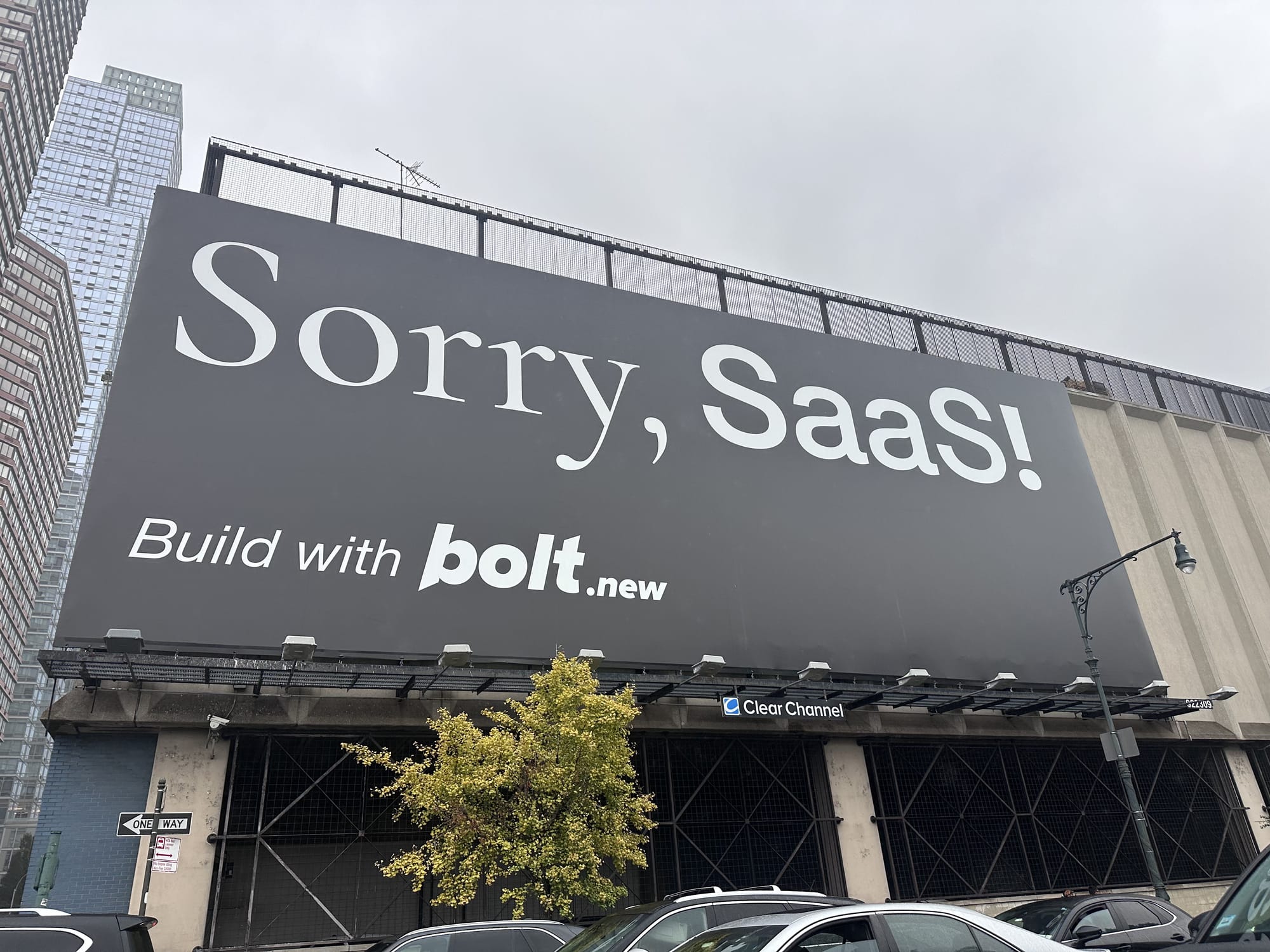
Share to:

This post was originally published here

The U.S. national debt is nearly $39 trillion. One of the country’s top fiscal economists says the real number is closer to $100 trillion — and that Washington’s own accounting rules are designed to hide it. (As this went to press, the national debt clock stood at $38.92 trillion, per Treasury data.)

According to Kent Smetters, faculty director of the Penn Wharton Budget Model and one of the country’s most respected fiscal economists, that $39 trillion number is a polite fiction. The real tab, he argues, is closer to $100 trillion.

It has to do with the accounting distinction between explicit obligations — legally binding debts the government must repay — and implicit “pay-as-you-go” obligations — expected future spending commitments that carry moral or political, but not legal, force. “What we call implicit obligations are twice the size of explicit obligations,” Smetters told Fortune in a recent interview, referring to the unfunded liabilities buried inside programs like Social Security and Medicare.

If the U.S. government were required to report its finances under the same accounting rules as a publicly traded corporation, Smetters pointed out, the debt-to-GDP ratio wouldn’t be the current level of 100%, which is bad enough. “We’d be reporting a debt-to-GDP ratio closer to 300%.” The gap between those two numbers, he warned, is not a rounding error — it is the deliberate product of federal accounting standards designed to keep the full picture hidden from the public.

‘A shell game, not a Ponzi scheme’

Smetters is careful about the language he uses. Critics of Social Security have long compared the pay-as-you-go structure to a Ponzi scheme, in which early investors are paid with money from later ones. Smetters rejects that framing.

“It’s not a Ponzi scheme,” Smetters said, “it’s a shell game,” insisting that this distinction matters. A Ponzi scheme implies fraud, but Social Security never promised a higher return than market returns. It’s more of a shell game because Social Security and entitlement reforms can be moved obligations “off book”, from explicit Treasury obligations to implicit pay-as-you-go liabilities, because federal budget rules do not account for implicit liabilities. In 2001, Treasury Secretary Paul O’Neill attempted to explicitly book the value of pay-as-you-go liabilities but several events later that year – including the 9/11 attacks and the Enron meltdown – shifted the focus toward more immediate challenges. The newer accounting framework was outlined in a 2003 book published by the American Enterprise Institute.

In Washington’s case, Smetters said, that misdirection is written directly into federal law. His Beltway credentials include a stint as an economist at the Congressional Budget Office and as Deputy Assistant Secretary for Economic Policy at the U.S. Treasury, and PWBM is widely used in Washington DC to analyze the fiscal and macroeconomic effects of federal policy proposals. So he knows what he’s talking about when he rattles off, from memory, accounting legislation from 1985 as the origin of this shell game.

By statute, Smetters pointed out, the Congressional Budget Office is required to analyze Social Security on what’s known as a “scheduled benefits basis” — meaning its models assume the program will pay out full promised benefits indefinitely, even after the trust fund is completely exhausted. The problem, of course, is that current law also requires benefits to be automatically slashed the moment the fund runs dry, while the CBO is legally barred from modeling that reality.

This accounting quirk has enormous political consequences. It allows lawmakers to craft Social Security “reform” bills that appear, on paper, to close the program’s long-term funding gap — while actually doing nothing of the sort. Smetters points to the Social Security 2100 Act as a prime example. The bill was widely celebrated for eliminating the program’s 75-year actuarial shortfall. In reality, he argued, it actually worsened the long-term picture by increasing implicit debt by more than $1 for every $1 of reduction in explicit debt. Smetters said he believes this was an unintentional effect; it can just happen when working with an incomplete accounting framework that focuses on explicit federal debt.

This bill simply shifted costs from the explicit ledger — where they show up in official debt projections — to the implicit ledger, where they vanish from public view entirely. “They reduced these explicit liabilities, but it actually increased implicit liabilities by even more. And so instead of helping future generations, instead of incentivizing saving and labor, it ultimately, in the end, did the opposite.”

Handcuffed accounting

As a longtime budget watcher, Smetters attributed the issue to something almost mystical in the gears of government, “remnants” of legislation that remain even as Congress keeps writing new bills to supposedly correct the errors from previous regimes. In particular, he pointed to powerful “remnants” rooted in the 1985 Gramm-Rudman-Hollings Balanced Budget Act, which effectively prevent the agency from projecting discretionary spending to grow faster than inflation over the budget window. During his own three-year tenure at CBO, Smetters claimed, staff recognized this constraint as unrealistic and effectively required CBO to consistently produce debt projections that were too optimistic

“One of the things that’s left over from Gramm-Rudman-Hollings,” Smetters explained, “is that CBO by law is not allowed to grow discretionary spending faster than inflation over the next decade, over the budget window. And if you were to ask them, does this modeling make sense? They’ll be the first to say, ‘No, this absolutely makes no sense.’” In practice, this means the CBO’s long-range models have a structural problem built into them. “They constantly underestimate the growth in the debt,” Smetters said.

Congress passed the 1985 law in a moment of genuine fiscal panic: deficits had exploded during the early Reagan years, and lawmakers desperate for a mechanism to enforce discipline created a statutory framework that required automatic spending cuts — “sequestration” — whenever the deficit exceeded preset targets. To make that system work, the law needed a standardized, apples-to-apples definition of what counted as a “deficit,” so Section 257 codified the rules governing CBO’s official budget baseline. The political logic was straightforward: by locking in assumptions about what programs were “supposed” to spend, Congress could measure any new legislation against a fixed ruler.

The agency also faces restrictions on dynamic scoring — the practice of modeling how a policy change ripples through the broader economy — for any measure that affects fewer than 1 million people. “This is a pretty nutty one, too,” Smetters said. This blinds budget analysts to hundreds of billions of dollars in potential tax revenue generated by high-skilled immigrants over their lifetimes, he explained. Even high-skilled STEM workers who pay much more in taxes than they receive in benefits are scored as losing the government money on average, he explained, pointing to a 2024 analysis of this published by PWBM from former CBO director Douglas Elmendorf and MacArthur “genius grant” awardee Heidi Williams.

Setting aside the politics, Smetters argued, the economics suffer. “Suppose that we were to shift immigration away from low-skilled to high-skilled workers … even though we know those high-skilled STEM workers, for example, they’re going to pay a lot more taxes, CBO is not allowed to account for that.” The result is a federal budgeting apparatus that, through an accumulation of outdated rules and political compromises, consistently produces rosier projections than reality warrants.

Six years to a Social Security reckoning

For Social Security specifically, the law directed CBO to assume that scheduled benefits would be paid in full, indefinitely. It was a conservative modeling choice at the time because the trust fund was healthy following the 1983 reforms. What nobody fully reckoned with was that this assumption would become permanently embedded in law, transforming what was meant as a neutral accounting convention into a tool that could make structurally insolvent legislation appear fiscally responsible on paper.

At one time, according to Smetters, there simply wasn’t a “budget problem” in the United States, because there wasn’t an “automatic stabilizer” like in the Gramm-Rudman-Hollings legislation to keep benefits from growing at the same rate. If you just look at the data, he added, “discretionary spending clearly grows with the size of the economy. I mean, it grows clearly faster than inflation,” but it can’t do that by law. Gramm-Rudman-Hollings was never explicitly overturned, just parts of it bit by bit, “and so CBO just is not allowed to grow discretionary spending faster than inflation.”

The stakes of these accounting games are about to become very real. The Social Security trust fund — which covers Old-Age and Survivors Insurance — is now projected to be depleted by 2032, one year earlier than the CBO estimated just months ago, a revision driven in part by recent tax legislation. When that happens, the program is legally required to cut benefits to whatever level incoming payroll taxes can support — a figure currently estimated at roughly 84% of scheduled payments. Tens of millions of retirees would face automatic cuts with no congressional action required to trigger them.

That looming deadline should be forcing urgent reform debates in Washington. Instead, Smetters said, turning inwardly critical, although he said he doesn’t believe PWBM is a bad offender in this regard, years of alarmist rhetoric about crisis from think tanks and budget hawks have left lawmakers cynical and disengaged. “They’re kind of tired of the boy who cries wolf,” he says. They’ve been “saying the sky is falling for the longest time,” but the sky hasn’t exactly fallen yet, he said, likening it to predictions that the world was supposed to be underwater by now. “That’s a dangerous approach,” he said, adding that “what really needs to be done is really serious, thoughtful discussions of modeling and explaining to people.”

That fatigue is dangerous, because time is the one resource that fiscal reformers are rapidly running out of. The longer Congress waits, Smetters warned, the narrower the range of available solutions becomes. A structural fix implemented today could be spread gradually across generations — modest adjustments to the retirement age, phased benefit recalibrations, incremental revenue increases. A fix implemented in 2031, under pressure of imminent insolvency, will look very different: steep, sudden, and politically brutal. Think a steep tax hike, rather than a gradual, structural adjustment.

The deeper problem

Underlying all of it, Smetters argued, is an epistemic failure in how Washington evaluates fiscal policy. The simplified models and politically convenient scoring rules that dominate budget debates don’t just misrepresent the debt — they actively mislead the policymakers who are supposed to fix it.

The Treasury’s own Financial Report of the United States Government puts the 75-year unfunded shortfall at $73.2 trillion, driven entirely by Social Security and Medicare. The reason the distinction matters is compounding urgency: the longer these implicit liabilities remain off the official ledger, the less pressure lawmakers feel to address them, while the actual cost of closing the gap grows larger each year. 

The CBO already projects that deficits will hit $1.9 trillion in fiscal year 2026 and balloon to $3.1 trillion by 2036 under current law — and that projection still assumes Social Security pays full benefits even after the trust fund is projected to run dry around 2032, obscuring just how much worse the trajectory actually is.

Without transparent, micro-founded economic models that capture the true generational transfer of costs, he warns, lawmakers will keep falling for proposals that shuffle liabilities from one column to another without changing anything fundamental. “They’re just going to get duped into simplistic solutions that really don’t do much,” he said.

The United States is not, Smetters insisted, on the verge of imminent collapse. The debt is manageable — in theory. But the window for a managed solution is closing. And the accounting rules that were supposed to help Washington navigate a path forward are, by design, pointing in the wrong direction.

This story was originally featured on Fortune.com
Share to:

This post was originally published here

This Sunday will be the biggest night of the year for Los Angeles: Tinseltown’s stars will turn out en masse for the Academy Awards at the Dolby Theatre on Hollywood Boulevard, to celebrate the magic that only this storied city can create.

But a look into the field for the Best Picture Oscar reveals an uncomfortable surprise: Not a single one of the 10 nominated movies was produced on the famous soundstages or studio lots of Hollywood. While some post-production was done in L.A.-based facilities, all were entirely or largely filmed elsewhere, from Marty Supreme (New York) to Sinners (Louisiana) to Hamnet (U.K.).

Hollywood, the name for the entertainment industry headquartered and operating in Los Angeles County, is disintegrating. Production measured in Los Angeles shoot days is plunging, down from 36,792 in 2022 to just 19,694 in 2025, according to FilmLA research. Some 41,000 of the workers who make the industry function left from 2022 to 2024, the most recent data available—some by choice, some by necessity. The industry’s most powerful person is not a traditional studio boss but Ted Sarandos, co-CEO of streaming giant Netflix, which is headquartered in Silicon Valley.

And yes, that remains true even after Paramount Skydance’s David Ellison outbid Netflix to purchase the legendary studio Warner Bros. Discovery. Indeed, the outcome of that intensely watched deal negotiation looks likely to be another nail in the coffin for the film industry as a dominant economic force in Los Angeles—with Ellison, Hollywood’s newest mogul, promising to find $6 billion–plus in “synergies” following the acquisition. He has promised that the majority of these cost cuts will affect “nonlabor sources”—but the Town (as the film industry based in Los Angeles is often called) is bracing for large-scale layoffs.

Meanwhile, the threat of AI reshaping the business of making films looms, and the specter of industry collapse, of American cities hollowed out by manufacturing jobs going overseas and workers made obsolete by new technologies, hangs heavy over the boulevards and palm trees of Los Angeles. “The sunny version of Detroit,” was the assessment of Michael Lynton, former CEO of Sony Pictures Entertainment, on a recent visit to his previous stomping ground. “It was crickets,” he told The Hollywood Reporter. “There’s nothing going on.”

The collapse of an entire industry is a sad story no matter how you slice it. The collapse of Hollywood is also something more. For years, movies were a major American export, sending not just celluloid film but also an American worldview around the globe. Now, measured strictly in dollars, the $20 billion–plus the U.S. earns from exporting films and television shows each year is dwarfed by other exports—oil, cars, and industrial machinery among them. But still, these quintessentially American products—action movies, bingeable streaming shows, and a bevy of dashing superheroes and impossibly glam movie stars—punch far above their weight in establishing the nation’s “soft power” internationally, seeding American language, culture, fashion, and societal mores into living rooms from Seoul to São Paulo in a way no container ship full of LNG can match. When we say, “an offer he can’t refuse” or “I don’t think we’re in Kansas anymore,” everyone knows what it means, and where it came from.

The cluster effect

For 100 years Hollywood was among the world’s most successful and famous examples of what is called an “industry cluster.” The Harvard Business School’s Michael Porter, who coined the term in 1998, described such clusters as “critical masses—in one place—of unusual competitive success in particular fields.” Other examples are high-performance car companies in southern Germany; pharmaceutical companies near Philadelphia; and high-fashion shoe companies in northern Italy. But in his writings, Porter singled out the two starriest examples: “Silicon Valley and Hollywood may be the world’s best-known clusters.” 

Such clusters foster success because they create virtuous circles: When an industry’s best people and companies become concentrated in an area, the industry’s other people and companies want to be there. Those who join the cluster gain knowledge, relationships, and motivation “that distant rivals cannot match,” Porter said. The result is an upward cycle that draws in more industry players and further strengthens the industry.

Hollywood emerged as an industry cluster when early 20th‑century filmmakers fled New York and New Jersey to escape Thomas Edison’s aggressive enforcement of his patents on motion‑picture cameras, projectors, and other technologies, and to take advantage of Southern California’s cheap land and year‑round sunshine. Between roughly 1910 and the early 1920s, dozens of independent producers consolidated into vertically integrated studios—Paramount, MGM, Warner Bros., Fox, Universal—concentrating production in and around Los Angeles and locking in a dense ecosystem of stages, back lots, labs, equipment houses, and skilled labor. Worldwide distribution and exhibition were likewise managed from L.A. By the late 1920s and 1930s, this agglomeration had become a self‑reinforcing cluster: The “Golden Age” studio system produced hundreds of films a year; recruited and developed “bankable” stars beloved around the world; and drew in talent and suppliers from everywhere, elevating Hollywood from geographic neighborhood to dream factory.

Pictured circa 2024, the original Hollywoodland sign advertised a housing development of that name in the hills near Mulholland Drive.
Underwood Archives/Getty Images

Today, Hollywood’s upward cycle seems to be reversing. It didn’t happen all at once or from one single cause. It’s partly a story of technology barriers coming down, enabling more consumers to choose from and stream more sources of entertainment than ever—much of it not from Hollywood.

From the consumer’s perspective, an economist might applaud the abundance of choice and competition in the streaming era. More options at lower cost? What’s not to like? But in the real world rather than the theoretical one, today’s transition is miserable for thousands of talented middle-class people who are living in the downward cycle—and for anyone who loves films and TV. The loss of the industry’s talent pipeline may well result in a decline in the quality of the product the industry produces and unleash an abundance of AI slop. And in an era where politicians on both sides of the aisle pay lip service to the goal of Americans getting back into the business of making things, it’s worth noting that the nation’s most culturally significant export industry is in a state of spiraling crisis.

What’s left of the Hollywood dream job?

Consider Jason Lazarcheck, a writer who came to Hollywood from New York City in 2008, right after college. He got a job on a Lifetime show called Army Wives—“the last show on earth I would have picked,” he says, but it offered a sustainable writing life. In those pre-streaming years, most shows produced 22 or 23 episodes per season, “so that meant a lot of jobs for writers,” he says. Even more important, his writing job continued through the production of all the episodes, including the filming, in case changes had to be made on the fly. Through it all, the showrunner mentored him on all aspects of getting those episodes done. The result, he recalls, was “I learned more about writing and producing TV than a lot of writers ever do.”

An eager young writer arriving in Los Angeles today would be unlikely to find such a career springboard. “One of the darkest things that changed about TV for writers is that now most shows have fewer episodes,” Lazarcheck says. In the streaming world there is no requirement of a given number of episodes, so virtually no shows produce 22 episodes anymore; some make as few as four or five episodes at a time. “The last show I was staffed on was a limited series at Apple,” he says. The producers told the writers to write all the scripts, and then Apple would decide whether to make the show, called Lure. Apple passed, though the project could still be produced elsewhere. Even if the show gets a green light, the writers won’t be hired through production.

The streaming era just doesn’t offer the steady flow of work many directors, cinematographers, writers, gaffers, sound mixers, and other workers have relied upon. “There’s no need to fill eight o’clock on Wednesday night,” says Mark Goffman, a producer and writer, so today, “[producers]will order one script, then six months later they’ll approve a second script. A very precious few are on the timeline where they get green-lit and move at light speed. Everything else kind of lumbers along with no real urgency.”

The 2025 Apple TV+ comedyThe Studio skewered the Hollywood of today.
©Apple TV+/Courtesy Everett Collection

The upshot is that landing a writers’ room job today is no longer such a golden opportunity. With “fewer episodes, fewer writers in the room,” and no role in production, Lazarcheck says, it’s a meager version of the screenwriter’s previous job. For those trying to eke out a living in Hollywood, he says, “I feel like it’s never been harder.” That reality became even more starkly obvious after 2023, when the writers’ and actors’ labor unions went on strike—going without salaries for almost five months to ensure better pay, minimum staffing requirements, better health insurance, and protections against AI.

Like many others in Hollywood’s once mighty workforce, Lazarcheck has had to find work outside the industry. He recently took a job as an expert writing consultant for AI companies—the industry that threatens to take over his previous job function. “If you had asked me on the picket line at the Disney lot if I’d be comfortable doing that with an AI company, I would have said, ‘Hell no!’” he says. “But a few years go by, and I just need to earn money.”

Lazarcheck still lives in the Los Angeles area, but many other industry workers are leaving, some giving up on the industry, others working remotely from places less expensive than L.A. Lazarcheck offers this advice to his peers: “Don’t define yourself by Hollywood.”

Hollywood’s broken business model

Veteran Hollywood denizens, when asked about the decline of the Hollywood industry cluster,  often say the same thing: “Netflix changed everything.”

But the shift away from traditional filmmaking started before the streaming giant began to eat the grand old studios’ lunch by producing its own films and shows in the 2010s. Hollywood’s primary business ceased to be movies long ago, says Jeff Bewkes, former CEO of Time Warner, where he oversaw HBO, Warner Bros., Turner Broadcasting, and New Line Cinema. “For the last 30 years, the biggest business for most legacy media companies, in terms of the number of people employed and profit and return on money invested, has been television series production, not movie production,” he explains. “The exception may be Disney, with its huge franchise films and revenues not just from exhibition, but also from consumer products and onsite parks and cruise line experiences.”

Hollywood’s large studios had been making TV shows for years before, but for most of that time there were only three TV networks—not a huge market. Then, starting in the 1970s and accelerating in the 1980s, cables and set-top boxes were installed in millions of homes, enabling dozens of new channels to reach large audiences. All those channels needed programming, and Hollywood stood ready to help.

In the mid-1990s, the government rescinded an old rule that prohibited distributors (the TV networks) from owning the programs they showed. The goal had been to get more producers with more perspectives and ideas on TV’s “big three” channels, but cable had solved that problem. Since cable channel owners could now own the programs they showed, they started producing more—ramping up in‑house and affiliated production; increasing vertically integrated ownership of primetime and cable programming; and opening the door to more business for Hollywood, and more consolidation.

As consumer technology advanced, still more revenue for Hollywood, in the form of royalties, rolled in from Blockbuster and similar companies renting VHS tapes and DVDs to consumers in those same years.

Little noticed in 1997 was the founding of Netflix, which at the time seemed just an evolution of Blockbuster’s sector, renting DVDs by mail. The revolution—what changed everything—was Netflix’s introduction of streaming media over the internet in 2010. At the time, the preeminent cable channel for high-quality proprietary entertainment was HBO, with The Sopranos, Sex and the City, The Wire, Band of Brothers, and more.

But when Netflix started reaching consumers over the internet, HBO faced a major competitive disadvantage. It reached its subscribers through local cable companies, which charged HBO a fee. If subscribers paid the cable company $15 a month for HBO, the cable company kept $5. Netflix, reaching subscribers directly online, received all the money its subscribers paid. It wasn’t much help that HBO’s parent company, Time Warner, was a major supplier of home internet—one of the “pipes” streamers relied upon to deliver content to consumers. The Obama administration’s “net neutrality” rule prevented the internet providers favoring their own products or “throttling” their competitors’.

Even more important, as it turned out: Netflix could collect vast amounts of data on every subscriber—what genres, actors, and directors they like, what scenes they replay or skip, and countless other data points. It used all that data to design a powerful algorithm, presenting popular shows such as Orange Is the New Black and Arrested Development to users based on the tastes their viewing habits revealed. That data also guided the streamer’s original content spend, including the famous $100 million bet it made to green-light two seasons of David Fincher’s House of Cards in 2013, sight unseen. And many have speculated that Netflix’s vast trove of data informs certain narrative habits on its shows (cliff-hangers to encourage bingeing, for example, and frequent restating of plot points to engage viewers distracted by their phones). Until they had their own streaming platforms, HBO and other channels reaching subscribers through a cable company had none of that data.

Netflix co-CEO Ted Sarandos is widely seen as the most powerful man in Hollywood today.
Blanca CRUZ—AFP/Getty Images

Competition intensified—with Hulu, Amazon Prime, and Apple TV+, among others, entering the fray—and the 2010s’ Streaming Wars led to a golden age of TV as premium cable channels and streaming upstarts feverishly outspent one another for top talent.          

That fire hose of money has slowed considerably since, and so far the original streamer has come out on top: Netflix is by far the world’s largest streaming company, with 325 million subscribers. In the U.S. last year it attracted 59% of all streaming viewing time; 10 other streamers shared the rest, says Luminate’s 2025 Year-End Film & TV Report. And it is now competing on a larger scale: Its recent market value of $358 billion makes it more valuable than the next two most valuable companies in Hollywood, Disney and Sony, combined. In a December 2025 ranking of Hollywood’s most powerful people, assembled by industry journal Variety, No. 1 is Netflix co-CEO Ted Sarandos. No one seems to dispute it—even with the inroads David Ellison has lately made.

Another disorienting element in Netflix world is the company’s approach to paying actors, writers, and others. Studios traditionally have offered upfront fees and residuals based upon a film’s or TV show’s earnings—sustaining payments that sometimes continue for years, based on its success. But Netflix, which hoards its user data like gold in Fort Knox, offers a larger lump sum upfront, with no residuals and no performance data released. This is perhaps understandable given how precious that data is, Jason Blum, founder and CEO of Blumhouse Productions, wrote in the New York Times in 2022. “But the system leaves creators with precious little visibility into whether their works succeed in drawing viewers,” Blum explained. “By typically paying an upfront flat fee, Netflix buys out the usual success-based incentive compensation (known as the back end in Hollywood).”

A well-known agent, who prefers to stay anonymous because he still negotiates with Netflix and other companies, seems almost traumatized by the new order: “The big hits of the past that paid off, don’t pay off anymore,” the agent explains. “Therefore, all these people in the business are not working at the rate that they used to and for the money they used to get.”

“I didn’t want to go live in Bulgaria”

The Los Angeles area is an expensive place in which to live and to produce movies and TV shows, so it makes sense that productions and workers are looking elsewhere. The Atlanta area has been a major production locale for many years, offering producers lower costs and even subsidies in some cases. Disney has produced many of its Marvel films there, including Black Panther and Captain America: Civil War. Movies in the Hunger Games and Fast & Furious franchises have been made there, along with hundreds more projects. Vancouver is another attractive and growing alternative to Hollywood, especially when the Canadian dollar is low.

Many projects go to other countries offering subsidies and low costs while absorbing Hollywood know-how. “In the last couple of years I’ve been to Taiwan several times,” says Goffman. “I’ve been to parts of Asia and the Middle East where they’re ramping up production. A lot of Eastern European countries have built up productions.”

The globalization of filmmaking may be healthy for the industry in the long run—expanding markets, lowering costs, and spreading know‑how to new filmmaking hubs—but for Los Angeles–based crews, uprooting to live on far‑flung sets for months at a time can be profoundly disruptive and deeply undesirable. “Often you’ll be asked if you want to do a series,” Goffman says, “but you’ll need to move to another country that’s on another continent for six to nine months, away from your family.” Marjorie David, a producer and writer with 40 years in the business, says: “There’s a whole show I didn’t do, because I didn’t want to go live in Bulgaria.”

Silicon Valley devours Hollywood

Why does it matter if movies are made in Hollywood or in Atlanta or Dublin? Perhaps, in the age of online collaboration and Zoom meetings, it doesn’t. But with the disintegration of Hollywood, one of the world’s greatest industry clusters, something more than jobs and income is lost.

For a century, Hollywood’s geographic specificity meant writers, directors, cinematographers, editors, actors, and executives were all working in close proximity, moving from project to project and swapping ideas, techniques, and contacts on sets, over martinis at Musso & Frank’s or at coffee shops in Silver Lake. That self-propelling upward spiral built a small patch of Southern California into the center of an industry and, culturally, the world.

If that cluster scatters to cheaper locations, the city will lose those everyday collisions—shared stages, repeat partnerships, in‑person mentorship—that helped knit individual talents into an ecosystem of innovation. The knowledge built over decades won’t be handed down as it once was, nor improved in the process of close cooperation and competition.

What replaces it is likely to be more fragmented: Great work can still happen, but it becomes harder to sustain the same level of collective craft and experimentation. And unfortunately, a downward spiral is also self-propelling.

For now, Netflix and the other streamers are clearly ascendant—and continuing to pay professionals to make films and TV shows around the world—but the picture could change dramatically, and soon. Teenagers spend more time watching user-generated videos on TikTok, YouTube, Facebook, Instagram, X, and other social media than they do any other type of video, according to research by eMarketer, the Pew Research Center, and the Centers for Disease Control and Prevention. YouTube reports that users are uploading 500 hours of video every minute; that’s more product in a day than all the movies and TV shows that Hollywood produces in a year. As AI roars ahead, billions of people worldwide will have the tools to make increasingly high-quality videos all by themselves.

This Sunday’s telecast on Disney’s ABC TV network will be a celebration of everything that is Tinseltown—fabulous gowns on the red carpet, heartfelt speeches by celebrated creatives, and wall-to-wall coverage of the after-parties. But come 2029, the 100th anniversary of the Oscars, the gala will leave the television network that has carried the Oscars every year since 1976. It will then be shown exclusively by YouTube, owned by Alphabet, parent of Google. And it might well be consumed largely via next-day clips of viral moments.  

As Michael Porter said, the world’s two most famous industry clusters are Hollywood and Silicon Valley. With one of them fading, it seems the other may be devouring it.

Bewkes—once a Hollywood mogul himself—describes it as the end of an era. “The most powerful people controlling the media now, and determining its future, are the tech oligarchs,” he says. “That’s not a prediction, it’s a description of what’s happening now.”

This article appears in the April/May 2026 issue of Fortune.

This story was originally featured on Fortune.com

Share to:

This post was originally published here

“Typically,” Morgan Stanley observed in a big research note earlier this week, “headcount growth has been required for revenue growth but AI is changing that relationship.” It’s the latest puzzle piece in the paradox of productivity under AI: it seems to be making work more intense, not less, and despite all the doomsday predictions of massive job loss and an impending white-collar recession, many CEOs insist they are still planning to hire more people.

The investment bank, drawing on takeaways from its annual Technology, Media & Telecom Conference in San Francisco, identified three distinct areas where AI is actually creating demand for workers—even as it threatens to hollow out others.​

The findings arrive at a pivotal moment. Corporate America is increasingly signaling a “decoupling” between revenue growth and headcount growth, Morgan Stanley noted, with executives from companies like Snowflake and Shopify describing how AI tools are allowing them to do more with smaller teams. But Morgan Stanley’s analysts argue the picture is more nuanced than a straightforward displacement story—and that three areas of the labor market in particular are experiencing a surge in demand driven directly by AI.​

“While some companies have reduced headcount, the majority of discussions [at the TMT conference] around AI’s impact on white collar work centered on productivity transformation and growing results without growing headcount,” they said.

In a related thought exercise last month, the Deutsche Bank Research Institute decided to ask AI how many human jobs it was going to displace, and the robot answered back that it saw 92 million jobs on the chopping block. On the other hand, it said AI would create 170 million new roles, more than offsetting the losses. “However, this transition will be disruptive,” Deutsche Bank’s Jim Reid and Adrian Cox predicted. But for Morgan Stanley, analysts said the disruption is happening right now.

Skilled Trades: The Hidden Bottleneck

The most urgent and underappreciated jobs sector, according to Morgan Stanley, is in skilled trades. The unprecedented scale of the AI infrastructure buildout—spanning data centers, power delivery systems, and networking equipment—is driving demand for electricians, electrical engineers, and construction workers that “far exceeds supply,” the bank said.​

Executives from CoreWeave described a shortage of “thousands of skilled-trade workers” needed for data center construction, warning that because relevant skills take years to acquire, the supply-demand gap will persist. Nvidia CEO Jensen Huang echoed the concern, noting electrician shortages in key markets like Texas as a constraint on expansion. The bottleneck, CoreWeave noted, isn’t just about available power—it’s about having the human capital to physically deliver that power into racks and servers.​

AI Training and Reskilling: A Market Exploding in Real Time

The second area of surging demand is workforce education and reskilling. As companies restructure roles around AI tools, enterprises are racing to upskill employees—and the numbers are striking. Coursera reported that AI-content enrollments reached 15 enrollments per minute in 2025, up from 8 per minute in 2024, a near-doubling in just one year.​

The buyers are increasingly corporate rather than individual, with CTOs and Chief Data Officers turning to platforms like Coursera to equip their workforces with skills in generative AI, data science, and software development. Docebo, a learning management software provider, described AI as “fundamentally causing every organization to re-skill their workforce,” calling learning management systems a critical tool for delivering that training at scale.​

AI Supervisors and Orchestrators: The New White-Collar Role

The third category isn’t a traditional trade or training job—it’s a newly emerging class of knowledge worker. As AI agents take over routine tasks, companies are redefining white-collar roles around supervising, orchestrating, and providing context for those systems.​

C.H. Robinson told conference attendees it is being transparent with employees that “future jobs will involve managing standard operating procedures and context for AI agents rather than running operations directly.” Salesforce introduced a new productivity metric—”Agentic Work Units”—to capture the value that AI agents and the humans who manage them are delivering, as the company moves beyond measuring simple token consumption. Across industries, the message from Morgan Stanley’s conference was consistent: the workers who thrive will be those who can direct AI, not just use it.​

A Tale of Two Labor Markets

The three growth areas exist alongside a more sobering dynamic for traditional white-collar employment. Snowflake cut roughly 200 positions in Q4 tied to AI-driven efficiencies, adding only a net 37 workers despite revenue reaccelerating to 30% growth. Shopify has seen headcount decline for eight to ten consecutive quarters.​

Morgan Stanley frames this as a “diverging trends” story—one in which AI is simultaneously eliminating certain jobs, elevating others, and creating entirely new categories of demand that didn’t exist a few years ago. The companies and workers best positioned for what comes next, the bank suggests, are those already adapting to all three.

“Companies are increasingly allowing natural attrition to reduce staffing needs, reallocating resources toward technical talent, or shifting spending from labor to technology while maintaining headcount,” Morgan Stanley concluded. At the same time, it noted that this transition is reshaping job definitions, moving workers toward roles that supervise, orchestrate, and contextualize AI systems.

The new economy is arriving—and soon.

This story was originally featured on Fortune.com

Share to:

This post was originally published here

Moving up the career ladder at Accenture comes with a requirement: You must be using the company’s AI tools.

In a recent episode of the “Rapid Response” podcast, Accenture CEO Julie Sweet said AI proficiency is a mandatory part of working at the consultancy and moving up its ranks. The company announced in September it has invested more than $865 million in a “six-month business optimization program,” including reskilling thousands of employees—and showing the door to those who refused to adapt to using evolving workplace technology.

“If you want to get promoted, you’ve got to do the things that we do in order to operate Accenture,” Sweet said.

“These are the new tools to operate a company,” she added. “We didn’t go from zero to ‘you won’t get promoted’ in a month. It’s over a three-year period of getting used to the technology, making sure it’s user-friendly, making sure we have the right workbench for people to use, and then saying, ‘Hey, this is Accenture and how we operate.’” 

The mass reskilling effort is part of Accenture’s three-year, $3 billion push to integrate AI first announced in 2023. One goal of the effort was to double the company’s AI talent to 80,000 professionals through hiring, acquisitions, and training. Accenture has more than 770,000 employees.

But Accenture’s embrace of AI has been an exception rather than the rule. As of the fourth quarter of 2025, 38% of companies reported integrating AI to improve workplace productivity, efficiency, and quality, according to a Gallup poll, a 1% increase from the quarter before. To be sure, AI adoption is still on the rise, with 69% of workplace leaders using AI as of 2025’s fourth quarter, up from less than 40% as of 2023’s second quarter.

CEOs and other executives have approached AI adoption and impact with skepticism. A study published in February by the National Bureau of Economic Research found that among 6,000 C-suite executives, two-thirds used AI, but that usage amounted to only about 1.5 hours per week. About 90% of those respondents reported over the past three years, AI had no impact on employment or productivity

That could all soon change. Those same executives also forecasted a 1.4% increase in productivity and 0.8% increase in output over the next three years. The education company Pearson estimated that augmenting jobs with AI and reskilling employees could add between $4.8 trillion and $6.6 trillion to the U.S. economy within the next decade, per a report published in January.

Why Accenture went all in on AI

According to Sweet, integrating AI into the workplace is a natural extension of when computers become ubiquitous. The typewriter classes of yesterday are analogous to the AI reskilling of today, she suggested.

“No one would have said that requiring someone to use a computer is coercion,” Sweet said. “It’s how the companies were going to get work done. Today, AI at Accenture is how we do work.”

Still, Sweet has empathy toward companies resistant to making the sweeping changes Accenture has made to accommodate an AI future. She previously told Fortune Editor in Chief Alyson Shontell that companies’ failed attempts to integrate the technology in the office were a result of using AI as a tool in a previously established workflow, when it was really most effective when workplace systems were built with the technology in mind.

“First of all, I think we’re a good lesson in something that I’m advising CEOs all about: In order to capture the opportunity with AI, you really have to be willing to rewire your company,” Sweet said. 

Accenture’s own employees hit snags in embracing AI, she noted. Welcoming change associated with the new slate of tools was challenging, for both employees and old business.

“For our people and our clients, it was hard,” Sweet said. “How do you have the courage to do that? That’s where you have the humility, but also this idea of embracing change and innovation.”

This story was originally featured on Fortune.com

Share to:

This post was originally published here

The U.S. Mint unveiled new designs for the country’s 250th anniversary and it left out one key detail: the olive branch from the newly designed dime. The new reverse shows a bald eagle mid-flight, arrows clutched in its left talon and nothing—where an olive branch once lived—in its right, with beneath, the inscription “Liberty over Tyranny.”

For a nation whose founding symbols were carefully engineered around the balance of peace and war, that omission is hard to read as accidental.

Unchanged since 1946, the Roosevelt dime is now replaced by a modern Liberty figure on the front, solely for one year as the country celebrates its 250th anniversary this year. The U.S. Mint is marking the Semiquincentennial with a sweeping redesign of the coinage, something not undertaken since the 1976 Bicentennial. Authorized by Congress, the change touches the dime, quarter, half dollar, penny, and dollar coin, all bearing 1776–2026 dates.

The olive branch has anchored American iconography for 250 years—its absence from the very coin marking that anniversary is a curious choice, if not a telling one.

What does the olive branch mean?

When the Great Seal of the United States was finalized in 1782, it contained what the Founding Father’s held as the country’s most esteemed values. The eagle holds 13 arrows in its left talon and an olive branch in its right, its head turned toward the branch—the side which the eagle preferred to err on.

The arrows—not for lack of symbolism, take a wild guess why there are 13 of them—are in the eagle’s left talon, the traditionally thought-of weaker and subordinate side. Meant to represent the power of war and military preparedness, the arrows clutched in the left talon signal that although the U.S. is always armed and ready, force is not its first instinct.

Charles Thomson, who shepherded the final design, was explicit: the arrows represented the power of war, the olive branch the power of peace, and together they carried a single message: the United States had a strong desire for peace, but would always be ready for war.

The eagle’s head facing the olive branch was not incidental. It was a statement of national preference, drawn directly from the Olive Branch Petition of 1775, Congress’s last diplomatic appeal to King George III before the war escalated beyond return.

Dropping the olive branch from the dime isn’t just a design choice: it’s a cultural signal. The Founders spent six years perfecting the balance between peace and war on the Great Seal. Erasing half of that equation, on a coin meant to celebrate their legacy, and especially 250 years after they fought for “Liberty over Tyranny,” says something about which half the country currently feels like.

What was the coin design process?

The U.S. Mint is also redesigning other currency. Five new one-year-only quarter designs trace American history from the Mayflower Compact to the Gettysburg Address. Acting Mint Director Kristie McNally said the goal was for every American to hold 250 years of history in their hands.

“The designs on these historic coins depict the story of America’s journey toward a ‘more perfect union,’ and celebrate America’s defining ideals of liberty. We hope to offer each American the opportunity to hold our nation’s storied 250 years of history in the palms of their hands as we Connect America through Coins.”

In 2025, the U.S. Mint brought the coin designs to the public, with the top rated coins reviewed and recommended by the Citizens Coinage Advisory Committee (CCAC) and U.S. Commission of Fine Arts (CFA). The CCAC, established in 2003, advises the Secretary of the Treasury on themes and designs of all U.S. coins and medals, the latter of which are used in commemoration and neither hold face value nor are legal tender. The CCAC, an informed and impartial resource for the Secretary, essentially, is meant to represent the interests of all Americans. The Secretary then approves all final suggestions.

In Sept. 2024, the coin designs were put into review. Each coin design will depict a special Semiquincentennial Liberty Bell with the numeral “250” marked on the coin.

Coins and their symbolism

In Dec. 2025, Secretary of the Treasury Scott Bessent nixxed some of the quarter designs that were approved by then-Treasury Secretary Janet Yellen during the Biden Administration for focusing “on DEI and Critical Race Theory policies.” One of the coins featured a line of people with arms linked, in between the words “We shall overcome.”

At the time, U.S. Treasurer Brandon Beach said the coinage design is supposed to “celebrate American history and the founding of our great nation,” but that imagery was scrapped because “the Biden Administration and Secretary Yellen remained focused on DEI and Critical Race Theory policies.”

“The Trump Administration is dedicated to fostering prosperity and patriotism. We have no doubt these new designs will be wildly popular with the American people.”

Best of the Mint #2: 1916 Standing Liberty Quarter
U.S. Mint

It’s interesting to note, however, the 1916 Standing Liberty Quarter, a medal that also will be released this year in commemoration of the 250th anniversary (dubbed by the Mint as the SemiQ), features a standing Liberty holding an olive branch on the front, and on the back, the talons of an eagle gripping an olive branch.

Perhaps the most famous dime is the Mercury dime which was minted between 1916 and 1946. Designer Adolph Weinman chose to use a Roman fasces—an axe bound tightly in a bundle of rods—wrapped in an olive branch, together symbolizing military readiness tempered by a desire for peace, in a nod to the Roman Republic. Three years after the Mercury dime debuted, Benito Mussolini adopted the fasces as the emblem of his Italian fascist movement, even where the name derived from. It was then replaced in 1946 by the Roosevelt dime, in honor of President Franklin D. Roosevelt following his death. The dime remains the one in use today.

The eagle didn’t always err on the side of peace, and instead, faced the arrows between 1877 and 1945, until President Harry S. Truman signed Executive Order 9646 on Oct. 25, 1945, which changed the direction of the eagle from the arrows to the olive branch. Reportedly, according to the Winston Churchill archives, the president was very happy about the change, and told the British prime minister “The eagle used to face the arrows but I have re­designed it so that it now faces the olive branches.”

Churchill’s response? “With the greatest respect, I would prefer the American eagle’s neck to be on a swivel so that it could face the olive branches or the arrows, as the occasion might demand.”

This story was originally featured on Fortune.com

Share to:

This post was originally published here

Amazon repurposed its regular weekly retail technology meeting Tuesday to figure out why its retail website keeps breaking. The answer, buried in internal documents and then quickly deleted, according to the Financial Times: its own AI initiatives.

Four high-severity incidents hit its retail website in a single week, including a six-hour meltdown last Thursday that locked shoppers out of checkout, account information and product pricing. The meeting, run by the senior vice president who oversees Amazon’s ecommerce infrastructure, was framed as a “deep dive” into what went wrong. What went wrong, it turns out, involves the very AI tools Amazon has been pushing its own engineers to adopt, according to the FT.

An internal document prepared for the meeting initially identified “GenAI-assisted changes” as a factor in a pattern of incidents stretching back to Q3. That reference was deleted before the meeting took place, according to the Financial Times, which viewed both versions of the document. 

Amazon has pushed back on the reporting. In a blog post, the company said only one incident involved AI tools, that “none of the incidents involved AI-written code,” and that the cause was “an engineer following inaccurate advice that an agent inferred from an outdated internal wiki.” Amazon also told Fortune the meeting was a routine weekly operations review, not an emergency gathering. The company also said it is not accurate that it introduced new approval requirements for engineers working with AI tools, and that AWS was not involved in any of the incidents.

“As part of normal business, the meeting will include a review of the availability of our website and app as we focus on continual improvement,” an Amazon spokesperson told Fortune.

The internal documents, obtained and reported by CNBC, tell another story. Dave Treadwell, SVP of eCommerce Foundation, laid it out for staff:. Site availability had not been good recently, he wrote, and the string of Sev 1s—the most severe classification for incidents that take down important systems—demanded immediate attention.

But the internal documents, as initially written, according to CNBC, tell a more complicated story. Treadwell acknowledged in his note that “best practices and safeguards” around generative AI usage haven’t been fully established, and wrote that the company would introduce “controlled friction” into deployments involving the most critical parts of the retail experience, according to CNBC. Either way Amazon calls it, the message to engineers was that AI-assisted changes now get more scrutiny.

The timing for that kind of admission is brutal for Amazon. The company, which just surpassed Walmart to top the Fortune 500, is spending more on AI infrastructure than any company on Earth—$200 billion in projected capital expenditures this year. 

Amazon is also aggressively thinning out its workforce. The company laid off roughly 14,000 corporate workers in October — mostly middle managers — followed by another 16,000 in January. That’s on top of more than 27,000 employees cut between 2022 and 2023. In June, Jassy wrote in an internal memo that Amazon would need fewer employees thanks to AI-driven “efficiency gains,” repeating his drumbeat emphasizing the AI future of less workers needed at the giant retail platform. When the October cuts came, Jassy reframed the rationale on an earnings call to be about “culture,” saying that the company had grown too fast during the pandemic, and Amazon needed to be “lean” and “move fast.”

But a separate Amazon memo announcing the same layoffs cited the need to adapt to “transformative technology,” the kind of language that maps a lot more cleanly onto an AI-driven workforce reduction than a spring cleaning. But it seems that either way, Amazon has found itself in need of more humans in the process.

It’s an interesting narrative violation in a world of AI-related layoffs. Jack Dorsey’s Block cut nearly half its workforce last month — 4,000 employees — and tied the decision explicitly to AI-driven productivity gains. Dorsey said most companies would reach the same conclusion within a year. Salesforce’s Marc Benioff said he needed fewer heads after cutting 4,000 support roles. The C-suite consensus is that increasing AI investment will pay for itself with smaller workforces.

But the promise that AI would lighten the load isn’t playing out— at least, not for the workers who remain, and not for the systems they manage. A new analysis reported by the Wall Street Journal of 164,000 workers by ActivTrak found that AI is increasing the speed, density, and complexity of work rather than reducing it. Time spent on email, messaging, and chat apps more than doubled after workers adopted AI tools. Time devoted to focused, uninterrupted work—the kind required for solving complex problems—fell 9%. Meanwhile, new research from Anthropic suggests the gap between what AI can theoretically automate and what it’s actually automating is enormous. Even in software and math — where 94% of tasks could theoretically be handled by AI, only about 33% are being automated today. Legal constraints and institutional troubles are all slowing deployment, Anthropic said. Amazon’s outages could be a live demonstration of why.

This story was originally featured on Fortune.com

Share to:

This post was originally published here

AI chatbots and search engines are sometimes negative about brands, and the end result—while arguably good for the end consumer—is a wake-up call for companies.

A study of hundreds of millions of prompts across three industries (apparel, electronics, and education) conducted by search engine optimization company BrightEdge found Google’s AI Overviews was 44% more likely to display negative information about a brand than OpenAI’s ChatGPT. Still, when consumers prompted ChatGPT to decide between the two products, the roles flipped, with ChatGPT being more negative.

While the overwhelming majority of responses analyzed in the study were either positive or neutral, a small percentage of responses were negative for both Google AI Overviews and ChatGPT, 2.3% and 1.6%, respectively.

BrightEdge CEO Jim Yu told Fortune while these percentages may seem small, multiplied across hundreds of millions of results, they can still equate to loads of negative queries, which can affect a company’s image in the eyes of potential consumers. For every million queries, an estimated 23,000 would yield a negative response by AI Overviews, based on the data from the study.

Google, in particular, Yu said, is pulling out negative information associated with products that can sometimes be years old because of the way it pulls information from the internet. These searches, though, depend heavily on what people search for and what is publicly available about a company.

“Instead of it being on the back pages that’s way further down, now it’s pulling it into the front page, as people are looking for things about your brand,” he said. “That’s a huge change for businesses.” 

A spokesperson for Google told Fortune the report used a flawed methodology to make sensational claims and found a negligible difference of 1% between AI Overviews and ChatGPT in terms of negative responses.

“It also misunderstands how AI Overviews work: They’re based on what sources on the web say about a topic and change depending on what someone is searching for,” said the spokesperson in a statement.

OpenAI did not immediately respond to a request for comment.

Courtesy of BrightEdge

To mitigate the negative information being brought to the forefront of AI, companies need to make it a priority to respond to nearly every negative review published by people online, Matt Blumberg, the CEO of Markup.AI, a tech company that uses AI to review marketing content, told Fortune

“I do think it’s more important than ever, because those things are getting picked up more, and they’re getting picked up in different ways by different AI applications,” Blumberg said.

The study shows a clear shift in how AI presents information to people. Consumers are using AI to become better researchers and to get a clearer and arguably more objective picture of the positives and negatives of any product, Yu said.

For companies, this new reality of search means companies need to be pushing out fresh content to cater to AI’s preference for newer content, while also being strategic about where they place it. 

“It’s a new dynamic that they do have to really think about,” Yu added.

This story was originally featured on Fortune.com

Share to:

This post was originally published here

The biggest new restaurant trend is small.

Special menus with petite, less expensive portions are popping up all over, from large chains like Olive Garden and The Cheesecake Factory to trendy urban eateries and farm-to-fork dining rooms.

Restaurants hope that offering smaller servings beyond the children’s menu will meet many different diners’ needs. Some people want to spend less when they go out. Others are looking for healthier options or trying to lose weight. Younger consumers tend to snack more throughout the day and eat smaller meals, said Maeve Webster, the president of culinary consulting firm Menu Matters.

“These are really driven by, I think, changes in the way people are thinking about their relationship with food, the way they spend money on food, what is a good value and what’s not,” Webster said.

Looking for value

Beth Tipton, the co-owner of Daniel Girls Farmhouse Restaurant in Connersville, Indiana, introduced an eight-item Mini Meals menu last fall after several customers requested smaller portions. The menu, which includes daily specials like a half piece of meatloaf with green beans, mashed potatoes and gravy for $8, now accounts for about 20% of the restaurant’s orders, she said.

Older adults make up about half of the restaurant’s clientele, Tipston said, and some customers told her the regular menu was a stretch for their budgets. As someone who underwent weight-loss surgery, she also knew from experience that many restaurants won’t allow adults to order from their children’s menus.

“We wanted it to be available to all without the word ‘kids meals’ attached,” Tipton said. “With the rising costs all around us we wanted to help in any way we can, and this is a great option.”

Eating out and GLP-1s

Some restaurants are adding menus to court users of GLP-1 weight-loss and diabetes drugs like Zepbound, Wegovy, Ozempic and Mounjaro.

Last fall, restaurateur Barry Gutin ran into two different friends who told him they were taking GLP-1s and struggling to find restaurant meals that met their dietary needs and smaller appetites. GLP-1 users tend to eat less, so they need nutritionally dense foods that are low in fat and high in protein and fiber.

Gutin, the co-owner of Cuba Libre Restaurant and Rum Bar in Philadelphia, Washington, Atlantic City, New Jersey, and Orlando, Florida, reached out to a doctor who specializes in weight loss and to Cuba Libre’s culinary director, Angel Roque. Over the next month, they developed the chain’s GLP-Wonderful menu, which is available during dinner.

The menu has five classic Cuban options. Roque said the pollo asado on Cuba Libre’s regular menu has nearly 1,000 calories; on the GLP-1 menu, that’s slimmed down to 400 calories, but heavy on protein and fiber. He said it was also important to keep the GLP-1 meals flavorful and colorful, to stimulate appetites.

“Many times when people are on those kind of regimes, they feel that they can’t do the same as everybody else. So we wanted to show them, yes, at Cuba Libre, you can,” Roque said.

Gutin said the menu has increased business. He estimated that 10 to 20 groups at each location every week have at least one person who requests the GLP-Wonderful menu.

“People say, ‘Thank you for serving us’,” Gutin said.

Big chains go small

Olive Garden, whose seven-item “Lighter Portions” menu rolled out nationwide in January, said GLP-1 users were one consideration. The Italian-style restaurant chain also wanted to appeal to patrons pursuing healthier diets or more affordable meals, said Rick Cardenas, the president and CEO of Olive Garden’s parent company, Darden Restaurants.

“There is a consumer group out there that believes in abundance, but abundance is different for everybody,” Cardenas said in September during a conference call with investors. “So consumers can choose. We’re not changing our entire menu to make it a smaller portion.”

The Asian fusion chain P.F. Chang’s began offering medium-sized portions last fall. The Cheesecake Factory added smaller, lower-priced Bites and Bowls to its menu last summer, while TGI Fridays recently began testing an “Eat Like A Kid” menu with smaller portions.

A long-term change

Smaller portions aren’t a new concept. Twenty years ago, small-plate tapas restaurants were all the rage, for instance.

But to Webster, the menu consultant, the scaled-down dishes appearing now feel like a longer-term shift. For one thing, the trend is not tied to any particular cuisine. Webster also thinks consumers are thinking more about food waste than they used to, and smaller portions can alleviate some of their concerns.

“I think it is a core need that consumers have, and a demand that has been lingering under the surface for a long time because restaurant meals, particularly at chains, have become so large,” she said. “Sure, it sounds great to take leftovers home, but they never taste as good.”

During a recent visit to Shelburne, Vermont, from his home in North Carolina, Jack Pless was delighted to see the Teeny Tuesday menu at Barkeaters Restaurant, which specializes in locally sourced food. Pless, who’s in his 60s and used to own a restaurant, said he can’t eat as much as he used to at meals.

“So many times you go out to restaurants, especially me or my wife, and we’ll take home a box and it’ll sit in the refrigerator for two, three days and start to grow a beard,” he said.

Julie Finestone, the co-owner of Barkeaters, said she introduced the Teeny Tuesday menu last month to bring in more weekday business during the winter. She was concerned about the cost of offering lower-priced food options, like $12 reuben sliders, but said the decision has brought in more business than she expected.

Finestone said she’s pretty confident Teeny Tuesday will become a year-round fixture.

“Some people, it’s dietary. Some have smaller appetites. Some people don’t like to overindulge in the middle of the week,” Finestone said. “I think that it just spoke to people.”

___

AP Video Journalists Mingson Lau in Philadelphia and Amanda Swinhart in Shelburne, Vermont, contributed.

This story was originally featured on Fortune.com

Share to:

This post was originally published here

Iran’s secretive new supreme leader on Thursday vowed to keep up attacks on Gulf Arab countries and use the effective closure of the strategic Strait of Hormuz as leverage against the United States and Israel. It was his first public statement since being chosen to succeed his father, who was killed in an Israeli strike.

Supreme Leader Ayatollah Mojtaba Khamenei, 56, who Israel suspects was wounded in the opening salvo of the war, has not appeared in public since then. In the statement read by a state TV news anchor, he vowed to avenge those killed in the war, including in a strike on a school that killed over 165 people.

The statement signaled a willingness to continue the war that has disrupted global energy supplies, international travel and the relative safety enjoyed by the Gulf Arab states. Iran’s unrelenting attacks on shipping traffic and energy infrastructure in the Persian Gulf had earlier pushed oil back above $100 a barrel.

Both sides dig in as fighting escalates

U.S. and Israeli strikes have exacted a heavy toll on Iran’s leadership, military and ballistic missile program but have failed to topple the government, which U.S. President Donald Trump has at times suggested is his goal.

Iran is trying to inflict enough global economic pain to pressure the United States and Israel to halt their bombardment, which began on Feb. 28. Those strikes killed Supreme Leader Ayatollah Ali Khamenei — Mojtaba’s father — and the younger Khamenei’s wife.

Trump has meanwhile promised to “finish the job,” even though he claimed Iran is “virtually destroyed.” He said in a social media post Thursday that ensuring Iran does not develop a nuclear weapon was a higher priority than soaring oil prices.

Iran-backed Hezbollah militants meanwhile launched some 200 rockets from Lebanon at northern Israel while sirens rang out and loud booms from the interception of Iranian missiles could be heard in other areas. Israel launched another wave of attacks on Tehran and in Lebanon, where 11 people were killed.

The U.N. refugee agency said up to 3.2 million people in Iran have been displaced by the ongoing war. It said most have fled from Tehran and other major cities toward the north of the country or rural areas. Around 800,000 people have been internally displaced in Lebanon, prompting fears of a humanitarian crisis.

Khamenei warns of ‘opening other fronts’ if war continues

Khamenei’s first statement signaled a continuation of his late father’s strategy in confronting the United States and Israel. He called on Gulf Arabs to “shut down” U.S. bases in the region, saying protection promised by Washington was “nothing more than a lie.”

He also said Iran has studied “opening other fronts in which the enemy has little experience and would be highly vulnerable” if the war continues. He did not elaborate, but Iran has been linked to previous attacks on U.S., Israeli and Jewish targets around the world.

Khamenei is close to Iran’s paramilitary Revolutionary Guard and is widely seen as even less compromising than his father. His location is unknown, and he is likely a prime target for the U.S. and Israel.

In addition to attacking energy infrastructure across the region, Iran has also effectively closed the Strait of Hormuz, the waterway leading from the Persian Gulf toward the Indian Ocean through which a fifth of the world’s traded oil flows.

The price of Brent crude oil, the international standard, rose another 9% to more than $100 a barrel, up some 38% over what it cost when the war started. Prices have swung back and forth in recent days, at one point surging to around $120 a barrel.

Israel and Hezbollah trade heavy fire

It was a sleepless night for many in Israel and Lebanon as Hezbollah launched some 200 rockets into Israel, according to the Israeli military. Israeli warplanes carried out simultaneous airstrikes on areas in Beirut’s southern suburbs and struck a car near the capital.

“The noise was extraordinary, it was really scary,” said Naama Porat, a resident of the rural Israeli community of Klil, some 15 kilometers (9 miles) from the Lebanese border. As the sound of explosions and interceptions rang out, she dashed with her son to a shelter and spent the night there.

Israeli Defense Minister Israel Katz warned Lebanon that if its government does not prevent Hezbollah from attacking, Israel “will take the territory and do it ourselves.”

Lebanon’s government has ramped up calls for Hezbollah to disarm since the group’s last war with Israel was halted by a 2024 ceasefire, and earlier this month declared Hezbollah’s military activities illegal. But it has been reluctant to confront the militants directly.

More than 20 killed in strikes on Lebanon and Iran

The Israeli military struck a building in a busy residential and commercial district in central Beirut after issuing a warning for residents to evacuate. The strike hit in a neighborhood that is close to Lebanon’s parliament, United Nations offices and international embassies.

Israeli military spokesperson Avichay Adraee said they were targeting a “facility affiliated with Hezbollah.”

Israel earlier hit a car in a seaside area of Lebanon’s capital, killing eight and wounding 31, the Lebanese Health Ministry said. The Israeli military said it was “not aware” of a strike at that location.

Israel’s military on Thursday warned residents of an even larger area of southern Lebanon to leave their homes. It said they should move north of the Zahrani River, which at its midpoint is about 35 miles (56 kilometers) away from the border with Israel.

Separately, Israel said it struck a nuclear facility in Iran in recent days that it had destroyed with an airstrike in October 2024. Earlier this year, satellite photos raised concerns that Iran was working to restore the facility.

The U.S. and Israel say that destroying whatever remains of Iran’s nuclear program is one of the central aims of the war. They have long suspected Iran seeks nuclear weapons, while the Islamic Republic says its nuclear program is peaceful.

Iran fires at Gulf Arab countries and hits ship in Persian Gulf

British officials said several U.S. personnel were injured in drone strikes in northern Iraq on Wednesday night.

Brig. Guy Foden said a number of drones hit a base in Erbil that houses both British and American troops. Another officer, Lt. Gen. Nick Perry, said there were no British casualties, while the U.S. sustained some casualties but “nothing too serious.”

Early Thursday, a container ship was hit with a projectile off the coast of Dubai, sparking a small fire, according to British military’s United Kingdom Maritime Trade Operations Center. It said the crew were safe.

An Iranian attack sparked a major fire on Muharraq Island, home to Bahrain’s international airport. Kuwait authorities said an Iranian drone smashed into a residential building, wounding two people, and that a drone damaged Kuwait International Airport but caused no casualties.

The UAE said it had activated air defenses twice to protect the futuristic city of Dubai from attacks, and firefighters extinguished a blaze at a tower after a drone hit.

Saudi Arabia, meanwhile, said it shot down a drone targeting the diplomatic quarter in its capital, Riyadh, and other drones in the east, including at least one trying to target its Shaybah oil field.

Iran’s latest attacks on its Gulf neighbors flouted a U.N. Security Council resolution approved Wednesday.

___

Melzer reported from Mitzpe Hila, Israel, Rising from Bangkok and Corder from The Hague, Netherlands. Associated Press writers Sally Abou AlJoud and Kareem Chehayeb in Beirut, and Jill Lawless in London, contributed to this report.

This story was originally featured on Fortune.com

Share to:

This post was originally published here

When Kevin Ketels bought an electric 2026 Chevrolet Blazer last year, he wasn’t thinking about the cost of gas. He just thought EVs were better and “wanted to be part of the future.” Now that the Iran war is spiking prices at the pump, the Detroit man is happy he is no longer filling up his 11-year-old gas-powered SUV.

“Electricity can go up, but it won’t go up nearly as much as gas will and it won’t go up nearly as fast, either,” said Ketels, 55, an assistant professor of global supply chain management at Wayne State University.

Experts say prolonged high gas prices may drive some EV interest and sales, especially if drivers assume their electricity prices won’t be affected by the crises.

But many factors influence consumer EV purchases — and electricity rates.

Are EV owners truly insulated from price hikes?

Drivers of gas-powered vehicles are much more vulnerable to fluctuating prices that result from global conflict than those who charge their cars. The national average for a gallon of regular gas this week was $3.57, up from $2.94 a month ago, according to AAA.

Meanwhile, “residential electricity prices are regulated and are much less volatile than gasoline prices,” said University of California, Davis economics professor Erich Muehlegger. “As a result, EV owners are largely unaffected by oil price shocks.”

But experts say electricity prices have been increasing nationally for a variety of reasons, including surging power demand from new data centers.

“This is an inflationary event,” Holt Edwards, principal in Bracewell’s Policy Resolution Group, said of the war. “Is this the driver in electricity prices? I think probably not. But it’s certainly a contributing factor.”

To what extent oil and gas conflicts could translate to the electricity sector is yet to be seen.

What about how different grids are powered?

When it comes to the electricity an EV owner is tapping, much of the cost depends on which sources of electricity are in a local grid’s power mix, experts say.

Because regulators set residential electricity prices annually, most households are sheltered from month-to-month changes in natural gas costs. Though experts say higher natural gas prices can increase the cost of generating electricity, natural gas prices haven’t risen as quickly or as much as oil prices have recently.

Those are just two of many energy sources — including coal, nuclear and renewables — that power the electric grid.

“The energy component varies depending on the energy you’re using and the price of the energy that you’re using to generate electricity,” said Pierpaolo Cazzola, an energy expert at Columbia University’s Center on Global Energy Policy. “What happens is that in the U.S., the variation of the price of the energy component is smaller than it is elsewhere.”

The experts said persistent war could affect electricity bills in the future. And that is all the more reason for countries to transition to clean power, they said.

“Clean power and electrification combined is what provides the most security,” said Euan Graham, an analyst at energy think tank Ember.

Michael B. Klein, a 56-year-old software developer in Evanston, Illinois, has driven EVs for the past eight years to save on fuel costs and because of environmental concerns.

Every time electrical grid efficiency improves — especially as renewables are added — “I get that benefit no matter what,” said Klein, who drives a Chevy Bolt. “They can improve the efficiency of gas engines, but you have to get a new car in order to reap the benefit of that.”

So will EV demand rise?

Several experts say high gasoline prices are a strong driver of EV sales, particularly if high prices persist. Drivers also consider more gasoline-efficient hybrid vehicles during these times.

Car-shopping resource Edmunds analyzed consumer shopping data for the week starting March 2, after the Iran war had begun. They found that interest in hybrids, plug-in hybrids and battery EVs accounted for 22.4% of all vehicle research activity on their site that week, up from 20.7% the previous week. Analysts also looked back at the last major nationwide fuel price surges in 2022, and they saw that consideration of electrified vehicles consideration rose sharply then, too.

But whether this means more EV purchases depends on whether buyers expect to save not just now but in the future, experts say.

Adding to the complexity: A sudden increase in EV demand could drive up prices, Graham said.

“I think the real step change would be in whether this causes governments to shift tax, tariff policies around EVs,” Graham said. Doing so would help reduce fossil fuel dependence, he said.

Does driving electric really save money?

Pretty much.

People who buy EVs have a “really substantial” gas savings over the life of their vehicles even without government tax credits, said Peter Zalzal, an attorney with Environmental Defense Fund.

“We’re talking about thousands and thousands of dollars” in savings, Zalzal said. “And as gas prices increase, those savings are only greater. Fuel costs are a big piece of overall vehicle costs, and increases in fuel prices have significant impacts on people.”

However, the upfront cost of a new EV is still more than that of a gasoline-powered vehicle; new EVs sold for an average of $55,300 last month, while new vehicles overall sold for an average $49,353, according to auto-buying resource Kelley Blue Book. Some experts also expressed national security concerns with EVs because China dominates significant parts of the EV supply chain.

Ketels, the EV owner and professor, said he believes EVs and renewable energy should be a strategic priority for individuals and the U.S. because they could be produced domestically “and we don’t have those fluctuations and those worries.”

But because the federal government has withdrawn many incentives for both, “it puts us at a disadvantage globally,” Ketels said. “I think it’s been a terrible mistake to withdraw these incentives and to attack the sustainable energy industry,” and the war “is just making it that much more obvious.”

___

Read more of AP’s climate coverage.

___

The Associated Press’ climate and environmental coverage receives financial support from multiple private foundations. AP is solely responsible for all content. Find AP’s standards for working with philanthropies, a list of supporters and funded coverage areas at AP.org.

This story was originally featured on Fortune.com

Share to:

This post was originally published here

With no clear end in sight, the war with Iran is sending oil prices back to $100 per barrel, and stocks are sinking worldwide on Thursday.

The S&P 500 fell 1.1% and is returning to sharp swings following a couple days of relative calm. The Dow Jones Industrial Average was down 575 points, or 1.2%, as of 12:15 p.m. Eastern time, and the Nasdaq composite was 1.4% lower.

The center of action was again the oil market, where the price of a barrel of Brent crude, the international standard, climbed 7.9% to $99.25 after briefly touching $101.59. Worries are worsening that the war could block the production of oil in the Persian Gulf for a long time and cause a debilitating surge of inflation for the global economy.

Iran’s new supreme leader released his first statement Thursday since succeeding his late father, saying his country would keep up attacks on Gulf Arab neighbors and use the effective closure of the Strait of Hormuz as leverage against the United States and Israel. A fifth of the world’s oil typically sails through the strait, and oil producers in the region are cutting production because their crude has nowhere to go.

Countries around the world are trying to make up for that, and the International Energy Agency said Wednesday that its members would release a record amount of oil, 400 million barrels, from stockpiles built for such emergencies.

But such moves are short-term fixes, and they do not clear the long-term risks. Analysts have said that if the Strait of Hormuz remains closed, oil prices could jump to $150.

To be sure, the U.S. stock market has a history of bouncing back relatively quickly from military conflicts in the Middle East and elsewhere, as long as oil prices don’t stay too high for too long. Even with all the up- and- down swings of the last couple weeks, many rocking markets hour to hour, the S&P 500 is still just roughly 4% below its all-time high set in January.

What’s made this jump for oil prices frightening is not only the degree — prices jumped near $120 earlier this week to their highest level since 2022 — but that they’re also occurring during an uncertain time for the economy.

Last month’s report on hiring by U.S. employers was surprisingly weak, which raised worries about a possible worst-case scenario for the economy called “stagflation.” That’s where economic growth stagnates while inflation remains high, and it’s a miserable mix that the Federal Reserve has no good tools to fix.

A more encouraging signal arrived Thursday. A report said that the number of U.S. workers applying for unemployment benefits inched lower last week. That’s a sign that layoffs are potentially remaining low around the country.

Dollar General, meanwhile, reported better profit and revenue for the latest quarter than analysts expected. But the retailer with relatively low prices, whose customers often have the least cushion to absorb higher gasoline prices, gave forecasts for revenue this upcoming year that indicated a potential slowdown in growth. Its stock fell 4.4%.

Some of Wall Street’s worst losses again hit companies with big fuel bills. Cruise-ship operator Carnival fell 6.2%, and United Airlines sank 3.8%.

Worries about the private-credit industry continued to hurt the market. Investors have been rushing to pull money out of some funds and companies that have lent to businesses whose profits are potentially under threat. Many of the worries are focused on business that could be made obsolete by new AI-powered rivals and may not pay back their loans.

Morgan Stanley fell 3.9% after its North Haven Private Income Fund said it allowed investors to redeem only 5% of its total shares instead of the nearly 11% they had requested. That 5% cap is the advertised limit.

In stock markets abroad, indexes fell across Europe and Asia.

Japan’s Nikkei 225 dropped 1%, and France’s CAC 40 sank 0.9% for two of the world’s bigger moves.

In the bond market, Treasury yields continued to climb because of upward pressure from rising oil prices. The yield on the 10-year Treasury rose to 4.24% from 4.21% late Wednesday and from just 3.97% before the war started.

Higher yields make all kinds of borrowing more expensive, such as mortgages for potential U.S. homebuyers and bond offerings for companies looking to expand. They also push down on prices for all kinds of investments, from stocks to crypto.

Because of the spike for oil prices, traders have pushed back forecasts for when the Fed could resume its cuts to interest rates. President Donald Trump has been angrily calling for such cuts, which would give the economy and job market a boost but also potentially worsen inflation.

A barrel of benchmark U.S. crude rose 9.3% to $95.34.

___

AP Business Writers Matt Ott and Elaine Kurtenbach contributed.

This story was originally featured on Fortune.com
Share to:

This post was originally published here

Welcome to Eye on AI, with AI reporter Sharon Goldman. In this edition: a preview of Nvidia GTC…the end of computer programming as we know it…Atlassian cuts 10% of its workforce in AI drive…AI money floods into the U.S. midterms...McKinsey rushes to fix AI system after hacker exposes flaws. 

As basketball fans gear up for March Madness next week, AI industry watchers turn to their own late-winter frenzy: Nvidia GTC, the annual developer conference of what is now the world’s most valuable company.

For the past two years, I’ve headed to San Jose for what has become far more than a gathering of the Nvidia faithful. It has evolved into a highly-anticipated moment for CEO Jensen Huang to step on stage before nearly 20,000 attendees at the packed SAP Center and hit the equivalent of dozens of three-pointers in his keynote—with loud cheers at every “swish” of Nvidia news. There’s even a three-hour “pre-game” show, which this year features the CEOs of several Nvidia partners. 

And that’s just the first day. The event has grown so popular that last year I struggled to find space to meet people, or even to sit down for a minute.

While I won’t be able to attend in person this year, I’ll be watching the announcements—as well as playing what has become a game of “Which black leather jacket will Jensen wear?”

There has already been a stream of previews, strong hints and rumors about what will be shared at GTC. Here’s a sampling: 

  • AI as a “5 layer cake.” On Tuesday, Nvidia released a blog post by Huang called “AI is a 5 Layer Cake.” In the blog, Huang argues that AI depends on five layers—energy, chips, infrastructure, models, and applications—and that all five need to scale together to enable the massive buildout of AI across the economy. Nvidia, not coincidentally, sits squarely in the middle of that stack, and connects most of the layers together. 
  • More investments and partnerships. Nvidia has invested in dozens of AI companies since last year, deploying billions of dollars across the ecosystem. This week, in advance of GTC, the company announced it has invested $2 billion in AI cloud firm Nebius and is also backing former OpenAI CTO Mira Murati’s new startup, Thinking Machines with over 1 GW in Nvidia chips.
  • Open-source models—with a strategic goal. In the wake of an announcement this week of a new open source model, Nvidia is reportedly investing up to $26 billion in open-source models and it is rumored that the company will unveil something called NemoClaw, an open-source AI agent platform for enterprises, at GTC. The strategy is less about competing with frontier AI labs and more about keeping developers building inside Nvidia’s software ecosystem—and ultimately driving demand for more chips.
  • Autonomous driving ambitions. Nvidia is also continuing to expand its push into autonomous vehicles, where its chips and software platforms are increasingly being used by carmakers building self-driving systems. Yesterday, the company released a video showing Huang taking a 2.5-hour ride across San Francisco in a Mercedes using its Alpamayo autonomous driving system.

With that, here’s more AI news.

Sharon Goldman
sharon.goldman@fortune.com
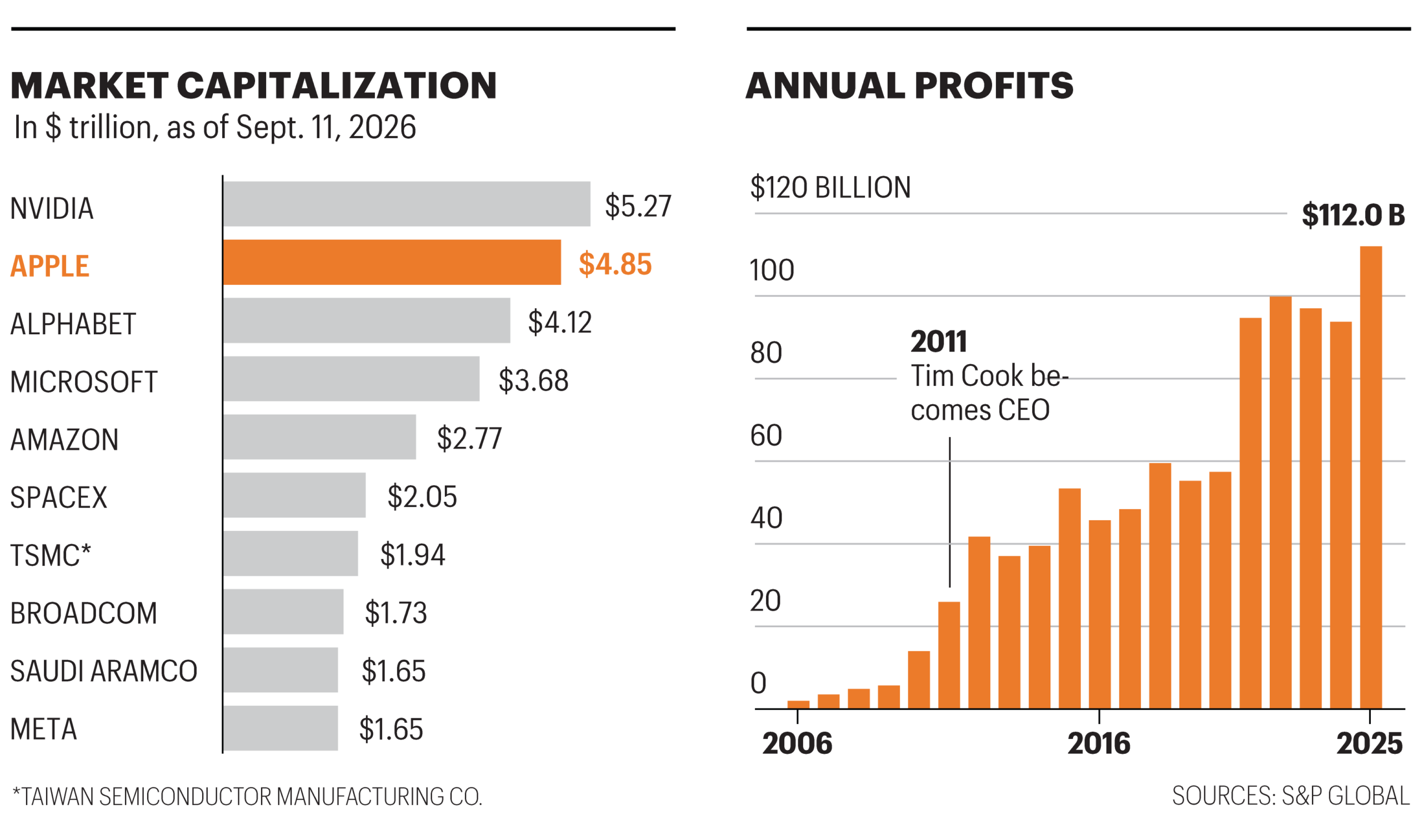
@sharongoldman

This story was originally featured on Fortune.com
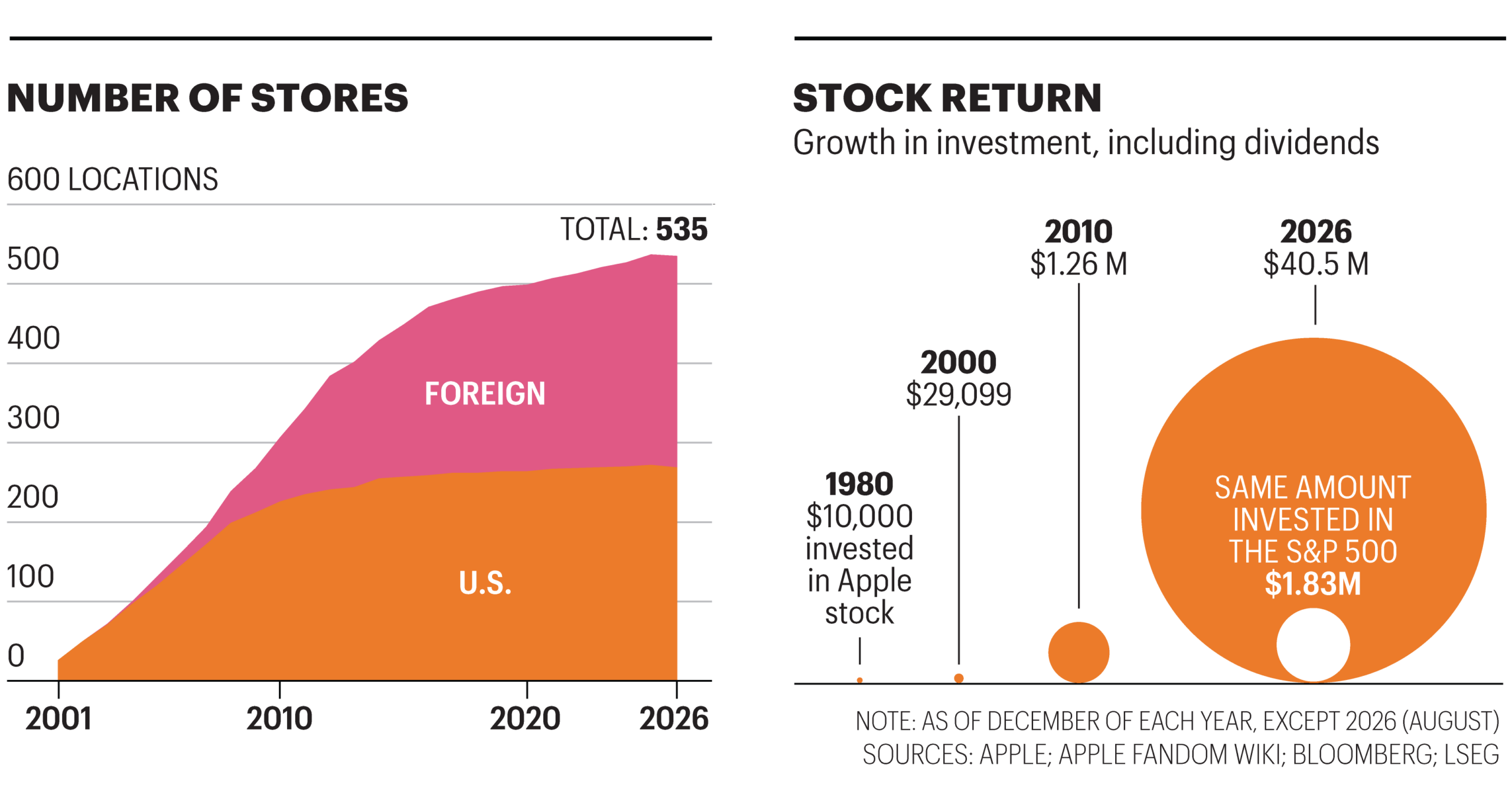
Share to:

This post was originally published here

The bill for President Trump’s war in Iran is huge—and mounting. According to reports, Pentagon officials told members of Congress in a closed door meeting on Tuesday that they estimated the cost of the war exceeded $11.3 billion in the first 6 days of the conflict. And those figures do not include costs such as the hardware and personnel that were put in place in advance of the first strikes.

Kent Smetters, faculty director of the Penn Wharton Budget Model, forecasts that the meter is now running at roughly $800 million a day. Other estimates, including that advanced by John Phillips, a British safety, security, and risk advisor, put the daily tab at $1 billion. Smetters told Fortune that if the conflict rages for a total of two months, or seven more weeks, that it will inflict net new expenses on U.S. taxpayers of $65 billion.

The numbers come amidst a backdrop of a worsening U.S. financial picture thanks to the spiraling national debt, and the mounting interest payments that are due. In its Feb. 11 report, the CBO projected a gap between expenditures and revenue for FY 2026 of $1.853 billion. The U.S. gets there by spending 33% more than the Treasury collects in taxes. An Iran war that lasts 60 days would hike the deficit by that $65 billion plus $1.4 billion in interest, or around $66.4 billion. That’s an increase of 3.6% that would raise the shortfall’s share of GDP from the forecasted 5.8% to 6.0%. The $66.4 billion would get tacked onto the deficit, and raises the amount we need to borrow, plus interest, year after year.

But it’s best not to look at the war impact in isolation. Just days before the first attack, the SCOTUS also dealt a blow to the budget by nixing the Trump tariffs. The Committee for a Responsible Federal Budget estimates that if Trump replaces the former border duties with a 10% blanket rate, the U.S would collect $74 billion less this year than under the previous regime. Add that $74 billion to the $65 billion in spending, and the budget hammering almost doubles to $139 billion, raising the CBO-projected deficit by 7.5%. Keep in mind that tariff losses aren’t mainly a one-time hit like the war spending. If permanent, the loss of a large part of the Trump import duties would represent a year-after-year, recurring, structural increase in deficits.

In the absence of a plan to reopen the Strait of Hormuz, KPMG chief economist Diane Swonk worries that the conflict will drag on for up to six more months, sending oil prices north of $130 per barrel. Some analysts think it could hit $200. But should the campaign drag on for even several more weeks, the damage to America’s fragile finances will prove substantial. 

This story was originally featured on Fortune.com

Share to:

This post was originally published here