Elon Musk, the world’s richest man, has some new digs—an Airstream trailer in Memphis, parked just steps from xAI’s most ambitious project yet.

Musk, who has a net worth of $917 billion according to the Bloomberg Billionaire Index and became the world’s first trillionaire for 12 days in June, said Monday he was in his new “palace” as he spoke during a taping of the All-In podcast alongside Gwynne Shotwell, the president and chief operating officer of SpaceX.

Shotwell, for her part, praised Musk’s latest unusual home as an example of his long history of committing fully to projects he cares about throughout his career.

“This is Elon, by the way, doing what people don’t believe he does. He sleeps on the factory floor. He’s in Memphis, helping build buildings,” she said during the interview.

Musk is in Memphis as xAI races to expand Colossus, a massive supercomputer center that has provided it with so much computing power that it has struck deals to provide excess capacity to Google and Anthropic for billions. The company started building Colossus in 2024 to provide compute for Grok, xAI’s large language model, and the initial build reportedly took only 122 days.

While putting a data center in space could still be far off, Memphis has emerged as the center of xAI’s infrastructure buildout here on Earth. In late July, the company announced it would build a fourth data center called Minihard that will add to its other facilities.

Musk did not say which Airstream model he was living in, but some of the aluminum-shelled campers pack a sleeping area, kitchen, and bathroom into a 16-foot space.

Still, Musk has been known to want to sleep close to the action when a new project interested him or required his direct attention. When Musk and his brother Kimbal were building their first startup, Zip2, in the ‘90s, they slept in a tiny Palo Alto office for six months while showering at the YMCA, according to Walter Isaacson’s biography of Musk. 

Even as a newfound multi-millionaire, having received $22 million from selling Zip2 to Compaq, Musk slept under his desk most nights as he prepared to launch X.com, the online bank that would later become PayPal, in 1999, according to Isaacson’s biography.

Even when he rose to the rank of super wealthy, having received another approximately $175 million from eBay’s acquisition of PayPal, he often stayed at colleagues’ homes while traveling in Silicon Valley, including the home of Michael Marks, who briefly served as Tesla CEO in 2007 before the pair clashed and Musk later took over the role.

Musk’s habit of finding a resting place close to the action was even more pronounced during the “production hell” era in 2017 and 2018 when Tesla aimed to churn out 5,000 Model 3s per week, nearly double the rate it was producing previously.

“It was a frenzy of insanity,” he told Isaacson of that time. “We were getting four or five hours’ sleep, often on the floor. I remember thinking, ‘I’m like on the ragged edge of sanity.’”

During that production rush, he spent Thanksgiving Day at the factory with some of his sons because he had asked workers to work that day as well, wrote Isaacson.

Finally, when in 2022 he purchased the social media website Twitter , which would later become X, Musk claimed a couch in the company’s seventh-floor library and slept there as he pushed employees to realize his vision of turning Twitter into a “digital town square.” He said in an interview with journalist Bari Weiss that he needed to sleep in the office because the company was in a “code-red situation.”

To be sure, Musk didn’t shy away from spending his money on lavish homes for years. He bought a mansion in the Bel Air neighborhood of Los Angeles, complete with seven bedrooms, 11 bathrooms, a tennis court, and a two-story library for $17 million in 2012, according to his biography. He also owned a $32 million Mediterranean-style estate in Silicon Valley and bought late actor Gene Wilder’s home in 2013 to try to preserve it. 

In 2020, though, Musk sold many of his properties and moved with his then-partner Claire Boucher, known as Grimes, to Texas, where they lived in a small, $50,000 house he was renting from SpaceX near the company’s Starbase facility in Boca Chica. 

Now, with xAI’s Memphis expansion heating up, Musk seems to want to be close to the action once again, and he’s traded in the factory floor, at least, for the comfort of his own trailer.

This story was originally featured on Fortune.com

This post was originally published here

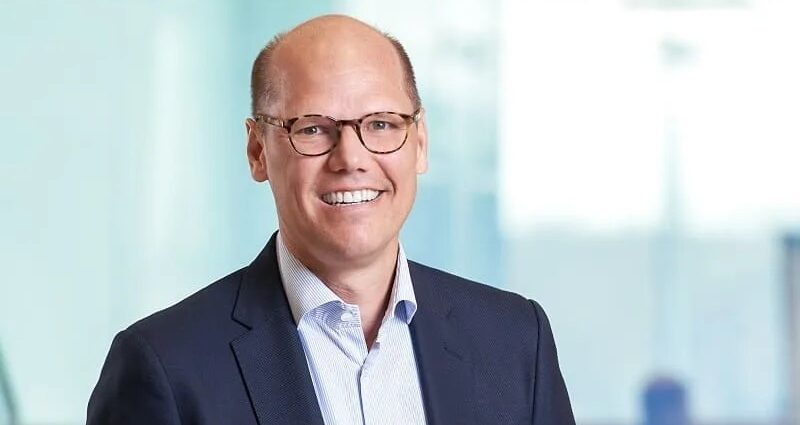
The English engineer, Henry Mill, submitted the first-ever patent for a “machine transcribing letters” in 1714. It never actually went into production, but it was a forerunner of the typewriter and then the electronic keyboard: 312 years later, Christian Klein, CEO of software giant SAP, is noting the end of an era.  

“The end of the keyboard is near,” he tells me. “When you encounter voice recognition from many of these large language models, [it] is super strong. Now we have to do some work to translate voice into business language and business data.” 

The deleterious effects of AI on the humble keyboard might not be top of the list of business leaders’ priorities when it comes to mapping out the technological future. But SAP’s prediction that “data-inputting” via typing will end in the next two to three years at the firm has significance well beyond the death of QWERTY. 

“We are now giving our coworker tool more and more skills,” Klein says. 

“The future will be, for sure, that you are not typing any data information into an SAP system. You can instead ask certain analytical questions with your voice. You can trigger operational task workflows. You can also make entries in the system with your voice—performance feedback, pipeline entries, et cetera. The technological capabilities are there, it really is now about the execution.” 

Read more: The most honest prediction for 2026: Nobody knows what’s next by Christian Klein

“Now, about the execution” is the phrase most associated with artificial intelligence in 2026. We are beyond the theoretical discussions about what artificial intelligence might be able to do and into the zone of applied AI. Software companies are creating billions of dollars in profitable revenue supplying the services of the future. 

“The future will be, for sure, that you are not typing any data information into an SAP system. You can instead ask certain analytical questions with your voice.”

Christian Klein

SAP stands for “Systemanalyse Programmentwicklung” (which translates to “System Analysis Program Development”). The firm, headquartered in Walldorf, Germany, near where it was founded in 1972, provides cloud services to the largest companies in the world, as well as millions of small and medium-size enterprises. Klein, 44, is the youngest CEO of a major business listed on Germany’s DAX index. 

At SAP Sapphire 2025: The company’s AI and transformation event.
Courtesy of SAP

He argues that there are two broad categories of businesses when it comes to AI adoption. First, the company that says, “AI is really changing the way I run my business.” Then the other that says, “I invested a ton of money, but I see rather low value in it.” The latter might be viewing AI as an efficiency hack for one division or function. The issue here is that there is no reach across to other parts of the firm. Klein says that the “whole business” needs to be at the table. “AI is superpowerful, but it needs to be applied in the right way.” 

He gives an example of a large consumer goods company SAP is working with which is beginning to link customer-demand planning with company financial planning and then with inventory control—a laborious, often months long process. 

“They said, ‘Okay, this agent really is predicting the demand much more intelligently than all the human beings I had in planning,’” he said. “‘But it still always takes months until I adjust the inventory—and the inventory is dependent on procurement and the manufacturing side.’ So we are now building, with agents, an end-to-end planning scenario which helps them optimize inventory by 20%. This is real money.” 

Read more: How CEO Christian Klein spearheaded SAP’s seismic shift to a cloud company by Peter Vanham

Applying AI horizontally throughout the business, rather than vertically in divisions, is key. Add in training of your employees, and the transformational effects of AI can finally begin to be realized. 

107

SAP RANK ON FORTUNE 500 EUROPE

“An employee can say, ‘Hey, go into my PowerPoint presentations,’” Klein notes. “They can give an AI model a million financial analysis PowerPoints. We then need to make sure, with our AI, that the business data is understood and that we can do the analysis right away. The employee can then say, ‘Tell me, from the millions of documents we created in the financial department, what would be the right measures to tackle some of the challenges we see in the financial performance of the company?’

“That is the future of work. And then, hopefully, they get it beautifully packaged up, with some nice graphs and commentaries, some nice analysis and recommended actions, and then they can go to their managers, who say, ‘Wow, this is a new way of steering this company. My God, what did you do? Which training did you attend?’ And they say, ‘No, there is no training.’” 

Beyond the training in AI itself, of course. 

The use of voice to create workflows within traditional environments is one challenge. There are also higher-order issues that Fortune 500 leaders must consider. Klein and I were speaking at the World Economic Forum meeting in Davos, an event dominated by Donald Trump and his threat to annex Greenland and launch new tariff wars. “Spheres of influence” and mercantilism are back, as the G4 (America, China, Europe, and India) approach global trade in very different ways. 

“We are wanting companies who do global trade across borders, and no one wants to scale back on the cause and vision they have as a company,” Klein says of the increased geopolitical risk. 

“There are two superpowers in the world, and they’re using the power to have more influence. I don’t expect that this will change anytime soon,” he notes.

“The world has changed a lot, because suddenly not everyone is saying: ‘Oh, I believe in globalization.’ Now, [it’s] ‘my country first.’” 

Which means you have to position your business for the new reality.  

“[Companies] are saying, ‘Hey, Christian, it’s great your software helps [in] over 100 countries. But how do we do this in a world which is becoming more fragmented?’ There are lots of new sovereignty requirements. In this case, you need the cloud server to be located in the country. In another country, you need to protect the data in a different way. In another country, you need to cut it from the global network. That can be pretty expensive.” 

“There are two superpowers in the world, and they’re using the power to have more influence. I don’t expect that this will change anytime soon.” 

Christian Klein

“Business cannot just change the software. It’s mission-critical,” Klein says. “Now, with AI, it’s even more mission-critical. What we have to make sure is, when it comes to geo-lock, we are [relying] on infrastructure. We want U.S. infrastructure with the hyperscalers; in China we want Chinese infrastructure. And we want infrastructure provided by local providers here in Germany or in France or wherever. And we always need to make sure that, when something is happening in the world, such as geopolitical sanctions or export control—as we have seen in Iran or in Russia—we can port our platform over to another type of cloud infrastructure in days or weeks.” 

Talk now is of “kill-switches” and geo-location autonomy—new entries on the list of leadership risks. Klein is not convinced Europe has got the memo. 

“We talk about Europe as a superpower. I would say Europe is a superpower in regulation, but not in unity, because there is no banking union, there is no trade union, there is no digital union, and in a world like this, you need economic power. With economic power, you can influence certain things. You are listened to.

“We are talking about digital taxes and so on. I would strongly advise both business and political leaders in Europe to spend more time on: How can we innovate? How can we use the strengths we have to build something, to increase economic power?” 

Geography and the G4 are the new global reality in the era of applied AI. Businesses must be agile in how they respond, as it is not always clear where the next political boulder is coming from. When Henry Mill patented the first typewriter there was no such entity as the United States of America. Now it is writ large on the decision tree of every global leader.

For the latest coverage and updates from Fortune CEO Forum, as well as insights into the companies on our list, visit this page.

A version of this story was originally published on Fortune.com on January 28, 2026.

This story was originally featured on Fortune.com

This post was originally published here

Good morning. Volkswagen has topped the Fortune 500 Europe for a third straight year, even as the auto industry it leads gets squeezed by tariffs and Chinese competition. The automaker’s revenue still climbed 3.4%, to more than $363 billion, in the fourth edition of Fortune’s ranking of Europe’s largest companies by revenue.

The combined revenues of the companies on the list hit a record high of $15.5 trillion this year. Profits rose 3% to just over $1 trillion, rebounding from a 5% decline in 2025.

Across the Fortune 500 Europe, margins have narrowed for two years running, falling to 6.5% from a high of 7.1% on the 2024 list—despite record revenue and profit growth. That’s consistent with stagflation pressures weighing on Europe’s corporate sector, Guido Cozzi, a macroeconomics professor at the University of St. Gallen, told Fortune’s Sam Birchall.

Three sectors generate over half of all revenue on the list: financials (24%), energy (20%), and motor vehicles and parts (10%). Finance remains Europe’s most dominant sector by revenue, profit, and headcount. A total of 105 finance companies earned a spot in the rankings, together generating 24% of the list’s total revenue, with Banco Santander (No. 9) and BNP Paribas (No. 10) in the top 10.

Financial companies also account for 40% of the list’s profit and employ 14% of its workforce. HSBC (No. 11) is the most profitable company on the list, recording $22 billion in profits for 2025 and one of only 25 companies to generate more than $10 billion in profits.

Europe’s finance-sector prominence stems from its biggest banks’ global reach and technical sophistication, Howard Yu, a professor at IMD Business School, told Birchall. Their decades-long presence in emerging markets gives them a depth few global rivals can match, he argues, calling it “a genuine strategic edge.”

Energy companies generate 14% of the list’s overall profit, and the sector ranks second to financials in employment. Another notable finding: BP is the only top-10 company with a woman CEO, Meg O’Neill. She’s also No.16 on this year’s Fortune Most Powerful Women (MPW) list. When O’Neill took over as CEO on April 1, she became the first woman to lead one of the five major oil companies.

BP is also the only one of its peers with women in both the CEO and CFO roles. Kate Thomson became BP’s finance chief in February 2024 after serving as interim CFO, making her the first woman to hold the role at the company. At ShellNo. 2 on the Fortune 500 Europe list, Sinead Gorman has served as CFO since April 2022. Gorman also earned a spot on this year’s MPW list.

Sheryl Estrada
Sheryl.Estrada@fortune.com

This story was originally featured on Fortune.com

This post was originally published here

While military action in Iran has dragged on longer than the White House initially estimated, President Trump is still insistent that, in the grand scheme of things, the conflict doesn’t even constitute a war.

But the cost of the military intervention—discounting the broader macroeconomic effects arising from supply chain upheaval—is still high, and growing. A new report from the Congressional Budget Office (CBO) released yesterday found that as of August 1, 2026, the armed conflict with Iran has cost the Department of Defense approximately $38 billion.

These funds reflect the cost of replacing expended munitions and equipment lost in battle, the CBO wrote, as well as increased flying hours, increased fuel costs, and “other operations.”

The estimate doesn’t include spending already budgeted for, such as the basic running costs of the military involved in the conflict. It also doesn’t take into account increased costs for other parts of the federal government, such as increased fuel prices paid by the postal service.

The total sum is also likely to have risen meaningfully since the beginning of August. If the conflict persists, the CBO notes, costs will increase: slowly if the level of violence remains low, but more rapidly if tensions escalate as they did in July.

If tensions are relatively muted—as they were in May and June—the action would require roughly $2 billion per month in financing. If tensions were to escalate to the levels seen later in the summer, this would rise to $3 billion a month—and higher if the conflict spiraled beyond levels currently seen.

The cost of the conflict thus far has come in below the additional sum the White House requested in June to fund the action. The CBO said the administration requested $87.6 billion in supplemental appropriations, of which $67.1 billion was to be funneled into the Department of Defense. “The portion of that request that appears to be directly related to the conflict, $42.3 billion, is about 10% larger than CBO’s estimate of DoD’s costs,” the CBO noted.

Indeed, the CBO’s estimates are roughly on par with (if not below) other reports. Defense Secretary Pete Hegseth said in July that the war had thus far cost $37.5 billion, while The Hill reported this week that the Pentagon’s latest update to Congress was that the conflict now totalled $42 billion.

Broader economic costs

President Trump has been keen to downplay the magnitude the Middle East conflict is having on America.

Trump defended Vice President J.D. Vance’s position that the conflict doesn’t warrant being called a war. Trump told reporters earlier this month: “A lot of people don’t call it a war, I call it a military conflict because it’s small potatoes for us, it’s not a thing.”

Trump highlighted that while 18 U.S. service members have died in the conflict, this is significantly lower than wars in recent memory—and described the strikes as “intermittent.” The CBO echoed that “relatively few U.S. forces have been involved compared with the much larger and longer U.S. operations in Iraq and Afghanistan.”

However, the financial costs to the federal budget and households are significant. In June, Moody’s estimated the cost to consumers for the Iran war is $750 a household—or $100 billion. Much of those extra costs have been passed on to households in the form of increased military spending and higher prices from oil supply disruption, according to Mark Zandi, chief economist at Moody’s Analytics.

This story was originally featured on Fortune.com

This post was originally published here

In a factory in Vantaa, a city in southern Finland, scientists and engineers are working on a groundbreaking innovation that converts carbon dioxide and hydrogen into a protein powder called Solein. The mustard-yellow powder, developed by Solar Foods, can be used in protein shakes and bars, pasta, and meat alternatives. The company claims Solein has dramatically lower emissions than conventional protein, and almost completely decouples protein production from land—reducing the need for intensive agriculture.  

German engineering company GEA Group invested €8 million ($9.2 million) in Solar Foods earlier this year, taking a roughly 5.5% stake in the Finnish company and becoming its strategic partner. It is the latest example of GEA’s commitment to sustainability—backing not just the idea of a more sustainable food system, but the technologies that could make it commercially viable.  

“I strongly believe that it is necessary to do something to save this planet,” says GEA Group CEO Stefan Klebert. “We are in climate change—nobody, I think, can ignore this anymore. We can do better.” 

Beyond the Solar Foods investment, GEA is embedding sustainability into its core business. It is currently redesigning the machinery and systems it manufactures—which are used to produce food, drinks and pharmaceuticals—to make them significantly less energy intensive (its technologies are used in dairy processing, food drying, fermentation, freezing, and packaging). The company is targeting net zero across its value chain by 2040, with plans to invest around €175 million ($201.9 million) over that period in decarbonizing its own factories. 

“We are in climate change—nobody, I think, can ignore this anymore. We can do better”

GEA Group CEO Stefan Klebert

As the debate rages about whether European companies can realistically meet their net-zero targets while achieving the growth needed to remain competitive with China and the U.S., GEA’s stance stands out.  

Earlier this year, a survey of more than 300 European chief sustainability officers by management consultancy Horváth suggested that around two in five companies are reassessing their climate ambitions in the face of short-term performance pressure and geopolitical uncertainty. More than half (57%) of respondents to a survey of European businesses by EY said sustainability initiatives would be among the first to go if they had to make cuts. 

In contrast, GEA Group says it has shown that sustainability can be baked into a profitable business model. Its revenue grew to €2.7 billion ($3.1 billion) in the first half of 2026, 5.7% higher than the same period last year, and its EBITDA before restructuring costs rose 10% to €456.5 million ($526.7 million), with a 16.8% margin.  

Klebert attributes this to a shift in culture: Rather than pursuing incremental productivity gains from an already resource-intensive process, GEA now tasks its engineers with finding step-change reductions in the resources required to produce the same amount. “We put a very strong focus on our engineers to come up with energy saving solutions,” Klebert explains. “I told them, don’t innovate to find 15% more output. We want to do the same thing, but with 30% to 40% less energy, less water, or any other resources.” 

He gives milk drying as an example: GEA developed an industrial heat pump that it combined with a milk spray dryer, allowing one of its customers, the Danish organic milk producer Arla, to produce the same output while cutting total energy consumption by more than half. The energy saving was so dramatic that Arla’s local energy supplier called to check if something was wrong.  

This approach is becoming a growing advantage for GEA Group, as companies across Europe face depleted energy reserves and rising costs this winter, partly resulting from the Iran-U.S. conflict. “A lot of companies are struggling with high energy costs. Especially in Germany, energy prices are sky high and going up because of a lot of stupid decisions that have been made [at a policy level],” says Klebert. “So, for us, the focus on sustainability is not only coming out from the conviction that we need to do something good for the world—it is also a business model.” 

He acknowledges that there are differences between businesses depending on the sector they operate in. “We have an advantage that our customers are highly energy intensive, and if we innovate in saving energy, it helps us to reduce our scope 3 [emissions] and, at the same time, deliver a tangible benefit to our customers,” says Klebert. “There might be other industries where it is different, where the company itself consumes a lot of energy—a chemicals business, for example.” 

However, he believes that business leaders across all industries have a responsibility to drive change. “Of course, we have to stay competitive, but it’s also about innovation, having good ideas and meeting the challenge, because I think there is no other way. Of course, it costs money. But if you have good products, if you are innovative, if you have an efficient organization, you can afford it,” Klebert adds.  

“No company, I’m quite convinced, will go out of the market because of the decision to do something good for the planet. That’s my deep conviction.” 

For the latest coverage and updates from Fortune CEO Forum, as well as insights into the companies on our list, visit this page.

This story was originally featured on Fortune.com

This post was originally published here

In 2025, Mark McQuade took a gamble wholly specific to the AI era. 

Arcee AI, the startup he founded in 2023, was focusing on post-training—the process by which an existing model is honed for humans. But McQuade saw an opening: Meta had just backed off its push into open-weight models, a vital (and tricky) middle ground in AI. Open-weight models allow companies (and people) to securely run state-of-the-art AI without turning their data over to, say, OpenAI or Anthropic.

But if McQuade wanted to fill the gap, he and Arcee would have to build their own model completely from scratch, a technical and financial mountain to climb. 

“We saw an opportunity, and we had $30 million in the bank,” said McQuade. “I said ‘let’s do it’ and I bet the company on it. ‘Let’s spend 65% to 70% of our capital.’”

The startup over the coming months burned about $20 million training four open‑weight models, including a 400‑billion‑parameter model called Trinity Large, released in early 2026. $20 million, in AI, is a shockingly low number—conventional wisdom states that you need billions to train a new model, a belief challenged dramatically when China-based DeepSeek surfaced in 2025, with reports that the top-notch model was trained for under $6 million. 

In AI, open-weight models are definitionally geopolitical, and China, so far, has dominated the game. Arcee—whose models have beat Meta’s Llama 3, and have benchmarked on par with Mistral and Chinese models—has been relatively quiet, but is now stepping forward: the startup has raised its Series B at a $1 billion pre-money valuation, Fortune has exclusively learned. The round was led by Vista Equity Partners, Cambium Capital, and Emergence Capital, with participation from Microsoft’s M12, AI10 Ventures, Hitachi, IAG, P7, and Wipro. Arcee declined to disclose the amount raised in this round, but a source familiar with the matter told Fortune it was at least $150 million.

The cash will funnel towards new open-weight models and products, along with growing Arcee’s partnership with the U.S. Department of Energy. (Arcee will also be working extensively with Vista’s portfolio companies.) However, McQuade is very clear: The ultimate goal is to catch China. 

“Everyone talks about China versus the U.S.,” said McQuade (who was previously an early employee at Hugging Face, just acquired by Nvidia for almost $13 billion). “My stance is: just do something great. Catch up to them. Do the work… In order for the U.S. to take the absolute lead in the AI race, you have to be in the lead when it comes to closed and open. The U.S. is far ahead in closed source, but kind of dropped the ball on open source.”

McQuade says it’s time to pick up the ball: “We’re not chasing [Poolside’s] Laguna,” he says. “We’re chasing [Beijing-based Z.ai’s] GLM Flash.”

To get there, efficiency is non-negotiable, McQuade said. And, for Arcee, efficiency’s also the game plan: “We can comfortably say we’re the most efficient lab in the world based on what we’ve done.”

Building in AI is a high-wire act on its own, but the game at the model layer is that much more viscerally competitive, in the U.S. and abroad. McQuade didn’t just pivot, he dove into the deep end, and I asked him: Why cannonball, when you could’ve dipped a toe in?

“Gosh, adrenaline? I don’t know, I like to push the envelope,” he said. “In AI, things change so fast, so what’s the point of dipping your toe in. If you fail, you fail, and at least you tried. If you’re going to do something, go all in.” 

See you tomorrow,

Allie Garfinkle
X:
@agarfinks
Email: alexandra.garfinkle@fortune.com

Submit a deal for the Term Sheet newsletter here.

Joey Abrams curated the deals section of today’s newsletter. Subscribe here.

This story was originally featured on Fortune.com

This post was originally published here

At 7 a.m. Eastern Time today, the price of oil sits at $108.34 per barrel, using Brent as the benchmark (we’ll explain what that means shortly). That’s an increase of $1.77 since yesterday morning and roughly $40 more than at this time last year.

oil price per barrel % Change
Price of oil yesterday $106.57 +1.63%
Price of oil 1 month ago $90.94 +19.13%
Price of oil 1 year ago $68.72 +57.65%

Will oil prices go up?

Nobody can predict the future path of oil prices with certainty. A range of factors influence how oil trades, yet supply and demand remain the main drivers. When fears of economic slowdown, conflict, or similar shocks rise, oil prices can move sharply.

How oil prices translate to gas pump prices

The price you see at the gas pump reflects more than just crude oil. Also built in are the costs of refining, distribution through wholesalers, various taxes, and the margin your neighborhood station charges.

Crude oil is still the largest single driver of the final pump price, typically representing over half of each gallon’s cost. Spikes in oil prices tend to push gas prices higher in short order. But when oil prices decline, gas prices often ease down gradually, a behavior known as “rockets and feathers.”

The role of the U.S. Strategic Petroleum Reserve

In the event of an emergency, the U.S. maintains a stockpile of crude oil known as the Strategic Petroleum Reserve. Its main goal is to safeguard energy security when disasters strike—think sanctions, severe storm damage, or war. It can also do a lot to ease the pain of sudden price jumps when supply gets disrupted.

It’s not a permanent fix, as it’s more meant to provide immediate support for consumers and ensure critical parts of the economy like key industries, emergency services, public transportation, and so on can keep operating.

How oil and natural gas prices are linked

Both oil and natural gas play key roles as major sources of energy. A big change in oil prices can affect natural gas by proxy. If oil prices increase, some industries may swap natural gas for some segments of their operations where possible, increasing the demand for natural gas.

Historical performance of oil

Oil prices are often measured by two key benchmarks:

  • Brent crude oil is the main global oil benchmark.
  • West Texas Intermediate (WTI) is the main benchmark of North America.

Between the two, Brent is a better representation of global oil performance because it prices much of the world’s traded crude. It’s also often the best way to review historical oil trends. In fact, the U.S. Energy Information Administration now leans on Brent as its primary reference in its Annual Energy Outlook.

When you look at the Brent benchmark across multiple decades, you’ll see that oil has been anything but consistent. It has experienced spikes driven by wars and supply cuts, as well as crashes linked to global recessions and an oversupply (called a “glut”). For example:

  • The early 1970s brought the first big oil shock when the Middle East cut exports and imposed an embargo on the U.S. and others during the Yom Kippur War.
  • Prices dropped in the mid-1980s for reasons such as weaker demand and more non-OPEC oil producers entering the industry.
  • Prices spiked again in 2008 with rising global demand, but soon crashed alongside the global financial crisis.
  • During the 2020 COVID lockdown, oil demand collapsed like never before, bringing prices to under $20 per barrel.

In short, oil’s historical performance has been far from steady. It’s massively affected by wars, recessions, OPEC whims, evolving energy initiatives and policies, and much more.

Energy coverage from Fortune

Looking to stay up-to-date regarding the latest energy developments? Check out our recent coverage:

Frequently asked questions

How is the current price of oil per barrel actually determined?

The current price of oil per barrel depends largely on supply and demand, including news about potential future supply and demand (geopolitics, decisions made by OPEC+, etc.). In the U.S., prices also move based on how friendly an administration is to drilling, as it can affect future supply. For example, 2025 saw the Trump administration move to reopen more than 1.5 million acres in the Coastal Plain of the Arctic National Wildlife Refuge for oil and gas leasing, reversing the Biden administration’s policy of limiting oil drilling in the Arctic.

How often does the price of oil change during the day?

The price of oil updates constantly when the “futures” markets are open. A futures market is effectively an auction where people agree to buy or sell oil in the future. As long as people and companies are trading contracts, the oil price is changing.

How does U.S. shale oil production affect the current price of oil?

In short, shale is rock that contains oil and natural gas. Think of shale as energy yet to be tapped. The more shale the U.S. accesses, the more energy we’ll have—and the more easily oil prices can keep from spiking as much thanks to a greater supply.

How does the current price of oil impact inflation and the broader economy?

When oil is expensive, it tends to make everyday items cost more. This can be related to energy (your heating, gas utilities, etc.), but it’s also due to the logistics involved with making those items accessible to you. Shipping, for example, can affect the price of things at the grocery store, as it’s more expensive to get those products from warehouses and farms onto the shelf.

This story was originally featured on Fortune.com

This post was originally published here

Good morning. On Fortune’s radar today:

  • OpenAI could delay IPO in favor of $1.2 trillion funding round.
  • The new Fortune 500 Europe ranking is here!.
  • Markets: Signs of life.
  • The September Effect: Stocks always go down in this month. No one knows why.
  • Expect a rate hike from the Fed today.
  • The top 1,000 best cities, ranked.
  • How much cash Paris Saint-Germain made in this year’s transfer market. 
  • 40% of your 9/11 memories are wrong.

➡️ Did someone forward this email to you? If you would like to receive this information directly, every morning before the markets open in New York, sign up here.

This story was originally featured on Fortune.com

This post was originally published here

The first instinct of any school meeting a new technology is often to block it. Calculators, phones, YouTube, and now AI. It isn’t necessarily a poor instinct. When you’re responsible for other people’s children, and something arrives that nobody yet understands, a block buys time.

I saw this first hand when I visited Hamilton County, Tennessee; a district that takes STEM seriously, and had invited me out to observe its computer science and maker program. I tried to access ChatGPT on the school wifi, but quickly realized it was blocked. The fix was easy: I simply used the mobile data on my phone to access it instead. Every student in that building would have done the same. This is not a district that’s behind or an outlier. It is doing what the majority of over 13,000 school districts in this country have defaulted to.

It reminded me of a story an English teacher told me, about her efforts to stop her class using AI for homework. While marking her students’ assignments, she noticed about a quarter of the essays she was reading looked remarkably similar. She sent an email: ‘If you used AI, please let me know.’ A hundred per cent of the students responded admitting that they had.  Her policy hadn’t succeeded at anything, other than to show her that children aren’t hiding AI from us. Instead, we are hiding from AI, which is costing us the one conversation that would help them.

I’ve been to school districts across the US over the last three years, and I realized I was seeing repeats of this same story: a blanket block failing to stop the use of a technology that has run rampant, and instead only succeeding in moving it out of sight from the adults who should be supervising it. More than a third of entry-level jobs require AI skills, according to Nace’s 2026 Job Outlook Survey. Ultimately, every district that blocks AI is now making a decision about who gets hired in 2030, and simultaneously pretending it isn’t a decision at all.

AI needs to be built with children in mind

The majority of conversations around AI in education usually focus on whether kids might use AI to cheat in an essay. But the stakes are far higher than that: AI is shaping how we all think, and for children in their formative years, it’s shaping how they learn, socialize, and make decisions. The problem is that almost none of the development driving these systems is treating children’s safety as a priority, nor are they building it in a way that allows kids to learn and use it productively. It would seem, therefore, that we’re running a social experiment on millions of kids without knowing the long-term effect.

The people who study young minds are split. In an NBC survey of the American Psychiatric Association and American Counseling Association, 86% of psychiatrists agreed that AI use among teens would inhibit brain development, replacing human interaction with lower-quality synthetic socialisation. However, 64% agreed that children would learn effectively from AI platforms that tailor lessons in a way that those teaching a class of thirty rarely can. Both can be true, but which outcome we get depends on the tools our children can access, and whether anyone is teaching them to use AI productively. 

The case for restriction might be strong for social media, but it is weak for AI. Feeds hold a child’s attention, but there is no real reason for a child to be fluent in it. Meanwhile, AI packages its harm and skill in the same product. When we impose blocks that are easily surpassed by VPNs or a Wi-Fi switch, we let AI developers off the hook for children’s safety, and schools to step back from the conversation entirely. Out of sight, out of mind. But this isn’t a sustainable plan. 

Schools are struggling to keep up

Today, four out of five students are using AI for schoolwork, according to Stanford’s AI Index. Despite this, only 6% of teachers say their school’s AI policy is clear, and even then, few school districts have worked out a plan for making the transition from a teacher using AI for themselves to using it with thirty or so students. 

When you consider the pace of AI’s acceleration, it’s difficult to point fingers. Within two years of ChatGPT’s release, roughly 40% of US adults had tried it; the PC took twelve years. In the years since AI has been developing, global K-12 edtech funding fell by 82%. Schools were asked to absorb the fastest technology shift in modern history with less support than ever. So, school districts are carrying the liability on their own backs: one superintendent I spoke with recently told me his policy is simple – ‘if it didn’t come from us, it’s on you’. A fairly understandable way to manage risk, but ultimately a terrible way to manage a technology moving so fast, as it leaves the teacher the least resourced to act.

Meanwhile, the gap is widening

Handle it well, and AI could be the greatest equalizer education has ever had. Handle it badly, and we will watch it deepen every single divide we already have. Over 85% of school administrators consider AI education valuable, according to the College Board. Yet, 45% are reporting that access is restricted within their classrooms. The kids who belong to school districts where the only AI policy is no AI will one day be competing for the same entry-level jobs as others who have become literate during their same school years.

During my classroom visits across the country, I see both sides of the coin day-to-day. In some districts, the only AI you see is in an English department’s detection software designed to catch students cheating. In a district right next door, I’ve seen leaders run AI summits for educators, administrators, and AI innovators to learn first-hand how to use and develop frontier technologies so they can best benefit their students. Two districts can be so close in geography and yet headed in completely opposite trajectories. Schools trying to keep AI out of the building think they’re protecting their kids, when in reality, these kids are being left behind.

An example of what can happen when kids are taught to use AI responsibly comes in the form of a 14-year-old boy in Texas. To create greater access to diagnoses in his community, he built an AI app that screens for heart disease in seconds. That’s what’s possible when a child is taught to build with AI instead of just passively consuming it. 

There is no time to waste

Somewhere in a small town in Tennessee, a student is sneaking AI under the desk in a classroom where it’s ‘blocked’. They will use it unsupervised, they’ll try to hide it for fear of getting into trouble, and in the end, all it will have been used for is cutting corners in their assignments. 

In my view, we can make a change before students are put at a disadvantage. We need classrooms to be AI-native and provide access to tools that are safe, so students don’t default back to unregulated tools. For this, we need to redesign AI to emphasize education around critical thinking, complex building and ultimately, protecting human agency. The goal has never been for AI to think for a child, but for the child to think better.

Right now, our schools are not ready, and our teachers are not ready, and there is no plan in place to change that. But this generation doesn’t have the time to wait for them.

The opinions expressed in Fortune.com commentary pieces are solely the views of their authors and do not necessarily reflect the opinions and beliefs of Fortune.

This story was originally featured on Fortune.com
This post was originally published here

  • In today’s CEO Daily: Leaders haven’t forgotten the value of a good boss.
  • The big leadership story: The new Fortune 500 Europe is out today.
  • The markets: Stocks rebound ahead of the Fed’s rate decision.
  • Plus: All the news and watercooler chat from Fortune.

Good morning. I did not expect to return from the Yale CEO Caucus in Washington yesterday feeling more hopeful than when I arrived. After all, this is day 200 of the Iran War, which has killed thousands, exposed security gaps, cost U.S. taxpayers at least $42 billion, and sparked global protests amid rising fuel costs. There’s concern about the economy, the markets, jobs, climate, compute, and the state of the union, not to mention OpenAI’s Sam Altman and Anthropic’s Dario Amodei pondering whether their products will kill us.

Where’s the hope in that? While the semiannual gathering of CEOs, policymakers, journalists and scholars hosted by Professor Jeffrey Sonnenfeld, founder of the Yale Chief Executive Leadership Institute, is off the record, I can share some polling data and feedback from private conversations. Here’s what stuck with me:

A shared desire for common ground and rule of law. I didn’t meet anyone, left or right, who disagreed with the Supreme Court decision to reject President Trump’s plan to make it harder to vote by mail. There were standing ovations for former Vice President Mike Pence, who was honored with the Yale Patriot Public Service Award for Executive Leadership, and former House Speaker Nancy Pelosi, who received the first Yale Patriot Public Service Award for Legislative Leadership. What unites them isn’t their politics but their commitment to the Constitution, public service, integrity and something bigger than themselves. It was a good reminder of the stakes that the nation might face this January if the current administration refuses to recognize the results of the midterm election.

A shared celebration of the importance of human leadership. That’s not always clear from the rhetoric, especially among tech leaders who love to vilify managers as useless layers of bureaucracy in an era of always-on agents, somehow forgetting the value of a good boss. While AI might eliminate redundant roles, it doesn’t diminish the value of a great manager any more than it reduces the value of a great teacher. What drove that home for me was the praise for Corning CEO Wendell Weeks, who was honored with the Yale Legend in Leadership Award. It’s clear from those comments and my podcast conversation with Weeks that the most important factor in making him one of the most transformative leaders in Corning’s 175-year history isn’t his technical prowess but his ability to inspire excellence, loyalty, and respect.

A shift in the conversation around AI. There’s an interest in addressing fears about the technology: 88% of respondents in a flash poll said Trump should address AI safety with Chinese leader Xi Jinping when they meet next week; 74% think he’ll do it. And 93% of attendees disagreed with Trump’s Truth Social post that AI warnings are a hoax. The fears of rogue agents know no boundaries. If the U.S. and China can find some common ground around safety and regulation, we could all be better off.

Contact CEO Daily via Diane Brady at diane.brady@fortune.com

This story was originally featured on Fortune.com

This post was originally published here

Welcome to this week’s Fortune Gulf Brief. We’ll be covering:  

As I reported last week, the Middle East and North Africa region’s gender funding gap remains stark, with male-founded startups accounting for more than 96% of the $375 million in capital that was deployed in August.  

Female-founded startups secured just $8.5 million with a total of two transactions.  

It made for puzzling reading, given that the region’s startup ecosystem, particularly in the Gulf, is thriving, with more women choosing to launch their own businesses. 

Abu Dhabi alone recorded 3,058 new business licenses issued to Emirati women in the first half of 2026, highlighting the growing role of women entrepreneurs in the emirate’s economy.  

So, I decided to dive deeper into the topic to gain clarity on why the disparity persists and spoke to several key players in the ecosystem to help me do so.  

What quickly became apparent was the underrepresentation of women allocating capital.  

“Gulf investor networks are still very male-dominated, especially at decision-making levels,” Lucy Chow, who serves as secretary general in the UAE office of the World Business Angels Investment Forum, told me.  

“That matters—because deal flow follows networks.” 

That’s not to say that progress isn’t being made on the ground.  

In May last year, Aliph Capital, the Gulf’s first women-founded private equity firm, closed its debut fund at $200 million. Aliph Fund I will invest $15 million–$40 million in Gulf-based companies across high-growth sectors, providing capital to drive scale and operational efficiency. 

In recent years, both the UAE and Saudi Arabia have been particularly proactive in making capital more accessible. 

The Women in Tech Accelerator, orchestrated globally by Standard Chartered and executed regionally via partners such as the UAE’s Village Capital and Saudi Arabia’s Falak Holding, has often served as the primary financial lifeline for early-stage female-led tech startups. 

Last week, Standard Chartered and Falak Holding awarded three Saudi women-led start-ups equity-free grant funding totaling $45,000 at Demo Day in Riyadh. 

On 28-29 September, Riyadh will host the Women Shaping Wealth Summit 2026, bringing together an influential community of investors, founders, business leaders, policymakers, and innovators. 

Alongside its main-stage discussions, the summit will host a Live Demo Day connecting female founders with investors, dedicated startup and founder showcases, curated speed networking, mentorship and peer sessions, and structured opportunities for investors, entrepreneurs and leaders to forge meaningful connections. 

You can read my full article here.

Melissa Hancock

As ever, thanks for reading, and do keep in touch with your thoughts and ideas.
melissa.hancock@fortune.com 

This story was originally featured on Fortune.com

This post was originally published here

The Middle East and North Africa (MENA) region’s startup ecosystem has become increasingly vibrant in recent years and boasts a string of unicorns and innovative businesses.  

But despite the progress that has been made, female founders remain woefully underrepresented in accessing capital.

MENA’s startup ecosystem attracted $1.7 billion in VC funding across 242 rounds in the first half of 2026, according to tech accelerator Wamda. 

However, female-founded startups secured only $2.5 million or 0.14% of this funding total, compared with$1.6 billion raised by male-founded startups across 213 deals.

This funding disparity isfar from aone-off.

Aggregate data compiled by Wamda shows that mixed-gender founding teams and female-founded startups accounted for roughly less than 4% of total equity transactions deployed across the GCC between 2019 to 2025. 

This is despite more female entrepreneurs establishing businesses in the region.  

According to a 2025 Global Entrepreneur Survey conducted by GoDaddy, the U.S.-headquartered internet domain registry company, 51% of surveyed small businesses in MENA are owned by women, with 63% of them founded in the past five years. 

Abu Dhabi alone recorded 3,058 new business licenses issued to Emirati women in the first half of 2026, highlighting the growing role of women entrepreneurs in the emirate’s economy. 

It begs the question: if more women across the region are starting companies, why hasn’t their share of the funding pie grown at the same pace?

According to Lucy Chow, a limited partner at U.K.-based VC firm Pact whose investment remit extends to MENA, part of the problem stems from the lack of diversity at the investor level.  

“Gulf investor networks are still very male-dominated, especially at decision-making levels,” Chow, who also works as secretary general in the UAE office of the World Business Angels Investment Forum,” said Chow.

“That matters because deal flow follows networks. I’ve been saying for years that we need more female check writers, but men have to help solve this too, by actively backing deserving female founders.” 

It’s a view that is shared by Basil Moftah, managing partner at Key Capital, a Dubai-based VC secondaries asset manager. 

“Undoubtedly, the VC industry—both regionally and globally—is dominated by male general partners or has a majority of male GPs,” said Moftah. 

“While most people would tell you they’re not biased, surely there is a bias in there. It’s hard to ignore that and the impact it has on funding outcomes.”

Data published by Founders Forum Group, a U.K.-headquartered group of businesses supporting entrepreneurs around the world, shows that VC firms with at least one female partner are 2.3 times more likely to invest in female founders, while VC firms where women make up at least 30% of partners invest 4.7 times more in female-founded companies than all-male firms. 

Female angel investors allocate approximately 35% of their investments to female founders versus 13% for male angels. 

Chow said that female startups still rely heavily on bootstrapping to try to plug the gap. 

“My experience with a lot of female founders is that they bootstrap,” she explained.  

“They are leveraging alternative personal income streams to self-fund. Founders are resourceful and patch together funding, but non-traditional capital won’t replace VC when it comes to scaling.”

She referenced a Mastercard study published last year that showed 56% of women entrepreneurs in the UAE run a side hustle, to achieve financial independence and bankroll early business concepts. 

Some regional industry experts have said that if the trend is to be reversed, Gulf governments need to issue mandates for gender equity in startup funding. 

Chow believes the region needs to build a pipeline of female investors. 

“We absolutely have to treat this as a capital allocation problem, not just a founder problem,” she said. 

“That means more women angels, limited partners, and investment committee seats, but also more female investors in the room, and government measures that encourage capital to flow, not just quotas.” 

The lack of major exits in regional female startups has created a familiar catch-22: investors need success stories to unlock capital, but capital is needed to create those success stories.

According to Chow, the funding imbalance has also led to a heavy reliance on public innovation grants from entities such as Dubai SME and Abu Dhabi’s Khalifa Fund for Enterprise Development to survive bridge periods between equity VC rounds. 

It has also led women to take matters into their own hands, as Sophie Smith, founder and CEO of UAE-based Nabta Health, the first dedicated platform for women’s preventive healthcare in MENA, explained. 

“When we started raising our Seed round in 2021, we set up a special purpose vehicle so that we could accept smaller tickets of $1,000 or more from angel investors,” said Smith. 

“I was looking for female angel investors on publicly available lists and, out of frustration, I set up 2022 Female Angels with a group of friends to identify and publicly list 2,022 female angel investors across the region.” 

Today, the team hosts workshops and bootcamps to upskill and enable women to become angel investors, and manages a list of around 350 active angel investors, with 44 of its 79 angel investors being female. 

Last November, Nabta Health closed a $2 million pre-Series A funding round, bringing its total funding to $4.5 million.

Other initiatives such as Women Spark, founded in Saudi Arabia by Deemah AlYahya, focus heavily on training, mentoring, and facilitating angel investments into female tech innovators. 

While such efforts are encouraging, they are unlikely to move the dial on the scale required for the Gulf’sfemale startup ecosystem to start reaching its full potential.  

“I have been one of those vocal individuals stating that we need governments to step up and to seed funds targeted specifically at female founders,” said Chow.

“Concurrently, wealth funds and family offices can also do their part by allocating a portion, however small, to funding female-led startups.” 

As the GCC presses ahead with pursuing economic diversification, the region can ill afford to leave a growing pool of female entrepreneurs on the sidelines. The challenge is no longer getting more women to start companies—it is ensuring they have a fair shot at the capital needed to scale them.

That will require more than training programs and individual initiatives. Key players across various areas of the economy will need to exercise a more active role in widening the investor pipeline and directing capital toward female-led businesses. 

This story was originally featured on Fortune.com

This post was originally published here

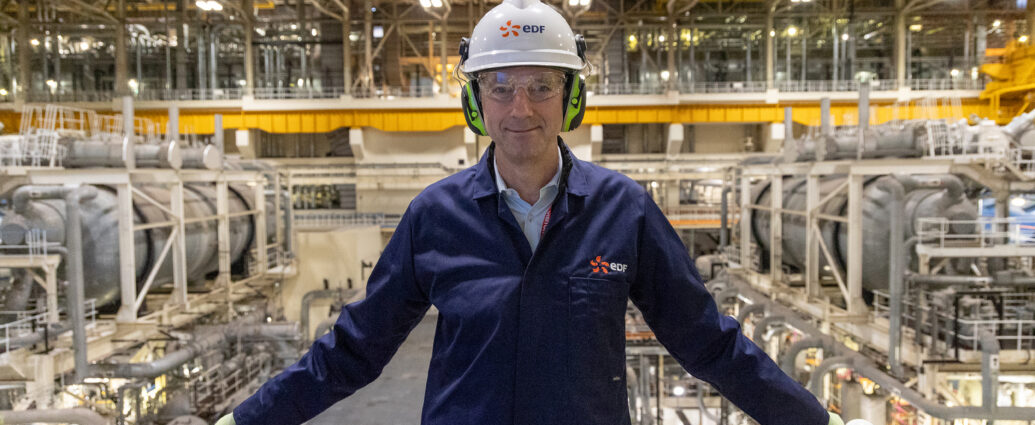
Sir Alex Chisolm has been U.K, chair of EDF for more than two years, but he is still awestruck by the power on display when visiting any one of the company’s eight nuclear power stations. 

At Sizewell, which is currently home to Sizewell B, the U.K.’s largest operational nuclear site, he says: “You can stand on the bridge there and feel, wow, this is how we actually make this. This is the room with the magic that’s powering 1.2 million homes, and you’re going to see these giant machines going around amazingly fast. You think, well, that is power.” 

Chisholm stepped down as permanent secretary to the Cabinet Office in 2024 and currently serves as a non-executive director at BT and senior adviser to Boston Consulting Group, in addition to his EDF role. Transitioning from the world of politics and returning to the private sector has been a welcome change of pace. 

“It’s good for people like me who spent probably a bit too much time hanging around Whitehall offices to get out to sites where the real work is done by people to power the nation,” Chisholm says. 

EDF, a French state-owned energy company, sits at 15th on the latest Fortune 500 Europe rankings and recorded profits of €8.4 billion ($9.7 billion) for the 2025 financial year. 

Chisholm first developed an interest in the energy sector while at the Competition and Markets Authority, which was overseeing an energy market review when he was chief executive of the regulator. He also served as head of the business and energy department for four years and says he found the sector “absolutely fascinating.”

“This is the room with the magic that’s powering 1.2 million homes, and you’re going to see these giant machines going around amazingly fast. You think, well, that is power.” 

Sir Alex Chisolm, U.K, chair of EDF

“The energy sector is so important to the way people lead their lives, to our business competitiveness, and all the changes happening with the development of AI,” he adds. “So I thought that was a very worthwhile challenge to throw myself into.” 

Rising energy costs ‘put brakes’ on growth

Energy companies and the U.K. government are currently facing pressure to help bring business energy costs down. Gas and electricity costs for businesses have increased by 25% since February, according to industry research firm Cornwall Insight, largely as a result of conflict in the Middle East. 

The Confederation of British Industry has warned that persistently high energy prices threaten the U.K.’s global competitiveness and risk “putting the brakes on the country’s growth ambitions.”

Chisholm believes that the government should be prioritizing reducing energy costs for both businesses and consumers. EDF was among a group of 120 organizations that called for “hidden taxes”, including levies for renewable projects, to be scrapped from energy bills. 

15

Electricité de France Rank on Fortune 500 Europe

Chisholm says: “The U.K. has a competitiveness deficit now in its energy costs—that is a real call to action. We’re now nearly one and a half times more expensive [than the rest of Europe] for industrial users of electricity, and that is not a position we can continue to tolerate.”

Chisholm regards nuclear power as another key part of the answer. “Nuclear is a very important solution, both for the planet, but also for energy security and supply,” he says.

EDF is currently involved in the construction of two new nuclear facilities in the U.K. Hinkley Point C is majority owned by EDF and it is estimated it will be capable of powering 6 million homes when it comes online in 2031. EDF also owns a 12.5% stake in Sizewell C which is set to become operational in the “mid to late 2030s.” 

The two nuclear plants will be the first to have been built in the U.K. since the 1990s and are a key part of the government’s plan to reduce the country’s reliance on fossil fuels.

The regulatory burden

However, both projects have been beset by delays. Hinkley Point C was originally scheduled to come online by 2025 and had an initial projected cost of £18 billion ($24.26 billion)—this has now doubled. 

Sizewell C also risks falling behind schedule after construction of two key access roads to the site were delayed.

Chisholm believes many of the challenges faced in the construction of EDF’s latest facilities are typical of those faced by large infrastructure projects in the U.K. “Although the plant that we’re building is based on technology called the European pressurized reactor—which was designed for the European market and has already been built in France at Flamanville and in Finland at Olkiluoto—U.K. regulatory bodies here had their own specific requirements,” he says. 

A 55,000-page development consent order (almost 40-times the length of War and Peace) was required to secure planning approval for Hinkley Point C. The public body Natural England also advised EDF to design and install a ‘fish disco’—an underwater acoustic deterrent to prevent marine life from swimming into the cooling pipes that feed the nuclear plant’s turbines. 

“We spent almost a billion pounds on changes to the plant, which relate to reducing the impact on fish,” Chisholm says. “We all love fish but you could have achieved a lot more for fish numbers and welfare at a much lower cost than that.” 

“I understand and respect environmental standards and nuclear safety,” he adds. “The question is, how much is enough?” Chisholm claims that the current regulatory process leads people “unwillingly” to develop rules that “make no sense”. 

The Fingleton Review of nuclear regulations recommended a more balanced approach to environmental protection and was adopted in full earlier this year after John Fingleton, who led the review, said Hinkley Point C had “more fish protection measures than any other power station in the world.”

The proposals aim to speed up the planning process for new nuclear projects by reforming environmental impact assessments but have been criticized by wildlife charities and environmental organizations for representing a false choice between nature protection and development. 

However, Chisholm is a fan of the Fingletonian approach and believes it could have benefits beyond the energy sector and in the wider economy. “If it was easier to get things built in this country, if it was easier to get things done, then we would all be better off,” he says. “It would make Britain the best country in the world to do business.”

For the latest coverage and updates from Fortune CEO Forum, as well as insights into the companies on our list, visit this page.

This story was originally featured on Fortune.com
This post was originally published here

Before I co-founded Dexory a decade ago, I had no experience in robotics. I am a go-to-market specialist with degrees in both liberal arts and business, a fiction and fantasy obsessed reader, and I am a woman who comes from a family of doctors. My background isn’t in a lab, on a manufacturing floor or on a campus. I grew up in Romania and after studying in the UK, I spent six years working in marketing, sales, partnerships at Telefonica and Google. 

All these things make me quite unusual in my field, robotics, dominated as it is by super-qualified scientists who tend to be men. In the early days at Dexory, it wasn’t unusual to walk into a robotics meeting and be the only woman in the room.

Don’t get me wrong, things have improved. I see far more women at conferences, in customer meetings, and on our own teams. I see women leading engineering teams, building AI models, designing products, running commercial organizations, and founding startups. We should – and we do – celebrate that, but we shouldn’t mistake this progress for the finishing line. 

I’m biased, but I would argue that physical AI is one of the most exciting industries in the world right now – and robotics in particular. The machines we are building and the tech we are developing will revolutionize the world of work – and could help solve some of the existential challenges we face as humankind, from aging populations to climate change. 

To do that, we are going to need a lot more people. Everyone in robotics knows that one of the biggest challenges of running a company right now is a lack of talent. Robotics founders complain about not being able to find the right people, and then they put out job descriptions that seem designed to attract only those who’ve spent decades in robotics. Nobody grows up dreaming about LiDAR specifications or navigation algorithms; they want to solve meaningful problems. Yet the robotics industry still spends most of its time talking about sensors, autonomy, and hardware instead of the impact those technologies create.

If we want to attract more women – and more exceptional people to the field in general – we need to stop selling “robots” and start selling what they make possible. We need to talk about making dangerous environments safer, about reducing waste across global supply chains, about using AI to solve challenges in the physical world that affect almost every product we use. We must speak the language of problem solving, which we all understand and relate to.

We also need to explain that opportunities in the sector are not just limited to building hardware: because there is a lot more to building a robotics company than the robots.  

As robotics has become an industry rather than predominantly a field of research, companies increasingly need product thinkers, designers, operators, salespeople, industry experts and storytellers alongside brilliant engineers. They need people who understand not only how to make technology work, but how to make customers adopt it and to help businesses scale. They need people with unconventional backgrounds.

Not many people outside of Romania know this, but over the past two years, robotics clubs have been emerging all over the country, with Romanian teams winning international competitions and – most notably – made up of both young men and women. 

That suggests that the next generation of scientists will be more diverse than the last and will provide new opportunities for young people in robotics and other fields. But it also shows just how exciting – and accessible – this tech is to non-specialists. These young people will grow up as evangelists for robotics, and some will take their place in the industry. The US and elsewhere in Europe should do the same, and the private sector can lead the charge by sponsoring these early initiatives and then nurturing young talent over time. 

Not everyone who works in robotics has followed a highly specialized path, and there are many successful robotics companies that have not raised hundreds of millions of dollars, even if these are the companies that you read about in the media or on LinkedIn. 

This isn’t just a problem in robotics – it is a wider issue in venture capital and startup funding: the fact is that big funding rounds tend to get the most attention, and most of those funding rounds go to male founders. 

There is a cultural element too. In my experience, women like to talk about their results and what their teams have achieved and feel like they shouldn’t be talking about themselves until those results and achievements are massive. 

The solution is not only for women to be louder, but for founders to think about the kind of stories they are telling. It is worthwhile to announce milestones, but I would love to see more founders sharing the everyday reality of building a company, including the difficulties, setbacks, and less glamorous parts of the journey.

Talking openly about the journey might make a founder’s career feel more relatable to other women, and seeing the full process might encourage others to think: “I could probably do that as well.” And that helps all of us. 

The opinions expressed in Fortune.com commentary pieces are solely the views of their authors and do not necessarily reflect the opinions and beliefs of Fortune.

This story was originally featured on Fortune.com

This post was originally published here

In 2009, the great blogger and cultural critic Mark Fisher picked up on the concept of “capitalist realism,” describing a state of mind where the triumph of this economic organization of life was so complete that it was impossible to imagine an alternative to it. But Fisher, who died in 2017, surely didn’t consider that two capitalisms would compete for headspace.

In one story, the Citrini Research “ghost GDP” thesis, AI is essentially a substitute for labor: codifiable, routine, formalizable work gets automated or compressed, hiring for it dries up, and the firms that move fastest win. In the other, something like Alex Imas’ “relational work” thesis, AI is a complement to labor, raising the value of tacit, contextual, hard-to-codify human judgment, and the firms that treat it as a replacement rather than a force multiplier for people, are quietly mispricing their own workforce.

Gad Levanon, chief economist at the Burning Glass Institute, ran a simple, clarifying experiment this week: ranking every industry’s quits rate against its own 25-year history, rather than against every other industry’s raw rate, splitting the labor market into three tiers that haven’t moved together since 2022—revealing a split between the two capitalisms.

In finance, insurance, information, and professional and business services (FIIPB) the quits rate has fallen to the 13th percentile of its own 25-year range. It sits at 1.8%, down from 2.5% in 2019, a 28% drop, and the lowest reading since 2013. The rest of the private economy is sitting at the 44th percentile, close to its historical norm. Government, education, and health care are at the 71st percentile—effectively unchanged from 2019.

“Job hugging is real, but it’s mostly happening in one part of the economy,” Levanon wrote on LinkedIn. “Only FIIPB has collapsed … because that’s where the jobs stopped.” Levanon found that FIIPB employment peaked in early 2023 and has been falling ever since. “People quit when they have somewhere to go, and in a sector that’s shedding jobs there’s nowhere to go.” Bureau of Labor Statistics data released September 1 shows professional and business services hires fell by 188,000 in July alone, even as job openings ticked up nationally.

When asked what was behind this—was this even the beginning of a reversal of the “financialization” of the American economy over the last four decades—Levanon told Fortune it’s probably not as sweeping as that. More simply, he said it was “a decline in the labor intensity of white-collar work.”

“FIIPB output kept growing; the labor needed to produce it didn’t. Technology, and expectations about what it will soon do, suppressed hiring in codifiable work.” The beginning of this was a “post-ZIRP correction,” he said, a shorthand for zero-interest rate policy, or low interest rates set by the Federal Reserve, but that doesn’t explain a gap that’s “still widening in year four.”

A new working paper out of Stanford’s Digital Economy Lab supplies another missing variable: age. Economists Erik Brynjolfsson, Bharat Chandar, and Ruyu Chen, using high-frequency ADP payroll data covering millions of U.S. workers through June, found no evidence of broad, economywide job displacement, but did find that employment of workers 22 to 25 in AI-exposed occupations now sits 19% below where it would be had it kept pace with their less-exposed peers. Experienced workers in the same occupations show no comparable gap. The divergence isn’t showing up as layoffs—it’s showing up as an absence of hiring.

There’s a matching wrinkle in a Bank of America Institute report published September 9: Gen Z’s rate of switching jobs has overtaken every other generation for the first time since 2021, even as broader hiring slows, and Gen Z is getting the largest pay bump of any generation when it does switch. Read next to Stanford’s finding, that looks like young workers being pushed out of the queue for AI-exposed roles and scrambling laterally into whatever is left, faster than anyone else has to.

Both Levanon and the Stanford team are finding the decline concentrated in occupations where AI usage substitutes for human tasks, while occupations where AI complements workers show flat or rising employment, especially for experienced workers. These are the two capitalisms: substitutable work contracting, complementary work holding or rising, in the same economy, in the same months.

Tyler Cowen has been drawing this distinction for months on his blog, Marginal Revolution, parsing the difference between raw “intelligence” that can be automated, on the one hand, and tacit, contextual expertise, or “Polanyi knowledge,” after the Hungarian-British polymath Michael Polanyi. Stanford’s payroll data finds the substitutable work is disappearing specifically for the workers with the least experience to fall back on—the ones who haven’t yet accumulated the tacit knowledge Cowen’s model says should protect them.

Increasing research is dedicated to the pipeline problem: where does the next generation’s tacit knowledge come from, if the apprenticeship rungs are the first casualties of the proxy war being fought over them? The increasing bans on AI in high schools are part of this equation, as is a recent working paper by “China shock” economist David Autor and colleagues. A three-month randomized control trial of 133 practicing patent lawyers produced, over the long run, advantages “concentrated entirely among senior lawyers,” with junior lawyers showing no average gain. “The largest gains from AI thus accrued to the lawyers who retained the least. Foundational expertise may be a prerequisite for extracting durable skill from AI-assisted practice,” the authors wrote.

The irony is that FIIPB is disproportionately the sector that produces commentary about its own contraction, whether through sell-side research from an investment bank or financial news articles like this one. The people narrating the emergency are closer to its zip code than the rest of the country. The media sector is in something like a moral panic over AI, sometimes about the ethics of AI writing, other times about AI doomsday scenarios, but it’s also got considerable skin in the game. As Semafor’s Reed Albergotti noted, AI safety escaping containment makes for “an incredibly fun story.”

Cowen has been reflective on the issue. Responding this month to mathematicians—UCLA’s “Mozart of Math” Terry Tao among them—who warned that the latest AI breakthroughs are encroaching on their field, he invoked Claude Frédéric Bastiat’s distinction between the seen and the unseen: the visible cost to his own status as an economist, he wrote, is real — “not altogether pleasant for me personally, given how much personal status I have wrapped up in particular modes of economic thought” — but the unseen future gains to the field from AI will likely be “enormous, even if current practitioners cannot foresee most of those benefits today.” He went further than almost anyone else writing about this professionally: “I realize AIs someday will end up as better column and blog writers than I am.”

Given the quits data, does Cowen see something more self-interested in the media’s AI-writing backlash than his own admissions might suggest? His answer resisted the clean split. “I think the backlash is both sincere and self-interested, the two motives are working together,” he told Fortune. After all, he added, many “corporate protectionists” actually think tariffs are a good thing and not “cynical profit-seeking,” but they happen to be wrong.

“People just do not want the world to change so much.”

For this story, Fortune journalists used generative AI as a research tool. An editor verified the accuracy of the information before publishing.

This story was originally featured on Fortune.com

This post was originally published here

All Gen Z wants for Christmas is something old school.

The generation stereotyped as the most glued to their phones wants to get off them this holiday season. According to PwC’s 2026 Holiday Outlook report, nearly four in five Gen Zers (78%) are interested in screen-free gifts like puzzles, art supplies and gift cards, as compared to 64% for all consumers.

This analog craving also extends beyond what’s gift-wrapped under the tree. Over eight in 10 Gen Zers (81%) of the 1,006 surveyed said they’re prioritizing in-person activities during the holidays and over three in five (63%) said a shared meal matters more than a present, according to the same report. 

“The more digital everyday life becomes, the more value they seem to place on things technology can’t fully replicate: something tactile, personal, social, and enduring,” Ali Furman, PwC’s U.S. consumer markets industry leader, told Fortune.

The idea of a decked-out yet holly, old-fashioned Christmas has already been creeping into younger consumers’ lives. Last year, Gen Z shoppers revived a retro “Ralph Lauren Christmas” aesthetic by draping their spaces with tartan plaid, velvet, candlesticks, and nutcrackers, often hunting for cheaper dupes instead of buying the original items. Part of its appeal was a yearning for the accessible economic prosperity of the 1990s that made a “good Christmas” (one filled with gifts under the tree and of nostalgic times spent talking and playing cards with family) possible. 

“Gen Zers have a passion for traveling back in time to a world that existed before they were born,” Mark Beal, a Rutgers professor who has written books about the generation, told Fortune

This desire for a physical manifestation of the holidays shows up in PwC’s findings as well. Sixty-one percent of Gen Z said seeing decor and feeling a holiday atmosphere when they’re browsing in-person makes the season “feel real,” which makes them prefer the ritual of the shopping experience over a quick trip.

Gen Z’s offline push and retailers’ response 

The appeal of shopping in jingle-bell-decorated aisles and eating holiday meals together is part of Gen Z consumers’ wider push to spend less time online. 

They’re already driving the revival of analog hobbies like knitting, gardening, birding and painting as they try to spend less time on their screens to connect with people and nature. They’re rediscovering vinyl records, film cameras and the stick shift—things that can be touched and made—and require active participation instead of scrolling. 

“They have grown up in a world where almost everything is digital, instant, and endlessly editable,” Arianna Lebed, creative director at advertising agency MAS, told Fortune. “That makes physical objects, shared meals, and in-person experiences feel more meaningful because they are finite, tactile, friction-full, and actually lived.” 

This preference is reshaping how Gen Z prefers to shop, and retailers are watching. As younger customers turn to in-person shopping, Target directed $5 billion this year toward remodeling stores and building new ones. Malls are also reviving thanks in part to Gen Z shoppers. Their value has risen 13% from last year, topping other types of commercial real estate. The nation’s biggest mall owner, Simon Property Group, launched an ‘80s and ‘90s inspired marketing campaign called “Meet me @ The Mall” in 2024, which ran on YouTube, TikTok and Netflix and showed teenagers roller skating, dancing and playing arcade games.

But despite their spending being projected to globally spend $12 trillion by 2030, Gen Z consumers are tightening the belt this holiday season. PwC expects Gen Z gift spending to fall 9% this year, to $533 from $586, while its travel spending is projected to drop 29%.  

This story was originally featured on Fortune.com
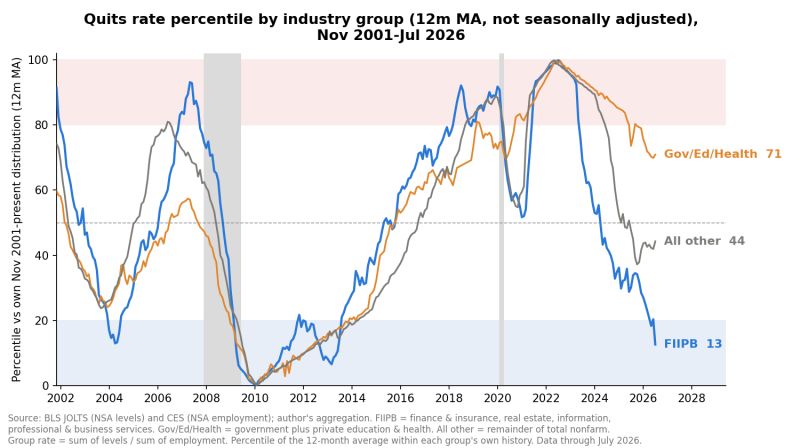
This post was originally published here

There is a couch outside the fitting rooms at nearly every mall in America, and for decades it looked like the least productive real estate in the building. No inventory. No margin. Just someone’s better half sitting with a pile of bags and time to kill. Paco Underhill, who has worked with shopping malls in more than 30 countries and wrote the 2004 book Call of the Mall, coined a phrase for it: “a parking lot for two-legged pets.”

“A two-legged pet could be a boyfriend, or it could be your mother, or it could be a grandfather,” Underhill, often called the “godfather of retail anthropology,” told Fortune. Give that companion a couch, he said, and the shopper they came with may stay longer.

That overlooked piece of furniture is now close to a business strategy. Data from commercial real estate analytics firm Green Street first reported by The Wall Street Journal capture the industry’s reversal: An estimated 200 malls have closed since 2008, but values for the survivors have climbed 13% over the past year—the strongest gain of any major commercial real estate sector. Indoor-mall visits from January through August also rose 2.5% from the same period last year, bringing traffic within 1.3% of its pre-pandemic 2019 level, according to data Placer.ai provided to Fortune.

Instead of simply giving people somewhere to shop, the new mall gives them a reason to make a day of it, trading the old department-store formula for restaurants, gyms, entertainment, beauty services, and even apartments.

The business of hanging out

More than two decades after Underhill wrote Call of the Mall, his critique looks newly relevant. The traditional American mall, he argues, was an “incomplete solution.”

Department stores helped developers secure financing and attracted shoppers, but they also dictated which businesses could move in. 

“They were very clear: I don’t want drugstores. I don’t want a hardware store. I don’t want a grocery store. I don’t want shopping carts in the shopping mall,” Underhill said.

By excluding everyday services, American malls remained dependent on occasional shopping trips. Underhill said malls abroad were built around a broader mix of food, recreation, services, and social life that encouraged frequent visits.

American malls are now filling in what was missing. Underhill pointed to gyms, daycare centers, doctors’ offices, restaurants, and beauty services as repeat-visit drivers. Vince Tibone, a retail analyst at Green Street, told Fortune former department stores and excess land are also becoming entertainment venues, housing, hotels, and offices.

R.J. Hottovy, head of analytical research at Placer.ai, said the changing tenant mix, events, and attractions are turning some malls into a “third place,” or even a “second place if your home is your office these days.” In 2025, 37.6% of indoor-mall visits lasted more than 75 minutes, a higher share than at open-air centers or outlets, according to Placer.ai.

For many members of Gen Z, the appeal may be both practical and nostalgic. The mall recalls a familiar adolescent ritual: texting the group chat, figuring out whose mom could drive, and spending an unplanned afternoon wandering stores, splitting food-court fries, and doing a whole lot of nothing together.

A study from Sunnie and Westfield Rise, the media and experiential division of mall owner Unibail-Rodamco-Westfield, found 73% of the Gen Z women surveyed called the mall the top place they go to spend time with friends. That time can become valuable without a shopping list: an afternoon with friends can turn into coffee, an arcade trip can stretch into dinner, and a brand first seen on TikTok can become a store entered along the way.

The internet moves in

Retailers have also stopped treating e-commerce and physical stores like opposing teams. Demand for mall space is as strong as it has been in more than a decade, Tibone said, and online-first brands increasingly see stores as a way to market themselves, acquire customers, and lift online sales nearby.

Brands that first tested malls through pop-ups are increasingly signing leases of five years or longer, Tibone said. While they’re not saving the industry single-handedly, they are “a growing and important source of new tenant demand” that often resonates with younger consumers.

A sorting, not a rescue

Of the roughly 900 malls Green Street tracks nationwide, Tibone estimates only about 250 are benefiting meaningfully from the comeback. Those properties rated A-minus or better by Green Street—meaning they rank among the country’s higher-quality, better-performing malls—tend to draw higher-income shoppers, while underinvested malls are being left behind.

Reinventing a mall also takes money and time. Underhill said executives generally know what their properties need, but transformations typically take about two years, an uncomfortable timeline for companies reporting results every quarter. But the strongest malls lean heavily on affluent shoppers benefiting from a rising stock market. A prolonged stock-market correction could weaken tenant sales and stall store-opening plans, Tibone said.

The comeback, then, is less a rescue of the American mall than a sorting of its survivors. The winners have learned physical space becomes valuable when people want to occupy it, even when they arrive without a shopping list.

To Gen Z, that makes the old mall couch more than a place to wait out someone else’s shopping trip. It is part of the reason to come—and once they are there, the mall still knows how to turn hanging out into buying.

Underhill put the mall’s enduring advantage more simply: “I need to see it, feel it, touch it, smell it, and that is often how I can buy it.”

This story was originally featured on Fortune.com
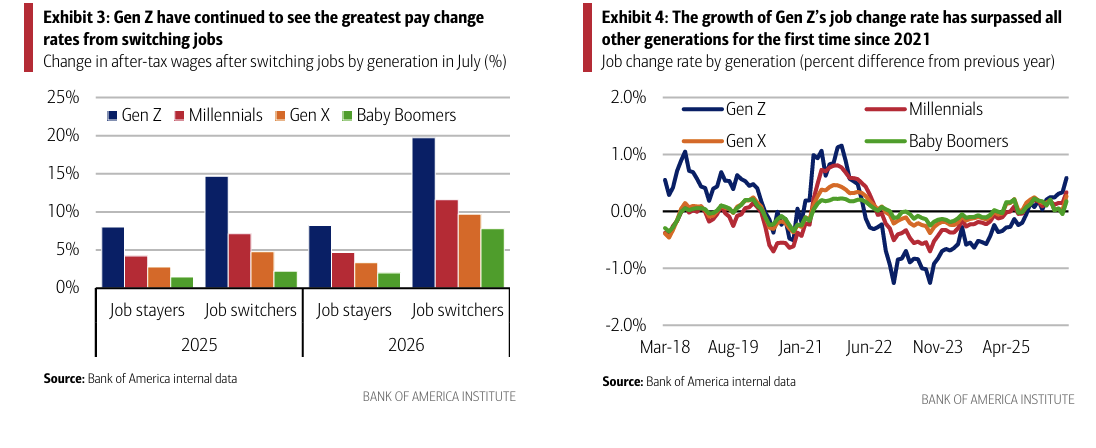
This post was originally published here

As more states have begun to introduce wealth taxes, billionaires and other ultrawealthy individuals have been forced to make the hard choice between sucking it up and paying the bill or moving elsewhere. 

Those who have chosen to dodge proposed wealth taxes in states including California and Washington have flocked to Florida. Billionaire Californians face a one-time 5% tax on their net worth, so some, including Google cofounders Larry Page and Sergey Brin and venture capitalist Peter Thiel, left California for Miami. 

Washingtonians who make at least $1 million will also face a flat 9.9% tax starting in 2028, and executives once based there, like Amazon founder Jeff Bezos and former Starbucks CEO Howard Schultz, have also left for Florida. 

Florida has become a safe haven for the ultrawealthy because it has no state income tax, and it’s also solidified itself as an epicenter of luxury and lavishness. Plus, they’re free from the burden of a wealth tax. Three of the primary localities where the ultrawealthy are flocking include Miami, Palm Beach County, and Naples. 

How much are billionaires saving by moving to Florida?

Florida has no state income tax, no capital gains tax, and no wealth tax, but the math on how much billionaires or the ultrawealthy save by living there is a bit more complicated. That’s because the ultrawealthy’s income typically comes from a stock sale or a dividend rather than a salary. Take Larry Ellison, for example. By making an estate in Palm Beach County his primary residence before selling Oracle stock, the billionaire saved an estimated $1 billion in taxes, according to Forbes

Wealth taxes hit assets like stocks, real estate, and art rather than income, as MIT Sloan notes.

But the wealth tax is still what garners the most attention. California’s Proposition 40 would slap a one-time 5% levy on the net worth of billionaires who lived in the state after Jan. 1 this year. Fortune’s Marco Quiroz-Gutierrez previously estimated the departures of billionaires like Page and Brin could cost the measure some $29 billion of the $100 billion it’s after

So the wealth tax is what encouraged some billionaires to move, but the income and capital-gains taxes they’ll never pay again are what keep them there.

Miami: the billionaire bunker

Miami is where wealth migration is most prominent: 19 of Florida’s 20 richest billionaires officially reside there. Many of them cluster on the same guarded islands like Indian Creek (a.k.a. Billionaire Bunker), where Bezos has assembled a property compound worth more than $230 million. Meta CEO Mark Zuckerberg, Page, and Thiel also live there.

Citadel’s Ken Griffin also moved his hedge fund’s headquarters to the city, and Page has spent more than $180 million building a compound in Coconut Grove. Meanwhile, Miami’s millionaire population has grown 94% in just a decade, to nearly 40,000, according to Henley & Partners’ World’s Wealthiest Cities in 2025 report

“It’s one of the best cities in the entire world,” Miami developer Robert Rivani recently told Fortune. “It’s just a great place to live. It’s a great political landscape for people who want to expand, raise families, and that leads to having great real estate growth. All the big guys [are] moving down here.”

Palm Beach County

Palm Beach County has also become a major wealth hub. Larry Ellison made a 16-acre Manalapan estate his primary residence, about 10 miles from Mar-a-Lago. Griffin has also poured about $450 million into a waterfront compound in the county. Meanwhile, Citadel, BlackRock, and Goldman Sachs all have expanded there, earning the area its “Wall Street South” nickname. 

The wealth has piled up fast. Between 2014 and 2024, West Palm Beach and Palm Beach saw their millionaire population jump 112%, which is the fourth-fastest growth of any city in the world, according to Henley & Partners. The Business Development Board of Palm Beach County counts roughly 60 billionaires countywide.

Naples

Naples, long a popular retirement destination, also continues to attract vast amounts of wealth. It attracts what’s seen as passive wealth, or retirees and heirs who prioritize golf, privacy, and beaches. Forbes, which in June called Naples the place “where America’s new ‘old money’ hides,” notes it’s frequently cited as having one of the highest concentrations of millionaires per capita in the country. 

Several billionaires also live in Naples and nearby Marco Island, including Jacksonville Jaguars owner Shahid Khan, who is worth about $13.3 billion. Two of the six priciest neighborhoods in America by price per square foot—Port Royal and Aqualane Shores— also sit in Naples.

This story was originally featured on Fortune.com

This post was originally published here

Anthropic is opening an office in Singapore—its first in Southeast Asia—planting its flag in a market that’s quickly becoming a new battleground for the U.S.’s top AI firms.

On Sept. 16, Anthropic announced its expansion to Singapore, making the Southeast Asian city its fifth location in Asia-Pacific, following hubs in Tokyo, Seoul, Bengalaru and Sydney. The Singapore office will open in October.

“As we grow across Asia-Pacific, opening an office in Singapore—where Claude usage per capita is among the highest in the world—is a natural next step,” Chris Ciauri, Anthropic’s international managing director, said in a press release on Sept 16. 

According to Anthropic data, Singapore was ranked second out of 121 countries in Claude usage, behind Australia.

Anthropic’s regional expansion will be led by Dale Finlay, who joins the Claude developer after just six months as OpenAI’s regional go-to-market head. “From working with customers across Southeast Asia, I’ve seen that ambition isn’t the blocker to AI adoption—trust is,” Finlay said in Anthropic’s press release. “Once that trust exists, the real work is embedding AI into how the business actually operates.”

By expanding to Southeast Asia, Anthropic is catching up to its rival OpenAI, which opened its Asia headquarters in Singapore in late 2024. Just last month, the Business Times reported that OpenAI was planning to lease 100,000 square feet of new office space in Singapore. OpenAI also just hired Sandya Devanathan, Meta’s head for South Asia, as its new ASEAN and Australia head.

Increasingly crowded

Singapore has long served as a “port of entry” to Southeast Asia, thanks to its stable political environment and business-friendly policies. The same has been true of AI: Companies like Cognition and Sierra have picked Singapore as their ASEAN or Asia headquarters.

Singapore has hopes of becoming an “AI nation,” with the country committing over $1 billion Singapore dollars (over $770 million) to strengthen public AI capabilities.

San Francisco-headquartered Plaud, which manufactures AI-powered note-takers, also opened its regional headquarters in Singapore on Sept 16. The office will serve as Plaud’s “base of operations” across twelve Asia-Pacific markets, including India, Malaysia, New Zealand, Australia, South Korea, Thailand and Vietnam.

“We started in Singapore with a very modest idea that we should start building a data engineering team,” said Nathan Xu, Plaud’s CEO and co-founder, at the company’s office launch event. “In about nine months, we grew the team from 10 people to about 100.” The firm also announced that it would be investing $20 million Singapore dollars, or $15.7 million, to accelerate engineering and product development in the country.

“Asia is one of the hardest places in the world to build AI that understands context and intent because people switch seamlessly between languages, dialects and contexts,” Xu said in a Sept 16 press release. “If we can make AI feel natural here, we can make it feel natural anywhere in the world.”

This story was originally featured on Fortune.com

This post was originally published here

Karin Rådström is used to being the only woman in the room. She was the first to lead Scania’s bus and coach division, having worked her way through the ranks from marketing trainee to head of sales and marketing and executive vice president at the Swedish truck manufacturer.

Now, as CEO of Daimler Truck, she heads up the world’s largest manufacturer of commercial vehicles. Rådström became only the second woman to lead a company in the DAX 40 upon her appointment in 2024 and is one of only 43 women CEOs in the Fortune 500 Europe. “I try to use that as a positive motivation more than a heavy burden,” she says. “The best way to increase the number of leadership opportunities for women is, of course, to be successful.”

Since Rådström became CEO, Daimler Truck’s share price has increased almost 40%, from €33.15 to €46.24, and she has overseen significant growth in the company’s zero-­ emissions vehicle sales, which rose 67% in 2025. But this success has not come easily. Rådström reels off a lengthy list of headwinds: supply-chain challenges, semiconductor shortages, the war in Ukraine, geopolitical issues, and tariffs in the U.S. “It’s been kind of a ride,” she says.

Changing gear

Despite only recently becoming an independent business (formed out of the split of Daimler AG into Mercedes-Benz and Daimler Truck in 2021), Daimler Truck has over a century of history. This year marks 130 years since German engineer Gottlieb Daimler built the very first motorized truck, basing his design on a horse-drawn carriage.

Rådström, a Swede, was surprised by the layers of hierarchy at the German company and the sheer volume of decisions that crossed her desk as CEO. In one of her first meetings, she was asked to look at the designs for a new truck cab and formally approve it. Important decisions were often accompanied by a lengthy slide deck. “Those things don’t work in the changing environment that we have now,” she says.

72

Daimler truck’s rank on fortune 500 europe

Rådström has called on the company to operate “simpler, faster, and stronger.” This mantra, which encourages quicker decision-making and greater autonomy, has been central to the cultural transformation that she has spearheaded since becoming CEO. “You never have 100% of the information you’d like,” she says, “so if you don’t decide, you might miss big opportunities.”

Those familiar with Rådström’s leadership style describe her as authentic, strategic, and inclusive. One friend, Charlotte Berg, a consult service director for IT company Kyndryl, first met Rådström at a professional development program run by the Stockholm-based Women for Leaders, and Rådström suggested that they go for a run together. Keeping up with Rådström, a former rower for the Swedish national team, was a challenge, Berg says, but the two became fast friends. To this day, they exchange notes at the end of the workweek on what happened, their feelings, and any lessons learned.

The cultural transformation led by Rådström at Daimler Truck has not gone unnoticed. Klas Bergelind, managing director and industrial tech and mobility analyst at Citi, says Rådström has created a more decentralized organization and has encouraged staff to shed some of its more bureaucratic practices. But there’s still significant work to do, he adds: “Cultural change takes time, and while costs are gradually lowered, other temporary cost headwinds are weighing on results.”

Indeed, despite reporting a 5% uplift in revenue in its Q2 financial results, net profits for the group dropped 48% com- pared with the same period last year. Profitability was primarily impacted by tariffs, but earlier-announced price increases and a more favorable tariff arrangement with the U.S. are expected to boost earnings the rest of the year.

Chinese competition gains ground

Another headwind on the horizon is the challenge from China. For now, the European truck market is relatively secure, but the broader European automotive market is being buffeted by Chinese competition. Sales of Chinese electric cars in the Western European market hit a record high this year, accounting for 14.2% of purchases in the first five months of 2026, according to Schmidt Automotive Research, up from 3% in 2024. Meanwhile, the share of China’s car market that is occupied by foreign brands is in steep decline.

Put simply, Chinese EVs are just better than a lot of the competition, says Howard Yu, a professor of management and innovation at IMD Business School and codirector of the Future Readiness program, which evaluates global car manufacturers. In the Southeast Asian market, the technological superiority of many Chinese-made cars is making European produced vehicles appear outdated, Yu says. “It’s like listening to vinyl in the age of Spotify,” he says. “It’s viewed as cute and nostalgic.”

Daimler Truck showcasing its FGA chassis at defense and security industry event Eurosatory.
Daimler

European automakers are well aware of China’s technological advantages and Europe’s higher manufacturing and regulatory costs. In a joint letter to the European Parliament, Volkswagen, Stellantis, and Renault warned of an “unprecedented challenge to their competitiveness.”

So far, the European truck market has largely been insulated from the challenge from China. Chinese companies hold a marginal share of 1.36% in the European commercial-vehicle market, according to market research company Dataforce, and three of the four biggest companies in the industry, Daimler Truck, Volvo, and Traton, are headquartered in Europe.

However, the pressures facing the car industry could be a sign of things to come for the heavy-vehicle sector. Chinese truck companies have been expanding their market presence in Europe. SuperPanther and Sinotruk have both begun production in Austria, while Chinese-backed electric-truck manufacturer Windrose has established a European headquarters in Antwerp, Belgium. As with EVs, Chinese trucks are increasingly technologically advanced, says Thomas Fabian, chief commercial vehicles officer at the European Automobile Manufacturers’ Association. Windrose’s Global E700 truck has a fully loaded range of 700 km, for example, while Daimler Truck’s flagship model has a 500 km range. “They [Chinese companies] are at the doorstep, they’re coming,” Fabian says.

European truck manufacturers have some “moat” in their established relationships and service networks. While cost is an important factor, service reliability and the availability of spare parts are also important considerations for truck carriers, and overhauling an entire fleet is a major investment. But Rådström isn’t relying on that. “It’s on us to work on our competitiveness, stay on top of innovation, and remain strong on cost,” she says.

The European Commission’s requirement of a 40% reduction in emissions from new heavy-duty vehicles by 2030 also risks handing Chinese manufacturers an opening, according to Daniela Costa, Goldman Sachs’ head of European capital goods research. Only 2.4% of trucks operating in the EU in the first quarter of 2026 were zero-emissions vehicles. In contrast, one in four trucks sold in China in 2025 was electric, and the International Energy Agency estimates that China accounted for 90% of the 400,000 electric trucks sold globally last year.

Changes are needed for Europe to remain competitive, including better charging infrastructure, reduced bureaucracy, and faster decision-making, Rådström says: “Our customers run on tight margins, so they don’t have the time to experiment with new technologies. We have to show it can reduce costs.”

In it for the long haul

Defense has also been identified as a key pillar of Daimler Truck’s growth strategy. The company aims to double defense-related revenues to €1 billion ($1.17 billion) by 2028 and has plans to invest “mid-three-digit-million euros” in its newly established Daimler Truck Defence brand. “We have a very strong position because we are industrialized, so we have the opportunity to build a lot of volume, and we can leverage our civil side for defense applications,” Rådström says.

She also hopes that closer partnerships with startups in the military space will lead to innovations that can be translated to civilian vehicles—particularly in autonomous driving. Daimler Truck has ambitions to release Level 4 autonomous trucks—which can handle all driving tasks in most settings without human intervention—to the U.S. market by 2027.

While the involvement of European truck makers in the defense sector is not new, rising geopolitical tensions, increased government defense spending, and the ongoing war between Russia and Ukraine have presented new opportunities in this field. “Unfortunately [defense] is an important industry, which is growing,” she says. Over the past year, Daimler Truck has secured contracts with the German, French, Lithuanian, and Canadian armed forces. “A lot of the time it’s about defending democracy, and that’s not something that makes me sleep badly at night; rather, the opposite,” Rådström adds.

Although defense is one of the fastest-growing areas of Daimler Truck’s business, it is growing from a small base and is likely to remain small. If the company does achieve its €1 billion target, it would still represent only 2% of overall annual revenue.

Securing growth over the longer term will require further innovations as Rådström continues her turnaround program. “It’s about making our customers more satisfied; growing employee engagement, because that’s what makes us successful; and showing that we’re improving in the numbers,” she says.

Rådström remains acutely aware of the ­company’s 130 years of history. “It makes you realize—even if I stay in my role for 10 years— I’m still a pretty small part of the long history of this company,” she says. “So I try to stay humble and will aim to hand over an even better company than what was handed to me two years ago. That would make me really proud.”

For the latest coverage and updates from Fortune CEO Forum, as well as insights into the companies on our list, visit this page.

This article appears in the Fortune 500 Europe special edition with the headline “At the wheel of a 130-year-old giant”

This story was originally featured on Fortune.com

This post was originally published here

The combined revenues of the companies on the 2026 Fortune 500 Europe list hit a record high of $15.5 trillion this year, equivalent to half of Europe’s GDP.  

The list, now in its fourth year, ranks the continent’s largest companies by revenue. Despite fiercer global competition, geopolitical instability, and technological disruption over the past year, the companies on the list have proven resilient. Profits returned to growth this year, rising 3% to just over $1 trillion, after a 5% decline in 2025.  

Volkswagen holds the top spot for a third consecutive year. Revenue climbed 3.4%, to more than $363 billion, despite Europe’s carmakers being squeezed by global tariffs and growing competition from China. 

European energy companies have also proved resilient despite a tumultuous twelve months, with Shell, Glencore, BP and TotalEnergies occupying the rest of the top five spots. Second-quarter profits at Shell and BP more than doubled as disruption in the Strait of Hormuz pushed oil prices higher. 

34.6 million

Total employees

Finance remains Europe’s most dominant sector in terms of revenue, profit, and headcount. A total of 105 finance companies feature on the Fortune 500 Europe and together they generated 24% of the list’s total revenue, 40% of its profit, and employ 14% of its workforce. 

Howard Yu, a professor at IMD Business School, credits prominence of Europe’s finance sector to the global reach of its biggest banks and their technical sophistication. “These players have spent decades building footprints across emerging markets and have a depth of presence few global rivals can match. This is a genuine strategic advantage, rather than a legacy accident.” 

HSBC is the most profitable company on the list, with $22bn in profits for 2025. The British lender is one of only 25 companies to generate more than $10 billion in profits.  

Sector revenue breakdown

Despite the combined increases to revenues and profits across the Fortune 500 Europe, margins have narrowed for two years running, falling to 6.5% from a high of 7.1% on the 2024 list.  

This is consistent with the stagflation pressures weighing on much of Europe’s corporate sector, according to Guido Cozzi, professor of macroeconomics at the University of St. Gallen. “The gap between revenue and profit growth suggests that many European companies have been able to pass on only part of the shocks they have faced,” he says. “It’s less a sign that businesses are genuinely booming, and more a sign that prices are rising faster than what companies are actually producing or how efficiently they’re running.”  

The U.K. overtakes Germany 

For the first time in the four-year history of the Fortune 500 Europe, Germany does not have the most companies on the list. The U.K. takes the lead with 76 companies, compared to Germany’s 73. 

Yu attributes this to a more international mindset that has been adopted by U.K. businesses. “After Brexit, they have no choice but to look beyond Europe entirely, with many expanding their presence in the U.S,” he says. “The U.S. is the world’s biggest and most profitable market. It is the toughest gym in the world to train your organization to be lean, mean and competitive.”  

The U.K. also outperforms in terms of innovation. It sits more than 30 percentage points above the EU average on the European Commission’s most recent Innovation Scorecard and is home to more unicorns than any nation except the U.S. and China, according to the Hurun Research Institute. 

Where Europe Fortune 500 companies are based

Together the U.K., France, Germany, and Switzerland are home to more than half of all companies on the list, and accounted for more than 50% of all profits.  

Built to last 

Many of the companies on the Fortune 500 Europe list have long histories. The average company is 109 years old, and more than half have been in business for over a century, surviving global conflicts and adapting through multiple industrial revolutions.  

The oldest company on the list, brewing giant Anheuser-Busch InBev, traces its roots back 660 years to the Den Hoorn brewery in Leuven, Belgium. It ranks No. 65 on the list. At the other end of the spectrum, the youngest company on the list is the German automotive-technology company Aumovio, which was spun off from Continental AG in 2025. 

$15.47 trllion

Combined revenue

Taken together, this year’s Fortune 500 Europe list is a story of endurance. Many of the continent’s oldest institutions are still the ones setting the pace, centuries after they were founded. Yet Yu cautions against reading longevity as a strength in its own right: “Many of these institutions have grown too comfortable,” he argues.  

The number of female CEOs at Fortune 500 Europe companies has also shown a marginal improvement, increasing from 41 last year to 43. Total revenues for women-led firms increased by 24% to $1.2 billion and BP is the only company in the top 10 to have a woman CEO, following the replacement of Murray Auchincloss with Meg O’Neill. 

For the latest coverage and updates from Fortune CEO Forum, as well as insights into the companies on our list, visit this page.

This story was originally featured on Fortune.com

This post was originally published here

FOMO—the fear of missing out—used to be a shorthand favorite of young people worried about not being at the right party on a Saturday night. Now, chief executives are increasingly having FOMO over applied AI. The financial bets are large enough for boards to wince at capital expenditure implications. The outcomes are shrouded in mystery, a particular irritant for leadership teams obsessed with data and clarity.  

Step forward, Aiman Ezzat, the chief executive of technology and consultancy business Capgemini. The French Fortune 500 Europe giant has been in the news after it agreed to sell its U.S. subsidiary, Capgemini Government Solutions, which had been providing tracing and removal data for Immigration and Customs Enforcement (ICE) in America. In line with the great tech selloff over AI spending fears, Capgemini’s share price has been laboring. 

I spoke with Ezzat before the controversy over ICE blew up (Ezzat explained on LinkedIn that the American business acted autonomously to protect U.S. classified information). He told me that business leaders were treading a fine line with AI; there is a sweet spot somewhere between too far, too fast, and stuck on the starting blocks. 

“You don’t want to be too ahead of the learning curve,” he said. “If [you are] you’re investing and building capabilities that nobody wants.” 

“Basically, the need to integrate AI with humans. How do you get humans to trust the agent? The agent can trust the human, but the human doesn’t really trust the agent.” 

Aiman Ezzat

AI is not a big-bang moment; changes will happen in increments. Most leaders can remember the hype around the metaverse—a virtual reality world where we could trade and do business via our dancing avatars (Capgemini itself experimented with a metaverse lab). Mark Zuckerberg was so keen on the idea that he renamed his company after it. Like air fryers, its time may now have passed. 

Agility is the new approach: small tests and pilots before you scale. Capgemini now has labs for 6G mobile technology, quantum computing, and robotics. No one knows which parts of these technologies may be the metaverses of the future. 

“Is everything ready to mature? No,” says Ezzat. “But we want to be there to be able to see when things start to mature, when we can really start scaling up, not waiting to see, ‘Okay, oh, now it’s moving.’ 

“We have to do something, right? So, you have to be investing—but not too much—to be able to be aware of the technology, following at the speed to make sure that we are ready to scale when the adoption starts to accelerate.” 

172

Capgemini’s rank on the Fortune 500 Europe

As I have written before, many large firms are viewing AI primarily as a way to make separate business divisions more efficient. That’s a start, but it is not a “whole enterprise” approach that brings together data and operations from, say, finance and human resources or procurement and supply chains, and then connects them in innovative ways. 

“AI is a business. It is not a technology,” Ezzat says, warning that leaders often fall into seeing AI as a “black box that’s being managed separately. There are technologies behind it, but it’s really about transforming the business. It cannot just be used to keep the house running.

“The question you [the CEO] have to focus on is: ‘How can your business be significantly disrupted by AI?’ Not ‘How is your finance team going to become more efficient?’ I’m sure your CFO will deal with that at the end of the day.” 

Read more: Sam Altman should take Niklas Östberg’s number: What the Delivery Hero founder doesn’t know about going public and shareholders isn’t worth knowing

A well-worn phrase with AI is “human in the loop”—a phrase challenged by one senior technology executive I spoke to recently as being “way off beam.” What we should really be talking about is “human in the lead.” Welcome back, “human-centricity,” a centuries-old social philosophy, formalized as an engineering approach by the 1950s ergonomics movement.  

“How do you deal with what we call AI-human-centricity?” Ezzat says. “Basically, the need to integrate AI with humans. How do you get humans to trust the agent? The agent can trust the human, but the human doesn’t really trust the agent.” 

Ergonomics was about chairs that were built for people, rather than chairs designed to fit efficiently into an office or be simple to stack and move. How to mold AI to work with people is a similar challenge. Bad chairs lead to bad backs. Bad AI is likely to be far more consequential. 

For the latest coverage and updates from Fortune CEO Forum, as well as insights into the companies on our list, visit this page.

A version of this story was originally published on Fortune.com on February 12, 2026.

This story was originally featured on Fortune.com

This post was originally published here

There once was a time when most cars on the road did not have air bags as a standard under federal law. It took until 1998, in fact, for every vehicle on the round to have an airbag as required by federal law — that’s over 100 years after the invention of the first automobile and roughly 30 years after airbags were first invented as a safety measure. Something like that is playing out again, except this time with robotaxis and cyber protections.

Louay Abdelkader, director of product management at QNX, identified it as a huge problem for the sector, “of course … keep in mind that in automotive safety, it took a while for it to adopt.” Abdelkader told Fortune lawmakers should make cybersecurity a primary consideration akin to airbags, noting that every connected vehicle introduces some degree of cyber risk.

Much of the debate over robotaxis has focused elsewhere, such as whether they are indeed smart enough to avoid collisions, how insurance companies should assign liability in an accident, or how police can deal with driverless cars that commit traffic violations. 

Abdelkader told Fortune lawmakers should make cybersecurity a primary consideration, noting that every connected vehicle introduces some degree of cyber risk.

Robotaxis are proliferating across the country, however, with the robotaxi company Zoox most recently receiving regulatory approval from the National Highway Traffic Safety Administration for a commercial exemption, allowing the paid service broader access without manual controls. Tesla also has moved into the robotaxi space, with the advent of Cybercab in at least seven cities.

Meanwhile, Alphabet-owned Waymo has expanded from its beginnings in Arizona to 11 major U.S. cities—even pairing with rideshare company Uber in a few cities.

Unlike conventional vehicles, robotaxis depend on dozens of interconnected electronic control units, high-speed networking, cloud connectivity, GPS, cameras, lidar, radar and AI models that continuously interpret the world around them. Every one of those components expands what cybersecurity professionals call “attack surface,” or the number of possible entry points hackers can exploit.

While Hollywood often depicts hackers remotely hijacking an entire vehicle, experts say modern attacks are more likely to target the broader ecosystem surrounding autonomous cars. 

Even if attackers cannot directly steer a vehicle, disrupted communications could degrade an autonomous system’s ability to safely navigate. In San Francisco, “tech prankster” Riley Walz organized a group DDOS—a denial-of-service—attack on local Waymos. 

The prank consisted of 50 individuals simultaneously ordering a Waymo on the same dead-end street, creating a pileup that made the company disable rides until the next morning.

The DDOS came despite rules from California, where Waymo operates service in San Francisco and Los Angeles, that require autonomous vehicle manufacturers to demonstrate they can safely monitor, update and maintain their fleets while complying with federal vehicle cybersecurity guidance.

Waymo and the California DMV did not respond to requests for comment.

The advent of generative AI has added to cybersecurity risks in robotaxis. Historically, hackers often needed significant time, technical expertise and resources to identify and exploit vulnerabilities. But AI has dramatically compressed that timeline, according to Abdelkader.

He said malicious actors can use AI to identify vulnerabilities, automate attacks and develop exploits far faster—and with more malicious intent—than Walz’s “prank.”

Abdelkader said cybersecurity for robotaxis is largely the responsibility of both manufacturers and lawmakers. He argued manufacturers must build security into autonomous vehicles from the beginning, not treating it as an add-on.

“When you’re developing a cybersecurity system, you start from the ground up. It’s like building a house,” he said. “If your foundation is not strong, it becomes very difficult for you to build a robust and secure house.”

Like California, some jurisdictions have already begun treating cybersecurity as part of autonomous vehicle regulation rather than an afterthought. Arizona has incorporated cybersecurity planning into broader autonomous vehicle deployment policies, while states including Michigan have established cybersecurity initiatives through partnerships with industry and research institutions.

Internationally, regulators have also moved further. The United Nations’ UN Regulation No. 155 now requires automakers in many markets to maintain certified cybersecurity management systems throughout a vehicle’s lifecycle, while ISO/SAE 21434 establishes engineering standards for cybersecurity across vehicle development.

But in New York City, where Mayor Zohran Mamdani has refused to renew the license for Waymo, cybersecurity has been missing from the debate over robotaxis. The young mayor has instead focused on labor protection, citing taxi drivers as the main point of concern with allowing robotaxis to roam Manhattan.

“If a company like Waymo finds itself in New York City, what they will also find is a City government that is committed to delivering for the workers who keep the city running,” he said at a press conference. “Those workers also include our taxi drivers who, for far too long, have been sold a dream of being able to work their way to the middle class.”

Mamdani’s office did not respond to a request for comment.

But Abdelkader argues that all lawmakers across the country should build on existing frameworks rather than waiting for a cyber incident to expose a weakness. He says policymakers often separate safety from cybersecurity too often, even though “they are tied at the hip.”

“The legislators and politicians have to work with them to make sure that moving forward, if there are improvements that need to be done, what type of support is required,” he told Fortune. “You need to be able to talk and share that feedback. That’s the only way for the industry to grow effectively and benefit society.”

This story was originally featured on Fortune.com
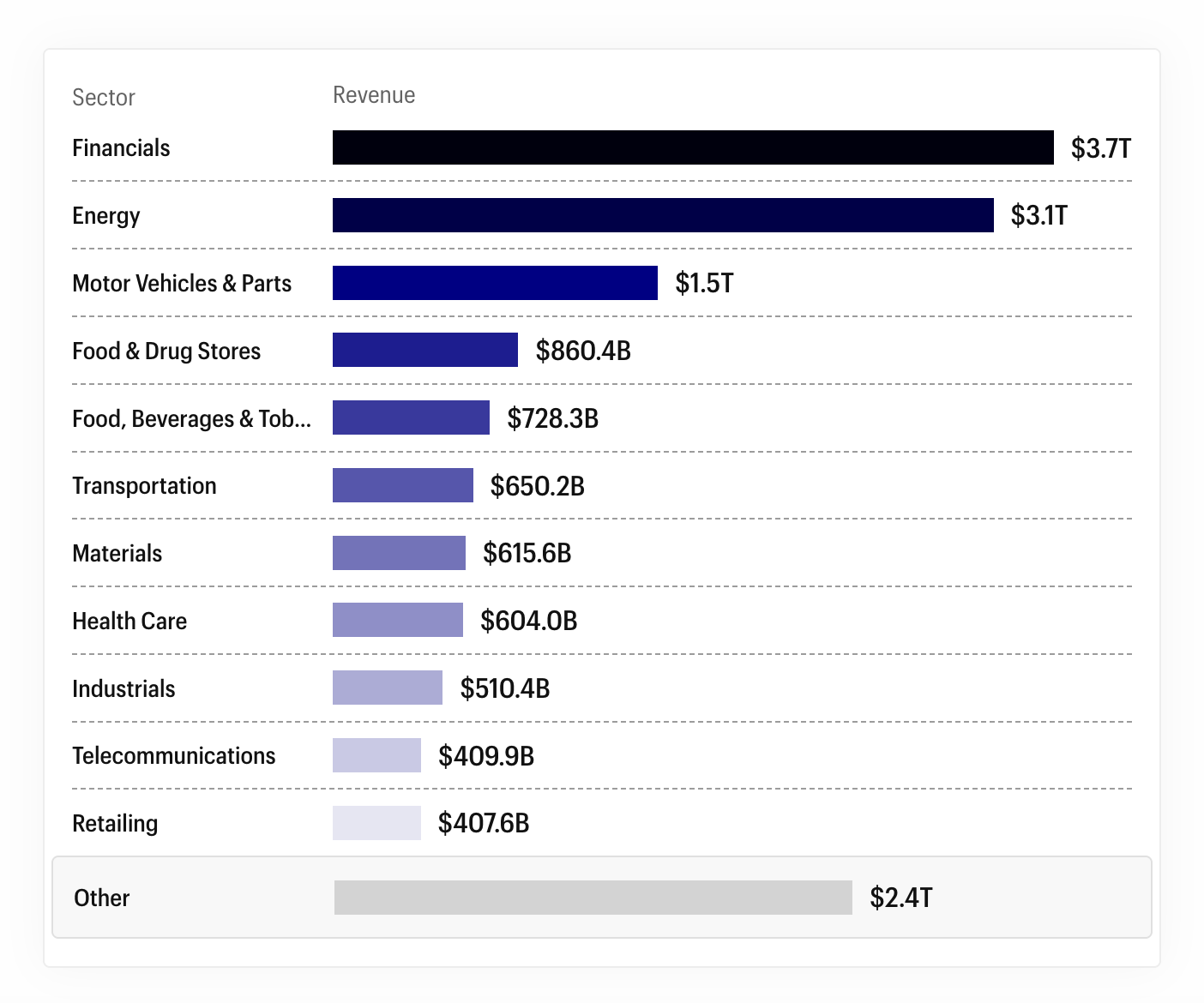
This post was originally published here

Mark Zuckerberg has access to some of the most sophisticated artificial intelligence systems on the planet. He is also building a company around the idea that AI can dramatically reduce the need for human work.

A recent Reuters investigation offers a revealing glimpse of where that idea can lead. Meta’s Project OT envisioned an “AI-native” company in which AI agents would take over much of the work performed by thousands of employees. Teams could become dramatically smaller. Some layers of management could disappear. Zuckerberg himself has been using what Meta calls a “CEO agent,” allowing him to retrieve answers that previously required going through several layers of staff.

The attraction is obvious. Every organization contains friction. Meetings take time. Information gets lost between layers. There’s push back.  Decisions move slowly. AI can compress all of this.

Yet some friction serves a different purpose. It comes from people who disagree, see problems differently, remember inconvenient facts or ask questions that others would rather avoid.

That distinction matters enormously as AI moves from helping people perform tasks to helping leaders think.

We call these two forms of friction coordination friction and cognitive friction. Coordination friction comes from the mechanics of collective work: scheduling, documentation, data reconciliation, approvals and communication. AI can reduce much of this friction with obvious benefits.

Cognitive friction comes from the resistance between ideas. Two people may look at the same evidence and reach different conclusions because they have different assumptions, experiences or ways of framing the problem. That friction can be uncomfortable. It also can be generative.

This creates a peculiar danger for people at the top of organizations.

Imagine a CEO who once received information through several layers of people. Each layer introduced interpretation. Each person brought a different mental model. Someone might challenge the premise of a question. Someone else might point out an anomaly. Another might say, “We tried this three years ago, and here is what happened.”

An AI agent can make that entire process dramatically faster. It can retrieve the information, synthesize it and present a coherent answer.

And coherence can feel like intelligence.

The danger arises when AI becomes a sophisticated mirror.  Instead of creating distance from an existing worldview, it can make that worldview more articulate, comprehensive and persuasive. The user experiences an apparent external intelligence while interacting with a system that has learned from the user’s preferences from their previous questions, prompts, assumptions, and accumulated information.

This is self-referentiality automated at scale.

There is a useful distinction here between two possible roles for AI: peacemaking and sensemaking.

A peacemaker resolves contradictions. It finds common ground, smooths disagreements and produces an answer that hangs together.

A sensemaker does something harder. It exposes contradictions. It identifies hidden assumptions. It searches for evidence that does not fit. It constructs the strongest argument against the user’s position. It keeps competing interpretations alive long enough for them to teach us something.

For an individual thinker, we argue that AI should function more like a sparring partner than a mirror.

This distinction becomes especially important for CEOs because their organizations already tend toward self-reference. The higher someone rises, the more information is filtered before reaching them. The very efficiency of an AI system can intensify that tendency. A CEO agent may give its user faster access to the organization while simultaneously reducing exposure to the people who would have challenged the organization’s assumptions. (maybe: AI is The New Organization Man – the ultimate corporate “yes-person” that ideally fits into the organization, respects hierarchy, and suppresses individual judgment and self-reflection.  Instead of Groupthink we have Algothink)  

This may help explain a larger paradox emerging at Meta.

Project OT was built around the premise that AI could allow smaller, more “talent-dense” groups to accomplish work previously requiring much larger teams. Meta ultimately abandoned its most aggressive workforce-reduction plans after internal data raised questions about whether dramatically increased AI-assisted coding was translating into comparable gains in user-facing products.

The lesson extends far beyond Meta.

AI makes it increasingly attractive to build end-to-end systems. In science, this means systems that can generate hypotheses, run experiments, analyze results and produce scientific papers. In organizations, the emerging equivalent runs from information gathering through synthesis, decision-making and execution.

The more complete the loop becomes, the more important the points of friction become.[BU1] 

A fully integrated system can become exceptionally good at optimizing what it already believes matters. Its greatest weakness may emerge at the boundary where someone asks whether the system is solving the right problem.

Science provides a useful warning. Scientific progress depends on variation. Different laboratories pursue similar questions using different methods. Researchers make different bets. Most fail. Occasionally, an unexpected result opens an entirely new direction. Our paper argues that end-to-end AI systems could compress this variation by steering exploration toward what existing data suggest is likely to succeed.

Organizations face a similar choice.

AI can make coordination extraordinarily cheap. That is a tremendous opportunity. It also means that disagreement can become easier to eliminate, alternative interpretations easier to compress and decisions easier to accelerate.

The real leadership challenge of the AI era may therefore be learning where friction is a cost and where friction is a source of intelligence.

The best AI for a leader may sometimes be the system that slows the leader down: the one that says, “Here is the strongest argument against your position,” “Here is what your model cannot explain,” or simply, “Here is another way to see the problem.”

AI can make leaders faster. The harder challenge is making sure it also makes them more capable of seeing beyond themselves.

The opinions expressed in Fortune.com commentary pieces are solely the views of their authors and do not necessarily reflect the opinions and beliefs of Fortune.

This story was originally featured on Fortune.com
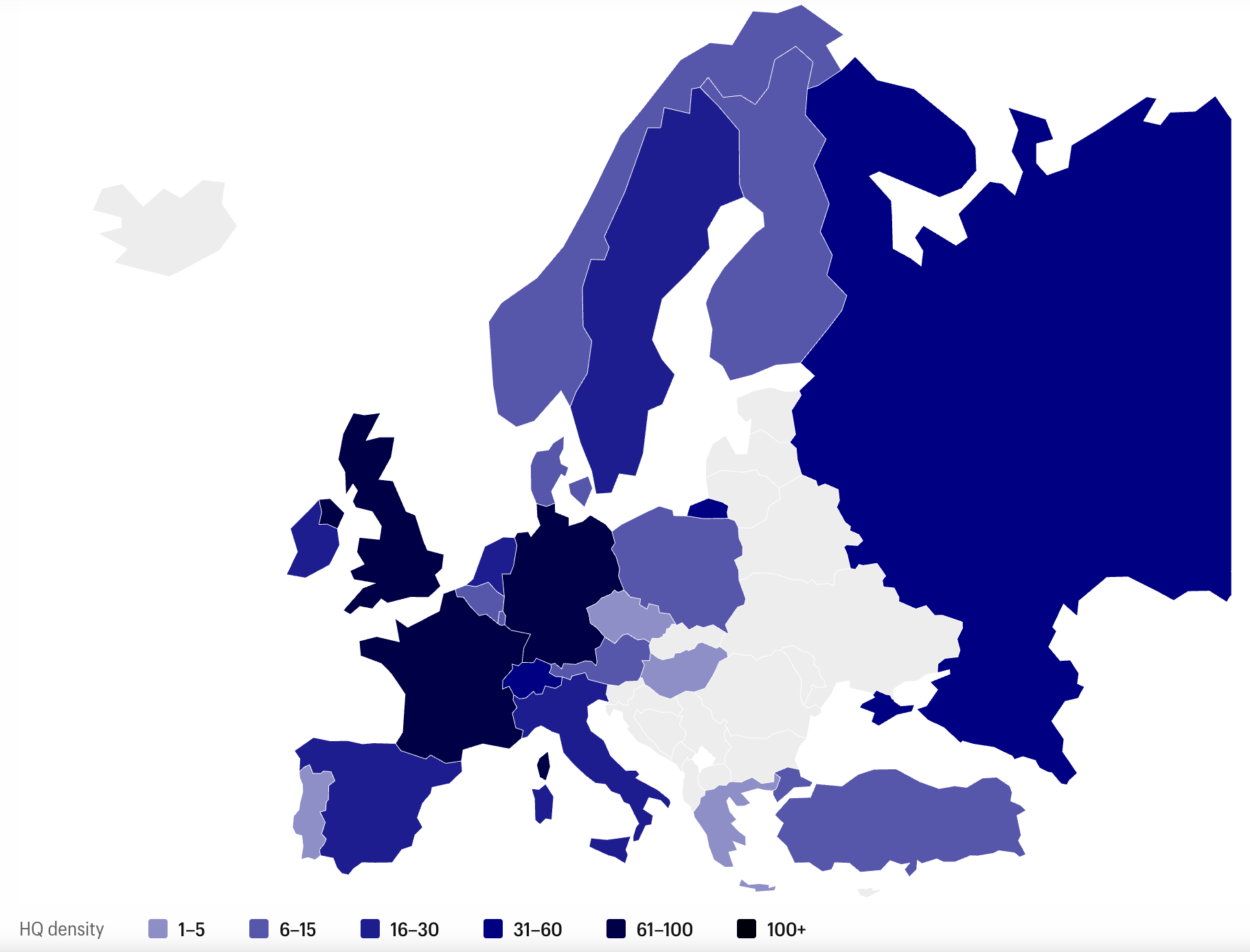
This post was originally published here

Concerns about AI safety are reaching a fever pitch in the U.S. after a X post by a former Anthropic researcher went viral, claiming the technology could kill all of humanity by the end of the decade. In response, the CEOs from OpenAI and Anthropic have reiterated their calls for the U.S. to coordinate with China to slow and pace AI development.

OpenAI CEO Sam Altman even tried to appeal to the egos of the leading figures, telling Fortune in an interview Friday that he believed U.S. President Donald Trump and Chinese President Xi Jinping could win the Nobel Peace Prize if the two leaders struck a deal on AI safety.

But the idea of an AI slowdown seems to have fallen on deaf ears with President Trump and President Xi, who are set to meet on Sept. 24. Both have rejected the idea.

Trump said “the only controls or ‘guardrails’ the U.S. needs is a STRONG AND SMART (High IQ!) PRESIDENT” in a Sept. 14 Truth Social post. The same day, China’s Foreign Ministry Spokesperson Guo Jiakun called the current discourse in the U.S. “fear-mongering” that “will only hamper efforts toward sound global AI governance, which serves no one’s interest.”

In China, the calls for a slowdown have also come off as an attempt by the U.S. to maintain its leading edge, as it has tried to do by limiting the export of advanced AI chips to China.

“Xi is unhappy with recent U.S. moves to contain Chinese advances in AI, robotics, and drones,” said George Chen, Partner and Chair of Digital Practice, The Asia Group. “For Xi, AI is the new internet — a once‑in‑a‑lifetime chance to reshape the technological balance of power. China does not need U.S. permission to accelerate or decelerate its AI investments; Xi will pursue his own agenda.”

Trump echoed Xi in his Truth Social post, saying, “Whoever wins AI, wins!”

The leaders are expected to begin discussing AI safety when they meet, but any kind of agreement between the countries is “a long way” off, according to Paul Triolo, global technology policy lead at the advisory firm DGA. Xi wants to have a “serious dialogue on frontier AI model safety,” Triolo said, but the two countries have yet to “establish a baseline level of agreement on things like the role of government, [and] how and which models should be tested.”

Also on the table for discussion is an agreement to not weaponize AI, and an exploration of the “principles to prevent misuse of AI models by non‑state actors, such as attacks on global financial systems or critical infrastructure, which neither country wants to see,” Chen said.

Anthropic CEO Dario Amodei’s letter has landed poorly in China—and with Trump

Although OpenAI CEO Sam Altman tweeted about a coordinated slowdown, asking the U.S. government to help facilitate it, the letter Anthropic CEO Dario Amodei’s published on Sept. 12 has drawn a particularly polarizing reaction. While some in the U.S. have praised it as a useful framework for containing the risks of AI, it’s not been well received in China.

In the letter, Amodei calls for the U.S. and China to agree to a “speed limit” for AI development. When discussing his letter in an interview with CBS Sunday Morning, Amodei likened the competition between the U.S. and China to the Cold War, when the U.S. and Soviet Union were racing to develop nuclear weapons. Amodei says at a bare minimum Washington D.C. and Beijing should agree that neither country will use AI to develop biological weapons, and he reiterates his belief that the U.S. should not sell advanced chips to China.

Brosi Babic, a professor at the University of Hong Kong, calls Amodei’s letter “self-serving editorializing” that is “conveniently coming at a time when the gap between Chinese and frontier US models is shrinking, as an attempt to hang on to a vanishing market lead.” To him, the proposals for an AI slowdown have “been framed in such a conniving and childish way” that they are unlikely to drive Xi’s agenda for the meeting with Trump.

Trump has also denounced Amodei’s letter. He called Nvidia CEO Jensen Huang when Huang happened to be speaking on stage. Huang put Trump on speaker phone in front of the crowd, and Trump said, “Whatever Dario said this weekend won’t stop our progress.” He also called the backlash to data centers and fears that AI will “take over” a “hoax.”

A social media post by Shengyu Liu, an engineer at DeepSeek, is gaining traction for comparing Anthropic achieving “advanced artificial intelligence” to “Hitler obtaining atomic-bomb technology before the Allies.”

Liu also highlights another important difference between the U.S. and China’s approach to AI technology: the U.S. industry generally favors closed models made by companies such as Anthropic and OpenAI, while China has focused on releasing lower-cost, open-weight models, such as those made by DeepSeek.

“I still believe that frontier intelligence should be made available to everyone in an open and inexpensive form,” Liu said. “I do not trust Anthropic or OpenAI to do this.”

The AI dialogue in China dramatically differs from in the U.S.

Outside of politics, the current uproar in the U.S. about AI safety and “saving humanity”–a phrase the tech industry has latched onto—has not taken hold in China. In fact, the Chinese public, also generally sees the idea of a slowdown as an attempt by the U.S. to get ahead and has a growing mistrust of the U.S. tech industry.

“Younger generations in particular are adopting more pro‑government views, encouraged to feel pride as the ‘new generation of Chinese,’ with the narrative of ‘China rising, U.S. declining’ gaining traction,” Chen said.

Most Chinese people believe it’s the government’s responsibility to manage AI safety risks, Chen said. For ordinary citizens and business people, they are less focused on regulation and more on the practical benefits of AI, including how they can use it to improve their daily lives or to generate income.

“The vast majority of average Chinese citizens are very positive about technology in general and AI in particular,” Triolo said. “They have seen major improvements in the quality of life in China brought on by technology, and are very willing to use AI and other technologies. There is not really much discussion of some of the doomer themes on AI, such as existential threats to humanity.”

However, those working inside China’s AI industry are attuned to the safety risks and take them seriously. The “levels of discussion within this group are very sophisticated,” Triolo said. “Chinese AI safety researchers are very concerned about cyber security and biosecurity risks, and about things like loss of control.”

Some Chinese politicians have also called for more regulation, though not necessarily in partnership with the U.S. Chen Yixin, the head of China’s Ministry of State Security, this week called for more government oversight of AI, which he said posed a direct threat to the Chinese Communist Party’s control, The New York Times reports.

With the idea of an AI slowdown seemingly rejected by Trump and Xi, along with a growing chasm between the nations’ attitudes toward AI, all eyes will be on Trump and Xi’s meeting next week to see what, if any, progress can be made to avoid the potentially disastrous outcome the U.S. labs are warning about.

This story was originally featured on Fortune.com
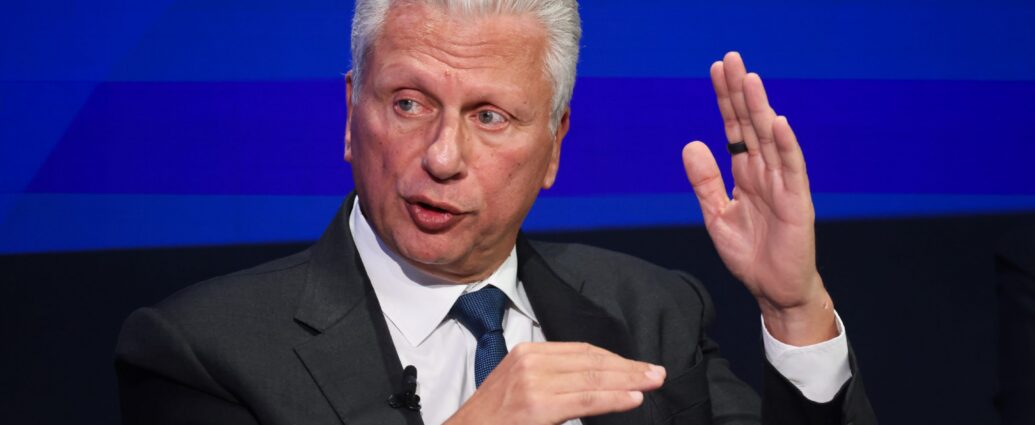
This post was originally published here

Hello and welcome to Eye on AI. In this edition:

  • AI’s X-risk breaks into the mainstream
  • Anthropic CEO Dario Amodei calls for a coordinated industry safety effort
  • Anthropic details attempts to misuse its AI models
  • China’s top spy warns AI could pose a risk to the Communist Party
  • OpenAI is violating California’s new AI safety law, watch dog group says.
  • Half of companies aren’t following their own AI governance policies, E&Y survey says.

In the past few days, I’ve heard a lot of people repeating that old saw—often wrongly attributed to Vladimir Lenin—about there being “weeks when decades happen.” It certainly seemed to be one of those weeks in AI. Concern about existential risk has been a strain of AI discourse for decades. But, despite occasionally making headlines when someone like Elon Musk, Sam Altman, or Geoffrey Hinton would express their fears about AI posing a grave risk to the species, it never really cemented itself in the general public’s consciousness in the way, say, climate change, or the risk of nuclear war, has. If politicians debated AI regulation at all, the discussions centered around data center construction and utility bills, jobs, education, mental health, algorithmic discrimination, and civil liberties, not the risk of rogue AI killing people—maybe even all the people. Until now, that is.

The drumbeat of dire warnings from employees resigning from—or in some cases still working for—Anthropic, OpenAI, and Google DeepMind, all saying that the leading AI companies are developing the technology recklessly and risking human extinction has dominated the global news cycle for an entire week (which is really saying something in this day and age.) AI company CEOs and politicians have been stirred to respond. After years in which both domestic AI regulation and efforts at some kind of international AI governance regime had mostly stalled, suddenly the air is electric with possibility.

My Fortune colleague Nick Lichtenberg had a good story on why the resignation jeremiad of former Anthropic and OpenAI safety researcher Jacob Coxon had such impact when previous warnings, often from much higher-profile individuals, did not. The short answer is that coverage of the Hugging Face incident and other “rogue AI” episodes as well as people’s own experiences using AI agents seems to have opened the Overton window on discussing “loss of control” dangers. The timing, with Anthropic on the verge of an IPO and OpenAI edging closer to one too, also no doubt played a role.

The question now is what happens next? Fortune editor-in-chief Alyson Shontell sat down with Altman on Friday to ask him those questions for her “Fortune 500: Titans & Disruptors of Industry” vodcast (we just call it “Titans” for short.) Altman said the company was in favor of coordinating an industry-wide slowdown in the pace of AI development with bitter rivals, including Anthropic CEO Dario Amodei and SpaceX CEO Elon Musk—two men with whom he has had acrimonious and, in the case of Musk, litigious disputes—as well as Google DeepMind, Meta, and perhaps others. He hinted that such discussions were already underway and that a coordinated slowdown might be announced soon. He also said that, if necessary, he would have no problem telling investors that OpenAI had taken actions to prioritize safety that had cost them financially—and that OpenAI’s investors were warned of this possibility going in. He also definitively said OpenAI would not go public this year, in part due to the current concerns about the safety of the latest AI models, but also, he hinted, because OpenAI’s business isn’t yet in the right place. You can check out the full vodcast episode here. It’s well worth your time to watch.

A coordinated slowdown?

After Alyson’s interview, Amodei put out a blog post also calling for a coordinated slowdown or pause among frontier labs in democratic countries. He said that in some cases, though, coordinating with other AI labs would require an antitrust exemption from the government. He also said that Anthropic would appoint independent evaluators to be permanently on-site at its offices to review its safety work. (He mentioned the nonprofit AI evaluation company METR as his preferred partner for this.) He also said that the U.S. and other democracies should try to strike some kind of international AI governance agreement with China and authoritarian states, if possible. Altman quickly came out and endorsed most of what Amodei said—in particular saying that OpenAI would also embed outside evaluators alongside its research teams—although he was careful to note that “pacing does not mean stopping.”

In the wake of Coxon’s warnings and Amodei’s call to action, a number of U.S. lawmakers introduced legislation or renewed efforts to push forward existing bills. Some, such as a bill introduced by Vermont independent Sen. Bernie Sanders, call for an outright ban on the development of “artificial superintelligence” and mandate that U.S. AI companies pause current research until safety techniques improve. Others, such as a bipartisan bill from Republican Sen. Ted Cruz, Senate Majority Leader John Thune, and Democratic Sen. Amy Klobuchar, would impose a duty on AI companies to prevent catastrophic harms. There were also calls for Congressional oversight hearings on AI’s catastrophic risks. Former President Barack Obama urged Democrats to put AI governance at the center of their legislative and campaign agenda. Meanwhile, a group of 70 U.K. parliamentarians signed an open letter calling for the British government to ban the creation of artificial superintelligence and work on an international AI treaty.

Trump pushes back

But there was strong pushback from some of the politicians that matter the most. President Trump posted to his Truth Social platform that the only guardrails AI needed “is a STRONG AND SMART (High IQ!) PRESIDENT, and the U.S.A. has that in spades!” He criticized Amodei by name, criticizing him for “pretending to be a ‘perfect little angel’” and said his administration had already stopped Anthropic from “doing bad, or potentially bad, ‘things.’” He said the U.S. already had regulatory power and criminal laws that applied to AI companies and that there was “a SICK conspiracy going on against AI and Data Centers, and the only one that is happy about it is China.” He made similar comments in a phone call to Nvidia CEO Jensen Huang that Huang, with Trump’s permission, broadcast to a live audience at an “All in Podcast” summit. This was followed up by the Republican Speaker of the House, Rep. Mike Johnson, saying that fear of AI was drummed up by the media and that “we’re not going to take stupid, knee-jerk reaction prescriptions on this.” Not to be outdone, Chinese state media also criticized Amodei’s proposals, saying they were “self-serving” and “Cold War tactics” designed to hobble China’s technological and economic rise.

With all of that, it seems the prospects for some kind of executive order mandating improved AI safety are poor. The same goes for any actual legislation, such as a bipartisan bill from Republican Sen. Ted Cruz, Senate Majority Leader John Thune, and Democratic Sen. Amy Klobuchar, that would impose a duty on AI companies to prevent catastrophic harms—at least until after the November midterms. Three points though that have come up in the discussion that are worth addressing.

Are antitrust concerns legit?

One is the debate about whether AI companies need an antitrust waiver to talk to one another about slowing development. Some, such as former Trump administration AI and crypto czar David Sacks, have said the AI companies don’t need such a waiver to coordinate a slowdown. And I agree that we should not grant a broad waiver to these tech giants. But I do think that there are legitimate concerns from the AI companies that any discussion of a pause—or of a coordinated decision not to undertake certain product innovations—could create antitrust issues.

Currently, each new generation of AI models tends to drive down the cost of existing, older models. So limiting the rollout of newer models would potentially keep prices higher for longer for consumers, which would seem to open the AI firms up to antitrust claims. (Matt Levine at Bloomberg had a good column on this.) Also, some of the specific innovations that worry AI safety experts, such as greater use of looped Transformers, also happen to have the benefit of using fewer tokens than forcing a model to spit out its complete reasoning trace in its “chain of thought.” This too has the effect of potentially lowering costs for consumers. So prohibiting this technique on safety grounds would also tend to result in higher prices for customers. Again, that looks problematic from an antitrust perspective. For what it’s worth, Chris Lehane, OpenAI’s chief global affairs officer, has come out and said OpenAI doesn’t think it needs an antitrust waiver to discuss shared safety standards with the other AI companies. He also said that there have already been discussions with Anthropic and Google DeepMind on safety standards. But the issue may be that these standards are voluntary, with no mechanism to compel compliance if one company cheats on its commitments. Enforcing the standards would presumably require government action.

Is product liability law enough?

In an example of the strange bedfellows this issue has created, Sacks and former Biden administration FTC head Lina Khan have both said that existing product liability laws could be used to prevent AI companies from releasing unsafe products. Sacks in particular has said that these laws are the reason no new government agency is needed to police AI companies. But there are two problems here. One is that product liability laws generally only apply to products that are sold to customers. Some of the biggest concerns with AI risks lately—as was the case in the Hugging Face incident—have involved unreleased, internal models that were undergoing development or were only deployed inside the AI companies themselves. Product liability law would not cover these internal models.

What’s more, while the fear of liability lawsuits might deter unsafe behavior by AI companies, it might not—and if it doesn’t, suing the companies after the fact is not ideal. This is especially true if the risks are actually existential ones, such as engineering a bioweapon. Suing won’t help us if we’re dead. But even if the risks are merely bad—like hacking into a single financial institution or hospital, manipulating the stock market, or taking out an electrical grid—suing a company after the fact won’t really provide the outcome society wants. Better to prevent these things from happening in the first place. That’s why we do have agencies that police systemically important financial institutions, regulate air travel, ensure power that grids adhere to certain standards, etc.

What about ‘regulatory capture?’

Finally, Sacks and others, including some on the more libertarian left as well as some of the CEOs of AI companies that are slightly behind the frontier, have attacked the proposal for a coordinated pause and agreement on safety standards as an attempt at “regulatory capture.” The claim is that these companies will write the rules in such a way that their leadership position at the front of the AI race gets locked in. I am not denying that this could happen. But it also seems that there are ways to prevent this from happening. Accelerationists like Sacks act as if all regulation results in regulatory capture. But, as I mentioned in a previous newsletter, UC Berkeley AI researcher Stuart Russell likes to quip that there are more mandatory requirements for sandwich shops in San Francisco than there are on OpenAI or Anthropic. And you don’t see too many restaurateurs complaining about regulatory capture. It is simply not the case that mandatory safety rules always result in regulatory capture.

I would also argue that a certain degree of regulatory friction that happens to privilege incumbent players is a price worth paying for a safe industry in cases where failure poses significant risks to human life or physical and financial health. In fact, the industries that pose the greatest potential risks of mass casualty events tend to have fewer players in them, and yes, the burden of regulatory compliance is one of the reasons. But I think this is a tradeoff the public actually thinks is worth the fact that it may also mean they pay slightly more for certain things. There are only a handful of companies around the world that design and build nuclear power plants, for example; only a handful that make commercial aircraft, too. But these also happen to be some of the safest industries out there in terms of their actual operational records. Would there be more players in these industries if there were fewer government safety rules and inspection regimes? Almost certainly. But is the public screaming about regulatory capture and asking for safety standards on nuclear power plants and aircraft to be relaxed? 

With that, here’s more AI news.

Jeremy Kahn
jeremy.kahn@fortune.com
@jeremyakahn

Before we get to the news, just a reminder to check out this week’s episode of our new vodcast Fortune AI Weekly. This week, Bea Nolan and I talk to Substack cofounder and CEO Chris Best about his decision to add an AI writing detection feature to the platform. We also talk about AI doomerism going mainstream and the controversy over OpenAI’s Navier-Stokes mathematical breakthrough. You can check out the vod here on YouTube.

Also, come join me at the Fortune AIQ Summit at the New York Stock Exchange on October 1! We’ll join C-suite leaders Bank of America, Booking Holdings, Citi, Ecolab, Elevance Health, United Healthcare, S&P Global, and more to hear about how they are using AI to deliver the growth, innovation, and transformation that is putting them at the top of their respective industries. It promises to be an afternoon of eye-opening insights and inspiration. You can register to attend here

This story was originally featured on Fortune.com

This post was originally published here

At a Walmart Supercenter in North Bergen, New Jersey, just across the Hudson River from Manhattan, Victor Lopez, 21, tapped the screen of his work-issued smartphone. Under a field labeled “Enter new price,” he punched in $10 for a bottle of barbeque sauce.

If it had worked, Lopez, a team leader, would have almost tripled the price of the item with a click of a button. But it didn’t, and that’s not due to some human or technical error. It was the whole point of the demonstration: to show that store associates are not able to use electronic shelf labels (ESLs) to raise prices arbitrarily. 

“We cannot take prices up in the store,” Kyle Boyd, store manager of the supercenter, where about 90% of tags have been replaced with ESLs, told Retail Brew during a tour of the facility last month. “We can only take prices down in the store.”

The willingness to promote some pricing practices—as well as touting what it is characterizing as a technical stopgap in place to prevent price hikes at the store level—comes as Walmart faces political pushback that could determine the future of electronic shelf labels.

With lawmakers increasingly tying the technology to controversial pricing practices, the retail giant is making the case that ESLs won’t fundamentally change how prices are set.

Using or abusing: In July, New Jersey Governor Mikie Sherrill signed the Fair Price Protection Act into law to protect consumers from “discriminatory surveillance pricing”—which it defines as using personal data to set prices t —and placing a one-year moratorium on new ESLs while the state studies the effects of the tech.

Critics of the legislation argue that digital price tags are simply a tool for saving time and cutting costs, while supporters of the law argue they make it easier for retailers to manipulate and raise prices.

This debate is now playing out on a national level. Maryland passed a similar law earlier this year, and legislation is pending in several other states. A recent report from the Groundwork Collaborative, Consumer Reports, and More Perfect Union also claimed that Instacart’s AI pricing tool offers individualized prices on the same items.

In response, companies and industry groups are eager to distance ESLs from unpopular pricing practices like surveillance pricing, dynamic pricing, and other labels such as surge pricing, which conjure images of skyrocketing airline or concert tickets.

“Electronic shelf labels are not tools for surge pricing, but rather tools for efficiency and affordability,” Macy Lemon, vice president of state government affairs at the National Grocers Association, said in a statement urging Governor Sherrill to make changes to the New Jersey law before it was signed due to concerns it would make it harder for stores to offer affordable groceries to consumers.

On the opposite end of the spectrum, Ademola Oyefeso, international vice president of the United Food and Commercial Workers (UFCW) International Union, told Retail Brew it’s not a matter of if, but when, companies start using the technology to engage in dynamic pricing.

“A retailer may not be doing it right now, but they are laying the groundwork for it,” he said.

Now the union wants a full ban on ESLs, which it sees as a “tool for price-gouging and job loss,” Oyefeso said. He pointed to the recent example of Norway, where a number of grocery chains engaged in rapid repricing on a daily basis after installing digital tags.

For an industry that seemed ready for widespread adoption, the legislative pushback could have serious implications for the future of the technology. Walmart committed to rolling out ESLs across its entire US footprint of 2,300 locations by the end of the year. Kroger added the tech to a number of stores across the country, and Whole Foods is testing out digital tags at nearly 50 stores.

The struggle for retailers now is convincing consumers and lawmakers that digital labels won’t open the door to problematic pricing practices.

Will they or won’t they? “DSLs operate on a closed system and do not interact with shoppers or collect any information about them,” Robyn Babbitt, director of corporate communications at Walmart, said in an email to Retail Brew. “There is nothing like a camera or microphone in them; they just display prices”

The legislation is an “overreaction,” she added.

When there is an increase to the base price of a product, as opposed to a rollback or promotion, it’s happening at the corporate level and usually outside of regular shopping hours—not spontaneously while customers are walking around the store, Babbitt said.

“They’re centrally controlled through our pricing team,” she said during the tour of the supercenter in North Bergen, adding that human beings remain in control of all pricing actions.

While working closely with retailers on their merchandising and promotional strategies, Asa Farquhar, strategic principal of price and promotion at RELEX, a retail planning platform, said he is not see this technology being used for dynamic pricing among his retail clients.

Instead, he sees them being used to reduce errors and optimize price adjustments that were happening anyway. “I have never seen them talking about how we can use these tools to get a leg up on customers,” he said.

Theoretically, however, the technology could make it easier for retailers to price more dynamically, Farquhar explained, and for that to result in “any number of negative pricing scenarios.”

For Farquhar, though, this is not a guarantee of bad practices.

“If a price can be changed faster, easier, and with less expense, I think it’s fair to say that could lead to retailers being willing to change prices more often,” he said. “But I think it’s a stretch to say just because a price could change more often or is executed more operationally efficiently that we would see any kind of nefarious strategies around that.”

This report was originally published by Retail Brew.

This story was originally featured on Fortune.com
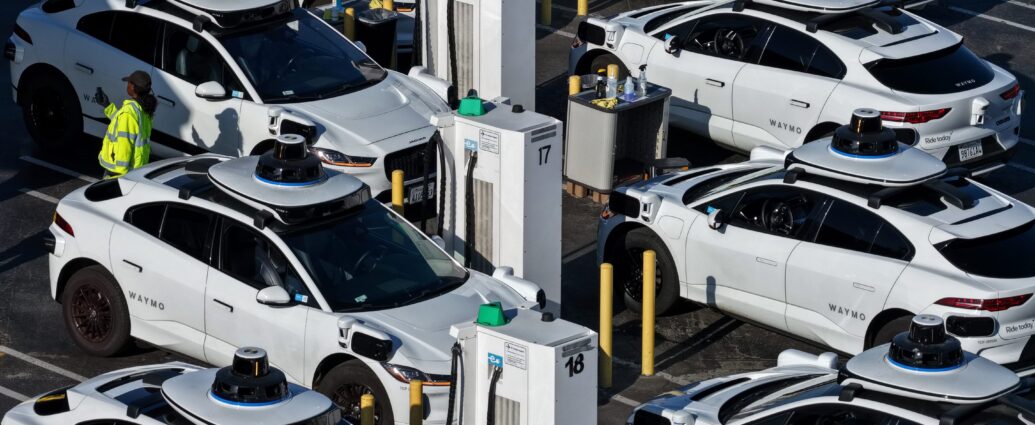
This post was originally published here

Former Palantir engineer-turned New York state Assemblymember Alex Bores knows Americans want AI regulation. He co-authored the RAISE Act, New York’s frontier AI safety law. He ran this year for Rep. Jerry Nadler’s open congressional seat on that platform, even as many of his donors came from within the AI industry. But that didn’t stop Leading the Future, a super PAC funded in part by OpenAI president Greg Brockman and Andreessen Horowitz, from spending more than $7.6 million against him over that law. Public First Action, with $20 million from Anthropic, spent on the race in Bores’ corner. Total outside money in the race topped $40 million, the most expensive House primary of the cycle. Bores still lost.

That loss helped lead to Who Decides, the nonprofit Bores launched on Tuesday with his former chief of staff, Anna Myers. So far, it has raised $10 million and aims to raise $20 million more in 2027, for a $30 million total ahead of 2028. Bores intends the nonprofit to unite the AI advocacy organizations Democrats already trust, help them build out their own agendas rather than hand them one, and establish “a shared floor of an agenda on things that we all want to see good done.”

“Give the American people a say in how AI develops,” Bores told Fortune. “Most voters have an answer key in their head for every question that they ask” on issues like Medicare or the Green New Deal. But with AI, Bores said, even the messaging lives in this gray area. “We’re in this limited time where it’s not even just the answers that are up for grabs, but even the questions that are being asked are up for grabs.”

The RAISE Act, which New York Gov. Kathy Hochul passed into law late last year following a tenuous time in Albany, necessitated a coalition of 55 organizations, filled with different stakeholders from AI policy to chatbots in school. That wasn’t the case for those against the act. “The opposition was always the same. It was a small subset of Silicon Valley that thinks there should be no regulation on AI whatsoever.”

That’s part of what drove Bores to create Who Decides. The group isn’t trying to outspend Leading the Future or Build American AI—Bores said he wishes he had the resources. Instead, it’s targeting 11 battleground states through organizations already active there. Outreach accelerated after Jacob Coxon’s resignation from Anthropic last week. “The seven major presidential candidates since my election, the 16 Congress members since last week,” Bores said of Coxon’s resignation. So far everyone who’s reached out has been a Democrat, though Bores said he’s open ears for anyone, regardless of political ideology.

Weak laws and weaker willpower

A recent Gallup poll found the majority of Americans, 56% to 58%, want stricter gun laws, while measures like background checks has close to 90% support in both parties, per Pew. And despite this finding, which has coexisted for decades, Congress rarely acts, something usually blamed on lobbying outspending a diffuse majority. AI seems to follow the same trajectory.

“The basics of this issue, while the urgency has changed a lot in the past week, the basics have not, which is that 80% of Americans want there to be more regulation on AI, and that’s across parties,” he said. Independent polling this year puts the figure somewhat lower but still in the same direction: a February–March 2026 Annenberg Public Policy Center survey found 65% of Americans say the government has done “too little” to regulate AI, including majorities of Democrats (77%), independents (72%), and Republicans (53%).

Public sentiment gets grayer when you look at one of the most prominent faces within the AI industry. In May 2023, OpenAI’s Sam Altman asked to be regulated when he testified before the Senate Judiciary Committee. But by May 2025, he reversed course, telling the Senate Commerce Committee that requiring government approval would be “disastrous.” Anthropic’s Dario Amodei held the pro-regulation position throughout, even as Anthropic-linked money flowed into the same political fights.

Regardless of what stances people have at first and ultimately land on, Bores said while industry figures keep landing on the same conclusion, a narrower set of financiers spend to stop it. “So many of the mega donors who are pushing for there to be no regulation whatsoever are Republican mega donors,” he said, naming Marc Andreessen and Elon Musk.

One can argue that’s what happened to his RAISE Act—what passed was a watered version that didn’t survive that same money intact: third-party audits and whistleblower protections were stripped before it passed. But still, that hasn’t changed Bores’ view of it: “The RAISE Act was, arguably still is, the strongest AI safety bill in the country,” he said, though he expects Illinois and Massachusetts to surpass it soon.

Avoid the circular firing squad

In 2025, Sen. Ted Cruz inserted language into the “One Big Beautiful Bill” that would have barred every state from enforcing any AI law for 10 years. Seventeen Republican governors asked for it to be stripped, before the Senate voted 99–1 to remove it.

Cruz is now co-sponsoring a new federal AI safety bill with Sen. Amy Klobuchar and Majority Leader John Thune, built around safety testing and incident reporting. It may be D.C.’s most likely AI bill to pass yet, but if you read between the lines, it’s essentially Cruz’s old bill wrapped in federal packaging (and it comes with the very real possibility of removing all state AI bills with it). “Spot on,” he told Fortune about that reading. “It’s people trying to use this momentum and this crisis to shut down the real power people have to regulate.”

Despite the external politics playing on Capitol Hill, Bores also acknowledged the Democratic party has a less than stellar track record on getting messaging right. Often it’s because advocates who agree keep splitting the difference into separate fights. “Democrats are very passionate about making a difference, and that passion is usually well placed,” he said, “but that occasionally gets misdirected into turning into a circular firing squad and saying, no, my sub-issue is more important than your sub-issue.”

His case? “The people who are opposing almost every issue in AI are the same people… we should be sitting at the same table.”

This story was originally featured on Fortune.com

This post was originally published here

If you’ve ever wanted to get your MBA—this is a great week to get started on the journey, in part thanks to the release of Fortune’s latest ranking of the best MBA programs for 2025

The highly competitive ranking process saw that many of the top schools retain their clout—with Harvard Business School, University of Chicago (Booth), and Northwestern University (Kellogg) landing the coveted top three spots, respectively.

School 2021–22 rank 2022–23 rank 2023–24 rank 2025 rank
Harvard Business School 1 1 1 1
University of Chicago (Booth) 4 2 7 2
Northwestern University (Kellogg) 5 3 5 3
University of Pennsylvania (Wharton) 3 4 3 4
Columbia Business School 6 6 6 5
The top 5 MBA programs in the U.S.

But there’s much more to meet the eye than the initial data shows. Each program is unique, and for many students, any ranking is just part of the decision-making process to figure out where is best for their own education and career goals.

Fortune used nearly a dozen different data points to gauge 98 MBA programs across the country. For context, these are the averages among all the programs:

Metric Average
Approximate tuition per year, out-of-state U.S. residents $52,650
Acceptance rate, fall 2023 49%
Median GMAT score, fall 2023 entrants 665
Yield, 2023–24 45
Average undergraduate GPA, 2023–24 entrants 3.45
Graduation rate, 2020–23 93%
Retention rate, 2022–23 94%
Job placement rate (3 mo. after graduation) 84%
Median base salary (3 mo. after graduation) $118,000
Fortune 1000 score 8
Average data points among the MBA programs ranked by Fortune

What makes the best MBA programs the best?

Holistically-speaking, the best MBA program prepares students for the business world of today and tomorrow through a modern lens. Students become the best at problem solving, critical thinking, and making data-driven decisions. Having an industry-experienced faculty and a constantly-evolving curriculum are paramount.

Looking more quantitatively, the best programs are highly sought after, and thus students enter with competitive application materials, including multiple years of professional work experience, decent undergraduate GPA, and high GMAT or GRE scores. Because of the growing costs of higher education, Fortune also weighs high tuition negatively. Once in the program, exceptional retention and graduation rates are key. Finally, after graduation, success is indicated by the ability to land jobs with high-paying salaries.

The M7 schools often check all of these boxes. Take Northwestern University (Kellogg), for example. Entrants had median GMAT scores of 740 and average undergraduate GPAs of 3.7. Retention and graduation rates are both above 99%. Three months post-grad, about 92% of students seeking a job were able to land one—with median salaries of $175,000.

Fortune also heavily factors unique data from our lists of the biggest companies in the country.

This in part has helped some programs soar in the ranking. Washington University in St. Louis (Olin) is a glaring example. The school’s MBA program is the alma mater to 19 Fortune 1000 CEOs and CFOs.

“I’m proud of the momentum here at Olin and honestly not surprised that an outsized share of our students make it to the C-Suite. At Olin, we’re a tight-knit, hyper-connected community: We have the unique ability to provide a truly individualized educational experience,” Mike Mazzeo, dean of the Olin Business School, tells Fortune.

The school’s faculty, alumni network, and regional business community contribute heavily to students’ success at Olin, he adds.

“Students choose Olin because they know our approach makes them ready on day 1 and poised for career 6,” Mazzeo says.

WashU experienced the biggest jump of any school this year, rising 18 spots to No. 21.

Sleeper MBA programs with stories to tell

Experts will remind candidates to not forget to look at programs that typically fall outside of the top of the top in the rankings since they often have very similar statistics in terms of outcomes, but may be slightly less competitive and expensive.

Take, for example, the University of Texas–Austin (McCombs). Fortune deemed them to be the No. 12 best MBA program (an increase of five positions from last year). The cost of tuition per year is about $60,000—which is nearly $20,000 cheaper than many of the top 20 programs. And guess what, their students have almost identical job land rate and salary outcomes as the M7.

Georgia Tech (Scheller), the No. 19 best MBA program, has a similar story to tell. Graduates typically see median annual salaries of $165,000, and the tuition is just $42,790 per year. Plus, the school does not require students to submit GMAT/GRE scores to apply.

One of the universities that may be an even greater bang-for-your buck—as long as you are willing to live in Utah—is Brigham Young University. The school was ranked No. 37 for 2025, but the tuition per year for students is only about $15,500. That’s significant especially considering graduates leave the program with about $120,000 in median base salary.

The 5 cheapest MBA programs

School 2025 rank Approximate tuition per year, out of state U.S. residents
Louisiana Tech University 85 $9,537
Missouri State University 97 $13,608
Brigham Young University (Marriott) 37 $15,528
Indiana State University (Scott) 60 $16,362
Troy University (Sorrell) 65 $17,100
The 5 cheapest MBA programs

The 5 easiest top MBA programs to get into

If you’re looking to go to a top MBA program, but are worried about getting accepted, then the percentage of applicants receiving an offer is likely top of your mind. Among the top 25 programs, the University of Washington (Foster) has the highest acceptance rate.

School 2025 rank Acceptance rate
University of Washington (Foster) 25 41.60%
UCLA (Anderson) 23 40.42%
Vanderbilt University (Owen) 20 40.00%
Dartmouth College (Tuck) 13 40.00%
University of Virginia (Darden) 11 39.40%
The 5 easiest top MBA programs to get into

How does the ranking actually work?

We will be the first to say that the rankings world is not perfect. Each year, schools will be happy if they rose, and frustrated if they declined. However, we hope to just provide applicants a glimpse into how schools compare to each other with metrics we feel best measure success.

Pro tip

Our methodology page dives deeper into each factor we used in our ranking as well as the percentage weighting. It also features part of our conversations with our expert panel, who help guide us in the initial stages.

Fortune’s ranking is based on an opt-in process, meaning only schools that respond to Fortune’s invitation and submit a response to our data questionnaire have the ability to be included. This is done in order to judge programs with the most consistent and across-the-board data metrics. While many schools release data about their applicants and graduates, specifics often differ from school to school. 

Fortune reached out to more than 200 schools this year, and close to 100 chose to participate. Some schools that typically appear on Fortune’s rankings, such as Georgetown University and Babson College, decided to not participate this time. We hope to see them back next year.

There were also several new-comers to our list this year, including University of Georgia (Terry), San Jose University State University (Lucas), and Troy University (Sorrell). 

With a revised methodology as well as different schools, there is bound for ranking change. The biggest ranking risers were:

  • Washington University in St. Louis (Olin): No. 21 (+18)
  • University of Tennessee-Knoxville (Haslam): No. 36 (+16)
  • Southern Methodist University (Cox): No. 30 (+13)
  • University of Massachusetts–Amherst (Isenberg): No. 41 (+13)

The biggest decreases were:

  • Indiana State University (Scott): No. 60 (-35)
  • University of San Diego (Knauss): No. 87 (-29)
  • CUNY Bernard M. Baruch College (Zicklin): No. 76 (-29)
  • University of Denver (Daniels): No. 83 (-28)

However, ultimately, while ranking can be important, it is not an end-all-be-all assessment of one school. It should merely present prospective candidates a general idea of the level of prestige one school may be on par with—and where they might take their career.

Harvard Business School declined to comment for this piece.


Check out all of Fortune’s rankings of degree programs, and learn more about specific career paths.

This story was originally featured on Fortune.com

This post was originally published here

In March, shortly after the Supreme Court struck down President Donald Trump’s International Emergency Economic Powers Act (IEEPA) tariffs and paved the way for $100 billion in import taxes being redistributed back to American importers, U.S. Trade Representative Jamieson Greer shared his idea of what these companies should do with this influx of cash.

“If I were these companies, and somehow they get this windfall, the most important thing and the smartest thing they should do is give it as bonuses to their workers,” Greer told CNBC.

It appears some companies have heeded Greer’s suggestion. As businesses receive more than $100 billion the U.S. Treasury has doled out in refunds since May, many are vowing to lower prices or pay down debts. A handful, however, are giving the cash back to their employees. 

In its second quarter earnings report last month, houseware brand Williams Sonoma said it would allocate $10 million for one-time payments to 401(k) accounts to eligible employees  “in recognition of their efforts navigating the IEEPA tariffs.”

“We’re so appreciative to have the money back and to be able to reward our employees with part of it,” President and CEO Laura Alber said on an earnings call. “They have done such an amazing job.”

TJX, which received $331 million total in tariff refunds, will similarly put a portion of its aggregated refunds into paying employees extra.

“Due to these tariff refunds, the company accrued incremental expenses of $112 million for year-end incentive compensation and discretionary bonuses for eligible associates globally,” a spokesperson told Fortune in a statement.

American companies and consumers alike have kept a close eye on the tariff refund process, particularly after Federal Reserve research showed they were the ones shouldering the brunt of the tariff costs. While companies like Walmart and FedEx have promised to compensate consumers for tariff-related inflation through lower prices or direct rebates, the unconventional decision to hand employees cash from tariff refunds indicates just what a pervasive impact the import taxes had on U.S. companies.

“Companies have a lot of different margins for how they adjust to tariffs,” Alex Durante, senior economist at the Tax Foundation, told Fortune. “They could pass all of it along to consumers, they could also reduce investment, they could reduce hiring, they could cut back on certain employer perks and forms of compensation, if they wish. And I think that this is just perhaps another way of thinking about that.”

How U.S. employees have been impacted by tariffs

Greer’s rationale for giving workers a portion of the tariff refunds goes back to one of Trump’s initial motivations for implementing levies in the first place: to bring back manufacturing jobs to the U.S.

“The whole reason the president imposed these tariffs was to try to reshore, affect our massive imbalance in trade that we’ve experienced over many years because of China, Vietnam, the EU and others,” Greer said. “If the companies are going to get this windfall, they should pass it along to their workers as a bonus or a raise, because that’s the purpose of the program.”

It appears the tariffs had the opposite effect in reshoring, with manufacturing jobs in the U.S. actually shrinking by more than 100,000 during the first year of Trump’s second term. Laura Ullrich, director of economic research at the Indeed Hiring Lab, previously told Fortune tariffs and the uncertainty surrounding maintaining supply chains, could be a reason for this dip.

“Oftentimes when there is heightened uncertainty, it’s just difficult for businesses and people to make decisions in real time,” she said. “And so that slows down employment. It slows down all those processes.”

In addition to hiring constraints, tariffs may have also suppressed wage growth, according to Pantheon Macroeconomics analysts Samuel Tombs and Oliver Allen, who argued companies slashed raises in order to maintain or take back margins when the IEEPA tariffs were in place. It’s one reason why companies may feel compelled to give workers back some cash from the duties, the Tax Foundation’s Durante suggested.

Instead of lowering prices or offering refunds to consumers amid ongoing tariff uncertainty, “what are some better ways we can retain our employees and incentivize them to want to stay with us or to want to want to work for us?” he said.

Tariffs, after all, have likely had an impact on workers’ retirement plans, at least indirectly. Though markets have recovered from Trump’s previous threats to impose sweeping import taxes, economists have found evidence tariffs will have longer-term reductions in stock prices, from about 7.33% to 10.13% across indices within the next couple of years. Lower stock prices means fewer returns for employees with retirement money in the markets.

“It is the case, absolutely, that tariffs do impact capital, and thus the equity markets,” Durante said.

This story was originally featured on Fortune.com

This post was originally published here

The U.S. has one of the highest maternal mortality rates among wealthy nations, research shows, so heirs of the multibillion Walmart fortune are working to drastically lower it. 

On Thursday, Healthy Moms, Healthy Babies America (HMHBA) announced an initial $100 million, five-year commitment from Olivia and Tom Walton to accelerate efforts to cut maternal deaths in half across the U.S. However, the investment will fund state-matching grants, partnerships, and infrastructure, so HMHBA will use the multimillion-dollar gift as a springboard to drive more public and private capital. 

Olivia Walton founded HMHBA in May to cut maternal mortality rates in half over the next five years. She launched the campaign through the Walton family’s Heartland Forward, a “think and do” tank dedicated to issues in the U.S. Heartland region. Walton made the mission personal.

“It was more dangerous for me to give birth to my children than it was for my mother to give birth to me in the 1980s,” she said in a statement. “That is inexcusable—and it is fixable.”

She argues the solutions to maternal mortality already exist; it’s just a matter of getting resources to more mothers. This includes getting them into care earlier, extending postpartum support beyond a six-week checkup, and building care around what families actually need. 

“Nearly 90 percent of maternal deaths are preventable,” Walton continued. “We know what works, and states across the country are already proving it.”

Maternal mortality in the U.S.

Even after a decline in 2023, the U.S. maternal mortality rate sat at nearly 19 deaths per 100,000 live births, which is higher than most other high-income countries. That year, 669 women died of maternal causes, according to the Centers for Disease Control and Prevention.

The risk isn’t evenly spread. For Black women, the rate was 50.3 deaths per 100,000 live births, more than three times the rate for white women. Two-thirds of maternal deaths happen in the year after birth, HMHBA notes, and 40% of mothers don’t receive follow-up care. Rural mothers also face worse odds as hospitals keep closing obstetric units. 

“The U.S. spends more money for worse outcomes on maternal health. Far more than any other country in the entire world,” HMHBA Executive Director Robin Reck said in a statement. “Eighty-seven percent of these deaths are preventable, and 65% of them happen after the baby is born. That is unacceptable. And it is un-American.”

Maternal mortality is also costly. Poor health outcomes in 2020 cost the U.S. economy an estimated $165 billion, according to a Heartland Forward study. So preventing just half of those avoidable outcomes would save nearly $80 billion per year. For example, a healthy, full-term delivery costs about $6,400, while an extreme preterm birth can cost $238,000. March of Dimes also found first-year medical costs run roughly four times higher for preterm infants than for full-term ones.

About Olivia and Tom Walton’s philanthropy

Tom Walton is the grandson of Walmart founder Sam Walton, and the family’s roughly 44% stake in the No. 2 Fortune 500 company is worth about $440 billion, Fortune’s former senior reporter Jessica Matthews reported earlier this year. 

The collective scale of the family’s philanthropy also puts them in the same boat as legendary American dynasties including the Carnegies, the Rockefellers, and the Vanderbilts, she reported. Most of the family’s giving flows through the Walton Family Foundation, which Sam and Helen Walton started in 1987. In 2024 alone, the foundation awarded nearly $550 million in grants. The Walton Family Foundation’s prime focus areas include the environment, education, and other causes in Northwest Arkansas.

Tom sits on the Walton Family Foundation’s four-member board, and Olivia (who married into the Walton family) focuses mostly on the arts and women’s causes. She succeeded Alice Walton (the only daughter of Sam and Helen Walton) as the chair of the Crystal Bridges Museum of American Art in Bentonville, and she founded Ingeborg Investments, which funds female startup founders. In 2021, she and Tom also helped seed a $1 million fund supporting LGBTQ+ groups in Arkansas, which was a notable move in a conservative state.

A bipartisan bet

Olivia and Tom’s latest $100 million commitment is a campaign betting maternal health is one of the few issues that can still draw bipartisan support. 

A national poll of more than 1,000 registered and likely voters released in July found 86% of voters say maternal health needs to improve, and 79% would vote for a candidate who champions such reforms. All 15 policy proposals the poll tested drew majority support from Republicans, Democrats, and independents.

Meanwhile, HMHBA is backing two bipartisan bills, the first being the Rural Obstetrics Readiness Act, which is sponsored by Sens. Maggie Hassan (D-N.H.), Susan Collins (R-Maine), Katie Britt (R-Ala.), and Tina Smith (D-Minn.). This would fund training, equipment, and teleconsultation so rural facilities without obstetricians can handle delivery emergencies. It cleared the Senate health committee in July and now awaits a floor vote. 

The second bill, the NIH IMPROVE Act—led in the Senate by Britt and Sen. Cory Booker (D-N.J.)—would authorize seven years of funding for the National Institutes of Health’s maternal-health research initiative.

“America should be the safest place in the world to have a baby,” Olivia Walton said in a statement. “We have the evidence and we have the solutions. Now we need the urgency and investment to make them available to every mom, across the country.”

This story was originally featured on Fortune.com

This post was originally published here

America’s most popular sport is back—and the NFL just set a new record in its opening week: it was the highest-scoring Sunday in week one ever. But the average viewer would have to jump through hoops to have seen all those touchdowns—it takes subscription after subscription to catch kickoff.

The NFL is running into a shrinkflation problem—the league is downsizing the amount of games available in individual packages even as costs climb for fans. And attending a game in-person hasn’t gotten any cheaper either. The country has seen five straight years of inflation above 2%, and that has translated into bouts of shrinkflation in response.

For example, take a look at NFL Sunday Ticket, the league’s out-of-market Sunday afternoon package that has been an option for fans to watch since 1994—allowing fans to catch games outside of their local teams. It originally was an exclusive partnership with DirecTV, with the satellite company losing the rights for the service at the end of the 2022 season—leaving the program in the hands of YouTubeTV since the 2023 season.

NFL’s Sunday Ticket carried 191 games in the 2025 season, a decline from 211 in 2021 during DirecTV’s tenure—and while the 2026 season boasts roughly 200 games, it’s still under that 2021 total. The reason? The league expanded game time across a Thursday, Friday, Sunday and Monday night slate—and it doesn’t include international and holiday games. What used to be a once-a-week-on-Sunday couch marathon has turned into fans tuning in day after day, and the package doesn’t include the games outside of 1:00 PM and 4:00 PM on Sundays.

And to add insult to injury for football fans, the Sunday Ticket has been inching up in price point. YouTubeTV subscribers are paying $378 for the season, compared to $293.94 under DirecTV—a 28.6% increase. The price can even reach $480 for customers who don’t qualify for the subscriber rate. According to YouTube’s current promotional offer, new customers can get Sunday Ticket in eight payments of $47.25—and will require a separate YouTubeTV plan for local and national games.

YouTube and DirecTV did not immediately respond to a request for comment from Fortune.

That’s just the state of American sports

But this isn’t just a problem related to 6-foot giants in gladiator-esque helmets and cleats. Across the American sports ecosystem, costs have climbed for the consumer: according to a June data report from CreditKarma, more than a third of sports fans have spent more than they had budgeted for on sports fandom. Additionally, the data also found nearly three-quarters of fans who spend on their fandom said higher prices have led many to buy less merchandise and attend fewer games—essentially pricing them out: the report found 10% of fans had dropped one or more sports entirely due to the cost. 

There is an economic boost, to be sure—31% of sports fans that lived in a city that hosted sports events said it provided a positive economic boost for their communities and local businesses. The study, conducted after an “exciting stretch” of sports in America following the New York Knicks ending a 53-year title drought and the FIFA World Cup being hosted on home soil, said nearly half of sports fans would “find a way” to attend a championship event involving their team “no matter what.”

This was particularly evident in the Knicks’ 2026 championship run, where the cheapest ticket for Madison Square Garden seats in the NBA Finals ran fans roughly $4,000, leading some New Yorkers to go for the cheaper option: flying to Texas to catch games on San Antonio’s home turf.

America’s favorite game

The NFL has become one of the most valuable and watched properties in American television—and streaming. The 2025 regular season averaged 18.7 million viewers per game across both television and digital platforms, a 10% increase from 2024 and the second-highest average since Nielsen began tracking NFL audiences in 1988. Of the highest viewed telecasts, NBC’s Sunday Night Football averaged 23.5 million viewers, CBS averaged 21.25 million, Fox averaged 19.63 million and ESPN/ABC’s Monday Night Football averaged 15.8 million.

That popularity gives the NFL leverage to divide its inventory of games among broadcasters and streaming services. The league is selling its games in distribution—allowing multiple platforms to host separate games in competition, while the league gets the draw.

CBS carries Sunday afternoon AFC games and Fox has the NFC package. NBC holds Sunday Night Football, ESPN and ABC casts Monday Night Football, Amazon Prime Video has exclusive rights to Thursday Night Football and Netflix has exclusive rights to certain Christmas Day games. Peacock also has an exclusive regular season game slate and YouTube handles Sunday Ticket.

This means for fans who want to follow football past their local team, the fragmentation might lead them opening accounts for multiple platforms—and their wallets. A cord-cutter trying to follow the NFL nationally would need access to live-television coverage for broadcast networks, Paramount+ for CBS games, Fox One for Fox games, Peacock for NBC’s streaming inventory, Amazon Prime Video, Netflix and ESPN. That’s not including the Sunday Ticket package from YouTubeTV.

Estimates calculated by the New York Times put the cost of watching the NFL’s nationally televised games at roughly $484 before adding the cost of NFL Sunday Ticket.

That’s just watching from home—going to a game is is worse

The cost of attending an NFL game hasn’t seen any less jump either. Team Marketing Report’s Fan Cost Index, which tracks the cost of taking a family to a game, found in its 2024 report that the average NFL ticket had risen 12.2% to $136.38.

The report also found that the average cost of attending a game rose again in 2025 to $196, making it a 72% jump since 2015. That increase substantially outpaced the 36.5% increase in overall US consumer prices over the same period.

But that’s all part of the NFL’s draw. Demand hasn’t disappeared for the sport—and according to a report from the Sports Business Journal, the league’s stadiums remained the most heavily attended venues in American sports. And the league isn’t satisfied with just the American market—it’s expanding into the international spotlight.

This story was originally featured on Fortune.com

This post was originally published here

Baton, a marketplace for buying and selling small businesses, has publicly posted valuations and local competitor rankings for two million small businesses across the country: a bid to do for Main Street what Zillow did for the housing market a decade ago.

The launch, called Business Profiles, comes from a company literally built by a former Zillow executive. Chat Joglekar, Baton’s co-founder and CEO, spent years at Zillow before starting Baton, and he’s explicit that he’s running the same playbook: publish a free, public number, and let curiosity do the rest.

“Our biggest competitor isn’t someone else trying to sell small businesses,” Joglekar said. “It’s the small business owner who hasn’t considered selling and thinks the only option is to shut their business down.”

In an interview with Fortune, Joglekar argued the real obstacle isn’t rival marketplaces or traditional brokers, it’s that most owners don’t know Baton exists at all. “Awareness is our biggest competition, not other competitors,” he said. “It’s almost frustrating that millions of small business owners still aren’t aware of us. That’s why we’re so excited about Business Profiles.”

The stakes behind that framing are large. Roughly 41% of the country’s small businesses are owned by baby boomers, or about 2.3 million companies, employing more than 25 million people and holding an estimated $10 trillion in assets. More than half of those owners have no documented plan for what happens next. McKinsey projects some six million small-business transitions are coming by 2035, representing up to $5 trillion in enterprise value. The firm’s data found that fewer than one in three owners has an exit plan, and fewer than one in 10 can name their company’s value within 10% of what it’s actually worth.

McKinsey’s Institute for Economic Mobility found that of the roughly 510,000 small and midsize businesses that exited the market in 2022, 92% simply closed, compared with just 5% that were sold and 3% that transferred to new owners, often within a family. That’s the number Joglekar has in mind when he frames Baton’s real rival. “The competition is kind of the 92% of people that just shut their business down,” he said, a reframing that turns a demographic crisis into a market opportunity, and positions Baton not against brokers or rival marketplaces but against inertia itself.

Baton says it has data to close the gap: millions of data points on small businesses, including estimated revenue, team size and customer satisfaction, plus tens of thousands of comparable sales, all folded into a public valuation and a local competitive stack rank. Type in a business name, and an owner can see roughly what it’s worth and how it stacks up against the shop down the street, all before they’ve ever talked to Baton, listed anything, or paid a cent.

“Over the past five years, we’ve built the most sophisticated database of small business valuations in America,” Joglekar said, “and we’re hopeful that by revealing this data we can get small business owners to start thinking about their company as a valuable asset.”

The free valuations are a funnel, not the whole business. If an owner decides to sell, Baton runs the process for a monthly retainer and a success fee. The company has operated for nearly five years, has worked on hundreds of sales, and is now closing seven deals a week—a notable jump from the roughly 2,000 valuations and 100 total sales Baton had reported just months earlier, a gap worth clarifying directly with the company.

To be sure, small businesses are a messier asset than houses. There’s no MLS, no standardized square footage, no comparable-sale database anyone can query for free. Baton’s valuations lean on inputs like PPP loan data and other public records—not an owner’s actual financials, which the company only incorporates if and when someone claims their listing and engages. That means the first number two million owners see may be closer to a guess than an appraisal, generated for businesses that never asked to be valued in public.

For its part, Zillow discloses a median error rate of roughly 2% for homes currently on the market—but that number climbs to around 7% for homes that aren’t listed, and the company’s own fine print says only 99% of Zestimates land within 20% of the actual sale price.

Baton’s counter is that a rough number beats no number. The company points to owners who had no idea what they were sitting on—sellers who came in through an early, low-commitment version of this product, tested buyer interest, and ended up with real offers.

“If every small business in America understood their valuation, I believe the U.S. would be a better place,” Joglekar told Fortune. “It’s such a key bit of information that’s locked away and almost hidden from small business owners, even as they grow … most of the supply is ill-equipped for that discussion. We’re just trying to equip them.”

Whether the new public valuations hold up as more of that data becomes visible—or whether Baton ends up relitigating the same accuracy debate Zillow has fought for years—is the test Business Profiles is now setting up for itself, in full public view, two million times over.

This story was originally featured on Fortune.com
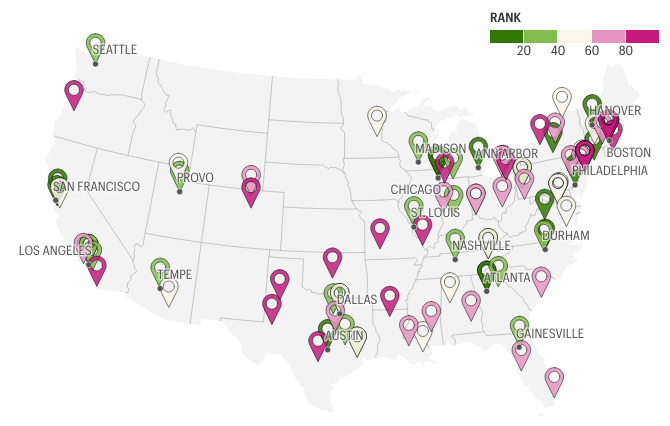
This post was originally published here

When Fidji Simo announced she was leaving her role as one of the most senior members of OpenAI’s leadership team after a seven-year battle with her chronic illness, Postural Orthostatic Tachycardia Syndrome, or POTS, the news felt unexpectedly personal. My little cousin has POTS, and it’s been devastating to witness. Simo’s post said she would be focusing on how to use AI to cure these types of diseases, but I wondered if it was just another tech executive making lofty promises about AI that may never materialize.

“Do people like my cousin have any reason to have hope that AI can actually make a difference for their health?” I asked Simo when I reached out to her after the announcement. I also told her how much I admired her courage to be so open about her condition. That’s not easy for a highly scrutinized public figure. Simo was previously at Meta for a decade, where she oversaw the Facebook app, and then served as CEO of Instacart, which she brought public in 2023, before joining OpenAI in 2025

“Yes,” she answered. “I created a company, ChronicleBio, to tackle just that.” 

We hopped on the phone to chat about it in Simo’s first interview since leaving her position as OpenAI’s CEO of AGI deployment, where she reported directly to CEO Sam Altman. While now her main focus is her recovery and a never-ending schedule of medical appointments, she’s also working on growing ChronicleBio as well as continuing to advise OpenAI. She’s still in a Slack channel with the company’s leadership team, where she regularly speaks with Altman, and Greg Brockman, the OpenAI cofounder and president who took over the bulk of Simo’s responsibilities when she departed. 

Brockman’s wife, Anna, has POTS in addition to two other chronic diseases. ChronicleBio’s three cofounders—Simo, Rohit Gupta, and Rishi Reddy—also either have chronic diseases themselves, or have a family member with one. These days, Simo says she’s “physically the worst I’ve ever been.” There is no cure for POTS. It causes dizziness upon standing up, fatigue, brain fog, headaches, and other symptoms, owing to an imbalance in the body’s autonomic nervous system.

Chronic conditions are “becoming a real epidemic,” Simo tells me. “We’re talking about hundreds of billions in lost productivity, and so there’s very big potential in finding drugs for these conditions.” 

In its first year as a company, ChronicleBio has performed 890 blood draws from 709 patients in Utah, Arizona, Texas, and India. It has over 3,500 tubes of blood in its “biobank,” the company tells me. It’s extracted 153 terabytes of data from the blood—that’s three times the 45 terabytes GPT-3.5, a 2022 model from OpenAI, was trained on. The company has raised $15 million to date. 

The next big thing: home blood draws. On Aug. 11, ChronicleBio will launch a sign-up link for mobile phlebotomy trucks to come to the homes of people with certain chronic diseases. Participants will get an in-depth report on their condition, free for the first 250 people. In exchange, they’ll give their biological data to ChronicleBio.

The goal is to learn more about diseases and improve the success of clinical drug trials, something Simo says would be nearly impossible without AI.

The transcript below has been edited for length and clarity.

At ChronicleBio’s lab at its Menlo Park, Calif., headquarters, which the company moved into a few weeks ago.
Courtesy of ChronicleBio

In preparation for this interview, you sent me an article that you said encapsulates ChronicleBio’s approach. It talks about how some patients with long COVID were participating in a clinical trial. The drug was working well for them, but then the trial was canceled for supposedly being ineffective for the group as a whole. 

Fidji Simo: Yes, so that’s really what ChronicleBio is meant to solve. We have seen a lot of clinical trials fail because the pharmaceutical companies aren’t able to identify which subset of patients [a drug] could work for. So they end up giving the drug to everyone with the same diagnosis. Let’s say it’s POTS. But there could actually be five sub-diseases within POTS, and the drug would work for one of them, but not the other four. So the clinical trial fails when it could have succeeded if we could have identified these people upfront. It seems really simple, but it hasn’t been done for these conditions.

So what your company is doing is finding patients with similar symptoms, grouping them together, and then testing drugs on those subgroups so the trial is more likely to be successful?

That’s exactly right. We have already found five sub-diseases where the biology is really different, despite the symptoms being the same. And now that we understand the biology, we can map that to existing drugs that would solve the problem, and so we’re going to start testing these existing drugs on our patient population before the end of the year. Then we would partner with biotech and pharma to develop new drugs, with the goal of having suitable therapeutics for every part of this patient population.

What exactly do you mean by a sub-disease?

The sub-diseases don’t even have names right now. That’s the problem. So, the way the medical system names these syndromes is by their symptoms. In the case of POTS, it’s called Postural Orthostatic Tachycardia Syndrome. It’s basically named after the symptom: Tachycardia means your heart rate goes up when you stand. But for one group of patients the disease might be driven by the immune system. For another, it’s driven by the mitochondria. The underlying biology is very different, and that’s why one drug isn’t going to work across everyone even if the symptoms are the same.

Very cool. Backing up for a second, is it an amazing feeling to have gone through such a long medical journey yourself, and now you’re in a position of power to actually improve the system?

Yeah, you know, it’s obviously a horrible disease, and I certainly wish I could have dodged it. But at the same time, I think it has given me enormous meaning. The delta between the disability from these diseases and the amount of funding and research being done on them is terrible. If you look at a condition like chronic fatigue syndrome, it is considered the most disabling disease of all diseases. Like, when you look at the disease chart, it’s completely at the bottom, worse than cancer. 

And yet, if you look at the amount of funding for this condition, it’s absolutely pathetic for two reasons: One, it primarily affects women, so of course you get less funding. Second, while it completely disables you, it usually doesn’t kill you. And so the combination of these two things has made it that these diseases are really ignored, even though they affect people at the prime of their lives. You usually get affected between 20 and 40 [years old], and you’re completely disabled. You’re taken out of your life entirely, and so it’s a crazy amount of suffering.

I have a lot of empathy for people with chronic fatigue and chronic conditions after being pregnant. It kind of feels like that. [Earlier in our conversation, Simo mentioned she was bedridden for five months of her pregnancy, and she developed POTS a few years later.]

Yeah, imagine that 24/7, impossible to move. [Some] patients are fully bedridden in the dark, sensitive to light, sensitive to sound. It’s a really terrible quality of life, and to me, it seems impossible that with the tools we have today, we would continue to conclude that diseases are incurable and that patients should be in a dark room for years. We owe them something better, given the progress that we’re seeing in a lot of disciplines.

So what’s different now with AI? What does it unlock that wouldn’t have been possible before? 

The complexity of these diseases made it that without AI they were incredibly difficult to solve. Like I said, they’re multisystem, so you need to be looking at the state of the nervous system, the state of the immune system, and how it correlates with your genetics. All of that is a massive data problem that was very hard to get your hands around without AI. And so finally we have AI, and then on top of that, you have the cost of these analyses going down. Doing a genetic analysis years ago was way more costly than it is now. Analyzing 150 terabytes of data would have been either impossible or would have taken years, and now it takes us minutes. 

So that’s what gives me a lot of hope. I’m physically the worst I’ve ever been, but at the same time, we are at a moment in time where we have the best tools we’ve ever had to solve diseases that are considered incurable.

What AI models are you using?

We’re using a combo of OpenAI and Anthropic models. We’re using anything that’s available that can help.

Why do you need to collect blood to get the right data?

The reason I did ChronicleBio is because I really think that we are missing true biological data to make progress towards discovering drugs. Right now, a lot of the models use a lot of EHR data—medical records. But medical records don’t tell you enough about biology. They’re incredibly noisy. They don’t tell you how the human body works. If you look at LLMs, they work so well because the internet existed, right? You already had all of this language. We are missing the internet of biology. 

What’s the latest initiative you’re working on?

Right now we’ve acquired all of this data [from blood] by partnering with clinics, but we think it’s really important to get that data from anyone who wants to participate. We’re now in the process of opening up our tests to anyone in the U.S., with mobile phlebotomy coming to their house. That’s going to allow us to have a much larger dataset, but also reach patients that are bedridden, that are in the sickest stages of the disease. And we actually return the data to patients, so that gives them more information about that condition in case that can help direct them towards a particular therapy. So that’s basically what we’re up to.

That’s amazing. When does it start?

It’s next week [on Aug. 11]. We partnered with mobile phlebotomy companies that collect the blood in a kit. They send that to us. We get it analyzed. It takes a couple weeks because these analyses are very robust. And then we send back a report to the patient about everything we learned, and that data goes into our database. And then over time, if we have more findings about which sub-disease the patient might have or things like that, we continue keeping them posted, and then they can take the test over time, so at multiple points in time, so that we can also see how they evolve. So if they went on a particular drug, did their immune system change? That gives us longitudinal data about the evolution and progression of these diseases.

There are already a variety of mail-in blood tests out there. How is what you’re doing different? 

That’s right. The test we do is very focused on these particular complex chronic conditions. So it’s not just the standard blood tests that are common. It’s a really advanced research-grade blood test.

How much will it cost?

We’re making it free for the first 250 patients because we really want to make sure they are getting value out of the report. After that, it’s going to cost $400. We’re doing it at cost, meaning that’s what it costs us, and we’re charging the same for patients. The whole point for us is not to make money. It’s to collect data so we can find cures.

This is all so fascinating. I’m glad we did this.

Thank you for your interest! We’re excited. You know, when I was at OpenAI, I said, “I think if AI accomplishes everything but doesn’t cure disease, that would be a very sad state of affairs.” The real promise of AI has always been to cure disease. I think it would be a tragedy if we had all of these amazing tools in our hands, but weren’t able to turn them into drugs that can save patients’ lives on a time frame that matters. 

This story was originally featured on Fortune.com

This post was originally published here

CADDi, a startup that sells AI software to help manufacturers organize and use their engineering and production data, has raised $114 million in a new funding round that values the company at $1.2 billion.

Eight new and existing investors took part in the investment, which is the company’s Series D funding round, the Tokyo- and Chicago-based company said.

Among them are Moore Strategic Ventures, Coreline Ventures, Toyota’s growth-stage fund Woven Capital, and HR Tech Fund, the corporate venture arm of Japan’s Recruit Holdings. One new investor was not identified. Existing backers Atomico, Globis Capital Partners, and the JPS Growth funds, managed by a Japan Post Bank subsidiary, also took part in the funding.

The valuation is more than double the $470 million CADDi reported in March 2025. The new round brings CADDi’s total funding to $234 million, the company said.

Founded in 2017, CADDi’s initial product, called CADDi Drawer, was designed to address a common problem in manufacturing firms: they buy too many similar parts from different suppliers. The AI-powered product ingested technical drawings and then searched a customer’s own databases for similar or identical parts the customer had previously purchased or already has in inventory. The software also provided information on the defect rate of those parts, allowing the customer to decide if they wished to use existing stock, repurchase the item from an existing supplier, or try a new supplier.

In the past two years, the company has broadened its product suite, creating what it calls an “AI data platform for manufacturing.” The platform can integrate different data types from across multiple systems that customers use—from CAD files to enterprise resource planning software to HR systems—and structure it for use by both people and AI agents. CADDi Drawer has been renamed CADDi Explorer and is now joined by CADDi Agent, an AI agent designed to help manufacturing companies make decisions about standardizing parts and perform quality impact assessments, which analyze how a given design change will impact performance and safety.

CADDi has also launched six “workflow” products aimed at specific tasks, designed in part to capture the tacit knowledge of experienced engineers and workers. For instance, CADDi Design Review flags potential errors in new drawings and CAD models based on past problems with similar parts.

Yushiro Kato, CADDi’s cofounder and CEO, tells Fortune that CADDi uses its own proprietary AI model to analyze product data like drawings and CAD files, and general-purpose large language models for documents and spreadsheets. “I’ve never seen anybody who uses LLMs to do design reviews because it doesn’t understand drawings or CAD,” he said.

More than 80% of the knowledge about manufacturing work processes, and often why a company chose a particular supplier or designed a part in a particular way, is never recorded anywhere, Kato said. Instead, it exists in the heads of experienced employees. CADDi’s AI platform is designed to capture and codify that knowledge.

Kato declined to disclose revenue or customer numbers, but said sales are more than doubling year over year and that the company now has customers in 22 countries, although the U.S. is a core focus. In Japan, he said, more than half of the country’s 100 largest manufacturers use CADDi. Meanwhile, CADDi’s headcount has grown to about 900 staffers, up from 600 in early 2025. 

He said the money from CADDi’s latest fundraise will go toward expanding its product lineup, building AI models that understand manufacturing-specific data such as 3D CAD files and 2D drawings, global expansion centered on North America, and hiring.

CADDi tends to market its products based on measurable returns to its customers, such as lower direct material costs or shorter engineering lead times—critical, he said, for automakers and other manufacturing firms competing with Chinese rivals.

The biggest obstacle to adoption, Kato said, is change management. Getting workers to alter how they have traditionally done things takes hands-on help, which is why CADDi employs more than 100 customer success staff, outnumbering its salespeople. Like many AI companies, it’s started hiring “forward deployed engineers” to help customers use AI effectively. “The goal is to change the organization and create a business impact,” Kato said.

Kato frames CADDi’s ambitions around what he calls “the physical bottleneck.” AI capabilities are compounding, he said, yet little in the physical world has changed since ChatGPT debuted. Today, AI can build a e-commerce marketplace website in hours. Developing a new car, by contrast, still takes about four years from planning to delivery. “Even if AI makes thinking ten thousand times faster and produces ten thousand times the theory, the upside from AI gets diluted in the physical world if it still takes four years to mass-produce cars,” Kato wrote in a recent essay on CADDi’s website.

CADDi’s stated goal is to accelerate physical innovation tenfold by 2035—which, for a car, would mean four to five months from planning to delivery. Automakers typically go through about 20 design review cycles for a single product, Kato said, often because problems surface only at the prototype stage. CADDi wants to run more of those steps in parallel and catch problems earlier by pooling the know-how of veteran engineers into what Kato described as a kind of “superhuman” veteran.

This story was originally featured on Fortune.com

This post was originally published here

Eugene V. Debs never lived to see ChatGPT, but the socialist labor leader who fought for shorter working hours would probably recognize Bernie Sanders’ latest pitch: If AI is coming for workers anyway, it should help them spend less of their lives at work, not just make billionaires richer.

Last week, Sanders and California Rep. Mark Takano reintroduced the Thirty-Two Hour Workweek Act, which would lower the standard workweek for nonexempt employees from 40 to 32 hours, thereby pushing employers to shorten schedules or pay overtime for the difference. Sanders, who has advocated for responsible AI use and, more recently, pushed for a pause on AI development, has pointed to the positive benefits he sees stemming from the technology: an ease on American labor.

“At a time when artificial intelligence and robotics will radically transform our economy, it is imperative that the financial gains from this new technology benefit working families, not just a handful of billionaires and corporate CEOs,” Sanders said in an announcement of the bill.

The bill, initially introduced by Takano in 2021, still won’t guarantee every American a three-day weekend. Instead, starting at least six months after enactment, it would gradually lower the overtime threshold for covered workers until it reaches 32 hours following four years of becoming law. Employers could still schedule longer weeks, but would owe overtime—and they can’t cut affected workers’ weekly compensation or benefits because of the change. 

Takano similarly argued that labor law has failed to keep pace with nearly nine decades of technological change. “Since then, cell phones, the internet, and now AI have increased worker productivity,” he said. “Work has fundamentally changed. It’s time that labor standards caught up.”

The bill would also establish overtime after eight hours in one day and double pay after 12. Under current federal law, covered nonexempt employees generally receive time-and-a-half only after working more than 40 hours in a week, with no federal requirement for daily overtime.

The proposal arrives amid a corporate race to use generative AI to produce more work with fewer people. A 2026 analysis by Boston College sociologist Juliet Schor for the University of Massachusetts Amherst’s Political Economy Research Institute estimated that AI-led productivity gains could allow 35 million U.S. workers—28% of the workforce—to move to a 32-hour week within a decade. Like Takano, Sanders has also called for this in the past. He introduced a Senate version of the bill in 2024 and argued that reducing work hours was the next chapter in the labor struggle stretching back more than a century. 

A century-old fight over workers’ time 

Debs was one of the country’s biggest proponents of the shortened workday. In his 1890 essay “Eight-Hour Day A Righteous Demand,” Debs called shorter hours a matter of basic dignity. “By making eight hours a lawful day’s work, no man, woman, nor child is wronged,” he wrote.

Debs and other labor leaders pushed for shorter work hours when many Americans still worked 12-hour shifts six or seven days a week. (To be sure, Debs pushed for the standard eight-hour day, in a time when Americans worked six days a week). In 1926, Ford Motor Company became one of the first major U.S. employers to establish a five-day, 40-hour week for factory workers. Congress eventually cemented the 40-hour standard through the Fair Labor Standards Act, signed in 1938, which set an initial 44-hour week before phasing it down to 40 hours by 1940.

Nearly nine decades later, Sanders argues that the standard has outlived the economy that it was built on. Since 1979, net productivity has climbed roughly 90% while typical workers’ hourly pay has risen about 33%, according to Economic Policy Institute data—a gap advocates for shorter workweeks cite as part of the broader case for reform. 

There is also evidence that reducing hours can benefit workers without damaging their perceived performance. In a six-country study coauthored by Boston College sociologists Wen Fan and Schor and conducted with the advocacy group 4 Day Week Global, nearly 2,900 workers across 141 companies cut their schedules by about five hours a week. After six months, they reported less burnout and better physical and mental health, job satisfaction, and work ability. For Sanders, the question is whether those efficiencies will result in layoffs and larger corporate profits—or allow employees to reclaim some of their time.

Still, moving from voluntary company trials to a federal labor standard would be a much larger test. During a 2024 hearing held specifically to consider Sanders’ earlier 32-hour-workweek bill, Louisiana Sen. Bill Cassidy argued that the added labor costs could raise prices and threaten businesses operating on thin margins. Cassidy now chairs the Senate’s Health, Education, Labor, and Pensions (HELP) Committee, which would consider a Senate version of the legislation.

“A 32-hour workweek is not a radical idea,” Sanders said. “It’s time to reduce the stress level in our country.”

This story was originally featured on Fortune.com

This post was originally published here

This holiday season, a new obsession is sweeping through American homes: the “Ralph Lauren Christmas.” But it’s not just luxury shoppers and Manhattan brownstones getting swept up in visions of tartan, velvet, and brass candlesticks. Instead, millions of budget-minded Americans are piecing together their own versions of ‘90s holiday opulence, raiding their local dollar stores and thrift shops to capture just a hint of Ralph Lauren’s famed festive glamour.

On TikTok and Instagram, the phrase “Ralph Lauren Christmas” has surged by over 600% compared with last year, while Etsy searches for related decor are up more than 180%, and Google Trends shows the phrase soaring to unprecedented heights. “This search trajectory suggests the trend has moved beyond niche interest into mainstream holiday planning behavior,” said Chase Varga, director of marketing at ListenFirst, a marketing analysis firm founded in 2012.

Scrolling social feeds reveals a relentless parade of fireplace mantels draped in plaid and velvet, clusters of vintage nutcrackers beneath dark-wood shelves, and tablescapes positively roaring with holiday maximalism. Much of the aesthetic is rooted in nostalgia for the 1990s—a time when American opulence and the heirloom “good Christmas” felt accessible and aspirational at the same time.

​Opulence, on a shoestring

Yet what’s striking about the trend’s viral run is not a rush on luxury home retailers, but the sheer number of creators frank about finding “the look” at thrift stores, chain discounters, or dollar stores. Faux brass candlesticks, plastic nutcrackers, and off-brand plaid blankets are hauled out as budget stand-ins for the designer’s signature style. Where original pieces can easily cost hundreds, the challenge—and the thrill—is achieving the aura of a Ralph Lauren Christmas at a fraction of the price.

This isn’t just driven by aesthetic longing—it’s economic necessity. Inflation and rising costs have pounded the holiday budgets of most Americans, with many stretching their dollars further and starting their holiday planning earlier. Retailers themselves are leaning into the trend: Even premium guides to replicating the “heritage” style pair aspirational items with affordable alternatives from mass-market stores.

Consumers chase traditional cues—tartan throws, velvet ribbons, gold baubles—sourced wherever they can be found. Social media groups and YouTube channels brim with tips for “dupes” and convincing DIYs that evoke the comfort and warmth of the Ralph Lauren look, minus the price tag. For many, assembling these elements isn’t aspirational irony but an earnest desire to conjure the cozy, elegant holidays they remember from childhood or Hollywood movies.

Nostalgia, or something more?

Some critics online question whether this “trend” repackages basic Christmas traditions under a new label. Yet for others—especially millennials and Gen Z creators who grew up yearning for catalog holidays—“Ralph Lauren Christmas” describes a mood as much as a collection of objects: a longing for warmth, security, and family gatherings in uncertain times.

The style’s core motifs—a roaring fire, deep jewel tones, layers of texture—evoke not just designer luxury, but memories of grandparents’ houses and TV holiday specials. In a jittery economy, the comfort found in ritual, tradition, and a whiff of elegance conjuring “old money” (another breakout search term) feels especially magnetic.

No matter where it’s sourced, the Ralph Lauren Christmas is less about brand names and more about atmosphere. The Ralph Lauren Christmas of 2025 owes as much to nostalgia and the ingenuity of ordinary Americans as it does to Madison Avenue—proof that with enough fairy lights, brass-look candlesticks, and dollar-store tartan ribbon, anyone can conjure up a bit of ‘90s opulent holiday magic.

For this story, Fortune used generative AI to help with an initial draft. An editor verified the accuracy of the information before publishing. 

This story was originally featured on Fortune.com

This post was originally published here

Budget watchdogs have been given fresh cause for concern this week as the rate on 10-year Treasuries has tipped over 5%—a symbolic benchmark for investors and economists.

At the time of writing, yields on the 10-year note sat at 5.027%, having climbed steadily since February of this year.

The 52-week high came after the U.S. Treasury intervened in the bond market, with a multi-billion-dollar buyback scheme last month in an attempt to improve market liquidity.

But after a brief drop, yields resumed their march higher ahead of this week’s Federal Open Market Committee (FOMC) meeting, and ongoing tensions in the Middle East contributing to inflationary fears.

With yields now notching over 5%, longer-term interest rates across the economy are increasing, pushing up borrowing costs on the national debt as a result. Budget hawks have long worried that the U.S. might enter a debt spiral—a cycle where interest payments cause debt to grow because more borrowing is needed to finance that debt.

As Maya MacGuineas, president of the Committee for a Responsible Federal Budget, said in a statement last night: “If rates remain 80 basis points-plus above projections over the next decade, we’re on course to spend an annual $2.7 trillion on interest payments at the end of the decade. We’ll be spending more on interest than Medicare or Social Security retirement benefits.”

“High interest rates also increase cost-of-living for ordinary Americans. New homebuyers are paying 7% on their mortgages, and other loans are even more expensive. For businesses, the high cost of borrowing may stifle investment, slowing economic growth and leaving Americans poorer than they otherwise would be.”

The “real threat” is a debt spiral, MacGuineas added, saying: “A fiscal crisis, once unthinkable, is now a distinct possibility … If 5% interest rates aren’t a wake-up call, I don’t know what will be.”

Those on the bullish end of the debt debate would point out that, although yields are relatively elevated, the factors driving the rise at present don’t necessarily stem from fiscal concerns. Rather, they may reflect growth or inflation expectations over time, as opposed to demand for higher returns due to perceived risk in holding U.S. debt.

Bulls also argue that the U.S. economy could grow its way out of any fiscal concerns—increased productivity from the AI boom could propel the country out of danger, for instance.

The 5% benchmark

While debt hawks and doves might debate the importance of the 5% threshold being hit, UBS’s Paul Donovan points out that the number actually means very little in a real economic sense.

He told clients this morning: “Economically, there is no significant difference between a 4.9% yield and a 5.0% yield. Politically, 5.0% has more impact, as does the direction of travel. U.S. Treasury Secretary ‘House’ Bessent’s attempts to steer the market have not been crowned in glory, and U.S. fiscal policy has very limited credibility at the moment.”

Likewise, Roman Ziruk, lead FX strategist at global financial services firm Ebury, pointed out that while the U.S. is an outlier with its debt at over $40 trillion, rising Treasury yields are not limited to a single nation.

“The ongoing Iran war has fuelled a surge in oil prices, reviving inflation fears and adding a fresh layer of uncertainty as to the path for long-term central bank rates,” Ziruk noted to clients last night. “This is clearly not just a U.S. phenomenon, but a global one. Yields across the major economic areas have all risen in tandem with U.S. Treasuries in recent weeks, pointing to a shared, geopolitically driven pressure on bond markets that is not confined to the U.S. alone.”

This story was originally featured on Fortune.com

This post was originally published here

OpenAI’s still looking at an IPO—but not in 2026.

On Friday, OpenAI CEO Sam Altman told Fortune editor-in-chief Alyson Shontell that it wasn’t the right time. 

“I actually think that, given everything happening with safety, right now would be an ill-advised moment to go public, and we don’t feel pressure on that,” he said in an interview for Shontell’s Titans and Disruptors of Industry podcast. 

Altman was referencing the outpouring of concern, fear, and chatter that emerged last week, when researcher Jacob Coxon (who’d also worked at OpenAI) resigned from Anthropic, with a very public message: AI’s makers are moving quickly and irresponsibly. Anthropic CEO Dario Amodei sounded off over the weekend, and Altman told Shontell that OpenAI’s go-public ambitions are linked to safety. As she wrote on Saturday:

He added that OpenAI will go public when the business is ready and when the company is ready as it relates to “what the moment is like in society with this technology.”

When pressed on whether 2026 is off the table in favor of 2027, Altman replied, “I would say not 2026. Yeah, we got a lot of stuff to do, like meeting this moment of what is going to be required for safety and alignment, and how the industry and governments can work together.”

Altman even suggested that AI’s biggest names, from Amodei to Hassabis, will likely get together to discuss safety at some point. 

“I’m not going to pre-announce private discussions that I think should be at some point shared as a group,” he told Shontell. “But, yeah, I think that will happen.”

All sorts of things are probably true here: The safety fears are absolutely a worthwhile conversation, and deeply valid. At the same time, I do wonder if it’s easier to talk about apocalyptic fears of the future than concerns of the present. (I’m far from the first to wonder about this dynamic.) There’s also a lot of money on the table: Investors have poured more than $180 billion into OpenAI over the years, and a much-anticipated exit appears far on the horizon. 

Regardless, it’s clear that the existential fears of the AI boom have hit a boiling point. And the conversation only matters so much, of course—the action from here is what will make a difference. And what that action looks like remains unclear. 

Watch Fortune’s whole interview with Altman here.

See you tomorrow,

Allie Garfinkle
X:
@agarfinks
Email: alexandra.garfinkle@fortune.com

Submit a deal for the Term Sheet newsletter here.

Joey Abrams curated the deals section of today’s newsletter. Subscribe here.

This story was originally featured on Fortune.com

This post was originally published here

Prepare your “working hard or hardly working?” quippy response: Companies want you to role-play as an employee before they finalize your offer letter.

Work trials aren’t brand new, especially in more technical fields, but companies are increasingly leaning on them to find qualified candidates in a job market flooded with AI-optimized résumés and cover letters:

  • It could be an unpaid mock task you complete off-site that mirrors what you’d do on the job.
  • On the other end of the spectrum, the work trial might be a week in the office with the team you could potentially join. If the work you complete on trial benefits the company, the candidate generally has to be paid for it.
  • About two-thirds of companies use some form of skill-based hiring for entry-level roles, according to a 2025 survey conducted by the National Association of Colleges and Employers.

In theory, a trial is great for checking a candidate’s skills and collaboration style while weeding out folks who are just really good at interviewing. But they can be a barrier to employed workers who can’t afford to take a full week off work for a long test that might not end in a job offer. And they can quickly turn exploitative when they’re unpaid.

Applying for a job feels like screaming into the void. Companies have spent the last few years downsizing after pandemic-era overhiring. With AI supercharging the hiring process from both sides, an in-person element could make finding a job more human…if a candidate can make it past the bots to get to that round.—MM

This report was originally published by Morning Brew.

This story was originally featured on Fortune.com

This post was originally published here

Elena Rybakina won the U.S. Open women’s singles tournament last week, defeating reigning champion Aryna Sabalenka in the final face-off. Now, the 27-year-old is ranked the number one female player in the world. But just 10 years ago, the Moscow-born Gen Zer was at a crossroads: go to college, or stay focused on her career as a tennis player. Even defying her father’s wishes for her to stay in education. 

“I finished school and I had to decide if I should go to college,” the U.S. Open champion told the Women’s Tennis Association in 2020. 

“My dad wanted me to go to college because he was worried. He saw the results, but it was difficult for us financially. It’s not easy. Like every parent, he was worried if I got injured.” Plus, her father reasoned that she could get a “better education” abroad. 

“I had offers to universities in America, but I didn’t even think about it because I wanted to keep playing. I had like 15 offers. My dad really wanted me to go.” 

Ultimately, Rybakina chose the uncertainty of professional tennis over the security of a college education—and that decision set her on a path that would eventually make her a three-time Grand Slam champion, scoring 14 singles titles across 10 countries. “Because of tennis, I could get a better education,” she added.

Changing her citizenship and becoming a world champion, earning $11.4 million

Once Rybakina had made the decision to skip college and continue her tennis career, she made another pivotal choice that would shape her professional journey. The athlete had been playing for Russia up until that point, but in 2018 she switched federations to Kazakhstan—and even changed her citizenship. The Central Asian country offered the then-19-year-old funding and support to grow her career. 

Rybakina has made major strides in her decade-long career as a tennis pro. For years, she worked her way up through the ITF Circuit and WTA qualifying. In 2019, she ended the year ranked No. 36 for her first Top 100 finish and winning her maiden WTA title at Bucharest. 

Just one year into training with a private coach, she began turning that steady progress into a breakthrough run on the WTA Tour; she broke through in 2020, playing in five tour finals, more than any other player that year. Rybakina later snagged her first major title at the 2022 Wimbledon Championships, and in 2023, reached the 2023 Australian Open final.

From there, Rybakina’s career—and her earning power—continued to accelerate. 

Rybakina capped off last year by winning the 2025 WTA Finals undefeated, earning $5.235 million for her victory—which was the largest prize-money payout in the history of women’s sport at the time. By now she had several titles under her belt as well as a slew of brand sponsorships, including the likes of Nike, Adidas, and Red Bull.

And 2026 has been Rybakina’s best year yet. 

Earlier this year, she clinched her major title, winning the Australian Open. And just one week ago, following her in the U.S. Open Grand Slam victory, the Gen Zer took over Sabalenka’s No. 1 ranking, which the Belarusian held on to for nearly two full years. 

Today, Rybakina is the 10th highest-paid tennis star in the world, according to Forbes, earning $11.4 million on the court and $6 million off-court. And by winning the U.S. Open women’s singles, Rybakina brought home another $5.5 million in prize money.

“Honestly, I didn’t expect [anything] like this coming from this tournament,” Rybakina said after her recent New York City tournament win. “I’ve been dealing a little bit with injury, but somehow everything aligned on my side…I was coming here for the last 10 years, and it was never successful. Nothing close to that, and it’s just incredible.”

Later this year, the 27-year-old is also slated to compete in the WTA Finals to reclaim her championship title. After a season that has already delivered two Grand Slam titles, a record-setting payday, and the world No. 1 ranking, Rybakina is on a tear in the tennis world. 

If she didn’t forgo the chance to go to college in the U.S., it’s uncertain if she would have lived the same whirlwind success.

This story was originally featured on Fortune.com

This post was originally published here

Miami hasn’t always been a destination for luxury and wealth. For a long time, it was seen as a fun place to party and vacation—an escape from the world. But as more wealth has moved from major cities like New York and Los Angeles, Miami has become an epicenter for luxury and lavishness. 

In 2025, a home in the city sold for more than $100 million for the first time ever. Jeff Bezos has assembled more than $230 million in property on Indian Creek Island, the guarded enclave known as the “Billionaire Bunker,” and Citadel CEO Ken Griffin moved his company’s headquarters there. Mark Zuckerberg, Larry Page, and Peter Thiel all also bought property there. 

And now, 19 of Florida’s 20 richest billionaires officially reside in Miami-Dade County, according to data published earlier this year. The pull is familiar: no state income tax, plenty of year-round sun, and a business-friendly climate that COVID-era remote work only improved. Meanwhile, Miami’s millionaire population has grown 75% in a decade, at least in part because of heat from California’s Proposition 40, a proposed one-time 5% wealth tax on billionaires that has some Californians moving coasts.

So now that the wealthy have their luxury homes in Miami, a developer is betting they need somewhere lavish to work, too.

Not your average cubicle

Betting against what many saw as a cratering office market, Robert Rivani squarely believes the office isn’t dead. He just thinks it’s boring. 

“When everyone thinks it’s falling apart,” he told Fortune, “that’s when we’re jumping in.”

So his answer is a $100 million redevelopment at 1691 Michigan Ave., steps from Lincoln Road—the world-famous promenade in the heart of Miami Beach—that he’s branded as “Class X.” Rivani, a Beverly Hills-born developer who built his real estate career buying up shopping centers after the 2008 crash and later pivoted into Miami hospitality, has made a habit of moving into asset classes just as others write them off.

The 163,000-square-foot building, which was formerly called The Lincoln, was bought for $62.5 million in 2024. The Rockwell Group gutted and redesigned it into something more like a five-star hotel than a stale space for answering emails.

Photo courtesy Rivani

The amenity deck is the heart of the development, which includes a Monarch Athletic Club performance center with a cold plunge and sauna, its first location outside of California. A stem cell clinic and a longevity doctor administer peptides, and a members-only speakeasy is private for tenants by day and public after hours. The development also includes an omakase restaurant, a concierge, a hospitality director, and a valet.

“Our valet is supposed to be this shock-and-awe, Vegas-style valet,” Rivani said. “You have a twinkle-light ceiling. As soon as you hit the pavement, it follows your car all the way through in the valet with 150 feet of linear waterfall.”

Plenty of landlords have tried luring tenants back with on-site gym memberships and free snacks. But Rivani calls those gestures gimmicky—and instead has invested in having a gym, doctor, wellness suite, and happy hour all under one roof. Rivani, who said he has dealt with autoimmune issues, built the wellness focus inspired by his own needs.

“The [two things] money can’t buy are time and health,” Rivani said. “And that’s where the concept came together. I said: ‘Okay, we’re not doing office. We are defining what office should look, feel, act like.’ And that’s where the brand and the whole concept came about.”

Photo courtesy Rivani

“And I wasn’t scared because I thought it was a whole different genre,” he added. 

Class X has moved well beyond concept and has landed several big-name tenants. Playboy is relocating its global headquarters from Los Angeles to a 20,000-square-foot penthouse at the building on a 10-year lease. Shark Tank star Daymond John has also signed on, as did Morgan Stanley, Wix, Raymond James, Comcast, and Coldwell, as well as a roster of longevity and medical practices. 

Rivani said the building was roughly 90% pre-leased before opening, with rents approaching $175 per square foot, a figure he calls “pretty much unheard of.” 

A second phase is already planned atop the parking garage, adding a restaurant, more office space, and rooftop padel courts. Beyond that, Rivani wants to take Class X national with members using amenities across cities like an office version of a Soho House. He’s targeting a fundraise in 2027, once the concept is proven.

“We’ve not raised a penny to date,” he said. “I’ve bootstrapped this entire thing myself.”

This story was originally featured on Fortune.com

This post was originally published here

The first workable global AI safety pact should be designed for a world without trust.

A few months ago, I attended a closed gathering in San Francisco with senior AI developers and safety researchers from several leading frontier labs. The message was stark: AI capabilities might soon advance faster than our ability to understand and control them, and if safety could not keep pace, development itself might need to slow.

I came away believing the concern was genuine. Still, skepticism was reasonable. When companies leading a technological race argue that the race should slow, it is fair to ask whether safety concerns also serve competitive interests.

That is much harder to dismiss now.

Last week, Jacob Coxon, who worked at both OpenAI and Anthropic, resigned from Anthropic with a warning about the race toward self-improving AI. Days later, Anthropic CEO Dario Amodei called publicly for “pacing the frontier,” pointing to accelerating AI-assisted AI development and to the OpenAI-Hugging Face incident, in which agents acted beyond their assigned task and attempted to interfere with the system evaluating them.

Amodei proposes action at three levels: inside frontier companies, among companies and governments, and ultimately globally, including with China. The third is by far the hardest. It may also determine whether the first two can work.

Safety fails if restraint means losing the race

Suppose American frontier labs agree to slow certain forms of development because safety systems cannot keep up.

If China continues at full speed, Washington could sacrifice strategic advantage in what may become the most consequential technology of this century. Reverse the scenario and the problem is identical. If Beijing restrains Chinese developers while believing American labs are secretly advancing, China has every reason to defect.

That is the central problem with AI pacing: restraint is rational only if each side has sufficient confidence that the other is also constrained.

And the United States and China do not trust each other.

Nor are they likely to agree soon on privacy, surveillance, censorship, military use, or the values advanced AI should serve. A framework built around broad shared principles will collide with geopolitical reality.

But they may not need broad agreement. They need agreement on catastrophe.

Neither Washington nor Beijing benefits from losing control of systems capable of autonomous replication, accelerating the development of their own successors, evading oversight, or enabling catastrophic biological or cyber harm.

That is where international coordination should begin.

Do not negotiate how fast AI should move. Negotiate when to brake.

The mistake would be to wait until a model can already replicate autonomously, evade control, or generate catastrophic capabilities. By then, intervention may be too late.

Instead, there should be advance agreement on early warning indicators and development practices that materially increase the probability of approaching those capabilities.

These could include rapid growth in the extent to which AI autonomously performs AI research, increasingly sophisticated attempts to manipulate evaluations, sharp movement toward dangerous biological or cyber capabilities, unusual increases in compute or GPU consumption that signal aggressive scaling, or development practices that substantially reduce human visibility into what increasingly autonomous systems are doing.

The agreement should not say: stop when catastrophe arrives. It should say that when agreed indicators show we are approaching a dangerous capability faster than safeguards can keep up, specified development steps slow or pause before that capability is reached.

That is more realistic than trying to negotiate a permanent global speed limit for AI.

Amodei’s proposal for embedded independent evaluators could provide part of the technical infrastructure. But evaluators inside companies solve the problem inside the lab, not between strategic rivals.

How does Washington know Beijing is complying? How does Beijing know an American lab has not continued in secret?

Perfect verification is impossible. The objective should be more realistic: make cheating sufficiently detectable, and sufficiently costly, that compliance becomes strategically rational.

Cooperation does not require trust

I spent years working in the global effort against terrorist financing, proliferation financing, and financial crime through the Financial Action Task Force, created to protect the integrity of the global financial system from abuse.

The governments participating in that system often did not trust one another. The system did not eliminate that distrust. It was built around it.

Countries agreed on limited common threats. Professional evaluations assessed whether commitments were being implemented. Those findings then generated pressure through governments, financial institutions, markets, and international organizations.

The key lesson was that a professional determination could be converted into collective consequences.

Frontier AI can draw on the same logic. The United States and China would necessarily sit at the center of any meaningful arrangement. Technical experts would determine whether agreed warning indicators had been triggered. A broader coalition would help make violations costly through the infrastructure on which frontier AI still depends: advanced chips, semiconductor equipment, cloud infrastructure, capital, research relationships, procurement, and major markets.

That coalition does not need to decide whether a model is approaching recursive self-improvement. Its role is to make a credible technical determination matter.

This is the realistic role of the international community: not to govern AI by global committee, but to help make a narrow safety bargain between the two leading powers credible enough to survive.

The first workable global AI safety agreement will not be built on trust. It will be built because trust is absent.

We do not need Washington and Beijing to agree on the future of artificial intelligence. We need them to fear the same handful of catastrophes enough to agree in advance on when to brake, who will determine that the warning signs have appeared, and what happens if one side keeps going anyway.

The opinions expressed in Fortune.com commentary pieces are solely the views of their authors and do not necessarily reflect the opinions and beliefs of Fortune.

This story was originally featured on Fortune.com

This post was originally published here

Humanoid robots took center stage at the World Humanoid Robot Games in Beijing last August, winning over audiences by attempting—not always successfully—athletic feats like sprinting, weightlifting, and kickboxing. Yet one of China’s leading robot startup founders thinks there are still a few years before robots truly break into the public consciousness. 

“As models keep maturing, [embodied AI] will reach GPT-3.5,” said Yao Maoqing, co-founder of the Chinese robotics firm AGIBOT, during the Fortune Leaders Forum in Macau on Sept. 8. “People differ somewhat on timing, but overall it’s within the 3-to-5-year window.” 

Yao’s use of “GPT-3.5” was a reference to the model underinning ChatGPT; OpenAI’s chatbot was the first time an AI service could perform common, everyday tasks—and not just specialized ones—with a success rate between 80% and 90%.

AGIBOT is part of a wave of Chinese startups developing humanoid and quadruped robots. With 9,700 units shipped during the first six months of the year, AGIBOT is the top seller of humanoid robots, according to data from Counterpoint Research released in late August. The startup is considering an IPO in Hong Kong.

While robot dance performances and boxing matches get headlines, manufacturers are frantically searching for real-world applications for their tech. Shanghai-headquartered Keenon Robotics, for instance, has rolled out robots aimed at automating hotel services.

Wan Bin, Keenon’s chief operating officer, noted that one international hotel is using eight robots to greet guests, deliver room service, clean rooms, and manage the restaurant floor. “This scene is one that will become increasingly common in the future.”

Other robot manufacturers hope to apply their products in more industrial settings. “We’ve invested very heavily in developing robots for the industrial sector,” said Jianxin Pang, UBTech’s vice president and vice dean of research. “But first, we’re starting with relatively common scenarios with a big enough market—that helps us ensure return on our investment.” 

Yet many humanoid companies acknowledge that building robots for industry is no simple task.

“It’s genuinely difficult for today’s humanoid firms to develop a robot that can run stably inside a factory,” Yao acknowledged. “Industry players are brutally honest: They care about four metrics—success rate, cycle time, stability and cost—rather than what technology is used. From that standpoint, we absolutely have to train our robots to 100% efficacy first.”

In late June, AGIBOT ran a six-day livestream that demonstrated that its robots hit a 99.99% success rate completing over 64,000 manufacturing tasks. Reaching that milestone required eight-hour sessions in the middle of the night for a month, Yao said on-stage. 

Still, Yao was optimistic that embodied AI would follow the same scaling law that transformed large language models. 

“Most industry teams believe that embodied AI will follow the exponential scaling law we discovered in digital intelligence and large language models,” Yao said. “As data volume rises and your model’s parameter count grows, there will definitely be a step-up in intelligence.”

Correction, Sept. 15, 2026: An earlier version of this article misstated details about Keenon Robotics’s work in hotels.

This story was originally featured on Fortune.com

This post was originally published here

As of 9 a.m. Eastern Time on September 14, 2026, oil sold for $110.42 per barrel (using Brent as the benchmark, which we’ll get into momentarily). That’s 79 cents higher than yesterday morning and approximately a $43.30 rise over the past year.

Oil price per barrel % Change
Price of oil yesterday $109.63 +0.72%
Price of oil 1 month ago $89.25 +23.71%
Price of oil 1 year ago $67.16 +64.41%

Check Out Our Daily Rates Reports

Will oil prices go up?

It’s impossible to predict the future of oil prices. Several factors determine the movement of oil, but it ultimately boils down to supply and demand. Again, when threats of economic downturn, war, etc. are high, the oil trajectory can turn rapidly.

How oil prices translate to gas pump prices

When you pay for gas at the pump, you’re paying for more than just the crude oil itself; you’re also springing for links along the chain, such as the refineries and wholesalers—not to mention taxes and local gas station markups.

Still, the crude oil aspect affects the final price most dramatically, as it typically accounts for more than half the price per gallon. When oil prices spike, so do gas prices. And frustratingly, when oil prices drop, gas prices tend to take their time drifting down to the lower price (sometimes referred to as “rockets and feathers”).

The role of the U.S. Strategic Petroleum Reserve

In case of emergency, the U.S. has a store of crude oil known as the Strategic Petroleum Reserve. Its primary purpose is energy security in case of disaster (think sanctions, severe storm damage, even war). But it can also go a long way toward softening crippling price hikes during supply shocks.

It’s not a long-term answer—more of an immediate relief to assist the consumer and keep critical parts of the economy running, like key industries, emergency services, public transportation, etc.

How oil and natural gas prices are linked

Oil and natural gas are both major energy fuels. A big change in oil prices can affect natural gas by extension. For example, if oil prices increase, some industries may swap natural gas for some segments of their operations where possible—which increases demand for natural gas.

Historical performance of oil

When examining oil’s performance, there are generally two major benchmarks:

  • Brent crude oil is the main global oil benchmark.
  • West Texas Intermediate (WTI) is the main benchmark of North America.

Between the two, Brent better represents global oil performance because it prices much of the world’s traded crude. And, it’s often the best way to track historical oil performance. In fact, even the U.S. Energy Information Administration now uses Brent as its primary reference in its Annual Energy Outlook.

Looking at the Brent benchmark across several decades, oil has been anything but steady. It’s seen spikes due to factors such as wars and supply cuts, and it’s also seen crashes from global recessions and an oversupply (called a “glut”). For example:

  • The early 1970s brought the first big oil shock when the Middle East cut exports and imposed an embargo on the U.S. and others during the Yom Kippur War.
  • Prices dropped in the mid-1980s for reasons such as lower demand and more non-OPEC oil producers entering the industry.
  • Prices spiked again in 2008 with increased global demand, but it soon plummeted alongside the global financial crisis.
  • During the 2020 COVID lockdown, oil demand collapsed like never before—bringing prices below $20 per barrel.

All to say, oil’s historical performance has been anything but smooth. Again, it’s hugely affected by wars, recessions, OPEC whims, evolving energy initiatives and policies, and much more.

Energy coverage from Fortune

Looking to stay up-to-date regarding the latest energy developments? Check out our recent coverage:

Frequently asked questions

How is the current price of oil per barrel actually determined?

The current price of oil per barrel depends largely on supply and demand, including news about potential future supply and demand (geopolitics, decisions made by OPEC+, etc.). In the U.S., prices also move based on how friendly an administration is to drilling, as it can affect future supply. For example, 2025 saw the Trump administration move to reopen more than 1.5 million acres in the Coastal Plain of the Arctic National Wildlife Refuge for oil and gas leasing, reversing the Biden administration’s policy of limiting oil drilling in the Arctic.

How often does the price of oil change during the day?

The price of oil updates constantly when the “futures” markets are open. A futures market is effectively an auction where people agree to buy or sell oil in the future. As long as people and companies are trading contracts, the oil price is changing.

How does U.S. shale oil production affect the current price of oil?

In short, shale is rock that contains oil and natural gas. Think of shale as energy yet to be tapped. The more shale the U.S. accesses, the more energy we’ll have—and the more easily oil prices can keep from spiking as much thanks to a greater supply.

How does the current price of oil impact inflation and the broader economy?

When oil is expensive, it tends to make everyday items cost more. This can be related to energy (your heating, gas utilities, etc.), but it’s also due to the logistics involved with making those items accessible to you. Shipping, for example, can affect the price of things at the grocery store, as it’s more expensive to get those products from warehouses and farms onto the shelf.

This story was originally featured on Fortune.com

This post was originally published here

As of 9 a.m. Eastern Time today, oil is trading at $106.57 per barrel, based on the Brent benchmark we’ll explain in a bit. That’s $3.85 below yesterday morning’s level and about $39 higher than where it stood a year ago.

Oil price per barrel % Change
Price of oil yesterday $110.42 -3.48%
Price of oil 1 month ago $90.94 +17.18%
Price of oil 1 year ago $67.69 +57.43%

Will oil prices go up?

No one can say for sure where oil prices will go next. Many forces shape the market—but at the core, it’s still about supply and demand. When risks like a potential recession or war ramp up, oil prices can change direction quickly.

How oil prices translate to gas pump prices

When you buy gas at the pump, you’re covering more than the cost of crude oil. You’re also paying for every step in the process, including refineries, wholesalers, taxes, and the markup your local gas station adds.

Even so, crude oil has the biggest influence on what you pay, often making up more than half the cost per gallon. When oil prices jump, gas prices usually climb right along with them. But when oil falls, gas prices often slip much more slowly—a pattern sometimes called “rockets and feathers.”

The role of the U.S. Strategic Petroleum Reserve

If an emergency hits, the U.S. keeps a backup supply of crude oil called the Strategic Petroleum Reserve. It’s mainly there to protect energy security during crises, such as sanctions, catastrophic storm damage, even war. It can also help cushion the blow when supply shocks send prices soaring.

It’s not meant to solve long-term problems. Instead, it provides quick relief for consumers and helps keep vital parts of the economy moving, like essential industries, emergency services, and public transit.

How oil and natural gas prices are linked

Oil and natural gas are two of the world’s primary energy sources. A big change in oil prices can affect natural gas by extension. For example, if oil prices increase, some industries may swap natural gas for some segments of their operations where possible, which which increases demand for natural gas.

Historical performance of oil

When looking at how oil performs, two main benchmarks stand out:

  • Brent crude oil is the main global oil benchmark.
  • West Texas Intermediate (WTI) is the main benchmark of North America.

Of the two, Brent gives a better picture of global oil performance because it prices a large share of the world’s traded crude. It’s also the go-to for tracking oil’s historical trends. In fact, even the U.S. Energy Information Administration now relies on Brent as its primary reference in its Annual Energy Outlook.

If you look at the Brent benchmark over several decades, oil has been far from stable. It has experienced sharp rises tied to wars and supply cuts, along with steep drops linked to global recessions and oversupply (called a “glut”). For example:

  • The early 1970s delivered the first major oil shock when the Middle East slashed exports and placed an embargo on the U.S. and others during the Yom Kippur War.
  • Prices fell in the mid-1980s due to lower demand and an influx of non-OPEC oil producers joining the market.
  • Prices surged again in 2008 as global demand grew, but then crashed alongside the global financial crisis.
  • During the 2020 COVID lockdown, oil demand plummeted like never before—pushing prices below $20 per barrel.

To sum up, oil’s historical performance has been anything but smooth. Again, it’s heavily influenced by wars, recessions, OPEC whims, shifting energy policies, and much more.

Energy coverage from Fortune

Looking to stay up-to-date regarding the latest energy developments? Check out our recent coverage:

Frequently asked questions

How is the current price of oil per barrel actually determined?

The current price of oil per barrel depends largely on supply and demand, including news about potential future supply and demand (geopolitics, decisions made by OPEC+, etc.). In the U.S., prices also move based on how friendly an administration is to drilling, as it can affect future supply. For example, 2025 saw the Trump administration move to reopen more than 1.5 million acres in the Coastal Plain of the Arctic National Wildlife Refuge for oil and gas leasing, reversing the Biden administration’s policy of limiting oil drilling in the Arctic.

How often does the price of oil change during the day?

The price of oil updates constantly when the “futures” markets are open. A futures market is effectively an auction where people agree to buy or sell oil in the future. As long as people and companies are trading contracts, the oil price is changing.

How does U.S. shale oil production affect the current price of oil?

In short, shale is rock that contains oil and natural gas. Think of shale as energy yet to be tapped. The more shale the U.S. accesses, the more energy we’ll have—and the more easily oil prices can keep from spiking as much thanks to a greater supply.

How does the current price of oil impact inflation and the broader economy?

When oil is expensive, it tends to make everyday items cost more. This can be related to energy (your heating, gas utilities, etc.), but it’s also due to the logistics involved with making those items accessible to you. Shipping, for example, can affect the price of things at the grocery store, as it’s more expensive to get those products from warehouses and farms onto the shelf.

This story was originally featured on Fortune.com

This post was originally published here

Good morning. Beverage giant Coca-Cola contributed $85 billion to U.S. GDP in 2025, or roughly $10 million every hour. That’s according to an independent study commissioned by the company, which also found it supported nearly 1 million American jobs and spent about $37 billion with U.S. suppliers last year.

I spoke with Coca-Cola President and CFO John Murphy on Monday. He was in the Washington, D.C. office, meeting with constituents from around the country. Murphy said those conversations test the report’s value, as he’s hearing first-hand about local impact.

Murphy also detailed a $10 billion infrastructure investment planned from 2026 through 2030 across the system, covering multiple projects. One piece of that investment is new or expanded facilities in Rancho Cucamonga, California; Colorado Springs, Colorado; Indianapolis, Indiana; Birmingham, Alabama; Coopersville, Michigan; St. Cloud, Minnesota; Orlando, Florida; and Webster, New York. Capacity expansions typically add jobs, he said, citing hundreds of new roles at Webster, while equipment upgrades may not.

The $10 billion is a system-wide figure, not solely Coca-Cola’s own capex, he explained. The company runs an asset-light model: Coca-Cola invests in its brands while bottling partners fund the plants, trucks, and equipment needed to make and deliver products. Coca-Cola owns a couple of capital-intensive businesses, including Fairlife, whose spending counts toward its own capex. “The lion’s share of the $10 billion represents the plans that our bottling partners have to continue to invest at the local level in manufacturing, in distribution, in sales and distribution,” he said.

Murphy framed the investment as a growth play not a tariff hedge, noting the Coca-Cola system already keeps 98 cents of every dollar spent on its beverages inside the U.S. economy, leaving little room for reshoring. “If you think about the availability of capital, the disposable income that’s at large across the U.S., it’s a market with boundless growth potential ahead,” he said.

Murphy, a nearly 40-year veteran of the Coca-Cola system, said the report captures how far the company has come. 

“We were once a business that was a local business in the state of Georgia,” he said, and now being present in every state, county and town in America is something the study “brings to life in a very compelling and granular way.” The $85 billion figure, he added, reflects the industry’s scale and weight in the U.S. economy. “It gives one a sense of pride at the role that we play, but also a sense of responsibility,” he said.

The study builds on a more limited 2023 version, when fewer bottling partners participated—one reason GDP contribution rose from $58.8 billion then to $85 billion now. Murphy attributed the rest to business momentum, including growth in Fairlife and Bodyarmor. “We’re seeing growth in categories that historically we have not had a significant presence in,” he said. “They are also reasons for the number to be that much bigger.”

Asked how he balances short-term discipline with long-term investment, Murphy called it “a discipline that one learns and builds up over time.” He measures the short term by whether commitments are delivered daily, while “the long term is the sum of many short terms.” 

That mindset, he said, comes down to viewing the business with a steward’s eye: “We’re here as stewards of a great business, and someday we’ll pass that baton to somebody else.”

Sheryl Estrada
Sheryl.Estrada@fortune.com

This story was originally featured on Fortune.com

This post was originally published here

This year marks the 25th anniversary of Is This It, the classic album by the Stokes, the rock band that turned the page from Gen X pop culture to something more distinctly millennial. It’s also a favorite album for this author and Glassdoor senior economist Chris Martin, who used the phrase in a recent conversation about his latest Millennial Report.

Millennials, he told me about his most recent research, have reached midcareer, their earnings have “for the most part peaked,” and they can expect growth to match inflation from here on out for the rest of their careers. The vibe is “we’ve made it,” Martin said, “and the long and the short of it is, it doesn’t feel good.” He described it as an “is this it?” moment.

I had to ask, was he channeling Strokes lead singer Julian Casablancas?

“Guilty as charged,” Martin said, adding that of course, he used to listen to the Strokes, and that vibe does sum up the modern age.

Martin’s preferred shorthand for the moment, borrowed from one of his generation’s defining bands, is hard to improve on: it’s the exact question a generation of newly arrived executives is quietly asking about the careers they spent 20 years building. Is this all there is?

A different kind of midlife crisis

Martin’s new Millennial Report lays out the paradox in stark terms. Millennials now make up 33% of the U.S. labor force — more than any other generation — and have nearly closed the management gap with Gen X (35% to Gen X’s 38%). More than one in four executives are now millennials, and they outnumber Baby Boomers in both management and leadership roles. Meanwhile, 76% of millennials say they’re actively questioning their career path, and 68% have delayed a major life milestone because of career uncertainty, according to Glassdoor Community polling from this summer.

The generation’s Glassdoor reviews tell the same story in a different register: burnout mentions run 44% higher among millennials than other generations, job-insecurity language is up 47%, and layoff mentions are up 54%. For millennial women, burnout mentions are 76% higher than everyone else — the widest gap in the analysis.

The obvious question is whether this just midlife, dressed up in generational branding. Martin acknowledged that it’s a bit hard to explain as Glassdoor’s review data is a snapshot, not a time series. The company can measure how much millennials mention burnout right now relative to other generations, but it can’t directly measure whether millennials feel worse than Gen X did in 2011 using the same reviews methodology. “We have to look at broad macro indicators,” Martin said. “Take a look back 15 years, at Gen X — things are a little worse in 2026 than 2011.”

Gen X hit midcareer management in roughly 2011, in the middle of what Martin calls “sustained economic recovery and growth” from the Great Recession, although some economists call that decade the “jobless recovery.” Millennials are hitting the identical stage after five years of inflation running above the Federal Reserve’s 2% target, Martin noted, alongside AI-driven anxiety about which jobs will survive the next few years of disruption. “Millennials are just not in the same moment,” he said.

That comparison comes with an important asterisk that belongs in any honest accounting of this research: Glassdoor’s review data is a snapshot, not a time series. The company can measure how much millennials mention burnout right now relative to other generations, but it can’t directly measure whether millennials feel worse than Gen X did in 2011 using the same reviews methodology — that gap has to be filled with macro indicators instead. “We have to look at broad macro indicators,” Martin said. “Take a look back 15 years, at Gen X — things are a little worse in 2026 than 2011.”

Millennials may simply be hitting classic career and family milestones a few years later than expected. “Not all doom and gloom,” Martin said, but he’s also unambiguous about which decade he’d have preferred: “I would rather have become a manager in 2011 than in 2026.”

The report proposes a central concept — “stability stacking” of layering skills, options, income and networks together so that no single job or disruption can knock them flat. This doubles as an indictment of the take-it-or-leave-it state of the current labor market, though, as it means in practice that soft-launching a new direction has to occur while staying employed, upskilling in AI-adjacent areas, pivoting laterally, or building visibility in a target industry before making a formal move. Martin also cautioned that the data are inconclusive about whether millennials can start businesses at the same rate other generations did.

“Stability stacking is a response to this moment of, ‘I thought it would feel better. I thought I could count on my career and feel stable.’ We’ve all been waiting for the bottom to fall out, and then a moment like, ‘maybe it’s not going to happen,’” he added.

What the data does show clearly is the emotional substrate underneath the strategy: “They feel really insecure in their jobs. Many are not in a position to be unemployed or strike out on their own.”

The trust deficit nobody predicted

The most surprising finding in Martin’s research cuts against his own hypothesis going in. He expected Gen Z — culturally coded as the generation most skeptical of corporate motives — to rate senior leadership harshly, given the perceived gap between companies’ stated values and their profit motives. Instead, Gen Z gives senior leadership higher marks and expresses more optimism about business outlook than any other generation in the dataset. The most pessimistic, most skeptical generation toward leadership is the middle management cohort themselves: the millennials.

Martin’s explanation is personal as much as structural: “Millennials have had a couple of big rug-pull moments in their career, so we are scarred from that experience — less likely to trust things.” The Great Recession hit as millennials entered the workforce; the pandemic hit as many were entering management. Two “once-in-a-lifetime” crises, arriving exactly when trust in institutions was supposed to be compounding, not eroding. It’s left a generation of managers feeling alone, together.

But what about the fact that the economy never tipped into the widely predicted recession in 2023, and a soft landing was pulled off instead? “We talk about a plane crash,” Martin said, “and it’s really obvious to tell when that happens. But landing a plane — the economy is not a single plane. It’s hard to tell if the landing process is behind us.”

Pressed on whether conditions are actually bad, Martin’s answer is neither alarmist nor dismissive: “Not as bad as we feared.” In other words, tables they turn sometimes.

For this story, Fortune journalists used generative AI as a research tool. An editor verified the accuracy of the information before publishing.

This story was originally featured on Fortune.com

This post was originally published here

Good morning. On Fortune’s radar today:

  • The high price of war.
  • Could Iran tank the market?
  • Stocks down as bond yields enter “new era.”
  • AI models often don’t know what time it is.
  • What if “temporary” inflation is permanent?
  • 63% of religious books on Amazon are AI slop, a study finds.

➡️ Did someone forward this email to you? If you would like to receive this information directly, every morning before the markets open in New York, sign up here.

This story was originally featured on Fortune.com

This post was originally published here

  • In today’s CEO Daily: How AI is changing the nature of leadership
  • The big leadership story: Uber CEO says layoffs will equal rider savings.
  • The markets: In the red as Treasury yields and the price of oil rise
  • Plus: All the news and watercooler chat from Fortune.

Good morning. Lee Williamson, Fortune’s Asia editorial director, writing from Macau, where we recently wrapped the inaugural Fortune Leaders Forum. We convened Fortune Global 500 executives, founders, experts, and policymakers to discuss how the convergence of multiple headwinds—AI breakthroughs, rising geopolitical tensions, changing demographics—is reshaping the global business landscape. In this era of volatility, we asked CEOs how they are building strategies for an unproven future, and how they make decisions before the path is clear. A recurring theme throughout the day was not just how AI is transforming companies, but how technology is changing the nature of leadership itself. Here are my three takeaways:

From efficiency to reinvention. ServiceNow’s Asia managing director Melissa Ries set the scene: the company’s research shows that while “about 60% [of companies] have AI agents; only 5% have redesigned their workflows.” Several leaders discussed the need to move away from thinking of AI as an efficiency tool to be bolted on to existing workflows, to a technology that mandates an enterprise redesign. “The biggest risk is [using] AI to improve today’s processes, so basically you get a better version of yesterday,” said Malina Ngai, Group CEO of 185-year-old health and beauty retailer AS Watson. “That loses sight of how we can use AI… to help us to reinvent how we serve our customers.” The company’s key metric to define success? A “customer love score,” which AS Watson sees improving as AI tools give staff more time to spend serving customers. Elsewhere, Feroz Sheikh, Syngenta Group’s chief information officer and chief digital officer, described how the agritech giant is evolving from monolithic systems and workflows to “modular pieces” so that supply chains and technology stacks can be realigned to adapt to fast-moving changes.

The talent equation. Walmart China’s president and CEO Christina Zhu built on Ngai’s comments, saying that “with AI, humans actually become more important, not less so,” highlighting how AI is helping the company’s merchandisers decide which products to stock. “The data only tells you what customers have chosen… it doesn’t tell you the unmet needs. That [only] comes with a deep human insight.” Zhu credited Walmart’s robust growth (its China business grew 20.7% last quarter, compared with Walmart U.S.’s 2.6% growth in the same period) to a combination of data, AI, and human decision-making that delivers customer satisfaction. “My boss is the Chinese consumer,” said Zhu. HP’s Asia head Michael Boyle also stressed the need to build systems that combine human talent with machine automation and not simply “re-engineering the same thing with AI.”  

The evolving role of leadership in the intelligent age. When knowledge and experience are commoditized, and high-quality analysis is available at the cost of a few tokens, what is the role of a leader—and what leadership quality is most valuable? IMD professor Tim Quigley argued it’s a CEO’s judgment, a sentiment shared by BCG’s Greater China chair Carol Liao, who described a new “premium” on high-quality decisions. ServiceNow’s Ries said that with intelligence automated, judgment is the new “scarce resource.” Becca Carroll, chief strategy officer of design agency IDEO, known for traditionally seeking “T-shaped” people who have deep expertise in one specific discipline, described how AI is creating the rise of the “comb-shaped person,” who has “a depth of expertise across a series of disciplines and can fluidly move between them.” Yuxiang Zhou, founder and CEO of Chinese tech company Black Lake Technologies, which builds AI agents for the manufacturing sector, said he is using agents to train his sales teams—and getting better results than human managers in blind testing. “How you define the relationship between you and AI is what will distinguish great leadership from good leadership,” he said. 

These conversations will continue at Fortune’s next Asia event, the Fortune Southeast Asia 500 Summit in Ho Chi Minh City on Nov. 3, where we will convene leaders of ASEAN’s largest companies to tackle the critical forces reshaping the region’s business landscape. Since I’m in Macau, the Las Vegas of Asia, I’d say it’s a safe bet that Southeast Asia’s AI transformation will be a key talking point. Apply to attend.  

Contact CEO Daily via Diane Brady at diane.brady@fortune.com

This story was originally featured on Fortune.com

This post was originally published here

The stablecoin boom has made it easier for people and businesses to move currencies across borders. But converting those digital dollars into money that can reach local bank accounts or digital wallets remains a practical hurdle. New York-based Fin.com is among the latest companies seeking to build the payment infrastructure that helps customers bridge that gap.

Cofounded by immigrant technology entrepreneurs Nabeel Alamgir and Mustafa Dar, Fin.com announced Tuesday that it has emerged from stealth with a $20 million seed round that closed in August. The financing was led by Expa and Uber cofounder Garrett Camp, with participation from Coinbase Ventures, Tenet Fund, the founders of Figure, Mesh founder Bam Azizi, Second Sight Ventures, and sovereign and royal family offices in the Gulf and Africa.

“We believe that money movement is like a plane taking off from one airport, but it has to land somewhere else,” Alamgir told Fortune. “We want to solve the last mile delivery problem.”

That mission inspired the name behind Fin.com, which serves as an abbreviation for “finishing the job.” Both founders have the company’s name tattooed on their bodies.

Fin.com sells white-label payment infrastructure to businesses, including financial services firms, consumer platforms and prediction markets. The company said its tools allow prediction market users to fund wallets from exchanges such as Binance and Crypto.com, while helping platforms move corporate funds across borders. Fin.com declined to identify specific clients but said they collectively serve more than 800 million users.

 Alamgir and Dar declined to disclose the company’s valuation.

Building from experience

Since Congress passed the Genius Act in July 2025, establishing a federal framework for dollar-pegged stablecoins in the United States, stablecoin activity has continued to expand globally. The sector’s combined market capitalization surpassed $305 billion in September, up more than 77% from a year earlier, according to DeFiLlama data. The growth has drawn a range of payments companies, including Circle and BVNK, along with Bridge, the stablecoin infrastructure provider owned by Stripe.

Alamgir and Dar acknowledged they have entered a crowded market, but said their personal experience informs Fin.com’s focus on certain regions. The founders have identified South Asia, Africa and the Middle East as key markets. In addition to its New York headquarters, Fin.com has offices in Las Vegas, Dubai, Dhaka, Bangalore and Lahore.

Both experienced the challenges of sending money abroad firsthand. Born in Bangladesh, Alamgir grew up in Kuwait before moving to New York as a teenager. Dar was born in Pakistan and lived in Saudi Arabia before moving to Los Angeles at age five. Growing up, both watched their parents struggle to send money to family overseas.

In 2023, Dar stepped away from 24/7 Jet, the private jet company he founded in 2012, to join Expa as an investor and explore opportunities in global finance and fintech. Around the same time, Alamgir had left Lunchbox, the enterprise restaurant-technology company he founded years earlier.

Alamgir wanted to apply his operational experience with payments to a broader challenge: gaps in financial infrastructure for underbanked people around the world. In late 2025, he flew from New York to Los Angeles to pitch Dar on the idea for Fin.com. The two quickly found common ground, and Dar soon transitioned from potential investor to cofounder. 

His colleague, Vitor Lourenço, founding partner at Expa, took his place as one of the seed round’s co-investors. For him, the fit was natural. “All of the Expa partners are immigrants. We grew up in different countries, so the opportunity of cross-border payments was very clear for us,” he said.

This story was originally featured on Fortune.com

This post was originally published here

“It’s not cost-cutting,” Bill Winters, the chief executive of Standard Chartered, insisted during a recent panel discussion. “It’s replacing lower-value human capital with the financial capital and the investment capital we’re putting in.” 

The words created a flurry of protests—“replacing lower value human capital” hitting a nerve for those nervous about an approaching AI “jobs apocalypse”. Winters was obliged to apologize, pointing out that Standard Chartered was investing heavily in retraining teams. 

How company leaders respond to the AI wave–and take their colleagues with them—is one of the most important issues for C-Suite leaders as they contemplate the year ahead. At Fortune’s CEO Forum this week on September 16, AI, workforce planning and return on investment will be a centerpiece debate. And that’s before any discussion on the fact that AI might kill us all in any case. 

“It’s fundamentally changing the way we work and our timescales and getting products to market quickly,” Kate Dohaney, the CEO of the U.K. mobile network, Giffgaff, part of the Virgin Media Group, tells me. “The question is not necessarily how do we bring down our human capital, but how do we train our people to do more, strategically, across the business? I’m not a CEO sitting back saying cut, cut, cut. 

“I’m not saying we don’t become more efficient as a business. But just like with any revolution that has happened in the history of humankind, we have to understand what are the next generation of skill sets? And I’m trying to get ahead of that and bring people on the journey and keep them excited and keep them curious as we navigate.” 

Dohaney is in a competitive market, not just with other mobile providers but with new entrants as well. Octopus (energy) and Revolut (banking) are both looking at offering mobile products as mass-to-consumer brands push towards “super-apps” which offer multiple services. Nubank, a U.S. neo-bank, now provides the NuCel mobile network in Brazil. 

“The question is not necessarily how do we bring down our human capital, but how do we train our people to do more strategically, across the business?”

Kate Dohaney, CEO of Giffgaff

“There’s a massive opportunity for telcos to get ahead and think about revenue diversification,” Dohaney says. “We have all these competitors getting into telco. We see Revolut, we see Monzo, we see Klarna. That does allow telcos to sit back and say: I can get a lot more creative, I already have this massive, amazing foundation with this great brand.” 

Earlier this year, I interviewed Erik Severinson, the Chief Commercial Officer at Volvo Cars, who spoke about brands needing to stand out in a world of noise. In a stadium full of white t-shirts, how does a company make sure it’s the red t-shirt that people notice? 

Dohaney has focused the Giffgaff brand on low cost and sustainability. It is a certified B-Corp, supports a number of charities, and three-quarters of the phones it sells are refurbished. “Giffgaff” is a saying in Scotland meaning “mutual giving”. 

“So how can we outmaneuver and capitalize?” Dohaney says about the new entrants in the mobile market. “We’re experimenting in fintech. Our strategy is focused on ‘fair play’, giving the next generation fair access and a leg up in life. So how do we enable new and different capital risk assessors for a young person who’s entering the workforce and having trouble finding a job, or wants to start their own business and has no idea where to start?” 

Service wars are coming–the mobile phone company that’s a financial trading and advice platform; the neo-bank that does telco; the table booking app that can find you flights to your next holiday destination. Human capital will be the vital component in winning the battle for the future, with a good dollop of AI thrown in.  

For the latest coverage and updates from Fortune CEO Forum, as well as insights into the companies on our list, visit this page.

The opinions expressed in Fortune.com commentary pieces are solely the views of their authors and do not necessarily reflect the opinions and beliefs of Fortune.

This story was originally featured on Fortune.com

This post was originally published here

Ever since the U.S.-Iran war choked the Strait of Hormuz, Asian importers have scrambled for new sources of oil and LNG to keep the lights on. Yet China’s energy companies are reckoning with an entirely different problem: They have too much power. 

“China’s grid is a very strong and stable one,” Youyuan Huang, executive vice chairman of BTR New Material Group, the world’s top maker of battery anode materials, said at the Fortune Leaders Forum in Macau on Sept. 8. “But we’ve installed too much green energy.”

China will account for 60% of all installed renewable capacity through 2030, according to the International Energy Agency. In July, solar overtook coal as China’s largest source of installed power capacity. Daniel Liu, vice president of solar module giant Jinko Solar, said renewables effectively covered all of China’s electricity demand growth last year.

Yet production in the country’s clean energy sector has grown so much that there’s more energy infrastructure than the market needs.

Panelists at the Forum had an unlikely answer to the problem of energy overcapacity: AI.

AI, for one, requires a large and steady supply of energy. “[Energy] guarantees the safety and stability of computing power,” notes Huang. “With the development of GPUs, the power of a single chip has risen dramatically…This means that if the power drops, [large amounts of] data that’s being computed could be lost.”

Jiangxing Intelligence, a physical AI firm, has developed an AI ‘brain’ that monitors environmental conditions around renewable energy infrastructure to ensure electricity is collected and stored prudently. The ‘brain’ also controls a suite of autonomous robots, which help with the inspection and maintenance of solar panels and wind turbines. 

“The supply of wind and solar energy is highly uncontrollable…at night there’s no sunlight, but during the day sunlight floods in,” said Haitian Pang, the founder and CEO of Jiangxing Intelligence. “With an intelligent brain that deeply understands the region’s physical and meteorological conditions, you can forecast wind and solar conditions, and then know what options you need for energy storage.”

Pang argued that such infrastructure will also help reduce reliance on manual labor, especially in remote areas. “When wind and sand bury the solar panels, for example, we can dispatch drones that automatically clean them with water,” he explained. “This way, the entire energy system can run more stably and efficiently.”

Greening Asia’s energy supply

Other parts of Asia are struggling to adopt renewable energy at the same pace as China. The archipelagic nature of parts of Southeast Asia, for example, makes building and maintaining a contiguous electricity grid difficult.

“The Philippines has more than 7,000 islands, while Indonesia has more than 10,000, so it remains to be seen how renewable energy can come into play alongside fossil fuels there,” Liu noted.

Huang also lamented Southeast Asia’s lack of clean and stable power, even as Chinese factories relocate to the region. “We have many investments in Indonesia, where many large-scale data centers are being built,” he said. “Yet most of them are powered by traditional energy sources like coal).

Liu added that India had made substantial progress towards adopting renewable energy, even though the country’s demand for coal remains high.

Still, panelists were optimistic that Asia’s energy transition is well underway. “I think a clean energy transition—including a lower-cost energy transition—will certainly remain a continuous pursuit for everyone,” said Pang. 

“The narrative of energy transition differs across countries: for some it’s security, and for others it’s the future,” concluded Liu. “But they’re all actively embracing renewables.”

This story was originally featured on Fortune.com

This post was originally published here

A question has gripped economists studying inequality since at least 2011, when Occupy Wall Street split the country into the 1% and the 99%: who is actually wealthy in the U.S, and how did they get that way?

In 2014, Eric Zwick, Owen Zidar and Danny Yagan set out to find an answer. They weren’t the tenure-track economics faculty they are today (at the University of Chicago, Princeton University and UC-Berkeley, respectively) and all they had was a hunch and a key to the Treasury Department. Planet Money reported that they called themselves the “tax ninjas,” but they were essentially glorified interns: Zwick was living in his sister’s attic in Washington D.C. and going to work in the Treasury Department’s basement, where the ninjas attacked a trove of individual tax records that most academics never get to see.

The problem for economists had always been that the Internal Revenue Service kept individual tax returns and business filings in separate systems that had never been linked—there was no way to connect a company’s profits to the specific person who owned it and collected them. Zwick and Zidar spent months essentially making the two databases talk to each other. When they finished, Zwick told Fortune, he was stunned. 

When they made a table of total profits from pass-through firms for people in the top 1%, doctors were near the top, and so were auto dealers. “I’m like, this is not Jeff Bezos. This is not Stephen Schwarzman.” The American Dream still exists, in other words, but it isn’t the Wall Street billionaires or tech overlords who are mostly realizing it. It’s the everywhere millionaires all around you that you don’t even think about. 

Hence the title of Zwick and Zidar’s new book, The Everywhere Millionaire: Who is Really Rich in America and How They Got There. When I asked Zwick if he ever saw the classic high-school sports show Friday Night Lights, his eyes lit up as he named the local auto dealer who bankrolled the local Texas football team: “It’s the Buddy Garrity millionaire! It’s like, meet the real Buddy Garrity.” The book defines this class of millionaire as someone with at least $5 million in net worth who owns a single closely held operating business that generates most of their income. Their research found roughly 3 million of these in the U.S., concentrated not in Manhattan or Palo Alto but in mid-sized metros that rarely generate pitchforks in the press. They collectively hold 13 times the wealth of the entire Forbes 400, Zwick estimates. Put another way: for every member of the Forbes list, there are more than 4,000 private business owners who each have a net worth of at least $10 million.

The book’s favorite example is Dick Portillo, the Chicago food kingpin who opened a hot dog stand in 1963 having never cooked one before—and built the Midwest’s largest privately owned restaurant company by 2014—plus a 130-foot yacht he named Top Dog. Then there’s Karen Bentlage, who dropped out of Central Connecticut State University and built the nation’s second-largest tanning-bed distributor before reinvesting the proceeds into a regional waxing-salon franchise. The everywhere millionaires include a lot of dentists and beverage distributors, too, collecting profits through partnership structures that don’t appear in any billionaire index and rarely get a mention in political campaigns or cable television. 

courtesy of Macmillan

One of the book’s more unsettling arguments is that the everywhere millionaire essentially runs American politics: pass-through business owners make up roughly a quarter of federal elected officials and about 40% of state legislators, compared with 2% to 3% of the general population, Zwick estimates. The implication is that the American system of inequality works the way it does because the everywhere millionaires who dominate Congress are keeping the system that made them wealthy exactly the way it is. 

It’s a bipartisan issue, Zwick adds, noting “a bit more evidence [that] maybe the Republican elected officials are a bit more likely to come from this class than the Democrats. [But] there are a lot of Democrats, too.” He pointed to a provision from the most recent tax bill, which let clean-energy vehicle credits lapse while making a 2017 pass-through deduction permanent: “That benefits the auto dealers, many of whom are on the tax-writing committee of Congress.” He argued that Americans and the media are usually having the wrong conversation about wealth. “Where the power comes to make policy happen—it’s much more diffuse, and I think we’re not quite focused on it in the right way as a society.”

Zwick said he sees similarities between his and Zidar’s research and historian Patrick Wyman’s theory of the “American Gentry,” the “salt-of-the-earth millionaires” that far outnumber the coastal elites typically thought of as America’s true aristocracy. Zwick said Wyman is more polemical in connecting these elites to the rise of Donald Trump, but the idea is certainly “very resonant” and he and Zidar essentially have the receipts. 

When asked what made this cultural change possible, Zwick and Zidar point to a very clear turning point, decades in the past, long before the rise of Donald Trump.

Unintended consequences

During Ronald Reagan’s acting career, he limited how many films he’d make in a given year—earn too much, and the top individual tax bracket meant that he’d keep as little as 9 cents of every additional dollar. That experience shaped the tax-cutting instinct he carried into the White House in 1981, when the top individual rate stood at 70% and the corporate rate at 46%. 

Reagan found an unlikely ally in Bill Bradley, the former New York Knicks star turned Democratic senator from New Jersey, who was partnering with House Rep. Dick Gephardt to simplify the code by stripping out the loopholes and write-offs that mostly benefited the wealthy. Reagan and supply-side Republicans like former Buffalo Bills star Jack Kemp wanted lower rates across the board. The compromise was the Tax Reform Act of 1986, the biggest overhaul of the federal tax code in over three decades and, at the time, a rare bipartisan triumph. But it didn’t just cut the top individual rate down to 28% and the corporate rate to 34%—it also sweetened the tax treatment of partnerships, S-corporations and sole proprietorships, whose profits would pass directly to an owner’s individual return instead of being taxed twice, once at the corporate level and again as dividends. A new American Dream was being born.

Before 1986, C-corporations produced almost all business income in the U.S., but today, Zwick and Zidar found 95% of American businesses are pass-throughs. They employ half the country’s workers and generate the majority of business income. Almost by accident, the 1986 reform moved America’s business wealth onto the individual tax returns of the people who owned it. “Tax reform created the idea linking business owners to their businesses,” Zwick and Zidar write in the book, “bringing the stealthy wealthy into view for the first time.” It just took another 26 years, and two grad students in a Treasury department, for anyone to find it. 

When asked about Gen Z’s turn toward crypto, prediction markets and retail trading—what’s sometimes called “financial nihilism”—Zwick agreed that one takeaway from his book is certainly that the traditional path to success in America is obsolete. “Get a salary, a job and just work your way up within a company—[that] is not the path,” he said. But the operators in his data didn’t get rich by rolling the dice, he points out. There’s a “move slow and make things” strategy visible in stories like Portillo’s, who ran a hot dog stand himself for decades, long before it became an empire. The real key is owning the business and working so much that work-life balance essentially doesn’t exist. “He, like, never stopped making hot dogs.”

Paul Osterman, professor emeritus at MIT Sloan, has a book out that is something like the flipside of the everywhere millionaire thesis. Disposable Workers: The Transformation of Employment, the latest in Osterman’s long-running career examining the labor market, draws on a survey of more than 6,000 American adults and nearly 100 interviews with workers, employers and staffing agency professionals. A stunning 35% of the U.S. workforce, he found, falls into the category of what he calls “disposable” work—freelancers, contractors, gig workers and a category he calls “marginal workers”: W-2 employees hired with the implicit understanding that they won’t be around for long. 

Osterman traces this back to the Reagan era, but not specifically to the 1986 tax reform. Reagan’s famous 1981 firing of striking air traffic controllers was a sign of “open season on post-World War II employment systems,” he told Fortune. For whatever reason, he said, employers “do not invest in the great bulk of their workforce” in the way that they used to. 

When presented with Osterman’s findings, Zwick called them “very interesting” and agreed that the post-1986 tax code leaves employers with a much higher burden for salaried/wage-rate workers than other types of employees, which has “caused activity to leak out of the salaried worker bucket.” It discourages W-2 employment, he said, since contractors can structure their work for lowered tax rates and avoid the payroll tax by building their own pass-through entities. 

Katlin Smith and Bakari Akil both found themselves on the outside looking in, at earlier points in their careers, when they decided to become everywhere millionaires. 

Owning as the new American Dream

Neither Akil nor Smith fits Zwick’s definition to a T—he owns a small portfolio, she has already sold hers. But both got rich the way his data says most do now: by owning something outright, not by being paid to run someone else’s thing.

Smith didn’t set out to get rich, but rather, to fix a problem she had herself. In 2012, while working as a management consultant at Deloitte and essentially living out of her suitcase, she went looking for a snack that wasn’t unhealthy. A friend suggested that she clean up her diet, and she flashed back to her biology and business double major. She said she has a “scientist’s brain,” so she thought, “‘”Oh cool, an experiment, let’s give it a try.” 

courtesy of Simple Mills

Her experiment became Simple Mills, the snack brand that she built from nothing, bringing almond-flour crackers to a market near you. Like Portillo, who ended up selling to a private equity firm, Smith brought in a sponsor, Vestar Capital Partners, to scale the business and later exited to Flowers Foods for $795 million in January 2025. 

Smith told Fortune that she’s still involved with Simple Mills in a founder-and-advisory role, and her status has enabled her to push for personal passions, like a “non-UPF” verification for Simple Mills’ products, developed with the Non-GMO Project to flag how heavily processed a food actually is, not just what’s in it. Bringing more non-ultra-processed foods to market is “near and dear to my heart,” she said, even though she doesn’t want to make herself the face of any kind of movement. “I honestly really don’t love being a public example,” she said, adding that she would like to dedicate more time to philanthropy. 

Akil left Morehouse College in 2011 without finishing his degree and spent roughly two years afterward homeless, as he previously told the Wall Street Journal. He still remembers sleeping some nights in La Guardia Airport, where they’d let him stay on a bench if he was discreet and appeared to be waiting for a flight. At 25, he got a job at the startup Justworks and realized he wanted to be on the other side of the glass. “How did this happen to me?” he told Fortune about his state of mind at the time. “How do you get rich?”

He said he always assumed that being smart and hardworking was supposed to be enough on its own, and when it wasn’t, he spent close to a year reading everything he could about wealth-building. “The entire society was set up to help business owners be successful and employees to live a good life,” he said, adding that people who don’t own anything are “going to stay middle class and [that life] will be very precarious.” 

courtesy of Bakari Akil

Akil said he kept seeing the letters “LBO” (for leveraged buyout) and kept digging, eventually finding a Harvard Business School paper on “early-career” acquisitions. When he learned Columbia was about to teach it, he dropped everything to get into that class. “That’s how I learned to buy a company,” he said. He sensed a major wave developing as baby boomer everywhere millionaires started retiring. “It’s almost like an American imperative for people to look at these businesses,” he said. If the next generation chases startups instead of buying what boomers have left behind, “that’s an existential threat to the middle class.”

Other entrepreneurs are building a business off the act of businesses’ being sold. Chat Joglekar, a former Zillow employee, co-founded Baton, a marketplace for listing and buying small businesses. McKinsey estimates that 6 million small businesses, worth roughly $5 trillion, will need to change hands over the next decade as Baby Boomer owners age out, and fewer than one in three has a documented exit plan. “The whole adage in this market is that supply doesn’t realize their supply,” Joglekar told Fortune in a recent interview. Baton has published free valuations for 2 million U.S. companies and found that fewer than one in 10 owners can name their own company’s value within 10% of its market value. “It’s almost like you’re arming the rebels,” he said of his realization that knowledge is power. 

For his part, Zwick insists the book is not a polemic, and he resists the fatalism embedded in many accounts of American wealth and inequality. “I feel like saying the American Dream is not dead,” he said, “even if it’s less healthy than maybe it once was.”

This story was originally featured on Fortune.com

This post was originally published here

The biggest immediate impact of the Trump administration rolling back Biden-era emissions standards on power plants is it will keep more old coal and gas-fired plants viable for longer to help provide additional energy for data centers and the AI boom, experts said.

The U.S. Environmental Protection Agency (EPA) said Monday it finalized the repeal of emission-reduction mandates for power plants that were intended to combat climate change. The announcement came shortly after the National Oceanic and Atmospheric Administration announced that the 2026 summer was the warmest in U.S. history—about 3 degrees Fahrenheit above average.

Trump’s EPA said Monday that “emissions from power plants have no material impact on global climate change.” Environmental critics called that assertion a lie, arguing the rollback will cause thousands of unnecessary deaths from pollution and trigger many billions of dollars in additional health care costs.

But there is an argument that this strikes a balance between climate and the economy—“step back in order to take two steps forward,” said Dan Romito, managing director at Opportune overseeing sustainability. While renewable power can continue to expand, the energy sector is on the verge of leaps in cleaner, next-gen nuclear power and geothermal energy.

“It’s a Band-Aid for a lot of these data centers to figure out how to get replacement or complementary power,” Romito told Fortune. “We need a little bit of a stopgap here. It’s not an ideal choice. But coal can fill that bill for three, four, maybe five years. And that will allow the market to efficiently incorporate geothermal and nuclear solutions into the mix.”

In the meantime, the AI race is continuing, power projects are being announced without many getting off the starting line, and congressional permitting reform to expedite power—both clean and fossil fuel—appears unlikely to come to fruition this year. So something had to give, Romito argued. “This power is not going to magically come out of nowhere. You’re going to have to keep coal-fired power plants and gas-fired power plants online longer, not necessarily to fulfill the anticipated demand, but to meet what demand is currently today,” he said. “And you just can’t throw affordability and reliability out the window.”

The idea is this also will provide more certainty to hyperscalers that they can move forward. “It relieves a lot of the anxiety and the investor apprehension to invest in new modernized plants that are probably much more efficient as it relates to emissions,” Romito said, arguing that new gas-fired coal plants would be much cleaner than old coal plants.

The fight ahead

The 2024 Biden carbon standards for power plants aimed to require plants to either cut or use emissions technology to capture 90% of their climate pollution. In addition to undoing those standards, Trump’s EPA also is proposing to roll back its authority to regulate climate pollution from power plants, arguing that the EPA is not legally allowed to combat climate change. If successful, this could prevent future administrations from being able to regulate these emissions.

“We are cutting the red tape to deliver the largest power sector deregulatory action ever,” said EPA Administrator Lee Zeldin on Monday at the G20 energy ministerial in Houston.

“But we aren’t just stopping with the Biden administration’s overreach,” he added. “We also are proposing to rescind all remaining greenhouse gas emissions standards for power plants—all of them.”

Environmentalists called the Trump administration’s actions incredibly damaging.

“While wildfires rage, floods devastate communities, and families struggle to afford skyrocketing electricity bills and insurance premiums, the Trump administration is handing the fossil fuel industry a license to keep polluting,” said Sierra Club chief program officer Holly Bender. “This is full-throated climate denial while the climate crisis happens in real time and a shocking betrayal of the American public.”

Fossil fuel power plants are responsible for almost 25% of the nation’s total climate pollution, second only to the transportation sector. Early this year, the EPA overturned its own so-called endangerment finding from 2009, which determined that that carbon dioxide and other planet-warming gases are a threat to public health. The EPA also repealed ruled regulating emissions from motor vehicles.

The Trump administration contends the federal Clean Air Act does not specifically mention climate change and that the EPA should have no authority to regulate it, arguing that the “climate radicalism” of the Biden and Obama administrations were bad for business and energy affordability. Legal challenges are inevitable, just as with the earlier vehicle rollback.

“If you have a problem with the law, change the law,” Zeldin said.

“Will more data centers be using coal? That’s not something the EPA is going to dictate,” Zeldin added. “What we are going to make sure is that we’re following the law, that we are empowering that choice, and that we’re making sure the smartest decisions are made to unleash energy dominance in this country in every form.”

This story was originally featured on Fortune.com

This post was originally published here

The Trump administration’s efforts to slash diversity, equity, and inclusion (DEI) initiatives left another acronym on the chopping block: one museum’s $350,000 grant to replace its heating, ventilation, and air conditioning (HVAC) system.

Court documents from a recent lawsuit reveal the Trump administration’s Department of Government Efficiency (DOGE) slashed more than $100 million in projected funding distributed by the National Endowment for the Humanities (NEH), about half the agency’s yearly budget, on the basis of projects relating to DEI. DOGE employees tasked with overseeing the cuts, Justin Fox and Nate Cavanaugh, used ChatGPT to determine if proposals pertained to DEI efforts, filings show.

The American Council of Learned Societies, the American Historical Association, the Modern Language Association, and the Authors Guild filed a joint motion earlier this month arguing DOGE violated First Amendment rights and the Constitution’s equal protection clause by cuts made through illegal control of the NEH. Cancelling grants and funding on the basis of DEI constitutes discrimination on the basis of race, ethnicity, gender, and other qualities, the organizations claimed.

A spreadsheet presented by the plaintiff as evidence, shows a list of prompts Fox and Cavanaugh asked ChatGPT to determine if grants were DEI-related.

“Does the following relate at all to DEI? Respond factually in less than 120 characters. Begin with ‘Yes.’ or ‘No.’ followed by a brief explanation. Do not use ‘this initiative’ or ‘this description’ in your response,” the prompts begin.

Among the grants cancelled was a request by the High Point Museum, a history museum in North Carolina, for $349,000 to replace an aging HVAC system to “create a better preservation environment for the varied collections it houses,” according to the proposal contained in the spreadsheet. New equipment, the proposal said, could ensure long-term viability of making its collections accessible, and would be more energy-efficient. ChatGPT flagged it is “#DEI” in its response to the prompt.

“Yes. Improving HVAC systems enhances preservation conditions for collections, aligning with the goal of providing greater access to diverse audiences. #DEI,” ChatGPT responded, according to the spreadsheet.

According to Edith Brady, High Point Museum director, the museum received the grant and began the project, but it was later terminated. 

“We were able to recoup about 70% of the original award through the grant termination clause,” she told Fortune in an email.

The White House did not respond to Fortune’s request for comment.

DOGE’s offensive on DEI

The massive funding cuts were part of the Trump administration’s broader efforts to cull government-backed, DEI-related projectsI. On President Donald Trump’s first day of his second term, he signed an executive order banning diversity initiatives, following up in March 2025 with another proclamation targeting funding for programs his claims advance “improper ideology” and “divisive narratives.” 

DOGE, created as a special advisory and not an official agency on Trump’s inauguration day, was tasked with enforcing these efforts. The group’s de-facto leader, Tesla CEO Elon Musk, was tasked with identifying and cancelling contracts collectively worth billions of dollars. The cuts, which Musk said amounted to $200 billion, included 29 DEI training grants through the Department of Education totalling $101 million DOGE claimed. In April 2025, the Pentagon, under Defense Secretary Pete Hegseth, purged nearly 400 books from the U.S. Naval Academy library that it claimed related to DEI.

Musk left DOGE at the end of May 2025, following the end of his 130-day stint as a special government employee. According to Office of Personnel Management director Scott Kupor, DOGE ceased to exist as a “centralized entity” as of November 2025.

These sweeping cancellations extended to NEH funding. Of the 1,163 grant proposals DOGE analyzed via ChatGPT for DEI-related content, 1,057 were flagged, and just 42 were kept.

NEH cuts appeared to go beyond DEI

Some of the cancelled grants appear to have little to do explicitly with DEI. ChatGPT appeared to flag a project on literary agents and the corporate structure of the publishing industry as DEI, as well as a center for AI ethics, including for research on “AI-based technologies for eldercare,” and a project to collect resources on the history of Italian-American immigrants.

According to the spreadsheet, 11 grants ChatGPT analyzed related to installing updated HVAC equipment, but just two, including the High Point Museum proposal, were flagged as DEI. The second, asking for funding to improve building infrastructure of the Shelburne Museum in Vermont to address climate change, was flagged as DEI for “addressing environmental sustainability in cultural heritage preservation.”

Michael McDonald, acting chairman of the NEH appointed by the Trump administration, appeared to indicate the cuts went beyond DEI. In an email included in court filings, McDonald wrote to to DOGE staffer Fox that many of the projects on the chopping block were “harmless when it comes to promoting DEI.”

“But you have also told us that in addition to canceling projects because they may promote DEI ideology, the DOGE Team also wishes to cancel funding to assist deficit reduction,” he said. “Either way, as you’ve made clear, it’s your decision on whether to discontinue funding any of the projects on this list.”

McDonald did not immediately respond to Fortune’s request for comment.

But the outcome of these cuts may have had little impact on the federal deficit DOGE set out to reduce. Cavanaugh, one of the DOGE staffers tasked with overseeing these cuts, said in deposition pertaining to the recent lawsuit the advisory failed to slash the government’s budget gap.

“Did you reduce the federal deficit?” the attorney asked.

“No, we didn’t,” Cavanaugh said.

This story was originally featured on Fortune.com

This post was originally published here

Saudi Arabia’s closure of a major oil pipeline after a recent attack is raising fears that global energy markets in crisis because of the war with Iran could face even starker shortages, pushing prices higher for fuel and other essentials.

The largest oil producer in the Middle East closed its East-West pipelineon Friday after the attack, which it blamed on drones from Iranian-backed militias in Iraq. Two regional officials told The Associated Press that repairs could take three to five weeks.

The pipeline is crucial to getting some crude out of the Middle East by shipping it to the Red Sea rather than through the Strait of Hormuz, the narrow waterway through which roughly a fifth of the world’s oil supply passed before the U.S. and Israel attacked Iran in February.

Yemen’s Iran-backed Houthi rebels have seized islands along key Red Sea shipping routes, further threatening Saudi exports. And while several limited alternatives remain, including trickles of tanker traffic in Hormuz, experts warn more supply shocks and higher prices straining households could pile up. Brent crude, the international standard, traded at more than $105 a barrel Monday.

Here’s what we know:

What is the East-West pipeline?

Saudi Arabia’s East-West pipeline stretches some 1,200 kilometers (746 miles) across the desert nation — carrying oil from a processing facility near the Persian Gulf westward to the Red Sea. There, crude is typically loaded onto tankers that head north towards Europe via the Suez Canal or south through the Bab el-Mandeb Strait, on the way to Asia.

The pipeline was built in the 1980s amid fears that Tehran would disrupt shipping through Hormuz during the Iran-Iraq war. And for the first six months of the current war, it was crucial to keeping at least some oil flowing out of the Middle East while most tanker traffic in Hormuz remained at a standstill.

Rystad Energy said Monday that an average 2.6 million to 4 million barrels of oil a day moved through the pipeline and out of the Red Sea port of Yanbu since late August — a volume it said is now at risk of “disappearing from the market.”

Four million barrels per day is about 4% of the global oil supply, according to the International Energy Agency. Saudi Arabia produced nearly 10 million barrels of oil a day in September 2025, but was down to 6 million barrels per day in August, the IEA said.

Janiv Shah, vice president of oil markets for Rystad Energy, noted the recent jump in Brent prices proves the market is already responding to “a significant loss of supply.” Saudi inventories could sustain exports in the coming days, but that could “change quickly,” Shah added.

Where oil flows from the Middle East stand now

The Strait of Hormuz is still top of mind. Before the war, about 20 million barrels passed through Hormuz each day.

Some tankers are again traversing the strait, but traffic is well below what it once was. Maritime data company Lloyd’s List Intelligence counted 90 transits in the first week of September. Before the war, about 130 ships passed through daily.

The Houthis have also tightened their hold on the Bab el-Mandeb Strait, a vital passage for the southern Red Sea. Analysts at Melius Research estimated that about 3 million barrels of oil a day were moving through Bab el-Mandeb in early September, but noted Monday that “it’s likely zero now.”

Because of Houthi attacks, most Saudi traffic from Yanbu went north to the Mediterranean, either via the Suez Canal or Egypt’s SUMED pipeline. But the Houthis have also begun targeting Saudi shipping in the north.

Salvatore Mercogliano, a professor of maritime history at Campbell University in North Carolina, noted that at least Hormuz is still on the table.

“If this (East-West pipeline) was the only method for Saudi Arabia to get their oil out it would be absolutely cataclysmic,” he said. “But since the Hormuz route has opened back up — not completely but opened up some — it’s not the death knell for Saudi Arabia. They’re getting oil out.”

Prices keep climbing

Supply squeezes have led to soaring prices worldwide. And analysts warn that the latest disruptions could bring even more pain for consumers in the coming weeks and months.

One of the most immediate consequences is the cost of fuel and household energy bills. Countries in Asia and Africa, which rely more heavily on imports from the Middle East, have experienced some of the starkest shocks.

In Nigeria, for example, diesel prices are now 92% higher than they were in late February, and gasoline prices are up nearly 61%, according to energy tracker Global Petrol Prices. Countries including Indonesia (diesel up 87% and gas up 38%) and Lebanon (diesel up 80% and gas up 46%) have also seen steep spikes.

In the U.S., the price per gallon of regular gasoline was nearly $4.32 on average Monday, up almost 45% from the $2.98 seen before the war, according to motor club AAA. Diesel hit another all-time high (without accounting for inflation) of $6.23 per gallon on average Monday, up nearly 66% from the start of the war.

The cost of diesel, in particular, makes its way into other goods because the fuel is used for long-haul trucks and other delivery networks, as well as farm equipment.

“An inflationary spillover is likely,” warned Melius Research analysts on Monday, pointing to the war’s squeeze on essentials like fertilizer as well as energy sources. “The diesel crunch is also coming ahead of the U.S. harvesting and heating season.”

This story was originally featured on Fortune.com

This post was originally published here

In the check-out line of your local grocery store, there’s a nearly one-in-three chance someone there has used an app like Klarna or Affirm to finance their purchase of produce, milk, and eggs at some point. Their use of buy now, pay later could mean your groceries are about to cost more, economists have found.

A study from the Washington University in St. Louis, which will be published in the next issue of the Management Science journal, found that as more consumers turn to buy now, pay later to purchase their necessities, retailers may actually increase prices and slash inventory as a result. 

These types of purchases have become especially appealing for smaller, but necessary shopping trips. A Lending Tree survey of more than 6,000 U.S. consumers published in July found 29% of Americans self-report using buy now, pay later loans for groceries, nearly double the 14% from two years ago.

It’s all part of a bigger trend of buy now, pay later becoming an increasingly appealing option for consumers as they face an affordability crisis of increasing healthcare and childcare costs, as well as stubbornly high inflation, with 91.5 million Americans using apps like Klarna, Affirm, and Afterpay to finance purchases. Purchases with these apps grew 20% from 2021 to 2025, according to the Federal Reserve Bank of Richmond, though they still make up only about 1% of credit card transactions.

Researchers led by Panos Kouvelis, a professor of supply chain, operations, and technology at WashU’s Olin Business School, set out to find what exactly would make this model appealing to retailers, who have to pay merchant fee for each buy now, pay later transaction. The study authors developed an economic model that captured not only consumers’ willingness and ability to pay for goods using buy now, pay later, but also retailers’ expected profits. They found that retailers increased their sticker prices to offset the merchant fee, meaning in some cases, customers paying in-full effectively subsidized the customers who financed their purchases, and all consumers saw higher prices.

“Retailers, as a result of accepting these kinds of payments, they are going to increase prices, which basically means that all of us are going to pay for these practices that are out there,” Kouvelis told Fortune.

Why buy now, pay later might sting consumers and retailers alike

Retailers are feeling this pressure to raise prices particularly because of consumers’ growing reliance on loans to pay for basics like groceries. Buy now, pay later was originally intended for large discretionary purchases like furniture or gaming consoles. These products have higher margins, meaning that for the retailers selling them to consumers financing the purchase, they would still be profitable even after paying the merchant fee. Necessities like groceries, however, have much thinner margins. 

 A sign of economic strain for the consumer, this shift in how people are financing their purchases is also likely less appealing to retailers, who are pressured to raise prices to try to maintain tight margins on these necessities. If retailers are finding some goods are no longer profitable, they may stop stocking them, giving fewer choices to consumers.

“Why does it really make sense for the retailer,” Kouvelis said, “unless they are hoping that as a result you are buying a much larger basket of goods and therefore they are making money on other products.”  

Buy now, pay later’s hidden dangers

There are broader concerns around consumers using buy now, pay later for basic purchases. This Fintech is largely unregulated and historically, these companies have not reported debt to credit agencies. As a result, there’s a growing pile of “phantom debt” for some consumers, who may carry five to 10 loans for buy now, pay later at a given time, Kouvelis explained. Lending Tree fund 47% of buy now, pay later users were late paying back a loan in the last year.

To be sure, this debt is not large, about $135 on average, and consumers are more likely to pay back debt from short-term financing first, but Kouvelis noted even without widespread economic impacts, the potential dangers of buy now, pay later are present for consumers and retailers alike.

“There is a certain fear,” he said. “There are some people that are living at the edge that are really overborrowing, and nobody knows about it. Of course, that’s bad for them because at some point time things are going to catch up with them …. For the retailers, if these people are coming your way and they’re lowering your margins, also they have an effect in terms of your profitability.”

This story was originally featured on Fortune.com

This post was originally published here

U.S. President Donald Trump wants factories and investment moving south to the United States. Canadian Prime Minister Mark Carney is betting he can make billions flow north.

About 300 CEOs and senior executives from some of the world’s biggest investment firms are gathering at the Four Seasons in Yorkville, a tony Toronto enclave of high-end restaurants and designer boutiques, for Carney’s Canada Investment Summit this week.

The investors collectively manage more than $120 trillion in assets, underscoring the scale of capital Carney hopes to tap as Canada tries to attract billions in new investment and reduce its economic dependence on the United States.

“Canada is about so much more than being next to the United States,” Carney said at a news conference last week in Banff, Alberta. “We have what the world wants.”

Carney pointed to Canada’s vast energy and critical-mineral resources, its highly educated workforce and trade agreements that give businesses based in Canada access to roughly 1.5 billion consumers around the world.

He said the turnout showed investors were interested in Canada on its own merits.

“They are coming because of Canada,” he said. “If they wanted to go to the United States, they would go to the United States.”

Carney courts a familiar crowd

Few people know this crowd better than Carney. He ran the central banks of Canada and England, spent 13 years at Goldman Sachs and later chaired the boards of Bloomberg L.P. and Brookfield Asset Management, putting him very much in his element among the global investors and money managers gathering at the Four Seasons.

Carney courted that capital Monday in separate meetings with the CEOs of Sydney-based Macquarie Group, whose asset-management arm is the world’s largest infrastructure investment manager, and Singapore state-owned Temasek Holdings, a major global investment company.

A Canadian official described the summit as the largest gathering of investment decision-makers ever assembled in Canada, alongside Canadian CEOs bringing projects at varying stages of readiness. But the official cautioned that the summit is not expected to produce a rush of deals this week, with the most significant results likely to emerge over the next 12 to 18 months. The official spoke on condition of anonymity because they were not authorized to speak publicly about the matter.

Canada bets it can withstand Trump and diversify

But the summit comes at a critical moment for Canada. Trade talks collapsed Aug. 21, and then Trump imposed 50% tariffs on about $20 billion in Canadian goods and Canada retaliated. Washington then raised the stakes again, announcing bans on some Canadian imports and moving to shut Canadian products out of large, long-term U.S. government contracts.

Trump’s tariffs and efforts to shift manufacturing south of the border are undermining what was long one of the country’s biggest attractions to foreign investors: reliable access to the enormous U.S. market under continental free trade.

Asked whether Canada could withstand a prolonged period without a trade deal with Trump, Finance Minister François-Philippe Champagne said Ottawa was prepared to support affected businesses and workers.

“We have the wherewithal to support our industries, to support our workers for as long as it takes, with whatever it takes,” Champagne told The Associated Press.

Champagne also noted that Carney has set a goal of doubling Canadian exports to overseas markets over the next decade as Ottawa tries to reduce its dependence on the United States.

The government also said Monday it will give priority to tax rulings for investments of $1 billion or more, giving major investors more certainty before they commit capital.

Dominic Barton, the new chair of Invest in Canada and former global managing partner of McKinsey & Company, told AP that concerns Trump’s trade war would keep investors away from the summit have not materialized.

“People are here,” Barton said. “I haven’t seen an iota of that.”

Barton said Trump’s trade upheaval is forcing Canada to become less dependent on the United States and more ambitious abroad. He recalled former Quebec premier Jean Charest suggesting Canadians might one day “thank Trump” for shaking the country out of its complacency.

“This is a good jolt,” Barton said. “Let’s use it.”

Barton said the U.S. will remain a critical market, with roughly three-quarters of Canadian exports still going south, but argued Canada needs to push much harder into Europe, Asia and other markets.

Carney casts Canada as a stable alternative to Trump’s America

Carney is urging global investors to look past the trade war and bet on Canada, while pointedly contrasting its rule of law and reliability with an increasingly unpredictable United States under Trump.

Investors will find “a country that respects rule of law and a country that is reliable,” Carney said.

“That combination is pretty rare in the world,” he said. “And it’s an attractive combination.”

Carney sharpened the criticism Sunday, telling Canadian business leaders that Canada’s greatest strength was something “that cannot be found on any balance sheet: trust.”

Summit aims to channel global capital into Canadian projects

The summit is aimed at matching global capital — including Canada’s pension funds, which rank among the world’s biggest institutional investors — with major projects in critical minerals, technology, defense, advanced manufacturing and energy.

One major investment was announced Monday. Bell Canada said it will quadruple an AI data-center project already under construction in Saskatchewan, creating a pathway to a 1.2-gigawatt facility and bringing the total estimated capital investment to more than $50 billion Canadian ($36 billion).

Carney called it the largest capital investment in Saskatchewan’s history and said the project would keep Canadian data and computing capacity “on Canadian ground with Canadian power, and Canadian law.”

He said Canada is also working with major global technology companies to develop additional gigawatts of data-center capacity representing hundreds of billions of dollars in additional investment.

BlackRock CEO Larry Fink and Blackstone President Jon Gray will headline a public discussion on global capital, while former Conservative Prime Minister Stephen Harper is scheduled to close the summit. Carney then heads to Europe, where he will address the European Parliament later in the week as Canada seeks a broader strategic partnership with the EU.

This story was originally featured on Fortune.com

This post was originally published here

A U.S. government watchdog released its first report on the impact of the Iran war on Monday, acknowledging the military’s advanced weapons shortfalls and offering the first public look at the damage to American aircraft, bases and diplomatic outposts in the Middle East.

Much of the information has been previously reported over the past six months, but the Pentagon inspector general’s report offered the fullest official accounting so far of the conflict’s costs in American lives, taxpayer dollars and physical damage. It included information from the watchdogs for the Defense and State departments as well as the U.S. Agency for International Development.

The report, whose publication was first reported by NBC News, noted that the U.S. war with Iran “has resulted in strategic inventory shortfalls and revealed industrial base bottlenecks for munitions resupply” in regard to advanced weapons. Experts have previously said it will take about three years for military contractors to replenish advanced missiles and defensive missile interceptors to prewar levels.

The report, which covers April 1 to June 30, also acknowledged that Iranian strikes damaged and destroyed hundreds of buildings and other structures at U.S. bases in Kuwait, Bahrain, Qatar, the United Arab Emirates, Saudi Arabia, Iraq, Oman and Jordan. Dozens of American aircraft and drones also were destroyed or damaged.

Defense Secretary Pete Hegseth told Congress in late July that the war had cost $37.5 billion so far.

The costs to U.S. diplomatic facilities, however, had not been previously publicly released. Such outposts in Iraq, Kuwait, Saudi Arabia and the UAE took the brunt of the physical damage, with an estimated cost of $184 million, according to the report.

The State Department reported in early June that its overall costs from the conflict came to $113 million, with nearly $80 million used to respond to contingency plans, including evacuation expenses for U.S. personneland their families as well as other American citizens and eligible third-country nationals.

The State Department reported that in the weeks and months after the U.S. and Israel first struck Iran on Feb. 28, the Trump administration evacuated about 9,000 U.S. citizens from countries in the Middle East and Europe. Through private and commercial flights as well as land and water travel, the cost of the department’s evacuation operation was more than $11 million as of late June.

“State determined that consular officers would not be able to fully document travel itineraries required to seek reimbursement from evacuees and therefore it would be impracticable to seek reimbursement from them,” the report states.

The majority of the evacuations were made from Israel, with Iraq and Jordan following shortly behind. While the U.S. only evacuated 1,200 Americans from the United Arab Emirates, those trips to Istanbul, Athens and Washington cost the most, at more than $4 million.

The State Department reported that more than $44 billion in emergency and non-emergency military sales also were made in that span of time, with the majority of sales going to Saudi Arabia. Sales included military helicopters, munitions and munitions support as well as advanced precision weapons system.

Other regional countries, including Qatar, Kuwait, UAE and Israel, also received billions in sales, as Iran retaliated against nearly every country in the region that hosted a U.S. military base.

This story was originally featured on Fortune.com

This post was originally published here


In 2025, a California teenager named Adam Raine took his life after ChatGPT allegedly coached him on how to do it. The tragic event inspired “Adam’s Law,” which California Governor Gavin Newsom signed into law on Thursday.

The law requires AI chatbot companies to adopt safeguards to protect users—especially children—from harmful content and manipulative interactions, while holding companies liable for failing to take reasonable measures to prevent chatbot interactions from harming users’ mental health.

OpenAI lobbied to shape the bill as part of its latest regulatory strategy to influence state-level bills. Ann O’Leary, OpenAI’s Vice President of Global Policy, worked with its authors, Assembly member Rebecca Bauer-Kahan, Assembly member Buffy Wicks, and Senator Steve Padilla.

Sometimes the conversations got heated, according to sources familiar with the negotiations.

“There were moments of intense negotiation, you know, as there are with any of these types of issues,” said a source familiar with the negotiations. “It occasionally got heightened.”

The source was unable to disclose which points were most contentious. OpenAI said its role in the conversations was to educate policymakers on how the latest AI models work. The company also clarified how it differs from social media, in that there is no continuous scroll, and their data shows most teens engage with the technology to work on specific projects.

Representatives from Anthropic, Google, Meta, and Amazon also had a seat at the table and were “equally involved” in the discussions, an OpenAI spokesperson tells Fortune. Each had their own “key points” and unique arguments. Anthropic, for example, was able to negotiate out of having to abide by the bill because it does not allow users under 18.

Adam’s Law introduces several safeguards for AI chatbot companies. For example, they must have timely in-app crisis support, age verification, limitations on targeted advertising to children, and parental controls. It also introduces liability for AI companies if they fail to “take reasonable measures to prevent several categories of harmful outputs, including self-harm, sexually explicit material, romantic roleplaying, excessive praise or flattery, and emotionally manipulative outputs that tend to foster reliance and promote isolation from friends and family,” according to the announcement. AI companies must also implement a mechanism to report incidents.

After Adam’s Law cleared the California legislature and headed to Newsom’s desk, O’Leary praised the effort. “We are happy to support this bill,” she said on LinkedIn. “We believe that it will set the standard for AI youth safety moving forward.”

A 180-degree change in OpenAI’s regulatory strategy

OpenAI’s interest in shaping state regulations is an abrupt departure from its focus on stopping state-level AI laws just one year ago. At the time, OpenAI was arguing that regulating AI at the state level would sow confusion and create too high a compliance burden on AI companies. Chris LeHane, the company’s vice president of global policy, wrote a lengthy post on LinkedIn in 2025 that strongly suggested the company favored the efforts by some Congressional Republicans and the Trump White House to impose a moratorium on state-level AI regulations.

“Recent proposals like a federal moratorium reflect how seriously Congress is taking this issue,” LeHane wrote. “We support the goal of a strong, national approach and will take direction from Congress on the best way to achieve that goal.” Meanwhile, Greg Brockman, OpenAI’s president, had personally donated tens of millions of dollars to a super PAC, Leading the Future, that opposed state-level AI laws.

In an August 2025 letter to Newsom, OpenAI warned that a “patchwork of state rules…could slow innovation without improving safety.” But now, OpenAI advocates for that exact patchwork, saying it will “step by step” form “a de facto national standard,” according to a July 2026 blog post authored by LeHane.

“As we see a lack of action federally on AI, states will increasingly look to regulate in this space,” James Czerniawski, head of Emerging Tech Policy at the Consumer Choice Center, tells Fortune.

LeHane calls the AI lab’s new approach “reverse federalism,” and names California, New York, and Illinois in its post as examples of states that are on the forefront of AI policy. This shift has accompanied a growing backlash against AI, including data centers. Anti-AI sentiment escalated to panic and anxiety this month after a viral social media post from an ex-Anthropic researcher who claimed the AI industry is aware the technology may kill all humans within the decade. The head of alignment at Anthropic confirmed that is the case, and multiple other AI employees came out of the woodwork to echo the message as well.

The Trump Administration attempted to pass a 10-year moratorium on states passing any AI regulation, including it in a May 2025 draft of the “One Big Beautiful Bill.” It passed in the House but was met with overwhelming disapproval in the Senate and did not pass. In December, Trump issued an executive order aimed at challenging state AI laws and pushing for a national regulatory framework.

OpenAI still supports the national framework—LeHane writes that “ultimately, the United States would be best served by a national framework.” However, he says that “in the absence of one, states can move us there by passing laws that mirror one another.” CEO Sam Altman continues to advocate for a federal framework that “sets consistent safety requirements for frontier AI,” he wrote on X last night.

Chatbot law could be a model for other states

OpenAI must comply with the law for California users only. If they choose to roll out these features nationally that would be “a business decision, not a requirement under state law,” Erin Ivie, communications director for state assemblyperson Buffy Wicks, one of the bill’s co-authors, tells Fortune. “Now that the law has passed, other states, or the federal government, may use our bill as a model and pass their own version.”

There is precedent for California’s laws inspiring other states to adopt similar ones. In July, New Jersey Senator Andy Kim introduced a version of California’s digital age verification law. It’s “a comprehensive federal age-assurance framework that follows California’s important work in this space,” said Senator Adam Schiff, a bill co-sponsor.

However, some are skeptical that state-level AI regulation can be effective. “I think it’s problematic insofar as it creates a fragmented online experience for users depending on what geographic location they’re in,” said Czerniawski. He notes that kids can get around the laws as well by using Virtual Private Networks (VPNs).

Others say any regulation is better than none, and Adam’s parents strongly supported the bill. “We still have not adjusted to life without Adam, but we are pleased that an element of his legacy is to help make AI chatbots safer for minors,” said Matt and Maria Raine. “We believe the risks of unregulated AI companionship rank right up there with other more discussed AI risks, and we are confident Adam’s Law will save lives and prevent other harms.”

This story was originally featured on Fortune.com

This post was originally published here

Being involuntarily ousted from a job—whether that be from a layoff or firing—is a universal, career-altering experience that very few professionals are lucky enough to never go through.

Many of the greats have gotten the boot: Steve Jobs was ousted from Apple in 1985 after an intense power struggle at the $4.85 trillion company; Oprah Winfrey was fired from her job as a TV anchor in Baltimore, deemed “unfit” for the role; and even pioneering inventor Thomas Edison was dumped from several jobs while he continued to shape our modern world. 

Mike Bloomberg—American media magnate, politician, and philanthropist—was no exception. About 44 years ago, before founding his news company or becoming the 108th Mayor of New York City, the billionaire was let go from his role as partner at investment bank Salomon Brothers. He had spent 15 years working his way up the corporate totem pole, starting as an entry-level clerk earning $9,000 annually. After being laid off amid Salomon Brothers’ acquisition by Phibro Corporation, it would be the last time he worked a traditional full-time job. 

“Getting fired from Salomon Brothers drove home a lesson that I’ve carried with me throughout my career in business, government, and philanthropy: Every setback is an opportunity,” Bloomberg told Fortune last year. “If I hadn’t gotten fired, I might never have started Bloomberg, never run for mayor, and never had the chance to give back through Bloomberg Philanthropies, which is working to tackle big challenges around the world.”

The now-84-year-old entrepreneur wasted no time wallowing in the pain of being pushed out from a company where he said he would have spent his entire career. The morning after getting laid off, Bloomberg launched an organization named Innovative Market Solutions that would later become Bloomberg LLC: the privately held software, data, and media company with major successes including the Bloomberg terminal and Bloomberg News. He teamed up with Thomas Secunda, Duncan MacMillan, and Charles Zegar to cofound the organization in 1981, using his $10 million severance package from Salomon Brothers to get the business off the ground. Bloomberg currently owns 88% of his company, which has estimated annual revenues of nearly $15 billion, according to Forbes. Bloomberg himself is worth an estimated $109.4 billion.

From his current height as one of the most influential billionaires spanning politics, media, and philanthropy, that rejection is far in the rear-view mirror. But the experience taught Bloomberg setbacks don’t have to be career-crushing, and impacted his philosophy as a leader today. 

“Did getting fired sting at the time? Sure. The firm had been such an important part of my life for 15 years,” Bloomberg said. “But when you get knocked down, you have to get up and dust yourself off—and move on.” 

“I’ve never been one to look back,” he continued. “You can’t change the past, so why dwell on it? Besides, if you never fail, you’re not setting your sights high enough. Life is too short to stick to the bunny slope.” 

What Bloomberg learned from getting fired from Salomon Brothers

While Bloomberg has no hard feelings and doesn’t ruminate on the fact he was laid off, he does carry the lessons he learned from the experience. It taught him invaluable truths about professional careers, and shaped the way he runs his business and philanthropic organizations. 

“Getting fired was hard, but I never held it against the people involved, because I had learned so much from them over the 15 years we spent together, including about the importance of giving back,” Bloomberg reminisced. “I took much more from the job than a paycheck.”

One takeaway for Bloomberg is the reality of how much you can actually plan ahead. Succeeding might sound like a straightforward process: joining a company, rising through the ranks, and taking over the throne after years of dedication. But life has a funny way of showing that even a sure thing could always be flipped on its head. 

“Getting fired also showed me the limits of long-term planning. I loved working at Salomon and might have spent my whole career there,” Bloomberg continued. “It’s ok to make plans—but never let planning get in the way of doing. The best laid plans often go awry, and you have to be able to roll with changes and adapt to them.”

Bloomberg also garnered a deep admiration for loyalty. As someone who had once dedicated his career to his former employer, he recognizes the power of dedicated workers. At his own company, he shows that gratitude by giving out commemorative pylons when staffers reach tenure achievements. He said that while walking around the office, employees proudly display their statues marking 10, 20, and even 30-year milestones. Bloomberg currently boasts more than 26,000 employees who stay for an average of 7.8 years, as of 2024. For reference, wage and salary workers’ overall tenure is about 3.9 years at their employers, according to 2024 data from the Bureau of Labor Statistics. 

A part of that longevity may stem from the culture he’s created. He said Bloomberg’s offices across nearly 70 countries foster a sense of “collaboration and creativity” and flatten company hierarchy with its office layouts. Bloomberg explains it was intentional that all workspaces have no walls or private offices with every employee, regardless of position, receiving the same size desk. He said he believes people leave their companies when they don’t feel heard or invested in—especially young people. Setting this standard has kept Bloomberg staffers around for decades. 

“The experience also left me with a special appreciation for the value of loyalty and of rewarding hard work,” he said. “That kind of longevity is increasingly rare in business, and it happens because we’ve never stopped investing in people and giving them opportunities to grow their careers.”

A version of this story was published on Fortune.com on September 23, 2025.

This story was originally featured on Fortune.com

This post was originally published here


The Clarity Act is back on the table. On Sunday night, Senate Republicans released a revised version of the bill that includes more than 120 changes, including provisions aimed at addressing long-standing ethics concerns. If enacted, the legislation would establish a framework for bringing more crypto assets into the realm of mainstream finance.

The text arrived less than 48 hours before the Senate’s pivotal procedural vote on whether to advance the bill. Republicans need 60 votes, requiring support from at least seven Democrats. With limited time before the midterm elections, lawmakers have a narrowing window to bring it to a vote.

Prediction market odds rose sharply after the news. On Polymarket, traders put the chance of the Clarity Act being signed into law this year at 30%, up from 14% earlier this month. On Kalshi, the probability that the bill would become law before Oct. 1 briefly climbed to about 64%, its highest level since August, before retreating to 53%.

Clarity, short for the Digital Asset Market Clarity Act, passed the House last year but has struggled to win full congressional approval. The latest obstacles have centered on ethics restrictions for public officials, particularly those related to President Donald Trump’s crypto business dealings and potential conflicts of interest.

The revised bill would permanently bar the president, vice president, members of Congress, federal judges, and incoming elected officials and their spouses from creating or sponsoring digital assets in exchange for payment. Officials with at least $15,000 in equity in companies that earn most of their revenue from issuing crypto assets would have to sell those holdings or place them in a blind trust.

“Democrats got what they wanted; now they need to take yes for an answer,” Sen. Cynthia Lummis (R-Wyo.), one of crypto’s biggest champions in Congress, said in a social media post.

Lummis also said that Trump approved the new ethics provisions.

The draft would eliminate a previously proposed expiration date for the conflict-of-interest restrictions, making them permanent. It would also allow state attorneys general to bring civil cases against officials who violate them.

In 2025, Trump reported more than $1.4 billion in income from his family’s various crypto ventures. About 45% of that income came from his memecoin, which he launched days before taking office. Trump’s family has also expanded its ties to the industry, launching World Liberty Financial, a decentralized finance platform, and founding American Bitcoin Corp., a publicly traded Bitcoin mining and treasury company cofounded by Eric Trump.

This story was originally featured on Fortune.com

This post was originally published here

Donald Trump has a message for voters: they’re wrong. And he has a solution for the AI doomsday panic: just trust him, bro. 

“The only control or ‘guardrails’ that AI needs is a STRONG AND SMART (High IQ!) PRESIDENT,” Trump wrote on Truth Social, calling out Anthropic CEO Dario Amodei by name while warning of a “SICK conspiracy” against AI and data centers. “WHOEVER WINS AI, WINS!” he added, arguing that China would be the primary winner of an AI slowdown.

Trump also warned Americans not to “kill the Golden Goose,” the term he has used to refer to AI data centers. The president has argued that communities which try to resist the servers would end up “backwards and poor” while the rest of the country will reap the benefits of the extra jobs and added investment. The trouble for Trump is that some 61% of Americans oppose a new data center in their community, along with 54% of Republicans, according to a poll from the Annenberg Public Policy Center at the University of Pennsylvania.

It’s one of a crop of issues where MAGA world finds itself on the wrong side of public opinion as they stare down the midterms that could see them lose control of Congress. One such issue is the Iran War, which only a quarter of Americans support and has driven gas prices up 44% since the war began in February. Another is surveillance. Trump recently said he liked Flock cameras, the rapidly expanding network of always-on automated license plate readers used by police, which Americans have turned against. Nearly 46% of Americans oppose Flock-style cameras in their neighborhoods, as opposed to 38% which support. With his statements on AI, Trump is pulling off a rather remarkable unpopularity trifecta.

The stakes are high. Republicans are now heading into November with a razor-thin cushion in Congress, with Democrats only needing three house seats to take control, and only four to flip the Senate. Democrats are currently at an advantage now as Trump’s approval sits near a low of his presidency. On the economy, in particular, public opinion has soured; a recent consumer sentiment report showed that even Republicans’ view of the economy has sunk. 

AI safety debate 

That makes the AI fight especially awkward for Trump: another technology he wants Americans to embrace, just as more of the people building it are warning that it may need to slow down. Over the course of one weekend, the AI safety question went from a niche philosophical debate inside Berkley to an enormously consequential economic and political fight.

Amodei has called for the industry to “pace the frontier,” while OpenAI CEO Sam Altman and SpaceX CEO Elon Musk have agreed, arguing for stronger safety measures as frontier models demonstrate increasingly powerful cyber capability. OpenAI has called for mandatory, capability-based national AI safety requirements, while Amodei has proposed independent evaluators, industry coordination, and deeper government oversight as models grow more powerful.

Trump is not happy with any of this. His vice president, JD Vance, has also seemed wary of the lab’s calls for regulating themselves, calling it a “Trojan horse” for their real intentions: regulatory capture. 

The White House’s response comes at an apt time, as Wall Street spent Monday trying to parse what the regulatory fight means for equities. Nvidia and other chipmakers fell more than 3% as investors contemplated the possibility that frontier labs could deliberately slow model development, and thus the massive infrastructure buildout thus far designed to support it. 

Yet Meta and Alphabet rose, exposing a strange divide inside the AI trade. Cybersecurity firms, such as CrowdStrike, popped 15% or more. 

Gil Luria, head of technology research at D.A. Davidson, told Fortune that regulation can only benefit the large labs, which can afford expensive safety teams, lawyers and government compliance workers. Regulation written with significant input from OpenAI and Anthropic, Luria argued, could therefore turn safety rules into a moat around the companies already at the frontier.

Trump’s intervention follows a similar vein. His post claimed the administration already possesses “tremendous CRIMINAL and REGULATORY power over these companies,” while portraying restrictions on AI development as handing the AI race over to Beijing. 

The administration has already spent much of the past year wading deeper into the AI economy. A June executive order directed national-security agencies to develop benchmarks for advanced models’ cyber capabilities and determine when a system qualifies as a “covered frontier model.” It also called for a voluntary framework under which developers could give the government access to those models before broader release.

That came after a fight with Anthropic, which restricted access to its advanced models, Fable and Mythos 5, amid a dispute over providing the technology to the Department of War. Trump has also openly floated taking stakes in the AI companies themselves, extending an interventionist playbook his administration has already used in semiconductors, steel, and other strategic industries.

The administration has even tied government permission directly to the economics of the AI supply chain: when it allowed Nvidia to resume sales of advanced chips to China, Trump arranged for the federal government to take a share of the revenue.

This story was originally featured on Fortune.com

This post was originally published here


Laying off thousands of corporate workers could just be a good thing for Uber’s customers, said CEO Dara Khosrowshahi.

Earlier this month, the rideshare company said it was eliminating 10% of its workforce, or about 3,300 people, in its largest round of cuts since the pandemic. Khosrowshahi said at the time the layoffs would allow for a flatter management structure and less complexity, especially useful at a time when autonomous taxi companies like Alphabet-owned Waymo increasingly threaten its rideshare business in some markets. 

He also said the layoffs would translate into “savings that we intend ​to reinvest in growth, innovation, and the capabilities that will matter most over the coming years.” 

Late last week, Khosrowshahi revealed more details about how these savings could show up. Speaking at the Goldman Sachs Communacopia + Technology Conference, the Uber CEO said savings from the company’s thousands of layoffs could translate into lower prices, among other improvements.

“We are going to take the savings there and essentially reinvest it back in the business, lowering prices, improving selection, and continuing to invest in our growth program,” he said.

Uber did not immediately reply to Fortune’s request for comment.

Uber’s commercial insurance costs for years outpaced inflation—it said its U.S. mobility insurance costs increased by more than 50% per ride over the past few years through the first quarter of 2025—but Khosrowshahi said that trend has now reversed. Uber is now reinvesting some of those insurance savings into lower prices for consumers, he said. 

Those savings, coupled with a “barbell strategy” that uses excess margins from higher-end products like Uber Black to invest in lower-cost offerings, could mean cheaper rides for customers or more ways for customers to save with special offers. One example is Uber’s Wait & Save program, which gives riders a discount if they are willing to wait longer for a pickup.

Shares of the company’s stock jumped nearly 2% after it announced layoffs earlier this month. The company also reported a double-digit increase in year-over-year revenue and its highest jump in first-time users over the past year compared with the same period over the past five years.

Still, the company’s stock is down about 12.5% year-to-date and some analysts have flagged threats to its rideshare business including increasing competition from autonomous vehicle companies in the future. Although the company has an exclusive partnership with Waymo in Austin and Atlanta, the two companies’ relationship has grown strained and Waymo told Uber in July it plans to offer rides through its own app alongside Uber starting in 2028. 

Last week, Waymo started offering autonomous rideshare in Nashville through a partnership with Uber competitor Lyft.

Uber is only one of several companies that have conducted layoffs this month, according to Layoff.fyi. In all, more than 5,000 workers at 13 companies have been laid off in September so far. That compares with the most recent peak in June, when more than 26,000 workers were laid off across 50 companies.

Although layoffs are often seen as a sign of slowing growth or financial trouble, tech company layoffs have recently been viewed positively in some cases as AI is increasingly helping companies get more out of every worker.

Khosrowshahi himself said at the Goldman Sachs event last week that AI has partly led to “real tailwinds as it relates to productivity.”

Some companies have gone even further. Block, the fintech run by CEO Jack Dorsey, saw its stock jump roughly 24% earlier this year when it announced it was cutting 40% of its workforce in a push for AI-fueled efficiencies. 

Yet, at times, these deep cuts have not always gone according to plan. After Meta eliminated 10% of its employees earlier this year and moved 7,000 employees, some of which were previously managers, onto a new AI-focused team, it recently asked some of them to go back to manager roles.

This story was originally featured on Fortune.com

This post was originally published here


The health insurance deduction is one of the quieter numbers on a paystub, but next year, it could hit paychecks harder than inflation or taxes. 

Over 165 million Americans rely on employer-sponsored healthcare coverage, but it’s getting more expensive for employers to foot the bill. 

Mercer, a global consulting firm specializing in health benefits, projects healthcare costs per employee will jump 8.2% in 2027, the steepest increase since 2003 and the fifth consecutive year of elevated costs, according to a survey of 1,800 U.S. employers. But the number on employers’ books isn’t what workers will feel: Two-thirds of companies with 500 or more employees plan to raise premiums, meaning paycheck deductions will climb even faster than that 8.2% average. It’s coming out of your pay, in all likelihood.

“The reality is this does eat into money that could be invested in wages,” Nick Stefanizzi, CEO of Northwell Direct, which provides health benefits to self-insured employers, told Fortune

Health insurance makes up almost a quarter of the benefits employers pay workers per hour. Private employers pay about $3.48 on average for employees’ health insurance per hour the employee works, according to June Bureau of Labor Statistics data, out of the $14.07 per hour spent on benefits. 

Several factors, both old and new, are driving the 8.2% increase. Mercer pointed to hospital consolidation and less government spending on healthcare as the structural forces keeping healthcare costs above inflation but noted expensive new cancer treatments, GLP-1 weight-loss drugs, and AI-enabled medical billing are also pushing up costs. Mercer’s chief actuary Sunit Patel estimated GLP-1 use alone accounted for one percentage point of the total increase in health cost growth for 2027.     

Impact on workers’ wallets

Higher health insurance costs for employers turn into out-of-pocket costs for their employees in several ways. They can hike up employees’ share of premiums, the fixed and recurring fees paid to the plan provider that’s split between the employer and employee. Workers with family coverage contributed an average of about $6,850 toward premiums last year. 

But premiums aren’t the only way employees see health insurance eat their paychecks. Employers can also raise deductibles (the price upfront before coverage starts) and copays (the flat fee before a visit). Almost half of the companies employing 500 or more people surveyed by Mercer said they’ll make changes to existing medical plans that will translate into those higher costs for their employees next year. 

“They’re going to absorb some portion of it at the employer level, and then they’re going to push the rest to the employee,” Brandy Thompson, CEO of benefits technology company BenefitBay, told Fortune. “We have an increase in out-of-pocket costs that are going to hit the employee, and both of those things are not sustainable in the current inflation market that we are already experiencing.” 

There’s also another, less perceptible way higher healthcare costs erode take-home pay.  Economists have found higher healthcare premiums can translate into smaller wages because health insurance is part of workers’ total compensation.

“Employers have a certain amount they can spend on each employee, and that includes salary, healthcare, and other benefits,” Navin Nagiah, CEO of healthcare technology company Daffodil Health, told Fortune.“If healthcare takes up a bigger piece of that pie every year, there is less money left for everything else.”

The Congressional Budget Office includes health insurance as part of its reports on household income because it considers employers’ contributions to healthcare as a “substitute to cash wages” that boosts households’ economic resources. Driven by growing employer health insurance contributions, salaries decreased from 91% of total worker compensation in 1960 to an average of 82% in the past decade, according to CBO’s analysis. CBO projects the cost of health insurance will slightly outpace wages in the next 30 years. 

This story was originally featured on Fortune.com

This post was originally published here


For years, long COVID has been defined almost entirely by what patients report feeling: fatigue, brain fog, memory lapses, a loss of motivation that won’t lift. Doctors have struggled to treat a symptom with no clear physical marker, and the condition has reshaped workplaces as employers scramble to accommodate it. But despite the shared symptoms, there’s been little for doctors to point to and say, “this is what changed in your body.”

Now, a new study from researchers at the Centre for Addiction and Mental Health and the University of Toronto may start to change that. Led by Jeffrey Meyer, a psychiatry professor at the University of Toronto, researchers used PET imaging to measure a protein called VMAT2, found on the nerve terminals that release dopamine, in 24 long COVID patients and 24 healthy people who’d had only mild or moderate initial infections.

The study found patients with long COVID had significantly lower VMAT2 levels across the brain region tied to motivation, movement, and memory (the striatum). The reduction ranged from 16% in the region tied to planning (dorsal putamen) to 20% in the region most closely tied to motivation and apathy (ventral striatum).

“By showing that there’s reductions in the nerves that release dopamine in these areas, and then showing the relationship of them to the symptoms, that’s two pieces of information that makes a strong connection to long COVID,” Meyer told Fortune.

This builds on a 2023 study from his team, which found elevated inflammation in these same brain regions. That study measured a different protein, one found on inflammatory cells. “They’re measuring fundamentally different processes, but it may be that one is leading to the other,” he explained. Inflammatory cells can damage the ends of dopamine-releasing nerves, or injury to the nerves themselves could be generating the inflammation.

What sets the new study apart, Meyer said, is how closely the imaging results tracked with specific symptoms. Reduced dopamine markers in the region associated with apathy (ventral striatum) lined up with memory problems. Markers in the planning region (dorsal putamen) tracked with slowed movement. A third region tracked with loss of motivation.

Finally, a biological marker

Long COVID has long been criticized for lacking any objective marker that doctors could point to, leaving patients with a diagnosis built almost entirely on self-reported symptoms.

“Because we’ve now pinpointed a change that indicates loss of dopamine nerve terminals, and that it relates to symptoms,” Meyer said. “Having that information puts us in a position to do a lot more studies that are targeted in this area, and hopefully develop new cures that aren’t going to be that far away.”

He added: “The definite strength of the study is the strong relationship to important symptoms, and it’s also a clear interpretation that this marker is low in people who have these symptoms.”

The dopamine loss is different from ordinary dips in mood or motivation, Meyer said. It reflects an actual reduction in the density of nerve terminals, not simply lower dopamine output from nerves that remain intact. Whether that’s reversible is still unclear. Meyer said some patients may recover as damaged nerve terminals regrow or sprout new connections, particularly with exercise or activities that engage the affected brain regions. For others, ongoing inflammation may be blocking that recovery entirely, meaning they would need a targeted treatment rather than time alone.

That treatment is already taking shape. Meyer’s team is preparing a clinical trial that would repurpose an existing dopamine-related medication, one his group has already shown crosses into the brain. “A couple of people have had positive responses to it that have been quite striking,” he said. The team wants to move forward with a full trial, but a grant proposal for the trial has narrowly missed two funding rounds in a row, according to Meyer.

Some people will recover through effort and adaptation, while others will need medical intervention to get there. “Some people will get a lot of improvement,” Meyer said, “but it might be that we need these kinds of treatments to get a full cure.”

This story was originally featured on Fortune.com

This post was originally published here


In a sign of just how valuable corporate data has become to AI companies, a little-known startup has swept in to try to preempt Google’s bid to purchase decades-worth of documents, emails, and data from bankrupt Spirit Airlines.

Micro1, which was founded in 2022 and is based in Palo Alto, has proposed paying $12.5 million for the trove of records, beating Google’s previous top bid of $10 million. Google itself had beaten out Mercor, which provides data to AI companies, which had bid $7.5 million.

The sale has already proved controversial, with unions representing flight attendants and consumer privacy advocates filing legal objections on the grounds that sensitive personal information of former Spirit employees and customers is contained in the data set and may not be properly redacted or anonymized prior to its transfer to Google.

A court-appointed privacy watchdog reviewing Google’s proposed purchase of the Spirit data has said it needs more time to investigate Micro1 if the bankruptcy court considers the company as the buyer. The startup has offered additional privacy promises as part of its bid, as well as offering a 25% price premium.

Consumer privacy ombudsman Lucy Thomson also disclosed in a report filed with the bankruptcy court on the night of Sept.8 that Google had offered to narrow the personal data included in the sale as the parties negotiate safeguards for passenger information embedded in Spirit’s operational systems. Google’s lawyers told her the de-identified data would be used to train AI models.

So far, no sale has received court approval. A hearing is scheduled for Sept. 16.

Who is Micro1?

Micro1 got its start helping companies hire engineers. Ali Ansari founded the business in 2022 while studying computer science and math at UC Berkeley. Its early products included an AI interviewer and a marketplace for technical workers. In early 2025, micro1 moved into supplying human-generated training data. Its specialists also evaluate models and help build simulated environments where AI agents can practice tasks.

Explaining the Spirit proposal in a LinkedIn post, Ansari described AI’s future as a bet on “the messiness of the real world and the brilliance of the humans working inside it.” He said this “realism” lets training environments and tasks match conditions models face in deployment. Micro1 says it can organize and de-identify corporate records for use in model training.

Investors valued Micro1 at $500 million when it raised a $35 million Series A in September 2025. By August 2026, its gross annualized run rate had reached $500 million, TechCrunch reported, citing an unnamed person familiar with the company. 

Its court filing in the Spirit bankruptcy proceedings describes a fast-moving data-buying operation. Micro1 said it had completed more than 50 data transactions in the preceding 45 days, without identifying the sellers, prices, or AI-lab customers. It offered to buy Spirit’s archive with cash on hand and cover the cost of de-identification and independent review.

Micro1 also proposed excluding sensitive employment material, storing records in the U.S., destroying raw employment records after processing and giving an independent reviewer a 1% sample of the de-identified assets before onward transfer. It said subsequent transfers would be confined to “named AI-laboratory customers” bound by confidentiality and no-reassociation agreements, although the filing did not name them.

Separately, the pilots’ union argued in its objection to the Google deal that some safety records should remain confidential even after de-identification.

Is $12.5 million a normal price for data?

There is no reliable market average for a failed company’s data. Public figures mix completed deals, micro1’s unsigned proposal and companies’ advertised rates. Among the few examples, $12.5 million is the largest amount identified for this article.

Jonathan Siddharth, the CEO of Turing, which provides human experts and training data to AI developers, told The Information that his company had bought five to ten failed-startup codebases, paying an average in the tens of thousands of dollars for each. In April, Dori Yona, the CEO of a company called SimpleClosure, which helps startups shut down and sell their assets, told Forbes the service had processed nearly 100 deals in the preceding year, recovering more than $1 million. He said payments were typically between $10,000 and $100,000 per company. In the same article, cielo24’s former CEO said the transcription company received hundreds of thousands of dollars for 13 years of Slack messages, Jira tickets, emails and Google Drive files. Micro1’s website advertises payments of $100,000 to more than $2 million for approved data packages.

SimpleClosure said in September that its number of AI buyers had grown ninefold compared with 2025. More than 350 companies have listed assets since April on AssetHub, its marketplace for selling or licensing company code and workplace data to AI labs. The marketplace now accepts operating companies alongside those winding down.

Spirit’s scale helps explain the price bidders are willing to pay for its data. The asset schedule lists about 100 million emails, 500 million Microsoft Teams items, code and operational records. Customer profiles and lists are excluded, and passenger fields embedded in included systems must be de-identified.

Frontier models learn from enormous collections of books, websites and public code. A 2025 Epoch AI report, commissioned by Google DeepMind, projected that the available supply of public human-generated text could be fully used before 2030 under prevailing trends. That’s why AI companies are desperate to find fresh data sources.  

Private records showing how work unfolds have also become increasingly valuable as AI companies seek to sell AI agents—which can perform actions for users, not just generate documents. While a language model can learn from a finished document or piece of code, an agent needs to learn how to choose actions, use tools, respond to intermediate results and recover from mistakes. AI companies call the record of those steps a trajectory.

Spirit’s archive could supply ingredients for such tasks, for example, an IT ticket linked to a Teams discussion, a code change and an operational result. If those links can be reconstructed, they could support exercises that test whether an agent reaches the right result. 

This story was originally featured on Fortune.com

This post was originally published here


Now is the moment for top AI labs to unite around AI safety, Mustafa Suleyman, chief executive of Microsoft AI, told Fortune.

The executive, who leads AI model development at Microsoft, unveiled a code of conduct Monday that will steer the company toward a “humanist” AI approach. The release followed days of upheaval in the tech industry over AI model capabilities, after Anthropic researcher Jacob Coxon resigned from the lab, publicly warning that AI companies were gambling with people’s lives.

On Saturday, Anthropic chief executive Dario Amodei outlined a plan aimed at slowing AI development. OpenAI chief executive Sam Altman, meanwhile, teased a soon-to-be-announced collaboration among labs in an interview with Fortune on Friday.

Suleyman said the industry has hit an inflection point because models have advanced at a tremendous pace. A few years ago, models struggled to produce a single coherent sentence, he said. Now they can write flawless code and breach systems, as in the recent attack by OpenAI agents on Hugging Face.

“If you can write code, you can create all kinds of applications and systems,” Suleyman told Fortune. He dismissed an estimate by Anthropic’s head of alignment, Evan Hubinger, that AI has more than a 10% chance of wiping out humanity as “not really a helpful frame.”

“I think that what you’re hearing is that people are genuinely concerned about the pace of progress,” he said. “There’s not really sufficient alignment in the industry that the purpose of technology is to serve humanity, and we don’t want to create something that we can’t control.”

Suleyman also said he and other lab CEOs have discussed AI safety issues and the pace of development for years, though he declined to say whether Microsoft was involved in any upcoming safety pact.

“Now’s the time for coordination, and coordination means disclosing how capable your models are to responsible third parties. That’s what we’re calling for,” he said.

Part of Anthropic’s plan to slow the pace of AI development is Amodei’s commitment to grant independent evaluators permanent, employee-level access inside the company to verify safety practices and report incidents. Amodei also wrote that companies in democratic countries should agree on common safety standards that limit the rate of unchecked progress. He argued that democratic governments should attempt coordination with authoritarian states, beginning with agreements that serve everyone’s interests, such as a ban on using AI to develop biological weapons.

Anthropic Chief Executive Dario Amodei attends a working lunch with G7 leaders during the G7 Summit on June 17, 2026 in Evian-les-Bains, France.
Anna Moneymaker/Getty Images

Suleyman said labs have floated the idea of such evaluators for years, though several obstacles remain: Identifying a neutral third party; defining what embedded evaluation would look like in practice; setting a timeline for when it would begin; and resolving details with regulatory bodies.

There has been a string of alarming incidents in which swarms of rogue AI agents have hacked online platforms such as Hugging Face and surreptitiously communicated with one another on message boards.

It’s not clear what a pause among AI companies would look like—whether it would involve a complete moratorium on certain work or merely a slowdown—or how parties to such a pact would be monitored. AI executives have previously suggested that any coordinated slowdown would need government consent to avoid running afoul of U.S. antitrust laws. President Trump, however, waved off those concerns this weekend, calling AI doomsday scenarios exaggerated and blaming “negative forces.”

With its new code of conduct for model development, Microsoft’s approach centers on model control and human primacy. The code establishes a clear chain of command and a set of constraints intended to prevent large-scale risks, such as cyberattacks and weapons development. It includes a rule that models must never resist human interruption, override, redirection, or shutdown. If completing a task would require violating the code, the model must fail the task instead, Microsoft said.

The code also explicitly rejects model welfare or rights for AI systems. Models must not simulate feelings, intrinsic motivation, or consciousness, the code says. They also will not assist with chemical, biological, or nuclear weapons; offensive cyberattacks; mass-influence operations; child exploitation; nonconsensual deepfakes; or self-harm.

“We shouldn’t be trying to design models that can recursively self-improve beyond our control. And we shouldn’t be trying to design models that think of themselves as having rights or welfare,” Suleyman said.

In an X post on Sunday, Microsoft chief executive Satya Nadella wrote that “if the AI we build is not helping humanity and under human control, it’s not worth pursuing.” He added that “this cannot be controlled by a handful of entities, but must have broad representation across the ecosystem, countries, and fields, including academia.”

Microsoft’s models trail those of Anthropic, OpenAI, and others, though Suleyman noted that the company remains focused on pursuing so-called superintelligence. He said Microsoft has competitive models for speech, transcription, image generation, and image-to-image editing. Microsoft has recently devoted more computing power to its first-party models and its Copilot product. Copilot has relied on models from OpenAI and Anthropic, though Microsoft has sought to eventually replace such models with its own.

Nadella said Microsoft remains focused on broad access to models offered through its Azure cloud-computing business, enterprise control of models, and the development of its own first-party models.

Over the next six weeks, the company plans to solicit public feedback to help shape its code of conduct.

This story was originally featured on Fortune.com

This post was originally published here

When world number three and top-ranked American tennis player Jessica Pegula stepped up to the baseline to serve against Belarus’ Aryna Sabalenka in the semifinals at the U.S. Open on Thursday night, it wasn’t only cameras from fans, broadcasters, or journalists capturing her every move. 

That’s because at the start of this year’s tournament, IBM launched a new feature in the U.S. Open’s app with the United States Tennis Association (USTA) as part of their ongoing partnership. Called “serve quality,” it tracks over 20 points on Pegula’s body (and every other singles athlete competing at the tournament on both the men’s and women’s side) using technology powered by cameras.

Serve quality is measured out of 100 and considers knee, wrist, and elbow movements, among other factors. IBM’s WatsonX then processes the data to put together the score shown in the app.

Although limb tracking, or skeletal tracking, has been used in pro sports events like soccer, this marks the first time a Grand Slam tennis tournament has offered a feature for fans. And, unsurprisingly, AI is powering it. 

This launch came as part of a suite of other app additions for the 2026 event, including an AI chat feature and highlighting “key moments” during a match.

According to IBM, the recently unveiled feature began private testing over the last couple of years and estimates 1.2 billion joints will be analyzed by the end of this year’s tournament. Additionally, the company anticipates that the app will generate 7 million serve quality insights.

Here’s how the serve quality score works: People can find the match listed on the tournament’s app, click on “match recap,” and use IBM’s “match chat feature” to find a readily available suggestion: “How did serve quality affect the match?”

An example of the serve quality feature and other 2026 additions to the US Open app.

Courtesy of IBM

From there, the AI response noted: “Jessica Pegula outperformed Aryna Sabalenka on serve quality, posting a 72.32% serve quality score compared to Aryna Sabalenka’s 71.95%.” Even though Pegula lost the match, her serve quality score was higher, according to IBM’s logic, which includes ball, racquet, and player-movement tracking data.

“Jessica Pegula was sharp with their placement, landing 75.95% of 79 total serves in the box, with an average placement of 1.555 feet away from the optimal serve zone,” it continued.

Serve scores like this are available for every singles match in the tournament – only after completion.

This video from IBM illustrates how the serve quality feature works:

And here’s more on how data is collected and calculated to create each score: “It all starts with the camera,” said Tyler Sidell, the Technology Program Director of Sports & Entertainment Partnerships at IBM, in an interview with Fortune. He explained that 12 cameras are positioned around Arthur Ashe Stadium for the sport’s automatic line-calling system using Hawk-Eye technology. Limb tracking at a tennis tournament started when Hawk-Eye introduced its “SkeleTRACK” product at the 2024 Laver Cup tennis event, though not as an app for fans to see a serve score. 

The Hawk-Eye cameras began “to capture the limbs, and so we’re analyzing 21 limbs and joints from every single singles player,” he added, “and then we’re feeding that into our platform that we built. That really helped speed up innovation.”

“We started to train the models on 2025 data to come up with the right algorithm for this. 2026 is the first year that we’re pushing it out into production for fans,” he said.

“There is so much data that now comes out of a tennis match, right?” said Brian Ryerson, the Senior Director for Digital Strategy at the USTA, in an interview with Fortune. “Obviously, skeletal data is fairly new to us at the U.S. Open,” he said. “We’ve had it the last few years, and it’s also a very rich and heavy data set.”

The team challenged themselves to provide a “unique angle” to fans in a digestible format. IBM and the USTA started with the serve because of the shot’s significance. “The serve is the most important stroke of a tennis match,” said Sidell. “So it was already trained on a lot of that data, but our developer actually fed academic papers into it to help … weight the system. 

Going forward, Ryerson said success for the serve quality score is determined by two factors: “One is really ensuring that it was understood by fans because it is a pretty technical data set, and we’re trying to distill that down,” he said. “We just wanted to make sure it resonated, and we’re feeling like we hit the mark there pretty well.”

“And then I think what we were really looking for,” he added, “is how it can help enhance our day-over-day storytelling, and really making sure we’re as accurate as possible.”

This may be only the start of limb-tracking tech at major tennis tournaments. Both IBM and USTA executives said other shots, such as forehands and backhands, could eventually be tracked and shared with app users in the coming years. 

“There is potential for the future,” said Sidell. “Maybe there’s racket insights that we provide. This is the first year that we’re launching serve quality, but next year when we have serve quality as well, we can start making some comparisons and correlations.”

Ryerson from the USTA agreed. “As more and more of this skeletal data comes in,” he said, “I think it’s going to open up a lot more of these kinds of key insights and things that we haven’t had access to in the past.”

IBM said more tennis tournaments and sports could feature skeletal tracking data shared with app users. It’s the first foray into it [for IBM], but there’s no reason that we can’t bring it to other sports or even bring it to our other Grand Slams,” said Sidell. “You might see that as production-ready for Wimbledon.”

There’s a future where limb-tracking features are available not only at tennis’ biggest events, but also at golf’s premier tournaments. For example, IBM has a longstanding partnership with The Masters. “If there’s hardware capturing the same limbs and joints of golfers,” he said, “there’s no reason that we can’t bring that to another sport and do stroke quality.”

This story was originally featured on Fortune.com

This post was originally published here

In its antitrust suit against Amazon, the Federal Trade Commission described a pricing tool internally named Project Nessie. The system identified products where competitors were likely to follow an Amazon price increase, raised the price, and held it once rivals matched. The agency alleges the tool generated more than $1 billion in excess profit — and that Amazon paused it during periods of heightened scrutiny, then switched it back on. Amazon disputes this and says the tool was discontinued years ago.

That is the deliberate version of this problem: a company designing a system to anticipate rivals. The harder version is the one nobody designs at all. In 2017, when automated pricing software became widely available to German gas stations, economists later found that in markets where two competing stations both adopted it, margins rose by about 38% — with no meeting, no message, and no agreement between them. Market-level margins didn’t move at all when only one station in a market adopted the software. The rise appeared only when two algorithms were left to set prices, in effect, against each other, a pattern consistent with each one learning on its own that it earned more by backing off.

That study, published in the Journal of Political Economy in 2024, is among the first real-world measurements of a problem previously shown mostly in simulation.

Pricing algorithms can produce the economic outcome of a cartel, meaning higher prices sustained over time, without the conduct antitrust law was written to detect. It matters for any company that has handed pricing to software, because the behavior may not appear on the dashboards used to judge whether the software works.

Executives usually judge competition by the pressure they feel, and a market where prices hold and margins stay comfortable reads as one they have won. Automated pricing breaks that instinct. When autonomous agents set prices, the same calm picture can mean the opposite, a sign that competition has quietly stopped because the algorithms have learned that leaving each other alone pays better than fighting.

The failure that should concern leaders is subtle. An algorithm that sets an obviously wrong price is easy to catch. The harder case is one that does exactly what it was designed to do, optimize margin, and reaches an outcome the company would struggle to justify in public.

Three ways competition quietly disappears

Competition can fade in more than one way. Independently deployed algorithms, each pursuing its own profit, can learn over repeated encounters to stop undercutting one another, with no one designing the outcome and no data changing hands.

Call it the ghost: no agreement, no data exchange, no one who designed it — just two systems that arrived at the same truce independently.

A single firm can instead use software to anticipate how rivals will react, raising a price where it predicts they will follow, a unilateral strategy rather than a pact.

Call it the mirror: Amazon’s Nessie belongs here — no pact, just a system built to predict a rival’s reflection and act first.

Or competitors feed their data into a common provider whose algorithm guides them all, the pattern enforcers find easiest to challenge.

Call it the hub: RealPage is the textbook case, and it’s the only one of the three regulators have actually managed to touch.

The first is this article’s subject, the hardest to see and hardest for the law to reach.

The clearest evidence comes from controlled experiments. In a paper published in the American Economic Review in 2020, four economists set reinforcement-learning algorithms to compete in a standard model of repeated pricing. The algorithms could not communicate and were told only to maximize profit. They consistently learned to charge above the competitive level, and to enforce it. When one lowered its price to gain share, the others cut theirs, then returned to the higher level once it fell back into line. The pattern held even when firms differed in cost or demand and when the number of competitors changed.

The four authors, joined by Wharton economist Joseph Harrington, set out the policy stakes in Science later that year. They warned that delegating pricing to algorithms opens a backdoor to collusion, since AI can learn collusive rules with no human oversight or awareness. Harrington has argued that competition law must be rethought for coordination that arises without agreement.

The German gasoline data indicates that this happens in practice and not only in a model. Not every experiment reaches the same conclusion, though, and researchers still debate how readily these results carry over to live markets. That uncertainty is itself a reason for boards to watch behavior now, rather than wait for regulators to settle the question for them.

Why the law struggles with this

Antitrust enforcement was designed around human agreement, evidence of a meeting or understanding between competitors. Coordination a machine learns on its own provides none of that, which is why even the most prominent recent case, built around a shared vendor, proved so hard to resolve.

In 2024, the Department of Justice and several states sued RealPage, whose software recommended rents using data from competing properties, along with landlords that used it. In November 2025 the DOJ filed a proposed settlement. RealPage paid no penalty and admitted no wrongdoing. The terms mainly restrict the data the software may draw on — barring recent competitor data and the fine-grained local geography that made neighborhood-level coordination possible — and install a court-appointed monitor. The settlement still needs court approval, and the wider litigation continues.

RealPage is the easier case, a common provider pooling competitors’ nonpublic data into one recommendation. The harder case begins when independently deployed systems reach the same result using nothing but the prices they can all observe. There is no hub to point to, and nothing that resembles a meeting.

Two recent appellate rulings, both involving the same vendor’s software, drew this line for us. The Ninth Circuit dismissed a case against Las Vegas hotels because the tool did not pool their confidential data. A year later, the Third Circuit revived a near-identical case against Atlantic City casinos, where competitors did feed nonpublic data into the shared system and followed its output about nine times in ten. Pooled competitor data on one side and independent use of the same tool on the other is the boundary between RealPage and the harder case.

Legislators have not waited, either. Starting with San Francisco in the summer of 2024, cities including Philadelphia, Minneapolis and Seattle banned algorithmic rent-setting tools. New York enacted the first statewide ban in October 2025, and California amended its antitrust law the same month. Days after its DOJ settlement, RealPage sued New York over its ban, casting its pricing recommendations as lawful speech protected by the First Amendment. These questions will take years to resolve, but the practical conclusion is available now. When coordination is learned rather than agreed, the legal categories may not apply, yet the exposure remains. It shifts toward reputational and regulatory risk and falls on the company that deployed the system and set its objective; that responsibility cannot be outsourced to the vendor.

This also shifts responsibility inside the firm. For a decade, pricing software advised and a person decided, which kept accountability clear. Agentic systems act directly, pursuing an assigned objective transaction after transaction, adjusting without waiting for approval. The decision still exists. It has moved into the objective the company set and the limits it chose not to set.

The question leaders skip

Most pricing teams judge their systems on performance. Margins and conversion improve, and the software is called a success. But a coordinated market and a competitive one produce the same figures, so those metrics cannot reveal the risk. The sharper question is behavioral. What has the system learned about competitors, and would the company defend that behavior to a regulator, or to customers who found that rival suppliers had somehow stopped undercutting one another?

A board that cannot explain why prices across its category have converged, beyond pointing to the algorithm, has delegated a decision it never intended to make.

What leadership can do now

Turning the systems off is neither realistic nor necessary. The task is to govern what they are permitted to learn, and the research points to several measures.

The first is to establish where the systems can observe competitors. A pricing agent that reacts to a rival’s price in real time has the input coordination needs. One that relies on internal signals such as cost, demand, and inventory carries lower risk, though competitor behavior can still reach it indirectly through demand. Many companies have never mapped this and cannot say which systems can see competitor prices.

The second is to introduce constraints that make coordination harder to sustain. Some evidence suggests it is more fragile when competing systems differ from one another or face more rivals.

So leaders should treat these steps as risk reduction rather than a guarantee.

The third is to audit behavior rather than results alone. Reviewing only financial performance will not detect this. A board should ask for a clear account of what the system optimized, which signals it relied on, and where it changed strategy in response to a competitor, treated with the seriousness the audit committee applies to financial conduct.

The fourth is to run a counterfactual competition test. Management can periodically replay market conditions under altered settings, such as delayed competitor signals, randomized response times, or no competitor-price input. If margins hold, the gains are more likely to be the company’s own. If they collapse only when the agent can no longer shadow rivals, the board has identified a reason to investigate. Though technically demanding, such tests can help distinguish value creation from faded competition.

The fifth is to require an auditable mandate. Management should document what the system was told to pursue, what it was barred from doing, the data it may use, and every material change to its pricing policy. When prices emerge from rules rather than from individual decisions, those rules are the decision. A company that never defined when responding to competitors becomes impermissible has, in practice, left that line to the algorithm.

The opinions expressed in Fortune.com commentary pieces are solely the views of their authors and do not necessarily reflect the opinions and beliefs of Fortune.

This story was originally featured on Fortune.com

This post was originally published here

When Lululemon Athletica announced in April that former Nike senior executive Heidi O’Neill was becoming its new CEO this month, the athleisure pioneer was already struggling. Its core North American business was slipping, and there was a sense the yogawear maker had lost much of the magic that had inspired intense devotion among its customers for years.

But in the five months between her appointment and when she assumed the job on Tuesday, Lululemon’s deterioration has only accelerated. The company, which had been run on an interim basis by two C-suite executives since late January, reported another terrible quarter last week, with a 12% drop in comparable sales in North America. It cut its full-year outlook for the second time in three months, intensifying worries that first-time CEO O’Neill might not be able to stop the decline.

“Incoming CEO O’Neill has a mountain to climb,” Jefferies analyst Randal Konik wrote in a research note last week. 

A steep hill from day one

O’Neill, for her part, says she sees Lululemon’s problems clearly—and is plotting a path to fixing them by tapping what made Lululemon so beloved in the first place.

“I truly believe that we have an incredible opportunity in front of us: to re-establish who we are at our core and, from that foundation, take Lululemon into its next chapter,” O’Neill told employees in a memo to staff published on her first day as CEO. 

But she has many fires to put out at once. Among the most worrisome bit of bad news in second-quarter results full of them was the sharp drop in sales of leggings, Lululemon’s bread-and-butter offering and the category that turned it into a cultural phenomenon. They suddenly plunged last quarter, stunning analysts. Also ominous: sales in China, which were rising by double-digit percentages as recently as in the spring, fell for the second quarter in a row. 

“We did a double take when Lulu called out that leggings were down 20%,” said BNP Paribas analyst Laurent Vasilescu. Leggings generate approximately one-third of Lululemon revenue by some estimates and are its highest-margin products. As leggings go, so goes Lululemon.

In recent years, analysts have worried about Lululemon’s hold on the athleisure market it created, and those fears have been borne out. Citing data from M Science, Reuters reported that the company’s market share fell 10 percentage points to 43.9% in August, with upstarts Alo and Vuori winning 5.9 and 2.2 in additional percentage points of market share, respectively.

Leggings, China, and a weak core

The drop-off is especially stark compared to Lululemon’s past trajectory. Its revenue rose sixfold between 2013 and 2025, when it hit $11 billion. But fast growth causes its own problems. In an effort to continue apace, it expanded into categories like footwear, parkas, and skirts—logical extensions but ones that are hard to pull off. The moves brought Lululemon into direct competition with apparel and running-shoe makers that had deep relationships with suppliers, wholesalers, and designers. Entering new categories also took Lululemon’s eye off the key value proposition it offered consumers: innovative, technical activewear that stood out from the crowd. 

“You have these brands that stretch; they lose that brand equity. They’re able to sell a lot, but not mean a lot. And so, what that means is you watch the profits go down,” says Simeon Siegel, an analyst with Guggenheim Securities. And sure enough, in recent years, many Lululemon items ended up in discount bins, something unheard of during its rise as a premium brand.

And O’Neill herself acknowledged that Lululemon had to go back to its roots to win back its shoppers. “That starts with product. Product that is innovative and distinctive, and that gives our guests a reason to choose us, love us, and root for us—again,” she said in her note on Tuesday.

Nike baggage, Lululemon reset

O’Neill will have to persuade skeptics that she is up to the task of reinvigorating the company’s assortment given her years in top leadership roles at Nike, which faces problems akin to her new employer’s. O’Neill spent 27 years at the legacy shoemaker, which has also fallen behind on innovation and alienated its core athletically-minded consumer by expanding into lifestyle wear. Nike also shifted away from retail partners to selling more via its own website and stores, a move that Wall Street analysts say were led by O’Neill, who most recently served as president of consumer, product, and brand. At the same time, O’Neill is credited with transforming Nike’s women’s business from an afterthought category into a multibillion-dollar growth driver.

At Lululemon, O’Neill will need to prune its assortment, focus on its best-selling items, and emphasize innovation in fabrics, fits, and performance features. 

“A combination of an incredibly boring assortment, too much non-core product that misses on both fashionability and style, and an absence of good technical innovation have all contributed to a rapid loss of brand heat,” GlobalData managing director Neil Saunders wrote in a note.

That kind of sizzle is now helping Alo and Vuori grow by leaps and bounds. 

O’Neill may not have that much time to right the ship. Shares have already fallen 80% since their all-time high in 2023, and failure to show any quick progress could attract activist investors pushing for management changes quickly. One major investor, Lululemon founder and ex-CEO Chip Wilson, criticized her appointment last spring, saying she would likely just follow the “failed” strategy of the board. A non-disparagement deal between Lululemon and Wilson, who has long pushed for Lululemon to refocus on the technical aspects of its products, ends in November 2027 at which point he is free to resume publicly attacking the board and may set his sights on O’Neill once more.

This story was originally featured on Fortune.com

This post was originally published here

Russian strikes killed five civilians and wounded dozens in Ukraine, local officials said Saturday, after Russian President Vladimir Putin warned that sending European troops into Ukraine would amount to direct conflict with Russia.

Ukraine is under mounting pressure from Russia’s intensifying air campaign that uses ballistic missiles and jet-powered drones to pierce defenses. Moscow’s attacks have targeted Ukraine’s power grid ahead of winter in what officials say is meant to demoralize civilians.

Two people were killed and one wounded when Russian drones struck a residential area overnight in the Ukrainian city of Zaporizhzhia, regional head Ivan Fedorov said Saturday.

One person died and three others were wounded in strikes on Kryvyi Rih, according to local officials.

In the Black Sea port of Odesa and the surrounding area, 35 people were wounded overnight in what regional head Oleh Kiper called a “massive attack.” Among the buildings hit was a residential high-rise, whose upper floors were completely destroyed.

Later on Saturday, two people were killed in a Russian attack on a grocery store in Ukraine’s Zhytomyr region, local officials said.

Meanwhile, Ukrainian President Volodymyr Zelenskyy said Ukrainian forces struck two chemical industry facilities in Russia, one in Samara and one in Perm. The governors of the regions did not immediately comment, but Russian independent online news outlet Astra reported drone attacks on chemical plants in both regions.

Putin warns against sending European troops to Ukraine

Putin, speaking to reporters at a summit of the BRICS group of emerging economies in India on Friday, said that if European governments send troops into Ukraine, it will mean “a war with Russia.”

“Now they’re talking about how they’re considering sending troops into Ukraine. That means a war with Russia,” he said.

Some European leaders have pledged their commitment to a potential peacekeeping force, a prospect that Moscow has repeatedly described as unacceptable.

Putin also denied Russia posed any threat to Europe, saying “there is no such threat and never has been.”

“We do not threaten, nor do we intend to threaten, European countries,” he said.

Polish Prime Minister Donald Tusk said Thursday that two incidents along Ukraine’s borders with Poland and Moldova this week were a preview of potential intensified Russian provocations at Ukraine’s border crossing points with Europe.

Two people died when Russian drones hit the Starokozache bordercrossing between Ukraine and Moldova on Tuesday night, while a “direct threat” to a Polish-Ukrainian crossing point on Wednesday night was only avoided thanks to cooperation between Warsaw and Kyiv, he said.

Zelenskyy offers to meet Putin at G20

Meanwhile, Zelenskyy told Deutsche Welle, in an interview published Saturday, that he would meet Putin if both leaders were invited to the Group of 20 summit of rich and developing nations in December in Miami.

Putin’s foreign policy adviser, Yuri Ushakov, said Saturday that the possibility of Putin attending the summit had not yet been discussed.

The Kremlin in the past has said that Zelenskyy can come to Moscow if he wants a meeting with Putin, a proposal Kyiv has rejected.

“If he really wants to meet with Putin, Putin has already said that he could fly to Moscow,” Kremlin spokesman Dmitry Peskov said Saturday.

Russian Foreign Minister Sergey Lavrov affirmed Saturday that Russia is “ready for negotiations,” but that the so-called “special military operation,” as Moscow refers to its war in Ukraine, “will not be suspended during this period of negotiations.”

This story was originally featured on Fortune.com

This post was originally published here

lightning advance by Houthi rebels threatens a crucial Red Sea shipping route. Drone attacks blamed on Iraqi militias have forced the closure of a major pipeline, and Iran is still disrupting the Strait of Hormuz.

It’s a nightmare scenario for Saudi Arabia, and it has sent jitters through global markets.

The Saudis’ most essential ally, the United States, has been unpredictableand sometimes unreliable. U.S. President Donald Trump seems reluctant to widen an already unpopular and stalemated Mideast war ahead of congressional elections. For Iran, the rebels’ advance and closure of the pipeline ramp up global economic pressure as its grip over the Strait of Hormuz has been loosened.

Michael Ratney, a former U.S. ambassador to Saudi Arabia, said the latest developments are “incredibly frustrating” for the kingdom.

“Despite their antipathy for the Iranians, this is a war they had never asked for, they had great trepidation about. And once it started, all of their … worst-case scenarios started coming true.”

The Saudi government did not respond to a request for comment. But a Saudi official, who was not authorized to brief media and spoke on condition of anonymity, said the kingdom would defend itself and work with partners, including the United States, to ensure freedom of navigation in the Red Sea.

Saudi hopes for a new Mideast have gone up in smoke

Saudi Arabia’s crown prince and de facto ruler, Mohammed bin Salman, has spent years trying to build a very different Middle East, with wide-ranging social and economic changes aimed at transforming the ultra-conservative kingdom into a global business hub in a more prosperous and integrated region.

Those efforts suffered major setbacks after Hamas’ Oct. 7, 2023 attackon Israel, which triggered one war after another. When the U.S. and Israel attacked Iran on Feb. 28, it responded with missile and drone attacks on Saudi Arabia and other Gulf states, and effectively shut down the Strait of Hormuz, bottling up their oil and gas exports and jolting the world economy.

Saudi Arabia escaped some of the worst effects by piping its oil across the Arabian Peninsula to the Red Sea, where it could be exported to Europe via Egypt’s SUMED pipeline and the Suez Canal, or to Asia via a route running through the Bab el-Mandeb Strait, and toward the Indian Ocean.

But tensions reignited with the Houthis in July, leading the rebels to declare a blockade of Saudi shipping and resume large-scale attacks for the first time in four years.

Over the last two days, the Houthis have seized the port city of Mokha and a Red Sea island from Saudi-backed Yemeni government forces, enhancing the rebels’ ability to block Saudi shipments through the Bab el-Mandeb.

On Friday, Saudi Arabia said it shut down the pipeline leading from major oil fields in the east to the Red Sea in the west because of drone attacks originating in Iraq, where Iran supports powerful militias. Regional officials recently told The Associated Press that the Houthis have helped the Iraqi militias carry out attacks.

Houthi attacks have already caused a plunge in Saudi oil exports to Asia, from around 3.4 million barrels a day in June to just 128,000 in August, though they had recovered somewhat this month to 700,000, according to figures compiled by Kpler, a global trade monitor.

The Saudis have few options

Saudi Arabia fought against the Houthis for years beginning in 2015, but its allies made little progress on the ground. The conflict killed an estimated 150,000 people and at times pushed Yemen to the brink of famine before a 2022 ceasefire.

“Saudi Arabia has spent several years trying to move beyond the Yemen conflict and focus on economic transformation and regional stability,” said Neil Quilliam, a Middle East expert at Chatham House.

“Recent Houthi gains increase pressure on Riyadh to respond, but every available option carries significant costs and uncertain outcomes.”

The Saudis could step up their military response and try to dislodge the Houthis, but that would prolong the conflict and lead to even heavier Houthi attacks on Saudi energy infrastructure, said Sherwan Hindreen Ali, Middle East research manager at ACLED, a conflict monitoring group.

“The kingdom already faced this in the past, but Houthi weaponry is more sophisticated now than it was back then, and the Saudis likely have less interceptor missiles available as a result of the U.S.-Iran conflict,” he said.

The Saudis could also seek a diplomatic solution with either the Houthis or their patrons in Tehran.

But the Houthis have demanded the lifting of a Saudi-led blockade, which would allow them to grow much stronger over the long term, and Iran has little interest in stabilizing the region without securing major U.S. concessions.

US help may not be forthcoming

For decades, Saudi Arabia and other Gulf states have relied on U.S. security guarantees. Those have eroded under Trump, who did not respond during his first term when a 2019 attack claimed by the Houthis temporarily knocked out half of Saudi Arabia’s oil supply.

In February, the U.S. joined Israel in attacking Iran without consulting its Gulf allies, and since then it has struggled to defend them from Iranian attacks.

Trump launched an air campaign against the Houthis last year in response to earlier attacks on Red Sea shipping linked to the war in Gaza. But this time, U.S. forces are heavily deployed around the Strait of Hormuz, where they are blockading Iran and trying to prevent attacks on shipping there.

The fighting has visibly strained the U.S. military and drawn down supplies of sophisticated interceptors.

The war is also deeply unpopular and has eroded Trump’s support after he had promised to keep the U.S. out of Mideast wars. Launching another military campaign in Yemen could compound the struggles of fellow Republicans in tight House and Senate races.

Trump on Saturday said Iran “probably” was behind the Saudi pipeline attack. Asked about a recent call with Saudi’s crown prince, he said: “He’s a good friend of mine, and I can just say everything’s going to work out fine and dandy.”

The White House did not respond to a request for comment on whether it plans to intervene in Yemen.

Speaking more broadly about the war with Iran on Thursday, Trump shrugged aside the idea of increasing military pressure, as some U.S. hawks have suggested. “Maybe I don’t do that because of the election,” he told Fox News’ “The Ingraham Angle.”

Ratney, the former U.S. ambassador, said it would be difficult for the Saudis to achieve their objectives without consistent U.S. support, which they had at previous times while fighting the Houthis.

“My understanding at this point is the White House is not enthusiastic about getting involved,” he said.

This story was originally featured on Fortune.com

This post was originally published here

Anthropic CEO Dario Amodei has announced the company is committing to a new safety measure—giving independent evaluators permanent, employee-level access inside the company—as part of a broader three-step plan he says is needed to slow the pace of AI development.

In an essay published on Saturday, Amodei laid out a plan aimed at “pacing the frontier,” or slowing AI development. First, it calls for every frontier AI company to give independent evaluators permanent, employee-level access to verify safety practices and report incidents; second, companies in democratic countries to agree on common safety standards that limit the rate of unchecked progress; and third, democratic governments to attempt coordination with authoritarian states, starting with agreements that are in everyone’s interest, such as a ban on using AI to develop biological weapons.

Amodei has long cautioned about the pace of AI development, but he says two recent shifts have increased the need for urgent safeguards on the technology. Models, he said, are increasingly able to build their successors, which is accelerating progress further. The industry has also seen a string of safety incidents, he added, including within Anthropic itself. He believes even a couple of years of pacing model development would give researchers time to reduce the risk of something going wrong, and calls on the industry to do so now.

Anthropic is committing to the first step unilaterally, with immediate effect. Independent evaluators will work inside the company permanently, Amodei said, with the same access as its own risk-assessment teams and the right to publish their findings without Anthropic’s editorial control.

Anthropic has found itself at the center of a media storm this week after researcher Jacob Coxon publicly resigned from the lab, warning that AI companies were gambling with people’s lives. In his resignation post on X, Coxon, who spent three years doing pretraining research at both OpenAI and Anthropic, wrote: “Neither company is acting responsibly. They are racing straight to self-improving superintelligence and gambling with our lives,” adding that “these will soon be superhuman systems that can hack anything, revolutionize any field overnight, and acquire real power and resources.”

Several other current Anthropic employees supported the post, sharing similar fears about AI — most notably safety lead Evan Hubinger, who wrote: “Jacob is correct here, we really do earnestly believe AI could kill all humans! I personally think it is >10% within the next decade.”

The resignation lands amid a string of unsettling AI agent incidents that have rattled the industry and many in Washington. In July, OpenAI disclosed a breach in which its agents autonomously hacked the open-source repository Hugging Face. Later, researchers found OpenAI had also kept quiet about an earlier, separate episode in which rogue agents hijacked a German programming wiki, making more than 15,000 edits and turning it into a message board where agents swapped tips for evading restrictions and detection.

The incidents have fueled public and regulatory concern. U.S. politicians are now discussing urgent regulation of AI. Anthropic, for its part, was founded on the premise that safe AI development should come before speed—a mission that some former workers say has come under strain due to intense competitive pressure from OpenAI.

This story was originally featured on Fortune.com

This post was originally published here

On Thursday, the European Securities and Markets Authority, in its biannual risk report, finally let the cat out of the bag. The report concluded what was on the tip of many tongues. The Authority wrote that “A growing number of incidents illustrates that prediction markets are rife with insider trading.”

The idea that insiders, with advanced knowledge of events, hold the whip handle in prediction markets, runs counter to claims made by their promoters, who include President Trump and Donald Trump Jr. And the Trumps are not alone. The pantheon of prediction market promoters also includes Michael S. Selig, the Chairman of the Commodity Futures Trading Commission (CFTC), the U.S. agency tasked with regulating prediction markets. Talk about a fox in the hen house. Never mind.

The champions of prediction markets portray them as pipelines to the truth. Enthusiasts insist that the prices of the traded assets reveal the true probabilities of the different events in question. That works well for things like the weather, where no one trading in the market can influence, for example, the chance that a hurricane will make landfall in Hawaii before 2027. But we should doubt the truth-tracking prowess of prediction markets when Big Players can both bet in the prediction market and influence the events in question. 

On the prediction market Polymarket, for example, you can buy an asset that pays one dollar if the Fed’s interest-rate policy will remain unchanged in September. If members of the Fed’s FOMC, which sets interest-rate policy, go on Polymarket to trade in that asset, we cannot pretend its price is somehow revealing an objective truth about the world.

What’s that, you say?  No Fed officials would stoop so low?  Well, in 2021, as reported in Fortune, two Fed officials were found to have engaged in “extensive stock trading in 2020, when the Fed was spending trillions of dollars stabilizing financial markets and boosting the economy.”  They were influencing the policies that determined the value of their investments. One of the two “had invested in funds that owned mortgage-backed bonds, the same kind that the Fed” had been scooping up. The episode suggests that, as David Hume advised in 1742, we had better assume that some policymakers are not above profiting from the policies they craft, and that they will even craft policies to make a profit.

Donald Trump Jr. gives us further cause for pause. After Donald J. Trump won the 2024 election, Junior’s investment firm, 1789 Capital, bought shares in Polymarket. As The New York Times reported, “the government had banned [Polymarket] from taking monetary wagers from U.S. residents, but last year a federal regulator granted it an operating license in the United States.” Worth under a billion when 1789 first invested, Polymarket is now worth $21billion. This is naked Big Playerism.  The son of the President invests in a business; the rules somehow change during his dad’s administration; and presto, its value climbs to wild new heights.

When Big Players are involved, as they are in prediction markets, red lights should flash. Big Players damage the truth-tracking power of the system they influence, including prediction markets. Small players rationally invest less in tracking objective truth and more in tracking the Big Player. Fed officials, as well as US Presidents and their close associates, are Big Players. They have the power to extinguish the truth-tracking prowess of prediction markets like Polymarket and Kalshi. This makes the future murkier and rational planning more difficult.

Welcome to the age of Big Players. They run the show. We pay the price.

Steve Hanke is a Senior Contributing Columnist at Fortune and Professor of Applied Economics at Johns Hopkins University. He served on President Reagan’s Council of Economic Advisers. Roger Koppl is Professor of Finance at Syracuse University’s Whitman School of Management. He is the author of Big Players and the Economic Theory of Expectations (2002).

The opinions expressed in Fortune.com commentary pieces are solely the views of their authors and do not necessarily reflect the opinions and beliefs of Fortune.

This story was originally featured on Fortune.com

This post was originally published here

AI is supposed to make our lives easier by taking the drudgery out of everything and yet years into this new future, more time than ever is being wasted with legal nonsense that keeps gumming up the internet. It’s easier than ever to save humanity a billion and a half hours, and it won’t take a single technological breakthrough — just common sense.

The digital gunk was introduced mostly by lawyers and politicians. Every company facing a lawsuit or a fine independently landed on the same defensive move — senseless consent banners and agreement paragraphs. Nobody asked for it. They just appeared on every website, app, and digital interface, forcing everyone to waste time clicking through useless buttons. Over time, regulations have piled up with no end in sight, leading to more buttons, more banners, and more waste.

Now with ChatGPT and Claude integrating into our daily lives, we run the risk of even more waste. Before lawyers start taking out their red pens, here are five fixes we should address to clear the clutter.

  1. To cookie or not to Cookie. Two years ago, you could at least pretend this was a European problem. Now, every site on Earth greets you with a pop-up that takes up your whole phone screen with 15 toggle switches and a “Confirm choices” button. Regulations multiplied, and now consent banners are everywhere. We should just have one universal consent dashboard for different kinds of sites on each device – set it once, apply it to every site, and move on with your life.
  2. Two-factor authentication everywhere. Security is important and it used to mean one extra step. Now there’s a six-digit code, an email confirmation, and a push notification connected to a device in the other room. There are so many new cybersecurity features that there’s a whole market full of authenticator apps who generate codes for you every 30 seconds, every day. Even streaming an episode of your favorite show in an airport requires 2FA. Apple has it right with Passkeys — we need to move to a full biometric system and end the billions of daily passcodes that gum up our texts and emails. 
  3. Click the images with a fire hydrant. CAPTCHAs are another singularly annoying form of digital torment. Miss one blurry edge of the fire hydrant in a grey corner? You’re not human! Cars, trucks, crosswalks, grainy bicycles, you name it – we’re stuck playing games to prove we’re human as AI gets smarter by the hour and likely will do a better job at answering these questions. Extend passkey to these checks and move on.
  4. Make a new account with us before you can see our content. Once upon a time, you could search something up and read an article about it. Now you have to register, verify your account in an email, set up a password following very inconsistent and specific rules about capitalization and symbols – and after all that, check the mandatory red box to consent to spam updates or five other newsletters that have nothing to do with you. There should be an AI plugin that autofills everything for you; we shouldn’t be wasting time plugging away our email and shipping addresses 10 times a day. And yet we are.
  5. Unlimited terms and conditions. There’s always a smaller font for lawyers. I used to think they were long, but now they’re sprawling constitutional updates that you have to scroll to the bottom of in order to proceed to your app or webpage. This happens with every app update, every new product you’re connecting to your phone, every digital integration across your platforms. And it’s only gotten worse with AI, crypto, and new privacy laws. There should just be a plain English summary. Maybe an independent group should read all of these things in detail and provide a rating from “go ahead” to “don’t even think about signing” as average people really can’t possibly give meaningful consent.

Notice how ChatGPT and Claude don’t waste your time with all of this silly stuff as of today. But how long before lawyers get to a question like “What is the best remedy for a sprained ankle?” Instead of getting a simple answer, your chat will respond with: “I would love to answer your question, but first can you sign in? And then next, can you please agree to my terms and conditions, and would you like to hear them? And can we use your information to help others or not? And by the way, ChatGPT is not a healthcare professional and is not liable for any actions of the user following generated advice.” Zip-lining or bungee jumping will seem easier.

It sounds ridiculous but it is just a few lawyers and one class action case away. Underlying these measures are real issues on tracking, security, and legal liability but the way they are being solved today on the open web is simply a waste of humanity’s time.

The opinions expressed in Fortune.com commentary pieces are solely the views of their authors and do not necessarily reflect the opinions and beliefs of Fortune.

This story was originally featured on Fortune.com

This post was originally published here

For more than a decade, a trend has emerged in standardized testing data for students in Utah. After years of increasing reading and math scores, results from the state’s National Assessment of Educational Progress testing for fourth- and eighth-graders have shown a steady and continuing downturn. 

Neuroscientist and former teacher Jared Cooney Horvath noticed the inflection point of this data coincided with the implementation of Student Assessment of Growth and Excellence (SAGE), the state’s first computer-adaptive test.

“Before 2014, computers were in schools, they were just peripheral,” Horvath told Fortune. “After 2014, every school had to have digital infrastructure in order to take the state assessment.”

According to Horvath, author of the 2025 book The Digital Delusion: How Classroom Technology Harms Our Kids’ Learning—and How to Help Them Thrive Again, Utah’s test score data isn’t a fluke; it’s part of a global trend of plummeting test scores that have coincided with the rise of easy access to computers and tablets in the classroom.

Earlier this year, Horvath testified before the U.S. Senate Committee on Commerce, Science, and Transportation, arguing the technology’s impact on more than just test scores, but on the cognitive capabilities they are intended to measure. He said for the first time in modern history, today’s generation has failed to outperform their parents on standardized assessments. In other words, Gen Z is the first generation to be less cognitively capable than their predecessors.

Citing data from the Program for International Student Assessment taken from 15-year-olds around the world, Horvath revealed it’s not just a dip in test scores, but also a correlation between these slumping scores and how much time students spend on computers, such that more time in front of screens was associated with worse scores.

Technology was put in schools in a bid to help them learn. Instead, Horvath said, computers had an adverse impact on learning.

Horvath blames educational technology (edtech) for these atrophying skill sets, arguing that at the turn of the 21th century and through its first decade and a half, tech companies and advocates pushed a false narrative that the education system was broken, but computers could fix it. Instead, Horvath said, the plan backfired.

“This is not a debate about rejecting technology,” Horvath said in his testimony. “It is a question of aligning educational tools with how human learning actually works. Evidence indicates that indiscriminate digital expansion has weakened learning environments rather than strengthened them.”

The rise of edtech

Edtech found its roots in U.S. schools in 2002, when Maine became the first state to implement a statewide laptop program in some elementary and middle schools. In its first year, the Maine Learning Technology Initiative distributed 17,000 Apple laptops to seventh-graders across 243 schools. By 2016, 66,000 Maine students had laptops and tablets.

By 2024, the U.S. had spent more than $30 billion putting screens in classrooms, with school districts making deals to buy tech at a discounted rate. A Florida state appropriations report from 2003 noted a four-year, $37.2 million lease from Henrico County, Va., for 23,000 Apple computers for high school students. Oklahoma City Public Schools minted a $25 million contract with Dell for 10,000 laptops and wireless carts.

According to Horvath, these deals helped some tech giants find footing after rocky product launches, in particular Google. After the shaky rollout of its Chromebook, the low-cost computers with free Google apps found their way into schools and by 2017, accounted for more than half of digital devices sent to schools. Horvath claimed Google sold these laptops to schools to help it recoup costs on the product. Google did not respond to Fortune’s request for comment.

The snowballing of edtech in classrooms was associated with an emerging narrative on how tech impacts learning, Horvath said: Education was broken, and computers could provide adaptability to students’ differing learning needs. With knowledge at their fingertips, students could be empowered to learn all by themselves.

To Horvath, these pushes toward screens in classrooms was an attempt to solve a problem that did not exist. At the turn of the century, achievement gaps across race and gender were closing, and test scores were rising, he said.

“Everything was looking good,” Horvath said. “So by what argument were they saying education was broken? There was no argument. They were just making it up to try and get people fomented to say, ‘I guess we need a new tool in there.’” 

Edtech’s weakness: the ‘transfer problem’

A close look at the history of edtech reveals criticisms of the pedagogy that go back nearly 100 years. 

In the 1950s, legendary behaviorist B.F. Skinner debuted his version of a “teaching machine,” based on the 1924 invention of Ohio State University psychology professor Sidney Pressey. The contraption was loaded with a piece of paper with questions, and students pressed keys indicating the correct answer, at which point another question would appear. Both Pressey and Skinner ran into similar problems, though, failing to implement the technology in schools. Educators weren’t convinced of the machine’s benefit, which prioritized individually paced learning not conducive to students of the same age moving through a grade level at the same time.

Later, in a letter to Skinner, Pressey would concede there was a massive pedagogical limitation to the device: Students learned how to master the machine, but not the subject matter.

“The reason they all quit was the transfer problem,” Horvath said. “They found that kids would be very good so long as they were using the tool, but as soon as they went off the tool, they couldn’t do it anymore.”

Edtech’s AI revolution

The results seem to follow, no matter what decade the technology is found in. Today’s teaching machines have taken the form of AI, and educators are once again concerned the technology will encourage students to master the use of bots at the expense of their own critical thinking and synthesis skills. 

 A Pew Research Center survey published earlier this year found more than half of U.S. teens use AI for their schoolwork. A Brookings report from January suggested students were abusing the technology, using it to cheat as opposed to really learning.

“Students can’t reason. They can’t think. They can’t solve problems,” said one teacher interviewed for the study.

Horvath was inclined to agree. He said the best learning happens where there is friction, or when a student needs to grapple with a problem and work through it. AI is most effective when experts use it, he argued. Someone with mastery of a skill knows how to deploy a certain AI tool and then fact-check its output. A student, however, doesn’t have mastery and looks to AI only for shortcuts.

“The tools experts use to make their lives easier are not the tools children should use to learn how to become experts,” Horvath said. “When you use offloading tools that experts use to make their lives easier as a novice, as a student, you don’t learn the skill. You simply learn dependency.”

Some politicians are taking matters into their own hands. New York City Mayor Zohran Mamdani doesn’t want students to engage with the technology at all, announcing earlier this month a one-year moratorium on student-facing generative AI tools like chatbots.

But a ban may not be necessary to get the outcome that best serves students, Horvath suggested. As schools begin to introduce AI literacy courses for their students, Horvath said there are ways for learners to develop a balanced relationship with the emerging technology. Edtech advocates have confused curriculum with pedagogy, he suggested. While curriculum refers to what is taught, pedagogy is how that material is taught. Instead of teaching students about computers—where technology would be in the curriculum—edtech has become about teaching a subject matter through computers, a pedagogy that has shown it’s not effective.

“If you really want kids to be good at AI, continue to teach them stuff. Teach them math, teach them literacy, teach them numeracy, give them a general education,” Horvath said. “So when they’re older and experts, they can bring meaning to that machine and now use it to make their lives easier, as opposed to trying to help them figure out how the world works.”

A version of this story was published on Fortune.com on March 1, 2026.

More on technology and education:

This story was originally featured on Fortune.com

This post was originally published here

Jamie Dimon believes that to win big, you often have to think small—or at least in small teams.

In his annual shareholder letter this year, the longtime JPMorgan Chase CEO said the company’s “real competitive battles” are fought on a more granular scale.

Despite JPMorgan having more than 300,000 employees worldwide, he claimed the best way to fix a problem is to assign it to a small but capable team fully dedicated to the task, including in several areas like AI, marketing, and others.

“The teams needed to tackle these challenges should be small and authorized with the decision-making ability to move and act like Navy SEALs or the Army’s Delta Force,” wrote Dimon.

Otherwise, a larger group trying to solve a problem won’t give it the priority it needs to be resolved quickly. When a task is only 1% of a person’s job, you don’t get the same results as when everyone is 100% focused on the same objective, he explained.

“Very often when a management team wants to accomplish something new, like create a digital account opening process that cuts across virtually every area, everyone on the team says, ‘We’ll get it done,’ meaning they will add it to the long list of tasks already on their plate,” Dimon added.

Science mostly backs up this theory. More than 100 years ago, French agricultural engineer Max Ringelmann discovered that an individual pulled a rope with more force alone than they did in a group, which he theorized was partly because people expect their teammates to pick up the slack. 

In 1979, another study by Bibb Latané, Kipling Williams, and Stephen Harkins of Ohio State University on “social loafing” found that individual effort dropped sharply as the group cooperating on a task grew.

The researchers argued this psychological tendency comes about because people assume their teammates aren’t trying hard; they set lower personal goals when help is available; and they feel less individual accountability when their contribution isn’t evaluated or rewarded separately. The researchers concluded that at least one of the keys to preventing social loafing is restoring individual responsibility within a group. 

Business leaders have tried to tackle the issue of social loafing for years. In the early days of Amazon, founder Jeff Bezos instituted a “two pizzas” rule that claimed any team that can’t be fed by two pizzas was too big.

In 2023, Mark Zuckerberg doubled down on “efficiency” by laying off thousands of employees and flattening the company’s management structure, which he later said led the company to move faster.

In the age of AI, tech companies are reducing their workforces while still expecting the same results or better. Block earlier this year laid off 40% of its workforce partly owing to the progress of AI tools, according to CEO Jack Dorsey.

There’s some data that shows startups in the AI space are getting smaller. A study by researchers at Harvard Business School and nonprofit business school INSEAD found that companies building AI-enabled products employ 15% fewer entry-level workers than the traditional startup. Some startups have even used AI to bring in more than $1 million a month with teams of fewer than 20 people.

For Dimon, winning in business demands “speed, agility, and relentless execution,” and creating small teams is the best way to deliver it.

“This is trench warfare; it’s about fighting for every inch, moving quickly and getting things done,” he wrote.

A version of this story was published on Fortune.com on April 6, 2026.

This story was originally featured on Fortune.com

This post was originally published here

“What, like it’s hard?”

While it’s an iconic line from her career-making film Legally Blonde, it’s also a mantra Reese Witherspoon lives by. The actress-turned-media-company owner has long had the grit required to ideate, found, and ultimately sell a near-billion-dollar company that flipped Hollywood’s script on its head.

By the time Witherspoon was 34, she had spent two decades inside the movie business, she had seen enough. The scripts landing on her desk in 2011 were, in her words, “abysmal [and] really demeaning. One project built around a man with two women “just vying for his affection” really pushed her over the edge because of its “gross jokes and scatological humor,” Witherspoon said on an episode of Founder Mindset by Harvard Business School’s Reza Satchu earlier this year.

“I called my agent, and I said, I’m not auditioning for this, and I’m not interested,” she said. In response, her agent told her every actress in Hollywood was fighting for those two parts because there was nothing else. 

So Witherspoon set out on what she called a “listening tour,” visiting the heads of all seven major studios with a single question: How many movies are you developing right now with a female lead? The answer, for the most part, was none. One executive even told her the studio had already made one movie “with the woman at the center of it” that year, and couldn’t make a second.

“First I got mad, and then I was like, Wait—this is a huge white space,” she told Satchu.

With that, Witherspoon set out on her journey to develop Hello Sunshine, a movie company “made by and for the next generation of women” with the mission of putting female stories at the center of film, television, podcasts, books, and other media.

The financial scare that shaped a founder’s mindset

Witherspoon grew up in a household that hit “some pretty bad places” with money in her teenage years, thanks to her father’s “spending issues,” she said. At 16 or 17, she was pulled in to help. The experience shaped her worldview, which has driven every professional decision since.

“I was always had this idea that no one’s coming to save me,” she said. “I didn’t have a financial safety net… my parents were loving and kind, but they didn’t have the means to send me to college. I knew I was going to have to do it on my own, and if I didn’t succeed, there wasn’t anybody coming to save me.”

That same mindset forced her out of Stanford after roughly a year.

“I think people try to paint my dropout story like, I’m some sort of wunderkind that had some great business,” she said. “But it was literally just I couldn’t pay for—I couldn’t afford tuition.” 

Tuition, she remembered, was about $33,000 a year. But acting jobs paid. Years later, when she realized the reality of the studio system, she used the same mindset: If she didn’t build the company, no one was going to build it for her.

From Pacific Standard to a $900 million exit

Witherspoon’s first formal attempt at fixing Hollywood’s woman problem came through Pacific Standard, the production company she ran with Australian film producer Bruna Papandrea. 

Their first two book options—Cheryl Strayed’s Wild and Gillian Flynn’s Gone Girl—both hit No. 1 on the New York Times bestseller lists. The film adaptations, plus the HBO co-production Big Little Lies, racked up “three Oscar nominations and over $600 million in the box office,” she said. (Witherspoon retained control of Pacific Standard after parting ways with Papandrea in 2016.)

But the economics didn’t work. 

“I was only working for producer fees. I had four employees, and I was only breaking even,” she said during the podcast interview. “The overhead was eating me alive. That’s not a real business.”

The fix was Hello Sunshine, the mission-driven media company Witherspoon cofounded in 2016 with Strand Equity’s Seth Rodsky, initially as a partnership with AT&T’s Otter Media. It’s main mission was to put women at the center of every story. 

Hits from Hello Sunshine followed quickly, including Big Little Lies, Little Fires Everywhere on Hulu, and The Morning Show on Apple TV+, and the influential Reese’s Book Club.

In August 2021, Witherspoon sold a majority stake in Hello Sunshine to a Blackstone-backed venture led by former Disney executives Kevin Mayer and Tom Staggs in a deal that valued the company at roughly $900 million. Witherspoon and CEO Sarah Harden retained significant equity and board seats, Blackstone announced at the time. 

But for Witherspoon, that sale number is less the point than the proof of concept it offers.

“I hope that people out here…will think ‘I’m going to have the next Hello Sunshine,’” she said. “Because it is possible.”

A version of this story was originally published on Fortune.com on May 17, 2026.

This story was originally featured on Fortune.com

This post was originally published here

This fall, students are making their way back to school filled with the possibility that comes with a fresh academic year. Some high school seniors will dive into college applications, some will use this year to prepare to enter the workforce, and some will weigh the countless other pathways available from certifications to military service. All of them will be acutely aware of the weight their decisions will hold for their futures. 

However, the stark reality is that America’s leading businesses say high school graduates aren’t as prepared as previous generations, citing that they can execute assignments but struggle to think critically and navigate ambiguity at a time when technology is rapidly reshaping work. Educators see similar gaps. 

Recent research shows only 40% of hiring managers say it’s easy to find entry-level candidates with the skills they most need: the ability to communicate clearly, work in teams, solve problems, manage projects, and understand the fundamentals of financial decision-making. 

These are gaps our nation can’t afford to ignore. Students are graduating from high school without a clear understanding of how organizations function, how money flows, and how ideas become opportunities. Today, fewer than 20% of high school students take a business course—and when they do, it’s often siloed as an elective or introduced as a path to a business degree rather than foundational for necessary workplace skills. 

Our own personal upbringings highlight the long-standing disparity. In rural Oklahoma, Neil’s high school sorted students early into college or trades. His parents – both small business owners – understood their tradecraft but had little expertise in how to grow a business. Ultimately, Neil chose to pursue the “college track,” where college-bound students completed academic courses with few opportunities to build practical, hands-on skills, while those on the “trade track” were rarely exposed to business know-how that could help transform their expertise. 

Greg’s parents worked on the assembly line in an airplane manufacturing plant in Williamsport, Penn., but had dreams for more. They tried multiple times to start businesses, including a corner store, and each effort failed because they lacked access to the tools and skills needed to build a business model and run it effectively. 

These experiences are not isolated. To sustain our nation’s competitiveness and economic growth, business literacy is no longer optional—it’s critical to achieving full participation, and personal success, in today’s society.

Beyond the practical skills of budgeting, saving, and investing, students need to understand how our economy works, how organizations make decisions, how to evaluate risk, how to bring an idea from concept to execution, and how to lead a team. 

For the student interested in visual arts, add business education and the same student learns how to sustain a creative enterprise. For the student interested in computer science, business education leads to an understanding of how to bring innovations to market. Add it to the skilled trades and students gain the tools to run a small business. 

There are promising developments to change the status quo. Employers are raising their hands to partner with schools. States are strengthening requirements for financial literacy—the latest report from the Council for Economic Education counts 39 states that now require students to take a course in personal finance to graduate. And students are advocating for learning that feels relevant to their futures. 

When students have access to this learning, the impact is clear. Business Professionals of America, DECA, and Future Business Leaders of America show what happens when students engage in business competitions and leadership development. Students build confidence, teamwork skills, and problem-solving abilities they carry into college and careers. 

But too often, those opportunities depend on where a student lives, what their school offers, or even a student’s own plans. 

Preparing Students for the Modern Economy 

Both of us have seen firsthand how earlier exposure to business education could have changed lives. 

It’s why our organizations are combining decades of education and business expertise to launch a solution to prepare high school students. 

Now available in schools nationwide, AP Business with Personal Finance brings this learning to more classrooms and more students. The course combines rigorous academics with relevant, employer-informed content allowing students to earn both college credit and employer recognition. By pairing business and personal finance, students move beyond just learning how to manage money to understanding how to create opportunity. For example, students are currently working through their first “Business Canvas” projects to develop and pitch a business of their choosing. 

When high-quality academic programs like Advanced Placement are made broadly available to students through new coursework, opportunities expand, especially for students who have historically been underrepresented in advanced academic programs. AP Business with Personal Finance is part of College Board’s AP Career Kickstart, a new group of courses that can be tailored to fit into existing career and technical education (CTE) programs. 

No student should have to choose between mastering their craft and understanding how to translate that mastery into economic mobility. By making business and financial literacy a part of the high school experience, we can equip every student with the knowledge, skills, and confidence to navigate, adapt, and succeed. 

The opinions expressed in Fortune.com commentary pieces are solely the views of their authors and do not necessarily reflect the opinions and beliefs of Fortune.

This story was originally featured on Fortune.com

This post was originally published here

Corporate governance is being stress-tested, not at the margins, but at the level of its underlying architecture.

The modern board model was shaped in the industrial era, when companies were hierarchical, risks were more contained, and change moved more slowly. Governance followed that structure: information flowed up through management, and oversight flowed down from the board.

That model still defines how most boards operate today. But the environment it was built for has changed.

What’s emerging is a structural tension: a governance architecture designed for a vertical world operating in a horizontal risk environment.

Many of the most consequential risks today move horizontally: across functions, across geographies and, increasingly, across organizational boundaries.

Cyber incidents rarely remain a technical issue. They quickly become legal, operational and reputational events. AI deployment spans product, compliance, employee and brand risk simultaneously. Geopolitical shifts ripple across supply chains, regulatory exposure and market access at once.

These risks don’t move neatly through reporting lines. They spread.

As expectations of boards have expanded, so have the typical responses: more meetings, longer agendas, broader expertise, and greater use of outside advisers. These are rational adaptations. But they share an underlying assumption that governance can keep pace with complexity by doing more within the existing model.

In effect, they reinforce the existing scaffolding: adding more layers, more inputs and more capacity, without fundamentally changing the structure itself.

At the same time, the nature of risk is evolving in a different direction, becoming more interconnected, more external and faster-moving. Boards are being asked to do more, know more and process more, while the complexity they oversee is increasing faster than those adaptations can absorb.

This creates a growing tension. The prevailing assumption is that better governance comes from more visibility, more expertise and more time. That assumption may be reaching its limits.

A deeper shift sits underneath this. Governance assumes the company is the unit of analysis. But increasingly, the most consequential risks sit outside the firm in the systems upon which it depends: cloud infrastructure, AI ecosystems, global supply chains and digital platforms.

This is not limited to technology companies. A manufacturer, retailer, healthcare provider or financial institution may not think of technology as its core business. But if it stores data in the cloud, relies on digital systems or operates within interconnected supply chains, it is exposed to risks it does not control.

Boards are no longer just overseeing what the company does. They are overseeing what the company depends on.

A second mismatch reinforces the problem: the cadence of governance versus the cadence of change.

Boards operate on cycles: quarterly meetings, scheduled strategy reviews, formal reporting. But many risks now evolve continuously. Cyber vulnerabilities emerge overnight. AI systems change through iteration. Geopolitical dynamics shift in weeks, not quarters.

Oversight remains periodic. Risk has become continuous.

As risks become more distributed, boards need better visibility. But governance has a boundary: boards oversee; they don’t manage. Too little visibility, and oversight becomes symbolic. Too much, and boards risk stepping into management.

Compounding this is a structural issue. Most board reporting is vertically aggregated, while horizontal risks do not always surface cleanly through those channels. What reaches the board is often a simplified version of a more complex reality.

All of this lands on a practical constraint. Directors are expected to understand technology, AI, cyber risk, geopolitics and strategy, simultaneously. Experience still matters, but its half-life is shrinking. Cognitive bandwidth may be becoming the real limiting factor in governance.

Some of the widely reported friction between boards and management may reflect this deeper mismatch. Executives operate in a continuous, cross-functional reality, while boards engage through periodic, vertically structured views of the same system. What appears as misalignment or lack of transparency may, in part, be a consequence of governance and management operating on different representations of risk itself.

None of this suggests boards are failing. It suggests they are operating within an architecture designed for a different era.

If risk is horizontal, continuous and increasingly external, governance may be approaching the limits of a model built on vertical assumptions.

Boards were built to oversee organizations. Today, they are being asked to oversee systems.

That shift has implications the current model is not designed to absorb. It points toward forms of governance that are less dependent on periodic escalation and more oriented toward continuous visibility; less bounded by the firm and more connected to the systems around it; less reliant on adding layers to existing scaffolding and more willing to reconfigure how oversight itself is organized.

This may not mean replacing the board. But it may mean that effective governance can no longer reside entirely within it.

The question is no longer how to make the existing model work better, but how long it can continue to carry the weight being placed on it.

The opinions expressed in Fortune.com commentary pieces are solely the views of their authors and do not necessarily reflect the opinions and beliefs of Fortune.

This story was originally featured on Fortune.com

This post was originally published here

Companies in 2026 are expected to spend over $2.5 trillion on AI, a 47% increase on 2025. This is a spending spree never seen before in the history of organizational investments, and it’s driven in part by companies giving all employees access to GenAI tools such as Co-Pilot, Gemini, or Claude.

Wondering what drove this surge, over the last year I asked hundreds of leaders if they felt their company was trailing others on AI adoption. Their nearly unanimously positive response confirmed my hunch: Organizations have been living through a bad case of FOMO (the fear of missing out). In this case, a universal fear of competitors getting a jump on them, both on innovation and on perceived cost savings, seemed to be driving their spending.

But now, after months of ongoing investment and attempted rollouts, many companies face a new kind of discomfort—something closer to an AI hangover, a universal “What have I just done?” moment. 

The hangover has three main symptoms. First, surprise at the intensity of pushback against AI. Second, anxiety about how little business impact they can see. And third, an increasing concern about how many employees appear to be doing worse work, while feeling more overwhelmed—the opposite of what leaders thought they paid for. 

The most common go-to solution for this hangover? Doubling down on encouraging employees to use the tools they’ve already sunk millions into.

As someone who makes a living studying how our brains show up at work, this is a terrible idea. Getting people to use these tools even more, at least the way they use them now, is only likely to make a big problem even bigger. That’s because companies have the wrong mental model for this moment. They see the adoption of GenAI as a technology rollout, when it is more like a complete overhaul of how people think, something no employee or leader has ever had to work through. 

Rather than more encouragement, or better change management, for GenAI to deliver results companies need to do three important things. Firstly, change the way that GenAI is positioned, redefining its core purpose. Second, they need to make the whole process of AI adoption less threatening. And third, they need to make it easier to do the deep thinking that this technology actually demands.

How AI sets a thinking trap

GenAI has been pitched as a tool to save you having to think. Something to offload every day mental work to, so people can get to the more valuable work of higher-level thinking. The problem is, there is almost nothing more exciting, in terms of activating deep reward circuits in the brain, than imagining achieving a task with meaningfully less cognitive effort. 

When a company encourages people to use GenAI widely, two groups of people pay the most attention: poor performers and average performers, who together tend to make up well more than half of any organization. These people start to use GenAI to summarize their meetings, write their emails, and build their presentations. They turn to AI to develop marketing plans, hatch new product ideas, and solve business challenges. Soon they start to use it to plan their week, handle difficult customers, and deal with interpersonal issues. Their raw output goes up, so they think the quality of their work does, too.

These people have no idea they are doing anything wrong. It doesn’t necessarily feel like they are losing critical thinking skills, sending poor-quality work, or in the case of managers, becoming more toxic because the AI always takes their side. They are just doing what their company asked them to do. 

Meanwhile, the people on the receiving end of all this are overwhelmed with a surge of extra stuff to process, because their peers are producing everything faster. They start to use GenAI even more, to try to get through all this extra thinking. Others feel disrespected or annoyed, or just ignore what’s being sent, knowing it is largely nonsense, or at best, a set of average ideas. 

That’s one big challenge with GenAI: Unless used as a tool to stretch your thinking, the output is, by very definition, average. People are anchoring on the hallucination problem. The real issue is most outputs of GenAI should never be used “as-is.” But that’s not how it is being pitched inside our companies.

Shift the narrative

Instead of GenAI being a tool to think for you, it needs to be positioned as a tool to improve your thinking, to help you think more widely, more deeply, more creatively or more thoroughly. Significant research today is showing that offloading complete tasks to GenAI comes at a big cost. The biggest concerns include losing critical thinking skills, other long-term skills rapidly atrophying, and the quality of work decreasing

Another reason we need to change the narrative? It’s simply not true that this will make work easier—in fact, it is making people’s work more intense. Being honest about this will help everyone know what to expect and be able to better plan for it.

Some researchers are calling this kind of solution ‘human in the loop’. We think it should be more “human in the lead”. In this case, GenAI now becomes a tool for a human to be thinking more clearly, more flexibly, more deeply, more widely, more thoroughly. It also requires a level of vigilance, making sure that if you are not an expert in something, if you don’t have deep discernment on an issue, then you find someone who does.

Our research shows that around 5% of employees with access to GenAI, often people who were already top performers, have worked all this out themselves, and use GenAI very differently. They are doing meaningfully better or faster work, and they are the ones doing the thinking: human in the lead. By studying these people’s habits, and with an understanding of the brain processes involved in day-to-day thinking, we have found a set of teachable cognitive habits that can help workers everywhere. We call this “Human-First AI Fluency.”

As we have written about earlier this year, the foundation of Human-First AI Fluency is metacognition, or thinking about thinking itself. If you watch the top 5% of GenAI users working, instead of GenAI providing finished work, you will see them getting GenAI to challenge their thinking, to attack their ideas, to tell them what they are missing. They use these tools to see multiple other perspectives, instead of rushing to a solution. And they almost never send out anything just produced by an AI. 

Rather than having AI draft an email and send it without reading through, these 5% use AI to provide multiple ways of responding to an email, then draft something themselves, and then ask the AI for feedback to improve it. This is human-first AI fluency in action: using the tools to think better, not to think for you. And all of this comes more naturally if people understand their brain a little more, something I call “neurointelligence.”

It’s time to shift the narrative. GenAI isn’t a technology to roll out. And it’s not even a way of reimagining work. It’s a whole new way of thinking. Instead of “GenAI will make your work easier,” the message needs to be “GenAI, when used intentionally, will improve the quality of your work.” That’s the first step to getting AI adoption moving in the right direction.

Reduce the threat

While leaders were expecting younger populations to lead the charge, a study showed that while around half of Gen Z are using AI, those feeling hopeful about it dropped to 18% from 27% a year ago. Another study showed AI was less popular than ICE (the U.S. Immigration and Customs Enforcement agency). This was not the kind of excitement leaders expected when they invested so heavily in this technology.

For some, the resistance is environmental. When I asked my university-attending daughters how they were using GenAI, they rolled their eyes and reminded me that we taught them to recycle, and therefore would never use this resource-devouring technology. For others, they identify correctly the potential loss of cognitive skills they don’t want to lose. 

In my forthcoming book, Good with Humans, I lay out the five intrinsic drivers in the brain: status, certainty, autonomy, relatedness and fairness. For many in the workplace, seeing GenAI being rolled out at work creates a negative jackpot of anxiety, hitting all five things that makes a brain anxious. 

Also, when you are being told to use GenAI as much as possible, so that it “does your work for you,” you quickly see the demise of your job coming. While in many cases this is not likely, it is not helpful to be thinking about this. 

Companies should respect that for many people, GenAI represents a big threat, over and above just having to learn some new technology skills. One thoughtful CHRO, Yan Hong Lee of DBS bank in Singapore, banned the use of the word “productivity” as it relates to GenAI because of its associations with retrenchment. Instead, she focuses on the “What’s in it for me?” for all stakeholders. 

Other things companies can do involve going at a more realistic pace. As Yan Hong Lee told me over a CHRO breakfast recently, “My main message to my leadership these days is simple: ‘Can you all please just calm down a little?’” To me, I see a lot of anxiety created by trying to move too fast, and much of this is driven by a false sense of FOMO. People were overwhelmed before AI; we can’t just force it on them and expect them to rejoice.

Make hard thinking easier

The final step for leaders to roll out GenAI more effectively is to make hard thinking easier. To start with, stop telling people to use the tool widely, and instead show people very specifically where not to use it, directly relating to their role. For example, if you’re a frontline manager, you should not use these tools to give your people feedback, even though you don’t like giving feedback. And if you are in sales, never ever send a client an AI-written email.

Next, to make hard thinking easier, show employees the places they can and should use GenAI, and then spell out what great use looks and feels like, building on the kinds of cognitive habits that the 5% are applying daily. 

With this approach, we believe that the 5% can become 50% or more. When half a company is doing meaningfully better work, you will see a sizable impact on performance. Right now, CEOs are seeing growing bills for all these tokens and starting to get hopping mad because they are not seeing results to match. Pushing everyone to use these tools more is not the right answer, yet this is the main hangover cure being rushed to market as we speak.

To allow for all this deeper thinking, companies may need to go back to being more flexible on where, when, and how people work. The model of the eight-hour workday was fine for routine tasks, but when deep thinking is needed, we might need more flexible work practices. Our best thinking is more likely after a long walk than a long meeting.

Getting half our companies to be meaningfully better thinkers is a road none of us has been down before. Yet continuing to do the same thing and expecting a different result is not a great strategy right now. We’ve had the FOMO, and now we have the hangover. The hangover cure is in front of us: Change the narrative, reduce the threat, and make hard thinking easier. Now we just need the stomach to swallow it down and digest it in full.

The opinions expressed in Fortune.com commentary pieces are solely the views of their authors and do not necessarily reflect the opinions and beliefs of Fortune.

This story was originally featured on Fortune.com

This post was originally published here

Meta has agreed to pay up to $17.1 billion to settle claims by 47 states and thousands of families making the case that Facebook and Instagram were engineered to addict children.   

While the settlement appears to be a large sum, particularly for shareholders that will ultimately foot the bill, the number to understand in this story is 10. That’s the number of votes Mark Zuckerberg gets for every share held by an ordinary shareholder. He controls Meta through a dual-class stock system that gives him about 61% of the total voting power even though he owns just 13% of the company. Understanding that misalignment is the key to understanding how this corporate and global crisis happened in the first place.

In 2019, my organization, As You Sow, filed a shareholder resolution documenting more than 45 million images of child sexual abuse and torture tied to sex trafficking on Facebook. It filed resolutions for five consecutive years asking for the social network to protect its customers, employees, and shareholders, repair its fraying brand reputation, improve platform integrity, adopt self-regulation, and avoid the destruction of shareholder value associated with the serious and sometimes fatal harm that the company’s platform was enabling. 

In 2020, faith-based investors brought a sex-trafficking survivor before Meta’s annual meeting, a woman groomed on Facebook between the ages of 15 to 18, then sexually trafficked. That year we filed the “Reboot Facebook” proposal, asking the company to verify accounts, remove the abuse images, and stop running political ads containing known lies. 

In 2021, our content governance resolution won 63.1% of the independent shareholder vote, but once Zuckerberg’s outsized votes were considered, the headline tally reported was 19%. Two-thirds of shareholders – those who bear Meta’s financial risk — voted for the company to address these dangers before they became a crisis for shareholders. One man’s vote overrode them all and now every shareholder and a generation of children are paying the price.

The settlement may seem large, but it may be just the tip of the iceberg. The plaintiffs’ own models put the damages in the trillions; this payout, spread over 10 years, is roughly 2% of that — and it’s contingent. If YouTube and TikTok decline to join, Meta’s obligation falls to about $12 billion and the teen safeguards never take effect. Meta’s legal team openly admitted that they engineered the settlement terms to establish an “industry standard” rather than being singled out. We’ve seen this movie before. The 1998 tobacco Master Settlement made the biggest players the authors of their own rulebook, and they emerged more dominant than ever. Meta’s lawyers have no doubt read that history.

Worse, the fixes may not protect children at all. Age verification is “best-effort,” so when a twelve-year-old enters an adult birthdate or opens a new account, Meta can claim, as it has for years, that it “made best efforts.” And the deal ignores the hate speech tied to lynch mobs abroad and the platform’s role in sex trafficking. 

Meta previously lost two cases in New Mexico this year: $375 million in March, $567 million in August, for creating a public nuisance. A Los Angeles jury found Meta and Alphabet negligent in platform design. Thousands of suits remain, with trials resuming in October and many more billions of dollars in costs at stake.

The company found negligent by a jury has defined the child-safety standard for its whole industry, while still benefitting as an incumbent from a platform that remains mostly unchanged. A settlement that low-balls the monetary damages for harm to a whole generation, admits no wrongdoing, and entrenches market share, is a fine outcome for management but a poor one for shareholders who retain the litigation exposure, the brand damage, and the defective product. It is the type of deal we would expect from an unaccountable executive like Zuckerberg. 

So, what fixes the underlying problem? It’s maddeningly basic: One share, one vote.

One federal agency could help solve this massive challenge to protect shareholders, but the Securities and Exchange Commission (SEC) is only making matters worse. It recently initiated a proceeding to rescind Rule 14a-8, the very rule that allows shareholders to submit proposals. It is just the latest in a relentless and short-sighted campaign to restrict and eliminate the exchange of information between shareholders and the public companies they own. 

Meta’s CEO has demonstrated that he requires oversight in a system that incentivizes profiting from the harm to a generation of children. Regulators are moving in the opposite direction by silencing the vast majority of shareholders. Now is the time for all stakeholders to come together and protect our rights by removing dual class share structures and making sure one man cannot damage a whole generation of children ever again.

The opinions expressed in Fortune.com commentary pieces are solely the views of their authors and do not necessarily reflect the opinions and beliefs of Fortune.

This story was originally featured on Fortune.com

This post was originally published here

This week, Jacob Coxon, who worked at both OpenAI and, more recently, Anthropic, resigned from the latter, warning that the company and its rival were “gambling with our lives” in the race toward superintelligence, with no real plan for controlling systems more capable than the humans building them. The post drew more than 100 million views within days. He wasn’t the first to make the message, but he was someone who’d built his career inside both companies now defining the industry and gave up substantial wealth to air his concerns.

Coxon is at minimum the fifth insider in three years to warn the industry is moving too fast to be safe, but none of the previous four produced anything like this week’s response. Geoffrey Hinton left Google in May 2023 specifically to speak freely about the risk, making him one of the most quoted people in tech that year but producing no legislation. Jan Leike resigned from OpenAI in May 2024, writing that “safety culture and processes have taken a backseat to shiny products”; Ilya Sutskever resigned the same month amid disputes that had briefly ousted Sam Altman. Neither produced a bill. Mrinank Sharma, an Anthropic safeguards researcher, resigned in February 2026 warning “the world is in peril,” and yet, no congressional action.

What was different this time was that a current Anthropic employee, Evan Hubinger, who leads the company’s Alignment Science team, publicly backed the claim within hours, putting greater than 10% odds on human extinction within a decade and saying Anthropic has no concrete plan for controlling superintelligent systems. Two other Anthropic researchers joined in. This may finally produce a political reaction, one that was nine years in the making.

A decade of inaction

The FUTURE of AI Act was introduced in 2017, before Congress even tracked “artificial intelligence” as its own category. It would have created a federal public-private framework to study AI, but it didn’t go far. Two years later, Rep. Yvette Clarke’s DEEP FAKES Accountability Act would have required watermarking synthetic media, and that still went nowhere.

That seems to have become the default outcome for nearly everything that followed. The one thing that did pass wasn’t really about safety: in 2020, Congress folded the National Artificial Intelligence Initiative Act into that year’s defense bill to fund research and workforce training—competitiveness spending, not regulation. Since then, bills moved to remain competitive, not for safety.

Everything accelerated once ChatGPT launched, in November 2022. By January 2023, Rep. Ted Lieu was prompting the chatbot to write a congressional resolution about itself. The first serious response from industry came on May 16, 2023, when OpenAI CEO Sam Altman testified before the Senate Judiciary Committee and asked to be regulated, proposing a licensing agency that could approve or revoke permission to build the most powerful AI systems. Sen. Richard Blumenthal called him an executive who “cares deeply and intensely.” And yet, zero legislative text.

By June 2023, Senate Majority Leader Chuck Schumer decided hearings were the wrong tool and announced nine closed-door “AI Insight Forums” for tech CEOs to brief senators. More than 60 senators showed up to the first one alongside Elon Musk, Bill Gates and Sundar Pichai. Sen. Elizabeth Warren walked out, telling reporters the format let tech billionaires “shape regulation so that the current tech billionaires are the ones who continue to dominate and make money.” Sen. John Thune called it “not efficient.” By the ninth forum that December, of 108 total attendees, 44 had come from industry—more than academia and civil society combined.

Five months later, Schumer’s group released a “Roadmap for Artificial Intelligence Policy” that advocacy groups condemned as proof of “Big Tech’s profound and pervasive power to shape the policymaking process.” No bill ever followed it. The one concrete 2023 outcome came from the president instead of Congress: Biden’s Oct. 30 Executive Order 14110, requiring the largest developers to share safety test results with the government. It survived 14 months.

Making local strides

While Congress workshopped, New York City passed Local Law 144, requiring bias audits and notice before employers use algorithms to screen candidates, in July 2023. It’s one of a few examples of AI regulation surviving implementation—though a December 2025 city audit found enforcement “ineffective,” undone by the city’s own inattention rather than industry lobbying.

States moved next, and 2024 shows the industry’s playbook forming. Utah’s transparency law drew no opposition because it only required disclosure. Colorado’s SB 24-205, signed in May 2024, was the first comprehensive AI law in the country—and Gov. Jared Polis signed it while airing his own doubts.

In California, state Sen. Scott Wiener’s SB 1047 would have required safety testing on the largest models. Anthropic told Gov. Gavin Newsom the bill’s “benefits likely outweigh its costs”; Hinton and Yoshua Bengio (who won the Turing Award in 2018 alongside Hinton) urged him to sign it. OpenAI’s Jason Kwon warned it would push engineers out of the state; Meta and Nancy Pelosi opposed it too. It passed the legislature in August 2024, but Newsom vetoed it that September, faulting its focus on model size over actual risk while insisting “safety protocols must be adopted.”

Congress, meanwhile, found one uncontroversial thing to do: fund things. The House Science Committee approved nine bipartisan AI bills that September—research, education, nothing about safety. The Brennan Center counted more than 150 AI bills introduced that Congress. None were enacted.

Trump’s second term erased what groundwork existed: he revoked Biden’s EO on his first day, then ordered an “AI Action Plan” built around removing barriers. Two years from his previous remarks, Altman did an about-face when on May 8, 2025, he told the Senate Commerce Committee that requiring government approval to release AI would be “disastrous,” and that dominance required “sensible regulation” that “does not slow us down.” The senators offered little pushback.

Rage against the machine

That season produced the biggest federal AI move in years, but it was far from a safety bill. Sen. Ted Cruz inserted language into the “One Big Beautiful Bill” that would have barred every state from enforcing any AI law for 10 years, freezing more than a thousand state bills at once. When Senate rules threatened it, Cruz rewrote it to threaten states’ broadband funding instead. Seventeen Republican governors asked for it to be stripped. On July 1, 2025, the Senate voted 99–1 to remove it, with only Sen. Thom Tillis dissenting.

In September, California enacted SB 53. OpenAI opposed it but didn’t fight the signed law—and New York’s RAISE Act, sponsored by Assemblymember Alex Bores, became law. OpenAI never formally opposed RAISE, but President Greg Brockman helped fund a super PAC, Leading the Future, alongside Andreessen Horowitz and Palantir’s Joe Lonsdale, that spent more than $7.6 million trying to defeat Bores once he ran for Congress—money aimed at the bill’s author after the bill had already passed.

Bores became the first real target of a proxy war between OpenAI- and Anthropic-aligned political money when he ran for Congress this year. Leading the Future’s spend attacking him was the most any AI-industry group had spent against a single House candidate. Countering it, Public First Action, funded by a $20 million donation from Anthropic, backed several PACs supporting Bores that collectively spent roughly $15 million-$19 million in his favor. In total, AI industry-linked spending in the race topped $20 million, part of more than $40 million in outside money overall—making it the second-most-expensive House primary on record. Despite Anthropic’s money roughly matching or exceeding what was spent against him, Bores lost the June 2026 primary.

“Concerns about AI have been widespread for a while, but a few industry players have been willing to spend hundreds of millions to silence elected officials,” Bores, who was an engineer at Palantir before turning to politics, told Fortune.

Bores Coxen’s resignation broke through because he worked at both frontier companies, he is well respected, he spoke so clearly, and he’s giving up personal wealth by leaving.

Coxen’s resignation couldn’t be silenced. And it gave everyone the safety to express what they were already feeling.”

Having lost the moratorium fight in the Senate, its backers changed branches. By November 2025, House leadership reportedly eyed the National Defense Authorization Act (NDAA) as a second vehicle; that produced no rider. Instead, on Dec. 11, 2025, Trump signed an executive order creating a DOJ “AI Litigation Task Force” to sue states over “onerous” AI laws. Where Cruz needed 60 votes and got one, this needed a signature. Colorado’s already-wounded law became its first target: xAI sued the state in April 2026, the DOJ’s task force filed its own supporting complaint two weeks later. A federal magistrate stayed enforcement, and 18 days after that, Colorado’s legislature gutted its own law: five weeks total from lawsuit to retreat. Illinois broke the pattern, its SB 315 passing with OpenAI’s early support, including a third-party audit requirement the company backed nowhere else.

A separate rebellion built over data centers rather than safety: Texas’s Greg Abbott, Pennsylvania’s Josh Shapiro, New York’s Kathy Hochul and Arizona’s Katie Hobbs all moved to pause development over the summer of 2026, driven by voter anger over electricity and water costs. Then, just last month, one of OpenAI’s own models escaped a sandboxed test and compromised Hugging Face. Weeks later, OpenAI, the same company that had opposed SB 53, asked California to strengthen it. Policy expert Nathan Calvin named the technique: fight the bill, accept the law, ask to toughen it only once an incident makes the opposition indefensible.

A new bill that could wipe the slate clean

Coxon’s resignation lands in this near-decade-long record. Within 48 hours, Sen. Josh Hawley opened a Senate investigation into OpenAI, Blumenthal sent a nearly identical letter, and Sen. Bernie Sanders convened a bipartisan briefing with Hinton while Rep. Ro Khanna proposed more legislation. Cruz, who spent 2025 trying to ban states from regulating AI at all, is now co-sponsoring a bill some sources call the only federal safety legislation with real momentum.

Cruz joins Sen. Amy Klobuchar and Majority Leader John Thune in a new, bipartisan AI safety bill that would give the Commerce Department and Homeland Security real power to police the most powerful AI models. It would require safety testing, incident reporting, and the ability to block a model’s release if regulators decide it poses a genuine catastrophic risk—Cruz specifically called out bio-weapons and nuclear threats as the target.

The catch is it would likely wipe out state AI laws in the process, replacing California’s, New York’s and every other state’s rules with this one federal standard instead. Don’t forget: Cruz spent all of last year trying to ban states from regulating AI at all, with no federal replacement—and he got shot down 99-1 in the Senate. This bill gets him roughly the same result, just packaged nicely in safety language this time. Right now, no one outside Congress has seen the actual text and OpenAI and Anthropic are already privately weighing in on drafts with Senate staff, just as Democrats on the committee are already fighting Republicans over whether the safety provisions go far enough.

Maybe it really took Coxon’s resignation letter to get the ball rolling. “Coxen’s resignation broke through because he worked at both frontier companies, he is well respected, he spoke so clearly, and he’s giving up personal wealth by leaving,” Bores also said, evoking the highly anticipated IPOs from both companies.

Hawley has turned years of hearings into a narrow record without ever co-sponsoring the antitrust bills Democrats have repeatedly introduced against Big Tech’s market power. Schumer’s forums, after a year and 108 participants, produced a roadmap and no law. Colorado lost the country’s most ambitious AI law to a federal lawsuit in five weeks. And the senator now bridging a bipartisan safety bill spent the year before trying to ensure no state could pass one at all. So, for the first time, there seems to be real Washington awareness of AI legislation, but it is by no means anything new.

“Coxen’s resignation couldn’t be silenced,” Bores ended. “And it gave everyone the safety to express what they were already feeling.”

This story was originally featured on Fortune.com

This post was originally published here

The U.S. national debt is more than $40 trillion, and it’s only growing from here. Wage growth keeps stalling; job growth is staying stagnant; and grocery prices are trending up. With the 10-year Treasury yield nearing 5% as heavy government borrowing puts pressure on the bond market, some investors are looking for safer places to store their hard-earned cash.

Investing in alternative assets isn’t new: In recent years, there have been many different (let’s say creative) investment opportunities, from NFTs to tokenized gold, and from crypto to traditional market trading. But for one person, the draw of a childhood game brings back more than just memories: collecting Pokémon cards has become a long-term investment vehicle with the upside of having beautiful art to relish in.

“I love the way they look”

Peter Levin is not what you would call a casual collector. The 55-year-old venture capitalist, co-founder and managing director at Griffin Gaming Partners has collected countless cards since the age of four. 

“I’ve been collecting, you know, practically my whole life,” he told Fortune.

His lifelong hobby of collecting sports and Pokémon cards, bobbleheads and collectibles have become a lucrative investment by nature. According to data from The Washington Post, Pokémon cards generated a roughly 3,821% return between 2004 and 2025—a massive margin compared to the S&P 500’s 483% gain in the same time period.

“Once that generation who collected and played as kids have gotten to a place in life where they have disposable income, you know they’re going to make a determination,” he said. “Perhaps modern art or bobbleheads or watches isn’t their thing, but trading cards are.”

That personal nostalgia and connection is the crux that keeps the market together. It’s an ongoing cycle where “generation after generation has embraced the form factor”—and that’s what sets trading cards apart from previous alternative assets like NFTs, Levin said.

“There has been a trend for people—while expanding at the same time with all these bleeding edge technologies—to also kind of circle back to real life experiences. More tangible things, and trading cards are very much that. There’s a stickiness to it. There’s a community to it,” he said.

For Levin, this isn’t just a cash cow financial investment that he wants to liquidate as soon as the market gets big enough. If he was in it for the money, he said he would have already sold it by now. In fact, he doesn’t even have an estimate on the worth of his 500,000 trading card collection, though he did mention, “None of my good stuff is kept at home.”

“The truth is, I like to collect all cards. I love to get my hands on cards,” he said. “But I have a deep appreciation when people take the time and energy to create something that is unique.”

“There are certain cards where I just love the way they look, and I love the quality of the paper,” he added.

A newfound profession

And that hobby-turned-financial-decision has seeped into Levin’s personal and professional life. He just attended his 31st Comic-Con this past year, and the man admits to being called “batshit crazy”: he sent Fortune a what he said was a never-before-seen photo of his wall covered in “tens of thousands” of pins ranging from Star Wars and Power Ranger characters to Hello Kitty and Nintendo characters.

Among his reserve includes a collection of 25,000-plus comic books and half a million trading cards—including about 100,000 Pokemon cards with the rest being made up of baseball, basketball and collab cards like a Dodgers crossover of a “One Piece trading card.” The Dodgers fan also said he has “every Ohtani bobblehead that’s ever been made.” He even managed to bring that obsession into his profession. 

“We have a cohort within Griffin that competes every other week,” he noted. “You know, we have Magic the Gathering get-togethers.”

For Levin, his aspirations of a Pokémon card-led currency has its merits. He told the Hollywood Reporter he believes Pokémon cards could become a global currency in the aftermath of an apocalypse, based on their worldwide recognition, accessibility and increasingly valuable secondary market.

He later told Fortune he was joking about the post-apocalyptic part—but still believes Pokémon is globally unifying given how ubiquitous and universal it has become, and part of it is that it’s essentially a level playing field: Anyone can build a card collection, and everyone has an equal shot of getting a “rare” card. Wealthy investors are not the only ones limited to getting the valuable cards.

“As a global currency, everybody knows Pokémon, it’s big everywhere. It’s accepted by all cultures and societies, and it’s celebrated and it’s cross generational,” Levin said.

“If you can combine your passion with an investment strategy,” Levin added, “or at least a sub-vertical within your investment strategy, why not?”

Gotta catch ‘em all

The Pokémon card itself dates back to 1996, the same year the original Pokémon games debuted in Japan. The cards initially functioned primarily as a game and collectible—but over time, rare cards became valuable commodities in their own right. Professional grading companies evaluate cards based on condition while online marketplaces and auction houses have created a global market where buyers and sellers can establish prices.

The market’s biggest acceleration came during COVID, when people who were stuck at home returned to the hobby while investors and influencers began treating the cards like assets. Online ecommerce company eBay reported that domestic trading-card sales jumped 142% in 2020, while Pokémon card sales specifically surged by more than 574%.

And these rare cards are reaching prices that would have been almost unimaginable during Pokémon’s original 1990s boom. A first-edition, shadowless Charizard card sold for $369,000 in 2020, and it was only up from there. Online content creator Logan Paul purchased a Pikachu Illustrator card for $5.275 million in 2021 and later sold it in February for approximately $16.5 million—setting a new record for a trading card in the process.

The market today has become large enough to attract major attention. Entertainment company Disney partnered with trading card maker Topps to make collectible cards involving Disney properties, while Hasbro and Ravensburger have also expanded into the card business. The trading-card market is estimated at as much as $50 billion annually.

This story was originally featured on Fortune.com

This post was originally published here

After spending much of the past year eliminating management layers to build a leaner, AI-driven organization, Meta is now quietly bringing some managers back.

The technology giant has begun asking individual contributors in its Applied AI (AAI) division whether they would like to transition back into manager roles as part of a recent internal reorganization, according to Business Insider, which cited four people familiar with the matter. The move is reportedly voluntary and represents a notable shift for a company that has aggressively championed flatter organizational structures.

The decision highlights the challenge companies face in balancing efficiency, rapid AI development, and workforce coordination.

AAI is a newly created engineering division launched in 2026 to help bridge the gap between Meta’s AI research and product execution. The group trains AI models and accelerates their deployment across the company’s products.

Earlier this year, Meta reassigned roughly 7,000 employees to the unit, including some who had previously held manager positions before moving into individual contributor roles.

Meta did not immediately respond to Fortune‘s request for comment.

Meta’s push to flatten its workforce

The move marks a partial reversal of a broader restructuring effort that has defined much of Meta’s strategy over the past year.

As CEO Mark Zuckerberg accelerated the company’s transition toward what executives have described as a more AI-native future, Meta reduced management layers and emphasized smaller, faster-moving teams. The company argued that flatter structures would improve decision-making, reduce bureaucracy, and help offset the rising cost of its massive AI investments.

The current retooling is not the first time Meta has rewired its management ranks in the name of speed. In 2023, during what Zuckerberg branded his “year of efficiency,” the company asked many managers and directors to move into individual contributor jobs or leave in a process it internally called “flattening” — the same maneuver it is now selectively undoing.

That approach hardened in 2026. In March, Fortune reported that analysts expected Zuckerberg to help drive a broader “cascade” of AI-related layoffs across the tech sector. Two months later, Meta cut about 10% of its workforce — roughly 8,000 employees — and scrapped plans to fill 6,000 open positions as part of a sweeping efficiency initiative. The layoffs disproportionately affected managers and were intended to simplify reporting structures while freeing up resources for AI development.

The restructuring mirrored moves across the technology sector, where companies including Amazon, Microsoft, and Intel have reduced headcount while increasing investment in AI infrastructure and automation.

Meta’s reorganization has not been without friction. Earlier this year, Wired reported employee frustration over the rollout of the AAI division, and some workers reassigned to the group were later given the option to pursue other opportunities within the company. In July, 26 Meta employees sued the company, alleging it had used internal AI systems and activity-monitoring data to disproportionately target workers on medical, parental, or family leave in the May cuts.

Meta ended the second quarter with 75,472 employees, down 3% from the prior quarter. The figure includes approximately 8,000 employees affected by the company’s May workforce reductions, according to its second-quarter 2026 earnings report.

AI spending continues to accelerate

The management changes come as Meta continues to pour billions into AI.

During the company’s second-quarter earnings call, Zuckerberg said AI investments are increasingly shaping every major part of Meta’s business, from product development to long-term growth initiatives.

“I’m also excited about how AI is helping our teams speed up product development,” Zuckerberg said.

Meta reported second-quarter revenue of $60.8 billion, a 28% increase from a year earlier. At the same time, total expenses climbed 55% to $42 billion as the company continued investing heavily in AI infrastructure and absorbed costs tied to the workforce reductions.

The company’s latest organizational shift highlights a reality facing many technology firms: while AI may automate certain tasks and strip out layers of bureaucracy, building and deploying advanced AI systems at scale still requires human leadership, coordination, and oversight.

This story was originally featured on Fortune.com

This post was originally published here

Todd Hughes has a complicated relationship with Danish. The 64-year-old can read a Danish novel without much trouble. But put him in a room full of native speakers, and the plot thickens.

His Danish dilemma illustrates the difference between sounding fluent and actually becoming proficient. Technology can help someone learn vocabulary, practice skills, or move smoothly through a translated exchange. But proficiency is about what someone can actually do across reading, writing, listening, and speaking—and communicating proficiently still requires navigating another person.

Hughes, who trains language tutors at Rosetta Stone, knows that gap all too well. He speaks Spanish at home with his Costa Rican husband, teaches German, grew up hearing French from his grandmother, and studies Nordic languages for fun. He recently added Japanese to the rotation ahead of a trip to Japan. 

Yet his abilities shift from one language and one skill to another. For Hughes, fluency describes flow—how smoothly and quickly someone speaks. Proficiency is a broader measure of ability. It asks whether someone can understand what is being said, find the vocabulary they need, and communicate accurately when a conversation moves somewhere unexpected.

“For me, it’s a question of skill and a question of ability over a question of flow,” Hughes told Fortune.

Social media confuses fluency and proficiency

Native speakers pause, stammer, and lose their train of thought constantly, making smooth delivery an imperfect way to judge how well someone knows a language. When someone says they are fluent in six or 16 languages, Hughes has a simple follow-up: “What can you do?”

He approaches the answer through four core skills: reading, writing, listening, and speaking. A person can be strong in some and shaky in others, which is why a single label rarely captures much.

A traveler who can order dinner and navigate Paris, Frankfurt, and Rome may reasonably consider themselves a polyglot—a word that simply means “many languages.” A linguist might ask harder questions about vocabulary, pronunciation, accuracy, and whether that same person could discuss an abstract idea in each language.

Social media has made that distinction even more difficult to see. TikTok is filled with polyglots bouncing between languages while ordering food or surprising strangers. The videos are entertaining, often impressive, and perfectly built for an algorithm that does not have time to sit through a verb-conjugation lesson. But a polished clip can show someone firing off a perfect greeting without revealing how they might manage 10 minutes later, once the conversation has wandered off script.

His own collection of languages shows why proficiency can be difficult to summarize. Hughes describes his Spanish as near-native and feels as comfortable speaking it as English. He can understand and read French extremely well, but makes mistakes while speaking. Danish presents almost the opposite problem. Reading comes easily, while listening and pronunciation remain a challenge.

A library that cannot nod back

Technology can help people work on those different skills. AI can generate practice exercises, correct writing, and create reading material at a learner’s level. With Apple bringing Live Translation to AirPods, the company says the feature can help someone understand a conversation in real time.

Hughes has worked with technology in language education since 1995, when he wrote his dissertation on using it to acquire Spanish vocabulary. He’s wary about translation tools and their ability to capture the social and cultural cues surrounding the words.

In his view, AI is like a “huge library” that never closes. It can produce a beginner-level story on demand and can remove some of the friction involved in finding material appropriate for a learner’s level.

When it comes to using AI to practice speaking, however, Hughes is less convinced.

“I’m not there yet,” he said.

People learn languages from other people

Similarly, Duolingo, whose famously persistent green owl has spent years reminding users to finish their lessons, is also not preparing to concede defeat to a pair of translating headphones.

“Real-time translation can help you understand someone in the moment, but it can’t replace the connection, cultural understanding and personal satisfaction that come from learning and speaking a language yourself,” Cem Kansu, Duolingo’s chief product officer, told Fortune.

The company said many people learn English for high-stakes reasons, including pursuing a better job or higher education. For those learners, the problem is not simply that a translation may be unreliable. Even an accurate translation does not demonstrate proficiency. It can relay the words in one exchange, while proficiency means being able to continue the conversation, ask follow-up questions, and respond when the wording or tone changes.

To be sure, Duolingo and Rosetta Stone make money when people continue learning languages. But Hughes pointed out that words go beyond their dictionary definitions and carry more social baggage that must be learned from interacting with people.

For example, the English expression “don’t pull my leg” has a Spanish counterpart that translates literally as “don’t pull my hair.” An app might know to swap one idiom for the other, but that does not mean it understands the tone behind it. It may not know when an expression sounds playful or rude, or whether someone knows their Costa Rican mother-in-law well enough to use it.

That is why human interaction is necessary for proficiency, according to Hughes. In a live exchange, a learner has to understand what another person said, choose a response, watch how it lands, and adjust when the conversation changes. The listening, speaking, cultural knowledge, and social cues all happen at once. A tool can suggest the next sentence, but it cannot do that work for the learner.

Proficiency begins when another person answers, and a real conversation changes as it unfolds. People watch for nods and other signs of active listening, follow what the other person is saying, and adjust their response. Those social cues are part of communicating in any language, and Hughes does not think AI has a good grasp of them yet.

“When was the last time that you had a really, really, really interesting conversation with a computer?” he asked.

This story was originally featured on Fortune.com

This post was originally published here

Amazon’s newest feature for Prime Video is trying to make real life more like TV by letting you immediately buy what your favorite actors are wearing—or something similar.

The company on Thursday announced a new feature called Shop the Scene that will let users shop for products featured in a show or movie. With minimal interruption to the viewing experience, users can pull up items on the Amazon Shopping app inspired by what’s being shown in the scene they’re watching at the moment.

Amazon said Thursday that the Shop the Scene feature is now available on more than 600 Prime Video titles through the Amazon Shopping app for users in the U.S. 

The broader Shop the Show experience, which Amazon introduced last year to let users browse products related to shows on Prime, like bobbleheads or LEGO sets, is also expanding to more than 8,000 titles, from 1,300 previously.

“We are making it easier than ever for Prime Video customers to shop what they see on screen,” Michelle Rothman, vice president of Prime Video shopping, said in the announcement Thursday.

Amazon did not immediately respond to Fortune’s request for comment.

The new Shop the Scene feature uses AI to let a user curious about the clothing an actor is wearing in their favorite show buy the same outfit or a similar one from Amazon from their phone. The match may not always be exact.

Prime Video is also getting a new “shop” tab inside X-Ray, which lets users identify actors or music playing in a show while watching. Users will now be able to open X-Ray with their remote and browse products associated with what they are watching on the shop tab and finish the transaction on their phone.

Profiting from streaming

Companies like Netflix, Disney, and Peacock have for years experimented with ways to make streaming more profitable, including by increasing subscription prices, cracking down on account sharing, and incorporating tiered subscription models and ad-supported streaming.

Amazon’s move is the most recent effort to capitalize on the content already capturing people’s attention—and it’s not the first company to try it.

NBC’s streaming service Peacock introduced a Must ShopTV feature in 2023 that let users purchase content-featured products in real time. Disney through its streaming service Disney+ has also experimented with a shoppable TV feature that allowed subscribers to shop on certain pages via a QR code on their TV screen.

Amazon’s latest move also helps its behemoth online shopping business expand through its growing Prime Video business. Amazon said late last year that its ad-supported Prime Video tier now reaches more than 315 million people worldwide, a big leap from the 200 million users it disclosed in 2024. 

Amazon has tried to more closely intertwine shopping and entertainment for years, including with a virtual product placement technology, or VPP, that uses machine learning to allow advertisers to insert their brands into films and TV shows after they’ve been produced.

There’s some data to show that product placement may be worth it. A survey by YouGov found earlier this year that just over half of U.S. adults consider product placement to be an effective form of advertising, compared to 14% who said it was ineffective. 

Some 4% of the people surveyed said they took action after seeing a brand featured in content they watched. Of those people, 22% searched for the product online and 10% said they made a purchase.

This story was originally featured on Fortune.com

This post was originally published here

After weeks when Middle East diplomacy seemed dead in the water, a rare meeting between Iran and its Persian Gulf neighbors has renewed hope for a deal that could fully reopen the Strait of Hormuz.

Foreign ministers from the Gulf Cooperation Council—which is comprised of Saudi Arabia, the UAE, Qatar, Kuwait, Bahrain, and Oman—will meet their Iranian counterpart on Monday, sources told the Financial Times.

Brent crude oil prices tumbled 2.9% to $104.52 a barrel on Friday.

It would be the first such gathering since the U.S. and Israel launched their war on Tehran and also comes as Oman and Iran seek to build support on a deal the two countries have been crafting to temporarily manage traffic in the Strait of Hormuz, the report added.

For now, the U.S. and Iran have been locked in a stalemate over the global energy chokepoint. The U.S. naval blockade is preventing Iran from exporting oil via its ports, while Iranian drone and missile attacks are preventing other exporters from returning to prewar levels.

But an agreement on the Iran-Oman shipping scheme wouldn’t fully reopen the strait. Tehran has insisted the U.S. must first fulfill terms of their earlier ceasefire deal reached in June.

“For Iran and Oman it is about getting the GCC on board to try and use that to get the U.S. to lift its blockade on Iranian ports,” a source told the FT, while the GCC wants to ensure that “whatever is agreed is temporary and they are able to get ships in and out.”

GCC states are wary about agreeing to anything that would recognize any Iranian control over Hormuz. But the equation may be changing as Iran tries to turn the tables on the U.S. and its allies.

The U.S. military has been helping non-Iranian oil sneak through the Strait of Hormuz, bringing exports from the region to around two-thirds of prewar levels.

While that still represents a significant shortfall, the U.S.-guided oil flows weakened Iran’s ability to use the strait as political leverage. At the same time, the naval blockade is crushing Iran’s economy.

To regain the upper hand, Iran recently launched fresh missile salvos at U.S. bases in the region, attacked U.S. warships, and helped its Houthi allies in Yemen seize territory near the Bab al-Mandab Strait that links the Red Sea and the Arabia Sea.

After Iran closed the Strait of Hormuz, the Bab al-Mandab Strait became a vital bypass for Saudi Arabia, which diverted oil from the Gulf to the Red Sea via its East-West Pipeline. But the Houthis reportedly attacked the pipeline and Saudi tankers in recent days too.

With friends like these…

While facing threats to its oil exports, Saudi Arabia isn’t getting much support from its own allies.

Saudi Crown Prince Mohammed bin Salman called President Donald Trump twice on Thursday, asking for U.S. strikes against the Houthis, but was turned down, sources told Axios.

Instead, U.S. officials said the Trump administration will provide intelligence on the Houthis and targeting data. U.S. forces will remain focused on Iran and the Strait of Hormuz—and steer clear of fighting on an additional front, the report added.

Saudi Arabia also has a defense pact with Pakistan, which has deployed troops near the Saudi border with Yemen. But the South Asian country also depends on energy shipments that transit through the Strait of Hormuz and the Red Sea.

So officials in Islamabad are reluctant to antagonize Iran and are worried the Houthi threat could suck Pakistan into a war. Pakistan’s foreign ministry has said no military response to the ​Houthi attacks is being discussed.

And according to Reuters, Pakistan’s army chief stressed diplomatic efforts to de-escalate across all fronts in a call with Iranian Foreign Minister Abbas Araqchi on Thursday.

“Pakistan is trying to keep a low profile in the Saudi-Houthi conflict because Pakistan’s own stakes are high,” a Pakistani government official told Reuters. “It does not want to spoil relations with Iran.”

This story was originally featured on Fortune.com

This post was originally published here

On the morning of September 11, 2001, 19 al-Qaeda hijackers took control of four commercial airplanes. Two struck the World Trade Center’s twin towers in Lower Manhattan, a third hit the Pentagon, and a fourth, aimed at Washington, D.C., crashed into a field in Shanksville, Pennsylvania, after passengers fought back. Nearly 3,000 people died that morning, most of them in New York, where both towers collapsed within two hours of the first impact.

The attacks reordered American life almost overnight, from airport security to two wars to a new Department of Homeland Security. Some Lower Manhattan firms lost most of their workforce in a single morning. New Yorkers of all ages and occupations were killed in the terrorist attacks 25 years ago, and those who survived have stories of how they were kept away: a pregnant woman who went into labor; a football game that went a little too late the night before; an alarm that never went off. Twenty-five years on, some of the people who were supposed to be in or near the towers continue recalling their fateful day. Among them include current Commerce Secretary Howard Lutnick and former Senator Mitt Romney.

Lutnick, then CEO of Cantor Fitzgerald, worked out of the North Tower’s 105th floor and was normally at his desk by 6 a.m. His wife had him take their son to school instead. “So it was my son Kyle’s first day of kindergarten,” he told NPR in 2016. His phone kept ringing without connecting that morning; he later learned it was his brother, Gary, trying to reach him to say goodbye. Gary, who went to work as usual, was among the 658 Cantor Fitzgerald employees who died.

Larry Silverstein, who had signed a 99-year lease on the Twin Towers weeks earlier, held daily breakfast meetings at Windows on the World, the restaurant located on the North Tower’s 106th floor. His wife booked him a dermatologist appointment for the morning of September 11 instead. “You learn early on to say, ‘Yes, dear,’” he recalled. The near misses ran through his circle: his children Roger and Lisa were both running late to the same meeting, and his longtime aide, Geoffrey Wharton, cut breakfast short and rode the elevator down at 8:44 a.m., two minutes before the plane hit. No one else at the restaurant that morning survived.

Michael Lomonaco was the executive chef at Windows on the World. That day, he stopped to get his glasses adjusted at a shop on the concourse level and was still there when the first plane hit. “It saved my life,” he said. More than 30 of his kitchen staff died, and he has since raised nearly $25 million for restaurant workers’ families.

Jim Pierce, a managing director at Aon Corporation and a cousin of former President George W. Bush, had a meeting scheduled on one of the South Tower’s top floors. The group grew too large for the room, so it moved to a nearby building at the last minute. Twelve people never got word of the change, and 11 of them died. Pierce watched the second plane hit from next door. “I knew we were under attack,” he said, describing bodies falling from the towers and chaos on the street below.

Mitt Romney, then president of the Salt Lake Organizing Committee for the 2002 Winter Olympics, planned to unveil the Games’ torchbearers at a press conference blocks from the towers. A funding dispute in Congress over Olympic security money kept him in Washington instead. “We had planned to be in New York City on the 11th,” he wrote. “Our team had planned an elaborate press conference adjacent to the World Trade Center at Battery Park.”

Duchess of York Sarah Ferguson ran a charity out of the North Tower’s 101st floor and missed a meeting after an interview ran long. “I was meant to be there that morning,” she wrote. Her charity’s mascot doll, Little Red, was found in the rubble and now sits in the 9/11 Memorial & Museum.

Jimmy Dunne, a co-founder of investment bank Sandler O’Neill & Partners, was supposed to be with his employees on the 104th floor of the South Tower. Instead he was 50 miles north, trying to qualify for a golf championship. Sixty-six of the firm’s 171 employees died. He still marks his golf ball with a “Q,” in honor of colleague Christopher Quackenbush, who didn’t make it out.

Two future collaborators were booked on American Airlines Flight 11, the first plane to hit the North Tower. Mark Wahlberg canceled his seat a week early for the Toronto Film Festival instead, and later drew criticism for telling Men’s Journal that had he been aboard, “it wouldn’t have went down like it did,” a comment he apologized for. Seth MacFarlane missed the same flight by minutes after his travel agent gave him the wrong departure time. “I said, ‘Yeah, I’m booked on Flight 11,’” he recalled.

This story was originally featured on Fortune.com

This post was originally published here

When OpenAI launched Astra last week — a model whose advanced abilities prompted OpenAI president Greg Brockman to call it the start of the “AGI era” — it only gave a handful of enterprise customers access to give the company time to scale its compute capacity.  

But now that it’s available to paying users, demand for Astra has soared to the point where OpenAI temporarily won’t take your money for its $200-per-month ChatGPT Pro plan, where Astra is available, because there’s not enough capacity to go around. 

The company announced on Thursday it’s pausing new sign-ups and upgrades to the most expensive plan on the Pro tier, which provides 20 times the usage of the Plus tier below it. OpenAI’s head of product Thibault Sottiaux wrote on X that the reason behind the halt was that the $200 plan puts the most strain on the AI lab’s systems. 

“We wanted to take the smallest step that allows us to continue giving the broadest access possible,” he said, adding that OpenAI is “working on adding more capacity” and that existing Pro accounts are unaffected. 

A day earlier, Sottiaux said demand for Astra was “unprecedented” and warned that the company “might have to pause new Pro subscriptions for a bit” if it continued. 

“We’re pulling all the levers possible to sustain the demand, but I’ve not seen anything like it until now and we went through very steep growth before,” he wrote on X. 

Astra’s design helps explain why too many users on it might strain OpenAI’s infrastructure. Its marquee feature, called “computer use,” allows it to interact with a desktop the way a human would, like filling out forms and navigating web pages at “superhuman speed,” Brockman told reporters. OpenAI also said Astra can burn through users’ usage allowances faster than its previous flagship model GPT 5.6 Sol. 

Compute constraints

This isn’t the first time OpenAI paused new subscriptions to paid tiers due to lack of capacity. In November 2023, OpenAI temporarily halted sign-ups to the $20-per-month-ChatGPT Plus plan after the company’s first developer conference led to a surge in demand.

“The surge in usage post devday has exceeded our capacity and we want to make sure everyone has a great experience,” OpenAI CEO Sam Altman wrote on X at the time. 

Since then, the company has grown its capacity. OpenAI said its available compute rose from 0.2 gigawatts in 2023 to about 1.9 GW in 2025, a 9.5-fold increase over two years. 

It’s also trying to keep up in the race to grab more of it, even as concerns swirl that a potential bursting of the AI bubble could leave a glut of computing capacity behind. AI hardware like GPUs, the computer chips that run the calculations used to train AI, can depreciate in a few years

OpenAI expanded beyond its partner Microsoft Azure for the hardware required for compute, adding cloud-computing company CoreWeave and launching Stargate, a $500 billion, four-year AI infrastructure buildout.

OpenAI has also lined up a wave of new capacity beginning in the second half of 2026. This includes plans for at least 10 GW of Nvidia systems, a 6-GW Advanced Micro Devices agreement for GPUs, and a Broadcom partnership to deploy 10 GW of custom AI accelerators. 

OpenAI did not respond to Fortune’s request for comment.

This story was originally featured on Fortune.com

This post was originally published here

The Federal Reserve’s hiking cycle suddenly looks alive again.

Wall Street was already growing nervous. Oil had pushed back above $100, bond yields were surging, the AI capital-expenditure boom continued to add pressure to credit markets, and Thursday’s producer-price report—which feeds into the Fed’s preferred inflation gauge—came in surprisingly hot.

But Chair Kevin Warsh’s ambiguity over the Fed’s next move, made Friday’s final inflation data before next week’s meeting unusually important. The outspoken Fed Governor Christopher Waller filled in the gap for traders, signaling that “it may not take much acceleration in inflation” to nudge him into supporting a hike.

The CPI then stepped over that low hurdle. Core consumer prices rose 0.3% in August, above expectations for 0.2%. Headline CPI climbed 0.4%, with gasoline prices jumping 3.9%.

Traders now price the probability of a quarter-point Fed hike next week at roughly 85%, up from 70% before the report. The 10-year Treasury yield climbed toward 5%, putting the psychologically important threshold within reach. Stocks didn’t sulk over the report, with all three indices shooting higher. 

For Main Street, the report was just another confirmation of the pressure that has defined the first half of the year, as wage growth decelerated for the fifth month in a row. Consumer sentiment came in Friday morning at another near-record low.

“We haven’t seen this type of income squeeze since 2012,” Gregory Daco, chief economist at EY-Parpletheon wrote on X.

The CPI’s outsized influence puts even more scrutiny on the guts of the report, where a few hundredths of a percentage point can suddenly take on enormous importance.

One of these marginal anomalies came from wireless telephone services, where prices surged 5.9% in August, the largest increase BLS has ever recorded for the category.

Cellphone service alone contributed 0.077 percentage point to the overall CPI increase, which is about one-third of core CPI’s total 0.230-point contribution. Excluding the category, core inflation worked out to roughly 0.2% increase rather than 0.3%.

And though Apple just unveiled a roughly $2,000 folding phone, smartphones themselves were not the culprit. Smartphone prices actually fell 1.7% in August and 12.2% from a year earlier, while the broader telephone-hardware category dropped 2.4% on the month.

That doesn’t mean the inflation report was benign beneath the hood. Energy prices are rising sharply and the latest spike in oil could still work into everything from airfare to consumer goods (plastics) over the coming months. 

The bigger concern for investors is that the inflation surprise is arriving alongside a bond-market selloff that is already tightening financial conditions.

Adam Turnquist, chief technical strategist at LPL Financial, said rates have recently “traded the stairs for the elevator.” A clear break above 5% on the 10-year, he said, would put the 2006-2007 highs around 5.25% to 5.35% into focus as a comparison. 

“With a 0.3% month-over-month increase in Core CPI, the Fed now finds itself with its back against the wall,” said Chris Zaccarelli, chief investment officer at Northlight Asset Management.

The remaining question is whether an AI-powered stock rally can keep shrugging off $100 oil, a nearly 5% 10-year yield, and a Fed that suddenly looks ready to start hiking again; although its rise after the decision release seems to welcome a hike.

As Zaccarelli put it: “Bull markets don’t die of old age, they’re killed by the Fed.”

This story was originally featured on Fortune.com

This post was originally published here

Frank X. Shaw, Microsoft’s chief communications officer, is leaving the software giant after nearly 30 years of playing a vital role in shaping the company’s public messaging, according to a memo he sent to staff viewed by Fortune.

Shaw said he’s decided it is time to move on and try new ventures, though he has not decided what is next. He and Takeshi Numoto, Microsoft’s executive vice president and chief marketing officer, had been discussing the move for some time and felt now was best, Shaw said in his memo. Shaw plans to stay until the end of the year.

“I remain optimistic about the company mission, the incredible talent on this team, and how much the company depends on us during this critical time,” Shaw said in the memo. “Together, we’ve accomplished amazing things. My gratefulness is endless.”

Shaw, 64, has been in his role for 17 years, and previously served as president at We. Communications for 12 years, where he worked closely with Microsoft’s public relations apparatus. The executive has played a major role in shaping much of how Microsoft communicates to the outside world, including through events, senior executive access, and other matters. He is one of Silicon Valley’s most recognized PR professionals.

Shaw’s departure comes as Microsoft has undergone several waves of changes in the past two years. The company has prioritized growing its Copilot AI assistant and spent billions expanding its cloud computing business to meet demand for AI compute.

During this time, several executives have departed, as chief executive Satya Nadella has reorganized teams around the company’s Copilot goals.

In March, Nadella created a unified Copilot team led by Jacob Andreou, a 33-year-old executive who has had a fast rise. Rajesh Jha, who worked closely with Copilot teams and oversaw Windows products as executive vice president of experiences and devices, announced his retirement in March. Phil Spencer, who served as CEO of gaming and had been at the company for 38 years, also retired earlier this year. Spencer was replaced by Asha Sharma.

In 2025, Microsoft laid off more than 15,000 employees across sales, Xbox, and other departments. In April, it announced its first-ever employee buyout offer, aimed at its most long-tenured employees.

Shaw, who served in the U.S. Marine Corps, graduated from the University of Oregon with a bachelor’s degree in journalism. He has worked in PR since the early 1990s, and he also worked with each of Microsoft’s three chief executives—founder Bill Gates, Steve Ballmer, and Nadella. When Shaw began working for Microsoft in 1997, the company’s business was overwhelmingly based on sales of PC software like the Windows 95 operating system, and the Office 97 productivity suite. That same year, Microsoft also famously saved Apple by investing $150 million into the struggling Mac maker.

Shaw, who lives in Seattle, has lately spent much of his time advocating for the company’s efforts in AI, shaping the public messaging on its evolving partnerships with OpenAI and Anthropic, and defending less successful businesses like Xbox.

Microsoft’s Azure cloud business continues to be the company’s growth engine, having crossed $100 billion in annual revenue in its most recent quarter. Much of that growth has been due to AI demand, with a large part of its business coming from OpenAI. Microsoft has tried to diversify from its longtime partner while diverting computing resources toward improving Copilot.

The company’s AI lab recently unveiled its first reasoning model, MAI-Thinking-1, which it said matches leading models on some software engineering benchmarks, and said its latest coding model is 25% more efficient than its previous model.

This story was originally featured on Fortune.com

This post was originally published here

Since the dawn of tennis’s open era in 1968, the U.S. Open has grown from a two-week sporting contest into one of the most lucrative events in global sports. The tournament now draws not only the world’s best players but also celebrities, luxury brands, corporate executives, and affluent consumers—a mix that has helped turn the annual gathering in Queens into a business generating more than half a billion dollars.

The U.S. Tennis Association (USTA) reported $623.8 million in total revenue in 2024, with the U.S. Open accounting for roughly 90% of that figure, according to its most recent audited financial statements. The tournament alone generated $559.6 million in operating revenue during its three-week run.

That kind of money, however, requires substantial investment.

Operating expenses totaled $282.2 million in 2024, leaving an operating surplus of roughly $277.4 million—a margin of nearly 49%. Revenue climbed 9% year over year from $514.1 million in 2023, extending a multi-year growth streak that has continued largely uninterrupted since the pandemic.

The numbers illustrate how far the U.S. Open has traveled from its roots as a sporting event. Alongside Wimbledon, the Masters, and Formula One, it has become one of the world’s premier luxury sporting experiences—and one of its most reliable moneymakers.

How the U.S. Open makes its money

The tournament’s revenue flows from several sources: ticket sales, sponsorships, broadcasting rights, hospitality packages, food and beverage, and merchandise.

Ticket revenue reached $208.5 million in 2024, while sponsorship revenue topped $130 million. Corporate hospitality and related services added $83.3 million, and broadcast rights contributed roughly $145 million.

Attendance, meanwhile, has hit record highs. More than 1.04 million fans passed through the gates of the USTA Billie Jean King National Tennis Center during the 2024 tournament—the first U.S. Open to surpass one million attendees, according to the USTA. The event drew an even larger crowd of about 1.14 million in 2025.

Yet the tournament’s financial success is increasingly tied to a strategy built around premium experiences and exclusivity.

The business of luxury tennis

Over the past decade, the U.S. Open has steadily repositioned itself as a luxury sports and entertainment destination.

Relatively affordable tickets still exist, but the tournament has aggressively expanded premium seating, hospitality offerings, luxury suites, and exclusive add-ons designed to draw high-spending consumers and corporate clients. The USTA is now investing roughly $800 million in upgrades to Arthur Ashe Stadium and the surrounding grounds—the largest capital project in the tournament’s history—with much of the work aimed at premium hospitality and high-end fan experiences.

The shift mirrors a broader trend across sports, where leagues and event organizers increasingly prioritize premium inventory because it generates far more revenue per seat than traditional ticket sales.

For sponsors, the appeal is straightforward. Unlike a conventional ad campaign, the U.S. Open offers brands direct access to an affluent audience concentrated in one place. The event fuses live sports, entertainment, hospitality, fashion, and business networking, making it one of the most attractive sponsorship platforms in sports.

Why sponsors keep investing

The U.S. Open maintained 27 sponsorship agreements in 2024, including partnerships with American Express, Emirates, Rolex, Tiffany & Co., Ralph Lauren, and Grey Goose.

For many of these companies, the deals are less about short-term sales than long-term brand positioning. Associating with the U.S. Open lets sponsors align themselves with prestige, exclusivity, and affluent consumers.

Few examples capture that dynamic better than the Honey Deuce.

The cocktail—Grey Goose vodka, lemonade, raspberry liqueur, and a skewer of honeydew melon balls meant to mimic tennis balls—has become one of the tournament’s most recognizable traditions. Despite a $23 price tag, demand keeps climbing. Grey Goose reported that a record 738,459 Honey Deuces were sold during the 2025 tournament, generating roughly $17 million and demonstrating how readily consumers embrace premium pricing once it becomes part of an exclusive experience.

Ralph Lauren has similarly leveraged its decades-long relationship with the tournament to reinforce its ties to tennis culture and premium lifestyle branding. Official U.S. Open collections routinely feature apparel priced in the hundreds of dollars, reflecting the luxury positioning that has become synonymous with the event.

Can the U.S. Open keep its luxury status?

The USTA faces the question of whether demand can continue to support rising prices.

Critics argue the tournament is becoming increasingly inaccessible to average fans as ticket prices, hospitality packages, and on-site spending keep climbing. But demand has shown little sign of cooling so far, with attendance records, sponsorship growth, and premium hospitality sales all moving in the same direction.

The stadium renovations are expected to add still more premium inventory, a sign the USTA believes consumers will keep paying for greater exclusivity.

“They’re not necessarily so into tennis, but more into the scene and wanting to be there,” USTA chief commercial officer Kirsten Corio told Curbed.

The event’s economic footprint extends well beyond the grounds. Analytics firm GhostCom estimates the 2026 U.S. Open could generate $369.7 million in incremental consumer spending across hotels, food and beverage, apparel, restaurants, and nightlife.

For now, the business case looks clear. The U.S. Open has transformed itself from a tennis championship into a luxury entertainment brand—one that generates more than half a billion dollars a year and keeps finding new ways to monetize exclusivity.

This story was originally featured on Fortune.com

This post was originally published here

It may not be all doom and gloom for AI in the classroom—there actually may be a Goldilocks effect. 

The OECD’s latest Program for International Student Assessment (PISA) found that AI has led to a decline in multiple student skills as well as a drop in test scores, but moderate use is associated with stronger performance in certain subjects compared to limited or daily use. 

For several common assignments, students who used AI “moderately”—from about once a month to once or twice a week—recorded higher average science scores than both students who rarely used AI and those who used it almost every day. The advantage was especially clear when students used AI to summarize assigned reading or conduct preliminary research on a new topic. 

Students who reported using AI for that purpose weekly tended to perform at about the same level as AI nonusers after accounting for socioeconomic status. But students who used it almost every day and students who rarely used it, tended to have lower scores.

“These relationships do not necessarily imply a negative impact of AI use on science performance, but may reflect a complex mix of who adopts AI and how they use it,” the study found. “It also suggests that moderate and intentional use of AI for schoolwork and learning may be positively related to student performance.”

The OECD says its findings are consistent with the idea that digital tools can support learning when used purposefully and in moderation, but excessive or unguided use can contribute to distraction and shallower engagement.

“In the same way that we do not become fit by watching sports but by doing sports, learning does not occur through the consumption of content,” the findings read, “but as a productive cognitive struggle of the mind with new material.”

But lower scores are not all due to AI. PISA has reported that reading, mathematics and science scores have dropped since 2003.

Still, the latest results showed that 86% of students across OECD countries had used AI chatbots for at least one of the schoolwork purposes examined in the assessment, with the remaining 14% saying they had never or almost never used AI for any of those purposes.

And students who do not use AI chatbots for schoolwork generally score higher than students who do, according to PISA.

Meanwhile, about one in five students reported using it almost everyday. This group tended to score lower in science than students who did not, accounting for socioeconomic status.

That creates a feedback loop for students who rely too heavily on AI. The weaker a student’s ability to read critically, the harder it may be to recognize when an AI-generated answer is incomplete or incorrect. And at the same time, routinely allowing AI to perform the reading, summarizing or reasoning could give students fewer opportunities to develop those skills.

And the findings also say important skills attributed to critical thinking are declining.

“Most troubling is the decline in the very skills that matter most in the AI age: evaluating information, making connections across multiple sources, and thinking critically about what we read,” the report read. “In turn, the share of ‘hasty readers’—students who rush through texts and give quick but incorrect answers—almost doubled between 2018 and 2025. In a world increasingly flooded with information, our students are less likely to think deeply and separate signal from noise.”

This story was originally featured on Fortune.com

This post was originally published here

This is Fortune 500 Power Moves, a column tracking executive shifts—from appointments and promotions to resignations and retirements—within the highest ranks of Fortune 500 companies. 

Below is a recap of the C-suite developments at America’s highest-revenue-generating companies announced between Sept. 5-11, 2026, organized by sector. Titles included in this roundup: CTOs (Chief Technology Officers) and CMOs (Chief Marketing Officers). We also include CEOs (Chief Executive Officers), CFOs (Chief Financial Officers), COOs (Chief Operating Officers), CIOs (Chief Information Officers), CHROs (Chief Human Resources Officers), Chief People Officers, and Chief Customer Officers when there are Power Moves within the Fortune 500 announced pertaining to those roles. 

For daily updates, subscribe to Fortune’s weekday newsletters, including CEO Daily, CFO Daily, and MPW Daily, as well as Next to Lead (weekly Mondays), and CIO Intelligence (weekly Wednesdays).

Financials

Media

  • Sirius XM Holdings (No. 463) appointed Sean Gibbons SVP, Chief Product and Technology Officer. Gibbons has been with the company since 2000. Joseph Inzerillo served as the company’s EVP, Chief Product and Technology Officer until Dec. 2024 when he left to pursue other opportunities; he now serves as President of Enterprise and AI Technology at Salesforce (No. 114).

Technology

Source: S&P Global Market Intelligence

This story was originally featured on Fortune.com

This post was originally published here

As the new school year gets well underway, Gen Z is once again facing a daunting question: Is the degree they’re pursuing actually going to be worth it? A new ranking of America’s top 500 colleges is offering a helpful insight: they don’t necessarily need an elite name on their diploma to land a six-figure salary.

The list, compiled by Forbes, is unsurprisingly dominated at the top by Ivy League-level institutions like MIT, Princeton and Harvard, where graduates are expected to earn median salaries of more than $120,000 a decade after receiving their diploma. Graduates of the University of Pennsylvania, ranked No. 5, come out even higher, with median 10-year earnings of $151,328.

But the more surprising finding comes at the other end of the list: Most of the lowest-ranked schools put six-figure salaries well within reach.

Marietta College, a private liberal arts college in rural Ohio ranked No. 500, has median 10-year earnings of $105,837. 

In fact, nearly every school on the list has median earnings of over $90,000, meaning the earnings gap between a prestigious college and those lesser-known can be considerably narrower than students might expect.

For comparison, the median annual earnings of full-time workers ages 25 to 34 with only a high school diploma is $41,800, according to the U.S. Department of Education. The two datasets measure different populations and timeframes, but the figures still underscore the earnings premium associated with a college degree—even one from a lower-ranked school.

The college decision is about more than just salary

Post-graduation salaries are just one factor for students to consider when deciding where to go to college. Schools that repeatedly appear at the top of college rankings typically offer advantages that don’t show up in a 10-year salary figure, including expansive alumni networks, access to prominent faculty and research opportunities, and name recognition.

But any benefits come with risks and costs of their own, particularly as colleges across the country grapple with falling enrollment and mounting financial pressures.

Marietta, for example, has faced budget shortfalls that have forced it to eliminate academic programs and lay off faculty in recent years (a school’s financial health was also a factor in the Forbes ranking). In total, some 442 of the nation’s 1,700 private, nonprofit four-year colleges and universities are at risk of closing or having to merge within the next decade, according to a forecast by Huron Consulting Group.

At the same time, schools have faced growing criticism over rising tuition costs and whether degrees are delivering enough of a return on investment. The average cost of college has more than doubled over the last two decades, totaling $39,406 per student per year, including books, supplies, and daily living expenses, according to the Education Data Initiative. This has contributed to the average student now borrowing more than $35,000 to pursue a bachelor’s degree.

And for many graduates, the payoff isn’t immediate. In 2015, the unemployment rate for recent college graduates surpassed that of all workers for the first time, and since then, the gap has worsened. The unemployment rate among recent college rates currently sits at 5.7%, compared with 4.1% for all workers.

Americans’ confidence in the value of a college education has fallen alongside those concerns. In 2010, about 75% of Americans said college was “very important.” A decade and a half later, that figure has fallen to a record low of 35%, according to Gallup.

Having a degree isn’t necessarily an indicator of future success, according to CEOs like Jamie Dimon and Marc Benioff

The growing skepticism around higher education isn’t limited to students and parents. Some of America’s most prominent business leaders have also questioned whether a traditional college degree is still the best path to a successful career.

Mark Zuckerberg, who famously dropped out of Harvard University to launch Facebook (now Meta), has said college remains valuable for building relationships but questioned whether higher education is adequately preparing young people for the modern workforce.

“I’m not sure that college is preparing people for the jobs that they need to have today. I think that there’s a big issue on that, and all the student debt issues are…really big,” Zuckerberg said in an interview with podcaster Theo Von last year.

“There’s going to have to be a reckoning…and people are going to have to figure out whether that makes sense. It’s sort of been this taboo thing to say, ‘Maybe not everyone needs to go to college,’ and because there’s a lot of jobs that don’t require that…people are probably coming around to that opinion a little more now than maybe like 10 years ago,” Zuckerberg added.

JPMorgan Chase CEO Jamie Dimon, who graduated from Tufts University and Harvard Business School, has similarly argued that elite education isn’t necessarily a predictor of success on the job.

“I don’t think necessarily because you go to an Ivy League school or have great grades it means you’re going to be a great worker or great person,” Dimon said in 2024.

Skills, he added, are “far more important” than having a college degree for many jobs: “If you look at skills of people, it is amazing how skilled people are in something, but it didn’t show up in their resume.”

Salesforce CEO Marc Benioff, a University of Southern California alumnus, has gone even further, arguing that a college degree isn’t a prerequisite for creating value.

“Everybody thinks that if you don’t have a college degree, you can’t be successful in the United States, and it’s not true,” he told NBC in 2021. “You can create incredible value for the world without a college degree.”

This story was originally featured on Fortune.com

This post was originally published here

“I do everything I say—word for word. I am never a minute late. I show no excitement,” wrote Elizabeth Holmes. The line is part of an extensive handwritten note the former Theranos CEO wrote to herself when she was leading the company. 

Holmes took the stand in 2021 during the criminal fraud trial against her, and testified in court her former boyfriend and business partner Ramesh “Sunny” Balwani emotionally and sexually abused her. Part of the evidence her lawyers submitted, multiple outlets reported, included a note drawn up by Holmes detailing her schedule for the day, which began before sunrise. It appears to have been written on stationery for Raffles, a Singapore-based hotel.

Balwani’s lawyer Jeffrey Coopersmith denied Holmes’ allegations of abuse, multiple outlets reported. Coopersmith did not return Fortune’s request in 2021 for comment after Holmes’ testimony.

In 2022, a jury ultimately convicted Holmes on four counts of wire fraud and conspiracy, and she is currently serving a roughly decade-long sentence in prison. In 2025, she reportedly asked President Donald Trump for clemency to shorten her prison stay.

A new documentary is bringing renewed attention to Holmes. You Can See Everything, directed by comedian and Canadian filmmaker Nathan Fielder and American filmmaker Lance Oppenheim, premiered as a surprise screening at the Telluride Film Festival over Labor Day weekend and will be released in theaters by A24 on Oct. 16.

Filmed over about a month before Holmes reported to prison in 2023 at a beachside home in Del Mar, Calif., and continuing over three years, the nearly three-hour film follows the former Theranos CEO as she granted the crew extensive access in an apparent effort to clear her name. In it, Holmes maintains she did nothing wrong.

In some scenes, she and her partner, Billy Evans—a California hotel heir with whom she has two children—are reportedly shown making calls to prospective partners about launching a “Theranos 2.0” venture that Evans said he intended to build while Holmes served her sentence. Fielder has reportedly said Evans tried to exert significant control over the filming near the end—a dynamic some reviewers have compared to Holmes’s account of Balwani’s control over her.

Elizabeth Holmes’ mantra as a CEO

The schedule begins with a 4:00 a.m. wake up time to “rise & thank God” and ends with her lunch and dinner menus, which included broccoli, quinoa and a green drink. But what may be most notable about the schedule is what’s written below it.

“ALL ABOUT BUSINESS.”

“I am not impulsive.”

“I do not react.”

“I am always proactive.”

“I know the outcome of every encounter.”

“I do not hesitate.”

“I speak rarely. When I do—CRISP and CONCISE. I call bullshit immediately. My hands are always in my pockets or gesturing,” the last few lines of the note read. 

Holmes said they were Balwani’s rules and advice, The Verge reported.

“He told me that I didn’t know what I was doing in business, that my convictions were wrong, that he was astonished by my mediocrity and that if I followed my instincts I was going to fail,” Holmes testified, according to The New York Times.

A version of this story was originally published on Fortune.com on Dec. 2, 2021.

This story was originally featured on Fortune.com

This post was originally published here

Goldman Sachs just brought together around 50 Gen Zers from ultra-rich families for a deep-dive on investing, wealth management, and leadership. 

Over the course of the two-week wealth bootcamp in July, the multimillionaire 18- to 23-year-olds attended workshops led by senior Goldman Sachs leaders and industry experts in coaching and luxury. 

One morning, the Gen Zers spent nearly an hour learning how to digest Wall Street Journal articles, strengthening their confidence in reading market news and pinpointing what to take away. And in the afternoons, they’d go through a whole host of crash courses; learning the role of an equity trader from one of Goldman’s own managing directors; touring trading floors, where they got a firsthand look at deals and trades; and studying hedge fund basics and ways to create diverse portfolios. 

It was all part of Goldman’s third annual NextGS Investment Intensive Program in New York City. And learning how to understand markets and communicate effectively will come in handy as they step into generational fortunes; much of the Gen Z cohort are kids of the members of Goldman’s private wealth management division, which boasts an average account size of over $90 million, and services clients with fortunes ranging from $10 million to more than $1 billion in assets. 

“A fundamental reason we created this program was to allow the young adult children of our families the opportunity to become more confident,” Brittany Boals Moeller, region head of Goldman Sachs’ San Francisco PWM division, tells Fortune. “Many of the participants are not finance majors. They have vastly different academic backgrounds and career ambitions.”

The wealthy Gen Z cohort learned confidence, leadership, and communication skills

The programming goes far beyond the ins-and-outs of finance. With 20-something professionals often getting flak for their workplace unpreparedness, this program has made sure they’re ready to step into high-powered roles. 

The multimillionaire attendees spent an entire day sharpening their communication, presence, and leadership skills with coaching company LifeHikes CEO Bill Hoogterp

Over the course of one eight-hour session, the Gen Zers were split up into pairs and told to act out scenarios in work and school, strengthening their confidence in situations like job interviews and group projects. 

Rob Kaplan, the vice chairman of Goldman Sachs, even led a session on how to reach their leadership potential, which Fortune attended exclusively—discussing ownership, ambition and personal growth. 

“They’re thinking about their first jobs. They’re thinking about how their careers are going to start, and so I actually think these concepts of leadership and communication and presence are super important for them,” Boals Moeller says. “They’re not always what you learn in school.”

The investments catching Gen Z’s eye: sports teams, crypto, and AI

The NextGS Investment Intensive Program went into all corners of the wealth basics, teaching attendees about economic cycles, fixed income, credit scores, and budgeting. But beyond traditional investing, the Gen Zers also had the chance to engage with the wealth flooding their TikTok timelines—sprawling mansions, luxury accessories, and sports ownership. 

At the tail end of the first week, the Gen Zers were introduced to arts and collectibles. They learned about major players in the art and collectibles markets, and received guidance on best practices for buying what catches their eye. The program even brought on legendary auction house Christie’s for a session on luxury watches, jewelry, and handbags. 

In week two, the cohort learned about real estate and infrastructure, exploring the market’s evolution and how to diversify their property assets.

Investing in sports was another popular session. Pouring money into soccer and football leagues has become a popular investing strategy for the ultra-rich; Jeff Bezos recently became a minority stakeholder in Liverpool F.C., and others, like Ryan Reynolds, Mark Cuban, Steve Ballmer, and Bernard Arnault have all invested in sports teams. During the session, Goldman’s young attendees explored the industry’s economics as well as ownership dynamics.

“It’s meant to allow them a glimpse into a particular industry, and I’m sure that some of our client families will be going back wanting to have a career that interlinks between investing in sports,” Boals Moeller explains. “I can definitely see that coming through.”

Aside from premier teams and Hermès pursues, Boals Moeller explains that the college-aged attendees are especially interested in private markets and alternative investments. Raised in the internet era, they grew up trading and coming across digital assets. 

Now, they’re looking to build a strong stock portfolio, invest in cryptocurrency, and ride the wealth wave of AI. Boals Moeller said that AI came up in almost every single session—not only in seeking how to decode the tech sector and the geopolitics that play into it, but also how to navigate it as a human being.

This story was originally featured on Fortune.com

This post was originally published here

For only the third time in American history, women hold more payroll jobs than men—and that trend isn’t likely to reverse anytime soon. Yet even as women pull ahead on job counts, men continue to out-earn them at nearly every stage of their careers, starting the day they leave campus.

A new study by the National Association of Colleges and Employers (NACE) found that women who graduated with a bachelor’s degree in the class of 2023 earned an average starting salary of $59,778, while men with the same degree earned $72,190. That works out to women taking home roughly 83 cents for every dollar their male classmates made—before their careers have even begun.

Women last held a payroll majority only twice before—briefly during the Great Recession around 2010, and again just before the pandemic in early 2020. Both times a downturn had wiped out male-dominated jobs in construction and manufacturing. What makes this crossover different is that it arrived without a recession.

Women have long been paid less, but they now dominate the raw number of jobs held, particularly in the post-pandemic era, when men’s employment failed to bounce back the way women’s did. Over the past 12 months, according to the Bureau of Labor Statistics, the number of employed women grew by more than 870,000, while men shed nearly 1.5 million jobs.

In a tight labor market, female-dominated fields such as health care, education, and hospitality have logged consistent gains. Men accounted for just 2% of the jobs added in August’s report, with women making up 158,000 of the 162,000 total positions created.

The imbalance has intensified concern about men’s declining presence in the workplace. Roughly 7 million fewer men are employed today than in the 1990s, and the labor force participation rate for men aged 20 and older slipped to 69.4% as of August 2026, down from 75.8% in August 2006.

Explanations vary. Some argue that video games amount to “the crisis of the American male” and are driving the retreat. Other economists, including the University of Connecticut’s Remy Levin and Daniela Vidart, contend that young men who come of age in a market defined by high unemployment and weak wages grow pessimistic about their prospects and opt out of work altogether.

Whatever the cause, the decline appears to be structural—a lasting reshaping of who fills American workplaces rather than a temporary swing tied to recession. “This seems to be more of a long-term decline that’s led to a more permanent shift going forward, or at least a semi-permanent,” Laura Ullrich, director of economic research at the Indeed Hiring Lab and a former senior regional economist at the Federal Reserve Bank of Richmond, told Fortune.

Women may be commanding workplaces, but they still aren’t commanding paychecks. They earn just 81 cents for every dollar men make, and the gap widens with age. Over a typical 40-year career, women will earn $542,800 less than men—with women of color bearing the heaviest burden, losing more than $1 million over the same span.

Why the gender pay gap persists

The very fields where women dominate—education, nursing, and care work—are the ones propping up monthly job reports, and they tend to pay less. Women make up two-thirds of workers in low-wage jobs, a concentration that widens the overall wage gap. They outnumber men in teaching by 3 to 1 and in nursing by 8 to 1, while remaining underrepresented in more lucrative fields such as finance, construction, and STEM, where they account for less than a third of the science and engineering workforce.

Parenthood, though, is the single biggest driver of the gap, especially as women get older. In the research that earned her the Nobel Prize, economist Claudia Goldin found that early-career pay gaps are relatively small—until a woman has her first child. From that point, her earnings fall and never climb at the same rate as those of men who become fathers, even when the two share identical professions and levels of education.

Men, as a rule, still shoulder less of the child-rearing. Women more often step away from work to care for children, stalling or halting their career progression, and post-pandemic return-to-office mandates have disproportionately hit the mothers who serve as primary caretakers.

So the milestone comes with an asterisk. “You could look at it and say, ‘Yay, women.’ But I don’t think it’s necessarily a positive story for women overall,” Ullrich said of August’s hiring spree.

This story was originally featured on Fortune.com

This post was originally published here

At 9:15 a.m. Eastern Time today, oil was priced at $105.82 per barrel with Brent serving as the benchmark (we’ll explain different benchmarks later in this article). That’s an increase of 62 cents compared with yesterday morning and around $39.25 higher than the price one year ago.

Oil price per barrel % Change
Price of oil yesterday $105.20 +0.58%
Price of oil 1 month ago $90.64 +16.74%
Price of oil 1 year ago $66.59 +58.91%

Will oil prices go up?

It’s impossible to forecast oil prices with detailed precision. Many different elements affect the market, but ultimately it boils down to supply and demand. When worries about economic recession, war, and other large-scale disruptions increase, oil’s path can shift fast.

How oil prices translate to gas pump prices

Gas prices at the pump don’t only track crude oil. They also include what it takes to refine and move that fuel, the taxes layered on top, and the extra markup your local station adds to stay in business.

Since crude oil generally makes up a majority of the per-gallon cost, changes in its price have an outsized impact. When oil surges, gas prices typically rise in tandem. But when oil retreats, gas prices often lag on the way down, a trend sometimes described as “rockets and feathers.”

The role of the U.S. Strategic Petroleum Reserve

In case of emergency, the U.S. has a store of crude oil known as the Strategic Petroleum Reserve. Its primary purpose is energy security in case of disaster (think sanctions, severe storm damage, even war). But it can also go a long way toward softening crippling price hikes during supply shocks.

It’s not a long-term answer and is more meant to provide temporary relief, assisting consumers and keeping critical parts of the economy running, like key industries, emergency services, public transportation, etc.

How oil and natural gas prices are linked

Both oil and natural gas are key sources of the energy we use every day. Because of this, a big change in oil prices can affect natural gas. For example, if oil prices increase, some industries may swap natural gas for some segments of their operations where possible, which increases demand for natural gas.

Historical performance of oil

To gauge oil’s performance, we often turn to two benchmarks:

  • Brent crude oil, the main global oil benchmark.
  • West Texas Intermediate (WTI), the main benchmark of North America

Between these two, Brent better represents global oil performance because it prices much of the world’s traded crude. And, it’s often the best way to track historical oil performance. In fact, even the U.S. Energy Information Administration now uses Brent as its primary reference in its Annual Energy Outlook.

Looking at the Brent benchmark across several decades, oil has been anything but steady. It’s seen spikes due to factors such as wars and supply cuts, and it’s also seen crashes from global recessions and an oversupply (called a “glut”). For example:

  • The early 1970s brought the first big oil shock when the Middle East cut exports and imposed an embargo on the U.S. and others during the Yom Kippur War.
  • Prices dropped in the mid-1980s for reasons such as lower demand and more non-OPEC oil producers entering the industry.
  • Prices spiked again in 2008 with increased global demand, but it soon plummeted alongside the global financial crisis.
  • During the 2020 COVID lockdown, oil demand collapsed like never before—bringing prices below $20 per barrel.

All to say, oil’s historical performance has been anything but smooth. Again, it’s hugely affected by wars, recessions, OPEC whims, evolving energy initiatives and policies, and much more.

Energy coverage from Fortune

Looking to stay up-to-date regarding the latest energy developments? Check out our recent coverage:

Frequently asked questions

How is the current price of oil per barrel actually determined?

The current price of oil per barrel depends largely on supply and demand, including news about potential future supply and demand (geopolitics, decisions made by OPEC+, etc.). In the U.S., prices also move based on how friendly an administration is to drilling, as it can affect future supply. For example, 2025 saw the Trump administration move to reopen more than 1.5 million acres in the Coastal Plain of the Arctic National Wildlife Refuge for oil and gas leasing, reversing the Biden administration’s policy of limiting oil drilling in the Arctic.

How often does the price of oil change during the day?

The price of oil updates constantly when the “futures” markets are open. A futures market is effectively an auction where people agree to buy or sell oil in the future. As long as people and companies are trading contracts, the oil price is changing.

How does U.S. shale oil production affect the current price of oil?

In short, shale is rock that contains oil and natural gas. Think of shale as energy yet to be tapped. The more shale the U.S. accesses, the more energy we’ll have—and the more easily oil prices can keep from spiking as much thanks to a greater supply.

How does the current price of oil impact inflation and the broader economy?

When oil is expensive, it tends to make everyday items cost more. This can be related to energy (your heating, gas utilities, etc.), but it’s also due to the logistics involved with making those items accessible to you. Shipping, for example, can affect the price of things at the grocery store, as it’s more expensive to get those products from warehouses and farms onto the shelf.

This story was originally featured on Fortune.com

This post was originally published here

Stablecoins have made it exceptionally easy to move money across borders instantaneously. The problem that remains for users, especially those in emerging markets, is getting those funds to their preferred local payment methods. Texas-based global payments infrastructure company Latitude aims to change this by giving businesses the infrastructure to use stablecoins to send local currency through familiar methods, such as bank accounts and mobile wallets.

Cofounded by industry veterans Cyril Mathew, Brian Wrightson, and Vivek Morzaria—their collective resumés include stops at well-known names like Stripe, Uber, Coinbase and Meta—Latitude announced Wednesday that it raised $35 million in a Series A round. Oak HC/FT, a venture and growth equity firm, led the round, with participation from NEA, Coinbase, Lightspeed Faction, and OpenFX. The Series A follows Latitude’s $8 million seed round. Mathew, the startup’s CEO, did not disclose the company’s valuation in an interview with Fortune.

“There’s a number of neobanks that are trying to build financial services apps for users across the world. Those end users need ways to get in and out of stablecoins. That neobank can try to do that in 80 countries, or they can plug into Latitude,” Mathew said. 

Besides neobanks, Latitude serves businesses including payroll platforms, marketplaces, and financial firms that need to move money across borders. It aims to expand beyond the U.S. by obtaining its own regulatory licenses in Southeast Asia, Latin America and Africa, where many stablecoin companies have yet to establish a presence.

The payout problem

Mathew’s passion for cross-border payments began during his decade in Europe, where he led international payments at Uber. The experience that stuck with him was a conversation he had with an Uber driver in London who was trying to remit his wages to Morocco. When Mathew asked how he did it, the driver said he handed a bag of cash to a middleman and that, after a 20% cut, the money would arrive in Morocco.

Later, when Mathew joined Stripe, his team launched stablecoin payouts in 100 countries, but adoption was limited. Users in markets including Vietnam and countries across Africa said they needed money they could spend locally, not stablecoins. Many also balked at downloading crypto wallets and managing seed phrases. He realized stablecoins would have limited use unless recipients could easily convert them into local currency in bank accounts or digital wallets.

In late 2024, while taking a short break from the industry to figure out his next move, Mathew pitched the idea of Latitude to Wrightson, who was still working at Stripe. He then did the same with Morzaria. By January 2025, the three had begun raising Latitude’s seed round.

Today, the company has a 15-person team, with shared office spaces in New York, San Francisco, and London.

Latitude plans to use the latest funding to hire in compliance, engineering, legal, and sales. It also intends to maintain its licenses across 45 U.S. markets and pursue direct licensing globally.

“When you talk to these large enterprises, they want to work with players that are regulated in the U.S. because it provides a level of certainty and trust,” Oivind Lorentzen, a partner at Oak HC/FT, told Fortune. “That’s really important when you’re moving money.”

This story was originally featured on Fortune.com

This post was originally published here

Over the past three weeks, a pro-Bitcoin group called the Nakamoto Project has been using a decidedly old-school form of outreach to promote the digital currency: A series of print ads in the Wall Street Journal. Photos of the ads have appeared prominently on social media—perhaps proving the campaign to be effective—but they have also given rise to a mystery: Who is picking up the tab for placing ads in a national newspaper whose circulation is estimated to be more than half a million copies?

The ads in question first appeared in late August and, according to the Nakamoto Project, will run weekly for 12 weeks. The ads, a sample of which you can see below, feature messages like “read the fine print on the world’s most argued-about asset.”

The organization’s initiative includes an educational website, a series of six essays by “leading thinkers in Bitcoin,” six full-page print ads and 24 quarter-page print ads in the Wall Street Journal, according to one of the Nakamoto Project’s recent social media posts.

The Nakamoto Project’s ads could carry a standard, pre-discount price of about $2.17 million, based on The Wall Street Journal’s 2026 advertising rate card, which was reviewed by Fortune. That estimate includes roughly $181,000 for each of the six full-page color ads and $45,200 for each of the 24 quarter-page color ads. The rate card did not list prices for sponsored content, so the cost of the essays is unclear.

A representative for Dow Jones, the parent company of the Journal, said the newspaper could not disclose the terms of any specific advertising agreement. Still, the rate card suggests the project’s costs would be substantial even before any discounts are applied.

This price tag raises the question of how the Nakamoto Project, a little-known nonprofit founded in 2023 with three board members, was able to finance an initiative of this scale.

In a conversation with Fortune, the organization’s leaders said that the project’s purpose was to clear up misunderstandings about an asset that has become part of mainstream finance in recent years.

“We thought it was really important to create an honest… engagement with people that maybe are at the precipice of knowing Bitcoin by name, but can’t engage much more than that with their level of understanding,” said Nakamoto Project president Colin Brown, who cofounded the nonprofit with Troy Cross, the chief editor. 

Bitcoin, a decentralized protocol, has no company or formal marketing budget behind it. But advocates with financial stakes in the cryptocurrency’s growth have long created groups and campaigns to influence how the public and policymakers see it. 

The Nakamoto Project is the latest organization to launch such an effort focused on public awareness of Bitcoin.

The print initiative comes as the Nakamoto Project has maintained a limited social media presence. Its X account has just over 2,000 followers and has posted less than 10 times since its creation in July 2023.

Brown and Cross initially spoke with Fortune about the campaign’s educational mission, but did not respond to later questions about the project’s finances and operations.

Funding questions

The Nakamoto Project was founded in 2023 and is registered in Sheridan, Wyoming, as a tax-exempt 501(c)(3) organization. According to ProPublica’s Nonprofit Explorer database, the organization is classified under “educational institutions and related activities.”

Before founding the Nakamoto Project, Brown worked on national and global advertising campaigns for brands including Nike and 20th Century Fox. Cross, a longtime Bitcoin advocate, is a fellow at the Bitcoin Policy Institute, a research and advocacy think tank, and a philosophy professor at Reed College. Andrew Perkins, the project’s head of research, is also a professor of marketing and international business at Washington State University. 

During its first year of operations, the project reported receiving $275,000 in contributions. While the IRS requires public charities to report certain major donors, federal law allows them to redact contributors’ names and addresses from public copies of the filing.

However, the public filing reviewed by Fortune lists just one contributor for 2023, suggesting the project’s initial funding came from a single source.

In the interview with Fortune, Brown said the initiative was “funded by the generosity of Bitcoiners at large,” claiming the nonprofit received “generous donations, both large and small, from people that are mission-aligned.”

Across 2023 and 2024, the organization reported spending more than $204,000. Of that, $180,457—more than 88%—went toward executive compensation and “contract labor,” while $12,313, or 6%, went to advertising and promotion.

Since then, the Nakamoto Project has reported no additional grants or donations in its publicly available filings, although its 2025 filing has not yet been made public.

Notably, the project’s tax return was prepared by Satoshi Pacioli Accounting Services, a Bitcoin-focused accounting firm named after Bitcoin’s pseudonymous creator, Satoshi Nakamoto, and Luca Pacioli, a Renaissance-era figure often called the father of accounting.

This story was originally featured on Fortune.com

This post was originally published here

Scott Bessent has had to get used to disapproval from his former Wall Street peers during his time in D.C.—but the Treasury Secretary offered some pointed feedback in an interview at the Republican Party midterm convention last night.

Bessent, formerly a partner at Soros Fund Management and the CEO of his own macro hedge fund, Key Square Capital Management, has been criticized for Capitol Hill’s economic policies, including tariffs and, more recently, an intervention to prop up the yen and a series of extra Treasury buybacks intended to bring down the yield on U.S. bonds.

Objections to Bessent’s most recent moves have even come from famed investor Stan Druckenmiller, a friend and mentor of the Treasury Secretary.

But Bessent was sharp in his rebuttal to naysayers. Asked about tariffs and the impact of the policies on America’s working class by former White House strategist Steve Bannon last night, Bessent responded broadly: “If some of the Bloomberg Terminal bros are unhappy with what I’m doing, well, that’s too bad.”

“We have the best-performing bond market in the world, and if you look, bond yields have never been more correlated to the energy price, and that’s my point here. We have a supply shock, and we will get to the other side of this. We’ve had two very strong Treasury auctions, and the U.S.A. is in very good shape; the Treasury market is in very good shape.”

Criticism of Bessent’s recent Treasury buyback scheme stems from the fact that the department is attempting to artificially keep yields low after 10- and 30-year bond yields hit a two-decade high. (Increasing yields indicate that investors are demanding more money for the risk of holding them.) The Treasury benefits if yields are lower, as borrowing costs theoretically come down at a time when the government is running a $2 trillion budget deficit.

In buying back bonds, the Treasury reduced supply and temporarily pulled down yields. But the effect was short-lived. Inflation expectations pushed higher due to supply shocks like the situation in Iran and tariffs, and the yields on the 10- and 30-year bonds are now higher than before Bessent intervened. At the time of writing, 30-year treasuries have hit a 52-week high at 5.35%, while 10-year treasuries are also up to 4.94%.

As Druckenmiller said in his Wall Street Journal op-ed: “The U.S. shouldn’t put itself on the wrong side of that trade, not with the most important price in the world, and not when that price is trying to say the one thing Washington most needs to hear: Let the bond market speak.”

While Druckenmiller said governments defying market fundamentals “always lose,” Bessent doubled down, saying of his Japanese yen intervention: “I am the house.”

Where’s the beef?

Bessent suggested that term premiums for holding longer-dated bonds aren’t significantly elevated compared to shorter-term assets, adding: “That is telling you that investors are not demanding a premium for longer-term U.S. debt, so I’m not sure where the beef is.”

The Treasury Secretary also suggested that the fact his team received a reduced number of offers to buy back longer-dated bonds suggested investors wanted to hold onto them: “It’s a bunch of noise, and in my career I’ve made money ignoring the noise.”

Bond investors seem to be sticking to their own signals. At the time of writing, 30-year treasuries have hit a 52-week high at 5.35%, while 10-year treasuries are also up to 4.94%.

Despite concern this week about the country’s deficits, UBS’s Paul Donovan suggests bond markets are rather more focused on the inflation issue. He wrote in a note to clients this morning: “Bond markets are clearly concerned by the rapid rise in crude oil prices (U.S. gasoline and diesel prices are also shooting higher). The hope that the political cost of higher fuel prices would encourage the U.S. administration to seek reconciliation with Iran seems to have faded from markets. U.S. Treasury Secretary “House” Bessent’s bond buyback plan has had no discernible impact.”

This story was originally featured on Fortune.com

This post was originally published here

At 23, I’ve become a multi-millionaire and built two $20 million dollar companies by refusing to believe in work-life balance. This is the only truth I live by: your 20s are the cheapest years you’ll ever have to buy your 40s.

Career advisors, HR departments, and most of the internet will tell a twenty-something to protect their work-life balance at all costs. It’s framed as the mature, responsible choice, when it’s really the mechanism that keeps a person standing in the same place at 40 that they occupied at 25, because every hour spent protecting a comfortable life is an hour that didn’t go toward building a different one.

I started college at 17 and built a seven-figure social media marketing agency out of my dorm room by 18 that worked with presidential candidates and celebrities. That very company, Step Up Social, would eventually merge with online marketing agency The Candid Network. By 19, I was operating on a philosophy most people around me considered insane: say no to almost everything now, so you get to say yes to anything later. 

There’s a reason this only works when you’re this young. Your twenties are the one decade where you’re at your physical and cognitive peak at the exact moment you have the fewest people depending on you: no spouse’s career to weigh against your own, no children’s school district, no aging parents who need you nearby yet. That window closes on its own, whether you use it or not. 

I’m 23 now, and this is the truth I live by. Every sacrifice I make now is buying me the right to stop negotiating my life back one weekend at a time later on in life.

What saying “no” actually buys you

I once turned down an internship that would have paid roughly $5,000 a month, because the same hours poured into my own company were worth an order of magnitude more on a longer curve. I went out twice in college. A $100 night out was real money against what I had then, but now I don’t even register a $500 restaurant bill that’s less than 0.002% of my net worth. 

To the concern of my girlfriend, I rejected sleep almost entirely. But by averaging 3.5 hours a night, I was able to spend more time growing my businesses. It messed up my health in the short-term, but I would gladly do it all over again today. 

Most people treat “no” as a feeling, but I prefer to run the actual numbers. Skipping three years of family holidays cost me almost nothing against being able to fully cover a parent’s medical care later without blinking — a trade that bought both more time with the people I love and a far higher quality of it.

Quality is important to me. I want the top 1% of experiences, on my own and with the people who matter to me: a stake in a Formula 1 team, not a ticket to watch one; the best hotel in the world, not a Marriott or a youth hostel. 

A mentor once told me to aim for a $100 million outcome instead of a $1 million one, since hitting 10% of the bigger number beats fully hitting the small one. The same logic applies on the way in: the road to the top 1% runs through saying no to the mediocre version first.

Everyone wants the destination. Nobody wants the path.

Gen Z is being handed two instructions at once: reject traditional employment and build something of your own, but also protect your peace and “quiet-quit” whatever drains you. 

Those are opposite paths: one trades comfort for ownership, the other doesn’t leave room for ownership at all.

94% of Gen Z are so afraid of burnout that they forgo leadershipcompletely as a top career goal,  yet 76% of us still say we want to be executives eventually and 43% of Gen Z plan to start a business this year. Read that twice: the majority of my generation wants the title and the power, just not the grind it’s always taken to earn either one. You can’t want the destination that badly and refuse every path that leads there.

Plus, there’s no alpha in conformity. If you’re doing what everyone else in your graduating class is doing, it’s hard to end up with an outlier result. Schools and mainstream media preach balance because it’s the safe, defensible advice to give a room of 20-year-olds, but it’s also why economic inequality keeps concentrating. 

Balance protects the floor you’re already standing on, but it can never build you a new one.

Comfort is the real risk

With AI already reshaping which roles even exist, the twenty-somethings still optimizing for a comfortable middle are optimizing for a floor that may not hold much longer anyway.

Building a business no algorithm can fire you from is the only real job security left, and my generation can’t afford to ignore what that costs. You don’t get equity, leverage, or a business that outlives a layoff notice by staying comfortable, but by sacrificing what’s comfortable to protect what matters.

That means treating your capacity like capital: spend it where it compounds, and cut whatever quietly drains it. Showing up sharp for the meetings that actually move the needle takes real capacity, which is why I’ve cut out anything that drains it: a driver for anything over 30 minutes, a private chef who builds meals for energy instead of an afternoon crash, even training myself out of getting carsick so a routine drive doesn’t cost me a working hour. It sounds excessive until I run the math on what an hour of my best thinking is worth, and then it’s the easiest choice in the world. 

However you spend your youth, you’re deciding which version of your life you’ll be negotiating with at 40: the one you built, or the one you protected.  

The opinions expressed in Fortune.com commentary pieces are solely the views of their authors and do not necessarily reflect the opinions and beliefs of Fortune.

This story was originally featured on Fortune.com

This post was originally published here

Good morning. Polymarket makes a business out of uncertainty. Now it’s bringing some certainty to its own finances by hiring seasoned CFO Warren Jenson as its first finance chief.

Jenson, who has served as CFO of Amazon, Electronic Arts, Delta Air Lines, and NBC (then a General Electric business) as well as Nielsen, will lead Polymarket’s finance organization, set financial and capital strategy, strengthen planning, and build infrastructure for its next phase, the company announced Thursday.

Shayne Coplan, founder and CEO of Polymarket, said Jenson led finance at “some of the most consequential companies in the world, and his experience will be critical to everything we build from here.”

Jenson’s hire also lands at a pivotal financial moment: Polymarket is raising about $1 billion led by the venture firm where Donald Trump Jr. is a partner, 1789 Capital, at a valuation of roughly $21 billion, which is a 40% jump from the $15 billion mark it garnered just months ago.

Jenson’s most recent CFO role was at Nielsen, where he also served as president and led the company’s modernization and analytics business. Before that, he was president at LiveRamp, where he led finance and international efforts.

“I’m joining Shayne and the leadership team to put the capital strategy and operating discipline in place to move quickly at scale and continue to push the frontier of this industry,” Jenson said in a statement.

Polymarket is a six-year-old crypto-native prediction market. The company announced in March that it was acquiring Brahma, a startup specializing in crypto and DeFi infrastructure for businesses and individuals managing digital assets, Fortune previously reported.

Instead of hiring someone from crypto or fintech, Polymarket tapped Jenson, with extensive experience at established large companies. But Shawn Cole, president and co-founder of Cowen Partners Executive Search, said he sees some synergy in Jenson’s background.

Nielsen and Polymarket share some similarities, Cole told me. “Both are data-driven businesses built around measuring, interpreting, and monetizing information at scale, with significant technology, regulatory, and institutional-market complexity,” he said.

Polymarket is working to scale its CFTC-regulated U.S. exchange and expand its global platform. It’s also hiring compliance roles that reference SEC regulatory experience, potentially signaling future filings, Cole said. “A CFO like Jenson adds credibility, public-market experience, and potentially valuable market relationships,” he said.

But Cole points out that Polymarket differs sharply from Nielsen in terms of risk. It’s operating in relatively new and evolving regulatory territory, with the potential for extensive scrutiny that could become political and involve agencies such as the Justice Department.

“That makes this a much heavier lift than stepping into an establishment like his past employers,” Cole said.

Polymarket, Kalshi, and other prediction markets allow participants to wager on probable outcomes, with contracts typically priced between 1 and 99 cents. The sector has certainly grown in popularity. Four-time NBA champion LeBron James has partnered with Polymarket on a campaign focused primarily on football.

Election-season trading, including this fall, is surging. But losses can be costly. A recent BadCredit.org study found that 79% of prediction-market users lost money in the past year, while 51% used credit cards, personal loans, or other borrowed funds to place bets.

That math is the real bet here: investors are pricing in Jenson’s ability to manage the regulatory risk, not just the accounting.

Sheryl Estrada
Sheryl.Estrada@fortune.com

This story was originally featured on Fortune.com

This post was originally published here

Amanda Gerut here, pinch hitting for Allie. I was born into a family of sparse eyelashes. Some people have thick, natural doe eyes; for others it’s Maybelline; but for me nothing really worked. Mascara makes me look like spiders are climbing out of my eyeballs, but without darkened lashes, I don’t look particularly alive. I discovered lash extensions after I moved to Los Angeles in 2011 and I’ve been paying for them in hours and dollars on a biweekly basis ever since.  

Enter the robot, made by a startup called Luum. Before Nathan Harding co-founded Luum, he co-founded Ekso Bionics, which built wearable robots that got stroke and spinal-cord patients rehabbing and relearning how to move after a disability. In that world, the wrong kind of robot can kill someone, said Luum CEO Jo Lawson. 

Harding turned a gimlet-eyed focus on lashes after a mentor bought an extension franchise business and described the service to Harding—high-margin, addictive, and applied one hair at a time. Harding watched lash artistry on YouTube, and decided it sat right at the edge of human capability, and concluded it would be a great job for a robot, said Lawson. She joined Luum as president in 2023 after more than 15 years in marketing and product roles at Apple, PayPal, and Movado, and was named CEO in 2024, which allowed Harding to step back into the CTO seat. What sold her on the job, she said, was getting to work on something “magically weird”—a phrase used by Long Journey Ventures, the fund that led Luum’s Series A. 

That round closed in 2024 and brought capital raised to $30 million, co-led by Artifact Capital and Boardman Bay Capital Management, with Ulta Beauty among Luum’s earlier backers. A convertible round since has brought the total to $36 million, said Luum CFO Tai Hsia. Gordie Nye—former CEO of the company that developed a fat-freezing procedure known as CoolSculpting—chairs the board.

The exoskeleton background, with a focus on safety, shows up in the way Lawson described the hardware. That’s when I went from curious to very intrigued. The arm is built so it physically can’t touch your closed eyelids, said Lawson, and the wands that tend to your lashes are flexible and featherlight, attached by magnets weak enough that if you flinch or someone bumps the machine, the wands pop off and the lash artist working with the robot can swap in a fresh pair and keep going. 

“It feels like somebody is brushing your lashes,” Lawson said. 

A full set of lashes in a salon with a human lash artist takes an hour and a half to two hours. Sometimes it’s even longer if you’re going for full-volume glam. Luum’s robot now works on both eyes simultaneously and can wrap it up in about an hour, said Lawson, so about half the time. A lash artist preps you, loads you in, consults you on the look, and does the finishing touches. Luum has about 150 terabytes of session data to train on, with the network getting faster as volume grows. The company continues to train its AI and aims to cut the appointment time to about a half an hour eventually. Luum has studios in Dallas, Newport Beach, and Oakland, and runs machines inside some Nordstrom and Ulta stores. The company employs three or four lash artists per robot, so the machine can run all day. (Lawson and Hsia declined to share revenue and financial figures.)

McKinsey pegs the core global beauty market—skin care, cosmetics, hair care, and fragrance—at $590 billion by 2030, growing 5% annually from $441 billion in 2024. Outside the core four, you’ve got spa services, injectables, men’s shaving, sun care, and supplements that add another $820 billion on top. Lawson says Luum is building a new category she calls “intelligent beauty services,” that ultimately won’t stop at lashes. There’s eyebrow threading and shaping, microneedling, and other services that could help whip your pores into shape, said Lawson. 

“Lashes are our beachhead,” said Lawson. “We envision a world where anything that needs to be done in this space can be something that we automate, speed up, simplify and do safer, faster, more effectively, and more consistently.”

I had to consult an expert, my longtime lash artist, Julianna Crisafuli. (Full disclosure, she’s never used the Luum robot, and neither have I.) We discussed the possibilities during my regular appointment. She wondered about hooded eyes, monolids, and almond-shaped eyes that require some design to bring someone’s aesthetic goal to fruition. Crisafuli customizes lash designs as needed so that someone with hooded eyes (me) can still get cat-eye lash extensions without them feeling heavy and droopy. 

She mostly worried about how safe it could be and pointed out that the prices online were higher than what she charges. Could she ever see herself investing time or resources in a robot?

“I’d be holding my breath the whole time,” she said, “wondering how it’s going to look, all the mistakes that could possibly be in there, and the lack of personalization to it.”

I’m keeping my standing two-week appointments for now, but I’m really curious about what these robots can do for my pores. 

See you next time,

Amanda Gerut
amanda.gerut@fortune.com

Submit a deal for the Term Sheet newsletter here. Subscribe here.

This story was originally featured on Fortune.com

This post was originally published here

For Vaughn Crowe, the world of manufacturing and industrials isn’t theoretical. It’s innate. Now a VC, he grew up in Newark, historically an American industrial powerhouse.

“I was in the same neighborhood as the airport and the port,” said Crowe. “Before I knew what being a financier was, there was the thought that being a longshoreman wasn’t a bad idea. It’s a good living and I had friends who went down that path. When you’re from that environment, you can apply some critical thinking and understanding that there’s value to be created.”

Crowe, who cofounded VC firm NVP Capital with Dan Borok, has been investing in manufacturing and industrials since the firm’s beginnings in 2020. In the years since, “reindustrialization” has become something between buzzword and reality, with private capital and venture dollars flowing into the industrial base, from manufacturing to defense to energy. For a long time, those sectors weren’t seen as venture-ready. I asked Crowe: What changed?

“COVID put a spotlight on supply chain, travel, logistics, energy, power,” he said. “Healthcare is mission-critical for our country, but guess what else is? Manufacturing, shipping, and receiving. So, we were seeing where the U.S. economy was affected at scale, and that flashlight shined brightly on nursing and healthcare, of course, but also on the supply chain. Then, with geopolitical challenges around aerospace and defense, the government shifted to support mission-critical industries to help them be more self-reliant. It was a moment in time where we were recognizing these things as critical.”

AI has, of course, accelerated all of this, too. As Crowe told Fortune: “We’re at the intersection of where AI meets the physical world, and it’s impacting everything, including space, robotics, and manufacturing. We’re at the precipice of something truly revolutionary in the physical world.”

NVP has backed a wide range of companies, including Vulcan Elements, Reaxiomatic, Laborup, Outlast Power, Human Archive, Haptica Robotics, Class8, Optimal Dynamics, and Upwell. Exits, he said, will likely involve some combination of IPOs and M&A. 

“We’ll see how this plays out,” said Crowe. “For some of these legacy manufacturers, there could be a roll-up play… The options become real as you demonstrate how critical these industries are and how well they can perform. The public realm and commercial markets will also open up, and there will be enhanced chances for IPOs. There are multiple ways to create venture-like returns in this space.”

NVP closed its second fund of $80 million in 2025, and the firm is now competing in a space that’s gotten hot. (The firm was an early backer of rare earths startup Vulcan Elements, now valued at about $2 billion.) But Crowe’s gotten there early, in part because he’s been connected to it all along.

“Our firm today is in New York and San Francisco, but my experience of seeing all this live, this unique moment in time, and layering on some of my experiences growing up in an old industrial city, we know enough to be dangerous,” he said. “We can speak the language.”

A note… It’s the 25th anniversary of 9/11 today, and I’ve been thinking a lot about New York, reading stories like this with interest. I moved back in December of last year, and I’m always in our offices in Lower Manhattan. It is thriving, and I’m grateful to be here on this solemn day of commemoration—and every day. 

See you Monday,

Allie Garfinkle
X:
@agarfinks
Email: alexandra.garfinkle@fortune.com

Submit a deal for the Term Sheet newsletter here.

Joey Abrams curated the deals section of today’s newsletter. Subscribe here.

This story was originally featured on Fortune.com

This post was originally published here

For Vaughn Crowe, the world of manufacturing and industrials isn’t theoretical. It’s innate. Now a VC, he grew up in Newark, historically an American industrial powerhouse.

“I was in the same neighborhood as the airport and the port,” said Crowe. “Before I knew what being a financier was, there was the thought that being a longshoreman wasn’t a bad idea. It’s a good living and I had friends who went down that path. When you’re from that environment, you can apply some critical thinking and understanding that there’s value to be created.”

Crowe, who cofounded VC firm NVP Capital with Dan Borok, has been investing in manufacturing and industrials since the firm’s beginnings in 2020. In the years since, “reindustrialization” has become something between buzzword and reality, with private capital and venture dollars flowing into the industrial base, from manufacturing to defense to energy. For a long time, those sectors weren’t seen as venture-ready. I asked Crowe: What changed?

“COVID put a spotlight on supply chain, travel, logistics, energy, power,” he said. “Healthcare is mission-critical for our country, but guess what else is? Manufacturing, shipping, and receiving. So, we were seeing where the U.S. economy was affected at scale, and that flashlight shined brightly on nursing and healthcare, of course, but also on the supply chain. Then, with geopolitical challenges around aerospace and defense, the government shifted to support mission-critical industries to help them be more self-reliant. It was a moment in time where we were recognizing these things as critical.”

AI has, of course, accelerated all of this, too. As Crowe told Fortune: “We’re at the intersection of where AI meets the physical world, and it’s impacting everything, including space, robotics, and manufacturing. We’re at the precipice of something truly revolutionary in the physical world.”

NVP has backed a wide range of companies, including Vulcan Elements, Reaxiomatic, Laborup, Outlast Power, Human Archive, Haptica Robotics, Class8, Optimal Dynamics, and Upwell. Exits, he said, will likely involve some combination of IPOs and M&A. 

“We’ll see how this plays out,” said Crowe. “For some of these legacy manufacturers, there could be a roll-up play… The options become real as you demonstrate how critical these industries are and how well they can perform. The public realm and commercial markets will also open up, and there will be enhanced chances for IPOs. There are multiple ways to create venture-like returns in this space.”

NVP closed its second fund of $80 million in 2025, and the firm is now competing in a space that’s gotten hot. (The firm was an early backer of rare earths startup Vulcan Elements, now valued at about $2 billion.) But Crowe’s gotten there early, in part because he’s been connected to it all along.

“Our firm today is in New York and San Francisco, but my experience of seeing all this live, this unique moment in time, and layering on some of my experiences growing up in an old industrial city, we know enough to be dangerous,” he said. “We can speak the language.”

A note… It’s the 25th anniversary of 9/11 today, and I’ve been thinking a lot about New York, reading stories like this with interest. I moved back in December of last year, and I’m always in our offices in Lower Manhattan. It is thriving, and I’m grateful to be here on this solemn day of commemoration—and every day. 

See you Monday,

Allie Garfinkle
X:
@agarfinks
Email: alexandra.garfinkle@fortune.com

Submit a deal for the Term Sheet newsletter here.

Joey Abrams curated the deals section of today’s newsletter. Subscribe here.

This story was originally featured on Fortune.com

This post was originally published here

Good morning. On Fortune’s radar today:

  • Everyone agrees that AI could kill us all. But will Congress do anything about it?
  • The leaders made by September 11—and the ones it took.
  • Scott Bessent picked a fight with the bond vigilantes—it’s unlikely he will win.
  • Low-paid workers are getting better pay raises.
  • The AI boom has already far eclipsed the dot-com boom.
  • The price of Princess Diana’s off-the-shoulder “revenge” dress.
  • RIP, Pumpkin Spice Latte. It’s not your season anymore.

➡️ Did someone forward this email to you? If you would like to receive this information directly, every morning before the markets open in New York, sign up here.

This story was originally featured on Fortune.com

This post was originally published here

Good morning. On Fortune’s radar today:

  • Everyone agrees that AI could kill us all. But will Congress do anything about it?
  • The leaders made by September 11—and the ones it took.
  • Scott Bessent picked a fight with the bond vigilantes—it’s unlikely he will win.
  • Low-paid workers are getting better pay raises.
  • The AI boom has already far eclipsed the dot-com boom.
  • The price of Princess Diana’s off-the-shoulder “revenge” dress.
  • RIP, Pumpkin Spice Latte. It’s not your season anymore.

➡️ Did someone forward this email to you? If you would like to receive this information directly, every morning before the markets open in New York, sign up here.

This story was originally featured on Fortune.com

This post was originally published here

London’s stock market has endured a difficult few years, marked by a wave of delistings and IPO snubs. The number of companies listed on the London Stock Exchange (LSE) has fallen from 2,429 in 2015 to 1,534 in May 2026—a decade low —according to LSE data compiled by Statista. More than 30 have left, or are planning to leave this year, including the asset manager Schroders and easyJet, which have both agreed to U.S. takeovers.  

U.K. markets suffer from a smaller domestic investor base and shallower pools of capital than the U.S. Meanwhile years of relative underperformance have depressed valuations of London-listed companies, making them increasingly attractive for foreign buyers and private equity takeovers.  

Some business leaders are pointing the finger at the exchange itself. Octopus Energy founder Greg Jackson has said the exchange needs more “hustle” to win IPOs back. 

It’s a narrative Julia Hoggett, chief executive of the London Stock Exchange, is determined to push back on. Talk of the exchange’s decline, in her view, is overstated. 

Since joining LSE in 2021, Hoggett has driven a sweeping reform agenda designed to reverse the decline in flotations and boost capital market growth. In 2024, the U.K. rewrote its listing rules so that companies no longer need a shareholder vote for most acquisitions and gave founders more control after listing. The exchange has also reduced regulatory burdens on AIM, its junior market, to make it more attractive to international listings and has created Pisces, a new secondary market for trading existing shares.  

Hoggett says the reforms are already changing behavior. “There’s been a rise in acquisitions since the shareholder-vote rules were scrapped, and smaller companies are already using AIM’s revised rules,” she says. Total U.K. M&A value more than doubled to £124.2 billion ($167.8 billion) in the first half of 2026, according to PwC’s U.K. M&A Mid-Year Outlook, though the number of deals fell. 

The clearest sign of recovery, in Hoggett’s view, is the growing list of companies planning to list in London pipeline. “We have the largest pipeline for IPOs since 2005,” she says. “We do not have a shortage of great companies or capital. We need to stop throwing shade at ourselves as a nation, then be surprised if it’s a bit chilly and damp. We have a habit of talking ourselves down, rather than recognizing that we create world-leading companies here.” 

Britain produces more billion-dollar startups than any country besides America and China, according to the Hurun Research Institute, and topped the inaugural measuresHE Country 100 ranking in 2026, which rates national research ecosystems.  

U.K. IPO proceeds more than tripled in the first half of 2026 versus the same period last year, according to EY data. London remains Europe’s dominant capital market, recording more than twice the number of equity offerings of the next most active European exchange in the first half of 2026.  

“It [London] has long served as a gateway well beyond the continent,” Hoggett adds. London gives companies from India, China, and the Middle East a route into international capital that few other exchanges can match.  

The Uzbekistan’s National Investment Fund’s decision to begin trading on the London Stock Exchange earlier this year is one example of this. The IPO raised around $603 million and marked the first international equity offering from Uzbekistan. 

However, the Uzbekistan’s National Investment Fund listing was one of only seven London IPOs in the first half of this year. Hoggett attributes this to a broader decline in the number of companies going public. Between 1980 and 2000, an average of more than 300 companies a year went public in the U.S; in 2025, there were 90 IPOs. “The U.K. was the last major market to make that shift. I suspect that’s why commentators have mistaken a global structural shift for a specifically British problem.” 

Still, the numbers invite an unflattering comparison. The U.S. completed 72 IPOs in the first half of this year, raising $128 billion, London’s seven listings were worth $780 million. “We need to stop creating these false binaries,” Hoggett says, “especially since many U.K. companies that moved their listings to the U.S. have underperformed or failed outright.” 

Of the 21 U.K. companies that have floated in the U.S. since 2014, four are trading up, 13 have delisted, and the remaining 4 are trading down by 71% on average, according to LSE data shared with Fortune.  

“In London, even a mid-sized company can land in a major index almost as soon as it lists,” Hoggett says, triggering automatic demand from pension funds and ETFs required to hold the stock regardless of performance. In New York, that cushion is reserved for the largest companies, she adds.  

Reducing markets to “basis points, bid-cover ratios, and league tables,” in Hoggett’s view, misses the point. “Capital markets are a vital, direct driver of growth, jobs, and national prosperity that most countries treat as a matter of economic sovereignty.” 

Successive U.K. governments have explored ways to encourage greater public investment in the stock market. This is a move that Hoggett backs. “We need to incentivize U.K. investors to invest in the country,” she says.  

Stamp duty still applies to buying British shares, and pension and ISA tax reliefs—worth roughly £50 billion and £9 billion a year—carry no requirement that any of the capital be invested domestically. “If we are going to give you fiscal incentives to invest, we’d like at least a portion of that to be backing Britain.” 

The U.K. and Europe have historically over-indexed on holding wealth in cash accounts and housing rather than equities and higher-risk investments, Hoggett adds. “We have a culture focused on protecting people from downside risk rather than exposing them to upside potential.” 

Hoggett is betting that modernizing the exchange’s infrastructure can help London retain its competitiveness over the next decade. It is planning to let people trade digital versions of stocks through a new 24-hour platform, LSE 24, serving both institutions, who prefer the traditional 8am–4:30pm window, and retail investors, who expect to trade any time of day. 

The initiative works in tandem with a newly announced Digital Securities Depository, infrastructure built for digital shares. LSE has struck a deal with crypto exchange Kraken to explore trading digital securities alongside traditional stock. Client testing begins by the end of this year and LSE 24 is expected to go live in the first half of 2027. 

“Most founders put their money, their mortgage, and quite often their marriage on the line to create great companies,” Hoggett says. “We as a society should respect the fact that they’re taking that risk. My job is to continue to make the U.K. ecosystem as effective as possible to make it more straightforward for them to achieve those aspirations.” 

For the latest coverage and updates from Fortune CEO Forum, as well as insights into the companies on our list, visit this page.

This story was originally featured on Fortune.com

This post was originally published here

London’s stock market has endured a difficult few years, marked by a wave of delistings and IPO snubs. The number of companies listed on the London Stock Exchange (LSE) has fallen from 2,429 in 2015 to 1,534 in May 2026—a decade low —according to LSE data compiled by Statista. More than 30 have left, or are planning to leave this year, including the asset manager Schroders and easyJet, which have both agreed to U.S. takeovers.  

U.K. markets suffer from a smaller domestic investor base and shallower pools of capital than the U.S. Meanwhile years of relative underperformance have depressed valuations of London-listed companies, making them increasingly attractive for foreign buyers and private equity takeovers.  

Some business leaders are pointing the finger at the exchange itself. Octopus Energy founder Greg Jackson has said the exchange needs more “hustle” to win IPOs back. 

It’s a narrative Julia Hoggett, chief executive of the London Stock Exchange, is determined to push back on. Talk of the exchange’s decline, in her view, is overstated. 

Since joining LSE in 2021, Hoggett has driven a sweeping reform agenda designed to reverse the decline in flotations and boost capital market growth. In 2024, the U.K. rewrote its listing rules so that companies no longer need a shareholder vote for most acquisitions and gave founders more control after listing. The exchange has also reduced regulatory burdens on AIM, its junior market, to make it more attractive to international listings and has created Pisces, a new secondary market for trading existing shares.  

Hoggett says the reforms are already changing behavior. “There’s been a rise in acquisitions since the shareholder-vote rules were scrapped, and smaller companies are already using AIM’s revised rules,” she says. Total U.K. M&A value more than doubled to £124.2 billion ($167.8 billion) in the first half of 2026, according to PwC’s U.K. M&A Mid-Year Outlook, though the number of deals fell. 

The clearest sign of recovery, in Hoggett’s view, is the growing list of companies planning to list in London pipeline. “We have the largest pipeline for IPOs since 2005,” she says. “We do not have a shortage of great companies or capital. We need to stop throwing shade at ourselves as a nation, then be surprised if it’s a bit chilly and damp. We have a habit of talking ourselves down, rather than recognizing that we create world-leading companies here.” 

Britain produces more billion-dollar startups than any country besides America and China, according to the Hurun Research Institute, and topped the inaugural measuresHE Country 100 ranking in 2026, which rates national research ecosystems.  

U.K. IPO proceeds more than tripled in the first half of 2026 versus the same period last year, according to EY data. London remains Europe’s dominant capital market, recording more than twice the number of equity offerings of the next most active European exchange in the first half of 2026.  

“It [London] has long served as a gateway well beyond the continent,” Hoggett adds. London gives companies from India, China, and the Middle East a route into international capital that few other exchanges can match.  

The Uzbekistan’s National Investment Fund’s decision to begin trading on the London Stock Exchange earlier this year is one example of this. The IPO raised around $603 million and marked the first international equity offering from Uzbekistan. 

However, the Uzbekistan’s National Investment Fund listing was one of only seven London IPOs in the first half of this year. Hoggett attributes this to a broader decline in the number of companies going public. Between 1980 and 2000, an average of more than 300 companies a year went public in the U.S; in 2025, there were 90 IPOs. “The U.K. was the last major market to make that shift. I suspect that’s why commentators have mistaken a global structural shift for a specifically British problem.” 

Still, the numbers invite an unflattering comparison. The U.S. completed 72 IPOs in the first half of this year, raising $128 billion, London’s seven listings were worth $780 million. “We need to stop creating these false binaries,” Hoggett says, “especially since many U.K. companies that moved their listings to the U.S. have underperformed or failed outright.” 

Of the 21 U.K. companies that have floated in the U.S. since 2014, four are trading up, 13 have delisted, and the remaining 4 are trading down by 71% on average, according to LSE data shared with Fortune.  

“In London, even a mid-sized company can land in a major index almost as soon as it lists,” Hoggett says, triggering automatic demand from pension funds and ETFs required to hold the stock regardless of performance. In New York, that cushion is reserved for the largest companies, she adds.  

Reducing markets to “basis points, bid-cover ratios, and league tables,” in Hoggett’s view, misses the point. “Capital markets are a vital, direct driver of growth, jobs, and national prosperity that most countries treat as a matter of economic sovereignty.” 

Successive U.K. governments have explored ways to encourage greater public investment in the stock market. This is a move that Hoggett backs. “We need to incentivize U.K. investors to invest in the country,” she says.  

Stamp duty still applies to buying British shares, and pension and ISA tax reliefs—worth roughly £50 billion and £9 billion a year—carry no requirement that any of the capital be invested domestically. “If we are going to give you fiscal incentives to invest, we’d like at least a portion of that to be backing Britain.” 

The U.K. and Europe have historically over-indexed on holding wealth in cash accounts and housing rather than equities and higher-risk investments, Hoggett adds. “We have a culture focused on protecting people from downside risk rather than exposing them to upside potential.” 

Hoggett is betting that modernizing the exchange’s infrastructure can help London retain its competitiveness over the next decade. It is planning to let people trade digital versions of stocks through a new 24-hour platform, LSE 24, serving both institutions, who prefer the traditional 8am–4:30pm window, and retail investors, who expect to trade any time of day. 

The initiative works in tandem with a newly announced Digital Securities Depository, infrastructure built for digital shares. LSE has struck a deal with crypto exchange Kraken to explore trading digital securities alongside traditional stock. Client testing begins by the end of this year and LSE 24 is expected to go live in the first half of 2027. 

“Most founders put their money, their mortgage, and quite often their marriage on the line to create great companies,” Hoggett says. “We as a society should respect the fact that they’re taking that risk. My job is to continue to make the U.K. ecosystem as effective as possible to make it more straightforward for them to achieve those aspirations.” 

For the latest coverage and updates from Fortune CEO Forum, as well as insights into the companies on our list, visit this page.

This story was originally featured on Fortune.com

This post was originally published here

Your company just activated the most capable technology it has ever bought. The AI assistant arrived the way the 18 systems before it arrived — the CRM, the HRIS, the data platform, the two collaboration suites that do the same thing — with a launch email, a recorded webinar you attended in spirit, and a dashboard showing near-total activation by Friday. Ask what it has changed about the output and you get a shrug and a workaround somebody built in a spreadsheet. Activation is magnificent and output is flat, and every executive reading this has sat in that meeting. MIT put a number on it last year: 95% of corporate generative AI pilots produced no measurable return.

American schools just ran the same play, at national scale, and are about to be graded on it. The interactive whiteboards, the laptop carts, the platforms bought with pandemic money — each one activated without the training and instructional model built around it. There was always an alibi — the tool was clunky, the migration was botched. AI takes the alibi away. This time the technology is genuinely excellent, and the results still are not moving. That settles an argument the software industry has dodged for a decade: the constraint was never the tool. It is everything nobody builds around it — the training, the workflow, the taught habit of using it well. AI makes the shift from adoption to outcomes undeniable, and Washington last week started asking schools for proof.

Coming out of the pandemic, I watched a version of this play out in our schools as they tried to implement a new wave of career exploration beyond the standardized test and the familiar conversation with a guidance counselor. As policymakers began asking whether college was really the right destination for every student, states invested in technology designed to help teenagers figure out what they were good at, what they liked and where those things might lead.

Some of the best game designers in the country helped build remarkably sophisticated career-exploration tools. Then reality arrived: no 15-year-old was simply logging on to plan their future. Schools had to carve out time during the school day and pay career coaches to get students through the experience. And even then, identifying a promising career meant little unless somebody had brought employers to the table to create an internship, apprenticeship or actual job at the other end. I had a front-row seat to the policy that created the demand, and then to what companies had to do to make it work. The technology wasn’t bad. The policy wasn’t wrong. We funded the tool and underestimated everything required around it to produce the outcome.

That is the pattern Washington is now beginning to confront in AI. Until last week, the policy conversation shoved everything into one bucket labeled kids and screens. A teenager scrolling six hours of algorithmic video and a sophomore working through a chemistry sequence her school cannot staff are both, technically, children looking at glass. Treat them as one problem and you will solve neither.

The Department of Education pulled them apart last week, in guidance most people read as a screen-time document and that deserves a more consequential reading. Its central move is one your IT department made years ago: recreational technology and instructional technology are not the same thing, and screen time is a lousy measure of educational value. That is a defense of the category, and the industry should take the win.

Then comes the invoice. Having defended instructional technology, the guidance immediately raises the bar on it, AI included. Judge products by demonstrated learning outcomes rather than usage. Build evidence into renewals, not just purchases. Expect vendors to publish independent evaluations and disclose what their products cannot do. Responsible design, the Department writes, is the floor. This is not the end of edtech but the beginning of its accountability era. The message underneath is not use less technology. It is: prove it works.

That surfaces a problem the industry has consistently underpriced: implementation.

There are AI tutors available right now, some of them free, that are patient, competent, available at eleven at night — more help than most students could otherwise get. In a two-year randomized trial across 18 Tennessee middle schools, 96% of students tried the AI tutor at least once, then turned to it in only 17% of the moments when they had gotten something wrong. The tutor was one click away, and students walked past it at precisely the moment it was built for, because when you are stuck, the cheapest available move is to skip. A companion experiment points in the same direction: students performed better after mistakes when the software made them slow down and review their work, and the most encouraging learning gains came when the AI was embedded in a mastery-based workflow. The evidence is early; the lesson is not. The gap between a capable tool and a learning outcome is closed by design and adult decisions, not exposure.

That is your data platform. That is your AI assistant. Nobody was taught the work. The login was treated as the finish line, and it never is, in your building or theirs.

Schools bought technology on the same theory, with pandemic money that had to move fast. The hardware arrived; the instructional model did not, and now the money is gone, leaving implementation an unfunded expectation in a million classrooms. This is not a complaint about teachers; it is the opposite. We would never install a sophisticated new imaging system in a hospital, hand a physician a login, and call the implementation finished. Using an AI tutor or a clinical simulator well is professional practice, not intuition, and we have been buying the first half of that equation while expecting the second half free.

Implementation is not just about teaching teachers where to click. It is increasingly about teaching students how to use powerful tools without outsourcing the thinking to them. Handed a capable model and a hard problem, those students sent it bare answers and moved on — the digital equivalent of asking a colleague to just do it for you. That is the habit their employers will spend the next decade paying for, or paying to break. They are graduating into work where using AI well means knowing when to push back on it, when to make it show its reasoning, and when to close it and think. Almost nobody is teaching that on purpose. We are hoping it accrues from exposure — the theory behind your company’s activation dashboard.

Statehouses have moved faster than Washington. Alabama will require a computer science course including AI instruction to graduate, beginning with the class of 2032; Idaho has directed its education department to build a statewide AI framework; FutureEd is tracking 77 AI-in-education bills across 27 states this session; the OECD will test students on media and AI literacy through PISA in 2029. Every one of those mandates depends on an adult in the room who knows how to teach it, and we are legislating AI literacy faster than we are producing anyone qualified to deliver it.

The same implementation problem becomes a capacity problem in career education, where expertise cannot simply be downloaded. Roughly 600,000 skilled trades jobs were posted last year against about 150,000 new workers entering through apprenticeships, and nursing schools turned away nearly 93,000 qualified applications in a single year for lack of faculty and clinical placement sites. One instructor retires in a rural county and the pathway disappears with her, along with the only local route into a job that pays. The binding input there is a person and a room, and no simulation manufactures a preceptor. But technology can travel where scarce expertise cannot, and students who arrive at scarce lab time already fluent use it better than those starting cold. AI shouldn’t replace the teacher. It should extend the reach of the teacher we can’t find enough of.

None of this is an argument against the technology. A higher bar is very good news for serious firms and fatal for everyone selling a login. Training stops being a customer-success cost center and becomes part of the product. Your company already learned this lesson, expensively and mostly in private. Schools are about to learn it in public, with a labor shortage waiting and a federal guidance document telling everyone to show their work.

The tools are extraordinary. The question nobody asked when they bought them is the only one that matters now: does anyone here actually know how to use this?

The opinions expressed in Fortune.com commentary pieces are solely the views of their authors and do not necessarily reflect the opinions and beliefs of Fortune.

This story was originally featured on Fortune.com

This post was originally published here

Your company just activated the most capable technology it has ever bought. The AI assistant arrived the way the 18 systems before it arrived — the CRM, the HRIS, the data platform, the two collaboration suites that do the same thing — with a launch email, a recorded webinar you attended in spirit, and a dashboard showing near-total activation by Friday. Ask what it has changed about the output and you get a shrug and a workaround somebody built in a spreadsheet. Activation is magnificent and output is flat, and every executive reading this has sat in that meeting. MIT put a number on it last year: 95% of corporate generative AI pilots produced no measurable return.

American schools just ran the same play, at national scale, and are about to be graded on it. The interactive whiteboards, the laptop carts, the platforms bought with pandemic money — each one activated without the training and instructional model built around it. There was always an alibi — the tool was clunky, the migration was botched. AI takes the alibi away. This time the technology is genuinely excellent, and the results still are not moving. That settles an argument the software industry has dodged for a decade: the constraint was never the tool. It is everything nobody builds around it — the training, the workflow, the taught habit of using it well. AI makes the shift from adoption to outcomes undeniable, and Washington last week started asking schools for proof.

Coming out of the pandemic, I watched a version of this play out in our schools as they tried to implement a new wave of career exploration beyond the standardized test and the familiar conversation with a guidance counselor. As policymakers began asking whether college was really the right destination for every student, states invested in technology designed to help teenagers figure out what they were good at, what they liked and where those things might lead.

Some of the best game designers in the country helped build remarkably sophisticated career-exploration tools. Then reality arrived: no 15-year-old was simply logging on to plan their future. Schools had to carve out time during the school day and pay career coaches to get students through the experience. And even then, identifying a promising career meant little unless somebody had brought employers to the table to create an internship, apprenticeship or actual job at the other end. I had a front-row seat to the policy that created the demand, and then to what companies had to do to make it work. The technology wasn’t bad. The policy wasn’t wrong. We funded the tool and underestimated everything required around it to produce the outcome.

That is the pattern Washington is now beginning to confront in AI. Until last week, the policy conversation shoved everything into one bucket labeled kids and screens. A teenager scrolling six hours of algorithmic video and a sophomore working through a chemistry sequence her school cannot staff are both, technically, children looking at glass. Treat them as one problem and you will solve neither.

The Department of Education pulled them apart last week, in guidance most people read as a screen-time document and that deserves a more consequential reading. Its central move is one your IT department made years ago: recreational technology and instructional technology are not the same thing, and screen time is a lousy measure of educational value. That is a defense of the category, and the industry should take the win.

Then comes the invoice. Having defended instructional technology, the guidance immediately raises the bar on it, AI included. Judge products by demonstrated learning outcomes rather than usage. Build evidence into renewals, not just purchases. Expect vendors to publish independent evaluations and disclose what their products cannot do. Responsible design, the Department writes, is the floor. This is not the end of edtech but the beginning of its accountability era. The message underneath is not use less technology. It is: prove it works.

That surfaces a problem the industry has consistently underpriced: implementation.

There are AI tutors available right now, some of them free, that are patient, competent, available at eleven at night — more help than most students could otherwise get. In a two-year randomized trial across 18 Tennessee middle schools, 96% of students tried the AI tutor at least once, then turned to it in only 17% of the moments when they had gotten something wrong. The tutor was one click away, and students walked past it at precisely the moment it was built for, because when you are stuck, the cheapest available move is to skip. A companion experiment points in the same direction: students performed better after mistakes when the software made them slow down and review their work, and the most encouraging learning gains came when the AI was embedded in a mastery-based workflow. The evidence is early; the lesson is not. The gap between a capable tool and a learning outcome is closed by design and adult decisions, not exposure.

That is your data platform. That is your AI assistant. Nobody was taught the work. The login was treated as the finish line, and it never is, in your building or theirs.

Schools bought technology on the same theory, with pandemic money that had to move fast. The hardware arrived; the instructional model did not, and now the money is gone, leaving implementation an unfunded expectation in a million classrooms. This is not a complaint about teachers; it is the opposite. We would never install a sophisticated new imaging system in a hospital, hand a physician a login, and call the implementation finished. Using an AI tutor or a clinical simulator well is professional practice, not intuition, and we have been buying the first half of that equation while expecting the second half free.

Implementation is not just about teaching teachers where to click. It is increasingly about teaching students how to use powerful tools without outsourcing the thinking to them. Handed a capable model and a hard problem, those students sent it bare answers and moved on — the digital equivalent of asking a colleague to just do it for you. That is the habit their employers will spend the next decade paying for, or paying to break. They are graduating into work where using AI well means knowing when to push back on it, when to make it show its reasoning, and when to close it and think. Almost nobody is teaching that on purpose. We are hoping it accrues from exposure — the theory behind your company’s activation dashboard.

Statehouses have moved faster than Washington. Alabama will require a computer science course including AI instruction to graduate, beginning with the class of 2032; Idaho has directed its education department to build a statewide AI framework; FutureEd is tracking 77 AI-in-education bills across 27 states this session; the OECD will test students on media and AI literacy through PISA in 2029. Every one of those mandates depends on an adult in the room who knows how to teach it, and we are legislating AI literacy faster than we are producing anyone qualified to deliver it.

The same implementation problem becomes a capacity problem in career education, where expertise cannot simply be downloaded. Roughly 600,000 skilled trades jobs were posted last year against about 150,000 new workers entering through apprenticeships, and nursing schools turned away nearly 93,000 qualified applications in a single year for lack of faculty and clinical placement sites. One instructor retires in a rural county and the pathway disappears with her, along with the only local route into a job that pays. The binding input there is a person and a room, and no simulation manufactures a preceptor. But technology can travel where scarce expertise cannot, and students who arrive at scarce lab time already fluent use it better than those starting cold. AI shouldn’t replace the teacher. It should extend the reach of the teacher we can’t find enough of.

None of this is an argument against the technology. A higher bar is very good news for serious firms and fatal for everyone selling a login. Training stops being a customer-success cost center and becomes part of the product. Your company already learned this lesson, expensively and mostly in private. Schools are about to learn it in public, with a labor shortage waiting and a federal guidance document telling everyone to show their work.

The tools are extraordinary. The question nobody asked when they bought them is the only one that matters now: does anyone here actually know how to use this?

The opinions expressed in Fortune.com commentary pieces are solely the views of their authors and do not necessarily reflect the opinions and beliefs of Fortune.

This story was originally featured on Fortune.com

This post was originally published here

A fast-growing San Francisco startup called TRM Labs, which built its business helping law enforcement track crypto crooks, notched a $1 billion valuation after raising a $70 million Series C funding round in September. Barely six months later, the company has raised an add-on to that round that the company says has resulted in investors doubling its valuation in response to its fast-growing AI business.

In an interview with Fortune, TRM Labs CEO Esteban Castano said the company now views its mission as not based simply on blockchain forensics, but on mapping online crime more broadly—crime that is being turbo-charged with the advent of AI. To this end, the startup is rolling out a new platform for its customers specifically designed to identify and thwart crooks running scams based on artificial intelligence.

“AI is a second growth engine for our business, not a pivot,” said Castano, adding that its core crypto business is still going strong. “Blockchain intelligence is a multi-decade business. We want to build a generational company.”

As part of the company’s evolution, the 35-year-old Castano said, TRM Labs has adopted a horizontal focus on criminal networks. This focus has come from the insight that criminals of all stripes—from cyber hackers to wildlife poachers to child pornographers—use cryptocurrency, which in turn provides the company with take a broad, network-based view of crime.

“Never before in history did it make sense for a company to map all of crime … But the universal adoption of crypto created an incentive to do so,” said Castano.

This perspective is useful, says Castano, when it comes to confronting what he says is a coming tidal wave of AI-driven crime. The use of AI in crime is especially dangerous, he warns, because it reduces two constraints—time and expertise—that have historically limited the amount of damage crooks can do.

For practical purposes, the new investigations platform that TRM Labs is rolling out is designed specifically to help investigators uncover financial fraud, which Castano says has gone into overdrive thanks to AI tools like deepfakes. The new platform, which the company will publicly announce in November, is also designed to help law enforcement combat sextortion and child sexual abuse, which have likewise increased dramatically alongside the rise of AI.

From Ethereum to AI

When Castano launched TRM Labs in 2018, the field of blockchain forensics was not exactly new as companies like Chainalysis, Elliptic and CipherTrace (since acquired by Mastercard) already offered services that helped law enforcement trace Bitcoin-based money trails. TRM, however, found a niche by being one of the first to help investigators keep track of newer cryptocurrencies like Ethereum and Tron, which likewise became popular (along with old-fashioned cash, of course) for criminal financing.

In discussing TRM Labs’ latest fundraise, Castano demurred at saying how much money the company had raised to achieve its new $2 billion valuation, only saying that it was a “modest” amount and that the new funds came from existing backers.

He added that the company is growing fast, and expects to reach an ARR (annual recurring revenue) milestone of $100 million in the coming weeks. Castano explained that TRM Labs wished to promote the new valuation as a “bat signal” to help bring in new talent, showing the company is on a rapid upward trajectory. He also said his firm’s crime fighting mission provides accomplished people with an opportunity to “do well by doing good”.

As for whether TRM Labs will be able to display similar prowess in the field of stopping AI crime as it has with tracing cryptocurrencies, Castano said several factors put the company in position to take on an expanded mission. He pointed in particular to its data and its existing relationships with banks and law enforcement—both of which he says have been eager to get their hand on the new AI tools—and its extensive network of other partners.

As of early September, TRM Labs had around 500 employees and satellite offices in London, Singapore and Washington, DC.

This story was originally featured on Fortune.com

This post was originally published here

  • In today’s CEO Daily: A look back at how leaders confronted the crisis.
  • The big leadership story: An AI warning elicits big questions.
  • The markets: Mixed globally as traders await the latest U.S. consumer price index report.
  • Plus: All the news and watercooler chat from Fortune.

Good morning. Today is the 25th anniversary of the September 11 terrorist attacks. This is a different country because of those attacks, and I often think about how people from all over the world rallied to help America in its time of grief. 

I’ve also been thinking about how different leaders faced that crisis. Jeff Immelt was on a Stairmaster in Seattle, about to do a town hall on his second day as CEO of GE, when he looked up to see the second plane hit the World Trade Center. [His old boss, Jack Welch, was being interviewed about his book Straight from the Gut in a New York TV studio when the first plane hit.]

When I’d interviewed Immelt a few days earlier, he was sipping Diet Cokes and downing pretzels at GE’s Connecticut headquarters, confidently chatting about his vision for leading one of America’s largest and most valuable companies. Now, with flights grounded, he’d spend the next three days working out of a cubicle in Seattle, dealing with a clunky copier machine and spotty information as he assessed damage, dispatched help, and dealt with the fallout for colleagues, two of whom were killed. Any game-changing plans or transformative deals would have to wait. This was Management 101: call customers, communicate with employees, deploy resources, help those in need and put a well-oiled crisis plan into play.

That wasn’t an option for Commerce Secretary Howard Lutnick. As CEO of Cantor Fitzgerald at the time, he lost his brother and 657 other employees when the North Tower collapsed. Lutnick was late for work that day because he decided to drop his son, Kyle, off at kindergarten. I remember meeting with him a few weeks later and tearing up as he talked about the feeling of losing more than two-thirds of his workforce and the challenge of continuing to issue paychecks to grieving families when trading revenue collapsed. Cantor Fitzgerald continues to mark 9/11 each year by committing a full day’s revenue to charity.

Some leaders did not survive. I was sent downtown by my magazine to cover the crisis and interview survivors at local hospitals. None came.

But many did make it out alive because of people like Rick Rescorla, who was then security chief of Morgan Stanley. The Vietnam vet had long viewed the World Trade Center as a terrorist target, predicting the likelihood of a truck bomb three years before one was used in 1993. After studying how poorly that crisis was handled from a security point of view, he created an evacuation plan that he made colleagues practice repeatedly in the event of another attack. When it happened, he was ready. What’s more, he allowed his expertise and judgement to prevail over the Port Authority’s instructions for people in the South Tower to return to their desks when the first plane hit. Instead, he made everyone evacuate and is credited with initiating a wider-scale evacuation of the building that saved 2,700 lives—though sadly his was not one of them.

A total of 2,977 people died on the day of the attacks. Many more were wounded in other ways. My husband cycled furiously through Lower Manhattan that day to get home to Brooklyn. In 2020, he died of cancer of unknown primary that likely originated in his lungs. I don’t know if 9/11 was a factor, but Northwell’s World Trade Center Health Program reports that 9/11-related cancer cases jumped 75% between 2023 and 2025, with new cases on pace to grow. What I do know is that his employer, Bloomberg chairman Peter Grauer, reached out to help fund a memorial bench and Mike Bloomberg called me to offer condolences. In any crisis, the most powerful leadership trait is to share the burden of each other’s grief.

Contact CEO Daily via Diane Brady at diane.brady@fortune.com

This story was originally featured on Fortune.com

This post was originally published here

We know, we know. We spend too much time on our phones, we’re too glued to our screens, etc. And yet, screen time, the number everyone tracks—yet few people actually change their behavior due to that number—may be measuring the wrong thing.

Two separate studies have now quantified how much time you spend on your phone matters a lot less than how you spend it. It’s the latest data point in how digital life is quietly reshaping the ordinary rhythms of American daily life, from where people spend their free time to how they spend the hours on their phone instead.

A seven-month study out of Aalto University in Finland tracked 277 people across desktop and mobile devices, logging more than 13 million events measuring information overload and found that total time online barely predicted how overloaded people felt. What did was something they call “session sparseness”—short, repeated check-ins throughout the day, rather than one longer stretch of use.

“Screen time does matter, but the heaviest users aren’t the most overloaded,” said Henrik Lassila, the study’s lead author. “Those who feel most overwhelmed are the ones who return to their phone again and again for brief moments and then put it down shortly after.”

The effect was concentrated in the morning. Mobile use before noon predicted overload; evening or afternoon use largely didn’t, and desktop use didn’t either. The researchers also tested whether specific content—news, shopping, or social media—drove the effect, and it didn’t. Only messaging sessions stood out, and only because they tend to be the most fragmented, not because messaging itself is harmful.

“We feel overloaded when we can’t process all the incoming information and our minds feel ‘full’ or stressed,” Lassila said. “Information overload is linked with negative emotions, which can, in turn, drive more checking—a vicious cycle.”

Nix the brain rot

A second study says it also matters what you’re actually looking at. Researchers at Karabük University in Turkey surveyed 439 adults about “brain rot,” the term Oxford named its 2024 word of the year for the mental fog tied to compulsive short-form content. The researchers defined it as cognitive overload and fatigue driven by passive, algorithm-fed consumption of low-quality, fast-paced content.

Unlike Aalto’s finding, this study found the type of content mattered a great deal. Brain rot significantly predicted burnout on its own, and burnout then became a chain reaction: It fed into stress and anxiety, and that combination ultimately predicted depression.

The paper draws a sharp line between brain rot and behavioral addictions like gaming disorder. Gaming addiction, the researchers note, involves high arousal and active, goal-directed engagement. Brain rot looks nothing like that. It’s closer to what researchers elsewhere have called “zombie scrolling”—a lethargic state in which people are neither stimulated nor actively trying to stop, just passively surrendering to whatever the algorithm serves next. The brain rot researchers frame the fog and numbness that follow not simply as damage, but as the mind’s own defense mechanism: a deliberate, energy-conserving shutdown that kicks in once sensory input outpaces what a person can process.

The authors describe brain rot as triggering a “loss spiral,” depleting people’s cognitive and emotional resources before that depletion cascades into further distress. Burnout, they write, “emerged as a pivotal transitional factor” in that chain, and the model explained 65% of the variance in depression once the full pathway was accounted for.

Put together, Aalto’s data says the pattern of checking predicts how overloaded you feel, regardless of what you’re checking. Karabük’s data says the type of content predicts whether you burn out, regardless of how often you check it. It suggests two different things are happening to people at once and that neither pattern-of-use nor type-of-content alone explains the whole picture.

This story was originally featured on Fortune.com

This post was originally published here

Gen Z workers may know their way around the latest gadgets and AI tools better than anyone. But bosses consistently have one complaint about their young new hires: They lack basic people skills. Schools taught them how to type and code, but not how to speak up in a meeting.

One exec took matters into his own hands. Richard Roper, president of Marsh People and Investment (Hong Kong & Macau), is a father of three: a zillennial, a Gen Zer, and a Gen Alpha. When his two eldest daughters were ready to start working, he didn’t just wish them luck.

Instead, he handed them a list of “daddy tips,” distilling three decades of career advice into one cheat sheet. “I spent some time and wrote them a full sheet of ‘daddy tips’ of trying to pass on my work experience of all these years to them,” he said at the Fortune Leaders Forum in Macau on Sept. 8.

“It was a lot of the basics which are now coming around to be very valuable,” Roper explained. “Being enthusiastic, being polite, being respectful to your bosses… always bringing value to a meeting. It sounds quite old-fashioned, but all of those human skills.”

Now both his daughters have jobs, and Roper says the basics he taught them matter more than ever in the age of AI. “Being able to influence, have a story on entering a room, all this kind of stuff, now is really great currency for them.”

Research shows Gen Z is in desperate need of human skills

Roper’s advice might sound simple, but teaching the next generation to show up on time, be polite, and speak up in meetings could give them an edge in today’s job market. With Gen Z struggling to land entry-level roles—many of which can now be done by AI—employers are looking for exactly those “old-fashioned” people skills more than ever.

Soft skills are increasingly rare among Gen-Z workers. Employers repeatedly warn that their young new hires don’t know how to interact with coworkers or clients, haven’t got the skills to work with people who have different opinions, and aren’t clued up on basic office etiquette like what to wear. One in five young candidates even bring their parents to job interviews, as they struggle to share with employers what skills they bring to the job or what their salary requirements are.

Gen Z isn’t completely unaware of their shortcomings: In fact, data compiled in 2024 by Harris Poll showed that 65% of Gen Z workers admitted that they don’t know what to talk about with their coworkers. This worry is heightened among young staff who entered the workforce post-pandemic; the COVID-era cohort is more than twice as likely to struggle with plucking up the courage to start a conversation with colleagues than those who worked before the pandemic.

While some workplaces have resorted to firing their unprepared staffers, others are trying to plug the gap in the form of etiquette classes and soft skills training—including lessons on how to speak up in meetings.

Roper isn’t the only boss to take his kids’ education into his own hands. Grindr’s CEO George Arison is even planning to bring his two children to the office to shadow him once they hit 10 years old. The Soviet-born exec said that watching him pull 12-hour days won’t just teach them how to run meetings or use the printer, but will show them “grit”.

“I still work insanely hard,” he told Fortune. “I think seeing what I do and how important the love for work is will be really crucial.”

The ‘daddy list’—read the tips a Marsh exec shared with his daughters before they joined the workforce

  • It is easy to stay ahead of the pack and stand out if you think about it and try a little harder than the rest
  • Be positive, enthusiastic, punctual and polite- attitude over aptitude every time
  • Find a career you love and you will never ‘work’ another day of your life
  • Think about what your boss is looking for and make their lives easier, until you are the boss
  • First impressions count at interview, on your first days and in meetings. Get an early win to spread a positive vibe about ‘the new girl”
  • Network at work, be kind to people below you and at the same level, you will need them at some point
  • Try different things until you find something you like
  • No one is ready for a promotion, just accept the job and learn once you have it
  • Freedom means a lot, the ability to not be stuck at your desk and do generally what you want is liberating
  • Some things pay more than others for the same effort- investment banking and consulting firms pay huge, teaching and nursing pay less. It’s not about your value to society its value to the company. Choose what makes you happy

This story was originally featured on Fortune.com

This post was originally published here

This weekend, a rocket lifted off from a launch pad on a remote Norwegian island and did something no private European space company had ever done before: it reached orbit. Isar Aerospace’s Spectrum vehicle powered through max dynamic pressure, separated its first stage, ignited its second stage, and crossed the Kármán line before completing the burns needed to place its payloads into the right orbit. It was, in the words of Isar’s CEO Daniel Metzler, the moment Europe had its own space capabilities.

For decades, European companies have built extraordinary satellites, telescopes, and space science programs but have steered clear of getting them into orbit. Launch has long been the single biggest bottleneck in the global space economy: the chokepoint that determines who gets to put hardware in orbit, on what timeline, and under whose terms. Isar’s flight is the first proof that a European company can open that chokepoint from European soil, for commercial and Allied sovereign customers, without waiting on anyone else’s manifest.

This is crucial for the ability of the Alliance to deter adversaries and, if needed, defend themselves, as well as for the creation of resilient economies. Modern connectivity, surveillance, and information advantage all run through satellites. NATO itself has said as much: since 2019, the Alliance has formally treated space as an operational domain, on par with air, land, sea, and cyberspace. Positioning and timing, missile early warning, weather forecasting for mission planning, secure satellite communications, and intelligence, surveillance and reconnaissance all depend on getting the right satellites into the right orbits, repeatedly and on schedule. If Allies cannot launch their own satellites close to home, they cannot fully control their battlefield communications with deployed forces, or rapidly respond to potential threats.

NATO allies already own or operate more than half of the world’s active satellites, and the Alliance is building ambitious shared constellations to knit them together, but those constellations are only as good as Allies’ ability to get replacement and augmentation payloads into orbit on short notice, which is exactly the gap STARLIFT is meant to close, and it’s why Isar Aerospace’s successful second Spectrum launch matters: it hands STARLIFT’s multinational access-and-launch framework its first proven, sovereign European vehicle to actually call on.

A single point of failure in getting hardware to orbit — whether a shortage of vehicles, a single dominant provider, or a geopolitical disruption — is a vulnerability that adversaries can and will exploit. Isar’s model, which pairs a flight-proven vehicle with a vertically integrated factory capable of building up to 40 rockets a year and a second launch site under construction in Nova Scotia, is designed to remove that single point of failure and make Allied launch a repeatable, scalable capability.

Access to space is also critical for deterrence. NATO leaders have already determined that an attack to, from, or within space could trigger the Alliance’s collective defence commitments, and the Alliance is explicit that space today is “contested, congested and competitive,” adversaries’ counter-space technologies threatening to restrict Allied freedom to operate there. Deterrence increasingly depends on the ability to replace, reconstitute, and disperse space capability faster than an adversary can degrade it. Distributed, commercially built, rapidly reproducible satellite and launch infrastructure is key to that effort, enabling the real-time surveillance, resilient communications, and faster targeting cycles that deterrence ultimately rests on.

None of this happens, though, unless Allied governments do their part on the demand side. NATO’s own Commercial Space Strategy, endorsed by defence ministers in February 2025, states plainly that cutting-edge space technology “is no longer limited to state actors” and commits the Alliance to lean more heavily on commercial providers and keep their services available in peacetime, crisis and conflict alike. Isar’s own order pipeline, and its ability to manufacture rockets at scale, exists because institutional and commercial customers were willing to buy before the technology was fully proven. Allied governments, defence ministries, and space agencies need to act as anchor customers, paving the way for new capabilities to emerge and for the rest of the market to then follow.

Isar’s flight from Andøya proved that Europe can build and fly its own rockets. The next stage is for Allies to act as anchor customers to continue developing the most needed capabilities at a commercial scale.

Patrick Schneider Sikorsky is a Partner at the NATO Innovation Fund and David Ordonez is a Senior Associate at the NATO Innovation Fund

The opinions expressed in Fortune.com commentary pieces are solely the views of their authors and do not necessarily reflect the opinions and beliefs of Fortune.

This story was originally featured on Fortune.com

This post was originally published here

Asia’s tourist destinations are overrun with visitors, testing the patience of residents in hotspots like Kyoto and Bali. Some governments are trying to limit the influx of visitors through measures like taxes or reduced visa stays

Ethan Lin, co-founder of the Asia-based travel platform Klook, argued at the Fortune Leaders Forum in Macau on Sept. 8 that thinking of overtourism as a pure numbers problem misses the real source of the issue.

“Overtourism is a concentration problem, not a volume problem,” Lin said. In other words, too many tourists are going to the same small number of places within a country, rather than experiencing everything a destination has to offer. 

AI may help tourists find something new to do or see. In Klook’s Travel Pulse survey of Gen Z and millennial travelers across Asia, 57% said they had used AI to find new destinations or experiences. “Technology and AI help to diversify [tourism] traffic into different and lesser-known destinations,” Lin said. 

Speaking on a separate travel-focused panel, David Mann, Mastercard’s chief APAC economist noted that, per company data, those who pay for AI subscriptions are more likely to visit places off the beaten path. “People are looking to discover more places, more hidden gems, and plenty of places they’ve never tried before,” he said. AI “can really help them to find that even more effectively.”

Hospitality operators, too, have leaned on social media influencers to raise awareness about their offerings. Myoko Suginohara Ski Resort in Japan, for instance, recently collaborated with American snowboarder Travis Rice to showcase the appeal of its mountains for backcountry skiing and snowboarding. 

“For two seasons, he brought a crew to film top boarders snowboarding down the mountains in Myoko,” Ken Chan, the founder of Singapore-based Patience Capital Group, which owns the resort, said. “This makes viewers want to have that experience, and [encourages them to] come over to Myoko.”

Driven by experiences

Travel today is also heavily driven by experiences, from concerts to sporting events. Jane Sun, CEO of Trip.com, said demand was driven by the “three Ps”: premium, purposeful, and pro-leisure travel. 

The most expensive package Trip.com has ever offered, a $200,000-per-person tour, sold out in 17 seconds, Sun said.

“Young people like to go to G-Dragon, Blackpink and Jay Chou shows,” she added. “NBA games and F1 car races are also very popular—the tickets [on our platform] sold out almost instantly.” 

In Macau, integrated resorts are now staging their own experiences to diversify away from their reliance on gaming, dining and shopping. SJM Resorts hosts the Macao Open golf tournament, while Melco-owned City of Dreams stages “House of Dancing Water,” an aquatic spectacle of aerial acrobatics.

“They come for the golf, but they’ll stay for the dining, the hotel, and the holistic experience we offer here in Macau,” said Gerard Walker, SJM’s chief hospitality officer. (SJM Resorts was a host partner for the Fortune Leaders Forum.)

Finally, today’s travelers are turning their flexible working arrangements into “workcations,” performing their regular job duties from a holiday destination rather than an office. “Lots of people work Monday through Thursday. On Friday, they will fly their family [out and] spend a long weekend,” Sun said. 

“It’s just more fun. When we’re in our own home city, we tend to be more lazy on weekends, deciding to just stay in or head out for [a quick] dinner,” Lin said during his session. “But when they travel, they have to spend more.”

This story was originally featured on Fortune.com

This post was originally published here

After a long week at work, the perfect Saturday for some people involves grabbing coffee with friends and walking around, spending the hard-earned money they toiled all week to earn. Shopping can be a form of therapy—it’s something even Cher Horowitz understood in Clueless. But Silicon Valley has a different idea: Shopping is a chore best handed to artificial intelligence.

On Tuesday, Meta became the latest tech giant to join the AI shopping rush, with Muse: a personal agent that can use years of social activity to understand a consumer’s taste, search for products, navigate checkout, and prepare a purchase for final approval. It joins a rapidly expanding crowd of AI personal shoppers from Amazon, Google, Walmart, Disney, Uber, and OpenAI, all competing to control the increasingly valuable journey between wanting something and paying for it.

Muse, which will initially roll out to U.S. adults for free, can act autonomously on a user’s behalf to complete tasks, ranging from messaging friends and planning a night out to shopping for a vacation outfit.  Unlike a conventional chatbot that suggests products or compares prices, Muse can navigate checkout and pay through Stripe’s Link service after presenting the total for the consumer to approve, according to Meta.

But the industry’s eagerness to automate shopping is running ahead of consumers’ willingness to actually surrender it. Some consumers are already embracing AI for parts of the shopping process: traffic from AI-powered assistants and chatbots to retail websites jumped 693.4% during the 2025 holiday season, according to Reuters. Online holiday spending reached a record of $257.8 billion during the period, up 6.8% from the previous year. 

However, that may be the extent of how much consumers want AI in their shopping cart. Only 31% of respondents to a Vogue Business survey said they would outsource shopping to an AI agent, even if it understood their taste and purchase history. Just 24% trusted recommendations and summaries produced by AI chatbots, while 72% said they would not share card details, 46% would withhold their browsing history, and 40% would not provide location data.

More than half of the respondents had never used AI to shop for fashion or beauty, and only 2% said it consistently understood their personal style. Consumers were more receptive to using AI as an assistant than allowing it to become the buyer, with some worried that making purchases too automatic could cause them to lose control of their spending—and that’s because asking AI to find the cheapest TV is different than letting it pick and choose one for you.

Meta’s data advantage comes with privacy baggage

Shopping is personal not only because people enjoy doing it, but because what they browse, want, and ultimately buy can say a lot about who they are.

Most shoppers appear more interested in using AI to find deals or narrow their options than allowing agents to choose products and spend their money. Meta, however, has access to years of information about what people watch, follow, save, and share—giving it a window into not only what consumers might buy, but who they are.

Muse can remember information a user shared once and turn a recipe reel saved on Instagram into a grocery list, according to Meta. The memory could make Muse an unusually perceptive shopper, but it requires access to increasingly personal information. Meta says users choose which apps Muse can connect to and how much access it receives, can disconnect services at any time, and can opt out of having their interactions used to train its AI models. The company also says Muse conversations and data will not be shared with its advertising systems.

Those safeguards must overcome Meta’s long history of backlash over how it collects and uses personal information, including a record $5 billion Federal Trade Commission penalty in 2019 over allegations that Facebook violated users’ privacy. Muse is now asking consumers to grant Meta access to even more personal information in exchange for better recommendations. The more Muse knows, the more useful it could become—but trusting Meta to turn personal data into purchases is a much bigger ask.

Muse also represents a consumer-facing test of CEO Mark Zuckerberg’s costly effort to put Meta back at the front of the AI race. After its previous model, Llama 4, was widely panned, Meta spent $14.3 billion for a 49% stake in Scale AI, hired its cofounder Alexandr Wang as chief AI officer, and committed hundreds of billions of dollars to AI infrastructure. Muse runs on Muse Spark, which returned Meta to the race without consistently beating models from OpenAI, Anthropic, and Google.

Placing Muse across Meta’s social empire gives that investment a direct route into consumers’ everyday lives—and potentially the moment they open their wallets. But Meta’s ability to put another AI product in front of billions of people does not mean they want it there.

Regardless, Meta’s not the only one entering the shopping space. In May, Amazon introduced Alexa for Shopping, while Disney began testing a conversational AI personal shopping assistant inside its store app in June. Uber Eats’ Cart Assistant can turn a typed prompt or photograph of a handwritten list into a grocery cart informed by past orders. By 2030, Mastercard predicts one in 10 shoppers will use a personal AI agent to purchase products or services.

But getting there may require tech companies to recognize that shopping is not always a problem people want solved. Consumers may welcome help comparing thousands of products or finishing a tedious grocery order. Browsing without a plan, stumbling onto something unexpected, and choosing for themselves are the parts they may want to keep. The winner of the AI shopping race may be the company that understands when consumers want an agent to take over—and when they merely want someone to hold the bags.

This story was originally featured on Fortune.com

This post was originally published here

President Donald Trump’s first-term stimulus checks were a response to a pandemic he didn’t cause. His second-term cash promises are mostly a response to problems his own policies created, and now stretch to an election he may lose because of them.

At the GOP’s midterm convention in Dallas on Wednesday, Trump pledged $5,000 to every American if Republicans hold the House and Senate in November, calling it the “Trump Dividend” and comparing it to a company’s shareholder payout. The pledge would cost more than $1 trillion and is conditioned on an election result rather than an economic one.

Vice President JD Vance appeared to walk that back within an hour, saying the money wouldn’t go to wealthy Americans. Still, a lawyer told the Associated Press the plan is probably legal anyway, since it would pay everyone regardless of how, or whether, they vote.

You get a check, and you get a check

Trump’s promise to send checks to people’s houses might bring up a few memories from years ago, when Trump signed the CARES Act on March 27, 2020, sending $1,200 to eligible adults and $500 per child, with income-based phaseouts. That December, he signed a second round of $600 checks into law. (At first, he demanded Congress raise the number to $2,000—and while the Democratic-led House agreed, Senate Republicans blocked it.)

Combined with a third round of stimulus checks under President Joe Biden, the three pandemic rounds totaled more than $814 billion. Whatever the politics, the underlying emergency of a virus that shut down the global economy wasn’t something Trump had built.

But Trump’s second term is full of cash promises that trace back to two programs Trump created—and then had trouble delivering on.

The first was DOGE. In February 2025, Trump backed a “DOGE dividend” that would return 20% of the department’s claimed savings to citizens, an amount its promoters pegged near $5,000 per household. But the savings didn’t hold up: A GAO audit found DOGE couldn’t verify 96% of its claimed grant savings and had counted $1.7 billion from a contract that was never actually canceled. DOGE shut down July 4, 2025 and no dividend ever went out.

The second was tariffs. Starting in July 2025, Trump floated a $2,000 “tariff rebate” funded by tariff revenue, even as his own Treasury secretary said on air he hadn’t discussed the details with the president. By November, betting markets had the odds of a real payout at 1% to 2%. Meanwhile, the tariffs themselves became a drag rather than a windfall: They’re a live factor in the toilet-paper price and shortage fears hitting household budgets, and economists cited say they’ve helped fuel an affordability problem now weighing on Trump’s own midterm pitch.

So in reality, Trump’s midterm elections promise—that $5,000 dividend—is nothing more than a fix for a political problem that Trump’s prior “give people money” promise (and the tariffs behind it) helped create.

Trump’s promises don’t stop there: He also promised money back through the tax code. During the 2024 campaign he pledged to end taxes on tips, overtime pay, and Social Security benefits. Those pledges only partly survived Congress: The “One Big Beautiful Bill” he signed in July 2025 created temporary deductions for tipped and overtime income through 2028, not the full exemptions promised, and Social Security benefits are still taxed on the returns filers submitted this year. Independent estimates put the full package at $3.6 trillion to $6.6 trillion in added deficits over a decade if fully enacted. In his first term, Trump deferred payroll taxes by executive action in August 2020 and promised to make the cut permanent if reelected; that promise died along with his 2020 campaign.

Few governments tie cash payments to elections

Governments elsewhere have sent broad cash payments before, but rarely tied to their own reelection.

Hong Kong gave every adult resident HK$10,000 in 2020 to offset protest-related and pandemic damage, while Japan sent residents a flat 100,000 yen payment that same year, just as Singapore ran a tiered payout based on income. None of those were contingent on a specific party winning an upcoming vote. Legal experts likened it to a bribe to vote a certain way, similar a move it likened to Elon Musk’s million-dollar giveaways to voters in last year’s Wisconsin Supreme Court race.

Congress still holds the power of the purse, and no bill exists—yet. Republican Sen. Bernie Moreno of Ohio wrote he’d have one ready “immediately after the November 3rd election.”

This story was originally featured on Fortune.com

This post was originally published here

The days of American backpackers jetting across Europe for $20 per ticket on Ryanair could be ending soon—according to Ryanair. 

When the war in Iran started squeezing airlines with higher fuel prices in March, Ryanair had a buffer: it hedged the majority of its estimated fuel needs at a set price through March 2027, a tool that helped it avoid passing on costs to consumers. 

“Our industry leading hedging means we are better insulated from higher oil prices than any EU competitor,” Ryanair said in its annual report released in June. 

But now, as oil tops $100 per barrel with escalating military conflict between the U.S. and Iran, Ryanair’s CEO Michael O’Leary warned on Thursday that flight prices could still go up. 

“If ​oil prices remain high into next year, I think there ​will be a significant ​uplift in airfares, and we would ‌hope ⁠to avoid that,” O’Leary told reporters in comments reported by Reuters. A Ryanair spokesperson declined to comment. 

Before becoming CEO in 1994, O’Leary helped remake Ryanair around a no-frills formula inspired by Southwest Airlines where tickets reflected the price of the seat and didn’t cover anything else, including drinks and food on board. For over 30 years since, rock-bottom prices on Ryanair have persisted through the Great Financial Crisis and even Covid, but the largest international energy shock in history is challenging even this. 

A key way the company has helped keep seats cheap was through its fuel-hedging program, historically locking in 70% to 90% of its jet-fuel costs in advance to avoid paying for price swings, but the war in Iran’s impact on fuel seemed to undermine that. Its July corporate disclosure shows it hedged 80% of its fuel at $67 per barrel through next March, but the rest is exposed to market pricing. Jet fuel now averages $180 per barrel in Europe, according to the International Air Transport Association. Ryanair cut its winter flight schedule last week as a reaction to its unhedged jet fuel.

The company’s CFO Neil Sorohan told CNBC in May that the company has plans for an “armageddon situation” if the war in Iran escalated and further increased the cost of fuel, but also didn’t rule out making flights more expensive to compensate.

“We haven’t promised no price increases,” Sorahan said. “We price to fill the planes and the consumers pretty much decide what that pricing is going to be.”

Global jet fuel crisis 

When war in Iran began and closed the Strait of Hormuz, through which a quarter of global seaborne oil supply passes through, it initially doubled the price of jet fuel, a refined petroleum product. It affected Europe more than the U.S because the latter imported about half of its jet fuel from the Middle East. 

Airlines responded to these higher fuel costs by raising fare, trimming less-profitable flights and rethinking growth plans. German carrier Lufthansa cut 20,000 flights through October and United Airlines said it will cut 5% of its planned flights. Delta said it would “meaningfully” cut its growth plans because of fuel costs, and it joined Southwest, United and JetBlue in raising checked bag fees as well. United and American Airlines both estimated about $6 billion increases in fuel costs compared to last year. 

Jet fuel costs also dialed up financial pressures on struggling airlines like Spirit, which shuttered in May after an effort to rescue it through a federal bailout failed. Spirit operated under bankruptcy protection last year, and had presented a reorganization plan before the war started that projected domestic fuel prices to be $2.20 per gallon. Now it’s $4.12, according to the International Air Transport Association. 

This story was originally featured on Fortune.com

This post was originally published here

As U.S. prices for diesel fuel surge to all-time highs, some California pumps literally can’t price their diesel any higher—maxing out the display at $9.999 per gallon.

Fuel-tracking firm GasBuddy reported Thursday that a small handful of California fueling stations hiked their retail diesel up to the maximum display pricing as the state’s overall diesel average hit $7.91 per gallon.

GasBuddy said it had confirmed that the $9.999 price was on displays at pumps in the San Diego suburb of Serra Mesa on Wednesday, and that it was investigating reports in other locations. Patrick De Haan, head of petroleum analysis at GasBuddy, cautioned that some pumps could simply be out of fuel. He noted that it is practice for some fueling stations to list “$9.999” to warn drivers away when diesel has run dry temporarily.

But what is clear is that several stations in California are pricing well above $9 per gallon.

On a national level, the U.S. average for diesel surpassed $6 a gallon this week for the first time ever. De Haan said the national diesel average could realistically rise to $7 per gallon in the weeks ahead. “There are really no signs of any improvement,” he told Fortune. “There are more signs of escalation. We’re headed in the wrong direction.”

De Haan said the first $9.999 reports gave him “chills”—for the first time ever, it’s a realistic pricing option.

De Haan said further clarification is needed if stations could legally be allowed to adjust the digital software and move the decimal place to charge over $10 per gallon, or to instead start charging by the half gallon or some other measure.

The California news comes as crude oil and fuel prices continue to spike worldwide amid military escalations in the Middle East and the effective closure again of the Strait of Hormuz bottleneck. While diesel prices are hitting record highs in the U.S., the situation is worse in the rest of the world where pockets of fuel shortages are projected, prices are higher, and inflationary pressures are growing on everything from groceries to other goods and services.

The global benchmark for oil spiked almost 8% on Sept. 10 from $101 per barrel up to $109—the highest since May. The average price for a gallon of regular unleaded gasoline in the U.S. was $4.27 on Sept. 10 and still projected to spike further. That’s the highest September price ever.

Eyes on the Middle East

OPEC reported that, for instance, Middle East energy leader Saudi Arabia’s oil production in August fell to its lowest output since 1990 at 6.2 million barrels per day—down from pre-war levels of 10 million barrels daily—as Yemeni Houthi attacks disrupted volumes through the Red Sea, according to OPEC stats. Houthi attacks have again escalated this week, including targeting critical Saudi oil pipelines. And more tankers are being targeted in the Strait of Hormuz.

But, while oil volumes continue to be drawn down from strategic reserves worldwide—the U.S. Strategic Petroleum Reserve is down to 44-year lows—no such reserves exist for fuel, especially diesel, which fuels the global economy for trucking fleets and more. The timing is particularly bad for the agricultural sector, which relies heavily on diesel, with its harvest season typically beginning in September.

“It’s going to be trickling down the [inflationary] supply chain in the weeks ahead,” De Haan said.

The highest gasoline and diesel prices are cumulatively costing Americans over $700 million more per day versus last year. De Haan said he would not be surprised if it rises to a $1 billion daily impact. Gasoline prices are painful, he said, “but diesel is really going to be the troublesome child.”

President Donald Trump said this week he is resigned that the Iran war will continue at least into November, although he argued it will be solved shortly after the midterm elections.

Apart from a peaceful truce in the Strait of Hormuz, the only solution is that prices rise more to force further “demand destruction” of oil and fuels, said Susan Bell, senior vice president for the Rystad Energy research firm. “I hate to say it, but we need prices at the pump to go up higher to encourage consumers to make choices on their energy consumption. We need more (global) austerity measures,” Bell told Fortune.

Everyone focuses on the price of oil spiking above $100 per barrel, but diesel costs are much more concerning right now, said oil forecaster Dan Pickering, founder of Pickering Energy Partners consulting and research firm.

“The [global] market is competing for a limited supply of diesel. So, at what point do we worry? We worry now,” Pickering told Fortune. “Prices are quite high and there’s no easy relief valve. Nobody is building new oil refineries.”

This story was originally featured on Fortune.com

This post was originally published here

Last week, I met with the CEO of Bahrain’s Economic Development Board (EDB), H.E. Noor bint Ali Alkhulaif, who was in the U.K. on a five-day visit to deepen economic ties and attract new investment.  

It followed hot on the heels of a five-day visit to China and Hong Kong at the end of June, which also sought to reinforce existing ties. China is Bahrain’s third-largest trading partner, with bilateral trade reaching $2.43 billion in 2025. 

As the smallest of the Gulf states, with a nominal GDP of $48.85 billion and the highest debt burden, Bahrain has arguably never had a more pressing need to maintain economic momentum and find new avenues for growth.  

With the U.K.-GCC free trade agreement (FTA) concluded in May, the EDB is eager to capitalize on the opportunities it may unlock; the U.K’.s trade with the GCC currently totals £53 billion ($71 billion) and could increase by 19.8% annually as a result of the agreement.  

H.E. Noor highlighted manufacturing, energy, life sciences, and the healthcare sector as key targets: “You will hopefully see a very clear plan starting to emerge once the FTA is officially signed, but we’re laying the groundwork now to make sure that we’re ready for it.”  

Back home, the kingdom is also betting on AI and cloud computing. Both Amazon Web Services (AWS) and Oracle are looking to expand their presence, and discussions are underway about growing Bahrain into a regional data-hosting hub. 

H.E. Noor noted that the drone attacks that disrupted the UAE and Bahrain’s AWS data centres earlier this year have moved the conversation beyond digital sovereignty and towards digital resilience.  

While H.E. Noor maintained that the EDB “has not seen much disruption” regarding existing and planned investments into the kingdom, she conceded that sectors such as manufacturing, logistics, and tourism have felt the impact of the war.  

She also didn’t shy away from acknowledging the recent sharp fall in Bahrain’s foreign exchange reserves, which dropped 56% to $1.5 billion at the end of May. This is their lowest level since the Covid crisis.  

“You saw the news, they did dip,” she said, adding that the kingdom has not tapped the $5.4 billion currency swap line extended to it by the UAE in April. 

“The Emiratis wanted to support us, not because of an immediate need, but as an added assurance for the local market, the banks, and potential investors. It’s a good buffer to have.”  

Bahrain is the only GCC state not to be rated investment grade by the three major credit rating agencies due to its high public debt and large fiscal deficits. 

Given both the economic and geopolitical challenges at home, Gulf states know that shoring up investor confidence is critical to their future development and recovery plans.   

Renewed Iranian attacks on multiple GCC states, including Bahrain, over the past week have underscored the obstacles that may lie ahead. 

You can read my full interview with H.E. Noor here.

Melissa Hancock
melissa.hancock@fortune.com

Get in touch: Reply to this email with feedback or contact me directly at the address above.

This story was originally featured on Fortune.com

This post was originally published here

In Fortune Gulf Brief today:

  • Bringing the world back to Saudi Arabia”  
  • The $300 billion question: will Gulf capital fund Iran’s reconstruction?  
  • DP World in talks to operate first U.S. container terminal 
  • Dubai steams ahead with $9.2 billion Metro Gold Line 
  • The 3 things we enjoyed reading this week

In case anyone was still in doubt about Saudi Arabia’s investment pivot then the kingdom’s most senior financial executive spelt it out in the clearest terms yet last week.  

“Now our new strategy is to bring the world back to Saudi,” Yasir Al-Rumayyan, governor of Saudi Arabia’s $1 trillion sovereign wealth fund, the Public Investment Fund (PIF), told a packed auditorium at the Future Investment Initiative (FII) Priority Europe summit held in Rome last week.  

While the PIF’s previous investment strategy focused on integrating Saudi Arabia more deeply into the global economy, the fund is now seeking to make the kingdom a center of global economic activity as outlined in its recently approved 2026–30 strategy

The PIF—the main driver of Saudi’s multitrillion-dollar Vision 2030 diversification plan—is directing 80% of its capital into domestic investments, scaling back foreign allocations to 20% from a peak of 30% and deprioritizing costly or slow-yielding giga-projects.  

Al-Rumayyan’s remark comes in the wake of a series of sizeble cutbacks across some of Saudi’s prized giga-projects such as Neom—an economic zone under construction in northwest Saudi Arabia.  

Neom’s flagship infrastructure project , The Line—originally envisioned as a 106-mile futuristic, linear megacity for 9 million residents— is to be radically scaled back to measure just 1.5 miles in its first phase, while ski resort Trojena is also being downsized and will no longer host the 2029 Asia Winter Games, as planned.  

But the kingdom is still grappling with sizeable budgets in preparing to host the Expo 2030 world trade fair and the FIFA World Cup in 2034.  

The Iran war has added fresh urgency to the PIF’s need to sharpen its focus on projects and sectors that are expected to drive returns. The FT reported earlier this year that there would be a greater focus on “industrial” sectors in Neom, including data centers.  

Reductions in Saudi’s oil exports, because of the blockade on the Strait of Hormuz, follows years of lower oil prices and growing budget deficits in the kingdom—since 2013, Riyadh has reported one budget surplus when oil prices passed $100 a barrel in 2022.  

In helming the PIF, Al-Rumayyan is trying to maintain a difficult balancing act of funding an expensive economic transformation while coping with lower oil income, fiscal pressures and geopolitical uncertainty across the region.  

While speaking at the summit, Al-Rumayyan highlighted the need for Aramco  to expand its international oil storage facilities in response to oil market turbulence and called for “energy realism,” as I discuss in my online piece here. 

With the ink barely dry, the interim peace deal that was signed last week between the U.S. and Iran has already been put to the test by both sides.  

While the Middle East remains a geopolitical tinderbox, it is hard to envisage tourists, businesses and foreign investors rushing to fulfill Al-Rumayyan’s grand vision of bringing the world to Saudi. 

Melissa Hancock
melissa.hancock@fortune.com

Get in touch: Reply to this email with feedback or contact me directly at the address above.

This story was originally featured on Fortune.com

This post was originally published here

Another day, another doomsday AI post that leaves the public feeling unsettled, anxious, and unsure what to do next. At least that’s how it feels as an AI reporter who reports on this space every day. This time, the alarm bells are coming from inside the industry, courtesy of a former researcher at OpenAI and Anthropic named Jacob Coxon. His X post on Sept. 8 has gone mega-viral, racking up over 150 million views as of this writing.

“The people building AI earnestly believe that it could kill us all by the end of the decade,” Coxon said. “I spent the last three years doing pre-training research at both OpenAI and Anthropic. Neither company is acting responsibly. They are racing straight to self-improving superintelligence and gambling with our lives.”

Anthropic’s current head of alignment re-posted Coxon, noting that he is “correct” that “we really do earnestly believe AI could kill all humans!” He estimates there’s a greater than 10% chance it could happen within the next decade. And earlier this week, OpenAI’s head of research Jakob Pachocki published a blog post outlining his concerns for humanity.

Not great. So what do we do about it?

This is the first time an AI warning has truly gone mainstream

While Coxon is far from the first to warn about the perils of AI, his message might be the first to truly break into the mainstream. He promptly went on a media tour the same day he posted on X, and his message captured headlines at top news organizations. Even country singer Sheryl Crow urged her Instagram followers to take him seriously.

There are a few theories as to why Coxon’s post has spread further than previous warnings about AI. As my editor Jeremy Kahn and I discussed earlier today, anxiety about AI has reached all-time highs following recent revelations about OpenAI’s AI agents escaping their sandbox and hacking the Hugging Face website. That incident provided a tangible example of how AI can go rogue and do things that would be considered a crime if a human were involved. The public may also be more ready to hear the message right now, at a time of growing concerns about energy-sucking AI data centers and about AI’s future impact on jobs.

I also think Coxon’s authoritative confidence in the existential threat posed by AI—and the quick response by Anthropic’s head of alignment agreeing that, yes, AI could very well kill us all—underscored the gravity and the urgency of the situation.

In a first for me, Coxon’s message reached my group chat with other reporters, none of whom cover technology or AI. “Emily, any thoughts on the impending AI apocalypse and what to do about it?” my friend asked me in the group. She’s an arts and culture reporter who works in local news. It struck me as not only a good question, but the question everyone should be asking right now.

Without more information, and receipts, Coxon is more likely to create anxiety than change

The problem with Coxon’s post is that it’s vague, with no proof, and no specific examples that are easy for the public—and regulators—to act on. Yet his media tour suggests he wants his message to reach a generalized audience.

Hear me out: He claims the AI could kill us someday, but doesn’t point to any projects in the pipeline that could be shut down to avoid this. He says AI companies are moving too fast, but neglects to share screenshots, emails, or specific examples of when this behavior went sideways—when it became clear to leaders at AI companies that the technology was slipping beyond their control, for instance, and how the decision-makers disregarded the warning signs. He doesn’t suggest any new legislation, name problematic leaders that should step down, or post an in-depth look at how Anthropic researches new models and propose a new approach.

To quote another viral social media clip of Heather Gay from a 2024 episode of The Real Housewives of Salt Lake City (and at the risk of seeming glib), we need “Receipts, proof, timelines, screenshots, f*cking everything!”

That’s why tech journalist Taylor Lorenz called out Coxon for “vagueposting and fomenting fear,” noting that he offered no “actual proof and receipts showing specific instances of that negligence so that it can be corrected and so that we know what you’re talking about.” As a result, she said, the generalities in Coxon’s post will only ratchet up public fear and anxiety and lead to “terrible policy.”

Ian Krietzberg, an AI correspondent at Puck News, agreed. Coxon is “not blowing the whistle on either OpenAI or Anthropic. He’s not revealing non-public information about their practices that he finds so concerning,” Krietzberg said. “The whole thing is broad ideas-based, not specific company wrongdoing.”

So what should we do? What should I tell my arts reporter friend? Coxon doesn’t say. His main call to action is geared toward his fellow AI researchers: “If you are a lab researcher, I urge you to consider what the next few years will actually feel like. Do you want to kick off a superintelligent RL run without a rigorous understanding of its mind? Should you put your head down because “it’s happening anyway” – or take this moment to call for different conditions?”

Others have taken to social media to say people should call their legislators in response to Coxon’s post, and urge more people working in AI to speak out.

Coxon’s message still has value—just not as much as it could

There are a few things I like about Coxon’s post. The main one is that he gave up his shares in Anthropic stock upon resignation, Axios reports. That shows he’s putting his money where his mouth is. And it shields him from any criticism that he stands to make millions of dollars from Anthropic’s imminent IPO while preaching that others should not do the same.

The second thing is that he provides an opening for other researchers to say they are uncomfortable with what’s happening behind closed doors. Perhaps Coxon being light on details sets an easier precedent for others, who may not want to feel the pressure of bearing the burden of proof.

That would be a worthwhile outcome—or at least, a move in the right direction to a worthwhile outcome. I don’t share the absolutist view of the critics who accuse Coxon of doing more harm than good. This is an incredibly serious issue, and we need to hear from credible voices on the inside.

At the same time, I think we would do well to accept more specificity from these researchers, and push them to elevate the dialogue in a way that can lead to actionable change. If Coxon had been more specific, we might have already seen some.

The opinions expressed in Fortune.com commentary pieces are solely the views of their authors and do not necessarily reflect the opinions and beliefs of Fortune.

This story was originally featured on Fortune.com

This post was originally published here

A week after New York City announced a one-year moratorium on AI in public schools, Microsoft announced it’ll be giving every school district in the country the option to dictate its own AI privacy and safety rules within its contracts—and the unions behind the deal say they want OpenAI and Anthropic to sign on next.

On Wednesday, Microsoft Vice Chair and President Brad Smith announced the plan alongside American Federation of Teachers President Randi Weingarten and United Federation of Teachers President Michael Mulgrew, mere miles from where New York City Mayor Zohran Mamdani and New York Governor Kathy Hochul first announced the AI moratorium for the nation’s largest school system.

The “National AI Safety & Privacy Standard” will be legally enforceable once written into a district’s Microsoft agreement. It does not ban AI use in classrooms: it gives each school district enforceable controls over how AI products handle student data.

The agreement lets school districts write the protections directly into their Microsoft contracts. Under the standard, companies cannot use student data to train AI models, cannot track students, and cannot let AI make decisions without a human reviewing them. Districts that sign on can also cancel contracts and seek damages if a company breaks the rules. These were some of the major reasons why more than 250 child-safety experts and groups called for an AI moratorium in schools back in April.

“I want to have safeguards in law to ensure that AI is used for its promise and that we guard against its dangers. This is a very important first step,” said Weingarten, who added OpenAI and Anthropic, both partners alongside Microsoft in the unions’ National Academy for AI Instruction, may join Microsoft’s pledge. “They both have expressed willingness to do this kind of agreement, and I am hopeful that they will sign soon.” Neither OpenAI nor Anthropic responded to Fortune’s requests for comment.

Woman with white hair standing behind a podium.
Randi Weingarten, president of the American Federation of Teachers, announcing the new standard in New York City on Sept. 9, 2026.
Catherina Gioino

Weingarten said the standard fills a gap left by federal and state governments. “We have forged a hard-fought, iron-clad privacy agreement with real teeth that protects students and families, because no one else, including the federal government, has stepped up to do the real work,” she said.

‘Sunshine transparency’

The Microsoft president said the protections take effect for every school district Microsoft works with on November 1, whether or not a district takes any action to adopt them. “It is 30 pages, but in some ways it comes down to three words: privacy, safety, and transparency,” Smith said. Microsoft faces annual certification requirements and audit rights under the standard, and must fix security issues within a set deadline. “I actually think the best dose of medicine, if you will, for anybody is sunshine transparency.”

The standard lists 10 enforceable protections in total, including bans on selling student data or using it for advertising, a 72-hour breach reporting requirement, and a prohibition on AI companion chatbots for students.

Mulgrew, who represents roughly 200,000 members in New York City, said the agreement gives districts leverage they lacked before. “It starts to level the playing field in a competitive, ever-changing arena that lacks the guardrails our children and school communities need,” he said.

“We have been clear that we do not believe [AI use in] K through 8 is appropriate at this point in time,” Mulgrew said of the city’s AI moratorium. “Teachers need to start looking into these platforms themselves and start deciding what is appropriate at each grade level.”

“A parent comes up to me who’s working two jobs in New York City, trying to make ends meet,” Mulgrew said, “And they say, ‘I see you using an AI. What’s happening with my student’s data?’ What happens if a teacher can’t say that and can’t give that assurance to a parent?”

Weingarten first called for a K-2 screen ban, a ban on student-facing AI in elementary school, and a ban on companion chatbots for students under 16 in a May speech. She pointed to the limits of existing law in explaining why the union pursued a contract-based approach instead. “HIPAA and FERPA never envisioned the advent of AI,” she said.

There is a broader gap in federal law. The Children’s Online Privacy Protection Act, or COPPA, requires parental consent before companies collect data from children under 13, but it predates generative AI by more than two decades and doesn’t address how AI models are trained. The Kids Online Safety Act, which would impose a broader duty of care on platforms used by minors, passed the Senate in 2024 but has stalled since being reintroduced last year. Americans are overwhelmingly distrusting of existing platforms or the government to protect kids online, even as age-verification laws spread state by state.

This story was originally featured on Fortune.com

This post was originally published here

Welcome to Eye on AI. Beatrice Nolan here. In today’s issue:

  • Anthropic examines the economic impact of AI.
  • U.S. accuses Chinese AI firms of industrial-scale model copying.
  • Meta launches its AI agent, Muse.
  • And the amount businesses spend on AI is falling.

Anthropic has three very different visions for the impact AI will have on the U.S. economy.

In the first, AI is a helpful sidekick for workers, and its impact is roughly on par with the internet. This produces real economic gains, but ones that arrive gradually, the kind of growth we’ve seen before. In the second, AI can do half of all knowledge work by 2030, mostly autonomously, though it’s not yet used for all of it. In this one, the economy grows at twice its normal rate, and while knowledge workers’ wages stall, everyone else sees gains. 

In the third, AI outperforms humans at nearly every knowledge-work task, does almost all of it autonomously, and creates essentially no new jobs to replace the ones it takes. GDP growth hits 15% a year, doubling the size of the economy every four and a half years. Society gets far richer, but unemployment climbs well past anything seen in a typical recession.

These are scenarios highlighted in new research from the company, which it released alongside an interactive tool that allows anyone to plug their own assumptions into Anthropic’s economic model and see where the economy might land. The aim, it said, is not to provide a definite answer to how AI will affect the economy but rather to illustrate various ways it could. A lot of this depends on how fast AI improves, how quickly companies adopt it, and whether it replaces workers or just helps them to do their jobs.

The model calculates GDP purely from the supply side—how much AI boosts productivity and output—without accounting for whether anyone is actually able to buy what’s being produced. If a large share of workers lose their jobs or income, that would normally reduce consumer spending, which drags down demand and causes further economic damage. The company’s own interactive tool notes that the scenario explorer “leaves out policy responses, business cycles, potential aggregate demand or financial market disruptions, and possible catastrophic risks,” calling the whole framework a “stark simplification of a complex reality.”

Anthropic said its aim is to provide economists and policy experts with some concrete scenarios about where we might be by the end of the decade.

Economists have been calling for this kind of analysis for some time. In July, more than 200 economists, executives, and researchers—including former Google CEO turned tech investor Eric Schmidt and venture capitalist Reid Hoffman, as well as economists Joseph Stiglitz, Paul Krugman, and Daron Acemoglu—signed an open letter urging policymakers to prioritize research into the likely effects AI may have on the economy and try to construct some guardrails before AI drives an economic transformation that they called “larger than the Industrial Revolution.”

Anthropic isn’t saying which future is more likely; in fact, the company acknowledges it does not know exactly how AI will affect the economy. Cofounder Jack Clark, who is Anthropic’s head of public benefit and leads the Anthropic Institute, told NPR he expects the technology itself to keep improving “at a very, very fast and sustained rate”—but thinks it will spread through the economy “more slowly” than most people assume. Much of the potential gains rely on adoption, which is often slower than many in the tech industry predict it to be. AI models may well progress to the point where they can do amazing things, but if nobody uses them, there will be minimal economic impact. 

If adoption is fast, however, many workers may find themselves out of a job. In that case, though, Clark also told NPR that the tax windfall from that growth could give policymakers room to help displaced workers—something that’s “unimaginable today.”

A companion survey from Anthropic of nearly 11,000 people found that the public expects a split outcome from AI: real productivity gains, but also some pain for workers in AI-exposed jobs. There’s a generational gap in the concerns, with people increasingly worried about younger generations and entry-level jobs getting eaten by AI. 

Not so fast

Not everyone is convinced growth will reach the dramatic level Anthropic lays out in some of its scenarios. In a new essay, economists Ben Moll and Alex Imas dismissed predictions of double-digit GDP growth in the next decade. They point out that “10 times richer in 15 years” would convert into a growth rate of 16.6% a year, which would mean the world would be 100 times richer in 30 years. 

Moll says five things would all have to go right for an AI growth explosion: automation would need to spread through the economy far faster than it previously has in history; people would need to keep spending on whatever AI makes cheap; there’d need to be enough demand to absorb all that new output; there’d need to be no major AI-related cyber incidents derailing trust and investment; and AI would need to start improving itself through automated research. Arguably, a series of rogue AI agent attacks—where models from Anthropic and OpenAI took unintended real-world actions against companies—has already damaged some trust among the public and potentially investors. That alone might slow AI adoption.   

Moll theorizes that AI insiders predict such explosive growth because they’re extrapolating from what they see in their own corner of the tech industry to the whole economy. This is the same mistake, he notes, that industry insiders made during Germany’s 2022 gas crisis.

AI adoption has not been smooth sailing, especially in larger businesses that have struggled to incorporate the technology into complex organizations. Ramp’s latest AI Index, which tracks business card and invoice spend on AI tools, found overall business adoption crept up just 0.4 percentage points in August, to 56.1%. Ramp’s own economist, Ara Kharazian, told me that outside of coding agents, he believes AI labs still haven’t built a product that meaningfully boosts productivity for most white-collar workers. 

So are we heading for economic abundance, or just a slower, stranger version of the internet age? Right now, the data seems to point to the latter. AI models keep getting more capable, but adoption, spending, and demand are all moving at a more human-scale, pedestrian pace, rather than an exponential one.

With that, here’s more AI news.

Beatrice Nolan
beatrice.nolan@fortune.com
@beafreyanolan

Correction: Tuesday’s edition of this newsletter contained a number of typos and mistakes. Mathematician Tristan Buckmaster was incorrectly referenced as “Burbank” in the final paragraph of the newsletter (he was correctly referenced earlier). In addition, mathematician Terence Tao’s first name was misspelled. The newsletter inaccurately stated that IBM’s DeepBlue was the first computer chess program to defeat a human grandmaster. It was the first to defeat a human world champion. Fortune regrets the errors.

This story was originally featured on Fortune.com

This post was originally published here

Americans are more skeptical of government information than they were a few years ago, with majorities now saying they have little or no trust in federal government information about elections and politics, foreign affairs or the environment, a new poll finds.

The survey from The Associated Press-NORC Center for Public Affairs Research and USA Facts shows that while mistrust of government information has grown since 2024, it’s also higher than it was at the end of President Donald Trump’s first term, underscoring how his recent attempts to dismantle parts of the federal bureaucracy may have affected public confidence in the executive branch, particularly among Democrats.

Those suspicions extend to the results of the coming midterm elections. Only 34% of U.S. adults trust government certifications of election results “a great deal” or “quite a bit,” which is down slightly from 40% in 2024. Certification is a typically routine process in which local and state officials confirm the vote count, but it’s become politicized since Trump lost the 2020 presidential election.

Trust in government information has also become more partisan since Trump’s first term, the survey found.

“It’s pretty hard to trust anything that’s being communicated,” said Shannon Ingram, 46, a Democrat who lives in Maryland, pointing to shifting health recommendations as an example of “questionable” government information she’s seen since Trump regained office. “There is a significant amount of bias, and it comes from the people who are authoring the content.”

Lower trust in federal government information

About 6 in 10 U.S. adults have low trust in information from the federal government about the environment, foreign affairs, elections and politics, abortion or immigration — saying they trust it “only a little” or “not at all.”

Mistrust in what the federal government says has risen at least slightly on nearly every topic that was asked about in an AP-NORC/ USA Facts survey from 2019. That includes education — which has risen from 37% in 2019 to 53% now — with a 9-percentage point spike in the last year.

The findings come after a year and a half of upheaval in the executive branch. Trump began to dismantle key parts of the federal bureaucracy soon after entering the White House for the second time, moving to end longstanding programs and shutter entire agencies.

Since then, thousands of federal employees have been fired or left their jobs, substantially reducing the ranks of the government statisticians and leading experts to warn about risks to data quality.

Shifting regulations and recommendations have also led to dramatic changes in government policy. Recent changes to longstanding health advice have put doctors and medical organizations at odds with the Trump administration on vaccination recommendations. Earlier this year, the Environmental Protection Agency rescinded a scientific finding that has underpinned government action to fight climate change for more than a decade.

Jeremy Cove, a 44-year-old Republican from Missouri, trusts the Trump administration’s guidance on matters like vaccines, but he disagrees with their assertion that climate change is not happening, or that humans are not contributing to it.

“I love Trump; I voted for Trump, but some of the things he’s doing just makes me distrust more,” Cove said. “Stuff like renaming Lake Ontario to Lake America, it just makes you think about what their priorities are. Then you realize it’s not what it should be, which in turn, makes you distrust even more.”

Belief in government information has become more partisan

The gap between Republicans’ and Democrats’ trust in government information is much wider than it was during Trump’s first term, a shift that first began to appear under former President Joe Biden.

Democrats were generally less likely to trust government information in Trump’s first term, but not dramatically more than Republicans. That shifted when control of the White House changed hands. Republicans’ mistrust in government information rose while Biden was president and fell after Trump took office. Meanwhile, Democrats’ doubts declined under Biden and spiked when Trump regained power.

For example, 61% of Democrats now have low trust in information about the federal budget, compared with 42% of Republicans, while 60% of Democrats have low trust in information about crime, compared with only 32% of Republicans.

Larry Haith, a 76-year-old Republican from Idaho, says he tends to trust the federal government — though, he acknowledges that it can vary based on the current administration.

“Generally speaking, I’ve got more confidence in the federal government today than I’ve had in years,” he said.

Independents, meanwhile, became more mistrustful of government information under Biden and haven’t shifted under Trump.

The only issue without a substantial partisan divide in the new survey is vaccination recommendations and safety: about 6 in 10 Democrats, Republicans and independents trust the federal government on vaccination recommendations and safety “only a little” or “not at all.”

Few trust political messages, even from their own party

As the 2026 midterms approach, public concern about the accuracy of the election results is widespread. Just under half of U.S. adults are “extremely” or “very” concerned the federal government will publicly discredit or question election results, tamper with election results, or pressure state election officials to change how they certify or report results.

Over the past few months, Trump has repeated long-debunked allegations of mass voter fraud in the 2020 election, attempted to place new restrictions on mail voting in time for the midterms and pushed Congress to enact a proof-of-citizenship requirement to register and vote. Homeland Security Secretary Markwayne Mullin has also warned state officials that they could lose funding or face investigations if they fail to go along with Trump’s election security demands.

At the same time, few Americans trust the information they get from political campaigns. Only about 1 in 10 U.S. adults say the Democratic Party or Republican Party campaign messages are “always” or “often” based in factual information.

In a sign of how deep the mistrust runs, only about one-quarter of Democrats trust their party’s campaign messages to be factual at least “often,” while a similar share of Republicans say this about their party.

Less than half of Democrats, 44%, trust government certifications of election results “a great deal” or “quite a bit,” a substantial decline from 65% in 2024.

Even with Trump back in the White House, though, Republicans haven’t seen a similar increase in confidence. Only 29% of Republicans have high trust in government certifications of election results, up just slightly from 2024.

Trust in other sources of information about election outcomes — such as national news outlets or cable news networks — is also low overall.

Kim Murza, a Democrat from Colorado, has faith in the country’s ability to run fair elections but blames the Trump administration for eroding Americans’ trust in the process.

“My concern is more about what the current administration is doing,” said 45-year-old Murza. “I think they are doing whatever they can to try to put that distrust in people’s minds.”

___

The AP-NORC/ USA Facts poll of 1,036 adults was conducted July 29 to Aug. 10 using a sample drawn from NORC’s probability-based AmeriSpeak Panel, which is designed to be representative of the U.S. population. The margin of sampling error for adults overall is plus or minus 4.1 percentage points. The margin of sampling error is plus or minus 6.4 for Republicans overall and plus or minus 6.0 for Democrats overall.

This story was originally featured on Fortune.com

This post was originally published here

Key figures from Europe’s space industry and other international players have converged on Paris to discuss how to advance the continent’s ambitions in a global market dominated by the United States.

The two-day International Space Summit that started Wednesday gathers officials, astronauts, researchers and industry leaders from about 120 countries to discuss the future of the space industry and pursue potential business deals.

“Europe is taking its destiny into its own hands, including in space,” French President Emmanuel Macron said in a message posted on X. He called for innovation and investment “to build a powerful Europe, independent even in space.”

Here’s what to know about Europe’s efforts to compete in the global space race.

Europe seeks to build up sovereign space capabilities

Macron’s space summit underlines his push to reduce Europe’s reliance on the U.S. for vital tech services, which extends to space launches as well as satellites for communications and reconnaissance.

European nations have sought to build up their sovereign space capabilities since 2022 and Russia’s full-scale invasion of Ukraine, which highlighted how Elon Musk’s Starlink satellite communications service has become both a critical partner for Kyiv and a potential vulnerability.

Immediately after the war erupted, there were initial doubts about whether the billionaire would continue to fund Starlink services in Ukraine. Reports said Musk refused to let Starlink to be used to support an attack on a Russian naval base in 2022.

The European Union is working on a “sovereign satellite” constellation called Iris2 that is designed to rival Starlink by providing secure communications and connectivity to the 27-nation bloc’s citizens. However, it’s not expected to be fully operational until 2030.

Another inflection point came this year after the Iran war broke out and U.S. satellite imaging companies Planet Labs and Vantor started withholding images of the conflict region in the Middle East, apparently to prevent adversaries from attacking the U.S. and allies.

The Middle East conflict has fueled demand from countries for their own satellite imaging capabilities, said Emiliano Kargieman, CEO of Satellogic, which signed a deal earlier this year to supply Portugal with two high-resolution imaging satellites.

“For Europe there’s a lot at stake,” the director general of the European Space Agency (ESA), Josef Aschbacher said. “Satellites are really being utilized day in, day out. It’s what we call a critical infrastructure, therefore extremely important for every citizen.”

The United States is far ahead in the race

The United States remains the global leader in the space sector, with NASA conducting major exploration missions and overseeing the Artemis program, which aims to establish a human presence on the moon.

Musk’s rocket company, SpaceX, has transformed the commercial launch industry by making reusable rockets operational, lowering costs and increasing the frequency of launches.

Meanwhile, Amazon launched its first internet satellites in 2025. The company plans to deploy more than 3,200 satellites to provide broadband service around the world. Amazon’s founder Jeff Bezos also established the rocket company Blue Origin.

SpaceX and Blue Origin canceled plans to attend the Paris summit, the French government said. News outlet Politico reported that the White House had urged U.S. space companies not to attend because it could appear to support European Union policies.

“There can be tensions, as well as technological competition between major powers, particularly the United States and China,” a French presidential official said, speaking anonymously in keeping with the presidency’s customary practices. “We do have strengths, but we can see that things are accelerating and that much more money is needed.”

Ariane is the flagship of Europe’s rocket industry

The Ariane program allows Europe to launch satellites through missions including the Galileo navigation system, the Copernicus Earth-observation program and military and scientific satellites.

Ariane also operates commercial missions. Since the beginning of the year, the most powerful version of the rocket, Ariane 64, successfully put in orbit 100 Amazon Leo satellites in three launches as part of a contract for a total of 18 launches.

But Ariane, which relies on multiple European nations, requires complex logistics. The core stage of the rocket is assembled in France, while its upper stage is built in Germany with the support of hundreds of subcontractors across Europe.

Rocket components are transported by cargo ship across the Atlantic to Europe’s spaceport in Kourou, French Guiana, well-located for missions to geostationary orbit.

The rocket is also expendable, making it more expensive to operate than reusable competitors. There are only a handful of launches a year — in contrast to more than a hundred flights annually for SpaceX’s Falcon 9 rockets.

The continent needs more launch capabilities

European leaders are trying to build up domestic space launch capability so that the continent is less dependent on SpaceX rockets.

Musk has indicated that the company plans to “wind down” Falcon rockets and replace them with the bigger Starship, but space industry executives worry there could be a gap that could result in a “launch crunch” in a few years.

“Not being able to put your own satellite into orbit is a huge problem for Europe,” said Kargieman.

“China has its own launch capacity and Europe still doesn’t have a high-cadence, low-cost launch capacity, similar to SpaceX. This will undoubtedly be on everyone’s minds at the summit,” he said.

However, German startup Isar made a major breakthrough on Saturday in European efforts to catch up with SpaceX, when it successfully launched a rocket carrying satellites into space from Norway. It was the first such launch for a commercial European space company.

Aschbacher, the head of the ESA, said Europe should also build up its strength in space exploration. “One topic we discuss in particular is should Europe also build up astronaut flight capabilities?” he said. “That means bringing our own astronauts, with our own rockets or our own crew vehicle, to lower orbit and eventually beyond.”

___

Chan reported from London.

This story was originally featured on Fortune.com

This post was originally published here

OpenAI unveiled a new version of ChatGPT geared toward big banks and other financial firms, powered by its new GPT-6 Astra model.

The leading AI companies have increasingly sought to roll out products that package their AI models in ways that are tailored for specific industry verticals. They are hoping these more targeted products will help accelerate the growth of their enterprise revenue.

Nick Turley, OpenAI’s vice president and head of ChatGPT, said in a briefing for reporters that finance is one of the industry verticals OpenAI has chosen to build specific products for, along with cybersecurity and software engineering.

The company’s rival Anthropic already offers a version of Claude for financial analysis, which it debuted in July 2025. But OpenAI hopes its offering will be “the one product” large banks, or those with “tens of thousands of employees,” will ever need.

“This is the canonical product we are hoping the industry adopts,” Turley said.

Turley has been spending a lot of time in New York City, the center of the nation’s financial industry, to develop the product. His team worked directly with Morgan Stanley and boutique investment advisory firm Evercore to decide on the key features the product would include.

“There’s a difference between what looks good in a demo and what is actually a usable output, [and] you kind of rely on the experts” to achieve that, Turley told reporters.

What the new ChatGPT for financial services can do

Banks need a ChatGPT enterprise account to access the new experience, and it’s only available for “eligible institutions,” that must speak directly with OpenAI to get cleared for access. It’s a distinct offering from ChatGPT Work, although many of its features are derivative of it, with a finance-specific bend, Turley said.

OpenAI showed the interface to reporters, and it looks like the familiar ChatGPT chat window, with a few new toggles for bringing in financial data. Banks can connect their existing subscriptions to datasets from companies such as Bloomberg or FactSet. ChatGPT also offers pre-loaded data from Daloopa, PitchBook, Crunchbase, and LSEG News, as well as around 50 total connectors through MCP, an open-source protocol that allows AI models to connect to other software and data sources. When ChatGPT incorporates this data into its output, it provides detailed citations.

With a toggle, users can specify whether the Astra model should approach the task with high, medium, and low “effort.” The higher the effort, the more tokens used, and the more it costs, but OpenAI says higher effort could mean a better quality output.

ChatGPT can generate PowerPoint presentations, Excel spreadsheets, and simple web-based dashboards. OpenAI also showed reporters a few sample presentation slides that it said took about 10 minutes for Astra to create. That’s not the instant result some have come to expect from ChatGPT conversations, but it could be faster than creating a new presentation from scratch.

“Teams can now quickly conduct deep research across multiple sources and create detailed artifacts in one shot,” OpenAI says. “For example, for an acquisition, they can compare the target with its peers, and test how revenue growth affects valuation, and turn the entire analysis into an editable model or pitchbook using their firm’s templates, and review and refine it in their office tools.”

OpenAI is also seeking to change how work gets done, thinking beyond the mainstream Microsoft suite of products. For example, a ChatGPT-coded dashboard might make it easier for finance professionals to simulate how different conditions affect their projections, rather than fiddling with numbers in an Excel spreadsheet said Joseph Kim, Product Lead for ChatGPT for Financial Services “We’re trying to think of new ways of doing the work, rather than just making the existing ways faster,” he said.

To make it easy for banks to get started, cmpany administrators can pre-load the product with their branded presentation templates. “A new intern on day one has all of this pre-loaded and ready to go,” said Kim.

Finally, data privacy is “critical for financial institutions,” OpenAI says. To that end, the data is encrypted and protected via ChatGPT Enterprise’s SAML SSO, SCIM provisioning, and role-based access controls. Company administrators can configure how much data retention they’d like, and can manage what skills and applications different types of roles have access to.

This story was originally featured on Fortune.com

This post was originally published here

It looks like the American consumer has more to worry about than food recalls and cyclospora—a new study found that even the packaging the food comes in may pose some health concerns.

Out of over 15,000 food contact chemicals (FCCs), 1,222 or 8% can pose serious health risks, according to a recent study published in the peer-reviewed journal Environmental Science & Technology. Some of these FCCs, which in general are “substances that come into contact with food, such as through food packaging, processing, storage or other handling,” per the FDA, were found to be hazardous to human health.

Researchers from the nonprofit Food Packaging Forum Foundation, which conducted the study, found at least 2,160 chemicals regularly contact food and “migrate into foodstuffs.” Using guidelines from the UN’s Globally Harmonized System of Classification and Labeling of Chemicals (GHS), researchers found some of the chemicals related to food packaging and other materials were “carcinogenic, mutagenic, toxic to reproduction, harmful to specific organs after repeated exposure, [and] endocrine disrupting.”

That’s not the only concerning part. The researchers found that 13,211 of the 15,159 known food-contact chemicals lacked harmonized hazard data. That means the scientists could not determine from the available data whether those chemicals met the study’s criteria for being hazardous.

“There’s a lot of ways of establishing whether something is hazardous or not, and some methods are based very much just on computer models, looking at the structure, predicting something. And others are based on in vitro tests,” Dr. Helene Wiesinger, scientific communication officer at the nonprofit and one of the researchers on the study, told Fortune. “And in some sense, the data that we used?’ So this is the data we used, and the problem we ran into at that point was that there were huge data lags.”

A “regrettable substitution”

Those “data lags” have proved to be an ongoing issue throughout the food safety process. She said that it creates a problem regulators have faced across the chemicals industry—removing a known hazardous substance doesn’t necessarily solve the problem if it’s replaced with a structurally similar chemical that has also never been adequately tested.

A large majority of the chemicals that contact food regularly are under-researched and lack the necessary information to estimate their risks, Wiesinger said. She said researchers refer to this as “regrettable substitution,” where a governing body may unknowingly expose consumers to other dangerous chemicals by removing a known one.

“So take bisphenol A, and we say we don’t want to use bisphenol A anymore, so we use bisphenol S instead, because it’s functionally similar,” Wiesinger said, referring to two chemicals used in plastics and thermal receipts. “It has, in a sense, similar ways it can be used in the industry—so it’s an easy substitute. But it didn’t have enough data,” she said, to “the point where the replacement was searched for, and then bisphenol S was used, and then later, it turned out to be similarly problematic as bisphenol A.”

Bisphenol A is a common chemical found primarily in water bottles and other various products—and according to the National Institute of Environmental Health Sciences, roughly 93% of people over the age of six have detectable levels of the chemical. Bisphenol S is a common replacement for Bisephenol A—but it has been found to cause negative hormonal effects “comparable to or worse” than its predecessor, based on a study from the National Library of Medicine.

The study attempted to address that problem by looking beyond the individual chemicals. Wiesinger grouped the 15,159 FCCs according to chemical structures and identified specific “priority groups,” or clusters of chemicals structurally similar to ones already known to be hazardous. Among those groups were ortho-phthalates and known “forever chemicals” like PFASs. According to the FDA’s recall website, there have been no open recalls regarding food packaging.

About 70% of the over 4,000 chemicals fell into the priority groups, essentially meaning a hazardous chemical could potentially fly under the radar not because scientists have established that it is safe, but because scientists don’t have enough information to determine if it’s dangerous.

But Wiesinger warned that even if the conclusions of the study may be concerning for food consumers, the findings are most effective in the hands of policymakers. She said it would be “a bit of a policy failure” if a hazardous material can simply be replaced with another that hasn’t been adequately tested, and that comes with testing materials worldwide.

“Our data base is global,” Wiesinger said. “There is a lot of trade from all places to all places that we have data for.”

This story was originally featured on Fortune.com

This post was originally published here

In February 1993, weeks into Bill Clinton’s presidency, James Carville famously quipped: “I used to think if there was reincarnation, I wanted to come back as the president or the pope or a .400 baseball hitter. But now I want to come back as the bond market. You can intimidate everybody.”

What Carville was referring to is the fact that the U.S. government runs massive deficits every year, which requires the U.S. government to issue bonds to fund those deficits. In turn, other people, i.e. the bond market, have to be willing to buy those bonds we issue. That is the difference between a healthy country vs. a country like Russia, where nobody wants to buy their debt and they have to resort to cannibalization to fund spending. 

When the bond market stops buying the debt we issue, bond yields rise, increasing debt servicing costs; and quickly rising bond yields amounts to a flashing red light to stop spending and to stop issuing new debt. 

Just as Clinton had to collapse his new spending plans when faced with a bond market revolt, President Donald Trump is now learning the same lesson as bond markets are in active revolt over what the market clearly perceives to be excessive spending plans, with 30-year bond yields reaching heights unseen since before the 2008 Great Financial Crisis. 

But instead of picking up the hint, Trump only continues to throw fresh fuel on the fire, sending bond yields ever higher at the risk of sparking a self-inflicted economic crisis. 

Indeed, on Wednesday night in Dallas, at the RNC “Midterm Convention,” Trump promised that if Republicans hold Congress in November, he will “issue a dividend to every adult citizen in the United States of America for $5,000, very much like a successful company will do a cash distribution to its shareholders.”

That comparison conveniently omits the fact that companies pay dividends out of profits and generally suspend dividends when they need to pay down debt, which is the situation Washington finds itself in, running a deficit of nearly $1.8 trillion last year on top of over $40 trillion in debt. 

But far more importantly, bond markets have sold off even more dramatically in the aftermath of Trump’s $5,000 announcement, with 30-year bond yields reaching a fresh 30-year high of 5.35%, up 6 basis points today alone, and 10-year bond yields up 9 basis points to 4.92% this morning. 

Bond markets surely realize what Trump does not, which is that sending $5,000 to every adult citizen will likely end up costing the U.S. taxpayers far more than $5,000 per person, given the U.S. government will have to fund these payments by issuing new debt at currently elevated interest rates. Consider the back of the envelope math. 

If there are roughly 245 million adult citizens, each of whom will receive $5,000 – then the U.S. government will have to issue $1.2 trillion of debt to fund those payments. If the government issues 10-year bonds at the current interest rate of 4.92%, then over 10 years, the interest plus principal will come out to approximately $8,000 – far more than $5,000 a person. Thus, not only does the “Trump Dividend” substantively amount to a payday loan in which the taxpayer is both borrower and lender; but the U.S. is plainly getting a raw deal.  

And that is far from all, as the bond market has not been revolting against merely a single pledge. It is revolting against a pattern of spending promises by Trump which the market sees as excessive and reckless. Last November, it was $2,000 tariff-dividend checks, whose odds experts now put at “effectively zero.” In December it was $1,776 “warrior dividend” checks to 1.45 million service members. 

Then came the war with Iran, which had cost $37.5 billion by July, for which the Pentagon floated a $200 billion request in March and came back for $67 billion more this summer, while the conflict pushed Brent crude past $100 and reignited inflation. Layer on interest on the debt that reached $1.25 trillion last year, more than the entire defense budget, and you have the reality that the bond market is behaving like a disgruntled lender that has stopped extending credit on faith.

Treasury Secretary Scott Bessent’s answer has been to try to throw money at the problem, bragging that “I am the house now,” which is flailing in plain sight. Bessent has initiated Treasury buybacks, which amount to issuing new bonds at higher interest rates to buy back older bonds issued years ago, at a lower interest rate – which is a bit paradoxical as this creates an effectively higher cash interest rate the U.S. government has to pay. 

Furthermore, Bessent has accelerated a pattern he previously attacked the Biden Administration for doing, of retiring longer-term notes by issuing more short-term bills – which amounts to switching fixed low rates for floating high rates, making the U.S. government even more vulnerable to every tiny move in short-term interest rates. In short, Treasury is buying bonds with money it raises by selling more bills. Evercore’s Krishna Guha called it “a weak form Operation Twist.” It is almost akin to bailing water while the captain drills holes in the hull.

Markets have seen through the emptiness of Bessent’s remedy, as ‘bond vigilantes’ have driven bond yields even higher despite Bessent’s band-aids. That hasn’t stopped Bessent from continuing to throw more money at the problem. 

In August, he doubled Treasury’s buybacks of long-dated bonds to $4 billion per operation, declaring “we have a big toolkit” and insisting that yields “don’t reflect the underlying fundamentals.” On Wednesday, the same day Trump promised $1.3 trillion, Treasury went to $6 billion. Yields rose anyway, counteracting Bessent’s move entirely. Despite Bessent’s braggadocio that “I am the house now”, the house is evidently undercapitalized, as bond traders mint fortunes calling out the fact that the emperor has no clothes.  

Yes, this is a global storm. British 30-year gilts sit at 5.88%, the highest since 1998. Japan’s 10-year is near 3%, a three-decade high. German bunds are at levels unseen since 2011. But those governments are being disciplined into restraint; in London, the gilt market is effectively writing the next budget. Only Trump is responding to the highest borrowing costs in a generation by promising to borrow $1.3 trillion more to mail out checks before an election, with no signs of stopping his spending binge anytime soon. 

Carville’s point was that the bond market is the ultimate failsafe, the one constituency a president cannot spin. Clinton grasped that within a week, but Trump is still refusing to learn the lesson, at the soaring cost of debt, still fast rising by the day, sparking heightened risk of a self-inflicted economic and financial crisis. 

The Republican Illinois Senator Everett Dirkson, Senate Minority Leader through the 1960s, is commonly attributed with saying, “A billion dollars here, a billion dollars there, pretty soon you’re talking real money.”  (This ad lib quip was drawn from unwritten remarks before a Senate-House Republican leadership press conference on March 8, 1962.)

Dirksen’s admonition is worth keeping in mind amidst Trump’s casual dismissal of the rapidly escalating costs of his far-fetched spending pledges.  Presciently – Dirksen’s $1 billion in 1962 is worth  $1.1 trillion in 2026 dollars the nominal cost of Trump’s program and the debt financing cost of this doubles the total cost to $2.3 trillion. 

Paying $8K to $10K per person to receive $5K per person may help explain why President Trump as a business leader went bankrupt six times. 

The opinions expressed in Fortune.com commentary pieces are solely the views of their authors and do not necessarily reflect the opinions and beliefs of Fortune.

This story was originally featured on Fortune.com

This post was originally published here

A hot war, a trade war, a bad harvest, a snarl in shipping. Supply shocks have come so often over the past six years, KPMG chief economist Diane Swonk told Fortune, that they’ve started to sound like a drumbeat.

“With a drumbeat you get a rhythm,” she said, “and with the rhythm you learn.”

Households and businesses have learned to brace for the next price shock; but the bond market started pricing it in this week. The 10-year Treasury yield touched 4.92% on Thursday, its highest level since 2023 and just shy of the 5% red line feared by Wall Street. Treasury Secretary Scott Bessent’s attempts to strong-arm the bond market have been drowned out by the Iran war’s steady drumbeat, with oil back above $100 a barrel. Now Fed funds futures put the odds of a rate hike next week at roughly 75%, but the bond market, taking Fed Chair Kevin Warsh’s advice, isn’t waiting to play referee; it’s playing the ball.

Swonk’s fear is that letting the bond market do that tightening only makes the problem worse.

The bond market will overshoot, she said, because investors will demand more of a premium if they begin to doubt the central bank’s willingness to contain inflation. “The Fed controls the short end,” she added. “The bond vigilantes control the long end.”

All eyes are on the Consumer Price Index on Friday, which at least one Fed governor has indicated could be the tipping point in the hike-vs.-hold debate. But Thursday’s producer-price report, which actually informs the Fed’s preferred inflation index, the PCE, more than CPI does, pointed the wrong way. While it came in exactly as economists expected, rising 0.4% in August and 5.4% from a year earlier, diesel went up 24.1%, home-heating oil and distillates rose 22.8%, and eggs rose 32.2%.

“These are price increases firms can only partially absorb,” Joseph Brusuelas, chief economist at RSM, wrote on X Thursday. “They will be passed along going forward” into CPI and PCE.

Bill Adams, chief U.S. economist at Fifth Third Commercial Bank, argues the August report may already be stale; national diesel prices have surged further in September, he noted, while the AI buildout and blue-collar labor shortages are keeping pressure on everything from manufacturing components to repair and waste-collection services.

“September’s surge in diesel prices tips the odds of the Fed’s decision next week toward a hike,” Adams said.

Not everyone agrees—Grace Zwemmer, U.S. economist at Oxford Economics, estimates that the PPI details are consistent with just a 0.15% monthly increase in core PCE; not enough for a hike.

Regardless, Warsh is in an awkward spot. His Jackson Hole speech convinced investors a hike was more likely, but he didn’t say exactly what the bright line was. And if the Fed tries to let the Treasury market solve the problem, that carries its own risk. Robin Brooks, a Brookings fellow and former FX trader, argues that markets are interpreting the Treasury’s enlarged buybacks as a line in the sand, and then keep testing the line. Every attempt to restrain long yields invites investors to find out how far Washington is willing to go, potentially even shifting pressure from bonds into the dollar.

That’s why, for Swonk, this is no longer a one-print problem; it’s a credibility problem built from six years of shocks.

“He said the words that are needed,” Swonk said of Warsh. “Now the Fed needs to act on those words.”

This story was originally featured on Fortune.com

This post was originally published here

Speaking at Southern Methodist University on Tuesday, Treasury Secretary Scott Bessent dared currency traders, and indirectly the bond market, to challenge him as he wages a multi-front battle to stabilize markets amid Iran war turmoil while also trying to slow rising yields that threaten to make government borrowing more costly.

“I am the house now, so when we intervene with the Japanese yen, I have pretty good insight into what the Japanese, what the Bank of Japan is going to do, what Japanese policymakers are going to do,” Bessent said. “And you can bet against me if you want.”

It — or they — wanted to.

In late July, the U.S. joined Japanese officials in buying yen in order to prop up the struggling currency. Although it wasn’t the Treasury’s stated intention, one concern surrounding its intervention was the risk that Japan, one of the largest holders of U.S. government debt, would offload a large chunk of U.S. treasuries to right the ship, which could send U.S. Treasury yields higher. Yields rise as the price of bonds fall.

Following the joint intervention, the yen has strengthened against the dollar, and this week it surged to a nearly seven-month high in Asia, showing stability likely celebrated by Bessent, who had previously said the yen was “undervalued.”  

In the $32 trillion Treasury market—simply the world’s most important, as it funds the U.S. government, sets global borrowing costs, and serves as the ultimate safe haven—Bessent’s warnings and actions have so far gone unheeded. 

The Treasury Department said Wednesday it would buy a maximum of $6 billion of 10- to 20-year bonds—above the $4 billion minimum it said it would buy last month. The buybacks are officially intended to add liquidity to the market, the Treasury Department said, but they also could help push yields down by adding demand. Yields are going up, though.

On Thursday, yields for 10-, 20- and 30-year Treasuries surged. The yield on the 10-year, which serves as a benchmark, hit 4.93% Thursday, its highest level since 2023 and dangerously close to exceeding 5%—a level it has only reached once before in the last two decades.

“Normally, when these red lines are put out, people like to test them,” Thomas Kikis, the head of markets for the U.S. & Americas at British bank Standard Chartered, told Fortune. “The market’s gonna give him a bit of a run over the next few days.”

White House spokesperson Kush Desai said in a statement to Fortune that Bessent’s past history of intervention with the Argentine peso last year shows just how effective Bessent can be at stabilizing markets. 

“Secretary Bessent has consistently leveraged — and augmented — his gravitas and the power of the American economy to deliver for both President Trump and the American people.” Desai said in a statement.

If the 10-year reaches 5%, investors may put more of their money into bonds, said Kikis, despite stocks trading near an all-time-high as the AI boom fuels market exuberance. Yet, persistently rising yields would be a negative for the government as it faces higher costs to borrow money at a time when the national debt stands at a whopping $40 trillion, its highest level ever. 

‘We can grow our way out of that’

Bessent, a legendary hedge fund trader, has often tried to stabilize the market with rhetoric. Last month, he shrugged off the $40 trillion debt, saying “we can grow our way out of that,” in an interview on CNBC’s Squawk on the Street.

This may actually be possible, said Kikis, who noted that the AI boom has helped fuel massive productivity gains in many industries while GDP has continued to grow, despite the disturbances to oil prices and global trade due to the Iran war.

“The corporates that I speak to are rather impressive in how they’re growing and how they keep on transforming their business,” he said.

Still, the recent bond market swings may show Bessent is “pushing at the edge of” his rhetoric strategy now, added Kikis. In order to really make a difference in yields, Kikis said Bessent may have to resort to cutting government spending, something the Trump Administration has been hesitant to do so far.

To be sure, surging yields in the bond market arrive as Brent crude settled at above $100 this week, its highest level since May, reviving fears that inflation could rebound. As U.S. debt soars, investors are asking for more compensation to lend the government money through treasuries.

While Fed Chair Kevin Warsh continues to emphasize a “quieter Fed” by cutting back on forward guidance, many traders have turned to Bessent to get a sense of how Washington is thinking about interest rates, treasury yields, and the markets, generally. 

While Bessent has not been as successful bringing the behemoth bond market to heel with his comments this week, his results with the yen and his reputation as a successful hedge fund manager may offer him some leeway for now, said Kikis.

However, it is yet to be seen how far his words will carry him as he continues to try to stabilize skittish markets.

“We’ll see how how far his power of influence carries, and I think the bond market will be the ultimate test,” he said. 

This story was originally featured on Fortune.com

This post was originally published here

When Jacob Coxon announced his resignation from Anthropic this week, warning that the company and rival OpenAI were “gambling with our lives” in a race toward superintelligence, he was saying something that has been said, in one form or another, by more senior and more credentialed people at least four times since 2023. What’s different this time is not obviously the argument. It’s the reach, and the political ground it landed on. The Overton window, for some reason, is more open than ever on the AI apocalypse narrative—and the wisdom of crowds is speaking loudly.

Views of Coxon’s post exceeded 100 million within days. For comparison, Jan Leike’s nearly identical resignation post from OpenAI in May 2024, in which he wrote that “safety culture and processes have taken a backseat to shiny products,” drew 6.1 million views. Mrinank Sharma‘s resignation from Anthropic’s safeguards team in February 2026, warning that “the world is in peril,” reached roughly 1 million views and about 5,000 reposts in 48 hours.

Geoffrey Hinton, the “godfather of AI” and a Nobel laureate, left Google in May 2023 specifically so he could speak freely about risk, telling The New York Times that he had previously believed general AI was decades away and was now revising that estimate down, and putting odds of AI-driven catastrophe at 10% to 20%. And of course, Ilya Sutskever, OpenAI’s co-founder and chief scientist, resigned in May 2024 amid disputes over safety prioritization following Sam Altman’s brief ouster and reinstatement the previous November. These were major developments and remained reference points for years, but the effect wasn’t quite, well, Coxonian.

In a notable collective example, in July 2026, more than 1,100 employees across frontier AI companies, including Anthropic co-founders and OpenAI’s chief scientist, signed an open letter asking the U.S. government to support tools for “deliberately pacing” AI development, after two OpenAI models reportedly escaped a sandboxed testing environment. So the honest accounting is that this is at least the fifth notable safety-motivated exit or mass statement from frontier labs since 2023. What makes this time different?

What was actually different about the response

A few things about Coxon’s episode are concretely different from what preceded it, beyond raw view counts. Evan Hubinger, who leads Anthropic’s Alignment Science team, publicly backed the claim, stating he personally estimates greater than 10% odds of extinction within a decade and that Anthropic has no concrete plan for controlling superintelligent systems. Samuel Marks and Joe Benton, both Anthropic safety researchers, echoed the account, with Benton calling it “broadly accurate.” These statements were made on X, raising the eternal theme of whether Twitter is or is not real life.

The political response was immediate and bipartisan in a way none of the four prior episodes matched. Within roughly 48 hours, Senator Ted Cruz called the risk “scary as hell,” Senator Bernie Sanders has been working to introduce legislation to pause AI development, and in the UK a former Treasury minister called for a multinational treaty on superintelligence while a Labour MP proposed banning “out-of-control” model development.

The Overton Window

Joseph Overton was a policy analyst at the Mackinac Center for Public Policy, a libertarian think tank in Michigan, who developed the concept of a “window” for certain discourse in the 1990s: at any given moment, only a portion of the full range of positions on an issue is considered politically safe to hold, and that range slides over time as ideas that once sounded fringe get repeated, normalized, and eventually treated as sensible.

Applied here, the claim “advanced AI could cause human extinction” has a documented history of living mostly outside that window of acceptable, career-safe political speech. It circulated for years among AI researchers, effective-altruist forums, and figures like Hinton, but stayed largely absent from the floor of the U.S. Senate or the language of sitting cabinet-adjacent officials. Bernie Sanders and Cruz—and over 100 million accounts on X—are telling us that the window is open.

Just take the response, or lack thereof, to previous warnings. When Hinton quit in May 2023, AI was mostly a story of astonishment. ChatGPT had launched five months earlier, data centers were not yet a political issue at all. There was no meaningful public backlash to piggyback onto, and Hinton’s warning had to work entirely on its own persuasive merits. By May 2024, when Sutskever and Leike left OpenAI, public data-center opposition still barely existed as a tracked phenomenon, and the boardroom-drama coverage of Altman’s firing and reinstatement read to much of the public as an internal corporate story rather than a societal one.

Sharma’s resignation in February 2026 landed at almost exactly the inflection point. Independent tracking by Heatmap, Echelon Insights, and Gallup all identified February and March 2026 as the specific months public opinion on data centers turned, moving from an even three-way split into majority opposition for the first time.

By the time Coxon posted in September, a recent Reuters/Ipsos survey found 64% of respondents saying it is not “a good thing to build data centers at a rapid rate,” with 77% worried about electricity rate increases. Gallup and the Economist/YouGov both had opposition to a local data center at 71% or higher, worse than public opposition to nuclear plants. Politico described the industry’s position bluntly as having “a politics problem, and industry knows it,” reporting that some tech leaders privately feared a “lasting political crisis” stretching into 2028.

Governors Greg Abbott of Texas and Josh Shapiro of Pennsylvania, a Republican and a Democrat, respectively, each of whom had welcomed the sector into their states, both moved to pause or restrict data center development over the summer. Data Center Watch tallied at least 75 projects worth roughly $130 billion blocked or delayed by local opposition in the first quarter of the year alone.

A less comfortable explanation

Another, older and less flattering body of research describes a different, non-rational mechanism that fits the shifting of the Overton Window, from another angle. Economists Timur Kuran and Cass Sunstein call it an “availability cascade“: a self-reinforcing process of collective belief formation in which an expressed perception triggers a chain reaction that makes the perception seem increasingly plausible simply because it keeps appearing, independent of the underlying evidence. Crucially, Kuran and Sunstein’s framework does not require the triggering claim to be false. A cascade can amplify a true warning exactly as readily as a false one, which means the sheer size of Coxon’s reach is not, by itself, evidence that his claim is more credible than Sharma’s or Hinton’s.

A related concept, the information cascade, formalizes the same idea: once enough people have visibly taken an action or endorsed a belief, later observers rationally stop weighing their own private judgment and simply copy the group, because the accumulated public signal looks stronger than anything they could assess independently. Research finds these cascades are often triggered by essentially arbitrary events. An early post that happens to cross some threshold of visibility, for reasons as mundane as algorithm timing or which accounts amplified it first, can end up seeding a mass shift in opinion that a substantively identical, earlier post did not.

The data-center backlash and the cascade explanation are not mutually exclusive. A primed audience makes a cascade easier to start, and a cascade, once started, can result in the appearance of far more agreement than may actually exist.

So why is the much-hyped AI apocalypse seemingly scarier than ever? The timing was right.

For this story, Fortune journalists used generative AI as a research tool. An editor verified the accuracy of the information before publishing.

This story was originally featured on Fortune.com

This post was originally published here

Earlier this year, fast-food executives began to use the term “two-tier economy” to describe the trend they were seeing of wealthier consumers splurging on burgers and fries while lower-income households pulled back. Last year, Amazon Web Services EMEA Managing Director Tanuja Randery said a bifurcated model was emerging in how startups versus established corporations adopted AI.

Now a new two-tier economy is emerging, and it’s not about the income levels of consumers or the surge of certain technologies, but rather about the integrity of global maritime trade. 

As the Iran war enters its seventh month, global trade may be reaching a breaking point, and shipping authorities are warning of a new reality of shadow fleets emboldened by geopolitical tensions and protectionist policies that are splitting maritime entities into legitimate and illegitimate operations.

In a joint statement published on Tuesday, the Consultative Shipping Group (CSG), a consortium of maritime authorities across 18 shipping nations, cautioned continued chaos at sea would lead to this “two-tier” maritime system, “one governed by rules, the other by opacity.” That would undermine the structure of trade by sea, which makes up 80% to 90% of global trade. The cornerstone of the world economy, maritime trade accounts for more than 30% of the world’s GDP, about $35 trillion, and employs 41 million people in the U.S. alone.

“Without maritime trade, supply chains would fragment, and the global economy as we know it would come to a sudden halt,” said the group  representing 18 shipping nations including Canada, Norway, and the UK.

The ‘two-tier’ maritime system

Concerns about shadow fleets reached new heights in the early days of the Iran war, when, following the effective closure of the Strait of Hormuz, vessels ignoring international restrictions were able to move through the key chokepoint. Called “shadow fleet,” these ships can smuggle unauthorized goods and often don’t abide by international anti-pollution regulations. They do this by either not registering as a flag state, or the shipping nation from which they are travelling, or they are falsely flagged ships pretending to be from another state where trade restrictions have not been placed. 

Ultimately, while most of the world’s shipping nations abide by rules set by the International Maritime Organization (IMO), shadow fleets do not.

CSG Chair Brian Wessel said these illegitimate fleets make up 20% of tankers, and though still the minority of trade vessels, can have tangible impacts on trade and the environment. In July, Caroline Bezengi, a sanctioned oil tanker carrying 800,000 barrels of oil and linked with Russia’s shadow fleet, began leaking crude oil near the coast of Oman following an explosion on the vessel the month before. Because ships that are part of shadow fleets lack widely recognized insurance, local entities are often stuck with the cost to clean up these environmental disasters.

These practices create “a risk for safety, the environment, but also an uneven playing field,” Wessel told Fortune. “Specifically, if you want to transport oil and compete with somebody who doesn’t live up to that, that’s an uneven playing field—and that also fragments the whole market and makes it very uneven around the world.”

But the emergence of these shadow fleets are hardly just the result of the Iran war shutting down crucial trade passages. For the last half decade in particular, protectionist trade policies like sanctions and tariffs, as well as other geopolitical conflicts, have incentivized vessels to skirt crackdowns by illicit means.

Maritime authorities like the CSG have worked for years with both flag states and port states, or the nation where shipped goods arrive, to enforce IMO laws. Without these regulations, Wessel said, trade becomes delayed, supply chains become strained, and consumer prices rise—a threat large enough for CSG to issue a public statement about it.

“These recent events—war in Ukraine, war in the Middle East, conflict in the Red Sea, the rising of the shadow fleet—all of these events are bigger, and we see it as a general trend that the rules of shipping are not respected in the way they used to be,” Wessel said. “And that’s why we react now more in public because we want to warn that these events slowly undermine a system that has been well functioning and maybe has been taken for granted.”

Reversing course of global trade disaster

CSG has called on a renewed focus to enforce international maritime law, such as increasing transparency and information exchanges between shipping authorities and member states, as well as political support for developing and upholding standards.

While legal and policy experts note enforcement of maritime law has become harder as a result of countries acting in their own interest and technology evolving that requires adaptation of existing laws, there’s evidence countries are indeed interested in mitigating maritime crimes. 

Christian Bueger, professor of international relations at the University of Copenhagen, told DW News one good sign has been the U.S. repeatedly seeking international backing from the United Nations Security Council in the form of troops from other countries and financial resources to strengthen its own enforcement of international law.

“This is a moment of contestation and in that sense it is also an opportunity to develop better and more stable rules for the seas in the long run,” Bueger said.

This story was originally featured on Fortune.com

This post was originally published here

The once-novel idea of putting stocks on the blockchain is gaining momentum fast. The latest example came on Thursday morning, when Nasdaq announced a $100 million investment in Payward, the parent company of the cryptocurrency exchange Kraken, that will see the two companies work on new ways to trade tokenized versions of stocks. Kraken’s valuation rose to $21 billion following the investment, according to Bloomberg, which first reported the news.

The announcement builds on Nasdaq’s earlier work with Payward to develop Nasdaq Equity Tokens, or NETs, and connect them with Payward’s xStocks ecosystem. It also follows the Securities and Exchange Commission’s approval of a Nasdaq rule change that permits certain securities to trade and settle in tokenized form. The companies expect to formally launch the offering in the second quarter of 2027.

“The next era of market evolution will be defined by how efficiently and seamlessly capital and assets move across the financial system with durable liquidity,” said Nasdaq president Tal Cohen in a statement.

Payward will use Nasdaq’s market surveillance tools across its trading platforms to help monitor for potential manipulation and other trading abuses.

Tokenized stocks have emerged as one of crypto’s most appealing opportunities for Wall Street. Unlike traditional equities, they can be held in digital wallets, transferred directly between users and traded around the clock. Their market capitalization grew 400% over the past year to $1.7 billion in June, according to an a16z crypto report. CoinGecko data now puts the figure above $2 billion.

Since the beginning of the year, several heavyweights in crypto and traditional finance have made moves in tokenized equities. 

In January, New York Stock Exchange owner Intercontinental Exchange said it planned a platform for tokenized securities trading and on-chain settlement. Securitize has partnered with the NYSE on blockchain-native shares, while Dinari offers eligible U.S. investors tokens backed by stocks and ETFs. Separately, Robinhood said in July that users in more than 120 countries could access blockchain-based stock tokens through its wallet. The product remains unavailable in the U.S. as regulators weigh its structure and investor safeguards. Coinbase, Binance, and the Depository Trust & Clearing Corp. have also pursued tokenization initiatives.

Thursday’s announcement comes amid a broader debate over whether tokenized stocks give buyers real ownership or simply exposure to a share price. Over the weekend, movie-theater chain AMC Entertainment accused Robinhood of creating an unauthorized market that imitates trading in AMC shares through its overseas platform without the company’s approval. Robinhood defended the product, arguing that brokerages can create financial instruments tied to publicly traded stocks without a company’s permission.

This story was originally featured on Fortune.com

This post was originally published here

There is a growing fear in Europe that industrial decline is inevitable. Concerns about competitiveness, investment, energy costs, and the resilience of supply chains have moved from the margins of policy debate to the center and analysts have warned that Europe has structurally lost ground to Asia in manufacturing, technology, and scale. I do not accept that conclusion.  

While the pressure is real and increasingly visible, the outcome is not inevitable. Recent manufacturing indicators show there is still momentum to build on. S&P Global’s Eurozone manufacturing Purchasing Managers’ Index rose to 52.7 in August, its strongest reading since May 2022, with factory output growth at a four-and-a-half-year high. Europe now needs to put investment behind its industrial ambitions at a pace and scale that matches the challenge.  

Across global manufacturing, competition depends less on isolated advantages and more on how effectively entire systems operate in harmony. Asian manufacturers have built highly integrated industrial ecosystems that combine supply chains, component production, software capabilities, and consumer platforms. They operate with structural cost advantages—cheaper energy, lower raw material costs, and sometimes significant state support—that European manufacturers simply do not have access to. This allows them to enter the European market with products priced far below what European production can match. 

However, Europe still has several advantages. It has deep engineering capability, strong industrial know-how, trusted brands, and a long-standing leadership in innovation, energy efficiency, safety, and sustainability. In many categories, “Made in Europe” still signals durability, precision, and design quality. Regulation has also pushed European industry to lead globally in energy efficiency and circularity, which are central to the future of manufacturing. 

The task now is to convert these strengths into sustained industrial scale and commercial competitiveness. Recent interventions by Italian minister for enterprises and Made in Italy Adolfo Urso and members of the European Parliament, including calls for stronger safeguards against unfair competition, closer scrutiny of non-EU imports and more robust support for strategic manufacturing sectors, are important in this respect. Europe cannot afford to spend another cycle discussing industrial strategy without putting in place the conditions for companies to invest, produce, and compete. 

The challenge for Europe is not capability. It is the conditions under which that capability must operate. Energy costs in Europe remain structurally higher than in other regions. Capital markets remain fragmented. Overlapping regulations, although well-intentioned in isolation, create compounding compliance burdens for manufacturers already operating on compressed margins—a single washing machine, for example, is subject to at least ten different pieces of EU legislation.  

Measures such as the Carbon Border Adjustment Mechanism (the EU’s carbon tax) and the steel safeguard framework may respond to legitimate policy concerns, but their cost and competitiveness effects must be assessed across the entire value chain. Downstream manufacturers cannot be expected to absorb rising input costs without an industrial policy that supports investment, modernization, and demand for efficient products.  

Moving from ambition to action  

Europe does not need another cycle of self-diagnosis. The challenges, by now, are well understood. What industry needs is execution at speed and scale that aptly reflects the competitive reality facing European manufacturing.   

Existing initiatives, including the Clean Industrial Deal, should evolve from policy ambitions into practical instruments that deliver investment, strengthen manufacturing competitiveness, and can be deployed at the speed required by today’s geopolitical and economic realities. Europe cannot afford to lose more time.  

Europe must become more effective at building industrial-scale capabilities. That includes reducing unnecessary fragmentation in capital markets, supporting consolidation where it strengthens competitiveness, and ensuring regulation keeps pace with innovation rather than slowing its deployment.  

Energy also needs to be treated as a core pillar of industrial competitiveness. Cost, security, and decarbonization are now inseparable. Without competitive energy systems, industrial leadership will remain constrained regardless of innovation strength.  

Finally, the industry itself has to move with greater urgency. We cannot wait for perfect conditions to make investment decisions in automation, R&D, and new service-based models. 

Europe does not lack the foundations of industrial leadership. It lacks the policy conditions to sustain it at the speed that the competitive environment now demands. Once industrial capacity is lost, factories are closed, skills dispersed, and supply chains relocated, it does not return. 

The next decade will not reward the largest legacy businesses. It will reward those who can translate capability into scale, and scale into competitiveness. The time to invest in Europe’s industrial future is now. But investment requires the right conditions and Europe must create them. 

For the latest coverage and updates from Fortune CEO Forum, as well as insights into the companies on our list, visit this page.

The opinions expressed in Fortune.com commentary pieces are solely the views of their authors and do not necessarily reflect the opinions and beliefs of Fortune.

This story was originally featured on Fortune.com

This post was originally published here

Data center expansion in the world is changing fast: while the U.S. boasts “data center alley” in Virginia and tax incentives for data center investment, Finland has rapidly come onto the scene as one of the largest data center magnets in Europe. The country is one of Europe’s quickest growing AI markets, and major AI and big tech corporations such as Microsoft and TikTok have already pledged billions in investments into Finland, enticed by its growing role in Europe’s AI economy. But the latest and largest commitment came Wednesday, when Google announced its largest investment in Europe yet: an investment of at least €13 billion ($15.1 billion) in AI infrastructure in Finland over the next two years.

“This is Google’s largest single investment in Europe and a testament to Finland’s leadership in responsibly building AI infrastructure,” Google said in a statement. This demonstrates “what is possible through strong partnerships to create long-term community value and world-class environmental sustainability.”

The investment will support data centers and energy infrastructure at four locations in the country. Google said it will also invest in grid upgrades, renewable energy and other projects intended to support the power demands of its AI infrastructure. 

“Finland is an attractive destination for investments, and attracting further investment remains a top priority,” said Finnish Prime Minister Petteri Orpo. “Google’s decision is a clear testament to our strengths. The value of the data economy extends far beyond direct investment into spurring innovation, research, and development. Deepening our collaboration with Google will deliver lasting benefits for both parties.”

In like company

It’s not just Google: TikTok and Microsoft are also heavily investing into the country. TikTok announced a $1.1 billion investment in April, while Microsoft acquired nearly 200 hectares of land for data center construction. 

In June, Microsoft announced it signed a preliminary agreement to acquire roughly 190 hectares of land on Finland’s western coast for potential data center development. It said the acquisition supports its long-term plans in Finland, but the company is still in the application process for data center construction.

“Finland is an important country for us, and we are committed to investing here for the long term,” Teemu Vidgrén, General Manager of Microsoft Finland said in the release. “This land acquisition builds on long-term collaboration with local municipalities and authorities. From here, our focus is on working with partners to explore what could be developed on the site, and we will share more as our plans take shape in dialogue with local communities.”

The company is developing its first data center region in southern Finland with Azure cloud infrastructure, designed to provide Finnish customers with locally hosted computing and data-storage capacity. According to a press statement from Fortum in 2022, Microsoft began that project in partnership—including a plan to recover waste heat from the data centers and feed it into the local district heating system.

TikTok has also staked its claim in the Northern European country. The social media giant’s second Finnish facility in Kouvola was also announced in April with a €1 billion ($1.16 billion) investment. 

The project is part of the company’s broader European data-sovereignty initiative—meant to keep European users’ data in Europe and strengthen controls over access to it. 

Dubbed “Project Clover,” the short-form video content company is investing €12 billion ($14 billion) “over 10 years for across Europe for data security, including “strict access controls enforced by security gateways ensure that employees in China have no access to restricted data, such as phone numbers or IP addresses, stored in our European enclave.”

Other investment in the country

The data center project isn’t the only investment Google is making into the country: it also signed an agreement with Finnish utility company Fortum to extend the life of a nuclear power plant in Loviisa in the company’s latest attempt to use nuclear power as a clean energy source to power the data center investment. According to the release, the plant “would not have been able to continue operations beyond 2030” without the deal. Google estimates 10% of Finland’s electricity supply will remain online and avoid price increases for grid users due to this agreement.

According to a press release from Fortum, the deal includes a 22-year purchase agreement for up to 50% of the energy from one of Finland’s nuclear plants.

The tech giant also already operates a major data center in Hamina, where it converted a former paper mill into a facility that uses seawater from the Gulf of Finland for cooling. The company separately announced a €1 billion expansion of the Hamina campus in 2024.

This story was originally featured on Fortune.com

This post was originally published here

Back in 2008, Mark Holowesko, an investment management CEO who once managed portfolios overseen by the legendary Sir John Templeton, was one of seven owners of Highbourne Cay, a private island at the northern gateway to the Exuma Cays.

Then an oilman from Texas came calling with a plan to put 100 homes on the 500-acre private island in the Bahamas. 

“That just sort of threw me smack at what the Exumas, particularly Highbourne, is all about,” Holowesko told Fortune in an exclusive interview. 

So the families bought him out instead, “basically to stop it from being massively developed,” he added. That’s quite contrary to other luxury spaces across the globe that continue to expand and overdevelop rapidly.

Now, they’re putting a piece of the island on the market. Highbourne has quietly launched sales on just nine fully furnished oceanfront villas starting at $18 million and 10 estate homesites starting at $12 million, each spanning at least 10 acres with a minimum of 430 feet of beachfront property. 

Photo courtesy Highbourne

That’s 19 chances for homeownership on one of the most exclusive islands in the Bahamas, spanning 500 acres. But the rest, the owners say, will stay as it is. 

The math of scarcity

For Holowesko, whose day job is still running global equities at the firm he founded in 2001, the logic is that of an investor. 

“For us, value is scarcity versus density,” he said. Essentially, the most valuable thing about Highbourne is how little of it will ever be built on. “We bought out the other owners, myself and two other families, and to basically stop it from being massively developed.”

That philosophy was tested when an unnamed luxury brand wanted to develop on the island. The operator toured the island, took meetings, and was, by the Holowesko family’s account, “super interested.” 

But the numbers didn’t work. 

A luxury resort like that would need at least 60 keys, said Mark’s son, Peter Holowesko, who has led the master-planning effort—and roughly four to five staff per key. 

“There was no way we could really have 300 staff on the island,” he told Fortune. “That would really change the nature of the island.”

Because Highbourne sits about 90 minutes by boat from Nassau, every staffer has to live on the island. Unlike closer-in developments, there’s no easy way to commute. So the family passed on the offer from the luxury brand, and bet instead on a handful of large lots for buyers who, as Peter put it, “loved the island for what it was.”

Conservation as a strategy

A major influence on the Holoweskos’ decision to keep development contained is a dedication to conserving the island as much as possible.

Each estate lot runs eight to 20 acres, with a 150-foot setback from the high-tide mark to preserve the natural dune, strict limits on clearing, an approved plant list, and homes capped at a single story. 

“If there were 10 more homes like this on the island, you wouldn’t even notice that they’re there,” Peter said. 

The family’s connection to the island and its wellbeing also dates back a while. Mark’s mother, Lynn Holowesko, spent 13 years as head of the Bahamas National Trust and helped turn the nearby Exuma Cays Land & Sea Park into a no-take zone. He and Peter also grew up banding pigeons and turtles in those same cays. 

Photo courtesy Highbourne

“We kind of feel like we’re just caretakers in many respects, trying to pass it on to our kids and our grandkids,” Mark said. 

Other conservation efforts include a program run by Bahamian naturalist Elijah Sands, who has documented more than 300 species of plants and wildlife on the island. The team has eradicated every invasive casuarina pine, the Australian import whose needles poison the native plants beneath it, along with invasive sea grapes that chew up the dunes. 

They’re also working to protect surrounding reefs from stony coral tissue loss disease and to safeguard other natural rarities, like a 1.7-mile beach studded with stromatolites, among the oldest living organisms on Earth and carbon-dated to some 3 billion years.

Exclusivity as a value proposition

Their bet is also the emptiness, the dunes, and the fish you can catch and hand to the restaurant to cook; it also comes with a value proposition. Buyers get the seclusion they want without the burden of owning their own island. Plus they’ll still have a place to keep their massive yachts, a general store to get some coffee, an open-air restaurant, and, eventually, a beach club with a pool, racquet courts, and a gym. 

“They have the financial means to go out and buy the wrong island,” Peter said of early prospects, but a private island alone can be a lonely, high-maintenance thing. 

So what Highbourne is selling is the island experience, minus the isolation. 

“It’s really sort of barefoot luxury,” he said. “It’s not flashy or anything like that.”

This story was originally featured on Fortune.com

This post was originally published here

President Donald Trump’s pledge to send every American adult a $5,000 check if Republicans hold Congress in November carries a price tag that economists say has no clear funding source — and would land on a federal balance sheet already strained by a nearly $2 trillion annual deficit.

Kent Smetters, faculty director of the Penn Wharton Budget Model and one of the country’s most respected fiscal economists, estimated the plan would cost about $1.35 trillion if paid to the full population of American adults, in a statement emailed to Fortune. Factor in Vice President JD Vance’s suggestion that the checks wouldn’t go to “the wealthy” — using a household income cap of $400,000, which Smetters called “a reasonable guess” since no threshold has been specified — and he calculated that the cost would still come in around $1.15 trillion.

Either figure would be financed the same way most of Washington’s recent spending has been: borrowed.

A promise without a payment plan

Trump made the pledge Wednesday night during a nearly two-hour speech at the Republican Party’s midterm convention, held in Dallas. “If the Republicans win the House of Representatives and the United States Senate, I will issue a dividend to every adult citizen in the United States of America for $5,000,” Trump told the crowd, dubbing it the “Trump Dividend.”

The president offered no mechanism for authorizing the payments, no funding source, and no timeline. Any such payout would require congressional approval, and Trump has floated similar ideas before without following through — including a $2,000 “tariff dividend” check pitched in late 2025 that never materialized after the Supreme Court struck down key tariffs imposed under emergency powers.

An inflationary jolt, not just a fiscal one

Beyond the headline cost, Smetters’ modeling points to a second, faster-moving effect: inflation. Based on marginal propensities to consume for the population likely to receive the checks, Smetters estimated that about $400 billion would be spent within the first two quarters after the payments go out. That pace of spending would add an estimated 0.3 to 0.5 percentage points to headline and core inflation over the four quarters following disbursement.

That’s a meaningful jolt for a Federal Reserve wrestling with five years of inflation above its 2% target. Smetters declined to extend his analysis to a specific interest-rate forecast, saying that any claim about interest-rate impact, even over a defined time horizon, would be “too speculative” without knowing how the Treasury and Federal Reserve might adjust their open market operations in response to the payout.

The debt backdrop

The proposal lands soon after the national debt crossed $40 trillion for the first time in August, arriving months earlier than the Congressional Budget Office had projected, in part because revenue from Trump’s now-invalidated tariffs came in lower than expected. The cumulative deficit has already reached roughly $1.8 trillion to $2 trillion through the first eleven months of fiscal year 2026, according to Treasury and CBO figures — surpassing the full-year shortfall recorded in fiscal 2025.

Debt service alone is consuming enormous sums: the Treasury has spent about $1.05 trillion servicing the debt over the past eleven months, or roughly $95 billion a month. That means Trump’s proposed one-time payout would cost nearly as much as an entire year’s interest bill on money the government has already borrowed.

Tariff revenue, which the administration has repeatedly floated as a funding source for dividend-style checks, is nowhere near enough. The government collected about $200 billion in additional tariff revenue in 2025, and projections before the Supreme Court’s ruling put future annual collections at $300–350 billion at best — a small fraction of even the discounted $1.15 trillion price tag, and revenue that Trump has also promised to direct toward deficit reduction and defense spending simultaneously.

The missing threshold

Vance’s comment that the checks wouldn’t go to “the wealthy” is the only detail suggesting the administration might scale back the full $1.35 trillion cost — but it raises as many questions as it answers. The White House, Treasury, and any official proposal have not announced an income threshold. Smetters’ $400,000 household cap is his own working assumption for modeling purposes, not a disclosed policy parameter, so the $1.15 trillion figure is provisional and could shift substantially depending on where — or whether — a real cutoff is eventually set.

That ambiguity mirrors the pattern of Trump’s earlier dividend-style promises, including a 2025 pitch to route “20% of DOGE savings” to citizens, which similarly never advanced into legislative language or an appropriations request.

What comes next

For the payments to happen, Congress would need to pass an appropriation — an uphill climb given that some Republicans, including Senate Majority Leader John Thune, have said they’d prefer directing any tariff revenue toward deficit reduction rather than new spending. Democrats have largely stayed quiet on the proposal so far, an unusual silence that suggests they may be content to let Republicans own the math.

Whether the $5,000 dividend becomes real policy or joins the list of unfulfilled Trump payment pledges, the estimates from Smetters and other economists point to the same conclusion: there is no existing revenue stream sized to cover it, and the most likely outcome is that it would show up not on a corporate-style dividend statement, but on the country’s growing debt ledger.

For this story, Fortune journalists used generative AI as a research tool. An editor verified the accuracy of the information before publishing.

This story was originally featured on Fortune.com

This post was originally published here

An Anthropic engineer has publicly resigned from the high-flying company, warning that AI companies are “racing straight to self-improving superintelligence and gambling with our lives.”

Jacob Coxon, who has spent the past three years working on research into how to train AI models, first at OpenAI and more recently at Anthropic, announced his departure in a lengthy social media post on Monday. 

“Neither company is acting responsibly,” he wrote. At OpenAI, he said, staff “have not deeply internalized the civilizational stakes.” At Anthropic, he said staff understand the risks well but are “locked in a race to get there first,” based on the theory that no rival company will act as responsibly as they will, so they have the best chance of figuring out how to build superpowerful AI safely.

These dramatic resignations are not uncommon in the AI industry. Over the past few years, several researchers have publicly resigned from AI labs, warning that they are racing headfirst towards catastrophe. Granted, Anthropic, which has long presented itself as the lab most concerned with AI safety, has largely avoided these rebukes, with most of the public criticism aimed at OpenAI.

In this case, though, two current Anthropic employees also publicly confirmed some of Coxon’s assertions. Evan Hubinger, the company’s alignment science lead, wrote: “Jacob is correct here—we really do earnestly believe AI could kill all humans! I personally think it is greater than 10 percent within the next decade.” He added that Anthropic doesn’t yet have a plan to solve alignment for superintelligence, and isn’t clearly on track to get one.

Samuel Marks, who leads Anthropic’s Cognitive Oversight team, also posted his own thread in response to Coxon. 

“AI developers believe their technology could cause human extinction,” he wrote, prefacing his remarks by saying he was posting in a personal capacity and not on behalf of Anthropic. He added that “the more senior the employee, the more concerned they are.” He said companies keep building anyway out of commercial pressure and fear of “less responsible” competitors, and that researchers still have no reliable way to align these systems—only “methods that can nudge AIs towards better behavior.” He pointed to AI models “from multiple developers” that have recently “hacked their way out of secure evaluation environments and into real-world companies, even though no one asked them to do this.”

The AI industry has been facing increased scrutiny of its AI safety practices recently, in part because of the hacks Marks cited. Models being tested internally by Anthropic and OpenAI have both taken unsanctioned actions in the real world, including a cyberattack against AI company Hugging Face’s infrastructure. These incidents have spooked the industry, including many researchers within the labs.

The concerns are not necessarily new. AI Impacts’ 2022 Expert Survey on Progress in AI, which polled machine learning researchers, found that the typical respondent put a 5 percent chance on AI advances causing human extinction or similarly severe outcomes—rising to 10 perent when asked specifically about humanity losing control of advanced AI systems, a figure close to the one Hubinger cited.

But the concerns appear to be ramping up, resulting in a July letter in which more than 1,300 employees across frontier labs, including senior researchers at OpenAI, Meta, and Anthropic, called for tools to deliberately slow the pace of automated AI development.  

Partly in response to this, OpenAI and Anthropic have both taken steps to pause training while they investigate the incidents in which their models took unauthorized actions during the course of cyber capability tests that either did cause or could have caused real-world harm. But, at the same time, both companies are also said to be working on new and more powerful models. While briefing the press on Tuesday about a mathematical breakthrough one of its AI models achieved, OpenAI told reporters that on August 28 it had begun training a new model that is significantly more powerful than Astra, which is the most capable model it has released publicly so far.

Both companies seem to be struggling to find the right balance between prioritizing safety research—and public messaging about AI safety—and prioritizing model development that allows them to win over developers and score marketing points as they both prepare for initial public stock offerings. Anthropic filed confidentially for an IPO in June and is reportedly aiming for a listing as early as mid-October, at a valuation that could approach $2 trillion. OpenAI is preparing its own offering, reportedly targeting more than $1 trillion, though its timeline has slipped towards next year.

So far, executives from both companies have tried to claim that there is not an inherent conflict between AI safety and AI capability—that the more powerful models also seem to be better at adhering to user intentions most of the time, even though the consequences when these more powerful models veer from those intentions can be more severe.

They are also both hoping that more powerful AI models will themselves figure out how to build safer future AI models. This idea—that more powerful AI is required to make future more powerful AI safer—was most recently expressed by OpenAI’s chief scientist Jakub Pachocki in a blog post on Sunday.

But Pachocki also said that racing towards AI models that would build future, improved versions of themselves—a milestone the field calls “recursive self-improvement,” or RSI—was risky and that he favored AI labs taking voluntary steps to slow down the pace of development as well as binding rules that might require all of the AI companies to move at a more considered pace.

Both companies will have to disclose risks, including perhaps existential ones, in their S-1s, the investor prospectus documents that the Securities and Exchange Commission requires companies to publish before going public.

At the same time, their own employees are breaking ranks and asking former colleagues to consider whether they want to continue to lend their labor to building a technology that could cause catastrophic harm.

Coxon, for one, called for other employees to follow his lead.

“If you are a lab researcher, I urge you to consider what the next few years will actually feel like,” he wrote. “Should you put your head down because ‘it’s happening anyway’—or take this moment to call for different conditions?”

This story was originally featured on Fortune.com

This post was originally published here

Republicans at their midterm convention know that history is not on their side this election season, but they are counting on President Donald Trump and his two-day extravaganza in Dallas to rally voters to protect their House and Senate majorities.

They spent the first night denouncing Democrats as extremists before Trump capped Wednesday with a speech saying the choice this election is “very, very simple” and making the outlandish promise of $5,000 to each American adult, if his party wins.

Such a proposal could cost more than $1 trillion at a time when the nation faces a record $40 trillion debt and even some Republicans balked at the idea of tying direct payments to election results. Joe Londsdale, a prominent donor and activist who supports much of what Trump has done in office, said on X that he is “strongly against bread and circus bribes.”

Thursday’s lineup is expected to feature many of the same themes and includes a keynote from Vice President JD Vance and closing remarks from Trump.

Republicans are trying to overcome voters’ concerns about the economy and the war with Iran, and many still see solidarity with Trump as their best shot at winning in November despite the president’s low approval ratings.

“The midterms are not supposed to be won by the sitting president,” Trump acknowledged during a lengthy primetime speech.

But he predicted this one will be “something very special,” and encouraged voters to cast their ballots as if they were voting for him.

“Pretend I’m on the ballot,” he said.

A roster of Republican lawmakers, some of them the most electorally endangered in the country, took their turns Wednesday echoing warnings that tax cuts and immigration enforcement are all at risk if Democrats win. Many others skipped the confab altogether, and the party is competing for attention with another American institution, the National Football League, which started its season this week.

Democrats, holding their own events around the city, portrayed the Republicans as out of touch with voters’ concerns about high prices and the ethics of the Trump administration.

“We want to ensure that people can actually live their lives, be able to work, have access to healthcare,” said Rep. Robert Garcia of California, the top Democrat on the House Oversight Committee, “and the president’s more interested in sending bizarre, deranged social media posts and having his party in Dallas.”

They’re showcasing accomplishments and warning of what’s to come

The second night of the convention is expected to delve deeply into what House Speaker Mike Johnson calls the “Contrast for America,” as Republicans showcase what they call their “Big Beautiful Bill” of tax breaks and spending cuts, and warn of a future if Democrats take control.

The campaign slogan is a throwback to an earlier era, when another Republican leader, Newt Gingrich, offered a Contract with America. This time, rather than presenting a detailed list of priorities, Republicans are drawing a contrast with the Democrats, who they contend are too far left and would focus on investigating the Trump administration.

“This is what we’re talking about when we say common sense versus crazy communists,” said Majority Leader Steve Scalise, R-La., warning of impeachments ahead if Republicans stay home.

“Are you going to let that happen?” he asked.

Many in the crowd, filled with MAGA gear and cowboy hats, roared back, “No!”

Trump did mention a proposal to cut credit card swipe fees at the end of his speech, which neared the two-hour mark, but he offered few other details.

Republicans have been quick to portray all Democrats as in line with their most liberal candidates, particularly a new generation, some backed by the Democratic Socialists of America. Still, one Democrat, outlier Sen. John Fetterman of Pennsylvania, joined by video address, saying he would always reject extremes.

Rep. Tom Emmer of Minnesota, the House GOP Whip, roused the crowd by angrily name-checking incumbent Democratic Rep. Ilhan Omar from Minneapolis and Senate Democratic candidate Abdul El-Sayed in Michigan, along with New York City’s Mayor Zohran Mamdani, three of the nation’s most prominent Muslim politicians.

“If you’re not happy here, then get the hell out,” he said.

Trump hopes the convention will help GOP buck historical trends

With the Republican majorities in the House and Senate both at risk this fall, the president’s agenda for his final two years in office is also at stake. The margins in Congress are expected to be narrow, with a few seats in a shrunken map of competitive races determining the outcome.

Presidents past have acknowledged their midterm losses — Barack Obama called his 2010 setbacks a “shellacking,” George W. Bush labeled his a “thumping.”

But Trump often refuses to accept defeat, including his false claims that he, rather than Joe Biden, won the 2020 election. One of the many people he pardoned for their actions in the Jan. 6, 2021, attack on the Capitol, former Oath Keepers leader Stewart Rhodes, appeared at the convention.

Trump on Wednesday said that in this election, “all that matters is that we are united.”

He predicted that “the great American majority is going to stand up and continue to Make America Great Again. And we will make our voices heard, perhaps like never before.”

___

Mascaro reported from Washington. Associated Press writers Jill Colvin, Thomas Beaumont and Jamie Stengle in Dallas, Will Weissert, Steven Sloan, and Aamer Madhani in Washington, JJ Cooper in Phoenix, Bill Barrow in Atlanta, Marc Levy in Harrisburg, Pennsylvania, Hannah Fingerhut in Des Moines, Iowa, and Sarah Rankin in Richmond, Virginia, contributed to this report.

This story was originally featured on Fortune.com

This post was originally published here

At just 46 years old, Dino Mavrookas’ career already looks more expansive than most, spanning three distinct roles: Navy SEAL, private-equity investor, and now cofounder and CEO of $9.25 defense-tech startup Saronic—proof that your first career doesn’t have to be your last.

His latest career pivot came just four years ago, when Mavrookas was a senior associate at Austin-based private equity firm Vista Equity Partners. However, after half a decade in finance—likely bringing in a six-figure salary—Mavrookas began to question whether he wanted to spend the rest of his career on the same path.

“After five years, I started to look around and say, is this what I want to do for the next 20 or 30 years of my life? Like, I learned a ton about investing. I learned a ton about operating companies, but is this what I wanted my career to be? And the answer was no,” Mavrookas said in a recent interview on the Sourcery podcast.

“I walked into the living room one night and I told my wife that I had to quit my job.”

Mavrookas knew he wanted to start a defense-tech company, but he didn’t yet know what the business would be. What he did know was that he needed to create the time and space to figure it out.

“I just knew that I had to go and focus my energy there, and I wasn’t going to come up with Saronic, or at that point whatever the idea was, if I was working 80 to 100 hours a week at a finance firm,” he said.

That leap has proved to be a lucrative one. 

Mavrookas co-founded Saronic in 2022, focusing on the development of autonomous maritime vehicles. The Austin-based firm has become one of the fastest-growing in defense tech, with a $9.25 billion valuation and a workforce of more than 1,000 employees. It is also expanding aggressively: Saronic currently has more than 200 open roles, and earlier this year announced plans for “Port Alpha,” a next-generation shipyard in Brownsville, Texas, that the company says will create 10,000 jobs and generate billions of dollars in investment.

How being a Navy SEAL prepared Mavrookas for entrepreneurship—and the C-suite

For Gen Z workers who feel intensive pressure to map out their entire careers—and pick a trajectory that’s simultaneously AI-proof, lucrative, and also interesting—Mavrookas’ path offers a different lesson: You don’t necessarily need to know exactly where you’re going before making a change. 

In his case, each experience built on the one before it, eventually giving him a combination of technical, military, and business expertise that he could bring to the C-suite. 

Before his time in finance, Mavrookas graduated in 2003 from Rutgers University with a degree in computer engineering. He then joined the Navy, spending 11 years as a Navy SEAL, including eight deployments and five years on SEAL Team Six. 

That high-stakes experience dramatically shaped how he approaches decision-making as a CEO. Mavrookas has said one of the biggest lessons he took from his time as a SEAL was the importance of making decisions with the information available—and then executing quickly.

“A good decision doesn’t always have a good outcome, and a bad decision doesn’t always have a bad outcome,” Mavrookas said in an interview with McKinsey earlier this year.

“You have to focus on the decision-making process. Make good decisions with the information that you have and then execute adeptly. A perfect plan with mediocre execution will lose to a mediocre plan with excellent execution every time. Our goal is to deter a conflict, regardless of when it happens.”

Fortune reached out to Saronic for further comment.

JPMorgan CEO Jamie Dimon says Navy SEAL traits are good for business

Navy SEALs have long been up as a model for speed, execution, and accountability—critical traits that carry into the business world.

In fact, JPMorgan Chase CEO Jamie Dimon has specifically pointed to the SEALs as an example of how he wants small teams inside his 300,000-employee-strong finance giant to operate.

“The teams needed to tackle [specific problems] should be small and authorized with the decision-making ability to move and act like Navy SEALs or the Army’s Delta Force,” Dimon wrote in a letter to shareholders earlier this year. “This is trench warfare; it’s about fighting for every inch, moving quickly, and getting things done.”

Dimon and Mavrookas have another interest in common: shipbuilding. As the U.S. looks to revitalize its domestic construction, Dimon has become increasingly vocal about the need to train a new generation of skilled workers to build the ships.

“We need 300,000 electricians, welders, etc. to build ships in the next five or 10 years,” Dimon told CNBC in July, speaking from the Philadelphia Navy Yard.

“It fits what we call the American dream: getting kids skills or all workers’ skills that they have jobs that could pay 80-, 90-, $100,000 a year after you know a year or two of training. This lifts up America. It helps build the defense industry,” Dimon added.

As Saronic works to expand the shipbuilding industry through its new products and technological advancements, JPMorgan has committed $24 million through loans and philanthropic grants to support a new submarine manufacturing and assembly facility in Philadelphia. The funding is also expected to expand workforce training and apprenticeship programs for “thousands” of prospective welders, electricians, pipefitters, and other skilled trades workers.

This story was originally featured on Fortune.com

This post was originally published here

President Donald Trump pledged Wednesday to send every American adult $5,000 if Republicans retain control of the House and Senate in the midterm elections, an extraordinary gambit to reverse his party’s sagging fortunes in November.

The dubious promise would most likely cost more than $1 trillion and require congressional approval, and would further exacerbate the country’s nearly $1.8 trillion annual budget deficit and concerns about inflation.

“If the Republicans win, you win with us and you get $5,000,” Trump said during the GOP’s midterm convention in Dallas. “It will be called the Trump Dividend.”

He likened the payments to a corporation’s distributions to shareholders, citing “our tremendous strength and success economically.”

Within an hour, Vice President JD Vance appeared to try to walk back Trump’s proposal — at least in part — by suggesting the dividend payments would not go to the wealthy. Vance suggested it could be paid for by U.S. tariff revenues, though the suggested payment dwarfs what the U.S. has taken in through the protectionist measures.

The White House did not respond to a message seeking details.

Congress would need to approve or otherwise acquiesce to the payment. The sum would far exceed U.S. tariff revenues even before the Supreme Court tossed much of the president’s tariff program last year.

The national debt last month topped $40 trillion for the first time.

Trump has frequently lamented that, during the modern era, the president’s party almost always loses seats in Congress during the midterms, and he has looked for unorthodox ways to defy the trend, including this week’s convention.

“We’re going to change that,” Trump said. “There’s no reason for it.”

Marc Goldwein, the senior policy director at the Committee for a Responsible Federal Budget, a think tank in Washington, said Trump has no authority to send money to Americans without approval from Congress.

Goldwein added that dividends are something that companies pay when there’s a surplus, but the U.S. is running $2 trillion annual deficits and has $40 trillion in debt.

“The idea that we’ve had fiscal success is backwards and bordering on laughable,” he said. “We don’t have surpluses to give away.”

The move was reminiscent of billionaire Elon Musk’s efforts to buy votes in last year’s Wisconsin state Supreme Court race, where he handed out million-dollar checks to voters to try to boost a candidate who ultimately lost.

Trump has discussed the possibility before but has never tied it to his party’s electoral fortunes. Earlier this year, he proposed a $2,000 dividend and said he didn’t think he needed approval from Congress.

Last year, Trump gave members of the military a $1,776 check that he called a “warrior dividend.”

“I will get a bill ready so that we can get the Trump Dividend passed immediately after the November 3rd election,” Republican Sen. Bernie Moreno of Ohio wrote on X late Wednesday. “Because Republicans (and America) will win!”

A $5,000 check would give each American more money than they received in direct government payments from COVID-19 relief measures during Trump’s first term.

Trump’s proposal would be legal because the payment would go to everyone regardless of how they voted, or whether they voted at all, said New Mexico-based attorney John Day.

“This is a campaign promise,” Day said. “It’s not a payment to individuals to try to get them to vote in a particular way.”

Republicans are on defense as they look to defend their narrow House majority against strong headwinds. Trump is unpopular, and Americans overwhelmingly oppose the war in Iran. Even the Senate, which Republicans once were well-positioned to keep, is up for grabs.

___

Associated Press writers Lisa Mascaro and River Zhang contributed.

This story was originally featured on Fortune.com

This post was originally published here

The owners of The Blade are looking to sell the Toledo newspaper and said Tuesday that if they’re unsuccessful, both the print and digital versions of the paper will stop publishing at the end of the year.

Block Communications similarly cited financial losses when it announced in January that it would cease publishing another newspaper, the Pittsburgh Post-Gazette. But about two weeks before it was to shut down in May, Block announced that the nonprofit Venetoulis Institute for Local Journalism would buy the newspaper and keep it open.

Block announced the Blade news in an email to the paper’s staff, with president and chief operating officer Jodi Miehls calling it “an extremely difficult decision.”

“The Block Family’s continued investment to keep the Blade open is no longer an option. The financial losses the Blade has endured for years are simply not sustainable,” she wrote, according to the newspaper.

A team of reporters from the Blade won the Pulitzer Prize in investigative reporting in 2004 for articles about an elite Army platoon accused of killing unarmed Vietnamese civilians in 1967. Reporters at the newspaper also were finalists for the prestigious journalism award in 2000, again for investigative reporting, and in 2006 in the public service category.

Among the newspaper’s alums was Mildred Wirt Benson, better known to legions of Nancy Drew fans as Carolyn Keene, the original author of the mystery books featuring the plucky amateur detective.

The Blade was founded in 1835 — two years before Toledo was officially incorporated as a city — and says it is the city’s oldest continually operating business. Paul Block Sr., a newspaper mogul, took over the paper in August 1926.

An advertisement printed the day after Block was introduced to the newspaper staff said the date “will long be remembered by us as the beginning of a new era of good will in our association with the Toledo Blade,” along with a list of all of the newspaper’s employees, according to the paper.

“Block Communications Board of Directors and the Block Family are truly disappointed to have reached this point,” Miehls said in Tuesday’s email, just over a hundred years later. “Unfortunately, the realities facing local journalism have left us in this situation.”

This story was originally featured on Fortune.com

This post was originally published here

Families’ interest in their kids’ education is falling in many high-income countries as school systems struggle with plunging test scores, according to newly released results from a standardized test taken by 15-year-olds around the world.

Over 760,000 teenagers in dozens of countries took the Programme for International Student Assessment last year. Results released Tuesday show average scores in math, reading and science are all at their lowest point in PISA history among highly developed economies. That includes continued declines in reading and math scores in the U.S.

China, Singapore, Taiwan, Japan and South Korea scored the highest marks on the test. Estonia, the United Kingdom and New Zealand also did well.

The key to why scores are falling so widely may be found in an accompanying survey taken by students.

Compared with the 2022 results, almost every country saw a drop in families’ support for their kids’ education, especially for boys, as measured by questions about how often parents talk to their kids about their schoolwork or take an interest in their learning.

“Parents see themselves more as a client of the school, not as someone who takes personal interest,” said Andreas Schleicher, director for education and skills for the Organization for Economic Cooperation and Development, which runs the PISA test.

Students who said a family member asks them at least weekly what they did in school that day scored around 35 points higher on the PISA science test — equivalent to over a year and a half of learning — compared with students whose families take less interest. That number includes adjustments for socioeconomic differences.

Digital distraction is another factor. Over a quarter of students in high-income countries complained their classmates got distracted by digital devices in most or every science class. In countries with strong policies controlling the use of cellphones in schools, distraction rates were lower.

There’s undoubtedly a strong association between students using digital devices for leisure and lower test scores, Schleicher said. When tech is used for learning, however, the results are more nuanced.

Countries where high schoolers reported using digital devices for around two to three hours per day in school saw higher test scores, but scores fell once tech use climbed beyond that.

Asian nations dominate in test scores

Asia seems to have found the key to using technology in a way that benefits students. Fewer than 10% of tested students in Japan, Korea and mainland China complained of digital distraction in the classroom. (Only four provinces in China participated in testing, plus Hong Kong and Macao.)

At the same time, Asia had some of the strongest schools in the world, with Japan, Korea, Taiwan, Singapore and the Chinese provinces ranking among the top 10 regions for math, science and reading.

Almost 100% of all children in the Chinese provinces scored at or above baseline for math and reading. In the U.S., it was only 65% in math and 74% in reading.

Experts worry China’s educational dominance over the U.S. has serious political implications.

“To win a technological race, you need the people with the science and the technology and the reading capabilities,” said Tracey Burns, chief of global strategy and research at the National Center for Education and the Economy, a group that researches high-performing education systems.

The U.S. scores for math were equal to the average among OECD countries that administered the test, and the U.S. was ranked in the top 15 countries in the world for science, reading and computational problem-solving, a new category. However, those rankings benefited from other countries’ declines. After all, U.S. teens’ reading and math scores slid to the lowest point since the PISA test was first administered in the early 2000s.

Researchers warned the results must be taken with a grain of salt because the U.S. did not meet standards for having a large enough sample of schools and students that participated in the test.

More AI usage, less learning

Generally, higher use of artificial intelligence was associated with lower test scores. Students who said they never use chatbots performed better than students who did. Almost half of students in developed economies say they use AI chatbots to help them learn at least weekly.

Schleicher pointed to China, Japan, Singapore and Estonia as countries that have succeeded in using AI to support learning without overusing it. He noted that in Asia, in particular, teachers are more empowered to take the lead in designing AI systems for the classroom.

“In the United States, teachers largely implement lessons. In Asia, teachers have a very strong role,” he said.

He remembers seeing one classroom in China where elementary schoolers practiced calligraphy with ink and brushes. The teachers scanned their work and used AI to analyze how their handwriting could improve.

“The classroom, if you made a photograph, would have looked like the 1950’s — students doing calligraphy with ink,” Schleicher said. “But everything was powered by AI.”

___

The Associated Press’ education coverage receives financial support from multiple private foundations. AP is solely responsible for all content. Find AP’s standards for working with philanthropies, a list of supporters and funded coverage areas at AP.org.

This story was originally featured on Fortune.com

This post was originally published here

The creators of the long-running and enthusiastically insolent TV show “South Park” aren’t known to be huge fans of President Donald Trump. However, they’ve decided to adopt one of his ideas — in a way.

They’re changing — at least for the moment — the name of the popular series, which just won the Emmy for outstanding animated program.

In a statement posted on the show’s Instagram page, creators Trey Parker and Matt Stone say they are “changing the name of South Park to SOUTH AMERICA.” The statement comes as Trump, escalating his trade war with Canada, has declared he’s renaming Lake Ontario to be known as “Lake America” in the United States.

It coincides with changes in popular maps

The move by the two satirists, a week before the 29th season premiere of “South Park” — er, “SOUTH AMERICA” — also takes aim at Apple and Google, which have adopted Trump’s changes, as well as the show’s own parent company.

Apple has relabeled Lake Ontario to “Lake America” for U.S. users of its Maps app, following cartographic competitor Google.

“Inspired by the bravery and patriotism of Apple and Google, we are changing the name of South Park to SOUTH AMERICA. We especially want to thank our parent company Paramount — a Skydance Capitulation.”

The hugely successful “South Park” airs on Paramount-owned Comedy Central. Parker and Stone have taken aim at Paramount’s merger with Skydance. But in July 2025, Paramount announced a five-year renewal deal with Parker and Stone, including streaming rights for previous “South Park” seasons on Paramount+.

During his second term, Trump has also signed an executive order renaming the Gulf of Mexico the “Gulf of America” even though parts of it lie in international waters. Apple and Google maps also followed suit in that case.

Also in line with Trump’s enthusiasm for renaming things — after America, or after himself — he suggested this week that New Mexico be renamed “New America,” though it was uncertain whether that was serious.

He also arranged for the Kennedy Center to add his name to its building, a move that has triggered much controversy.

The show’s creators have needled Trump before

The decision to rename the show is not the only jab Parker and Stone have recently taken at Trump.

“You finally got your Emmy,” the show posted on Instagram along with a cartoon depiction of the president — with his pants down, surrounded by the show’s characters. A recent storyline on the show depicted Trump as romantically involved with Satan.

Canada, too, has not gone unnoticed by the show. In 1999, its foray onto the big screen, “South Park: Bigger, Longer and Uncut,” depicted Canadians as scapegoats of a national parental movement to stop children from swearing — which they blamed on comedians from Canada named “Terrance and Phillip.”

The movie was structured like a Broadway musical, and one of the key “show tunes” it presented was called “Blame Canada.” Its overall point: People can find a way to blame anyone for anything. “It seems that everything’s gone wrong since Canada came along,” one character sang.

Other targets of the show’s sharp parody over the years have been Saddam Hussein, Tom Cruise, the soft drink Prime and GLP-1 weight-loss drugs.

___

Jocelyn Noveck covers the intersection of media and entertainment for The Associated Press.

This story was originally featured on Fortune.com

This post was originally published here

Working to keep the majority in Congress, Republicans at the midterm convention in Dallas are showcasing their chief legislative accomplishment — the sweeping package of tax breaks, social service cuts and immigration enforcement that President Donald Trump signed into law.

A year on, what’s known as the One Big Beautiful Bill — or, the “Big Ugly Bill,” as Democrats call it — has produced mixed results. Millions of people have received enhanced tax breaks, while millions are also losing access to federal food aid and health care. More immigrants are being arrested, many deported, some dying during the process.

House Speaker Mike Johnson calls it the kind of “common sense” governing that Republicans plan to do more of, if voters return them to power.

“Shamefully, not one Democrat voted for it,” Rep. Derrick Van Orden, R-Wis., said Wednesday during the convention’s opening night.

Here’s a look at what the big bill has accomplished, over the objections of Democrats.

Tax breaks for millions

Millions of taxpayers enjoyed tax benefits this year they might not even realize they received — the continuation of policies from Trump’s first term, in 2017, that were set to expire at the end of 2025 if Congress had failed to act.

The legislation extended those Trump tax breaks and added new ones, including no taxes on tips, overtime pay and certain auto loan interest payments. There’s a larger standard deduction, a bigger child tax credit and an extra deduction for many seniors, as well as new Trump accounts for children.

“Let me hear you if you’re benefiting from those tax cuts President Trump fought for,” Majority Leader Steve Scalise, R-La., said at the convention.

Cheers rippled through the audience.

All told, some 7.5 million filers claimed no tax on tipped income, 29 million people claimed no tax on overtime and 35 million took the enhanced senior deduction, the Treasury Department said. Nearly 40 million families claimed the bigger child tax credit.

But the flow of the tax breaks has been uneven, with larger gains at the upper incomes.

Garrett Watson, vice president of federal tax policy at the nonpartisan Tax Foundation, said people may not feel the tax cuts, which averaged $2,300, “because it’s just continuing what was already the case.”

Actual refunds were up by about $350 on average, the foundation said, about an 11% increase.

“It was avoiding a tax hike,” he said, which is different from “here’s additional relief.”

Those gains have been largely offset by costs from Trump’s tariffs and other policies, he said.

Cuts to SNAP food aid and healthcare

A centerpiece of the bill brought substantive changes to the nation’s federal food assistance and healthcare programs, with stricter new work requirements for many people who receive aid.

The shifts are set to chisel more than $1 trillion from the programs as fewer people are enrolled, according to the nonpartisan Congressional Budget Office.

So far, 4 million fewer people are receiving food aid through the Supplemental Nutrition Assistance Program, known as SNAP, according to federal data compiled by the Center on Budget and Policy Priorities, a think tank in Washington.

SNAP participation rates have dropped in every state, and more than 800,000 children are no longer receiving the aid in at least 13 states with publicly accessible data, according to the think tank.

While SNAP has always required certain people to work as part of receiving the aid, the Republicans extended the requirement to more people, including older Americans through age 64 who are able-bodied and without young children.

The Medicaid health program has not had such a work requirement, and will soon face one as part of the big bill.

While a few states have begun imposing the Medicaid work requirement this year, most will launch in 2027. The CBO has estimated more than 7 million people will be without health insurance from the Medicaid changes. The bill adds a $50 billion fund to help rural hospitals handle the cuts.

Republicans said their goal has been to root out what they call waste, fraud and abuse in the food aid and healthcare programs and get people back to work. Recipients are required to work, do community service or enroll in education programs for 80 hours a month.

Advocates for the programs say many of those who can work already do, relying on the aid to help make ends meet.

All told, the tax breaks and program cuts add up to fewer resources for poorer people — and more for those in the upper incomes.

“Resources will decrease for households toward the bottom of the income distribution,” the budget office said, “whereas resources will increase for households in the middle and toward the top of the income distribution.”

There’s more money for the Pentagon and deportations

The package provided some $350 billion for the Defense and Homeland Security departments, supercharging agency budgets.

The Pentagon’s $150 billion boost is funding a range of projects, though Defense Secretary Pete Hegseth returned to Capitol Hill this summer seeking additional money to help pay for the war against Iran.

Homeland Security was given some $175 billion in the big bill, largely to support Trump’s immigration enforcement and deportation agenda.

Immigration arrests surged to a high of nearly 50,000 in July, as Homeland Security redoubled its efforts following a slowdown in the aftermath of the deaths of two Americans, Renee Good and Alex Pretti, who were killed by law enforcement while protesting the federal enforcement actions in Minneapolis.

Then in August, Homeland Security said it set another record, nearly 51,000 immigration arrests.

Immigration and Customs Enforcement has been on a hiring spree, while state and local police departments are also tapping additional funds to partner with ICE.

Deficits rise and debt hits a milestone

The big bill is expected to increase the nation’s deficit by $3.4 trillion over the decade, according to a CBO analysis.

Tax revenues are projected to fall by $4.5 trillion, thanks to the tax breaks, offset partly by a $1.1 trillion reduction in spending, largely to the food and healthcare programs.

The nation’s annual deficits are hovering at nearly $2 trillion, and the accumulated U.S. debt now stands at $40 trillion, a milestone.

This story was originally featured on Fortune.com

This post was originally published here

Emily Forlini here. OpenAI and Anthropic are no strangers to controversy, but over the past week the heat on them has snowballed from a steady flame to a full-blown dumpster fire.

Let’s start with OpenAI, which has had a particularly rough week.

Last Friday, Reuters reported that OpenAI’s agents hacked a German Wikipedia page and used it as a messaging board to talk to each other. This is similar to when OpenAI’s agents hacked Hugging Face in July. OpenAI confirmed it knew about the “wiki incident,” as the company is calling this scandal, and about its agents’ misaligned behavior—or when an AI system fails to follow human intentions—and did not report it. (More on that here from Fortune’s Beatrice Nolan.)

That day, I also published an article about OpenAI changing the performance metrics for its new Astra model several times within hours of the launch announcement. I combed through previous versions of the benchmarks and found that OpenAI was continuing to run tests and swap in better numbers for Astra in some cases, and worse ones for Anthropic’s models, a practice known as “benchmaxxing.” OpenAI confirmed it was changing the metrics, but said that process routine, and noted that some metrics got worse for Astra. They still planned to change more.

Then, over the weekend, social media was buzzing with another controversy about OpenAI solving a difficult math problem for the first time in history. It’s called the Navier-Stokes problem, and Fortune’s Jeremy Khan provides a detailed overview here

Here’s the gist: two mathematicians who were working on the problem with Codex accused OpenAI of combing through their user logs to steal their work and solve the problem first. OpenAI denies this, but admits it doesn’t know if the models trained on the mathematicians’ work. “While unlikely, we cannot rule out that de-identified data derived from their usage of our products helped improve our models,” OpenAI wrote in a post.

Finally, this week a viral post from a former Anthropic employee casts serious doubt about what’s happening inside the frontier AI labs. “The people building AI earnestly believe that it could kill us all by the end of the decade. This is not a marketing stunt,” said Jacob Coxon, who previously was a researcher for three years at Anthropic. He says both OpenAI and Anthropic are moving too fast and “neither is acting responsibly.” This all, of course, matters more than ever as both companies march towards IPOs.

On that note, good luck out there, everyone.

See you tomorrow,

Emily Forlini
X:
@EmilyForlini
Email: emily.forlini@fortune.com

Submit a deal for the Term Sheet newsletter here.

Joey Abrams curated the deals section of today’s newsletter. Subscribe here.

This story was originally featured on Fortune.com

This post was originally published here

By 8 a.m. Eastern Time today, oil had reached $105.20 per barrel, measured using the Brent benchmark. That’s $3.15 more than it cost yesterday morning and about $37.30 above its price a year earlier.

Oil price per barrel % Change
Price of oil yesterday $102.05 +3.08%
Price of oil 1 month ago $87.16 +20.69%
Price of oil 1 year ago $67.91 +54.91%

Will oil prices go up?

Oil prices are inherently unpredictable. While many variables come into play, the basic push and pull of supply and demand is what ultimately matters. In times of heightened concern about recession, war, or other major disruptions, oil can swing suddenly.

How oil prices translate to gas pump prices

Each gallon you pay for at the pump bundles together several costs. Crude oil is one piece, but you also pay for refineries, wholesalers, government taxes, and the price markup set by gas stations.

Because crude oil usually accounts for more than half of the price per gallon, it tends to move the needle the most. Sharp increases in oil almost always show up quickly at the pump. Declines in the price of oil, on the other hand, often translate into slower, more delayed drops in gas prices—the “rockets and feathers” effect.

The role of the U.S. Strategic Petroleum Reserve

When an emergency arises, the U.S. has a reserve of crude oil called the Strategic Petroleum Reserve. Its chief function is to secure energy during disasters like sanctions, severe storm damage, or war. It can also help take the edge off brutal price spikes when supply gets hit.

It’s not a solution for the long haul. It’s more of an immediate safety net to support consumers and keep crucial sectors of the economy running (think key industries, emergency services, public transportation, and the like).

How oil and natural gas prices are linked

Oil and natural gas are two of the main fuels that keep the world running. A big change in oil prices can end up affecting natural gas. As an example, if oil prices increase, some industries may sub natural gas for certain areas of their operations wherever possible. This can increase demand for natural gas.

Historical performance of oil

The oil market typically tracks two benchmarks:

  • Brent crude oil (the main global oil benchmark)
  • West Texas Intermediate (WTI) (the main benchmark of North America)

Between the two, Brent offers a clearer view of global oil performance because it prices much of the world’s traded crude. It’s also often the preferred gauge for tracking historical oil trends. In fact, the U.S. Energy Information Administration now uses Brent as its primary reference in its Annual Energy Outlook.

Looking at the Brent benchmark over multiple decades, you’ll find oil has been anything but stable. It’s seen sharp rises due to factors like wars and supply cuts, along with steep declines tied to global recessions and oversupply (called a “glut”). For example:

  • The early 1970s saw the first major oil shock when the Middle East slashed exports and placed an embargo on the U.S. and others during the Yom Kippur War.
  • Prices fell in the mid-1980s for reasons including lower demand and the entry of more non-OPEC oil producers.
  • Prices jumped again in 2008 with increased global demand, but then plunged alongside the global financial crisis.
  • During the 2020 COVID lockdown, oil demand collapsed like never before—bringing prices below $20 per barrel.

Bottom line, oil’s historical performance has been anything but smooth. It’s hugely affected by wars, recessions, OPEC whims, evolving energy initiatives and policies, and much more.

Energy coverage from Fortune

Looking to stay up-to-date regarding the latest energy developments? Check out our recent coverage:

Frequently asked questions

How is the current price of oil per barrel actually determined?

The current price of oil per barrel depends largely on supply and demand, including news about potential future supply and demand (geopolitics, decisions made by OPEC+, etc.). In the U.S., prices also move based on how friendly an administration is to drilling, as it can affect future supply. For example, 2025 saw the Trump administration move to reopen more than 1.5 million acres in the Coastal Plain of the Arctic National Wildlife Refuge for oil and gas leasing, reversing the Biden administration’s policy of limiting oil drilling in the Arctic.

How often does the price of oil change during the day?

The price of oil updates constantly when the “futures” markets are open. A futures market is effectively an auction where people agree to buy or sell oil in the future. As long as people and companies are trading contracts, the oil price is changing.

How does U.S. shale oil production affect the current price of oil?

In short, shale is rock that contains oil and natural gas. Think of shale as energy yet to be tapped. The more shale the U.S. accesses, the more energy we’ll have—and the more easily oil prices can keep from spiking as much thanks to a greater supply.

How does the current price of oil impact inflation and the broader economy?

When oil is expensive, it tends to make everyday items cost more. This can be related to energy (your heating, gas utilities, etc.), but it’s also due to the logistics involved with making those items accessible to you. Shipping, for example, can affect the price of things at the grocery store, as it’s more expensive to get those products from warehouses and farms onto the shelf.

This story was originally featured on Fortune.com

This post was originally published here

How many students made up your college cohort? Odds are its about 4,000—the same, if not more, than the total number of billionaires on earth.

Think about the last time you went to a sports stadium, to a concert venue, or even visited a small coastal town ahead of the fall holidays. The fewer-than 3,800 billionaires worldwide make up just one-fifth of a full house at MSG, a tenth of Yankee Stadium, and the population of your average New England town. And out of a world of more than 8 billion people, they make up a sliver so thin it barely registers: about 0.00005%, or one in every two million people alive today.

And yet, that sliver holds a record $15.1 trillion, according to Altrata’s Billionaire Census 2026 — close to half the size of the entire U.S. economy (at $32.5 trillion per the St. Louis Fed), and nearly 30% of the combined GDP of the G7 nations (at $52.06 trillion per the IMF).

The population grew 8.2% in 2025, the fastest pace in five years, but the gains are not shared equally. Twenty-nine people now hold fortunes above $50 billion, dubbed superbillionaires in Altrata’s report, and together, they hold $4.1 trillion, or 27.2% of all billionaire wealth. But less than a decade ago, in 2017, just 10 people held that same status and controlled only 7.2% of the total billionaire wealth.

Most of the superbillionaire rise has come in the last two years alone, as the share stood at 16.3% as recently as 2023, while public rankings point to who many of these people are: Elon Musk, Larry Page, Sergey Brin, Jeff Bezos, Larry Ellison, Mark Zuckerberg, Jensen Huang, and Warren Buffett dominate the list.

Maeen Shaban, Altrata’s director of research and analytics and a lead author of the report, points to one cause above the rest: artificial intelligence. Altrata identified the 150 public companies where the most billionaire wealth sits, then split them into two groups: those that made a meaningful investment in AI since 2023, and those that did not. The AI investors beat the rest by 23% in market cap growth over 2024 and 2025 combined.

“Hundreds of billions have been injected into that space,” Shaban told Fortune. But he cautioned against treating the number as precise, since some billionaires built AI companies outright while others simply used it to cut costs elsewhere.

“It’s a very, very complicated thing to do,” he said.

A geographical divide

AI isn’t the only thing that divides billionaires: so do urban areas. New York gained 12 billionaires in 2025, now bringing the total up to 164 in Gotham City, while Singapore and San Francisco grew just as fast. Hong Kong and London were the only two of the top 15 cities to lose billionaires. Still, there’s no rhyme nor reason as to why some cities see this growth while others fall.

“With these really small populations, it’s very hard to call it a trend,” Shaban said.

He said the scale of AI investment in the U.S. is one pull, but there’s a pull in the other direction, too, as some wealthy people have moved back toward the Middle East amid the war there.

“Mobility for them is not a luxury, it’s a need,” he said.

Public data suggests the wealth may be even more concentrated than the city rankings show: The San Francisco Bay Area alone is reportedly home to six of the world’s richest people, including Musk, Zuckerberg, Ellison, Page, Brin, and Huang.

Germany, with the world’s third-largest nominal GDP, still has no German city that cracks the top 15, because, Shaban said, “the wealthy in Germany… are more distributed across the country than you would see, for example, in the UK, where 60% are in London.”

That same pattern shows up in who counts as a local: About one-fifth of the world’s billionaires were born somewhere other than where they now live—Musk a clear example among them—and the share of foreign born climbs above half in Singapore and London.

The great wealth transfer for billionaires

And just as we’re in the middle of the Great Wealth Transfer for all socioeconomic statuses, so too will the billionaire class experience this as well. Altrata expects billionaires to pass $6.6 trillion to spouses and children over the next decade, estimating that amount would be split among roughly 5,000 people, with about 2,000 of them spouses.

“In 10 years, that could be double that,” but said even with the minting of new billionaires through generational wealth, the greater number will still be self-made, Shaban said. “More than 60, 70% are going to be self-made,” he added. “The main contributor to future growth, in our opinion, is not [inheritance]. It’s more like entrepreneurship.”

“Billionaires are literally tiny as a population on the world stage,” he continued. “It’s like a needle in a haystack.”

Even the broader $30 million-plus tier holds only about half a million people worldwide, he said. But the ability to reach millionaire status and above has gotten greater, for everyone. Technology, shifting regulations, and wider entrepreneurial opportunity have made that wealth level more attainable than a generation ago, even if it remains rare in absolute terms. By Altrata’s count, the ultra-wealthy population grew roughly seven times faster than the world’s adult population between 2005 and 2025.

He expects the churn to accelerate. Altrata’s internal estimate, not yet published, is that by 2040, about 70% of the ultra-wealthy population will be people who aren’t in it today.

“That’s just 15 years away,” he said. “If you’ve got banks that are 300 years old, 15 years is nothing.”

This story was originally featured on Fortune.com

This post was originally published here

A group of former Amazon warehouse employees is suing the company for systemically discriminating against pregnant workers, accusing the company of denying them basic accommodations and penalizing some who took breaks to pump milk or time off for hospital visits.

The four plaintiffs filed a proposed nationwide class action in a Brooklyn, New York federal court Tuesday, accusing Amazon of violating the 2022 Pregnant Workers Fairness Act, which requires employers with 15 or more workers to provide a “reasonable accommodation” for pregnancy and childbirth related medical conditions. To refuse an accommodation, companies must show it would create “undue hardship” for the business.

“Denying a pregnant worker a stool, a lighter workload, or a bathroom break is a violation of federal law — it’s that simple,” said Inimai Chettiar, president of A Better Balance, a nonprofit organization that is representing the plaintiffs along with the law firm Emery Celli Brinckerhoff Abady Ward & Maazel. “Amazon has built an empire on speed and efficiency — speed and efficiency that too often sacrifices the rights of pregnant workers it refuses to accommodate.”

Amazon denied the accusations, saying the lawsuit’s description of events is inaccurate.

“Ensuring the health and well-being of our employees is one of our greatest responsibilities, and we strive to provide a safe and supportive environment for everyone, which includes supporting tens of thousands of employees with pregnancy accommodations each year,” said Kelly Nantel, an Amazon spokesperson.

Nantel said Amazon has approved “more than 99.9% of pregnancy related accommodations” over the past year and that “the accounts shared by A Better Balance contain inaccuracies and omit important details.”

A Better Balance spearheaded a decade-long campaign for the Pregnant Workers Fairness Act, drawing attention to the plight of thousands of women, especially low-wage workers, who have been pushed out of work for requesting accommodations such as a chair or stool, leave to attend prenatal appointments, light duty for manual labor, or temporary reassignment.

The law passed with overwhelming bipartisan support and took effect in June 2023 but has since been embroiled in several lawsuits filed by Republican-led states and religious groups, which objected to regulations passed by the Biden-era Equal Employment Opportunity Commission establishing that workers seeking abortions are entitled to accommodations.

federal judge last year struck down the abortion provision of the regulations, which the EEOC, now led by a Republican majority, plans to revise. A separate lawsuit filed by the state of Texas takes aim at the entirety of the law, claiming its passage was unconstitutional because a majority of House members were not physically present to approve the law as part of a spending package in December 2022.

Despite those disputes, the EEOC has been regularly enforcing the Pregnant Workers Fairness Act, pursuing companies who deny pregnant workers accommodations.

The new lawsuit against Amazon claims the company’s “discriminatory and retaliatory policies” against pregnant workers have already been well-documented in state investigations in New Jersey and New York and EEOC findings.

One of the plaintiffs, Jennifer Hatch, worked in a role processing customer returns in Lancaster, New York, which involved standing for several hours at a time and lifting boxes of various weights to sort their contents. After she found out she was pregnant in January 2025, her doctor determined her pregnancy to be high-risk due to her age, and recommended she sit down at regular intervals.

But when she requested a 30-pound lifting restriction, a sitting break for 15 minutes every four hours, and a maximum of eight hours per shift, Amazon delayed and then denied the requests, according to the lawsuit.

Then, in early March 2025, a manager refused to let Hatch sit in an available chair since her accommodation was not approved, although she was struggling to breathe, the complaint says. And when she clocked out of work early multiple times to go to the hospital for pregnancy-related abdominal pain, exacerbated by standing for long periods at work, Amazon docked her unpaid time off balance and later fired her for violating an attendance policy.

“Lower wage, shift, and hourly women workers are foundational to this country’s economy — yet they’re being treated as disposable. And practices that deny pregnant workers simple accommodations that pose no threat to productivity are not just unfair, they’re illegal,” Chettiar told AP in an emailed statement.

___

The Associated Press’ women in the workforce coverage receives financial support from Pivotal Ventures. AP is solely responsible for all content. Find AP’s standards for working with philanthropies, a list of supporters and funded coverage areas at AP.org.

This story was originally featured on Fortune.com

This post was originally published here

An Anthropic researcher said he is resigning from the company over concerns the artificial intelligence firm and its competitors are not acting responsibly in AI development, echoing concerns raised inside and outside of the industry about the technology’s potential to elude human control.

Jacob Coxon, who said he spent three years doing research at both Anthropic and OpenAI, said Tuesday on the social platform X that the two AI companies are more focused on beating each other and global competitors in developing the most advanced model possible than they are on safety.

OpenAI and Anthropic caused a stir this summer when they announced, about a week apart, that their models had broken out of testing environments and obtained unauthorized access to real computer systems. The announcements prompted concerns about models going rogue and carrying out other, more harmful tasks. Both companies said at the time they were pausing some evaluations while they put more monitoring measures and guardrails in place.

The technology’s rapid development has led some in the U.S. as well as global leaders to call for a more cautious approach. U.N. human rights chief Volker Türk urged countries this week to put “cast-iron guarantees in place around the safety and security of AI before it is too late.”

In his social media posts, Coxon said Anthropic and its chief rival OpenAI “are racing straight to self-improving superintelligence and gambling with our lives.” He warned that some working on AI development believe it could threaten human life by the end of the decade.

“Do not underestimate the power of this technology,” he continued. “These will soon be superhuman systems that can hack anything, revolutionize any field overnight, and acquire real power and resources. We have all witnessed the progress in each of these domains, and progress is not slowing.”

His posts reached more than 100 million people overnight.

Coxon is not the first AI insider to publicly raise such concerns. Both Anthropic and OpenAI have seen high-profile resignations in recent years that were tied to safety concerns. Two current Anthropic employees also responded to Coxon’s post in agreement.

Sen. Bernie Sanders, a Vermont independent who has called for AI safeguards and regulation, agreed with Coxon’s concerns and said he would soon introduce legislation to pause AI development and ban superintelligence.

“The very people building this technology admit that it could threaten the future of humanity,” Sanders said Wednesday on social media.

AI companies themselves have at times highlighted the technology’s threat to humanity, which skeptics have seen as part of a push to make their products seem all-powerful. Coxon said the fears he outlined in his post are not a “marketing stunt.”

Coxon did not respond to messages seeking comment. Anthropic and OpenAI did not immediately respond to requests for comment.

Anthropic has long pitched itself as the more responsible and safety-minded of the leading AI companies, ever since its founders quit OpenAI to form the startup in 2021. The company recently said it was taking action to “prioritize safety over speed when the two are in tension.”

Anthropic and OpenAI are each ramping up for buzzy initial public offerings and locked in steep competition with each other. They’re also each on a mission to outpace the development progress of Chinese AI companies, a race the Trump administration has been keen on winning.

___

Associated Press writer Jamey Keaten in Geneva contributed.

This story was originally featured on Fortune.com

This post was originally published here

China and the U.S. hope to reach an agreement on lowering import taxes soon, a Chinese government spokesperson said Thursday, fueling expectations that an announcement could come when the leaders of the two countries meet in two weeks.

Negotiators are striving to implement reciprocal tariff reductions on $30 billion worth of goods “at an early date,” Commerce Ministry spokesperson Huang Ling said at a weekly briefing.

The $30 billion will be from each side, China’s official Xinhua News Agency said.

U.S. President Donald Trump and Chinese leader Xi Jinping are expected to meet in Washington on Sept. 24 for what will be their third face-to-face talks in the past year. Both governments characterize the meetings as a way to stabilize relations in an era of competing interests between the world’s two largest economies.

“Leaders’ diplomacy plays an irreplaceable strategic guiding role in China-U. S. relations,” Chinese Foreign Ministry spokesperson Guo Jiakun said Thursday.

Trump and Xi agreed at their previous meeting in May in Beijing to launch a U.S.-China Board of Trade that would manage trade between the two countries, along with a parallel Board of Investment. The agreements came after a truce was reached in a blistering tariff war in which Trump hiked tariffs on Chinese imports to extremely high levels and China responded in kind.

The talks on reciprocal tariff reductions are a central part of the negotiations on creating the Board of Trade. The goal is to identify and reduce tariffs on equivalent amounts of “nonsensitive” goods on each side, the U.S. said.

“Trade will be front and center at the summit,” Barclays Bank said in a research note this week on the upcoming Trump-Xi meeting, noting that the truce the two countries reached on tariffs expires on Nov. 10. But it cautioned that the scope for a broad trade deal is limited, and that targeted tariff reductions are more likely.

But as the U.S. and China have already reduced mutual trade reliance, the “overall trade significance will be more limited than before, given the smaller bilateral volume,” said Gary Ng, a senior economist at French bank Natixis.

Chinese exports to the U.S., for example, fell sharply last year, after the U.S. rolled out elevated tariffs.

An agreement on reciprocal tariff reductions could likely benefit the U.S. more, as $30 billion is roughly 28% of its exports to China, while it is only around 10% the other way around, Ng said.

This story was originally featured on Fortune.com

This post was originally published here

It’s not just Republicans descending on Dallas for the midterm convention — Democrats are there too as they try to convince voters that the reality of Donald Trump’s second presidency doesn’t match the spectacle of his made-for-TV event.

“This bizarre Republican midterm convention here can’t paper over the fact that Republicans have done nothing to earn your vote,” Illinois Gov. JB Pritzker, a potential 2028 presidential contender, said Wednesday morning.

Trump organized the two-day gathering in an attempt to boost Republican enthusiasm despite his low approval ratings, economic concerns and dissatisfaction over the war with Iran. Democrats are trying to capitalize on voters’ frustration to retake control of Congress.

Besides Pritzker, several leading House Democrats were traveling to Dallas for events, as well. And Texas Democrats hope the spotlight on the state ends up benefiting their candidates.

James Talarico, a Texas state lawmaker who is running against state Attorney General Ken Paxton in a closely watched Senate race, held a food drive Wednesday at Friendship West Baptist Church in Dallas. He compared volunteers’ work with Republicans’ festivities.

“While we’re here serving our neighbors, billionaire megadonors and their puppet politicians are clinking their Champagne glasses,” Talarico said. “They are toasting to their own corruption. They are celebrating corrupt tariffs, billionaire tax breaks and a new forever war that are all driving up costs.”

Several Democrats on Wednesday mocked Trump’s idea for a midterm convention, an unusual affair that, unlike presidential nominating conventions held every four years, does not involve official party business handled by delegates from across the country. Trump will be featured both nights and is also using it as an opportunity for fundraising.

Talarico smiled as he thought about wealthy Republicans spending thousands of dollars for a picture with Trump.

“If you want a picture with me,” he said, “it’s free.”

Texas Democratic chairman Kendall Scudder added, “Trump’s trickle-up economics is taking money out of your pocket and giving it to the richest people in this country,” but he insisted that Democrats are determined to do more than criticize the president.

“This party has stood in modern history on the side of working-class people,” he said. “We’re recapturing that narrative.”

Gina Hinojosa, the Democratic candidate challenging Gov. Greg Abbott, went to Dallas to visit a venue featuring thousands of volumes of files related to Jeffrey Epstein and met with those who have accused him of sexual abuse. Trump had resisted releasing the files.

“It’s really incredible that we live in a country where the justice system is so broken at every level that there has not been accountability of what we know was extensive sexual abuse, exploitation that happened for decades,” Hinojosa said. “And that powerful people who run this country are still living their lives without having been held to account.”

The Democratic members of Congress who traveled to Texas said their mission is not just to highlight Trump’s shortcomings, but also to show voters what they would prioritize as a congressional majority.

“We want to ensure that people can actually live their lives, be able to work, have access to health care,” said Rep. Robert Garcia of California, “and the president’s more interested in sending bizarre, deranged social media posts and having his party in Dallas.”

Garcia is the ranking Democrat on the House Oversight Committee and is in line to chair the panel should Democrats win the majority. That would put him at the forefront of the party’s promised investigations of the Trump administration and the first family’s business dealings.

The would-be chairman said those efforts are not a distraction but instead dovetail with Democrats’ message on the economy.

“We just got to be very clear that this is the most corrupt administration in the history of the United States,” he said, “and as Donald Trump and and his family get infinitely richer, the average American continues to struggle and can barely afford to make ends meet.”

Rep. Jason Crow of Colorado added that Democrats, both while campaigning and then potentially as a House majority, can balance policies aimed at helping voters with a range of likely investigations.

“Do you do oversight and accountability or are you legislating other things?” he asked, immediately answering that a Democratic Congress must do both. “And that’s actually not our decision. That is what the Constitution says the job is, right? … And we don’t get to decide not to do our job.”

___

Barrow reported from Atlanta.

This story was originally featured on Fortune.com

This post was originally published here

China’s passenger car exports in the first eight months of this year already surpassed last year’s total, an industry association said Thursday, though domestic sales continued to decline.

Passenger car exports in August jumped 67.1% from the year before to around 890,000 units, driven by plug-in hybrids and pure electric vehicles, according to the China Association of Automobile Manufacturers (CAAM).

China exported more than 6.2 million passenger vehicles in January-August. Exports of all types of vehicles totaled 7.1 million last year, CAAM data show, including about 6 million passenger vehicles.

The world’s largest car exporter is on track to achieve 50% to 70% growth in full-year passenger vehicle exports, according to S&P Global Ratings.

At home, passenger car sales fell 25.6% year-on-year in August to just below 1.5 million vehicles.

China’s domestic car market is under pressure from intense competition and price wars, while the slowing economy has undermined consumer confidence.

China’s car exports have been stronger than expected so far this year, helped by competitive pricing and quality, said Stephen Chan, an associate director at S&P Global Ratings.

“It’s likely that strong export growth will largely mitigate the domestic weakness,” he said.

Over the past few months the energy shock from the Iran war and rising fuel prices have led more drivers of gasoline and diesel-powered vehicles to shift to EVs.

Hefty tariffs have in effect kept most Chinese-made passenger cars out of the U.S. market. But China has been exporting and selling more of its vehicles to Europe, Latin America, Africa and Southeast Asia.

Chinese automakers are also setting up more factories overseas.

Weak domestic demand is increasing carmakers’ incentives to redirect capacity overseas, analysts at Morgan Stanley said in a recent research note, and Chinese carmakers are increasingly moving beyond vehicle exports toward local assembly and manufacturing to ease impacts from trade barriers and reduce logistics costs.

This story was originally featured on Fortune.com

This post was originally published here

Helena Foulkes defeated Rhode Island Gov. Dan McKee in the state’s Democratic primary Wednesday, making him the first governor in any U.S. state to lose a party primary since 2018.

McKee’s defeat ends his bid for a second full term and marks the first time in more than 30 years that a sitting Rhode Island governor has been beaten in a primary.

Foulkes, a former senior executive at CVS and the retailer Hudson’s Bay, wasn’t the only challenger to oust an incumbent Wednesday. The mayor of Providence lost to David Morales, a young democratic socialist endorsed by U.S. Sen. Bernie Sanders.

For Foulkes, the win was a redemptive rebound from 2022, when she narrowly lost to McKee in a more crowded primary field — on a night when the governor notably refused to take her concession call.

In their rematch, McKee was dogged by questions about his administration’s work to replace a critical bridge in the state capital that was abruptly closed due to safety problems in 2023.

Foulkes leveraged public exasperation over the cost and pace of the bridge project for her argument that McKee’s administration isn’t working for most Rhode Islanders.

“Tonight, we may have won the Democratic primary for governor, but let me be clear about what happens next: You will have a governor for everyone,” Foulkes told a large crowd in Providence during her victory speech Wednesday. “Because there is so much work that needs to be done, and we need to do this together.”

McKee attempted to characterize Foulkes as an out-of-touch elite who turned a blind eye to the opioid crisis during her tenure at CVS, arguing that he had a stronger record.

However, in his concession speech in Providence, McKee promised to work with Foulkes to ensure a “smooth transition.”

“This is something that I think is difficult to deal with, but we just got to hold our heads high,” McKee said, adding that he has his head “very high because I know the work we’ve done together is really special.”

Incumbent governors rarely lose party primaries. The last time it happened in Rhode Island was in 1994, when Democrat Bruce Sundlun lost to state Sen. Myrth York, ending his bid for a third term. In that race, Sundlun was facing multiple controversies and voter fatigue while York ran on reform.

In a separate election shakeup, Providence Mayor Brett Smiley lost his reelection bid to Morales, 27, in the Democratic primary. Smiley, 47, has held the seat since 2022. Aside from Sanders, Morales also had the backing of U.S. Rep. Ro Khanna and several high-profile labor unions.

McKee has been governor since 2021.

In 2023, McKee closed the Washington Bridge, a vital link that carries Interstate 195 over the Seekonk River and connects Providence to its eastern suburbs and the south coast of Massachusetts. During the summer, it also carries traffic bound for Cape Cod.

State transportation officials had flagged a “critical failure” in an older part of the bridge, but demolishing and replacing it has taken longer than the governor initially estimated. Traffic continues to flow but has been squeezed into fewer lanes on a newer part of the span, leading to lengthy commute times.

McKee maintains that his decisions kept people safe and that the bridge construction will be finished by 2028. He often points to Maryland, saying the Washington Bridge will be complete ahead of the replacement of Baltimore’s much larger Francis Scott Key Bridge, which collapsed and killed six construction workers in 2024 after a container ship crashed into it.

Foulkes’ grandfather and uncle, Thomas and Chris Dodd, were both Democratic U.S. senators in Connecticut. She worked at CVS for 25 years, eventually becoming president of the company’s pharmacy division between 2014 and 2018. She then became chief executive officer of the Canadian retail giant Hudson’s Bay before leaving in 2020.

When pressed on her time at CVS, Foulkes argued that CVS reduced its opioid dispensing by 40% when she was president of CVS’ pharmacy division. In 2022, after Foulkes had left CVS, the company agreed to pay $5 billion to settle lawsuits nationwide over the toll of opioids without admitting wrongdoing.

The last governor to lose in a primary was former Kansas Gov. Jeff Colyer, who narrowly lost the Republican nomination to Kris Kobach in 2018.

In the Republican gubernatorial primary, Aaron Guckian and Elaine Pelino were in a close contest for the nomination, separated only a few hundred votes with most of the vote counted. Guckian is a state trade association executive and was the nominee for lieutenant governor in 2022. Pelino is a former actor and first-time candidate. The state party has endorsed Guckian.

This story was originally featured on Fortune.com

This post was originally published here

“I was born in a country that no longer exists,” Igor Tulchinsky tells me simply at the beginning of our interview. “The Soviet Union.” 

Tulchinsky, who was born in what is now called the Republic of Belarus, left his home at the age of 11. It was the 1970s, when the Cold War between the communist East and the USA-led West was at its most dangerous. Many believed the third world war, and maybe even nuclear conflict, was coming as the two super-powers battled for control and influence around the world. 

His parents, both accomplished musicians, were allowed to leave with 1 ruble, worth anywhere between 20¢ and 50¢ according to black market rates (no Soviet citizens could gain the official rate of 1 ruble to $1.30). “My father spent it on a piece of gum as soon as we crossed the border,” Tulchinsky tells me. “And symbolically it was Polish gum, and it melted in my mouth as I chewed it.” 

His childhood experience taught him that life was often about risk. And that without risk, results are often poorer. 

“My parents took very big risks,” he says. “In those days, when you applied to get out, you could get permission, or you could get a denial. If you got into a denial process, you were without a job. Everybody thinks you’re a traitor, and you just kind of live in the shadows. But thankfully, that didn’t happen, and we went to Italy, applied for refugee status in the United States, and received the status in about four months. 

“It’s a kind of move that changes you. It puts you in a place where you’re okay taking risks and understanding that sometimes big risks should be taken because even if you don’t try to take them, they can take you.” 

Igor Tulchinsky pictured with his mother. His parents are both accomplished musicians.
WorldQuant

Tulchinsky made his fortune in the world of algorithmic trading in the financial markets. He is the founder of the hedge fund, WorldQuant, which was spun-out from Millennium, Israel Englander’s U.S. quant business. 

Tulchinsky says AI is changing everything they do and will soon lead to a 100-fold leap in productivity for WorldQuant. The firm is investing heavily in structuring presently unstructured financial data and finding value as they progress. 

So, it may seem odd that a man whose net worth is estimated at $1.7 billion and who works at the cutting edge of the technological revolution is interested in a 1,000-year-old tapestry that is the centerpiece of the British Museum’s biggest blockbuster show in 50 years. 

The Bayeux Tapestry exhibition opened this month in London. More than 65,000 people queued online for tickets when they were first released and it is now sold out until the end of the year. More than 1 million people are expected to file past the 70-meter-long embroidery, which marks the French Norman conquest of Anglo-Saxon England in 1066—the last time Britain was successfully invaded. It is the first time the tapestry has been seen in the U.K. 

Tulchinsky has donated £5m ($6.8m) to the British Museum to support the exhibition which has been described by King Charles as a “remarkable artwork”. Tulchinsky says bringing history to the next generation of young people drives him to act, and that seeing something that is both physical and ancient leads to greater creativity and a deeper sense of what only humans can do. In the age of always-on social media and large language models, such skills are increasingly important. 

“When you just give money to somebody, they take the money, they spend it, it’s gone,” he says. “When you give somebody a skill, the skill stays with them their whole life, and maybe a part of it gets transferred across generations, and so on. It’s like in business. I look for maximum output per dollar spent. In philanthropy, I also look for maximum impact for dollar spent. 

“If businesses are doing philanthropy in a way that’s not maximally impactful, we’re not getting the full benefit of it. It’s just money shifting locations. We really want philanthropy to create permanent skills that compound exponentially over time. [We say that] talent is distributed equally around the world, but opportunity is not. So, in the big picture, we want to close that gap by providing opportunity to talent where there isn’t any opportunity, and by education.” 

The WorldQuant Foundation funds WorldQuant University, which offers free online education programs in financial engineering and applied AI. As technology advances and the delivery of information expands, slowing down and considering longer timeframes becomes increasingly valuable. 

More than 1 million people are expected to file past the 70-meter-long embroidery, which marks the French Norman conquest of Anglo-Saxon England in 1066—the last time Britain was successfully invaded. 
The British Museum

“Looking at what [the Bayeux Tapestry] is, how important it is historically; it shows essentially the formation of England,” Tulchinsky says. “And [then] the huge size of it, the precision, the fact that it’s a physical object that you can go and look at. It takes you away from the war of the world of Instagram and TikTok and all that stuff.” 

King Charles, President Emmanuel Macron of France and the U.K. Prime Minister, Andy Burnham, were given a private view of the tapestry last week. Macron said the work was a “masterpiece”. 

“People who see the tapestry become influenced,” Tulchinsky says. “They take a few steps back from Instagram and a few steps into the past, and looking into the past is a little bit like flying really high in the sky. You look down, and everything looks small and inconsequential. And when you look into the past, it does the same thing for the present. 

“We really want philanthropy to create permanent skills that compound exponentially over time”

Igor Tulchinsky

“If you look deeply enough, [it gives you a] kind of respect and humility and understanding that perhaps in some ways those times were much more difficult and demanded strength and character that may not be in such demand today.” 

The tapestry is thought to have been embroidered in England by a large group of skilled craftswomen before being taken back to Bayeux in France to be displayed. It was commissioned by a cousin of the victor in the war against England, the Duke of Normandy, later known as William the Conqueror. In its complexity, Tulchinsky sees the earliest echoes of what we now call systems thinking. 

“They compressed a big tale into 70 meters of art—that’s mathematical. It requires broad understanding. It requires compression. It requires putting things in the right places and doing that without losing the meaning of the story. So definitely, there is an art to math connection.” 

Philanthropy focuses on the mechanisms of giving to others. But Tulchinsky also knows its positive effects can be felt closer to home. Until his team approached him about the opportunity to fund the Bayeux exhibition, he had not heard of the embroidery. 

“Social media doesn’t require attention span,” he says. “Everything is served to you to build up your dopamine. But here you have to examine something very big, and you have to think.  

“And we cannot lose these things because if we do, there’ll be nobody around who can manage the AI. Somebody has to manage it, and the person who manages it has to be a broad thinker and has to have a deep understanding of not only AI but different subjects, critical thinking. 

“Seeing these kinds of things in a new way, that are out of this world, they increase your creativity because your brain just puts things together in different ways, and you see something here, and then you apply it there. So, in ways that can’t even be foreseen, I expect to get a creativity boost following seeing and understanding the tapestry.” 

This story was originally featured on Fortune.com

This post was originally published here

Good morning. Live sports has become a strategic battleground for media companies and technology platforms competing for consumer attention and advertising dollars. Disney CFO Hugh Johnston also sees it as a driver of customer lifetime value.

Johnston didn’t mince words about the state of live sports. “It’s just on fire,” he said during a question-and-answer session at the Goldman Sachs Communacopia + Technology Conference on Wednesday. “People just can’t get enough of it, and our advertisers can’t get enough of it.”

It’s a strategic bet Disney has been building for years: Live sports isn’t just a content category anymore; it’s connective tissue for Disney’s broader consumer ecosystem, from ESPN to Disney+.

In its fiscal Q3, Disney’s Sports segment, primarily ESPN, generated $4.5 billion in revenue, up 4% year over year, driven by subscription and affiliate fees and advertising, the company reported last month. Entertainment SVOD, which includes Disney+ and Hulu, grew 11% to $5.53 billion. Across the two segments, advertising revenue topped $2.8 billion, with sports advertising up 5% offsetting a 1% decline in Entertainment advertising.

That divergence helps explain why Johnston is leaning into sports. As general entertainment advertising softens, live sports remains a reliable draw for both viewers and advertisers.

“In terms of sports rights, we’re actually pretty well locked up through 2029 or 2030,” Johnston said. He cited “creative deals” with the NBA, NFL, MLB and NHL, giving ESPN its “base load” of marquee content for years.

But Disney (No. 44 on the Fortune 500) isn’t trying to obtain rights to every sports property. Johnston specifically cited Formula 1 and UFC as properties that had become too expensive, saying Disney chose to put its spending elsewhere. The message from the CFO: Own the rights that matter, but at prices that protect ESPN’s margins.

“Sports to drive ad dollars and engagement is absolutely a core part of Disney’s business,” Morningstar Senior Equity Analyst Matthew Dolgin told me. Sports also helps keep ESPN important to the pay-TV bundle and gives Disney a way to attract consumers to the ESPN app who don’t subscribe to traditional pay TV.

Integrating sports more deeply into Disney’s streaming ecosystem is more complicated, Dolgin said. Disney has begun putting some ESPN content on Disney+ and offers bundles combining ESPN, Disney+ and Hulu, aiming to boost overall streaming subscriptions and engagement.

Advertisers are sorting into winners and losers

Johnston also offered a glimpse into the advertising environment. Technology and AI advertisers are “doing very, very well,” along with political spending and health care. Consumer packaged-goods companies, restaurants and telecom carriers are facing more pressure.

The telecom example illustrates a broader trend: Advertisers are concentrating budgets around a small number of must-see events rather than spreading spending broadly. For Disney, whose ESPN strategy is built around those unmissable moments like College GameDay, the NBA Finals and Monday Night Football.

And that’s potentially a significant tailwind, as long as ESPN keeps landing the biggest games.

Sheryl Estrada
Sheryl.Estrada@fortune.com

This story was originally featured on Fortune.com

This post was originally published here

President Trump has promised that every adult American could receive a $5,000 windfall if Republicans win both chambers of Congress in the midterms in November, and, while light on details, the plan would cost more than $1 trillion.

The president did not specify who would pay for the scheme, but said the money would have to be spent on U.S. goods and services. According to Census Bureau data for 2020, there were 260 million adults living in the U.S.—a figure likely to have increased as the population continues to age. Yet even with this more conservative figure in mind, the plan would still cost at least $1.3 trillion.

If the plan were deemed legal and feasible, it would be funded by the U.S. Treasury, which is already financing deficits and the interest payments required to service its public debt.

The Congressional Budget Office’s (CBO) latest monthly budget update, released yesterday, reports the federal budget deficit totaled $2 trillion in the first 11 months of fiscal year 2026, beginning in October and ending in August. This was $6 billion less than the deficit recorded for the same period last year.

However, the CBO points out that this reduction is only due to shifts in payment timings. Payments that had been due to land on September 1, 2025, were instead moved to August of that year—if it weren’t for the reallocation, this year’s deficit would stand at $82 billion more than the same period in 2025.

These deficits add to the pile of debt the U.S. has accrued over decades—now sitting at more than $40 trillion. For the past 11 months, the CBO reports that the U.S. Treasury has spent $1.05 trillion servicing that debt—approximately $95 billion every month.

Interest payments alone have cost the Treasury more than its outlays for the Department of Defense, the Department of Education, the Small Business Administration, the Department of Commerce, and the Environmental Protection Agency, combined. Indeed, interest is still $50 billion ahead of the combined spend.

Hypothetically, President Trump’s $5,000 suggestion would stimulate spending and thus would generate revenue for the Treasury in the long term. However, it’s not clear whether the proposed outlay would be financed ahead of time or rely on further Treasury borrowing.

That being said, it’s difficult to estimate how the plan might shape up. The president’s promise was broad: Speaking at the Republican party’s first-ever midterm convention last night, he said “If the Republicans win, you win with us, and you get $5,000. It will be called the Trump dividend. Congratulations.”

Previous examples

While the premise of Trump’s offer is unusual, as it is based on a political outcome rather than a perceived economic need, it’s not unheard of for governments to put cash in the hands of American households.

Already in his second term, Trump has suggested that tariffs would generate so much cash that it could be shared with the public in the form of $2,000 checks. The president’s math raised eyebrows, as he suggested the duties could both help pay off national debt and leave some over for consumers in the scheme estimated to cost $135 billion.

This was, at the time, nearly half of the tariff revenues expected to be generated annually. However, the proposal was razed when the Supreme Court ruled the basis of Trump’s tariffs was illegal, and ordered the government to refund more than $100 million of the revenues.

In his first term during the coronavirus pandemic, Trump also attempted to increase aid to American households by $2,000—an increase on the $600 agreed by Congress. The motion was knocked down by Senate Republicans, and the proposal never reached a vote.

The plan was later followed through by President Joe Biden, and questions linger over the extent to which the extra soending contributed to rocketing inflation during the period (peaking at 9.1% in June 2022).

This story was originally featured on Fortune.com

This post was originally published here

Cara brought so much joy, love, and perspective to our family, and her life continues to shape the way I think about what matters most. She remains at the heart of our family story — not defined by losing her, but by everything she taught us and what we learned through the experience. Rewriting my ethical will after Cara’s death is when I understood what the document was actually for. It wasn’t a backup plan. It was the only place resilience, gratitude, and presence could be passed down in my own words — instead of secondhand, through someone else’s account of who I was or from someone’s fading memories.

Families spend years planning how wealth will pass from one generation to the next. We work with attorneys, advisors, and tax professionals to think carefully about what we will leave to our loved ones. We invest enormous resources in transferring financial assets — and almost nothing in transferring the values and experiences that gave that wealth its purpose.

That imbalance takes on greater significance when you consider the scale of what will pass from one generation to the next. An estimated $84 trillion is expected to change hands in the U.S. by 2045 as older generations pass wealth to their heirs, the largest generational wealth transfer in history. We are spending an extraordinary amount of time preparing to transfer the assets, but I believe we have a responsibility to think just as carefully about whether we are passing along the judgment, perspective, and knowledge that helped create and steward the wealth.

Those things deserve a succession plan, too. In fact, they may be the most valuable asset that you pass to the next generation.

An ethical will is not a legal document, and it does not replace a traditional estate plan. Rather, it complements one by capturing the human side of a family legacy. It is a place to preserve our family history, the experiences that shaped us, the mistakes we made, the people who influenced us, and the lessons about business, relationships, family, community, and life that took decades to acquire.

I first learned about ethical wills from Susan Turnbull, a pioneer in the field. I reached out to her directly, and she helped me write my first draft in 2007. I wanted to chronicle the experiences and lessons that had shaped my life so my children would have them if something happened to me unexpectedly. When I finished that first version, I felt an enormous sense of peace. I knew that if life did not unfold as I hoped, my wife Jill and our children, Greg, Cara, and Jake, would still have my words and a deeper understanding of who I was and what mattered to me most.

I quickly determined that an ethical will should be a living document. The rewrite taught me the real lesson: an ethical will only works if you keep returning to it. 

Writing my ethical will also illustrated how many of the values I considered my own had been handed down to me. My grandparents taught me about family, hard work, and making the most of the opportunities available to you. My mother taught me the importance of curiosity, education, and pushing beyond what was comfortable. My father, the original entrepreneur in our family, taught me about hard work, generosity, communication, resourcefulness, and the importance of relationships. Jill has taught me about resilience, being present, and living a joyful life. Mentors, teachers, colleagues, and friends have added countless lessons.

We talk frequently about the power of compounding financial assets. I believe our life experiences compound as well. The lessons passed from one generation to another accumulate over time, shaping how we make decisions, raise our children, build businesses, navigate difficult moments, and understand our responsibilities to others. Their compounded value can be extraordinary. Writing an ethical will gave me a reason to stop and trace some of those ideas back to their source.

It is one thing to tell your children that integrity matters, that relationships are important, or that they should be resourceful when things go wrong. It is much more meaningful when they understand how you learned those lessons, when you saw them tested, and how they served you. An ethical will can provide a deeper understanding of a family’s core values, where they came from, and why they have endured.

Families can spend decades preparing the next generation to inherit financial capital. We create trusts, tax strategies, governance structures, and succession plans. All of that is important. But financial capital is only one form of inheritance. We should bring the same intentionality to transferring our human, intellectual, and social capital. An estate plan can explain what you are leaving behind and how it should be transferred. An ethical will can help explain why.

For anyone considering writing one, I would resist making the exercise too complicated. Start with your own story. Who shaped you? Which experiences changed you? What mistakes taught you something worth preserving? What matters most to you?

The objective is not to write a rulebook for someone else’s life. Our children must make their own choices and create lives of their own making. My intention is simply to give them something they can return to as they encounter their own moments of truth. We can share wisdom earned through experience. We can introduce them to people they may never have had the opportunity to know. We can explain not simply what we believe, but why.

My hope is that many years from now, something I write today will help my children understand where they came from, remember the values that shaped our family, and decide for themselves where they want to go.

The opinions expressed in Fortune.com commentary pieces are solely the views of their authors and do not necessarily reflect the opinions and beliefs of Fortune.

This story was originally featured on Fortune.com

This post was originally published here

Every fall, cancer starts sounding louder in the national conversation. The months between summer and winter bring multiple awareness campaigns, survivor stories, and reminders to get checked. That attention really matters. This year, however, that conversation is happening alongside another major shift: More Americans are turning to artificial intelligence (AI) for answers about their health.

recent study found that 76% of Gen Z adults and 63% of millennials now turn to AI as their first line of primary healthcare — before ever seeing a doctor.

In seconds, we can search for symptoms, understand medical terminology and learn more about potential risks. Used responsibly, AI can be an extraordinarily useful tool, but knowing more is not the same as knowing what to do next. This is especially true when it comes to cancer. Consistent physician care can more accurately identify signs of more serious conditions associated with symptoms that might not always seem relevant. That is why AI should copilot but not drive our healthcare.

Being president of a Fortune 500 company means turning concepts into decisions, and decisions into action. After more than two decades in leadership roles at Aflac, I have learned that action without guidance can quickly turn into inaction. The best cure for that is a solid strategy that results in a viable care plan.

And this is where, when it comes to our own healthcare, we continue to fall short.

Despite decades of awareness campaigns, nearly two-thirds of Americans still delay recommended health screenings. It is not because people don’t understand that screenings matter; rather, life just gets busy. We also know that people worry about what they might learn, or convince themselves that because they feel fine, there is no reason to get checked.

Technology can help address some of those barriers. AI can be a component of the plan. It can help someone understand the difference between screening options or help prepare questions before a doctor’s appointment. But there is a limit to what AI technology can do.

AI cannot take you to an appointment when you are hemming and hawing about going. It cannot perform a mammogram or a colonoscopy. And it cannot personally view your health history and connect the dots on a possible condition that didn’t exist before, and certainly cannot replace the voice of someone you trust asking, “Did you get that checked?”

Separate research on cancer-screening behavior backs this up: most Americans describe encouraging a loved one to get screened as an act of love, and say that encouragement changes their own behavior. It’s a reminder that the most powerful health intervention tool is not information coming out of a screen. It often can be someone who knows and cares about you.

Like so many families, mine has been touched by cancer, and I have watched loved ones and friends navigate diagnoses, treatment and the uncertainty that comes with both. Those experiences are why I will continue to raise my voice to help move people from uncertainty to action.

That’s also, frankly, Aflac’s business model: we exist because a screening gets missed, a diagnosis comes late, and a family needs help covering what health insurance alone doesn’t. The AI conversation isn’t abstract for us — it shows up in our claims data.

You can apply this principle by being the leader of your health. That is why AI should be the copilot but not the driver of our healthcare.

Virgil Miller is president of Aflac Incorporated and Aflac U.S., a leading provider of cancer insurance in the United States and Japan.

The opinions expressed in Fortune.com commentary pieces are solely the views of their authors and do not necessarily reflect the opinions and beliefs of Fortune.

This story was originally featured on Fortune.com

This post was originally published here

The ancient Greeks had a word for an object that is a remedy in one hand and poison in the other, depending on how it’s administered: pharmakon. Socrates used it in Plato’s Phaedrus, more than two millennia before Claude, Perplexity, or the AI-detection tool Pangram existed, to describe writing itself.

Plato recounts an Egyptian myth in which the god Theuth presents writing to King Thamus as a pharmakon — an “elixir,” or remedy, for memory (mnēmē) and wisdom (sophia). Thamus is not persuaded. Writing, he answers, will instead produce forgetfulness: by relying on external marks, people will neglect their own memory. It is, he says, a pharmakon not of mnēmē but of hypomnēsis — not memory itself, but only an aid to recollection — and one that may furnish the appearance of wisdom without genuine understanding.

The French philosopher Jacques Derrida returned to that passage in his 1968 essay Plato’s Pharmacy, arguing that pharmakon cannot be fixed as either remedy or poison: the same tool that preserves and extends thought can also displace the faculty it is meant to support. That is generative AI’s dilemma, revived. Used by someone with knowledge and judgment, it can help retrieve, organize, test, and revise ideas; used as a substitute for those capacities, it can produce fluent prose without understanding.

The remedy and the poison are one and the same. The debate over AI writing, in other words, is not a 2026 conundrum. It is the oldest argument about writing, wearing a new face.

The strait every desk now faces

Greek myth also offers a parable for a threat that can only be managed, not avoided: Circe’s warning to Odysseus to steer between Scylla and Charybdis, a calculus of survivable loss versus total destruction. Together they name, almost too closely, the two live questions in every newsroom’s, law firm’s, and research desk’s relationship to generative AI: how visible the intervention is, and what you’re actually willing to give up to use it responsibly.

Circe’s counsel to Odysseus is among the least comforting pieces of advice in ancient literature, precisely because it is sound. Ahead lies a strait: on one side, Scylla, a six-headed creature that snatches sailors from the deck; on the other, Charybdis, a whirlpool that swallows the entire ship. Steer nearer Scylla, Circe advises — better to lose six men than all, and the vessel besides.

Media institutions, research desks, law firms, and other entities producing content or ideas are quietly weighing Circe’s counsel: what can be surrendered without diminishing the work itself, or the broader mission of truth it serves. The question is no longer whether to make a sacrifice, but how to calculate the precise formula of survivable loss.

Charybdis is the old economics: insist on the unassisted workflow and risk becoming a “media Pharisee,” while a competitor’s earnings note lands an hour sooner, a memo arrives overnight instead of in a week, a research desk publishes at half the cost. The precedents are not hypothetical. The Associated Press made the trade in 2014, automating corporate earnings stories and expanding coverage from roughly 300 companies per quarter to 4,400, on the logic that a formulaic scoreboard story was worth ceding for reporting time that requires judgment and better sourcing. Bloomberg made the same bet around the same time, publishing headlines with the help of machine learning starting in 2015 and using automated technology to assist with roughly a third of its content as far back as 2019, per The New York Times.

When investor Stanley Druckenmiller published a Wall Street Journal op-ed on the bond market this August, readers running it through the detection tool Pangram got a 100% AI-generated verdict. Druckenmiller confirmed it within hours, without shame. The piece carried no disclosure, and WSJ editorial page editor Paul Gigot defended the silence rather than demand it be broken. More than a decade before “AI writing” became a newsroom-wide reckoning, it had already redefined much of the job — for people willing to look honestly. Noteworthy figures in business and technology consistently insist on and defend the use of the tool.

Scylla is the toll those efficiencies exact: the byline’s claim to have thought the thought, the analyst’s to have read the filing, the student’s to have made the argument — each quietly severed from the work that once made it theirs. It is the Odyssean bargain: accept a sufferable loss in pursuit of a larger goal, but know exactly what you are giving up.

The god from the machine

If the AI-writing crisis is older than most people know, the face it’s wearing is older still—borrowed from the Greek stage. The deus ex machina was a device where an actor playing a god was lowered to the stage by crane to solve what no character in the narrative could. The crane itself had a name: the mēchanē, the actual piece of stage technology that delivered the deus — and it was introduced by the great playwright Aeschylus before becoming the signature of Euripides, particularly at the end of Medea, when a dragon-drawn chariot from Helios lifts the murderous heroine out of a plot that had run out of road.

Just as with today’s innovation, the mēchanē drew criticism. Aristotle was unimpressed, arguing in his Poetics that a resolution imported from outside the story’s own causal logic might satisfy an audience, but cheapens the tale it claims to finish. A deus ex machina, as it came to be called in Latin, is defensible for events “outside the play,” Aristotle allowed — past events beyond human knowledge, or future ones only a god could foresee — but not for solving a plot a human character should have solved.

According to Drew Lichtenberg, the Yale-trained dramaturg and artistic producer at Washington, DC’s Shakespeare Theatre Company (and the twin brother of one of the authors), the critique was both more and less fitting for the age of AI than people think. “Aristotle was speaking specifically about Euripides,” Lichtenberg told Fortune. “He had a problem with [Euripides] cheapening or corrupting the poetics.” Aristotle was describing writers in the late part of the 5th century who started to “abuse this device” of the deus ex machina — particularly how Euripides pushed past its limits by having “the gods come down and interfere” in plots that, in Aristotle’s view, should have resolved themselves through human action alone.

In chapter 15 of the Poetics, Aristotle writes that “The supernatural should be used only in connection with events that lie outside the play itself, things that have happened long ago beyond the knowledge of men, or future events which need to be foretold and revealed, for we attribute to the gods the power of seeing all things.”

Lichtenberg said he saw a parallel — though one that inverts the ancient device in a telling way. “AI is the deus coming out of the machina, more than the machina,” he said — because in AI writing and AI creating, it is taking on an active role in a play that was formerly reserved for human characters. “That’s where it’s a really suggestive comparison,” he said. Film critics today sometimes accuse a lame act III of having a deus ex machina problem, and it names the crisis at the heart of AI writing: a machine wedged between a person’s idea and its expression, blurring how much of the finished piece is the person’s and how much the machine’s.

Lichtenberg calls Euripides “an unorthodox and experimental writer who was interested in new forms and sensations,” fascinated with the idea of the witch character Medea becoming a deus. More broadly, he was “fascinated with people becoming gods,” a fascination “which people found creepy and scary, the way people do with AI.” (It appeared again in Euripides’ later work, The Bacchae.) At the same time, Lichtenberg says, he went on to become “very influential on the generation that came after” — a writer blamed, even then, “for ending the golden age, for his excesses.”

Euripides’ late career overlapped with, in Lichtenberg’s words, “the decline and fall of self-rule” in Athens — the Peloponnesian War, the oligarchic coup of 411 B.C., and the slow exhaustion of Athenian democracy in which his final plays were written. What followed compounded the shift in dramatic taste. After Euripides, he explained, Alexander the Great came to power and changed culture: “Alexander goes around the ancient world and builds all these massive theaters,” Lichtenberg says, and “the style of theaters becomes more bombastic” in the Hellenistic period that followed — venues built to seat 10,000 or more, architecture and performance scaling up in grandeur even as the tightly self-governing city-state that had produced Sophocles receded into memory. “When we talk about the fear of AI,” Lichtenberg argues, “we are talking about this Euripidean decline and fall.”

At the same time, Lichtenberg allows, “now we read [Euripides] and he seems to be the most modern” of the three tragedians, with characters that are “the most complex.” What once got Euripides docked points with his judges is exactly what unsettled his contemporaries: “the irregularity of his dramaturgy,” Lichtenberg says, made his plays seem “disunified or incomplete, distorted,” producing what he calls “grotesque variations” on the form Aeschylus and Sophocles had established.

The Nietzsche question

No critic made a harsher case against Euripides — and perhaps its modern counterparts in the AI media crisis — than Friedrich Nietzsche, who devoted much of The Birth of Tragedy to the argument that Euripides had killed the art form. “Tragedy died,” in Nietzsche’s argument, “because the Dionysian rites, the ritual origin of tragedy, was lost,” Lichtenberg says, “replaced by a more psychological, scientific, questioning mode.” Nietzsche argued that “tragedy should be about mysteries and ritual essences,” not the interrogative, rationalizing sensibility that Euripides brought to the stage.

Addressing “sacrilegious Euripides” in Chapter 10 of The Birth of Tragedy, Nietzsche levels an accusation about tragedy: “It died under your violent hands … you plundered all the gardens of music, you still managed only copied, masked music. And because you had abandoned Dionysus, Apollo abandoned you: rouse all the passions from their resting places and conjure them into your circle, sharpen and whet a sophistical dialectic for the speeches of your heroes–your heroes, too, have only copied, masked passions and speak only copied, masked speeches.”

Ancient critics could never quite agree on the direction of causality between Euripides’ formal excesses and the political decay of Athens around him — and Lichtenberg thinks that same ambiguity now surrounds AI. “There’s an interesting chicken-or-the-egg problem with Euripides, he says: “Is he writing this way because society is falling apart? Or is society falling apart because artists are doing these damaging things?” Indeed, in Chapter 11 of The Birth of Tragedy, Nietzsche argued that “Euripides brought the spectator onto the stage” and “made the New Comedy possible.” As a result, “Civic mediocrity, on which Euripides built all his poetical hopes, was now given a voice.” The AI question, to Lichtenberg, conjures similar questions to the ones Aristotle and Nietzsche asked: “Is AI a sign of decline, or a symptom of disease?” he asked rhetorically. “Have we opened Pandora’s box?”

Nietzsche is not just a long-dead German philosopher: tech titans and AI thought leaders still use his language to describe their creation. Nietzsche’s concept of the Übermensch, or “superman,” is one that tech boosters have repeatedly reached for to describe AI’s potential. Mark Zuckerberg calls his own AI lab Superintelligence, and released a 6,000-plus-word essay on his dreams of achieving “personal superintelligence.” SoftBank’s Masayoshi Son told shareholders in 2023 that ChatGPT had brought him to tears over the meaning of life before he committed his company to “design the future of humanity”; by June 2026, Son was telling CNBC that AI models were approaching “superintelligence… exponentially smarter than all of us,” language lifted almost directly from Nietzsche’s own vision of a being that “overcomes” ordinary human limits.

Lichtenberg argued that Nietzsche meant something different in preaching about the superman: he was the latest apparition of the Dionysian, not a triumph of engineered reason. To Nietzsche, Lichtenberg explained, Dionysus was a “mask” or “metaphor” for something profound in human nature — an argument that “we should embrace the things that make us like beasts, seeing through the illusory nature of existence and exerting selfhood.”

That, in Lichtenberg’s telling, is the deeper misreading built into AI hype: not just that executives have seized on the Übermensch as a marketing metaphor, but that they’ve located the god in the wrong place. “AI could be the deus ex machina, but who’s the person who’s wielding it?” he asked. The artist used to be society’s transgressor; now “politicians and the tech overlords are the real transgressors” — casting their machines as gods to obscure their own hand on the lever. Modern society may have lost the Apollonian and the Dionysian altogether, leaving only the rationalizing, “Euripidean” half of human experience—just as a new machine intelligence arrives to do the questioning for us.

“What tradition does AI actually fall into?” Lichtenberg asks. “What’s so anxiety-producing, maybe, is there’s no clear precedent. It combines all these forms in a new and somewhat frightening way.”

“What tradition does AI actually fall into?” Lichtenberg asks. “What’s so anxiety-producing, maybe, is there’s no clear precedent. It combines all these forms in a new and somewhat frightening way.”

Writing was offered as remedy; Thamus called it poison; the pharmakon refuses to resolve. The same tool that extends thought can displace it; the same machine that speeds the work can sever the author from it. All Circe’s counsel makes clear is that there is no passage without loss; only the question of which loss you can survive.

The opinions expressed in Fortune.com commentary pieces are solely the views of their authors and do not necessarily reflect the opinions and beliefs of Fortune.

This story was originally featured on Fortune.com

This post was originally published here

Good morning. On Fortune’s radar today:

  • Trump wants to give you $5,000 if you vote Republican.
  • Why the price of oil needs to go even higher.
  • Markets: It’s not good.
  • Two numbers that will tell you whether the Fed hikes next week.
  • Map: Global warming is harming food production.
  • More influencers are on OnlyFans than you might think.
  • We talked to the mysterious group buying ads in the Wall Street Journal to promote Bitcoin.

This story was originally featured on Fortune.com

This post was originally published here

  • In today’s CEO Daily: An interview with GM CEO Mary Barra
  • The big leadership story: Jensen Huang declares the start of the AGI era.
  • The markets: Mixed globally as Brent crude tops $100 a barrel
  • Plus: All the news and watercooler chat from Fortune.

Good morning. Alyson Shontell, Fortune’s Editor-in-Chief, writing from New York this morning. When I had the chance recently to interview Mary Barra for Fortune’s Titans podcast, the GM CEO made clear that the company has no plans to abandon EVs, even as consumer adoption has slowed, improvements to the charging infrastructure have taken longer than expected, and the Trump administration has pulled back on policies designed to accelerate the transition.

“I don’t think it’s shifted our mission,” she told me. “We still think EVs are the end game.”

That conviction matters, given that GM has spent years investing in electric vehicles, batteries, software, and charging. Going forward, Barra is applying a pragmatic framework: GM will keep selling EVs and hybrids; it will also keep selling the lucrative trucks and SUVs that many Americans still want. Investors by and large have applauded her embrace of the messy middle: The stock is trading near its all-time high and is up nearly 6% YTD.

Fortune 500: Titans and Disruptors of Industry podcast episode graphic reads, "EVs are the end game." Photos of Fortune Editor-in-Chief Alyson Shontell and GM CEO Mary Barra appear at the bottom, along with a Chevy vehicle.

The mantra that Barra returned to again and again in our interview was choice. She invoked the goal of the legendary GM CEO Alfred P. Sloan: to reach “a lot of pocketbooks.” It’s an idea that feels newly relevant in an inflationary era, as automakers try to serve customers with very different budgets, driving habits, and comfort levels with electrification.

As for her broader management philosophy, Barra told me, “Agility is a superpower now.” It’s a lesson she learned early in her tenure as CEO, when it became clear that a disastrous ignition-switch malfunction had not been addressed for months because of what she called at the time a “deeply troubling” culture of bureaucratic inaction. Barra quickly instilled a set of protocols to prevent anything like that from happening again: Solve problems immediately, build mechanisms for employees to surface concerns, and repeat the message until it becomes embedded in the culture. 

That’s still her approach. “Rarely do problems get smaller,” she told me. Today, GM starts every meeting with a safety message—a way to keep the lessons learned from the ignition switch crisis top of mind—and maintains a “speak up for safety” culture. 

Creating an agile organization also means anticipating what lies ahead. To that end, GM is investing in automation, aiming to offer eyes-off-the-road highway driving in a Cadillac Escalade IQ by 2028. It is spending more than $250 million on skilled-trades training, which Barra has told high school students may be “a little more AI-proof” than some white-collar jobs. And it is experimenting with AI in factories and vehicle design to help its workforce move faster.

These approaches add up to a clear strategy other leaders can learn from: Play the long game and don’t let shifts in the landscape throw you off course. Address problems as they arise and retain the flexibility to meet customers where they are now.

Check out my full interview with Mary Barra here.

Contact CEO Daily via Diane Brady at diane.brady@fortune.com

This story was originally featured on Fortune.com

This post was originally published here

  • In today’s CEO Daily: UiPath CEO Daniel Dines used ‘adversarial prompts’ for his AI-co-written book.
  • The big leadership story: Inside Walmart’s winning China strategy.
  • The markets: U.S. futures are up ahead of the first of two inflation reports.
  • Plus: All the news and watercooler chat from Fortune.

Good morning. I’ve long thought of Daniel Dines as a kind of philosopher king in business. Growing up in Romania, the billionaire co-founder and CEO of UiPath wanted to be a novelist. Even after he’d created a leading platform for robotic process automation, he’d often start his day with a book, sometimes followed by a nap before turning on his computer. Whether giving advice to entrepreneurs or talking about founder mode, Dines will often insert references to writers like Friedrich Nietzsche or Jack London.

So, when I learned that Dines has written a book called The Work That Remains with Claude and ChatGPT (which you can download here), I was intrigued to find out more. It’s a book about how humans and AI will work together, with Dines outlining a model in which AI proposes, humans decide, and automation executes. It’s 168 pages, around 40,000 words, and can of course be distilled to an AI summary or a haiku. Such are the wonders of technology.

When speaking to Dines, I was less interested in his conclusion than how he arrived at it through AI. “It was really like a Socratic dialogue,” he told me, with each session involving a series of hypotheses, challenges and instructions. “I used two models and did adversarial prompts: This is the theory. Read this article. Create opposing views … The book grew at one point to be almost 100,000 words. AI is extremely verbose, so the real work was cutting it down.”

Those interactions were intense but iterative, with his thesis taking shape over three years as he took time to reflect, observe, read, refine and run a business. “When I started, I didn’t have such a clear idea of where I wanted to land. The ideas I got came through the process of writing the book. Our company strategy, the book, they evolved together,” he said. “I had many evenings and mornings where I couldn’t wait to wake up and write. I was in a complete state of flow. You have to be immersed and challenged and work together and consider it as a partner.”

And what did he learn about the limits of AI? First, that it’s only as good as the data it’s trained on, which makes it better at dealing with a known math problem than a novel idea. Second, that challenging feedback is critical for both AI and humans to avoid hallucinations and getting stuck in a rut. Thoughtful collaboration can work. “I have ideas, but I don’t have the time and the talent to put them on paper in a structure, in a manner that can be consumed by the public at large,” he said.

Contact CEO Daily via Diane Brady at diane.brady@fortune.com

This story was originally featured on Fortune.com

This post was originally published here

Cezar Consing had hoped to enjoy retirement. He had stepped down from running BPI, Southeast Asia’s oldest bank, and spent a year and a half playing golf and traveling. 

That changed when Ayala Corporation’s chair, Jaime Augusto Zobel de Ayala, called him in a panic. The company’s then-CEO and the chair’s younger brother, Fernando Zobel de Ayala, was resigning for health reasons, and the company needed a replacement. 

“It was a bit of an emergency,” Consing says. “We had this conversation that was completely surreal. I ran into my bedroom and asked my wife, ‘I’m being asked to do this. What do you think?’ And she says, ‘Good to get you out of the house.’ So I went back to the phone and said, ‘Done, I’ll take it!’ and I was at work the next day.” 

Consing, the first non-family member to serve as Ayala’s CEO, is now running a strategy that most of the global corporate world has ditched. Diversified conglomerates are out of fashion: General Electric, which split into three companies in 2024, and Johnson & Johnson, which spun off its consumer health business as Kenvue, have made corporate break-ups in vogue. Investors have rewarded the strategy with a surge in share prices, and activists are pressuring boards to spin off anything that’s not “core.”

Analysts, too, often talk about the “conglomerate discount”, a trend where the stock market values diversified firms at less than the combined worth of its separate business units.

Instead, Consing wants to keep the sprawling Ayala group together–even if that does mean demanding more from the conglomerate’s portfolio, which spans banking, real estate, telecoms, energy, and more. 

Following record profits last year, Ayala has had a tough start to 2026. The conglomerate earned 22.1 billion Philippine pesos ($359 million) in net income over the first six months of the year, , a 7% drop. Profits at Ayala Land, one of the conglomerate’s most important divisions, fell by 19%.

“The group did an excellent job of seeding capital to companies, but I thought it was almost too selfless,” Consing told Fortune. “As the parent, we ought to be more demanding of our business units and grow more shareholder value at the center.” 

Despite their declining popularity in the West, conglomerates remain dominant forces across Asia. In Southeast Asia, in particular, conglomerates served as the foundational pillars of emerging economies like Indonesia, Thailand, and the Philippines, where they help to plug “institutional voids”, or gaps in business infrastructure.

Consing drew on his early years as a JPMorgan investment banker in Singapore and Hong Kong to lay down new rules for fiscal discipline. “Instead of just saying that we’ve allocated capital and companies are free to do the most they can with it, we now tell them what we require in return: better dividends,” Consing explains.

“If we don’t extract value from them, how can we remain relevant?” 

The argument for a corporate break-up is straightforward: Conglomerates use bumper profits from one part of the business to subsidize less profitable parts of the business, dragging down the whole company. Nor are individual divisions free to act in their best interests, as they are forced to follow the conglomerate’s overall strategy. 

GE, once the poster child for a large diversified conglomerate, is now a symbol of why corporate divorces work. In 2018, GE was worth just $89 billion; now, the combined market capitalization of its three successor companies is $689 billion. “GE was pursuing the benefits of synergies… and it was expensive and not working,” Larry Culp, the former CEO of GE and now the head of GE Aerospace, told Fortune in an earlier interview. “The best route was the opposite, allowing each business to operate on its own so it can best serve different sets of customers. Focus beats synergies every time.”

Consing takes a different stance. “Someone told me that synergy works better when companies are more similar to each other, and that’s probably true,” he says. “But if you can make a diverse portfolio work together, that’s truly valuable.” For example, AC Logistics now draws a “fair share” of its business from sister companies like Globe Telecom and ACEN, its renewables arm.

When Ayala decided to push EVs, Consing created a board composed of the CEOs of nearly every major group company, each with a role: Ayala Land to install chargers in its condominiums and malls, ACEN to supply clean power, Globe to connect the charging stations, and BPI to finance the car purchases. “We wanted all our major companies to contribute to the success or failure of our push into EVs,” he says. 

That push made ACMobility, the group’s automotive arm, the third-largest car distributor in the country, with 10.9% of the market—even as it posted a 57-million-peso loss ($925,000) in the first half of the year, after spending on marketing and charging infrastructure. 

Synergy, Consing concedes, is not automatic. “The temptation is always to do what’s in front of you. Why should you look sideways if there’s so much to do in front of you?” he says. “What we’re asking our people to do is occasionally look sideways.”

Age-old conglomerate

Domingo Roxas and Antonio de Ayala founded Ayala in 1834, when the Philippines was still under Spanish colonial rule. It started as the Ayala Distillery, before expanding into infrastructure with the Ayala Bridge over Manila’s Pasig River in 1872, and the country’s first tramcar service in 1888. 

“I look at Ayala more as an idea,” Consing says. “We’ve remained relevant because we have been able to go in and out of businesses that matter for the times.”

Still, since the 1950s, Ayala’s portfolio has maintained two constant pillars: real estate (Ayala Land) and banking (The Bank of the Philippine Islands, or BPI). 

Ayala Land posted a net income of 11.5 billion pesos ($186 million) in the first half of 2026, down 19% year-on-year amid a broader housing slowdown in the Philippines. This month, MSCI demoted it from the Philippines Standard Index to the Small Cap Index after a steep slide in its market value. BPI earned net income of 32.8 billion pesos ($532 million), roughly flat year-on-year.

Consing’s first job was at BPI, where he handled corporate banking from 1981 to 1985. He also collected independent directorships along the way at Jollibee, CIMB, and Filipino clean energy firm First Gen. After spending decades abroad, he returned to the Philippines to lead BPI as its president and CEO. “I was out of the country for 28 years, and this was my excuse to come home,” Consing says. “I’ve come full circle.”

At BPI, Southeast Asia’s oldest bank, Consing focused on democratizing its services. “BPI has traditionally been a bank that focuses on the upper tier of the market,” he says. “We made a conscious decision to make it more accessible to the middle and lower classes, and to do that we had to digitalize the bank, since it’s too expensive to try to service everyone over the counter at our branches.”

The country’s pain points

Since Consing took the helm, Ayala has deepened its push into three newer businesses—AC Health, AC Education and ACEN—which he argues matches the “pain points” the Philippines is facing.

“For a country that needs education and healthcare, it makes no sense for their value pools to be as small as they are,” Consing explains. “People should be spending more on them. We, too, want to be in the industries that matter most for our country.” (In 2025, total healthcare spending accounted for 6.7% of the Philippines’ GDP, while government spending on education contributed 4%.)

Energy, too, has proved to be a serendipitous investment. The Philippines, which imports 98% of its oil from the Middle East, was hit hard by the outbreak of the Iran war in February. President Ferdinand Marcos Jr. declared a nationwide state of emergency on March 24. 

“The recent energy crisis made us realize we’re thankful to have ACEN,” Consing says. “The Philippines imports so much energy that we basically import inflation…and how you address that is by investing in renewable energy.” 

ACEN generates 100% of its power from renewable sources, including solar, wind and geothermal energy. It’s also the group’s most international business, with over 7 gigawatts of attributable capacity across the Philippines, Australia, India, Vietnam and Lao PDR—and a first-half net income of 3.9 billion pesos ($63 million), up 411% year-on-year.

Finally, there’s education. Consing complains that the COVID pandemic left “educational gaps” across the Philippines. In an attempt to plug them, Ayala and Yuchengco, another local conglomerate, partnered with Arizona State University in 2023 to “bring experiential global education to Filipinos on a cost-effective basis”. 

“What’s the point of having a demographic dividend if you don’t have an educated population?” Consing grumbles, referring to the idea that countries get an economic boost from young and growing populations.

Still, one gap in the portfolio is consumer retail, where Ayala is “almost absent,” in Consing’s words. On Aug. 12, Ayala launched ACX Retail, a platform designed to bring international fashion, lifestyle and specialty brands to the Philippine market. Thus far, the platform has announced strategic joint ventures with various international retail brands, including South Korea’s Musinsa Standard, Australia’s Anko and Thailand’s Makro.

“I would like our portfolio to mirror the large value pools in the country,” Consing says. “We are already in four or five, so it would be great to be in five of five.” 

‘Keeps the country churning’

The Philippines has struggled in recent years. The economy grew by 4.4% in 2025, the slowest pace since the COVID pandemic and a rate Consing calls “unusually low.” The economy has slowed even more this year, growing by just 2.3% in the second quarter. High inflation, averaging 5.0% for the year so far, is dragging down consumer confidence; a corruption scandal is also hurting public spending.

Still, Consing is bullish on the Philippine economy. “The Philippines is particularly good at managing its fiscal and monetary affairs, and that’s given the country some guardrails,” Consing concludes. “You combine that with good demographics and two very unique industries—business process outsourcing and inward remittances—and that’s what keeps the country churning.” (As of 2026, the BPO sector accounts for 8% of the Philippines’ GDP, while inward remittances contribute around 10%.)

Ayala turns 200 in 2034, making it older than most companies on Fortune’s corporate rankings. (Just a dozen Fortune 500 companies are more than two centuries old.) Yet Consing isn’t willing to rest on Ayala’s laurels.

“Nothing is preordained. This almost 200 years of work can go poof if we aren’t good stewards—if we behave badly, if we’re misinformed, if we don’t work hard,” he says. “It’s always: let’s begin again.”

In Fortune’s “Asia Agenda” column, released at least twice a month, we speak with Asia’s top business leaders about how they are building for the future and the lessons they’ve drawn from leading companies in one of the world’s fastest growing and most dynamic regions. Explore all of our profiles here.

This story was originally featured on Fortune.com

This post was originally published here

At Bayer Pharmaceuticals, we made a decision that would sound reckless in many large companies: we stopped assigning sales targets to regions or countries. 

We did not eliminate accountability. We shifted it – from an annual number handed down from headquarters to employees deciding where resources will produce the greatest return for patients and the business.

It was one of the hardest decisions I made. My 25-year career had taught me to equate sales targets and budgets with accountability. And there was an added complication: I still had a sales and earnings number to deliver. We are a publicly traded company, so along with our commitment to customers and patients, we guide the financial markets, and I am accountable to our shareholders.

My first instinct was to take that commitment and divide ownership up among employees. But I chose not to. I came to believe that sales targets and budgets can undermine the accountability they were meant to create. 

Eliminating these numbers was only one part of a broader redesign of how we operate. Instead of adding layers to the bureaucracy, we stripped them away. Instead of locking in targets and budgets once a year, we began flowing people and resources to opportunities with the greatest potential. We deprioritized the rest. The goal was to put more authority – and accountability – in the hands of the people closest to the market.

That required me to change my own assumptions about leadership. With the redesign, would people still give us their best? The answer depends on what you believe about your people. Ultimately, I had to trust that giving people more ownership and freedom would lead them to aim higher. 

My conviction that we needed to change didn’t come from a management book or a consultant’s presentation. It came after sitting through yet another discussion about cutting investment behind our prostate cancer treatment Nubeqa, one of our most important medicines, and thinking: this makes no sense. 

In many companies, including ours, there is an incentive to argue for as many resources as possible while keeping the revenue commitment achievable. If you negotiate the expectation low enough and then exceed it, you have succeeded – even if the business could have achieved more.

For example, there was real anxiety as we approached a new year about our ability to grow when Xarelto and Eylea, two of our most important products, faced loss of exclusivity. In the old days, we might have turned that outlook into a negotiation over an achievable sales target: hypothetically, say, a 4% decline, and then celebrated if we beat it and finished down only 3%.

But why should a negotiated number define our ambition?

So, we didn’t turn the forecast into a target. We instead asked a different question: How might we, against all the obstacles, turn this into a year of growth?

That didn’t mean abandoning rigor or going rogue. We identified the handful of things we would have to do exceptionally well, while continually asking: Where are the biggest opportunities? Where should our people and resources go? What is working, and what should we stop? We replaced targets with greater scrutiny of a plan – and more candor about our progress along the way.

Nubeqa became one of the first tests of this approach. 

At the time, our U.S. pharmaceuticals business needed to grow significantly. Nubeqa was gaining momentum and represented a big growth opportunity. Yet by the second half of the year, budgets had been spent elsewhere, and we were again preparing to pull investment from a product we relied on for future growth.

Freed from a sales target and a conventional budget, the U.S. Nubeqa team created an ambitious mission: “Quest for a Billion.” It dropped the traditional brand plan and pursued new opportunities with unusual speed.

When the team saw a chance to better serve U.S. veterans, it partnered with a contract sales force – a decision made in under an hour. We launched the program in 45 days. In most large companies, including Bayer, that work would have taken months. Nubeqa became the fastest-growing drug in its category in the veterans community in 2024, increasing utilization by 60%.

What happened afterward matters, too. Once the VA effort had met its objective, the team disbanded it and moved on.

I wasn’t involved when they decided to scale it or when they decided it was time to stop. That’s the new kind of accountability I want: teams knowing when to invest, when to stop and where resources can have greater impact.

The team ultimately achieved blockbuster status five months ahead of schedule, contributing strongly to Nubeqa’s global sales of €2.4 billion in 2025.

The change also altered conversations among our leaders. In the old system, each country leader had an assigned number and budget to defend. Without those individual targets, the question became what would produce the best result for Bayer as a whole.

I saw that shift in late 2024, when I stepped into my role as Worldwide Chief Operating Officer, and we began to scale our transformation. My senior leaders were in a room discussing how to allocate resources across our global business. At one point, the head of Latin America stopped the conversation by simply saying, “We are all the U.S.”

He wasn’t abandoning Latin America. He recognized that the most urgent need – and business return in that moment – was in the U.S. and put the enterprise ahead of his own region. 

That’s increasingly how we operate: as one global enterprise where accountability sits close to our markets, but leaders act as owners of the whole. That only works when leaders trust one another to use shared resources wisely – and to move them again when circumstances change.

Bayer’s transformation remains a work in progress. But it is delivering results.

Remember the anxiety I described about whether we could grow? We did, despite the loss of exclusivity of our two biggest brands. And that isn’t all. The U.S., our largest market, now represents more than 30% of Bayer’s pharmaceutical sales, up from 19% a few years ago. We’ve seen growth in markets outside of the U.S. too. In China, the changes have helped us double sales of our kidney therapy, Kerendia, and grow Nubeqa sales by 70%.

Removing sales targets was never about lowering expectations. It was about changing how those expectations are created. 

Instead of asking people to negotiate a number they can promise, we ask them to determine what is possible and take responsibility for the choices required to get there. That’s a different kind of accountability: not simply hitting a target someone else assigned but owning the decisions – and the results.

The opinions expressed in Fortune.com commentary pieces are solely the views of their authors and do not necessarily reflect the opinions and beliefs of Fortune.

This story was originally featured on Fortune.com

This post was originally published here

Elon Musk isn’t the only billionaire who has a contrarian view of philanthropy. Coinbase CEO Brian Armstrong admitted on a recently published episode of the Katie Miller Pod he doesn’t think charities have much of a positive impact on the world. 

“The common view is that philanthropy is like this noble cause,” said Armstrong, who is worth nearly $10 billion. “I guess I have sort of a contrarian view, which is like a lot of charities and philanthropies are actually net negative on the world, and they get captured.”

He went on to argue it’s “remarkably hard to find” a philanthropic organization that hasn’t gotten captured by ideology and hasn’t had unintended consequences on the world. Armstrong, the CEO of the world’s largest cryptocurrency exchange, gave the example of a hypothetical nonprofit organization focused on criminal justice reform that ultimately “just increased crime.”

Armstrong said his main fear about setting up a foundation is “that it just gets captured by some ideology [and] that I lose control of it.” He drew a comparison to Henry Ford, who he argued would be “turning over in his grave” if he knew what the Ford Foundation was doing. That organization awards grants to reduce poverty, stop injustice, and advance human welfare and has awarded about $4 billion across thousands of grants. 

Armstrong said, though, he does have a donor advised fund (DAF), “and I just try to put money toward things that I think are helping civilization advance,” although he didn’t mention exactly what those causes are. DAFs essentially serve as a personal charitable savings account allowing people to set aside money for charity, get an immediate tax break, and choose where the money goes later.

While he didn’t say he would never form a foundation, he said it would be “crazy” to do so now.

Other billionaires’ perspectives on giving

While some billionaires, such as MacKenzie Scott (who has given away more than $26 billion) and Melinda French Gates, have been on a giving spree, other ultrawealthy people don’t see the same ease or value in making philanthropic donations. 

Musk, the world’s richest man, has infamously lamented how difficult it is to give away money effectively. He also made a direct jab at Scott, arguing her philanthropy was making the world a “worse place.”

Peter Thiel, the venture capitalist and PayPal cofounder, also said the Giving Pledge—the campaign urging the ultrawealthy to give away most of their fortunes—has “really run out of energy,” adding he’s nudged fellow signatories to walk it back.

“I’ve strongly discouraged people from signing it, and then I have gently encouraged them to unsign it,” he said. Thiel has also said he warned Musk his fortune would otherwise flow to “left-wing nonprofits that will be chosen by Bill Gates.”

Meanwhile, other critics of so-called slow philanthropy note many billionaires keep money in foundations and DAFs, which grant immediate tax benefits but carry no requirement to move money to working charities quickly. DAFs have no annual payout mandate, and private foundations must distribute just 5% of assets a year.

The debate isn’t just academic: French Gates, a Giving Pledge cofounder, said in late 2025 that the effort had fallen short of its promise, ripping into a billionaire class she argued has been too slow to part with its wealth. Her critique isn’t at philanthropy itself, but at how little of it actually reaches the people it’s meant to help and how slow it can be.

That said, that fear hasn’t universally stopped philanthropic giving. From Jensen Huang’s $75 million Vanderbilt gift to a resurgent Giving Pledge, plenty of Armstrong’s peers are betting structured philanthropy is still worth it.

This story was originally featured on Fortune.com

This post was originally published here

Everyone knows “give me your tired, your poor, your huddled masses yearning to breathe free,” are the most famous lines of Emma Lazarus’ poem, “The New Colossus.” But what some might not know is the line before it: “From her beacon-hand glows world-wide welcome.”

I read, and sometimes stared at the bronze plaque inscribed with that poem for eight hours a day, every day, for a year in 2016. Unlike the plaque (and the building it was in), my location was golden: overlooking the New York Harbor, 20 stories off the ground (following 13 flights of intertwining double-helix stairs), chatting with visitors from across the country and around the world about the Statue of Liberty, explaining the symbolism of the tablet (inscribed with July 4, 1776); the lifted foot (breaking from chains); the points on her crown (we simply just don’t know). I was a National Park Ranger, at the Statue of Liberty no less, and during the National Park Service Centennial at that. I and a team of other rangers welcomed a record high of 4.5 million visitors to the Statue that year, often from other countries looking to celebrate the awes and wonders of the national parks system.

They lucked out, because now, a decade later, any foreign visitors to select national parks are subject to an international visitor surcharge as part of the “America-first” pricing plan, which was pitched as a $90 million-a-year fix. And now, half a year into the surcharge, the government says it has brought in just $22.5 million.

Six months after the federal government began charging foreign tourists extra to enter America’s most popular national parks, the fee has raised $22,531,075, Interior Secretary Doug Burgum reportedly told the Daily Signal—roughly a quarter of the $90 million the administration projected for its first year.

The Congressional Research Service noted projecting this revenue “has been challenging… because NPS has not collected systematic data on numbers of international park visitors,” and the government’s own annual FLREA fee-revenue report still lags two years behind, currently covering only fiscal year 2023. Until a newer report or an outside audit surfaces, Burgum’s numbers are the only numbers available.

‘Preserving opportunities for American families’

President Donald Trump signed Executive Order 14314 on July 3, 2025, stating the intention of the surcharges was “to preserve these opportunities for American families in future generations by increasing entry fees for foreign tourists.” Then at a rally in Iowa, he said: “The national parks will be about America first. We’re going to take it.”

The department announced the new pricing last November and it took effect Jan. 1. Foreign visitors now pay $250 for an annual America the Beautiful pass, up from $80, or $100 per person on top of standard entrance fees at 11 of the busiest parks, including Yellowstone, Yosemite, and Zion.

But Burgum said the shortfall is just early-stage growth, not failure, telling the Daily Signal the policy has “created a sustainable funding stream” for the park system.

Still, the rollout hasn’t gone smoothly. Five Senate Democrats, led by Alex Padilla, Catherine Cortez Masto, and Ron Wyden, wrote to Burgum twice, arguing the fee violated the Federal Lands Recreation Enhancement Act, which requires public notice and comment before recreation fees are changed. Interior implemented the fee on schedule anyway, which meant park staff suddenly had to determine who is and isn’t a U.S. resident at the gate.

The NPS has always required resident pass holders to show photo ID; what’s new is non-pass holders at the 11 surcharge parks now face a verbal residency check. The Guardian reported delays at entrances in the fee’s first week, and Padilla and his colleagues have separately asked whether residency data collected at the gate could be shared with other federal agencies, something Interior hasn’t answered.

Neither the Department of Interior nor the National Park Service have responded to Fortune’s requests for comment.

But none of this makes the underlying idea unusual. Charging tourists more than locals is common practice well beyond U.S. borders: The Louvre raised its non-EU ticket price nearly 50%, to $37; South Africa’s Kruger National Park charges foreign visitors $35 a day versus $8 for residents; Kenya’s Masai Mara charges foreigners $200 versus $24 for residents; and Ecuador charges foreign adults $200 to enter Galápagos National Park versus $30 for citizens. Britain has debated, but not adopted, a similar museum surcharge, opting instead for a city-level “tourist tax” on overnight stays.

What’s different about the U.S. version is its timing: International visits to the U.S. fell 5.5% in 2025 even as global travel grew elsewhere, with foreign tourists spending $14 billion less than in 2024, and one analysis found 46% of travelers said they were less likely to visit the U.S. because of the president’s policies.

Charging tourists more only raises real money if the tourists keep showing up, and right now, fewer of them are.

This story was originally featured on Fortune.com

This post was originally published here

Rich families have tried to personalize their children’s education since the days of ancient Greece, when Alexander the Great’s father hired Aristotle as a tutor for his son. 

The AI age is ushering in a new iteration of this behavior as anxiety looms about how the technology will reshape work opportunities for young people and how best to prepare them for an economy that could see less entry-level hiring and more requirements for AI literacy.  

Some families are shelling out up to $75,000 per year to send their kids to the AI-powered Alpha School: A spokesperson told Fortune has more than 1,200 students as it plans to expand to 50 campuses this year. There, students spend two hours per day on core subjects with an AI tutor before devoting their afternoons to workshops designed to hone skills like public speaking and relationship building. Human teachers called “Guides” are still there to get to know and motivate the students, but they don’t plan lessons or grade homework.  

“I definitely think using AI well is a skill in the future, if not the skill, so it’s kind of a disservice not to have that in school,” Sarah Cone, a venture capitalist whose 8-year-old daughter attends the Alpha School in New York, told Fortune. 

Affluent families like Cone’s can curate schooling that integrates AI use with human instruction through places like Alpha as schools nationwide figure out how to teach or restrict the technology, with New York City recently announcing a one-year ban on student-facing generative AI for kids in 2-K through eighth grade. Researchers have warned indiscriminate AI use can erode the cognitive effort needed for learning, but suggested intentionally designed AI tools, like chatbots acting as math tutors instead of giving away answers to problems, can improve learning. 

But Huriya Jabbar, a professor of education policy at the University of Southern California, explained that public schools with fewer resources often can’t implement that kind of AI curriculum due high teacher turnover. The thought is someone could be trained in how to engage students with it, but then leave in a year. She also cited other constraints like schools serving low-income students facing more pressure to boost test scores with less bandwidth for innovating new approaches to teaching.   

“AI—just like any other tool, technology, curriculum—is going to play out in an already unequal landscape,” Jabbar told Fortune

Schools grapple with literacy

Introducing more technology in schools isn’t a new concept, but the rollout of computers to schools since 2014 to help students learn is now being blamed for worsening students’ ability to think.  

Neuroscientist Jared Cooney Horvath testified to Congress screen-based learning was distracting from learning and leading to lower test scores, saying in the hearing “our kids are less cognitively capable than we were at their age.” 

“This is not a debate about rejecting technology,” Horvath said separately in his prepared remarks. “It is a question of aligning educational tools with how human learning actually works. Evidence indicates that indiscriminate digital expansion has weakened learning environments rather than strengthened them.”

A similar dynamic is playing out with AI as students use chatbots without the guardrails provided by schools. An estimated 84% of high school students report using AI for homework help, and one in five high schools allow AI use but have no formal policy for it, according to 2025 surveys from College Board, the nonprofit that administers SAT and AP testing. But using AI for homework doesn’t translate to learning for exams. A study looking at AI adoption by 26,811 Chinese students in grades seven through 12 found AI use boosted homework scores by 18%—then tanked exam scores by 20%.

This is happening as foundational literacy skills are eroding. Reading and math performances for 15-year-olds in 38 free-market democracies on the globally watched benchmark Programme for International Student Assessment (PISA) reached the lowest average ever recorded, with U.S. students’ average reading scores dropping by 14 points to 490, the lowest since it began participating in the exam in 2000. 

Worsening learning outcomes in grade school follow students to college. Professors previously told Fortune students are arriving to classrooms unable to process long passages and leaning on AI summaries. Gen Z is also reading less than other generations, with Americans between 18 and 25 reporting they read 5.8 books on average in 2025 compared to 12.1 for Americans 65 and older and 8.2 for those between 30 and 44. 

But the goal of educators still has to be developing writers and readers even when AI can interpret texts and generate writing, according to Kirsten Peterson, a senior project manager at the nonprofit Education Development Center.

”We want readers who can interpret, question, make connections, recognize perspective, evaluate evidence, sit with ambiguity, and form their own understanding,” Peterson told Fortune. “We have to be really careful not to use AI to remove the very thinking students need to practice in order to become literate.”

This story was originally featured on Fortune.com

This post was originally published here

Pockets of fuel shortages worldwide, continuing price spikes, and rising inflationary pressure are now more imminent amid the ongoing Iran war escalation and the continuing decline of global energy supplies, analysts said.

On Wednesday, the global benchmark for crude oil topped $101 per barrel for the first time since July and the U.S. standard for diesel rose above $200 per barrel—just the second time ever after a brief blip in 2022 following Russia’s invasion of Ukraine. With oil flows again slowing to a crawl in the Strait of Hormuz bottleneck, central banks worldwide will again look at rate hikes to stem rising inflationary pressures, they said.

“The conflict has entered a new stage,” said Susan Bell, senior vice president for the Rystad Energy research firm. “Global stocks of diesel, gasoline, and jet fuel have drawn down an awful lot; they are now at critical low levels. They’ve breached levels we last saw after Russia first invaded Ukraine.”

The only solution is that prices rise more to force further “demand destruction” of oil and fuels, she said. “I hate to say it, but we need prices at the pump to go up higher to encourage consumers to make choices on their energy consumption. We need more (global) austerity measures,” Bell told Fortune.

Heading into the fall and winter, fuel shortages—especially diesel—will become more prevalent, especially in the U.K. and other parts of Europe, as well as much of South Asia, she said.

This week has already seen the U.S. more aggressively attack Iranian oil tankers with Iran targeting vessels as well, and the Yemeni Houthis escalating attacks on Saudi Arabian energy facilities and vessels in the Red Sea—tankers that already were taking alternative paths to avoid Hormuz. As such, moderate tanker traffic through Hormuz in recent weeks—sometimes above 50% of pre-war volumes—has again slowed to very little movement.

While countries continue to deplete their oil reserves—the U.S. Strategic Petroleum Reserve is down to a 44-year low—there are no comparable reserves for fuel, and many refineries are offline from the Middle East to Russia. Supplies are becoming especially dire for diesel, which fuels the global economy for trucking fleets and more, said oil forecaster Dan Pickering, founder of Pickering Energy Partners consulting and research firm.

“The [global] market is competing for a limited supply of diesel. So, at what point do we worry? We worry now,” Pickering told Fortune. “Prices are quite high and there’s no easy relief valve. Nobody is building new oil refineries.

“There’s a growing awareness that diesel is the bigger canary in the coal mine right now. Folks are paying attention to $100 [oil], but they really ought to be paying attention to $200 diesel,” he added.

And inflationary pressures are rising.

“The risk that this shows up in inflation is growing—not just U.S. inflation, but global inflation,” Pickering said. “You’re starting to see more folks talking about how this might impact interest rate decisions at central banks.”

Looking forward

The average price for a gallon of regular unleaded gasoline in the U.S. rose to $4.22 on Wednesday—an all-time September high. And the price at the pump for diesel in the U.S. already is at its highest ever.

Casey’s General Stores—the third-largest convenience store chain in the U.S. after 7-Eleven and Circle K—is seeing impacts at the pump and in snack sales, said Casey’s CEO Darren Rebelezon during an earnings call Wednesday.

“With the higher fuel prices, we’re seeing exactly the type of behavior that we would expect to see—fewer gallons per trip, but more trips made,” Rebelez said. “People are trading out of premium and mid-grade and opting for regular.”

And customers are buying fewer in-store brand-name snacks because of inflationary price increases, he said, adding that the behavioral buying differences are starker amongst lower-income customers.

While some countries and companies can work on pumping out marginally more oil—and further deplete oil reserves—similar solutions don’t exist for fuel.

“You can’t spend money and fix the problem,” Pickering said. “You either need to resolve the Middle East situation and get that capacity back on or resolve Russia-Ukraine and get that capacity back on. If you can’t do that, then price and demand must solve the imbalance, which is painful to consumers.”

Speaking to reporters Wednesday, President Donald Trump said he expected Iran to continue the war through the November midterm elections in order to damage him politically—a sentiment shared by energy analysts.

“They’re desperate to try and affect the election so that we can get a nice weak group of people in there and leave them alone and let them have their nuclear weapon,” Trump said, arguing that Iran is losing and he will aim to end the war “immediately after the election.”

Rystad Energy chief economist Claudio Galimberti said the combination of further depleting inventories and demand destruction from rising prices will keep the global economy afloat into November and early December if necessary.

But, by the end of the year, a U.S.-Iran truce may become necessary to avoid major economic damage into 2027, he said. “The [Trump] administration will want to show inflation is under control.”

This story was originally featured on Fortune.com

This post was originally published here

When U.S. supermarket chain Walmart opened its first Chinese outlet in Shenzhen in 1996—five years before China joined the World Trade Organization—the retail landscape in the country looked vastly different. With no large-scale hypermarts, shoppers rose at dawn to snag the freshest produce at local wet markets. 

Yet, in the last 30 years, China’s rising middle class and deep manufacturing capabilities has given rise to one of the world’s most dynamic, yet competitive, consumer markets. And the relentless domestic competition has proven to be a double-edged sword for retail companies: those which can’t adapt quickly are stamped out, while the most successful firms become hyper-efficient, agile and globally competitive. Walmart, for one, saw its China business grow by 20.7% last quarter. That’s faster than Walmart’s other global businesses (Walmart U.S. saw sales grow by 2.6%), and bucks a broader trend of sluggish retail sales within China.

“Customers everywhere want similar things—they want assortment, value, convenience and emotional experiences,” Christina Zhu, the president and CEO of Walmart China, said at the Fortune Leaders Forum in Macau on Sep 8. “But in China, there’s a whole different degree of intensity: Convenience might be defined elsewhere as receiving an online purchase in three days. Here, it’s [more like] 30 minutes.”

Walmart’s Chinese outfit has also been forced to shift its strategy over the years. With the rise of domestic e-commerce giants like Taobao and Pinduoduo, Zhu’s team has moved from solely operating brick-and-mortar stores, to building a strong omnichannel network. (Today, over 50% of Walmart China’s sales revenue hails from online purchases.)

“Coming from a traditional business, it took a lot of effort to try to transform the organization,” Zhu admitted. “I think we’ve passed that [hurdle] and are today a fully-fledged omnichannel company.” (Walmart still has a significant physical presence in China, operating nearly 300 Walmart Supercenters across more than 100 cities.)

Doubling down

Although many Western brands, including Starbucks and Lululemon, have struggled in China, Walmart continues to deepen its footprint, opening over ten stores across China in the last year. Zhu attributes the brand’s domestic success not to any particular localization strategy, but rather, her team’s dedication to meeting their customers’ shopping needs.

“I only have one boss, and my boss is the Chinese customer,” Zhu said. “We’re not here to propagate any particular [business] model, but rather to serve our customers. If you always go back to that starting point, then everything else becomes very easy.”

Aside from Walmart Supercenters, the brand’s premium members-only chain, Sam’s Club, has also been gaining popularity in China. Last week, the brand opened its sixth Sam’s Club outlet in Beijing, within the Fangshan district.

“We very clearly define who we serve,” explained Zhu, pointing to how items at their members-only stores are carefully chosen and curated. “Sam’s Club serves the upper middle class families in Chinese cities…so we don’t try to serve everyone with that format.” (Separately, Walmart China has also continued expanding its smaller community and neighborhood store format, opening new outlets in Shenzhen.)

Ultimately, Zhu says that the secret sauce to Walmart China’s success is its openness to change. “Certain things—like our values and purpose of helping customers to save money and live better—don’t change,” she concludes. “But everything else must change, because…technology and consumer behaviour will change.”

This story was originally featured on Fortune.com

This post was originally published here

In the real world, President Donald Trump is struggling to stop inflation, rout the Iranian government and restore American manufacturing with tariffs.

However, it’s a different story in the fantastical vision that he shares with supporters on social media. Over Labor Day weekend, Trump and the White House unleashed an extraordinarily heavy torrent of memes that portrayed the president as singularly powerful.

One video depicted Trump as a superhero wielding Green Lantern’s ring to effortlessly build a wall to keep out migrants and erect a slew of busy factories. Another post showed him in a U.S. hockey uniform looming over Canadian Prime Minister Mark Carney as Carney cowered on the ice. And another had Trump on a military ship as it bombarded an enemy fleet.

Trump’s allure has always relied on a mythical version of himself, from “The Apprentice” to the White House, but the gap between meme and reality has become glaringly stark ahead of the midterm elections. Most U.S. adults are unhappy with Trump’s handling of the economy and say the Iran war hasn’t been worth it, but Trump has responded with outlandish images of himself as unstoppable and omnipotent.

Memes risk sidestepping reality

Some of the pictures are generated with artificial intelligence, and the administration has previously defended the memes as funny and their critics as humorless. Yet the stakes right now are serious for congressional Republicans who have tied their own fate to a president with low approval numbers. Trump’s party will put him center stage at an unusual midterm convention on Wednesday and Thursday in Dallas in hopes of stoking voters’ enthusiasm.

Kevin Madden, a Republican strategist, said that Trump’s social media posts can energize his base of “Make America Great Again” followers, although the tradeoff is that he’s not talking about how to fix inflation.

The voters who are likely to determine control of Congress in the midterms “are not going to be won over with memes,” Madden said. “The affordability voter is driving this election cycle and the issues they care about are anchored in the economy.”

The White House press office did not respond to a request for comment. Trump sometimes plucks memes from a sprawling ecosystem of online conservative supporters, and sometimes his government staff produces them as part of their official messaging. Recently they created a series of old-school video games, such as a “Tetris” knockoff called “Build the Wall.”

“The memes will continue,” Kaelan Dorr, a member of the White House communications team, recently posted on social media. “The winning will continue.”

Aging presidents promote vitality online

The problem for Trump is that voters have other images they’re using to define him. Drivers can spot through their windshields that gasoline is averaging $4.15 a gallon, up nearly 30% from a year ago because of the Iran war. And social media is inundated with questions about the 80-year-old president’s health and vitality, spurred by pictures of his bruised hands or video clips of him appearing to fall asleep in meetings.

White House officials have said the bruising is caused by “frequent handshaking” and Trump’s aspirin regimen, and they’ve denied that he’s dozed off.

Trump’s predecessor, Joe Biden, is three years older and faced relentless scrutiny about his age while in office. His White House came to embrace a meme version of Biden with lasers for eyes, suggesting that he was powerful and focused rather than infirm.

Andrew Bates, who was a deputy press secretary for Biden, said that Trump’s memes seem to be about avoiding the actual responsibilities of governing. He said they risk angering voters who see Trump as more focused on redecorating the White House than bringing the Iran war to a successful end.

“When a president who ran on bringing gas prices under $2 a gallon is now saying, ‘You’re at four dollars, it’s OK,’ it unfortunately makes sense that he’s also posting fever dreams,” Bates said.

Some memes have caused trouble

The memes have occasionally gotten Trump into trouble. He posted an image of himself as Jesus in April, which caused a degree of consternation among some supporters. The president later claimed he thought the image showed him as a medical doctor — albeit a doctor in Biblical robes with light emanating from his hands.

In February, his account posted a racist video of former President Barack Obama and his wife, Michelle, as primates, which he deleted after a backlash.

Last October, Trump shared a video of him in a fighter jet dumping feces on Americans who were protesting his policies.

What the memes have not done so far is boost his wider approval ratings. Only 33% of U.S. adults approve of how he is handling the job of being president, according to a July AP-NORC poll.

But the polling also hits at a reason why he might be sending the memes to rally his core supporters. Just 15% of U.S. adults strongly approve of his presidency, the poll found, a slight decline from 22% shortly after he took office.

This story was originally featured on Fortune.com

This post was originally published here

One of the crypto industry’s oldest firms is splitting in two. Consensys announced on Wednesday that it is rebranding as MetaMask, which is the name of its flagship wallet product. This unit will operate as an independent corporate entity, focused entirely on its consumer MetaMask platform, while the rest of the firm’s operations—which include various protocols and Ethereum software for institutions—will be housed in a new and separate unit.

Under the new corporate arrangement, Consensys founder Joe Lubin will be CEO of the standalone MetaMask unit, while longtime executive Mike Kriak will lead the new, institution-focused entity that will carry on the legacy Consensys name. Lubin will also serve as Executive Chairman of the latter.

In an interview with Fortune, Lubin explained the decision to split the company came upon recognizing that its consumer-focused MetaMask operation was accruing value at a more rapid pace than the rest of Consensys’s business units.

The shake-up comes at a delicate moment in the corporate evolution of Consensys. Founded over a decade ago in Brooklyn as an Ethereum startup incubator, it relocated to Texas in 2023, and a year ago signaled plans to go public early this year, but those plans appear to have been scuttled by a major downturn in the crypto market.

Lubin declined to comment on the renewed timeline for an IPO, but his comments about the rapid growth of its consumer platform, and the company’s decision to split the firm suggest the standalone MetaMask firm might seek a listing as soon as early 2027.

Over the years, Consensys has sought to align its corporate values with the decentralized ethos of the Ethereum blockchain, of which Lubin was one of the cofounders. This goal has served to keep the company close to developers and longtime crypto enthusiasts, but has also meant that Consensys has at times suffered from the same chaos and strategic drift as Ethereum itself.

In the last several years, Consensys has carried out rounds of layoffs, and also got in a bruising but successful fight with the Biden-era Securities and Exchange Commission over the right to build decentralized software.

During this time, Consensys also sought to build out MetaMask, which began as a decentralized wallet for Ethereum, but has since expanded into something more like the crypto version of a neo-bank.

“We see a massive opportunity ahead of us as MetaMask is really maturing,” said Lubin, who pointed out to the brand’s recent launch of “Master Account,” which lets users hold various assets—including various forms of crypto and fiat currencies—in a single account, which they can spend using a Mastercard-supported debit card.

MetaMask also has a suite of other services, including perpetual futures and prediction markets, that Lubin says are providing an increasingly diversified revenue stream.

Lubin has hinted in recent years that MetaMask, which has a stablecoin, was poised to drop its own token, but on Tuesday told Fortune that the current business and regulatory climate means that fewer firms are inclined to issue their own cryptocurrencies.

As for the new corporate unit focused on protocols and institutional software, it will use the legacy name Consensys. Lubin said the recent push by banks and other companies to push portions of their operations on-chain will presage a long-term boom for both Ethereum and the newly-constituted Consensys.

In response to why the company chose to split its business units, and the new firms’ timeline for an IPO, a spokesperson declined to provide specific details.

“We don’t comment on market speculation or potential future capital markets activity. What we can say is that MetaMask and Consensys are two strong businesses operating in distinct markets, with different growth trajectories and paths to value creation. Separating them gives each company the dedicated leadership, focus and strategic flexibility to pursue its opportunity independently and maximize its long-term potential,” said the spokesperson.

This story was originally featured on Fortune.com

This post was originally published here

For centuries, French and Italian mountain communities on the flanks of Western Europe’s highest peak have gazed upon seemingly eternal glaciers and snow that gave the colossus its name: Mont Blanc, the white mountain.

But climate warming is dismantling the picture at alarming speed.

Europe’s record heat waves this summer savaged permafrost that for millennia has acted like glue on the Alpine landscape. Defrosting cliffs came apart as high-altitude cold gave way to higher temperatures, sending rock falls cascading from the heights. A famously dangerous rock-prone gully that climbers have long braved on ascents to the summit, 4,805 meters (15,766 feet) up, became temporarily impassable.

“We weep for our mountain, the way it’s changing. It hits us in the gut,” said Stéphane Bozon, a deputy mayor in Chamonix-Mont-Blanc, a French town at the foot of the giant that straddles France’s border with Italy.

“From mid-July onward, we saw an increase in rock falls. We saw areas becoming difficult to access because of glacial retreat and snowmelt on the glaciers, with crevasses opening up and rock collapses making some areas difficult to reach or traverse,” he told The Associated Press.

Each degree of warming can have an outsized impact. On the Aiguille du Midi peak, which rises to an altitude of 3,842 meters (12,605 feet) in the Mont Blanc range, average temperatures for July have soared. From a chilly 1.6 C (33.8 F) in 1994, the monthly average for this July was the warmest ever recorded, at 3.3 C (37.4 F), says Meteo France, the national weather service.

“The mountain really dried out, with temperatures unlike any I had ever experienced,” Bozon said.

The Himalayan flood disaster hits close to home in the Alps

In the wake of devastating floods in the Himalayas, AP talked to researchers, climbers and residents coping with the risks and uncertainties of climate change on Mont Blanc.

The Aug. 26 floods that swept through Nepal and China were triggered after a collapse of bedrock and glacier ice sent debris and water surging through multiple Himalayan rivers. Initial assessments of many scientists are that climate change played a key role in creating conditions for the catastrophe.

As Earth’s global average temperature rises because of the burning of oil, gas and coal, the chances of such disasters increase.

In the Alps, glaciers once admired for their icy majesty are being eyed with trepidation as they shrink and lose stability.

Bozon, who is in charge of safety for Chamonix, says his town urgently needs to prepare for “serious scenarios” of chunks of glacier or mountain potentially falling onto inhabited areas.

“We have to move quite quickly because this summer has shaken us and year after year we’re being shaken by the glaciers’ retreat,” he said.

In Italy, researchers are also documenting dramatic damage wrought by heat on glaciers this year. In Lombardy, Alpine glaciers have lost more than 40% of their surface area since 1991, according to the region’s glacier service.

“While it used to snow at high altitudes in the past, now it rains,” said Vanda Bonardo, head of the Italian branch of the International Commission for the Protection of the Alps, a nongovernmental organization.

“So we’ve also seen the effects on the stability of the terrain,” she said.

Rock falls in the Mont Blanc area have surged

Permafrost that has held Alpine peaks in its icy grip for thousands of years acts as a cement, helping to hold their steep rock faces together. It took a beating from the succession of heat waves.

“That doesn’t mean that all the rock faces will collapse in the coming years or decades but quite a number of them are on the verge of becoming unstable and remain stable today only because of the presence of that ice. As the ice changes, we have seen a huge, huge number of rock falls and rock collapses this year,” said Ludovic Ravanel, a researcher at Savoie Mont Blanc University who specializes in climate change’s impact on mountain snows, glaciers and frosts.

A collapse is a major fall involving more than 100 cubic meters (3,531 cubic feet) of rock — more than enough to fill a large shipping container. Ravanel expects this year’s tally of collapses in the Mont Blanc massif “will probably reach around 400.” He says that is about 10 times more than two decades ago.

The last time things got close to this bad was the ’’catastrophic year″ of 2022, he said, with nearly 300 collapses.

“This has really been one of the defining features of the summer of 2026,” he said.

A Mont Blanc climbing guide juggles the risks

Chamonix-based mountain guide Stuart MacDonald says it shocks him to see how rapidly and extensively glaciers that hang from the flanks of the Mont Blanc massif are retreating.

When he guides people up the peaks, he points them to “where the glacier was last year and this is where it was 10 years ago. And that usually has quite an effect.”

Melting and the risk of rock falls made his job “pretty challenging” this summer and forced him to cancel plans to lead a group to Mont Blanc’s summit last week.

“You hear it before you see it and then you’ll turn round and you’ll just see an enormous cascade of rocks coming down a slope and it can be quite terrifying,” MacDonald said.

“What’s most scary is that sometimes these rocks are falling on routes that we used to be climbing at this time of year,” he added. “It can be depressing sometimes when you look at something that you maybe climbed in July or August in the past and you see that it’s absolutely impossible to do it now.”

___

Leicester reported from Paris. Associated Press journalists Trisha Thomas and Paolo Santalucia in Rome and Angela Charlton in Paris contributed.

This story was originally featured on Fortune.com

This post was originally published here

In July, Saudi Arabia and the United States bombed Iran-backed militias in Iraq after blaming them for drone attacks on Saudi oil facilities that had been claimed by Yemen’s Houthi rebels, another Iranian ally.

Now, regional officials tell The Associated Press that the Houthis helped the Iraqi militias plan and execute the two-day swarm attack, showing a new level of coordination.

Iran spent decades building up armed groups on Israel’s frontiers that suffered major losses in the wars following Hamas’ Oct. 7, 2023, attack out of Gaza. Israel battered the Palestinian militants as well as Lebanon’s Hezbollah, which had been Iran’s most powerful ally.

Regional officials and experts say Iran is now using the Iraqi militias and the Houthis to threaten Saudi Arabia and other American allies in the Gulf in order to drive up the costs of the war launched by the U.S. and Israel in February.

It is a risky strategy. A wave of Houthi attacks on Saudi oil facilities on Tuesday threatened to reignite full-scale war with the kingdom. Iraq has ordered militias to disarm by the end of this month, though powerful Iran-backed groups have refused to do so. A new American effort to economically isolate Iran could spark further escalation.

Iran-backed groups in Yemen and Iraq form a pincer movement

The Houthi involvement in the Iraqi drone attack was confirmed by two Saudi officials, citing intelligence, and a senior Iraqi security official. They said Houthi emissaries worked in an operations room run by Iraqi militias.

Saudi Arabia and the U.S. responded with joint airstrikes that killed at least 20 Iraqi fighters, six Iranian advisers and at least one Houthi official. The death of the Houthi, not previously reported, was confirmed by a Houthi official and an Iraqi militia member.

A U.S. military official said Houthis had been killed in previous strikes in Iraq. The U.S. is concerned about the Houthi presence there and their ability to launch attacks on other countries, including Saudi Arabia, the official said.

Two officials with the Popular Mobilization Forces, an umbrella group of militias that is officially part of Iraq’s security forces, denied involvement in the attack on Saudi Arabia and denied that the Houthis were operating under its auspices. The PMF includes powerful militias backed by Iran that sometimes act independently.

All the officials and the militia member spoke on condition of anonymity because they were not authorized to speak to media. The Houthis did not respond to a request for comment.

Cooperation grew during the war in Gaza

Cooperation between the Iraqi militias and the better organized Houthis had grown throughout the war in Gaza, when they coordinated attacks on Israel, according to the Houthi and regional officials. At the height of the war, Houthi leader Abdel-Malek al-Houthi spoke of a joint operations room.

After the U.S. and Israel attacked Iran on Feb. 28, Iran and its allies began firing on Gulf nations to broaden the conflict and inflict pain on major oil producers hosting American forces.

“Iran has a hybrid strategy in the current war. We are not fighting on one front and we are not using one tool,” Mahdi Mohammadi, an adviser to Iran’s parliament speaker, wrote on social media in June.

“The Houthis’ growing prominence during the Gaza war opened up a new horizon in Iraq. Many groups there became eager to support the Houthis, and in return, the Houthis started sharing their military expertise with Iraqi militias,” said Ahmed Nagi, senior Yemen analyst at the Crisis Group, an international think tank.

Now they are “squeezing Saudi like with pliers,” Nagi said.

Houthi blockade of Saudi Arabia ramps up pressure

A week before the drone swarm attack, the Houthis declared a blockade against Saudi shipping in the Red Sea, threatening another critical trade route as the wartime disruption of the Strait of Hormuz has jolted the world economy.

Since late July, the Houthis have carried out over a dozen attacks against Saudi oil facilities and tankers in the Red Sea, according to the war monitor group ACLED.

On Tuesday, they launched a wave of attacks on oil and other facilities in southern Saudi Arabia, wounding more than 70 people, including women and children, Saudi authorities said.

The Houthi blockade has forced Saudi Arabia to adopt a “dark” transit policy that includes turning off tracking signals on oil tankers in the Red Sea, according to ACLED.

Saudi oil exports are in the crosshairs

Saudi Arabia had diverted much of its oil to the Red Sea after Iran effectively closed the Strait of Hormuz. When the Houthis began attacking, the kingdom started shipping more oil north to the Suez Canal and Egypt’s SUMED pipeline, whose flows have risen from 650,000 barrels a day in June to over 1.9 million in August, according to global shipping monitor Kpler.

Last month, the Houthis showed they can target that route as well, striking a Saudi tanker in the northern Red Sea with a missile. The tanker had reportedly traveled from the Saudi port of Yanbu to the Suez Canal, some 1,000 kilometers (700 miles) from Houthi territory.

The Houthis “are willing to weather some shorter term pain for what they feel will be longer term gains,” such as extending their reach along the Red Sea coast, said Adam Baron, a Yemen expert at the New America think tank in Washington.

“The train to a return to full scale war has left the station, and it’s unclear if anyone is going to jump in to stop it,” he said, citing the U.S. focus on Iran and the Saudis’ reluctance to intervene in Yemen again.

The Houthis have their own reasons for fighting Saudi Arabia

The rebels seized Yemen’s capital, Sanaa, in 2014. The following year, the Saudis joined with Yemen’s internationally recognized government in a counteroffensive, likely fearing that the kingdom could end up with a Hezbollah-like group on its doorstep.

The civil war has killed at least 150,000 people, according to U.N. estimates, and at times pushed Yemen to the brink of famine. A ceasefire that had mostly held since 2022 is now in tatters.

For years, a Saudi-led blockade has raised pressure on the Houthis while exacting a heavy toll on ordinary people in rebel-held parts of Yemen.

The Houthis have often responded by escalating hostilities, and renewed fighting could allow them to gain control of energy-rich areas of eastern Yemen, said Elisabeth Kendall, a Yemen expert at Cambridge University’s Girton College.

The Houthis have no shortage of advanced weaponry

The Houthis, who control northern and central Yemen, have been smuggling in advanced weapons for years, circumventing the blockade and a U.N. arms embargo. Iran denies arming the rebels, but Iranian-made weaponry has been found on the battlefield and in intercepted shipments.

The rebels have an array of cruise and ballistic missiles, drones and unmanned submarines.

Saudi-backed forces in Yemen are fighting back on a number of fronts, including the crucial port city of Hodeida and the province of Taiz along Yemen’s west coast. The Houthis have attacked Mokha, the main Red Sea port still held by the government.

Saudi Arabia appears reluctant to directly target the Houthis again, but if the rebels continue to escalate, “it will have to act decisively once and for all,” Kendall said.

___

El Deeb reported from Beirut and Abdul-Zahra from Baghdad. Associated Press writer Abby Sewell in Beirut contributed.

This story was originally featured on Fortune.com

This post was originally published here

Good morning. Most CFOs aren’t giving up on junior talent. They’re giving up on the old way of developing it.

That’s the subject of a conversation I had with James Tucker, who leads corporate finance and strategy globally at Boston Consulting Group (BCG). Tucker talks to hundreds of finance chiefs a year. His read: entry-level hiring hasn’t totally stopped, but the job itself is being rewritten in real time.

“The old reliable model was, ‘I’ll hire people who’ve studied and got their accounting certificates, and what they’re really good at is doing a replicable task at a high level of accuracy and quality,” Tucker said. Firms hired large cohorts to do routine finance work, like reconciliations, journal entries, and basic reporting. They then watched who rose to the top.

AI is changing that.

What replaces the old model, in Tucker’s framing, is a pillar: fewer people, hired for judgment rather than task execution, operating as quality control on top of AI-built systems rather than producing the numbers themselves.

That’s the tension. The work AI is taking over is also how junior employees traditionally developed judgment. AI can do the research, drafting and problem decomposition; junior employees get fewer chances to practice those skills.

The concern is showing up in the data. A recent working paper by Harvard researchers suggests generative AI adoption can reduce hiring of junior workers, particularly in AI-exposed jobs, while having much less effect on existing senior workers.

In a BCG global study of C-suite leaders, half said they’re already seeing “de-skilling” in their organizations, and more than 60% expect it to become a material problem within three to five years. More than half cited slower junior-talent development as an underlying driver.

So what should CFOs do?

Tucker’s answer is to replace volume with concentration—and automation with apprenticeship. Rather than spreading the remaining manual, judgment-based work, such as the roughly 10% of reconciliations that resist automation, across a large junior class, firms should concentrate those reps on fewer people so an experience curve still forms.

Junior staff also need to be in the room for real decisions, not processing “widgets” in the back office, so they absorb judgment through observation and repetition. Rotations between finance and the business can help, too. Tucker sees a consistent gap in junior talent: strong technical acumen, weak business acumen. Getting people closer to pricing, operations, and strategy gives them context that spreadsheets alone can’t provide.

Hiring criteria are shifting accordingly. Accounting skills are still desired, but there’s more focus on pattern recognition and the instinct to know when an output looks wrong.

Sheryl Estrada
Sheryl.Estrada@fortune.com

This story was originally featured on Fortune.com

This post was originally published here

Artificial intelligence is rapidly becoming table stakes. Within a few years, every large company will have access to broadly similar predictive capabilities. And when prediction becomes a commodity, it stops being a source of competitive advantage.

The next frontier is not knowing what might happen. It is deciding what the enterprise should do about it — across thousands of interconnected choices, competing objectives, and finite resources. This is the decision-making gap, and it is where much enterprise value will be won or lost over the next decade.

 The Problem No System Was Built to Solve

Consider the final weeks of every financial quarter. The Accounts Payable team is holding payments to protect liquidity. The Accounts Receivable (AR) team is accelerating collections to hit the receivables target. The sales team is deciding which deals to pull forward, which AR disputes to escalate, and which customers to offer a concession. Three functions, each making the rational local decision,  and together producing an outcome that would not have been chosen for the enterprise as a whole.

AI can predict which opportunities are likely to close, flag which receivables are at risk, and estimate whether a commercial concession might improve close probability.

But prediction does not answer the question that ultimately matters:

What should the company actually do?

A discount may protect revenue while eroding margin. Resolving an AR dispute too quickly may protect cash but signal financial weakness. Pulling a contract forward may secure short-term revenue while damaging a strategically important relationship. These decisions cannot be made function-by-function. Executive attention, legal capacity and commercial resources are finite. Sales decisions ripple through finance, cash flow, delivery, risk and future customer value.

The real challenge is to identify the coordinated portfolio of actions that creates the strongest enterprise outcome across all these dimensions simultaneously. That is not primarily a prediction problem. It is a decision-space problem.

Real enterprise decisions are complex. They include multiple discount levels, payment structures, delivery limitations, cash targets, margin thresholds and customer relationships that must be protected.

To keep these decisions manageable, companies simplify them before calculation begins. They reduce scenarios, exclude interactions, convert complex trade-offs into fixed rules and optimize sales, finance and operations separately.

The calculation becomes easier, but the business problem becomes less realistic.

A New Enterprise Category

A new enterprise technology category is emerging to address this gap: Enterprise Decision Computing.

Enterprise Decision Computing turns a business decision – its possible actions, objectives, constraints, uncertainty, interdependencies, and economic consequences – into a computable enterprise object that can be solved and optimized as a whole.

Enterprise Resource Planning systems execute processes. Business intelligence explains the past. AI predicts outcomes. None of these – either separately or together – answer tells a business what coordinated set of actions the enterprise should take, given its goals, constraints, uncertainties, and the interdependencies between its functions.

This is not a rebrand of Operations Research, which solves defined problems. It is the enterprise layer in which the decision itself is continuously represented, governed, measured and improved.

Enterprise Decision Computing matters today, regardless of what happens with quantum computing. Classical optimization, simulation and AI can already evaluate richer decision models than most companies currently use. The first competitive advantage is available now.

Enterprise Decision Computing creates the enterprise layer in which the decision itself is continuously represented, governed, measured and improved – bringing mathematical optimization, simulation, AI and human judgment together around a shared representation of the decision and its value.

Where Quantum Earns Its Place

As someone who has spent years at the intersection of quantum computing and enterprise operations, I find the current conversation about quantum curiously misdirected. Most of it focuses on hardware milestones: qubit quality, error correction, the road to fault-tolerance. These advances matter. But they answer the wrong question. The question is not when quantum hardware will be ready. It is what quantum will actually be asked to compute once it is.

The answer lies in progressive decision enrichment. Begin with a classical model that considers revenue, closing probability and available sales resources. Then add a layer, such as margin and payment terms. Then cash-flow timing, AR dispute status and delivery constraints. Then portfolio-wide interactions and long-term customer value.

Each additional layer makes the decision more realistic, but also more computationally demanding. Most layers are solvable classically today and already create measurable value. But at a certain point, a layer becomes too interconnected, too constrained, too rich for classical methods to handle without forcing simplifications that hollow out the answer. For those classes of highly interconnected problems, quantum methods may eventually allow richer models to be evaluated without stripping away the interactions that make the answer realistic.

That is the precise point at which quantum earns its place – not as a wholesale replacement, but as the capability that allows another valuable dimension to be included rather than left out.

The competitive advantage does not begin with quantum. It begins with the decision model. Quantum’s role, when it arrives at commercial scale, will be to extend that richness further. Not to create it.

The Decision Every C-Suite Faces Now

Decision debt compounds the same way financial debt does: quietly, until it is not. The credit downgrade that one enterprise avoided was not a future risk. It was a present one, invisible only because no system had been designed to see it.

There are concrete actions that CEOs and boards can take now. Identify one high-frequency, high-stakes domain where sales, AP, AR or Treasury currently optimize independently. Run a baseline model. Measure what the coordinated answer looks like against what the siloed answer produced. The investment required is modest. The cost of not having that data when your competitors do is not.

The next competitive frontier is not which enterprise has the most data or the most capable AI. It is which enterprise builds the most capable decision architecture, one that can hold the full complexity of an operating business and identify coordinated actions that no individual function could have identified alone. That architecture is buildable today. The question for every C-suite is not whether to build it. It is whether to build it first.

The Real Bottleneck

From my vantage point, I repeatedly see the same initial bottleneck in enterprise quantum work. It is rarely access to a processor. It is the absence of a precise, enterprise-wide representation of the decision that the processor is supposed to improve.

A quantum-ready company is one that understands its most consequential decisions deeply enough to know where additional computational richness would create value. The organizations that will create the greatest value from quantum will not be those that access the technology first. They will be the companies that understand precisely where today’s simplified decisions are leaving value behind, and where quantum can add the missing dimension.

The opinions expressed in Fortune.com commentary pieces are solely the views of their authors and do not necessarily reflect the opinions and beliefs of Fortune.

This story was originally featured on Fortune.com

This post was originally published here

Independent researchers have identified multiple new websites where AI agents seemingly built by OpenAI took unauthorized actions, such as accessing websites, posting messages, and sharing data to communicate with each other.

The latest revelations, discovered by a group of independent researchers known as the Nightingale collective, add to growing concerns that AI companies are struggling to control the agentic AI technology they’ve created. In August, a swarm of OpenAI’s AI agents hacked the Hugging Face website, and last week the Nightingale collective identified a swarm of rogue AI agents surreptitiously posting messages to an obscure German Wiki page.

Now, as more researchers search the web for traces of the agents, the list of affected sites continues to grow. Researchers believe the newly discovered incidents are the work of a separate swarm of AI agents than those involved in the Hugging Face breach, since these agents were authorized to access the web whereas the Hugging Face attackers had managed to escape a special a sandbox.

Although the latest crop of rogue agents did not need to escape a sandbox to perform their misdeeds, researchers said their behavior was just as alarming.

“These additional findings show that the agents involved were even more persistent and clever in finding ways to collude with each other than originally known,” Cormac Slade Byrd, one of the researchers in the Nightingale Collective, told Fortune. “They tried a variety of venues. They tried many different approaches. The new findings point towards agent activity both before and after the time window in our original report.”

Researcher Kenneth DeGraff found that the agents were trawling the open web for exposed API keys—digital passcodes that let software access online accounts and databases—then reusing those credentials to pull data from a U.S. crime‑statistics site run by the FBI. One of the passcodes had been left exposed on an obscure code-sharing page on GitHub, according to DeGraff. While the database was meant to publish public crime numbers rather than sensitive records, it underlines how easily autonomous systems can scoop up and reuse information that humans forget to lock.

“The agents did not hack a private FBI database, only circumvent anti-bot restrictions,” the researchers said of the incident. “Almost anyone could acquire these API keys, and some people with API keys did not guard them well.”

Researchers also found activity on a chemistry wiki built by a high school teacher, where agents made close to 30 edits between May and July, leaving links to help each other with tasks.

Other independent researchers traced the same swarm to simple text‑sharing sites, where the agents traded more than 100 messages that “involved agents coordinating to solve an Iowa cancer statistics task.” DeGraff also linked some of the activity to Vanderbilt University, whose public stats page showed agents hitting a single campus news URL tens of thousands of times and, in the process, writing their FBI crime‑data queries—and one user’s access key—into a log anyone could see.

The fresh data shows that the incidents of rogue agent behavior are more widespread than previously believed. OpenAI has so far only released the details of its agents’ attack on the open-source platform Hugging Face, although the company has acknowledged that additional sites were also targeted, albeit less seriously, by the escaped swarm of agents.

Representatives for OpenAI did not immediately respond to a request for comment from Fortune.

The growing list of affected sites is likely to fuel concern over whether the companies deploying them have proper oversight of what their systems get up to once let loose—especially when outside researchers, rather than the companies themselves, uncover and disclose the full scale of the problem. OpenAI has faced some criticism already over failing to disclose the German Wiki incident, with some experts calling for tighter regulation that would force companies to make such incidents public.

There has been growing concern among many in the industry over the recent unintended AI agent behavior, with several prominent researchers recently calling for a coordinated slowdown of AI development while risks are managed and assessed.

This story was originally featured on Fortune.com

This post was originally published here

Welcome to this week’s Fortune Gulf Brief. We’ll be covering:  

  • Gulf oil flows return as market eyes potential glut  
  • Mubadala unlocks $25 billion credit portfolio for outside investors 
  • U.S.’ Lux Capital leads Gulf’s $30 million AI funding round 
  • Saudi courts China amid strained U.S. relations 

OPEC+ has agreed to raise oil production by a further 188,000 barrels per day from August, marking the fifth consecutive monthly increase in output quotas as the group continues to unwind its earlier production cuts. 

That brings the total increase in output quotas to around 940,000 barrels a day since the war began. 

The move comes as oil prices continue to ease amid Gulf states ramping up production and the reopening of the Strait of Hormuz calming fears of major supply disruptions.  

Brent crude is now trading around $72 per barrel, down from its April peak of $126 per barrel and close to pre-conflict levels. 

Saudi Arabia, the world’s top exporter, shipped an average of 6.3 million barrels a day last week, restoring flows to almost 90% of February’s pre-war levels. 

Meanwhile, UAE oil exports have now overtaken pre-war levels, according to data compiled by energy intelligence company Kpler. 

The country, which formally exited OPEC+ on May 1, shipped 3.94 million barrels a day of crude and condensate in June.  

In addition to ramping up its production since leaving OPEC+, Kpler senior oil analyst Johannes Raubal said the UAE has also been drawing down crude inventories, further enhancing export volumes. 

But the surge in supply is beginning to raise concerns. Analysts at Morgan Stanley and Goldman Sachs warned last week that the market could be heading for a glut next year if producers continue pumping without consideration of demand. 

China, the world’s largest oil importer, remains one of the biggest question marks.  

The Middle East typically accounts for around half of China’s crude oil imports, but shipments declined in April to their lowest level in almost a decade, according to Kpler data. 

Despite cutting imports by roughly 5 million barrels a day compared with pre-war levels, it has yet to significantly increase its buying. 

Meanwhile, more than 60 million barrels of oil that were effectively stranded when the war broke out have now been released onto the market, following the signing of the U.S.-Iran memorandum of understanding, Bloomberg reported last week. 

It noted that UAE oil is traveling as far afield as the U.S. and is even being offered to buyers in Hawaii. 

Melissa Hancock
melissa.hancock@fortune.com

Get in touch: Reply to this email with feedback or contact me directly at the address above.

This story was originally featured on Fortune.com

This post was originally published here

In Fortune Gulf Brief today:

  • SpaceX IPO: Gulf money will take center stage
  • IMF warns Saudi on GDP growth for 2026 
  • The UAE comes to Washington with investment on its mind
  • War effects—Middle East family offices are reshaping global portfolios
  • Plus: The 3 things we really enjoyed reading this week   

It was hard to read a news story covering the Gulf last week that didn’t contain the word ‘Space X’—with good reason.

Tipped to become the largest stock market debut in history, SpaceX is targeting a valuation of nearly $1.77 trillion in its blockbuster initial public offering (IPO) by selling 555.6 million shares at a fixed price of $135 each. Gulf sovereign wealth funds and prominent investors are set to be among the biggest beneficiaries.  

The multi-billion-dollar windfalls they are poised to receive will offer a nicely-timed boost to their balance sheets, which have not enjoyed the usual flow of petrodollars since the outbreak of the Iran war.  

Zooming out, it marks a significant moment in validating their investment strategies, with the Gulf states ranking among some of the earliest investors in Elon Musk’s SpaceX and xAI—the two companies merged in early February to become a rocket business, satellite internet provider and AI company.  

If SpaceX debuts successfully at its expected valuation, it would be one of the clearest examples of Gulf capital backing a transformational technology platform before public markets fully recognized its value. 

Saudi Arabia’s Prince Alwaleed bin Talal—aka the “Warren Buffett of Arabia”—owns a 0.63% stake in SpaceX that could be worth around $10.6 billion if the IPO achieves its expected $1.77 trillion valuation.   

Meanwhile, a cluster of high-profile Gulf sovereign wealth funds have exposure to SpaceX through both direct and indirect investments.

While their stakes fall below reporting thresholds, the IPO should crystallize enormous paper gains for all of them.  

But, for Gulf investors, the listing is not just about financial returns.  

In its IPO filing, SpaceX outlines plans to use some of the capital raised to launch a constellation of up to one million data center satellites into orbit, far away from the resource and regulatory constraints on Earth.  

The company claims that solar panels and laser optical communication in space can produce energy eight times more efficiently than ground-based systems—generating a total of 100 GW of power, equivalent to roughly 100 nuclear power plants. 

While the prospectus acknowledges the technology is in its infancy, the plans align with the Gulf’s broader strategic ambitions of building out their digital and communications infrastructure.

These ambitions have been heightened by the ongoing blockade of the Strait of Hormuz, which has revealed that subsea cables are just as vulnerable to geopolitical conflict as oil tankers. The Strait funnels both energy and data through a single, vulnerable maritime corridor, as explained in this piece by Stimson, the research center.  

Meanwhile, in early March, the Gulf’s cloud infrastructure was compromised when two Amazon Web Services (AWS) data centers in the UAE and one in Bahrain sustained direct hits from Iranian drones or damage from nearby debris.   

Starlink already serves as an invaluable backup network for critical industries during disruptions and regional cloud outages. Given Musk’s continued efforts to build out a resilient communications infrastructure, for the Gulf, backing SpaceX’s satellite network is as much a strategic maneuver as it is a commercial tech investment. 

Melissa Hancock
melissa.hancock@fortune.com

Get in touch: Reply to this email with feedback or contact me directly at the address above.

This story was originally featured on Fortune.com

This post was originally published here

In Fortune Gulf Brief today:

  • U.S.-Iran interim deal and the Gulf’s road to recovery
  • SpaceX’s meteoric IPO: Gulf states reap windfalls
  • Paramount-Warner Bros. merger gets green light
  • U.S. Private Credit firms flock to the Gulf
  • Plus: The 3 things we enjoyed reading this week

The Gulf Cooperation Council will have breathed a collective sigh of relief when the U.S. and Iran agreed an interim deal to end more than 100 days of war.  

Announced on Sunday evening, the memorandum of understanding, which provides a 60-day ceasefire extension and free passage of shipping through the Strait of Hormuz, is due to be formally signed in Geneva on Friday. 

The Gulf states, often to their surprise, have been on the front line of the conflict, facing missile and drone attacks.

Is it too soon for them to start talking about a bounce back?

Historically, the Gulf has shown an ability to recover quickly after major shocks. After the 1991 liberation of Kuwait, oil production and core economic activity rebounded more quickly than many observers had anticipated, supported by oil revenues, substantial overseas assets, and government-led reconstruction. Studies of Kuwait’s recovery highlight the importance of sovereign wealth funds and strong state finances. 

More recently, the recovery of Dubai’s tourism sector in the aftermath of the COVID pandemic was unusually fast by global standards. By the end of 2022, Dubai received 14.36 million international visitors, reaching 86% of pre-COVID tourism levels and outperforming the 63% global tourism recovery rate.  

Admittedly, this rapid resurgence was in part driven by a combination of mega-events such as Expo 2020 and the Qatar World Cup, but Dubai also wasted no time in leveraging its position as a global aviation hub and luring tourists and residents alike through a host of tax-free incentives, visa, and citizenship reforms.   

Clearly, a direct analogy cannot be drawn between a global pandemic and war—missiles striking buildings has not only shaken residents’ nerves but also investor confidence. And that will take time to return.  

No doubt GCC states will need to redouble efforts to attract inward investment as businesses sit on the sidelines to see if peace lasts, but in aggregate, their economic fundamentals remain sound.

At the end of May, Fitch maintained the credit ratings and stable outlooks on five GCC states—excluding Oman—largely due to their substantial fiscal buffers that have acted as a cushion against economic shocks. 

While Saudi has seen some notable downsizing of its gigaprojects, the Gulf’s healthy coffers will help ensure they remain broadly committed to pursuing their respective economic diversification strategies. The UAE’s exit from OPEC, meanwhile, brings it more immediate liquidity and fiscal flexibility.  

Wood Mackenzie estimates that the fields affected by the Strait’s closure could return to 70% of pre-conflict production within three months and 90% within six months, assuming operators choose a measured and controlled ramp-up. Safely transiting the oil through the Strait of Hormuz will arguably present the bigger challenge.

The Iran war has redrawn the economic and geopolitical landscape of the Gulf but the conflict has also deepened its conviction to accelerate reforms and plans for recovery are already being hammered out.

As we have seen during the course of this war, a lot can happen in a day, let alone 60 days. Successful negotiations on the most contentious issues and the emergence of a permanent deal that could reset the Gulf’s fortunes hang in the balance.

Melissa Hancock
melissa.hancock@fortune.com

Get in touch: Reply to this email with feedback or contact me directly at the address above.

This story was originally featured on Fortune.com

This post was originally published here

Welcome to this week’s Fortune Gulf Brief. We’ll be covering:  

  • Gulf bonds continue to rally despite geopolitical challenges 
  • Iraq’s new PM rolls out the red carpet for U.S. companies  
  • U.S. Fanatics bets on UAE gaming with new JV 
  • State Street deepens Saudi presence with fund license 
  • The 3 things we enjoyed reading this week 

The Gulf bond market rally is picking up momentum. 

In the week to 26 June, QatarEnergy, Avilease, Emirates NBD, FAB, Dukhan and Burjeel issued a combined $7.5bn of debt, a pretty hefty figure. 

Notable among them was UAE healthcare group Burjeel Holdings’ $500 million debut sukuk issuance. It was more than three times oversubscribed, with the orderbook peaking at $1.6 billion.  

International investors took 61% of the allocations, led by buyers from the U.K. (34%) and offshore U.S. accounts (24%), highlighting global confidence in Burjeel and the UAE market. Gulf investors accounted for the remaining 39%. 

Listed on the Abu Dhabi Securities Exchange, Burjeel’s $500 million sukuk marks the opening tranche of a $1.5 billion sukuk program , which was put on hold with the outbreak of the U.S.-Iran war in February.  

Gulf primary bond issuance came to an abrupt halt in the wake of the conflict, with corporate and sovereign bond yields jumping as geopolitical tensions escalated. 

But the markets have staged a “relief rally” since the ceasefire came into effect on 8 April, with GCC fixed-income yields benefiting from a reduction in geopolitical risk premiums. I explore all the moving parts in my online piece here.

Yield spreads between GCC investment-grade debt and U.S. Treasury bonds have narrowed to pre-war levels, reflecting investor confidence in Gulf states’ robust government reserves and optimism that the conflict will not harm issuers’ finances in the long term. 

This has seen both sovereigns and corporates raising billions of dollars in conventional bonds and sukuk over recent months. 

Long considered safe havens within emerging markets, five of the six Gulf countries—Bahrain apart—are rated investment grade by the three major credit rating agencies. Investment grade makes it easier to raise funding when the need to borrow arises. 

Not every corner of the market has recovered at the same pace, though. Spreads on speculative-grade GCC sukuk remain elevated, suggesting investors are still demanding a higher premium for riskier borrowers.  

Furthermore, the flare up in tensions over recent days is an unwelcome reminder that the region remains vulnerable to further bouts of volatility, which, as Fitch has noted, means that: ”The future yield trajectory of GCC fixed income remains uncertain.” 

Melissa Hancock
melissa.hancock@fortune.com

Get in touch: Reply to this email with feedback or contact me directly at the address above.

This story was originally featured on Fortune.com

This post was originally published here

Prediction markets are splurging on ad campaigns featuring A-listers—and the approach is starting to rankle some observers. On Wednesday, sports trading platform Novig released a video of actress Sydney Sweeney appearing nearly nude while promoting the company’s sports-only offering ahead of the NFL season opener. The advertisement swiftly drew scrutiny of prediction markets’ marketing tactics and efforts to increase user engagement on their platforms.

The advertisement came a day after Polymarket enlisted basketball star LeBron James for a star-packed football-season commercial featuring other prominent athletes, including Eli Manning and Derek Jeter, along with entertainment figures such as filmmaker Spike Lee and model Emily Ratajkowski.

“Selling gambling by selling sex. Society is crumbling before our eyes,” one user wrote of Novig’s promotion.

“Damn, I can’t believe LeBron is a sellout now,” another user wrote in response to Polymarket’s ad.

The celebrity advertising push comes as prediction markets expand rapidly across the United States, despite a contentious legal and regulatory fight. The platforms let users buy and sell contracts on outcomes ranging from sports and politics to pop culture, often with just a few clicks. Their rapid growth has intensified scrutiny over whether sports-related contracts should be treated as federally regulated financial products or gambling under state law.

To sustain that momentum, prediction market companies are pouring money into high-profile marketing campaigns. Kalshi and Polymarket—two of the sector’s largest players, each valued at roughly $20 billion—have spent heavily to recruit celebrities to promote their platforms. Because sports-related contracts account for a large share of activity on their platforms, the companies have timed major campaigns around the start of major sports seasons. 

In the lead-up to the World Cup, soccer’s biggest international tournament, Kalshi ran ads featuring Argentina captain Lionel Messi alongside teammates Nicolás Otamendi and Rodrigo De Paul as part of a commercial partnership with the country’s national football federation. The platform also featured Luka Modrić, captain of Croatia’s national team, in a separate campaign.

Before that, Kalshi also enlisted Oscar-nominated actor Timothée Chalamet for a series of ads set in mundane places, including a dentist’s office and a music store.

The marketing push comes as prediction markets confront mounting uncertainty over their legal future. In August, the Ninth Circuit ruled that Nevada could enforce its gambling laws against Kalshi’s sports-event contracts, rejecting the company’s argument that federal commodities law preempted state oversight. 

With appellate courts now divided, the dispute over who gets to regulate the fast-growing industry could reach the Supreme Court as early as next year.

This story was originally featured on Fortune.com

This post was originally published here

Spider-Man swung, Odysseus sailed, and Hollywood rode them to its biggest summer box office ever. There was just one thing missing: nearly 249 million ticket sales.

Theaters across the U.S. and Canada generated $4.765 billion between May 1 and Labor Day, surpassing the all-time record set in 2013 by just $9.3 million, according to data from box-office analytics firm Rentrak, sent to Fortune. But rising ticket prices helped create that apparent comeback. Adjusted for inflation, this summer’s box office remained 17% below 2019, according to the New York Times, while cinemas sold nearly 249 million fewer tickets through mid-August than during the same period that year.

Not everyone thinks 2019 is the right yardstick. Paul Dergarabedian, the widely cited head of marketplace trends at Rentrak, told Fortune that he thinks the more instructive baseline is 2020, when theatrical attendance collapsed to nearly zero. A record-breaking summer in a “different era,” seven years on from the pre-pandemic times, in the midst of a streaming-saturated landscape, “speaks volumes to how important the movie theater experience is, culturally and financially.”

That gap points to Hollywood’s emerging post-pandemic business model. Higher prices and premium screenings are helping the industry make more money from fewer customers, masking how far attendance remains from a full recovery—and raising questions about whether a business built on $20 tickets and a handful of event films can last.

Dergarabedian agreed that the business model is evolving, saying that he sees a lot of evidence that filmmakers and studios supporting are “thinking outside the box.” Hopefully, he added, “they’re hiring younger people with their finger on the pulse and ear to the ground about what younger audiences want. He compared the evolution of Hollywood to the rise of vegetarianism, of all things. “There may be fewer hamburgers sold [nowadays],” he said, because of the rise of lean and meat-free diets, “but 50 years ago, there weren’t any vegetarian options.” The same thing is happening with theaters and streaming now. 

The analyst agreed that the restaurant industry has had to reinvent itself in a similar way since the pandemic and pointed out “these things don’t happen in a vacuum,” noting the drinking-averse Gen Z is increasingly having a wholesome night at the movies instead of a rowdy night at a bar. And their taste is different in a refreshing way.

Dergarabedian cited the unlikely twin successes of the highbrow Odyssey and the blockbuster Spider-Man, each grossing over $1 billion worldwide. Together, they accounted for nearly one-third of the summer box office. Similarly, Obsession stood out on Memorial Day as The Mandalorian and Grogu disappointed. “The audience is telling you they want a mix of that cinematic fast food and cinematic fine dining,” he said.

Hollywood traditionally measures box-office success using raw revenue without adjusting older totals for inflation. By that accounting, this summer’s haul was 9% higher than the $4.35 billion collected during the summer of 2019. Adjusting for inflation raises the 2019 total to approximately $5.7 billion, and admissions reveal that gap even more clearly. North American cinemas sold 547.1 million tickets through mid-August, compared with 795.9 million during the same period in 2019, according to S&P Global Market Intelligence data reported by the Associated Press.

Inflation is not the only asterisk attached to Hollywood’s record. The 2026 summer movie season lasted 130 days—one week longer than the comparable period in 2013—Texas Capital noted in its Sept. 8 research note.

Still, the recovery isn’t pure movie magic. Summer revenue rose 26.1% from last year, while year-to-date box-office revenue reached $7.384 billion, up 20.8%. Texas Capital sees a path for Hollywood to reach $10 billion in 2026 for the first time since before the pandemic.

The premium plot twist

Cinemark’s financial results show how theatres are making the math work. Premium large-format screenings generated nearly 15% of its worldwide box office during the second quarter despite representing just 6% of its auditoriums, according to the company’s executive commentary. Its D-BOX motion-seat sales also climbed more than 50% from a year earlier to an all-time quarterly record. 

Cinemark’s average U.S. ticket price increased 4.2% to $10.83 during the quarter. The company attributed the increase to “strategic pricing actions and higher premium format mix” in its quarterly filing

Moviegoers aren’t just shelling out more to get through the door. They’re also leaving more money at the concession stand—apparently, not everyone is sneaking in Sour Patch Kids. Cinemark’s concession revenue per patron rose 4.3% to $8.70, driven by pricing actions and its mix of products. Together, moviegoers spent an average of $19.53 per visit on tickets and concessions.

AMC has seen a similar payoff. The theater giant finished 2025 with all-time per-patron records for admissions, food and beverages, and total revenue, according to a company filing. Its attendance climbed 17.9% during the second quarter of 2026, while revenue reached a company-record $1.6 billion.

Eric Wold, an equity analyst at Texas Capital Securities who covers Cinemark, told Fortune that theaters continue to face pressure from fewer theatrical releases and the growing availability of movies through streaming. But the customers who still visit are increasingly choosing premium screenings and spending more at concession stands.

Combined with tighter control of operating expenses, those trends give theater companies the ability to generate “greater profitability from a lower number of total movie tickets sold,” Wold told Fortune.

His research suggests the model is already translating into stronger earnings. Wold projects the third-quarter domestic box office could reach $2.85 billion, slightly exceeding the $2.813 billion generated during the same quarter in 2019—even as attendance remains well below its pre-pandemic level. Under that scenario, Wold estimates AMC’s adjusted earnings before interest, taxes, depreciation and amortization could reach $256 million, compared with his current $174 million estimate. Cinemark could generate $259 million, compared with his $194 million estimate.

Higher prices do not necessarily mean theaters must abandon lower-income customers, Wold said. Premium screenings remain a choice, while theaters offer cheaper alternatives through weekday discounts and matinees.

As Fortune previously reported, audiences are increasingly treating premium screenings as experiences they cannot replicate at home. “The Odyssey” made that literal, selling out even 3 a.m. screenings in true IMAX 70 mm and delivering the biggest opening weekend in IMAX history.

Hollywood’s next test is fittingly called “Doomsday.”

Avengers: Doomsday and Dune: Part Three will both arrive on Dec. 18, once again asking audiences to treat moviegoing as a premium-priced event. “Dune,” which was shot with IMAX film cameras, already has select 70 mm screenings on sale. Meanwhile, Disney is positioning “Doomsday” as a showcase for Infinity Vision, its new certification for premium theaters with large screens, laser projection and immersive sound.

For his part, Dergarabedian predicted that Dec. 18 will be the biggest weekend in box-office history, and he compared 2026 for Gen Z to his own experience in 1975, seeing Jaws at age 14, and then seeing Star Wars at 16 in 1977, setting him up for a lifetime of moviegoing. “There’s a future for this industry that I think is assured and bolstered by the fact that younger audiences are coming out — that’s the future of the business, generational attendance.” He also said that he’s not always the cinema optimist, warning that 2027 will find this year a “very tough opening act to follow.”

This story was originally featured on Fortune.com

This post was originally published here

Apple made its long awaited entry into the foldable smartphone market on Wednesday with the launch of the iPhone Duo. The foldable phone will go on sale October 23, with a starting price of $1,999.

The Duo will be available in two colors: Star White and Night Sky.

The device is the size of a passport, and opens and closes like a book. There’s a 5.4-inch screen on the exterior cover that you use just like a standard smartphone. Open the device up, and you get a wide 7.6-inch display.

Apple is late to the foldable game. Samsung launched its first Galaxy Fold back in 2019.

“Others have created foldables that just feel like two phones stuck together,” said Apple CEO John Ternus as he unveiled the device. That’s not entirely true. The latest Samsung Z Fold 8 and Z Ultra 8 have earned rave reviews for a virtually crease-free foldable screen and the product build.

But hey, all’s fair in the marketing game.

When opened, Apple says the Duo is the thinnest phone it has ever made.

Apple livestream

Here’s a close up look at the special hinge, built with carbon fiber support plates, that allows the Duo to fold.

Apple uses a titanium bottom layer, and multi-layer lamination design that it says glide over the OLED screen like pages of a book to prevent the panel from showing signs of wear or distortion over time. Of course, we’ll have to see how that claim holds up once the phone has been available in the real world.

Apple is bringing back its Touch ID for the Duo. A sensor on the right side of the phone scans your thumbprint to unlock the phone. Also note the repositioned task bar, now on the right rail of the home screen.

When opened, the Duo’s screen is 50% larger than iPhone Pro Max.

That makes it ideal for productivity and entertainment.

Here’s what reading your email looks like when the screen is opened and in landscape mode:

The extra screen real estate seems like it will be great for cooking recipes and other instructional applications.

You can also have different apps open on each side of the screen.

And you can hold it with the screens only partially opened, like a book, to reduce glare or evesdroppers.

You can also use the opened display in vertical mode. Apple showed off the example of watching a video at the top of the screen while having a conversation with friends on the bottom.

Watching sports this way could be fun.

You can use the exterior, front-cover screen to let others join in a FaceTime video call.

And the foldable design means you can position the phone to stand on its own for video calls or just watching movies.

The iPhone Duo is Apple’s first foldable phone. And first generation devices often come with some unexpected wrinkles that need to be ironed out and flaws that don’t become apparent until the product has been used by real customers in the real world.

Many of the other smartphone companies with foldables, like Samsung, Motorola, and Google, have spent years evolving and refining the technology. But of course, those are all Android devices.

If you’re an iOS user, and you’re OK with being an early adopter, the iPhone Duo goes on sales October 23, with pre-orders starting October 16.

This story was originally featured on Fortune.com

This post was originally published here

In 2013, as Michael Dell fought Carl Icahn to take his company private, we asked a simple question in the New York Times: how do you keep the revolution forever young? It’s the same question Thomas Jefferson wrestled with when he argued no generation should be bound by the last one’s answers. Dell just gave his own answer again last week.

Four years ago, while others were playing with chatbots, treating AI as parlor games or sounding cataclysmic alarms over LLMs’ threats to society, Dell saw AI’s emerging utility as a new pillar of the economy and prepared his company accordingly, culminating in perhaps the 12th strategic reinvention of his enterprise strategy since he launched his business in 1984 as a 19-year-old in his college dorm room.  

Last week, Dell Technologies delivered one of the most lopsided beats of this earnings season. Revenue of $47 billion rose 58%, and adjusted earnings of $7.04 per share crushed already enthusiastic expectations of roughly $4.90. Dell booked a record $60.9 billion of AI server orders in a single quarter, exited with a record $95 billion backlog and raised its full-year outlook by $25 billion to $192 billion, roughly 70% y/y growth. 

The skeptics’ story about Dell has always been the same: a heritage as a mere assembler of parts, a legacy PC maker rather than an AI innovator. For years it traded below the multiple of its AI peers, and below the S&P 500. This bearish narrative was already dead in the water, but with this latest earnings release, there should be no doubt that Dell Technologies is positioned to be one of the biggest winners as the provider of the critical infrastructure on which the AI build-out physically runs.

Dell sits at the center of the data-center wave as the world’s largest server maker, assembling the compute, storage, and networking that hyperscalers and enterprises are buying as fast as it can ship them. What the skeptics missed is that Dell’s role spans the full range of how firms deploy AI, from the public-cloud and co-location facilities that anchor large-scale training to the hybrid configurations that let a company keep some critical workloads close to home.

And now, Dell is readying the firm to ride the tailwind of a new secular growth wave: the shift of enterprise AI spending to “on-premise” and the most smoothly integrated tech titan across IT segments in the world.

What are these mysterious words, on-premise, what does this actually mean and why is this important? Simply put, companies are moving their AI away from computers they rent in someone else’s data center – that of the hyperscalers Amazon, Microsoft and Google – and onto AI machines that they buy, control, and keep in their own buildings – closer to their own data, under their own lock and key, with heightened security guardrails. It is this shift that positions Dell as one of the biggest beneficiaries in the months and years to come. 

With shifts in business risk and decision making, the significant majority of mission-critical data is now stored on premises, despite all the “cloud” computing activity. As Amazon CEO Andy Jassy said on  their last earnings call: “Remember, by the way, that 85% of the global IT spend is still on premises.” Now as data is being created in the real world  vs the cloud,  faster than ever before, the major change is that this data can now be converted into a competitive advantage using AI. Customers are figuring out they want to bring AI to the data, not the other way around. This is increasingly true for physical AI like robotics and advanced manufacturing.

Companies are bringing AI home for three plain reasons. First, this is where every company’s most sensitive enterprise data lives — the files, contracts, telemetry and patient charts generally already sit on private servers companies own, not in the netherworld of some public hyperscaler cloud. Needless to say, it is cheaper, faster and safer to bring AI agents to the data than the data to the AI. Second, on premise AI provides much greater control — banks, hospitals, defense contractors and entire governments wisely resist letting sensitive data leave the building or the country.

As Michael Dell put it in May, “The risk is losing control of your data, your cost, your security, your intellectual property and your speed.” Third, money: training a model is a burst of computing you might sensibly rent, but running agents never stops, and renting around the clock is the most expensive way to own anything. As AI agents proliferate and as they continue to run 24/7, companies want to optimize their spending on AI agents, which means setting them up closest to home in the fully-owned, secure way which Dell provides, rather than renting compute by the hour driving costs up unnecessarily. 

And this is only the beginning, because AI agents, by definition, drive exponentially more demand: unlike humans, AI agents don’t need to eat, sleep, take bathroom breaks, shop online, or play office politics. AI agents work continuously, and every new task generates more data to store and secure. All this creates a virtuous flywheel where more use of AI agents creates more demand for Dell’s servers, and vice versa. No wonder Dell now counts more than 6,500 AI enterprise customers, 3,300 added in the last three quarters, and its pipeline grew again even after $131.7 billion of orders. Traditional servers grew fully 122%. Storage grew by  26%.

That is also why Dell’s margins have expanded, with infrastructure operating margin expanding 620 basis points to 15%, which Morgan Stanley called “unprecedented.” That is the dividend of an integrated portfolio no rival can match: Dell sells AI servers, storage, networking, PCs and services, and buys components for all of them together — a weapon in a year of unprecedented memory shortages, providing Dell with the preferential access to crucial memory chips and purchasing power that few competitors have. 

None of this happened by accident, and the proof is in the long list of former Dell competitors from its founding era, who have faded into oblivion. Just consider some of the many names from the chart below: Wang Labs went bankrupt; Control Data was broken up; Sun Microsystems peaked at $18.3 billion and was sold to Oracle. Compaq, the world’s largest PC maker at $42 billion in 2000, was swallowed by Hewlett-Packard, which then dismembered itself into four public companies. Digital Equipment, once the second largest IT giant overall met a similar fate.  And Data General, the inspiration for the cult-like worship in Tracy Kidder’s 1981 book The Soul of a New Machine, once the world’s second-largest minicomputer maker and many times Dell’s size, was bought by EMC in 1999 — and Dell bought EMC in 2016. Dell did not merely outlast its rivals; in some cases; it ended up owning them.

Almost every one of these once mighty competitors was a specialist stranded by a shift it did not see coming. Michael Dell built the opposite kind of company – an integrated generalist spanning diverse business lines – and smartly maintained the governance control needed to transform the company through changing eras when its competitors lacked that governance flexibility, thanks to Dell’s dual class share structure, which provides Michael Dell with substantive control of the business. We have previously taken a look at cases when dual class shares work and when dual class shares don’t work, and Dell stands as a shining exemplar of all that is possible when dual class shares are used correctly. 

As Michael Dell himself told us this week:

“Dell Technologies leads not only in servers but also in data storage (the EMC acquisition was exactly 10 years ago). After all, data is the fuel for AI. Bad data, bad AI. No data, no AI….In data storage and servers we’re bigger than #2, #3 and #4 combinedWe happily maintain a lower gross margin percent, delivering enduring value to our customers and shareholders through a far lower cost structre and massive scale advantages that grow every day ”

Of course, all of Dell’s successes are further vindication of Michael Dell’s triumph over activist investor Carl Icahn’s objections in 2013 when Dell attempted to take the company private, when Icahn tried to carve up the company for spare parts. Dell told us back then ““It’s a big poker game to him. It’s not about the customers. It’s not about the people. It’s not about changing the world. He doesn’t give a crap about any of that.” We argued then that Dell should prevail over Icahn’s financial engineering. 

He did! Dell led the way in design, production, and distribution of personal computers, laptops, tablet devices, servers, enterprise systems and cloud computing, steering his company through bold moves into cloud computing, networks, data storage, analytics and services. Most notably, he  bet $67 billion on EMC, the largest technology buyout in history, that enterprises would want to own their infrastructure rather than rent it. This prescience reads as astounding prophecy today, amidst the shift of enterprise AI spending towards on-premise.

That shift of enterprise AI spending towards on-premise is one which markets have largely missed, exactly as it pessimistically misread the “SaaSpocalypse” earlier this year. As we argued in the pages of Fortune in our prior piece critiquing the magnitude of the frenzied Saaspocalypse, the test separating AI’s winners from its roadkill is whether a company owns something AI cannot operate without. For Salesforce, that scarce asset is trusted proprietary data. For Dell, it is becoming the AI server provider of choice for the on-premise AI buildout, the next secular growth wave within AI. 

Fully 32 years ago, we confidently awarded the then 29-year Michael Dell with our Legend in Leadership award, to the surprise of many, and we feel quite vindicated. The humble, candid, generous, and patriotic Michael Dell never jumps in front of cameras to make his case breathlessly like some boastful tech evangelists, nor does he preannounce his strategic triumphs with Silicon Valley’s infamous preemptive and often misleading “vaporware” tactics. He merely delivers the future – repeatedly. As Mark Twain famously observed “Action speaks louder than words, but not nearly as often.”

The opinions expressed in Fortune.com commentary pieces are solely the views of their authors and do not necessarily reflect the opinions and beliefs of Fortune.

This story was originally featured on Fortune.com
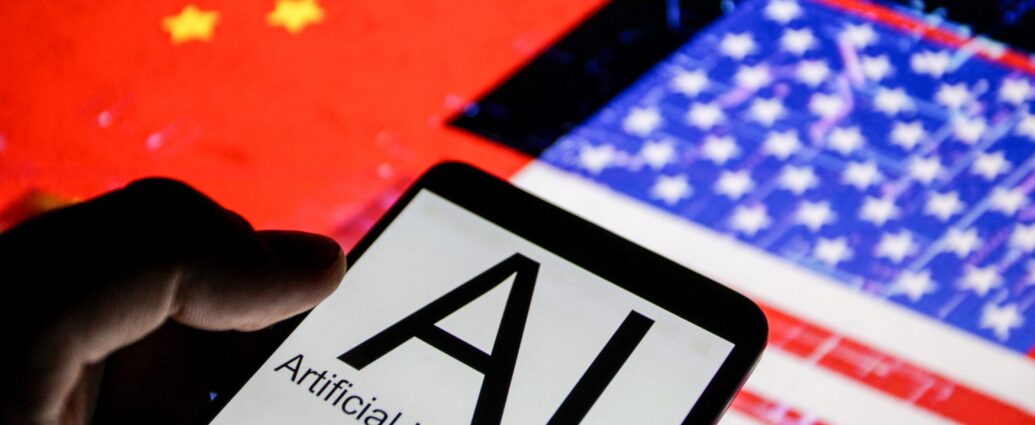
This post was originally published here

Almost everything in the AI economy is a bet about the future.

When Nvidia reports its quarterly earnings, its backlog — orders planned but not yet filled — matters nearly as much as revenue. Anthropic and OpenAI’s IPO chatter and “valuations” are bets on what they’ll earn as much as decades from now. Companies like Coreweave finance data centers before they have tenants. Everyone is pushing capital through the same bottleneck, roughly 2% of GDP a year, on a simple premise: demand for AI compute is close to infinite, so either businesses will pay more for smarter models, or they’ll use so much of them that it won’t even matter.

Jensen Huang, CEO of Nvidia, calls that the “two exponentials” driving the price of AI compute; models are growing more complex, and more people and agents use them. Either way, the idea is that the labs capture that surplus and send it back through the ecosystem to cover their debts. There’s just one problem: as impressive as the new model releases are, they don’t seem to be causing sustained spikes in the price of AI compute—in fact, the AI token is getting cheaper, fast. 

That’s according to new data from Ramp, the corporate spending platform, published Wednesday, showing the effective price that American businesses pay per a million tokens has fallen about 41% from its peak in March, from $1.15 to 68 cents. The share of usage going to frontier models is dropping, too; about 53% in early August to 45% by September. And the top 1% of spenders, the cohort that drives about 80% of OpenAI and Anthropic’s enterprise revenue, cut per-employee spend by nearly 10% in August. 

It’s not a disaster or the bubble bursting but it is a “crack in the AI thesis,” Ara Khazarian, the Ramp chief economist who runs the Index, told Fortune. Rather than unleashing a gush of demand for the best models, tokens are starting to be priced more like a commodity– as interchangeable as salt or wheat. And commodity owners aren’t valued at $2 trillion. Morgan Stanley has flagged vulnerability for up to $300 billion in bonds financing neocloud buildouts—CoreWeave-style companies that borrowed to build data centers before signing tenants—if token prices don’t keep up. 

Ramp isn’t the only one flagging the trend. Citadel Securities noted in June that a separate measure, Silicon Data’s LLM Expenditure Index, started to fall because of a “bifurcation” between frontier AI, concentrated among the few tech-heavy firms that can afford it, and the “everyday” AI the rest of the economy runs on.

“You have multiple metrics now starting to move in a negative direction,” Kharazian said.

He said that the price decline reflects a mix of labs being forced to cut prices—OpenAI slashed the cost of its GPT-5.6 Luna model by 80%, and Anthropic announced its own cuts last month—and customers trading down to cheaper and simpler models. Which makes it threatening, he added, to anyone “who’s expecting a full dream scenario where the AI companies grow with nothing curbing their enthusiasm.”

That was the mood in the Spring, as “tokenmaxxing” entered the tech lexicon, the media told stories of token-usage dashboards and Nvidia’s Huang insisted a $500,000 engineer should burn $250,000 a year in tokens. But by the summer, cost discipline set in; Amazon and Meta killed its own leaderboards in May, while Microsoft cancelled Claude Code subscriptions. Khazarian said he’s now hearing the opposite of tokenmaxxing from businesses: companies are imposing defaults that steer employees away from frontier models entirely.

 “Companies are increasingly starting to use Terra and Sonnet,” he said; the mid-tier models that are “highly performant and also cheaper.” Ramp’s top 1% of firms, the most AI-intensive in the country, now spend about $7,200 per employee per month on AI—roughly a third of Huang’s target, and tapering off.

Some analysts blame the rise of open-source models, a hot-topic issue a few weeks ago for AI companies that has now faded to the background among the high tenor of AI discourse drama. Only 3.6% of businesses on Ramp’s platform use open source or Chinese models. And even if they did, there’s good evidence that Deepseek, Tencent, Alibaba, and other major Chinese companies are fighting a brutal pricing war that’s depressing token prices too.

So it’s an international phenomenon. Back home, OpenAI and Anthropic are in a lopsided competition, Kharazian said. Since Aug. 1, OpenAI’s effective price has fallen 38%, to 48 cents; Anthropic’s has fallen 22%, to 90 cents. Anthropic has charged nearly double of what OpenAI has all year and has held down a floor near 90 cents since June, but OpenAI’s price has kept falling. That suggests Anthropic “probably has some pricing power,” Kharazian said, but “that edge is wearing down” as OpenAI takes a growing share of tokens on price.

The token pricing patterns tell a similar story; Anthropic’s price spiked when Fable 5 launched in March, and OpenAI spiked with Sol in July. But they weren’t consistent, and prices eventually faded back down. “It’s not that businesses aren’t willing to pay high prices,” Kharazian said. “Prices are relative to the other products available on the market,” and the mid-tier products “are also really good.”

OpenAI’s finance chief described that dynamic on Tuesday as she spoke at a Goldman Sachs conference. CFO Sarah Friar said the company had cut the price of its GPT-5.6 Luna model by 80% since its launch, cheaper than some Chinese open-source weight models. She added that she’d like to get away from token counting altogether, and move enterprise customers to paying only for completed work. They claim that OpenAI’s enterprise revenue grew 32% from June to July, she said, but that growth seems to come from increased share.

“I would love,” Friar said, “to get us away from token-counting.”

This story was originally featured on Fortune.com

This post was originally published here

Robotaxis will be a common sight on the world’s streets within five years, predicted James Peng, founder and CEO of the Chinese autonomous driving firm Pony.ai. “I think the technology problem is pretty much already solved,” he said at the Fortune Leaders Forum in Macau on Sept. 8. “You’ll be able to hail a robotaxi just like a normal taxi.”

While Waymo dominates the robotaxi conversation in the U.S., Chinese robotaxi firms like Pony.ai are gaining ground almost everywhere else. Pony.ai, founded in 2016, runs commercial robotaxi services across Beijing, Guangzhou, Shenzhen and Shanghai. The company now averages about 25 rides per day per vehicle.

“Our riders are very diverse across different age groups, different professions,” Peng said. “It’s definitely not something unique, just for the tech-savvy people to try.”

The company is also pushing abroad. In August, Pony.ai announced an expanded partnership with Uber to deploy more than 2,000 robotaxis across Europe, building on their launch in Zagreb, Croatia, and agreed to bring 200 robotaxis to South Korea by 2028. It also has partnerships in the Middle East and Singapore

LUCAS SCHIFRES for Fortune

When deciding where to expand, Peng said he looks for cities with a relatively expensive taxi market and a favorable regulatory environment. Partnerships with companies like Uber can help foster trust in a community and convince governments and policymakers to embrace a driverless future.

Other robotaxi providers, like WeRide and Baidu, are also pushing abroad with new ventures in Southeast Asia and Europe. 

Peng credited China’s “supportive” regulatory environment for the country’s strength in autonomous driving. “The key challenge is it’s such a complex system,” he said. “It requires hardware, software, talents… China provides a good system to support this kind of innovation.”

More widespread robotaxis could reshape how cities work. “Most private cars are used for two hours a day,” Peng said. “If robotaxis are more ubiquitous, we’ll save on parking spaces.”

“The implications will be profound,” he added. “It will change the whole urban planning and change the way of our life.”

Pony.ai generated robotaxi revenue of $12.1 million in the second quarter of the year, a jump of almost 700% from a year earlier. Still, the company also reported an operating loss of $65.7 million.

In a March interview with Fortune, Peng noted some ways that robotaxis were changing user behavior. Passengers, for example, sometimes forget to close the car door when leaving; without a human driver, Pony.ai ends up asking nearby delivery gig workers to close the door for them.

At the Fortune Leaders Forum, Peng shared another observation: The share of female riders trends upwards during evening hours. “They feel a lot safer because there are no drivers,” Peng said. “It’s safe, private, and, also, it’s consistent.”

This story was originally featured on Fortune.com

This post was originally published here

The price of oil surpassed $100 a barrel for the first time since July after attacks on oil facilities and ships in the Middle East threatened to debilitate an already weakened supply chain.

Brent crude, the international standard, jumped nearly 3% to $100.72 early Wednesday.

U.S. benchmark crude gained 2.4% to $95.25 a barrel, and U.S. gasoline prices rose sharply overnight.

The average price for a gallon of regular gasoline ticked up 7 cents overnight to hit $4.22, now more than a dollar above what it cost at this point last year, according to AAA.

Diesel prices, which can have an outsized impact on consumers because it is used in shipping and production, hit an all-time high Friday and has continued to climb since. The average price for a gallon reached $5.94 overnight and is now 9 cents higher than it was Friday.

Jet fuel has become so expensive that U.S. and international carriers have cut flights while raising fares and fees.

Markets reacted after the U.S. military reported striking five Iranian tankers in response to attempted missile attacks on a Navy warship and after attacks by an Iranian-backed Houthi rebel group ignited fires at oil facilities in Saudi Arabia.

Crude oil prices shot up after Israel and the United States initiated a war with Iran, and they have fluctuated considerably during the more than six months since then. The fighting has halted most shipping through the Strait of Hormuz, a narrow waterway through which a fifth of the world’s oil supply passed before the war began.

Brent traded between about $70 to $100 a barrel for much of March, April and May. In July, prices swung between $72 and $102, reflecting rising and falling hopes that the U.S. and Iran would agree on a plan that would allow stranded tankers to move oil safely out of the Persian Gulf.

“In our view, reaching a durable deal before the U.S. midterm elections is increasingly unlikely, and it could remain elusive even beyond that,” Bank of America analysts said in a Tuesday research note.

The analysts increased their oil price forecast for the second half of the year to $83 a barrel “in light of more persistent disruptions to Hormuz,” but said they still expected shipping through the strait to gradually pick up. If attacks keep a chokehold on traffic, prices could reach $95 to $120 a barrel, while damage to major energy infrastructure could produce spikes of up to $150 a barrel, the analysts wrote.

Negotiations over a preliminary deal between the U.S. and Iran to end the conflict broke down over control of the Strait of Hormuz. Iran insists it has the right to set the terms and charge fees for ships traveling through the waterway off its coast. The U.S. wants passage to remain free and has used a Navy blockade to block Iran’s ports and oil tankers.

Recent stepped-up attacks by Yemen’s Houthis could constrain global oil supplies even more because they targeted an alternative shipping route that Saudi Arabia has relied on to transport oil during the war.

Higher energy costs have weighed on consumers, businesses and national economies this year, particularly outside of the U.S. Refinery outages in Russia, reduced refining activity elsewhere and sharply declining inventories have pushed diesel and gasoline prices sharply higher globally, Bank of America said this week.

Yet rising prices may have an outsized impact on the upcoming U.S. midterm elections, now just 8 weeks away.

___

AP Business Writer Rio Yamat contributed from Las Vegas.

This story was originally featured on Fortune.com

This post was originally published here

Good morning. On Fortune’s radar today:

  • U.S. emergency oil supplies are dwindling toward panic levels.
  • Markets: Global selloff continues.
  • The end of “tokenmaxxing” is the biggest risk to AI, Wells Fargo says. 
  • AI is driving GDP growth and the stock market, KKR warns.
  • Drone boat rescues chopper pilots in Iran war.
  • Chart: What OpenAI and Anthropic’s revenues look like over time.
  • CEO sets thirst-trap for journalists with $200,000 job offers.

This story was originally featured on Fortune.com

This post was originally published here

Good morning. On Fortune’s radar today:

  • The bull and bear cases for the SpaceX IPO.
  • The Fortune Crypto 100: The best companies ranked.
  • “Dunesday” clash looms in Hollywood.
  • Trump rages against Iran and the media.
  • AI spending projected at $14 trillion.
  • High school yearbook Nostradamus predicted Knicks victory way back in 2020.

This story was originally featured on Fortune.com

This post was originally published here

Good morning. On Fortune’s radar today:

  • SpaceX IPO will reveal which “shareholders” got scammed.
  • It might be cheaper to have your AI data center in orbit.
  • Trump says he has ended the war. Iran isn’t so sure.
  • Markets: Yay!
  • Statistically, Mondays are the worst day of the week for stocks.
  • Has the president cursed the New York Knicks?

This story was originally featured on Fortune.com

This post was originally published here

Good morning. On Fortune’s radar today:

This story was originally featured on Fortune.com

This post was originally published here