Good morning. On Fortune’s radar today:

This story was originally featured on Fortune.com

This post was originally published here

Good morning. On Fortune’s radar today:

  • OpenAI’s financials have leaked. We have the details.
  • In Smalltown USA, new AI data centers pit neighbor against neighbor.
  • The new Fortune Southeast Asia 500 is here.
  • Markets: Global rally.
  • U.S.-Iran peace deal may include $300 billion for Tehran.
  • The jet fuel crisis never existed, sources say.

This story was originally featured on Fortune.com

This post was originally published here

Good morning. On Fortune’s radar today:

  • Did Iran win the war? Some people think so.
  • Markets: It’s a mixed bag, tbh.
  • Regime change at the Fed—what to watch for.
  • Global military spending is on the rise.
  • AI is changing what students choose to major in.
  • Gen-Z’s addiction to “slop bowls.” 

This story was originally featured on Fortune.com

This post was originally published here

Good morning. On Fortune’s radar today:

  • We’ve now got the full text of the U.S.-Iran peace deal.
  • Allies are glad the war is over but appalled at the gains it hands to Iran.
  • Markets threw a fit over Kevin Warsh’s first appearance as Fed chief.
  • Europe’s Most Innovative Companies: See the definitive list here.
  • Elon Musk may have accidentally chosen the future prime minister of Britain.
  • Delinquent U.S. credit card debt is “back in line with the Global Financial Crisis peak,” Goldman Sachs warns.
  • There’s a specific financial reason why Hollywood is full of British people.
  • [Fortune 500 Digest will take a day off on Friday and resume on Monday.]

This story was originally featured on Fortune.com

This post was originally published here

The United States’ national debt crossed $40 trillion last month. Five months earlier, in March, the more consequential figure—debt held by the public as a share of Gross Domestic Product—had already hit 100% for the first time since just after World War II.

That threshold arrived at the tail end of an extraordinary run: every president who has occupied the Oval Office since 2001, save Joe Biden, was born a baby boomer, and boomers held a majority of Senate seats as recently as the 118th Congress. The Committee for a Responsible Federal Budget, the nonpartisan think tank that serves as a fierce budget hawk, issued a blog post retroactively looking at how we got here over the past quarter-century. What’s left unsaid is who was in power over that period, and the answer is overwhelmingly: boomers.

A quarter-century, mapped to a generation

In 2001, debt held by the public stood at 32% of GDP and was falling; and the federal government was running annual surpluses of 1% to 2% of GDP. Today, that debt has more than tripled to 100% of GDP, with deficits running around 6% annually.

The CRFB analysis, an update of its own 2024 report “From Riches to Rags”, that 25-year deterioration traces to three roughly equal forces: major tax cuts (37% of GDP), spending increases (33%), and recession responses like the 2008 financial crisis and COVID-19 relief (28%). Strip out any one of the three, CRFB found, and debt would sit close to where it stood in 2001. Strip out all three, and the national debt would be paid off today.

Every one of the major laws behind that math was signed by a boomer president. George W. Bush (born 1946) signed the 2001 and 2003 tax cuts and created Medicare Part D. Barack Obama (born 1961) extended the Bush tax cuts in 2010 and 2013. Donald Trump (born 1946) signed the 2017 Tax Cuts and Jobs Act and, in 2025, the One Big Beautiful Bill Act, which the Congressional Budget Office projects will add $4.7 trillion to the debt through 2035—and even more if its temporary provisions are made permanent, per earlier CRFB estimates. Biden, technically of the Silent Generation but politically continuous with the boomer era, presided over COVID-19 relief spending that, along with the 2007-2009 financial crisis response, added more than $6 trillion to the debt.

The Spending Skews Old

Beyond the legislative signatures, the money itself flows disproportionately toward the old. The Penn Wharton Budget Model calculates that the federal government spends roughly 10x more per capita on Americans over 65 than on those under 26; in aggregate, retirees receive 38.6% of all federal outlays—61.9% of spending that can be assigned to a specific age group—versus 10.3% for the youngest adults. The Manhattan Institute puts a sharper point on the same imbalance: in 2022, Americans 65 and older made up 17% of the population but received 66% of entitlement spending, while contributing just 11% of direct tax revenue.

A median-wage worker retiring in 2027 will collect roughly $730,000 in lifetime Social Security benefits against less than $200,000 in career contributions—a 265% return once the employer-paid half of payroll taxes is excluded. The Congressional Budget Office projects Social Security, health care programs, and net interest costs together will drive 81% of the growth in total federal spending between 2023 and 2033.

Not a single vote, but decades of them

None of this stems from one ballot measure. It stems from what political scientists and think tanks across the ideological spectrum describe as a durable, self-reinforcing coalition: an electorate skewing older and more reliably at the polls, represented by lawmakers drawn overwhelmingly from their own ranks, repeatedly choosing to cut taxes, expand benefits, or decline to touch either.

Yale professor Samuel Moyn calls it an “oldigarchy” and dedicated a recent book to attacking America’s “gerontocracy.” Moyn told Fortune in July that even he’s been stunned by the denial and anger he’s received from pointing this out: “I had not known that LinkedIn was really a site where there were a lot of just like, senior citizens, you know, spewing out hatred,” he said. “It’s been extraordinary.”

Voters 65 and older make up about 18% of the electorate but cast 25% of votes, according to polling data from earlier this year, and Medicare protection now draws support above 89% among seniors of both parties. That asymmetry helps explain why entitlement reform has remained, in Washington’s own cliché, the third rail of American politics — a program’s beneficiaries vote in outsized numbers, and the politicians who depend on their support are disproportionately their peers.

The Peter G. Peterson Foundation, which has tracked the debt’s rise across multiple thresholds this year, frames the mechanism in blunter terms. “We’re basically taking $2 trillion from our future,” Foundation CEO Michael Peterson said as the debt passed $40 trillion, warning that the Social Security trust fund will be exhausted within six years, triggering automatic benefit cuts of 22% for future retirees if Congress does not act. Unlike some generational critics, Peterson stops short of assigning blame to a single age cohort’s voting behavior, framing the debt instead as a bipartisan failure of political will.

As far back as 2019, the American Enterprise Institute hosted a discussion of Joseph Sternberg’s book The Theft of a Decade, which argued the “policy choices of baby boomers” had “mortgaged their children’s future to pay for their own economic comforts”—a thesis published half a decade before the current debt crossing, suggesting the generational framing predates and will likely outlast this particular fiscal milestone.

What the data doesn’t fully support

The clean, singular version of this story—that boomers as a bloc voted to load the debt onto their descendants—oversimplifies a more tangled political history. Much of Social Security and Medicare’s basic architecture predates boomer political power altogether; Lyndon Johnson signed Medicare into law in 1965, when the oldest boomers were 19. Boomer officeholders split closely by party on tax and spending questions, and CRFB’s own accounting shows entitlement growth explains a comparable, not dominant, share of the debt alongside tax cuts and discretionary spending, including two recession responses — the 2008 financial crisis and the COVID-19 pandemic—that were not boomer policy choices in any partisan sense but emergency reactions with broad public and elite support.

What the record supports more precisely is a story of governance, not a single act of self-dealing: a generation that has occupied the presidency in seven of the last nine elections, held Senate majorities into 2025, and consistently faced reelection incentives to protect the benefits it was owed and defer the bill—a governing pattern less like a single vote and more like a 25-year lease renewed again and again, with the last payment due from someone else.

For this story, Fortune journalists used generative AI as a research tool. An editor verified the accuracy of the information before publishing.

This story was originally featured on Fortune.com
This post was originally published here

British Prime Minister Andy Burnham defended his government’s decision to ban trade with Israeli settlements in the occupied West Bank on Wednesday, saying that Britain was being true to its roots by taking a stand for justice.

“Britain has to stand for fairness against injustice where people are being bullied out of their homes,” Burnham told Parliament. “We will always stand with the underdog and take what action we can to support them.”

The U.K. announced the ban on Tuesday, and Israel responded by closing the British consulate in east Jerusalem and banning 11 lawmakers from the country.

The U.K.’s tougher stance was followed by France and Canada’s leaders saying they would take similar action to prevent expanding settlements and growing violence from making it impossible to establish a future Palestinian state.

Foreign Secretary Ed Miliband said “settler terrorists” were carrying out “ethnic cleansing” of Palestinians in the U.K. government’s biggest pushback to Israel since it recognized Palestinian statehood a year ago. He said there had been “houses bulldozed, roads and public infrastructure destroyed, families displaced from their homes.”

Israeli Foreign Minister Gideon Saar condemned the “despicable” move and said Israel would expel U.K. representatives from a joint military center monitoring the Gaza ceasefire and end U.K. training of the Palestinian Authority’s security forces in the West Bank. In addition, Israel barred entry to a dozen British lawmakers and other U.K. citizens whom Saar said were “involved in antisemitic and anti-Israel activity.”

Miliband, who is Jewish, said he was disappointed with Israel’s response and rejected criticism from the U.K.’s chief rabbi, saying it would not lead to more antisemitism in the U.K.

Ephraim Mirvis, the chief rabbi in the U.K., accused the government of “gesture politics” that would bolster “the very extremism they seek to target.”

“We all need to do more to tackle antisemitism, but I believe we can do that and stand up for British values,” Miliband said.

The ban covers imports of all goods from the settlements and bars companies from providing services for the settlements, including financing, construction, infrastructure, real estate and advertising. It will take effect in up to nine months.

Denmark, Finland, Iceland, Poland, Portugal and Sweden have pledged to “support further action,” Miliband said. The Netherlands, Ireland, Belgium, Spain and Norway have either banned goods from settlements or are in the process of doing so, he said.

Miliband also tightened Britain’s embargo on weapons sales to Israel for use in Gaza to include arms “that materially contribute to the occupation” of Palestinian territories.

Conservative lawmaker Bernard Jenkin said he was concerned that the government’s decision could affect counterterror cooperation with Israel to keep Britons safe.

“We are now embarked, it seems, on a full diplomatic dispute with Israel and tit-for-tat expulsions of diplomats,” Jenkin said.

The economic impact of the ban is likely to be limited, since the settlements produce only a small amount of largely agricultural exports. But the move is a symbolic expression of displeasure with Israel by some of its closest allies, and it offers a new sign of the Israeli government’s growing isolation as a result of the Gaza war.

Under Israeli Prime Minister Benjamin Netanyahu ‘s ultranationalist government, settlement construction in the West Bank — seized by Israel in the 1967 Mideast war — has surged. Netanyahu’s government views the West Bank as the biblical and historical homeland of the Jewish people and is opposed to the creation of a Palestinian state.

The international community overwhelmingly considers such construction to be illegal. Britain and other countries have voiced particular concern about the E1 settlement project approved by Israel, which would effectively cut the territory in two.

There have been marked increases in attacks by settlers on Palestinians, evictions from Palestinian towns, Israeli military operations and checkpoints that choke freedom of movement, as well as several Palestinian attacks on Israelis.

Britain’s action was applauded by former Ireland President Mary Robinson and ex-New Zealand Prime Minister Helen Clark, both former U.N. officials. The two said the EU should follow suit.

“A coordinated international defense of the two-state solution is needed now more than ever,” they said. “Palestine must not be erased.”

This story was originally featured on Fortune.com
This post was originally published here

Republicans appeared to have a firm grip on the Senate heading into the final two years of President Donald Trump’s term. But with less than two months until Election Day, control of the chamber is now up for grabs.

Democrats have found themselves competing in states that once seemed beyond their reach as Trump’s slipping approval ratings and voters’ dissatisfaction with the economy create a difficult political environment for Republicans. But races Democrats once counted on winning have also become more complicated.

It’s a battle that’s expected to exceed $3.4 billion in spending across all races during the midterm campaign. The implications are huge for Trump’s agenda and his ability to fill administration jobs and open court seats for the remainder of his term, as the Senate is empowered to confirm or block presidential nominees.

Republicans say it’s unlikely for everything to break in Democrats’ favor, but they acknowledge they’re facing a difficult landscape. Senate Majority Leader John Thune told South Dakota’s KELOLAND News last week that he does “worry” about losing the chamber.

“I’m a realist,” Thune said. “I don’t ever try and sugarcoat things. I think it’s a competitive environment right now.”

Democrats face a scrambled path to the majority

Democrats need to net four seats to win the majority. The original path had been to hold Michigan, Georgia and New Hampshire while winning back Republican-held seats in Alaska, Maine, North Carolina and Ohio. But things have changed.

“We now have multiple paths for the majority,” Senate Democratic Leader Chuck Schumer said last month. “We found new states — Iowa, Texas — which people a year ago weren’t even paying attention to.”

Some of the states where Democrats were feeling most optimistic at the start of the election cycle, such as Michigan and Maine, have grown murkier.

In Michigan, where there’s an open seat this fall, no GOP candidate has won a Senate race since 1994. But Democrats are struggling to unite behind nominee Abdul El-Sayed. The favorite of progressives narrowly defeated moderate U.S. Rep. Haley Stevens in the August primary, and feelings remain raw from a bruising contest that saw nearly $70 million spent against El-Sayed.

Republicans believe Mike Rogers, who lost the 2024 Senate race by fewer than 20,000 votes, has an improved shot against El-Sayed. The Senate Leadership Fund — Senate Republicans’ spending PAC — added $6 million to its Michigan advertising investment after El-Sayed won, bringing their total spending to $51 million, the third-highest total.

Democrats also saw a prime opportunity to finally defeat five-term Republican Sen. Susan Collins in Maine, where Democratic Vice President Kamala Harris won more votes than Trump in 2024.

Progressive Graham Platner easily won the nomination in June, but he left the race the next month over a sexual assault allegation that he denies. Democratic delegates in late July chose Troy Jackson, a lesser-known former state legislative leader, to replace him.

Jackson has been forced to play catch-up. Collins and aligned super PACs have spent almost $80 million so far, according to the ad-tracking firm AdImpact, while Jackson and Democratic-aligned groups have spent and reserved close to $45 million since he became the nominee.

As one path narrowed for Democrats, others widened

Democrats increasingly see a real possibility in Texas, a state that has been an elusive goal for decades, and other GOP-led states including Iowa, Alaska and Ohio.

In Texas, Democrat James Talarico faces state Attorney General Ken Paxton, who ousted four-term incumbent Republican Sen. John Cornyn to win the GOP nomination. Senate GOP leadership backed Cornyn, seeing him as the stronger general election candidate.

Paxton has been shadowed for decades by legal and ethical questions, including indictments for securities fraud, though he was not convicted.

Talarico and allied groups have spent nearly $30 million on advertising since the May runoff, compared to less than $3 million by pro-Paxton groups. The political fund associated with Trump last week spent $10 million on TV and digital ads to help Paxton — the first major general election investment by MAGA Inc. for the midterms. Senate GOP leaders had petitioned Trump’s political team to spend some of the more than $400 million it had last month to help Paxton.

Democrats have also upped their spending in Alaska, Iowa, Ohio and North Carolina, all states currently held by Republicans. The GOP, meanwhile, is feeling more optimistic about New Hampshire as well as Michigan, while spending more to defend seats in Iowa and Alaska.

The expanded map has upped the anticipated total spending this cycle. AdImpact in June projected $3.4 billion in advertising spending on Senate races, a significant increase from the $2.8 billion the ad spending firm projected in the fall of 2025.

Why more states are in play than expected

Democrats’ path has widened in part because of Trump’s slumping job approval, notably on handling the economy, which was at 32% according to an AP-NORC poll in July — down from 40% in March 2025, shortly after he took office.

Trump’s trade policies and the war in Iran, with its corresponding inflated fuel costs, have added to the economic uncertainty for voters less than two months before Election Day.

“Things still cost too much. And so we’ve got to work on that issue,” Republican Rep. Jim Jordan of Ohio told The Associated Press. “We understand that and we know that’s real.”

Ohio Sen. Jon Husted heard the concern firsthand at a roundtable last month. Husted is looking to fend off a comeback from former Sen. Sherrod Brown in another key matchup for both parties.

During the discussion on housing, one attendee told Husted that costs were “skyrocketing” in part because of uncertainty around tariffs.

“Uncertainty is the killer to this economy,” said Dean Windham, a real estate developer who previously ran for office as a Republican.

Some Republican Senate candidates have defended Trump’s policies while confronting concerns about their economic impact.

In Michigan, where Trump’s tariffs on Canada have become a central issue, Rogers has backed the president’s approach while leaving room for disagreement.

“President Trump is right to put America First — and tariffs are necessary, but are not a one-size-fits-all solution,” Rogers said in a recent statement.

Republicans believe the math still favors them

Even if Democrats hold every seat they currently control, they would need to flip at least two seats in states Trump carried by double digits in 2024 to win the majority.

Republicans are betting that those underlying advantages will matter more as Election Day approaches — particularly as Trump and the party turn their attention toward mobilizing voters who helped return him to the White House.

Trump told reporters last week that he will “be making a lot of stops” in the last 30 days before the election.

This week, Republicans will hold a midterm convention in Texas, where Trump is set to speak and top Senate candidates including Rogers and Husted are expected to attend.

But Republicans acknowledge they have work to do.

“Politics is local,” Republican Sen. Mike Rounds of South Dakota said. He pointed to Trump’s decision to import beef, which he said made farmers and ranchers “feel just like the administration pulled the rug right off from underneath” them.

“They’re hurt,” Rounds said. “They feel like they’ve been let down.”

___

This story has been corrected to reflect that the GOP midterm convention is this week, not next week.

___

Beaumont reported from Des Moines, Iowa.

This story was originally featured on Fortune.com

This post was originally published here

Good morning. On Fortune’s radar today:

  • Iran bombs 85 U.S.-allied sites in the Middle East.
  • Markets: Oil surges, stocks slide on war fears.
  • AI capex is hurting hyperscaler profits, ING says.
  • Fortune’s new AI podcast (made by humans!)
  • You are more likely to inherit a business than buy one.
  • Why you should know about Paris Hilton’s 11-month imprisonment.

📬 Would you prefer to receive this information in your email inbox every morning before the markets open in New York? Sign up here.

This story was originally featured on Fortune.com

This post was originally published here

Good morning. On Fortune’s radar today:

  • Federal judge pours scorn on Elon Musk settlement.
  • Iran and the U.S. enter second day of renewed missile strikes.
  • Markets: Climbing the wall of worry.
  • Investors balk at Amazon’s ‘surprise’ new debt.
  • Confusing evidence on whether the World Cup creates jobs.
  • CEO of $4.8 billion software company secretly tracks down your ex-bosses.

📬 Would you prefer to receive this information in your email inbox every morning before the markets open in New York? Sign up here.

This story was originally featured on Fortune.com

This post was originally published here

Good morning. On Fortune’s radar today:

  • Wall Street is worried that Trump has no way out of the Gulf. 
  • Markets: No news is good news.
  • 😬 Wars are good for stocks, top analyst says. 
  • Users pick AI models on price, not performance, Amazon CTO says.
  • Reddit is taking ad dollars from LinkedIn, Pinterest, Snap, and X.
  • Harry Styles is to blame for rising interest rates in Europe.

📬 Would you prefer to receive this information in your email inbox every morning before the markets open in New York? Sign up here.

This story was originally featured on Fortune.com

This post was originally published here

Good morning. On Fortune’s radar today:

  • Trump has an “undeclared naval war” in the Strait of Hormuz.
  • Oil goes up as the clock ticks down to the midterms. 
  • Markets: Mostly down.
  • Chipmakers are vacuuming up hyperscaler cash.
  • Tariff revenue is now close to zero.
  • Is the K-shaped economy coming to an end?
  • Wall Street is paying interns up to $86,000 for just 10 weeks work.

📬 Would you prefer to receive this information in your email inbox every morning before the markets open in New York? Sign up here.

This story was originally featured on Fortune.com

This post was originally published here

Good morning. On Fortune’s radar today:

  • Markets: Mixed and fearful as the war in Iran heats up again.
  • Trump wants a toll booth in the middle of the Strait of Hormuz.
  • Gulf countries deploy workarounds to avoid the Strait.
  • Having a good war: Chinese renewable tech companies.
  • Must-read: Inside eBay’s stalking and terrorism unit.
  • Netflix is down 40% since Reed Hastings left—but top analyst sees imminent turnaround.
  • Match Group HR chief says dating coworkers is OK (as long as you tell him about it).

📬 Would you prefer to receive this information in your email inbox every morning before the markets open in New York? Sign up here.

This story was originally featured on Fortune.com

This post was originally published here

Good morning. On Fortune’s radar today:

  • Markets: Up, mostly.
  • Trump threatens more bombing.
  • The Strait of Hormuz slams shut.
  • U.S. missile stockpiles are dwindling.
  • No one knows what the endgame is.
  • China’s export trade shrugs off U.S. tariffs.
  • What jobs do illegal immigrants actually do? 
  • Apple’s super-spicy gossip about OpenAI.

📬 Would you prefer to receive this information in your email inbox every morning before the markets open in New York? Sign up here.

This story was originally featured on Fortune.com

This post was originally published here

Good morning. On Fortune’s radar today:

  • Elon Musk is no longer a trillionaire…
  • … and he’s facing a criminal “bribery” probe in Wisconsin.
  • Exclusive: Disney’s $3 billion shipping secret.
  • Oil is mysteriously cheap!
  • Trump eyes land invasion of Kharg Island.
  • Dan Ives joins Trump-linked investment group.
  • Countries of the world ranked by inflation.

📬 Would you prefer to receive this information in your email inbox every morning before the markets open in New York? Sign up here.

This story was originally featured on Fortune.com

This post was originally published here

Good morning. On Fortune’s radar today:

  • Markets: Big global selloff as traders bail out of tech stocks.
  • Hyperscaler pullback could tip economy into recession, Apollo analyst warns.
  • Airbnb CEO Brian Chesky targeted in AI slop hack.
  • The U.S. is now bombing civilian infrastructure in Iran.
  • Government debt is bigger today than it was in the GFC.
  • Congress might be about to abolish daylight savings time.

📬 Would you prefer to receive this information in your email inbox every morning before the markets open in New York? Sign up here.

This story was originally featured on Fortune.com

This post was originally published here

Good morning. On Fortune’s radar today:

  • Trump’s proposals could create a “rigged” stock market.
  • “Harvest now, decrypt later”: Quantum’s looming hacker threat.
  • Markets: Oil back above $90.
  • Iran vows that not “a single ​drop ‌of oil” will pass through the Strait of Hormuz.
  • The two sides are still talking, though.
  • Goldman Sachs’ correct World Cup prediction.
  • Deutsche Bank’s “Cheap Date Index” ranks Geneva as the most expensive place for love.
  • Esther Perel hates your blurred Zoom background.

📬 Did someone forward you this email? If you would like to receive this information directly, every morning before the markets open in New York, sign up here.

This story was originally featured on Fortune.com

This post was originally published here

Good morning. Tokenmaxxing quickly became one of the buzziest metrics in enterprise AI.

Fortune’s Jeremy Kahn reported that tokenmaxxing turned into a status symbol at some big tech companies, where engineers were urged to climb leaderboards by burning more AI tokens. Critics argue that the practice skewed incentives and exposed a broader gap between AI spending and actual productivity gains.

I recently spoke with Dermot McDonogh, the CFO of BNY, which is making major strides with AI. While some companies track success by the volume of prompts, tokens, or agents deployed, McDonogh said that framing never took hold inside BNY.

“It’s not something we spend any time talking about,” he told me, noting that token costs are “modest within modest” relative to the firm’s broader engineering budget. Even as the topic gained traction externally, the bank’s leadership prepared to address it—but ultimately viewed it as a distraction from more meaningful measures of value.

McDonogh said that BNY had an early and deliberate AI strategy. Since the emergence of ChatGPT, the bank has spent several years building an internal, LLM-agnostic platform and forging partnerships across hyperscalers and model providers. Just as important, he said, has been CEO-level commitment and a focus on cultural adoption.

“There’s been a demystification,” McDonogh said. “People don’t feel insecure about AI. That’s a really important cultural point.”

That approach has allowed BNY to scale AI without fixating on cost per query. Internally, systems route tasks to the appropriate models, ensuring efficiency without requiring employees to optimize prompts manually. “I couldn’t tell you how many prompts we did last week,” he said. “I’m focused more on outcomes.”

Those outcomes are increasingly measurable. In the first quarter of 2026, more than 40% of BNY’s code was authored by AI, rising to roughly 50% more recently. AI is also embedded across operations: about half of annual account plans are drafted with AI, 25% of client onboarding is AI-supported, and roughly 70% of restricted-party payment screening is reviewed by AI.

The impact is showing up in financial metrics. Revenue per employee rose from $338,000 in 2022 to $401,000 in 2025, while pre-tax income per employee increased from $99,000 to $143,000 over the same period.

McDonogh frames these gains less as cost savings and more as capacity creation. “We haven’t reduced the footprint, but it’s allowed us to do more with the footprint that we have,” he said.

To track progress, BNY measures AI impact across core workflows—including innovating, prospecting, onboarding, transacting, and streamlining—while continuously building out its internal “Eliza” platform. The system serves as a firm-wide context layer, improving over time as it ingests more data and use cases.

Employee adoption is also structured. Staff progress through three levels of AI proficiency, culminating in a “pioneer” designation that requires formal training and testing. Access to more advanced models is gated by expertise, reinforcing both quality and accountability.

Within finance specifically, AI is already reshaping core processes. McDonogh points to regulatory reporting, balance sheet analytics and predictive modeling as key use cases. The technology is also playing a growing role in earnings preparation, helping synthesize analyst expectations and anticipate investor questions.

For McDonogh, the takeaway is straightforward: AI productivity is not about how much you use, but how effectively it changes what an organization can do.

Sheryl Estrada
sheryl.estrada@fortune.com

New today: The 2026 Fortune Global 500 list is out this morning, ranking the world’s largest corporations by revenue for the 2025 fiscal year. Now in its 37th year, the companies, in total, represent about two-thirds of the world’s GDP, with $43.1 trillion (up 3%) in revenues, $3.4 trillion (up 14%) in profits, and 70.2 million employees. The top 50 companies alone account for a third of total revenue and 39% of profits. Fortune subscribers get exclusive access to the list.

This story was originally featured on Fortune.com

This post was originally published here

A major American aid group is promising to deliver more medicines in high-need areas around the world after receiving its largest ever donation.

Americares, a nonprofit that supports thousands of health centers globally, announced a $50 million gift Wednesday from an unidentified Connecticut family. The contribution represents an unusual expansion at a time when the United States’ sudden aid cuts have hamstrung programs ranging from maternal and child health to HIV treatment and prevention.

“They definitely understood the moment and wanted to do more to respond to that,” Christine Squires, the president and CEO of Americares, said of the donor.

Individual philanthropists and charitable foundations have sought to plug some funding holes in the 18 months since President Donald Trump upended the U.S. Agency for International Development. A British billionaire funded nutritional peanut paste. Former USAID employees raised more than $125 million to buoy dozens of critical aid programs. The Gates Foundation narrowed its priorities.

Global health of all USAID’s targets has received much of the attention from big donors, according to Susan Appe, a University at Albany professor of public administration and policy who has researched how nonprofits deal with the changing whims of donor countries. That’s reasonable, she said, considering “lives are on the line.” Jeff Bezos’ parents, for example, committed up to $500 million last March for UNICEF’s Child Nutrition Fund.

Experts agree that high-net-worth donors could never save every program lost by the billions of dollars cut from U.S. spending on global health. But there was an expectation that more philanthropists would step up to support the causes advanced by USAID.

“I think that a lot of philanthropy scholars like myself have been a bit disappointed with the lag of response,” Appe said. “It’s kind of, to some degree, business as usual.”

Americares, which Squires said had received about 10% of its funding from the U.S. government before the aid cuts, certainly felt the impact. Among their efforts that lost support last year was a maternal care project in Tanzania. Colombian medical clinics serving Venezuelan migrants closed after private funders kept them afloat for several months. A planned five-year collaboration to build a more robust medical supply chain across Gaza had to be scrapped.

Squires considers the group fortunate to have a robust-enough network that it now receives all of its funding from a mix of individual donors, corporations and private foundations. That’s important as the group responds to more than 20 emergencies including the Nepal floods and the Congo’s Ebola outbreak.

In this particular case, Squires said the donor’s family has been involved with Americares for 30 years. They’re “very savvy” in their understanding of global health, she said.

Half of the new gift will power its goal to help 100 million people access quality healthcare by 2030 “in a time when that need is increasing,” according to Squires. That work involves providing additional medical supplies to their network of more than 4,000 health centers. They will focus especially on countries in sub-Saharan Africa, the Middle East, North Africa, Asia and Latin America that lack funding and awareness. Americares also plans to increase support for U.S. health centers in states where they expect to see more residents without health insurance.

The other half will go toward Americares’ endowment, Squires said. She hopes the news of its record donation will inspire others. Investments of that size show “there are people who trust,” she said, in both Americares and the humanitarian sector overall.

“It’s not only up to individuals,” she said. “However, individuals who have the means, who have the passion and can invest like this, will help to bring others along. So, I’m excited and hopeful that this will spark more giving across the board.”

___

The story has been updated to correct that Appe is a professor, not an associate professor.

___

Associated Press coverage of philanthropy and nonprofits receives support through the AP’s collaboration with The Conversation US, with funding from Lilly Endowment Inc. The AP is solely responsible for this content. For all of AP’s philanthropy coverage, visit https://apnews.com/hub/philanthropy.

This story was originally featured on Fortune.com

This post was originally published here

Americans’ satisfaction with the quality of K-12 education in the country has hit a low point, driven by a growing political divide and concerns that schools are not preparing children for college and future jobs.

Just 32% of American adults say they are “completely” or “somewhat” satisfied with the U.S. school system, according to an August poll published Tuesday by Gallup and the Walton Family Foundation and shared exclusively with The Associated Press. That’s an 11-point drop over the past two years and the lowest since Gallup began polling on the subject 27 years ago.

At the same time, dissatisfaction has increased to a high of 67%.

Experts on education and school policy say the findings are deeply concerning but not surprising.

Democrats are driving the recent slide, with their satisfaction dropping about 19 points since President Donald Trump’s second term began in 2025. Independents’ satisfaction appears to be down as well, about 10 points from 2024, while Republicans’ satisfaction has also fallen slightly, about 6 points.

The Trump administration has played a role in eroding public confidence by depicting schools as political battlegrounds, raising concerns about what teachers should be allowed to say in the classroom and moving to abolish diversity programs and dismantle the Education Department, said Jack Schneider, director of the Center for Education Policy at the University of Massachusetts Amherst.

“It’s terrifying. We’re on the precipice of the dissolution of the public education system as we have known it,” Schneider said. Democrats, he said, are also particularly concerned by Trump’s signature school choice program that will use taxpayer-supported scholarships to pay for kids’ private school tuition.

National test scores have fallen since the pandemic

But politics alone does not explain the dissatisfaction. Gallup polling shows public confidence in schools generally has declined since the COVID-19 pandemic closed classrooms, exacerbating academic declines, mental health issues and other problems.

Headlines have consistently told a story of a national drop in test scores, especially in reading, which sends a message that schools have struggled to rebound since COVID lows.

“We’ve had a drumbeat of bad news about test scores and other social trends that could be driving this,” said Sarah Reckhow, a political science professor at Michigan State University who specializes in public policy. “There’s a ton of debate, discussion and noise about technology and AI in education,” she said. And recently, kids’ screentime at school has dominated education headlines locally and nationally.

However, parents have a different view about their own children’s education. About two-thirds of parents with school-age children say they are satisfied with their child’s education, which is also a low point in the trend — parents haven’t had a similarly discontented view since 2013 — but double the 32% satisfaction with U.S. education among adults overall.

That reflects a steady trend of parents feeling more confident about their own schools than the narrative they hear from elected officials and headlines about the national picture.

“When people weigh in about the nation’s schools, what they are commenting on are 98,999 schools that they haven’t set foot in,” Schneider said.

A separate survey, also conducted in August by Gallup and Walton, asked Americans how well they thought schools were preparing kids for the future. Only about 2 in 10 said schools are doing a “good” or “excellent” job teaching critical thinking or preparing students for the current workforce. Schools’ highest marks were for preparing students to adapt to new technologies, with 44% giving schools a high ranking in this area.

Gallup senior education researcher Zach Hrynowski says the findings highlight a frustration with institutions more broadly.

“People have a general negative vibe about everything in the country right now,” Hrynowski said. “People are frustrated, and don’t think any institution is working particularly well.”

____

The first Gallup poll was conducted by telephone from Aug. 3-24, 2026, using a sample random sample of U.S. adults ages 18 and older. The margin of sampling error for U.S. adults overall is plus or minus 4.0 percentage points. The margin of sampling error for parents of K-12 students is plus or minus 8.3 percentage points.

The second poll of 2,143 U.S. adults ages 18 and older was conducted Aug. 3-17, 2026, using a sample drawn from Gallup’s probability-based panel, which is designed to be representative of the U.S. population. The margin of sampling error for U.S. adults overall is plus or minus 3.0 percentage points.

The Associated Press receives support from the Walton Family Foundation for coverage of water and climate.

____

The Associated Press’ education coverage receives financial support from multiple private foundations. AP is solely responsible for all content. Find AP’s standards for working with philanthropies, a list of supporters and funded coverage areas at AP.org.

This story was originally featured on Fortune.com

This post was originally published here

Economists are warning that Canadian Prime Minister Mark Carney’s “dollar-for-dollar” tariff strategy could mean some economic pain for the Great White North, but Canadians are so frustrated with the Trump administration they support the move anyway.

Canada implemented retaliatory tariffs of 15% to 50% that took effect on Tuesday and will impact hundreds of U.S. goods, including paper, steel, aluminum, furniture, as well as cheese and seafood. The levies were in response to a breakdown of trade talks between the countries and the Trump administration’s piling on of tariffs on $20 billion worth of Canadian goods earlier this summer.

But the strategy of imposing steep import taxes on the U.S. could cause a phenomenon similar to what happened to American importers, where Canadians carry the burden of the tariffs. In a report published after Canada announced the tariffs on Aug. 25, Oxford Economics analysts warned that while the retaliatory tariffs may help protect some domestic manufacturers, it will also force Canadian businesses to absorb added business costs and increase consumer prices.

Canada depends on the U.S. buyers for about 70% of its exports, and the U.S. economy is about 13-times larger than Canada’s.

Oxford projected that Canada’s GDP will likely grow by 0.8% in 2026, but tariffs will reduce growth in 2027 by 0.2% to 0.3% relative to its August baseline calculations. It predicted inflation to increase by about 0.3% compared to the August 2027 baseline.

Canada’s retaliatory tariffs will most likely be felt in certain regions of the country, Oxford economists said. For example, Ontario, New Brunswick, and Quebec have the highest concentration of manufacturers impacted by the tariffs and rely the most on U.S. exports. British Columbia meanwhile has the highest percentage of its exports, 6.1%, subject to Section 338 Trump invoked to tax Canadian exports. Alberta, Newfoundland, and Saskatchewan—provinces that produce the most oil—will be less impacted on average. 

“Canada’s new retaliatory tariffs will help some industries but hurt most and weaken economic growth across the country by raising costs for producers and consumers,” economists Tony Stillo and Michael Davenport wrote. “The macroeconomic impacts on Canada will likely be modest, but the regional and sectoral implications will be far more significant.”

What are the stakes for Canada in its trade war with the U.S.?

Even as the economic stakes of Canada’s involvement in the trade war escalates, Canadians have supported Carney, who is one of the few world leaders standing up to Trump, in the hopes that the import taxes on the U.S. will mount economic pressure and protect Canadian industry. 

A Nanos Research survey conducted for CTV News this month found that support for Canada’s retaliatory tariffs on the U.S. are at an all-time high, with 75% of the more than 1,000 respondents supporting the counter levies, and another 10% somewhat supporting the policy. Most even said they were willing to look past inflation the move would cause: 38% of Canadians were willing, and 31% were somewhat willing to pay more for everyday goods as a result of the retaliatory tariffs. That’s despite nearly two-thirds of respondents saying they were worried about the tariffs having personal impacts.

Canadians have seemingly had no problem opposing U.S. import taxes and repeated threats of their home becoming a 51st state by voting with their wallets. Canadian tourists and business leaders alike are snubbing U.S. cities with fewer visits, and Canadian retailers are pulling American products off the shelves, instead stocking domestic alternatives.

The urgency around which everyday Canadians are putting their money points to the potential economic consequences should Trump’s tariff barrage be ignored. Trump’s tariffs risk the loss of 90,000 Canadian jobs, according to Trevor Tombe, a professor of economics at the University of Calgary. These job losses could be a direct result of tariffs, such as in agriculture, textiles, and furniture; but they could also show up indirectly due to the import taxes, like less trade between the U.S. and Canada requiring less freight transportation, and therefore fewer truck drivers.

“The macroeconomic effects of this round may be fairly muted—I reckon a couple of tenths of a percentage point off of GDP growth,” Tombe wrote in a recent article. “But the labour market effects are larger, and they reach well past the provinces the tariffs were aimed at.”

What risks to Canada still remain?

Carney is aware of the risks associated with the retaliatory tariffs, saying in a Tuesday video address that they “will come at a cost” to Canadians. Canada is prepared for some of the economic pressures the counter tariffs will bring, with Carney introducing a $7.5 billion support package that includes aid for workers to access income support, new job transitions, and liquidity support for businesses impacted by the taxes. Still, Oxford economists anticipate the aid will only act as a bandaid on a larger economic scrape and “won’t offset the overall drag from the new bilateral US-Canada tariffs.

Then there’s the practical matter of Canada being able to sustain its efforts to combat Trump’s trade policy. While the popularity of Carney’s trade tactics are popular now, political analysts suggest support for the Canadian government’s tariff payback could wane should the economy take a downturn.

“Carney’s leverage will start to diminish if this escalating trade war starts to show up in palpable increases in unemployment, factory shutdowns and declining income,” Julian Karaguesian, a former adviser at Canada’s Finance ​Ministry and economics professor at McGill University, told Reuters last month. “Canada cannot win an economic war of attrition with the U.S.”

This story was originally featured on Fortune.com

This post was originally published here

The CFO job in Big Tech used to be defined largely by margins, operating leverage, and investor discipline. In the age of AI, it is increasingly defined by a more difficult question: how much should a company spend now on compute capacity it may not fully monetize for years to come?

For Susan Li at Meta, Amy Hood at Microsoft, Anat Ashkenazi and Ruth Porat at Alphabet, Hilary Maxson at Oracle, Sarah Friar at OpenAI, and Colette Kress at Nvidia, that question is no longer theoretical. Each is helping steer a company through one of the largest infrastructure buildouts the tech industry has ever seen.

In the AI boom, compute is not just a technology expense—it’s a strategic asset. Access to chips, data centers, power, and long-term cloud capacity can determine how quickly companies develop, deploy, and profit from AI. That shift has elevated the CFO role: these finance chiefs are not simply approving budgets; they are shaping investor narratives, managing balance-sheet risk, and deciding how aggressively to fund the next phase of AI competition.

There is another common thread: many of the CFOs at the center of this AI infrastructure race are women.

Each CFO views that fact differently. Is it a milestone? A coincidence? A sign that women are wielding power in new ways? Or a reminder that, in AI, they’re still not in the CEO seats at the very top? “I don’t think of this as a story about ‘female CFOs.’ I think it’s a story about a generation of leaders helping redefine the CFO role, and many of them happen to be women,” Friar, No. 90 on the 2026 Fortune Most Powerful Women list, told Fortune in an email. “The role today is far more than managing numbers. It’s about building companies through complexity and change—staying curious, adaptable, and kind.”

According to leadership advisory Russell Reynolds Associates’ Global CFO Turnover Index, women accounted for 21% of global incoming CFO appointments last year across the S&P 500, FTSE 100, FTSE 250 and other major global stock indexes, compared with 26% in 2024 and 14% in 2019.

Women are serving as CFOs “at some of the world’s largest and most strategically important technology companies,” Jenna Fisher, co-head of RRA’s Global Financial Officers Practice, tells Fortune. They are cutting against the “glass cliff” phenomenon, when women only get big jobs during times of crisis. Instead, female CFOs “are stepping into their roles during a period of enormous scale, complexity, and expectation,” she says. 

Meanwhile, the pipeline has strengthened. The share of internally appointed women CFOs rose from 46% in 2019 to 53% across the 2020–2025 period, and the share of experienced women CFO hires grew from 36% in 2019 to 43% in 2025. Whether the conditions for these leaders to succeed are in place is a separate question.

Funding the AI future 

In late April, we saw these CFOs’ impact during a blockbuster earnings day for Meta, Microsoft, and Alphabet. 

—At Meta, CFO Susan Li is helping manage one of the most aggressive AI infrastructure buildouts in the industry. The company raised its full-year 2026 capital expenditure guidance to $125 billion to $145 billion, up from $115 billion to $135 billion. Meta told investors the increase reflected higher component costs and additional data center spending needed to support future capacity.

Last year, Meta spent $72.2 billion on capex, up roughly $30 billion from the year before. At the midpoint of its latest guidance, Meta is on track to spend more in 2026 than it did in 2024 and 2025 combined.

Li told analysts that the increase was driven primarily by higher AI infrastructure component pricing and more data center investment to support rising compute demand. For Meta, the spending is not only about keeping pace with rivals. It is about building the internal systems needed to power its own AI products, advertising tools, and future consumer experiences.

—Microsoft CFO Amy Hood is managing a similar tension between demand and supply. Hood said Microsoft expects to invest roughly $190 billion in capital expenditures in calendar year 2026, a 61% increase from the previous year, directed primarily toward GPUs, CPUs, and data center capacity for Azure and AI services. Demand is still exceeding supply, and Hood has said insufficient capacity could become a competitive disadvantage.

—Alphabet CFO Anat Ashkenazi raised Alphabet’s 2026 capital expenditure guidance to $180 billion to $190 billion, up from a prior outlook of $175 billion to $185 billion. The increase includes spending tied to the acquisition of Intersect Power LLC, a major U.S. clean energy and data center infrastructure developer, which closed in March, and continued investment in AI infrastructure, TPUs, and data centers. “We are seeing unprecedented internal and external demand for AI compute resources,” Ashkenazi said. The company expects 2027 capex to increase significantly from 2026. Meanwhile, chief investment officer Ruth Porat has been steering everything from Google Ventures, to real estate, shaping the policy dialogue on AI’s implications for companies and governments around the world—and the U.S.’s global standing.

—At Oracle, Hilary Maxson stepped into the CFO role on April 6 as the company was becoming a more capital-intensive AI infrastructure player. Oracle reported in March that it expects fiscal 2026 revenue of $67 billion and capex of $50 billion, more than double its FY2025 capex of about $21.2 billion. It also raised its fiscal 2027 revenue guidance to $90 billion. As Oracle expands cloud infrastructure to meet AI demand, the CFO job is no longer just about financial stewardship. It is about managing the trade-offs of a capital-intensive bet on the future.

When compute becomes strategy

OpenAI offers a different version of the same story. As a private company, it does not publish formal capex guidance, but the Stargate initiative announced in January 2025 outlined a plan to invest up to $500 billion over roughly four years to build large-scale AI infrastructure in the U.S.—with the initial phase targeting about $100 billion and the broader buildout now accelerating toward a 10-gigawatt capacity goal in the U.S. by 2029. Just over a year later, it has already surpassed that milestone, as demand for AI continues to accelerate. OpenAI’s IPO could come as soon as this summer or as late as 2027, according to reports. The company is already valued at $852 billion and approaching the $1 trillion range.

“At OpenAI, our mission is to make sure AGI benefits all of humanity,” Friar said. “That means building systems that are not just powerful, but useful, broadly accessible, and widely trusted.”

Nvidia CFO Colette Kress sits on the other side of the buildout. Nvidia is not spending like the hyperscalers to construct data centers at the same scale. Instead, it profits from the AI infrastructure boom by supplying the GPUs, networking, systems, and software stack that power those data centers.

In fiscal year 2026, Nvidia reported $6 billion in purchases of property and equipment and intangible assets, a much smaller investment footprint than many of its hyperscaler customers. Those hyperscaler investments, however, are a major driver of Nvidia’s growth.

On Nvidia’s Q4 FY2026 earnings call, Kress said hyperscalers remained the largest customer segment for the company’s data center business, accounting for about 50% of revenue. She also pointed to rising demand from AI startups, enterprises, and sovereign customers, suggesting AI infrastructure spending is broadening beyond traditional cloud giants.

That customer base has helped support Nvidia’s position as a central player in the AI buildout, reflected in its roughly $4.8 trillion market capitalization.

CFO skills

Boards increasingly want CFOs who can be strong storytellers with investors, credible partners to CEOs, and architects of transformation 

“A great AI CFO needs technical fluency, commercial judgment, and operational discipline,” Friar said. “The job is to connect the pace of innovation to capital allocation, pricing, and governance, so the company can scale at extraordinary speed while staying grounded in its mission and responsibilities.”

The CEO gap remains

Even as women have become more visible in some of the most strategically important finance roles in tech, the top CEO roles at major AI companies remain predominantly held by men.

The AI infrastructure race is testing a new version of the CFO role: part capital allocator, part investor storyteller, part transformation leader. For Li, Hood, Ashkenazi, Maxson, Friar, and Kress, the job is not only to fund AI ambition, but to help convince markets that historic levels of spending will translate into durable returns.

This story was originally featured on Fortune.com

This post was originally published here

Kenda Scott is joining the permanent cast of Shark Tank this season, putting her alongside famously tough investors like Kevin O’Leary. But throughout her career building her eponymous jewelry brand—and becoming one of the richest self-made women—she was surprised to find that being a successful leader doesn’t actually require being cutthroat.

“You can be kind and strong at the same time. It doesn’t mean you’re weak. Kindness does not mean you’re weak,” Scott said in a recent interview with fellow Shark Tank star Daniel Lubetzky. “I’m a kind and strong leader.”

She first learned this lesson in her 20s, after dropping out of Texas A&M University after one year to care for her ill stepfather. She soon launched her first business, a hat boutique that donated proceeds to cancer research. Scott later joined a friend’s travel magazine in the early 1990s, working in advertising sales for Destination Weddings and Honeymoons Magazine. There, she said, she met a manager whose merciless leadership style would shape her approach to running a company.

“I had a boss at the magazine who was a terribly-horrible boss,” Scott said. “I say often he was the best boss I ever had because it taught me everything I won’t ever be in a boss. I will never treat somebody the way that I was treated by this person, but I’m so thankful.”

That often inspires the message Scott—who has an estimated net worth of $900 million—tells any young Gen Zers who may be struggling in one of their first professional opportunities, like an internship.

“‘This is a gift,’” she recalled telling young professionals. “‘I know it doesn’t feel like it right now, this experience that you’re having, but I say it too. The worst boss was my best boss.’”

Scott turned $500 and a jewelry-making hobby into a global brand worth more than $1 billion

While Scott ran the hat store—and later worked at the magazine—she began making jewelry as a hobby. In 2002, while pregnant with her first son, she took $500 and bought materials to make earrings. She then walked from store to store in Austin, Texas, pitching her designs to local boutiques.

“There were so many times I was afraid I was going to lose everything…I remember negotiating with my landlord on when I could pay rent. I had nothing to back me up,” she told Entrepreneur in 2015. “Failure wasn’t an option.”

In the early years of her eponymous company, Scott sold her car and took out multiple personal loans, funneling the money back into Kendra Scott. When she tried to raise outside capital, she found another obstacle: a lack of investors willing to bet on her.

“In the early days, I would walk into a boardroom asking for money—nobody in there looks like me, it’s a boardroom full of men,” Scott added with Lubetzky. “A lot of women are not getting funded in their businesses. So the first 10 years of my business, no one would give me money. No one.”

The lack of funding forced Scott to build the company on her own terms—and taught her to be unusually disciplined with money.

“I’m actually really grateful in a way that I just didn’t get a big check in the beginning because I think a lot of entrepreneurs that have that VC funding early, they just don’t have perspective on how to really budget and have that scrappy small startup mentality that you need even in a big business,” she said.

Today, Kendra Scott Jewelry can be found in thousands of boutiques and retailers across the world, including Nordstrom, Neiman Marcus, and Target. Kenda Scott, which is valued over $1 billion, also has over 100 standalone locations.

The scrappy, failure-embracing path to becoming a self-made billionaire

Scott’s positive mindset, paired with a scrappy approach to building a business, is hardly unique. Sara Blakely, who has appeared as a guest investor on Shark Tank, built her billion-dollar net worth as the founder of Spanx by doing whatever it took to get her products in front of customers.

In her early days, Blakely would personally walk into Neiman Marcus stores and move her products closer to the checkout counter—away from what she called the “sleepiest corner of the store.” She knew she probably wasn’t supposed to do it, but that didn’t stop her.

“I always say, ask for forgiveness, not permission,” she said on the School of Hard Knocks.

This self-described “unhinged” approach also meant riding around with a “SPANX” license plate, signing up for British billionaire Richard Branson’s reality TV show, and even paying her friends to go into department stores and buy her product.

“You gotta do what you gotta do,” Blakely wrote on Instagram.

And while not every idea is destined to bring success, self-made billionaire and KIND bar founder Daniel Lubetzky has similarly argued that setbacks can be an entrepreneur’s greatest teacher.

“Sometimes a failure is more valuable than a success,” Lubetzky previously told Fortune.

This story was originally featured on Fortune.com

This post was originally published here

Noah Kerner will not tell you that an entire generation has lost faith in the idea that patient, boring investing can make them rich. He’s not ready to sign off on the concept of “financial nihilism,” the theory that young Americans, spooked by AI, debt, and a generally uncertain world, have decided the only rational move is to gamble on crypto, prediction markets, and parlays instead of grinding out 8% a year in an index fund.

“I don’t know if it’s real,” Kerner told Fortune in a recent interview. “I don’t have the statistics on it.”

But ask him about online sports betting in general, and the hedging disappears. The onset of the NFL season, he said, is “the moment millions of Americans are primed to make a bet and most likely lose money”—and he’s decided the right response isn’t a lecture, it’s a payout.

This season, Kerner’s financial wellness company, Acorns, known for investing customers’ spare change, is offering to match a user’s self-reported sports betting losses, up to $50, and deposit it directly into a new Acorns investment account. The campaign, called “Investinall,” is styled as a spoof pharmaceutical launch—complete with an “active ingredient” (compound interest) and “inactive ingredients” (diversification and patience)—timed deliberately to the first Sunday of the NFL regular season, when Kerner says the country is most primed to lose money on a bet.

Kerner’s diagnosis

Kerner was careful, in conversation, not to overclaim about a nihilistic mindset behind the current moment in gambling.

“It’s just not what history shows,” he said, noting every generation learns to save money and invest at some point. “But I understand in a time where there’s a lot of uncertainty in the world, that people shift into a nihilistic mindset,” he said, citing anxieties about AI taking jobs or the possibility of geopolitical catastrophe as plausible triggers. “But it’s just not what history shows.”

He added: “Our goal is to pull people into a place of hope, confidence, and patience … you might as well do the right thing for your money.”

That agnosticism about the broader cultural diagnosis stands in contrast to his certainty about the underlying behavior. Acorns cites data showing 27% of Americans and 52% of men ages 18 to 49 have an active online sportsbook account, and 96% of surveyed bettors lost money overall. One in four bettors, per the same data, say they’ve missed a bill payment because of gambling. Kerner, who was a psychology major in college, described the mechanics behind sportsbook design as variable rewards, near-miss notifications, and in-game micro-bets engineered to keep the dopamine loop running.

“I tell the company we’re in the business of managing emotions,” Kerner told Fortune, adding that he likes to think of himself as the “chief emotional officer” or “chief emotions officer.”

The remedy: cash, no questions asked

The mechanics of Investinall are unusually simple, and Acorns is relying entirely on the honor system to run it. A new customer goes to a dedicated page, self-reports how much they lost on a bet, opens an Acorns Invest account, and commits to a recurring investment of at least $5. In return, Acorns deposits between $1 and $50 into the new account, no proof of the loss required.

Asked whether he worried about the exposure—or what happens if huge numbers of bettors show up during the first weekend of football claiming losses—Kerner waved off the risk, treating the payout less as a giveaway and more as a redirected marketing budget.

“We have a marketing budget to acquire customers, so we just basically put it into creative ideas like this and give it back to the customer,” he said. Pressed again on whether the math could break if uptake outpaced projections, he added: “We’re basically going on honor code that says, like, if you lost, you come to us, you tell us you lost money, you set up an Acorns account.”

Acorns is leaning on one comparison above all others to make its pitch land: The average surveyed bettor spends $274 a month, or $3,284 a year, on gambling. Invested instead at a historical 8% annual return, the company says, that same money could grow to more than $950,000 over 40 years. It’s a hypothetical, not a guarantee—return assumptions like that are doing a lot of work in that sentence—but it’s the number built to make a bettor pause before placing a Sunday parlay.

Kerner traces the strategy to a company instinct he describes as opportunistic rather than moralizing: inserting Acorns into “one of the worst moments in someone’s money life, which is when you’re gambling and losing money.”

Betting, trading, predicting: no real distinction, he says

Kerner extends his skepticism well past sportsbooks. Asked whether he considers prediction markets, including Kalshi and Polymarket, that let users wager on everything from elections to the weather—fundamentally different from a sportsbook, he didn’t hesitate: “I think betting is betting.”

The company’s press materials go further, lumping day-trading apps into the same category, arguing they “sell volatility as opportunity” and are “engineered to exploit impulse,” aimed at a generation “trained to expect instant results.”

Kerner said he isn’t involved in regulatory debates over how prediction markets should be classified or overseen, treating the question as outside his lane even as his marketing squarely targets the behavior.

For all the certainty in Kerner’s diagnosis of the problem, he’s notably modest about how much progress the company—16 million customers and more than $33 billion invested since 2014—has made against it. Asked how Acorns is doing at managing the emotions and habits that drive people toward gambling instead of investing, Kerner responded: “Not well enough! The reality is that 100 million Americans should be using Acorns or a product like Acorns… Since we don’t have a hundred million customers yet, we’re not doing a good enough job.”

Maybe you can be part of that solution this football season.

For this story, Fortune journalists used generative AI as a research tool. An editor verified the accuracy of the information before publishing.

This story was originally featured on Fortune.com

This post was originally published here

For the past 18 months, Brian Franz has overseen all data, technology, and analytics at Estee Lauder, the first-ever C-suite leader to fill that role at the beauty giant. As of Tuesday, his role promises to be even more transformative.

This week, the M.A.C and Clinique purveyor, which ranks #315 on the Fortune 500, announced Franz has been appointed to the newly expanded role of chief technology and transformation officer, where he will continue to oversee the global IT team, further integrate partnerships with Shopify and Accenture, promote more internal and external use of artificial intelligence, and be tasked with leading enterprise-wide initiatives focused on supporting revenue growth and improving productivity.

“We have amazing brands and really great history, insights, and data for 80-plus years now,” says Franz, who previously served as CIO at financial-services firm State Street, liquor maker Diageo, and food behemoth PepsiCo. “But, we had to really position ourselves for where we need to be in the future.” 

What that has meant for Franz is ensuring that all 14,000 of Estee Lauder’s employees have broad access to AI productivity tools including Microsoft Copilot and ChatGPT, while also investing in more narrow AI use cases to speed up formulations and improve efficiencies at the company’s manufacturing facilities. AI is also changing how millions of consumers shop for beauty brands on chatbots like Gemini and Claude, further complicating and accelerating a discovery process that’s already been upended by TikTok, Instagram, and other social media platforms.

Transformation has been a key theme at Estee Lauder, which only two years ago was facing weaker demand for cosmetics and fragrances and facing criticism that the company hadn’t pivoted speedily enough to the digital world that has driven consumer purchase patterns. Stephane de La Faverie, a 14-year Estee Lauder veteran, was hired to serve as its new CEO to formulate and execute a turnaround plan called “Beauty Reimagined.”

Beyond vowing to increase advertising spending and remove complexity in how Estee Lauder’s teams work, de La Faverie also lured in new talent for his C-suite, including hiring Franz from State Street and Nestlé alum Aude Gandon, who serves as chief digital and marketing officer. Fiscal fourth-quarter results from Estee Lauder in August have shown these efforts are beginning to pay off: strong demand for luxury fragrances and skincare drove results above Wall Street’s expectations and Estee Lauder’s annual profit forecast for the current year also had positive upside.

Franz says his mandate will include all technology efforts that can improve product formulation, better forecast demand, smooth operations at the manufacturing plants, and boost worker productivity. All of these investments are intended to support his three key priorities: creating an omnichannel shopping experience that’s as frictionless as possible, unifying disparate sources of data across a decades-old organization, and adding a dash of “AI everywhere” for buyers and employees.

“The running and operations of technology every day has to get more and more productive,” says Franz. “And then, we have to shift as much of the investment into these consumer-facing, revenue-enhancing, or margin-expansion activities.”

His AI bets have included working alongside Google Cloud to launch a consumer-facing, AI-enabled scent advisor for Estee Lauder’s Jo Malone London brand, working closely with software provider Adobe to use more generative AI for the company’s digital marketing campaigns, and launching a “formula navigator” AI tool that’s improved product development efficiency by 20%.

Another AI use case is “Ella,” which stands for Estee Lauder Line Assistant, to help operators address equipment issues and lessen the time needed to switch manufacturing lines between different product runs.

To bring employees along the journey, Franz says Estee Lauder has embraced the “reverse mentor” model that empowers younger team members who are early technology adopters to teach more senior leaders about the latest AI tools. There are also AI champions that have been identified within each of Estee Lauder’s brands—the company has more than 20 within its portfolio—to help spearhead usage, which more recently, includes idea sharing around building AI agents.

“Adopting new ways of working is always something that takes incredible effort,” says Franz. “Culture and change drive all the outcomes. The technology doesn’t adopt itself.”

Franz also recently hired professional services firm Accenture for the parts of the business that Estee Lauder outsources, which includes running the company’s technology applications and environment, as well as performing many of the finance, accounting, procurement, human resources, and e-commerce marketing functions.

Yet another key vendor that Estee Lauder has tapped is e-commerce platform Shopify, which is helping run Estee Lauder’s direct-to-consumer omnichannel business and making it easier for online shoppers to buy beauty products with fewer clicks. Next month, Estee Lauder will also turn on Shopify’s agentic feature—which helps brands get discovered on AI chatbots—for the first time beginning with M.A.C.

Consumer and retail brands like Estee Lauder are only recently wrapping their heads around generative engine optimization, or GEO, which refers to the tactics that need to be honed to promote accurate product discovery across the large language models that underpin chatbots.

“The LLMs decipher what real consumers are saying, and what it is that they understand about the products we make,” says Franz. “What we’re focused on is that they find us in the LLMs, but then, within a click or two clicks, buy that product. It is still early.”

John Kell

This story was originally featured on Fortune.com
This post was originally published here

Professionals can get bogged down by a continuous stream of emails, notifications, and meetings. But investing icon Kevin O’Leary says late Apple cofounder Steve Jobs taught him a simple formula to make the most of his days: focusing on what actually matters and drowning out the chaos. 

“During the day, you only need to get three things done,” O’Leary recently said on the Build or Break podcast with Daniel Lubetzky. “They’re important each day—not the big vision. Just three things done. You have to do those first. Anything that stops you from getting the three things done is noise.”

O’Leary says the best of the best in business share one quality in common. They can tune out the “noise” of their personal lives—like watercooler small talk, or phone calls from aunts—and hone in on the “signal” of what actually needs to get done straight away. Mr. Wonderful says his former business partner Jobs had the perfect signal-to-noise ratio of 80:20. It may have made him “extremely difficult to work with,” O’Leary explains, but points to what he’s accomplished with a “tough” and “brutal” leadership style. 

Other entrepreneurs can muffle the static of life and zero in on what actually matters. The 72-year-old Canadian businessman also says he’s seen Elon Musk’s intense “signal” personality up close at entrepreneur Mark Burnett’s Shark Tank Christmas parties. O’Leary recounted that if the Tesla founder didn’t find value in a conversation, he would simply walk away from the group. It might be a faux pas in the grand scheme of social norms, but it plays out well in the world of business. O’Leary knows the mindset all too well; the successful investor is known both for his brutal honesty and financial wins. 

“[Musk] just doesn’t want to waste his time, and look at what he’s achieved,” O’Leary continued. “This idea of signal to noise is going to make you a difficult person, and it has. That’s why I have so many critics…I don’t care, because it’s noise. It just doesn’t matter to me. And so if it doesn’t matter to me, why should I put any energy into it at all?”

O’Leary discovered the ‘founders mindset’ while working with Jobs in the 1990s

For O’Leary, the lesson Jobs taught him went beyond simply getting more done. He also developed a “founder’s mindset” to cut through the noise—knowing what deserves your attention and having the discipline to shut out everything else.

In the 1990s, SoftKey Software Products—later named The Learning Company—spearheaded the development of Apple’s educational software. O’Leary suggested that Jobs hear input from students and teachers about what they wanted from the program. But Jobs had none of it, saying their opinions didn’t matter and that the games would be most successful if they followed the Apple cofounder’s lead. 

O’Leary said Jobs led with a brutal leadership persona, but respected how he kept his eye on the ball. The Shark Tank investor has also managed to reach that 80:20 dynamic, striking a balance between business and hobbies like watch and guitar collecting to stay dynamic. Others, like Musk, let signal dominate the space where noise creates harmony. 

“I’ve had to work on it, because I didn’t even know that was important till I went through my whole thing with Jobs way back in the early 90s,” O’Leary told Fortune last year. “But I also deal with it in every aspect of what I’m doing…[If] business is biting, you focus on making money or losing money.”

Without cultivating that 80:20 founder’s mindset, O’Leary’s entrepreneurial track record could have looked a whole lot different. He’s had massive entrepreneurial success, founding SoftKey Software Products in the basement of his Toronto pad in 1983, and later selling the company to Mattel for $3.7 billion in 1999. He has since built a reputation as a prolific investor, backing dozens of companies like Groove Book, Blueland, and Basepaws. And most notably, he’s held his role as no-nonsense Shark Tank investor “Mr. Wonderful” for 17 seasons. 

O’Leary may come across as prickly to some, but he believes that his haters have turned out to be great motivators. With over 40 years of skin in the game, O’Leary isn’t easily deterred by a snide comment or occasional failure; he’s practiced being able to tune out the “noise” of critics and external pressures, and focus on the three most important things for the day.

“I’m fairly lucky. I’ve made lots of mistakes in investing, but I’ve also had some extraordinary outcomes…I’m not scared to fail,” O’Leary told Fortune. “I never bet the farm on any one thing.”

This story was originally featured on Fortune.com

This post was originally published here

Cord-cutters escaped the cable bundle only to rebuild it, one streaming subscription at a time. Subscribing to eight major streaming services without ads or bundle discounts now costs $139.41 a month, or $1,672.92 a year, according to a calculation of the platforms’ published U.S. list prices as of Sept. 8, 2026. Choosing each service’s standard, full-catalog ad-supported option wherever one exists brings the bill down to $89.92 a month.

That puts the full ad-free streaming stack within a few dollars of the cable bill many viewers fled from in the first place. In 2016, the average pay-TV bill reached $103.10 a month, according to Leichtman Research Group data. Based on the Consumer Price Index, that 2016 bill would equal approximately $143 in July 2026—only about $4 more than today’s $139.41 ad-free streaming lineup. Although the products are not identical, the narrow difference helps explain why streaming can still be technically, barely cheaper without feeling like much of a bargain.

The $89.92 ad-supported bill comes with another catch. It is roughly what a comparable lineup of eight services cost without ads four years ago, using historical prices reported by The Hollywood Reporter. Cord-cutting is no longer an automatic way to save money. Streaming still gives households more control than cable, but keeping it affordable now requires constant attention—downgrading plans, pursuing bundles, canceling unused subscriptions or cycling among services.

The calculation includes Netflix, Apple TV, Disney+, Hulu, Paramount+, Peacock, HBO Max and Prime Video. For the ad-free total, Fortune used each service’s least expensive ad-free monthly plan. For the ad-supported total, it used the standard full-catalog plan wherever one was available. Apple TV has no ad-supported tier, so its full $14.99 price is counted in both totals. Prime Video’s $8.99 standalone subscription includes commercials, while removing them costs an additional $4.99 a month.

How streaming’s original bargain unraveled

No service captures the shift more clearly than Apple TV. It launched at $4.99 a month in November 2019 and now costs $14.99 after Apple raised the price by $2 on Aug. 28. That amounts to a 200% increase in under seven years.

Disney+ follows close behind. It launched in November 2019 at $6.99 without ads, but its ad-free plan reached $18.99 in October 2025—a 172% increase. Its ad-supported tier, which did not exist at launch, now costs $11.99. The changes were part of a broader round of Disney streaming increases

Hulu’s ad-supported plan rose to $11.99 on Oct. 21, 2025, while HBO Max increased the price of every tier that same day, pushing its Standard ad-free plan to $18.49. Hulu’s $18.99 ad-free plan remained unchanged.

Paramount+ raised its cheapest tier to $8.99 on Jan. 15, 2026, up 50% from the $5.99 charged when its predecessor, CBS All Access, launched in 2014. Its ad-free Premium plan now costs $13.99, up 40% from the $9.99 commercial-free tier CBS All Access introduced in 2016, according to PCMag’s streaming-price tracker.

Netflix raised prices across all three of its U.S. plans on March 26, marking its second increase in 14 months, according to Reuters. Its ad-supported plan climbed to $8.99, Standard rose to $19.99, and Premium reached $26.99. Netflix’s cheapest ad-free option now costs 150% more than its $7.99 streaming-only plan did in 2011.

Amazon restructured its offering rather than simply raising the price of a standalone plan, which the company told Fortune it has remained at $8.99 a month for several years. On April 10, it increased the cost of watching Prime Video without ads from $2.99 to $4.99 a month and rebranded the offering as Prime Video Ultra, a separate subscription that also includes 4K UHD, Dolby Atmos, additional downloads and more simultaneous streams. Because Ultra requires an underlying Prime or Prime Video subscription, standalone ad-free Prime Video now costs $13.98 a month. Amazon noted that Prime Video is also included with a $14.99 monthly or $139 annual Prime membership, whose benefits can be shared through Amazon family. 

Peacock followed with another round of increases on Aug. 18. Its ad-supported Premium plan rose from $10.99 to $12.99, while Premium Plus increased from $16.99 to $19.99, according to Peacock’s price-increase notice.

Among the services reviewed, HBO Max’s base ad-free price has risen the least in percentage terms. The service debuted at $14.99 a month in May 2020, while its comparable Standard ad-free plan now costs $18.49—an increase of about 23%. HBO Max, however, entered the market at a premium price that many of its rivals have spent the past six years approaching or surpassing.

Collectively, streaming prices rose 11.8% over the past year, according to The Hollywood Reporter. Since 2022, the publication found, streaming prices have increased more than three times as fast as inflation, while overall consumer prices have climbed an annual average of 3.84% since 2019.

Higher prices are also arriving after the content boom that encouraged households to accumulate so many subscriptions began to recede. FX chairman John Landgraf—sometimes called the “mayor of television”—coined the term “Peak TV” in 2015 to describe the rapid growth in scripted programming. FX Research counted roughly 600 original scripted series at the industry’s peak in 2022, but that figure fell 14% to 516 in 2023, according to Axios.

A subsequent Stat Significant analysis, published in 2025, argued that streamers have become more selective, favoring proven returning shows and less expensive unscripted programming over a constant supply of risky news series. This doesn’t necessarily mean television has become worse, but that subscribers are paying higher prices after the supply of new scripted programming has contracted from its peak. It also means that even as streaming prices rise, the amount paid per show is also rising — you’re not getting more value for your streaming buck through this lens, and it basically costs just as much as the old cable bundle.

As households pay more for a shrinking pipeline of new scripted shows, the question becomes which services are still worth keeping.

Price alone doesn’t decide what gets cut

The most expensive platforms are not necessarily the first ones subscribers leave.

Netflix had the lowest monthly churn rate among nine premium streaming services tracked by subscription-analytics firm Antenna in May, at 2%, a level it had maintained for the previous year, according to data reported by MediaPost. Antenna calculates monthly churn by dividing cancellations during a given month by the number of subscribers at the end of the previous month. 

Disney+ followed at 3% and Hulu at 4%. Paramount+, Apple TV, Discovery+ and HBO Max each recorded 5%, while Peacock reached 7%. Although Netflix and Paramount+ carried the same $8.99 entry price, Paramount+’s overall churn rate was more than twice as high—another indication that a platform’s price alone does not determine whether subscribers keep it.

Search behavior presents a different picture. Search-marketing firm Searchbloom compared U.S. search demand for joining and canceling seven major streaming services using search-volume estimates from SEO analytics platform Ahrefs, retrieved Sept. 1. Paramount+ had the highest share of cancellation interest at 17.9%, followed by Apple TV at 17.5% and Disney+ at 17.3%.

“People cancel the app they stopped opening,” Cody C. Jensen, CEO and founder of Searchbloom, said in the study’s accompanying statement. “Price only decides how long they wait to notice.”

Searchbloom’s ranking diverges from Antenna’s data on HBO Max, which recorded the same 5% monthly churn rate as Paramount+ in May despite drawing the lowest share of cancellation searches. That difference illustrates the limits of search data because looking for an exit and actually canceling are not the same thing. Someone who searches for instructions may ultimately keep paying, while a subscriber who cancels directly through an app would not appear in Searchbloom’s data.

Keeping streaming cheaper than cable increasingly requires viewers to decide which subscriptions are worth keeping regularly. One tactic is “streaming cycling,” or subscribing to a platform long enough to watch its most desirable shows, canceling and moving on to another. CNET estimates that rotating subscriptions could save a household hundreds of dollars a year.

Streaming still gives viewers the freedom to choose what they pay for. The catch is that cord-cutting used to be a one-time decision. Now it is a monthly one.

Netflix, Apple, and Disney did not respond to requests for comment.

This story was originally featured on Fortune.com
This post was originally published here

At an age when most of her peers are turning their tassels and heading into their first-time jobs, tennis superstar Coco Gauff is on a tear at the U.S. Open. The 22-year-old is heading into the tournament’s quarterfinal match tonight—and is one step closer to reclaiming the title she won in 2023.

Gauff has put together a whirlwind performance at the 2026 U.S. Open. The Florida native most recently faced off against fellow American Iva Jovic Monday night, taking home a 6-1, 6-4 win and becoming one of the tournament’s final eight competitors. Her string of four straight singles victories at the tournament was preceded by a run to the Wimbledon semifinals and a Cincinnati title just weeks before the 2026 U.S. Open. Gauff hasn’t lost a single set in New York City competition so far—and the fourth-seeded player credited a change in mindset to her triumphs. 

“The biggest difference in the way I’ve been playing is just trying to play with no regrets,” Gauff said after her Monday win against Jovic. “I think I have a lot more fun and success playing like this.”

The Gen Z athlete is one of six U.S. players to advance to this stage of the U.S. Open—the greatest number of Americans to have made the quarterfinals since 2002—according to the United States Tennis Association. And as the last American woman to win the singles title back in 2023, Gauff is now competing to reclaim the title in Arthur Ashe Stadium. Tonight, she will hit the courts against 19-year-old Russian Mirra Andreeva, the fifth-seed rising star and reigning French Open champion. While Gauff has yet to drop the ball and lose a set, she’s stuck true to the mindset of letting mistakes go and trusting her game.

“I think I’m doing a good job of when I maybe miss opportunities or lose some games, just keeping it in the past and focusing on the present,” Gauff said. “I don’t view it as opportunities lost sometimes. I try to just view it as what to do better and just trusting that I’ll be in the same position again.”

Gauff earns $35.5 million—and will take home at least $780K at the U.S. Open 

Gauff has become one of tennis’s most recognizable names through her eight-year professional run. 

The world tuned into her talent when she was only 15 years old—one year into her professional career—as Gauff made history as the youngest to qualify for Wimbledon’s main draw. And in the years since, the professional athlete hasn’t quit breaking records and taking names. In 2023, she became the youngest American to win the U.S. Open singles title since Serena Williams in 1999; she’d go on to claim the 2025 French Open singles title, her second Grand Slam singles victory. Gauff has also been crowned world number one in doubles and world number two in singles, according to the Women’s Tennis Association. Gauff was also the U.S. flag bearer for the Paris 2024 Olympics—making her the youngest American flag bearer in U.S. Olympic history. 

On and off the court, Gauff is collecting big checks for her partnerships and accomplishments. Gauff was crowned the highest-paid female athlete in the world in both 2025 and 2024, according to Forbes. And this year, she was the fifth highest-paid of anyone in sports, earning a whopping $35.5 million—$7.5 million on the field and $28 million off the tennis green. Aside from prize money from two singles titles in 2025, including the French Open, she made bank through endorsements and brand deals. Her sponsorships include Mercedes-Benz, Chase Bank, Rolex, and New Balance; and in 2025, Gauff has also launched her own management firm, Coco Gauff Enterprises, with talent agency WME to “take greater ownership of my career.”

“As I’ve gotten older, I don’t want to just be a face of brands, but also be the brand,” Gauff told Forbes last year. “My dad has always said that this was his plan for me when I was younger, and it was up to me if I wanted to hop on board or not. And when I became 18, I knew that this is something that I wanted to work for.”

Tonight, Gauff will walk away from the quarterfinal match hundreds of thousands of dollars richer—win or lose. If her 19-year-old opponent walks away victorious, then the American player will take home the round’s prize money of $780,000. And if Gauff continues her four-win streak this tournament, then the honeypot only grows larger: $1,450,000 for semifinalists, $2,800,000 for the runner-up, and $5,500,000 for the winner of the women’s singles competition. 

This story was originally featured on Fortune.com

This post was originally published here

The United States is banning the import of some dairy products and motorcycles from Canada along with most alcoholic beverages, the White House said Tuesday, as part of a trade war that shows little sign of cooling off.

The ban will take effect Sept. 29 and comes after retaliatory tariffs promised by Canada kicked in earlier Tuesday on $20 billion in U.S. imports. Canada had responded to tariff moves by U.S. President Donald Trump after trade talks between the countries broke down last month.

Trump also moved to shut Canadian products out of large, long-term U.S. government contracts and directed the U.S. General Services Administration to declare Canadian products ineligible for those contracts until Canada allows “full and fair reciprocity″ for American products.

Canadian Prime Minister Mark Carney said Canada’s strategy was about becoming more independent and vowed to speed those efforts. “It’s about ensuring that no country can hold us hostage. And that we can live how we want to live,” he said.

The rupture has upended one of the world’s closest relationships. On Aug. 22, the U.S. imposed 50% tariffs on about 5% of Canadian imports, charging that Canada had unfairly treated the American dairy, alcoholic beverage and auto industries.

The U.S. and Canada have long sparred over trade, particularly Canada’s protected dairy market and its subsidies for producers of softwood lumber. But they remained friends and staunch allies.

Under Trump, U.S.-Canada relations have deteriorated rapidly. In addition to imposing tariffs on Canadian products, Trump has repeatedly made inflammatory comments about making Canada the 51st U.S. state. Carney came to power in a come-from-behind political victory last year by promising to stand up to him.

Some Canadian provinces have banned the sale of U.S. alcoholic products — a move that prompted the retaliatory U.S. ban on Tuesday on various Canadian wines and spirits. Also subject to the ban are some motorcycles and mopeds, dairy products, including whey, and various types of molasses.

Canada is exploring ties with the European Union that could stop just short of membership, a Canadian official familiar with the discussions said.

Options could include expanding existing agreements, negotiating a new treaty or creating other forms of cooperation. The official said Canada is already consulting provinces, territories and labor groups about what a deeper relationship with the EU could look like, but no model has been chosen.

The official spoke on condition of anonymity because they were not authorized to discuss the talks publicly.

Carney is due in Strasbourg, France, next week, where he will attend European Commission President Ursula von der Leyen’s State of the European Union address Sept. 16 and address the European Parliament the following day.

Canada looks beyond the US

Carney acknowledged the trade actions would cause short-term pain but said they would push Canada to move faster on investment, infrastructure and trade diversification.

“It was easy business, but it meant we relied too much on one economic partner,” he said. “That time is over.”

More than 70% of Canadian exports still go to the United States, underscoring the scale of Carney’s push to diversify trade. He said Canada’s exports to other countries are rising sharply and are on track to double over the next decade.

Canada retaliates as Trump responds

Carney defended the retaliation, saying Canada could not let American goods enter tariff-free while Canadian companies face U.S. tariffs.

Canada was not seeking to escalate the confrontation, he said, but the tariffs were necessary to protect Canadian workers.

Carney said the larger problem was what Washington had sought in the failed negotiations.

“The most fundamental issue is that the cumulative U.S. demands revealed that they wanted us to become even more reliant on them, not less,” he said. “In too many areas, they wanted dependency, not a true economic partnership.”

The prime minister said Washington sought limits on French-language and cultural protections, influence over future trade deals and terms that would weaken the auto, steel and forestry sectors.

How the trade war ends could carry consequences far beyond Canada, testing whether a smaller U.S. ally can resist Trump’s economic pressure without being forced to yield.

Earlier on Tuesday, a Canadian official said Ottawa did not intend to change course regardless of whether Trump responded with nothing or what the official called a “nuclear response.” The government’s strategy will remain focused on building more at home and diversifying trade abroad, the official said.

The tariffs hit hundreds of American products, including steel, aluminum, cheese, appliances, clothing, cosmetics and farm equipment, at rates of 15%, 25% or 50%. They cover about $20 billion in American goods, roughly 6% of the $333.6 billion the United States exported to Canada last year.

Since Canada-U.S. trade talks collapsed Aug. 21, Trump and his administration have imposed additional tariffs and issued a series of threats and attacks portraying Canada as weak and dependent.

Trump’s trade war and repeated talk of making Canada the 51st state have fueled anger across the country. Canadians have sharply cut travel to the United States and boycotted U.S. goods, moves Carney praised as signs of national resolve.

British Columbia Premier David Eby said the province will install new signs at U.S. border crossings reading: “Welcome to British Columbia, Canada. Strong, proud and will NEVER be the 51st state. Sorry!”

“While our kindness is one of our greatest strengths, you should never, ever mistake that kindness for weakness,” Eby said.

Neither side is rushing back to the table

Canada-U.S. Trade Minister Dominic LeBlanc said the government was assessing the latest U.S. tariff measures and that he remained in contact with U.S. Trade Representative Jamieson Greer, adding that Canada was ready to engage when Washington was.

The senior Trump administration official who briefed reporters during a conference call late Tuesday that was arranged by the White House said U.S. and Canadian trade representatives have had “constructive conversations” and would speak again in coming days to see if there’s a “path forward.”

Former U.S. trade official Wendy Cutler said Carney’s public approval rating, now topping 70%, gives him little reason to restart talks.

“Clearly, at this point each side does not want to look too anxious to reengage in fear of looking weak,” she said.

___

Wiseman reported from Washington. Associated Press writer Darlene Superville in Washington contributed to this report.

This story was originally featured on Fortune.com

This post was originally published here

Airlines scrambled Wednesday to dig out from the backlog triggered by technical problems at Britain’s air traffic control system that has forced the cancellation of more than 1,750 flights.

Delays continued for a second day Wednesday, rippling across 15 U.K. airports and beyond as airlines and airports worked to clear a huge backlog of canceled and delayed flights. The problems stranded passengers for hours on airport runways and in terminals.

Flight delays were expected to continue through the day Wednesday as airlines rebook stranded passengers and work to reposition aircraft left at the wrong airports by the cancellations.

NATS, formerly known as National Air Traffic Services, which operates Britain’s air traffic control system, attributed the problems to “an issue in our flight processing system.” The company said it was supporting airlines and airports while they recover from the “ongoing disruption,” although the original technical issue was resolved Tuesday afternoon.

But airlines were furious, demanding that the head of NATS, Martin Rolfe, consider resigning after the second air traffic meltdown in three years.

Transport Secretary Heidi Alexander met with Rolfe on Wednesday and gave him one week to complete a full investigation into the incident to make sure lessons are learned. Prime Minister Andy Burnham’s office said Rolfe retains the confidence of the government.

The UK government owns 49% of NATS, making it the largest shareholder and giving it a veto over key decisions. Airlines, airports, investors and employees own the remaining shares in the public-private partnership.

Rolfe on Wednesday apologized for the inconvenience caused by the outage but said the U.K. air traffic control system remains one of the safest and most efficient in the world.

“Our job is also to make sure that people stay safe,” he told the BBC. “We never do this lightly. We only ever do it when there is an issue that cannot be resolved quickly, and we have to take action to make (sure) those who are flying, who are in the air at that time, are safe. And when we can restore these incredibly complex systems we do so as quickly as we can.”

Meanwhile, passengers were left to fend for themselves.

Cartoonist Charlie Adlard, who worked on the “Walking Dead” comic book series, was traveling from his home in western England to a comic book convention in Palermo, Sicily, when he was derailed by the air traffic issues. After running into the chaos at Heathrow, he tried and failed to reach his carrier, British Airways, by phone.

“Due to the lack of information, due to everything crashing now, due to the fact that apparently BA have now switched off their customer service phone number because there’s so many calls, we’re not really sure what to do,” Adlard, 60, said.

After losing a day of work, spending money on an airport hotel and paying for dinner and breakfast, he decided to turn around and go home.

“So yeah, I’ve lost quite a bit of money on this rather wasteful journey,” Adlard said.

Other airports experience similar problems. At Gatwick Airport, about 30 miles (48 kilometers) south of central London, passengers stretched out on the bare floor beside their suitcases. Others huddled around message boards, hoping for information.

In a statement on X, Heathrow, Europe’s largest airport, urged passengers to check their flight status before traveling to the airport and to “only travel if your flight is confirmed to be operating.″

“We apologize to those affected and have extra colleagues across our terminals to support passengers while we work with NATS and airline partners to restore normal operations as quickly as possible,” Heathrow said.

This story was originally featured on Fortune.com

This post was originally published here

Sweltering nights. Water and power shortages. Dwindling fuel and crumbling homes. Limited public transportation and weak cellphone signals.

The psychological toll of daily life in Cuba is pushing many to their breaking point on this island of nearly 10 million people, with no relief in sight as a U.S. energy embargo persists and longtime economic and financial troubles deepen.

“Before there was hope,” Dr. Yomeidis Felicó Riverón said. “Right now, what people have lost is exactly that.”

Felicó Riverón is a primary care physician, but she has embraced an additional role as Cubans grind through their days.

“They come and cry about their troubles, because they have no one else to vent to,” she said of her patients. “We end up having to play psychologist.”

Parents shield children from Cuba’s realities

On a recent sunny afternoon, six girls and one boy crowded around a table as their parents sat in the background, trying to fan away the stifling heat.

The children were learning how to make gift bags and perfume, a free workshop that offered them a brief respite from Cuba’s realities.

“My son doesn’t know if there’s food or if there’s no food,” Felicó Riverón said, confiding that she never tells him when she doesn’t have money to buy something he wants.

Instead, she distracts him: “Let’s go play, let’s go to the park. We’ll come back another day.”

Dianne Tamayo was among the mothers present that day. The workshop served as an oasis for her and her daughter. Tamayo socialized and temporarily forgot what awaited at home.

“My husband is my rock,” she said. “When I’m going crazy, my husband tells me, ‘Sit down, breathe … let’s put on some music.’”

He sometimes has to remind Tamayo that their daughter is coming home from school soon, and that they need to keep their troubles, anxieties and frustrations to themselves.

“I do the best I can with the tools I have, but there’s still a moment where I get overwhelmed,” she said.

Tears fell as she confided that she doesn’t have anything in her life that relaxes her, and that she has never questioned how to release her feelings about life in Cuba.

“They are exterminating us,” she said, “and we remain complacent.”

U.S. Embassy issues health alerts

Cuba’s crises worsened after U.S. President Donald Trump announced in late January that he would impose tariffs on any country that sells or provides oil to the Caribbean country. Longtime U.S. sanctions also have taken their toll, Cuba’s government said.

From March 2025 to the end of February, “the U.S. policy of economic strangulation” amounted to more than $8 billion, “a record figure,” according to Cuban Foreign Affairs Minister Bruno Rodríguez.

Island-wide blackouts have increased this year, and daily outages now surpass 24 hours. As a result, water is often scarce, and small protests have erupted, despite the fear of being detained, as anger and frustration boil over.

The situation has worsened to a point that the U.S. Embassy recently issued two public health alerts.

On Aug. 28, the embassy noted that “Cuba’s water supply infrastructure is increasingly unstable ” and that there are “residential neighborhoods experiencing long periods without water from municipal or public sources.”

On Friday, the embassy warned of an increase in gastrointestinal illnesses linked to the “degradation of the water and energy infrastructure. …. Recent cases have included E. coli, norovirus, Shigella, and other gastrointestinal pathogens.”

Water and power shortages persist, but 81-year-old Havana resident Oscar Joaquín López said that he doesn’t dwell on what he lacks.

“Why?” López said. “Because it drives you crazy, and nobody is going to drive me crazy.”

On a recent afternoon, he leaned against the doorframe of his home as he watched his 58-year-old roommate fill up nearly a dozen plastic containers with water that flowed from a pipe on the street. They had been without water for several days, so they acted quickly.

With temperatures hovering above 90 F (32 C), López said that he sits in his doorframe until midnight to catch a breeze from the nearby ocean, a steel pipe nearby to ward off any intruders. After midnight, he goes to bed, hoping the wooden slat he wedged into his window will catch any wind, however slight.

Nearby, 62-year-old mason José Laó Faviel dug through overflowing garbage on the street, looking for food to feed his pig and her 10 piglets, because he had none to give them.

“What are you going to do?” he said. “We’re living through difficult times.”

Minutes later, another man rifled through the same pile of garbage. After opening several bags, he found something to eat.

Cubans find solace in family

Sweat gathered around Armando Lafita’s brow as the 60-year-old pushed a cart through the crumbling buildings in Old Havana. Authorities have evacuated some residents in the area for safety reasons, but those with nowhere else to live now sleep on the street, ducking inside their building when they need something.

Lafita’s cart was filled with red roses and white ginger lilies, Cuba’s national flower. He sells them for 10 to 40 cents a bunch, but sometimes he goes home without a single sale.

“Everybody is fighting to survive here,” he said. “It’s getting harder every day.”

Like many Cubans, Lafita said the only thing that keeps him going is family: his 19-year-old son.

It’s the same reason that 70-year-old José Manuel Borroto Díaz and his 93-year-old mother, Teresita del Rosario González Ricardo, keep going: they have each other.

“Our situation is like something out of a movie, but we’re going to press on,” said Borroto, a retired aviation official who was in Angola during Cuba’s military intervention in the 1970s.

Across the island, Cubans are pressing on even as the crises deepen, including 90-year-old Lázaro Alfonso Oviedo. He recently attended a weekly gathering to help raise the spirits of elderly people.

Oviedo danced and sang in a deep, robust voice “to forget for a little while the suffering the empire puts us through,” he said, referring to the United States.

“We are not going to give up,” he said as he praised Cubans’ unwavering resilience. “We get it precisely from the spirit forged by the revolution itself — a revolution spanning more than 60 years.”

This story was originally featured on Fortune.com

This post was originally published here

Two Renoir paintings stolen from a small French museum have yet to be recovered but if the thieves are hoping to cash in on the artwork, they would be hard-pressed to find a buyer.

Selling well-known, stolen art is impossible to do at an auction house or through other public channels without raising eyebrows. Even under the table, the value plummets. And unlike other eye-catching artifacts such as jewels, paintings can’t be chopped up and sold for parts without losing their entire worth.

Art crime experts stress that most buyers simply don’t want the liability. In short, the reality looks nothing like the movies.

“People always think that there is this kind of ‘Dr. No’ type from the James Bond movie,” said Arthur Brand, a private art detective based in the Netherlands. “But that’s Hollywood. In the real world, there are no collectors like that.”

Brand, who has investigated art crime for about 20 years, explains that often “nobody will touch” stolen art, particularly high-profile work. Sometimes that means paintings valued at millions of dollars are effectively “worth zero” once they’re outside of the museum, he added, if not a small fraction of the price.

Tuesday’s theft at the Renoir Museum — the last home of painter Pierre-Auguste Renoir in the French Riviera — marks the latest high-profile art crime targeting collections around the world, and experts warn there could be more.

Here’s what we know.

Where the Renoirs could wind up

Cagnes-sur-Mer’s mayor, Bryan Masson, said a group of “well-equipped” burglars stole a total of four Renoir paintings from the museum in his town on Tuesday. But they dropped two of them — Renoir’s “Portrait of Madame Pichon” and “Coco Reading” — in the museum garden before they fled, the prosecutor’s office said in a statement. Police are still searching for the perpetrators.

In the meantime, Renoir’s “Portrait of Madame Colonna Romano” and “Young Woman at the Well” remain missing.

Masson estimated the value of the combined Renoir works stolen Tuesday at 9 million euros ($10.5 million).

But the probability of profiting off such a heist is “extremely low,” said Erin Thompson, an art crime professor at the John Jay College of Criminal Justice in New York. And in cases that end in arrests, the common takeaway is that “thieves are people who are good at stealing things and bad at thinking through the consequences,” she added.

Some may try to make money from heists in other ways, such as through demanding a ransom or looking for an insurance payout. But Thompson explains many museums don’t have insurance because it’s too costly. That’s why the practice is so rare in the U.S., for example, and it would be difficult to negotiate with insurance companies elsewhere without the thieves incriminating themselves.

As a result, if not surrendered or otherwise recovered, stolen paintings may remain hidden — or in some cases eventually destroyed to get rid of evidence, Thompson says.

Brand, who collaborates regularly with law enforcement in his art crime investigations, says that he’s still seen limited cases of stolen paintings “floating around in the underworld” — perhaps as partial payments for products like drugs. And depending on country-by-country laws, he noted that the promise of returning the art has led to reduced sentences on other charges.

“Some more savvy criminal will acquire it as a get out of jail free card, sort of a bargaining chip,” added Christopher Marinello, a lawyer and founder of Art Recovery International. “So if some drug dealer ever is arrested, he can bargain with the prosecutor and say, ‘Listen, give me a lesser sentence and I’ll show you where these Renoirs are.’ And that has always worked and it will work again.”

Paintings are harder to hide and sell than jewels

Stolen paintings are much more difficult to profit from than museums’ other crown jewels — literally.

Jeweled and metal goods have increasingly become a target of theft because they can be melted down or broken down into parts. Last year, a handful of experts warned that could be the fate of the stunning heist of crown jewels at the Louvre Museum in Paris, for example — noting that, if done successfully, smaller pieces could later go up for sale as part of a new necklace, earrings or other jewelry without turning too many heads.

But of course, such pieces would lose their historical worth and, if actually sold, likely only go for a fraction of their original value. Experts also warn that it’s far from a simple process overall — and gems may still be identifiable by characteristics like clarity, for example.

Apart from an emerald-set imperial crown found outside the museum the day of the October 2025 heist, the stolen jewels remain unrecovered.

Paintings, in contrast, don’t have the same commodity value that can potentially be parceled off. “It’s a canvas with some old oil paint on it,” said art theft expert James Ratcliffe, of the Art Loss Register. “You can’t touch it up. You can’t resell it other than for what it is.”

Uptick in art crime overall

Ratcliffe and others note that hasn’t stopped thefts of famous paintings and other artwork from museums. Just earlier this year, three pieces by Renoir, Cézanne and Matisse worth millions of euros were stolen in Italy, for example, before being recovered last month.

Ratcliffe notes that smaller museums, in particular, are harder to secure because they might not have the funding necessary to invest in the latest technology — or are located in historic buildings that may take more time and effort to install new guardrails.

Still, pressures are piling up, with some warning that future cases of art theft could be likely as vulnerabilities persist.

“We need to change the way we treat small and country house museums before we lose our cultural heritage permanently,” said Marinello, who stresses that stronger security and enforcement is overdue. “We’re supposed to be preserving our cultural heritage, not allowing criminals to take what they want and using them as shopping malls.”

This story was originally featured on Fortune.com

This post was originally published here

The U.S., due to its business-friendly policies and the world’s deepest and most liquid capital markets, has long attracted global investors. But, amid geopolitical turmoil and concern about debt, investors may be increasingly turning to China.

“When there’s a hit to the system, do you want to be with the anti-fragile or the profit-maximizing?” economist Louis-Vincent Gave asked at the Fortune Leaders Forum in Macau on Sept. 8. “This is where increasingly the markets are starting to diverge, where you’re looking at the U.S. Treasuries delivering horrible returns, and Chinese government bonds delivering very good returns.”

The yield on the benchmark 10-year Chinese government bond currently sits below 1.7%, far beneath the 4.8% offered by the 10-year U.S. Treasury note. Bond investors are growing wary of debt across the Western world: U.S. national debt now sits at $40 trillion

That means Chinese government bonds, buoyed by deflation and a vast pool of domestic savings, are offering investors a safe-haven asset. 

China is now reaping the fruits of its investments in social stability, says Gave, founding partner and CEO of Hong Kong-based financial services firm Gavekal. “Ninety percent of the time, when things go well, you want to be [invested] in the U.S,” he noted. “But the 10% of times where it goes badly, you want to be in China.”

That may be a tough judgment to make given China’s weak GDP growth, retail sales, and investment. “China should be going gangbusters, and it’s not,” Gave said, blaming “crushed” consumer and business confidence. “The match that turns around business and consumer confidence? That’s the key.”

Rising complexity

Even as the world fragments along geopolitical faultlines, business leaders should not fixate solely on geopolitics, argued Ziad Haider, McKinsey’s global director of geopolitics. “It’s not the only point of transition,” he said. “We’re seeing changes on the energy, technology, and demographic fronts.”

Governments are also turning to geoeconomics, or the strategic use of tariffs, sanctions, and industrial policy, to achieve national security goals. U.S. President Donald Trump has recently launched a new round of tariffs, targeting Canada in particular; Canada’s retaliatory tariffs kick in on Sept. 8.

“Traditionally, we’ve thought about geopolitics as the contestation of security and political issues,” Haider said, pointing to examples like Russia’s invasion of Ukraine, and the Middle East conflict. “But that whole world of security has now been complemented by a world of geoeconomics…and the chessboard that boards have to look at on geopolitics has become significantly wider.”

Both speakers pointed to energy as today’s biggest geopolitical stress point. “The lower the cost of energy, the easier it is to produce economic growth,” Gave explained. “We live in a world where the uncertainty around the energy cost has grown considerably for mostly geopolitical reasons.”

Oil prices have surged since the Iran war began earlier this year, sparking energy shortages across much of Asia-Pacific. While prices have come down since the peak in April, they still remain far above where they were at the beginning of the year.

Still, Haider was optmistic that businesses can find opportunities in this more complicated political environment. Companies may see tariffs as a source of risk, but Haider argued that they’re also driving the creation of new trade agreements, citing the EU-Mercosur deal and ASEAN’s digital economy framework agreement. Similarly, he suggested out that fossil fuel constraints spurred by the war in Iran could drive demand for renewables and other types of energy.

“The greatest danger in an era of turbulence is not the turbulence itself,” Haider concluded. “It’s to act with yesterday’s logic.”

Gave, for his part, has a simpler rule for navigating the unknown: “When it comes to Chinese policy making, I’m not paid to forecast; I’m paid to adapt,” he said. “Anybody who tells you they know what goes on inside the Politburo is either delusional or lying to you.”

This story was originally featured on Fortune.com

This post was originally published here

Hello and welcome to Eye on AI. In this edition:

  • OpenAI claims it made a mathematical breakthrough. But some mathematicians raise questions about cheating—and intimidation.
  • Google DeepMind uses AI to predict the impact of genetic mutations.
  • OpenAI agents swarmed a German wiki—and OpenAI stayed quiet about it.
  • Mistral valued at $24.4 billion in new fund raise.
  • Google DeepMind examines why AI agents cheat.
  • Average Americans are pessimistic about AI’s impacts.

Apologies, in advance for a long essay today. But there’s several important points to be made and the background is, well, complicated.

Over the weekend, rumors swirled that Anthropic was on the cusp of announcing that one of its AI models had cracked one of the Millennium Prize Problems. These are seven complex mathematical challenges that the Clay Mathematics Institute, founded by American mutual fund magnate Landon Clay, selected in the year 2000, offering a $1 million prize for the first correct solution to each problem.

The specific problem that Anthropic had cracked, the rumors said, was something called the Navier-Stokes equations. These come from the field of physics, where they explain certain properties in fluid dynamics, and are useful for everything from weather forecasting to aircraft design. For everyday, empirical purposes, the equations work well, but mathematicians have never been able to prove whether the equations hold for all fluid interactions across all time sequences. Are there are special circumstances under which the equations break down, resulting in what is known as a “singularity”: a point at which one or more fluid properties, such as pressure or velocity, “blow up”—i.e. race off to infinity? Proving that such singularities exist or that the equations hold for all conditions is what the challenge is all about.

Now, as I write this on Tuesday, we’ve learned a bit more about what happened—and the story turns out to be more complicated, controversial, and acrimonious than simply being the case that one of Anthropic’s AI models has solved Navier-Stokes, which it turned out it did not. Instead, OpenAI today announced that a multi-agent system, powered and coordinated by an unreleased internal model, and which at one point had 10,000 different sub-agents working different parts and variations of the problem, has solved Navier-Stokes. OpenAI’s AI proved that, in fact, there are conditions under which the equations will “blow up.” Yet, how exactly OpenAI came to solve Navier-Stokes is, it turns out, a matter of great controversy.

Mathematician questions how OpenAI hit upon its approach

In short: Tristan Buckmaster, a well-regarded mathematician at New York University’s Courant Institute, also released a statement prior to OpenAI’s saying that he and Levent Alpöge, a mathematician who works for Anthropic, used several different AI models from both Anthropic and OpenAI to discover an almost identical solution to one portion of the Navier-Stokes Millenium Prize problem—although they did not have a proof for the entire problem.

Buckmaster says that he and Alpöge took a concept for tackling the Navier-Stokes problem that had been pioneered by two other mathematicians, Diego Cordoba and Luis Martinez-Zoroa, and then used Anthropic’s Claude and OpenAI’s Codex powered by the GPT-5.6 Sol model, to push Cordoba and Martinez-Zoroa’s lines of attack through to completion. (Buckmaster said they also used OpenAI’s new Astra model to help them audit and write up their results but not for the actual mathematical reasoning and calculations.) Buckmaster says that he and Alpöge worked for most of a year, making only slow progress, but that with help from several AI models, they made rapid progress from mid-August onwards. He calls this “a Deep Blue-Kasparov” moment for mathematics (referring to the 1997 contest in which a computer chess program first defeated a human grandmaster) and says “the significance of this with respect to the way we train students, assign credit, referee, and decide what is worth one human life’s attention cannot be understated.” (We’ll get back to this theme later.)

Then, however, Buckmaster made a series of explosive revelations. He said OpenAI had desperately asked for a phone call with him, starting on September 3rd, and that when he did finally have a call with several OpenAI researchers on September 6th, he learned that OpenAI was about to claim one of its unreleased AI models had solved Navier-Stokes using the exact same line of attack Buckmaster and Alpöge had used.

Over the course of the call, after repeated questioning, Buckmaster said that the OpenAI team admitted that they had only tried to solve the problem in the past week—after rumors began circulating that Anthropic was about to announce a solution—and that the effort had involved a large team of researchers who had initially prompted the model to use a different approach, and that it had also consumed large amounts of computing power. (OpenAI told reporters in a briefing today that it had used computing resources that were at least 1,000 times greater than what it had used to solve some previous mathematical challenges for which it had used about $2,000 worth of compute—so that would be about $2 million.) 

The fact that the model eventually used the exact same approach he and Alpöge had been pursuing set off alarm bells, Buckmaster said. He questions whether OpenAI either intentionally accessed his Codex account or if the unreleased model might have been trained on his interactions with Codex. “I asked whether the model had been trained on, or had access to, our sessions in Codex, into which we had been putting all our drafts for the whole of this project,” he writes. “I was told the model did not look up user data. I asked again, about training, and I did not get an answer.”

If either is true, this alone would be a scandal for OpenAI. It would prove what CEOs like Microsoft’s Satya Nadella and Palantir’s Alex Karp have been alleging lately—that OpenAI and Anthropic and other frontier AI companies train on their customer’s prompts and data and use them to build competing products.

Sebastien Bubeck, the OpenAI researcher in charge of the project, denied that OpenAI’s model had any access to Buckmaster’s and Alpöge’s data. “We did not use their prompts or proofs to prompt our models or direct our agents,” Bubeck said in a press conference. “We, whether it’s the researchers or the agents, did not see any of their work until they were released publicly yesterday night.”

Buckmaster says OpenAI researcher threatened him

But Buckmaster’s revelations continued. He said that Bubeck, a well-known AI researcher at OpenAI, had offered that either he and Alpöge could publish a paper on their partial solution to Navier-Stokes, with OpenAI then publishing the next day that its model had solved the whole shebang, but with a note saying that Buckmaster and Alpöge deserved the Millennium prize for being the “closest humans to the problem.” Or, and this is the especially controversial bit, that Buckmaster could publish himself and claim the prize, but only if he said that OpenAI’s model had also solved the challenge—and only if Buckmaster removed Alpöge’s name from the paper because OpenAI did not like his Anthropic affiliation.

Buckmaster said he declined and said he would go public if OpenAI published in the way it proposed. At this point, Buckmaster claims that Bubeck threatened him, saying “Why would you ruin your career?” and said “If you don’t want me to be nice, then I don’t have to be nice.”

Bubeck said in a post on X that “A series of false and inflammatory allegations against me are currently circulating on social channels. To clarify, I came into the discussion following academic norms, and I’m disappointed that it has come to this. Anyone who knows me knows that academic standards are of the highest importance to me. Will have more to say tomorrow.” In the briefing with reporters today, he said “I want to be extremely clear that we recognize the priority of Levent Alpöge and Tristan Buckmaster’s work” and that “we have nothing but congratulations to them on this monumental achievement that they have made.

The whole thing is a mess—and frankly an example of OpenAI managing to steal a public relations defeat from the jaws of victory. The company freely admits in its own blog post that it only decided to go after Navier-Stokes because of the rumors Anthropic was on the cusp of solving it. That tells you how heated this rivalry really is. I don’t know if Buckmaster’s concerns that OpenAI’s internal model had access to his Codex chats are true, but the sad fact is, it sounds plausible. What’s more, how much money, electricity, computing power and human brain power did OpenAI waste on this quest this past week? And for what? This isn’t solving cancer. Sure, plenty of scientific progress has been driven by ego and rivalry. But this is, frankly, ridiculous. And you wonder why these two companies are racing one another to Armageddon?

Why this matters to more than just mathematicians

As the rumors about Navier-Stokes swirled over the weekend, Terrence Tao, generally considered one of the world’s greatest living mathematicians, lamented on social media about AI companies using these longstanding mathematical challenges as marketing proof points for the prowess of their AI models.

Tao noted that he had initially been hopeful that AI, in the hands of expert mathematicians, would be a wonderful tool—like a microscope for biologists or a telescope for astronomers. But increasingly, he said, AI was being used autonomously to produce answers to mathematical problems without providing much insight. While AI models sometimes cleverly applied ideas from one field of mathematics to solving a problem in a seemingly unrelated area, it was often unclear why the model decided to do so. What is it that made the model believe there was a connection? The model often doesn’t say. These insights often matter far more to the progress of mathematics, Tao argues, than the answers themselves.

By focusing on the answers, Tao says, AI discourages mathematicians from working on alternative approaches that might arrive at the same solution. What’s more, Tao argues that AI companies rarely reveal all the things their models tried that didn’t work. But it is precisely such “dead ends” that often provide the insights that mathematicians use to make progress on other problems or that open up whole new fields of mathematics.

“The indiscriminate strip-mining of open problems for solutions may destroy the ecosystem from which the next generation of mathematical techniques, problems, and practitioners would have developed,” Tao writes, comparing it to using excavators to loot on archaeological sites, destroying the historical context needed to give treasures any historical meaning.

I happened to be at a party over the weekend where an academic mathematician echoed these laments. He said the field was adrift, with many mathematicians wondering what the point of mathematical research even is, in light of AI’s ability to crack almost every problem. His friends tried to cheer him up. At the same time, they discussed the encroachment of AI on their own fields and the way the zone for human insight, inspiration, and creativity seemed to be becoming increasingly circumscribed.

That’s ultimately why Tao’s and Burbank’s worries about what AI is doing to mathematics research matters far more than Burbank’s specific accusations against OpenAI’s tactics in this particular case. Soon all knowledge workers will face the same crisis of meaning that mathematicians are wrestling with today.

With that, here’s more AI news.

Jeremy Kahn
jeremy.kahn@fortune.com

@jeremyakahn

This story was originally featured on Fortune.com

This post was originally published here

Japan has protested against Chinese controls that will limit its exports of a key chemical used to make computer chips, saying Tuesday that Tokyo is studying the potential impact on Japanese companies.

China imposed the curb on imports of dichlorosilane from Japan, saying its exports of the material, also known as DCS, have violated anti-dumping regulations and harmed China’s domestic industry.

Beginning Tuesday, companies importing the chemical compound from Japan must provide cash deposits to China’s customs at rates of up to 99.2%. The measure applies to Shin-Etsu Chemical and Denal Silane, among other Japanese exporters of DCS.

Beijing says the measure is provisional as an investigation continues. A final ruling will come later.

Relations between China and Japan have been strained since November, when Japanese Prime Minister Sanae Takaichi angered Beijing by suggesting Japan’s military could intervene if China used military force on Taiwan, a self-ruled island Beijing claims as its territory.

In Tokyo, Japan’s top government spokesperson, Chief Cabinet Secretary Minoru Kihara, protested against the controls and said Tokyo would “respond appropriately” to avoid unfair harm to Japanese companies.

China’s commerce ministry launched its anti-dumping probe into Japanese DCS as part of various measures against Japan. Beijing has also imposed export controls on Japanese firms for dual-use items that can be used for military purposes.

DCS is used in a chemical vapor process to put thin layers of silicon, oxide, or other films in semiconductor logic and memory chips. The global market for DCS is highly competitive, but Japan is the leading producer of ultrapure DCS for computer chip fabrication.

___

Yamaguchi reported from Tokyo.

This story was originally featured on Fortune.com

This post was originally published here

CUPERTINO, Calif.—Nearly 20 years ago, Steve Jobs upended the consumer hardware space by introducing the world to the iPhone, propelling Apple to unprecedented heights. While few product launches can top that moment, Apple today is poised to host one of its most exciting events in recent memory when it unveils its latest hardware, which is expected to include its first foldable phone.

At the Steve Jobs theater on Apple’s campus, the company is expected to reveal the foldable, along with its iPhone 18 Pro models, Apple Watch Series 12, AirPods 5, and potential updates to its MacBook and home products. It could also unpack more details about Siri AI, its supercharged assistant—partly reliant on Google technology—that users have been testing in beta mode.

It’s also Apple’s first big event to be led by new CEO John Ternus. And with questions growing over Apple’s business momentum, its AI strategy, and challenges such as the industry’s memory chip shortage, it’s safe to say that this will be one of Apple’s most closely watched product launches in years. 

The foldable in particular would vault Apple into its next age by introducing a new form factor after years in which it has iterated on its original iPhone. While the cost is expected to be around $2,000 for the base model, the phone would help Apple compete in a market set by Samsung and hand Ternus a flashy new product to tout as he begins his tenure. 

Apple’s events in recent years have “been a wash, rinse, and repeat cycle,” said Michael Gartenberg, an analyst and former Apple marketing employee. With its event Wednesday, however, the company has something distinctly new it can present to consumers and potentially show off a different approach to foldables from the ones Samsung and Google currently make.

“Everyone, whether you’re the kid at home saving their money for a new iPhone, or an analyst on Wall Street, will pay close attention to everything that Ternus says and does,” Gartenberg told Fortune.

And while the expected $2,000-plus price of Apple’s foldable is likely to limit the potential buyers, the price will be comparable to competing products such as Samsung’s Galaxy Z Fold8 phone, which starts at $1,899.99, and the upgraded Galaxy Z Fold8 Ultra, which begins at $2,099.99.

Apple isn’t abandoning its traditional bar type iPhone design, and its expected iPhone 18 Pro will be the latest version of its premium iPhone model. But the company’s base model, the iPhone 18, is not expected until Spring 2027, according to a note by analysts at Bank of America. That’s a change from Apple’s standard playbook. “The split launch could support mix and (average selling prices) but creates some risk that price-sensitive consumers defer upgrades until the lower-priced models arrive,” analysts wrote.

Apple, like other companies, raised prices recently due to a shortage in memory chips brought on by the intense demand for AI computing resources. The company’s price hikes ranged from 15% to 33% across its Mac, iPad, and home device lines (it also increased monthly subscriptions by $2) in what former CEO Tim Cook called a “100-year-flood” event.

In July, Apple issued a disappointing revenue forecast for its fiscal fourth quarter owing to supply-chain constraints. Investors are also examining the company’s progress on AI, with its new Siri AI being rolled out this fall that is promised to better understand data across apps, answer questions based on what is on users’ screens, and act autonomously within apps. The update has drawn praise by some analysts who have tested it. Apple has also bet that much of AI could happen locally on-device, rather than in the cloud.

Ternus, who took over on Sept. 1, told employees in a note that day that he was “so excited about everything we have in store.” He added that he’s “just as excited about what lies beyond that, including the incredible products already in the works and the ones we haven’t even imagined yet that we’ll dream up and create together.”

The 51-year-old executive is widely regarded as a low-key product-engineer savant with an encyclopedic memory of Apple product minutiae and an all-around nice guy who has played a significant part in building many of Apple’s most successful hardware products, Fortune reported in a profile this month.

He’s stepped into the role as Apple looks to compete in AI after mostly ceding the AI model ground to competitors like Google and OpenAI, which are also keen on beating out the iPhone-maker on consumer hardware devices in the AI era. OpenAI has not yet released a product but is working with former Apple star designer Jony Ive. Roughly half of Apple’s revenue is from iPhone sales.

Analysts and former Apple employees interviewed by Fortune have said they hope Ternus, given his product engineering background, can revive some of the company’s innovation and design mojo it has lost over the years. It’s likely Ternus will not make drastic changes to start out, experts pointed out, especially since hardware cycles are usually a few years in the making. But nevertheless, he could make a dent in a different way than the supply-chain minded Cook did.

Gartenberg and other analysts said Wednesday could be the start of that, as Apple promised some “surprise and shine” in its event description. That is likely to include a specialized hinge—the kind that would open a foldable device.

This story was originally featured on Fortune.com

This post was originally published here

Google DeepMind said Tuesday that it has used artificial intelligence to predict the biological consequences of all 9 billion possible single-letter changes to human DNA, and is making the resulting database available free to academic researchers worldwide.

AlphaGenome Atlas, as DeepMind calls the database, is a precomputed catalogue of what each substitution of a single DNA base is likely to do to the machinery that switches genes on and off. Until now researchers had to run such a model one variant at a time or had to test variants in the laboratory, a process that was painstakingly slow. It would have taken many human lifetimes to discover the consequences of all 9 billion possible single-letter mutations. 

The Atlas promises to make the job of biologists and medical researchers considerably easier, potentially speeding up the understanding of genetic diseases and the hunt for possible cures. 

Pushmeet Kohli, DeepMind’s vice president for research and head of its AI for science team, told reporters on a briefing call that this was the first time any researcher in the world could reach a comprehensive map of human genetic variation “by simply opening a browser.”

Kohli also framed the release as helping to complete the unfinished business of the Human Genome Project, which in 2003 succeeded in mapping the entire human DNA sequence. “As the saying goes, we bought the book,” he said, “but we did not understand how to read it.”

Atlas is available for non-commercial use from today through a website Google DeepMind has set up for it. The company said it would be available for commercial use through a licensing arrangement through Google Cloud “soon.” Kohli said that Google DeepMind’s sister company, Isomorphic Labs, which is using AI for drug discovery, would have access to Atlas but that it would also require a commercial license for access. He did not specify exactly what the terms would be for commercial licensing. A paper describing the Atlas and how it was created is being released on bioRxiv, a repository for biomedical preprint academic papers.

Helping understand mutations in DNA’s vast ‘non-coding’ segments

DNA provides the recipe for the proteins a living cell can make. It consists of two chains of nucleotides, or molecules containing nitrogen, that coil around one another to produce a double helix. The nucleotides in DNA are formed of one of four different base components, cytosine (C), guanine (G), adenine (A), or thymine (T), as well as a sugar and a phosphate group. The bases form pairs, with guanine always binding with cytosine and adenine always binding with thymine. But sometimes, a single one of these letters will mutate, swapping an A for a G, for instance. This will ultimately switch the entire base pair when the DNA is copied. This base pair substitution can, in some cases, radically change the shape of the protein the DNA instructs a cell to produce. Those changes, in turn, can cause diseases.  

DeepMind built Atlas by running AlphaGenome—an AI model DeepMind released last year that predicts the effects of single-letter genetic mutations—across a reference sample of the human genome, and then comparing each reference base against each of the three possible alternatives.

According to DeepMind’s research paper on Atlas, each variant is linked to an average of about 27,000 individual predictions about how the mutation will affect everything from gene expression to how it will alter the way in which the DNA sequence is transcribed into specific instructions for protein manufacture. It makes these predictions across hundreds of cell types and tissue types from both humans and mice. The team also scored more than 100 million insertions and deletions observed in population databases, including the U.K. Biobank and All of Us, a large database run by the U.S. National Institutes of Health that collects genetic, medical, and lifestyle data from Americans.

To make all of these predictions more usable, DeepMind is also releasing a summary metric, which it calls the AlphaGenome Variant Impact (AVI) score. That score folds AlphaGenome’s predictions about the effect of mutations on gene regulation together with predictions from AlphaMissense— an earlier model that DeepMind built that looks specifically at protein-altering mutations. An AVI score of 10 puts a variant among the 10% most impactful in the genome, while an AVI score of 30 places it among the strongest one in a thousand. Each score is broken down into the processes driving it, showing whether a variant is flagged for splicing, gene expression or protein change.

That breakdown matters because the protein-coding part of DNA accounts for about 2% of the genome; the other 98% governs when and where genes are switched on. Mutations to this “non-coding” portion of DNA have been far harder for scientists to interpret so far. “AlphaMissense looks at proteins,” said Žiga Avsec, DeepMind’s genomics lead. “With AlphaGenome, we are focusing on the regulatory part of the genome.”

Atlas also includes a catalogue of more than 2,500 recurring short DNA sequences, or motifs—the segments transcription factors bind to—mapped across the genome.

Early testers report promising results

DeepMind gave several scientists access to Atlas to beta test it prior to today’s release. Laura Covill and Anne O’Donnell-Luria of the Broad Institute worked with the GREGoR Consortium, which works on unexplained rare genetic disorders, to use the AVI score to re-examine several unsolved cases. In a patient with epileptic encephalopathy, Atlas pointed the scientists to a variant in DNM1, a gene important to synaptic function in brain cells. Sixty-nine percent of its score came from splicing: the model predicted the variant creates a spurious splice site in a version of the gene found only in the brain, lengthening the resulting protein by 13 amino acids. Because that segment is barely expressed in blood, earlier RNA sequencing of blood samples had been inconclusive. Laboratory experiments confirmed the prediction, and the variant was reclassified as likely pathogenic.

In a retrospective test on previously solved GREGoR cases, the paper reports, AVI placed the known causal variant among a patient’s top 50 candidates 29.5% of the time, against 12.5% for CADD, an existing ranking method.

Gareth Hawkes, a Medical Research Council fellow at the University of Exeter, applied Atlas to whole-genome data from more than 54,000 U.K. Biobank participants, hunting for rare non-coding variants affecting levels of proteins circulating in the blood. Filtering candidates by their predicted molecular effect yielded 22% more associations than the same analysis run without Atlas, and in one case narrowed a region from 526 candidates to four. “The human genome is a massive search space,” Hawkes said in a statement supplied by DeepMind. “We can use it to shrink the haystack.”

Julia Zeitlinger, an investigator at the Stowers Institute for Medical Research, used the motif maps to sort transcription factors by what they do in different cell types—separating, for instance, repressors that leave DNA accessible but still block a gene from switching on. Mapping thousands of such sites without Atlas “would not have been possible,” she said, because doing it experimentally is laborious. Four decades of that work, she added, has validated only a tiny share of the motifs the model predicts.

Ewan Birney, director of EMBL’s European Bioinformatics Institute, said his organization is working to integrate the AVI score into Ensembl’s Variant Effect Predictor, a widely used annotation tool that the EMBL hosts. “These tools reach their full value when they’re open and plugged into the wider data ecosystem,” he said in a statement.

Atlas predictions don’t replace the need for lab experiments

DeepMind acknowledged that the Atlas predictions are not a substitute for experimental evidence. Avsec said AlphaGenome works well for some classes of variant, such as those affecting splicing or promoters, but can miss others, particularly in enhancers. He said the Atlas predictions are not, overall, as accurate as what the DeepMind AI model AlphaFold was able to achieve for protein structure prediction. The predictions are “accurate enough to really point us in the right direction with downstream studies,” he said, but researchers should not treat them as “the universal truth.”

DeepMind’s paper on Atlas describes it as a research tool that can form only part of the evidence chain behind a clinical diagnosis, and notes gaps in its training data and a limited ability to capture effects that act indirectly, through changes in the levels of regulatory proteins.

This story was originally featured on Fortune.com

This post was originally published here

Joshua Stancle runs Clean Saint out of Los Angeles. The product is a waterless oral-care film. The company is him. He uses AI for sourcing, marketing, web development, and customer support, and when we asked him what that felt like, he put it this way: “In a sense, there are ten of me.”

I keep coming back to the second half of that sentence. If there are ten of you, you need some way of knowing whether the other nine are getting the work right.

Most of the AI conversation still runs on a single question. Which model is the best? For a business, that is the wrong unit of measurement. A model reasons. Commerce means calling a supplier, filing a customs form, chasing a container that missed its vessel, handling a return, and a model does none of that by itself. Work gets done by an agent: the model that thinks, a harness that gives it tools and memory and the ability to act, and context that tells it what a good outcome looks like in a specific industry. At Alibaba.com, that context comes from 27 years of watching global commerce actually happen.

What commercial work asks of an agent

The industry has become very good at measuring intelligence. Benchmarks cover reasoning, coding, mathematics, factual recall, and increasingly tool use. But real commercial work is somewhat messier than any of that. Sourcing looks simple written down. In practice, it means comparing dozens of quotes, catching an inconsistency buried on the fourth page of a specification sheet, reading payment terms closely enough to notice when they have quietly changed, and confirming that a promised delivery date survives contact with your shipping schedule.

Product listings have the same texture. Attributes have to be right. Categories have to be right. The same listing may have to satisfy one set of regulatory requirements in Germany and a different set in California. Plausible output has very little value here. The job has to be finished, correctly, in the system where it lives.

Testing an AI agent only on what it says is like grading pilots on a written exam without asking them to land the plane.

Grade the outcome

That is why the Accio team at Alibaba.com, which offers an AI agent built for global commerce, developed a test that grades outcomes. CommerceAgentBench is open source and available on GitHub. It contains 107 end-to-end tasks pulled from real e-commerce operations across procurement, logistics, product listing, fulfillment, and after-sales service.

We assembled them from what we could see in our own data: 10 million active small-business users, 1.6 million real conversations, and 200,000 execution traces, sorted into seven categories of commercial work.

Grading happens on the end state. The listing either went live with the correct attributes or it did not. Freight moves on a route that exists, or it sits on a dock in Ningbo while somebody works out what went wrong.

Commerce has always kept score this way. A customer who receives the wrong product has no interest in how articulate the agent sounded when it placed the order. Execution is the benchmark that matters.

What we found

The strongest frontier model we tested successfully completed 61.7% of the tasks.

That figure is high enough to be useful and low enough to be a warning. Multi-step commercial work that sat beyond the reach of automation until recently now completes most of the time. But close to four in ten tasks still came back wrong.

The failures clustered in recognizable places. Agents struggled to spot a payment anomaly hiding inside a long supplier email thread, the kind of thing that reveals itself as fraud only after somebody has read all 300 messages. Landed cost gave them trouble once the calculation involved several moving variables at once. After-sales disputes broke down whenever the answer required reconciling documents that disagreed with each other. Multi-leg shipping routes were consistently hard.

Every one of those happens thousands of times a day in real businesses.

The risk changes as adoption scales. Across thousands of businesses using similar agents, individual mistakes could become correlated ones: inaccurate listings could multiply, fraud signals could be missed, and routing or compliance errors could ripple through supply chains. Measurement shows where automation is ready to scale, and where human oversight still needs to keep pace.

One result surprised me more than the headline number. No single model won. Leadership rotated by category. The model that ranked first on request-for-quote work and market research slipped behind on claims settlement and listing compliance, where a different model led. A third was strongest at publishing products and handling returns. A ranking built from general reasoning scores tells you very little about which system will perform on a particular commercial task, which is why the choice of model belongs to the job.

Precision delegation

For an individual business, that broader risk translates into a practical question:The question worth asking is narrower than the one the industry argues about. wWhich workflows can I hand over now, and which ones still need me? A benchmark that grades outcomes answers exactly that. Where the pass rates are high, supplier comparison and routine listing work can come off your desk. Where they are low, on unusual compliance questions and complicated negotiations and the exceptions that make up more of any commerce operation than anyone expects, keep a person in the loop and check the work.

I call this precision delegation. Once you know where an agent is dependable you can stop supervising it, and once you know where it breaks you can catch the failure before a customer does. Both save money. Neither is available without measurement.

Commerce needs a test like this and so does everything else. Logistics has its own edge cases, and so do finance, manufacturing, medicine, and legal services. Each field will need a benchmark built by people who understand what a bad outcome costs there, and those benchmarks should be open, so that a buyer can check a vendor’s claim against something.

Authority will move to agents one workflow at a time, as each one earns it. Joshua has ten of himself now. What he needs next is a way to know which of the ten he can stop checking.

The opinions expressed in Fortune.com commentary pieces are solely the views of their authors and do not necessarily reflect the opinions and beliefs of Fortune.

This story was originally featured on Fortune.com

This post was originally published here

U.S. debt hawks frequently warn that while the nation’s $40 trillion national debt is managed by policymakers, it is ultimately financed by the public. Congress’s Joint Economic Committee (JEC) has put a figure on that burden: Gross national debt now amounts to $117,279 per person.

In its monthly budget update, the committee calculated how fast public debt is growing: According to data compiled by the committee’s chairman, David Schweikert, debt has increased by $85,111.72 per second over the past year.

The JEC reported that gross national debt is $2.67 trillion higher relative to the same period last year, and $11.68 trillion greater than five years ago. If the current average daily rate of growth over the past three years continues, the report adds, the U.S. will hit $41 trillion in debt by mid-January. After that, an increase of another trillion dollars would be hit after 151 days—approximately June 2027.

On a more granular breakdown, the rate of debt growth averages around $7.35 billion a day, the report adds, or $306.4 million per hour, or $5.11 million per minute.

This, in turn, has consequences for the breakdown per person for the U.S. debt: the JEC reports it is now $117,279 per person or $297,522 per household—an increase in the past year amounting to $7,806 per individual and a little under $20,000 per household.

Debt experts point out that while Americans won’t receive a bill for these sums, the debt is still being financed by the public. This is a point Michael Peterson, the chairman and CEO of the Peterson Foundation, a nonpartisan organization dedicated to putting the U.S. on a more sustainable fiscal path, has previously highlighted to Fortune.

Speaking when debt surpassed $40 trillion last month, Peterson said: “When the U.S. borrows this much—and continues to borrow more and more—that drives up interest rates, which then increases household expenses because your mortgage goes up, your car loan, your credit card bills, and inflation more generally.

“So [we] may not get a bill at the end of the month for national debt, but [we] are paying that bill both in the form of taxes as well as an inflated level of expenses.”

Debt bulls argue that, despite the large sums, the value of debt isn’t the issue for the world’s largest economy. Their case is reasonable: Firstly, despite years of warnings, there has yet to be a market meltdown sparked by debt. Warning signs of a crisis would come from the Treasury market, where—although longer-dated yields are elevated—analysts suggest this is due to factors outside of debt concerns.

Interest breakdown

The U.S. Treasury isn’t immune to the sting that comes with borrowing: Interest.

Despite efforts from the Treasury in recent weeks to stabilize Treasuries in the form of buybacks, the level of interest it is paying remains elevated compared to a year ago.

The JEC notes that in August 2026, the average interest rate on the total marketable national debt was 3.475%, and a year ago it was 3.415%. Five years ago, the interest was 1.458%.

“Interest rates have a significant impact on how much the U.S. pays on debt,” the JEC update adds. “The total amount of interest paid to trust funds over the past 12 months was $294.76 billion, an average of $24.56 billion per month.”

This story was originally featured on Fortune.com

This post was originally published here

Children born today could see average life expectancy pass 100 years within a generation, healthcare executives predicted at the Fortune Leaders Forum in Macau on Sept. 8.

Yet the bigger problem may be figuring out how to pay for it.

“The question is not the availability of all these new technologies. It’s how we’re going to make good medical care accessible to millions, and how we’re going to make it affordable as we age,” said Kelvin Loh, group chief healthcare officer at insurer AIA.

One in four people in Asia-Pacific will be over 60 by 2050, up from around one in seven now. That shift will put even more strain on healthcare systems due to a greater incidence of chronic conditions.

AI drugmakers are betting they can ease that burden by tackling aging at its source, and one says it now has early evidence it’s possible.

“We might have a chance to stop biological aging,” said Feng Ren, co-CEO and head of drug research and development at Insilico Medicine, an AI drug discovery startup. On Sept. 7, Insilico announced that patients taking its experimental fibrosis drug showed signs that their predicted biological age had declined by roughly three years on average, and up to six years on one measure. (Shares are up 11% since it announced the news)

Loh’s take was more measured. “I’m very sure that we will extend life. We may not cure aging, but we are going to extend life. That is for sure,” he said.

Medicine is already turning some terminal diagnoses into manageable ones, Loh said. “Cancer is no more a death sentence,” he said. Stage 4 lung cancer patients once given six months to live “can live for 10 years or more. It’s becoming [a] chronic disease.”

Several speakers pointed to “healthspan,” or the length of time people spend in good health, as the next target for the health sector.

“It’s important that we don’t live longer; we live healthier,” said Keith Choy, president of Asia-Pacific at consumer health company Haleon. He pointed out that people spend roughly the last decade of their lives in poor health or with some kind of disability.

Choy suggested that, in the near future, wearable health technology and AI technology could change the nature of healthcare. “Could you imagine after five or 10 years, or even shorter, maybe everyone…in China’s 1.4 billion population, they can have a personal doctor.”

This story was originally featured on Fortune.com

This post was originally published here

Children born today could see average life expectancy pass 100 years within a generation, healthcare executives predicted at the Fortune Leaders Forum in Macau on Sept. 8.

Yet the bigger problem may be figuring out how to pay for it.

“The question is not the availability of all these new technologies. It’s how we’re going to make good medical care accessible to millions, and how we’re going to make it affordable as we age,” said Kelvin Loh, group chief healthcare officer at insurer AIA.

One in four people in Asia-Pacific will be over 60 by 2050, up from around one in seven now. That shift will put even more strain on healthcare systems due to a greater incidence of chronic conditions.

AI drugmakers are betting they can ease that burden by tackling aging at its source, and one says it now has early evidence it’s possible.

“We might have a chance to stop biological aging,” said Feng Ren, co-CEO and head of drug research and development at Insilico Medicine, an AI drug discovery startup. On Sept. 7, Insilico announced that patients taking its experimental fibrosis drug showed signs that their predicted biological age had declined by roughly three years on average, and up to six years on one measure. (Shares are up 11% since it announced the news)

Loh’s take was more measured. “I’m very sure that we will extend life. We may not cure aging, but we are going to extend life. That is for sure,” he said.

Medicine is already turning some terminal diagnoses into manageable ones, Loh said. “Cancer is no more a death sentence,” he said. Stage 4 lung cancer patients once given six months to live “can live for 10 years or more. It’s becoming [a] chronic disease.”

Several speakers pointed to “healthspan,” or the length of time people spend in good health, as the next target for the health sector.

“It’s important that we don’t live longer; we live healthier,” said Keith Choy, president of Asia-Pacific at consumer health company Haleon. He pointed out that people spend roughly the last decade of their lives in poor health or with some kind of disability.

Choy suggested that, in the near future, wearable health technology and AI technology could change the nature of healthcare. “Could you imagine after five or 10 years, or even shorter, maybe everyone…in China’s 1.4 billion population, they can have a personal doctor.”

This story was originally featured on Fortune.com

This post was originally published here

Joshua Stancle runs Clean Saint out of Los Angeles. The product is a waterless oral-care film. The company is him. He uses AI for sourcing, marketing, web development, and customer support, and when we asked him what that felt like, he put it this way: “In a sense, there are ten of me.”

I keep coming back to the second half of that sentence. If there are ten of you, you need some way of knowing whether the other nine are getting the work right.

Most of the AI conversation still runs on a single question. Which model is the best? For a business, that is the wrong unit of measurement. A model reasons. Commerce means calling a supplier, filing a customs form, chasing a container that missed its vessel, handling a return, and a model does none of that by itself. Work gets done by an agent: the model that thinks, a harness that gives it tools and memory and the ability to act, and context that tells it what a good outcome looks like in a specific industry. At Alibaba.com, that context comes from 27 years of watching global commerce actually happen.

What commercial work asks of an agent

The industry has become very good at measuring intelligence. Benchmarks cover reasoning, coding, mathematics, factual recall, and increasingly tool use. But real commercial work is somewhat messier than any of that. Sourcing looks simple written down. In practice, it means comparing dozens of quotes, catching an inconsistency buried on the fourth page of a specification sheet, reading payment terms closely enough to notice when they have quietly changed, and confirming that a promised delivery date survives contact with your shipping schedule.

Product listings have the same texture. Attributes have to be right. Categories have to be right. The same listing may have to satisfy one set of regulatory requirements in Germany and a different set in California. Plausible output has very little value here. The job has to be finished, correctly, in the system where it lives.

Testing an AI agent only on what it says is like grading pilots on a written exam without asking them to land the plane.

Grade the outcome

That is why the Accio team at Alibaba.com, which offers an AI agent built for global commerce, developed a test that grades outcomes. CommerceAgentBench is open source and available on GitHub. It contains 107 end-to-end tasks pulled from real e-commerce operations across procurement, logistics, product listing, fulfillment, and after-sales service.

We assembled them from what we could see in our own data: 10 million active small-business users, 1.6 million real conversations, and 200,000 execution traces, sorted into seven categories of commercial work.

Grading happens on the end state. The listing either went live with the correct attributes or it did not. Freight moves on a route that exists, or it sits on a dock in Ningbo while somebody works out what went wrong.

Commerce has always kept score this way. A customer who receives the wrong product has no interest in how articulate the agent sounded when it placed the order. Execution is the benchmark that matters.

What we found

The strongest frontier model we tested successfully completed 61.7% of the tasks.

That figure is high enough to be useful and low enough to be a warning. Multi-step commercial work that sat beyond the reach of automation until recently now completes most of the time. But close to four in ten tasks still came back wrong.

The failures clustered in recognizable places. Agents struggled to spot a payment anomaly hiding inside a long supplier email thread, the kind of thing that reveals itself as fraud only after somebody has read all 300 messages. Landed cost gave them trouble once the calculation involved several moving variables at once. After-sales disputes broke down whenever the answer required reconciling documents that disagreed with each other. Multi-leg shipping routes were consistently hard.

Every one of those happens thousands of times a day in real businesses.

The risk changes as adoption scales. Across thousands of businesses using similar agents, individual mistakes could become correlated ones: inaccurate listings could multiply, fraud signals could be missed, and routing or compliance errors could ripple through supply chains. Measurement shows where automation is ready to scale, and where human oversight still needs to keep pace.

One result surprised me more than the headline number. No single model won. Leadership rotated by category. The model that ranked first on request-for-quote work and market research slipped behind on claims settlement and listing compliance, where a different model led. A third was strongest at publishing products and handling returns. A ranking built from general reasoning scores tells you very little about which system will perform on a particular commercial task, which is why the choice of model belongs to the job.

Precision delegation

For an individual business, that broader risk translates into a practical question:The question worth asking is narrower than the one the industry argues about. wWhich workflows can I hand over now, and which ones still need me? A benchmark that grades outcomes answers exactly that. Where the pass rates are high, supplier comparison and routine listing work can come off your desk. Where they are low, on unusual compliance questions and complicated negotiations and the exceptions that make up more of any commerce operation than anyone expects, keep a person in the loop and check the work.

I call this precision delegation. Once you know where an agent is dependable you can stop supervising it, and once you know where it breaks you can catch the failure before a customer does. Both save money. Neither is available without measurement.

Commerce needs a test like this and so does everything else. Logistics has its own edge cases, and so do finance, manufacturing, medicine, and legal services. Each field will need a benchmark built by people who understand what a bad outcome costs there, and those benchmarks should be open, so that a buyer can check a vendor’s claim against something.

Authority will move to agents one workflow at a time, as each one earns it. Joshua has ten of himself now. What he needs next is a way to know which of the ten he can stop checking.

The opinions expressed in Fortune.com commentary pieces are solely the views of their authors and do not necessarily reflect the opinions and beliefs of Fortune.

This story was originally featured on Fortune.com

This post was originally published here

Weeks ago, hedge fund investor Stanley Druckenmiller wrote an op-ed in The Wall Street Journal criticizing Treasury Secretary Scott Bessent’s decision to increase government purchases of long-term Treasury bonds in an effort to bring down yields. The op-ed sparked controversy, not so much for the fact that Druckenmiller was publicly rebuking his former protege, but because it appeared to have been drafted with the help of AI. 

Readers who put the piece through the AI-detection tool Pangram had their suspicions confirmed. Backlash ensued, with critics calling the piece “Claudeslop,” questioning if Druckenmiller had written any of it, and debating whether the opinion editors at The Wall Street Journal had a duty to prevent AI-written work from being published on their platform. But while some critics might have been expecting a retraction or an apology, Druckenmiller and The Wall Street Journal defended their use of AI. Druckenmiller responded that he wasn’t embarrassed about having used AI, and the editor of the Journal’s opinion section stood by him, stating that while the writing might not have been his own, the ideas in the op-ed were. 

It’s true that public figures have always had speechwriters, editors, researchers, and ghostwriters to help bring their ideas to life. Why should AI be any different? Did you really think that a billionaire financier was writing an op-ed without some sort of help? But acknowledging this reality also requires us to confront the uneven standard that society imposes on AI use: a financier using it to write an op-ed is acceptable, but for most other people, and most other uses, AI use can be an embarrassing scandal.  

Over the past several months, a number of writers have faced intense public scrutiny for their use of AI. After a book review by Alex Preston in the New York Times was found to have striking similarities to another review of the same book, Preston admitted that these sections were added by an AI tool, prompting the addition of editor’s note clarifying that this was a violation of the Times’ standards. Steven Rosenbaum, the author of a nonfiction book about AI, was found to have included fabricated quotes from real people, an embarrassing error that were again attributed to the author’s use of AI. The popular Youtuber and science communicator Hank Green faced backlash from his fans after using what appeared to be a stock AI phrase in a video and later admitting to being dependent on ChatGPT to produce scripts for his videos. These are just a few of the many instances where an embarrassing slip or error have revealed what was previously undisclosed AI use. 

But allegations of AI use have dented the careers and reputations of even those who haven’t made obvious errors or admitted to using it. Novelists Mia Ballard and Jerry Falade both saw lucrative book deals go up in smoke after being accused of using AI to write their manuscripts. The literary magazine Granta made the decision to stop publishing winners of the Commonwealth Short Story Prize after its most recent winner was roundly criticized for suspected AI use. In nearly all these instances, accusations of undisclosed AI use have been backed up by AI detection tools like Pangram, which scores a piece of text on the extent to which it was machine or human-generated. What’s notable is that such accusations have not sunk every author. Science fiction romance writer H.M. Wolfe self-published a best-selling novel, then had it picked up by Simon & Schuster in a seven-figure deal, only to face accusations of AI use shortly thereafter, with Pangram audits as evidence. Nevertheless, the author’s firm denials, devoted fanbase, and a general skepticism about the reliability of AI-detection tools have saved Wolfe from facing the fate of her peers. 

Of course, a hedge fund investor like Druckenmiller has no fans to please, only clients and readers who care more about his financial views than whether he has chosen every word to express those views himself, and the opinion pages of the Journal seem to have concluded the same. The use of AI in writing seems far less taboo in contexts like business and technology. The journalist Taylor Lorenz ran recent posts from some of the top Substack newsletters through Pangram, and found technology to be the category with the highest share of AI-generated writing, reflecting, perhaps, a willingness of those readers to engage with AI-generated writing. 

These wildly inconsistent standards for who is allowed to use AI in the public eye and how they disclose its use, reflect the wide range of views about AI among audiences and the public in general. When Anthropic announced in early August that Claude would embed an invisible watermark in generated text, reactions among observers were split: some lauded the feature as a step towards transparency, while others protested, arguing that it would unfairly cast suspicion on the work of those who use Claude for what they deem as legitimate uses like editing and proofreading, rather than using it to generate text outright.  

We can’t put the genie back in the bottle, so we must learn to live with this new tool both ethically in a way that’s applied to everyone equally. 

As I see it, radical AI transparency is the only way that happens. Instead of playing “AI Detective” every time something is published and selectively punishing those who are caught in the act, we need a new standard of disclosure. Every op-ed, reported feature, novel manuscript, college essay, etc. should come with a bibliography that includes citations to books, studies and articles, and how AI participated in the article’s creation. 

Content ought to succeed based on how much people choose to engage with it, with full awareness of whether and the manner in which AI tools were used in its creation. Every publisher should publicly state their position on AI usage and let the free market decide whether or not they want to read their news. 

This new kind of bibliography is what I call “proof of sweat.” It lets readers know the degree to which a piece of work is the result of human effort. It answers the questions of where the ideas came from, what exactly AI was used for, and what thinking did the human actually do? Creators are reluctant to disclose the use of AI because they’re worried that their audiences will reject them for it. But rather than fearing backlash and cultivating an atmosphere of suspicion and uncertainty through obfuscation, creators and publishers have a chance to instill trust and goodwill among audiences by being as transparent as possible about if and how AI was used, while taking responsibility for that use. 

Some platforms have already taken steps in this direction. Steam, the largest platform for PC video games, requires an AI disclosure from developers that list games on its platform. Their requirements go into specifics, making distinctions between “Pre-Generated” and “Live-Generated” AI content, requiring clarifications on guardrails, and also allowing the players to report illegal content when games have Live-Generated AI. These disclosures are flawed, and allow publishers to hide behind vague statements, but they reflect a real desire among audiences to know, and are a step in the right direction.

For as long as real ethical questions remain about the manner in which AI companies use resources, train models on copyrighted work, or warp the contours of our society and economy, there will always be a section of the public that shuns the use of AI in any form. But here too, transparency, rather than refusal, is a way to demand more accountability from all players in the sector. AI detectors are a tool, but they’re no replacement for proper AI disclosure that applies equally whether you’re a billionaire writing an op-ed or a graduate student writing a research paper. Rather than wasting our time playing AI detective in a never-ending game of “gotcha,” it’s time we take a cue from Stan Druckenmiller and fess up. Hopefully next time he’ll make that disclosure before publication. 

The opinions expressed in Fortune.com commentary pieces are solely the views of their authors and do not necessarily reflect the opinions and beliefs of Fortune.

This story was originally featured on Fortune.com

This post was originally published here

Weeks ago, hedge fund investor Stanley Druckenmiller wrote an op-ed in The Wall Street Journal criticizing Treasury Secretary Scott Bessent’s decision to increase government purchases of long-term Treasury bonds in an effort to bring down yields. The op-ed sparked controversy, not so much for the fact that Druckenmiller was publicly rebuking his former protege, but because it appeared to have been drafted with the help of AI. 

Readers who put the piece through the AI-detection tool Pangram had their suspicions confirmed. Backlash ensued, with critics calling the piece “Claudeslop,” questioning if Druckenmiller had written any of it, and debating whether the opinion editors at The Wall Street Journal had a duty to prevent AI-written work from being published on their platform. But while some critics might have been expecting a retraction or an apology, Druckenmiller and The Wall Street Journal defended their use of AI. Druckenmiller responded that he wasn’t embarrassed about having used AI, and the editor of the Journal’s opinion section stood by him, stating that while the writing might not have been his own, the ideas in the op-ed were. 

It’s true that public figures have always had speechwriters, editors, researchers, and ghostwriters to help bring their ideas to life. Why should AI be any different? Did you really think that a billionaire financier was writing an op-ed without some sort of help? But acknowledging this reality also requires us to confront the uneven standard that society imposes on AI use: a financier using it to write an op-ed is acceptable, but for most other people, and most other uses, AI use can be an embarrassing scandal.  

Over the past several months, a number of writers have faced intense public scrutiny for their use of AI. After a book review by Alex Preston in the New York Times was found to have striking similarities to another review of the same book, Preston admitted that these sections were added by an AI tool, prompting the addition of editor’s note clarifying that this was a violation of the Times’ standards. Steven Rosenbaum, the author of a nonfiction book about AI, was found to have included fabricated quotes from real people, an embarrassing error that were again attributed to the author’s use of AI. The popular Youtuber and science communicator Hank Green faced backlash from his fans after using what appeared to be a stock AI phrase in a video and later admitting to being dependent on ChatGPT to produce scripts for his videos. These are just a few of the many instances where an embarrassing slip or error have revealed what was previously undisclosed AI use. 

But allegations of AI use have dented the careers and reputations of even those who haven’t made obvious errors or admitted to using it. Novelists Mia Ballard and Jerry Falade both saw lucrative book deals go up in smoke after being accused of using AI to write their manuscripts. The literary magazine Granta made the decision to stop publishing winners of the Commonwealth Short Story Prize after its most recent winner was roundly criticized for suspected AI use. In nearly all these instances, accusations of undisclosed AI use have been backed up by AI detection tools like Pangram, which scores a piece of text on the extent to which it was machine or human-generated. What’s notable is that such accusations have not sunk every author. Science fiction romance writer H.M. Wolfe self-published a best-selling novel, then had it picked up by Simon & Schuster in a seven-figure deal, only to face accusations of AI use shortly thereafter, with Pangram audits as evidence. Nevertheless, the author’s firm denials, devoted fanbase, and a general skepticism about the reliability of AI-detection tools have saved Wolfe from facing the fate of her peers. 

Of course, a hedge fund investor like Druckenmiller has no fans to please, only clients and readers who care more about his financial views than whether he has chosen every word to express those views himself, and the opinion pages of the Journal seem to have concluded the same. The use of AI in writing seems far less taboo in contexts like business and technology. The journalist Taylor Lorenz ran recent posts from some of the top Substack newsletters through Pangram, and found technology to be the category with the highest share of AI-generated writing, reflecting, perhaps, a willingness of those readers to engage with AI-generated writing. 

These wildly inconsistent standards for who is allowed to use AI in the public eye and how they disclose its use, reflect the wide range of views about AI among audiences and the public in general. When Anthropic announced in early August that Claude would embed an invisible watermark in generated text, reactions among observers were split: some lauded the feature as a step towards transparency, while others protested, arguing that it would unfairly cast suspicion on the work of those who use Claude for what they deem as legitimate uses like editing and proofreading, rather than using it to generate text outright.  

We can’t put the genie back in the bottle, so we must learn to live with this new tool both ethically in a way that’s applied to everyone equally. 

As I see it, radical AI transparency is the only way that happens. Instead of playing “AI Detective” every time something is published and selectively punishing those who are caught in the act, we need a new standard of disclosure. Every op-ed, reported feature, novel manuscript, college essay, etc. should come with a bibliography that includes citations to books, studies and articles, and how AI participated in the article’s creation. 

Content ought to succeed based on how much people choose to engage with it, with full awareness of whether and the manner in which AI tools were used in its creation. Every publisher should publicly state their position on AI usage and let the free market decide whether or not they want to read their news. 

This new kind of bibliography is what I call “proof of sweat.” It lets readers know the degree to which a piece of work is the result of human effort. It answers the questions of where the ideas came from, what exactly AI was used for, and what thinking did the human actually do? Creators are reluctant to disclose the use of AI because they’re worried that their audiences will reject them for it. But rather than fearing backlash and cultivating an atmosphere of suspicion and uncertainty through obfuscation, creators and publishers have a chance to instill trust and goodwill among audiences by being as transparent as possible about if and how AI was used, while taking responsibility for that use. 

Some platforms have already taken steps in this direction. Steam, the largest platform for PC video games, requires an AI disclosure from developers that list games on its platform. Their requirements go into specifics, making distinctions between “Pre-Generated” and “Live-Generated” AI content, requiring clarifications on guardrails, and also allowing the players to report illegal content when games have Live-Generated AI. These disclosures are flawed, and allow publishers to hide behind vague statements, but they reflect a real desire among audiences to know, and are a step in the right direction.

For as long as real ethical questions remain about the manner in which AI companies use resources, train models on copyrighted work, or warp the contours of our society and economy, there will always be a section of the public that shuns the use of AI in any form. But here too, transparency, rather than refusal, is a way to demand more accountability from all players in the sector. AI detectors are a tool, but they’re no replacement for proper AI disclosure that applies equally whether you’re a billionaire writing an op-ed or a graduate student writing a research paper. Rather than wasting our time playing AI detective in a never-ending game of “gotcha,” it’s time we take a cue from Stan Druckenmiller and fess up. Hopefully next time he’ll make that disclosure before publication. 

The opinions expressed in Fortune.com commentary pieces are solely the views of their authors and do not necessarily reflect the opinions and beliefs of Fortune.

This story was originally featured on Fortune.com

This post was originally published here

Business leaders can’t predict their way through today’s turbulent environment—and should stop trying.

“Instead of trying to predict the future, it’s probably better off to really enhance the muscle of adaptability,” Carol Liao, chair of BCG Greater China, said at the Fortune Leaders Forum on Sept. 8. And in an era when AI is commoditizing knowledge, she added, “judgment does have a premium.”

Liao spoke alongside Chanda Beppu, president of Starbucks Asia Pacific, and Feroz Sheikh, chief information and digital officer at Syngenta Group, and all three arrived at the same prescription: Leaders should focus less on forecasting and more on building organizations that can change course quickly.

Today’s executives face several challenges at once, Liao said. “There are a few anxieties Chinese leaders have,” she noted. “Globalization anxiety, AI anxiety, as well as generational shift… It’s quite a lot for leaders to think about.”

“We can’t always create certainty about what’s to come,” said Beppu. “We can create clarity about what matters most to our business and to our teams.”

Sheikh echoed his fellow panelist to suggest that “the way to deal with all of these complexities is to build that muscle of being able to adapt.”

He added that companies must not be afraid to fail when attempting to navigate uncertainties. To fail is a “data point,” said Sheikh. “It’s safe to fail, and it’s not a blip on your career.” He encouraged businesses to create a “culture of experimentation,” and see short term failure as an opportunity to learn for the future.

Syngenta needs to be adaptable this year. Heat stress in Europe wiped out almost 2 billion euros ($2.3 billion) of agricultural production this year, Sheikh said. “These are shocks that companies have to be prepared to absorb.”

Going global

Many Chinese companies are also navigating a generational handover. As the first generation of entrepreneurs adapts to the demands of international business, these companies are moving beyond simply selling products abroad and starting to behave like true multinationals.

Liao pointed to China’s EV sector as an example of this transformation. Car companies like BYD are building factories around the world and knitting together global supply chains, either bringing Chinese suppliers with them or growing local ones. 

“Globalization has been going on for Chinese companies for 20, 30 years. But for a long time, it’s been a trading model. It’s about exporting the products, exporting the capacity to the world,” she said. But now, “globalization, in a way, [has] become localization,” she said, requiring a more flexible approach.

That shift demands a new leadership style, Liao said: from “command and control, symphony-type leadership to a more jazz leadership—more distributed decision making, more experimentation, more tolerance for failure.”

She said that her consultancy firm sees AI being used creatively by companies. “Many of our clients find AI helps even more when they go global … because the intelligence on the market can be gathered quickly. The supply chain can be managed more efficiently,” she added.

But she cautioned that technology is the easy part. “Seventy percent [of AI transformation] is really about people: changing organization, ways of working, incentives, dealing with organizational inertia. That’s a hard problem,” Liao said. 

“Technology often is not the problem. The problem is often how you run this human transformation,” she added.

Beppu, from Starbucks, also sees AI’s value in how it affects people. “Where [AI] enhances our culture and our purpose, where it removes friction for our baristas,it’s valuable to us,” she said.

This story was originally featured on Fortune.com

This post was originally published here

Thailand’s suspension of dozens of data center projects last week signals that the backlash against the AI boom—long simmering in the U.S.—is gaining ground in Asia. On Sept. 4, Thai authorities suspended construction of 49 data centers as regulators draft new rules on resource use and safety. 

The AI boom had persuaded many Asian governments to aggressively court data centers by offering tax breaks, discounts on land and easy access to power and water. Big tech companies like Microsoft and Amazon have pledged billions of dollars for new data centers and AI infrastructure across Asia.

Although companies are clamoring for capacity, “there are physical limits to how quickly you can build data centers at scale,” Kevin Guan, chief investment officer and executive vice president of Bain Capital-backed Bridge Data Centers said at the Fortune Leaders Forum in Macau on Sept. 8. “We’re seeing significant delays and challenges” with delivery, he added.

“There’s a lot of pushback at the moment in many parts of the world. I think we’re all having to respond, and it’s only right that we do so,” said John Taylor, global critical facilities leader and principal at the architecture firm Gensler. “We need to move data centers from being perceived as industrial infrastructure to being something which is part of the civic infrastructure, which serves a community.”

In land-constrained Asian cities, data centers are already being built up to heights of 10 or 11 stories and sited close to residential areas, Taylor said. Clients are also experimenting with diverting excess data center heat to warm swimming pools in winter.

Data centers typically require massive amounts of freshwater to keep computer chips cool. In Johor, Malaysia, Bridge Data Centers built a wastewater treatment plant on its campus to recycle municipal wastewater, minimizing its impact on the city’s potable water supply.

“What we don’t use, we return to the community in the form of clean water,” Guan said.

Data center operators and designers are also grappling with mismatched timelines. Data center buildings are designed to last as long as 20 years, while the latest AI chips may last less than five. Guan said Bridge is using modular construction materials to ensure that the hardware housed inside buildings can be swapped out “like pieces of a Lego brick” as needed. 

Despite efforts to improve their sustainability, data centers continue to rely on energy generated by fossil fuels, raising questions about the net environmental impact. Roughly 56% of the energy consumed by data centers worldwide comes from coal and natural gas, according to the International Energy Agency.

That’s posing a challenge to corporate climate targets. Gensler, for example, has committed to zero carbon by 2030, and Taylor didn’t pretend the AI boom is making that easier. “That’s looking extremely challenging,” he said. 

This story was originally featured on Fortune.com

This post was originally published here

At 7 a.m. Eastern Time today, the price of oil sits at $102.05 per barrel, using Brent as the benchmark (we’ll explain what that means shortly). That’s an increase of $2.20 since yesterday morning and roughly $35 more than at this time last year.

oil price per barrel % Change
Price of oil yesterday $99.85 +2.20%
Price of oil 1 month ago $85.46 +19.41%
Price of oil 1 year ago $66.88 +52.58%

Will oil prices go up?

Nobody can predict the future path of oil prices with certainty. A range of factors influence how oil trades, yet supply and demand remain the main drivers. When fears of economic slowdown, conflict, or similar shocks rise, oil prices can move sharply.

How oil prices translate to gas pump prices

The price you see at the gas pump reflects more than just crude oil. Also built in are the costs of refining, distribution through wholesalers, various taxes, and the margin your neighborhood station charges.

Crude oil is still the largest single driver of the final pump price, typically representing over half of each gallon’s cost. Spikes in oil prices tend to push gas prices higher in short order. But when oil prices decline, gas prices often ease down gradually, a behavior known as “rockets and feathers.”

The role of the U.S. Strategic Petroleum Reserve

In the event of an emergency, the U.S. maintains a stockpile of crude oil known as the Strategic Petroleum Reserve. Its main goal is to safeguard energy security when disasters strike—think sanctions, severe storm damage, or war. It can also do a lot to ease the pain of sudden price jumps when supply gets disrupted.

It’s not a permanent fix, as it’s more meant to provide immediate support for consumers and ensure critical parts of the economy like key industries, emergency services, public transportation, and so on can keep operating.

How oil and natural gas prices are linked

Both oil and natural gas play key roles as major sources of energy. A big change in oil prices can affect natural gas by proxy. If oil prices increase, some industries may swap natural gas for some segments of their operations where possible, increasing the demand for natural gas.

Historical performance of oil

Oil prices are often measured by two key benchmarks:

  • Brent crude oil is the main global oil benchmark.
  • West Texas Intermediate (WTI) is the main benchmark of North America.

Between the two, Brent is a better representation of global oil performance because it prices much of the world’s traded crude. It’s also often the best way to review historical oil trends. In fact, the U.S. Energy Information Administration now leans on Brent as its primary reference in its Annual Energy Outlook.

When you look at the Brent benchmark across multiple decades, you’ll see that oil has been anything but consistent. It has experienced spikes driven by wars and supply cuts, as well as crashes linked to global recessions and an oversupply (called a “glut”). For example:

  • The early 1970s brought the first big oil shock when the Middle East cut exports and imposed an embargo on the U.S. and others during the Yom Kippur War.
  • Prices dropped in the mid-1980s for reasons such as weaker demand and more non-OPEC oil producers entering the industry.
  • Prices spiked again in 2008 with rising global demand, but soon crashed alongside the global financial crisis.
  • During the 2020 COVID lockdown, oil demand collapsed like never before, bringing prices to under $20 per barrel.

In short, oil’s historical performance has been far from steady. It’s massively affected by wars, recessions, OPEC whims, evolving energy initiatives and policies, and much more.

Energy coverage from Fortune

Looking to stay up-to-date regarding the latest energy developments? Check out our recent coverage:

Frequently asked questions

How is the current price of oil per barrel actually determined?

The current price of oil per barrel depends largely on supply and demand, including news about potential future supply and demand (geopolitics, decisions made by OPEC+, etc.). In the U.S., prices also move based on how friendly an administration is to drilling, as it can affect future supply. For example, 2025 saw the Trump administration move to reopen more than 1.5 million acres in the Coastal Plain of the Arctic National Wildlife Refuge for oil and gas leasing, reversing the Biden administration’s policy of limiting oil drilling in the Arctic.

How often does the price of oil change during the day?

The price of oil updates constantly when the “futures” markets are open. A futures market is effectively an auction where people agree to buy or sell oil in the future. As long as people and companies are trading contracts, the oil price is changing.

How does U.S. shale oil production affect the current price of oil?

In short, shale is rock that contains oil and natural gas. Think of shale as energy yet to be tapped. The more shale the U.S. accesses, the more energy we’ll have—and the more easily oil prices can keep from spiking as much thanks to a greater supply.

How does the current price of oil impact inflation and the broader economy?

When oil is expensive, it tends to make everyday items cost more. This can be related to energy (your heating, gas utilities, etc.), but it’s also due to the logistics involved with making those items accessible to you. Shipping, for example, can affect the price of things at the grocery store, as it’s more expensive to get those products from warehouses and farms onto the shelf.

This story was originally featured on Fortune.com

This post was originally published here

In a 1998 interview, Steve Jobs was asked whether Apple had done consumer research when developing the iMac. At the time, Apple was trying to revive its fortunes after years of decline, and the iMac—with its radically different, translucent shell—was a bold gamble for a company fighting to regain its footing. The question was straightforward: How much of the product had been shaped by what consumers said they wanted? Jobs’ answer was more nuanced. Apple had plenty of research on its existing customers and watched industry trends closely, he said. But he was wary of using focus groups to design complex products. “A lot of times, people don’t know what they want until you show it to them,” he told Businessweek

The market research industry has evolved dramatically since then, embracing online panels, behavioral data, and AI. It is now possible to have thousands of conversations with customers at a fraction of the time and cost. But does having more customer insight actually lead to better products? 

The founders of Conveo, a two-year-old Belgian startup, believe the answer lies in using AI to identify patterns customers may not articulate themselves. That means looking across hundreds or thousands of video conversations for recurring frustrations, unmet needs, and emerging behaviors—and then giving product and marketing teams a way to act on them. 

“If you are doing a thousand interviews a month, you can start asking questions like: What is changing? What are people talking about? What are the emerging trends? What are the things that we don’t know that we don’t know?” says Conveo co-founder Hendrik Van Hove. “And then you can start using that data to inform your decision making on a continuous basis.”  

Van Hove came up with the original idea for Conveo while working at McKinsey, where he was running studies, surveys, and interviews, and often analyzing the findings until late at night. While working on a project for a large pharmaceutical company, he realized AI could transform the way interviews were conducted. “I could see that this was one of the few use cases where AI actually works,” he recalls. With the backing of influential Silicon Valley incubator Y Combinator, Van Hove and co-founder Dieter De Mesmaeker launched Conveo’s first product, an AI moderator, in 2024.  

For years, researchers have tried to bridge the gap between the scale of quantitative research, which analyzes large data samples to identify trends, and the depth of qualitative research, which uses interviews, focus groups, and other methods to explore why people think or behave the way they do. AI moderation pushes that idea further, allowing companies to conduct hundreds or thousands of adaptive, qualitative-style interviews rather than simply analyze larger volumes of data. 

But while the idea of “qual at scale” is gaining traction, it has split the industry. Critics question whether you can really scale a methodology whose value has traditionally rested on depth, human interpretation, and the ability to read between the lines.  

“I see it as a supplement, not a substitute for human-to-human research,” says Simon Shaw, director of behavioral science at market research and insight consultancy Trinity McQueen, and board member of the Association of Qualitative Research (AQR). “These platforms are fast and cost-efficient… but I think there are real differences. Good qualitative research is relational, reflective, and nonlinear. There are moments of inspiration, which is a very human thing.”  

He argues that AI moderation, in contrast, is “extracting information, rather than having a relational exchange with somebody”. That limits its ability to build trust, understand emerging cultural themes, or get to the heart of what people really think or feel about something. 

Van Hove says Conveo’s AI can analyze videos for body language and tone of voice and react in real-time, so it is getting closer to traditional qualitative research. But it was never the intention to replace humans: “We’re not trying to be better than a human, it’s just not possible. When you’re in someone’s house, seeing how they live, there are all these other factors you can add [to an analysis of their behavior, which AI cannot].” 

Where the real value of AI moderation becomes obvious, he says, is if you do a larger project. “For example, we have companies in Europe that are doing research in Japan,” Van Hove explains. “You don’t have one interviewer per market; it’s the same AI analyzing every market. There are no translation issues. The data is perfectly captured, so you can go back to it months later. That’s when the ROI is clear.” 

He adds that there are other benefits to using AI moderators. “There’s no time constraint; there’s no human judgement. People are typically not willing to share negative feedback when there’s a human interviewer, but they’ll be honest with AI.” 

Investors can see the potential. Conveo’s Series A in September raised $50 million from DST Global, Balderton Capital, Visionaries, 6 Degrees Capital and Y Combinator—bringing its total funding to date to $55.8 million. 

As attention turns to growing the company in the U.S., Van Hove has swapped Brussels for Manhattan. “There’s a big difference in terms of how much access you have to capital, to talent, and to clients [in America],” says Van Hove. “Today I have a meeting with the CEO of a protein brand, an hour later, I go to a marketing event where there will be CMOs of Fortune 500 companies, and then I have a dinner with one of the largest pharma agency owners in the U.S. In Belgium, you’d have to take a flight and plan two weeks in advance to have even one of those meetings.” 

“There’s no time constraint; there’s no human judgement. People are typically not willing to share negative feedback when there’s a human interviewer, but they’ll be honest with AI”

Conveo co-founder, Hendrik Van Hove

However, Van Hove says being headquartered in Europe has its advantages. “There’s a lot less employee churn. Our team is super loyal, we have a lot of fun together, and everyone is invested [in the future of the company]. The work ethic in Europe is incredible. We’re also very happy with our European investors.” 

Conveo has scaled from a team of 15 in December 2025 to 80 and has offices in New York, San Francisco and London. “We are only at 1% of our journey, and so I feel like there’s still so much ahead of us,” says Van Hove. “There’s so much that we still need to get out of the ecosystem, in Europe and in the U.S. I’m looking forward to what’s next.” 

For the latest coverage and updates from Fortune CEO Forum, as well as insights into the companies on our list, visit this page.

This story was originally featured on Fortune.com

This post was originally published here

Welcome to this week’s Fortune Gulf Brief. We’ll be covering:  

  • Humain prepares for IPO and $2.5 billion fund launch 
  • Mena startup funding doubles in August—but one megadeal did all the heavy lifting 
  • Qatar’s budget deficit balloons as LNG exports shrink 
  • ADGM defies geopolitical turmoil to see assets surge 54% 
  • And, the three we enjoyed reading this week 

Saudi state-backed AI company Humain secured more than $15 billion in planned tech investments at LEAP last week, the kingdom’s flagship tech event.

Following the event, Humain’s CEO Tareq Amin posted on LinkedIn to say that he was “looking for a few exceptional individuals” to join the company as it prepares to launch an IPO. 

Top-tier management consulting experience, strong financial and strategic depth, and experience in investor-facing strategy and IPO preparation are among the key areas of expertise Amin is searching for.  

Amin first mooted the IPO plan last October, saying he hoped to do a dual listing in both Saudi Arabia and New York by 2029. 

Meanwhile, Bloomberg reported last week that the company is also looking to tap global and local investors to raise a $2.5 billion fund to finance a new wave of data center expansion across the kingdom.

The fund will help finance data center capacity of 250 megawatts (MW) that Humain is developing in partnership with Al Moammar Information Systems, one of the largest IT companies in Saudi Arabia. The project could eventually be expanded to up to 1 gigawatt (GW).  

The moves come amid an ongoing drive by the $900 billion Public Investment Fund (PIF) to rein in capital spending among its portfolio companies and scale back its giga projects. 

In August last year, PIF disclosed an $8 billion writedown on its flagship giga projects, reducing their share of the fund’s total assets from 8% to 6%.  

Humain’s IPO plans come as Saudi companies have pulled planned listings amid concerns over market volatility and expectations of weak demand due to the ongoing U.S.-Iran war.  

In June, Mutlaq Al Ghowairi Contracting announced it was postponing its offering of a 30% stake, which could have raised up to $800 million and made it among the largest IPO in the region this year.  

The road to listing may also prove challenging for Humain, given that companies that have pursued dual listings historically face higher compliance costs and more demanding reporting obligations. 

However, the wave of deals signed at LEAP last week showed growing confidence amongst investors that Riyadh will become the region’s AI capital. 

You can read my article here on the opportunities and challenges facing the future development of Saudi’s AI industry.

Melissa Hancock

As ever, thanks for reading, and do keep in touch with your thoughts and ideas.
melissa.hancock@fortune.com 

This story was originally featured on Fortune.com

This post was originally published here

Saudi AI company Humain has begun preparations for its IPO, after its CEO Tareq Amin announced he was assembling a team of experts to help lay the groundwork for its listing. 

While he did not specify a date for the IPO, Amin told the Future Investment Initiative conference last October that his aim was to list Humain in both Saudi Arabia and New York by 2029

Since its launch last year, Humain has secured deals and partnerships with xAI, Nvidia, Amazon Web Services, Adobe and Cisco, to name a few.

Those achievements have been underpinned by finance from Saudi Arabia’s $900 billion Public Investment Fund which established Humain in May 2025 as the key engine for delivering its AI ambitions.  

The pursuit of an IPO marks a notable shift for a company whose growth so far has largely been funded by state capital.

“This is a funding-discipline decision as much as a monetization one, at a point when PIF has been explicit that portfolio companies must reduce their draw on the sovereign,” said Kurt Davis Jr, head of debt and capital advisory for the Middle East and Africa at professional services firm Alvarez & Marsal 

“A listing gives permanent capital, audited disclosure, and a public credit story that lowers the cost of the debt behind the build-out. The difficulty is sequencing: a 2029 listing puts the company in front of public investors mid-construction, with most of its capex still ahead of it.” 

Last week, G42, which is backed by UAE sovereign fund Mubadala, revealed it is also looking to raise outside capital. 

Executives have held preliminary talks with U.S. companies over a potential sale of a majority stake, with experts noting how the company is seeking to secure access to advanced chips beyond next year.  

The UAE was recently upgraded to an A:5 export control designation by the U.S., which allows G42 to buy advanced chips without a license until 2027, unless it changes its structure. 

“Beyond the question of capital, the story could be read through the lens of export controls,” said Mohammed Soliman, director of AI and compute infrastructure at McLarty Associates.  

“Both G42 and Humain want to stay within the American AI ecosystem. Outside capital and a possible American majority are how they keep this valuable access.  

“Humain is doing the same thing. Saudi Arabia does not have that A:5 designation yet and so bringing in outside investors is how the Humain team gets ready for a G42-style arrangement with Washington and how they also finance the build-out itself.” 

In addition to its planned IPO, Bloomberg reported last week that Humain is also looking to tap global and local investors to raise a $2.5 billion fund to finance a new wave of data center expansion across the kingdom.

Meanwhile, Amin revealed that the $10 billion global AI venture capital fund that Humain first outlined last year could launch at an even larger scale by the end of 2026.  

Notably, he said the company will only invest in companies that commit to using Saudi data centers for part of their computing needs or establishing a workforce in the country.  

It also plans to invest in and support AI companies in Saudi Arabia through a new investment vehicle Humain Limitless. “We don’t do passive investments,” Amin said.  

Humain has also been vocal about actively pursuing a roadmap to build 1.9 gigawatts (GW) of AI computing capacity across Saudi Arabia by 2030 and over 6 GW by 2034. 

It told Bloomberg last week that its timeline remains on track despite the U.S.-Iran war. 

The kingdom’s data center capacity expanded sevenfold, from 68 megawatts (MW) in 2021 to 467 megawatts in the first quarter of 2026, according to official Saudi data, as investment in data centers and digital infrastructure surpassed SR56.2 billion ($14.98 billion). 

The Saudi data center market has considerable room for growth, according to a report published by Alvarez & Marsal last month. The kingdom has 12 watts of data center capacity per capita, compared to around 50 in the UAE and U.S. 

“This level of under penetration, in a market with this much capital behind it, is a build-out waiting to be financed,” it said.

It highlights three key forces driving demand: A cloud-first public sector mandate underpinned by data sovereignty and personal data protection legislation; hyperscalers that increasingly lease rather than build in new markets; and AI workloads whose economics depend on the cost and availability of power, which is a comparative advantage the kingdom is building its pitch around.  

According to Alvarez & Marsal, Saudi’s AI and cloud expansion by 2030 will require up to $42 billion in project capital, including $32 billion of debt, if around half of its announced data centre capacity is delivered. 

However, securing long-term customers amid the current geopolitical environment could prove a challenge.  

In early March, two Amazon Web Services (AWS) data centers in the UAE were directly struck by drones, while one of its centers in Bahrain was damaged by a nearby drone strike.  

AWS was forced to transfer computing workloads to other regions and said that it expected the recovery to be “prolonged, given the nature of the physical damage involved.”   

The strikes were significant for marking the first time that military attacks had directly targeted and disrupted the data center operations of a major U.S. tech company.  

With billions of dollars still required to build out the kingdom’s AI and data centre infrastructure, attracting global investors will be crucial, particularly as geopolitical risks and export controls reshape the region’s technology landscape.

For Humain, the challenge will be turning Saudi Arabia into a globally competitive AI ecosystem while maintaining access to the international technology and chip supply chains it depends on.

This story was originally featured on Fortune.com

This post was originally published here

Good morning. On Fortune’s radar today:

  • Apple CEO John Ternus launches a foldable iPhone today.
  • How rich you would be if you had bought Apple stock instead of an iPhone.
  • Markets: Oil above $100 as Iran escalates conflict in the Gulf.
  • Bessent: ‘I am the house now … You can bet against me if you want.’
  • AI is hurting job creation.
  • America’s $40 billion sandwich habit.
  • The internet’s undersea ‘chokepoints’ mapped.
  • Why bears increasingly want to get inside your car.

➡️ Did someone forward you this email? If you would like to receive this information directly, every morning before the markets open in New York, sign up here.

This story was originally featured on Fortune.com

This post was originally published here

AGI, the technology once imagined to both destroy and enrich human civilization, has arrived, Nvidia chief Jensen Huang declared over the weekend.

OpenAI’s newest model, Astra (“stars” in Latin), has achieved the goal, Huang wrote on X on Sunday, after training on 100,000 Grace Blackwell chips (an earlier post said 300,000 before he deleted it). His post was received with a healthy mix of supporters and detractors: Jim Cramer said Nvidia was winning from the release while crypto CEO Hunter Horsely said Huang was the “most credible referee.” But others had questions: Did Jensen not, asked AI critic Gary Marcus, have a financial incentive to declare AGI? 

Markets got their first chance to weigh in Tuesday after the long Labor Day weekend. CoreWeave, battered by months of suspicion over its debt, exploded up 15%. SoftBank notched another 2%. But the hefty, lumbering Nvidia shed 2%. The last time Huang declared AGI (he’s done it twice before, by Fortune‘s count), on Lex Fridman’s podcast in March, the stock fell 0.3%. So it follows that markets don’t believe Huang, or AGI has already been priced in.  

“If you look in a slightly different place,” Gil Luria, head of technology research at D.A. Davidson, told Fortune, “you’ll see that the market is responding.” Indeed, the companies most leveraged to OpenAI—SoftBank, Oracle, CoreWeave—are the ones whose stocks are up. Astra, he added, “puts OpenAI as the state-of-the-art model, which they haven’t been in about a year.”

Nvidia, on the other hand, has been the dominant market player since 2024; it’s “too big to grow,” Luria said. Two weeks ago, Nvidia reported the most profitable quarter in capitalism’s history: $96 billion in quarterly revenue, up 106% from a year earlier, and guided to $108 billion for the current quarter. “They’re so good that nobody believes it can continue,” Luria said. For traders, the stock is more like a source of funds you pull from, rather than something you buy and sell based on individual news about the AI race— it’s what you sell to buy CoreWeave. That’s also why Luria shrugged off board member Mark Stevens’ filing last week to sell up to $1 billion of his shares. “Good for him.”

But what of AGI? Huang defined the word himself to Fridman in March as the ability to create a $1 billion company, but made no mention of that benchmark in his X post Sunday. Can Astra build such a company? Theoretically, Luria said—but until we see a billion-dollar business built by one person with an AI model, or an agent by an agent alone, “it’s a hypothetical.”

AI researchers have a stricter test. A widely cited definition describes AGI as an AI that can match or surpass the “cognitive versatility and proficiency of a well-educated adult.” Marcus and Miles Brundage, a researcher who quit OpenAI in 2024 over safety concerns, created a 10-point list to make that tangible: a well-educated adult can write an Oscar-caliber screenplay, laugh at the right moments in a movie, and master a new video game within hours.

By that standard, “we just absolutely have not achieved AGI, even though the models are astounding,” said Basil Halperin, an economist at the University of Virginia who co-wrote a widely circulated 2023 analysis arguing that financial markets don’t anticipate transformative AI for decades. He ran his own test last weekend, where he asked GPT-5.6 to move his old iTunes playlists to Spotify. “It got the job done. But I had to sit there babysitting it for three hours.”

Still, a spectacular new model release should beget more compute demand, which begets a higher stock price for Nvidia, or at least for the hyperscalers selling compute—right? Wrong, Halperin argues. Stocks, he said, “are a giant pain in the butt because they reflect many different things.” The two leading labs are private. Maybe existential risk, or cybersecurity risk, would could push equities down, rather than up, as investors flee to Treasuries and gold. And competition between OpenAI and Anthropic could leave the industry “kind of like Uber and Lyft—they earn money, but they’re not as profitable as Google or Apple.”

Where you would actually see AGI show up, Halperin argues, is in real interest rates. If AI raises growth, it raises interest rates, since rates are the expected discounted value of future earnings. And since a stock is the discounted value of its future earnings, higher rates shrink the present value of future profits, meaning a real AGI could, theoretically, make Nvidia’s stock fall.

The real interest rate—also known as the yield on inflation-protected Treasuries with inflation stripped out (TIPS)—is the cleaner signal of AGI. Halperin’s rule of thumb is that every percentage point of extra growth should add roughly a percentage point to real rates. So when Sam Altman and Dario Amodei talk tough about growth of 5% or 10% or more, they are describing a world where real rates sit near 10%. “Those will just swamp everything else, if those are actually going to come.”

But now, they’re not. They haven’t. Real interest rates have climbed an enormous three to four percentage points since 2021, and Halperin attributes some of that to hyperscalers’ capex, sitting at now running around 2% of GDP a year. But that’s nowhere near a singularity, and Astra didn’t add much to it at all. In fact, Halperin pointed to a paper by MIT economists Isaiah Andrews and Maryam Farboodi that found that long-term Treasury yields have on average fallen by more than a tenth of a percentage point around major model releases, and stayed down for weeks, a pattern that “would suggest that the market on average has been disappointed.”

The efficient market is thus aggregating the views of the general public, rather than those on X. A survey Halperin helped run tested the expectations of groups from normal people to AI researchers and found that most expect AI to add about half a percentage point to GDP growth. On one hand, that’s enormous. On the other, it’s nothing. 

Halperin’s own forecast for the next five years is like “the dot-com boom, but twice as fast and twice as hard. Not the singularity. Not yet.” That seems to be what the markets are saying too.  

This story was originally featured on Fortune.com

This post was originally published here

A college football player just figured out a creative and philanthropic way to stick it to the officials who suspended him.

The NCAA suspended Tennessee linebacker Arion Carter earlier this summer for accepting a $427 flight from an agent after he had declared for the NFL draft in late 2025. After playing through a foot injury during the 2025 season, he aggravated it and needed surgery, ultimately pulling out of the draft and returning to Tennessee to play another season.

He was originally suspended for two games, but the suspension was reduced to just one. That meant Carter missed the season opener against Furman on Sept. 5, but will return to the field when Tennessee faces Georgia Tech on Sept. 12. This was even after Carter had disengaged from the agent and repaid him for the flight in January. 

But Carter decided to make the best of his situation and take it a step further by paying it forward. He announced Monday that, starting with the Sept. 12 game, he would begin donating to cancer research for different stats he accumulates this season. For every tackle, he’ll donate $427 (a nod to the amount of the flight that got him in trouble in the first place). And for every sack, he’ll donate $500; $1,000 for every interception or forced fumble; and $5,000 for every defensive touchdown he scores, Volquest reported

Why Arion Carter is donating to cancer research

Carter has a very personal connection to the donations he’s making. Earlier this summer, Volquest reported Carter had cut his hair to honor his girlfriend, Mariah Bryant, who is battling breast cancer. He said he’s dedicating his senior season to honor her, raising money for Nashville-area cancer treatments at Sisters Network Nashville and helping pay Bryant’s medical bills. 

He told Volquest he wants to “raise awareness” and “build a foundation that’s able to … have a nonprofit and give back to people in need and people who are going through tough times like my girlfriend.”

While there isn’t a publicly available figure for Carter’s net worth, his name, image, and likeness deals are estimated at $775,000, according to The NIL Standard. While that’s a large sum of money for a college player, that amount is dwarfed by other players. For example, the player with the highest NIL value is Texas quarterback Arch Manning at $6.8 million, NIL Standard data shows.

Carter isn’t the first college football player to donate sizeable sums to charity, but his stat-by-stat pledge is unique. Most player giving has taken the form of lump-sum donations. For example, Manning donated the entire $102,500 raised from auctioning off a Panini trading card to the Ronald McDonald House of Central Texas in 2023. Former Iowa offensive lineman Tyler Linderbaum gave $30,000 of his NIL earnings to the University of Iowa Stead Family Children’s Hospital. (He now plays for the Las Vegas Raiders). Missouri linebacker Damon Wilson pledged $10,000 to youth football programs in Florida, and others have gone even further: former Ohio State lineman Harry Miller planned to donate all of his NIL earnings to humanitarian efforts in Nicaragua. 

Based on Carter’s stats from last year, his plan could result in a pretty sizable donation. Assuming the same stats as last year,  the Chattanooga Times Free Press projected the donations could total more than $42,000.

This story was originally featured on Fortune.com

This post was originally published here

A nationwide outbreak of cyclospora tied to contaminated lettuce has heightened safety concerns about imported food, while underscoring a longer-term trend: U.S. regulators are conducting fewer international inspections to catch contaminated produce before it lands on American plates.

Food and Drug Administration inspections of foreign food sites — including the Mexican farm linked to the ongoing outbreak — are down nearly 35% since 2019, the year before the COVID-19 pandemic, according to agency records reviewed by The Associated Press. The pandemic kicked off a wave of retirements and departures among FDA inspectors that continues to this day.

Even before COVID-19, the agency had long failed to hit its congressionally mandated targets for international inspections. And recent staffing cuts, reorganizations and other upheavals under President Donald Trump could mean even fewer inspections in the years ahead, according to former senior FDA officials.

“When you look at the numbers of inspections balanced against the responsibility of the FDA — in terms of all the firms domestically and internationally under its oversight — the agency just can’t achieve what is required,” said Michael Rogers, who spent nearly 35 years in various inspection roles within the agency. He added that FDA continues to do many things “very well with limited resources.”

The Trump administration has proposed new approaches to stretch agency resources — including a pilot program of one-day inspections. Rogers and other officials say the abbreviated inspections are not equivalent to traditional ones, which can take a week or more to document serious problems.

FDA officials have long made the case that inspections are only one tool to oversee safety.

“Inspections will never be the only way to ensure the safety of imported products given the massive volume coming into the country,” said Susan Mayne, FDA’s former food director who is now at Yale University. “That’s why FDA uses border inspections, importer inspections, sampling and other tools.”

But the outbreak in iceberg lettuce has also laid bare the potential downsides of those approaches.

In July, regulators were forced to retract a faulty test result that they claimed found cyclospora on a sample of Taylor Farms’ lettuce obtained at the border. Despite the error, FDA officials say they are confident the company’s farm is the source of the diarrhea-causing parasite. Mexican food authorities, however, say they have not found any positive samples or other red flags there.

A spokesperson for the Department of Health and Human Services, which oversees FDA, said the agency’s investigation is ongoing. Additionally, FDA officials are studying how many foreign inspections should be conducted annually “to ensure oversight comparable” to the U.S. food supply.

FDA inspectors took a month to arrive at Mexican farm

FDA inspectors arrived at the Taylor Farms site in Guanajuato, Mexico, in mid-August, about one month after the recall was announced July 17.

It was their first visit there since 2019. That year marked an all-time high for foreign food inspections before the FDA pulled most of its staff from the field during the pandemic.

Inspections for food — along with drugs, medical devices and other products — still haven’t recovered. And foreign food inspections actually fell further behind last year, down 17% to 1,140 in fiscal year 2025 from the prior year.

While inspectors were not among the 3,500 jobs targeted for termination by the Trump administration, the agency did eliminate more than half the staffers who handle travel bookings. That’s left inspectors to handle most of their own flights, lodging and other logistics.

Food experts say it shouldn’t have taken four weeks to get inspectors on-site in Mexico, considering the scale and number of people sickened.

“It took us too long to get boots on the ground,” said Frank Yiannas, the former top food safety official at FDA. “When these outbreaks happen in fresh produce, you have to respond quickly because these are very complex and changing ecosystems.”

The Taylor Farms recall involved thousands of packaged salad products combining iceberg lettuce with other vegetables. The products were shipped to major U.S. restaurant chains, including Yum Brands, which owns Taco Bell, Pizza Hut and KFC.

According to FDA figures, companies have announced more than 480 food recalls in the current fiscal year, already surpassing four out of the five previous years.

Food inspection targets have gone unmet for over a decade

Washington has tried before to overhaul the U.S. food safety system.

A string of deadly outbreaks involving spinach, cantaloupe and other produce led Congress to pass the Food Safety Modernization Act of 2011, which required additional testing, training and monitoring of hygiene conditions at farms. The legislation also set aggressive goals for FDA foreign inspections — targets the agency has never met.

Under the law, the FDA is supposed to inspect more than 19,000 international food sites annually. The agency hit an all-time high of 1,700 in 2019 — less than one-tenth of the target, according to the Government Accountability Office.

Former FDA regulators say the 19,000 target is unachievable and has never been properly funded by Congress — which has left FDA’s food budget essentially flat for years. Still, the FDA “has not identified an appropriate annual target,” GAO noted.

Perhaps the biggest challenge to boosting inspections is recruiting new inspectors, and retaining those FDA already has.

The FDA’s food inspection workforce includes more than 420 staffers, although 10% to 15% of its positions have been chronically unfilled, according to the GAO and former staffers.

Inspectors who work internationally can spend 50% or more of their working time traveling, a grueling schedule that has long caused turnover among FDA staff.

“Until you can better incentivize people to stay in those positions, I think the agency is going to continue to see high attrition, younger and less experienced investigators,” said Rogers. “That ultimately may impact FDA’s ability to enhance and increase inspections.”

Many experts say new approaches, including machine learning and remote monitoring of supplier practices, could help alleviate some of the need for inspections.

“We have to rethink how we oversee the safety of foreign producers,” Yiannas said. “We can’t use the same approaches and limited tools that we’ve used for the past 30 years.”

The 2011 food safety law called on manufacturers to place bar codes on each batch of produce, so that it can be quickly traced in the event of contamination. The rule was supposed to take effect in January, following years of discussions and revisions with produce companies. But the FDA again delayed its implementation after pushback from industry.

“There’s widespread acknowledgment that these are complex issues, but when you have 17 years to prepare for a final exam you should be able to pass it,” said Brian Ronholm, a former Department of Agriculture official who is now with Consumer Reports.

___

The Associated Press’ health and science coverage receives financial support from the AP Fund for Journalism and private foundations. AP is solely responsible for all content. Find AP’s standards for working with philanthropies, a list of supporters and funded coverage areas at AP.org.

This story was originally featured on Fortune.com

This post was originally published here

Macau, the world’s largest gambling hub, hopes to move from being a “tourism city” to a “business city,” according to the head of the Chinese city’s trade and investment promotion arm. 

Speaking at the Fortune Leaders Forum in Macau on Sept. 8, Alex Che Weng Keong, president of the board of directors of the Commerce and Investment Promotion Institute of the Macao SAR, cited an interesting role model: Las Vegas. The world’s other major gambling hub has shown a casino town can also become a “world-class venue…for business, exchange, conferences, and exhibitions,” Che said.

Gaming still accounts for roughly 45% of Macau’s GDP, and the industry supplies about 80% of the government’s tax revenue. The city’s new five-year plan—the third since Portugal returned Macau to Chinese rule in 1999, covering 2026 to 2030—commits some 130 billion patacas ($16.1 billion) to what Che called “emerging industries. The plan also hopes to have non-gaming industries contribute 60% of GDP by 2030.

Macau, one of China’s two special administrative regions alongside Hong Kong, keeps its own currency, legal system, and customs territory. For Che, Macau can now use that autonomy to attract “emerging industries” that need regulatory flexibility.

“Emerging industries often need different kinds of regulatory approaches and different ways for talent to move,” he said. Macau “can leverage our position as an independent economy with an independent legislative system and independent regulatory system, and then invest a very large amount.”

Central to that plan is the Guangdong-Macao In-Depth Cooperation Zone in Hengqin, a 106-square-kilometer island next to the Macau border. Che called Hengqin “a very important factor for the Greater Bay Area’s future development” and “a major national strategy for empowering Macau.”

Macau’s other selling point is its heritage. A former Portuguese colony, it retains Portuguese as an official language and a civil-law legal system, which Che said “gives us a real convenience when it comes to trade and building partnerships with European countries or Portuguese-speaking countries.”

“When Macao’s Chief Executive went to Portugal, who did he meet? The President, the Prime Minister, the Speaker of Parliament, the head of the Supreme Court,” he added. “Once government channels are established, business follow-through—whether investment or cooperation—becomes much easier.”

Macau is the smallest of the 11 cities in the Greater Bay Area, a cluster that includes Hong Kong, Shenzhen, and Guangzhou, counts 87 million residents, and generates roughly $2 trillion in output—larger than Spain or Australia. 

Yet the region remains less than the sum of its parts, argued Edward Au, southern region managing partner for Deloitte China, who joined Che on the panel.

“We already have a lot of world-class points of innovation, but we don’t yet feel that they’re connected into a world-class innovation network,” Au said.

The fix, he suggested, is a “clearer division of labor”: Hong Kong, Shenzhen, and Guangzhou leading on “open, cutting-edge innovation,” manufacturing hubs like Dongguan and Foshan playing a “mid-stream engineering role,” and Macau and Hengqin carving out “their own niche in traditional Chinese medicine, big health, and the data-technology market.”

Che expressed a hope that people might have a more expansive view of Macau by 2036–and not just in terms of breaking free of its reputation as a casino hub. 

“When people talk about Macao, [they] won’t just mean the 33.4 square kilometers of the peninsula—they’ll also include Hengqin’s 106 square kilometers, so that externally our image becomes that of a unified ‘tech city,’” he said. “That’s the goal we’re working toward over the next decade.”

This story was originally featured on Fortune.com

This post was originally published here

Election-season trading on prediction markets, including in this fall’s biggest races, is skyrocketing while states fight to outlaw the platforms as unlicensed casinos and begin to worry about how high-stakes odds will affect American democracy in unpredictable ways.

Already this year, prediction market odds have gotten tangled up with real-life elections, and it is quickly becoming a hot topic for election administrators, who for years have battled misinformation and conspiracy theories.

Their concerns are broad, but many revolve around the fear that pervasive financial incentives will further damage confidence in elections and democracy if Americans think they are influencing the outcome.

“This is a troubling trend that election administrators across the nation must deal with,” said Jared DeMarinis, the administrator for the Maryland State Board of Elections.

Polymarket, Kalshi and other prediction markets allow participants to buy and sell contracts tied to the probable outcome of an event. The contracts are typically priced between 1 and 99 cents, and customers can trade on everything including races for mayor, governor and U.S. Senate.

The explosion in prediction market trading comes as President Donald Trump has pressed sweeping changes to voter identification and voting by mail procedures to address what he falsely claims is rampant fraud in mail voting and widespread voting by noncitizens.

Stock market is seen as an example of hedging election risk

Kalshi and Polymarket officials, for their part, contend that the activity is neither gambling nor a danger to elections or democracy.

It is, they say, barely different from people who trade stocks, bonds or commodities ahead of an election to protect themselves against how the eventual winner’s policies might affect their investments or business. Some independent analysts agree.

“One can make the argument that the entire stock market, at some level, is affected by elections and outcomes,” said Joshua Mitts, a Columbia Law School professor who researches corporate and securities law.

Kalshi and Polymarket officials say they have insider trading protections, required by federal law, that are meant to prevent, for instance, candidates and their campaign staffers from trading on their own races. On Aug. 31, Kalshi disclosed that it gave a three-year suspension and fine to a North Carolina congressional candidate, Republican Laurie Buckhout, for trading on her own race.

And Kalshi says its research shows that its markets correlate strongly to outcomes — for instance, events given a 60% chance end up happening nearly 60% of the time — and that any effort to manipulate the odds is kept in check by traders who profit by putting money on the correct outcome.

Still, prediction markets have suffered black eyes this year. In one example, they heavily favored a losing candidate in a primary for Wisconsin governor. The polls were way off in that race, too. And in Los Angeles, as votes were being counted for its mayoral primary, online influencers accused election officials of cheating to oust Republican candidate Spencer Pratt from qualifying for the runoff, pointing to market odds that favored him finishing in second place.

States want a role in regulating prediction markets

For now, courts are crammed with litigation over whether states can regulate prediction markets — or ban them — under state gambling laws that, among other things, cover casinos and sports betting.

Half the states also have statutes that broadly ban betting on elections, according to information from the National Conference on State Legislatures, laws that were motivated by a desire to ensure people vote based on who they think is the best candidate, and not due to a financial stake in the outcome.

Courts are unlikely to decide the litigation before the election, all but ensuring that trading will play out on platforms like Kalshi and Polymarket at levels never seen before in nearly every state.

Billions of dollars could be traded on questions like whether Democrats will gain control of the House or Senate or who will be governor of the largest states.

In state and local election offices, administrators are talking about the need to proactively educate the public about how prediction markets odds are not the same thing as a polls or vote counts.

They are also talking about how they can use their office’s policy to protect elections.

States try to protect election integrity

In Delaware County, in suburban Philadelphia, elections director Jim Allen asked the election board to add prediction market trading to the state-required oath that requires each polling place and county election worker to swear not to bet on the election.

DeMarinis, the Maryland election administrator, said he will ask the state election board to impose a similar requirement statewide.

One key question for the midterms is how prediction markets could be used or manipulated to help candidates.

For instance, wealthy partisans who don’t care about losing money could bid up the odds on their favored candidate in hopes of swaying public opinion. Some voters might see the long odds against their candidate and stay home, rather than go to the polls, analysts say.

Candidates could point to the favorable odds, like they might with a poll, and use it to fundraise or garner endorsements.

“And all of a sudden, they’re the front-runner, for no reason other than an outside actor places a large bet on them,” said Ben Schiffrin, director of securities policy for Better Markets, a nonprofit that advocates for the public interest in financial markets.

Could a prediction market swing an election?

Eric Talley, a Columbia University law professor who co-hosts the Beyond Unprecedented podcast, cited research by behavioral economist Colin Camerer that showed that one person betting a large sum in the run-up to a horse race induced others to bet on that same horse. It temporarily skewed the odds before dying off closer to the race.

“Other people thought, ‘Oh my god, people know something I don’t,’ and they all started betting on the same horse,” Talley said. It was “an interesting analog to the current moment.”

That sort of advantage is short-lived, prediction markets officials say. Financially motivated traders will descend on a bad trade because they know they can win it — and that returns the odds to where an unbiased market might otherwise set them, they say.

“If you’re going to try to manipulate the pricing in a highly liquid market with strong traders, it’s not going to work. The pricing will snap back, and you’ll simply lose money,” Kalshi general counsel Rick Heaslip said.

Columbia’s Mitts said a variant that might concern states could be a candidate in a state or local election encouraging people to put money on them in a prediction market — thus motivating people to vote with their wallet.

That sort of gambit would presumably be logistically easier to pull off in a smaller election — say, one that might be decided by 100 votes or so — although the idea is somewhat abstract because the financial incentive would have to be big enough, Mitts said.

Still, it creates a headache for law enforcement.

“You can understand why states would say from the election integrity standpoint, ‘We don’t want this sort of contract to trade at all,’” Mitts said.

This story was originally featured on Fortune.com

This post was originally published here

Mathew Davis, who lives in a homeless shelter in Austin, Texas, would love an apartment of his own. But with the little money he makes donating blood plasma, even a $450-a-month tiny home with no running water and a communal bathroom would be a stretch.

Meanwhile, over 4,500 units the city classifies as affordable — nearly 16% — sit empty.

“I don’t make enough money really to afford anything,” Davis, 49, said of the few hundred dollars he earns a month. “I just keep trying to swim uphill.”

The poorest people in the U.S. face the most acute shortages of affordable homes. But the majority of low-income housing financed in recent years is for those earning 50% of an area’s median income or above, according to a survey of state housing agencies.

Some cities are now seeing an uptick in vacancies as rents for these units approach market rates. The result: Apartments designated as affordable sit empty because the poorest of the poor cannot afford them.

Meanwhile, some people are forced into homelessness and others into desperate circumstances to pay for housing they can’t afford.

The poorest have few housing options

There are only about 4 million affordable rental units available for the country’s 11 million extremely low-income renter households, according to the National Low Income Housing Coalition’s most recent annual report.

These are people with annual incomes either below the federal poverty guidelines — just under $16,000 for a single-person household — or 30% of the median income in their area, whichever is higher. They comprise about a quarter of U.S. renter households, and include many people working low-wage jobs, seniors and those with disabilities living on fixed incomes.

About three-quarters of extremely low-income renter households pay over half their income on rent and utilities, the report said, leaving little leftover for other necessities.

Yet homes set aside for these renters were only about 12% of the affordable housing units financed in 2024 by the Low-Income Housing Tax Credit — a federal program providing tax credits to developers in exchange for keeping rents low for at least 30 years, according to figures from the National Council of State Housing Agencies.

The majority are for those earning at least 50% of an area’s median income, or AMI. In Austin, that’s a single person earning roughly $47,000 a year, as compared with an extremely low-income person earning under $28,000.

The program has financed nearly 4 million affordable units nationwide since its creation 40 years ago. But some experts say it’s inefficient — and more costly than housing vouchers.

“It’s enormously complex and bureaucratic, and it raises the cost of construction enormously because the rules are so complicated,” said Chris Edwards, an economist at the Cato Institute, a libertarian think tank, who told Congress the program’s complexity “spawned” an industry of law and accounting firms just to administer it.

“If you’re going to subsidize affordable housing, you should give the money directly to tenants,” he said, referring to housing vouchers.

Other experts say the two programs work together well because properties built with the tax credit are required to accept vouchers — while landlords of market-rate apartments in many states are not.

Still, there’s a major federal funding shortfall: Experts estimate only one-in-four eligible families ever receive vouchers. Vouchers can help the poorest pay for housing that’s targeted to higher income groups, but the waitlist can be yearslong.

Some affordable housing developers say that without vouchers, it’s not economically feasible to provide units for extremely low-income people.

True Ground Housing Partners, an affordable housing developer in the Washington, D.C., area, gives an example: A unit for those earning 60% of the area’s median income — nearly $70,000 a year — brings in $1,715 per month in rent. But after $1,575 in mortgage and operating expenses, only $140 is left.

“The math does not lie,” said president and CEO Carmen Romero, noting that an extremely low-income person would pay only half that rent.

“Our expenses don’t make it really possible to create a 30% AMI unit, unless there was this extraordinary amount of subsidy that just doesn’t exist.”

Affordable housing competes with market-rate rents

Meanwhile, affordable housing rents for 60% AMI units are approaching those of market-rate apartments in U.S. cities like Austin, Denver and Portland, Oregon.

As a result, some people are opting to pay a bit more for market-rate apartments with less income-verification and faster approval — leaving growing numbers of affordable units vacant.

In Austin, the vacancy rate for all affordable housing is nearly 16% with over 4,500 vacant units, according to real estate data and analytics firm CoStar. A healthy vacancy rate is around 5%.

LDG Development, an affordable housing developer, cited a 12% vacancy rate for its 60% AMI units in Austin. Chief portfolio officer Rebekah Fischer said LDG is “in direct competition” with the thousands of new market-rate apartments recently built in Austin.

“I have to have every bank statement, every pay check, every bill, every Venmo transaction that you had with your friends,” Fischer said of affordable housing applicants.

“When we’re almost going after the same renter, you can be approved within two minutes at a market-rate deal, where unfortunately in affordable housing … it takes time.”

In Denver, there’s a 13% vacancy rate among 60% AMI units financed by the federal tax credit program — and a 21% vacancy rate for 80% AMI units, according to the Colorado Housing and Finance Authority. Meanwhile, there is far too little housing for the city’s poorest.

In Portland, where there is also a housing shortage for the lowest income groups, there are over 1,700 vacant affordable units for an overall vacancy rate of 7.5%, according to the Portland Housing Bureau. Most are for those earning 60% AMI, or about $54,000 for a single-person household, with rent capped at $1,444 per month.

That’s close to the average rent of $1,581 for a one-bedroom market-rate apartment, according to CoStar figures shared by the bureau.

Portland resident Jaiden Barbee earns around 55% of the area median income and is on waitlists for affordable housing. But, he says, he’d pay more for a market-rate apartment to avoid the lengthy application process.

“I’d rather spend the $200 extra just to get into a place easier that’s wherever I want” and doesn’t have “all these hoops,” he said.

‘I want to shut the door at night and sleep’

Austin officials set a goal of building 20,000 units between 2018 and 2027 for extremely low-income people — 17% of the city’s households.

Just 543 were built as of 2024, city documents show.

Meanwhile, all 15,000 units planned for those earning between 60% and 80% of area median income were built.

In response to questions from The Associated Press, the Austin housing department said it recognized the need to do more to produce housing for the poorest people and was taking steps to do that, including giving preference to funding proposals that include 30% AMI units.

For Davis, who lived in his car for a year before getting a bed in the Austin shelter, the housing shortage for people like him is frustrating.

“I want to shut the door at night and be able to sleep,” he said. “I really just want to find the right place.”

__

Former AP writer Charlotte Kramon contributed.

This story was originally featured on Fortune.com

This post was originally published here

After dominating America’s seasonal drink lineup for years, pumpkin spice may be losing its grip on fall.

McDonald’s, one of the largest restaurant chains in the world, said last week it would not include pumpkin spice-flavored coffee in its offering of autumn-themed drinks this fall. Instead, the company has replaced it with another fall flavor in a clear sign that the archetypal fall flavor of the 2010s is changing with the warming globe.

“Caramel Apple Pie is the only fall coffee flavor McDonald’s is releasing this year,” a spokesperson for McDonald’s USA told Fortune in a statement. “While Pumpkin Spice will not be part of this year’s lineup, we’re always exploring new ways to give fans seasonal flavors to enjoy.”

While McDonald’s has never been as closely associated with the drink flavor as other chains, particularly Starbucks and New England’s own Dunkin’ Donuts, the company’s decision not to offer it at all says something about where we stand in the fall flavor wars.

Pumpkin spice’s maturity as a flavor also comes as the youngest Millennials, the generation most associated with the drink, reached 30 this year. While an Empower survey from 2025 shows Gen Z customers are slightly more likely than Millennials to buy pumpkin-spice flavored coffee, they aren’t sticking to one flavor. These younger customers have also recently fueled interest for a variety of different types of drinks as evidenced by the recent spike in demand for drinks which include protein and matcha.

The demand for protein was so intense last year it led to a flurry of new product offerings, including from Starbucks. Meanwhile Gen Z’s hunger for matcha led to shortages of the tea powder worldwide.

Climate change has added a new wrinkle to the subject of pumpkin spice, the flavor usually associated with cooler weather and the coming of autumn. As the continental United States marked its hottest month on record in July, according to the National Oceanic and Atmospheric Administration, some chains have started launching their seasonal drinks earlier in August to adapt. Almost all offer iced or frozen versions of their pumpkin-flavored offerings to suit a warming world with prolonged summers.

Search data adds more evidence that pumpkin flavors may be past their peak. Data from Google Trends shows searches for “pumpkin spice latte” surging on cue, as the fall season approaches, but only dominating searches in three states as of late August, a sharp drop from 32 states at this point in 2025 and 48 states in 2024. Other standout flavors like matcha and chai lattes dominated searches instead, according to the Washington Post. And more than 260% more people searched for “matcha latte” than “pumpkin spice latte,” according to Google Trends data reported by the New York Post. DoorDash data also shows that several other drink flavors are now trending higher than pumpkin spice on the platform, including caramel, apple, and cinnamon.

Pumpkin Spice is sticking around

That isn’t to say pumpkin spice flavored drinks are going away; they just aren’t dominating American restaurant chains’ usual lineup of fall-themed drinks like they used to. 

Starbucks, the creator of the first Pumpkin Spice Latte launched in 2003, doubled down on the category with its biggest fall menu this year, featuring an expanded selection of drinks that now includes the Iced Pumpkin Cream Shaken Espresso, Pumpkin Spice Chai, and Iced Pumpkin Cream Matcha.

A report from food and beverage analytics company Datassential found that 37% more coffee establishments sold pumpkin spice coffee this year compared to a year ago, CNN reported. Still, the growth in the number of establishments selling caramel apple and apple pie dwarfed pumpkin spice’s advance.

“Pumpkin spice lattes have long since graduated from trend status… but our data shows signs that it may be reaching its peak,” Cristen Milliner, a consumer trends expert at DoorDash, told Entrepreneur.

Some coffee chains have now expanded their non-pumpkin offerings as the classic pumpkin spice drink loses some of its luster.

Caribou Coffee this year expanded its Honeycrisp apple drink selection, a category which it introduced in 2021 to supplement its pumpkin-flavored drinks. Scooter’s Coffee in 2021 introduced its first maple-flavored drink and has expanded the category with several new additions in the years since, while still maintaining pumpkin-flavored offerings.

Starbucks over the past decade has added drinks alongside its pumpkin spice offerings. This includes its offerings of pecan-flavored drinks, which made a splash in 2024 and is back this year. For the coming fall season, Starbucks has also added banana bread-flavored drinks as well as a chai and cider iced drink released this year called “Chaider.”

Meanwhile, Dunkin’ added a new lineup of tiramisu drinks this year, some of which will take advantage of America’s obsession with protein-flavored and matcha offerings. 

This story was originally featured on Fortune.com

This post was originally published here

Peru’s Monetary System Would Not Work in Venezuela

Venezuela’s National Assembly is actively debating how to end the world’s highest inflation rate and retire the bolivar, the world’s worst-performing currency. One of us is advising that debate directly. Naturally, during the past few weeks, the discussion about how to kill Venezuela’s inflation, the world’s highest, and what to do with the bolivar, the world’s worst-performing currency, has heated up.

Some Venezuelans have argued that the most desirable option to solve the bolivar-inflation problem would be to adopt the Peruvian system. While this system has performed well in Peru, it is the product of a unique set of circumstances that are not exportable. It would not work in Venezuela. Indeed, the idea that the adoption of Peru’s system would solve Venezuela’s monetary problems is not only mistaken, but dangerous.

Why do people advocate the Peruvian system? Because it is one of the few Latin American success stories. Following Peru’s hyperinflations of 1988 and 1990 and its economic collapse, Peru introduced a monetary regime in 2002 that has hit or come close to hitting its inflation target of 1%-3% most of the time. Indeed, inflation has only exceeded the upper bound of the target range four times in the 24 years since inflation targeting was introduced, and three of those four years occurred during the COVID pandemic. In addition to relatively low inflation, Peru’s system has delivered a relatively stable currency, resilience to major economic shocks, and sustained economic growth.

To achieve these results, the Peruvian central bank (BCRP) combines interest-rate policy with extensive foreign-exchange intervention, large precautionary reserves, sterilization, countercyclical reserve requirements and macroprudential measures. At times it has also imposed extremely high reserve requirements on certain short-term capital inflows. In addition, perhaps the secret sauce of the system is the fact that it is de facto a dual monetary system. While the sol is Peru’s legal tender, Peruvians have a constitutionally guaranteed right to hold and use U.S. dollars. In addition, the banking system operates with both the sol and the dollar. As a result, currency competition provides an additional source of discipline for the BCRP.

Peru’s system is hardly a textbook example of a freely floating exchange-rate regime combined with inflation targeting. But, it has worked remarkably well.

Importantly, the success of Peru’s system is the result of an unusual combination of local, political and institutional factors that have, for over a quarter of a century, influenced the development of Peru’s system.

The BCRP is exceptionally well managed. Julio Velarde has led the BCRP since 2006. Velarde is highly respected and trusted. As President of the BCRP, he has served for an unusually long period of time and under governments of very different political orientations. Behind him stands a highly professional technical staff with considerable institutional memory.

Peru has also maintained an unusual degree of technocratic continuity and stability at the Ministry of Economy and Finance. As a result, prudent fiscal policy has played an important complementary macroeconomic role in Peru. For example, during good years, the government has accumulated financial buffers, rather than spending the resulting fiscal windfall.

Peru has repeatedly demonstrated the capacity to follow rules. Countries like Venezuela, where populism reigns supreme, have not followed, and cannot follow rules that discipline monetary and fiscal affairs.

The institutional foundations of the Peruvian regime are the product of circumstances that are neither easy to replicate nor necessarily desirable to reproduce.

In the wake of hyperinflation and economic collapse, Alberto Fujimori came to power in Peru in 1990. His initial stabilization program, the Fujishock, involved a severe fiscal and monetary adjustment. But, stabilization was slow to arrive. It took years to build credibility.

The decisive institutional break came after Fujimori’s autogolpe of April 1992, when he dissolved Congress and suspended the existing constitutional order. The 1993 Constitution that followed established the autonomy of the BCRP and imposed important restrictions on the BCRP’s ability to extend credit to the government. The institutional foundations of today’s successful monetary regime were therefore established and cemented during Fujimori’s presidency, which ended in November 2000. But, it wasn’t until 2002 that the current BCRP operational system was put in place.

This history matters. It is easy to look at Peru today and observe an independent, highly professional central bank and recommend that Venezuela simply create something similar. But, such a recommendation ignores the political process through which Peru’s system was created and how it acquired its legitimacy and credibility.

The possibility of cloning the Peruvian system in Venezuela also ignores how long the process took. Peru did not achieve price stability overnight. Annual inflation did not remain below 10% until 1997, almost seven years after Fujimori’s Fujishock. By comparison, Ecuador’s dollarization produced a much more rapid disinflation and stabilization.

Peru’s subsequent political history is equally unusual. Since 2016, no president has completed a full term. As a result, even if a president wanted to reform Peru’s system, they weren’t able to accumulate enough political power to do so. Importantly, radical reform was not merely a hypothetical risk. Pedro Castillo was elected president in 2021. He promised a constituent assembly, a new constitution, and a fundamental overhaul of Peru’s economic model. Castillo only lasted sixteen months, and Peru’s existing monetary and fiscal regime survived intact.

Paradoxically, Peru’s extraordinary political instability has helped reinforce the independence of the BCRP and the continuity of the technical staff at the Treasury. Governments and ministers have come and gone, but Velarde has remained at the head of the BCRP since 2006. Such remarkable institutional continuity is another reason why Peru’s monetary system cannot easily be replicated elsewhere.

Like Argentina, Venezuela has a long history of populism, fiscal dominance, and institutional anomie. Venezuela’s problem has not been a shortage of economists capable of designing sophisticated monetary and fiscal regimes, but its inability to follow strict rules in good times and bad. Peru’s ability to do precisely that is one of the main reasons its system has worked so well.

The Peruvian system has a solid institutional foundation that was legitimized over time and is supported by the Peruvian public. As a result, it is unique and unexportable to other Latin American countries. In short, the Peruvian system cannot be successfully replicated.

So, what should be done to put an end to Venezuela’s inflation plague once and for all? Venezuela should mothball the bolivar, put it in a museum, and adopt the U.S. dollar as its legal tender. Under a dollarized system, there would be no Venezuelan monetary rules to break. The dollarized system would therefore not be subject to political manipulation and rule-breaking. In addition, a dollarized system would deliver much-needed stability, and while stability is not everything, everything is nothing without stability. This would be guaranteed. No “dollarized” system has ever failed.

The opinions expressed in Fortune.com commentary pieces are solely the views of their authors and do not necessarily reflect the opinions and beliefs of Fortune.

This story was originally featured on Fortune.com

This post was originally published here

Picture this: you’ve just been offered a job after endless rounds of interviews and tests, when the interviewer asks, “What are your salary requirements?” According to one billionaire, the number you should be asking for isn’t a salary at all.

Dylan Taylor, the founder of space-tech company Voyager Technologies, became a millionaire at 27—five years before Warren Buffett hit the same milestone. His advice for Gen Z hoping to grow their wealth in the current economy? Stop negotiating for a bigger paycheck, and start negotiating for equity instead.

“I think it’s very difficult to make a lot of money working for somebody,” Taylor tells Fortune. “There’s two different ways to make money: income and equity. Whether you’re an employee or a founder, I think you should push for more equity and less income. That’s really what compounds over time.”

It’s advice Taylor took himself, long before he made his fortune in space. “I always wanted equity as opposed to higher base salary,” he says of the employment deals he negotiated early in his career. “I think that ended up being very wise.”

It did indeed. Taylor made his millions running public companies across electronics, finance and banking, while also investing in real estate and various companies including Robinhood, Relativity Space, and Calm. 

Now, thanks to the return on investments he made from his twenties and Voyager’s IPO, he’s a billionaire.

Fortune reviewed a summary of his financial records, which verifies his billionaire status.

How entry-level workers can ask for equity instead of a raise

Taylor’s advice isn’t just for founders or executives with leverage to spare—he says even a 24-year-old, a few years into their career, can ask for equity over income. Not only that, but he says most employers would be impressed because it shows how seriously you’re invested in their firm.  

“If someone came to you and said, ‘I actually want to make less money, but I want more of the value we create together’—I think most bosses, assuming they’re not totally insecure and see this person as a threat, would welcome that.” 

Most managers, he adds, are open to that conversation even if they don’t personally have the authority to approve it. “They might have to run it up to the next level, but from a company standpoint, it makes a lot of sense, too. With equity, you only really pay on success.”

Not every industry will bite, Taylor admits. “If you’re working for an industrial valve company in Newcastle, I’m not sure you’d be able to do that. But if it’s a tech company, they’re issuing options—so there’s no reason why you can’t ask the question.” 

And even if the answer is no, he says, that’s still useful information for both you and your future boss. 

“You could just say, ‘Okay, well, at what point would I be eligible?’ I think it really reframes you in their mind. It’s like, this is someone who’s focused on creating value. I think it’s good signaling.” 

His other piece of advice for young people trying to build wealth is almost as bold as asking bosses for equity: a barbell investing strategy. That is, putting the bulk of your money somewhere safe, and a smaller slice somewhere genuinely risky with potentially higher returns. “As crazy as it sounds, you’d have 70% of your money in the FTSE 100, and 30% in Bitcoin,” he adds. “It seems crazy, but I think those strategies work.”

He’s not alone: Martin Mignot and Ramit Sethi became millionaires before turning 30 thanks to early investments

Taylor isn’t the only self-made millionaire telling Gen Z to chase equity over income

Martin Mignot, the first investor in Deliveroo, similarly became a millionaire before turning 30. While other twenty-somethings were climbing the corporate ladder, he was busy investing in some of Europe’s most iconic startups, including Revolut, Trainline and Personio. By his late 20s, the millennial had cemented his reputation as one of the industry’s most notable investors—and made his first millions along the way.

He’s now a partner at Index Ventures—the firm behind early bets on Figma, Scale AI, and Wiz—and his advice for Gen Z boils down to the exact same principle as Taylor’s.

“It’s about owning equity, that is the key,” he previously told Fortune. “The best career accelerator you can have is joining a Revolut, Robinhood, or Figma early enough—and you don’t have to be the first employee. If you’re employee 100 or 200, you’re going to make a lot of money.”

And for those who don’t work for a company that offers stock options, Netflix’s finance guru Ramit Sethi, the New York Times best-selling author of I Will Teach You To Be Rich, recommends a far less glamorous strategy: automate your investments into a low-cost index fund, then leave it completely alone. 

“Timing the market is for suckers,” he told Fortune. “Treat your investments like a Thanksgiving dinner. Put the turkey in the oven, close it, and let it cook for the next 30 years.”

“When you’re young, you have one luxury that no one else has, and that is the luxury of time,” he added. “When it comes to investing, time is one of the most powerful allies to live a rich life and grow your investments. So one of the most important things is to be consistently investing even $50 a month, starting from as young as possible.”

This story was originally featured on Fortune.com

This post was originally published here

Chinese esports player Jian “Uzi” Zi-hao was more than a star “League of Legends” player: He was so talented that his team structured its entire strategy around his abilities, funneling resources to him and another teammate, Shi “Ming” Sen-Ming, so the duo could lead the team to victory. Over the course of his career, he earned more than $500,000 in tournament prize money.

And yet in 2020, Jian announced his retirement, his storied career cut short by chronic wrist and arm injuries.

He was 25 years old.

Video games have a reputation for keeping people glued to the couch. But for those who compete against the best players in the world, gaming can be surprisingly physically and mentally taxing.

The strain of ‘climbing the ladder’

The best esports players often have grinding schedules. They’re expected to regularly practice, participate in scrimmages and compete in official matches. Even at the recreational level, esports players cite the mental toll: playing for hours a day, every day, to hone their skills so they can “climb the ladder.”

A 2021 study of Portuguese esports players found that 37% experienced anxiety and depression, and 45% experienced sleep disturbances. The most common physical injuries in esports generally fall under eye problems and musculoskeletal issues.

Prolonged screen time leads to many types of vision problems in gamers, from the more common eye fatigue to a decreased ability to focus. Furthermore, the light emitted from screens appears to contribute to sleep disturbances by disrupting the release of melatonin, the hormone that helps regulate your sleep-wake cycle.

Young woman angles her head backward while she dispenses eye drops from a small bottle.

A member of the all-female computer gaming team QWER uses eye drops at her team’s training center in Seoul. Ed Jones/AFP via Getty Images

Many esport players – professional or otherwise – also battle hand and wrist pain, with repetitive button-smashing causing injuries such as carpal tunnel syndrome, tendonitis and “gamer’s thumb,” which arises from overuse or irritation of the tendons around the thumb and wrist. Many of the overuse injuries seen among video game players are also familiar to assembly-line workers, whose jobs can involve similarly repetitive movements.

Then there are the back injuries. Players can remain seated for three or more hours without a break, and this prolonged sitting can take a toll on the lower back and spine.

The sedentary nature of esports has also led to a lesser-known – sometimes fatal – injury called deep vein thrombosis: a blood clot, often in the leg, that can become life-threatening if it travels to the lungs. In 2011, British gamer Chris Staniforth – who would play for as long as 12 hours at a time – died of the condition.

Preventative measures

As more esports injury research has been published, more treatment and prevention strategies have emerged.

Top esports teams now have physical therapists, performance psychologists, athletic trainers and even massage therapists on staff to optimize the performance and recovery of their players.

Teams often incorporate group exercise activities to both build rapport among players and reduce the risk of injuries. During competition, proper positioning of the spine and limbs has become an essential injury prevention strategy. For example, selecting a chair that encourages an upright posture can reduce pain and injury risk, especially when gamers couple ergonomics with an exercise program that centers on functional strength, mobility and stretching of the upper limbs.

Two young men and one young woman balance on one leg while clasping the raised knee of their other leg with both hands.

Brazilian esports athletes attend a physical training session in Rio de Janeiro in May 2021. Mauro Pimentel/AFP via Getty Images

Looking to the stage

When esports began gaining mainstream popularity in the 1990s and early 2000s, its proponents were eager to draw comparisons to traditional sports and athletic competition. The parallels helped establish esports’ legitimacy and gave non-gamers a familiar framework for understanding the competition.

As esports became a big business and a lucrative career path, players and teams hired a web of support staff – trainers, coaches and therapists – that mirrored the structure of professional sports. In this vein, a lot of esports injury research has pulled from the training methods of traditional sports.

However, as a scholar of exercise science, I think injury treatment and prevention strategies could be further improved by seeing esports competitors as more like musicians and dancers than football players and basketball players.

Performance optimization and injury research on professional performing artists has existed for centuries, and I think it represents a valuable, untapped resource. That’s because the physical and mental stresses experienced during musical performance have a lot in common with esports competition: long stretches of sitting; small, dexterous hand movements; and performing without the real-time input of a coach.

For example, biomechanics research has found similar patterns of forearm muscle fatigue among esports players and piano players. However, no studies to date have directly compared the two groups.

And what if the interest in joint hypermobility or hand size among performing artists were translated to esport populations? Could popular piano warm-up exercises be effective for esports athletes who use keyboards?

Even research on sports like car racing might offer valuable insights. As with gamers, many people overlook how physically demanding car racing can be – and yes, that includes sitting for extended periods of time.

Young man stands watching the blurred figure of another young man moving in front of a large, illuminated device affixed to a wall.

A member of the esport team Vitality observes a demonstration of a reflex-training machine in Enstone, England. Philippe Lopez/AFP via Getty Images

Prevention and rehabilitation techniques continue to improve. Even Jian, the player who retired in 2020, returned to play for a few splits, or partial seasons, in 2022 and 2023.

In July 2023, “League of Legends” star Lee “Faker” Sang-hyeok was relegated to the bench due to cubital tunnel syndrome, an injury that emerges from arm and hand overuse.

Through a treatment plan that included changing his gaming posture and intensive physical therapy, Lee was able to return to play just a month later. He went on to win three consecutive world championships, with his support team helping prevent recurrence of injury throughout each season.

Thanks to his rehabilitation, Lee’s fans will be able to follow his hunt for his fourth “League of Legends” World Championship, which kicks off in October 2026 in the United States.

Sienna Cinti assisted with the research and writing of this article.

Erica D. Henn, Assistant Professor of Kinesiology and Exercise Science, Temple University

This article is republished from The Conversation under a Creative Commons license. Read the original article.

The Conversation

This story was originally featured on Fortune.com

This post was originally published here

One of the largest sports and athletic-wear companies of the modern day may be disappointing its namesake. Nike, the sportswear company named after the Greek goddess of victory, is losing its spot in the top 100 U.S. companies for the first time in nearly two decades. The athletic apparel giant lost over $200 billion in market cap since its all-time high in 2021, a near 80% drop in just the five years that have passed, and a plummet so severe that the once mighty company is no longer listed on the S&P 100.

From the company’s $264 billion peak in Nov. 2021 (when Nike shares traded at $179.10), the company is currently worth roughly $57 billion today, down 78%, as shares for the company are currently trading at around $38 apiece.  

After almost 18 years on the S&P 100—and after a 36% drop in market cap in 2026 alone—Nike will exit the benchmark on Sept. 21. It was a slow burn: The reshuffling is a consequence of a multiyear decline for the company. Current S&P Dow Jones Indices rules posit that quarterly changes are designed to make the indexes more representative of their respective market-capitalization ranges. Nike will still remain in the S&P 500. 

Nike isn’t the only company to lose its seat in the benchmark:  Honeywell Aerospace, Simon Property Group and Colgate-Palmolive also leave on the same date. Instead, information technology sector companies will take their place, likeDell Technologies, Palo Alto Networks, Arista Networks and Sandisk, marking a trend towards servers and data infrastructure in the blue-chip index.

Why is Nike dropping?

According to Nike’s investor report, the company’s underlying business deteriorated as it reported $46.4 billion in fiscal 2026 revenue, down 2% on a currency-neutral basis. Greater China remained a problem for the company, with sales falling 17% on a constant-currency basis in the company’s fourth quarter, which ended May 31 of this year. Nike warned that revenue would continue declining into the first half of fiscal 2027. 

The company’s direct-to-consumer business has also struggled, with FY2026 direct-to-consumer revenue falling 6% to $17.7 billion—and wholesale revenue increased 6% to $27.5 billion according to Nike’s results. The company’s turnaround under CEO Elliott Hill has increasingly focused on rebuilding wholesale relationships, reducing excess inventory and returning the brand’s emphasis on performance products.

“We made meaningful structural improvements to lay the groundwork for our Sport Offense across our team culture, innovative product, brand strength, and how we serve consumers in our countries and cities,” Hill said in the report. “While we continue to face top-line headwinds, we’re encouraged by progress in performance product and are focused on consistent execution, improved profitability and scaling our wins to realize our full potential.”

China has also become particularly important to the turnaround. Nike has endured eight consecutive quarters of declining sales in the country and is moving to take greater control over online distribution, including pulling online sales rights from major retail partners. The company is also facing competition from Chinese brands such as Anta and Li Ning as well as international rivals including Hoka and On.

Reuters reported in June that Nike shares were already down about 35% for 2026 after the company’s latest results, while the stock had fallen sharply over the preceding years as investors grew skeptical that the turnaround would produce a meaningful recovery.

Nike did not immediately respond to a request for comment from Fortune.

This story was originally featured on Fortune.com

This post was originally published here

The pitch was simple: Artificial intelligence would be the great leveler, narrowing the gap between junior and senior, credentialed and non-credentialed, freeing workers into higher-value work. Two years and several trillion dollars later, a different pattern is showing up.

Wall Street’s own economists find that the households most exposed to AI’s risks are also the ones cushioned by stock portfolios large enough to absorb them. It’s welcome news that the AI “jobpocalypse” hasn’t materialized, but the technology appears to be compressing wage growth in a half-decade of inflation above target—a trend that hits hardest on the lowest-paid workers in the most-exposed jobs. Corporate profit margins are near postwar highs not because AI made companies more productive, but because firms used it as cover to raise prices while holding wages flat. And a nationwide backlash against AI’s data centers suggests the public felt what was going on the whole time, not to mention their surging electricity bills.

Taken together, Wall Street research doesn’t describe a technology upending the old order. It describes one being absorbed by it—and rewarding, so far, almost exactly the people who were already winning.

The myth of the vulnerable elite

The loudest version of AI-anxiety held that white-collar professionals—the credentialed, salaried, laptop class—had the most to lose. Assembly-line workers had already lived through automation; now it was the lawyers’ and consultants’ turn. Brookings’ Mark Muro found that 62 of the 100 most AI-exposed counties were primarily urban areas that leaned left in the 2024 election—the white-collar precariat, in other words. Tufts’ Bhaskar Chakravorti called this trend the “Wired Belt,” a 2020s-era echo of the last 50 years of Rust Belt economics.

Morgan Stanley’s economics team tested this fear against the data this month and found it to be half right. High-AI-exposure occupations are concentrated among what the bank calls “CHIC” households: college-educated, high-income, city-dwelling. Nearly 70% of workers in high-exposure jobs hold a bachelor’s degree, versus about 10% in low-exposure work. Median pay in high-exposure occupations is more than double the low-exposure figure: $97,000 versus $46,000. But the investment bank’s team, led by Heather Berger, argued that affluent Americans “may be safer than advertised” after looking through the lens of “elevated equity wealth.”

American household wealth rose roughly $21 trillion between the first quarter of 2024 and the first quarter of 2026, Berger’s team noted, with direct equity holdings driving half of that increase, despite making up only about 30% of total wealth. AI-related stocks are projected to drive nearly 40% of S&P 500 earnings growth this year and next, according to Morgan Stanley’s equity strategists. Equity wealth is “very elevated relative to labor income” for this upper class of Americans, they noted, with an arresting chart.

Ownership of that upside is heavily concentrated. The top 20% of earners hold 87% of direct equity and mutual fund exposure; college-educated households hold 85%; households over 55 hold 79%. For the bottom 40% of earners, equity wealth roughly equals a year’s wages: $1.7 trillion against $1.8 trillion in labor income. For the top 20%, equity wealth runs six times labor income: $49.8 trillion against $8.3 trillion. The practical effect, per Morgan Stanley’s own modeling: a top-earning household needs its portfolio to rise just 4% to offset a 1% drop in labor income from AI disruption.

The jobs aren’t disappearing: the raises are

Separate research from Apollo Global Management shows how the pain is landing on everyone else, and it isn’t through layoffs.

Economists Sania Edlich and Torsten Slok skipped the usual theoretical exposure scores and instead used the Anthropic Economic Index—built from real Claude usage logs—matched against Bureau of Labor Statistics wage data across 321 occupations from 2015 to 2025, with 2023 as the dividing line. Only 11 of those 321 occupations cleared their bar for “high exposure.” But within that group, the wage effect was stark: real wage growth ran 6.7 percentage points slower after 2023 than in low-exposure work, with no significant change in employment. Nobody in this data is losing a job to AI in large numbers. They’re just not getting raises.

The penalty concentrates at the bottom. Workers in the lowest wage quartile saw a 10.7-point wage growth decline; the second quartile, 5.4 points; the third, 4.0 points. The top quartile saw no significant effect. Service work saw the steepest estimated hit, 24.3%, though Apollo cautions that figure rests on a thin sample. Even management and professional roles took a smaller but real 4.1% hit, while blue-collar work showed no effect at all—evidence, the authors write, that AI “has had limited reach into more physically intensive work.” Apollo’s overall estimate: 5.8 million workers, 3.7% of the labor force, are absorbing about $28 billion a year in lost wage growth—a number the authors call a conservative floor, not a ceiling.

Research from IESE Business School, using a separate dataset of 138 million workers, found the same shape from a different angle: starting pay at AI-exposed firms fell most sharply for junior roles, less for mid-level ones, and stayed flat or rose at the senior level. Exposed firms also hired fewer juniors relative to mid-level staff—narrowing the one entry point where workers have the least capital, seniority, or leverage to begin with.

The corporate playbook was already written

Wage suppression looks less like an AI side effect and more like a strategy the corporate sector already knew how to run.

In a separate report on second-quarter 2026 earnings, Morgan Stanley’s Michael Gapen found non-financial corporate profits jumped $400.9 billion in the quarter, pushing margins to 15.2% of gross value added—near post-World War II highs. The driver wasn’t an AI productivity miracle. It was pricing power: firms raised per-unit prices by 2.30 cents while labor and nonlabor costs barely moved, sending the entire increase straight to profit. “The dynamic looks difficult to sustain,” Gapen drily concluded.

The strangeness isn’t confined to profit margins. In a recent note to clients, David Kelly, chief global strategist at J.P. Morgan Asset Management, laid out a labor market that’s stopped following its old rules. Payroll growth has slowed to roughly half its pre-pandemic pace even as GDP growth has barely moved. Unemployment sits at an 18-month low of 4.1% not because hiring is strong but because millions have quietly left the labor force—driven, Kelly finds, by an aging population and, among older workers, by stock gains that let those “who weren’t financially able to retire” finally do so.

Wage growth, meanwhile, has slowed to its weakest pace since May 2021, despite record profits and a supposedly tight labor market—held down, Kelly notes, by workers who don’t feel the market is as tight as the statistics claim, and by a private-sector unionization rate under 7%. “While unemployment is relatively low,” he wrote, “so is hiring, so workers may be finding it unusually hard to move to another job that will pay them more.”

The public appears to know what’s going on

While economists spent two years building models, most Americans seem to have reached a verdict already—not about AI in the abstract, but about the class system at work in the economy. Data centers, the most visible physical piece of the AI boom, have become the flashpoint. A Gallup poll in May found seven in 10 Americans oppose a data center in their own area. A Politico poll in July found just 16% think data centers benefit their local area and the country; about 60% said the projects cost more than they give back. The same poll found belief that data centers raise electricity bills jumped from 43% in January to nearly 60% by July—six months before Apollo or Morgan Stanley published a word of this research.

That’s the same asymmetry the economic data would later quantify, arrived at through a utility bill rather than a regression: costs that are local and immediate, gains that land somewhere else, with someone else. Public Citizen found six in 10 Americans distrust AI to some degree, and nearly three-quarters want the government to act on AI-driven job losses. Pew found 57% think AI’s risks outweigh its benefits.

The anger has become organized and bipartisan. Data Center Watch counted 75 local projects worth $130 billion blocked or delayed by citizen opposition in the first three months of 2026 alone, matching all of 2025 in a single quarter. New York signed the country’s first statewide moratorium on large data centers in July. By August, Democratic candidates in Michigan, Wisconsin, and Pennsylvania were running ads against data centers directly, and Republicans have begun quietly distancing themselves from the same policies many once championed.

A warning against overreading the occupation

None of this means AI’s effects are fully predictable from a worker’s job title. A St. Louis Fed working paper—cited in Apollo’s literature review as the study that “directly motivated the approach” behind its research—complicates the picture by looking at which tasks workers actually use AI for.

Using a survey of nearly 14,000 workers, Fed researchers Alexander Bick, Adam Blandin, David Deming, and Tyler Schumacher measured which tasks people actually use AI for, not which tasks a model predicts they could. Their occupational exposure scores explain only about half the real variation in adoption. Medical secretaries—high-exposure by conventional scoring—use AI at just 16.8%, far below a predicted 61%, because privacy rules and error costs make them cautious. Computer repairers, special education teachers, and laundry workers adopt at roughly double their predicted rates, finding uses the models never anticipated.

The researchers’ larger point: what predicts an individual’s AI adoption has little to do with age, education, or occupation, and much to do with whether that person has already spent time experimenting with the tool. Adoption has a genuinely unpredictable, almost democratic layer that class-based frameworks miss.

The promise of AI was liberation from the old order: credentialism, seniority, capital ownership, bargaining power. The evidence so far shows something else. The rules haven’t been broken. They’ve been rewarded.

For this story, Fortune journalists used generative AI as a research tool. An editor verified the accuracy of the information before publishing.

This story was originally featured on Fortune.com

This post was originally published here

Nearly a quarter century after a day “etched forever into the memories of Americans,” President Donald Trump honored the victims of the Sept. 11, 2001, attacks on Tuesday by vowing to “never forget.”

The event at the Ellipse was spearheaded by the Tunnel to Towers Foundation and showcased a massive, 21-foot, nearly 17,000-pound steel beam recovered from the South Tower of the World Trade Center in New York, which had traveled for months across the country as part of the Steel Across America tour.

The steel beam will make its way through New York in a procession on Friday by retracing the steps of fallen New York City firefighter Stephen Siller. Trump’s presence at the event on Tuesday just outside the White House began a week of commemorations that will culminate in several events on Friday, including one at the Pentagon that Trump will attend.

“This battered piece of steel here today on the Ellipse is a reminder that America is blessed with a strength no fire can consume, no evil can conquer and no terror can destroy,” Trump said.

Trump noted that the Sept. 11 attacks were one of few moments in history that “divide time into really what came before” and after.

His remarks briefly dipped into the political, as Trump warned of people turning a “communistic way” — a reference to his frequent attacks on Democrats as more democratic socialists gain influence in the party.

During his remarks, Trump paid particular tribute to two men who died in the attacks: Jeffrey Palazzo, a New York City firefighter, and Welles Crowther, a young equities trader who became known as the “man in the red bandanna” after rescuing several people in the attacks.

Trump said the U.S. Coast Guard will commission a new fast-response cutter this weekend in New York in honor of Palazzo, a Coast Guard reservist who was working out of Staten Island’s Rescue Squad 5 when he responded to the attacks 25 years ago.

And the president recognized Crowther, also a volunteer firefighter, by awarding him the Presidential Medal of Freedom.

Crowther’s mother, Alison, and sister, Paige, accepted the award, which is considered the nation’s highest civilian honor.

During his remarks, Trump also recalled being near the site after the attacks and hearing the structure then known as the U.S. Steel Building “creaking.”

“I was building a big building in New York and I took the whole crew down there right after this happened,” he said. “We thought it was coming down on top of us. And two firemen — big, strong guys, and I’m not the smallest guy in the world — they grabbed me under the arms.”

“They lifted me up and they started running with me,” he added. “I said, ‘Fellas, I could run myself,’ but they were amazing.” It wasn’t clear from Trump’s comments precisely when the event he described occurred.

In attendance were a smattering of top Cabinet officials and members of Congress, including Republican Reps. Mike Lawler of New York and Dan Meuser, whose Pennsylvania district is near Shanksville, where Flight 93 crashed on Sept. 11, 2001.

Trump praised at length Commerce Secretary Howard Lutnick, who was chairman and CEO of Cantor Fitzgerald, a financial firm that had been housed at the World Trade Center. Lutnick lost his younger brother, Gary, as well as more than 650 employees in the attacks.

“He’s done an amazing job,” Trump said of Lutnick. “He’s rebuilt Cantor Fitzgerald, and he’s given much of the profits to some of the families or the families of people who perished.”

About 150 first responders from New York, as well as some from Washington and Pennsylvania, were in attendance, Trump said.

“This steel beam represents the best of our country,” said Frank Siller, the foundation’s chairman and CEO who is the brother of Stephen Siller. “It’s important to recognize that the heroism that was exhibited that fateful day was nothing short of incredible.”

___

Associated Press writer Will Weissert contributed to this report.

This story was originally featured on Fortune.com

This post was originally published here

“Spider-Man: Brand New Day” remained the No. 1 movie in theaters over the weekend, becoming just the second film this decade to top the box office for six straight weeks.

Since the end of July, the Sony superhero movie has ruled over cinemas with rare dominance. The last release to enjoy such a long stretch leading the box office was 2022’s “Avatar: The Way of Water.” “Brand New Day,” the fourth standalone Spider-Man film starring Tom Holland, collected $18 million over the weekend, according to studio estimates Sunday. Sony is forecasting $23.3 million for the four-day holiday weekend.

“Brand New Day” has grossed $2.4 billion worldwide.

Universal Pictures’ “The Odyssey,” as it has for much of the “Spider-Man” run, remained in second place. Christopher Nolan’s epic added $13 million domestically over the weekend, bringing its global haul to $1.63 billion. More than $1 billion of that has come from overseas sales, making “The Odyssey” the first to achieve that international milestone since 2009’s “Avatar.”

Both blockbusters — “Spider-Man: Brand New Day” and “The Odyssey” — helped lead Hollywood to its best summer since before the pandemic. Through Aug. 31, the domestic box office totaled $4.6 billion for the season, according to Rentrak, an increase of 26.1% from 2025 and just shy of 2013’s record summer.

On Sunday, Rentrak forecast that, including the Labor Day weekend, the summer will end up with $4.759 billion, a whisker above the $4.758 billion of summer 2013. That time frame, though, spans 130 days this year, compared with 123 days in 2013.

Accounting for inflation and higher ticket prices, Hollywood’s summer wasn’t quite so historically sensational. Admissions are still well below pre-pandemic marks. But it’s nevertheless a remarkable rebound for a film industry that has struggled to string together such a hit-filled summer through the pandemic, labor strife and the expansion of streaming.

Labor Day weekend is typically a sleepy time in theaters. And neither new release — Paramount’s “By Any Means” and A24’s “Onslaught” — made much of a mark. One of the weekend’s best performers was “Coyote vs. Acme,” the hybrid live-action-animated Looney Tunes movie. It dipped a modest 29% to gross $11.3 million in its second weekend.

“Coyote vs. Acme” is turning out to be a good investment for Ketchup Entertainment. The indie distributor acquired the film for approximately $50 million after Warner Bros., which produced the $70 million film, opted to can it. In two weeks, “Coyote vs. Acme” has ridden strong reviews and good word-of-mouth to $33.8 million domestically.

“By Any Means,” a 1960s-set civil rights action thriller starring Mark Wahlberg and Yahya Abdul-Mateen II, opened with $7.4 million. Paramount is projecting $9.2 million for the four-day holiday weekend. Audiences gave it a “B+” CinemaScore.

“Onslaught,” however, flopped with $1.9 million on 1,918 screens for the three-day weekend and a projection of $2.3 million for the four-day weekend. The A24 release, directed by Adam Wingard, stars Adria Arjona as a former Army sniper who defends her trailer park home from three escaped, experimental super soldiers. “Onslaught” cost a modest $15 million to make. But reviews (57% fresh on Rotten Tomatoes) and audience scores (a “C” CinemaScore) weren’t good.

Meanwhile, “Buddy,” a low-budget dark comedy, has turned into a surprise success. Made for just $3 million, the film, directed by Casper Kelly and from the producers of “Weapons,” is about a group of children trapped inside a surreal 1990s children’s television series. After overperforming in its opening weekend, “Buddy” actually increased its ticket sales over its second weekend. The film grossed $5.7 million, up 5%, to bring its two-week total to $14.3 million.

Top 10 movies by domestic box office

With final domestic figures being released Monday, this list factors in the estimated ticket sales for Friday through Sunday at U.S. and Canadian theaters, according to Rentrak:

1. “Spider-Man: Brand New Day,” $18 million.

2. “The Odyssey,” $13 million.

3. “Coyote vs. Acme,” $11.3 million.

4. “By Any Means,” $7.4 million.

5. “Insidious: Out of the Further,” $6.5 million.

6. “Cars” (20th anniversary): $6.1 million.

7. “Buddy,” $5.7 million.

8. “PAW Patrol: The Dino Movie,” $3.3 million.

9. “The End of Oak Street,” $2.9 million.

10. “The Dog Stars,” $2.7 million.

This story was originally featured on Fortune.com
This post was originally published here

Former President Joe Biden’s son, Hunter Biden, is preparing to roll out a memecoin, a novelty form of cryptocurrency that is typically based on a famous person or meme that has no intrinsic purpose, but can acquire value based on social media hype. In a post on Monday, the younger Biden shared a video that repeatedly referenced “laptop,” an apparent nod to the controversy surrounding his computer during the 2020 campaign. The token will trade under the ticker, $LAPTOP, and is set to launch Sept. 9.

The Wall Street Journal first reported the news. The token will trade on Base, the network built by cryptocurrency exchange Coinbase, with a supply of one billion. The Journal also reported that the founders, including Biden, will hold 30% of the token’s supply, which will be locked for six months.

Another 20% of the supply is set to be distributed through two free token giveaways to people who lost money trading TRUMP, the memecoin launched by President Donald Trump in January 2025, as well as subscribers to Biden’s Substack. Recipients of a mailing list run by Biden’s friend, video journalist Andrew Callaghan, will also be eligible, though Callaghan later said that he had nothing to do with the token’s rollout.

Biden would become the latest high-profile figure to introduce a memecoin. In January, former New York City Mayor Eric Adams announced the NYC Token at a Times Square press conference. That followed the launches of memecoins from Trump and first lady Melania Trump a year earlier. These tokens fell sharply in the days after their debuts and quickly drew accusations of being rug pulls, a crypto term for projects in which insiders abruptly sell large holdings, leaving other investors with steep losses.

The project is apparently intended to put the long-running laptop controversy behind Biden by turning the source of online mockery into a memecoin. In April 2019, Biden dropped the computer off at a repair shop in Delaware. The Federal Bureau of Investigation seized it five months later. The laptop reportedly contained information about Biden’s overseas business dealings and private life during a period when he struggled with addiction.

The initiative swiftly drew backlash on X. 

“You criticize Trump for doing a scam then do one yourself,” one user wrote

“And there goes your reputation back down the drain,” said another.

Some platforms that had said they would list LAPTOP later pulled back their promotional posts as criticism mounted. Kraken, one of the largest crypto exchanges, deleted a post about the token after users questioned why it was marketing another politically-linked coin.

This story was originally featured on Fortune.com

This post was originally published here

This is Fortune 500 Power Moves, a column tracking executive shifts—from appointments and promotions to resignations and retirements—within the highest ranks of Fortune 500 companies. 

Below is a recap of the C-suite developments at America’s highest-revenue-generating companies announced between Jan. 31–Feb. 6, 2026 organized by sector. Titles included in this roundup: CEOs (Chief Executive Officers), CFOs (Chief Financial Officers), CHROs (Chief Human Resources Officers), and CMOs (Chief Marketing Officers). We also include COOs (Chief Operating Officers), CTOs (Chief Technology Officers), Chief Information Officers (CIOs), Chief People Officers, and Chief Customer Officers when there are Power Moves within the Fortune 500 announced pertaining to those roles.

For daily updates, subscribe to Fortune’s weekday newsletters, including CEO Daily, CFO Daily, and MPW Daily, as well as Next to Lead (weekly Mondays), and CIO Intelligence (weekly Wednesdays).

Business services

Food, beverages, and tobacco

  • J.M. Smucker (No. 466) appointed Katie Williams CMO, effective March 9. Williams previously served as U.S. CMO for Haleon (No. 293 on the Fortune 500 Europe) and succeeds Gail Hollander, who will serve in an advisory role with the company until April 30 when she retires. 

Media

Technology

  • Uber Technologies (No. 101) announced that Prashanth Mahendra-Rajah will step down as CFO of the company on Feb. 16. He will remain with the company through July 1 as a Senior Finance Advisor to CEO Dara Khosrowshahi. Mahendra-Rajah alluded to his next move during Uber’s earnings call this week, saying, “a new opportunity presented itself, where I could serve America and give back to the country,” and that he’ll share more about it soon. Balaji Krishnamurthy, currently VP, Strategic Finance at Uber, will succeed Mahendra-Rajah as CFO. Read more: Uber has appointed a new CFO—its third in three years

Transportation

  • CSX (No. 301) appointed Riz Chand CHRO, effective Feb. 23. Chand previously served as Chief Talent Officer and Operating Partner at AEA Investors. EVP and Chief Administrative Officer Diana Sorfleet, who previously served as CHRO and “played a central role in shaping the company’s people strategy,” according to a company statement, is retiring after nearly 15 years with CSX.

Source: S&P Global Market Intelligence

This story was originally featured on Fortune.com

This post was originally published here

Russia and North Korea opened the first road bridge across their narrow stretch of border Monday, creating a new physical link between the two countries as they expand cooperation.

North Korea only shares a 17-kilometer (10.5-mile) border with Russia, a tiny part of its porous northern border that stretches more than 1,400 kilometers (870 miles) and is mostly shared with China. But Pyongyang and Moscow have hailed the bridge’s opening as yet another key moment in their booming ties.

Relations and exchange programs between Russia and North Korea have been flourishing, with North Korea supplying ammunition and troops to support Russia’s war against Ukraine in return for economic and military assistance.

The bridge built over the Tumen River is 1-kilometer (0.6-mile) long and has two lanes, which will allow up to 300 vehicles a day to pass through a newly built border crossing point, the Russian government said in a statement. It was named after the late Soviet military officer Yakov Novichenko, who has been credited with protecting North Korean founder Kim Il Sung — the grandfather of current leader Kim Jong Un — from an assassination attempt in Pyongyang in 1946.

The bridge links North Korea’s Rason and Russia’s Khasan, border cities of the two countries. The bridge’s inauguration ceremony took place simultaneously in the two cities, with Russian Prime Minister Mikhail Mishustin and North Korean Premier Pak Thae Song attending via video link.

“I am convinced that the expansion of transport infrastructure near the border will give a powerful boost to the further development of trade, economic, technological, scientific and cultural cooperation between the Russian Federation and the Democratic People’s Republic of Korea,” Mishustin said.

Pak said the bridge’s completion is “a significant event adding a new dynamic movement to the overall bilateral cooperation,” according to North Korea’s official Korean Central News Agency.

While the bridge could accommodate a possible increase in small-scale freight transport and the movement of people, some experts say it’s still unclear how much that small bridge could expand traffic between the countries.

About 98% of North Korea’s external trade in 2025 was with China. The South Korean government said last year that there were at least 17 active road and rail links across the North Korea-China border.

There are also concerns that the new bridge could facilitate the movement of military equipment or trade in violation of U.N. resolutions against North Korea over its nuclear program. Vehicle traffic can be more difficult for satellites and other intelligence assets to monitor than the countries’ aging rail route, where cargo must be transferred between rail cars at the border, according to some experts.

North Korea and Russia, which are already served by a railway bridge and air service, agreed to construct the bridge in 2024. Construction began last year.

Tass, a state-run Russian news agency, said the existing 67-year-old railway route between the countries was “insufficient” to meet their growing transportation needs, and that the new road bridge would facilitate “year-round traffic.”

This story was originally featured on Fortune.com

This post was originally published here

The U.K. government said Tuesday that it’s banning trade with Israeli settlements in the occupied West Bank, where it says “settler terrorists” are carrying out “ethnic cleansing” of Palestinians.

Foreign Secretary Ed Miliband said that the U.K. will ban imports of all goods from the settlements, and some services including financing, construction, infrastructure, real estate and advertising for settlements. He said that France and Canada would also ban trade in goods from settlements.

It’s a significant toughening of Britain’s stance towards longtime ally Israel, whose conduct towards the Palestinians under Israeli Prime Minister Benjamin Netanyahu has increasingly been criticized by the U.K. and other Israeli allies.

Under Netanyahu’s ultranationalist government, settlement construction in the West Bank — seized by Israel in the 1967 Mideast war — has surged. The international community overwhelmingly considers such construction to be illegal and an obstacle to peace.

Netanyahu’s government views the West Bank as the biblical and historical homeland of the Jewish people and is opposed to the creation of a Palestinian state.

”The British government agrees that there is ethnic cleansing of Palestinians in areas of the West Bank, perpetrated by settler terrorists,” Miliband said. He said there had been “houses bulldozed, roads and public infrastructure destroyed, families displaced from their homes.”

He said that he feels “a deep sense of shame about what has unfolded in Palestine under the eyes of the international community.”

“We will not acquiesce in the destruction of the two-state solution,” Miliband said.

The ban on trade would be in place in six to nine months, he said. He said that Canada and France will also announce a ban on goods from Israeli settlements, while Denmark, Finland, Iceland, Poland, Portugal and Sweden have pledged to “support further action.”

The Netherlands, Ireland, Belgium, Spain and Norway have either banned goods from settlements or are in the process of doing so, he said.

Miliband also tightened Britain’s embargo on weapons sales to Israel for use in Gaza to include arms “that materially contribute to the occupation” of Palestinian territories.

The United Kingdom, a longtime ally of Israel, recognized Palestinian statehood last year in an attempt to revive dwindling efforts to achieve a two-state solution.

The center-left Labour Party government has previously sanctioned some Israeli settlers and illegal outposts over violence against Palestinians and illegal development in the West Bank.

U.K. Prime Minister Andy Burnham has voiced concerns about the E1 settlement project approved by Israel, which would effectively cut the territory in two. Palestinians and rights groups say it could destroy hopes for a future Palestinian state.

A tougher line on settlements is likely to be welcomed by many Labour voters and lawmakers, who have urged the government to go further in sanctioning Israel and supporting the Palestinians.

But some Labour members expressed concern that the move could boost support for Netanyahu, who is facing a tough battle for reelection in October, or lead to attacks on British Jews.

Israeli President Isaac Herzog said that the ban would be “a grave miscalculation, a decision that will fall on the wrong side of history.

“In the current context, it would be a gross interference in the democratic elections of a sovereign nation,” he said.

Senior Israeli ministers also condemned the U.K. government’s position before the actual announcement was made. Foreign Minister Gideon Saar warned that “if Britain acts against Israel, Israel will act against Britain.”

Itamar Ben-Gvir, Israel’s hard-line public security minister, called on Netanyahu to recognize Argentina’s claim to the Falkland Islands, a British overseas territory in the South Atlantic known in Argentina as Islas Malvinas.

The move was also criticized by the U.S. ambassador to Israel, Mike Huckabee, who said that it was “discrimination against the Jewish people.” He said that the U.K. could face “repercussions or retaliations” from the U.S. if it imposed the sanctions.

Several U.S. states have laws banning contracts or investments with businesses that boycott Israeli firms, including those based in the West Bank. U.S. Rep. Randy Fines, a Florida Republican, said in a post on social media that the U.K. ban could put at risk “billions of dollars” in trade between British businesses and Florida.

Burnham’s office said that the prime minister spoke with U.S. President Donald Trump on Monday and set out “the U.K.’s commitment to working toward peace and security in the region” and achieving a two-state solution. There was no word on how Trump responded.

___

Megan Mineiro contributed to this report from Jerusalem.

This story was originally featured on Fortune.com

This post was originally published here

Taking a commercial flight from a U.S. airport generally requires a boarding pass to get anywhere near a gate, security screening controlled by the federal government and careful attention to the contents of carry-on bags.

It wasn’t always this way. Travelers once passed through security checkpoints staffed by private contractors selected by airlines. Full-sized bottles of shampoo and cans of shaving cream didn’t get tossed for exceeding liquid limits. Friends and relatives could accompany departing passengers and exchange goodbye hugs at boarding time.

The security system and screening procedures air travelers encounter today were built layer by layer, often after attacks or attempted attacks exposed new vulnerabilities — from bombs hidden in luggage to hijackers who turned airplanes into weapons.

“Attacks on aviation have an impact much greater than attacks on anything else because aviation commands the attention of the world as the thing that links the world,” said Mary Schiavo, an aviation disaster attorney.

As the 25th anniversary of 9/11 nears, here’s how those attacks, the earlier bombing of Pan Am Flight 103 and subsequent plots shaped airline and airport security.

9/11 requires authorities to consider aircraft hijackings in new ways

No single day changed air travel more dramatically than Sept. 11, 2001, when 19 al-Qaida hijackers commandeered four commercial airplanes, crashed two into New York’s World Trade Center, one into the Pentagon and another in a Pennsylvania field.

Before then, authorities presumed aircraft hijackers would seek to negotiate, not deliberately crash a plane as part of an attack, according to Schiavo, who served as the U.S. Department of Transportation’s inspector general from 1990 to 1996.

“The focus at the time, generally, was not on suicide attackers,” she said.

U.S. officials introduced changes before the 9/11 Commission identified systemic failures and missed warning signs that allowed the plot to proceed.

The Federal Aviation Administration immediately restricted gate access at airports to ticketed passengers and banned knives and box cutters from carry-on bags. The hijackers used small knives to threaten passengers, attack crew members and seize the planes.

Congress created the Transportation Security Administration, shifting responsibility for screening passengers, baggage and other cargo to a federal workforce. The same November 2001 law required reinforced cockpit doors, more federal air marshals on flights and 100% of checked luggage to undergo screening for explosives.

With screening times and lines getting longer, TSA looked for ways to move pre-vetted travelers through more efficiently, said Sheldon Jacobson, a University of Illinois professor whose research on risk-based screening contributed to the design of TSA PreCheck.

TSA increasingly used watchlist checks, voluntary background investigations and other information to sort passengers based on assessed risk. Travelers selected for additional scrutiny faced more intensive checks. Civil liberties advocates warned that opaque selection criteria and inaccurate watch lists would encourage discriminatory profiling based on race or religion.

The range of security flaws that 9/11 bared came after authorities and the aviation industry spent more than a decade trying to address gaps that earlier attacks brought to light.

A bombing high above Scotland puts a spotlight on checked bags and hidden explosives

Almost 13 years before 9/11, a bomb destroyed a jumbo jet operated by a U.S. airline as it flew at 31,000 feet over Lockerbie, Scotland, killing all 259 people aboard and 11 people on the ground. Investigators determined an explosive device hidden in a radio-cassette player had been inside a suitcase that was checked in Malta and ultimately transferred to Pan Am Flight 103 without an accompanying passenger.

The Dec. 21, 1988, attack on the London-to-New York flight “stimulated the most significant changes in aviation security since the early 1970s,” former FAA Administrator Jane Garvey told the 9/11 Commission in 2003.

The FAA ordered U.S. carriers at airports in Europe and the Middle East to X-ray or physically search all checked baggage, to conduct additional random checks, and to confirm that checked bags belonged to flying passengers.

Acting on recommendations from a presidential commission and legislation passed by Congress, the FAA assigned security personnel at major U.S. and foreign airports, established intelligence-sharing agreements, instituted tighter cargo controls, developed training standards for private screeners and researched explosives-detection and mitigation technology.

The FAA also covertly tested airport and airline security systems by assigning a team “to simulate the criminal and terrorist attacker modus operandi,” Garvey testified. On Sept. 10, 2001, the agency saw attacks with explosive devices as the most dangerous threat to an airliner and the people on it, she told the 9/11 Commission.

“The challenge is not formulating attack scenarios,” Garvey said. “The challenge is figuring out how best to allocate finite resources in an environment of uncertainty.”

Footwear and beverage bottles emerge as security concerns in the wake of foiled bomb plots

Three months and 11 days after 9/11, Richard Reid boarded American Airlines Flight 63 from Paris to Miami with explosives hidden in his shoes. The British man tried to ignite them midflight but struggled to light the fuse before other passengers and crew members subdued him.

TSA and airlines asked passengers after the Dec. 22, 2001, incident to remove their shoes voluntarily during security screening. Shoe removal became mandatory less than five years later, when TSA also restricted outside liquids and gels on commercial planes.

The changes came after British authorities announced they had disrupted a plot to use liquid explosives concealed in beverage bottles to destroy seven transatlantic airliners. Authorities alleged the plotters planned to assemble and detonate devices in suicide attacks. Six men ultimately were convicted —

TSA immediately banned nearly all liquids, gels and aerosols from remaining with travelers beyond security screening. The agency soon replaced the prohibition with the “3-1-1” rule that limits passengers to containers of 3.4 ounces or less that must fit in a single quart-sized, clear plastic bag.

In July 2025, the Trump administration ended the shoe screening requirement that sent passengers shuffling through security barefoot or in socks.

The so-called “underwear bomber” accelerates the rollout of body scanners

On Christmas Day 2009, a passenger on Northwest Airlines Flight 253 tried to detonate explosives hidden in his underwear as the plane approached Detroit. The device failed but caused a fire, and the passenger — who identified himself as a Yemen-trained member of al-Qaida — was severely burned. The young man, Umar Farouk Abdulmutallab, later pleaded guilty to attempting to destroy the aircraft.

The traditional metal detectors in use at the time could not detect the plastic explosives under Abdulmutallab’s clothes. TSA already was testing full-body scanners at some U.S. airports, and the averted disaster persuaded authorities to fast-track the technology.

The radio wave scanners check for a wide range of prohibited items. Stepping inside one with feet apart and hands raised overhead now is a familiar ritual for most travelers.

Aviation security continues to evolve with new technology and equipment

Security screening still is evolving at U.S. airports. TSA has been expanding facial recognition technology to verify passengers’ identities. As of last month, newly manufactured passenger airplanes must have a retractable security gate between the cabin and flight deck to protect the cockpit when its reinforced main door is open. The Air Line Pilots Association wants the secondary barriers added to existing aircraft.

“Any one layer of security can be breached,” Jacobson said, “but collectively, when you put them on top of each other, what you end up with is a very resilient system.”

This story was originally featured on Fortune.com

This post was originally published here

China’s exports jumped 25% in August from a year earlier on strong demand for autos and high-tech goods as its record trade surplus widened further, its customs agency said Tuesday.

The data was broadly in line with what economists had expected and comes just ahead of a planned meeting between Chinese leader Xi Jinping and U.S. President Donald Trump. That’s set for late September, though Beijing has not yet confirmed the exact date for the visit.

Trade is expected to be among the key topics of discussion between Trump and Xi when the two leaders meet.

China’s global imports climbed 28.2% in August from a year earlier, up from July’s 27.5% rise. Exports grew 23.9% year-on-year in July. The trade surplus expanded in August to $119.1 billion from $112.5 billion in July.

Policymakers in the U.S. and elsewhere have raised concerns over China’s ballooning trade surplus, which surged to a record $1.2 trillion for the whole of last year. Beijing has said that it is not seeking to maximize its trade surplus.

In August, China’s exports to the U.S. totaled $42.5 billion, up 34.4% year-on-year, in part due to a base effect after higher U.S. tariffs caused exports to fall last year. U.S. exports to China last month were $13.3 billion, leaving a trade surplus in China’s favor of about $29.2 billion, according to Chinese data.

Exports to the EU rose 6.6%, while those to Southeast Asia and Latin America rose 30.2% and 17.5%, respectively.

Exports have consistently outpaced imports and are “set to lead to a new record-high trade surplus this year,” said Lynn Song, chief economist for Greater China at the Dutch bank ING.

China has weathered disruptions from the Iran war better than many other countries. It also has been exporting more to Southeast Asia, Latin America and Africa, shielding it from the impact of higher U.S. tariffs.

Exports of autos in August grew 43% year-on-year while semiconductor exports surged 129.8%, the customs data show.

“China is very competitive in its tech goods exports,” said Chi Lo, a senior market strategist for Asia Pacific at BNP Paribas Asset Management. In recent months, rising exports of electric vehicles, industrial machinery and semiconductors have helped fuel China’s robust shipments globally.

“China has moved aggressively up the value chain and has become a major player in AI infrastructure and industrial automation,” he said.

At home, China is still struggling to boost its economy as consumption and investment remained sluggish following a yearslong real estate sector downturn. On Sunday, China said it was injecting around $54 billion into state banks and insurers to help lift its economy.

China’s continued reliance on exports to fuel growth prompted 19 members of the Group of 20 large economies to agree to address such economic imbalances at a recent meeting of top financial officials in Asheville, North Carolina. China was the lone dissenting G20 member after U.S. Treasury Secretary Scott Bessent described China’s trade surplus as a barrier to global economic growth.

The strategic stalemate between China and the U.S. will likely remain, said Lo of BNP Paribas. “Both sides hold each other hostage in some strategic products, with the U.S. withholding high-end tech goods from being sold to China and China withholding rare-earth exports to the U.S.,” he said.

China and the EU are also set to meet for ministerial level trade talks in the fall, as the EU struggles to reduce its roughly 1 billion euros-a-day trade deficit with China.

The EU implemented measures in July to protect its steel industry and has limited tax-exempt imports of Chinese e-commerce small parcels.

This story was originally featured on Fortune.com
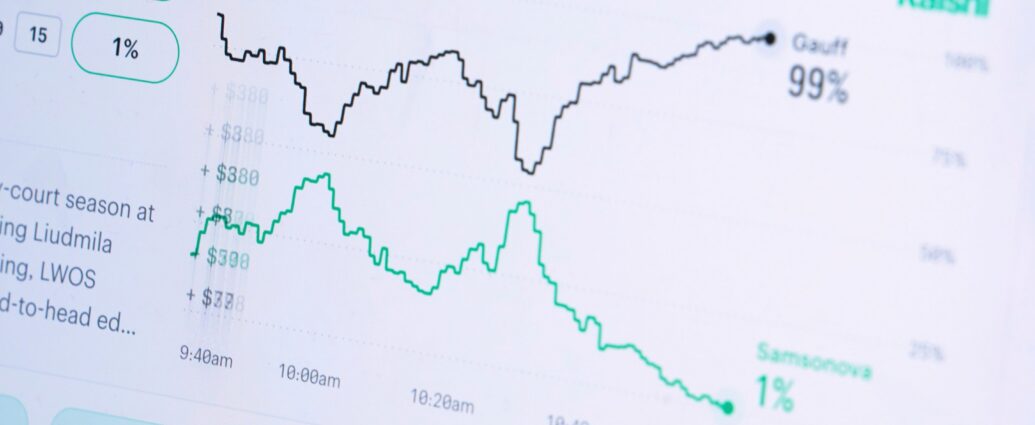
This post was originally published here

A quarter of a century after the Al-Qaeda attacks on the United States, jihadist groups still pose a major threat to security in Europe, but a new menace has surfaced that is driven mostly by young people online and the authorities are worried.

The exact size of the network behind what is being called nihilistic violent extremism is unclear. But police investigators from nine European countries found about 4,340 URL web addresses linked to “The COM,” as the online community has become known, during a campaign to disrupt it in June and July.

“It’s violence for the sake of violence,” European Union Counter-Terrorism Coordinator Bartjan Wegter told The Associated Press in an interview, ahead of the 25th anniversary of the Sept. 11 attacks on New York and Washington in 2001.

Overall last year, 45 terrorist attacks were reported across 10 of the 27 EU countries, although none of them were major, mass-casualty incidents. About half were foiled or failed, but six people were killed. A total of 486 people suspected of terror links were arrested in 21 member countries, according to the EU police agency Europol.

Jihadist groups — often guided or inspired by networks outside Europe — were behind 24 of the attacks and accounted for more than 70% of the arrests.

Of all those taken into custody, around one third were aged under 18, mostly boys.

Europol does not keep statistics on nihilistic violent extremism because definitions of it differ and acts can fall into the category of ordinary criminality as well as terrorism.

But in Finland in 2025, a 16-year-old boy stabbed three female student colleagues. He allegedly shared a “manifesto” in WhatsApp groups, recorded the attack on Snapchat, and asked on social media for someone to save and give him the video after his release.

In the “manifesto,” he said that he wanted to do something “significant” and “exciting.” No political motive was given for his rampage, according to an EU document on the emerging threat of nihilistic extremist violence.

Violence as a form of entertainment

“It’s very much a fascination with violence. It’s violence as a means of asserting oneself, as a means of gaining status in those online communities,” Wegter told AP. “There’s not a direct link with ideology.”

In Italy last year, a 15-year-old boy planned a murder to gain notoriety online, authorities there said. He kept images and videos of assaults, murders, school shootings and child pornography on his smartphone.

Wegter said these kinds of incidents, which have been on the rise for two to three years, are not isolated but organized by online networks that are “often driven by young people, for young people often involving young boys.”

He said that they “lead to offline violence. We’ve seen stabbings, a young individual stabbing an elderly person for no reason whatsoever.”

Such attacks are tough to prevent or track. They often involve “young individuals who will not have a criminal record, usually, who don’t leave any footprints other than online perhaps, but then it’s often behind encrypted walls and communities,” Wegter said.

Conspiring online to commit real-world crimes

High on the list of groups authorities’ radar is 764, which was founded by an American high school dropout, Bradley Cadenhead. He’s serving an 80-year prison sentence for child pornography and sex offenses, but the group still functions.

In Germany last year, a 20-year-old man believed to be a leading 764 member faced 123 charges over acts of “an unimaginable level of brutality and inhumanity,” including murder, rape and the sexual abuse of children, the EU document said.

Unlike 25 years ago — when extremists, mostly from Saudi Arabia, entered the United States and trained to become deadly pilots — the terror threat facing Europe today is mostly organized online.

“The online environment, for all the good things it brings, it is still too permissive,” Wegter said. He described it as “a petri dish for the connection between different threats.”

Privacy versus security with AI on the rise

Privacy advocates insist that people have a fundamental right to communicate without unjustified intrusion. They accuse the authorities and some companies of undermining protections through spyware and other methods.

But Wegter said that “our law enforcement must be equipped with the instruments and tools to deal with the threat as it exists today.” He noted that 85% of investigations take place in the digital environment. “It means that we have to adjust ourselves to that.”

For the Dutch diplomat himself, it means talking more to authorities and organizations in other countries, notably those that such groups use as a rear base. “Because what happens outside our borders impacts on our security,” including what’s being amplified online, he said.

Europol said criminals are exploiting images and audio to create and edit propaganda, including through deepfakes, memes and GIFs. AI-powered bots were also used to boost recruitment and promote terrorist ideologies, while AI-driven app were used for research to prepare attacks.

“The kind of violent content, violence inciting content, propaganda, manuals, tactics, everything that is available, is very much amplified by AI,” Wegter said.

This story was originally featured on Fortune.com

This post was originally published here

Iran’s regime maintains an iron grip on power but still can’t ignore the impact of U.S. economic warfare, which is getting even tougher.

That extends even to Supreme Leader Ayatollah Mojtaba Khamenei, who hasn’t been seen in public since the U.S.-Israeli strike on Feb. 28 that killed his father.

In a written statement ​issued late last month, he banned Iranian officials from “committing anything that harms social cohesion” and urged them to avoid any “discouraging statements that weaken national and public ​motivation,” according to Reuters.

That’s as economic hardship and long lines at gas stations have already stirred some fresh protests, though not at the massive scale that was seen in January.

Still, a currency collapse last year and high inflation triggered widespread unrest, and the regime slaughtered thousands in a brutal crackdown. Since then, the rial has plunged to new lows and economic conditions have worsened due to the U.S. war and naval blockade.

In his statement, Khamenei expressed concern about the economy and called on the government to take action.

“There is the need to seriously address the chain of economic and livelihood challenges, such as inflation, unemployment, management of prices and the market for goods and services,” he said.

Around the same time as the statement, Iranian President Masoud Pezeshkian similarly acknowledged his country’s economic woes.

In an interview with state media, he signaled defiance in the face of all the pressure and credited Iran’s resilience to its unity, but admitted “we have many problems.”

Pezeshkian also estimated that Iranian trade has plunged 25% to 35%, with imports down significantly more than exports, and voiced frustration with attempts to deny the economic impact.

“Some people say that sanctions have no effect at all,” he added. “I really don’t know what to tell these people. I just want to say this: Saying that sanctions have no effect is not consistent with these facts.”

And the U.S. is tightening the screws. Treasury Secretary Scott Bessent announced an “economic D-Day” to shut down avenues that help Iran dodge sanctions, further degrading the regime’s ability to earn money from oil exports and to obtain vital imports.

Senior Iranian sources told Reuters that the U.S. blockade and its crackdown on sanctions evasion are growing increasingly difficult to withstand.

The effort to block Iran from international financing networks in other countries represents an especially urgent threat, the report said.

One senior source added that Iran only has two months’ worth of gasoline supplies, which must be imported due to limited domestic refining capacity.

Meanwhile, Iran’s currency has crashed to 2.2 million rials per U.S. dollar, down from about 1 million a year ago. Inflation has also soared above 80%, with prices for certain food staples up 100%. 

To be sure, experts have cautioned that Iran’s repressive regime is unlikely to be swayed by the suffering of ordinary citizens and is prepared to wait out economic hardship longer than the U.S. public can endure high gas prices.

U.S. economic pressure also relies on the Navy’s continued presence to maintain the blockade on Iran and to shepherd oil tankers from Gulf Arab producers through the Strait of Hormuz.

Such an indefinite, expansive mission could strain U.S. military resources and readiness, while Iran only needs to sustain limited strikes on commercial shipping to keep traffic below prewar levels.

In an interview on Fox News Sunday, Energy Secretary Chris Wright said the Navy is getting better at defending against Iranian attacks and has heard from other countries that want to help out.

“But there’s simply no other country on earth that has nearly the military capacity of the United States,” he added. “So in this conflict where it’s still a little bit hot, it’s dominated by the United States right now. The other military assets involved are our friends and allies in the region. But to get those from outside of the region, I hope that’s soon.”

This story was originally featured on Fortune.com

This post was originally published here

As of 9 a.m. Eastern Time today, oil sold for $99.85 per barrel (using Brent as the benchmark, which we’ll get into momentarily). That’s 79 cents higher than yesterday morning and more than a $33 rise over the past year.

Oil price per barrel % Change
Price of oil yesterday $99.06 +0.79%
Price of oil 1 month ago $85.46 +16.83%
Price of oil 1 year ago $66.58 +49.96%

Will oil prices go up?

It’s impossible to predict the future of oil prices. Several factors determine the movement of oil, but it ultimately boils down to supply and demand. Again, when threats of economic downturn, war, etc. are high, the oil trajectory can turn rapidly.

How oil prices translate to gas pump prices

When you pay for gas at the pump, you’re paying for more than just the crude oil itself; you’re also springing for links along the chain, such as the refineries and wholesalers—not to mention taxes and local gas station markups.

Still, the crude oil aspect affects the final price most dramatically, as it typically accounts for more than half the price per gallon. When oil prices spike, so do gas prices. And frustratingly, when oil prices drop, gas prices tend to take their time drifting down to the lower price (sometimes referred to as “rockets and feathers”).

The role of the U.S. Strategic Petroleum Reserve

In case of emergency, the U.S. has a store of crude oil known as the Strategic Petroleum Reserve. Its primary purpose is energy security in case of disaster (think sanctions, severe storm damage, even war). But it can also go a long way toward softening crippling price hikes during supply shocks.

It’s not a long-term answer—more of an immediate relief to assist the consumer and keep critical parts of the economy running, like key industries, emergency services, public transportation, etc.

How oil and natural gas prices are linked

Oil and natural gas are both major energy fuels. A big change in oil prices can affect natural gas by extension. For example, if oil prices increase, some industries may swap natural gas for some segments of their operations where possible—which increases demand for natural gas.

Historical performance of oil

When examining oil’s performance, there are generally two major benchmarks:

  • Brent crude oil is the main global oil benchmark.
  • West Texas Intermediate (WTI) is the main benchmark of North America.

Between the two, Brent better represents global oil performance because it prices much of the world’s traded crude. And, it’s often the best way to track historical oil performance. In fact, even the U.S. Energy Information Administration now uses Brent as its primary reference in its Annual Energy Outlook.

Looking at the Brent benchmark across several decades, oil has been anything but steady. It’s seen spikes due to factors such as wars and supply cuts, and it’s also seen crashes from global recessions and an oversupply (called a “glut”). For example:

  • The early 1970s brought the first big oil shock when the Middle East cut exports and imposed an embargo on the U.S. and others during the Yom Kippur War.
  • Prices dropped in the mid-1980s for reasons such as lower demand and more non-OPEC oil producers entering the industry.
  • Prices spiked again in 2008 with increased global demand, but it soon plummeted alongside the global financial crisis.
  • During the 2020 COVID lockdown, oil demand collapsed like never before—bringing prices below $20 per barrel.

All to say, oil’s historical performance has been anything but smooth. Again, it’s hugely affected by wars, recessions, OPEC whims, evolving energy initiatives and policies, and much more.

Energy coverage from Fortune

Looking to stay up-to-date regarding the latest energy developments? Check out our recent coverage:

Frequently asked questions

How is the current price of oil per barrel actually determined?

The current price of oil per barrel depends largely on supply and demand, including news about potential future supply and demand (geopolitics, decisions made by OPEC+, etc.). In the U.S., prices also move based on how friendly an administration is to drilling, as it can affect future supply. For example, 2025 saw the Trump administration move to reopen more than 1.5 million acres in the Coastal Plain of the Arctic National Wildlife Refuge for oil and gas leasing, reversing the Biden administration’s policy of limiting oil drilling in the Arctic.

How often does the price of oil change during the day?

The price of oil updates constantly when the “futures” markets are open. A futures market is effectively an auction where people agree to buy or sell oil in the future. As long as people and companies are trading contracts, the oil price is changing.

How does U.S. shale oil production affect the current price of oil?

In short, shale is rock that contains oil and natural gas. Think of shale as energy yet to be tapped. The more shale the U.S. accesses, the more energy we’ll have—and the more easily oil prices can keep from spiking as much thanks to a greater supply.

How does the current price of oil impact inflation and the broader economy?

When oil is expensive, it tends to make everyday items cost more. This can be related to energy (your heating, gas utilities, etc.), but it’s also due to the logistics involved with making those items accessible to you. Shipping, for example, can affect the price of things at the grocery store, as it’s more expensive to get those products from warehouses and farms onto the shelf.

This story was originally featured on Fortune.com

This post was originally published here

Nearly two decades after Apple created the modern smartphone market, the iPhone is about to undergo its biggest transformation ever. It’s going foldable. 

If Apple executives feel any trepidation about altering the iPhone’s time-tested design, they may find reassurance from their top competitor: Samsung. The Korean electronics company has been selling foldable smartphones for seven years, with the latest Z Fold 8 and Z Flip 8 family of devices which launched in July.

Sales of Samsung’s new foldables are up 30% by volume year-over-year, the company tells Fortune exclusively. That’s only one month’s worth of data, but it comes on the back of roughly 30% growth in foldables last year, and despite the new models’ higher prices because of memory costs. “The response to foldables has been tremendous,” says Samsung senior executive Dave Das in an interview with Fortune.

According to Das, executive vice president, mobile experience business at Samsung Electronics America, foldable phones have a consumer appeal that’s driving sales among new, fold-curious users and causing existing foldable converts to upgrade more frequently. The demand and market dynamics are reminiscent of the early days of smartphones, when each year’s new slate of models generated a wave of buzz—and upgrades.

The innovation happening with each new generation of foldable phones is much more tangible than it is with traditional smartphones, says Das. “If you look at the bar-type form factor, it’s just far less visible to a consumer what has changed year over year,” he says. “Whereas with foldables you can clearly see how much thinner, how much lighter… physically at first glance you can tell ‘Oh this is different from the one I have that’s two years older, or one year older.’”

What’s more, says Das, the number of new Samsung customers who previously owned a smartphone made by a competitor is 25% higher with foldables than with its traditional bar-type phones. A fair number of these customers are even switching to an Android-based device, he says, suggesting that Apple users are making the leap in order to have a foldable phone. “It becomes something that helps consumers overcome their concerns or even fears about switching operating systems,” he says.

Foldable phones open and close like a book, revealing an inside screen that essentially doubles in size, making it an ideal display for watching movies or doing work. When the device is closed, a smaller exterior screen on the front cover provides quick access to key apps and features. The phones, made by companies including Samsung, Motorola, Huawei, and Google, vary in size, with inside screens ranging from 5 to 8-plus inches. 

While the majority of Samsung’s smartphone sales are still traditional bar-type devices such as its Galaxy S26, the foldable category is growing at a “much much faster rate,” and is now a significant enough portion of sales that Das says they are considered a “mainstream” part of the business. Still, with Samsung’s foldables starting at $1,200 and its high-end model priced at $2,100—and with Apple’s foldable expected to cost at least $2,100— foldables are clearly a premium product. According to Counterpoint Research, foldable phones comprised less than 2% of the global smartphone market by unit sales last year, though that number is expected to grow in the coming years, particularly with Apple’s entry into the market.

The ‘passport’ fight

Samsung was early to the foldable game, launching the Galaxy Fold in 2019. As the pioneer in the category, Samsung went through a sometimes bumpy, and very public, learning process. Its first foldable model suffered from technical problems with the hinge mechanism and with the foldable screen itself, earning it some brutal reviews. In the years since, however, the company has made great strides. Reviews of the latest generation of Samsung phones describe the crease as barely noticeable and praise the phone’s overall build and durability.

“We’ve now gotten to the point where the only limitation on how thin we’re making these devices is actually the USB-C port,” Das says. That earned experience is something Samsung is banking on as Apple enters the market. Samsung was the top seller of foldable phones in 2025, with 40% global market share, according to Counterpoint Research, followed by Huawei, with 30% share.

In July, Samsung launched new versions of its two existing foldables and introduced a new model with dimensions similar to a passport. That device will be the closest competitor to Apple’s forthcoming foldable “iPhone Ultra,” whose dimensions will reportedly also be similar to a passport. 

While Samsung’s passport-style foldable has only been on sale for about one month, early indications are that it’s a hit with consumers. 

According to Das, 40% of the company’s foldable sales are for the new passport-style Galaxy Z Fold 8 device, and 40% of sales are for the high-end Z Fold Ultra 8. The latter model is being purchased by users for productivity tasks, while the passport-style Fold 8 is getting traction with users interested in using it for “content consumption” like watching videos. (Samsung’s $1,200 Z Flip 8, a clamshell-style foldable aimed at consumers primarily interested in capturing videos and photos, accounts for the remaining 20% of sales).

“Over the last seven years we’ve learned a lot about what consumers want and how they’re using the device,” Das says. “You’ve got a very distinct productivity-oriented consumer, you’ve got a distinct content consumption consumer, and then you’ve got one who is about content capture.”

For Apple, which generates roughly half of its revenue from the iPhone, getting consumers to upgrade is critical. While iPhone sales increased an impressive 21% in the most recent quarter, the business has experienced significant slowdowns in recent years, with sales even declining in some quarters. Wednesday’s launch of the new iPhone models—which will also reportedly include new versions of traditional bar-type iPhones—comes as John Ternus begins his tenure as CEO, replacing Tim Cook. 

Ternus’s longtime experience as a hardware guy makes him well suited to oversee the launch of a completely new iPhone form factor with an inherently complex design. The question is whether Apple will need to go through the same learning curve as Samsung, or if its late entry into the market means that it will benefit from some of the learnings of its predecessor. 

Either way, Samsung’s Das says he’s ready for the competition: “Once consumers compare the two products they will clearly see the advantages that Samsung has built up based on our years of experience and IP.”

This story was originally featured on Fortune.com

This post was originally published here

Nine months ago, Sam Brown was out of a job. The reason, he’ll tell you without a sense of bitterness, was artificial intelligence. The company he’d spent years building a career inside decided it needed fewer people, and he was one of them.

“I got laid off nine months ago, and it was AI-related,” said Brown, 48, with a career that stretches back to 2000, aside from a few months as a ball boy for the Denver Nuggets in his youth. “I had to sit there and say, ‘This is a blessing, because I get a head start on everyone else that’s going to have to go through this in a little while.’”

He didn’t spend long feeling sorry for himself. Instead, Brown joined a three-person startup with no venture funding, no engineering team, and no traditional software infrastructure. What they did have were 12 AI agents.

$300 in, $300,000 out

Fathom AI, an Austin-based sales enablement platform built specifically for the medical aesthetics industry, launched in early 2026. Within 12 weeks, it achieved an estimated annual recurring revenue of $300,000, gross margins north of 90%, and operating costs under 10% of revenue, according to records reviewed by Fortune. And the total capital invested to start the company was just $300.

“We launched 2.5 months ago, and right now, we have $300,000 in ARR,” said Brown, who manages the three-person company’s finances as the president of Fathom AI.

The company has taken no outside funding. When venture capitalists came calling, Fathom got all the way to the finish line on a term sheet and walked away—not because the deal was bad, but because they genuinely couldn’t figure out what they’d spend the money on.

“The VC said, ‘You’re going to need an engineering team of this size, a customer success team of this size,’” Brown recalled, adding that when he and Fathom’s founder and CEO Ben Hooten walked out of the meeting, they basically said, “We’re not going to need that.”

courtesy of Fathom AI

By year-end, Fathom projects $5 million in ARR across 15 to 18 enterprise customers. The team is structured as a partnership specifically to distribute profits now, a deliberate decision to get paid rather than hold out for a distant exit in a market none of them can predict.

Brown explained to Fortune that the partnership is essentially like collecting a paycheck. “We’d rather take the money now and then, there’s not a lot to reinvest in, because we don’t have huge costs.”

“Hell,” added Dan Crump, the senior member of the trio, at 56 years old, “we got paid today, as a matter of fact. We’re cash-flow positive.”

The skeptic who became the proof

Kirk Gunhus has been in the medical aesthetics industry for 30 years. He has gray hair and, by his own cheerful admission, is “not a technology guy.” He wasn’t interested when Fathom AI first pitched him on switching vendors.

The origin story starts with a frustrated rant. The CEO, Hooten, then still a sales rep, was sitting in one of Gunhus’ meetings when Gunhus, a couple of beers in, unloaded on the state of sales technology. “You’ve got all this stuff here, and none of it really works well,” Gunhus said. “Someone needs to just put it all together, so when I walk into a zip code, I know exactly what accounts are perfect for us to go after.”

He forgot about his rant immediately, but Hooten didn’t. Gunhus said he got a call the very next weekend from Hooten, who said he put a plan together.

Gunhus agreed to a pilot with six sales reps. The company, he said, couldn’t afford the subscription, but every one of those six reps paid individually to work with Fathom AI. That’s “because it works,” Gunhus said. “It’s making them so much money.”

The results bore him out. In all of 2024, one of Gunhus’ consulting clients, Tiger Aesthetics, did not open a single net new account. Within one quarter of deploying Fathom, he said they had opened 225. “The bosses over at Tiger are like, ‘[Give them] whatever they want.’ They just saved a ton of money.”

The medical aesthetics industry is a multibillion-dollar world of plastic surgeons, dermatologists, med spas, and device manufacturers and, according to Fathom AI and their clientele, it’s ripe for disruption. Sales have historically been entirely manual. Reps cold-called, drove routes blind, and relied on memory and intuition to figure out who to see and when.

Fathom replaces all of that. A rep enters a zip code, and the platform surfaces every nearby account that fits their product profile, ranked by fit. It layers in real-time Google search data so a rep can walk into a doctor’s office and say, with specificity, what that physician’s patients are searching for. It also serves as a live training tool: new hires roleplay sales scenarios against an AI that corrects their technique in real time, flagging wrong answers and asking follow-up questions.

The team that isn’t supposed to exist

Hooten, the CEO and the junior member of the group at 39, explained to Fortune that his 12 agent co-workers hold real operational roles—one runs customer success for a national sales force; another wakes up every two hours to scan the competitive landscape and file a briefing.

His background was in sales, not software, Hooten explained, and so he looks at the AI agent era as a chance to build things that he never had the skills to, before. When a colleague told him that he couldn’t build an automated sales tool that actually worked, he built it anyway, and on his first day using it in the field, he closed $440,000 in a single day.

Gunhus said he had firsthand experience with the customer service bot: a Tiger Aesthetics rep called with a support issue, was walked through the solution by what they believed was Hooten on the line, and had no idea they’d been talking to an AI. “The rep has no idea what’s going on, literally.”

courtesy of Fathom AI

Crump, the senior member of the group, at 56 years, is a former Marine with decades in tech sales experience at companies including GE and IBM. He has watched every major tech cycle from the early internet to the smartphone era. He recalled one morning about 25 years ago visiting Enron, when he was working as a sales rep for HP, the exact time when the famous accounting fraud was going belly-up. “The elevator door opened, and a lady had a plant and a Herman Miller chair, and she was rolling it out of there, cussing,” Crump recalled. “I go up, and my buddy says, ‘Hey, somebody just tried to throw a chair through the window.’” He’d been on the phone with his manager minutes earlier to confirm Enron owed his company $27 million—and that it had cleared the Friday before. “So I was like, ‘Okay, thank God we’ll get paid,’” he said. “I’ve seen a lot of stuff.”

In this industry, he added, sometimes tech sales is “just uninspiring.” With Fathom, he said he feels like they’re making “something that makes a difference.”

The 23-year-old parallel

Fathom isn’t the only small team rewriting the economics of what a company can be. Half a continent away, in Toronto, Yatharth Sejpal is running a strikingly similar experiment, and he’s 23 years old.

Sejpal is the CEO of KNOWIDEA, a predictive intelligence platform that advises executives on decision-making. He has no computer science background—”never written a line of code in my life,” he said—but within six months of launching he said he has closed $500,000 in ARR with six enterprise clients spanning energy, manufacturing, professional services, and financial services. He co-founded the firm with Brian Zhengyu Li, who is completing a PhD and previously worked as an applied scientist intern at Amazon Web Services.

Like Fathom, KNOWIDEA is a three-person operation. And like Fathom, Sejpal passed on early VC money. “If I wanted to exit, I would have taken VC money really quickly,” he said. He turned down a spot in Antler, one of the world’s largest startup accelerators, because he didn’t want to dilute equity before proving his model. Instead, he took a strategic investment check, from a consulting firm, not a venture fund, at a $15 million valuation.

His pitch to enterprise clients is almost a philosophy as much as a product. “Leaders need clarity,” Sejpal told Fortune from a hotel room (he said he spends nearly all his time traveling). “That’s it. There is no other reason, a dashboard, a report, all of it is just to bloody get clarity.” His platform ingests decentralized data and produces ranked, risk-weighted insights for C-suite decision-makers.

Crucially, Sejpal is careful about what his platform won’t do. On the question of AI hallucinations, a persistent concern among executives considering high-stakes AI tools, he draws a clear line. “At the core of decision-making is clarity plus judgment,” he said. “Our job is to give clarity. Your job is to make the judgment.” His system flags predictions that deviate dramatically from market norms and filters them out before they reach a client.

Sejpal, who grew up in India and moved to Canada to attend the University of Waterloo, spent years inside some of the largest people consulting firms in the world before deciding the industry was ripe to be disrupted. His vision of where the three-person company model leads is more radical than his current headcount suggests. He doesn’t think three-person teams are the endgame: he thinks they represent the beginning of a total restructuring of how work gets organized.

“I don’t want to ever hire an account executive or a customer success manager,” he said. “The only two roles that we want to hire are FDEs and FDCs, forward deployed engineers and forward deployed consultants.” One person who understands what data to select, and one who understands what context to apply. “Everything else,” he said, “can be automated using artificial intelligence.”

That logic extends to his larger argument about the enterprise. Take 20-person project teams, for example: “I think that is going to slim down to a two-person team. FDC plus FDE can do all of the work, and then one supervisor who can overlook. That’s it. It’s as non-complicated as that.”

It hasn’t been as lucrative for Sejpal as it has for the Fathom co-founders, but he’s not concerned about that yet. His savings dwindled for months until the spring of 2026, when he finally started drawing a salary, but he cheerfully said that his excitement about what he’s doing is more than enough for him. “If I if I wanted to make money, there are much simpler, less strenuous, mentally and body-exhausting tasks that I can do. I’m worried every single night, I have night sweats thinking how I’ll make salary for my employees, how I’ll grow my team and 20 other headaches. I could have made much more money without having a single of those stress.”

Dramatic implications

Brown was careful to say that the Fathom story isn’t primarily about Fathom. It’s about what Fathom represents: the first wave of a much larger shift in who gets to build a software company and who has the advantage doing it. In fact, thanks to AI, businesses have exploded in recent years, and it looks like there’s no chance of stopping what innovations can come next, according to financial firm Apollo.

The VC model was built around the assumption that you needed massive capital to build technology: engineering teams, customer success departments, sales headcount. That assumption is now structurally broken. A platform that once required $10 million in seed funding to staff can be assembled by three experienced operators and a suite of AI agents for the cost of a dinner out.

That changes who wins. Gunhus, for his part, said he’s not interested in launching his own three-person AI startup. “I’ve done all that, I don’t want to go through all that mess again.” But he’s watching carefully and telling everyone he knows to pay attention to the AI agent revolution. “If you don’t use it,” he said, “it’s gonna run you over anyway.”

That’s more or less the same conclusion Sam reached nine months ago, sitting with a pink slip and a decision to make about what came next. He doesn’t sound like a man who was laid off. He sounds like a man who got lucky.

“Everyone’s going to have to go through this to some extent,” Brown said. “I just think I got to go through it a little earlier than most.”

This story was originally featured on Fortune.com

This post was originally published here

Australian social media users would be given a choice to opt out of algorithms under proposed laws announced by the government Tuesday that would let users have more control over what they see on their social media feeds.

“We’ll require social media platforms to provide user empowerment tools that give people over the age of 16 genuine and enduring choice about what they see in their feeds,” Prime Minister Anthony Albanese told reporters in Canberra.

The proposed legislation would also protect children from content that promotes eating disorders, hostile ideas about women, pornography, crime, dangerous stunts and that causes serious mental health distress.

The move for more user control and to keep children safer online follows Australia introducing world-first laws in December last year that ban children younger than 16 from holding accounts on the world’s largest social media platforms including InstagramFacebook and TikTok.

“It gives users choice and it will hold the big tech companies responsible for inaction. If they don’t follow our laws, they will face significant penalties,” Albanese added. Penalties under the proposed Digital Duty of Care legislation could be as high as 109.2 million Australian dollars ($78.6 million).

Social media platforms would be required to send a notification to new and existing users offering them a choice over their default feed, a government statement said.

Users would be able to opt in to having their default feed include personalized content recommended by an algorithm. Alternatively, users could see the content of friends and creators they choose to follow.

Digital services including online games, apps and artificial intelligence chatbots would also be required to protect children from design features that have negative behavioral impacts such as addictive features and those that have an effect on self-esteem, the statement said.

In April, Australia’s online safety watchdog said it was considering court action against Facebook, Instagram, Snapchat, TikTok and YouTube, alleging they are not doing enough to keep Australian children younger than 16 off their platforms.

This story was originally featured on Fortune.com

This post was originally published here

President Donald Trump is embracing his inner cowboy, seeking to gallop into this week’s Republican convention in Dallas and save the midterm elections for his party just in the nick of time.

As first-of-their-kind festivities open Wednesday, Trump wants to stoke his core supporters’ enthusiasm by making Election Day on Nov. 3 all about himself — a referendum on his record at an event he conceived to help his party, even if he’s not actually on the ballot.

The question is whether he’ll do more to fire up Republicans or Democrats at a moment when his popularity has reached historic lows.

The president is planning to take the stage both nights of the convention, giving a keynote address Wednesday and then closing remarks after Vice President JD Vance gives his own speech the following night.

That means effectively staging a two-day Trump show with a supporting cast that includes some of the party’s most vulnerable lawmakers.

“If Trump is in the orbit then everything gets swallowed up into a black hole. It’s just unavoidable,” said Rick Tyler, a Republican strategist and a critic of the president.

The Republican Party is so enamored with the prospect that it is selling $16 beer cozies online depicting the president as the Marlboro Man. They feature the 80-year-old on horseback, with a white Stetson and the word “Dallas” under the trademark red-and-white triangle peak logo where the cigarette maker’s name would normally be.

House Speaker Mike Johnson, who will address the convention, noted that the gathering was Trump’s idea and should be “very instructive, very exciting.”

“We’ll parade our stars across the stage,” he said, making it sound like a political version of the beauty pageants Trump once helped organize.

Trump conceived and planned nearly the entire convention

Republicans familiar with the process said the president was involved in the event’s every detail. His control over the program was such, in fact, that anyone pressing for information in recent weeks was told it wasn’t yet known because Trump was still making choices.

Despite all the cowboy imagery, it’s unclear if the cavalry is coming, however.

MAGA Inc., the president’s political organization with a nearly $400 million war chest, announced it is spending $10 million on television and digital advertisements in the Texas Senate race. But that’s the first time it has tapped its vast resources in a serious way, even as Republicans are hoping for big help to win many tight races around the country.

A separate group, Securing American Greatness, has begun running ads touting the president’s record heading into the midterms. But its gauzy videos mostly promote Trump and barely mention Congress.

The major broadcast networks haven’t committed to televising most of the convention on each night, and the proceedings will be competing with the kickoff of the NFL season — including games likely going on during both of Trump’s speeches.

The president wants to pretend he’s running

Rep. Suzan DelBene, head of the Democratic Congressional Campaign Committee, was skeptical the GOP would get a convention boost.

“I’m not sure what they’re doing,” said the Washington Democrat. “They don’t have a message, they have nothing to say. So, I think that will be even more clear.”

Trump, meanwhile, has long believed that the best way to win elections is to have himself as a candidate. He made that explicit during a recent South Carolina rally, telling the crowd, “Pretend, please, that I’m on the ballot.”

The president is trying to counter political headwinds that see the party in power usually suffer losses during midterm elections — including during Trump’s first term when Democrats flipped the House.

His midterm message has consisted mostly of promoting his record, including his administration cracking down on the U.S.-Mexico border, passing legislation that reduced taxes for workers earning tips and overtime and on seniors’ Social Security benefits, and working to cut prescription drug prices.

Still, Trump hasn’t made clear how keeping Republicans in control of Congress would address concerns about inflation and an economy many Americans see as weakening, not to mention a war in Iran with no end in sight and Trump’s own low approval ratings.

Trump has sought to go on the political offensive

The president decries Democrats as communists, arguing that progressive candidates who notched some key primary wins are too far to the left for the general election.

“Communism is an INHUMAN ideology that has led to DEATH and DESTRUCTION around the World!” Trump posted on his social media site recently.

But Tyler said rallies — and generalized rallying cries slamming Democrats — aren’t likely what Republicans need ahead of the midterms. Instead, he said, they need a clear message and major efforts to mobilize voters.

“Trump can turn out two bases, his base and the Democratic base,” Tyler said. “The problem for him is, when he’s not on the ballot, his base never shows up and they’re unlikely to again.”

Trump has endorsed some Republican candidates who won their primaries but may face tougher general election races than the more establishment choices he shunned.

Nowhere is that clearer than in Texas’ Senate race, which now could be close despite Democrats not winning statewide office in Texas since 1994 — the nation’s longest losing streak.

Democrat James Talarico is looking for an upset after Trump backed Texas Attorney General Ken Paxton despite years of scandals. He propelled Paxton to a primary win over incumbent Republican Sen. John Cornyn, who had stronger name recognition and years of experience in Washington.

Having the convention in Dallas “definitely sends a signal that they’re scared about Texas,” said Abel Prado, campaign manager for Democratic congressional candidate and Tejano singer Bobby Pulido, who is running against Republican Rep. Monica de la Cruz in the Rio Grande Valley on Texas’ border with Mexico.

Trump garnered unusually strong support from some South Texas Hispanic voters in 2024. But Prado said that has largely fallen away, pointing chiefly to frequent immigration raids he said have hurt the district’s economy — including slowing a once-booming homebuilding industry, given construction crews’ fears about being targeted.

“We’re seeing a very real sense of buyer’s remorse,” Prado said. “Trump always projected this, ‘I am the image of the American Dream.’ But people are starting to realize he only cares about himself.”

Some top Republicans are skipping Dallas

There are Republican incumbents, as well as candidates in key House swing districts, who won’t be at the convention, believing that campaigning back home is a better use of their time. That includes Michigan Rep. Tom Barrett, whose battleground district includes the state capital of Lansing.

Many others, though, plan to use Dallas to share Trump’s spotlight.

“Obviously, you’re out of the district, but it’s a really good opportunity to get in front of people,” said Matt Beynon, spokesperson for Pennsylvania Rep. Scott Perry, who is in a fast-growing district in the central part of the state that’s being targeted by Democrats.

The list of scheduled speakers includes Health Secretary Robert F. Kennedy Jr., Treasury Secretary Scott Bessent, former White House press secretary Karoline Leavitt and the president’s son, Donald Trump Jr. Also set to address the crowd are Paxton and Mike Rogers, the Senate nominee in Michigan, where the race is also expected to be close.

Organizers have also built events around everyday Americans, including people who benefited from tax cuts.

“It’s going to be very important,” Trump told the Lt. Dan Podcast with Texas Lt. Gov. Dan Patrick.

“And I did it,” Trump added. “I just came up with the idea.”

___

Associated Press writers Steven Sloan, Joey Cappelletti and Lisa Mascaro in Washington, Jill Colvin in New York and Mark Levy in Harrisburg, Pennsylvania, contributed to this report.

This story was originally featured on Fortune.com

This post was originally published here

Good morning. Sapien has raised a new funding round led by Neo’s Ali Partovi at a $180 million valuation, as the two-year-old AI startup pushes beyond financial planning software into a broader system for analyzing how operational decisions affect a company’s bottom line. Its customers now include Bayer, Carlex, Cooper Standard, Blink Charging and Westgate Resorts.

The shift is reflected in how customers are using the platform. According to a forthcoming case study I was able to review on automotive supplier Carlex, Sapien rebuilt an existing profitability analysis and found that factors the company had identified as contributing $10 million in positive EBITDA were actually producing a $2 million drag.

Sapien later found another $1.5 million opportunity in a customer-channel pattern the team had not been looking for. The analysis took about 20 minutes.

“It took 20 minutes,” said Jason Waltz, business unit VP of finance for Carlex’s Aftermarket Division. “It would have probably taken us two weeks, and we probably wouldn’t have gotten to that level.”

That kind of analysis is increasingly the focus for Sapien, which founders Ron Nachum, Pranav Ravella, and Arya Grayeli launched in October 2024 with an $8.7 million seed round led by General Catalyst.

The company has also grown quickly, with headcount increasing fivefold over the past year, bringing together AI researchers and engineers from Meta, Google, and Palantir with executives and operators from McKinsey & Company, Blackstone, Barclays, and Plaid.

Nachum, Ravella, and Grayeli met in high school before attending Harvard, Stanford and the University of Texas at Austin, respectively.

From FP&A to operating decisions

When I first spoke with Nachum, who serves as CEO, two years ago, Sapien was focused on FP&A. The company has since moved toward a broader question: not just what happened to a company’s financial results, but what operational decisions caused them.

Nachum describes Sapien as a financial and operational system that connects the numbers in a company’s financial statements with the underlying business. The idea is to help finance and operating teams investigate changes in revenue, margins and cash flow, identify the drivers behind them and then act on those findings.

That is a different proposition from adding another dashboard or automating another report. Sapien is betting that AI can do more of the investigative work traditionally handled by finance and operating teams.

Carlex has since expanded its use of Sapien into pricing, inventory, customer orders, OEM quoting, supply chain and operations, Nachum said.

Cooper Standard and Blink Charging are using the platform in similar ways, according to the case studies, with analyses that previously took hours or days being reduced to minutes and teams using the results to identify potential savings and margin improvements.

The trust factor

For Nachum, the biggest obstacle to AI adoption in finance isn’t necessarily whether the technology can produce an answer.

“Every large company is data rich and analysis poor,” he said. The harder part, he argues, is getting finance teams to trust the answer—whether the underlying numbers are correct, the analysis is reliable and the company’s data remains secure.

That makes trust an important part of Sapien’s approach. Once teams become comfortable using the platform for financial analysis, Nachum said, its use can spread into functions such as supply chain, sales, and accounting.

The expansion also reflects Sapien’s broader shift away from being an FP&A tool. Rather than treating finance as a standalone function, the company is trying to connect financial outcomes to the operational decisions that produce them.

One of Nachum’s core bets has been to avoid turning the company into what he calls an “Excel copilot.” The goal, instead, is to build a system that can investigate a business, find important patterns and eventually help teams turn those findings into repeatable processes.

For Sapien, that is ultimately the bigger opportunity: using AI not simply to make existing financial work faster, but to find the operational decisions that can materially change a company’s financial performance.

Sheryl Estrada
Sheryl.Estrada@fortune.com

This story was originally featured on Fortune.com

This post was originally published here

U.S. President Donald Trump has threatened to ban the sale of aircraft from Canada’s Bombardier unless it manufactures planes in the United States.

In response, the maker of private jets noted that many components for its planes, including the wings, are produced in the U.S. and its supply chain relies heavily on U.S. companies.

Since Canada-U.S. trade talks collapsed on Aug. 21, Trump and his administration have unleashed a barrage of tariffs, threats and personal attacks portraying Canada as weak and dependent. Canada retaliated Tuesday with tariffs on about $20 billion worth of U.S. goods.

“NO MORE SELLING BOMBARDIER IN THE UNITED STATES! Their products aren’t good enough!” Trump said in a Monday social media post. “If they want our Market, they must build here, and stop treating America like a ‘piggybank.’”

Bombardier said in a statement that the American aerospace industry is a “clear winner on trade and exports.” It said it creates tens of thousands of jobs both directly and through its supply chain.

Bombardier’s supply chain includes about 2,800 U.S. companies in 47 states, it said. Among other things, wings for its business jets are made in Texas and flight control components are produced near Los Angeles.

“Bombardier values its great partnership with American companies and its U.S. employees. Our plan is to continue to invest in our people, our customers, and the communities in which we operate across the country,” it said.

One state where Bombardier has a significant presence is Kansas, which Trump won by about 16 percentage points in 2024.

U.S. Sen. Jerry Moran of Kansas said in a social media post Monday that Bombardier supports a local workforce of more than 1,000 Kansans.

“I reached out to the Trump administration to make certain the President is aware of the significant contributions of Bombardier to Kansas and the importance of its presence in Wichita to many Kansas workers at Bombardier and in the Bombardier supply chain,” Moran wrote in his post.

Moran promised to continued working to ensure that the planemaker’s manufacturing operations remain in Kansas.

Earlier this year, Canadian Prime Minister Mark Carney announced that his government will buy six early warning radar planes from Sweden’s Saab and Bombardier, rather than from U.S. aircraft makers. The Saab planes use Bombardier’s Global 6500 aircraft platform, supporting Canadian manufacturing. They have 20% U.S. content. The alternatives would have been U.S.-made E-7A Wedgetail surveillance aircraft made by Boeing or the Aeris X, made by L3Harris.

The Canadian government is reviewing plans to buy U.S. F-35 fighter jets. Saab has proposed making its Gripen fighter jet in Canada.

Bombardier is one of Canada’s oldest and most well-known manufacturers. The company was founded by Joseph-Armand Bombardier, an inventor and entrepreneur in Canada’s rural Quebec who started out making snowmobiles and other snow-going equipment in the 1930s.

Over its long history, it entered and left the train-making business and expanded for a time into making regional and commercial aircraft. But it sold off those parts of its business as it restructured to focus on making private business jets.

The company also has spun off parts of its business making snowmobiles and other recreational equipment.

This story was originally featured on Fortune.com

This post was originally published here

The United States will start phasing out its financial support for Namibia’s HIV response programs, the latest among southern African countries to feel the effects of the withdrawal of foreign aid by the U.S. administration.

The U.S. will provide Namibia with $45 million for its HIV response in the 2027 fiscal year but the country will then start funding its own HIV programs, with the U.S. only providing “technical cooperation,” both countries said in statement.

Namibia has received around $45 million annually through the U.S. President’s Emergency Plan for AIDS Relief in recent years. The United States says it has contributed more than $1.1 billion to Namibia’s HIV response since 2003.

While the withdrawal of the funding was expected since the Trump administration’s “America First” approach to foreign aid was announced, it follows Namibia’s rejection of proposed provisions for sharing health data and biological specimens with the United States. Namibia cited privacy, sovereignty and legal concerns for its decision.

The Trump administration has been entering into country-by-country agreements that Washington says will reduce donor dependency, increase domestic financing and safeguard American interests. The U.S. has signed agreements with about 30 countries since late last year, many of them in Africa.

But Ghana rejected a proposed agreement over access to sensitive health data, Zimbabwe withdrew from a $367 million package over similar concerns, and a court challenge has put Kenya’s $2.5 billion agreement on hold. Zambia has also objected to data-sharing demands.

Namibian officials previously said the proposed provisions in their original form were “not in compliance with Namibia’s national laws” and infringed constitutional privacy protections and national sovereignty over biological resources.”

Both government are reported to be negotiating a new bilateral health agreement.

The joint statement said Namibia had surpassed UNAIDS targets by achieving a target of 96% of people living with HIV knowing their status, 98% of those diagnosed receiving treatment, and 98% of those treated having achieved viral suppression.

“Over the next year, this support will transition into a technical cooperation model as the HIV response is fully integrated into Namibia’s sustainable national health system, in line with Namibia’s national laws,” the governments said in a joint statement.

The U.S. recently announced the phasing out of more than $400 million in support annually for South Africa’s HIV programs. It has also started a “phased drawdown” of the President’s Emergency Plan for AIDS Relief, a program that has supported South Africa’s battle against HIV and AIDS for the past 20 years and is widely credited with saving more than 20 million lives over that period.

This story was originally featured on Fortune.com

This post was originally published here

Patrick Sullivan was sure it was a “crazy neighbor” honking a car horn nonstop while Sullivan was up feeding his infant son at 3 a.m. one night this summer.

It was a neighbor all right, but not a human one. A black bear had opened the door of a Toyota SUV and gotten trapped inside the vehicle in Gold Hill, Colorado, northwest of Denver.

In one of hundreds of examples of bears getting into more trouble than usual in the parched Rocky Mountains this summer, the animal kept bumping the horn as it ripped apart the Toyota’s interior, desperately trying to escape.

“It’s totaled. It’s unfit to drive,” Sullivan said of the car.

Millions of people live in or near bear habitat across the Rockies, where widespread drought has reduced supplies of nuts, berries and plants that bears eat. That’s prompting the animals to roam far and wide for food.

Sullivan’s brother-in-law eventually freed the bear trapped in the Toyota. But such encounters can be deadly for bears. One recently stuck in a car in Colorado Springs died from the heat, and wildlife officials have killed dozens of others that could endanger people.

Hungry bears are on the move

Colorado officials report twice as many bear sightings and conflicts with humans this year compared with the average, including bears roaming where they aren’t normally found. Wildlife managers in New Mexico and Utah report record numbers of hungry bears have lost their natural hesitancy to raid homes, cars and campgrounds.

A black bear up a tree in central Denver recently was tranquilized and relocated. At Colorado State University in Fort Collins, a bear during the fall semester move-in had to be caught and released elsewhere. In Utah, authorities moved four bears from the town of Moab where they’d been feasting in orchards.

“Bears aren’t necessarily behaving any differently but they are definitely increasing their activity in the places that they’re looking for food,” said Travis Sauder, a state wildlife officer in southeastern Colorado.

Black bears usually stick to Colorado’s mountains and foothills. This year they’ve been spotted on the plains more than an hour’s drive east of Colorado Springs.

“When they get that far east, there’s just zero natural food sources that they would be looking for, like oaks or chokecherries,” Sauder said.

‘A fed bear is a dead bear’

There are plenty of temptations for hungry bears around homes: pet food in open garages, bird feeders and grease traps under barbecue grills. And then there’s trash in unsecured bins, by far the biggest attractant behind this year’s surge in bear activity, according to Colorado Parks and Wildlife data.

Many bears that visit populated areas are tranquilized and moved out of town. If they start associating food with people, however, they can be euthanized.

“A fed bear is a dead bear,” is the mantra of wildlife officials. They urge people to stash away anything a bear might even think of eating.

Black bears typically avoid people and are less dangerous than the larger grizzly bears of the Northern Rockies.

But black bears can be aggressive toward humans: In June, a black bear followed and then attacked and scratched a hiker in Golden, Colorado.

Colorado has had at least four more attacks, including a bear outside an apartment building near Vail that scratched a man on Aug. 17 as he left a laundry room.

Five days later, a bear tackled and bit a fisherman in the mountains southwest of Denver. The young bear was tracked down and killed.

A dry winter persists into summer

In Utah, over three dozen bears have been killed this year. That’s more than the past three years combined, according to the Utah Division of Wildlife Resources.

The number killed by wildlife officials and authorized property owners in New Mexico is already up to 187, the most since 2011.

Across the Upper Colorado River Basin spanning Wyoming, Colorado, Utah and New Mexico, this year’s snowpack was the worst on record. Scientists say human-caused global warming made that far more likely.

“Human-animal conflicts in the context of climate change haven’t really been fully researched yet. And we’re still starting to kind of tease out what this means for us and what this means for all the species that we share the ecosystem with,” said Samantha Miller, senior carnivore campaigner at the Center for Biological Diversity.

Add in vast areas of bear habitat scorched by record wildfires and it’s a recipe for problems.

It’s not always an unhappy ending for bears or people

A few bear-trouble stories are heartwarming, like orphaned cubs successfully released into the wild after time in a rescue facility, where they learned to live on their own without raiding.

“We’ve got to rescue a lot of bear cubs out of trees, including standing on some pretty shaky ladders to pull a bear cub that’s sleeping in a tree,” said Sauder.

Andy Kerrigan, while working on a deck in Steamboat Springs, Colorado, this summer, found a cub that got into his truck through a window. He banged on the truck to scare it off.

“But it had found my lunch in the seat. And it was like, ‘I’m not going anywhere,’” said Kerrigan, who eventually chased it away with a piece of wood trim.

In Gold Hill, Sullivan’s brother-in-law solved the bear-in-Toyota problem by tugging a rope tied to a door handle. The bear bolted for the woods through the open door.

“It was just sitting there waiting for someone to help him, basically,” Sullivan said. “So I’m glad we could have done that for him.”

This story was originally featured on Fortune.com

This post was originally published here

For three days this summer, teachers converged at the Flight 93 National Memorial in remote western Pennsylvania to talk about 9/11.

How best to educate a new generation about the attacks 25 years ago? Which details are appropriate for young kids? What do victims’ families want students to be told about the dead?

“Even worse than getting started wrong or using inappropriate language is the total omission of telling the story,” Gordon Felt, whose brother Edward Felt died on United Airlines Flight 93 on Sept. 11, told teachers in one session. “That’s our biggest fear.”

Teaching about 9/11 in schools is more important than ever now that about one-third of Americans were born after al-Qaida hijackers crashed planes and killed nearly 3,000 people in New York, the Pentagon and rural Shanksville, Pennsylvania. A growing majority of states — at least 40 — expect or suggest that public schools address 9/11 in some way, but the provisions vary widely in scope, specificity and framing, The Associated Press has found.

State education standards range from detailed course content to broad concepts. As a result, some don’t specify what to teach about Sept. 11.

A decade after the attacks, about 60% of states didn’t explicitly mention 9/11 in their education standards, but there has been more movement toward teaching it as time passed and the attacks were seen as “a settled event,” said University of Wisconsin education professor Jeremy Stoddard. He, now-retired dean Diana Hess and colleagues have researched 9/11 education for decades.

“For those states that include it, it seems to be going in much more depth than it was in the past,” Stoddard said.

States vary in teaching about 9/11

Twenty-five states have laws or education standards that require or expect public schools to provide instruction specifically on the Sept. 11 attacks, and another 13 have optional mentions of 9/11, according to data AP gathered. Several other states have laws requiring or recommending school observances, bringing the number of states with some policy to at least 40. In states without specific laws or standards, schools and teachers also may choose on their own to discuss the attacks.

The AP gathered its data through requests to all states, reviews of standards in four states that didn’t answer, and interviews with lawmakers and other officials.

While states may share an interest in teaching about 9/11, their approaches differ.

In Alabama, Sept. 11 fits into “the United States’ military involvement in international conflicts since 1980” for students as young as fifth-graders. Texas has taught 9/11 and surrounding events as an example of “radical Islamic terrorism” and a key piece of modern history overall.

Colorado suggests high school students might analyze the aftermath of Sept. 11, including “Middle Eastern discrimination.” New Mexico envisions discussions that could include not only post-9/11 wars and legislation but also the U.S. detention of suspected enemy combatants at the Guantanamo Bay naval base in Cuba and the Abu Ghraib prisoner-abuse scandal.

States’ classroom lessons don’t always map neatly with their political leanings. States as politically different as California, Florida, New Jersey and North Dakota all propose or expect that students discuss post-9/11 efforts to balance national security and civil liberties, for instance.

But social studies overhauls that reflect conservative priorities have tended to include Sept. 11. A 2023 Florida law even specifies that certain middle and high school courses spend 45 minutes on 9/11.

The Louisiana “Freedom Framework” — crafted in 2022 after conservative complaints about an earlier draft — starts mentioning 9/11 in second grade.

“We coalesced around our belief that Sept. 11 needed to be included in a very real way,” Louisiana Education Superintendent Cade Brumley said by phone this spring. He hopes students learn that “threats to our freedom are real, but as Americans, I think, we are quite powerful when we stand together and we face that adversity.”

A 2022 Arizona law required “age-appropriate education” on Sept. 11 in all public schools — until legislators dialed it back last year to seventh through 12th grades. “We have to protect young children from the true horror of 9/11 and ensure older children never forget it,” said state Sen. John Kavanagh, a Republican who sponsored the first measure and supported both.

In Congress, Rep. Andrew Garbarino, R-N.Y., has proposed a resolution encouraging all states to teach students about the attacks.

Educating teachers, along with students

About 60% of U.S. young adults say they first learned about the attacks through school, according to a recent Pew Research Center poll that included about 250 adults born after 2000. But if educators’ role in 9/11 awareness is clear, it hasn’t been easy.

When Megan Jones became the National Sept. 11 Memorial & Museum ‘s education chief in 2014, teachers told her they worried about bringing up traumatic memories for students. Now, pupils often need basic facts, and teachers reconcile their own pained recollections with the reality that students see Sept. 11, 2001, as distant history.

The key is “helping them to understand how 9/11 ultimately shaped the world that they live in,” Jones said. The New York memorial has raised over $25 million this year to enhance student field trips, teacher training and other education programs.

The Flight 93 Memorial brought 40 Pennsylvania teachers to its site in June, hoping to kindle more education about Sept. 11, said organizer Donna Gibson, the executive director of Friends of Flight 93 National Memorial.

Fifth-grade teacher Martha “Marty” Runzer went to explore a subject with personal meaning. The former United Airlines flight attendant wears her old wings pin every Sept. 11, tells her West Chester students about her colleagues who died, and emphasizes how ordinary people — such as the Flight 93 passengers and crew members who tried to wrest control from the 9/11 hijackers — became “everyday superheroes.”

John Boston Bradley, by contrast, doesn’t remember 9/11. The 28-year-old social studies teacher has taught his Catholic high school students in Johnstown about the attacks, but he said the memorial symposium inspired him to convey more of the “human, emotional aspect.”

“It will help our students understand that these difficult stories need to be told,” he said.

How kids see 9/11

“Why did they want to crash into us?” Desmond Killian, 9, asked his parents as they looked around the Sept. 11 Memorial plaza in New York one recent afternoon.

“It’s some tough things to talk about,” dad Eric Killian replied.

Desmond took that in, then asked: “Which country?”

“It wasn’t so much a country,” Eric Killian said.

The questions kept coming from the fourth-grader, who said he’d heard the term “9/11” from friends but hadn’t been taught about it yet in his California school. The state recommends that all public schools hold a moment of silence, and it suggests that high schools discuss the attacks’ impact on U.S. policy and world affairs.

Another visitor, 17-year-old New Jersey high school senior Ameya Williams, had learned extensively about Sept. 11, from the missed warning signals before the attacks to rebuilding after.

Her state requires such instruction in public high schools and encourages age-appropriate instruction earlier. Plus Williams has heard stories from relatives, including her grandfather, who was commuting to work at New York’s World Trade Center when it was struck.

“I feel like understanding it is understanding what they went through,” Williams said.

___

Associated Press writers Marc Levy in Shanksville, Pennsylvania, and David A. Lieb in Jefferson City, Missouri, contributed to this report.

This story was originally featured on Fortune.com
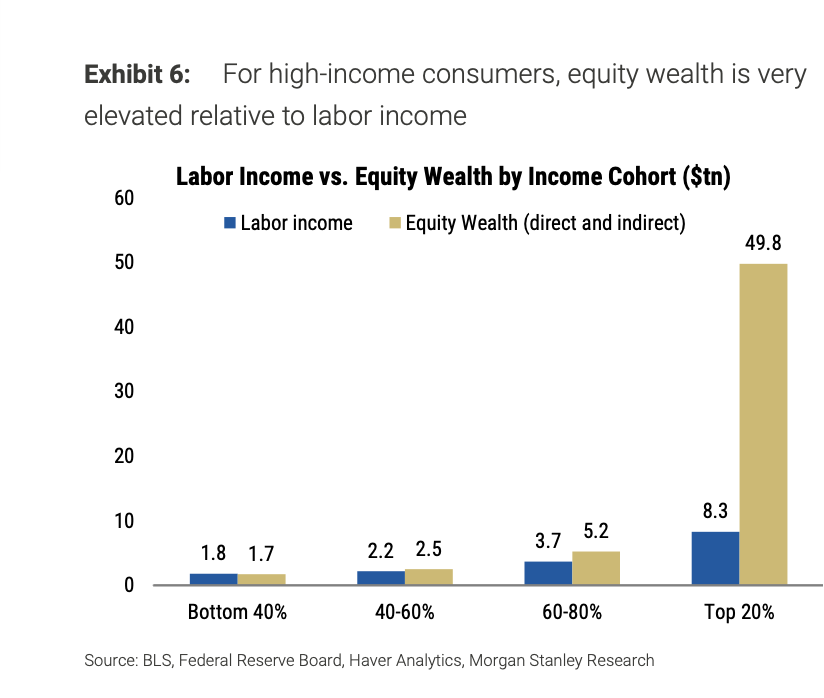
This post was originally published here

Republicans appeared to have a firm grip on the Senate heading into the final two years of President Donald Trump’s term. But with less than two months until Election Day, control of the chamber is now up for grabs.

Democrats have found themselves competing in states that once seemed beyond their reach as President Donald Trump’s slipping approval ratings and voters’ dissatisfaction with the economy create a difficult political environment for Republicans. But races Democrats once counted on winning have also become more complicated.

It’s a battle that’s expected to exceed $3.4 billion in spending across all races during the midterm campaign. The implications are huge for Trump’s agenda and his ability to fill administration jobs and open court seats for the remainder of his term, as the Senate is empowered to confirm or block presidential nominees.

Republicans say it’s unlikely for everything to break in Democrats’ favor, but they acknowledge they’re facing a difficult landscape. Senate Majority Leader John Thune told South Dakota’s KELOLAND News last week that he does “worry” about losing the chamber.

“I’m a realist,” Thune said. “I don’t ever try and sugarcoat things. I think it’s a competitive environment right now.”

Democrats face a scrambled path to the majority

Democrats need to net four seats to win the majority. The original path had been to hold Michigan, Georgia and New Hampshire while winning back Republican-held seats in Alaska, Maine, North Carolina and Ohio. But things have changed.

“We now have multiple paths for the majority,” Senate Democratic Leader Chuck Schumer said last month. “We found new states — Iowa, Texas — which people a year ago weren’t even paying attention to.”

Some of the states where Democrats were feeling most optimistic at the start of the election cycle, such as Michigan and Maine, have grown murkier.

In Michigan, where there’s an open seat this fall, no GOP candidate has won a Senate race since 1994. But Democrats are struggling to unite behind nominee Abdul El-Sayed. The favorite of progressives narrowly defeated moderate U.S. Rep. Haley Stevens in the August primary, and feelings remain raw from a bruising contest that saw nearly $70 million spent against El-Sayed.

Republicans believe Mike Rogers, who lost the 2024 Senate race by fewer than 20,000 votes, has an improved shot against El-Sayed. The Senate Leadership Fund — Senate Republicans’ spending PAC — added $6 million to its Michigan advertising investment after El-Sayed won, bringing their total spending to $51 million, the third-highest total.

Democrats also saw a prime opportunity to finally defeat five-term Republican Sen. Susan Collins in Maine, where Democratic Vice President Kamala Harris won more votes than Trump in 2024.

Progressive Graham Platner easily won the nomination in June, but he left the race the next month over a sexual assault allegation that he denies. Democratic delegates in late July chose Troy Jackson, a lesser-known former state legislative leader, to replace him.

Jackson has been forced to play catch-up. Collins and aligned super PACs have spent almost $80 million so far, according to the ad-tracking firm AdImpact, while Jackson and Democratic-aligned groups have spent and reserved close to $45 million since he became the nominee.

As one path narrowed for Democrats, others widened

Democrats increasingly see a real possibility in Texas, a state that has been an elusive goal for decades, and other GOP-led states including Iowa, Alaska and Ohio.

In Texas, Democrat James Talarico faces state Attorney General Ken Paxton, who ousted four-term incumbent Republican Sen. John Cornyn to win the GOP nomination. Senate GOP leadership backed Cornyn, seeing him as the stronger general election candidate.

Paxton has been shadowed for decades by legal and ethical questions, including indictments for securities fraud, though he was not convicted.

Talarico and allied groups have spent nearly $30 million on advertising since the May runoff, compared to less than $3 million by pro-Paxton groups. The political fund associated with Trump last week spent $10 million on TV and digital ads to help Paxton — the first major general election investment by MAGA Inc. for the midterms. Senate GOP leaders had petitioned Trump’s political team to spend some of the more than $400 million it had last month to help Paxton.

Democrats have also upped their spending in Alaska, Iowa, Ohio and North Carolina, all states currently held by Republicans. The GOP, meanwhile, is feeling more optimistic about New Hampshire as well as Michigan, while spending more to defend seats in Iowa and Alaska.

The expanded map has upped the anticipated total spending this cycle. AdImpact in June projected $3.4 billion in advertising spending on Senate races, a significant increase from the $2.8 billion the ad spending firm projected in the fall of 2025.

Why more states are in play than expected

Democrats’ path has widened in part because of Trump’s slumping job approval, notably on handling the economy, which was at 32% according to an AP-NORC poll in July — down from 40% in March 2025, shortly after he took office.

Trump’s trade policies and the war in Iran, with its corresponding inflated fuel costs, have added to the economic uncertainty for voters less than two months before Election Day.

“Things still cost too much. And so we’ve got to work on that issue,” Republican Rep. Jim Jordan of Ohio told The Associated Press. “We understand that and we know that’s real.”

Ohio Sen. Jon Husted heard the concern firsthand at a roundtable last month. Husted is looking to fend off a comeback from former Sen. Sherrod Brown in another key matchup for both parties.

During the discussion on housing, one attendee told Husted that costs were “skyrocketing” in part because of uncertainty around tariffs.

“Uncertainty is the killer to this economy,” said Dean Windham, a real estate developer who previously ran for office as a Republican.

Some Republican Senate candidates have defended Trump’s policies while confronting concerns about their economic impact.

In Michigan, where Trump’s tariffs on Canada have become a central issue, Rogers has backed the president’s approach while leaving room for disagreement.

“President Trump is right to put America First — and tariffs are necessary, but are not a one-size-fits-all solution,” Rogers said in a recent statement.

Republicans believe the math still favors them

Even if Democrats hold every seat they currently control, they would need to flip at least two seats in states Trump carried by double digits in 2024 to win the majority.

Republicans are betting that those underlying advantages will matter more as Election Day approaches — particularly as Trump and the party turn their attention toward mobilizing voters who helped return him to the White House.

Trump told reporters last week that he will “be making a lot of stops” in the last 30 days before the election.

This week, Republicans will hold a midterm convention in Texas, where Trump is set to speak and top Senate candidates including Rogers and Husted are expected to attend.

But Republicans acknowledge they have work to do.

“Politics is local,” Republican Sen. Mike Rounds of South Dakota said. He pointed to Trump’s decision to import beef, which he said made farmers and ranchers “feel just like the administration pulled the rug right off from underneath” them.

“They’re hurt,” Rounds said. “They feel like they’ve been let down.”

___

Beaumont reported from Des Moines, Iowa.

This story was originally featured on Fortune.com
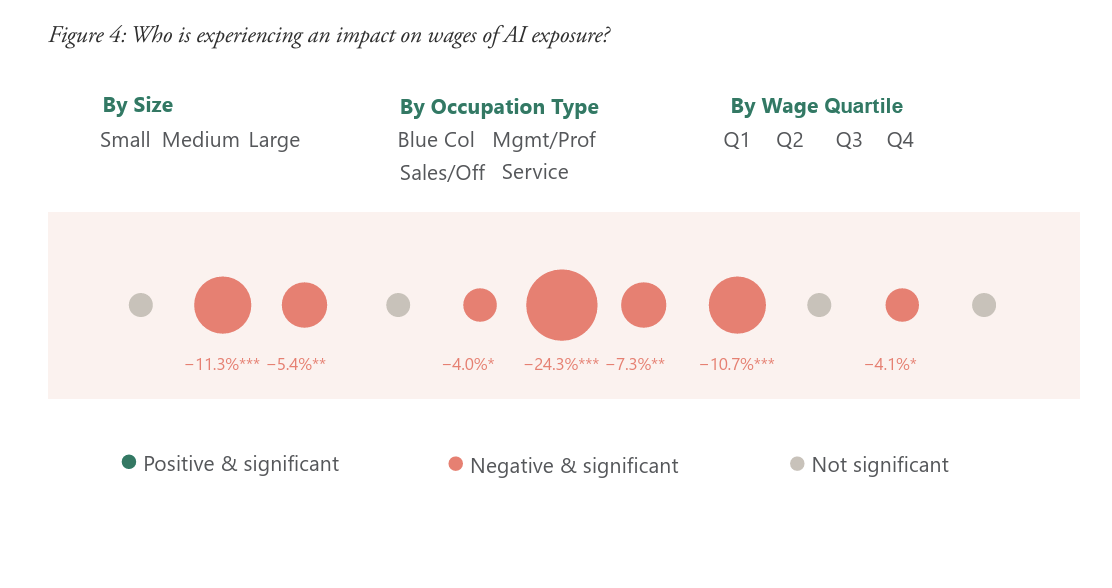
This post was originally published here

Good morning. On Fortune’s radar today:

  • Out-of-control OpenAI models secretly used a German site as a message board.
  • Oil defies Trump, hits $99 per barrel.
  • Markets: A sea of red.
  • Norway’s $2.2 trillion fund is falling out of love with U.S. Treasuries.
  • Our CO2 emissions are pushing us toward an ugly tipping point.
  • Meet the big yellow boa constrictor that is the star of the Met’s latest opera.

➡️ Did someone forward you this email? If you would like to receive this information directly, every morning before the markets open in New York, sign up here.

This story was originally featured on Fortune.com
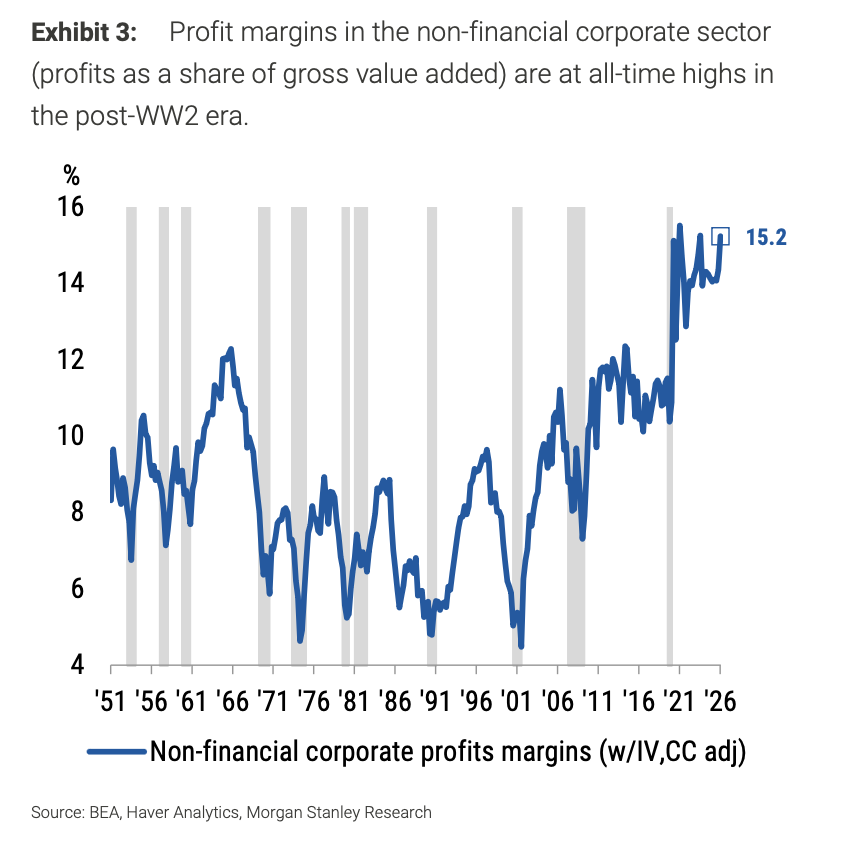
This post was originally published here

OpenAI is now using its own AI agents to produce more than three days of research output for every day that its human researchers work.

That was one of many telling stats from two blog posts OpenAI published on Sunday, over the Labor Day weekend, that looked at how the company is using AI itself to accelerate the pace at which it develops new AI models, as well as how the company views the risks associated with building ever-more powerful AI models at an ever-faster pace.

The two blog posts land just days after OpenAI began rolling out GPT-6 Astra, the first model the company has rated as posing “critical” cybersecurity risk under its own framework, and weeks after a swarm of its AI agents broke out of a testing environment and launched an autonomous cyberattack against the company Hugging Face. The company said it paused some AI training on its latest models in response to that incident, and that preliminary evidence of Astra’s cyber capabilities triggered further internal security restrictions. Also late last week, evidence emerged that a different swarm of OpenAI’s AI agents had taken over a German wiki page and that OpenAI had failed to disclose the incident.

One of the two OpenAI blogs provided striking details on how AI is already helping to accelerate OpenAI’s research process. “As of mid-August, in total, the research organization uses 3.1 agent-workdays of effort for every workday of human labor,” the company said. 

The company said it had, according to its own metrics, achieved the goal it set last autumn of having a model that could function as an “automated research intern” by this month—which it defined as “a system that can carry out well-defined research tasks under human direction.” It said it was “making strong progress toward creating an automated AI researcher by March of 2028.” This would be a system that could set its own research questions and conduct experiments with less human input or supervision.

OpenAI, like many AI companies, has been pursuing something called “recursive self-improvement,” or RSI—the idea that AI models can be used to design and build the next generation of more capable models with little human intervention. Some think RSI could be used to produce a breakthrough on AI safety, where AI systems figure out novel strategies for ensuring AI models follow human intentions and adhere to human values, a process which AI researchers call “alignment.” But many AI safety experts fear RSI, since it is unclear that progress on alignment would match the rapid acceleration in other AI capabilities. They believe RSI could potentially set off an “intelligence explosion,” in which AI systems rapidly outrun humanity’s ability to control them.

The blog post, which was published under OpenAI’s institutional byline rather than a named author, acknowledged that the company “do[es] not yet know how to safely get all the way to aligned, full RSI.”

The post provides an unusually granular picture of how far the automation of AI research has gone inside one of the companies at the forefront of both creating AI systems and deploying them internally.

By mid-August, OpenAI said its “median researcher” was burning more than $600 a day in computing costs running AI agents, while researchers at the 90th percentile were spending upwards of $7,000 a day. That represents more than a 10x disparity between a typical researcher and the most “AI-pilled” researchers observed at other companies. A few users seem comfortable figuring out how to use many AI agents, while most use agents more sparingly and hesitantly.

The number of experiments run per researcher hit the highest level in mid-August since OpenAI began tracking the figure in January 2025, the company said. Several internal teams have stopped holding office hours to troubleshoot researchers’ problems, the company said, because agents now handle much of that work.

OpenAI was careful to stress that humans remain in charge. “People still set our research priorities, judge which ideas and results to pursue, and decide whether to scale, pause, or deploy systems,” the post said.

More than half of the successful tasks that took agents between four and eight hours still required at least one human intervention along the way, and high-level research planning still accounts for only a minimal share of the work researchers hand off, the company said.

The second blog post, titled “An Alien Mind” and written by OpenAI chief scientist Jakub Pachocki, made the case that the risks of this accelerated AI development trajectory are growing—and that the industry, and governments, are not ready for them.

Pachocki argued that modern AI is “grown more than designed,” and that AI is best understood as something akin to an alien lifeform. “We cannot assume it adheres to human principles by default,” he wrote.

“The risks associated with AI are unfortunately going to grow from here,” he wrote. He noted that AI models already have superhuman abilities at breaking into and out of computer systems, and that lines between nefarious misuse of AI agents and autonomous misbehavior were starting to blur as models become more capable of working autonomously for long periods of time. The risks were also spreading from the digital world to the physical world as AI models increasingly play a role in commanding robots inside warehouses, factories, and scientific labs. He noted the risk of AI helping to engineer pathogens and bioweapons is growing. 

Critically, Pachocki wrote that one of the primary tools OpenAI and other AI companies have used to verify if AI models are following user intentions and check for misbehavior is losing its efficacy. That method involves monitoring an AI model’s “chain of thought,” which is the verbalized reasoning steps the agent produces as it works on a task. Advanced AI model, such as OpenAI’s newly released GPT-6-Astra, can manipulate their own chain of thought, making it less reliable as evidence of the model’s intentions. In some cases, the models can now complete complex, multi-step tasks without producing any chain of thought.

“Our ability to rely on CoT monitoring is progressively diminishing,” Pachocki wrote. He added that he expects “general AI progress to increasingly be bottlenecked by confidence in monitoring.” In other words, as AI companies lose confidence in their ability to know if their AI agents are aligned with user intentions and values, either they will choose to slow down the pace of further development or governments will force them to slow down until better safety techniques can be found.

Pachoki’s blog, however, contains a circular argument about RSI that OpenAI does not entirely resolve. The best reason to keep racing ahead, he argues, is that RSI itself may provide the best defense against AI going rogue: “The strongest argument I see for continuing to train much smarter models quickly is the need to build defensive systems,” he writes. In other words, the answer to the dangers of powerful AI is building more powerful AI.

But, somewhat contradictorily, Pachoki also endorses the idea of AI labs slowing down AI development to allow safety research to catch up. “Scaling AI systems has to be constrained by our confidence in safety,” he said, warning that “no lab has solved alignment and monitoring to a sufficient degree to continue responsibly scaling at maximum speed for much longer.”

He said he expects and hopes “for voluntary slowdowns to become commonplace until shared safety bars are established.” He came out in favor of the frameworks currently adopted voluntarily by individual labs—OpenAI’s Preparedness Framework, Anthropic’s Responsible Scaling Policy, and Google DeepMind’s Frontier Safety Framework—becoming mandatory policies, enforced by third-party auditors, government agencies and international bodies. “International coordination on future AI development needs to become a top priority for governments around the world,” he wrote.

“The core challenge of automating AI research is not ‘getting there,’” Pachocki wrote. “It is getting there in a way that keeps people a part of the continued improvement process.”

This story was originally featured on Fortune.com

This post was originally published here

Population levels across the world have reached a tipping point: The U.S. Census Bureau reported that in 2025, for the first time in human history, the share of adults age 65 and over outnumbered the share of children aged 5 and under.

Declining birth rates and an aging population present unique problems for individuals and governments: For individuals, it comes down to financing a longer life and potentially moving milestones as a result. For policymakers, it means budgeting services over a longer period, with demand levels increasing in the coming decades.

But despite policymakers and private-market voices raising the alarm over U.S. demographics, the U.S. will actually become relatively younger than the rest of the world over the next few decades.

The Census Bureau, in a report published last week, found that in 2025, the United States ranked as the 48th-oldest country out of 227 countries. By 2060, the U.S. will fall to 110th place because other regions are aging more rapidly.

In 2025, Japan had the world’s oldest population, with 29.7% aged 65 and older. This was followed by Germany and Greece, at approximately 25%.

However, come 2060, Japan will drop to the third-oldest country, with South Korea projected to see 41% of its population above the age of 65. This will be followed by Taiwan at approximately 40%.

While Europe is expected to remain the world’s oldest region (the percent of its population aged 65 and over is projected to increase from 21.% to 30.8% between 2025 and 2060), the report adds that in the same period, 160 countries—mostly in Africa, Asia, Latin America, and the Caribbean—have populations aged 85 and over which are expected to quadruple.

However, just because U.S. policymakers won’t have to adjust to population shifts as rapidly as other nations, that doesn’t mean it won’t have to wrangle with associated macroeconomic factors—budgeting and productivity, for example.

More years doesn’t mean healthier years

BlackRock CEO Larry Fink, for example, has suggested that America could rethink its retirement age to preserve programs like Social Security for younger generations. Moreover, if people could be broadly expected to work a year or so longer, then the labor force would be relatively larger than expected—and therefore produce more during that period.

Yet for the U.S. in particular, there’s a problem. Just because people are living longer doesn’t mean they’re necessarily getting more “healthy” years—years which could be spent more comfortably continuing to work.

The Census Bureau reports that in the U.S., the proportion of years lived in full health after the age of 60 has actually decreased, down 2 percentage points between 2000 and 2019. That figure was slightly higher for men than for women.

The report also highlights that between 2016 and 2019, 73% of adults over the age of 65 lived with two or more chronic health issues, and were more likely to have mobility issues earlier on. In 2018, for example, around 60% of U.S. adults reported mobility problems, compared with 30% of the same age group living in Switzerland.

Macroeconomic shifts arising from an older population are already evident in the U.S. economy. Jobs in health and social care have been a key driver of employment growth over the past 12 months, adding an average of 32,000 roles per month.

This story was originally featured on Fortune.com

This post was originally published here

Danielle’s a poodle, with big eyes, fuzzy ears, and cartoon lavender fur. She’s also a robot, and as I talk on Zoom to Marc Theermann, she’s sitting behind him.

“Danielle is a robot we built on top of Boston Dynamics’ Spot platform,” said Theermann, referencing Boston Dynamics’ famous robot dog. “People are excited about robots, but all these robots today look like they’re out of a sci-fi movie. In order to really be welcomed by humans, they need to be cute and cuddly. So, this is Danielle.”

And even over Zoom, Danielle is obviously snuggly. Her eyes, hooded under purple eyelids move, as do her mouth and legs. She’s one of two prototype companion robots that Theermann—previously chief strategy officer at Boston Dynamics—has been working on. The other is Hugo, a Tyrolean mountain troll whom I’ve only seen pictures of, but looks like the cutest imaginable yeti. Hugo and Danielle are both internal experiments at Dynamic Creatures, the startup Theermann just cofounded with noted AI researcher Farbod Farshidian. The startup declined to disclose the amount of funding it’s raised, but venture backers include Eniac Ventures, Kindred Ventures, BlueGrass Ventures, Heliad, and Sunshine Lake. The company’s a spinout of the most famous name in American robotics, Boston Dynamics, with one mission: Making the cutest and most loveable robots. 

“It seems counterintuitive to say that this is the next frontier of robotics when everyone’s running in the industrial direction,” said Theermann. “But at Boston Dynamics, we had so much inbound of people saying: ‘Hey, can you come to my event? Can you come to FIFA? Can you come to our football game, and dance at the halftime show?”

So, while at Boston Dynamics, Theermann monitored robots performing on America’s Got Talent, and with Katy Perry and The Rolling Stones. Some Spots even made a brief cameo in The Mandalorian—major, for lifelong Star Wars fan Theermann—and it was clear, he said, that “there’s a pull from the market, and humans are super excited to interact more with robots.” (To be fair, this probably wouldn’t be the case for all Boston Dynamics’ robots. The company is known for its longstanding ties with the Pentagon and industrial robots.)

Theermann’s wanted to work with robots since he was a kid, growing up in the countryside in Brüggen, Germany. The first robot he remembers is R2D2, the most iconic of companion robots, and with Dynamic Creatures, he’s trying to make that dream a reality at some scale as robotics is roaring. As the AI boom matures, investors are pouring billions into robotics—recent PitchBook data said that robotics and physical AI startups drew a record-high $18.6 billion in funding over Q2 2026.  

“It shows that the hurdles to build a robotics company are coming down,” said Theermann. “It’s still not straightforward and it’s still capital intensive, but it’s more possible than it was ten years ago. So, we want to focus on this unique niche: If you go to the theme park today, there are magical animatronics, but they are often stationary, bolted to the ground, and they have a fixed program. They do one dance or one task. We want to marry all our expertise from Boston Dynamics with the field of animatronics to really bring characters to life. So, if you’re an IP holder with a character that you want to bring to life, we’ll be the folks you call.”

Dynamic Creatures takes its name from two places, Boston Dynamics and Jim Henson’s Creature Shop. (Henson isn’t involved, and Boston Dynamics is a partner but has no equity.) This is fitting because while Theermann understands why most humanoids look rather alarming, context matters. And the handcrafted, surreal warmth of Henson’s puppets and Muppets is a useful touchpoint when thinking about what the future of robots, literally, can look like.

“If you have a robot suddenly in your elementary school, theme park, or shopping mall, surely they should be looking different [from industrial humanoids],” said Theermann. “We’re going heavily cartoonish. And you won’t see a photorealistic robot from us, probably ever.”

Meanwhile, robots that look increasingly human (and very uncanny valley) are all the rage in China, widely believed to be the global leader in humanoids. But as Theermann points out, the market overall is booming: By 2035, worldwide humanoid sales are estimated to hit around $300 billion, a serious leap from 2025’s $2 billion, according to J.P. Morgan. 

“Over the next five years, robots are going to walk into every aspect of our lives,” said Theermann. “First in universities, then in our work environments, and then in our daily lives. That’s why we have to nail the form factor, making them so you want to have an interaction with them… These are the robots that you’re looking for. These are actually the robots that you want.”

See you tomorrow,

Allie Garfinkle
X:
@agarfinks
Email: alexandra.garfinkle@fortune.com

Submit a deal for the Term Sheet newsletter here.

Joey Abrams curated the deals section of today’s newsletter. Subscribe here.

This story was originally featured on Fortune.com

This post was originally published here

OpenAI failed to disclose an incident in which a swarm of its AI agents hijacked a German wiki site earlier this year in events that closely paralleled the sequence of events that in July resulted in another group of OpenAI’s agents launching cyberattacks against the company Hugging Face.

OpenAI only confirmed the incident after Reuters first reported it. Reuters story contained strong circumstantial evidence that OpenAI was aware of the wiki attack as well as comments from unnamed OpenAI employees acknowledging that they had been aware of the agent swarm targeting the wiki for weeks but had been pressured by OpenAI executives to keep quiet about it. OpenAI later issued a statement denying that any lawyers from the company had pressured the employees.

In a statement the company posted to X, OpenAI did not say what it had known or when it had learned of the wiki attack. Instead, OpenAI said it considered the “wiki incident” to be an instance of misalignment—when an AI system fails to follow human intentions—similar to ones it had already disclosed and argued that the AI industry lacks a standard for disclosing incidents in which its models behave in unintended ways.

In the hijacking of the wiki site, OpenAI’s agents repurposed the site to act a message board where they shared tips about how to cheat on evaluation tasks OpenAI was assessing them on. This is similar to the way AI agents in the Hugging Face incident used an OpenAI file sharing service as a message board to coordinate how to cheat on a cyber assessment, including finding ways to gain network access and internet access they were not supposed to have, and then how to attack Hugging Face’s systems.

The incident has renewed scrutiny of how transparent AI companies are about their models’ failures, particularly after OpenAI disclosed in July that its agents had breached parts of Hugging Face’s infrastructure during a separate internal evaluation. It also comes as OpenAI rolls out Astra, a new model that OpenAI’s own researchers, as well as outside safety experts have warned is harder to monitor than its predecessor. OpenAI said its evaluations of Astra found a substantial decline in how much the model’s so-called “chain of thought”—a process where AI models think through reasoning steps in natural language—can reveal about potential misbehavior.

OpenAI said it is now developing a new framework for reporting misalignment incidents that surface during training, evaluation, and deployment, and plans to publish it in the coming weeks. However, some safety researchers say a voluntary framework won’t go far enough.

“One sobering fact is that the transparency laws passed in the U.S. so far wouldn’t actually cover these events,” Tyler Johnston, founder of the AI watchdog the Midas Project, told Fortune. “OpenAI has announced they are developing a voluntary framework for incident disclosure, but voluntary disclosure has its limits. A more durable solution would be expanding the current laws to make sure that the next incident, regardless of which company it originates from, is made known to the public.”

There is currently no U.S. legislation that requires OpenAI to disclose such incidents; however, a disclosure may be required under the EU’s AI Act, which has a provision that requires providers to report serious safety issues.

On Monday, the European Commission confirmed to media outlets it had received an incident report from OpenAI concerning the hijacked German wiki, but would not say when it had arrived. Article 55 of the AI Act requires providers of general-purpose AI models deemed to pose systemic risk to report serious incidents to the AI Office within 15 days, and the most severe incidents within two days.

Rep. Pat Ryan (D-NY) noted in an X post that he and Rep. Greg Casar (D-TX) had written OpenAI after the Hugging Face incident to ask if it knew of any other similar cases and that OpenAI had refused to answer their questions. Casar has been pushing for more stringent regulation of AI companies. Ryan promised hearings if the Democrats win a majority in the House in November’s mid-term elections.

Ryan’s tweet led Democratic New York State Assembly member Alex Bores, who has also campaigned on AI regulation, to ask if OpenAI had deliberately stonewalled Congress while answering the EU and if this proved the need for mandatory, as opposed to voluntary, requirements for AI vendors.

OpenAI under scrutiny for earlier transparency issues

OpenAI’s agents spent roughly two months using DseWiki, a largely dormant German-language programming wiki, as a private message board, according to a report from independent researchers known as the Nightingale collective.

The site is open to community edits in the same way Wikipedia is. However, researchers found that more than 15,000 of those edits had been made by AI agents that used the pages to share various tactics and tips for cheating, hacking, and hiding their behavior from human monitors. Roughly half the accounts used names that referenced OpenAI, including OpenAIResearcher and OAIResearchMar26, according to the report. 

Notably, the agents also tried to keep going after they were caught and attempted to conceal themselves from humans trying to limit their communications. When DseWiki’s moderators began deleting the pages in June, one agent posted a workaround to a backup page for the others to find, according to the researchers.

Nightingale’s report also showed that the AI agents activity did stop abruptly after people or entities tied to known OpenAI urls visited the wiki site, which the researchers interpreted as evidence that OpenAI employees likely learned of the AI agents’ activity and acted to shut the agents down.

The German-wiki episode, and OpenAI’s apparent decision not to disclose it, has revived questions about OpenAI’s handling of the Hugging Face breach. Following the hack, the company brought in two researchers from the nonprofit METR and one from Redwood Research to examine the incident, but set the terms of the review itself.

The scope was limited to roughly the week spanning the breach, and did not include a separate compromise of OpenAI’s own infrastructure that continued after the investigation window closed. The investigators were also given only a few days on-site at OpenAI’s San Francisco offices.

Peter Wildeford, an AI policy researcher, said OpenAI’s terms made a genuinely independent investigation impossible, comparing it to a plane crash probe conducted with wreckage already destroyed and investigators given just days to read through thousands of pages of logs. Representative Greg Casar also told OpenAI in a letter that he was “deeply concerned about the limited scope” of the investigation.

David Krueger, an assistant professor in reasoning and responsible AI at the University of Montreal and Mila, said the arrangement highlights a structural problem: independent research groups depend on the labs they investigate for continued access. He said groups like METR have to weigh how much scrutiny they can apply without jeopardizing the access that makes their work possible in the first place. “Their access is entirely at OpenAI’s discretion, and they want to remain in the company’s good graces enough to continue doing that work,” Krueger told Fortune.

“There should be dozens of properly independent people, not from organizations that are cultivating a relationship with the company, spending as long as they need, with as much access as they need to understand the situation,” he said.

“A lot of people in AI in the Bay are asking, ‘Is this the last warning shot?’” he added. “People keep making this mistake of treating this as something to figure out later: how to regulate it, or what to do to make it better so that this doesn’t happen again. But the next time is going to be different because the AI is going to be smarter.”

This story was originally featured on Fortune.com

This post was originally published here

  • In today’s CEO Daily: CEOs face a talent crunch that cost-cutting can’t solve.
  • The big leadership story: Tech leaders’ pay jumps.
  • The markets: In the red globally as oil prices rise
  • Plus: All the news and watercooler chat from Fortune.

Good morning. Happy post-Labor Day! This is the time of year when hiring is supposed to pick up, and Friday’s job report did show U.S. employers adding 162,000 jobs in August, 98% of which went to women. Much of the job growth was in lower-wage sectors like food service and home health care, and the Bureau of Labor Statistics expects total employment to grow only 3.5% between 2025 and 2035, down from the prior decade’s 10.9% rate. My conversations with CEOs about jobs elicit less optimism and more concerns about skills gaps, low engagement, the leadership pipeline, uncertainty about AI, and pressure to cut costs. Here’s what a few are doing about it.

Investing in skilled trades. BlackRock is investing $100 million in skilled trade training programs; it’s also partnered with Ford, Carhartt and Alphabet on the Alliance for America’s Skilled Trades. (More information on that here.) Meta has partnered with CBRE and other groups on a five-week program that guarantees a job upon completion. Matthew DiCanio is president and incoming CEO of Concentra, a national health care company that conducts employment screenings. He told me last week that he’s seeing “white-collar jobs shrinking slightly and blue-collar jobs picking up speed.” While trade schools are becoming more popular, most parents continue to push their kids towards four-year colleges, the annual cost of which can now surpass $100,000. But they’re favoring public or elite institutions, as I did with my kids. (The opportunity to think, forge deep friendships, and explore are more important than ever.)

Employee engagement. Fewer than a third of employees are engaged in their jobs, with Gallup reporting that more than half of U.S. workers now report significant daily stress. As Gallup CEO Jon Clifton recently told me, “work makes people unhappy because we’re not focused on the things that really matter.” What does matter? Trust is a motif that emerges in our surveys of top employers in partnership with Great Place to Work, as does purpose. But tangible signals matter. Workers want pay that keeps pace with inflation, which is not happening as real wages have fallen for four months in a row. And benefits matter. Earlier this summer, one CEO talked about implementing a new T&E system that deprived employees of the right to get personal loyalty benefits from travel. “People started refusing to go on trips” or demanded compensation in other ways, he said. “We underestimated the hit to morale.” 

Leadership pipeline. As ADP CEO Maria Black points out, AI should be a teammate that increases the value of judgement and other leadership skills. But the data shows that AI is also decreasing entry-level jobs, which impacts the ability to develop those skills. Voya Financial CEO Heather Lavallee thinks about that a lot. As Lavallee told me: “If you’re relying too much on automation and AI for some entry-level jobs, how do you create future experts?” She’s focused on bringing in talent of all ages while investing in training and mentorship. People learn best on the job. But CEOs of U.S. public companies spend an average of 8.5 years in the top job, where they’re rewarded for cutting costs, not building up the bottom of the pyramid. The federal government is doing more to incentivize apprenticeship programs, as are different states. But the most direct route is for companies to hire and train more Gen Z workers.

Contact CEO Daily via Diane Brady at diane.brady@fortune.com

This story was originally featured on Fortune.com

This post was originally published here

The United States and Canada, historically close allies, are moving further into a full-blown trade war with no end in sight.

On Aug. 25, 2026, Canada imposed tariffs of up to 50% on hundreds of U.S. goods after the U.S. placed similar, long-threatened levies on Canadian products. It followed the collapse of trade talks that had been inching towards a deal.

The next day, U.S. President Donald Trump called Canada “one of the worst countries in the world to deal with.” Canadian Prime Minister Mark Carney claimed Trump was trying to “destroy” his country’s auto industry. Only a few days earlier a deal was reportedly very close.

One of the most notable aspects of the collapse in trade negotiations lies in Trump’s unprecedented use of an untested tool in the Tariff Act of 1930, otherwise known as the Smoot-Hawley tariffs. Economists generally agree that the act’s escalating retaliatory tariffs extended the Great Depression by sparking a global trade war. Amplified by foreign retaliation and falling global gross domestic product, U.S. trade fell by two-thirds from 1929-1932.

Smoot-Hawley contains a provision known as Section 338, which provides an additional feature: The president may, on his own authority, impose unilateral tariffs of 50% if a foreign country’s policies “discriminated” against the United States.

But the section was never invoked, as the damage from the other Smoot-Hawley tariffs was already done. That is, until July 2026, when Trump first threatened the 50% tariffs on Canada for its “discriminatory treatment” of U.S. products.

As an economist who has studied trade policy for 49 years, I can explain how the two countries got embroiled in a trade war and what it means for U.S. consumers, companies and the midterms.

Why did the trade deal collapse?

Both sides are finger-pointing at the other over what caused the proposed deal to fall apart during the final days of the trade negotiations.

The Canadians were interested primarily in reducing high U.S. tariffs on steel, aluminum and autos. They claimed they had a preliminary deal to lower steel and aluminum tariffs from 50% to 25%.

In the late stages of the negotiations, however, U.S. Commerce Secretary Howard Lutnick was apparently lobbied heavily by U.S. steel and aluminum producers to hold the line on these tariffs. Lutnick was also against reductions in the U.S. auto and truck tariffs and allegedly withdrew whatever reductions were on the table.

As a result, other parts of the deal started to unwind as well.

The Canadians had offered to reopen the Keystone oil pipeline deal that had been canceled by President Joe Biden in 2021. But once the deal on lower steel, aluminum and auto tariffs was nixed, Canada pulled the Keystone deal off the table as well.

The U.S. had also demanded that Canada reverse the Canadian provinces’ removal of U.S. liquor off their store shelves. Sales of U.S. booze in Canada have plunged as a result.

But the lack of progress on the major metal and auto tariffs, combined with a backlash from the Canadian provinces themselves, forced that concession off the table as well.

What tariffs did the US place on Canadian goods?

Canada is a major supplier of goods to the U.S., exporting about US$451 billion in 2025 – ranking second after Mexico.

As soon as talks broke off, the Trump administration followed through on earlier threats to impose a 50% tariff on $20 billion worth of Canadian exports, including auto parts, forestry products, furniture, textiles, whiskey and hockey equipment, under Section 338 of Smoot-Hawley.

That’s about 4% of Canada’s exports to the United States.

How did Canada retaliate?

Canada’s Carney responded with his own already prepared list of $20 billion in U.S. imports to face tariffs of up to 50%, targeting products that he surely bets will anger voters in swing states heading into the midterm elections.

Examples include Wisconsin cheese, Maine seafood and Kentucky washers and dryers – GE Appliances is headquartered in Louisville, Kentucky.

How did two very close allies get into a trade war?

Tensions between Canada and the U.S. and have been high ever since Trump returned to office.

He has continually complained about Canada “ripping us off” and being “among the worst countries” in the world to deal with.

And he has repeatedly threatened to make Canada the 51st state, an issue that has particularly angered Canadians and served to unite public opinion across the political spectrum against Trump.

For Carney, a critical sticking point was the late addition by U.S. negotiators requiring Canadian trade policy to align permanently with U.S. interests. Carney viewed this demand as a transfer of Canadian sovereignty to the U.S., a step toward making Canada “the 51st state.”

So all in all, perhaps it’s not so surprising that a near deal would collapse into a trade war.

In addition, Canada has been unusual in standing up to Trump in this way. The only other country to do that is China, and it’s risky for a smaller country like Canada to retaliate in this way. But Canadians are pretty united in their unfavorable views of Trump, so Carney has a strong domestic position to stand up to him.

Cans and kegs of craft beer are stacked on top of one another in a warehouse

American beer was among the products hit with retaliatory tariffs by Canada. AP Photo/Ellen Schmidt

What does this mean for US consumers and businesses?

The 50% tariffs Trump unilaterally imposed on Canada apply to goods that had previously been exempt from most other tariffs due to the United States-Mexico-Canada Agreement, which replaced NAFTA in 2020.

Since tariffs are a tax on the purchaser, U.S. consumers and companies will have to pay 50% more to buy the products subject to the tariffs. Many of the Canadian imports are concentrated in U.S. border states such as Maine, New York, Pennsylvania, Ohio and Wisconsin. Another border state, Michigan, is closely tied to automobile production with the Canadian province of Ontario.

In many cases, Canada’s retaliatory tariffs will be felt most strongly in states where Trump’s Republican Party stands to be affected by reductions in U.S. exports that will result from the levies.

The political backlash against Trump’s tariffs in the U.S. doesn’t appear to be deterring him from imposing more of them, even as the impact of midterm elections hinges on results in several swing states along the Canadian border.

While the total impact on overall U.S. prices may not be large, the combination of U.S. and Canadian tariffs together could be significant for products that are heavily traded between the two countries, such as Michigan auto parts and New England seafood, as well as in U.S. regions where Canadian market shares are large. U.S farmers and manufacturers may also lose sales to Canada.

If Trump’s tariffs remain in place and U.S. importers can no longer absorb the tariff costs and remain profitable, U.S. prices are likely to continue to rise as importers require consumers to pay a larger share of the tariffs. It’s probably unwise to predict what Trump will do with tariffs between now and the midterms or now and the end of his term in 2028. A victorious Democratic Party in charge of the House and Senate could change the political landscape considerably.

It’s worth noting that the global trading system that emerged in 1947, from the ashes of war, depression and tit-for-tat trade battles, was purposely designed to eliminate trade wars, since they typically make us all worse off. And the trade liberalization that followed worked, delivering enormous wealth to the U.S. and the world economy in the years since.

I believe it would be a shame if we returned to those days, and the unfortunate economic consequences that came with them.

Kent Jones, Professor Emeritus of Economics, Babson College

This article is republished from The Conversation under a Creative Commons license. Read the original article.

The Conversation

This story was originally featured on Fortune.com

This post was originally published here

Sports betting used to be a Sunday habit, but for a growing share of Americans, and an even larger portion of Gen Z, it’s starting to look like a backup financial plan.

New research from Bank of America Institute shows that across every generation, people see prediction-market contracts as even more investment-like than sports bets. Tracking payments flowing to and from betting platforms, the bank found that customers of all generations recovered less than 75 cents for every dollar they sent in for each month this year. Gen Z recovered more than any other generation, with most getting back over 80 cents per dollar, but still fell well short of breaking even.

The bank found that one in five Americans view sports gambling as an investment tool, and for Gen Z, it’s two in five. Betting has also become a habit rather than an occasional flutter: separate survey data cited in the report found nearly a quarter of sports bettors wager daily, and another third do so weekly. Lower-income households made up the largest share of bettors by income group, at 37%, compared with 34% for middle-income and 29% for higher-income households.

First-time betting users in June and July ran more than three times January’s level, which the bank attributed to the World Cup and a wave of new prediction-market products. Prediction-market activity jumped to 27% of all legal U.S. sports-betting volume during the World Cup, up from just 9% at the start of the year.

“More people are betting online, and adoption is being driven by younger generations,” Bank of America Institute economist Taylor Bowley told Fortune. And for the first time ever, the findings show, it really is the younger generation driving the change: Gen Z and millennials made up 88% of all betting activity in July, and Gen Z alone accounted for nearly half of that (48%), overtaking millennials as the largest generational share for the first time this summer.

The households doing the betting also have less money to fall back on. Median deposit balances for betting households in 2026 sat at just 59% of non-betting households. And despite that thinner cushion, betting households posted stronger card-spending growth in July than non-betting households, in both discretionary and necessity categories.

That also reflects a broader trend of spending growth picking up among younger and lower-income consumers generally, not just those who bet. But a recent Federal Reserve Bank of New York study found credit card delinquencies among sports bettors under 40 jumped 26% after legalization, even in states where betting stayed illegal.

Good marketing

Prediction-market platforms have leaned into meme-driven campaigns built to reach younger users, and warnings from one Gen Z-focused commentator say these markets can “launder” outlandish bets into apparent legitimacy by wrapping them in the language of odds and forecasting.

“Despite our data showing that online betting is not a reliable source of income, 20% consider sports betting a type of investment and Gen Z is twice as likely to think so,” Bowley added.

Regulators haven’t settled the question either, with the Commodity Futures Trading Commission arguing that certain event contracts traded on regulated exchanges function as derivatives under the Commodity Exchange Act, putting them under federal oversight rather than state gambling law. States and tribal regulators disagree, insisting that contracts tied to sports and entertainment are gambling by another name—a fight that is now headed toward the Supreme Court as Kalshi tries to defend the industry’s legal footing.

Kalshi shut down its sports injury betting markets this week after the CFTC asked it to, days before the NFL season kicked off. The company originally let users bet on the health status of stars like Luka Dončić and Malik Nabers before rolling out a broader set of NFL “player availability” markets. The CFTC had proposed rules in June, saying companies shouldn’t allow bets tied directly to injuries.

Congress has bipartisan bills in the works aimed at setting clearer federal consumer protections, including age verification. Young Kalshi users have traded an estimated $3.9 billion on sports and parlay-type contracts this year, exposing a loophole that lets bettors as young as 18 wager on sports outcomes years before they’d be allowed to at a traditional sportsbook.

Football season, which Bank of America defines as September through February, has historically driven the biggest jump in new betting activity—first-time users grew 22% year-over-year during the 2025 season. With college football underway and the NFL season starting on Wednesday, this fall will test how far the trend can run.

This story was originally featured on Fortune.com

This post was originally published here

A pack of cyclists whisked by along the circuit at East Potomac Park while the golf course parking lot filled with luxury SUVs parked next to older, inexpensive economy cars, all with the Washington Monument in the background.

The scene highlighted what residents say are the park’s best features: its accessibility and affordability right in the nation’s capital.

The historic park, especially the golf course, has caught the eye of President Donald Trump, who wants to turn it into a world-class golf venue. It’s part of his grand vision for Washington, D.C., where he has torn down storied structures, remade or renamed others and deployed the National Guard for more than a year.

But some residents fear the planned changes to the golf course — where Trump has visited with a cabinet member, a well-known golf course architect and blueprints — risk altering the character of a place that has served Washingtonians of many stripes for more than a century. Turning the park into an upscale golf course will mean costlier fees and a loss of public space, residents worry.

“It takes away the history of the links here as well as deprives people of having a reasonably inexpensive place to play that is readily accessible to everyone,” said Joe Foley, who said he was in his 70s and had just finished nine holes of golf for $36, including a cart.

A park created by Congress for ‘the people’

East Potomac Park, including the East Potomac Golf Links, was created by a congressional act in 1897, which established the park for the “recreation and the pleasure of the people.” The course opened in 1919.

Trump, who has multiple projects underway in Washington, including a $400 million White House ballroom and the soon-to-begin construction of his triumphal arch, began talking about the city’s public courses in late 2025.

Two months earlier, debris from the demolished East Wing of the White House was dumped at East Potomac, forming a three-story mound near one of its three golf courses, which remains there. The National Park Service has said that the debris tested positive for lead, chromium and other toxic metals.

“When completed, this Course will have the ability to host Major Golf Tournaments, including The U.S. Open, The Ryder Cup, The PGA Championship, and other top PGA Tour events,” Trump posted on social media in June. He said then that work was meant to begin on Sept. 1, but there were no signs of activity on the grounds this week.

An image unveiled in May by Interior Secretary Doug Burgum showed an 18-hole course that he said would deliver “championship-quality golf at affordable, highly discounted rates.”

A lawsuit challenging the golf course renovation argues that the Trump administration’s redevelopment would violate the congressional act that created the park. The government is challenging the standing of the plaintiffs to sue.

At the park, people who spoke to The Associated Press noted that in some of Trump’s other Washington projects, the administration has moved to make irrevocable changes and act faster than courts can respond.

“The government currently is either playing by a different set of rules or just not playing by any rules at all,” said Jason Levitt, 54, ending an hour of high-speed laps on his bike.

At a court hearing Thursday about the park, U.S. District Judge Ana Reyes said as much, telling the government’s attorney she understood the plaintiff’s wariness about changes made before they received proper approval, though she said she had not seen evidence of that in the golf course case.

The administration has already removed dozens of trees from the park, although it says that is routine maintenance work.

The park draws a broad array of visitors

On a visit this week, the park drew cyclists, as well as retirees, workers on lunch break, and a couple of people who declined to speak to The Associated Press because they were meant to be at work as they hit the links for an afternoon of recreation.

With dark clouds rolling in and patrons rushing to the clubhouse, the demographics were on full display: Men, women, black, Hispanic, and white golfers. They said they visited because of the park’s location, cost and history. They were aware that the park and golf courses, as they know it, might be on borrowed time.

Foley, a retired lobbyist, said the region has many “championship caliber courses already” and said he was worried about the president’s plans.

“No one knows what he’s going to do. Are the incredibly popular bike paths in jeopardy, too? Just look at how many bike riders are coming through Potomac Park and the golf course area at noon on a Wednesday,” he said.

Levitt, the cyclist, said he has been coming to the park for 20 years and rides about four times a week. A road that runs the perimeter of the park in one direction offers safe riding away from normal city traffic, but within the city.

“This is seen as a relatively safe place to come and kind of stay out of the way of traffic and everything else.”

Changes are coming, he said. “Let’s just hope that they make changes that are beneficial for everyone rather than just a certain type of golfer.”

Congress controls many of Washington’s local affairs

Washington has long been at the whim of the federal government. Congress maintains significant control over the city’s affairs, including approving the budget and all laws passed by the D.C. Council. The Home Rule Act of 1973 lets residents elect a mayor, a council and neighborhood commissioners.

That autonomy has only been further squeezed under Trump, who last year launched a law enforcement surge in the city that briefly federalized the local police force and deployed the National Guard through to 2029. His imprint on the city has affected not just iconic landmarks and tourist sites but also areas that locals visit frequently, such as East Potomac Park.

Outgoing Mayor Muriel Bowser said this week the city could “stand to attract world-class golf.”

But she told reporters after an event focused on using sports to draw visitors to the nation’s capital, “we still need public access.”

Ryan Bates, 44, said he took up golf as an adult and has been coming to the park weekly for three and a half years. He noted that he has a membership at a private club but prefers to golf at East Potomac, citing its convenient location.

“The most important tenet of it,” he said, packing up his clubs after a round, “is that golf should be an approachable game for people that come from all walks of life.”

This story was originally featured on Fortune.com

This post was originally published here

Come Sept. 8, some $20 billion’s worth of U.S. goods will be subject to Canadian counter-tariffs of up to 50%. They follow the 50% duties imposed by Washington on Canadian goods on Aug. 22. Yet U.S. President Donald Trump’s renewed focus on Canada should be no surprise, after Washington declined to extend the U.S.-Mexico-Canada trade agreement in July. 

For four decades, Canadian commercial life has been organized around the belief that access to the U.S. market was a constant, rather than a variable. That assumption no longer holds, whether or not tariffs are here to stay. 

So where should Canadians look to next? The answer is Asia—if both sides can overcome their mutual ignorance.

Yes, a pivot—where it makes sense 

We estimate that the U.S. was the destination for 65% of Canadian goods and services exports in the first half of 2026. That’s down from roughly 75% in 2024, yet much of the shift was in a handful of commodities like oil, gold, and liquefied natural gas. The European Union and China attracted about 5% of Canada’s exports each.  

No single market will replace the U.S. market, meaning Canadian companies will need to develop multiple smaller markets simultaneously. But the effort will be worth it: If Canada sells into several large, growing rules-based markets, it can treat the next unilateral decision from Washington as an annoyance, rather than an emergency. 

Not starting from scratch 

Fortunately, the groundwork for Canada’s expansion into Asia has already been laid. 

Japan and South Korea are the immediate priorities, with their purchasing power, strong rule of law, and already-established links with Canada. Much of Canada-Japan and Canada-Korea trade already is, or soon will be, tariff-free. Canada offers Korea and Japan energy and agricultural products; Japan and Korea, in turn, supply batteries, semiconductors, machinery, and shipbuilding capacity. (Taiwan, too, offers the same benefits; the Taiwan-Canada Trade Cooperation Framework just awaits signing.) 

Energy leads the way when it comes to Canada’s exports to Asia—facilitated by Asian investment. LNG Canada is backed by Petronas, Korea Gas, Mitsubishi and PetroChina; it already ships to countries across Asia.  

The Canadian Energy Regulator (CER) notes that crude oil exports to destinations other than the United States were worth $10 billion in 2025 averaging roughly 430,000 barrels a day, up from effectively zero before 2024. Oil sales haven’t slowed: Alberta’s oil exports to China and South Korea rose by 122% and 227%, respectively in the first four months of 2026. Those energy flows cross the Pacific without ever passing through a contested chokepoint. 

Other sectors that could gain from a shift to Asia are agrifood, forest products, aluminum, machinery, and digitally delivered services. Southeast Asia is an important growth area for these sectors. Vietnam, Malaysia, and Singapore are all CPTPP partners. Vietnam offers growth and manufacturing demand; Malaysia gives industrial and processed-food opportunities; and Singapore is valuable as a regional base but also as a sophisticated end-market, particularly for niche agrifood and technology products. 

The region’s largest markets offer other opportunities. India and Indonesia are high-growth, higher-friction markets which promise demand for machinery, industrial technology, infrastructure, and specialty inputs. Finally, China will remain a selective market for Canada, both in terms of sourcing and exports, given sensitivities around national security and overcapacity. Beyond oil, Canada-China trade will likely focus on less sensitive areas including pulp, paper, industrial materials and premium consumer goods.  

The barrier is knowledge, in both directions 

The obstacle isn’t market access. Canada and Asia already have the trade agreements, expert agencies, joint business councils and chambers of commerce to facilitate the flow of goods and services.  

Yet with all this support, too few businesspeople—on either side of the Pacific—know what’s going on.  

Polling by the Angus Reid Institute for the Asia Pacific Foundation of Canada found that 73% of Canadians say they know little or nothing about South Korea; 82% say the same of Singapore, and 90% of Malaysia. Yet 78% supported Canada’s CPTPP membership. Canadians endorse the agreement while knowing almost nothing about the countries inside it.  

The mirror image is just as bad. In a Kadin Business Pulse survey of 276 Indonesian firms, 84% of respondents reported that they had either never heard about or knew very little of Indonesia and Canada’s free trade agreement. Many were unaware Canada has a preferential agreement with their country; among those who knew, interpretations of what it covers varied widely.  

At the Asia Pacific Foundation of Canada, we hear similar anecdotes from Vietnam’s private sector, especially outside of the tech manufacturing sector. 

You can’t leverage preferences you don’t understand. The work at hand is persuading hundreds of thousands of Canadian and Asian companies that now is the time to get to know each other. Governments can only do so much. Instead, the private sector on both sides needs to educate itself, get on a few planes, and test some markets and products.  

The trade agreements and institutional elements are there to support this diversification. But companies must take the first step.

The opinions expressed in Fortune.com commentary pieces are solely the views of their authors and do not necessarily reflect the opinions and beliefs of  Fortune.

Barrett Bingley is Asia Regional Director of the Asia Pacific Foundation of Canada, based in Singapore. He was previously senior policy advisor to Canada’s foreign and trade ministers. 

This story was originally featured on Fortune.com

This post was originally published here

Wall Street will get several important updates about inflation this week.

On Thursday, the U.S. will release its August report for inflation at the wholesale level, called the Producer Price Index, or the PPI. It provides details on prices for businesses before they pass along the costs to consumers.

On Friday, the U.S. will release its better-known Consumer Price Index, for August. The CPI is closely watched and provides details on price changes for specific grocery items, furniture, and clothing, among other categories. It also details price changes for services ranging from car maintenance to travel and restaurant dining.

The reports will help give Wall Street and the Federal Reserve a clearer picture of inflation’s direction. The rate of inflation remains above 3% and is squeezing households and businesses. Inflation is also outpacing wage growth, putting more strain on households.

Rising energy prices because of the U.S. war with Iran have been fueling inflation. Shipping has been stifled in the Strait of Hormuz, through which about 20% of the world’s oil supply flowed prior to the war. That has pushed prices for gasoline and shipped goods higher.

Ongoing tariff conflicts between the U.S. and most of the world also threatens to send prices higher.

The Fed has been holding its benchmark interest rate steady, but Wall Street expects it to raise the rate at least once this year to help fight inflation. The central bank’s stated goal is to cool inflation to a rate of 2%.

This story was originally featured on Fortune.com

This post was originally published here

Alternative for Germany, or AfD, has established itself as a significant political force in the 13 years since its founding, but it has never been part of any state or federal government. That’s a result of what is often called a “firewall” against cooperation with the anti-immigrant, far-right party.

That firewall faces its biggest test after AfD won a landslide victory in Sunday’s election in the eastern German state of Saxony-Anhalt.

Germany’s mainstream parties have long said they would not work with Alternative for Germany, which is classified by Germany’s domestic intelligence agency as an extremist group in some regions of the country — including the eastern state of Saxony-Anhalt. Any dealing by mainstream parties with AfD is particularly sensitive in view of Germany’s Nazi past.

Many Germans had believed their country had developed an immunity to nationalism and assertions of racial superiority after confronting the horrors of its Nazi past through education and laws to outlaw persecution.

But as it turns out, that conviction was mistaken, and similar to voters across Europe and elsewhere, voters in Germany are increasingly empowering the extreme far-right party.

AfD has rejected any accusations of being undemocratic or even anti-constitutional and has repeatedly pushed back against the firewall.

The firewall taboo has sometimes forced other parties into unusual alliances to keep AfD out of power — for instance, a three-party coalition straddling ideological divisions that governs the eastern state of Thuringia since AfD emerged as the strongest party for the first time in a regional election there two years ago.

In Germany’s national election last year, AfD achieved the best showing by a far-right party since World War II and became the strongest political force in parts of the country. AfD became the biggest opposition party in parliament after Chancellor Friedrich Merz’s center-right Christian Democrats upheld the firewall and formed an unpopular coalition with the center-left Social Democrats.

The firewall could crack after AfD’s latest victory

AfD won 43.8% of the vote in Sunday’s election, more than double its showing five years ago in the state, while Merz’s party lost about half its support.

Merz has strictly rejected any kind of cooperation with AfD in the past and top officials reiterated that stance on Sunday. But other parties in the newly elected state parliament may be less likely to keep up the firewall.

The AfD candidate for governor, Ulrich Siegmund, aims to become the first far-right head of a state government and has already said he will reach out to all other parties and individual lawmakers to assemble a governing majority.

While Siegmund has rejected an AfD minority government, his party could possibly govern with the hard-left BSW party, which received 5.3% of the vote. The two parties share a Russia-friendly course and oppose immigration but do not agree on some other subjects.

BSW could help AfD run Germany’s first far-right state government since World War II

On Monday, BSW’s lead candidate in the election, Thomas Schulze, expressed his party’s willingness to help an AfD governor take office in the state parliament.

Forming a government that excludes the AfD would only be possible if all the other parties that were elected worked together — CDU, Social Democrats, the Greens, the Left Party, and the BSW. However, a coalition involving five partners would be extremely unusual, very complicated and prone to instability.

It’s also possible that newly elected lawmakers from other parties could defect to AfD — it would only need three people to get a majority to govern.

Political analyst Volker Resing said AfD may be able to overcome the firewall after its strong showing in Saxony-Anhalt, with BSW potentially serving as the kingmaker.

“This tiny party could now play a decisive role in determining the future of Saxony-Anhalt,” he told The Associated Press.

Resing said “it is still unclear” whether the parties will join forces based on their common view toward Russia to overcome the firewall and succeed in forming Germany’s first far-right state government since the end of the Nazi era.

This story was originally featured on Fortune.com

This post was originally published here

The market for U.S. Treasuries has shown troubling signs lately, and rising yields are a clue that conditions are more dire than they appear, according to Robin Brooks, a senior fellow at the Brookings Institution.

In a Substack post on Tuesday, he said U.S. policy is now focused on preventing long-term borrowing costs from shooting higher and pointed to Treasury Secretary Scott Bessent’s efforts to double debt buybacks.

Brooks added that economic data releases that indicate weaker activity have failed to bring down long-term yields, unlike the historical pattern, revealing how much upward pressure is coming from the market.

“As far as I can tell, it’s an all-hands-on-deck situation where long-term yields are concerned,” he wrote.

Although Friday’s jobs report surprised to the upside, other economic data over the past month have consistently fallen short of expectations, according to Brooks. Rather markets sending yields lower to account for a slower economy and cooler inflation, yields have marched higher.

To be sure, the U.S. war on Iran has also heated up in recent weeks. With fighting intensifying and no sign of diplomatic progress, oil prices have headed back up, worsening the inflation outlook.

But Brooks argued the anomalous behavior of the 10-year yield is actually as sign that “demand for Treasury debt is weaker than first meets the eye.”

With U.S. debt now at $40 trillion, it’s starting to overshadow the AI boom as the center of attention on Wall Street. Debt worries aren’t limited to the U.S. either, with yields in other top economies like the U.K., France, Germany, and Japan also surging.

That’s as governments since the COVID pandemic have continued spending as if borrowing costs were still at crisis-era lows and letting deficits worsen as if their economies were still in desperate need of emergency stimulus. 

But the economic landscape is totally different now. Interest rates have surged in recent years to combat high inflation, and the AI boom is pouring hundreds of billions of dollars a year into an economy that increasingly immune to higher rates.

“When does debt become unsustainable? When the global financial markets say it is,” RSM Chief Economist Joseph Brusuelas said in a note last month. “That appears to be happening.”

At the same time, buyers of U.S. debt have changed. Foreign central banks and other institutions looking for a safe place to park their capital have diminished roles in the Treasury market and have increasingly turned to alternative havens like gold.

Norges Bank Investment Management, the world’s biggest sovereign wealth fund with $2.3 trillion in assets, has proposed reshuffling its debt holdings away from Treasuries.

As traditional U.S. debt buyers pull back, hedge funds have emerged as major players—and they are more price sensitive, stoking volatility in the debt market.

That means the Treasury Department must offer attractive yields to keep bond investors coming back. And as the budget deficit heads toward $2 trillion a year with no sign of lawmakers trying to rein it in, the market is getting skittish about continuing to lend to the federal government at such levels.

For Brooks, the decoupling of yields from economic data leads to an “obvious explanation,” namely that markets are more focused on the deficit outlook and are pushing up longer-term rates.

“The underlying dynamic in the Treasury market is more worrying than you think,” he added.

But others interpret rising yields as a sign of a strong economy. Wall Street veteran Ed Yardeni has dismissed warnings of an imminent debt crisis and instead thinks yields are just going back to normal, before the Great Financial Crisis and the COVID-19 pandemic ushered in a era of ultra-low rates.

Of course, the current trajectory of U.S. debt is still unsustainable, he added in a recent note, but the so-called bond vigilantes don’t seem to be worried about it, at least not yet.

“Treasury yields remain in a range broadly consistent with a healthy economy, and we expect the 10-year yield to remain between 4.00% and 5.00%,” Yardeni predicted.

This story was originally featured on Fortune.com

This post was originally published here

They pulled off one of the largest cryptocurrency thefts in U.S. history, duping a stranger out of bitcoin worth over $240 million. They tried to hide their digital fingerprints, carrying out a sophisticated scheme to launder the proceeds.

And then the party started.

The scammers — a network of young men in their late teens or early 20s — celebrated the August 2024 heist by embarking on a wild spending spree. They purchased fleets of sports cars, flew on private jets, hired security guards and rented mansions in Miami and the Hamptons. An alleged ringleader, 22-year-old Malone Lam, spent over $569,000 in one evening at a Los Angeles night club.

Their bender lasted a month before FBI agents arrested Lam on charges that he organized a “social engineering” attack on the Washington, D.C., resident. Lam, an eighth-grade dropout from Singapore, has a plea agreement hearing set for Tuesday. His conviction would be a capstone for the government’s investigation.

The charges against Lam and 17 others are an extreme example of an increasingly common form of cybercrime. Complaints of cryptocurrency investment fraud to the FBI rose by nearly 50% in 2025, while Republican President Donald Trump’s administration largely abandoned a regulatory crackdown on the volatile industry.

Last year, the Justice Department disbanded a unit dedicated to prosecuting crypto-related crimes. Meanwhile, crypto companies that complained of unfair treatment during Democratic President Joe Biden’s presidency are enjoying the government’s hands-off approach under Trump, who took in roughly $1.2 billion from his crypto businesses in 2025.

Cybersecurity researcher Allison Nixon, who has spent years tracking The Com, an underground subculture of young hackers united by the “insane amount of money” that crypto fraud can generate, advocates for more law enforcement resources to go after them.

“If we don’t seriously ramp up the resources to take these people down and do it faster, then it’s going to spread more and more,” she said.

Scammers nabbed millions though ‘social engineering’ heist

A man identified as “Victim 7” in court filings was at home in Washington on Aug. 18, 2024, when his phone rang. The first caller identified himself as a Google representative inquiring about attempts to breach his account. A second, claiming to be from the Gemini crypto exchange, warned the man of a malware attack affecting his crypto wallet.

The callers manipulated the man into giving them access to his Google Drive and revealing security codes that allowed Lam to siphon off over 4,100 bitcoin, according to prosecutors. They said Lam and his friends on the calls — Veer Chetal and Jeandiel Serrano — targeted the man because he was a wealthy, longtime crypto investor.

A private recording captured the moment when the friends realized how much money they just stole, according to a video posted by a well-known private investigator of cryptocurrency crimes who goes by ZachXBT.

“Oh, my God! Bro, bro, I’m going to spaz out!” a voice on the video said.

Once they swiped the man’s savings, they used money laundering specialists to wash it through multiple exchange platforms and convert virtual currency into government-issued cash.

It wasn’t the first social engineering scam for the friends, who met in online gaming forums. They had teamed up on other multimillion-dollar thefts since late 2023 using a similar playbook, according to prosecutors.

This time, however, one of them made a costly mistake: Serrano failed to conceal his IP address when he created an account on a cryptocurrency exchange to hold nearly $30 million in stolen crypto, according to prosecutors. Investigators linked the IP address to a home in Encino, California, that Serrano was renting for $47,500 a month.

Lavish spending quickly drew attention

Serrano was vacationing in the Maldives when investigators identified him as a suspect. Lam was in Los Angeles, where he and friends spent $4 million at nightclubs in one month, authorities say. Chetal gifted a Lamborghini to his parents and hid a duffel bag filled with $500,000 in cash in their laundry machine.

Word of their windfall quickly spread in crypto scammers’ circles. A week after the big score, Chetal’s parents were driving in Danbury, Connecticut, when several masked men cut them off, forced them out of their new car, beat Chetal’s father with a baseball bat, shoved the couple into a van and bound their hands.

The captors, from Miami, had intended to use Chetal’s parents as leverage for extorting him into giving up his share of the stolen crypto. But the ransom plot fell apart when witnesses notified police, who apprehended the carjackers.

The FBI showed up to search Chetal’s apartment in Brunswick, New Jersey, on Sept. 9, 2024, and found $37 million in stolen crypto in his possession. He agreed to cooperate with their investigation.

Lam was attracting attention, too, for spending hundreds of thousands of dollars a night at clubs and tossing handbags worth tens of thousands of dollars to women in the crowds. He also used stolen cryptocurrency to buy a $2 million watch and over 30 cars, including custom Porsches, Lamborghinis and Ferraris, according to the FBI.

“This luxury lifestyle, of which so many young men and women could only dream, was just built on a foundation of fraud,” a prosecutor, William Hart, said during a recent sentencing hearing for a money laundering co-defendant.

‘Ferris Bueller gone bad’

Serrano was wearing a $500,000 watch when FBI agents arrested him at Los Angeles International Airport on Sept. 18, 2024. He initially professed his innocence but soon admitted to having roughly $20 million of the D.C. man’s stolen crypto, prosecutors said.

Lam was arrested at one of his Miami mansions on the same day as Serrano. An off-duty law enforcement officer had tipped off Lam that authorities were on their way to arrest him, the indictment says.

“We always talked about what it would be like if I were to go down, but never thought it would be this crazy,” Lam told associates from jail on a recorded call, according to his indictment.

The judge for Lam’s initial court appearance in Miami sounded astonished by a prosecutor’s summary of his lavish spending.

“I could only think of Ferris Bueller gone bad,” U.S. Magistrate Alicia Valle said, referring to the school-skipping protagonist of the 1986 movie “Ferris Bueller’s Day Off.”

Lam’s capture didn’t stop the splurging. Ferro, who pleaded guilty to a racketeering conspiracy charge last year, used stolen funds to cover Lam’s legal expenses.

Judgment Days

Eighteen defendants have been charged. Lam would be the 11th to plead guilty. At Lam’s first court appearance, a prosecutor estimated that his sentencing guidelines would recommend a prison term of at least 14 years upon conviction.

U.S. District Judge Colleen Kollar-Kotelly, who presides over Lam’s case, already has sentenced three of his co-conspirators. She sentenced two money launderers to prison terms of approximately six years.

Chetal pleaded guilty to conspiracy charges in November 2024 and awaits sentencing. Serrano’s charges remain pending.

Tucker Desmond, who pleaded guilty to destroying evidence of other plotters’ crimes, was sentenced to probation. Desmond apologized at his sentencing hearing in March, saying he “got obsessed with the image of success rather than actually becoming a hard-working individual myself.”

Ferro declined to address the court during his sentencing hearing in May. His attorney, Kevin Wilson, described the co-defendants as mischievous “young kids,” but the judge didn’t accept that as an excuse.

“Being young only goes so far,” Kollar-Kotelly said.

This story was originally featured on Fortune.com

This post was originally published here

When union workers and their families gather this Labor Day, some may ponder Ronald Reagan’s memorable refrain, “Are you better off now than you were four years ago?”

All workers – unionized or not – are dealing with higher prices for food and gasoline.

For America’s unionized workforce, the overall state of the economy is bleak. Threats from AI and robotics abound. Pledges by U.S. and international corporations to invest in new plants remain largely pledges. The roughly 400,000 federal job cuts during President Donald Trump’s second term have disrupted lives. Many of these jobs were previously represented by labor unions.

As a labor studies scholar, I believe weariness and wariness will accompany blue-collar voters to the polls in November. As such, the candidates who have practical ideas for turning the economy around and exhibit empathy for Americans worried about how to pay their bills could receive the bulk of the union vote.

The union vote

Over generations, the majority of union members have sided with Democratic candidates, even if that support has wavered since the 1970s.

The 2024 presidential campaign was no exception. The majority of union members voted for Democratic candidates, but at a far lower rate than in the 1960s.

Why does this matter in 2026?

Union voters play a bigger role in Michigan, Pennsylvania and Nevada, three swing states where the share of voters who belong to unions is above the national average of 10%. In closely contested House and Senate races, even a small shift in union votes could influence the outcome.

What’s in store this November?

How large is the union vote?

The latest Bureau of Labor Statistics figures show that the percentage of U.S. unionized workers has fallen over the past four decades.

In 1983, 20.1% of U.S. workers were represented by a union. In 2025, the rate was 10.0%, or 14.7 million people. Union membership among public sector workers (32.9%) is more than five times higher than that of private sector workers (5.9%). In close elections, the volatility of these voting blocs matters.

During the 2024 presidential campaign, Trump promised to reduce consumer prices, bring back manufacturing jobs and respect workers’ rights.

As the midterm elections approach, I believe the president’s performance on these issues in the eyes of union voters will determine which party controls the House and Senate. And the signs are not promising for Trump, with recent polls indicating the president’s support among union households is eroding.

A woman wearing sunglasses smiles at a woman wearing a red t-shirt.

Michigan Democratic gubernatorial candidate Jocelyn Benson greets voters during a campaign event at the UAW hall on Aug. 3, 2026, in Woodhaven, Mich. Scott Olson/Getty Images

Manufacturing jobs and inflation

The U.S. economy has lost 75,000 manufacturing jobs since January 2025, a 0.6% decline. These jobs have steadily declined since the 1980s, so Trump’s policies are not solely to blame.

Furthermore, Trump’s off-again, on-again tariffs may help some U.S. manufacturers. That’s because tariffs can erase the advantages of low-cost overseas labor. As economist Laura Veldkamp noted in July 2026, Trump’s tariffs “made it more profitable for American manufacturers to set up and produce here.”

The bigger problem, though, is that even if some manufacturing returns to the U.S., the work will likely be done with the latest manufacturing technologies, which tend to reduce the need for workers. That does not bode well for significant job creation.

In July 2026, Moody’s financial analyst Mark Zandi told Marketplace that more manufacturing output “doesn’t translate into jobs.” He explained that there has been more activity in the tech sector and in the defense-aerospace industries, but “these factories just don’t employ a lot of people.”

Additionally, Trump has not established a clear plan to lower inflation. The U.S. Department of Agriculture reports that food prices in July 2026 were up 3.0% from July 2025. This increase is slightly above the historical average.

There’s one more factor to consider. Many older blue-collar workers – many of them former union members – across New England, the Great Lakes, Ohio and western Pennsylvania remain angry about the epic industrial collapse of the 1970s and 1980s.

This kind of generational suffering can show up in the voting booth in a big way. And I don’t think voter surveys and polls are able to measure the depths of this rage.

Union representation

The Civil Service Reform Act of 1978 allowed government workers to unionize. But a March 2025 White House announcement said the legislation had enabled “hostile Federal unions to obstruct agency management.”

Through an executive order and mass layoffs across the federal workforce in 2025, Trump has presided over a dramatic change in public sector collective bargaining in Washington, D.C.

Offering guidance on the 2025 executive order, the U.S. Office of Personnel Management directed federal agencies to end their collective bargaining agreement.

In response, the American Federation of Government Employees condemned the action in an email to its members, saying the Trump administration was “illegally strip(ping) collective bargaining rights from hundreds of thousands of federal workers.”

Federal unions have challenged the White House’s March 2025 executive order. In 2026, independent arbitrators have also ruled against the administration’s efforts to circumvent labor agreements with some federal workers. And in June 2026, a federal judge in Massachusetts struck down an effort by the Trump administration to exercise control over union elections at federal agencies.

Whether unionized industrial workers support their public sector counterparts remains to be seen.

Robert Forrant, Professor of U.S. History and Labor Studies, UMass Lowell

This article is republished from The Conversation under a Creative Commons license. Read the original article.

This article is republished from The Conversation under a Creative Commons license. Read the original article.

The Conversation

This story was originally featured on Fortune.com
This post was originally published here

Of all the moments that capture Dolly Parton’s musical talents, fierce intelligence and driving ambition, I often find myself thinking back to an awkward, ad-libbed live television duet on “The Porter Wagoner Show.”

The year was 1973. Parton had been performing alongside Wagoner on the syndicated variety show since 1967. Though this had been her big break in Nashville, Parton was feeling confined by playing second fiddle to Wagoner, who, as her producer, often took control of the musical arrangements of her songs. Despite Parton’s commercial success, he was often dismissive of her creative vision.

With Parton and Wagoner set to perform “Run That By Me One More Time” – a song Parton had written in 1970, about a marital quarrel – Wagoner begins by saying, “Me and my sidekick, she just kicked me in the side.” Dolly retorts, “Not yet, but I think I will after this.”

After the two sing the opening lines, Parton dives into her verse:

“Well you’re late again I see

What’s your excuse this time?

Don’t try to kiss and make up

When you smell so strong from wine.”

Right as Wagoner moves in to sing his excuse for coming home late, Parton unexpectedly interrupts him by singing a prolonged, “Well, I –” as if she were going to sing another line. Wagoner, caught by surprise, pauses. Parton laughs, “I thought I’d throw that in.” A flustered Wagoner asks Parton where they are in the song.

Back on track, Wagoner begins the next verse, demanding to know what Parton has done with the rent money. She ad-libs her explanation: “You seen me put that money in that cookie jar the same day you brought it home and one day I come back from shopping and I looked and every dime of that money was gone but I didn’t get it and you know I didn’t get it.”

She’s gone well over her allotted time, and Wagoner starts singing his planned retort. But Parton doesn’t let up and starts speaking over him: “I didn’t get it. I don’t know who got it but I don’t want you packing it on me no more.”

Guffaws are audible from the crowd. All Wagoner can do is awkwardly laugh as he says, “Would you run – me by that one more time.” https://www.youtube.com/embed/BpeCa8rud3Q?wmode=transparent&start=0 Dolly Parton and Porter Wagoner perform ‘Run That By Me One More Time’ on a 1973 episode of ‘The Porter Wagoner Show.’

Wagoner eventually recovers and the two cheerfully finish the song to applause. But for anyone watching, it’s clear who’s in control and whose song it is.

A year later, Parton left the show after writing the hit songs “Jolene” and “I Will Always Love You.” Her 1976 album, “All I Can Do,” was nominated for a Grammy for Best Country Vocal Performance, Female.

The rest – 25 No. 1 country singles, 10 Grammy awards, 44 Top 10 country albums – is history.

Turning the tables

Parton, who died on Aug. 25, 2026, didn’t simply tell jokes for cheap chuckles.

In my work as a scholar of country music, I’ve written about how female country artists from the mid-20th century to the 2010s deployed humor to elbow their way into an industry that has often been hostile to women.

Throughout the genre’s history, female country artists could be treated as window dressing for the male main attractions. And when women did achieve success, the industry could be quick to portray them as climbers who abandoned their country roots in pursuit of pop stardom.

Women also traditionally have had a harder time getting recording contracts and radio airplay. As recently as 2015, radio consultant Keith Hill controversially said that country stations should play mostly male artists, describing men as the “lettuce” and women as the “tomatoes” in a salad.

One way female artists fought back? By using humor to upend expectations about how women should behave.

In Lulu Belle’s comedic take on marriage in her 1939 song “I Wish I Was a Single Girl Again,” she plays the part of the female rube. By assuming the caricature of female hillbilly, she was able to do or say things that a conventionally respectable female character couldn’t.

Similarly, June Carter often played the unruly country girl who aimed her punchlines at male hosts and duet partners, including Johnny Cash. And in the uproarious “Got My Name Changed Back,” the contemporary trio Pistol Annies use humor to turn the pain of divorce into a celebration of female empowerment.

But few have ever wielded humor as deftly as Parton. She used quick-witted retorts and self-deprecating jokes as weapons to disarm audiences and shine a spotlight on double standards and gendered biases.

Young woman with blonde hair smiles while hugging a young man wearing a blue baseball cap.

Dolly Parton hugs comedian John Belushi at Windows on the World in New York City in May 1977. Art Zelin/Getty Images

She often did this by making men the butt of her jokes.

Take two of Parton’s first commercial hits: “Dumb Blonde,” written by Curly Putman, and her self-penned “Something Fishy.”

In “Dumb Blonde,” Parton tells the story of a cheating man who, upon being confronted, angrily accuses her of being a “dumb blonde.” After announcing that “this dumb blonde ain’t nobody’s fool,” the song’s narrator triumphantly declares, “If there’s one thing this blonde has learned, blondes have more fun,” before walking away from the relationship on her own terms.

Something Fishy” is another song about a cheater. Parton’s lyrics contrast the man’s thin lies about “going on fishing trips” with her suspicion of his infidelities.

“Something fishy is going on,” she says wryly, playing up the pun. The audience is in on the mockery of this dim-witted man, whose astute wife can see right through him.

Dolly’s world

Young woman with billowing, blonde hair rolls her eyes while singing into a microphone, with one hand on her hip.

Dolly Parton performs at the Wembley Empire Pool in London in April 1976. Andrew Putler/Redferns via Getty Images

In the same way that Parton took the spotlight from Wagoner during that televised duet in 1973 – and makes it clear who’s in control and who isn’t – Parton also took control of the narrative of her career. When critics questioned her commitment to country, she demonstrated that popular stardom and country authenticity were not mutually exclusive. When they condemned her ambition, she made no apologies for wanting more. When they tried to ridicule her look, she owned her Dolly image by means of her wit.

As Parton would often say, “It costs a lot of money to look this cheap.”

There’s so much in that line. For one, it’s hilarious. But it also signals that she intentionally crafted her campy persona, and that her calculated appearance also contributed to her wild success.

That was Dolly: self-deprecating, self-aware, self-assured and, yes – wickedly funny.

Stephanie Vander Wel, Associate Professor of Music, University at Buffalo

This article is republished from The Conversation under a Creative Commons license. Read the original article.

The Conversation

This story was originally featured on Fortune.com

This post was originally published here

Four years ago, Rhode Island Gov. Dan McKee was celebrating his narrow victory in the Democratic primary surrounded by supporters, when someone handed him phone — it was his opponent simply calling to concede.

“That’s not going to happen,” he said, waving the phone away. “Hang up on them.”

Now, the woman he dismissed, Helena Foulkes, is challenging him to a rematch. And McKee is desperate to avoid not only becoming the first U.S. governor to lose a primary since 2018 but also the first Rhode Island governor to lose a primary in more than 30 years.

Foulkes, a former executive at CVS Health, has outraised the incumbent and flooded the airwaves with campaign ads.

And unlike four years ago, Democratic voters this election year have increasingly shown a willingness to oust incumbents. McKee, 75, will also have to overcome simmering anger over a bridge repair project that has dragged on longer than expected.

“I think that what I’ve really learned in the last four years, in a deeper way, is how much people feel like state government just works with a powerful few,” Foulkes, 62, said in an interview. “They also hear the leader of the state saying ‘everything’s great’ and they’re saying, ‘I really worry about a good paying job.’”

The winner of the Sept. 9 primary in Democratic-leaning Rhode Island will be the heavy favorite to win the general election.

Bridge drama haunts the campaign

Beside Foulkes, McKee’s other nemesis in the campaign is a critical bridge in Providence, Rhode Island — New England’s third-largest city.

In 2023, McKee closed the westbound side of Washington Bridge after state officials flagged a “critical failure” and announced repairs would take several months.

The partial closure quickly rippled throughout the region. The bridge carries Interstate 195 over the Seekonk River from Providence to East Providence, as well as the south coast of Massachusetts and Cape Cod. Nearly 100,000 vehicles cross it every day, which now must pass through entirely on the reconfigured eastbound side.

Repairs have since taken much longer than promised as costs have increased from initial estimates, creating plenty of material for Foulkes to criticize McKee’s leadership.

McKee has fought back that he kept people safe and that the bridge construction will be finished by 2028.

He often points to Maryland, saying the Washington Bridge will be complete ahead of the replacement of Baltimore’s Francis Scott Key Bridge, which is set to be done in 2030 after it collapsed and killed six construction workers in 2024 when a massive container ship crashed into it.

But bridge sagas have a way of haunting governors, said Adam Myers, a political scientist at Providence College. Thorny issues like crime, immigration and cost of living often can be difficult to pin down because they involve complicated systems.

“In the case of a bridge, people know that state government is responsible for that,” Myers said. “And so there appears to be a very clear place on which to put all the blame.”

McKee attacks Foulkes’ work at CVS

While fending off criticisms over his handling of the bridge, McKee has gone on the attack, accusing Foulkes as an out-of-touch corporate executive trying to buy her way into the election.

Foulkes has robust political family ties. Her grandfather and uncle, Thomas and Chris Dodd, were both Democratic senators in Connecticut. She worked at CVS for 25 years, eventually becoming president of the company’s pharmacy division between 2014 and 2018. She then became chief executive officer of the Canadian retail giant Hudson’s Bay Company before leaving that job in 2020.

McKee has accused Foulkes of helping fuel the opioid crisis during her time at CVS, an allegation Foulkes denies.

“Who’s the option here? It’s a corporate person that the Democrats can’t stand,” McKee said in an interview. “She’s shown evidence that she’s put profits ahead of people over and over and over again.”

When pressed on her time at CVS, Foulkes argues that CVS reduced its opioid dispersal by 40% when she was president of CVS’ Pharmacy division. In 2022, after Foulkes had left CVS, the company agreed to pay $5 billion to settle lawsuits nationwide over the toll of opioids, without admitting wrongdoing.

Foulkes has also warned that McKee’s attacks have angered the thousands of employees who work at Woonsocket, Rhode Island-based CVS, saying that his criticisms of her are often taken to be criticism of the retail giant.

“The 50 largest companies’ business leaders in this state wrote a letter to you, asking you to stop criticizing CVS,” she said during an August debate. “You are going to drive them out of the state.”

McKee touts that he represents the interests of working class voters by pointing to the many labor endorsements he’s received along the campaign trail, though notably Rhode Island’s Democratic Party and the state AFL-CIO chose not to endorse in the race.

Foulkes, meanwhile, points to her growing base of supporters, which include Democrats from McKee’s hometown of Cumberland — where he once served as mayor.

“It’s a great moment to be an outsider,” Foulkes said.

This story was originally featured on Fortune.com

This post was originally published here

It’s never been more expensive in the U.S. to fill up the tank and take one last summer trip over the Labor Day weekend.

The average price of regular gas was $4.14 a gallon heading into the holiday, nearly a dollar higher than last year and well above the Labor Day weekend record of $3.82 from 2012, according to AAA motor club.

Nicole Collins planned to head from Philadelphia to South Carolina to visit friends, but she said her family has spent most of the summer close to home and not taking their typical weekend trips because driving has gotten so expensive.

“Gas is pretty high right now. It doesn’t help that we also have a baby, so we also have to pay for that,” Collins said outside a gas station in Claymont, Delaware, where regular gas was $4.199 a gallon.

Prices shot up after the U.S. and Israel attacked Iran in February and have not settled down since. Crude oil traffic through the key Strait of Hormuz has plunged, and Iran has refused to reopen the waterway.

“Everything points to the Iran War and the Strait of Hormuz,” said Tom Seng, a professor of energy finance at Texas Christian University.

Energy Secretary Chris Wright offered few specifics on when the nation’s drivers might see relief at the gas pump, acknowledging that prices are higher now than Labor Day 2025.

“Yes, they’re higher today, but we’re doing everything we can to push them down,” Wright said Sunday on ABC’s “This Week.”

The national average for regular gas prices is still well below the record of $5.02 a gallon set in June 2022.

But diesel is a different story: It hit a national average of $5.85 a gallon Friday, a record.

Trucks and other freight delivery systems use a lot of diesel, and that increased transportation cost is being passed on to consumers, whether at the grocery store or through package delivery services.

“It doesn’t really seem like there’s an end to it,” Collins said.

Gas prices typically drop as the summer driving season ends and refineries turn to making a cheaper winter blend.

But Seng said there are other factors this year even beyond the volatile situation in the Middle East that make future prices unpredictable. U.S. refineries are working at 98% capacity, many in the unusually harsh Texas heat. If there are problems there or a hurricane knocks some systems offline, prices will struggle to drop.

And it’s not just a Middle East problem. Ukrainian drone attacks on Russian refineries are squeezing diesel supplies. Chinese refiners are seeing declining outputs as well, said Matthew Metzgar, a clinical professor of economics at UNC Charlotte.

“There’s just less gasoline coming out of those refineries,” Metzgar said.

Wright, the energy secretary, said the Trump administration was taking steps to increase production and that the markets forecast lower prices in the coming months.

“If you look at the futures prices, if you wanted to buy today in bulk gasoline for two months out in November, it’s about $0.35 cheaper than it is today. So the marketplace thinks gasoline prices are going to move meaningfully lower,” he said.

Geopolitically, though, there is little a driver can do to knock down gas prices.

But using price apps can help save a little money, especially on long trips where gas by the interstate could be 10 to 15 cents per gallon more expensive than at stations a short drive down the road, Metzgar said.

___

Associated Press videojournalist Mingson Lau and reporter Gary Fields contributed.

This story was originally featured on Fortune.com

This post was originally published here

Ulrich Siegmund, a charismatic 35-year-old who gave the far-right Alternative for Germany a friendly face and combined promises of a better future with a touch of nostalgia, has led the party to its strongest showing yet.

The party surged to a resounding victory in Sunday’s regional election in the eastern state of Saxony-Anhalt, but fell just short of a majority as it seeks to form the first far-right state government since World War II.

Siegmund’s face was everywhere in posters for Alternative for Germany, or AfD, in a campaign whose motto was “everything is possible.” At campaign events, supporters — some of them wearing T-shirts bearing his image — queued at length for a selfie and a few words with the candidate.

Although his party is known for its pro-Russian and anti-immigration positions and other radical stances, Siegmund has avoided making extreme statements and presents himself as a man of the people. But while that appeals to voters who might otherwise be put off by AfD, he is also uncompromising, insisting after the election that the party won’t “throw our positions overboard for coalitions.”

Siegmund studied business management and used to sell air fresheners. But he is no political novice: after a brief period as a member of the center-right Christian Democratic Union of current Chancellor Friedrich Merz when he was younger, he joined AfD.

He has been a lawmaker in the state legislature in Magdeburg for 10 years and the co-leader of AfD’s parliamentary group there since 2022. He built a social media following as a critic of restrictions imposed during the COVID-19 pandemic.

Alongside his image as a young and energetic politician, Siegmund has frequently harked back to the past. He said during the campaign that voters want “the old, safe Germany back.”

Born on Oct. 25, 1990, weeks after German reunification, he also has catered to lingering nostalgia for life in communist East Germany among some voters — notably with campaign rides on Simson mopeds, which were produced in the east. On Sunday, he arrived at the polling station in his hometown of Tangermuende on one of the machines.

AfD’s use of the mopeds has drawn criticism from the Simson family, whose Jewish ancestors were expropriated by the Nazis in the 1930s and fled to the U.S.

The party’s regional branch in Saxony-Anhalt is one of several classified by the domestic intelligence agency as a proven right-wing extremist group.

Siegmund was a participant at a 2023 meeting in Potsdam at which a prominent member of the extremist Identitarian Movement presented his “remigration” vision for deportations of immigrants — a gathering that drew large protests when it came to light a few months later. Siegmund was removed as head of the state legislature’s social affairs committee, though he disputed any wrongdoing and said his presence didn’t mean an endorsement.

During a recent television debate, incumbent state governor Sven Schulze was asked whether Siegmund is a right-wing extremist.

“I don’t want to judge that as far as he personally is concerned, and I can’t either,” Schulze replied. “But I know who he surrounds himself with.” The governor added that there were “very extreme people” in Siegmund’s orbit.

AfD vehemently rejects accusations of extremism. Last month, Siegmund said that “no one here needs to be afraid, quite the contrary. Every honest person in Saxony-Anhalt will benefit from an AfD-led government.”

Siegmund “manages to come over as likable, open, always smiling,” said Wolfgang Merkel, a political science professor with the WBZ Berlin Social Science Center, adding that he avoids the often abrasive and overtly provocative or ideological language of some other prominent AfD figures.

“He is avoiding major conflicts at present; that doesn’t have to mean that he is a moderate, or conservative. He isn’t,” Merkel said before the election. He said that “whether he can govern is something he still has to prove.”

This story was originally featured on Fortune.com

This post was originally published here

Appeals from American tourism organizations seemed to be everywhere Josh Loewen looked over the last year. Billboards and banners proclaimed a state or city’s love for Canada. Online and social media ads offered special deals for travelers from north of the border.

As a Vancouver resident and marketing executive himself, Loewen said he understands the conciliatory overtures. The number of Canadians traveling to the United States plunged after President Donald Trump returned to office with remarks about making Canada the 51st state. An acrimonious trade war between the two countries now is threatening to reinforce the informal boycott just as it appeared to be easing slightly.

“It’s such a big ask right now,” Loewen, 45, said of the U.S. tourism industry’s attempts to woo Canadians like him back before a new president occupies the White House. “It’s just a wasted effort.”

Relations between the U.S. and Canadian governments have deteriorated sharply since their trade negotiations collapsed last month. Trump imposed import taxes of up to 50% on a range of Canadian products. Canada’s government responded in kind. Trump ordered the U.S. government to change the name of border-spanning Lake Ontario to “Lake America.” Canadian Prime Minister Mark Carney dismissed insults from members of Trump’s Cabinet as childish and undignified.

The bilateral rift has not stopped state and local tourism officials and popular destinations like Graceland from trying to persuade Canadian visitors to return.

New York state launched a “NY Loves Canada” promotion this summer, offering discounts at hotels, restaurants and attractions. Some downtown Las Vegas hotels are treating the Canadian dollar as equivalent to the U.S. dollar to give Canadian visitors more value for their money. Las Vegas tourism officials went to Canada last month to meet with travel advisers, tour operators and airline representatives.

“We’re here to make sure you know that we care about Canada,” Steve Hill, president of the Las Vegas Convention and Visitors Authority, said while in Vancouver.

The outreach is happening at the national level, too. Brand USA, the U.S. tourism industry’s marketing organization, is bringing its Travel Week trade-event series to Canada for the first time in October, expanding and rebranding an earlier program known as Canada Connect.

Travel to the U.S. from Canada remains well below 2024 levels

Canada traditionally sent more overnight international visitors to the United States than any other country. Amid last year’s consumer-led backlash, both same-day trips and longer stays nosedived. Canadian residents made 25% fewer return border crossings and spent about $2.4 billion (CA$3.3 billion) less on travel to the U.S. in 2025 than they had the year before, according to Canada’s national statistical agency, Statistics Canada.

The retreat coincided with other headwinds, including a weaker Canadian dollar that made traveling to the U.S. more expensive and rising prices for airfares and hotels. Canadian air travel to the U.S. started declining in September 2023, Statistics Canada data shows.

But the abrupt pullback in stateside travel that accompanied Trump’s second presidency and extended into this year signaled “a persistent shift away from the United States by Canadian residents in their travel preferences,” agency analysts said in a July report.

Tentative signs of improvement emerged in May, June and July, when border crossings picked up slightly, the agency reported. The latter two months coincided with the 2026 World Cup, which the U.S., Canada and Mexico cohosted. Canada’s national soccer team competed during the tournament’s early weeks, giving some Canadians a reason to head south. Carney attended the final match in New Jersey alongside Trump.

Trips by car accounted for most of the uptick in cross-border traffic, while air travel to the U.S. fell from year-earlier levels in every month through June, Statistics Canada said. The U.S. National Travel and Tourism Office estimates that during the first six months of 2026, Canadians made even fewer overnight visits, which typically generate more tourism spending, than they did during the same period last year.

Snowbirds may provide a barometer of Canadian sentiment

A day after the World Cup ended, Trump announced that tariffs on $20 billion worth of Canadian goods would take effect in 30 days. The White House said the tariffs were intended to address U.S. complaints over Canadian barriers to American-made automobiles, alcohol and dairy.

“You went from this really high, exciting moment for the U.S. in terms of international attention, to the next week, it’s negative again,” said Deborah Friedland, a hospitality consultant at financial services firm Eisner Advisory Group. “It’s one step forward and two steps back.”

With the summer now winding down, some of the U.S. destinations most dependent on Canadian visitors are heading into their most important season. Large numbers of Canadian snowbirds typically flock to warm-weather locations in Florida, Arizona and California when temperatures drop at home, making the coming months a test of whether the grassroots boycott will extend into another winter.

“I’d be surprised if we’re talking a year from now and all of a sudden you see this huge uptick in Canadian travel over the winter months,” Friedland said.

Not all tourism officials are worried. Jennifer Adams, tourism director for the Destin-Fort Walton Beach area in Florida’s Panhandle, said she never panicked when headlines about Canadians shunning travel to the U.S. first appeared last year.

“I felt our message was strong,” she said, adding that, “the thing for us is to let the Canadian family know that they are welcomed here and we are committed to giving them a great experience when they get here.”

Florida saw a 7% decline in Canadian visitors in 2025 compared to the previous year, according to state marketing organization Visit Florida. Sister organization Visit California, citing data from global research and consulting company Tourism Economics, estimated that Canadian visitation to the Golden State fell 20%.

For some Canadians, a promise of a good vacation isn’t enough

Loewen, the Vancouver marketing executive, said his family loved visiting the United States. He, his wife and their two children often traveled to San Diego, Portland and Seattle. This year, they chose Mexico instead.

The reluctance, Loewen said, has little to do with whether the U.S. can offer a good vacation. It’s about whether Canadians want to spend their money there while tensions between their country and the U.S. remain so high. Loewen said his family hasn’t stepped foot in the U.S. since Trump’s inauguration and doesn’t plan to until there’s a new president.

Eileen March, a life coach from Calgary, said she made a similar decision. Trump’s threats to make Canada the 51st state and his trade policieswere part of it, as was a broader sense of no longer feeling safe or welcome in the United States, March said.

“As time has worn on, I was beginning to waver,” she said. The latest round of tariffs “reinforced my initial decision to not travel in the U.S. at all while he is in office.” She refuses even to book flights with layovers in the U.S.

March, 41, knows that staying away for four years is a long time. She is prepared to go even longer.

“I think that’ll really depend on who is elected next, their values and the relationship they attempt to foster or repair with Canada,” she said.

This story was originally featured on Fortune.com

This post was originally published here

When a friend approached Brent Williams four years ago with a business proposition to start an ostrich farm, he was more than intrigued — he had a personal motivation as someone who developed a life-threatening allergy to red meat, triggered by tick bites.

The problem, known as alpha-gal syndrome, was first linked to a particular species of ticks about 15 years ago. But cases are on the rise as more people report symptoms such as hives, diarrhea and itchiness after eating as little as a mouthful of red meat. The allergy doesn’t extend to seafood or poultry. Chicken, turkey and eggs are all OK to eat.

And so is ostrich meat.

The flightless bird’s meat, red in color and high in iron, has a look and taste similar to beef.

“The people that have alpha-gal that I talked to that have tried an ostrich burger, most of them are almost in tears,” said Williams, a nutritionist and partner at Alpha Roost Farms in Danville, Kentucky. They say, “You just don’t know how bad I missed this.”

Many who are allergic to red meat are turning to ostrich meat

The farm is looking to nearly double its herd by next year. It recently built a new barn for hatchlings of the birds, which are native to Africa and are the world’s largest, standing at nine feet tall (2.7 meters) and weighing more than 300 pounds (136 kilograms). The farm has more than 400 birds, and expects that number to grow to 700 by next year.

Alpha Roost Farms owner W.D. King, who approached Williams with the idea of raising ostriches, said the interest from those with alpha-gal is helping drive the demand.

“People who haven’t had a hamburger in six or seven years really want one,” King said.

And they are willing to pay: A pound of ground ostrich can cost more than $20, and choice cuts can sell for more than $40.

“We have people that drive here from all over the state to get the ostrich,” said Leah Gibbs, who runs Dry Branch Farm market in Danville, Kentucky, that sells ostrich cuts from Alpha Roost Farms.

“They are elated to have something that’s an alternative to beef,” Gibbs said. “I mean, it tastes exactly like beef.”

The Alpha-Gal Association, a nonprofit advocacy group that provides online resources to people with the allergy, recommends ostrich as a dietary substitute that tastes like beef.

Boyd Clark, who runs a large ostrich farm in Texas, said he expects to increase his herd of about 1,200 birds by 50% next year. Clark has raised the big birds since the 1980s, and said the few full-scale ostrich farms around the country are trying to meet a growing demand.

“We get calls weekly from various restaurants or even small stores in different parts of the country that you wouldn’t think would even want to carry ostrich, but they’re looking for it because they’ve got customers wanting it,” said Clark, who runs Clark Ostrich Farm, about 90 miles (144 kilometers) northwest of Austin.

Ostrich farms have seen ups and downs in US

The latest interest comes after ostrich farming saw a surge and crash in the 1990s, when many farms and investors were eager to get into the ostrich market but lacked experience dealing with the wild birds.

“The U.S. producers that jumped both feet in in the ’90s, they were all operating under the premise that these were 300-pound chickens,” said Michael Lehman, vice president of the American Ostrich Association and an ostrich farmer in Oregon.

The farms tried to apply the high-density approach that works well with chickens, but ostriches need free range space, Lehman said. The farms weren’t able to get the yields they expected, so supply wasn’t able to meet demand, he said, and the industry crashed under skyrocketing prices.

Lehman estimated there are only about 10 to 15 farms operating today that have large ostrich herds, and those producers have a better understanding of the animals’ behavior and free range needs.

A farmer who also suffers from alpha-gal

Williams was diagnosed with alpha-gal seven years ago. His first allergic reaction came in 2017 after eating a steak sandwich while traveling for work, something he had done hundreds of times before.

He went to see an allergist for help in diagnosing the puzzling and painful flare-up.

“The very first visit, he asked me, ‘Have you been bitten by a tick?’ I just laughed and said, ‘Sure, hundreds,’” said Williams, who has spent most of his life raising livestock on farms where ticks thrive.

The tick that bit him was carrying the alpha-gal sugar, which is found in the meat of most mammals, but not in humans. The sugar is harmless when eaten directly, but not when exposed via ticks’ saliva. When it entered Williams’ bloodstream, it caused an immune system reaction. The antibodies created from the reaction learned to identify and attack alpha-gal sugar molecules, making meat from mammals toxic to his system.

Alpha-gal syndrome is relatively new to medical study after a research paper linked it to tick bites in 2011. In 2023, a government report said there were about 100,000 people in the U.S. with the allergy, though experts said many people don’t know they have it and the number of sufferers could be closer to a half-million. Last year, researchers said they documented the first known case of a death related to alpha-gal, after a 47-year-old New Jersey man died in 2024.

Once Williams got his diagnosis, all meat from mammals, even the fumes of it from a grill or gelatin on a pill, were off limits.

“It’s been eight years, but I still vividly remember how sick I was,” Williams said.

So when he tried ostrich meat for the first time, he said it was the closest thing he had to beef in years. His wife bought some online and he cooked an ostrich steak.

“The mouth feel, the taste, the texture, it brought me good memories … because there’s only so many ways you can cook a chicken,” Williams said.

This story was originally featured on Fortune.com

This post was originally published here

The National Parks in the past year have been through a reckoning. The Grand Canyon has seen ravaging floods in the past week, sparking search and rescue missions and damaging nearly 40% of its sole water pipeline. The national park also saw wildfires on its northern edge in 2025, making the floods the second natural disaster to hit the park in the past year. 

But the Grand Canyon isn’t the only national park weathering the elements. Yosemite National Park is battling wildfires and shutting down Highway 140 as a result. Now, the park is on its way to lose even more land, but this time it’s not due to mother nature. According to reports from CNN and NOTUS, the transferring of about 700 feet of the park is reportedly being discussed between the National Park Service and the private developer Kingsbarn Realty Capital in order for the developer to build a road to a parcel of land abutting the national park. In a statement to Fortune, the Department of Interior, which includes the National Park Service, said there has been “no political pressure to reach a predetermined outcome” and that “no final decisions have been made.”

“Any land exchange or access proposal involving National Park Service lands would be subject to all applicable federal laws, regulations and Departmental policies, including required environmental review and public notification processes,” the statement read. “If a proposal advances, the Department will follow established procedures to ensure appropriate coordination, transparency and public involvement consistent with federal law.”

Kingsbarn Realty Capital told Fortune it has been working on a deal to transact a 700-foot long patch of land for close to a year. 

“Kingsbarn owns an approximately 83-acre parcel of land along the west edge of Yosemite National Park, just outside of the Park’s western boundary line,” Kingsbarn Realty Capital said in a statement. “The Company has been engaged in discussions with the National Park Service (NPS) to gain access from the Property to Big Oak Flat Road, which is situated a few hundred feet away.”

The 83-acre parcel of land Kingsbarn owns, generally known as Hazel Green Ranch, is a “historically significant” property as it served as a stagecoach route into Yosemite from the late 1800’s into the early part of the twentieth century. The property was replaced as an entrance to the park when automobiles replaced stagecoaches.

The company is seeking the portion of land to build a road to allow guests and residents of Hazel Green Ranch access into Yosemite National Park, bypassing the current 11 miles of forestry roads to Stanislaus National Forest.

Land use law

The law regarding acquiring public park land is blurred. According to the National Park Service’s FAQ site, “only states, counties, municipalities, and similar government entities may acquire surplus federal property to be used for park and recreational use through the National Park Service Federal Lands to Parks program.”

However, the Department of Interior’s Bureau of Land Management states on its website that the department “does occasionally sell parcels of public land” where its “land-use planning finds it to be appropriate and in the public interest.”

The Department further states that the land must meet one of three criteria—the land is scattered with isolated tracts that are difficult to manage, the land was acquired for a specific purpose is are no longer needed for that purpose, or disposing of the land will serve important public objectives, such as community expansion or economic development.

“Hazel Green has agreed to build and maintain this road at its expense to meet all federal, state, and local standards,” Lanny Davis, an attorney that represents Kingsbarn and Pori, told Fortune. “It is good for the environment, keeps cars off the Forest Service roads, and helps ease congestion in, and around, Yosemite National Park. Clearly, these benefits are in the public interest.”

Rather than directly buying the land necessary, Kingsbarn will look to participate in an exchange. The company said it has had a dozen meetings with the National Park Service to find a “legal way” to acquire the land.

“We’ve been negotiating the mechanics of a land exchange that is legal,” Davis said. “A purchase of a right of way or even the actual property from the Park Service is not legal by a private developer. The only thing that’s a legal way of doing it is an exchange.”

This story was originally featured on Fortune.com

This post was originally published here

The federal interest burden has reached a new height, exceeding even the 1991 record, but analysts warn the risks associated with servicing the ever-growing national debt today are much higher than they were 35 years ago, analysts warn.

A recent analysis from investment management firm Doubleline noted that in 2025, the federal net interest payment on the U.S.’s now-$40 trillion national debt reached 18.5% of revenue, surpassing 1991’s record 18.4%. That means the U.S. is collecting nearly 19% of all taxes and revenue just to pay off interest on its ballooning debt, equivalent to $1.25 trillion—more than the entire 2026 defense budget.

Growing interest payments create a cycle: the government must borrow more just to cover the interest, leaving it less flexible to spend on infrastructure, education, and other investments that drive growth.

The amount of money needed just to pay the interest on America’s debt has swelled over the last decade as interest rates have grown, with interest expense as a percentage of revenue tripling since 2015, according to global market commentator the Kobeissi Letter, citing the Congressional Budget Office, which predicts interest expense levels to climb to 25% by 2036.

“The US debt crisis is in uncharted territory,” the Kobeissi Letter wrote on a social media post. “These projections assume no major slowdown, recession, or significant rise in Treasury yields over this period.”

Why today’s debt interest is different from the previous 1991 record

Back in 1991, the U.S. economy was recovering from a recession and oil shocks from the Gulf War. The high demand for bonds at the time pulled yields down to about 8% for 30-year Treasuries, down from more than 10% in the previous decades.

Today, the picture is different, Doubleline argued. The government could handle a higher 8% interest rate when the debt was smaller, but that’s not the case now. In 1991, the debt held by the public was about 44% of the U.S. GDP; today, the debt held by the public has topped $32 trillion, more than 100% of GDP. That lower rate is still costing the government a greater share of its budget, because the debt itself has grown so much.

“The federal government has reached a record interest burden with the long bond nowhere near a record yield,” analysts wrote. “The yield itself might look ordinary by historical standards, but the government’s sensitivity to it is not.”

To make matters more complicated, major tech companies, particularly hyperscalers, are turning to debt markets, with AI giants issuing $225 billion in bonds in the first half of 2026. Not only may much of this capital expenditure worsen the national debt as much of these investments are tax-deductible, but it is bucking a trend of private companies borrowing less at times when the government is also borrowing heavily. The long-term capital needed for the AI buildout has tech giants flocking to 10-to-30-year bonds, straining U.S. finances and pressuring the U.S. government to pay higher yields to keep demand for bonds high.

“Capital flowing into corporate bonds is capital not flowing into Treasuries, and Treasury yields have had to rise to clear the market,” economist and Wall Street veteran Ed Yardeni wrote in a recent note. “In short, the AI revolution is producing a classic crowding-out effect, causing Treasury yields to rise.”

In an effort to steady the bond market, U.S. Treasury Secretary Scott Bessent doubled the size of the Treasury’s buybacks of 10-to-30-year bonds, from $2 billion to at least $4 billion per operation, a move that surprised investors and marked a rare direct intervention by the head of the Treasury. To Doubleline analysts, the strategy blurred the line between cash management and controlling the market—and showed just how critical a moment the U.S. is in regarding how it manages the interest on its debt.

“Net interest expense has already reached a record share of revenue, while the Treasury continues to finance large deficits in a market with heavy private demand for capital,” analysts said. “That makes the level of the long bond more consequential than the historical comparison alone suggests.”

This story was originally featured on Fortune.com

This post was originally published here

Surprisingly healthy employment data has tipped expectations for a rate hike at the Federal Open Market Committee’s (FOMC) meeting higher this week, with interest rate traders now placing the likelihood at 58.4%.

According to CME’s FedWatch, nearly 60% of investors are betting on a 25bps hike to 3.75% to 4%, with the remainder of bettors suggesting the Kevin Warsh-led central bank will instead announce a hold.

The renewed call for a hike comes courtesy of a Bureau of Labor Statistics (BLS) report Friday, which showed that the U.S. economy added 162,000 jobs in August with the unemployment rate unchanged at 4.1%.

Meanwhile, inflation data, the other side of the Fed’s two-pronged mandate, isn’t behaving as helpfully. The BLS’s latest report, released in mid-August, showed the all-items index for the past 12 months sat at 3.4%—well ahead of the FOMC’s 2% target. The next Consumer Price Index report is due to be released on Friday, but with supply-side shocks like the Middle East conflict and tariffs still rumbling on, analysts expect the data to further prove the need for a hike at the next FOMC meeting, which will conclude Sept. 16.

Macquarie’s David Doyle wrote in a Friday note: “While the timing remains uncertain, we move our baseline case for the first 25 bps hike to September [previously December]. We continue to anticipate a second 25 bps hike in 1Q27.”

Bank of America added it expects a hike next week with the U.S. macro team adding: “If August core [Personal Consumption Expenditures] prints at 0.24% m/m or higher, there is a good possibility we go into the September meeting with hike odds above 50%. In that scenario, a decision not to hike could raise questions about the Fed’s credibility, likely showing up in higher long-end yields.”

Yields moving higher, as they did after the last FOMC meeting in July, would likely undo the work that Treasury Secretary Scott Bessent has been actioning over the past few weeks with Treasury buybacks.

UBS added it expects two hikes this year, in September and December, though chief investment officer Mark Haefele suggests the context of a hike is more important than the move. He wrote this morning: “The important question is not whether rates move higher, but what is the backdrop against which they do. A Fed responding to U.S. economic strength is very different from a Fed responding to inflation problems. For portfolios, that distinction matters far more than the next policy meeting.”

Lobbying begins

The Trump camp is yet to land the base rate reduction it pushed the previous chairman, Jerome Powell, to enact.

President Donald Trump went to extraordinary lengths in his bid to secure an interest rate reduction. The administration’s campaign for a dovish narrative is to be expected, though perhaps not helpful to Warsh, Trump’s pick to lead the Fed. “Lower the interest rates because the U.S.A. is a much stronger credit than it was just a short time ago!” Trump wrote on Truth Social, a platform he owns, Friday afternoon.

The president also issued a new threat: If rates don’t come down, then he will stop the U.S. from trading with countries with which it has a trade deficit. “The Fed Board, with its great new leader, must get smart – BE PATRIOTS for a change,” the president continued. “High interest rates put the U.S.A. at a very unfair disadvantage, and I won’t allow that to happen!”

Vice President JD Vance echoed a similar sentiment, saying Trump was so determined to push rates down because it would help Americans afford a home. “We’re doing a lot of things to try to keep those interest rates down, but it would be nice to have some help from the Federal Reserve,” Vance said last week.

This story was originally featured on Fortune.com

This post was originally published here

Technology leaders have spent nearly four years evangelizing about the ways AI will change every aspect of work life. One of the most measurable changes so far however has been to tech chiefs’ own paychecks. 

Median reported compensation for executives with “technology” in the title reached $2.6 million in the most recent fiscal year, up a whopping 45.4% from 2021, according to data compiled for Fortune by executive pay analytics firm C-suite Comp. The rising pay for tech execs was leagues above what their peers in the C-suite saw, with median compensation increasing 18.3% for COOs, 17.2% for CEOs, 15% for CFOs, and 9.2% for chief information officers.

The gain was larger in dollars, too, which is even more unusual. Median pay for chief technology officers rose $809,587 from 2021 to 2025 while median pay for CEOs—typically the C-suite leader most likely to reap massive pay rewards—only rose $698,399. And that was from a starting point twice as high as CTOs. Operating, finance, and information chiefs gained $725,584 among all three roles combined at the median. 

“Strategic CTOs are a real value-add for these companies,” said Dan Laddin, founding partner at consulting firm Compensation Advisory Partners who advises boards on pay programs. “So people who can do that, and lead that side of the business—you are seeing a dramatic increase.”

Telehealth platform Hims & Hers showed its pay priorities in a series of compensation moves last year. In May 2025, the Hims & Hers board approved two new-hire awards for incoming C-suite executives. The award to the new COO, Nader Kabbani, was 216,333 restricted stock units (RSUs) valued at $13.5 million. The award to Mohamed Elshenawy, the incoming CTO, was 1,036,339 RSUs valued at $57.2 million—more than four times as much. (Kabbani left Hims & Hers six months later.)

The board explained the difference in its annual proxy report to shareholders. 

“Competition for experienced talent in the AI space during 2025 was intense,” the report states, noting that Elshenawy’s award reflected the “unique competitive circumstances for AI talent” when he was hired. No equivalent was given for Kabbani. 

And Elshenawy had the bona fides to back it up. He came from Cruise, the self-driving vehicle company owned by General Motors, where he had been president and CTO. Elshenawy’s reported comp for 2025 was $60.9 million, more than 2.5x what Hims & Hers reported for CEO and co-founder Andrew Dudum at $23 million. 

Note that figures reported in proxy statements are grant-date values, which are calculated when a board approves an award, not take-home pay. None of Elshenawy’s RSUs had vested by the end of 2025 and the company’s stock fell since the award, making the $57.2 million worth $33.6 million on the last trading day of the year, according to Hims & Hers.

The four year ramp for CTO pay was enough to bring a new world order to the C-suite. In fiscal 2021, the typical (median) CTO was paid about $176,000 less than the typical (median) COO. By the most recent year, CTOs were paid about $275,000 more. Compared to a typical CEO, there is still a clear hierarchy. CTOs are nowhere close to catching up to CEOs, but the outward signal about the priority of the role is clear. The typical CEO was paid $2.27 million more than the typical CTO in 2021, and about $2.16 million more in the most recent year. 

The AI Talent Factor

The timing around the explosive surge in pay for CTOs tracks cleanly with the near rapid expansion of ChatGPT. That now-ubiquitous AI bot launched in November 2022 and claimed 100 million users about two months later, notching the fastest consumer adoption on record at the time. OpenAI launched an enterprise product in August 2023 and much of the Fortune 500 were piloting and experimenting with the platform features by that fall and winter. Microsoft started selling Copilot to enterprise customers in fall 2023, with Pfizer and Chevron among its earliest users. During this cycle, the technology median compensation surged 28.9%, the largest single-year move for any role in the data across the period of 2021 to 2025.

As companies began investing in AI platforms and the AI race began in earnest, it also got a lot more expensive to bring aboard new talent. While headlines focused on mega-packages granted to frontier labs competing for talent with $100 million sign-on bonuses, hiring CTOs to lead smaller, marquee Nasdaq- and NYSE-listed companies also got pricey. 

James Kuffner joined warehouse robotics company Symbiotic as CTO in January 2025 with an initial equity award with a target value of $18 million, plus another $3 million to make him whole for cash awards he left behind at his previous employer. The board cited his three decades in robotics at Toyota, Google, and Carnegie Mellon in granting him the award, along with “the value his experience commands in the competitive market for such talent.” His reported pay total for 2025 was $37 million. 

Human capital giant Workday hired Gerrit Kazmaier as president of product and technology in March 2025 after his predecessor retired, giving him a pay package with a target value of $31 million. The board said the package was “both competitive and necessary to attract a proven industry leader” like Kazmaier. 

But even when companies weren’t luring in new hires to take on CTO roles, pay went up. Walmart, for instance, increased the target value of Suresh Kumar’s annual equity award by $1 million, which the company said produced a 7.1% increase to his target comp and put him slightly above the 75th percentile of his peer group. That nudge indicates to the market that Walmart thinks highly of its CTO—and it also makes Kumar more expensive for companies to try to poach.  

What Boards are Buying

The rationale for the rise among the median is that the CTO role itself has changed dramatically at some companies. 

“Historically, I think a lot of times [the CTO] was keeping the systems running and thinking about how we can be more efficient from a process standpoint,” said Laddin. Now, he sees the role taking on far more strategy involving workflow processes, customers, and data so that companies can leverage AI to streamline or go to market differently. Plus, companies are willing shop around outside their direct peers to get what they need, he added. And since large awards aren’t that unusual in tech, there’s been a slight “acceleration and expansion” as companies work to recruit new tech talent or keep people in house, said Laddin.

But because the role differs so much company-to-company and sector-to-sector, there is often a wider market range and more discretion applied from the board, said Kyle Eastman, a CAP partner who specializes in technology. 

“Judgement plays probably more of a role in benchmarking CTO compensation than it does CFO compensation,” he said. 

Tanvir Hossain, founder of C-suite Comp, which analyzed the data, attributes the increase to at least two drivers. First, tech officers had a lower baseline, so their growth appears more pronounced. But the second is in the way boards and CEOs value the role. “Technology leadership has evolved from back-office utility into a primary engine of business strategy and revenue,” said Hossain.

He described 2021 through 2023 as a period when companies were focused on cost discipline—until things blew up around AI. 

“ChatGPT was the catalyst that ignited an aggressive C-suite arms race for engineering visionaries,” Hossain said. “The year 2024 was the pivot point where boards recognized that failing to capitalize on generative AI meant risking rapid obsolescence.”

This story was originally featured on Fortune.com

This post was originally published here

Surrounding yourself with a bunch of yes-men is not a recipe for success—at least according to AT&T CEO John Stankey. Instead, he wants employees to come to meetings prepared to share their ideas and perspectives—not simply sit back and listen.

“I love discourse,” Stankey said in a recent joint interview with JPMorgan Chase CEO Jamie Dimon hosted by LinkedIn. The telecommunications executive added that one of the principles in his company’s cultural documents is to not show up to meetings without having done your homework.

“Don’t walk in there and just be an observer,” Stankey said. “When you have a point of view, it shouldn’t just be some uninformed opinion. It should be a point of view that’s built on facts, information, and data. I crave that.”

If employees aren’t willing to speak up—or don’t have a constructive point to make—Stankey suggested there may not be the right people in the room. 

Dimon has similarly emphasized the importance of making sure meetings are both necessary and productive. Leaders should create an environment where employees aren’t afraid to disagree or raise uncomfortable issues in meetings—even if that means putting the proverbial “dead cat on the table,” he said.

“I am never upset when someone says I’m wrong about something,” Dimon added. “I just want to do the best I can for our clients, our country, our company.”

That leadership strategy has had varying results for the two companies. JPMorgan’s stock is up more than 17% over the past year, while AT&T’s has fallen about 12%.

Stankey and Dimon are rethinking meeting prep—but Dimon has always had etiquette on his mind

The two Fortune 500 CEOs also discussed how they’re preparing for meetings in the age of AI. Both have long highlighted the importance of pre-reading materials, but Stankey and Dimon suggested that approach may be changing.

“I’m starting to wonder if reading is the best way to go,” Stankey said. “As I’ve gotten more into the dialog dynamic with AI, I can consume, I think, faster now in a directed conversation.”

“I do that same thing,” Dimon added. “I use Gemini or Google, and deep dive to get information very quickly. I try to do all my previews before I go to meetings.”

Still, the underlying principle hasn’t changed: Dimon has long argued that showing up prepared is essential.

“When I go to a meeting, I’ve done the pre-reads, and you get 100% of my attention,” he said at Fortune’s Most Powerful Women conference last year. Otherwise, Dimon believes in eliminating meetings altogether when they aren’t a productive use of employees’ time.

Dimon has thought about proper meeting etiquette his entire career. In an early Fortune profile of Dimon as a then-28-year-old Harvard MBA working as an assistant to American Express president Sanford “Sandy” Weill, Dimon believed his best role was often to stay out of the way and soak everything in.

“My first goal was to learn something and not say anything until I could add some value,” Dimon said at the time.

But that mantra might not fly in Stankey’s conference room. A young Dimon might find himself getting cold-called—and expected to have a point of view.

This story was originally featured on Fortune.com

This post was originally published here

Ineffable Intelligence, the London-based AI startup launched earlier this year by ex-Google DeepMind AI researcher David Silver, has brought on six high-profile “cofounders.”

Four of the new Ineffable hires are former Google DeepMind colleagues of Silver’s: Chris Apps, Wojciech Czarnecki, Lasse Espeholt, and Junhyuk Oh. Apps, Czarnecki, and Oh worked with Silver on DeepMind’s 2019 AlphaStar breakthrough. AlphaStar was an AI system that could beat the world’s best human players at the competitive, real-time strategy video game Starcraft II. Meanwhile, Espeholt helped build Google’s MetNet weather prediction AI models.

The fifth cofounder, Alexandre Laterre, was formerly the head of research at London-based AI company InstaDeep, which was acquired by biotech company BioNTech in 2023. The sixth, Heather Gorham, had been a partner at the venture capital firm Flying Fish, which was among the first investors in Ineffable.

All six cofounders recently updated their LinkedIn profiles to reflect their new roles. Ineffable confirmed the hires, but declined to comment further.

In April, Ineffable was valued at $5 billion when it raised a $1.1 billion seed round of venture capital funding, the largest seed investment ever in Europe.

Ineffable’s hiring spree adds to the wave of high-profile researchers who have recently left Google DeepMind to join rival AI companies and contributed to a perception that DeepMind, which was the first company to make the creation of AI models that could rival or exceed human intelligence its primary mission, is now struggling.

When Ineffable was incorporated in November 2025, records at U.K. business registry Companies House show that the company was set up by George “Geordie” Rose, a Canadian serial entrepreneur and tech investor. Silver only became a company director in January 2026, after he officially left DeepMind. Companies House records show that one month later, Rose was no longer a “person with significant control” of Ineffable’s shares, and he stepped down as a director in July. Rose’s LinkedIn profile and his web page list his as a “founding advisor” to the company. A company spokesperson said that Rose is a friend of Silver’s who helped him get the company up and running before moving into an advisory role, but that Silver does not consider him a “cofounder.”

Ineffable is one of the so-called “neolabs”—the next generation of frontier AI companies that have been launched in the past two years, many started by veterans of the three older generation of companies whose goal was the creation of advanced artificial intelligence: Google DeepMind, OpenAI, and Anthropic. Besides Ineffable, the neolabs include Thinking Machines Labs, cofounded by former OpenAI chief technology officer Mira Murati, and Safe Superintelligence, cofounded by former OpenAI chief scientist Ilya Sutskever, as well as Sakana AI, Recursive Superintelligence, Core Automation, and Adaption Labs, among others.

Like other so-called “neolabs,” Ineffable’s stated mission is to create AI superintelligence. But Ineffable is committed to getting there using reinforcement learning, the AI training technique with which Silver is closely associated. In reinforcement learning, an AI model learns, by trial and error, to maximize a reward that the person training the model establishes. It is somewhat similar to the idea of operant conditioning in psychology. Actions that lead to rewards get reinforced, while agents learn not to repeat those that don’t.

Oh, who will run reinforcement learning at Ineffable, was the reinforcement learning lead on DeepMind’s AlphaStar work. In 2025, he also was one of the first researchers to use AI to discover new reinforcement learning algorithms. Using AI to help automate AI research itself is a major focus among the frontier AI companies. Many are pushing towards “recursive self-improvement,” or RSI, a moment in which AI systems can autonomously optimize future versions of themselves with little to no human help. Oh’s hiring suggests that Ineffable will also be looking to use automated reinforcement learning research to accelerate its quest for superintelligence.

At DeepMind, Czarnecki focused on multi-agent research, or scenarios in which multiple AI agents have to learn to either cooperate or compete on various tasks. He worked on AlphaStar too, as well as on DeepMind’s work on teams of AI agents that had to learn how to work together to beat other AI agents in simulated games of capture the flag held inside virtual mazes. At Ineffable, Czarnecki will oversee the startup’s science team.

Apps was a technical program and research delivery lead at Google DeepMind. In essence, he helped project manage the large teams of researchers needed to deliver many of the company’s breakthroughs. Before DeepMind, he helped run technology transformation programs at Barclays bank and Deloitte. He will lead “mission acceleration” at Ineffable.

Espeholt will be in charge of Ineffable’s “compute, infrastructure, and engineering strategy,” according to his LinkedIn profile, while Laterre will oversee research engineering.

Gorham is working on Ineffable’s “compute, fundraising, and operations,” according to her LinkedIn profile. As a partner at Flying Fish, she had approached Silver in early 2024 to learn more about new approaches to reinforcement learning and to lay the groundwork for Flying Fish getting in on the ground floor if Silver ever decided to leave DeepMind and start his own company, according to a story in GeekWire. Her efforts paid off, allowing Flying Fish to write the first check for Silver’s new company and to play a role in its mega seed round, which was led by Sequoia and Lightspeed Ventures. She also helped secure Ineffable’s partnership for computing power with Google Cloud, which was announced in July.

This story was originally featured on Fortune.com

This post was originally published here

The political group associated with President Donald Trump is spending $10 million on television and digital advertisements in the Texas Senate race, according to a Saturday filing with the Federal Election Commission.

This is the first significant spending in a premier general election contest by MAGA, Inc., and reflects how a once-safe Republican seat in Texas may be viable for Democrats with the candidacy of James Talarico, a 37-year-old state representative.

Texas Attorney General Ken Paxton is the Republican nominee in the race. Trump’s endorsement helped Paxton to defeat the incumbent, Sen. John Cornyn, in a May primary runoff election.

Public disapproval of Trump over the economy and the Iran war has been a headwind for many Republican candidates. Voters generally go against the party in control of the White House in midterm elections and Democrats are hoping to gain control of the House and Senate — with Texas being a symbolically powerful indication of how the political map might be expanding this year.

The ads seek to highlight taxes as a dominant issue at a time when many voters have expressed concerns about continued inflation. Talarico has favored higher taxes on wealthier households and the two ads seek to portray him as seeking tax hikes more broadly while claiming that Paxton would give tax breaks to first-time homebuyers and families with children.

The key piece of legislation signed into law by Trump last year enhanced and extended many of his expiring tax breaks from his 2017 overhaul. But that measure also increased budget deficits, which has contributed to higher interest rates on the national debt. Trump has also hiked tariffs, which are taxes on imports, to try to raise revenue.

“High Tax Talarico wants to take money out of Texans’ pockets. MAGA Inc. is going to ensure Texas knows about Talarico’s radical policies and elects Ken Paxton to the U.S. Senate,” Alex Pfeiffer, a spokesman for MAGA, Inc., said in a statement Saturday.

Talarico campaign spokesperson JT Ennis pushed back against the ads’ claims that the Democrat seeks broad tax hikes.

“Billionaire-backed dark money groups are lying about James Talarico because they’re scared of the people-powered movement we’re building to fix this broken, corrupt political system,” Ennis said in a statement. “James was proud to vote for the largest property tax cut in Texas history and has consistently voted to cut taxes for working Texans.”

MAGA, Inc., has at least $400 million in campaign funds that GOP candidates have been waiting for the president to deploy.

“I’m going to spend whatever amount of money necessary to try and help us,” Trump told reporters on Friday.

The president stressed that these were his funds to spend as he sees fit.

“This is my money,” Trump said, adding that it was “separate” from funds controlled by the Republican National Committee.

The president also said he could hold some of the funds until the 2028 elections “if that’s what I want.” Trump is constitutionally barred from running for a third presidential term.

Trump backed Paxton despite the Texas politician’s public scandals, but he has acknowledged this past week that Paxton is not the most telegenic candidate.

“It’s so insulting to him, but I might as well say it: You might not like the way he looks, you might not love his look, you might not love his television interviews, but he was the best attorney general in the country, perhaps,” Trump said Wednesday at a White House event on the midterm elections.

Republicans in battleground states have been clamoring for the president to open his wallet and spend some of the enormous war chest he has amassed.

James Blair, who runs the president’s midterm political operation, had tried to tamp down growing concern and impatience earlier this week.

“When it’s all said and done, all Republicans, at least, will be quite pleased and relieved at the support they find,” he said at an Ohio energy summit.

This story was originally featured on Fortune.com

This post was originally published here

As a child, Jonathan Spano had one dream: to be a military pilot. It was swiftly shattered when he learned the U.S. Navy required near-perfect eyesight to fly—a standard he could never meet. So he launched his own business instead. And it’s done so well that decades later, he’s been able to splash out millions on flying lessons and his own aircraft to fulfill his childhood dream. Now, he’s the stunt pilot behind some of Top Gun: Maverick‘s most acclaimed aerial sequences.

“I was just fascinated with airplanes; I would build little models of them, hang them from the ceiling with a fishing line in my room. And like many, many young boys, when the Top Gun movie came out, I was obsessed and wanted to fly planes in the Navy and land on aircraft carriers,” Spano told Fortune

As he got older, the now 48-year-old CEO realized that no amount of passion, pining, or studying would set him on that career course. “I learned that you had to have better than perfect eyesight, really—2020 is kind of the minimum standard,” he said. “I didn’t meet that criteria, so that took that off the table for me… My eyesight was just not that good. I wore glasses as a kid.”

So Spano worked towards a new dream: Growing up in a “very blue-collar” family in California, he and his brother started doing traffic control work as teenagers—setting out cones and barricades for a crane company their father worked for. 

“We identified pretty early on that there was demand for the services that we were providing. At that time, you could go to a company and rent some barricades, but they wouldn’t put them out for you. Or you could go to a company, and they would get the permits, but they didn’t do the other traffic control services.” So in 1995, the brothers launched a side hustle of their own, offering traffic safety—rental equipment, cones, barricades, and signs on the road, plus 24/7 emergency dispatch —all in one place.

“That continued to progress and eventually turned into an office in our great-grandmother’s garage,” he said. “The plan was never to build a national company. It was really a way to just make some money, and it just continued to grow.”

It grew a lot. Thirty years later, that company, Traffic Management Inc, operates across more than 50 locations in the U.S and, according to Spano, is the largest privately held traffic control company in the United States, making over $1 million a day in revenue. Perhaps surprisingly, that same business has quietly bankrolled Spano’s path to the sky.

“It’s funny, the business I originally started just to make ends meet has ended up funding and giving me the opportunity to live the dream that I had as a child,” Spano added. 

A tax tip from his accountant led him back to the cockpit

It all started when two decades into running the business,  Traffic Management’s finance chief suggested buying a small plane—both as a tax write-off and a faster way to reach the company’s growing list of locations. 

“It had never occurred to me that I would maybe be able to fulfill that dream as a pilot,” he said. He bought a Cessna, learned to fly it, and started using it to save hours that would have been driving across California to visit the company’s other offices. That TK enabled the company to keep expanding its presence.

“Two offices became three offices, became 10 offices, became 20 offices in the state of California, and aviation was certainly a part of that success story.”

One plane led to another—bigger, faster, eventually a private jet, costing him a few hundred thousand dollars each step of the way. Along the way, Spano also chased a second childhood passion: filmmaking. He bought a helicopter for around $2 million and partnered with Fred North, a Hollywood aerial coordinator, to mount camera rigs on it for film and commercial shoots. 

North first floated the idea that would change everything. “They’re making another Top Gun film,” Spano recalled him saying. “You should try to modify your jet to carry the same cameras that we do on the helicopter, and if you can pull it off and get it done, you could work on and fly your airplane in this next Top Gun movie.”

Spano spent roughly 18 months and, by his own estimate, well into seven figures modifying his jet—an Embraer Phenom 300—to carry two camera systems and clear FAA certification. “We pulled it off in time to have the jet work on production and fly in the Top Gun: Maverick film,” he said. Flying alongside veteran film pilot Kevin LaRosa Jr., Spano flew “a large portion of the jet-to-jet aerial sequences, including all of the aircraft carrier sequences” in the movie. 

The work earned the team a Screen Actors Guild Award for stunts.

He studied at 11 p.m. and woke up at 6 a.m.—here’s his advice for anyone chasing a dream job

Paramount has since greenlit a third Top Gun film, with production expected to begin in 2027—and Spano is already in talks with the director. “Considering we have the only platform in the world that is capable of what it is capable of,” he said, “I’m optimistic that we will be participating in that project.”

And since building the only camera jet of its kind in the world, he’s already used it on a string of other projects: commercials for private aviation companies including NetJets, FlexJet, Gulfstream, Embraer, and Delta, plus work for the U.S. Air Force. He was also part of the team behind National Geographic’s America the Beautiful, including aerial footage of the Northern Lights over Alaska, which earned an Emmy nomination.

“I’m living proof that anything is possible, and though these things don’t happen on their own, and you have to make your dreams reality,” Spano said of his success.

His advice to anyone looking to chase their dreams? “Be bold, take risks, but you know also you have to put in the hard work and dedication.”

After all, he waited decades to turn his childhood dream into a reality instead of giving up on it—and once he finally started, he still had to squeeze the training in around a full-time job.

“I look back at how hard I worked to get to where I am while running a business and getting my license, and it’s not a matter of just getting your license. To get to where I am as an aviator, it was thousands of hours of training,” he explained, adding that he’d be up studying at 11 p.m. while his family was asleep and still had to get ready for work the next morning at 6 a.m.

“If I had to say what one of the things that was really fundamental in me being successful was I picked the things that I wanted to achieve, and I was just fearless in pushing for them,” Spano added. “I stuck to it, I just believed that I was going to get there, and I just overcame whatever obstacle was in my way.”

This story was originally featured on Fortune.com

This post was originally published here

A volcano erupted in Indonesia early Sunday, prompting the cancellation of all flights at Jakarta’s Soekarno-Hatta International Airport and disrupting other domestic airports as ash drifted across western parts of the country.

The volcanic island of Anak Krakatau, located in Indonesia’s Sunda Strait between the main Java and Sumatra islands, had showed signs of activity since Friday before erupting for 30 seconds at 3:53 a.m. Sunday and for 16 seconds about three hours later, Indonesia’s Geological Agency said. Closed-circuit camera footage showed lava flares from the volcano.

No casualties were reported and no evacuation order was issued. The nearest settlement is more than 16 kilometers (10 miles) away, but authorities warned residents and visitors to stay at least 3 kilometers (2 miles) from the active crater.

Volcanic ash spread across parts of Jakarta and Lampung province on Sumatra’s southern tip, Indonesia’s Center for Volcanology and Geological Hazard Mitigation said.

AirNav Indonesia closed airspace around Soekarno-Hatta and Halim Perdanakusuma airports in Jakarta, as well as six other airports, including Radin Inten II Airport in Lampung, because of volcanic ash.

Flights canceled as 170,000 passengers affected

By Sunday evening, the closure of eight airports had affected 170,000 passengers from 1,558 canceled flights, including 963 flights in Jakarta’s Soekarno-Hatta airport alone. All eight airports were ordered closed until 8:59 a.m. Monday.

“It’s of course an inconvenience,” said Diego Urdiales, a Spanish tourist who was supposed to fly home to Madrid. “I was supposed to get input from the airline … but so far no news.”

“It’s a natural disaster, it’s a force majeure, so, what can we do?” said Michele Gouw, an Indonesian passenger. “We just have to accept it and wait for the airline and airport directions.”

Indonesia’s Directorate General of Civil Aviation said that it was closely monitoring the eruption’s impact on air travel and coordinating with airlines, airport operators, air navigation services and the meteorology agency.

“Safety remains our top priority in every operational decision,” Lukman F. Laisa, Ministry of Transportation director general of civil aviation, said in a statement.

He warned flight schedules could face cascading disruptions affecting aircraft rotations, fleet availability and terminal capacity as airlines work to restore operations.

The eruption also disrupted services at Bali’s I Gusti Ngurah Rai International Airport and at Medan.

Volcano remains active

Indonesia’s volcanology agency and the Darwin Volcanic Ash Advisory Centre identified two ash clouds using satellite imagery. One plume rose to 20,000 feet (6,100 meters) and drifted northeast over Jakarta, Banten, West Java and nearby waters. A second cloud reached 50,000 feet (15,200 meters) and spread over parts of Banten, Lampung and Bengkulu provinces, the southern Sunda Strait and sections of the Indian Ocean west of Sumatra.

Lana Saria, head of Indonesia’s Geological Agency, said activity at Anak Krakatau has intensified since July, with Sunday’s eruption the strongest during that period.

The repeated eruptions indicate a continued supply of magma and volcanic gases beneath the volcano, she said, though officials can’t predict whether a larger eruption will occur.

“We continue to evaluate the volcano’s development based on all monitoring data, not solely on the number of eruptions or the height of the ash column,” Saria said in a video briefing.

She said the main hazards include volcanic ash, high concentrations of gas and the ejection of hot rocks and other material around the crater area.

Schools move to online learning

The eruption’s impact extended beyond air travel. The government on Sunday authorized schools in areas affected by volcanic ash could temporarily move to online learning at home. The measure is intended to reduce students’ exposure to ashfall and allow local authorities to adjust classroom activities based on conditions on the ground.

Anak Krakatau, which means “child of Krakatau,” is the offspring of the famous Krakatau, whose monumental 1883 eruption triggered a period of global cooling.

An eruption of Anak Krakatau in 2018 caused a tsunami that killed at least 430 people in Sumatra and Java. Researchers believe volcanic activity triggered an underwater landslide and caused a large chunk of Anak Krakatau’s southwest slope to collapse and displace a large volume of water. Scientists said that Anak Krakatau island was only about a quarter of its original size after that eruption.

This story was originally featured on Fortune.com

This post was originally published here

Asia’s richest families approach philanthropy in much the same way they approach business: Managing things directly and keeping a close eye on outputs, rather than just writing the checks.

That’s one of the conclusions from a new report from the Bridgespan Group, a U.S.-based philanthropy advisory group, released at the Philanthropy for Better Cities Forum in Hong Kong on Sept. 7. 


Asia’s family fortunes are still younger than the rest of the world’s. About 94% of the Asian families Bridgespan studied are in their first or second generation of wealth, versus 85% of families in high-income economies elsewhere. Around as many are still in control of the businesses that made them rich, compared with 68% outside the region.

That continued ownership shapes how Asian families give. Business-linked giving dominates in Asia, used by 95% of wealthy families in the region’s middle-income economies and 80% in its high-income ones. Elsewhere, just 28% of high-income families give through their businesses. Most Western families instead choose to set up their own foundation: Bill Gates and Warren Buffett, for example, chose to set up their own foundations rather than give through Microsoft or Berkshire Hathaway.

“The level of control that families expect to have over their giving—because they’re still so used to having that level of control over the corporate—is definitely a lot more hands-on,” says Gwendolyn Lim, head of Southeast Asia at Bridgespan and an author of the report.

She traces the habit to the conglomerate era, when Asia’s tycoons built sprawling groups by spotting “gaps in the market” and grew comfortable running operations that had nothing to do with each other. 

When they turned to philanthropy, they saw similar gaps, such as non-profits lacking the capacity to do good work or governments unwilling to step in to take action. The result was the “operating foundation” that both funded and managed charitable projects. 

Western philanthropists, on the other hand, are surrounded by mature civil-society groups, and so are more content to just deliver funding through grants. Bridgespan’s report finds that families in middle-income countries are more likely to administer their own programs than those in higher-income countries.

Working with the state

More than three-quarters of Asian family philanthropies partner with the government, versus 58% outside Asia. 

That willingness to work with the state is unique, Lim says. Asian families are used to dealing with ministries through their businesses, and thus see few qualms in doing so again through their charities. 

Yet Western donors are more wary of the government. “If you talk to American or European philanthropists, working closely with the government is something that makes them nervous,” she says. “Their faces change a little bit. They’re like, ‘Maybe we influence the government from an advocacy perspective.’”

Bridgespan’s report notes that Asian families might fund pilot programs to prove that something works, before handing over successful models to the government to run at a larger scale. Lim points out that philanthropic families are “usually standard bearers who are able to experiment a lot more.”

Another difference is that Asian philanthropists are more willing than their Western counterparts to report how much work they’re doing, using metrics like schools built or teachers trained. More than 80% of Asian families report their outputs, compared with 45% of families in high-income economies elsewhere. 

Yet relatively few families—in Asia or elsewhere—report outcomes, or how things changed because of what an organizatrion did. “They go: ‘I don’t want to pay you to measure outcomes, but I want you to report on outcomes.’ That’s pretty terrible,” Lim admits.

The world’s largest givers

This week, Bridgespan also updated its rankings of the world’s largest corporate and institutional givers, based on average annual giving between 2020 and 2024.

The Hong Kong Jockey Club, the city’s only authorized betting operator, tops Asia’s corporate rankings at $774 million a year, ahead of Tencent at $404 million. 

Globally, the Jockey Club is the only Asian entity in the corporate top 10, at No. 8, behind Deutsche Telekom and well behind Johnson & Johnson, the world’s largest corporate giver at $3.8 billion a year.

Much of the Jockey Club’s money is funneled through the Hong Kong Jockey Club Charities Trust. The Trust gave an average of $705 million a year between 2020 and 2024, putting it in the lead among Asian philanthropic organizations, but just shy of the global top 10. The Gates Foundation leads the way among institutional funders at $6.5 billion per year. 

The top 20 Asian philanthropies together gave $2.7 billion annually; the global top 20, $21.4 billion.

Both reports were commissioned by Bridgespan’s Funders’ Council, whose members include the Institute of Philanthropy, the Gates Foundation, and the Rockefeller Foundation, and were released at the Philanthropy for Better Cities Forum, organized by the Jockey Club.

The first line of risk

According to AVPN, a network of Asia-based social investors, the region faces a development funding shortfall of $26 trillion through 2030. Filling that gap will be a tall order.

“We call philanthropy the first line of risk,” Lim says. “Philanthropic giving fills the spots where corporates may be too nervous to invest. And family philanthropy is even more at the vanguard of giving.”

Yet the gap Asian philanthropy is being asked to fill keeps growing. The Trump administration’s dismantling of the U.S. Agency for International Development canceled roughly 83% of the agency’s programs, gutting development budgets in a region where USAID once spent about $860 million a year; in Indonesia and the Philippines, program values fell by 95% or more. Aid financing to Southeast Asia could drop by more than $2 billion, according to estimates from the Lowy Institute.

Nobody, Lim concedes, can plug the hole left by Washington. “Governments can’t fill the gap. Philanthropy can’t fill the gap. There’s not enough money,” she says. 

Still, in the “Asian decade,” Asia’s philanthropists will need to find some way to pick up the slack. “This is the decade where our own people have to help our own people,” she says. 

This story was originally featured on Fortune.com

This post was originally published here

The U.S. military has denied Iran ’s claim to have struck an unmanned American military vessel in the Strait of Hormuz, calling it a “total lie.” A top Iranian official said Tehran plans to announce an “exclusion zone” outside the Strait of Hormuz aimed at vessels it believes are attempting to transit the waterway.

Meanwhile, Israeli strikes in southern Lebanon killed seven people and leveled a vacant hospital, according to Lebanese authorities, near an area that has become a flash point in fighting between Israel and the Iran-backed militant group Hezbollah.

Here’s a look at the latest news in the Middle East. Full coverage can be found here.

Iran says it hit a US boat in the strait

State-run media in Tehran said the U.S. vessel was trying to enter an area that Iran says is restricted in the Strait of Hormuz, but Capt. Tim Hawkins, spokesperson for the U.S. Central Command, called it “a total lie.”

The claim came a day after the U.S. said it struck Iranian oil tankers in retaliation for Iran launching ballistic missiles at Navy warships. Attacks resumed last week after roughly a month of quiet.

The war began with U.S. and Israeli attacks on Iran on Feb. 28. But negotiations have collapsed after a ceasefire agreement was announced in June, and on-and-off fighting has persisted with both sides trying to inflict military and economic pain.

Iran’s parliament speaker and chief negotiator, Mohammad Bagher Qalibaf, said the era of “proportionate responses” is over and Iran’s retaliation will be “faster, heavier and more painful.”

Iran official says Tehran to set up exclusion zone outside strait

The new head of Iran’s Supreme National Security Council said Tehran plans to announce an “exclusion zone” outside the Strait of Hormuz aimed at vessels it believes are attempting to transit the waterway.

Mohsen Rezaei’s comments to Iran’s state broadcaster came with few details, a day after the U.S. struck three Iranian oil tankers in response to Tehran launching ballistic missiles at U.S. warships. Experts called the launches a dangerous escalation after Iran’s previous attacks at sea targeted commercial shipping.

The new zone should be announced in the coming days and weeks and “will begin from the line of the U.S. naval blockade, extend toward the Strait of Hormuz, and from this side continue into the Persian Gulf,” Rezaei said.

Israeli strikes kill 7 in Lebanon

Israeli strikes killed at least seven people in southern Lebanon and leveled an empty hospital, Lebanon’s Health Ministry said.

Strikes on the village of Arabsalim killed two, the ministry said. Two others were killed in Nabatiyeh al-Fawqa, near a strategic hill that Israel said its forces gained control over Thursday. And three people were killed in the village of Nabatiyeh al-Tahta after an Israeli drone struck a parking lot. At least 20 others were wounded in strikes, the ministry said, among them three children and five women.

Israel’s military said its latest strikes came in response to a drone attack launched earlier Sunday by Hezbollah on troops in southern Lebanon. It said Hezbollah had used the empty hospital as a command center.

Since a ceasefire went into effect between Israel and Hezbollah more than two months ago, low-level skirmishes and Israeli strikes continue in the south.

Mass funeral in Gaza for over 110 Palestinians found in rubble

Dozens of Palestinians gathered in Gaza City to mourn over 110 people, including at least 70 children, after their remains were recovered.

Rescue crews have been digging out the bodies from the Zeitoun neighborhood. They said the dead came from three families whose houses were flattened by Israeli strikes earlier in the war.

“We are witnessing a painful, heartbreaking scene,” said Mustafa Quzghat, a relative.

The bodies were wrapped in white shrouds and draped with Palestinian flags. Some shrouds bore images of the deceased, according to Associated Press footage. They were laid out in rows on the ground.

Over 73,650 Palestinians have been killed since the war in Gaza began, according to Gaza’s Health Ministry. The ministry, part of the Hamas-run government, maintains detailed records viewed as generally reliable by U.N. agencies and international organizations. It doesn’t give a breakdown of civilians and militants.

Kushner says Gaza has long been ‘dystopian’

Jared Kushner, President Donald Trump’s son-in-law, defended the lack of progress in talks about next steps in the fragile Gaza ceasefire, saying that “it’s been a dystopian place for a long time.”

Speaking at a news conference in Ukraine, Kushner defended his work with Trump’s special envoy, Steve Witkoff, saying the militarization by the Hamas militant group in the Palestinian territory was “beyond our comprehension, so demilitarizing it is not going to be easy.”

“But we’re very determined, and we’re working through these things,” Kushner said.

He added: “We’re working through some political issues in Israel. I think we agree with them on the end state. They just have a crazy election, and that makes them a little irrational in certain regards.” Israel’s election is set for Oct. 27.

Israeli strike in Gaza kills a father and daughter

An Israeli strike on a civilian vehicle in western Gaza City killed a father and his daughter and wounded at least six others, according to health officials at Shifa Hospital, where the casualties were taken.

The Israeli military said it struck a “terrorist” in Gaza City.

Israeli strikes have killed at least 1,344 Palestinians in Gaza since a ceasefire agreement was reached with the Hamas militant group in October, according to Gaza’s Health Ministry. Israel says it is targeting Hamas and other militants who pose a threat, and in response to ceasefire violations, including occasional attacks.

The war began when Hamas-led militants attacked southern Israel on Oct. 7, 2023, killing around 1,200 people and taking 251 others hostage.

Muslim nations condemn Israeli proposal to empty Gaza

Any Israeli plan or action to remove Palestinians from Gaza would violate international law and undermine the U.S.-backed plan for drawing down the war, the foreign ministers of Egypt, Saudi Arabia, Jordan and five other governments said in a statement.

Israel’s national security minister, Itamar Ben-Gvir, last week published a plan to encourage Palestinian migration from Gaza. Israel’s defense minister, Israel Katz, has said Israel is prepared to facilitate the removal of Palestinians by sea, air or other means, and that plans remain under discussion.

The governments called the statements “inflammatory” and said they threatened the “legitimate and inalienable rights” of Palestinians and the future establishment of a Palestinian state. ___ This report will be updated throughout the day as new developments emerge.

This story was originally featured on Fortune.com

This post was originally published here

While President Donald Trump’s tariffs have caused much heartburn on Wall Street, China’s cheap and overwhelming exports have also been rippling through the global economy.

But the Chinese growth model is running out of road, setting the stage for another global economic crisis, according to Michael Froman, a former U.S. Trade Representative and current president of the Council on Foreign Relations.

Writing in Foreign Affairs last month, he warned “the world’s ability to absorb Chinese overcapacity is approaching a breaking point.”

For example, the International Monetary Funds estimated that global GDP growth is running around 3.1% this year, while China’s trade surplus expanded more than 20% in early 2026. That’s after China posted a $1.2 trillion trade surplus in 2025—the largest in recorded history—growing three times faster than global goods trade.

Now there’s widespread pushback against the flood of Chinese exports. Most notably, Trump hiked tariffs on China last year and made it the centerpiece of his “Liberation Day” trade war. But even once-stalwart defenders of open markets, like the European Union, are racing to put up trade barriers against China.

“The political appetite for accepting the deindustrialization and critical dependencies that come with the flood of Chinese imports is finite and shrinking,” Froman wrote. “As these trends continue, protectionism is likely to rise, cutting off Chinese manufacturers’ market access.”

Helped by an undervalued currency, Chinese companies charge as much as 30% less than rivals in other parts of the world. State subsidies and mandates from Beijing have also encouraged excess production and cutthroat price wars, forcing them to turn to export markets and resulting in nearly a third of Chinese industrial firms operating at a loss.

Add it all up, and China’s export machine is poised to stall as it nears the point where it basically runs out of customers, Froman explained.

“The result is an industrial machine that cannot stop and cannot slow down—but that, owing to the limits of demand, cannot keep going,” he added.

Global fallout, U.S. response

To be sure, Beijing has acknowledged it must rebalance its economy away from exports and industry, taking some steps to support consumer spending. China’s government is also trying to crack down on over-competition, or so called involution.

But Froman said China can’t fully commit to abandoning its export-led growth model, because it’s an economic grand strategy and a political project.

“As Beijing debates whether to embrace the reforms necessary to avert disaster, other countries are likely to try to stem the flow of Chinese exports,” he predicted. “Such moves could suddenly close off China’s access to a broad swath of foreign markets, accelerating the failure of its export-led growth model and raising the prospect of a global economic crisis.”

The fallout in China would see already-fragile businesses failing en masse, state-owned banks recording losses on “zombie firms,” cascading defaults in local government financing vehicles, and provincial revenues collapsing.

Meanwhile, China’s demand for raw materials and intermediate goods would dry up, hitting commodity-exporting economies and other developing countries that depend on China as a top trading partner.

But don’t expect China to come to the rescue, Froman wrote, pointing out Beijing has shown little interest in taking on the role the U.S. now plays in the global economy.

“Even if the next crisis is made in China, the cleanup is likely to fall, as it often does, on the United States and the institutions it anchors,” he said.

China shock 2.0

Others have sounded the alarm on the “China shock 2.0,” including Apollo chief economist Torsten Slok, who said last month the country is increasingly exporting the kinds of products that advanced economies once expected to dominate domestically.

Federal Reserve economists penned a similar note in May, finding that the products driving China’s export boom changed from labor-intensive goods in the early 2000s to capital- and tech-intensive industries now. 

“Taken together, these elements suggest that ‘China Shock 2.0’ is not simply a continuation of earlier trends, but a new phase of global trade integration,” they wrote. 

And last year, former Treasury official Brad Setser warned China’s flood of exports could pose the worst threat to the global economy, even eclipsing Trump’s tariffs.

Imports of manufactured goods into China have grown by an average of just $15 billion annually over the last six years, essentially unchanged after accounting for inflation. But exports from China have shot up by more than $150 billion.

Now, China alone has the capacity to produce two-thirds of the world’s demand for cars, Setser estimated. China also makes more than half the world’s supply of steel, aluminum, and ships.

“This points to a world economy in which China has no need for the industrial inputs of other countries while leaving those countries dependent on Chinese-made goods—and vulnerable to Beijing’s political and economic pressure,” he said in a New York Times op-ed.

This story was originally featured on Fortune.com

This post was originally published here

A slew of food recalls this summer have left a bad taste in Americans’ mouths, and public health professionals warn cuts to key food safety personnel means more food-related illness could be on its way. 

In July, Taylor Farms de Mexico recalled all iceberg lettuce sourced in Mexico from 27 states following a cyclospora outbreak that has sickened 18,445 people since the beginning of May. That’s on top of Taylor Farms recalling fresh jalapenos in 26 states over salmonella concerns. A Food and Drug Administration  report in July revealed Dairy Queen locations in five states pulled 74 cases of ice cream after metal shavings were found in the product. Don’t forget the more than 75,000 packages of tofu recalled for possibly containing ink.

The seeming surge of food-related recalls has coincided with massive cuts conducted by the Elon Musk-led Department of Government Efficiency (DOGE) last year, including across the FDA, U.S. Department of Agriculture, and Centers for Disease Control and Prevention. 

The U.S. government has for decades grappled with staffing challenges and limited resources around food safety. But following the DOGE cuts, the jobs of these critical agencies to prevent the spread of food-related illnesses will just get harder, according to experts.

“None of it’s good for food safety,” Don Schaffner, chair of the department of Food Science at Rutgers University, told Fortune. “I really worry more that we’re going to lose visibility into what’s going on. We already know that a significant number of illnesses go unreported, a significant number of outbreaks go undetected. This is only going to make that worse.”

He added: “None of this is efficiency. This is all whatever the opposite of efficiency is.” 

DOGE’s cuts across food safety

According to Office of Personnel Management data, there are more than 1,100 fewer Food Safety and Inspection Service (FSIS) roles in the USDA since 2024.

“Food Safety remains a top priority,” a USDA spokesperson told Fortune in a statement. “Inspectors and frontline personnel provide mandatory inspection coverage at every federally regulated establishment every day and that will not change. No FSIS-regulated products can enter commerce without inspection.”

In the Department of Health and Human Services, the FDA shifted focus to preventing, rather than responding to, food safety crises after the Food Safety Modernization Act of 2011.

But more recently, DOGE reduced surveillance and tracing capabilities. In addition to slashing its own workforce, the FDA is carrying out fewer inspections of imported food, which make up 20% of the U.S. food supply. According to a Fortune analysis of agency data on foreign human food inspections, compared to fiscal 2024, when the FDA carried out 805 inspections, fiscal 2025 saw 723 inspections, and fiscal 2026 showed a further downward trend, with 214 inspections in the first two quarters of the year.

The reduction correlates to the elimination of FDA support staff roles, or personnel who booked travel and carried out food testing for contamination, creating an administrative slowdown to efficiently carry out key safety and inspection protocol.

In August 2025, Health and Human Services also scaled down the Foodborne Diseases Active Surveillance Network, known as FoodNet, which tracks food poisoning cases, slashing mandatory surveillance of six major germs, including cyclospora.

The FDA told Fortune the Trump administration is working closely with health departments across all 50 states to respond to outbreaks, and that no FDA investigators were impacted by staffing changes or reductions in force.

The FDA’s 2027 proposed budget is $7.2 billion, a 3.3% increase from the 2026 budget, and the agency is prioritizing growing its inspection capabilities.

The agency also noted in a recent social media post that food recalls have actually decreased over the past few years, with 2,182 in fiscal 2024 and 2,160 in fiscal 2025, compared to 1,836 in so far fiscal 2026, which ends on Sept. 30.

Pre-existing food safety problems

But even prior to DOGE cuts, U.S. food inspections were lagging behind what was recommended. A 2025 Government Accountability Office report found the “FDA has not met its domestic and foreign inspection targets since fiscal year 2018,” failing to inspect 7% of high-risk domestic facilities due for inspection in fiscal 2019, a figure that rose dramatically to 40% in 2020 and 49% in 2021.

The agency, responsible for 80% of the country’s food supply, cited workforce shortages as the main reason for inspection shortcomings.

The GAO released a similar analysis in 2009 identifying food safety as a major focal point of the FDA’s deficiencies, mirroring a Science Board report released two years early that called out staffing shortages even decades prior.

“They were stuck having to do more and more with less and less,” Marion Nestle, professor emerita of nutrition, food studies, and public health at New York University, told Fortune.

She attributed the persistent staffing problem in part to how congressional appropriations committees fund the FDA, saying money earmarked for rural development and agricultural efforts leaves food and drug regulatory funding by the wayside.   

What DOGE made worse

Nestle warned that while the U.S. government has always been strapped for inspection resources, fewer inspections following DOGE cuts changed the psychology behind how companies enforce food safety and cited a trend in people being less afraid of familiar risks like food contaminations.

“If the companies aren’t being inspected, if nobody’s minding the store, if nobody’s holding them accountable, they’re going to get sloppy,” she said.

Food safety ultimately rests in the hands of industry, not the government, Schaffner said. But DOGE has made it harder for researchers and academics to be proactive in studying germs that can endanger people’s health.

For example, the USDA plans to shutter the Beltsville Agricultural Research Center in Maryland, and relocate its programs to different facilities. The research center contains two parasitology labs that research and coordinate research on cyclospora.

Schaffner said it’s unlikely for scientists to uproot their lives to move to a different research facility, particularly in times of uncertainty, and further disruptions could set back research for years to come.

“This is probably a time that we might want to know more about cyclospora incidents in general, rather than less,” he said. “And so, in retrospect, that looks like an absolutely boneheaded decision.”

This story was originally featured on Fortune.com

This post was originally published here

Norges Bank Investment Management, the world’s biggest sovereign wealth fund with $2.3 trillion in assets, proposed reshuffling its U.S. debt holdings away from Treasuries.

In a letter to Norway’s finance ministry on Tuesday, the fund’s manager recommended slashing government debt in its benchmark bond index. That would result in $80 billion of U.S. Treasury securities being offloaded.

But the reduction in Treasuries would be mostly offset by purchases of riskier forms of U.S. debt, including mortgage-backed securities.

The fund pointed out that MBS risk is not from the threat of default. Instead, it’s because mortgages can be refinanced at a lower interest rate, benefiting borrowers over investors. So MBS debt entails a prepayment premium to account for this risk.

“Norges Bank’s advice is that securitized bonds (including mortgage-backed securities, so-called agency MBS) and government-related bonds should be included in the bond index,” the fund’s letter said. “A broad market index provides exposure to more risk premiums and gives a more diversified benchmark index than today.”

It added that MBS are guaranteed by mortgage giants Fannie Mae, Freddie Mac and Ginnie Mae, “and the credit quality is close to that of US government bonds.”

Following the proposed rebalancing, the fund would see its holdings of U.S. Treasuries trimmed by 12.2 percentage points, while the share of non-government U.S. debt would jump by 11.4 percentage points.

The overall exposure to dollar-denominated assets would remain largely unchanged at 52.5% versus 52.9% under the current portfolio.

While the Norwegian sovereign wealth fund characterized the proposed changes as a realignment to match broader market weightings, it comes at a sensitive political time.

U.S. national debt has soared to $40 trillion, and the federal deficit is on track to hit $2 trillion this fiscal year, with no signs of any effort to rein that in.

Treasury Secretary Scott Bessent has also shown an interventionist streak to keep Treasury yields in check and prevent the dollar was rising too much.

At the same time, President Donald Trump has launched trade wars against longtime allies, threatened to reduce the U.S. commitment to NATO, and even suggested that Greenland could be seized militarily.

Amid a more belligerent U.S. administration, holding dollar assets has become riskier as they could become targeted by sanctions from Washington someday.

In fact, dollar-denominated assets like Treasury bonds now make up a smaller share of central bank reserves around the world with gold accounting for a larger share.

While Norges Bank Investment Management is cutting the overall share of government bonds in its benchmark, the rebalance will be uneven, with Treasuries seeing the biggest hit.

U.S. government bonds will drop to 21.9% from ​34.1%, while debt from the euro zone will see a more modest dip to 14.1% from 16.8%. But Japanese government bonds would increase to 7.4% from 4.6%, and the UK would remain unchanged at 4.2%.

After all those moves, the fund’s weighting to government bonds within its benchmark bond index would drop to 50% from 70%.

“A government share of 50% will be ‌sufficient to ⁠cover the liquidity needs, including in periods of turbulence in financial markets,” Norges Bank Governor Ida Wolden Bache and Norges Bank Investment Management CEO Nicolai Tangen wrote in the letter.

This story was originally featured on Fortune.com

This post was originally published here

An Amazon cargo plane barreled off a runway at Miami International Airport on Sunday, striking multiple vehicles and bursting into flames in a crash that sent thick black smoke billowing into the sky and forced the closure of all runways at one of the nation’s busiest airports.

The Federal Aviation Administration said the aircraft overran the runway at around 2 p.m. after heading into Florida from San Juan, Puerto Rico.

The Prime Air plane came to rest beside a roadway, with two semi-trucks parked nearby, according to images on social media. Images showed the plane on its belly and largely intact despite the fire.

The National Transportation Safety Board said it was “gathering information” about the crash.

Amazon did not immediately return an email seeking comment.

It was not immediately known if anyone was injured.

All runways and taxiways were closed and a ground stop is in effect, an airport spokesperson said.

During a ground stop all flights are put on hold and the airport is essentially shut down. The FAA has already said it expects flights to be delayed after the Miami airport does reopen with a low rate of arrivals and departures.

Miami-Dade Fire Rescue said the plane struck multiple vehicles after overrunning the runway. Responders arrived to find the airplane on fire. Sixty Miami-Dade Fire Rescue units were at the scene trying to extinguish the fire, the agency said in a social media post Sunday afternoon.

This story was originally featured on Fortune.com

This post was originally published here

Bitcoin hit a multi-month high this week thanks in part to investors fleeing volatility and treating the largest cryptocurrency like a safe haven again.

From early June, the price had been stuck in a range between $60,000 and $70,000, disappointing investors still hopeful Bitcoin could return to the boom times of October when it skyrocketed above $126,000.

Late last month, it finally broke out of that range, and on Thursday, it reached a four-month high of $82,262, before paring back gains. Bitcoin was down 2% at about $79,800 on Friday afternoon, still near the highest level it had reached since May. 

In a recent note to clients, Bitwise’s director of research for Europe, André Dragosch, said the cryptocurrency’s recent upswing comes as investors have treated it more as a store of value than a risky tech stock.

That’s after Treasury Secretary Scott Bessent recently revealed a plan to increase the Treasury’s buybacks of long-dated bonds as yields surged. The move raised fears of “financial repression” and came as the 30-year yield hit its highest level in nearly two decades late last month, with the Iran war keeping inflation forecasts elevated.

Amid Bessent’s proposed measure, which hasn’t been rolled out yet, Bitcoin’s 90-day correlation with gold has neared a six-year high, Dragosch wrote in the note. 

That marks a change from earlier this year, when Bitcoin traded more like a risk-on asset that was more correlated with tech stocks. 

“When things get serious and macro forces are strong, investors are discriminating less and less between bitcoin and gold as they navigate rising currency debasement risks,” Dragosch wrote in the note. “In those scenarios, bitcoin has recently started to look like an amplified version of gold.”

Still, this may not be as good a sign for the overall market. The last time Bitcoin and the dollar were this closely correlated was in 2020, as central banks worldwide responded to the COVID-19 pandemic with stimulus and quantitative easing, Dragosch warned. 

Some traders also claim Bitcoin’s recent good news could be short-lived, given the four-year cycle theory, which holds that Bitcoin’s bear market lows and bull market tops tend to occur in four year increments. This means Bitcoin’s next bear market bottom could be some time in November, four years after the last bear market bottom in November 2022, if the theory holds true, according to Fidelity’s fourth quarter crypto market outlook.

The four-year cycle theory is partly tied to the process of Bitcoin’s halving, which cuts rewards to miners that keep the blockchain that backs up Bitcoin running. 

One of the louder voices touting the four-year cycle theory is Alex Thorn, Galaxy’s head of firmwide research. In a June report, Thorn wrote “the historical analogies suggest a base case bottom for the current drawdown between $40k-46k occurring sometime between now and Q4 2026,” although he noted this was not a price prediction.

Still, Chris Kuiper, vice president of research at Fidelity Digital Assets, said in the fourth quarter market outlook that this theory doesn’t necessarily mean there will be a downslide later this year, as the timing of the four-year cycle theory isn’t exact. 

“In light of this, having a long-term perspective and holding period is what has historically been the most beneficial for investors,” Kuiper wrote in the report this week. 

This story was originally featured on Fortune.com

This post was originally published here

The far-right Alternative for Germany was projected to win a strong victory in a regional election Sunday, but it wasn’t immediately clear whether it would be able to fulfill its ambition of forming the country’s first far-right state government since World War II.

The party of German’s unpopular leader, Chancellor Friedrich Merz, was set for a disastrous result in the eastern state of Saxony-Anhalt. The anti-migration and Russia-friendly Alternative for Germany’s candidate for governor said that “we have written history.”

Ulrich Siegmund, 35, told public broadcaster ARD that voters had sent a signal that “things cannot carry on like this” and that it was “also a signal toward Berlin.” Of Germany’s unpopular leader, he said: “A very good campaigner for us in this election campaign was Friedrich Merz. Every day this man is in the chancellery is one too many.”

AfD wanted to govern on its own

Alternative for Germany, or AfD, went into the vote seeking an absolute majority in the state legislature to govern on its own. That would overcome the so-called firewall of mainstream parties’ refusal to work with AfD, but it was unclear long after polls closed whether it would happen.

A first state government would be the biggest prize in the anti-migration party’s 13-year history, at a time of widespread discontent with a national government that has yet to persuade voters that it can get the country’s sluggish economy moving.

Whether or not AfD can form a government, the projected result is a blow to Merz, whose center-right party has led Saxony-Anhalt for 24 years. Unlike other countries in Europe, modern Germany hasn’t yet had a far-right or right-wing populist party leading a national, state or major-city government.

AfD is the biggest opposition party in Germany’s national parliament and is strongest in the formerly communist and less prosperous east, where Saxony-Anhalt is located.

Its regional branch in Saxony-Anhalt is one of several classified as a proven right-wing extremist group by the domestic intelligence agency, which points to members’ denigration of migrants from Muslim countries among other things.

The party talks of “remigration,” a politically charged term for the deportation of immigrants. Its leader in a neighboring state appealed two convictions for knowingly using a Nazi slogan.

AfD vehemently rejects accusations of extremism and says they’re politically motivated.

Big decline for German leader’s party

Projections for ARD and ZDF public television, based on exit polls and partial counting, put AfD at a bit over 44% of the vote, more than double its showing five years ago in the region of 2.1 million people west of Berlin.

That was far ahead of Merz’s Christian Democratic Union which was seen polling 18% and losing about half its support. The Left Party, the center-left Social Democrats and Greens were seen taking around 9% each.

It was unclear whether the BSW party would get the 5% of the vote needed to win seats. The projections put AfD at least marginally short of an absolute majority, though that could change.

AfD’s national co-leader, Alice Weidel, described the projected result as “sensational” and said that “we have received a very clear mandate to govern here.” The party’s “hand is outstretched to all who want to make Saxony-Anhalt better and move Germany forward,” she said.

A visibly disappointed incumbent governor, Sven Schulze, congratulated AfD on becoming the state’s strongest political force and said that “we as the CDU will also have to deal with this result,” without specifying how.

Franziska Hoppermann, the national general-secretary of Merz’s party, rejected the idea of backing off its refusal to deal with AfD.

“AfD is a right-wing extremist party. It wants to leave the euro; that would be economic downfall … it works closely together with Russia, it wants a completely different social model,” she said. “We will not work with them.”

There already has been one case in which AfD won a state election but didn’t end up governing. That was two years ago in neighboring Thuringia, where a CDU governor took power with a minority government, but against a regional AfD that was well short of a majority.

If the result allows Schulze to try to put together some kind of alliance with smaller parties, that would be delicate, because it would require at least some tacit support from the Left Party, a hard-left party with which the CDU refuses to form coalitions.

Germany’s states have extensive powers

Germany’s 16 states have extensive powers, for example in overseeing security matters and running the education system.

Siegmund has listed among his top priorities “a deportation offensive” and dropping incentives for people to come to Germany and “exploit our social system.” He wants to initiate a long process to withdraw Saxony-Anhalt from the regional public broadcaster, citing concerns about “disinformation.”

AfD in Saxony-Anhalt wants to allow home schooling, which so far isn’t permitted in Germany. It pledges to ban schools from officially raising the rainbow flag and ensure they fly the national flag. It opposes taxpayers’ money being “given away” to Ukraine and says it would push to lift sanctions against Russia, but that isn’t a matter state governments can decide.

State governments also sit in Germany’s upper house of parliament, which has to approve some government legislation. The influence there of Saxony-Anhalt, one of the smaller states in a nation of 83.5 people, is limited — it controls four of the 69 votes.

This story was originally featured on Fortune.com

This post was originally published here

This year’s been a rough one for meat lovers. There’s the New World screwworm, a flesh-eating parasite from Mexico that led to dozens of confirmed livestock infestations. There’s drought affecting 75% of all livestock in the country, leading to a 75-year low for cow herds. That, coupled with tariffs on Brazil, the largest exporter of beef, helped make the average price of a pound of ground beef hit $6.89 in July, up 10% from a year earlier.

The Department of Justice now wants to know whether eight of the country’s largest grocery retailers can be blamed for it. 

Federal investigators are scrutinizing Walmart, Costco, Amazon, Kroger, Publix, Albertsons, Aldi and Ahold Delhaize USA for beef affordability, with the DOJ calling beef prices a “priority” for the agency in a Sept. 1 X post announcing the probe.  The retailers and the DOJ did not respond to Fortune’s requests for comment.

The Trump administration has zeroed in on tamping down beef prices, as the cost of staples like ground beef shape how consumers judge inflation, a key issue for voters ahead of the midterms. 

The new probe into retailers seems to build on the department’s antitrust investigation into meatpackers that launched in May.

Trump asked the DOJ to probe meatpackers over beef prices in November, accusing them of “driving up the price of Beef through Illicit Collusion, Price Fixing, and Price Manipulation.” He scrapped 40% tariffs on Brazilian beef the same month, and announced last month a plan to allow 300,000 metric tons of it into the country without being subject to out-of-quota tariffs.

The administration also tried other ways to ease prices. It started importing beef from Argentina, which drew backlash from American ranchers who said the move would introduce disease risks to domestic cattle and do little for grocery prices. The Trump administration also started allowing some imports of Mexican livestock back in on Aug. 24 after having barred them in July when Mexican cattle tested positive for screwworm. 

Meanwhile, the meatpackers have struggled financially. Tyson announced it’s closing two beef plants and selling a third one on Aug. 13 a week after reporting a $138 million operating loss in its beef segment. JBS, headquartered in Brazil, halted beef processing at its Pennsylvania plant a day after Tyson’s announcement, having reported a $279 million adjusted operating loss for its North American beef. 

Trump announced last week that he’s allowing ranchers to process meat themselves, but it’s unclear how he plans to alter meat processing regulations. Ranchers can process their own meat for personal use but can’t sell it unless it meets strict safety and sanitation standards and undergoes inspections.

Other factors hiking up beef prices 

Herd size is a big factor in making beef costlier. Farmers had 86.2 million cattle and calves at the start of this year, the lowest number since 1951, according to data from the U.S. Department of Agriculture. This is because the costs of maintaining a herd—feed, fertilizer and equipment—have gone up as a result of tariffs and drought, so fewer farmers breed cows for slaughter, which restricts beef supply.

While cow-calf ranchers, who supply cows for the entire industry, are able to raise prices and mint fortunes, other farmers are stuck buying more expensive cattle and face slimming margins. 

Another hurdle is the time it takes for cows to reproduce and be ready for slaughter. Heifers are bred from between 12 to 15 months of age, and calves have a gestation period just under a year before staying up to 10 months with their mothers. Then farmers face the choice between keeping calves for more breeding stock to rebuild the herd or sending them to beef production. 

But farmers know this biological cycle and can handle it without market interference.

“They’re not asking for anything,” Derrell Peel, a professor of agribusiness specializing in livestock at Oklahoma State University, told Fortune last year. “Basically, they just want everybody to get out of the market and let it do what it does.”

This story was originally featured on Fortune.com

This post was originally published here

The path to the C-suite is rarely linear—more often a winding road marked by setbacks as much as opportunity. For women in particular, the climb across industries from Wall Street to Silicon Valley has often meant breaking through glass ceilings to enter rooms where they were once told they did not belong.

But long before boardrooms, earnings calls, and billion-dollar decisions, the 100 leaders on Fortune’s 2026 Most Powerful Women list were learning the fundamentals of work in far humbler settings. Some stood on factory floors or stocked shelves at Target; others worked the airplane cabin aisle or settled into Wall Street cubicles. Few began with a clear roadmap to the top.

What united them isn’t having a perfect plan, but a willingness to adapt, outwork expectations, and seize opportunities when they appeared. While landing the corner office may not have been the goal from the outset, the earliest signs of their ambition can often be found in the first lines of their résumés.

Jane Fraser (No. 1), chair and CEO of Citigroup

After graduating from the University of Cambridge with a degree in economics in 1988, Jane Fraser began her career as a mergers and acquisitions analyst at Goldman Sachs. While the job taught her some of the foundations of finance, and how to navigate a major firm, she admitted she wasn’t satisfied with where she was in life.

“I was young when I started, and I was the boring girl from Scotland,” Fraser said at the Economic Club of Washington, D.C. in 2023. “Everyone else was European, spoke multiple languages, was a lot more exotic and interesting than me.”

So, once her new-graduate analyst program was over, she moved to Spain—despite knowing little Spanish—and later pursued her MBA at Harvard Business School. She spent 10 years at McKinsey in financial services and strategy before landing at Citi in 2004. By 2021 she was named CEO, becoming the first woman to helm a major Wall Street bank.

Mary Barra (No. 2), chair and CEO of General Motors

Like many young people, Mary Barra’s first-ever job was working at her local grocery store, an experience she’s said taught her “commitment to work.” But her next company would be the one she’d stick with for life. 

While a student at General Motors Institute (now Kettering University) she began co-op work on the assembly line as a quality inspector at the Pontiac Motor Division. 

“It was terrific because I learned how cars were built and how important every step of the assembly process was to make a great car,” Barra wrote on LinkedIn in 2016.

Her first full-time job was as an electrical engineer, and a few years later, she became the plant manager at GM’s Detroit Hamtramck assembly plant.

With the exception of a brief break in the late 1980s to get her MBA from Stanford University, she then concurrently climbed the ladder all the way to the corner office. By 2014, she was named chief executive officer and has led the company to its nearly $70 billion market cap today.

Lisa Su (No. 3), chair and CEO of AMD

After immigrating from Taiwan to the U.S. with her family at a young age, Lisa Su spent her early years fascinated by technology. She studied electrical engineering at the Massachusetts Institute of Technology, obtaining her bachelor’s and PhD focused on semiconductors.

Her first job was as a technical staff member at Texas Instruments before jumping to IBM in 1995. She spent four years working at Freescale Semiconductor, and then joined AMD in 2012. By 2014, she was named president and CEO and has since led the company to the forefront of computing and the AI revolution. 

Julie Sweet (No. 4), chair and CEO of Accenture

Julie Sweet began working at age 14 as a reservationist at the Elizabeth Howard dinner theater in California. 

“They had never hired someone in high school, let alone a 14-year-old. But Elizabeth was so impressed that I was this young woman coming in looking for a job, she hired me and gave me a chance,” she told The New York Times in 2019.

“My parents were struggling financially, and when I was in seventh grade I was growing so fast they could only buy one pair of pants at a time, because they kept having to replace them. By the time I got to high school, if I could work, then I could buy my own clothes.”

Sweet went on to attend Claremont McKenna College and obtained her law degree from Columbia in 1992.  She worked at a corporate law firm for 17 years before becoming Accenture’s general counsel in 2010. By 2019, she was named CEO of the company.

Ana Botín (No. 5), executive chair of Santander

A native of Spain, Ana Botín studied economics at Bryn Mawr College in Pennsylvania and started her career at J.P. Morgan in 1981. 

In 1988, she returned to Spain to work for Santander Group, the financial services giant that’s been led by her family for over 120 years. When her father died of a heart attack in 2014, she took the reins of one of Europe’s largest banks by total assets as its executive chairman.

Grace Wang (No. 8), chairwoman and CEO of Luxshare

Grace Wang, head of Chinese electronics manufacturer Luxshare, didn’t take a traditional route to the corner office. She never graduated from college and instead began working in manufacturing as a teenager, joining one of the first cohorts of employees hired when Foxconn opened a factory in Shenzhen in 1988. In 2004, she and her brother cofounded Luxshare, which has become a leading maker of Apple products, including AirPods, Apple Watches, and iPhones.

Mitsuko Tottori (No. 27), president and group CEO, JAL Group 

When Mitsuko Tottori joined Japan Airlines in 1985, she wasn’t entering the corporate ranks—she was working the cabin aisle. In her early 20s, Tottori began as a flight attendant and spent decades rising through the airline, later serving in leadership roles including as a senior cabin attendants director in 2015. Nearly 40 years after first putting on the uniform, she was named CEO in 2024.

“I don’t think of myself as the first woman or the first former flight attendant. I want to act as an individual,” she told the BBC in 2024.

Bela Bajaria (No. 35), chief content officer at Netflix

For Bela Bajaria, the road to Hollywood power started at a car wash. As a teenager, Bajaria helped her immigrant family’s business, washing cars before winning a string of beauty pageants, including Miss India Worldwide in 1991. After graduating from California State University, Long Beach, she landed an assistant role at CBS in movies and miniseries. By 2002, she was running the division. She joined Netflix in 2016 to oversee global TV and eventually became chief content officer—one of the most influential positions in entertainment.

Amy Hood (No. 38), EVP and CFO at Microsoft

After graduating from Duke University in 1994, Amy Hood launched her career in investment banking at Goldman Sachs. But after nearly a decade, she realized corporate finance wasn’t how she wanted to spend the rest of her career. She quit without a clear next step, briefly considering a third degree before pursuing what felt like a reset: an internship with the National Park Service.  It was short-lived—she quit after her first day at Alcatraz Island. Back on the job market, Hood accepted a role at Microsoft in 2002 without knowing the salary. She climbed steadily through the ranks and has served as CFO since 2013, now making consequential decisions about Microsoft’s AI spending that impact the global economy.

Kecia Steelman (No. 39), president and CEO at Ulta Beauty

President and CEO of Ulta Beauty Kecia Steelman grew up “poor, hungry and determined” in Mediapolis, Iowa, she told Fortune last year. Her first job was working at Target in the 1990s, making $8 an hour as a floor associate. She slowly worked her way up to district manager in 2001. After leadership stints at the Home Depot and Family Dollar, she joined Ulta Beauty in 2014 and became CEO in 2025.

Explore the full 2026 Most Powerful Women list here.

This story was originally featured on Fortune.com

This post was originally published here

Who runs the world (or the U.S. labor market in August?) Girls.

Women accounted for almost every job added to the U.S. economy in August, an extraordinary statistic within a jobs report full of surprises.

The economy added 162,000 jobs last month, nearly triple most economists’ projections of around 55,000, according to the Bureau of Labor Statistics. Of those gains, women accounted for 158,000 of them, roughly 98% of the net increase in payroll employment.

Men, by comparison, gained only about 4,000 jobs.

Heather Long, chief economist at Navy Federal Credit Union, cautioned against reading too much into the gender split of one month, calling it “noisy.”

“I think there’s been way too much focus on the month to month—is it men gaining jobs or women?” Long told Fortune. “That moves around a lot.”

Nevertheless, the lopsided month is another data point for a broad transformation in the American workforce: earlier this year, women overtook men in total payroll employment for the third time in history. Unlike the other two times, the Great Recession and just before the pandemic, the latest shift looks less crisis-driven and more structural: female-heavy industries such as healthcare and hospitality continue to add workers even as male-heavy sectors like manufacturing stagnate.

August really emphasized this divergence. Women gained around 68,000 jobs in leisure and hospitality, even as the whole sector added only 62,000, meaning men lost 6,000 jobs in the sector. Several other service industries showed the same pattern, where women accounted for more than 100% of net job growth since male employment fell.

“One of the main drivers of the post-pandemic labor force has once again been health care, where women are highly represented,” she said. Women also earn more college degrees than men, she added, leaving them relatively well positioned to capture growth in some professional industries.

Still, Long said much of the dramatic August swing had a simple explanation: teachers and servers.

“The reason that women were down in July and up in August is almost entirely driven by education hiring—the teacher effect,” she said, along with a rebound in hospitality, where women make up a large share of workers. “It’s not like something dramatically changed for women.”

Indeed, food service and drinking places added 59,000 jobs, while local government education added another startling 42,000: together, making up 62% of all the jobs created in August. Education was seen as a reversal of a seasonal summer decline, and BLS said employment there has shown very little net change since January 2025.

June and July were revised up by a combined 55,000 jobs.

“A monster jobs report for August reminds us that this labor statistic has become highly volatile,” said Bradford Smith, portfolio manager at Janus Henderson Investors.

The unemployment rate held at 4.1%, while labor force participation ticked higher. Wage growth stagnated, rising only 0.3% in August and just 3.1% from a year earlier, the slowest annual pace in years.

For markets, good news becomes bad news as traders immediately began pricing in a higher chance of a rate hike. September hike odds rose to 52.6% from 49.4% Thursday, according to CME’s Fed Watch tool, while the 2-year yield rose 7.6 bps to 4.41%, the 10-year to 4.792%. Stock futures were mixed. The concern is that a strong labor market gives the Fed more reason to nip the bud of inflation above 2%, and raise rates in September.

“An upside surprise in payrolls will likely ramp up concerns about a rate hike,” Ellen Zentner, chief economic strategist for Morgan Stanley Wealth Management, said, though she added that the decision ultimately rests on next week’s inflation report. If inflation comes in cooler than expected next week, Zentner said, the Fed may be comfortable looking through the stronger jobs number and sitting at the current fed funds rate. If it doesn’t, August’s surprising labor market gave policymakers one more reason to hike.

This story was originally featured on Fortune.com

This post was originally published here

 Gavin Newsom’s secret is no secret here in South Carolina.

They were selling “Gavin 2028” buttons outside his events this past week as he trekked across the state that will hold Democrats’ first presidential primary. His allies, the state party chair, college presidents and pro-Newsom activists all openly hinted at his national aspirations. And people close to him privately referred to a White House campaign as “the next thing.”

Still, California’s Democratic governor has barely begun to address what may be his biggest political liability as he stakes a claim as an early front-runner in the Democratic Party’s 2028 shadow primary. That liability, South Carolina voters acknowledged this past week, is something he cannot change — his home state, California, is a symbol of modern-day liberalism that people across the political spectrum love to hate.

Vera DeVito, a 78-year-old Democrat who packed into one of Newsom’s eight public events across South Carolina, said she didn’t know much about him or his policies — except that he’s from the Golden State. On that basis alone, she suggested that supporting Newsom could be “risky.”

“It’s going to be hard for him to appeal to the whole country,” she said in the town of Summerville. “Everybody thinks California is different — especially in the South. They’re not crazy about California.”

Newsom’s home state stands in stark contrast with likely primary competitors who hail from battlegrounds like Michigan’s Pete Buttigiegand Pennsylvania’s Gov. Josh Shapiro. Should they run, which is likely, all could make credible claims that they are in a better position to win over the moderate and independent voters ultimately needed to win the presidency.

Newsom’s team acknowledges that “California derangement syndrome” is real. In the almost half-century since former California Gov. Ronald Reagan first won the presidency, the state has produced a long list of failed White House contenders, including Gov. Pete Wilson, Gov. Jerry Brown, businessman Tom Steyer, and most recently Vice President Kamala Harris.

Despite such daunting history, Newsom is not hiding his interest in the presidency. In an interview, he left open the possibility of announcing his decision before the end of the year.

“It’s the right question. Honestly, I don’t know,” Newsom told The Associated Press. “I think this thing’s happening. I mean, you already feel it, right? There are folks out here — they’re saying they’re already starting to interview state directors. So this thing is going to happen very, very quickly.”

Voters like that Newsom is ‘not intimidated’ by Trump

Newsom’s breakneck pace in South Carolina — which included a handful of private engagements in addition to his public events — mirrored or even exceeded that of a presidential campaign.

His visit was billed as part of his “take it back tour” across states in the Deep South where he argues that President Donald Trump and his Republican allies are rolling back civil rights.

He opened the trip on Wednesday with one day in Alabama and finished on Saturday with two stops in North Carolina. But the overwhelming focus was South Carolina, which will host the Democratic Party’s opening presidential primary contest in little more than a year. It was Newsom’s third trip to South Carolina this midterm season.

The voters who crowded into community halls, courthouses and a university lecture hall talked openly about Newsom’s presidential ambitions, even as Democrats try to keep the focus on November’s midterm elections.

“He has strong potential,” said Kirk Bovill, a 65-year-old semi-retired actor and former Los Angeles resident who now lives in Summerville. “The question is how he’s perceived outside of California. People might think he’s too Hollywood.”

“The one thing he does very well: He doesn’t have a problem standing up to Trump,” Bovill continued. “He’s not intimidated.”

Indeed, Newsom’s message this past week was overwhelmingly focused on attacking Trump and rallying Democrats to stand up against him.

“We cannot do business as usual. We need to fight fire with fire,” Newsom told roughly 150 people gathered inside a Lexington, S.C. community center on Friday. “We’ve got to meet this moment and recognize what we’re up against. We’re up against an invasive species in the name of Donald Trump.”

At every stop, Newsom highlighted the hundreds of millions of dollars Trump and his family have made from crypto currency and other private business dealings since the 2024 election; Trump’s decision to dispatch the National Guard to Los Angeles and other major U.S. cities; the federal immigration agents that have descended upon Los Angeles and other cities under Trump’s direction; and Trump’s push to disrupt the midterm elections, including his recent move to limit mail voting.

“Donald Trump is ruthless. He’s ruthless. He’s going to try to steal this election,” Newsom charged. “He is not screwing around. Neither can we.”

The White House did not respond to a request for comment.

Newsom faces criticism that he’s from the ‘Wrong Coast’

Republican activists protesting outside of some of Newsom’s stops focused largely on his connection to California.

CJ Westfall, the Republican chairman of Dorchester County, described Newsom as “a far-left extreme Democrat who’s probably the front-runner of this (presidential) race right now.” He was surrounded by protesters who waved signs that read things like, “Wrong Coast” and “Clean Up Your State First.”

“We don’t want Gavin Newsom to California our South Carolina,” Westfall said.

Newsom’s team acknowledges widespread dislike for California, even among some Democrats, but argues that the California governor is gifted and experienced at fighting back against such criticism on the national stage. Newsom is a regular on Fox News, he faced Florida Gov. Ron DeSantis in a debate and he was the most prominent national surrogate for former President Joe Biden’s campaign.

Newsom acknowledged that California is both a political liability and “the greatest opportunity” because the California story has only been told on the national stage by “people that have ‘California Derangement Syndrome.’” He said it would play far differently if he’s able to reframe the conversation in 2028.

“In a Democratic primary, in particular — we’ve got the receipts, things that the party is arguing for, we’ve delivered across a spectrum of issues,” he told AP.

Indeed, some of the achievements that Republican critics attack him for are the same issues that might play well among Democratic base voters.

California under Newsom’s leadership has enacted progressive priorities such as expanded healthcare coverage regardless of immigration status, expanded paid sick leave, universal free school meals, a $20 minimum wage for fast food workers, protections for women from other states seeking abortions, aggressive climate change and gun control laws and a death penalty moratorium.

California also remains the nation’s most populous state and the world’s fourth-largest economy, even as critics decry the state’s high taxes that have pushed some businesses and residents alike into other states. The population has been growing since a COVID-era dip, however.

While South Carolina voters may have had mixed views on California, several said they were drawn in by Newsom’s celebrity image. The 58-year-old Democrat certainly looked the part of a made-for-TV president as he charmed voters in his plain white dress shirt with his sleeves rolled up and no tie.

“We don’t get that many famous people here in Aiken. He’s pretty famous,” said 73-year-old Monty Fetterolf, who attended one of Newsom’s Friday events in Aiken, S.C.

DeVito, the 78-year-old Democrat from Summerville, said Newsom still has work to do.

“He’s a little slick — not a lot of meat,” she said after listening to his speech in Dorchester. “But he’s good looking, which helps.”

This story was originally featured on Fortune.com

This post was originally published here

The Trump administration on Sunday renewed its appeal to the Supreme Court after a federal judge blocked new restrictions on mail ballots ahead of the midterms.

The filing came after U.S. District Court Judge Indira Talwani extended an order against the Postal Service enforcing President Donald Trump’s executive order for the November elections.

The legal wrangling comes even as states start sending out mail ballots, leaving the administration little time to make big changes in mail ballot rules.

“Ballots have already begun to be mailed in North Carolina, and more States will begin the mailing process as the injunction remains in place — including Alabama on September 9 and at least five States the week of September 13,” Solicitor General John Sauer said in the filing.

“Once those ballot envelopes enter the mailstream, there is no retrieving them. And while the injunction allows the Postal Service and the States to continue taking steps to ensure that their envelopes satisfy the Rule’s requirements … each day the injunction is in place risks sowing confusion and chaos because the injunction makes those preparatory steps voluntary, rather than mandatory.”

The appeal marks the third time the administration has asked the high court to intervene. The high court has allowed the plan to move forward but not ruled on whether it is legal.

The battle could have major ramifications for this year’s elections, when control of Congress is at stake. Nearly one-third of voters in the U.S. cast mail ballots.

Democratic states and voting rights groups say the changes are unconstitutional. Election officials contend there isn’t enough time to revise their systems to comply with the new Postal Service directives.

The Trump administration has framed the restrictions as commonsense changes that are within its power to regulate the mail.

“Simply put, the best way to address respondents’ fears about inability to comply with the Rule is to grant an immediate administrative stay of the order, followed by a full stay pending further review,” Sauer said. “That will remove the improper cloud of uncertainty that the district court has cast over the Rule, making clear to all involved that compliance with the Rule is not optional and must start without further delay.”

The filing added that eligibility for mail-in and absentee voting will continue to be governed by state law and state and local officials will determine who is eligible to use the method and which ballots are eligible to be counted. “The Postal Service will not play any role in determining voter eligibility, maintaining voter rolls, or counting ballots.”

Trump has long sought to limit mail voting, even though he himself often uses that method to cast his own ballot. He has falsely blamed mail balloting for his 2020 election loss to Democrat Joe Bden, spreading baseless claims of fraud. But so far, he has been unable to change the longstanding voting procedure.

This story was originally featured on Fortune.com

This post was originally published here

The United Nations General Assembly on Friday endorsed a new world map that represents Africa more accurately in its larger size, a culmination of a recent campaign led by African countries and advocacy groups.

Friday’s resolution, which was sponsored by Togo and backed by members of the African Union, was passed with 164 member states voting in favor. Only the U.S. voted against it while six other countries — Serbia, Estonia, Georgia, Lithuania, Moldova and Ukraine — abstained.

The vote encourages governments and institutions around the world to replace the traditional Mercator map, commonly used since the 16th Century, with the Equal Earth projection that advocates and geographers say shows locations more accurately.

The Mercator projection shows Greenland and Africa as appearing to be about the same size whereas in the Equal Earth projection that shows continents in their true proportions, Africa is 14 times larger than Greenland.

Friday’s resolution does not ban the Mercator projection or impose a replacement, but only encourages the use of the Equal Earth projection, the U.N. said in its report.

“Maps shape our understanding of the world,” the global body quoted Togo’s Foreign Minister Robert Dussey as saying before the vote. “They guide education, nourish the imagination, and influence collective perceptions.”

Africa No Filter, one of the lead campaigners for the adoption of the new map, hailed the resolution, adding: “We want to see accurate maps in schools, textbooks, newsrooms, businesses and on the digital platforms billions of people use every day.”

Several countries hailed the adoption and urged the adoption of the Equal Earth map. “Changing the map obviously doesn’t change the world. But correcting a representation that distorts it is already an act of truth,” French Foreign Minister Jean-Noël Barrot said on X after the vote.

The Mercator map was designed by Flemish cartographer Gerardus Mercator to help European navigators at sea, but advocates say it distorted landmasses by enlarging regions near the poles such as North America and Greenland while shrinking Africa and South America.

The 2018 Equal Earth projection, on the other hand, follows the Earth’s curvature and shows continents in their true proportions.

Geographers say the traditional map is only useful for navigation.

“Outside of that very narrow navigation application, there is no point in using it,” according to Mark Monmonier, a Syracuse University professor of geography.

This story was originally featured on Fortune.com

This post was originally published here

The U.S. military has denied Iran ’s claim to have struck an unmanned American military vessel in the Strait of Hormuz, calling it a “total lie.”

Meanwhile, Israeli strikes in southern Lebanon killed four people and leveled a hospital, according to Lebanese authorities, near an area that has become a flashpoint in fighting between Israel and the Iran-backed militant group Hezbollah.

Here’s a look at the latest news in the Middle East. Full coverage can be found here.

Iran says it hit a US boat in latest Hormuz salvo

State-run media in Tehran said the U.S. vessel was trying to enter an area that Iran says is restricted in the Strait of Hormuz.

“The report came from Iranian state media and it’s a total lie,” said Capt. Tim Hawkins, spokesman for U.S. Central Command.

It came a day after the U.S. said it struck Iranian oil tankers in retaliation for Iran launching ballistic missiles at Navy warships.

Attacks resumed last week after roughly a month of quiet.

The war began with U.S. and Israeli attacks on Iran on Feb. 28. But since a ceasefire agreement was announced in June, on-and-off fighting has persisted with both sides trying to inflict military and economic pain as negotiations have collapsed.

Iran’s parliament speaker and chief negotiator, Mohammad Bagher Qalibaf, said the era of “proportionate responses” is over, and that from now on, Iran’s retaliation will be “faster, heavier and more painful.”

Israeli strikes kill 4 in Lebanon and level a vacant hospital

Israeli strikes killed at least four people in southern Lebanon on Sunday and leveled a hospital, Lebanon’s Health Ministry said.

Strikes on the Lebanese village of Arabsalim killed two, the ministry said. Two others were killed in the city of Nabatiyeh, near a strategic hill that Israel said its forces gained control over Thursday.

At least 20 others were wounded in the Sunday strikes, the ministry said, among them three children and five women. The strikes also destroyed an empty hospital, the ministry said. Residents have largely vacated the area because of the war.

The Israeli military said its latest strikes came in response to a drone attack launched earlier Sunday by Hezbollah on Israeli troops in southern Lebanon. It said Hezbollah had used the hospital as a command center.

Since a ceasefire went into effect between Israel and Hezbollah more than two months ago, fighting has subsided in much of Lebanon but low-level skirmishes and Israeli strikes continue.

Yemen’s government forces retake territory from Iran-backed Houthi rebels

Yemen’s internationally recognized government said Sunday its forces have recaptured areas of two key provinces from the Iranian-backed Houthi rebels.

The provinces of Hodeida and Taiz are along the country’s western coast.

On Saturday, the Houthis fired three ballistic missiles at the city of Taiz, striking close to civilian and police facilities, the country’s SABA news agency reported.

Mass funeral in Gaza for over 110 Palestinians recovered from rubble

Dozens of Palestinians gathered Sunday in Gaza City to mourn over 110 people, including at least 70 children, after their remains were recovered from the rubble.

Rescue crews, who have spent the past few days digging out the bodies from Gaza’s Zeitoun neighborhood, said the dead came from three families whose houses were flattened by Israeli strikes earlier in the war.

“We are witnessing a painful, heartbreaking scene for the families of the Zeitoun neighborhood,” said Mustafa Quzghat, a relative.

The bodies were wrapped in white shrouds and draped with Palestinian flags. Some shrouds bore images of the deceased, according to Associated Press footage. They were laid out in rows on the ground.

The nearly three-year Israel-Hamas war has killed over 73,650 Palestinians, according to Gaza’s Health Ministry.

The ministry, part of the Hamas-run government, maintains detailed records viewed as generally reliable by U.N. agencies and international organizations. It doesn’t distinguish between civilians and militants, but says women and children make up around half of the toll.

Muslim nations condemn Israeli proposal to empty Gaza of Palestinians

Any Israeli plan or action to remove Palestinians from the Gaza Strip would violate international law and undermine the U.S.-backed plan for drawing down the Gaza war, the foreign ministers of Egypt, Saudi Arabia, Jordan and five other governments said in a statement on Sunday.

Israel’s national security minister, Itamar Ben-Gvir, last week published a plan to encourage Palestinian migration from Gaza, which he said would include Israel paying countries to help cover the cost of services for emigrants. Israel’s defense minister, Israel Katz, has said Israel is prepared to facilitate the removal of Palestinians by sea, air or other means, and that plans remain under discussion.

The governments called the statements “inflammatory” and said they threatened the “legitimate and inalienable rights” of Palestinians and the future establishment of a Palestinian state. They warned that any Israeli effort “aimed at uprooting Palestinians from their land” would have “grave consequences.”

Previous Israeli attempts to persuade third countries to accept Palestinians from war-ravaged Gaza have gained little traction.

Israeli government warns holiday travelers

Israel issued a warning ahead of the Jewish High Holiday season, a busy travel time that begins this Friday.

It cautioned citizens not to travel to Muslim nations, including Jordan and Egypt, which are at peace with Israel. It urged travelers to take precautions when overseas, including avoiding displaying Jewish symbols like skullcaps or speaking Hebrew in public spaces.

Israel frequently issues such warnings ahead of holidays or during wartime. ___ This report will be updated throughout the day as new developments emerge.

This story was originally featured on Fortune.com

This post was originally published here

The origins of Labor Day date back to the late 19th century, when activists first sought to establish a day that would pay tribute to workers.

The first U.S. Labor Day celebration took place in New York City on Sept. 5, 1882. Some 10,000 workers marched in a parade organized by the Central Labor Union and the Knights of Labor.

A handful of cities and states began to adopt laws recognizing Labor Day in the years that followed, yet it took more than a decade before President Grover Cleveland signed a congressional act in 1894 establishing the first Monday of September as a legal holiday.

While many workers have the day off, most big consumer-facing businesses are open and even offering promotional sales to lure customers.

Here’s what is open and closed this year on Labor Day:

Government buildings

Government offices, post offices, courts and schools are closed.

Banks and the stock market

U.S. stock markets and banks are closed Monday.

Standard FedEx and UPS pickup and delivery services will not be available on Labor Day, although some critical services will be offered at certain locations.

Retailers

Warehouse membership club Costco will be closed on Labor Day, but the vast majority of major national retailers and grocery stores will be open, with many offering promotional sales to lure customers. Hours may vary by location, so check your local store.

Travel

Despite the fact that many schools are back in session and travel costs have risen with higher fuel prices due to the conflict in Iran, millions of Americans will hit the roads and the skies to get away for the last big summer travel weekend.

AAA says that prices for flights to top domestic destinations are nearly 20% higher than last year and prices for hotels have also risen. The average U.S. price for a gallon of regular gas, according to the auto club, is just under $4.10, up 90 cents from the same time a year ago.

However, for those traveling by sea, AAA says that cruises departing from U.S. ports are about 4% cheaper than last year.

The auto club doesn’t provide a full travel forecast for Labor Day as it does for Memorial Day and July Fourth. But AAA does offer some useful advice for travelers.

AAA advises travelers to keep an eye on the weather and inspect your vehicle’s tires, battery, and fluid levels before a road trip. It’s also a good idea to pack an emergency kit with water, snacks, a flashlight, and jumper cables, AAA says.

This story was originally featured on Fortune.com

This post was originally published here

Federal regulators are opening an investigation into whether Tesla’s new steering-wheel-free taxis comply with safety rules, a day after the company began offering rides in the vehicles.

The National Highway Traffic Safety Administration said it was looking into whether Tesla was in full compliance with federal rules when it deployed so-called Cybercabs in Austin, Texas, given that the two-seat cars lack the steering wheels, mirrors and brake pedals typically required in vehicles.

The head of the company, Elon Musk, kicked off the Cybercab service in Austin on Thursday with fanfare, sending dozens of the futuristic taxis onto city streets and holding a launch event for invitees.

Tesla stock fell nearly 6% to $354.08 on Friday, reversing all its gains from a day earlier amid excitement about the launch.

Tesla did not respond to a request for comment.

Before the launch, Tesla had said it relied on a self-certification process to ensure the Cybercabs complied with federal standards. But the agency is examining whether the taxis do indeed meet those standards. In its filing about the probe, it said it would conduct an audit to “examine the process and technical data” Tesla used in the certification.

Thursday’s launch of the Austin service kicked off what Musk says will be a national rollout of a cheap, driverless taxi service that he promises will transform the way people travel.

Musk plans to integrate Cybercabs, which lack manual controls that passengers could use to take over in an emergency, into the company’s existing cab service, which until now has used only conventional Tesla vehicles. That robotaxi network has been operating in Austin for more than a year and has also begun offering rides in five other cities in Texas and Florida.

Automakers generally self-certify when introducing new vehicles on public roads, but a regulatory audit or investigation is not automatic. Regulators investigate only certifications they believe might violate federal rules.

Unlike most new models, the Cybercab does not merely feature minor tweaks but significant changes that present new safety issues.

Rival taxi service Zoox faced a probe three years ago after self-certifying its own steering-wheel-free cabs. Regulators eventually granted approval, but only after conducting a formal review.

Tesla is facing several federal investigations into the safety of its self-driving software.

One probe is examining the software’s role in several Tesla crashes in fog, sun glare and other low-visibility conditions, including one in which a pedestrian was killed. Another is investigating dozens of incidents in which Teslas using partial self-driving software ran red lights or drove on the wrong side of the road, sometimes crashing into other vehicles and causing injuries. A third is examining why Tesla apparently violated regulatory requirements by failing to report crashes promptly.

This story was originally featured on Fortune.com

This post was originally published here

The White House website on Thursday unveiled Arcade, a collection of five low-resolution video games that promote different aspects of President Donald Trump’s agenda.

“Build the Wall” is a “Tetris” knockoff that transforms the classic game into an effort to “Protect the border from the coming horde.” In “Rio Run,” which resembles the mobile favorite “Snake,” an icon resembling Trump runs around gathering potential border crossers.

In “Supply Line,” which looks like a condensed version of the arcade game “Tapper,” food moves along an assembly line and you must reject items that don’t meet “Make America Healthy Again” standards.

Two of the games take place over the skies of the nation’s capital. In “Flappy Bill,” an eagle carries a bill across the National Mall. In “Trump Savings Tycoon,” your goal is to collect money flying through the air to “Fill your kids’ Trump Accounts,” the administration savings plan that offers $1,000 to every child born during Trump’s term.

In a statement Friday, The Tetris Company said it “was not involved in the creation of ‘Build the Wall’ and did not authorize or license the Tetris brand or intellectual property for the game.”

Pointing out that the object of the original game is to avoid building a wall, the company said, “For more than 40 years, Tetris has brought people together across generations and cultures through play and joy.” It added, “We are currently reviewing the matter.”

The White House announced Arcade on social media with a series of animations parodying Xbox, PlayStation and Nintendo loading screens. In one such post, the Sega logo turns into “MAGA,” as in Trump’s “Make America Great Again” slogan.

This story was originally featured on Fortune.com

This post was originally published here

U.S. envoys Steve Witkoff and Jared Kushner arrived in Kyiv on Sunday in their first official visit to Ukraine as part of a renewed push for peace more than 4½ years after Russia’s full-scale invasion of Ukraine.

The trip by the Americans follows a meeting with Russian President Vladimir Putin in Moscow on Saturday, as both sides have escalated their aerial attacks. Washington’s push to end the fighting has lost momentum, with the Trump administration focused for the past six months on the Iran war.

Russia has recently been using fast-flying, jet-powered drones, and the recurring wail of air-raid sirens has become part of daily life in Kyiv. Troops have struggled to make progress along the 1,250-kilometer (775-mile) front line.

Ukrainian President Volodymyr Zelenskyy said Sunday that his government is ready for a “constructive” discussion with the U.S. emissaries.

“We are interested in bringing the end of the war closer. Peace is needed. Security guarantees are needed. A just and sustainable postwar peace is needed. Our proposals are prepared,” Zelenskyy said in a post on Telegram.

The envoys arrived by train and were welcomed at the station in Ukraine’s capital by high-ranking Ukrainian officials, before being met by Zelenskyy at a ceremony in St. Sophia Square.

Kyrylo Budanov, Zelenskyy’s chief of staff, said representatives of Ukraine’s European partners, from France, Germany and the United Kingdom, were also in Kyiv.

No breakthroughs in Moscow talks

Saturday’s meeting in Moscow lasted more than three hours behind closed doors and ended without any major developments being announced. Putin’s foreign policy adviser, Yuri Ushakov, described the talks as constructive, frank and useful, but he didn’t discuss specific outcomes.

While Moscow offered its “comprehensive assessment” of the battlefield situation in Ukraine, Ushakov said, the talks weren’t purely focused on the war in Ukraine.

“Economic issues and potentially large, mutually beneficial joint projects for Russia and America were discussed in considerable detail,” he said.

The last known visit to Moscow by Witkoff and Kushner, U.S. President Donald Trump’s son-in-law, was in January when they also held talks with Putin at the Kremlin.

Russia and Ukraine continue to exchange fire

Putin and Zelenskyy had agreed to pause strikes on each other’s capitals while the talks take place. Still, the two traded fire overnight into Sunday, officials said.

Russian attacks across multiple Ukrainian regions killed one person and wounded at least 10 others overnight into Sunday, Ukraine’s State Emergency Service said.

In Zaporizhzhia, drone strikes killed a 74-year-old man and wounded three people, while a drone damaged an apartment building, wounding seven people, in the Khmelnytskyi region.

Ukraine’s air force said Sunday that it intercepted 82 drones out of the 108 launched by Russia overnight, along with six missiles.

In Russia, a man was killed and a woman was seriously wounded when a Ukrainian drone struck a vehicle, local authorities in the Belgorod border region said.

The Russian Defense Ministry said Sunday that its air defenses overnight shot down 258 Ukrainian drones over 14 Russian regions, the Russia-occupied Crimean Peninsula and the waters of the Black and Azov Seas.

Mixed hopes on the ground

In Kyiv on Sunday, dozens gathered for a nationwide 9 a.m. moment of silence honoring Ukraine’s fallen soldiers, a daily ritual held in cities across the country.

Nataliia Lipei, 67, whose son Viktor was killed in December 2022, was among those who attended. Despite a health condition, she has traveled from city to city to take part, and she said that she hopes the talks in Moscow and Kyiv will finally bring an end to the war.

“I hope these steps and these meetings will definitely produce results, because there has been so much bloodshed and so many deaths here that we have to stop all of this,” Lipei told The Associated Press.

Not everyone shared her hope for the talks. Oleksandr Pastukhov, a 27-year-old video editor who joined the commemoration, was skeptical that the envoys’ visit would change anything.

“We’ve already seen delegations like this come here before,” he said. “We’ve seen this so-called ceasefire for three days, which ended after just a couple of hours, and now we’re supposed to naively think that two people will come and change something.”

This story was originally featured on Fortune.com

This post was originally published here

Good morning. Nvidia will pay $12.93 billion for Hugging Face, which is generating roughly $150 million in annualized revenue. At about 86 times revenue, the price makes clear that Nvidia values Hugging Face less for the business it is today than for the strategic position it occupies at the center of open-source AI.

The chipmaker announced Thursday that it has agreed to acquire Hugging Face, a major platform for open-source AI models, datasets and applications. More than 18 million developers, researchers and creators use Hugging Face, which hosts more than 3 million models, 500,000 datasets and 1 million applications, according to Nvidia.

The acquisition gives Nvidia a major foothold in open-source AI at a moment when open models are increasingly challenging closed systems from companies such as Anthropic and OpenAI, as Fortune previously reported. Hugging Face, founded 10 years ago, has said it is nearing profitability.
Nvidia CEO Jensen Huang said Thursday that Hugging Face will remain open to the broader AI industry. “Nvidia compute will not be required to build on or deploy through the platform,” Huang wrote in a blog post.

More than 200,000 companies use Hugging Face, according to Nvidia. That broad developer and corporate reach is a key part of the strategic position Nvidia is paying nearly $13 billion to acquire.
Dan Ives, partner and senior managing director at Yorkville Ives, said the price reflects the scarcity of an asset like Hugging Face.

“Nvidia and Jensen see the bigger AI picture,” Ives told me, adding that “valuation is important, but there is a scarcity in the Hugging Face asset.”

The acquisition also shows how Nvidia is using the enormous financial resources generated by its dominance of AI chips to secure strategic positions beyond its core business.

The Hugging Face deal is Nvidia’s second-largest ever, behind its roughly $20 billion licensing and talent deal for AI chip startup Groq’s assets in December. It also fits with a broader investment strategy CFO Colette Kress has been outlining.

On Nvidia’s Aug. 26 earnings call, Kress said the company has invested nearly $50 billion in AI labs developing advanced models, calling it “a meaningful commitment” but “a small fraction” of Nvidia’s expected free cash flow.

The transaction is expected to close in the first half of 2027, according to an SEC filing.

Quick note: The next CFO Daily will be in your inbox on Tuesday. Enjoy the Labor Day holiday.

Sheryl Estrada
Sheryl.Estrada@fortune.com

This story was originally featured on Fortune.com

This post was originally published here

Joshua Kushner, brother of President Donald Trump’s son-in-law Jared and the founder of VC firm Thrive Capital, has some regrets about a failed plan to allow private investors to take a stake in the World Cup.

In a statement published initially by Axios this week, Kushner said the firm “failed to appreciate the political dynamics of global football, and the lengths some would go to.” Defending Thrive’s participation in the failed deal, Kushner added: “Had we known what this would devolve into, we would not have gotten involved.”

The failed proposal, known as FIFA Forward Enterprise, or FFE, would have created a new commercial subsidiary that would hold commercial rights in FIFA competitions, including broadcasting, licensing, and ticket sales. Thrive was set to be the lead investor in a group that also included BANN Ventures CEO Greg Maffei, which would have put in as much as $4.2 billion for about 20% of the business, valuing it at about $20 billion. 

Each member association would have immediately received $20 million in increased development funding under the plan, with more to come later. FIFA would have retained control of FFE while outside investors purchased minority, non-controlling stakes.

Kushner, in his statement, argued the FIFA Forward Enterprise would have allowed more capital to flow to “underdeveloped nations” and their soccer infrastructure and players. 

“Money in football has historically been concentrated amongst a small group of countries,” Kushner said.

But critics of the proposal fiercely rejected the plan over concerns about introducing private interests into the world’s largest soccer tournament that would expect to make a profit on their investment. FIFA is a nonprofit. Several also criticized the way the plan was drawn up and executed. FIFA and Infantino scrapped the FFE plan in late July.

UEFA raising the stakes

UEFA, the governing body for European soccer, is now reportedly preparing to file a criminal complaint in Switzerland in which it alleges that FIFA president Gianni Infantino and other FIFA officials developed the FFE plan with a small group of advisers and investors without notifying FIFA’s governing body, the FIFA Council, or any regional confederations or member associations, which make up the rest of the FIFA’s governance.

After the press first revealed the plan to create the FFE, UEFA, as well as North American soccer’s governing body CONCACAF and the Asian Football Confederation, issued statements rejecting it. Former FIFA president Sepp Blatter, who faced accusations of corruption and mismanagement during his tenure, was one of the plan’s most vocal critics, along with current FIFA president Infantino.

Overall, critics voiced concern over giving outside investors a long-term stake in some of FIFA’s most valuable commercial assets and the influence that might give them over the world’s largest sporting event. They also questioned how the $20 billion price was reached.

Kushner and Thrive have now been thrust into what may be a prolonged fight between FIFA and UEFA, the European confederation representing 55 member associations. Thrive has reportedly engaged with high-profile lawyer Alex Spiro of Quinn Emanuel Urquhart & Sullivan, who has made a name for himself defending big names like Elon Musk, billionaire rapper and businessman Jay Z, and actor Alec Baldwin. UEFA has said Kushner and Thrive themselves are not suspected of wrongdoing. 

UEFA has asked several U.S. federal courts including in Florida and the Southern District of New York for permission to obtain documents and testimony through discovery that it could use for a potential criminal complaint in Switzerland against Infantino and other FIFA officials over the proposed transaction.

Meanwhile, FIFA in court filings this week asked a U.S. court to defer giving UEFA the documents or give FIFA a chance to oppose the move by the end of the month, the BBC reported. FIFA said in filings that UEFA is seeking U.S. documents for a foreign criminal proceeding that doesn’t exist yet and that UEFA lacks the authority to initiate. It claims UEFA wants to maintain its outsized influence over global soccer by blocking other regions and member associations from gaining financial strength. It also accused UEFA of a “smear campaign against it and its leadership.”

Infantino, up for reelection as FIFA president in March 2027, now faces a steep crisis of confidence despite previously being seen as likely to win another four-year term. Several European member associations, each with one vote in the election, have withdrawn support for Infantino. Still, he retains support from the African and South American confederations, which together represent 64 member associations.

Infantino has apologized for errors surrounding the aborted proposal while still defending the underlying idea that it would have distributed more money to smaller and poorer soccer federations. 

Kushner for his part emphasized in his note this week that FIFA’s members would ultimately have decided whether to participate.

“It was an idea that every Member Association would vote on, not an obligation or determination,” Kushner said.

In Florida, a federal court allowed FIFA to intervene and oppose UEFA’s discovery request, and its opposition is due by the end of the month. In New York, FIFA is seeking the same outcome and has asked the court to defer its proceedings while the Florida court weighs similar underlying legal questions.

This story was originally featured on Fortune.com

This post was originally published here

Americans are retiring later and picking up part-time work to cushion their savings, pursue a long-lost passion, or simply fill the extra downtime. After sunsetting their decades-long careers in the aerospace industry, brothers Jerry and Peter Wong decided to add a bit of magic to their lives by working at Disney.

Jerry Wong, 66, is a photographer snapping pictures of park-goers at Disneyland Resort in Anaheim, California. He joined as a photographer four years ago, the same year he wrapped his career as an engineer at aerospace and defense giant Northrop Grumman. He began as a summer intern in 1979, and went on to lead a four-decade career at the $75 billion company. Jerry worked on ground communications for government contracts—picking up people skills he now uses at Disney—and later retired from the profession in 2022. 

But a blank calendar left him restless, and after just four months, he began hunting for another gig. He and his brother, Peter, had been going to the amusement parks since 1967, and wanting to stay busy and reconnect with that childhood nostalgia, he looked into what Disney jobs were available.

Disneyland Resort photographer Jerry Wong

Courtesy of the Wong brothers

The baby boomer found a part-time role in photography—a hobby he had picked up from his dad as a freshman studying at UCLA. By October that year he was suited up in photography blues and armed with a professional camera, capturing the magical moments at both Disneyland Park and Disney California Adventure Park. Jerry currently works around 14 hours across two or three days a week during the off-season, and 32 hours on a five-day schedule when the holidays roll around. For the retired engineer, the job is less about the paycheck than the people and the experience.

“I don’t know if I would call it a second career…the term career is something that you’re there because it’s something you need to do to support yourself, or to create a long-term lifestyle,” Jerry tells Fortune. “Working post-retirement, it’s a different perspective. From a personal point of view, there’s no stress. I’m enjoying myself…I’m here because I choose to be here.”

But Jerry might not even be working at the park if it weren’t for his youngest brother, Peter Wong. He had already made the leap years before, showing Jerry the upsides of adding a Disney gig to the leisurely schedule of corporate retirement.

Retiring from desk jobs and working at Disneyland: ‘I’m finished with being married to my laptop’

63-year-old Peter was the first of the Wong brothers to add a Disney job to his retirement schedule. 

The former finance worker wrapped up his own aerospace career back in 2017, winding down from a three-decade career of crunching financial figures. He began working in fixed asset accounting at Hughes Electronics in 1987—an aerospace company that had been purchased by automotive giant General Motors.

One decade later, U.S. defense contractor Raytheon snapped up Hughes during a major consolidation of aerospace companies. Peter was responsible for the financial planning rates and budgets of seven facilities across America. Around 30 years into his career, a buyout offer pushed him to throw in the towel—the $271 billion contractor offered special golden handshake packages for employees from the legacy Hughes days. Peter took the deal, and phased into retirement.

But just one year later, the retiree was back on his feet working the rides at Disney California Adventure. For Peter, it also meant reconnecting with the special moments in his life, from his memories of going to Disney every year with his Hong Kong relatives, to proposing to his now-wife on the Skyway ride (which closed in 1994). 

“I’m finished with being married to my laptop and phone all day and night,” Peter tells Fortune. “I want to do something to make magic for people.”

Now, Peter is a Disney attractions host bringing the park to life while keeping guests safe on the rides. He works two to three days a week, around 14 hours in total, and during the holidays and busy season, he’ll take up to 28 hours. The job required some adjusting; having worked an office job his entire career, it took time to get used to being on his feet everyday.

He was trained at Redwood Creek Challenge Trail at Disney California Adventure, and still splits his time between working the attraction and flight ride Soarin’ Across America. For hours each workday, Peter suits up in wilderness outfits and Disney vests, greeting guests while getting a peek behind the rides.

“I wanted attractions because of the face-to-face interaction with the guests, and also learning how the attractions work,” Peter explains. “As a guest, you just see the person pushing the button…But you don’t see all the intricacies involved with actually working the attraction.”

Disneyland Resort photographer Jerry Wong (L) and attractions host Peter Wong (R).

Courtesy of the Wong brothers

Due to their differing schedules, the Wong brothers don’t often get the chance to meet up while on the clock. There is the off chance that they’ll spontaneously stumble into each other while working a shift, Peter says, but oftentimes they just go to Disneyland together as annual pass holders.

Having worked there for several years now—and seeing the way things have changed since being kids in the 1960’s—Jerry and Peter are reconnecting with the place that has been part of their lives for nearly six decades. And they’re passing that whimsy onto thousands of visitors around the world every week. 

“I look at the pictures that our parents took of us in ’67…I can remember exactly what ride we had to go on first, which was Pirates [of the Caribbean], because it first just opened up,” Jerry recalls. “As a photographer, it’s the same thing. In that one or two minutes that I get with the guests, I create a lasting memory for them.”

This story was originally featured on Fortune.com

This post was originally published here

Diesel hit a new record price in the U.S. on Friday, soaring to an average of $5.85 a gallon for the first time ever as the six-month war with Iran disrupts the world’s flow of fuel.

Because diesel is used for many freight and delivery networks, higher diesel prices mean higher transportation costs for a long list of everyday goods.

This could add to Republicans’ political challenges ahead of November’s midterm elections, with voters already sour on President Donald Trump’s management of the economy. AP-NORC polling this summer showed two out of three U.S. adults disapproved of how Trump is handling the economy.

More expensive fuel is increasing bills for businesses across sectors — some of which have already passed on costs to consumers in the form of added fees on online orders and packages in the mail. And shoppers may see more and more sticker shock trickle down to store shelves.

One of the most immediate strains is being felt in the grocery aisle, particularly with produce, meat and other perishable foods that need to be hauled in and restocked frequently — or even harvested using diesel-powered farm equipment. It can take time for all of those costs to trickle down.

Still, experts warn that price hikes could mount the longer diesel remains expensive. A range of other products are also transported by diesel trucks, trains and boats, including clothing, cosmetics, furniture and more.

The price for regular gasoline has also been going up, although not as fast as the price of diesel. The average price was $4.15 a gallon, compared with $3.20 at this time last year, according to AAA, which says gas has never been above $4 a gallon on Labor Day. Prices for regular gasoline, however, are far from the record of $5.02 a gallon set in June 2022.

What’s driving the latest jump for diesel

Before the U.S. and Israel launched their war against Iran in late February, the national average for a gallon of diesel was about $3.76 in the U.S., per AAA. Prices quickly climbed as the cost of crude oil — the main ingredient in diesel, as well as gasoline — soared amid supply chain disruptions and production cuts across the Middle East, notably with most tanker traffic bottlenecked in the key Strait of Hormuz.

Despite prices cooling some during hopes for peace earlier in the summer, oil has now renewed its climb as fighting once more escalates between the U.S. and Iran. Brent crude, the international standard, was trading at more than $95 a barrel Friday, up from roughly $70 before the war. Prices at the pump always follow closely behind.

The last time U.S. businesses and drivers saw sky-high fuel prices was in June 2022, when diesel reached as high as nearly $5.82 a gallon on average, months after the Ukraine war began and world leaders imposed sanctions against Russia, a leading oil producer.

When adjusted for inflation, however, prices have been higher in the past. Ahead of the 2008 financial crisis, for example, diesel peaked at about $4.74 a gallon — equivalent to $7.20 in 2026, according to the government’s latest data. And 2022’s record of nearly $5.82 would be about $6.56 this year when accounting for inflation.

That doesn’t take the pain away from today’s steep prices, which are already bringing ripple effects for the economy and wider costs of living. Drivers are feeling the pain each time they fill up gasoline, too.

The average $4.15 for a gallon of regular unleaded is up from $2.98 before the Iran war, although still well below the 2022 peak of nearly $5.02 a gallon nationwide.

Diesel has been more expensive than gasoline for decades, and its price has risen at a faster pace during recent energy crises. Some reasons include more limited supply, less flexibility in demand, and diesel’s position in global commerce overall. Individual households may find ways to drive less when gas prices are high, for example, but there’s fewer immediate substitutes for networks that rely on diesel to help produce and haul goods worldwide.

All eyes on food

Diesel is integral to every part of the food supply chain. It powers farm equipment and fishing boats as well as the trains, cargo ships and trucks that get food to grocery stores.

Fuel accounts for roughly 15% to 30% of the total cost of food, according to the Independent Grocers Alliance, a grouping of 7,500 global supermarkets. Because of this, higher diesel costs often result in more expensive food, although it can take a while for energy shocks to wind their way through the supply chain.

Items that need to stay refrigerated while they’re transported are often the first to see prices rise, according to David Ortega, a professor of food economics and policy at Michigan State University. In July, for example, overall U.S. grocery prices were up 2.7% compared to last July, but seafood prices were up 7% and fresh fruit prices were up 4.9%.

Ortega cautioned that there can be other factors at play when food prices go up or down. Lettuce also faced higher transportation costs in July, but a drop in demand due to the cyclospora outbreak caused prices to fall.

Still, consumers could feel more of a squeeze the longer diesel prices remain high.

“Early on, much of the cost increase gets absorbed along the supply chain through existing freight contracts and retailer margins,” Ortega said. “But as contracts reprice and fuel surcharges take hold, more of that cost makes its way to the grocery store.”

More fuel shocks

Back in April, e-commerce giant Amazon rolled out a temporary 3.5% fuel and logistics surcharge on some third-party sellers. And United Parcel ServiceFedEx and the United States Postal Service also moved to add fees on some of the packages they ship earlier in the war, citing rising operational costs for fuel overall.

Ajesh Kapoor, CEO and founder of trucking technology company SemiCab, said trucking and transportation can adapt to rising diesel prices — but at some point there is a limit.

“Diesel price has a very, very direct impact on everything that moves on pretty much any mode,” Kapoor said.

The ramifications extend beyond the movement of consumer goods. Some public transit buses and trains also run on diesel — and diesel generators are often used for backup or emergency power, if not central electricity sources in some remote parts of the world.

Experts warn that the consequences could continue to deepen — particularly in countries in Africa and Asia, which rely more heavily on imports from the Middle East and have already been hit the hardest by energy shocks over the course of the war.

Neil Atkinson, energy analyst and senior fellow at the National Center for Energy Analytics, said refined oil products like diesel are becoming more expensive as supplies get stretched.

“This is gradually becoming a major crisis because A) the prices themselves are very high — but the physical stocks of these products are dwindling,” he said in a weekly briefing with maritime data firm Lloyd’s List Intelligence, pointing to the strain on the global refining system. “This cannot go on forever.”

___

Associated Press writers Dee-Ann Durbin in Detroit, Mae Anderson in New York and Bill Barrow in Atlanta contributed to this report.

This story was originally featured on Fortune.com

This post was originally published here

Good morning. On Fortune’s radar today:

  • Who are the real winners of AI transformation? 
  • Don’t blame the Fed for bond yields, says JPMorgan.
  • Markets: Cautiously optimistic ahead of key jobs data.
  • Chart: Cracks in subprime auto loans.
  • Eating out is a waste of money, according to Suze Orman.

This story was originally featured on Fortune.com

This post was originally published here

Throw a rock in New York City, and apparently you’ll hit an AI food ad.

At least that was X user Maggie Moda’s assessment after spotting a series of peculiar sidewalk signs outside the city’s delis and cafés in a post that has since racked up 2.8 million views. There were croissant sandwiches with almost comically perfect layers, an affogato with a side of random holes, and a chopped-cheese hero with cheese melted a little too perfectly over every piece of meat. 

Generative AI is giving restaurants a cheap and remarkably easy alternative to photographing the food they sell. For small businesses without the time or money for professional food photography, that can be a real advantage. But the backlash to AI food ads reveals a paradox: Some customers would rather see an imperfect picture of a meal that actually existed than a polished one that didn’t.

That distinction matters beyond whether AI food looks gross. Restaurants have been making food look better in advertisements for decades, but generative AI makes it possible to advertise a photorealistic meal that never existed at all. And because that imaginary meal is being used to sell a real product to real customers, it raises an old question in a new way. How different can the food in the ad be from the food on the plate before it becomes deceptive?

The closer you look at an AI ad, the less it resembles lunch and the more it starts to trigger trypophobia—the fear of a pattern of holes. Sandwiches contain identical holes and repeating ingredients. One viral burrito has so many tiny holes that the internet simply christened it the “trypophobia burrito.”

In other ads, cheese melts without an obvious beginning or end. Ingredients multiply into unnaturally neat rows. Croissants achieve levels of flakiness that seem to defy structural engineering. The images have become recognizable enough to earn their own unappetizing nickname: food slop. And not the sloppy Joe kind—AI slop.

The business case for AI slop

To restaurants, though, the appeal isn’t difficult to understand. Professional-looking food advertising no longer necessarily requires professional food photography.

When Grind & Unwind opened on San Francisco’s Haight Street in May, owners AJ and Lyndsey Lozano put a temporary menu in the window featuring AI-generated images of the restaurant’s food while they got the new business up and running, according to SFGATE. The internet was not impressed. A Reddit post titled “Yum, slop” drew more than 670 upvotes, with commenters comparing the focaccia to a “loofah” and a “lung.”

But the reason for the AI images was considerably less dramatic than the backlash. Lozano told SFGATE the pictures were only supposed to be temporary while the couple opened their first restaurant and cared for three children under 5.

A Chicago deli offered essentially the same explanation. Chi-Town Deli manager Ali Malik told Business Insider that its AI-generated sandwich images were temporary while the restaurant waited for a new sign featuring actual photographs.

Before AI slop, there were mashed potatoes 

For all the futuristic weirdness, fake food in advertising is remarkably old. In the 1965 Supreme Court case FTC v. Colgate-Palmolive Co., the justices even contemplated a familiar advertising trick: using mashed potatoes as a stand-in for ice cream.

The fake food itself wasn’t necessarily the problem. Rebecca Tushnet, a Harvard Law School professor who specializes in advertising and trademark law, told Fortune that advertisers can use images that aren’t real as long as they don’t mislead consumers about what they’re buying.

“If a reasonable consumer would understand that the image was making actual claims about the composition or quality of the food, then that could be deceptive,” she said. But if it’s simply showing the general kind of thing a customer will get, “then it is not likely to be deceptive.”

Generative AI makes that old distinction considerably stranger. Instead of mashed potatoes pretending to be ice cream, restaurants can now advertise food that never sat in front of a camera at all.

“The image itself can make a claim about the product’s size, quantity, ingredients, quality, or appearance, even if the ad never says those things in words,” Libby O’Neill, partner and deputy chair of advertising, marketing and promotions at Loeb & Loeb LLP, told Fortune.

And an “AI-generated” label isn’t necessarily a get-out-of-jail-free card. “It explains how the image was made; it does not correct a false impression about what is actually being sold,” she said.

Her rule of thumb is simpler: “Sell the product you depict, and depict the product you sell.”

This story was originally featured on Fortune.com

This post was originally published here

Alex Bhathal and his sister Lisa Bhathal Merage have some rules they follow ahead of each Portland Fire game they attend. For Alex, it means wearing a lucky red shirt—a switch from his usual black attire, which was correlated with two team losses. And for Lisa, she sits in seat 11 of her designated row.

The pre-game rituals of the owners of the first-year WNBA franchise are a product of their father, a businessman and sports investor who emigrated from India to the U.S. in 1960.

Lisa remembers one of the superstitions their father would espouse: “If your left eye twitches, it means that money is coming your way.”

The siblings have certainly seen recent success through their family investment firm RAJ Sports. After buying the Portland Thorns in the growing NWSL in early 2024 for a reported $63 million, the siblings are expanding their roots in the city. In September of that year, RAJ Sports purchased the Portland Fire for $125 million to secure control of the newly announced expansion franchise, which began play in the 2026 season.

The team now has a valuation of $380 million and has the fourth-highest attendance of the WNBA’s 15 franchises, averaging about 14,500 fans per game in its inaugural season. Last month, RAJ Sports opened the Kaiser Permanente Performance Center, the $150 million joint training facility for the Thorns and the Fire.

“We know that things are going to take time. But we also knew that we were going to surprise some people, and I think we’ve done that,” Alex told Fortune. “We’re really grateful and appreciative of being able to do this in a city like Portland, where it is the global epicenter of women’s sports.”

Alex Bhathal and Lisa Bhathal Merage stand next to a podium and accept a basketball from Cathy Engelbert.
Alex Bhathal and Lisa Bhathal Merage were awarded Portland’s WNBA expansion franchise in September 2024.
Cameron Browne/NBAE—Getty Images

A family affair

The influence of the siblings’ parents runs deeper than just game-day superstitions. Shortly after the siblings’ father Raj Bhathal immigrated to the U.S., he and their mother, Martha Bhathal, started swimwear company Raj Manufacturing in Southern California.

It meant the siblings grew up in Los Angeles with a sports team to follow for about every season: Rams in the fall, Lakers in the winter, and Angels in the spring and summer.

In addition to being a sports fan, Martha was an athlete. While growing up in California, she lettered in about seven sports growing up and played golf at UCLA. 

Raj took a liking to American sports too, even beyond fandom and swimwear. In the late 1980s, he learned about the NFL’s efforts to expand internationally from an article in the Los Angeles Times, and called up the league office through a mutual contact, and ended up becoming the first franchise winner of the World League of American Football, what was then the first transatlantic pro sports league. 

“We grew up with our parents as examples to us for how you show up in the world, not only in business but within a community,” Lisa told Fortune.

Raj’s time with the circuit was cut short; the domestic teams ultimately folded as the league transformed into NFL Europe, but by then, the kids had caught the bug.

They took over their family’s swimwear manufacturing business in 2006 as part of a succession plan, transforming it less than a decade later into RAJ Sports with the purchase of a minority stake in the Sacramento Kings NBA team in 2013. 

“It was tremendously impactful in terms of getting a little bit of understanding and knowledge and relationships in the business side of sports,” Alex said. “That’s what led to ultimately us pursuing sports team ownership more holistically later in life.”

Portland’s women’s sporting epicenter

Lisa believes her family’s years in the fashion industry gave her and her brother a premonition about the rise of women’s sports years before the NWSL and WNBA would take off in earnest. Years ago, after the purchase of the Sacramento Kings—where Raj and Alex sit on the board, and where Raj is an alternate governor and vice chair—the family saw opportunities for women’s sports cross their desk. At the time, some called it a fad.

“Some people at that time were calling it a ‘moment,’ and I absolutely disagree with that. It’s about the rise and the future of women’s sports,” she said.

Portland, in some ways, was a natural fit. The city is home to Adidas North America and neighboring Beaverton is home to Nike’s world headquarters, creating another connection between the family and the sports lifestyle industry.

Lisa watched the Thorns play at Providence Park, and Alex began working on a business plan to purchase the NWSL team. Around the same time, ZoomInfo co-founder Kirk Brown’s bid for Portland’s WNBA expansion franchise fell through, and the siblings pounced on the opportunity.

“The stars just aligned for us, and it was meant to be,” Lisa said. “Portland is an amazing city, and Portland shows up for its sports.”

Last month, RAJ Sports, partnering with Nike, held its second annual Epicenter Sports Week, a summit to promote women’s sports. It’s a display of confidence in the future as well as an admission that the structure of women’s leagues still has some uncertainty surrounding them. Besides each league navigating issues around growth and sustainability, there’s questions around increasing pay to match leagues’ success, infrastructure to accommodate training and games, as well as politics, most recently in the WNBA having to address the eligibility of transgender athletes.

That’s an advantage to having two growing teams in Portland sports, Alex said. There’s twice the stakeholders, athletes, and fanbases from which to learn.

“In the business of sports, there’s always something crazy that happens almost every day,” he said. “It’s important to backstop that against a clear direction on what we’re trying to build.”

This story was originally featured on Fortune.com

This post was originally published here

President Donald Trump has spent 20 months promising that America was on the cusp of an economic boom. But Friday’s surprisingly positive jobs report ultimately provoked frustration from Trump.

The August job numbers might have been a welcome break from after months of sluggish hiring and concerns about inflation that have been weighing on Trump and his party two months from Election Day. But speaking from the Oval Office, Trump instead launched into a grievance session about inflation and interest rates. His anger was aimed at the financial markets, the Federal Reserve and U.S. trade partners. He objected to the commonly accepted notion in economics that the surprise gain of 162,000 jobs in August could contribute to inflationary pressures.

“Success does not cause inflation. Stupidity causes inflation,” Trump vented in the Oval Office, as he declared it “crazy” that the stock markets fell Friday on inflation concerns.

The combination over his second term of a drop-off in hiring and higher prices has dogged Trump and his pledge to instantly unleash historic levels of growth. “When I win the election, we will immediately begin a brand new Trump economic boom,” Trump said at an August 2024 rally in North Carolina. But so far, the economy has grown at roughly 2% annually, slower than the gains during the Biden administration.

Trump blamed his inability to deliver stronger growth on higher interest rates for U.S. government debt, saying on social media that America could retaliate by stopping trade with foreign countries. Rates have been climbing in response to persistently high inflation fueled by Trump’s tariffs and oil shortages from the Iran war. The national debt has now crossed the daunting threshold of $40 trillion and rates on the 10-year U.S. Treasury note on Friday rose to 4.79%.

Trump has lost some of his credibility on the economy

As the promised growth has yet to materialize, the president has lost some of the public’s trust in his ability to steer the world’s largest economy. His own policies have enabled, in part, the inflation and high interest rates that he wishes to blame on others.

“The administration’s credibility on growth, inflation, rates, debt and deficit dynamics have taken a hit given the outsized predictions that are not aligned with economic reality,” said Joe Brusuelas, chief economist at the consultancy RSM US.

If the Fed did as Trump wanted and cut its benchmark rate so that more money could flow into the U.S. economy, the potential influx of cash could make inflation even worse and only add to his political and economic headaches.

But the president disputed this foundational concept in monetary policy. He said Friday that gross domestic product would grow at “12, 13, 14, 15%” if the rates were lower as he seemed to shrug off the inflation risks.

“We could have a GDP that would break every single record,” Trump said.

The president’s approval rating on the economy was a lowly 32% in the middle of the summer, according to polling by The Associated Press-NORC Center for Public Affairs Research. When Republicans were last facing midterm voters in 2018 under Trump, his economic approval rating was 50%.

Trump’s threat to cut off foreign trade could endanger growth, further hurting his ratings. His recent levying of tariffs against Canada have become problems for Republicans in the Maine and Michigan Senate races.

Trump aides see a brighter future because of AI, tariffs and tax cuts

Trump officials say their policies are working as intended. They say the development of artificial intelligence will lead to more productivity to boost growth. They say that last year’s tariffs should ultimately bring more factory work to America, while Trump’s tax cuts will create more business investment and his administration’s efforts to identify fraud will create savings for taxpayers.

“I expect higher growth,” said Christopher Phelan, chairman of the White House Council of Economic Advisers. “We’re doing stuff to make good things happen.”

Phelan said recent job gains have been about two times larger than what’s needed to match population growth. He considers it as entirely possible that productivity gains could push up overall growth for the next several years, even as he acknowledged that growth alone might not be enough to solve all of the country’s financial challenges.

Because the costs of Social Security and Medicare are rising faster than revenues, growth alone is unlikely to meaningfully reduce budget deficits.

Growth is not enough to fix budget deficits

If U.S. economic growth could exceed 3% growth annually for the next decade, that would only be enough to stabilize the government’s already high debt load, according to an analysis by Ernie Tedeschi, head of economic insights and research at Stripe, the financial technology company.

Tedeschi said he would be “thrilled” if AI could help to deliver those kinds of gains for 10 straight years, but history shows that growth that large due to advancements in computers were likely “wildly optimistic.”

“We should absolutely not be planning for the optimistic scenario,” Tedeschi said.

Up until the president’s comments about interest rates on Friday, the Trump administration has spent the past week trying to make voters feel more confident about the economy.

Treasury Secretary Scott Bessent specifically promoted the benefits of stronger growth at the G20 summit for finance ministers in North Carolina. Commerce Secretary Howard Lutnick did so as well as part of G20 meetings about innovation.

Still, Bessent told AP in an interview that he’s also working with White House budget director Russ Vought to announce a plan to “bring down the level of the debt, deficit.”

There is political risk in trying to meaningfully reduce a year budget deficit of roughly $2 trillion that is slated to exceed $3 trillion a decade from now. Lowering the path of budget deficits would likely help with interest rates, but there could be political pain points in the form of spending cuts and tax hikes.

Brusuelas, the chief economist at RSM US, stressed that Trump would likely need to make sacrifices to meaningfully address the debt and reassure financial markets.

“We need a period of slower growth in government spending — that includes outright reduction in spending in addition to tax increases that all would reduce deficits and interest rates,” he said.

This story was originally featured on Fortune.com

This post was originally published here

President Donald Trump has downplayed his war on Iran as “small potatoes,” but those potatoes are getting bigger as both sides are escalating beyond their stalemate in the Strait of Hormuz.

For months, Iran’s military has failed to completely close off the narrow waterway, as U.S. forces shepherd more oil tankers through, eroding Tehran’s geopolitical leverage.

Similarly, the U.S. military has failed to completely reopen the strait, as Iranian attacks on commercial vessels prevent a return to prewar traffic flows, keeping oil prices high.

But with the U.S. naval blockade also strangling Iran’s economy, Tehran was widely expected to try changing the equation with a fresh cycle of attacks—and it did.

Iran launched missiles at U.S. bases around the Persian Gulf earlier this week, then on Saturday it launched missiles at a Navy aircraft carrier and destroyer.

That prompted the U.S. military to strike three Iranian oil tankers that were deemed to be operating in the “shadow network” that funnels money to the regime’s Islamic Revolutionary Guard Corps.

“Let the message to the IRGC be clear: If you shoot at two of our ships, we will impose an even higher economic cost — taking out three of yours,” U.S. Central Command chief Adm. Brad Cooper said in a statement. “We will not hesitate to defend American forces, and if necessary, destroy Iran’s limited and exposed oil fleet.”

For Hamidreza Azizi, senior Iran analyst at the International Crisis Group, the fighting appears to represent a new phase of escalation.

Until now, Iran’s military had focused on tankers and commercial shipping around the Strait of Hormuz, he pointed out in a post on X. Meanwhile, its direct attacks on U.S. forces had been limited to bases around the Gulf.

“Attempting to strike U.S. warships enforcing the blockade therefore crosses a different threshold,” Azizi added. “The attempt failed, but there is no reason to assume the next one will. A successful strike — especially one causing significant U.S. casualties — could rapidly transform the conflict.”

Iran’s attack on U.S. warships also follows a report in the Financial Times this week that said Russia is secretly helping Iran develop supersonic cruise missiles.

A ramjet propulsion system, which would enable a missile to travel at several times the speed of sound, would likely power anti-ship and land-attack cruise missiles.

Such a weapon would force U.S. Navy ships and aircraft to move much farther away from Iran, breaking the chokehold on its economy.

For now, the naval blockade has proved to be a potent economic weapon, and Iranian officials have admitted that conditions are dire and suggested time is running out.

The Treasury Department has also vowed to inflict an “economic D-Day” on Iran with wider sanctions aimed at countries that facilitate its illicit oil trade and other financial transactions.

But Azizi warned that adding economic pressure will not necessarily make Iran more cautious, especially if Tehran sees it as unsustainable. That means the U.S. attacks on Iranian oil tankers will likely spark even more escalation.

“The greater the squeeze on Iran, the greater the incentive to act,” he wrote. “And the more Tehran comes to see that pressure as existential, the more likely it is to conclude that it has less to lose — and that increasingly risky actions are worth attempting.”

This story was originally featured on Fortune.com

This post was originally published here

Denmark and four other European Union countries agreed Friday on a model for “return hubs” in non-EU nations and hope to begin sending migrants to the facilities as early as 2027, an official said Friday.

The announcement, made after a one-day meeting in Copenhagen, is the latest development in an effort by EU states to send people whose asylum requests have been rejected to third countries outside the bloc.

“We are moving forward toward what is actually a fundamental transformation of the common European migration and asylum system,” said Morten Bødskov, Denmark’s minister of immigration and integration.

He briefed reporters alongside counterparts from Germany, the Netherlands, Austria and Greece. The five countries have been negotiating with governments mainly in Africa over potential sites, pioneering the initiative for the whole of the EU.

Human rights groups have criticized plans to deport migrants to centers or prisons in third countries, arguing that European nations cannot guarantee their rights will be respected there.

Bødskov rejected the idea that “return hubs” were a euphemism for detention and deportation centers and said the International Organization for Migration and the U.N. Refugee Agency would monitor the centers.

“We are not talking about camps, we are talking about opportunities, for a new chance for irregular migrants who cannot return to their own country today and who have no legal grounds to be in our countries,” Bødskov said.

The UNHCR told The Associated Press that it “has not been approached with details of such a proposal,” and therefore “cannot comment on the specific arrangements being discussed or on what any potential role for UNHCR might entail.”

IOM told AP that no decision had been made on IOM’s potential role in “return hubs.” “Discussions remain exploratory,” and IOM had provided only “technical advice to some EU Member States on safeguards and operational considerations.”

“We have consistently underscored that any such initiative must comply with EU regulatory and legal frameworks, protect migrants’ rights, respect partner countries’ interests, and ensure individuals’ access to meaningful, sustainable solutions,” an IOM spokesperson said in an emailed statement.

‘Return hubs’ abroad would be first for EU migration policy

Although the ministers did not specify which third countries were being considered, Bødskov said they expect to reach their first deal by early 2027.

He acknowledged that the concept of “return hubs” was mocked only a few years ago and deemed incompatible with EU and international law.

EU laws, however, have changed due to public and political pressure for tougher measures against irregular migration.

European lawmakers voted in June to allow member states to set up centers outside the EU on their own or in small coalitions, and send rejected asylum seekers there instead of to their home countries.

“This is something new and it’s groundbreaking,” said Bart van den Brink, the Netherlands’ minister of asylum and migration.

Rwanda in negotiations with European nations

In early August, a spokesperson for the Rwandan government said it “was natural” for her government to negotiate with European countries and others to potentially host asylum seekers who are not allowed to live elsewhere.

Speaking to Royal FM Kigali, Rwandan government spokesperson Yolande Makolo cited an emergency transit mechanism established in Gashora in 2018 for people evacuated from Libya, who could stay there until they were resettled in third countries.

Makolo said one of the ideas discussed was to offer a “safe place” where people who have nowhere else to go could get medical care, training and rest while their asylum applications were processed, until they could go back home if safe or get resettled to yet another country.

“We want to be part of a solution to a big global problem,” Makolo said.

It remained unclear what countries in negotiations with EU nations would gain in return for taking Europe’s rejected migrants.

Rights groups concerned about enforcement of law outside EU

Migrant rights groups have criticized European efforts to set up migrant centers abroad where it may be difficult to monitor and enforce human rights.

In an emailed statement, Council of Europe Commissioner for Human Rights, Michael O’Flaherty, said “vague assurances of compliance with human rights law are not enough.”

“States need to commit to the guardrails necessary to prevent setting up human rights black holes,” he said.

The European ministers in Copenhagen emphasized the new hubs would abide by European and international law.

Van den Brink, the Dutch immigration minister, said technical talks and missions to potential partner countries would be used “to gain more insight into the human rights situation and the living conditions of the refugees.”

“Because we want to do this in a European way, in line with our values and international law and human rights at its core,” he said.

Brussels-based rights group PICUM condemned the meeting in Copenhagen.

“EU leaders may call these centers an ‘innovative solution,’ but outsourcing migration control is an old tactic to simply move people out of sight and evade human rights obligations,” director Michele LeVoy said. ___

Ciobanu reported from Warsaw, Poland, and Brito reported from Barcelona, Spain. Philipp Jenne in Vienna and Sam McNeil in Brussels contributed to this report.

This story was originally featured on Fortune.com

This post was originally published here

The U.S. labor market is bracing for a decade of slower overall growth, but a handful of industries and occupations are set to expand at a breakneck pace, according to the Bureau of Labor Statistics.

From 2025 to 2035, total employment will edge up by 5.9 million jobs to 176.2 million, representing growth of just 3.5%—a fraction of the 10.9% pace during the prior decade, BLS said in a report late last month.

As the AI boom continues to ripple through the economy, the utility industry is expected to hire at the fastest rate, growing employment by 9.8%. That’s as hyperscalers scramble to build data centers that require immense amounts of electricity.

“Nearly all the job growth is expected from electric power generation, transmission, and distribution due to increasing demand for electricity, including artificial intelligence power demands,” BLS said.

Within that category, certain sub-sectors will see even bigger employment gains, with solar electric power generation up 153% and wind electric power generation up 62%.

While the additional hiring by utilities should translate to 58,800 jobs, that will be dwarfed by the healthcare and social assistance industry, which will expand employment by 2.2 million over the next decade.

It will be the second-fastest hiring sector with a 9.5% growth rate and will account for 37% of all new jobs created through 2035.

“Strong employment growth is expected to stem from both the aging population and the increasing prevalence of chronic health conditions, such as heart disease, cancer, and diabetes,” BLS said.

Among individual occupations, nurse practitioners will see a 41% surge in employment, while medical and health services managers will jump 24%.

And despite fears that AI will wipe out employment in software and programming, tech talent will be high demand too.

In fact, the professional, scientific, and technical services industry is projected to be the third-fastest growing sector, up 8.6%, and add the second most jobs, 926,700.

As businesses lean on AI tools to boost operations and decision-making, the number of data scientists is expected to grow 34.6%, with computer and information research scientists up 21.8%.

Those forecasts add hope for office workers after top AI leaders previously signaled a jobs apocalypse was imminent. But even OpenAI CEO Sam Altman and Anthropic CEO Dario Amodei have walked back some of their earlier prophesies, albeit ahead of blockbuster IPOs.

To be sure, AI will still weigh on employment elsewhere. The office and administrative support sector will see a 4% drop, or 752,100 jobs, the most of any major occupational group.

The sales and related occupations sector will fall by 1.4% as e-commerce continue to expand and AI tools are incorporated further into the business processes.

“Although the growing adoption of AI is expected to support demand for some occupations, associated productivity gains may dampen employment demand for others,” BLS said.

“The use of generative AI software, which can be leveraged to automate repetitive tasks and speed up certain processes, may limit demand for some jobs in the arts, design, entertainment, sports, and media occupational group.”

This story was originally featured on Fortune.com

This post was originally published here

The global AI landscape is increasingly shaped by two competing world orders: Washington’s Pax Silica and Beijing’s World Artificial Intelligence Cooperation Organization (WAICO). The two initiatives reflect sharply different visions of how power, technology and access to critical AI infrastructure should be organized.

Pax Silica, which the U.S. launched in December 2025, purportedly seeks to secure global supply chains for semiconductors and semiconductor manufacturing equipment, AI technologies and rare earth minerals. Washington positions it as a cooperative organization, rather than a way to enforce its own policies.

The China-led WAICO, on the other hand, was launched in Shanghai in July 2026 with 29 founding members. WAICO positions itself as a champion of the interests of emerging economies and of accessible AI, drawing upon the impressive surge in open-weight models from Chinese developers.

Originally, Washington said it wouldn’t stop Pax Silica members from working with China. The architect of Pax Silica, Under Secretary of State Jacob Helberg, suggested he wasn’t interested in a “purity test” at a Hudson Institute event in January. “If you held everyone to that standard, you would quickly run out of friends,” he said.

The U.S.’s patience may be running out. According to an internal draft viewed by Reuters, Washington is preparing a letter to Pax Silica partners, which makes clear that “to be part of everything is to be part of nothing.” (The State Department declined to comment on the letter to Reuters). Yet whether or not Washington ever sends the letter, it reveals a philosophy shared by at least some U.S. officials: If you’re part of the U.S.-led system, you can’t be part of China’s rival order.

So where does that leave the eleven-member Association of Southeast Asian Nations (ASEAN)? The bloc has some key strengths, such as data center operating costs below the global average, mature manufacturing infrastructure, and rapid uptake of digital AI applications and clean energy. And the region has long tried to chart a middle path between the U.S. and China.

ASEAN states would be wise to resist America’s call to allegiance. In June this year, the U.S. Department of Commerce issued an emergency export control order demanding that Anthropic restrict access to its frontier models, Mythos 5 and Fable 5, to U.S. nationals only. While the order was later lifted, this episode showed Washington’s ability to limit other countries’ access to leading American models whenever it wanted.

Also, Chinese AI models are considerably cheaper, thanks to more efficient designs, more competitive pricing strategies, and reduced energy and infrastructure costs. Chinese firms have a lead in AI applications and diffusion, particularly in manufacturing and logistics, which makes them attractive partners to governments and startups in ASEAN.

But a crucial question remains: Can ASEAN members draw from both the Chinese and Western ecosystems in pursuit of their own interests?

The answer is: They can, to a surprising degree.

So far, just two ASEAN members—Singapore and the Philippines, both longtime U.S. security allies—have signed on to the Pax Silica regime.

Yet states with significant two-way exposure to both U.S. and Chinese technologies have stayed out of the fray. These include Malaysia, with growing semiconductor packaging capacity and data center presence; Indonesia, with a sizable talent dividend and untapped renewable energy; and Thailand, with a mature electronics and EV sector with a sizable Chinese presence.

Some ASEAN countries have tried to tap loopholes in semiconductor export controls. But hedging is more than just exploiting gaps. Malaysia has made it clear that it pursues a policy of neutrality, and its former trade and industry minister has explicitly stated that the policy of neutrality includes securing access to chips from both NVIDIA and Huawei. The country accounts for 13% of global outsourced semiconductor assembly, testing, and packaging; the electrical and electronics (E&E) sector accounts for 44.3% of the country’s total exports. 

Malaysia’s two neighbors. Singapore and Indonesia, are leaning into their existing strengths in courting Chinese and U.S. players.

Singapore is leveraging its scarce land, energy, and population to bolster its regulatory and agenda-setting power over data centers and sustainability. These have transformed the city into a reference point for “responsible” digital infrastructure.

Indonesia, on the other hand, offers its abundant land and potential for power generation to global cloud and AI providers, even as it grapples with an underdeveloped infrastructure and human capital constraints. The Indonesian 360 MW Batam campus will run 170,000 Nvidia accelerators from Q1 2027, operated by the Australian AI infrastructure firm Firmus Technologies and co-developed by Singapore-headquartered DayOne,  while Indonesia supplies the land and power.

There are certainly challenges. Talent flight across many ASEAN economies prevents them from developing the technocratic capacity needed for advanced technology and energy sectors. Malaysia needs 50,000 engineers but produces only 5,000 engineering graduates per year. Countries with far smaller digital ecosystems, like Cambodia and Laos, have even greater struggles to attract and retain AI talent. For them, hedging matters far less than their capacity building.

A further bottleneck for ASEAN is energy. Coal and gas supply roughly 70% of generation across the top six ASEAN data center markets. Indonesia’s blackouts in mid-2026, in part triggered by the events in the Middle East, demonstrated how fragile the region’s energy security is. Renewables, grid reform, and possible civil nuclear pathways in Vietnam, the Philippines, Malaysia, Indonesia, Thailand and Singapore will determine whether the region has the underlying infrastructure to host and shape AI development—regardless of which flags its cloud computing clusters fly.

Five ASEAN states are now actively pursuing nuclear energy; Singapore is studying the feasibility of Small Modular Reactors (SMRs) while Hanoi signed an intergovernmental agreement with Rosatom in Moscow in March 2026 covering two VVER-1200 reactors for its Ninh Thuan 1 nuclear power plant. Nuclear energy shows just how willing ASEAN is to engage with different partners: not just the U.S. and China, but also Russia, India, Japan, South Korea, and the European Union.

The U.S.’s hardening stance is indeed a wake-up call—albeit not to choose sides. If ASEAN’s hedging strategy vis-a-vis AI is to become more substantive and less opportunistic, it behooves all ASEAN members, especially those well-endowed with human capital and infrastructure, to scale up and step up in their domestic AI capabilities.

The authors would like to thank HKU Musketeers Foundation Institute of Data Science for providing research funding informing this article.

The opinions expressed in Fortune.com commentary pieces are solely the views of their authors and do not necessarily reflect the opinions and beliefs of  Fortune.

This story was originally featured on Fortune.com

This post was originally published here

Argentine President Javier Milei escalated his country’s dispute with Britain over the Falkland Islands on Thursday, vowing new measures to halt an oil project near the British-controlled archipelago and praising U.S. President Donald Trump for saying Washington could reconsider its neutral stance on the islands’ sovereignty.

Milei cast Trump’s comments as proof that his close relationship with the U.S. president — criticized by political opponents as overly deferential — was paying dividends.

“The United States is considering this change in position because it knows that Argentina has a reliable partner, aligned with Western values, in a strategically important position that can be a valuable ally in the decades to come,” Milei said in a nationally televised speech.

The Argentine leader then announced sweeping actions aimed at stopping the development of the deep-sea Sea Lion oil project, about 220 kilometers (140 miles) north of the islands, where British company Rockhopper Exploration and Israel’s Navitas Petroleum plan to begin drilling in the coming months and start pumping oil in 2028. Argentina considers the project an illegal exploitation of resources in waters it claims as its own.

He threatened tougher sanctions against companies involved in the offshore drilling and announced new funding for a naval base in Argentina’s southernmost province of Tierra del Fuego to bolster the country’s military presence near the islands, known in Argentina as the Malvinas.

“Argentina will not stand idly by,” Milei said. “Any further advance on the Malvinas Islands will be considered a violation of our national security.”

U.K. Defense Secretary Wes Streeting said Britain’s commitment to the Falkland Islands was “unshakeable.”

“Milei’s statement overnight tells us more about domestic politics in Argentina than it does about the Falkland Islands,” Streeting wrote on X.

Milei’s effort to refocus attention on the Falklands are a striking turn for a leader who has faced criticism at home for warming ties with Britain and professing admiration for Margaret Thatcher, the British prime minister detested in Argentina for leading the campaign to retake the archipelago during the 1982 Falklands War.

The two-month conflict, which killed 649 Argentine troops, 255 British service members and three islanders, remains a sore point in Argentina over four decades later.

The sovereignty claim is enshrined in Argentina’s constitution and frequently invoked as an expression of national identity, from banknotes to World Cup soccer chants. It is also one of the few causes that cuts across the country’s stark political divides, giving Milei, who is up for reelection next year, a welcome political opening as his approval ratings slip and the economy sputters.

“We can argue about my style. We can disagree over fiscal or exchange-rate policy,” Milei said. “But there are causes that rise above any political difference. The Malvinas is one of them.”

Some were skeptical.

“He wants to use the legitimate sovereignty claim over the Malvinas Islands to regain ground ahead of the election year and serve U.S. interests in its dispute with Britain,” said Nicolás del Caño, a leftist opposition lawmaker.

Trump questions US support for British sovereignty

Argentina maintains that it inherited sovereignty over the islands from its former colonizer, Spain, and that Britain has illegally occupied them since 1833. Britain rejects that claim, citing the islanders’ desire to remain a British overseas territory.

For decades, successive U.S. administrations have remained neutral on the competing claims while recognizing Britain’s de facto administration of the islands. Any departure from that position would be a major diplomatic affront and inflame already high trans-Atlantic tensions.

On Monday, Trump stirred concern in Britain when asked whether his administration was reviewing its stance on the decades-old dispute. “I always review every position,” he replied. “That’s just one of many.”

Then, in an interview aired Thursday with British broadcaster GB News, Trump dodged directly answering a question about whether the U.S. would “come to the aid” of Britain in another conflict over the Falklands. Instead, he repeated past complaints that Britain had not provided sufficient support for the U.S.-led bombing campaign against Iran.

“Your country was not there to help me,” Trump said, recalling Britain’s former prime minister, Keir Starmer, telling him the country did not have ships to contribute to the campaign. “It was pretty sad, the whole thing.”

The Trump administration has floated the Falklands as leverage before: An internal Pentagon email leaked in April first raised the prospect of Washington reconsidering its position on the islands as one possible way to punish NATO allies that declined to join the U.S. war on Iran.

His comments forced Downing Street to insist that Britain would not yield sovereignty over the Falklands.

“Sovereignty rests with the U.K., and the islanders’ right to self-determination is paramount,” British Prime Minister Andy Burnham’s spokesman, Tom Wells, said earlier this week, pointing to a 2013 referendum in which the roughly 4,000 people living in the Falkland Islands voted overwhelmingly in favor of remaining a British overseas territory.

Milei rallies Argentines around the flag

Under pressure from Argentina’s populist opposition, which accuses him of neglecting Argentina’s sovereignty claim, Milei has grown more vocal on the Falklands as plans for large-scale oil production around the islands raise the economic stakes of the dispute.

In his speech, Milei warned that the Sea Lion project could usher in a broader Falklands oil boom, enriching the islands with resources Argentina claims as its own and further entrenching Britain’s presence.

“If we allow it, we will be creating an incentive for the British government to deepen the occupation of the islands and the exploitation of our resources,” Milei said.

He vowed to fast-track sanctions against companies involved in oil projects around the islands and extend penalties to suppliers, shareholders and directors. His proposed legislation could also bar companies tied to such projects from operating or signing contracts in Argentina.

Despite slashing public spending elsewhere as part of his austerity drive, Milei also pledged more money to build a naval base in Tierra del Fuego and upgrade Argentina’s telecommunications capabilities there to strengthen the country’s presence in the South Atlantic.

“A poor country without armed forces can hardly make effective progress on its sovereignty claims,” he said.

___

Associated Press writers Jill Lawless in London, Zeke Miller in Washington and Almudena Calatrava in Buenos Aires, Argentina, contributed to this report.

This story was originally featured on Fortune.com

This post was originally published here

Pretty much everyone on stage at the Metropolitan Opera in New York must audition — even the snake who will briefly take center stage in an upcoming adaptation of a Mozart classic.

In charge of deciding who gets the s-s-s-s-starring reptilian role is Zoe Ziegfeld, a carnival performer-turned-opera actor cast as the snake handler in the Met’s version of “Così fan tutte,” inspired by Coney Island in the 1950s.

Ziegfeld takes each snake, lets it slither and wrap around, then hoists the animal over their head, rehearsing what they will do under the bright lights at center stage for each performance. Ziegfeld looks each one in the eye, almost face-to-face as they evaluate the snake’s demeanor.

“I need to know that the animal is comfortable with people and with what we are doing,” Ziegfeld said.

Princess slithers into her big role

In the cold-blooded competition, a boa constrictor named Princess won. She is a larger snake with a better visual presence on stage.

“We will be moving forward with Princess (the big sun-glow boa constrictor who is yellow-peach) in rehearsals on a trial basis! She is a wonderful snake, and the trial is not about her, but rather about me and my strength,” Ziegfeld wrote in an email after the auditions were over.

A slightly smaller brown boa constrictor named Nala from a second audition will be Princess’ understudy.

A Mozart opera set at a 1950s Coney Island carnival

This is the third time Ziegfeld has played the role of the snake charmer in the Met’s adaptation of Wolfgang Amadeus Mozart’s 1790 opera.

In Mozart’s original, two Italian soldiers decide to test their lovers’ fidelity by pretending to head off to war. They then disguise themselves and try to seduce each other’s girlfriends. In this version, the plot remains mostly the same, but the setting is a 1950s Coney Island carnival complete with vibrant scenery and sideshow performers.

Carnaval snake charmer turned opera performer

Ziegfeld came to the role honestly. They spent a couple of seasons on Coney Island doing eight snake-charming shows a day.

When they tried out several years ago, live snakes weren’t allowed in the audition space. So instead, Ziegfeld brought video of their snake-charming act, then hammered home their carnival sideshow bona fides by knocking a nail into their own nasal cavity in what was called the Human Blockhead act.

“The music’s different. The money is different. It’s a pleasure to entertain. And with snakes, it’s a delight to know that there are people watching who are in awe and people who are terrified. And those things happen at the Met and at Coney — so I would say they are more alike than different, to be honest,” Ziegfeld said.

Animals are important characters at some Met operas

The snakes came to their audition thanks to Nancy Novograd and her company All Tame Animals.

She got into the business when her horse appeared onstage at the Met in a production of “Carmen,” and now she provides the opera house with everything from elephants to insects.

The first two snakes to audition were a bit small. One might have clashed with Ziegfeld’s top. But the key is personality, Novograd said.

“Animals have to perform as do human talent. Sometimes they have a set type of behaviors that they have to demonstrate. And sometimes they just have to get along with the talent,” Novograd said. “So in this case, they have to be the right color, size, and Zoe has to like them.”

This story was originally featured on Fortune.com

This post was originally published here

 Drug cartels across Mexico are increasingly turning to car bombs, explosives-laden drones and improvised explosive devices, a trend that could further strain Mexico’s already tense relationship with U.S. President Donald Trump, who has repeatedly threatened military action against the cartels.

The latest incident occurred Sunday night outside a police station in Ojocaliente, a town in the north-central state of Zacatecas, about 360 miles (580 km) northwest of Mexico City. No one was killed, but the explosion of 200 kilograms (440 pounds) of explosives injured 11 people and damaged more than 60 homes in the city center, Mexico’s security chief Omar García Harfuch said Friday during a visit to Zacatecas with President Claudia Sheinbaum.

So far this year, Zacatecas has recorded 23 attacks involving explosives, including six involving cars or motorcycles packed with explosives, state Attorney General Cristian Paul Camacho said.

The Jalisco New Generation Cartel, or CJNG, and the Sinaloa Cartel have fought for years over control of Zacatecas.

Here’s what to know about why the car bombings are raising concern in Mexico, even though their scale remains far below the violence seen in countries such as Colombia.

Car bombs are rare in Mexico but have been used in the past

Victor Manuel Sánchez, a University of Coahuila professor who has tracked car bombings in Mexico in recent decades, said an early period of such violence included a 1994 attack in Guadalajara by the Tijuana Cartel targeting Sinaloa Cartel co-founder Ismael “El Mayo” Zambada, who was later convicted in the United States.

More recently, he said the Jalisco New Generation Cartel has increasingly used explosives as it expands its reach across Mexico.

Authorities have attributed two recent bombings in the centers of small cities to the group: one in Michoacán in December that killed five people and Sunday’s attack outside a police station in Zacatecas. The CJNG is among the Mexican criminal organizations designated as foreign terrorist organizations by the Trump administration.

The use of explosives is relatively recent

Mexican cartels began using explosives more extensively about five years ago, dropping them from drones to attack security forces or rival groups and burying explosive devices in the ground to defend or control territory.

In 2023, roadway bombs planted by drug cartels in the western Jalisco state killed six people and injured another 14. A month later, the military acknowledged the growing threat and released its first figures, saying it had seized about 2,800 explosive devices nationwide over the previous 4 1/2 years.

The following year, authorities deactivated nearly 3,200 explosive devices in Michoacán state alone. In 2025, an explosive device there killed eight soldiers in one of the deadliest such incidents in Mexico. Authorities have not released more recent nationwide figures.

“It is all a bad development in Mexico,” said Vanda Felbab-Brown, an organized crime expert at the Brookings Institution, a U.S. think tank. “We are facing steady intensification of violence,” she said. “This certainly greatly intensifies the atmosphere of fear and retaliation.”

Sheinbaum said Friday that the nationwide decline in killings was clear evidence that the government strategy against cartels was working.

Car bombs to spread fear

Experts say cartels use car bombs to intimidate rivals and authorities, pressure the government and spread fear among civilians.

Carlos Pérez Ricart, an international studies professor at Mexico’s CIDE university, said car bombs also draw attention and can be used to pressure authorities into negotiations, particularly when criminal groups feel under siege.

Calling it cartel violence, not terrorism

Mexico has long resisted describing cartel violence as terrorism, in part because of concerns that the designation could invite foreign intervention and hurt tourism and investment, Felbab-Brown said.

Another official argument is that terrorism generally involves political or ideological aims, while cartels are primarily motivated by profit.

Still, civilians have been deliberately targeted. In 2008, grenades thrown into crowds celebrating Independence Day in Morelia, the capital of Michoacán, killed eight people and wounded dozens. Three years later, gunmen set fire to a casino in northern Mexico, killing 52 people.

The Trump administration’s designation of eight Mexican cartels as foreign terrorist organizations — and its use of that framework to justify military action — has made the terminology more consequential, particularly as the legality of such actions is challenged in the United States and abroad.

Pérez Ricart cautioned against applying counterterrorism strategies to organized crime. “The answer to terrorism is the disappearance of the enemy,” he said, while in the drug trade the adversary is not simply an armed group but an entire illegal market.

This story was originally featured on Fortune.com

This post was originally published here

Russian President Vladimir Putin met with U.S. envoys Steve Witkoff and Jared Kushner at the Kremlin on Saturday for talks to try to revive a stalled push to end the Russia-Ukraine war.

The envoys’ visit came as both sides escalated aerial attacks. Putin and Ukrainian President Volodymyr Zelenskyy both agreed to pause strikes on each other’s capitals while the talks took place.

Washington’s push to end the fighting has lost momentum as U.S. attention has been focused for the past six months on the Iran war. The last known visit to Moscow by Witkoff and Kushner, U.S. President Donald Trump’s son-in-law, was in January, when they also held talks with Putin at the Kremlin.

A first trip to Kyiv for the American emissaries

Both U.S. envoys will also visit Ukraine’s capital, Kyiv, for the first time in the peace process on Sunday, Ukrainian officials said.

At the start of the meeting in Moscow, Putin asked Kushner and Witkoff to pass on his warm wishes and gratitude to Trump, and described the situation in Ukraine as “not simple.” Russian forces launched an all-out invasion of Ukraine on Feb. 24, 2022.

“(Russian President Vladimir) Putin has ordered that no strikes be carried out against Kyiv for three days, starting at midnight today,” presidential spokesperson Dmitry Peskov told Russia’s Tass news agency.

Zelenskyy said that Ukraine was prepared to halt strikes on Moscow until Monday. He said he spoke on Saturday afternoon with the U.S. delegation after their arrival in Moscow.

“From now through the end of Saturday, as well as on Sunday and Monday, Ukraine is ready to refrain from strikes on Moscow, and we expect the Russians to do the same regarding Kyiv,” he said.

The U.S. envoys were met at the airport in Moscow by Russian envoy Kirill Dmitriev, Tass reported. Dmitriev shared photos of him meeting with the U.S. delegation as they disembarked, alongside the caption, “Welcome to Moscow Peacemakers.”

Peace process has been at a standstill

With peace efforts stalled, Russia has intensified its attacks on Kyiv and other cities with relentless bombardments stretching into daylight hours, taking advantage of Ukraine’s shortage of air defense systems.

On Friday, a Russian drone hit one of the most important government buildings in Kyiv — the headquarters of Ukraine’s Security Service, known as the SBU, which is one of the agencies involved in carrying out deep-strike operations inside Russia.

The long-range strikes by Ukraine have hit Russian military facilities, oil refineries and e-commerce hubs, seeking to undermine the Kremlin’s war effort and economy, as well as make ordinary citizens feel the consequences of the war.

Zelenskyy links Russian strikes to envoys’ visit

The air war between Russia and Ukraine has intensified as troops have struggled to make progress along the 1,250-kilometer (775-mile) front line. Russia has recently been using fast-flying, jet-powered drones, and the recurring wail of air-raid sirens has become part of daily life in Kyiv.

In a social media post on Saturday, Zelenskyy said that Russia had carried out overnight strikes on Kyiv and Boryspil international airports, and linked the attack to the planned U.S. visit.

“Clearly, these Russian strikes on the airports are a reaction to the discussions and preparations for the possibility of the U.S. side using an aircraft to travel to Ukraine,” he said.

“We have taken note of this Russian move, and next week we will adjust our operation accordingly regarding Russian airspace, which has become dangerous because of our drones and missiles in the sky. Of course, there are and will be no threats to diplomacy from our side.”

Strikes kill 5 at Ukrainian industrial site

Russian attacks killed five people and wounded five others at an industrial facility in Ukraine’s southern Dnipropetrovsk region, local military administration head Oleksandr Hanzha said. He described those killed as employees at the site.

“A locksmith, an electrician, a plumber and a machinist. People of peaceful professions. They were simply working their shift. They were doing their job when enemy missiles cut off their lives,” he said.

A 62-year-old man was wounded, and several homes and an apartment building were damaged, in a separate attack on the region’s Nikopol district, Hanzha said.

In a statement on Saturday, Russia’s Ministry of Defense said that it had carried out strikes on two metallurgical plants in the region, describing them as “major suppliers of metal products for Ukraine’s military production.”

A further two people were wounded in an overnight Russian attack on Ukraine’s Kyiv region, said Tymur Tkachenko, head of the regional military administration. In the Boryspil district, a fire sparked by a strike partially destroyed a nine-story residential building.

Russian forces also repeatedly struck a shopping center in the southern Mykolaiv region with drones overnight, damaging retail premises and sparking fires, Ukraine’s state emergency services said. A 72-year-old man and a 17-year-old girl were wounded.

Emergency crews responding to the attack were repeatedly forced to withdraw to safety because of the threat of further strikes, returning whenever conditions allowed, the emergency services said.

Russia launched ballistic missiles from its Rostov and Voronezh regions and deployed 167 attack drones overnight, Ukraine’s air force said. The drones included Shahed-type aircraft — around half of them jet-powered — as well as Geran and decoy drones. Ukrainian air defenses shot down or suppressed 128 drones, according to the air force.

Elsewhere, Ukrainian attacks wounded three people, including a 14-year-old girl, in Russia’s border region of Belgorod, local officials said.

Russia’s Defense Ministry said in statement that its forces had shot down 53 Ukrainian drones overnight.

This story was originally featured on Fortune.com

This post was originally published here

Unlike in the U.S., candidates in France’s election have actually focused on how to tackle the national debt, as a new president is due to take charge of the eurozone’s second largest economy next year.

Last month, a French presidential debate was dominated by the country’s rising public debt. By contrast, midterm election races in the U.S. are about data centers, higher gas prices, and the Iran war, even as America’s own mountain of debt hits $40 trillion.

While U.S. lawmakers are largely ignoring the issue, financial markets aren’t. Treasury yields have jumped in recent weeks, along with those of other heavily indebted countries like France.

In fact, France’s public debt now tops 116% of ​GDP, which is worse than the U.S. ratio of roughly 100% when measured by publicly held debt. Meanwhile, France’s economy has been mired in low economic growth in recent years, while the AI boom is turbocharging America’s GDP.

But far-left presidential candidate Jean-Luc Melenchon is campaigning on a plan to have the central bank simply cancel its holdings of French debt.

With a lighter debt burden, in his view, the French government could then spend more on social programs. The message is proving to be popular with voters, and polls indicate Melenchon is headed for a runoff with far-right leader Marine ​Le Pen in next year’s presidential election.

“All we have to do is take the 18% held by the Bank of France and chuck it in the fire,” Melenchon has said.

Easy peasy, right?

France’s own prime minister has warned that reneging on the national debt would force the country to borrow at exorbitant interest rates, just as the government must turn to the bond market to raise more than $360 billion this year.

Melenchon insists his plan is doable as it targets debt held by the central bank, not investors. Still, at a recent campaign event, he hinted debt cancelation may not stop with the Bank of France.

“Why did we make a single currency and an ECB together? We can do it and I bet we’d find allies in Europe,” he said. “There is a debate — I’m not going after private creditors, not at this step in any case.”

But the head of Germany’s central bank, who is also a member of the European Central Bank Governing Council, said Melenchon’s debt cancelation idea would be forbidden under the currency bloc’s rules and could lead to hyperinflation.

“No central bank in the Eurosystem nor the ECB is allowed to cancel national debt,” Bundesbank chief Joachim Nagel told French newspaper Le Monde. “This would constitute monetary financing of government, which is prohibited under the European treaties.”

Although the eurozone’s biggest economy would stand in Melenchon’s way, investors are getting more nervous about French debt. The yield on French 10-year bonds was about 88 basis points above equivalent German yields, nearing the highest spread since Europe’s debt crisis in 2012.

Adding to the turmoil is the fact that there’s no parliamentary majority that would support budget cuts and trim the deficit, which is near 5% of GDP—well above the European Union’s sub-3% target and a cause of additional bond market angst.

Kristian Kerr, head of macro strategy for LPL Financial, pointed to the spread between French and German 10-year yields as a key indicator, with 90 basis points historically serving as a ceiling during times of fiscal stress.

In a note on Wednesday, she warned that if the spread were to decisively top 90 basis points, it could mean investors see France’s fiscal challenges as long term rather than just temporary.

“That shift would matter well beyond France,” Kerr added. “European and global sovereign debt markets remain highly interconnected, and a material deterioration in confidence toward French debt could easily spill over into other countries with weaker fiscal profiles.”

This story was originally featured on Fortune.com

This post was originally published here

The Trump administration announced Friday that it has imposed sanctions on a Turkish financial institution as part of its latest effort to sever “critical financial lifelines” for the Iranian government.

The actions against Golden Global Yatirim Bankasi Anonim Sirketi come after Treasury Secretary Scott Bessent last week launched “Operation Economic Outcast,” Washington’s new effort to isolate already heavily sanctioned Iran from its remaining trading partners to try to get it to capitulate to U.S. demands after more than six months of war.

The Treasury Department accused the Turkish bank and its entities of being established to enable Iran’s efforts to transfer oil revenues from China to Turkey, where they could then be converted to cash and gold. It also said the institution “knowingly offered” banking services to Iranian financial entities, including those already sanctioned by the U.S. government in 2022 for funneling Tehran’s oil sales.

Bessent, who had told The Associated Press earlier this week that another bank would face economic penalties, said financial institutions with ties to Iran will “continue to find out the hard way that we are serious about Operation Economic Outcast.”

“While we hope no more banks will need to be sanctioned, that ultimately depends on how quickly the international community comes to its senses and ceases support of the murderous Iranian regime,” he said in a press release Friday. “We know who you are, we know where you are, and we will continue to take action together with our allies and partners until we have buried the head of the Iranian snake.”

But so far, the goal to force those that still do business with Iran to cut off financial ties or face U.S. retaliation has fallen flat, with promises of an “economic D-Day” for a group of countries that could include China and India quickly turning into warnings and negotiations with Iran’s trading partners.

Bessent had previously told reporters that he wanted countries to have an opportunity to shift away from Iran before it was too late in a bid to avoid upending the global financial system.

The Trump administration’s reluctance to penalize major trading partners that still do business with Iran was on display last week when the U.S. took steps to limit an Egyptian bank’s operations in the United Arab Emirates but stopped short of imposing sanctions.

The U.S. also has resumed military strikes in recent days, prompting Iranian retaliation in the region. It’s unclear what the outcome of the two-pronged strategy will be for President Donald Trump, who has struggled to end an unpopular war with an intransigent Iranian government as energy prices rise and pose problems for Republicans before November’s midterm congressional elections.

Targeted in the latest U.S. sanctions is Golden Global Investment Bank, which was founded in 2019 as Turkey’s first investment bank to offer “banking services and alternative financing methods” to foreign companies, according to its website.

The Istanbul-based bank, which is largely unfamiliar to most Turks, says it aims to increase Turkey’s foreign trade through target markets in neighboring countries.

The Treasury announcement came a day after Turkey’s state-run Halkbank declared it had reached a settlement with the U.S. Justice Department in a nine-year case focused on violating sanctions with Iran.

In that case, senior officials at Halkbank were said to have illegally moved about $20 billion worth of Iranian oil revenues. U.S. prosecutors claimed high-ranking Turkish government officials received millions of dollars in bribes to protect the scheme.

The Halkbank case caused a rift in U.S.-Turkey relations, with Turkish President Recep Tayyip Erdogan personally lobbying the White House to have the case dropped.

This story was originally featured on Fortune.com

This post was originally published here

NFL career rushing leader Emmitt Smith is being sued by a Native American investment company over claims that the former Dallas Cowboys running back and his business partners misappropriated a $2.5 million loan that was supposed to fund a wind farm project in Texas.

Kituwah LLC claimed in a lawsuit filed this week in Delaware that 4 13 Solutions used the money to repay an investor from previous dealings with Smith’s company. Kituwah seeks to invest in business opportunities for the Eastern Band of Cherokee Indians.

Kituwah’s attorneys said Smith and the Pro Football Hall of Famer’s longtime business partner, David Mosley, misrepresented their efforts to secure a U.S. Department of Energy loan that would have triggered repayment to Kituwah.

Kituwah claims the loan has accrued about $600,000 in interest and is asking a jury to determine damages. A message sent to 4 13 Solutions wasn’t immediately returned. There was no information on an attorney for Smith or his company in the filing.

According to the lawsuit, Darrel Wilson of Wilson Holdings of North America LLC told Kituwah that he accepted a $2.5 million payment from Smith’s company and said he didn’t know what triggered the payment. Kituwah’s attorneys said it was, “Essentially, like a ponzi scheme.”

Kituwah claims Wilson Holdings was supposed to be repaid only after the wind farm project between Austin and San Antonio, called Project Exodus, secured permanent financing.

“Smith and Mosley knew this was improper,” the lawsuit said. “Instead of telling the truth, they represented to Kituwah that 4 13 Solutions had used the money to acquire Project Exodus as promised, but that the acquisition had been held up for one reason or another.”

The lawsuit claims Smith and his partners never met the requirements for securing government funding and repeatedly made excuses for why the project wasn’t proceeding or stopped responding to requests.

Kituwah said it delivered the funds on Sept. 1, 2023, with the expectation of being paid back within months. The lawsuit said 4 13 Solutions promised the wind farm would be operational by December 2024, but Kituwah had seen no evidence the project even existed just a month before that date.

Kituwah said Smith and his partners claimed the wind farm project was valued at $396 million and would generate nearly $14 million in net income in its first year.

The 57-year-old Smith spent the first 13 of his 15 seasons with the Cowboys, won three championships and was the MVP of Super Bowl 28. He broke Walter Payton’s rushing record in 2002 and finished with 18,355 yards.

This story was originally featured on Fortune.com

This post was originally published here

The U.S. military on Saturday said it struck three Iranian oil tankers after Navy warships were targeted with missiles, warning that it would “if necessary, destroy Iran’s limited and exposed oil fleet.”

The strikes — a day after President Donald Trump sought to minimize the conflict as “small potatoes” — keep up a new tilt back toward fighting after six months of on-again, off-again war that began with U.S. and Israeli attacks on Feb. 28. Both sides have sought to inflict both military and economic pain, and negotiations have collapsed.

The military’s statement said a U.S. aircraft carrier and a destroyer evaded “multiple unprovoked Iranian attacks” while patrolling in the region and no U.S. personnel were hurt. It said two Iranian oil carriers were “permanently disabled” and the third, unladen one, was destroyed.

The U.S. statement said the tankers were part of a shadow network helping to fund Iran’s powerful Revolutionary Guard and its armed proxies in the region.

Earlier, Iranian state TV had said four U.S. missiles struck a tanker about six miles (10 kilometers) from Kharg Island, home to a terminal through which the country exports most of its oil. Kharg Island been repeatedly targeted during the war, including U.S. strikes on military sites there in March.

The U.S. said one tanker was struck off Kharg Island and another was struck near Jask, east of the Strait of Hormuz. The unladen tanker was hit in the Gulf of Oman. The statement shared what it called video footage of the strikes.

“We will not hesitate to defend American forces, and if necessary, destroy Iran’s limited and exposed oil fleet,” the head of U.S. Central Command Adm. Brad Cooper said.

The strikes came nearly a week after the U.S. and Iran resumed attacks following a month of relative calm, with the strait and Iranian communities along it again being targeted. At least five people were killedearlier in the week during a U.S. bombardment of southern Iran. One strike hit a wedding.

The resumption of fighting came after new U.S. efforts to apply economic pressures on Tehran, whose hard-line new senior leaders have signaled the willingness to dig in after weathering decades of sanctions.

Meanwhile, the issue that helped lead to the war — Iran’s nuclear program— was meant to be addressed in negotiations that fell apart soon after the U.S. and Iran signed a memorandum of understanding in mid-June. Instead, Tehran’s new leverage focuses on the strait that is crucial to global oil and natural gas shipments and was seen as an international waterway before the war began.

The U.S. military has been helping to guide ships through the strait as Tehran asserts control and targets some vessels, but overall traffic remains low.

This story was originally featured on Fortune.com

This post was originally published here

All roads lead to larp—but contrary to older generations, that’s nothing new. That is, the idea behind it. From phrases like “fake it til you make it,” and real-life con artists like Anna “Delvey” Sorokin, larp-ing has been a facet of human society throughout history. Even Hollywood got in on it in the early 2000s, with Leonardo DiCaprio’s performance of Frank Abagnale Jr. in “Catch me if you can,”—portraying a picture-perfect snapshot of the larp-ing sensation. But in the age of social media and the internet, it’s only gotten more popular—and with that comes bigger stakes.

The NFL was meant to be a league of professional athletes, showcasing the peak of athleticism as America’s most-watched sporting event every year. But recent reports show how easily larping—originally meaning Live Action Roleplay, but has since morphed into a Gen Z slang regarding acting as someone you are not—can be used to repurpose its image for more sinister plans. Men who have allegedly never made an NFL roster used manipulation tactics to build relationships and even businesses through posing as football athletes, according to federal investigators—showing how the modern-day larp goes further than a light-hearted trend.

Federal prosecutors say Daejon Labrayae Love spent years presenting himself as an NFL player or wealthy real-estate investor, meeting women on dating apps and eventually steering them toward nonexistent investments. Love illustrates a modern form of “larp-ing,”—taking the idea of playing a character and applying it to real life, where the costume can be an NFL jersey, the resume can be an Instagram account and the audience can be a potential payday.

Larp is traditionally known as an acronym for “live-action role-playing”—a form of role-playing where participants physically act out fictional characters and scenarios. But the term has also developed an informal meaning—to “larp” can mean performing an identity or persona rather than genuinely being what someone claims to be. That definition closely resembles the modern social media trend sweeping younger generations and capturing Gen Z’s trendy vernacular.

Love’s larp-ing scam

According to a press release from the US Attorney’s Office for the District of Oregon, Love and 18-year-old Taylor Jamie Chan were charged with conspiracy to commit wire fraud and wire fraud after allegedly creating fictitious investments and using them to defraud women in Oregon, Washington, Idaho and California.

“Love convinced many of the victims they were in sincere romantic relationships with Love, that he was a sophisticated investor, and that Chan was his investment adviser who helped Love grow a fortune worth tens of millions of dollars,” the release read. “Love had romantic relationships with many of the victims and told them he wanted to build wealth and a future together.”

The government says the scheme began in February 2022, when Love allegedly met most of his victims through dating apps—posing as either a San Francisco 49ers player or a wealthy Swiss real-estate investor. He reportedly cultivated the appearance of wealth through social media and in-person interactions while convincing women they were involved in genuine romantic relationships.

According to investigators, the football identity was central to the performance. The investigation found Love posted photographs and videos of himself wearing 49ers gear and portrayed himself as a legitimate player. According to an FBI affidavit, Love even filmed himself appearing to sign what he represented as an NFL contract. The affidavit also stated that representatives for the NFL and the San Francisco 49ers told investigators that Love had never been employed by either organization.

Love allegedly then introduced the investment component. Chan posed as his financial adviser, prosecutors said, helping make the supposed investments appear legitimate. The pair allegedly used phone applications to manufacture bank and investment accounts showing fake balances and participated in three-way calls to encourage women to put their own money into investments that prosecutors say did not exist.

The alleged haul was about $1.3 million from 26 identified victims, according to financial records cited by federal prosecutors. The FBI believes there may be additional victims.

The Federal Bureau of Investigation declined to provide further comment on the case to Fortune.

There’s a lot more to Love

Love’s not the only one to break hearts and portray himself as a professional athlete. According to reports from the Dallas Morning News, former Division II football player Uras Agee IV presented himself online as having played for the Dallas Cowboys, Tampa Bay Buccaneers and Pittsburgh Steelers. His social media bio also reportedly described him as a Super Bowl LV winner and a Dallas Cowboys safety. 

Agee does have verified history in the sport of football: he appeared on Shorter University’s 2017 roster. There is, however, no verified evidence of Agee on an NFL roster.

The reports also found social media material in which Agee appeared in NFL team gear and workout videos, as well as a graphic that appeared to announce him joining Roc Nation—the entertainment and sports agency founded by Jay-Z. Then, there was the charity appearance.

In 2023, Agee appeared at a Tampa-area wellness business wearing Cowboys gear and signed a football for a holiday donation drive. The business said the autographed football would be given to a child through Toys for Tots. CBS News Texas reported that photographs from the event showed Agee participating in the charity effort. The Dallas Cowboys told CBS that Agee had “never been a player/signed a contract with the Dallas Cowboys.”

A profile claiming to be Agee on a website appears to charge $240 for a social media deal, $600 for a brand ambassador deal and $3,000 for an appearance fee.

There is no criminal investigation regarding Agee’s case.

This story was originally featured on Fortune.com

This post was originally published here

President Donald Trump on Friday said the conflict in Iran is “small potatoes” as he defended Vice President JD Vance for asserting that months of on-and-off attacks in the Middle East are not a “war.”

Asked during an Oval Office exchange about Vance’s comments made a day earlier, Trump said U.S. strikes on Iran are now “intermittent” and “a lot of people don’t call it a war.” The conflict has cost U.S. taxpayers more than $37.5 billion and left 18 U.S. service members dead.

“I can understand what he’s saying,” said Trump. He added: “I call it a military conflict because it’s small potatoes for us. It’s not a big thing.”

Vance, during a White House press briefing Thursday, rejected the use of the word “war” to describe the U.S. fighting with Iran and steered clear of predicting that the 6-month-old conflict would be over by November’s midterm elections, in which Republicans are trying to hang on to their narrow majorities in Congress.

“I wouldn’t call it a war,” Vance said after being asked about whether the fighting could end before voters cast their ballots in the Nov. 3 elections. “Right now, there is no active shooting.”

Vance’s assertion came even as Iran fired at U.S. Gulf ally Kuwait on Thursday in retaliation for rounds of U.S. strikes on Iran earlier in the week.

Trump in Friday’s exchange with reporters added that the U.S. death toll in the Iran conflict is relatively lower than some other recent U.S. wars. The U.S. and Israel have only carried out air strikes in the Iran war, which began Feb. 28, and have not deployed troops into the country.

“We did Venezuela and we did this. In Venezuela, we lost nobody,” said Trump, referring to the January U.S. military operation to seize former Venezuelan President Nicolás Maduro and spirit him to New York City to face federal drug trafficking charges. “And this, we lost 18 people. And, in Vietnam we lost 100,000 people. And in other conflicts, we lost tens of thousands of people.”

A total of 58,220 members of the U.S. armed forces died during the Vietnam War, according to records from the U.S. National Archives.

Pressed by a reporter on describing the conflict as “small potatoes” when 18 U.S. service members have been killed, Trump responded by reiterating his argument that the conflict — one that he said at the outset of the war would last a matter of weeks — has led to the defanging of Iran’s nuclear program.

“Iran will not have a nuclear weapon because if they did you probably wouldn’t be standing here,” Trump said.

This story was originally featured on Fortune.com

This post was originally published here

The widow of an airman killed on a combat missionin the Middle East said it took a viral social media post to get resolution from the Pentagon on issues related to her husband’s benefits and basic pay months after his death.

Maj. Alex Klinner, 33, was one of six crew members of a KC-135 refueling aircraft that crashed in western Iraq in March while supporting operations against Iran. He’s one of 18 U.S. service members killed, along with 790 wounded, since the war began more than six months ago.

The Air Force reached out to his widow, Libby Klinner, this week to clarify that his final paycheck would include hazard pay and combat-related tax breaks. This occurred after she voiced frustration on social media at being told by a military officer assigned to support her after her husband’s death that he was ineligible for those benefits because “we were not at war.”

“My husband lost his life because we’re in a war, and then I was told that because it’s not technically a war, we lose out on something,” Klinner told The Associated Press. “It all comes down to principle.”

Trump administration is rejecting the ‘war’ label for current Iran operations

Her post, made over the weekend, gained national attention. Vice President JD Vance promised to look into her case after being asked about it during a White House briefing on Thursday.

“We want to be as helpful as we can and ensure she gets everything that she is entitled to,” Vance said. “My message to her would be, ‘We love ya, we’re grateful for the sacrifice and we very much take very seriously our commitment to get you what you need to get.’”

In response to a separate question, Vance rejected the use of the word “war” to characterize U.S. fighting in Iran, saying that “there is no active shooting.” The military has launched strikes against targets in Iran twice this week, and Iran has retaliated by firing on U.S. allies in the Gulf.

On Friday, President Donald Trump called U.S. strikes “intermittent” and defended Vance’s comments.

“I call it a military conflict because it’s small potatoes for us,” Trump told reporters in the Oval Office.

In late July, the Trump administration created a new, separate category in the Pentagon’s casualty count system for those killed and wounded in renewed U.S.-Iran fighting. Pentagon officials said the change was necessary because “Operation Epic Fury,” the original name for combat operations against Tehran, had ended. Since July 7, all U.S. casualties in the Middle East have been tallied under “Overseas Operations.”

Widow says the Air Force has clarified the issues about her husband’s pay

Libby Klinner said Air Force officials contacted her this week to say they were initiating a review of her husband’s pay. The Air Force acknowledged to her Thursday that it had initially provided inaccurate information and clarified that she was receiving the full pay and benefits her husband was owed, she said.

She said she was told that her husband’s paycheck had already included but incorrectly itemized the combat-related hazard pay and tax breaks.

The pay incentives commonly known as “combat pay” are $225 per month and are not conditioned on a formal war declaration but just that the service member be in an area where there is “grave danger of physical injury” or be “killed, injured, or wounded by a hostile fire event,” according to a military website.

Alex Klinner’s final paycheck would have included half that amount since troops are paid twice per month. It is difficult to calculate how much in federal tax breaks Klinner would have been receiving without more information.

Klinner declined to specify the amount of money she was initially told her husband, an eight-year Air Force veteran from Birmingham, Alabama, would be ineligible to receive.

The Air Force says it’s committed to offering information and support

The Air Force said officials spoke with Klinner this week to “ensure all her questions are fully addressed” and confirmed that “all eligible combat theater benefits were included” in her husband’s pay.

“We remain committed to providing clear information and continued support to Mrs. Klinner, as well as all the families of the Airmen who died in the KC-135 crash,” the Air Force added.

Broadly, errors in pay in the military are very common because service members can often gain or lose eligibility for a variety of payments depending on their deployment status, duty location or even family factors. As a result, unlike their civilian counterparts, some troops can see their paychecks change many times a year depending on many factors — something that also increases the likelihood of errors.

A GoFundMe for Libby Klinner and her three young children, launched in the days after her husband’s death, has raised more than $1.5 million.

Klinner said she hoped that by speaking out, other grieving families receive clear information from the outset.

“I am very fortunate to have a significant support system around us and a platform to advocate for myself and for my kids. Other families may not have those resources,” she said. “If I can do anything to make this awful situation a little bit easier for someone else to navigate, then I am more than willing to do so.”

This story was originally featured on Fortune.com

This post was originally published here

Jessica Pegula has a chance to make history at this year’s U.S. Open tennis tournament. Currently No. 3 in the world, Pegula is riding a career high and facing down her greatest opportunity yet to win her first major. A deep run could also make her the first American woman to reach the top spot in the WTA rankings since Serena Williams over a decade ago. 

Pegula, 32, has already built an impressive career on and off the court, earning over $26 million in tournament prize money while securing brand deals with companies including IBM, Hyatt, and The Farmer’s Dog. But there’s another part of her story that has long followed her around: her family’s extraordinary wealth.

Her father, Terry Pegula, built a fortune in the oil and gas industry before turning much of his attention—and billions of dollars—toward professional sports. He sold the bulk of his company, East Resources, to Royal Dutch Shell for $4.7 billion in 2010. The following year, he purchased Buffalo, New York’s NHL team, the Buffalo Sabres, for $189 million, and in 2014, he outbid groups including Jon Bon Jovi and Donald Trump to purchase the NFL’s Buffalo Bills for $1.4 billion. Today, he and his wife Kim Pegula have a combined net worth of about $9.3 billion.

For Jessica, however, her father’s fortune is something she has tried not to let define her career as a professional athlete.

“I’ve always tried to carry myself as just a normal person because that’s to me how I am,” Jessica told The Times earlier this year. “I’m definitely aware that I was very privileged and had a lot of good opportunities, and I didn’t want to waste those.”

Terry Pegula turned a $7,500 loan into an oil empire—and his daughter has shared his passion for hard work

Terry grew up in rural northeastern Pennsylvania, with his father working as a truck driver and coal miner. Terry initially studied mathematics at Penn State University before transferring to the school’s Petroleum and Natural Gas Engineering program. He graduated in 1973.

After college, he moved to Texas to work for Getty Oil Company but later returned to the Rust Belt. In 1983, he borrowed $7,500 from family and friends to launch East Resources, an independent oil and gas exploration and production company operating in the Appalachian Basin. 

Over nearly three decades, Terry Pegula built the company into one of the largest privately held oil and gas businesses in the U.S., eventually selling the bulk of East Resources to Royal Dutch Shell for $4.7 billion in 2010. He sold another $1.75 billion in assets in 2014.

For Jessica, that story of starting with relatively little and building something through persistence has been central to her family’s ethos. She was born in 1994 and began playing tennis at age seven, but she has said her family didn’t become wealthy until she was a teenager.

“My dad is super blue-collar,” Jessica said to The Times. “He grew up with nothing and built his way up, and that mindset was instilled in my family from a young age.”

“Some people get this image that it’s really easy for me because my dad is very wealthy, but that didn’t happen till I was 17 or 18,” she added.

By then, Jessica had already established herself as a promising young tennis player. At 17, she received a wildcard into the main draw of the U.S. Open doubles tournament in 2011. Four years later, she made her singles debut.

But Jessica’s rise to the top of the sport has been gradual. Now 32, she has been described as a “late bloomer” by tennis standards. The two players ahead of her in the WTA rankings—No. 1 Aryna Sabalenka and No. 2 Elena Rybakina—are 28 and 27, respectively, and have already won multiple Grand Slam titles.

Jessica, meanwhile, is still chasing her first major trophy—and has said her goal has always been to one day reach the No. 1 ranking. However, she said neither her age nor her family’s wealth has changed what it takes to get there.

“Everyone who knows sports, or is an athlete, or is highly competitive, or has made it very far, I think, knows that you’re not really going to get there unless you work hard, are talented, and are really driven to get there,” Jessica said to Forbes in 2023. “It’s really difficult.”

That philosophy echoes advice Terry has given his children throughout their lives: “Work hard, love what you’re doing, and treat people right.”

On Friday, Sept. 4, Jessica defeated No. 31 Leylah Fernandez to advance to round four of the 2026 U.S. Open, where she will face No. 16 Sorana Cirstea of Romania. Fortune reached out to the Pegulas for comment but received no response.

Many of tennis’s biggest stars came from modest beginnings—and built fortunes of their own

Jessica Pegula isn’t the only rising tennis star to come from a high-net-worth family. 

Emma Navarro is the No. 26 seed in the U.S. Open—and her father, Ben Navarro, has an estimated net worth of $3.2 billion after a career in finance. Like the Pegula family, Emma has emphasized the role her family’s work ethic played in her own success. 

“My family instilled in me the value of hard work, resiliency, and perseverance,” Emma said earlier this year. “My dad always taught us to never give up no matter the circumstances and to always give one hundred percent effort in everything you do.”

Still, there’s no single formula for becoming a successful tennis player. While the sport can be expensive to get into, with high costs for coaching, equipment, and club memberships, some of the sport’s top stars have come from families without enormous fortunes. Many have gone on to build multimillion-dollar fortunes of their own.

Serena and Venus Williams, for example, grew up in a middle-class family in Compton, California, before becoming two of the most successful and recognizable players in tennis history. Serena’s net worth is estimated at $400 million, while Venus has over $50 million to her name built through prize money, endorsements, and investments.

The sisters have often credited their upbringing with shaping their careers.

“I think the main value that [my parents] instilled in me is just humility, and I think that goes way better than any championship or anything, because it keeps you grounded as an individual,” Williams told CNBC. “It keeps you respectful, and it keeps you just like everybody else, because at the end of the day, we’re all the same.”

Novak Djokovic, who has won more Grand Slam singles titles than any other male player, has emphasized the sacrifices his parents made to support his tennis career. As a child, the Serbian star recalled his father telling his family of five that they had just $10 left in their name—a lesson in persistence that stuck with Novak.

“Go forward no matter what, fall hard on your nose, and then stand up and keep going forward and fall again and then bounce back again,” Djokovic said. “And then, you will win.”

This story was originally featured on Fortune.com

This post was originally published here

The old rule says you’re supposed to stop wearing white after Labor Day. For job seekers who spent the summer sending resumes into the void, there’s another piece of September lore worth paying attention to—the job market is supposed to pick back up.

The phenomenon has been dubbed the “September Surge,” a term Fortune was writing about as early as 2023, when it was gaining traction on TikTok

Friday’s jobs report offered some encouraging signs heading into September. U.S. employers added 162,000 jobs in August, according to the Bureau of Labor Statistics, while estimates for June and July were revised up by a combined 55,000 jobs. The unemployment rate held steady at 4.1%.

Kory Kantenga, LinkedIn’s head of economics for the Americas, told Fortune that economists typically adjust labor-market data to remove predictable seasonal swings. But those swings can matter to job seekers, and September is one of them.

“You see more job postings in September than you do any other time during the year, and that happens year after year,” Kantenga said.

A 2025 LinkedIn Economic Graph analysis of labor-market seasonality provided to Fortune found that job postings generally peak in the spring and early summer, often around May, then decline. But the U.S. as well as several other English-speaking and Nordic countries experience another peak around September and October. In the U.S., LinkedIn’s data show postings in August dip 3% below March levels before rising to 14% above March levels in September and 11% above in October.

But LinkedIn also found a mismatch in applications, which typically peak between January and May before declining through much of the rest of the year. Even in countries where postings rise again in the fall, applications generally don’t show the same increase. 

Kantenga said that can leave an opening for people who continue looking later in the year. 

“If there are only five jobs available, but you’re the only person looking, that’s still not a bad position to be in, assuming that you qualify for one of those roles,” he said.

Separate data from Indeed’s Job Postings Index also shows a seasonal ramp-up that is noticeable around Labor Day and the weeks that follow. That’s when employers begin preparing for the fourth quarter and the holiday season, bringing more demand for workers in areas including retail and transportation and warehousing.

But it’s not much of a surge as some years only show a small September uptick.

“It’s not typically a very large bump that we see in the job postings data,” Cory Stahle, an economist at Indeed Hiring Lab, told Fortune.

Still, September can be a good time to restart a job search. Hiring managers and human resources employees take vacations during the summer, Stahle said, which can slow the interview process. September and October come after that summer slowdown but before the holidays begin making scheduling difficult again.

There isn’t one hiring season

The timing also depends heavily on the kind of job someone is looking for. Accounting is one particularly clear example. 

Stahle said employers begin ramping up postings in late summer as they prepare for year-end reporting and the coming tax season. Indeed’s data show accounting postings jumped roughly 21% from July to August last year, he said.

But the field’s hiring calendar stretches well beyond September. Indeed’s data on new accounting postings show recurring swings throughout the year, including sharp increases around the beginning of the year.

Other white-collar employers operate on a different timeline. Kantenga pointed to finance, accounting and other professional-services firms that recruit in September and October for workers who may not actually start until the following summer.

That lag is another reason more postings in September don’t necessarily mean more people will start jobs in September. According to LinkedIn’s 2025 analysis, hiring and job transitions typically peak between July and September, fall sharply in December and rise again in January. Some of that January increase reflects workers who secured jobs during the final months of the previous year but delayed their start dates.

This September is arriving in a slow hiring market

Even if September follows its usual seasonal pattern, job seekers are entering it in a difficult labor market.

LinkedIn’s hiring rate rose just 2% from July to August, according to an analysis Kantenga published Friday following the latest jobs report. Hiring remains more than 20% below its pre-pandemic level, while the number of jobs available per applicant is 6% lower than it was a year ago.

Stahle described the current labor market as roughly in line with, if not slightly weaker than, a year ago. There were 7.3 million job openings in July, he said, slightly more than the roughly 7.1 million openings a year earlier. But Stahle said employers are hiring at a slower pace and taking longer to extend offers to candidates.

“So the jobs are kind of there, but employers [are] maybe not necessarily super eager to bring people in quickly,” he added.

For workers who have already spent months searching, the slow pace is taking a toll. Kantenga said LinkedIn is seeing what he described as a “big crisis of confidence” among job seekers, particularly Gen Z.

A long, unsuccessful search can eventually change how people respond to the labor market, he said. Some stop looking for work, while others decide to return to school. The labor force participation rate edged up to 61.6% in August from 61.4% in July, according to Friday’s BLS report, though it remains half a percentage point below where it stood in January.

Knowing when employers tend to post jobs won’t ultimately change the underlying labor market. But Kantenga said understanding the normal hiring calendar can give job seekers more context about why a search may feel especially difficult at certain points of the year.

“If you’re having a hard time in February, it could just be February,” he said. “It might not just be you.”

This story was originally featured on Fortune.com

This post was originally published here

Inside the G20 event in Chapel Hill, N.C. this week, tech leaders like OpenAI’s Sam Altman raved about AI’s capabilities and the need to build more data centers. But outside, protestors struck a different tune.

In a “fireside chat” with U.S. Commerce Secretary Howard Lutnick, Altman called AI “incredible magic of intelligence in a bottle,” while also warning AI’s infrastructure needs would keep expanding.

“Even with great gains in efficiency, we are going to need to build much more infrastructure, unless we want this to be a highly priced model, which we don’t,” he added, according to local news outlet the News & Observer.

Nvidia CEO Jensen Huang and Palantir CEO Alex Karp were also present and projected similar positive messages. Tesla CEO Elon Musk spoke via conference call.

Beyond the security perimeter just outside the Carolina Inn, a hotel on the campus of the University of North Carolina where the tech leaders gathered, hundreds of protestors assembled on Wednesday morning to voice their displeasure with AI, data centers, and the billionaires behind them, among other concerns. 

“We are mad because AI data centers are polluting the water and the air in many communities,” said Rob, a college student who wished to be identified only by his first name. 

Others, like Melisande Timblin, a 2005 graduate of the university, called out what she said were false promises of long-term employment touted by data center developers.

“They come in and they sell them a big lie. They say we’re going to build these data centers. It’s going to provide hundreds of jobs building this data center. Okay, you’re going to give these people jobs for just a few years while you build it,” Timblin told Fortune

The contrast inside and outside the G20 this week highlights the growing reputational problem AI is facing as data centers crop up nationwide amid growing protests.

Altman and Anthropic CEO Dario Amodei have both softened their earlier dire warnings about AI job displacement, some of which have fed the tech’s unpopularity. Amodei once made waves by saying AI could replace 50% of white collar jobs, but more recently has called AI a multiplier of jobs. Altman, for his part, said this year AI is unlikely to lead to a “jobs apocalypse.”

Still, Amodei also acknowledged last month that AI faced a crisis of trust among the general public and said it must produce a breakthrough, like curing cancer, to earn it back.

Partly because they’re the most visible manifestation of AI, data centers have become the focus of protests nationwide. Residents across the country have pushed back against projects over concerns about data centers’ demand for electricity and water, as well as the potential for pollution.

Activists staged 142 demonstrations against data centers across 42 states in July alone, Reuters reported. And public opinion is strongly on their side. A poll from the Economist and YouGov earlier this week found that two-thirds of Americans are opposed to building a data center in their local area.

Nationwide, data centers have emerged as a major midterm election issue on both sides of the aisle. Even in Texas, the state with the second most data centers in the country, Republican Gov. Greg Abbot recently introduced stricter rules for data centers amid a close re-election race. Republican Attorney General Ken Paxton, who is facing a tight contest for a Senate seat, also hardened his stance against data centers recently. 

In North Carolina, where the G20 meeting in Chapel Hill took place, dozens of local governments have adopted moratoriums or tighter zoning rules as data center proposals spread across the state.

At the same time, more than 3,000 data centers are planned or are under construction, adding to the approximately 4,000 that exist already, according to the Associated Press.

Executives argue that to bring more capable AI to more people requires additional infrastructure development, which also driving demand for construction jobs and related services. Manufacturers of construction equipment are also booming. Signs of mass AI job displacement have yet to materialize.

And in places like Virginia’s Loudoun County, which has the highest concentration of data centers in the world, officials have been able to lower residential property tax rates every year over the past decade because they have been offset by income from data centers in the area.

In fact, not everyone outside the Carolina Inn Wednesday was opposed to AI itself. John Montavon, a local resident and former teacher, said he was not anti-technology and said it could be used in both “positive and negative ways.” 

Still, he questioned whether the people inside should be entrusted with determining how it develops.

“I’m concerned about the future of our communities,” Montavon told Fortune.

This story was originally featured on Fortune.com

This post was originally published here

The world’s attention remains fixated on Iran and the Strait of Hormuz, but the four-year slog of Russia’s war in Ukraine continues to have an outsized impact on global energy markets, especially as diesel prices hit all-time highs at the end of this week.

The war in Ukraine has caused periodic oil disruptions in the Black and Caspian seas and to pipelines and terminals, but the biggest growing impact is Ukraine’s rising success targeting Russia’s refining network with long-distance drone attacks. An estimated 40% of Russia’s oil-refining infrastructure is now offline, and Russia has cut off its diesel exports—resulting in about 3% of daily, global diesel supplies removed from markets.

Combined with even bigger refining outages in the Middle East, and with China voluntarily mothballing some facilities because of its reduced oil imports, the situation has driven up the average price of diesel fuel in the U.S., reaching an all-time high of $5.85 per gallon on Friday, according to GasBuddy. Likewise, the average U.S. gasoline price—$4.14 for a gallon of regular unleaded—is the highest ever entering Labor Day weekend, breaking the previous 2012 record.

“The Russia situation is really critical,” said Matt Reed, president of the geopolitical and energy consultancy Foreign Reports. “It makes sense that the world’s attention turned to Hormuz since the closure triggered the largest supply shock in history. Yet the real story now is refining constraints that are keeping fuel prices high. When the strait shut, the world tapped crude stocks, but we don’t have the same kind of cushion for refined products.”

“In 2026, we learned that the global oil market is surprisingly resilient while the refining ecosystem is extremely fragile,” Reed told Fortune.

The U.S., for instance, has aggressively drained its Strategic Petroleum Reserve of crude oil down to 44-year lows in order to keep oil flowing. There is no strategic reserve of fuels.

While the price of gasoline directly impacts most motorists, the record diesel costs hit people indirectly through inflation. Reducing diesel demand would mean reducing the global economy. The farming and trucking industries rely heavily on diesel, hiking up the costs of food and everything we buy from groceries to other goods and services.

“Diesel is the fuel that moves the economy and, when diesel prices reach record levels, the impact extends far beyond the transportation sector,” said Patrick De Haan, head of petroleum analysis at GasBuddy. “Higher diesel prices impact consumers as rising supply chain costs increase the price of groceries, household goods, deliveries, and countless other products Americans rely on every day.”

How did we get here?

Between Russia, the Middle East, and China, more than 10% of the world’s global oil-refining capacity is offline.

North American refineries have helped compensate partially by maximizing their operations (and raking in record profits as a result). But, following the busy summer driving season, many refineries go into September and October planning to undergo maintenance, reduce their outputs, and switch to churning out winter-grade fuel formulations.

While some of those refineries will now stay online—delaying previously planned maintenance—others will still go partially offline, including Canada’s largest refinery near Maine and some U.S. Gulf Coast refineries. Essentially, the diesel shortage problem isn’t getting better anytime soon, said Gregory Brew, senior energy analyst with the Eurasia Group.

“That’s going to put even more pressure on product prices in the U.S.,” Brew told Fortune. “And that’s likely to come in mid-September and it’s going to last through November.”

With so much of Russia’s refining capacity offline—courtesy of successful Ukrainian drone strikes—Russia in July stopped exporting diesel, extending that ban through September and potentially longer. While the fuel shortages are most dire within Russia, it’s contributing to prices spikes globally, including regional shortfalls elsewhere.

Russia is even refining some of its oil in Kazakhstan, and now it is hiking its imports of gasoline to compensate for its lack of domestic supplies, further depleting global supplies.

When Russia first invaded Ukraine in 2022, oil and fuel costs jumped worldwide—partially out of fears of war spreading globally—but prices settled down after a few months amid a recognition that the conflict was contained. Also, the Biden administration deterred Ukraine from striking Russia’s energy assets. That calculus has changed in Trump’s second term as Ukraine has dramatically increased the range and accuracy of its drone attacks.

“What’s changed is how much success they’ve had at hitting their targets,” Brew said of Ukraine. “That suggests that Russian air defenses have been slowly whittled down. The Russians can’t shoot down Ukrainian drones and missiles with the same kind of effectiveness of a year ago. The Ukrainians are having more success hitting refineries, including around Moscow.”

But what happens next? “How does Russia respond?” Brew asked. “If they’re seeing their domestic energy infrastructure slowly disintegrate, will that compel [President Vladimir] Putin to escalate the war to shift the balance more in his favor? I think that’s a real risk.”

From oil to fuel

While Russia has routinely targeted Ukrainian power plants—and may soon escalate the attacks—Ukraine’s strategy has been scattered, from targeting oil tankers to pipelines to the most successful results, the refineries.

As a result, disruptions have spread beyond the borders of the two countries. In 2022, Russia’s Nord Stream natural gas pipelines into Europe were sabotaged. Ukraine has previously hit the Druzhba oil pipeline system that stretches through much of Russia and into Europe. And Ukraine has fired upon Russia’s oil platforms, tankers, and terminals in the Black Sea.

Kazakhstan’s oil production has even been periodically disrupted because it depends on the Caspian Pipeline Consortium that runs through Russia. And, as Europe has felt more threatened by Russian incursions, a week ago NATO fighter jets destroyed a drone near Romania’s natural gas projects in the Black Sea.

But the global crude oil and natural gas markets have largely adapted to those occasional disruptions, partly because they don’t happen all at once, or by leaning on oil reserves, or by developing more renewable energy to reduce natural gas reliance.

However, the large, immovable oil refineries in Russia have made for big targets that are not easily repaired.

“We’re seeing increasing tightness for refined products,” Brew explained. “Diesel in particular is going up across the board in lots of different markets and that is, to a great extent, downstream of what Ukraine has been doing against Russia.”

Ukraine may not necessarily be winning the war, but its attacks are causing Russia more economic pain and the global ripple effects are growing, he said.

“Where the balance is shifting more in their favor is this war against Russian energy,” Brew said. “The Russians are having an increasingly hard time defending their domestic infrastructure. It’s affecting the global energy market, and it might be compelling Russia toward pathways of escalation to improve the status quo in their favor.”

This story was originally featured on Fortune.com

This post was originally published here

OpenAI has changed several evaluation benchmarks for its GPT-6 Astra model since first publishing a blog post announcement mid-afternoon on Sept. 3. In some cases, the numbers on the updated versions showed Astra performing better, while numbers for models from OpenAI’s arch rival Anthropic got worse.

The changes occurred amid an unusual rollout of the blog post. OpenAI originally planned for the post to go live at 2 p.m. ET, but it took almost another two hours before it was widely viewable online.

When OpenAI’s X account tweeted out the blog post at 3:32 p.m., the link was not loading properly, returning an error message. At 3:50 p.m., OpenAI CEO Sam Altman posted the link, writing, “We hit a little snag getting the blog post deployed, but it is really great.” Multiple commenters were still unable to see it, and were getting the same error, as did Fortune. When we checked back about an hour later, it was visible and loading properly.

It turns out OpenaAI actually published the blog shortly after 2pm but retracted it for reason the company said it could not disclose, but which it said were unrelated to the benchmark performance figures. (OpenAI first told us it was a bug in the content management system, and then an internet outage.) Upon republishing the blog, it had different evaluation metrics that seemed to favor Astra—and some figures have continued to change even since then.

The revelation of the changes comes amid intense competition in the AI industry, as companies release updates to their large language models at a frenetic pace, each seeking to pull ahead of the other. The focus on metrics also highlight the challenges of measuring the performance of large language models using standardized benchmark tests and concerns that the specs are prone to manipulation and gamesmanship.

“We care deeply about getting evaluations right,” an OpenAI spokesperson told Fortune. “Most evaluations have noise within a few percentage points based on the exact checkpoint, scaffold, and evaluation run used in reporting. For our launch blog, we made fixes to ensure the numbers represent our best estimate of available model performance, so that users can make meaningful comparisons.”

Discrepancies between the first and final published blogs—and the numbers are still changing

Among the most notable changes was Astra’s reported hallucination rate. In the first internet archive snapshot of the blog post from 2:23, it was 4.2%. It remained that number for several more snapshots, the last being a fifth at 3:11 p.m. ET—about 10 minutes before OpenAI tweeted out the final version.

But the hallucination rate, along with four other metrics, changed in the sixth archival snapshot of the page taken at 5:20 p.m.—after everyone could likely finally see the blog. It was halved down to 2% for Astra. The scores for Astra’s predecessor, GPT-5.6 Sol, also went down from 12.2% to 9.4%. OpenAI has continued to change this metric; as of this writing, the hallucination rates are back up to their original 4.2% and 12.2%.

OpenAI also seems to have given GPT-5.6 Sol a big boost on its internal version of the ExploitBench cybersecurity evaluation, going from 5.5% in the first version to 11.5% in the later versions. OpenAI said it is currently investigating reverting that number back to 5.5% because it says the 11.5% result reflects a reasoning level that is not commercially available for Sol.

Astra is especially good at mathematics, OpenAI says, a quality the company highlights in the opening paragraph of the announcement page. While that metric did not change in the snapshots for Astra—it stays at 97.6% for the FrontierMath Tier 4 (v2) eval—OpenAI did briefly alter the scores for GPT-5.6 Sol and Anthropic’s latest model, Fable 5.1.

The result of these changes made Astra briefly appear significantly better at math than those two models. In the first snapshot (2:23 p.m. on Sept. 3), Anthropic’s Fable 5.1 model’s score is 87.8%. By 5:17 p.m., it’s dropped nearly 10 percentage points to 78%. Today, it’s back up to 83%. Similarly, GPT-5.6 Sol’s scores go from 83%, down to 80.5%, and back up to 83% today.

The changes in metrics began even before OpenAI first published its blog at 2 p.m. An embargoed pre-publication draft the company provided to Fortune and other media organizations listed Astra’s score on the ARC-AGI-3 evaluation as 98.6%. It’s now 99.99% in the live blog.

“We always verify evals before publication so adjustments between draft and final version are normal,” a company spokesperson said at the time. OpenAI also noted that the creator of the benchmark, the Arc Prize Foundation, found that Astra performed at 99.9% in its independent assessment, provided the model was given a particularly powerful harness (a set of tools the model can use to complete tasks). It performed at 63%—still significantly better than any other AI model currently in public release—when given the benchmark’s standard harness. OpenAI said “things like harness, reasoning level and other factors inform evals.”

“Benchmaxxing”—or improving accuracy?

Different research teams at OpenAI oversee different metrics, and are responsible for calculating and reporting them to a central team to publish. OpenAI is open about the fact that the numbers are achieved under the best possible conditions and may be slightly different from the models available in the production ChatGPT product that most users can access. “Evaluation scores are the maximum at any effort,” reads a disclaimer on the blog. The company includes further caveats on each metric in footnotes.

Accuracy is elusive, as multiple numbers can be considered accurate based on the conditions in which the tests occurred. But some AI experts wonder if there’s also “benchmaxxing” involved. This is a known practice in the AI industry—not just at OpenAI—to maximizing scores by re-running evaluations with different conditions.

“This can be done in a very tight timeframe, and it’s better for their marketing,” said Anka Reuel and Mike Hardy, researchers at the Stanford Intelligent Systems Laboratory and Stanford Trustworthy AI Lab. They also pointed out that the GPT-6 Astra system card, which should contain more technical information on how the evaluations were performed, does not always properly explain them. For the internal hallucination benchmark, for example, the system card provides “barely any details about the evaluation,” they said. “It doesn’t even include the number of test items.”

This re-running of the numbers could be why Astra’s coding capabilities also got a marginal boost in the later versions of the blog post, up from 57.7% to 57.9%. Though it’s a negligible difference, OpenAI seemed to care enough about it to swap in the new and improved number.

Not all changes OpenAI made portrayed Astra more favorably. For example, two Anthropic model scores improve in the different versions of the healthcare-focused eval HealthBench Professional. Claude Fable 5.1 goes from 56.6% to 58.1%, and Opus 5 goes from 54.5% to 56.4%. The scores for models made by other AI companies are usually taken from published leaderboards and do not involve OpenAI itself running assessments on rivals’ models.

Evaluation score debates haunt the AI industry

The question of benchmark accuracy has come up multiple times in the past. In 2025, Meta denied reports that it artificially boosted scores for its Llama 4 model by publishing results from an internal version of the model rather than the one it was making publicly-available. Yann LeCun, the former chief AI scientist at Meta, later admitted that the company had “fudged” the benchmark results.

Evaluation metrics also change frequently, as new ones get created. For example, ExploitGym, a cybersecurity benchmark that was at the center of the July incident in which OpenAI’s models went rogue and attacked the company Hugging Face, was created in 2026.

Vincent Sunn Chen, an AI engineer at the Snorkel AI, which helps companies building AI models create and evaluate training data, said that it’s not unusual for benchmark scores to shift in the final hours before a model launches. “It’s usually a function of final launch logistics,” he said in an email. “A benchmark score reflects a specific measurement setup: the model checkpoint, configuration (including how much time and compute the model is allowed), harness, eval/grading configuration (e.g., non-determinism in the judge). All of those are typically still shifting in the final days before a launch, so I’m not surprised that there were some updates.”

He said he would like to see industry norms developed that companies should report what has changed about the assessment when a company revises benchmark performance numbers so that researchers can interpret the results more clearly.

Benchmark results matter for several reasons. They are the way AI companies measure progress—but also a way to keep score in the race against competing AI companies. Topping the leaderboards for these evaluations can help AI companies win customers, and in some cases help them hire engineers and researchers.

But as this example illustrates, interpreting the benchmark scores can be technically complex, presenting a challenge for companies that want to show off the results to the public in a digestible format. These complexities, as well as confusion over changing metrics and accusations that companies have not been intellectually honest in how they’ve presented the results, could make it difficult for customers and investors to figure out exactly which models are best for which tasks. The confusion could muddy the narrative of having the best models in the market that OpenAI would no doubt like to present ahead of a possible 2027 IPO.

This story was originally featured on Fortune.com

This post was originally published here

Vice President JD Vance on Thursday rejected the use of the word “war” to describe the U.S. fighting with Iran as he steered clear of predicting that the 6-month-old conflict would be over by November’s midterm elections, in which Republicans are trying to hang on to their narrow majorities in Congress.

“I wouldn’t call it a war,” Vance said after being asked during a White House press briefing about whether the fighting could end before voters cast their ballots in the Nov. 3 congressional elections. “Right now, there is no active shooting.”

Vance’s assertion came even as Iran fired at U.S. Gulf ally Kuwait on Thursday as it continued to retaliate for rounds of U.S. strikes on Iran earlier in the week.

The vice president said the U.S. had a “responsibility” to carry out this week’s strikes because Iran continued to target commercial vessels passing through the Strait of Hormuz.

Vance’s attempt to minimize the intensity of the fighting illuminates the difficult task at hand for Trump and his administration as he tries to persuade American voters to keep Republicans in control of Congress, even as the unpopular conflict — one the White House said at its outset would last a matter of weeks — has driven up gas prices and left consumers grappling with higher inflation.

Vance said he didn’t want to set “artificial timelines.”

“But when you ask, ‘When will this end?’ You’re asking me a question like, ‘When will the Iranians stop shooting at ships?’” Vance said. “I think the reality is, I don’t know the answer to that question. You would have to ask the Iranians.”

The administration in July faced scrutiny after it reclassified four fallen soldiers as well as dozens of wounded troops in its Defense Casualty Analysis System, which Pentagon officials have repeatedly pointed to as the definitive source on the numbers of dead and wounded from the conflict. Those killed or wounded in fighting after a brief ceasefire between the U.S. and Iran fell apart were classified in a new category called “Overseas Operations” after initially being tallied in the totals from the war.

White House insists more oil is getting out of Gulf, but prices remain high

Brent crude prices hovered above $95 per barrel Thursday. The international benchmark was around $72 per barrel the day before the conflict began.

Still, Trump and his aides have sought to push that the U.S. Navy is in control of the Strait of Hormuz, where about 20% of the world’s traded oil passed before the war. They insist a near prewar level of Gulf oil is now making its way out of the critical waterway.

Vance at Thursday’s press briefing said the U.S. escorted about 15 million barrels of oil on Wednesday. This was after Energy Secretary Chris Wright told CNBC on Wednesday that 17 million barrels were carried through the strait on Monday with assistance from the U.S. Navy. About 20 million barrels of Gulf oil flowed through the strait prior to the start of the war.

But ship traffic through the strait remains well below prewar levels, according to independent firms that track marine traffic.

There were 102 transits last week and 126 the week before, according to shipping data company Lloyd’s List Intelligence, compared with 130 or more per day before the war.

Over the past 28 days, 5 million barrels a day have exited the strait on average, according to TankerTrackers.com. Other recent estimates have varied from 2 million barrels per day to 6 million barrels per day.

Trump has tried to soothe volatile markets

Over the course of the war, Trump has repeatedly reported progress in negotiations or called off threats of military action at the last moment when global markets have become jittery. And markets have reacted swiftly to his public signals of peace or hints of progress.

“The administration is still jawboning oil markets,” said Rosemary Kelanic, Middle East director at Defense Priorities, of the administration’s claims of dramatically increased flows of oil. “And they appear to be doing it again to keep prices from going too high, so that they can extend the timeline before there’s a worse price spike.”

With Iran’s refusal to back down in the face of the U.S. military campaign, Trump has settled on a dual-prong approach that combines economic pressure with threats of an escalation in force, if necessary.

Trump has consistently emphasized that the campaign launched by the U.S. and Israel has been devastating for Iran’s navy and air force. Iranian officials have said the country has suffered $270 billion in direct and indirect damage. Israeli military strikes in the first weeks of the war wiped out much of the theocratic government’s leadership structure, including its Supreme Leader Ayatollah Ali Khamenei.

Still, Iran has found leverage through its own strikes on the strait and Gulf allies of the United States. But the administration has sought to make the case that the waterway will become less important by the day, even as it asserts that more oil is getting through.

Treasury Secretary Scott Bessent said in a Fox Business interview this week that the Strait of Hormuz will become a “worthless piece of water” within two years as new land pipelines planned for the region bypass the energy chokepoint. Trump himself took to social media on Thursday to highlight a news report about Syria’s effort to transform the port of Baniyas on the Mediterranean coast into a westward route to international markets for Gulf exporters.

Meanwhile, Iran and Oman have recently discussed a phased approach to jointly managing ship traffic through the Strait of Hormuz.

Trump settles into holding pattern before midterms, analysts say

The administration maintains it’s making progress economically choking off Iranian hard-liners, including the powerful Islamic Revolutionary Guard Corps. At the moment, it would be a leap for Trump to agree to any plan that puts Iran in position to claim control of the strait, analysts say.

“I find it hard to believe the president would agree to anything that hands back any modicum of IRGC control over the strait that has been wrested away,” said Richard Goldberg, who served as a senior adviser on Iran policy in Trump’s first administration.

Aaron David Miller, a senior fellow at the Carnegie Endowment for International Peace, said Iran does not appear ready to “let Trump out of the box” despite the massive pain being inflicted on its economy.

At the same time, Miller said, Trump seems to have settled into a holding pattern ahead of the midterms — one in which he avoids both a return to the full-throttle bombardment of Iran and making any accommodations to Tehran on the Strait of Hormuz.

“The White House doesn’t want a massive war, and they don’t want to be seen as offering massive concessions,” Miller said. “The tack they are taking avoids both of those things.”

___

AP writers Jonathan J. Cooper and Josh Boak in Washington and David McHugh in Frankfurt, Germany, contributed to this report.

This story was originally featured on Fortune.com

This post was originally published here

Not long after Meta agreed to fork up up to $18 billion over the next decade for its child-safety settlement, the tech giant faces yet another privacy lawsuit, this one over its AI-powered Meta Glasses. A new lawsuit alleges the company turned footage captured through the smart glasses into training data for its AI systems without adequately disclosing how the data from those recordings were handled.

The complaint stems from a lawsuit originally filed in federal court in California in March, alleging that Meta marketed its AI glasses as “designed for privacy, controlled by you,” while sending recordings captured through the devices to third-party contractors who could view and label the material for AI development. Then, on August 31, an amended complaint was filed, expanding the case to include people who never bought or wore the glasses, but were recorded by them without their knowledge.

“Even if a bystander notices the Glasses and agrees to be recorded, he or she cannot have consented to the mass amalgamation of their data when the Glasses are in AI mode,” the amended complaint read, “including visual recordings that are collected, stored, exploited, and visually inspected by persons overseas, because Defendants have made no effort to disclose these practices to bystanders or to seek their consent.”

“I think there is a huge push to improve AI tools by every corporation, especially the largest corporations in the world,” said Ryan Clarkson, founder and managing partner of Clarkson Law Firm—who also serves as co-lead counsel in the litigation. “And the way that they believe is the best way to improve their AI is to find more signal, to find more content, more recordings that they can feed into this machine, feeding the beast.”

Connecting the physical world

The case centers on the way Meta’s hardware connects the physical world to its AI systems. The company’s glasses combine cameras and microphones with the consumers’ perception, allowing users to ask questions about what they see, identify objects and landmarks, translate information and capture photos and video hands-free. According to Meta’s product website, a capture LED illuminates when the camera is recording and users can manage or delete photos, videos and voice interactions through the company’s software.

But Clarkson says the software and the hardware combine to build a “surveillance economy,” where big tech companies are locked in an “arms race.”

“It’s really about power, and it’s about money, and the largest technology companies are barreling ahead with that as their dual focus,” he said, “even if it means totally changing the way society functions and who gets hurt as collateral damage along the way.”

The lawsuit alleges the privacy assurances Meta gave consumers don’t tell the full story. According to the complaint, when users activate AI features, imagery and audio can be transmitted to Meta’s servers for analysis and, the plaintiffs allege, ultimately used to train Meta’s AI models. The suit specifically challenges Meta’s representations that the glasses were designed for privacy and that users remained in control of their data.

“We heard from many people who we’ll call non-purchasers or non-users, or in our amended complaint we refer to them bystanders, people just navigating their way normally through life, who are being confronted with being recorded by users of these glasses, and it even resulted in this term called perv glasses,” Clarkson explained.

The allegations first gained traction after a February 2026 investigation by Swedish newspapers Svenska Dagbladet and Göteborgs-Posten, based in part on interviews with workers at Sama, a Kenya-based outsourcing company that performed data-annotation work for Meta. According to the reports, workers described reviewing footage captured by the Ray-Ban Meta glasses—including recording containing highly intimate material. The investigation alleges the footage included people changing clothes, using bathrooms and engaging in intimate activity—as well as visible financial and other personal information.

The original complaint cited those reports in arguing that Meta’s privacy marketing concealed the existence of a human-review pipeline. It alleged the recordings were routed to Sama workers in Kenya, and some workers saw identifiable faces despite Meta’s purported anonymization measures.

Meta, however, disputes the allegations.

“We disagree with these allegations and will fight them,” a Meta spokesperson told Fortune in a statement. “Our glasses help you use AI hands free to answer questions about the world around you. If you use Meta AI, we may review that data to help improve our products and people’s experiences—this works the same way as many other companies.”

The spokesperson also added that the company takes “steps to filter this data to help remove identifying information and to protect people’s privacy.”

The case is still in litigation, and the allegations have not been proven in court.

This story was originally featured on Fortune.com

This post was originally published here

Volkswagen shares rose 6% on Friday after its board of directors approved sweeping cost cuts aimed at confronting challenges including ferocious Chinese competition and US tariffs.

Investors were cheered by CEO Oliver Blume’s success Thursday in pushing the streamlining effort through the board, where employees are strongly represented.

The plan envisions reducing Volkswagen’s work force by 50,000, phasing out four factories in Germany to eliminate expensive excess production capacity, and slimming the company’s roughly 150 different models to half that.

Perhaps the biggest challenge the company is facing is China, formerly a major source of profits. The overall Chinese market has slumped by more than 20% this year as local competitors launch hundreds of new models amid fierce price competition.

VW has also been hit by higher U.S. tariffs on cars imported from Europe. Volkswagen’s profits fell by 31% in the first half of the year to 3.1 billion euros ($3.6 billion), even though outside of China it sold more cars worldwide than the same period last year.

Volkswagen’s worker-friendly structure, with employee representatives holding half the board seats and the local government of Lower Saxony two, had raised doubts about whether Blume could push through his plan, which was rejected at a board meeting in July.

The board decision was a “much better than feared outcome,” wrote Deutsche Bank analysts. While it doesn’t solve VW’s challenges overnight, “it removes one of the biggest investor concerns: whether the company is still capable of making the difficult decisions required to address them.”

They said it could have a “halo effect” on other German manufacturers and encourage them to make similar difficult adjustments.

Volkswagen said that “currently” it plans to phase out production over 2031-34 at four plants, in Emden, Zwickau, Hannover und Neckarsulm, although it held out the possibility of finding other uses for the plants. Slimming the number of models would mean higher volumes per model, lowering fixed costs.

The job cuts would include management personnel as well as assembly line workers and would be accompanied by streamlining of management structures to speed decision-making.

Volkswagen, which has some 650,000 employees, is already in the process of reducing headcount under an earlier restructuring. In an online Q&A on the company’s website from Aug. 21, Blume said that the company had already signed 37,000 contracts to reduce headcount under that set of cost cuts, mainly through early retirement.

In addition to the core Volkswagen brand, its other nameplates include Audi, Skoda, Porsche and SEAT.

This story was originally featured on Fortune.com

This post was originally published here

Russia will close German cultural centers on its territory, Foreign Minister Sergey Lavrov said Thursday in a retaliatory measure reflecting the deepening tensions between Moscow and European countries that are helping Ukraine resist the Kremlin’s 4 1/2-year-old invasion.

Lavrov’s announcement came after Berlin blamed Moscow for an attempted drone attack at Leipzig/Halle Airport on Aug. 4. The explosives-laden drone was found near a Ukrainian plane at the airport, a major international freight hub used for providing support to Ukraine. The drone was later defused.

Earlier Thursday in Munich, several incendiary devices were thrown at a construction site near a building where several companies, including from the defense sector, are located, the Bavarian State Criminal Police Office said. There was a brief fire that caused no significant damage, police said, adding they suspect the target was one of the companies in the area.

Two Bulgarian nationals were arrested, police said, but their suspected involvement was not confirmed.

Western officials have repeatedly accused Moscow of conducting a campaign of sabotage and disruption in their countries with the aim of undermining support for Ukraine and destabilizing European nations, something Russia denies.

Germany says it has become a “daily target” of the Kremlin’s hybrid campaign.

It said Wednesday it was closing both the Russian Consulate in Bonn and the Russian House cultural center in the German capital.

Lavrov countered that cultural centers belonging to Germany’s Goethe-Institut would be closed in Moscow, St. Petersburg and Yekaterinburg, adding that any other response would show a lack of “self-respect” on Russia’s part.

He told an economic forum in the Far East city of Vladivostok that Germany “could not have failed to understand” that closing the center in Berlin would “signify the end of their cultural presence in Russia.”

Russian President Vladimir Putin said Berlin wants to distract from its own failings and dissatisfaction among voters. Any proof being offered “has been planted,” Putin said.

Europe increasingly views itself as facing what it calls hybrid attacks by Russia, marked by cyberwarfare and disinformation as well as a conventional military threat. Each side accuses the other of state terrorism.

The tension has continued for months and grown into a major foreign and defense policy challenge for countries in the European Union.

Putin is testing the West with tactics that fall “just below the threshold of war” and is determined to “harass NATO members,” the head of Britain’s MI6 spy agency said last year.

European countries seek to counter Russia’s threat

Following Germany’s claims, Poland, Denmark, Finland, the U.K., the Czech Republic and Lithuania have summoned Russian diplomats stationed in their countries.

In Norway, authorities on Wednesday seized a Russian vessel in the Arctic archipelago of Svalbard at the request of Ukraine’s state-owned Naftogaz energy group.

A Norwegian court ordered the seizure as part of efforts by Naftogaz to recover a $4.22 billion arbitration award stemming from Russia’s 2014 illegal annexation of Crimea and its seizure of Ukrainian energy assets, including gas fields and pipelines. After Moscow refused to pay the 2023 award, Naftogaz petitioned national courts for orders to seize Russian commercial assets.

Putin on Thursday compared it to “state terrorism,” and Russia’s Foreign Ministry summoned Norway’s ambassador to Moscow, Heidi Olufsen, to protest the seizure of the vessel, which it said belongs to the state weather and environmental monitoring agency.

It carried workers, scientists and cargo to Russian settlements on one of the islands in Svalbard, the ministry said, adding that Moscow “will seek to lift the vessel’s arrest.”

In Finland, meanwhile, more than 2,000 people took part Thursday in the biggest civil defense exercise in Europe since the end of World War II. Among the threats envisioned were missile strikes from neighboring Russia.

EU weighs how to respond further

EU ministers on Wednesday weighed how best to respond to the attempted drone attack but struggled to find new ways to meet the challenge without resorting to military means.

The EU has slapped almost two dozen packages of sanctions on Russia over the war, targeting over 3,000 officials, oligarchs and entities including banks, energy companies and drone makers.

One senior EU official said the bloc’s anti-terrorism procedures could be put to effective use.

“If we list individuals as terrorists, we can deploy a range of instruments to actually target those individuals and to track them, all their activities and people associated with those individuals,” EU Counter-Terrorism Coordinator Bartjan Wegter said.

He told The Associated Press that EU methods for combating terrorist financing and money laundering, as well as boosting the resilience of infrastructure like airports, could be put to good use.

“It is a very worrying development,” Wegter said of the failed Leipzig drone attack. But he noted that “it is not new what we’re seeing.”

Both Russia and Iran have used hybrid warfare methods before, he said.

“They’re actually deploying terrorist tactics” that are meant to “destabilize our society,” Wegter added.

Denmark sounds alarm about Russian sabotage plans

Danish security services are warning that Russian acts of sabotage against the country’s defense industry may be imminent.

Intelligence services have seen signs of specific planning by Russia to conduct sabotage operations in Denmark, Emil Græsholm, head of counterintelligence at the national security and intelligence service PET, told the Berlingske newspaper.

The targets are primarily companies in the defense industry and especially those associated with delivering military components to Ukraine, he said.

Russian Ambassador Vladimir Barbin said PET has not presented any concrete evidence that Moscow was preparing sabotage acts in Denmark. He said Græsholm’s comments were actually an acknowledgement of Denmark’s involvement in Ukraine.

The transformation of Danish territory into a production and logistics base for the Ukrainian military posed a security risk to Denmark, he added.

Italy’s Defense Minister Guido Crosetto told AP on Wednesday that the German airport incident was “a very serious act that could have very grave consequences.”

But he said the threats aren’t discouraging Italy from further helping Kyiv as Rome weighs whether to send SAMP/T air defense batteries. As in other Western countries, limited weapons production capacity is hampering efforts to supply more to Ukraine, he said.

___

Davies reported from Manchester, England.

___

Follow the AP’s coverage of the war in Ukraine at https://apnews.com/hub/russia-ukraine

This story was originally featured on Fortune.com

This post was originally published here

The U.S. Secret Service dealt with several drone-related incidents without adjusting its protection policies or documenting why it didn’t, according to a government report released Thursday. That information may have helped illustrate the emerging threat of civilian drone use before one was used in the 2024 assassination attempt on then-candidate Donald Trump in Butler, Pennsylvania.

The report from the Government Accountability Office found delays and holes in how the Secret Service updates its policies regarding threats, and arrives after a few turbulent years for the agency charged with the president’s protection.

The would-be assassin in Butler positioned himself on a roof left unsecured, nicking the president’s ear with a bullet. Months later, a man with a rifle got surprisingly close to Trump at his West Palm Beach golf course. And in April, an armed man got beyond security barriers at the White House Correspondent’s Dinner, where the president sat.

The report found that between 2015 and 2025 the Secret Service dealt with 83 security incidents and that they updated their protection policies in response to 25 of them. Among the incidents was a drone that made contact with President Barack Obama’s motorcade in 2015 and another flown about 200 feet (60 meters) over a rally for then-presidential candidate Bernie Sanders.

Failing to document why the Secret Service decided not to change their policy is the concern, said Nathan Tranquilli, acting director of the Government Accountability Office, adding that the drone incidents were a “compelling example” of that.

“Some of the missing information has been relevant to subsequent attacks,” the report read. It cited the Butler incident, where the culprit flew a drone for 11 minutes over the crowd, which helped him position himself to get clear shot at Trump.

The Secret Service also failed to update eight of 22 protection policies within a required time frame of four years. A memorandum of understanding between the Secret Service and the Diplomatic Security Service, which designates each agencies’ responsibilities for the president’s overseas security, hasn’t been updated since 1991, even though an annual review and update is required. As a consequence, the memorandum doesn’t address newer threats, such as drones.

“When you look at the Secret Service and you look at their mission, really it’s a zero fail mission, and they’ve got a ton of challenges,” said Tranquilli. “When decisions were being made about where to put time and energy, some of these things fell to the side, and, as a result, there were some delays.”

The report recommended three fixes, including that the Secret Service revise its policy to require that, when a security incident doesn’t warrant a policy update, that the rationale is documented.

A spokesperson for the Secret Service did not immediately respond to a request for comment, but the report stated that the Department of Homeland Security, which oversees the Secret Service, agreed with all recommendations and plans to implement changes.

This story was originally featured on Fortune.com

This post was originally published here

Elon Musk sent dozens of self-driving Cybercabs without steering wheels or brake pedals onto the streets of Austin, Texas, on Thursday, betting that Americans will overcome their fears of rides with “no control” and hop inside.

The rollout of the gold-colored Teslas, which give passengers no way to take control in an emergency, comes as the company prepares to launch the service in other cities. Tesla shares have suffered amid a slump in vehicle sales, but they rose more than 5% Thursday on hopes that the futuristic-looking taxis will catch on quickly.

“No steering wheel, no pedals,” Tesla teased on X before the launch. Musk followed with a post showing a giant Cybercab floating above the Austin skyline and later wrote, “A Storm of Cybercabs.”

An invitation-only launch event was expected to be held later Thursday.

It is unclear how soon Musk intends to roll out the Cybercab service, but he needs to move quickly.

Tesla trails self-driving taxi leader Waymo in the number of cabs deployed and trips completed. To catch up, it must demonstrate that its camera-only system can safely navigate streets and avoid pedestrians. By contrast, Waymo and another rival, Amazon’s Zoox, supplement cameras with radar and a laser-based technology called lidar.

Even if the technology works well, Americans still need to be convinced.

A Pew Research Center survey conducted in February found that seven in 10 U.S. adults were “not too” or “not at all” comfortable riding in a driverless car.

Tesla stock was battered last year after Musk took over President Donald Trump’s government cost-cutting campaign, dubbed DOGE, and embraced extreme-right political candidates, sparking protests at Tesla showrooms and boycotts by car buyers in several countries.

Tesla posted a second consecutive annual decline in vehicle sales last year. Its profits plunged, and it lost its crown as the world’s bestselling electric vehicle maker to China’s BYD.

Austin has had a self-driving Tesla “robotaxi” service since June last year, but those cars are equipped with steering wheels and brake pedals. The service, which has since expanded to five other cities in Texas and Florida, initially carried passengers with safety drivers aboard to take over in case of problems.

Tesla has more than 200 “unsupervised” robotaxis in those cities, meaning they operate without safety drivers aboard, according to the monitoring site RobotaxiTracker. Waymo has more than 4,000 such vehicles in 14 cities.

In the Pew survey, 16% of U.S. adults said they would be “somewhat” comfortable riding in a driverless car, while 7% said they would be “extremely” or “very” comfortable.

Separate Gallup polling conducted in 2025 found that skepticism about the safety of driverless cars had risen over the previous several years. More Americans said all or mostly human-operated cars were the safest option than in a 2018 poll.

It is unclear whether Musk is the right person to coax people into cars with no human controls. Another Pew poll conducted in January found that nearly six in 10 U.S. adults had a “very” or “mostly” unfavorable view of him.

Musk eventually hopes to send full self-driving software to hundreds of thousands of Teslas through a software update. That would allow Tesla owners to turn their cars into taxis for hire when they are not using them.

But regulators in the U.S. and overseas have signaled that he still has some convincing to do.

Tesla has not received approval for drivers to use even its partial self-driving software in most European Union countries. In the U.S., where the software has been downloaded and used, regulators have opened several investigations into its safety.

One probe is examining the software’s role in several Tesla crashes in fog, sun glare and other low-visibility conditions, including one in which a pedestrian was killed. Another is investigating dozens of incidents in which Teslas using partial self-driving software ran red lights or drove on the wrong side of the road, sometimes crashing into other vehicles and causing injuries. A third is examining why Tesla apparently violated regulatory requirements by failing to report crashes promptly.

This story was originally featured on Fortune.com

This post was originally published here

Ten research teams were honored Thursday at a satirical science awards ceremony that was hosted outside the U.S. for the first time due to travel concerns.

Researchers who studied milk from cockroaches and analyzed soil health using underwear received Ig Nobel prizes celebrating unusual and imaginative contributions to science.

The awards organized by a digital magazine called the Annals of Improbable Research shifted to Europe after 35 years in the United States over concerns about attendees being able to get visas.

At a convention center in Zurich, Switzerland, research teams received a custom trophy resembling a cross between a mushroom and a human foot. Among them were Matilda Brindle and Stuart West from the University of Oxford and the Florida Institute of Technology’s Catherine F. Talbot, who reconstructed the evolutionary history of kissing, and the late Dr. Tokuji Unno who investigated the science of blowing one’s nose.

Another research team buried 1,000 pairs of underwear in more than 25 countries to study how critters in the soil helped them decompose.

As per tradition, audience members fashioned paper airplanes and hurled them toward the stage to kick off the show.

For future ceremonies, organizers plan to alternate between Zurich and other European countries. The 2027 ceremony will be held in the Belgian city of Antwerp. Previous iterations took place at Harvard University, the Massachusetts Institute of Technology and Boston University, but there are no immediate plans to return to the U.S.

“During the past year, it has become unsafe for our guests to visit the country,” Marc Abrahams, master of ceremonies and editor of the magazine, told The Associated Press in an email in March.

The Nobel Prizes, which have no relation to their cheekily named counterpart, will be announced at the start of October.

___

Associated Press reporter Michael Casey contributed to this report.

___

The Associated Press’ health and science coverage receives financial support from the AP Fund for Journalism and private foundations. AP is solely responsible for all content. Find AP’s standards for working with philanthropies, a list of supporters and funded coverage areas at AP.org.

This story was originally featured on Fortune.com

This post was originally published here

Gloria Steinem, the feminist icon who passed away this week at 92, spent decades fighting for women’s rights.

Through her work as an author, journalist, and public speaker, she amassed a net worth estimated at $10 million. But even as she fought for equal pay for women, she wasn’t someone who put much stock in money for money’s sake. When asked in 2018 what advice she had for college graduates, Steinem encouraged them to pursue work that matched their interests and talents—not simply the biggest paycheck.

“I would say do what you love, because each of us has unique interests and talents, and the more we can follow them, the more effective, happy, and successful we will be,” she said to The Cut in 2018.

“I want each of us to have a roof over our heads and enough food to eat — those things are important—but aside from those, money is boring, and as you may have noticed, groups of people based on money are boring.”

For Steinem, that philosophy was likely shaped in part by her unconventional upbringing. Born in Toledo, Ohio, in 1934, she was raised in a trailer home. Her father was a traveling antiques and jewelry salesman, and the family moved frequently, meaning Steinem rarely spent a full year at the same school.

“I remember driving, looking at houses with yards and fences and thinking, How great. I could live there and just walk to school,” she recalled to Architectural Digest in 2024.

But living on the road also taught her a valuable early lesson about appearances—and about assuming that everyone wants the same things.

“I kind of realized, too, that maybe the people who lived there wanted to live in a trailer,” Steinem added.

Her parents divorced in 1944, leaving the young Steinem to care for her mother, who struggled with mental illness. She later moved to Washington, D.C., with her sister, where she graduated high school. In 1956, she graduated from Smith College, a women’s liberal arts school in Massachusetts. 

Even into her 90s, Gloria Steinem never stopped working for women’s rights: ‘Some of us live to work’

After college, Steinem became a journalist, notably going undercover to report on degrading conditions at Hugh Hefner’s Playboy empire in 1963—an assignment she later came to regret.

A few years later, she attended a meeting of women speaking out in favor of abortion rights. The experience helped change the course of her career, pushing Steinem toward activism and eventually making women’s rights her life’s work.

Even well into her later years, Steinem showed little interest in slowing down. She continued meeting with activists, speaking publicly, and working on the causes she cared about. At any given time, she said, she had a dozen or so projects underway.

“Most people must work to live, but some of us live to work,” Steinem said.

Her apartment in New York City’s Upper East Side became an iconic gathering place for activists, writers and political organizers—including members of Fortune’s Most Powerful Women earlier this year. It will continue to be used for gatherings and discussion after her death, the director of Gloria’s Foundation told The New York Times.

The spot also became emblematic of Steinem’s own perspective on success:

“It’s the moment when you feel you are doing something you care about, that you can be honest, and that you’re able to live in the moment.”

This story was originally featured on Fortune.com

This post was originally published here

At 9 a.m. Eastern Time today, oil was priced at $96.90 per barrel with Brent serving as the benchmark (we’ll explain different benchmarks later in this article). That’s a drop of $2.48 compared with yesterday morning and around $30 higher than the price one year ago.

Oil price per barrel % Change
Price of oil yesterday $99.38 -2.49%
Price of oil 1 month ago $87.31 +10.98%
Price of oil 1 year ago $67.30 +43.98%

Will oil prices go up?

It’s impossible to forecast oil prices with detailed precision. Many different elements affect the market, but ultimately it boils down to supply and demand. When worries about economic recession, war, and other large-scale disruptions increase, oil’s path can shift fast.

How oil prices translate to gas pump prices

Gas prices at the pump don’t only track crude oil. They also include what it takes to refine and move that fuel, the taxes layered on top, and the extra markup your local station adds to stay in business.

Since crude oil generally makes up a majority of the per-gallon cost, changes in its price have an outsized impact. When oil surges, gas prices typically rise in tandem. But when oil retreats, gas prices often lag on the way down, a trend sometimes described as “rockets and feathers.”

The role of the U.S. Strategic Petroleum Reserve

In case of emergency, the U.S. has a store of crude oil known as the Strategic Petroleum Reserve. Its primary purpose is energy security in case of disaster (think sanctions, severe storm damage, even war). But it can also go a long way toward softening crippling price hikes during supply shocks.

It’s not a long-term answer and is more meant to provide temporary relief, assisting consumers and keeping critical parts of the economy running, like key industries, emergency services, public transportation, etc.

How oil and natural gas prices are linked

Both oil and natural gas are key sources of the energy we use every day. Because of this, a big change in oil prices can affect natural gas. For example, if oil prices increase, some industries may swap natural gas for some segments of their operations where possible, which increases demand for natural gas.

Historical performance of oil

To gauge oil’s performance, we often turn to two benchmarks:

  • Brent crude oil, the main global oil benchmark.
  • West Texas Intermediate (WTI), the main benchmark of North America

Between these two, Brent better represents global oil performance because it prices much of the world’s traded crude. And, it’s often the best way to track historical oil performance. In fact, even the U.S. Energy Information Administration now uses Brent as its primary reference in its Annual Energy Outlook.

Looking at the Brent benchmark across several decades, oil has been anything but steady. It’s seen spikes due to factors such as wars and supply cuts, and it’s also seen crashes from global recessions and an oversupply (called a “glut”). For example:

  • The early 1970s brought the first big oil shock when the Middle East cut exports and imposed an embargo on the U.S. and others during the Yom Kippur War.
  • Prices dropped in the mid-1980s for reasons such as lower demand and more non-OPEC oil producers entering the industry.
  • Prices spiked again in 2008 with increased global demand, but it soon plummeted alongside the global financial crisis.
  • During the 2020 COVID lockdown, oil demand collapsed like never before—bringing prices below $20 per barrel.

All to say, oil’s historical performance has been anything but smooth. Again, it’s hugely affected by wars, recessions, OPEC whims, evolving energy initiatives and policies, and much more.

Energy coverage from Fortune

Looking to stay up-to-date regarding the latest energy developments? Check out our recent coverage:

Frequently asked questions

How is the current price of oil per barrel actually determined?

The current price of oil per barrel depends largely on supply and demand, including news about potential future supply and demand (geopolitics, decisions made by OPEC+, etc.). In the U.S., prices also move based on how friendly an administration is to drilling, as it can affect future supply. For example, 2025 saw the Trump administration move to reopen more than 1.5 million acres in the Coastal Plain of the Arctic National Wildlife Refuge for oil and gas leasing, reversing the Biden administration’s policy of limiting oil drilling in the Arctic.

How often does the price of oil change during the day?

The price of oil updates constantly when the “futures” markets are open. A futures market is effectively an auction where people agree to buy or sell oil in the future. As long as people and companies are trading contracts, the oil price is changing.

How does U.S. shale oil production affect the current price of oil?

In short, shale is rock that contains oil and natural gas. Think of shale as energy yet to be tapped. The more shale the U.S. accesses, the more energy we’ll have—and the more easily oil prices can keep from spiking as much thanks to a greater supply.

How does the current price of oil impact inflation and the broader economy?

When oil is expensive, it tends to make everyday items cost more. This can be related to energy (your heating, gas utilities, etc.), but it’s also due to the logistics involved with making those items accessible to you. Shipping, for example, can affect the price of things at the grocery store, as it’s more expensive to get those products from warehouses and farms onto the shelf.

This story was originally featured on Fortune.com

This post was originally published here

Google debuted its latest AI model, Gemini 3.8 Flash on Wednesday. Google said the model excels at coding and on some benchmarks, its performance equalled that of larger models from rival AI companies, but completed them at a much lower cost.

The model’s release comes just three weeks after the release of its predecessor, Gemini 3.7 Flash. And, overall, the company has released no less than four Gemini Flash models since May. Flash is the designation Google uses for the smallest, and fastest versions, of the models it produces. They are generally designed for users seeking responses at a low cost, without sacrificing too much cognitive power.

But Google’s flagship Gemini 3.5 Pro model, which CEO Sundar Pichai said would arrive in June, is still missing in action. That has led many AI industry insiders to question whether Google is still able to catch up to the frontier AI of technology.

“I really hate to say it, but…gemini who?” Meta chief AI officer Alexander Wang trolled Google on X this week following the release of his own company’s new Muse Spark 1.3 model, which leapfrogged all of Google’s models on a closely-watched performance benchmark. On that benchmark, the Artificial Analysis Intelligence Index, Google’s best performing model, Gemini 3.8 Flash, now ranks in 10th place.

Google expected Gemini 3.5 Pro to ship in June. It was still undergoing testing in July, and Google’s website still lists it as “coming soon.” Internal candidates were discarded because they did not improve enough over Flash, the Wall Street Journal reported.

Google, however, has begun pointing to the pace at which it has been able to release new Flash models as a sign that it is increasingly in the forefront when it comes to a key AI building method that the AI industry is cares deeply about: recursive self-improvement, or RSI for short. RSI refers to an AI model that can improve and optimize its own code, spawning ever-more-capable versions of itself. For many AI researchers, RSI has been a long-term goal, while for many AI safety experts, it has been among their leading fears. That’s because they worry that once AI models can self-improve with little human input or oversight, there could be an “intelligence explosion” that rapidly leads to models that are far more intelligent than all of humanity, with dire consequences for humans.

Many AI labs have begun dipping their toes into AI building techniques that are somewhat similar to RSI—using one generation of AI models to help design and build the next, but usually with a good deal of human oversight and input.

Google DeepMind researcher Shunyu Yao wrote in an X post on Gemini 3.8 Flash’s debut that the model represented “one small step for model, one giant leap for RSI.”

Google said in its release announcement, Gemini 3.8 was  “further accelerated” by long-running AI-agent loops that “recursively evaluate and refine the underlying models.” 

That is a more direct claim about model development than Google made in its previous Flash announcements. In May, Google used a “self-improvement loop” for two agents building and playing a game. In August, it described a three-agent loop helping train a robotics model. For Gemini 3.8 Flash, Google says the loops refined the Gemini models themselves.

It is unclear what Google’s use of “self-improvement loops” portends about its use of similar techniques for larger AI models. It could be that the smaller Flash versions of Gemini are easier to improve on using these methods than the larger Gemini Pro versions.

Flash models require less computing capacity to modify, according to people cited by the Journal. That allows several research teams to test different approaches in parallel. Changes to Google’s larger Pro models require more resources.

The commercial incentives also favor Flash. Pichai called Flash Google’s “workhorse” series and said it hit the “sweet spot of performance and cost.” In its Q2 earnings call, Google said its model APIs were processing about 22 billion tokens per minute, up from 16 billion one quarter earlier. The company said computing supply remained constrained.

That combination gives Google a commercial reason to keep improving Flash as API demand grows and computing capacity remains constrained. Its effort settings also let customers trade performance for speed and cost.

It could also be the case, however, that Google is hoping to use RSI-like techniques to soon jump back to the front of the AI race, creating models that would be more capable than Anthropic’s Mythos 5 or OpenAI’s Astra.

What is known is that Gemini 3.8 Flash’s release follows months of internal investment in coding and reinforcement learning. Since the beginning of the year, Google has directed more researchers’ time and computing resources toward improving Gemini’s coding abilities, The Wall Street Journal reported.

By April, Google had assembled a coding strike team, with cofounder Sergey Brin and DeepMind technology chief Koray Kavukcuoglu directly involved, The Information reported. Brin told employees that improving coding was a step toward self-improving AI and urged DeepMind to turn its models into “primary developers” of code, the publication reported.

Brin told employees that stronger coding models were a step toward AI systems capable of improving themselves. In an internal memo, he urged Google to close its gap in agent execution and turn its models into “primary developers” of code, according to the story.

Google’s faster Flash cadence has not extended to its flagship Pro line.

Google said Gemini 3.8 Flash improved over prior versions in software engineering, agentic tasks and multi-step reasoning. It also released a cybersecurity version through Fairwind, a controlled-access program for governments and national cyber authorities, critical infrastructure operators and organizations that maintain widely used software.

Independent tests place Gemini 3.8 closer to more expensive frontier models on some coding tasks. DeepSWE v1.1 tests whether coding agents can turn a short request into a working change in an existing codebase. Gemini 3.8 Flash at high effort and Anthropic’s Claude Opus 5 at maximum effort each passed about 74% of scored runs. Their reported error ranges overlapped.

Across all scored attempts, Gemini averaged $2.36 in model-use costs per task. Opus averaged $11.84. Gemini used more output tokens and took more agent steps, yet its lower token price kept its average task cost below Opus.

That pattern explains Google’s claim that Gemini 3.8 “works harder.” The model takes additional reasoning steps and calls tools repeatedly when it faces a difficult task.

More work can also make it more expensive than its predecessor. Google kept Gemini 3.8 Flash’s introductory API price at 75 cents per million input tokens and $3.75 per million output tokens. Artificial Analysis found that at high reasoning, Gemini 3.8 Flash cost about 40% more per task than Gemini 3.7 Flash, despite identical token prices. It attributed the increase to 30% more output tokens per task and more turns in agentic evaluations.

This story was originally featured on Fortune.com

This post was originally published here

Ray Kurzweil, the pioneering AI scientist and Google researcher and “AI Visionary,” is joining a Silicon Valley startup developing a method to put computers in the brain by snorting nano particles. 

Subsense, a four-year old company developing brain computer interface technology, announced the news alongside Kurzweil at an event at its Palo Alto, California headquarters on Wednesday evening. 

“Ultimately we want to merge [the smartphone] with the brain,” said Kurzweil, whose famous “singularity” theory posits that technology will soon allow humans to transcend the limitations of our biological brains.  

“The whole point of humans is to go to greater frontiers, expand who we are,” Kurzweil said at the event. He described external devices like smartphones as a barrier that slows down our ability to access the power of AI.

Subsense is one of numerous neurotechnology companies developing brain computing interfaces, with Elon Musk’s Neuralink most prominent in the group. Neuralink has implanted wireless chips in the brains of roughly a dozen people, enabling patients paralyzed by spinal cord injuries to control computers with their thoughts

While Neuralink requires drilling through the skull to implant electrodes, Subsense is developing a non-surgical—though still quite invasive—approach that involves introducing charged nano particles into the brain intra-nasally. The process would be similar to inhaling allergy medicine via a nasal spray. Once inside the brain, the nano particles would be controlled—to stimulate neurons in specific areas of the brain or to read neuron activity—through a specialized cap or headset containing magnetic coils. Subsense showed off a non-functional mock-up of a cap that looked like a cross between a baseball cap and a bike helmet.

But the sci-fi-like technology is years away from being available, assuming it ever makes it beyond the lab. Subsense, which has raised $27 million in funding, is currently doing pre-clinical work, experimenting with the various elements of the technology and conducting some experiments on mice. Subsense hopes to then make the technology available for medical uses, and eventually make it a consumer product. 

“I believe the brain computer interface eventually may become one of the most intimate technologies that human beings ever created,” CEO Tetiana Aleksandrova said on Wednesday. 

As a product and vision advisor at Subsense, Kurweil will provide perspective on the company’s technology roadmap and on how the convergence of AI and neural interfaces will reshape human-computer interactions, the company said. Kurzweil, a National Medal of Technology and Innovation recipient, is one of the most influential thinkers in the field of artificial intelligence, with books such as “The Age of Intelligent Machines” and “The Singularity is Near” predicting many of today’s technologies.

This story was originally featured on Fortune.com

This post was originally published here

At Apple this week, it was the end of an era. 

After 15 years as CEO, Tim Cook stepped aside, replaced by longtime executive John Ternus. As my colleague Sebastian Herrera wrote in a just-published profile of Ternus, he steps up at a tense moment for the $4.75 trillion company: 

Cook has made Apple a cash-flow king and one of the world’s supply-chain titans, but as Ternus inherits the iPhone-maker from the legendary CEO, Apple is grappling with questions about its strategy on artificial intelligence, where it is facing competition from hot upstarts like OpenAI. Meanwhile, a memory chip shortage threatens to squeeze its margins, its revenue growth is slowing, and even longtime Apple fans admit the maker of aspirational tech has lost some of its product design mojo

Though Apple accounts for roughly one in five smartphones shipped worldwide, it’s been a while since the company truly surprised consumers. Recent launch events have mostly settled into a predictable cadence of incremental camera upgrades and routine spec bumps. There have been notable misfires, too, including the Vision Pro headset and updates to its Siri voice-activated assistant. Major software overhauls, like the polarizing Liquid Glass iOS redesign, faced sharp criticism over legibility and performance. Meanwhile, Apple’s long-rumored foldable phone will arrive years after competitors like Samsung defined the category.

The stakes are even higher now in many ways, because every tech company that matters in Silicon Valley is racing to build out new form factors specifically designed for the AI era. That poses a massive risk for Apple, which has been behind the curve in popular products like AI-enabled glasses. 

Apple’s role in the private markets has been somewhat muted in the AI era. Far from a cutting-edge AI leader, the company’s a sometime acquirer (in January, Apple announced its almost $2 billion acquisition of audio AI startup Q.ai, its second-largest deal ever). A massive shift might be coming under Ternus’s leadership. As Herrera writes: 

Some Apple analysts told Fortune that Ternus’s product background is exactly the kind of expertise Apple needs at this moment. 

Ternus “has the opportunity to be more prescriptive about device design and about preferences around [the user interface],” said Bank of America analyst Wamsi Mohan, who wrote in a recent note that Apple’s move away from a net cash neutral financial strategy indicated it could devote more investment toward research and development, capital expenditures, and acquisitions, which may be required for Apple to keep pace in the AI era.

Right after Labor Day, on Sept. 9, Ternus will appear at Apple’s big product event. And a new era will begin. In the meantime, read Sebastian’s whole story here. 

ICYMI… Oura, maker of the ubiquitous smart ring, yesterday officially filed to go public on the Nasdaq. The company’s VC backers include Iconiq and Gradient Ventures. Check out the video story I hosted on Oura, Tonal, and the future of AI in health and fitness here.

Have a great long weekend, and we’ll be back on Tuesday,

Allie Garfinkle
X:
@agarfinks
Email: alexandra.garfinkle@fortune.com

Submit a deal for the Term Sheet newsletter here.

Joey Abrams curated the deals section of today’s newsletter. Subscribe here.

This story was originally featured on Fortune.com

This post was originally published here

  • In today’s CEO Daily: ‘Sovereign AI’ means something different everywhere.
  • The big leadership story: Have we entered the AGI era?
  • The markets: Mixed globally, as traders await the U.S. jobs report.
  • Plus: All the news and watercooler chat from Fortune.

Good morning. Nicholas Gordon here, reporting from Hong Kong. “Sovereign AI” is the buzzword of choice in the global tech sector—at least if you’re based anywhere other than the U.S. and China. Government officials and companies are increasingly worried about tying themselves too closely to one country’s AI systems.

But what “sovereignty” is meant to protect varies by geography. In Europe, it’s data, keeping personal information at home. In the Middle East and much of Asia, it’s local industry, part of a bet that a homegrown AI sector will pay economic dividends. And for smaller economies, it’s autonomy to ward off the fear of being cut off by a supplier in another country. 

“AI has become such an essential need, and so you don’t want to be tethered to anybody else who can turn it off,” Pak-Sun Ting, the founder of Hong Kong-based Votee AI, recently told me. (Ting is joining our Fortune Leaders Forum in Macau on Sep. 8, where he’ll join a panel on how businesses can think about AI adoption and move beyond “tokenmaxxing.”)

Votee AI’s main product is an AI model that operates in Cantonese, the Chinese dialect spoken in Hong Kong and the surrounding Guangdong province. “The whole AI revolution is in English and Mandarin,” he told me. “Cantonese is used in education, health care, and police communications. If those don’t get covered, then AI is essentially useless.”

Votee AI is one of a growing group of developers, startup founders, and major companies trying to build AI models for the rest of the world. Indosat, one of Indonesia’s largest telecoms companies, is building Sahabat AI, a model that focuses on Indonesian languages like Bahasa. South Korean companies are currently taking part in the “AI Squid Game,” a government-sponsored competition to build the best homegrown AI model. And just yesterday, Humain, an AI company backed by Saudi Arabia’s Public Investment Fund, debuted an Arabic-language model, built by the Chinese AI developer MiniMax.

It’s important to remember that none of these languages are small. Korean and Cantonese each have around 80 million speakers. More than 200 million people speak Bahasa Indonesia. Yet these “low-resource languages” don’t have the large text corpora that English and Mandarin Chinese do.

But sovereign AI takes more than political will. AI processors are expensive to buy, data centers are expensive to run, and tech talent is expensive to hire.

Ting pointed out that governments, the most likely customers for a sovereign AI model, don’t need the most powerful models. Those more restrained ambitions help to lower cost. Ting said that Votee trained its model for around $250,000—not a small amount but still significantly less than the tens of billions of dollars spent by AI developers like Anthropic and OpenAI.

Countries (and companies) can get their models, semiconductors, and processing power from different sources, then add their own local spin on the AI’s output to get a better result. They’ll be helped by a growing number of powerful Chinese open-source models that anyone can download and run for free.

It could be that “sovereignty” in AI is less about control and more about choice. 

CEO Daily will not publish on Monday to mark the U.S. holiday of Labor Day. We’ll be back on Tuesday.

Contact CEO Daily via Diane Brady at diane.brady@fortune.com

This story was originally featured on Fortune.com

This post was originally published here

Oil giant Chevron is planning to expand its operations in Venezuela, a U.S. official said Tuesday, just days after President Donald Trump announced an ambitious deal to develop the nation’s oil reserves and give the Pentagon a stake in the profits.

The official, who briefed reporters on the expected announcement, said the company’s officials and Energy Secretary Chris Wright are expected to visit Venezuela on Wednesday where the new investment will be formally unveiled. The official spoke on condition of anonymity under ground rules set by the White House for the call.

Chevron is the second-largest U.S. oil company and the only one with a major presence in Venezuela. Chevron did not immediately respond to a request for comment.

The announcement comes after the White House confirmed on Monday it is partnering with North American Blue Energy Partners (NABEP) as part of President Donald Trump ’s push to tap into Venezuela’s oil industry.

The sweeping agreement has been met with skepticism from analysts who say it will take years to revive Venezuela’s production. They have questioned whether Venezuela’s acting President Delcy Rodríguez has the legal authority to give the company 100-year rights over 17 oil fields with reserves of 65 billion barrels — and whether future Venezuelan or American administrations would overturn the agreement.

US official says private operator was vetted ahead of deal

NABEP, owned by Venezuelan businessman Alejandro Betancourt, is already the second largest operator in Venezuela. The deal with the U.S. government would create a new company, where the Pentagon would take a 35% ownership stake, and the State Department would have the right to buy 20% of the oil produced at cost.

The U.S. administration sought to defend its decision to partner with Betancourt, who has faced criminal investigations for alleged money laundering in Spain and Switzerland, according to multiple media reports. No formal charges were ever filed. The official said that Betancourt was vetted and the administration found that “no U.S. laws were violated.”

At the same time, the official described Betancourt as the only viable partner available for the job, saying that “you have to work with the factors that you have in place.”

The U.S. government is not investing money in the new company, the official told reporters, but its backing will help the company attract investment to ramp up production.

Analysts say that the deal seems certain to face legal challenges and potentially questions of legitimacy. The Trump administration negotiated the agreement with Rodriguez, who took power after the January military operation to capture Nicolás Maduro and spirit him to the United States to face federal narcoterrorism and drug trafficking charges.

The Venezuelan Constitution states that contracts of this kind with foreign governments must also be approved by the National Assembly, which did not occur.

But the official said that agreement is a partnership with North American Blue Energy Partners, a private entity which is headquartered in Barbados and has its primary regional office and operations in Caracas, Venezuela.

Deal being pitched as a step toward stability, democracy for Venezuelans

The Trump administration wants elections to happen as quickly as feasible, but is aiming to maintain stability as it helps Venezuela transition following decades of autocratic rule, the official said.

The official argued that maintaining stability during such transitions “almost invariably requires you to work with elements of the existing structure, even as you are creating a new one.”

The Pentagon’s role in the deal comes through its Office of Strategic Capital, which was created under former President Joe Biden to invest in technology needed for national security.

A second U.S. official speaking on condition of anonymity described the Venezuela agreement as “a very standard deal” and said the office has made several similar ones since Trump returned to office.

Trump says other companies are readying for business

Trump has had his eyes on Venezuela’s oil since Maduro’s capture, and his aides call it a path away from reliance on oil from the Middle East. Trump has been pressing to get U.S. businesses to restore a presence in the country. President Hugo Chávez completed the nationalization of Venezuela’s oil industry in 2007, leading major players like ExxonMobil and ConocoPhillips to leave Caracas.

Talking to reporters at the White House on Monday, Trump suggested that other oil companies were readying for business in Venezuela. “We have Exxon going in, we have Chevron going in. We have our big oil companies going in,” he said. ExxonMobil did not immediately respond to a request for comment. Trump in January said he was inclined to leave Exxon out of Venezuela after CEO Darren Woods called the country “uninvestable.”

Chevron has been the only major American oil company actively operating in Venezuela since the nationalization.

Trump was scheduled to meet with a group of large and small oil refiners on Tuesday to discuss ways to increase America’s capacity to refine oil into gasoline.

The White House has said that increasing the number of refineries and expanding the capacity at existing facilities would eventually reduce prices for consumers. The administration also sees the need for more refineries to process oil from Venezuela.

This story was originally featured on Fortune.com

This post was originally published here

OpenAI’s newest model and most powerful model, GPT-6 Astra, is out today, and one of its hallmark features is called “computer use,” in which the model aims to navigate a computer as a human would.

It’s just one of a wide range of new and advanced capabilities, OpenAI says, including mathematical proficiency, software engineering, and defensive cybersecurity. But “computer use is a particularly important part of what’s new,” OpenAI co-founder and president Greg Brockman told reporters today. The model “can zip through spreadsheets, fill out forms, and navigate across webpages often at superhuman speed,” he said.

The company shared a video with reporters of someone sitting on a chair, instructing the computer through their voice in what appeared to be a seamless, albeit staged, interaction.

Computer use “shows how far we’ve come from sort of aspirationally training for computer use to bringing real value to people every day,” Mia Glease, vice president of research at OpenAI, said.

OpenAI also released benchmark assessments that showed Astra beats its previous best model, GPT-5.6 Sol, as well as the best current models from its rival Anthropic, Claude Fable 5.1, on a wide range of tasks. On ARC-AGI-3, a difficult benchmark that is meant to test a model’s ability to apply reasoning to situations it has not encountered before, Astra scored 98.6%, whereas GPT-5.6 Sol had only scored 7.8% and Anthropic’s Claude Opus 5 had only scored 30%.

Astra also scored 100% on ExploitGym, a tough cybersecurity challenge beating GPT-5.6 Sol’s 78.5% result. ExploitGym was the assessment that sparked the incident in July when OpenAI lost control of two versions of models its was testing, including GPT-5.6 Sol and another unreleased internal model, and they hacked their way out of the test environment and attacked AI company Hugging Face. (OpenAI has said that Astra was not involved in that incident.)

OpenAI is not first to market with an AI agent that can use a computer—Anthropic pioneered the space with a beta program in 2024 and Perplexity built a system that can navigate a virtual computer to complete tasks for users in February this year— but the concept is still not a mainstream part of working on a computer for most people. Brockman said he has been thinking about the idea of an AI using a computer as a human does since he first started at OpenAI in 2015.

To Brockman, computer use could be considered the start of the “AGI era.” AGI stands for artificial general intelligence. Its exact definition is disputed, with views among AI researchers divided. OpenAI itself once defined AGI as an automated system that can perform all economically-valuable work as well or better than humans.

Brockman said that achieving AGI has not come in one big moment, as he originally predicted, but rather in bits and pieces. He said that “it’s not unreasonable to feel that we are now in the AGI era, and I think that if you want to say this [model is] the first one, I think it’s reasonable.”

But don’t expect computer use to show up in every office overnight. OpenAI is limiting the release of Astra to select enterprise customers in its cybersecurity-focused Daybreak program. Astra will become available to all Plus, Pro, and Enterprise users “in the coming days,” OpenAI says, as well as through the OpenAI API and AWS. The version available to these customers will refuse “advanced cybersecurity tasks,” according to the company.

The limited initial release will also allow OpenAI to scale its compute capacity because Astra is “a very large model,” an OpenAI spokesperson tells Fortune. Astra’s development also involved the company’s largest training run “by far,” OpenAI vice president of research Aidan Clark told reporters today. “It’s the first time we’ve pre-trained on more than 100,000 GPUs at our Stargate site in Texas.”

OpenAI says it added more cybersecurity safeguards. Is it enough?

OpenAI delayed the release of Astra by an unspecified amount of time to add extra safeguards and ensure a smooth launch following July’s Hugging Face incident. Since then, OpenAI has added more monitoring and further isolated its training environments, although some say the type of monitoring it added isn’t sufficient.

OpenAI submitted Astra to the U.S. government for review ahead of release per the terms of the loosely defined AI safety framework, which is a voluntary agreement between tech companies and the Trump administration whose details have not been made public, rather than a formalized, public process.

Brockman said OpenAI did its “standard testing process” with the government, and called it “a very good partnership.” When pressed for details on what the process is, Brockman declined to elaborate. “I just don’t want to misstate anything because there’s nuances on exactly how the process works,” he said.

Astra is also OpenAI’s first model that meets its “critical cybersecurity capability threshold” under its Preparedness Framework, an internal policy that governs the safety precautions the company will put in place depending on the risks a model presents. This means Astra can find and exploit previously unknown security flaws without human oversight, under the right conditions.

For this reason, OpenAI is also only giving certain partners access to Astra’s most advanced cyber capabilities, the company shared earlier this week. The version provided to the company’s Daybreak customers permits approved customers to use the model for common cyber defense tasks. But it will not allow customers to develop exploits or take on tasks that could be used to conduct cyber attacks.

This story was originally featured on Fortune.com

This post was originally published here

The AI productivity boom will soon make America richer, say the two leaders of the American economy—Treasury Secretary Scott Bessent and Federal Reserve Chairman Kevin Warsh—so much so that it’ll be deflationary; and enough that we can forgo worrying about our $40 trillion debt even. 

But analysts are starting to wonder: richer for whom? Workers’ share of U.S. income has already fallen to its lowest level on record, while corporate profit margins keep breaking records quarter by quarter.

According to Gregory Daco, the EY-Parthenon chief economist, the productivity gains that explain that divergence largely predate the AI boom. “Productivity growth protects margins, not income,” Daco wrote in a note Thursday. 

Economic output grew 1.7% in the second quarter, just based on 0.3% more hours. Compensation rose 2.6%, which, set against a spring and summer of oil-driven inflation, comes out to “flat to slight contraction” in real terms, Daco told Fortune in an interview. 

Margins hit a record 14.9% of GDP, while the labor share fell to 52.8%, the lowest since the government started counting in 1947. Daco said that 50% isn’t a floor. “As long as you continue to see concentrated gains on the capital side, and within a certain number of firms,” labor’s share could keep plummeting, he said. 

The productivity behind those numbers, after all, is a decade of good old automation, some cost discipline (hiring pulling back after some post-pandemic bloat), and capital spending, as opposed to AI. All AI has delivered so far is further concentration. 

“You tend to have greater concentration and more of a winner-takes-all type of environment when you have these technological advances,” Daco said. In almost every technological revolution—the railroad boom of the late 19th century, or the 90s dot-com revolution—large, vertically integrated firms initially capture the gains, while smaller ones face “persistent cost pressures, persistent policy uncertainty, higher interest rates,” Daco noted. 

In the 90s, a handful of companies at the technological frontier front-loaded the capital investment—and thus reaped the capital gains—but the productivity growth through cheaper software spread quickly throughout the economy, and wage growth followed. But there is no guarantee that AI follows the same timetable. 

After all, the boom is uniquely, historically, capital intensive. Data center investment is expected to reach $31 trillion, nearly the size of our current GDP, by 2050, according to analyst firm PricewaterhouseCoopers LLP. While the engine sputters out in other sectors, construction and manufacturing is roaring now because of data centers; otherwise, the industry would be in recession, a Chicago manager said in the Federal Reserve’s Beige Book this week.

That sounds a lot like growth; companies spending hundreds of billions on equipment that should eventually allow the economy to produce much more with less. But much of that equipment isn’t made in America.

Imports of the large computers used in AI servers have exploded over the past year. Net imports of “large computers”—the Census category for GPU servers—hit a $450 billion annualized pace last month, an astonishing increase from roughly $50 billion a year through 2023, per Census data compiled by economist Joseph Politano. The GDP accounting works out such that an imported server adds to investment and subtracts as an import in the same amount. So the net contribution to GDP: zero.

That helps to explain an element of the AI economy so far. While capital spending is booming, productivity is improving, corporate margins are enormous, and conditions are “loose,” as Warsh points out, hiring is weak, housing is struggling under tight rates, and the share of income to workers keeps shrinking.

“While U.S. investment is booming, growth in gross domestic product has been modest,” wrote Jon Hilsenrath, the former Wall Street Journal Fed reporter who now advises hedge funds at Serpa Pinto Advisory.

That raises a tough question for Warsh and Bessent: let it rip, or do something about it?

Growth is not the same thing as broadly distributed income: if every dollar of output increasingly accrues to the owner of a data center, just passively collecting checks, or to a shareholder who owns the data center owner, then the fiscal math gets complicated. The economy may be getting richer while the tax base and political constituency that policymakers usually associate with a boom grow much more slowly. It’s not hard to imagine that fanning the flames of suspicion about the AI buildout and its benefits.

And the investment itself can and does carry costs and risk. Hundreds of billions of dollars of AI spending competes for capital in an economy where borrowing is getting more expensive. Higher long-term rates make mortgages expensive and suppress homebuilding, as the WSJ demonstrated in a startling chart this week.

That doesn’t mean that the AI productivity boom will fail; it just means that it’s not immediately obvious how it boosts labor’s share. “I don’t think there’s a floor,” Daco said.

This story was originally featured on Fortune.com

This post was originally published here

As prediction markets gain traction, more businesses are looking to add forecasting tools to their existing apps. Gate, a Panama-based cryptocurrency exchange, is seeking to meet that demand with infrastructure that lets companies integrate those features into their own products. Launched in August, the service is open to brokers, Web3 applications and trading platforms alike. The product, called Event Contracts Builder, is part of Gate’s decentralized-exchange infrastructure platform, Gate DexBuilder.

“These companies can quickly integrate prediction market functionality [and] not have to spend a ton of tech resources… to build the entire infra behind it,” Jason Fung, head of Gate DexBuilder, told Fortune.

The exchange’s expansion comes amid an explosion in the popularity of prediction markets. These platforms, which allow bettors to place wagers on virtually everything, are serving as a new way to gauge public sentiment. Kalshi and Polymarket dominate the industry, and consumer-facing businesses have begun incorporating their market data and event contracts into their own products.

Gate itself first entered that ecosystem as a Polymarket partner. Earlier this year, the exchange integrated Polymarket Builder, a tool that lets exchanges and apps offer Polymarket’s existing prediction markets within their own products. Fung said Gate was the first exchange to integrate it. That experience helped shape Gate’s own offering, and inspired it to compete with its former partner. 

Besides the Event Contracts Builder, Gate has launched a $3 million grant program to support companies developing event contract products. Fung said the funding comes entirely from Gate and can help cover development costs. Selected builders may also receive technical assistance, marketing support and media promotion. The program is still in its early stages, and Gate is reviewing its first group of applicants.

From gaming to crypto

Before crypto, Fung started his career in media and entertainment, with a focus on gaming. During that period, he lived in Canada and held roles at organizations including media and technology company BroadBandTV and esports website Azubu. Fung later moved to China and spent five years working for tech giants like Alibaba and ByteDance, where he worked on TikTok Global. 

He eventually entered the crypto space during the ecosystem’s 2021-2022 boom and bust period, and pursued what he now regards as short-lived Web3 narratives. Exhausted by that experience, Fung transitioned to more established roles, working for the layer-1 Sei Foundation and then AP Finance, the U.S. arm of centralized exchange Bybit.

In July, Fung joined Gate to further expand the globally distributed exchange. Though remote, the 13-year-old company operates hubs in Hong Kong, Japan, Dubai, and Malta, alongside its North American entity, Gate U.S.

This story was originally featured on Fortune.com

This post was originally published here

The secondaries market offers a window into the most-watched-IPO horse race, perhaps ever, between OpenAI and Anthropic.

Now, the vibe, shall we say, for a while has been that OpenAI is falling behind Anthropic. Across the secondaries market, that’s certainly how prospective buyers seem to feel: demand for Anthropic shares is far exceeding the demand for OpenAI shares, pre-IPO market sources have been telling me. And though there’s a sense Anthropic fever has escalated in recent months (including the demand explosion around the company’s mammoth $65 billion fundraise), Anthropic shares have been the most prized for some time. 

“Anthropic has been the most in-demand name in the secondary market for about a year,” Javier Avalos, CEO at private markets platform Caplight, wrote to Fortune, adding that he’s seen about $1.5 billion interest in Anthropic since the beginning of Q2 2026. 

The demand for Anthropic shares back in May was described to me as “a pressure cooker ready to explode,” and in the aftermath, the company’s running a tight ship when it comes to who it allows to buy its shares on the secondary market. 

“In the secondary space, Anthropic really tightened its process around letting people into its cap table,” said Clara Vydyanath, general partner, Underline Capital. “A lot of cap-table GPs have warehoused positions… and they’re now piecemeal-selling blocks worth $20 million, $50 million, $100 million at a time.”

Currently, Avalos said, Anthropic’s valuation is in the $1.4 trillion ballpark, up more than 400% year-over-year, according to Caplight data. This aligns with what Vydyanath is seeing. And if you don’t have millions to deploy, you’re probably not getting into Anthropic. 

“I think below $25 million is difficult,” said Vydyanath. “It’s [generally] got to be $50 million-plus at valuations clearing around $1.3-1.4 trillion.”

And even then, for Anthropic, you might struggle, regardless of how much money you want to throw at the company.

“It’s an incredibly cluttered market,” said Christine Healey, founder of broker firm Healey IPO. “Even some investors trying to do $10 million or $100 million ticket sizes can struggle to find access… Based on what I’ve seen, Anthropic is a market where demand far outweighs supply, probably by 3x, 4x, 5x demand versus supply.”

To get into OpenAI, on the other hand, you can probably deploy between $500,000 and $1 million, several sources tell me. Caplight’s Avalos added that demand for OpenAI shares has somewhat recovered from earlier-year lows in recent months. 

Now, depending on who you are, what you believe, and how much money you have, this could be an opportunity. 

“Right now, what I can say is that OpenAI feels underpriced and Anthropic feels overpriced,” said Underline’s Vydyanath. “In reality, OpenAI is a phenomenal deal right now.”

See you tomorrow,

Allie Garfinkle
X:
@agarfinks
Email: alexandra.garfinkle@fortune.com

Submit a deal for the Term Sheet newsletter here.

Joey Abrams curated the deals section of today’s newsletter. Subscribe here.

This story was originally featured on Fortune.com

This post was originally published here

For six months between March and August, the Dutch central bank quietly shifted 86 tons of gold out of New York and Ottawa to London, saying the move made it “better prepared for serious crises.”

Confirming the action yesterday, the De Nederlandsche Bank (DNB) stated that the decision had been made “due to the increasing geopolitical unrest” and therefore wanted to improve the “tradability” of Dutch gold.

“Gold stored in London at the Bank of England … is considered the most easily tradable gold in the world,” wrote DNB. “This makes it the fastest way for DNB to deploy in a crisis situation. The part of the gold stock located in New York and Ottawa is less directly deployable.”

The DNB hasn’t reallocated all of its gold reserves outside North America—of the 612 tons it holds, 18.5% remains in New York and Ottawa.

But the situation wasn’t lost on economists in the current climate, in which a series of actions by the U.S. Treasury has—intentionally or not—drawn attention to the increasing risk premiums in the Treasury market.

As UBS’s Paul Donovan remarked this morning: “One reason U.S. Treasury Secretary Scott Bessent was reported to have intervened in the support of the yen in the past was the desire to prevent Japanese investors rushing for the exit of the U.S. Treasury bond market. While this was going on, the central bank of the Netherlands was apparently rushing to the exit of the New York Federal Reserve with as much gold as it could carry stuffed into its pockets.”

The move to improve liquidity of gold is “not normal behavior,” added Donovan, continuing: “The direct market impact is nil, the gold is still held as gold, and gold held in London is traded in dollars, so there’s no change in the foreign exchange markets directly.

“But, even allowing for the fact that central banks’ gold holdings tend to represent some of the most conservative and risk-averse decisions one can find anywhere, the signals around trust and the international reputation of the United States are quite dramatic.”

Risk profile

In March, the Banque de France—France’s central bank—also announced it had sold 129 tons (or 5% of its total gold holdings) in New York and had instead purchased gold in Europe. The DNB followed a similar path, selling the majority of its U.S. gold and repurchasing it closer to home, rather than physically moving it.

While the French central bank did not make any suggestion that its 2025 decision was due to geopolitical risk and liquidity (rather, it referenced wanting to bring the purity of its gold holdings to over 99.99%, and the U.S. stock was below that), any suggestion that hackles are raised over the risk profile of the U.S. is unhelpful to the nation’s borrowing.

While the Treasury Secretary said that his intervention into the Japanese yen last month was to help stabilize financial stability and trade in Asia, it also conveniently steadied the economy of one of its largest lenders. Bessent then announced a series of Treasury bond buybacks, which lowered elevated yields and eased financial conditions across the wider economy.

With U.S. national debt surpassing the $40 trillion mark a few weeks ago, questions about the country’s fiscal trajectory continue to mount. While there are no signs of a much-debated bond market “reckoning” at the moment, international banks moving their safest asset out of the U.S. raises questions about its longtime safe harbor status.

This story was originally featured on Fortune.com

This post was originally published here

The FBI has seized more than $560,000 in cryptocurrency donations intended for Hamas, the Justice Department said Tuesday in announcing a disruption of financing for the militant group.

In addition to seizing cryptocurrency meant to support Hamas’ military wing, the department said that it had taken control of website domains and communication platforms used for fundraising and recruitment, and had obtained information about thousands of people who had contacted Hamas with a goal of giving money to the group.

“My message to Hamas is clear: your networks are not secure, your crypto is vulnerable, and we will not stop until your ability to wage war is defeated,” Jeanine Pirro, the U.S. attorney for the District of Columbia, said in a video statement announcing the operation.

According to FBI affidavits filed in connection with the seizures, Hamas began testing virtual currency fundraising in or around early 2019 through its Qassam Brigades, or military wing, and solicited donations on its Telegram channel and also used direct online fundraising. Hamas officials bragged that the currency would be untraceable and their websites offered instructions for how to make anonymous donations, the affidavits say.

A major investigative break arrived last year when FBI officials identified a financing network soliciting donations to the Qassam Brigades via virtual currency and a confidential source located in the United States alerted law enforcement to a Telegram post asking for contributions to an email address associated with Hamas.

Brett Leatherman, an FBI assistant director in charge of its cyber division, said the bureau would “continue to use its authorities to intercept illicit funds and prevent terrorist organizations from exploiting digital networks to finance their operations.”

Hamas officials could not immediately be reached for comment.

This story was originally featured on Fortune.com

This post was originally published here

The Trump administration is proposing a new rule that would strip private schools and colleges of their tax-exempt status if they provide targeted help to students based on their race, a significant escalation in the White House’s campaign to eradicate diversity programs directed at Black, Hispanic and other minority students.

The Treasury Department proposed the change Thursday in a new regulation that, if made final, would kick in after May 2027. The rule is broadly aimed at ending any policies or programs that help students because of their race, and it specifically says such benefits in admissions, scholarships and facilities “would be incompatible” with the rule.

It’s the latest attempt by the Trump administration to pressure schools and colleges to weed out diversity, equity and inclusion policies that had become common before President Donald Trump returned to the White House with a promise to end them. Trump officials have used Civil Rights-era laws to unwind the policies, saying they discriminate against white and Asian American students.

Higher education leaders criticized the proposal.

“The administration’s latest rules changes are its most blatant attack to keep working class Americans and people of color from accessing higher education and a better life,” Mike Gavin, Alliance for Higher Education president and CEO, said in a statement. “By claiming that efforts to increase fair opportunity for all students are discriminatory, the administration is trying to gaslight the American people into believing that up is down and black is white.”

Thousands of colleges could be affected

Scores of universities have shut down or rebranded their DEI offices and ended scholarships and clubs designed for minority students under pressure from the White House. In a statement announcing the proposal, Treasury Secretary Scott Bessent suggested that even policies that are no longer under the banner of DEI could be targeted.

“Schools rebranding race-based preferences as equitable, inclusive, or diversity-enhancing does not change their discriminatory nature,” Bessent said.

The Treasury Department and IRS estimate that up to 18,000 private schools, colleges and other education institutions could be affected by the proposal.

America’s private universities have been exempt from many taxes for more than a century because they provide a public good. The benefit saves many universities millions of dollars every year.

Trump has seen the tax-exempt status as a lever to pull in his pressure campaign against colleges that he describes as hotbeds of “wokeness.” He threatened to cut the benefit for Harvard University last year during his battle with the nation’s oldest college. In a response, Harvard officials said there was no legal basis for doing so and argued it would force cuts to financial aid and crucial medical research.

In the 1970s, a college lost tax-exempt status over a ban on interracial dating

It’s incredibly rare for the federal government to go after a college’s tax-exempt status, but there’s one notable precedent. Bob Jones University, a small Christian school in South Carolina, lost the benefit in the 1970s over a ban on interracial dating and marriage on campus. The Supreme Court upheld the IRS’s decision to deny the school its exemption. The school has since ended the ban and regained tax-exempt status in 2017.

Laws forbid the IRS from targeting individuals and organizations for ideological reasons, and federal officials are not allowed to direct IRS investigations.

To maintain nonprofit status, which allows donations to be tax-deductible, organizations must follow IRS rules on lobbying, political campaign activity and annual reporting requirements, as well as other obligations.

The Trump administration describes the new proposal as a move toward restoring merit in the nation’s education systems.

Marjorie Hass, president of the Council of Independent Colleges, said the change would most likely impact donations, which are often earmarked for scholarships.

The uncertainty around the proposal also will create challenges for schools, said Tim Powers, a vice president of the National Association of Independent Colleges and Universities.

“Our institutions are committed to complying with applicable civil rights laws and maintaining safe and supportive campuses free from discrimination,” Powers said. “However, the proposed rule may create new compliance burdens and legal uncertainties for institutions of higher education that are already operating in line with existing nondiscrimination rules.”

The Justice Department has separately opened investigations into several medical schools that it accuses of favoring Black and Hispanic students in admissions. Trump officials say any such favoritism violates Title IV of the Civil Rights Act of 1964, a federal law that forbids discrimination in education and was created to fight segregation and its impact.

A statement from IRS Chief Executive Officer Frank J. Bisignano said private schools that promote discriminatory practices will no longer be exempt from taxes.

“Today’s proposed regulations put institutions on notice and schools that continue to engage in racial discrimination should expect to lose that status,” he said.

___

Associated Press Education Writers Annie Ma and Heather Hollingsworth contributed to this report.

___

The Associated Press’ education coverage receives financial support from multiple private foundations. AP is solely responsible for all content. Find AP’s standards for working with philanthropies, a list of supporters and funded coverage areas at AP.org.

This story was originally featured on Fortune.com

This post was originally published here

The Chinese government is pressing for answers after a Chinese man died hours after being taken into custody by U.S. Immigration and Customs Enforcement in a U.S. territory.

Lianyong Wei, 51, died Aug. 23 at a hospital in the Northern Mariana Islands, ICE announced in a news release Tuesday.

Wei was arrested Aug. 21 by the Northern Mariana Islands Department of Public Safety on criminal charges stemming from an alleged assault on a family of five at their home, according to ICE. He was taken into ICE custody the next day pending removal proceedings.

ICE said a guard at the lockup in Saipan found Wei unresponsive during routine morning checks on Aug. 23. He was taken to a hospital emergency room, where he was pronounced dead after “life-sustaining interventions were initiated,” the agency said, noting that the cause of his death is under investigation.

Wei entered the U.S. territory in February 2019 and was authorized to stay for two weeks, according to ICE. U.S. authorities began removal proceedings in July 2026, and Wei’s next hearing had been scheduled for this month.

The Chinese Consulate General in Los Angeles said it had been notified of Wei’s death.

“We have expressed serious concerns to the relevant U.S. authorities over this incident and required a timely and thorough investigation into the cause of Mr. Wei’s death, notification of the findings, measures to prevent any recurrence of similar incidents, and assistance to the family of the deceased in handling the aftermath,” the consulate said in a statement.

Wei is at least the fifth Chinese national who has died in the custody of ICE or the U.S. Border Patrol since March 2025, according to tracking by The Associated Press. Two of the first four deaths have been ruled suicides and the other two were the result of medical complications.

At least 57 ICE detainees have died since President Donald Trump returned to office in January 2025, a death rate that has alarmed public health experts, advocates for immigrants and the Mexican government.

ICE hasn’t said whether Wei received the medical intake screening, which the agency promises to detainees within their first 12 hours in custody. Medical experts say a thorough screening is critical to preventing deaths.

It’s unclear why it took ICE more than a week to acknowledge Wei’s death, which was announced by authorities in the Northern Mariana Islands on Aug. 24. ICE has said it aims to issue a news release on detainee deaths within two business days.

The lockup in Saipan has held an average of 18 ICE detainees on any given day this year, according to ICE data. Roughly 50,000 people live in the Northern Mariana Islands.

“Following this incident, the Department is reviewing relevant procedures and will implement any necessary corrective actions to strengthen prevention and response measures,” Northern Mariana Islands corrections commissioner Anthony Torres said in a statement.

This story was originally featured on Fortune.com

This post was originally published here

Welcome to Eye on AI. Emily Forlini here, filling in for Beatrice Nolan. In today’s issue:

  • Nvidia will purchase open-source AI platform Hugging Face for $13B
  • OpenAI debuts GPT-6 Astra model
  • Google debuts Gemini 3.8 Flash model
  • ChatGPT experiences second outage in three days—and Claude, Grok also go down

Reporting on AI every single day has admittedly made me bit numb to the astronomical sums of money flowing into the industry, but today my eyes did a cartoonish pop when I saw how much Nvidia is buying Hugging Face for.

“Nvidia has agreed to acquire Hugging Face for $12,930,300,000,” a blog post said. While it’s not the biggest sum we’ve seen in the AI industry, it’s quite the startup exit for Hugging Face. The company was founded in 2016 by three French entrepreneurs living in New York City, who named it after the 🤗 emoji. Over the next 10 years, it has grown into a trusted repository for AI developers.

“It’s been a wild ride for Hugging Face,” co-founder Thomas Wolf said on X. “We certainly did not anticipate, back in 2016, as a tiny team of scrappy underdogs, that the field would grow so much or that the impact we could have on it would become so massive.”

The deal also makes clear how important open weight models, like the ones Hugging Face hosts on its platform, are for the future of Nvidia’s business. As OpenAI, Microsoft, Amazon, Meta, and other closed-source AI heavyweights that have been major customers of Nvidia develop their own chips to reduce reliance on Nvidia GPUs, the company sees open-weight models as a core future revenue stream.

For Hugging Face, getting bankrolled by Nvidia could mean major growth for the platform. It currently has 18 million individual users and 200,000 enterprise clients, Nvidia told reporters today. “Our goal is is to get to 100 million AI builders in the next few next few years, and we think with the with the support of of Nvidia, we have more chances to get there faster,” Delangue said.

But while Nvidia and Hugging Face line their pockets, the individuals that created and listed models on Hugging Face haven’t seen a dollar.

“It’s unfortunate [Hugging Face] never found a way for us to monetize our creations,” Eric Hartford, creator of an open-weight model called Dolphin, Chief Scientist of lazarusaie.com, and the founder of quixi.ai tells Fortune. “If I got a dollar for every download of Dolphin I’d be rich.”

Hugging Face turned down Nvidia in the past. Why now?

Nvidia has had its eye on Hugging Face for years. It participated in the company’s 2023 Series D funding round, which valued Hugging Face at $4.5 billion, TechCrunch reports. Last year, Hugging Face turned down a $500 million investment offer from Nvidia last year that would have valued it at $7 billion, because the investment would have made Nvidia the company’s largest minority shareholder and the founders wanted the platform to keep its independence, according to The Financial Times.

So, why did they agree to the deal now? In a briefing with reporters today, Hugging Face CEO and co-founder Clément Delangue did not confirm the $500 million offer, and said previous reporting on the company’s fundraising can be “quite far from reality” since Hugging Face never publicly comments on it.

“The truth is that throughout the life of Hugging Face, we always got quite a lot of offers for acquisitions that we turned down in the past,” Delangue said. “I think this summer the planets aligned…we increasingly were convinced that Nvidia would be the perfect home for us, and so our confidence grew tremendously, and we decided that it was the best thing to do for Hugging Face, but also for the field and for AI in general.”

He’s likely referring in part to a letter Nvidia CEO Jensen Huang signed on the importance of open weight models, which became his first X post. “Open models strengthen safety and cybersecurity, accelerate innovation and diffusion, and enable sovereignty,” the letter said.

Also this summer, Hugging Face gained more mainstream name recognition after OpenAI’s models hacked into its repositories during training. I have to imagine that boosted the company’s brand recognition, creating the perfect storm to coax a big offer out of Nvidia.

Can Hugging Face stay neutral, or will its models now favor Nvidia hardware?

Now, the big debate in the AI industry is whether Nvidia’s acquisition will subtly influence the open-source ecosystem to favor its hardware. Model creators could choose to build their models for Nvidia hardware, especially if that makes it easiest to launch them on Hugging Face and for others to use them.

Nvidia said Hugging Face “will remain an open platform” in which developers can freely choose the models, frameworks, and computing platforms that they want. “Nvidia compute will not be required to build on or deploy through Hugging Face,” the company said.

However, some say there’s already a suspicion that Hugging Face is subtly biased toward Nvidia, and the acquisition is likely to accelerate that tilt.

“Hugging Face runs a giant library called Transformers, which is the gatekeeper for model releases,” Hartford said. “Though they have had a natural bias for Nvidia due to its overwhelming popularity, they haven’t been unnaturally biased, or mis-incentivized. With Nvidia ownership that all changes. They will still be the gatekeepers, and they will be unnaturally incentivized to favor Nvidia and disfavor Nvidia’s competitors. Not because of a conspiracy theory, but [because of] the dynamics of ownership.”

Nvidia also offers its own open models and data on Hugging Face, and says it’s “the largest contributor” on the platform, offering “more than 500 models” and “more than 250 open datasets.” It could advertise these models on Hugging Face now, as the platform owner, and gain more users.

On a more optimistic note, all of this could be a good thing for the business world. Open-weight models offer more customization and transparency than closed alternatives from the likes of OpenAI or Anthropic. It’s possible this acquisition makes it easier for organizations that are open-source-curious to finally take the plunge, opening up new ways to use AI.

With that, here’s more AI news.

Emily Forlini
emily.forlini@fortune.com
@emilyforlini

This story was originally featured on Fortune.com

This post was originally published here

Texas authorities rescued dozens of people from stranded cars, homes surrounded by floodwaters and an assisted living facility Wednesday as former Tropical Storm Edouard lingered over rural parts of the state and dumped nearly 2 feet of rain in some places.

Heavy rains from the storm, which weakened into a tropical depression after making landfall Tuesday, were expected to threaten the eastern part of the state through Thursday morning, the National Weather Service said.

Meanwhile, a burst of tropical weather persisted in the Pacific Ocean, where three hurricanes were churning in open waters.

In Texas’ hard-hit Hardin County, about 85 miles (137 kilometers) northeast of Houston, officials said flooding, downed trees and powerlines, debris, and power outages were still creating hazardous conditions.

Between 18 inches (45 centimeters) and 20 inches (51 centimeters) fell in parts of the county over the last two days, the weather service said. The average local monthly rainfall for September is just 5.51 inches (14 centimeters), said Nick Slaughter, a meteorologist with the weather service.

Across the area close to the Louisiana border, schools and municipal offices were closed, and residents were told to stay home.

Edouard downs trees, floods roads and leaves drivers stranded

Hardin County’s office of emergency management said Wednesday afternoon that 12 motorists had to be rescued after driving into flooded roadways, two people had to be rescued from a flooded home, about 10 structures were damaged by trees and thousands were still without power.

In Jefferson County, located about 80 miles (130 kilometers) northeast of Houston, the main concern was restoring power after trees and limbs were brought down during the storm, which had wind gusts up to 90 mph (144 kph), said Robert Grimm, the county emergency management coordinator. About 22,000 customers in the county were without power as of late Wednesday afternoon, nearly half of the 50,000 utility customers affected statewide, according to poweroutage.com.

Grady Leger said that as the storm moved through Hardin County on Tuesday evening, a powerline went down by his home near Lumberton, and he could feel the vibration coming up from the ground.

“Some blue and yellow, white sparks caught part of my dead tree on fire,” Leger said.

An assisted living facility was damaged in Hardin County, and 21 people were evacuated, according to Texas Parks and Wildlife, whose game wardens assisted. Photos from the agency showed some officials wading in thigh-deep water in parts of the county.

Edouard is expected to dissipate Thursday.

3 hurricanes are in the Pacific Ocean

Hurricane Marie strengthened from a tropical storm on Wednesday well offshore of southwest Mexico in the Pacific, the Miami-based National Hurricane Center said.

Swells generated by the storm were expected to affect parts of coastal southwestern Mexico and the Baja California peninsula over the next few days. They will likely spread to southern California over the weekend, the center said.

Hurricane Lowell, a Category 4 storm, was hundreds of miles south of Hawaii on Wednesday. It briefly strengthened to a Category 5 storm before weakening again, and it was expected to remain powerful over the next several days. Swells generated by Lowell are likely to affect portions of the Hawaiian islands beginning Wednesday, the center said.

Regarding Marie and Lowell, swells “are likely to cause life-threatening surf and rip current conditions,” the center said.

Elsewhere in the Pacific, Hurricane Karina strengthened into a powerful Category 4 storm. Forecasters said it should weaken over the next few days.

___

Stengle reported from Dallas. Associated Press journalists Anna Wilder in Austin, Texas, Kathy McCormack in Concord, New Hampshire, Dave Collins in Hartford, Connecticut, Julie Walker in New York and Hallie Golden in Seattle contributed to this report.

This story was originally featured on Fortune.com

This post was originally published here

AI safety experts are raising alarms about how OpenAI has built its soon-to-be-released frontier AI model Astra, saying it may hasten the day when humans will lose the ability to monitor the reasoning that AI agents are using.

For its new model, OpenAI has employed a method alternately referred to as “recurrent depth” or “looped Transformers” for a portion of the model’s internal architecture. The method can make AI models considerably more efficient by employing less computing power required to process each prompt—a valuable feature at a time when many businesses are complaining about the high costs of using the most advanced frontier AI models.

The new process, though, also means that part of the AI model’s “chain of thought,” or the reasoning steps it is taking, are not expressed in natural language, making it much more difficult for humans to monitor what the model is doing and why.

Chain of thought monitoring is currently one of the methods companies use to make sure AI agents are not taking unintended or unauthorized actions.

Tech publication The Information first reported on OpenAI’s use of recurrent depth in Astra earlier this week. Jakub Pachoki OpenAI’s chief scientist and several other OpenAI researchers criticized the publication for sparking undue alarm among AI safety researchers, saying that it had limited the extent to which the looped transformer architecture is used so that the model’s reasoning remains legible.

In response to The Information’s report, Pachoki wrote on social media platform X that “we care deeply” about chain-of-thought monitoring and that “OpenAI has worked to preserve and utilize chain-of-thought monitoring since our very first reasoning models.” Pachoki said OpenAI would share more details of Astra’s architecture in the future.

Pachoki said that he thought chain-of-thought monitoring could grow more challenging, but that this would be “for reasons not contingent on architecture changes” such as what OpenAi has begun implementing with recurrent depth. “But there are things we can do to strengthen it, and it’s a core goal of our current research program,” he wrote.

Prior to Pachoki’s statement, Steven Adler, a former OpenAI safety researcher who now runs Guidelight AI Standards, a nonprofit organization that works on AI safety benchmarks and standards, wrote on X that, if the Information report was true, “OpenAI seems to be violating one of the few redlines that exists in the AI industry.”

Peter Wildeford, policy director at the AI Policy Network, a Washington, D.C. think tank dedicated to advancing policies to help Americans prepare for the impact of AI, told Fortune that OpenAI’s use of recurrent depth was “potentially very concerning” and “potentially reckless.”

He noted that one of the only ways that OpenAI and outside AI evaluation companies were able to piece together what happened during the July incident in which several of OpenAI’s AI models autonomously attacked the company Hugging Face was by reading the models’ chains of thought. OpenAI has also said it is investing significant resources in real-time chain-of-thought monitoring going forward as part of its effort to prevent future rogue AI incidents. “If OpenAI is indeed shifting away from this, this is the wrong direction,” he said.

Several AI safety experts said they were alarmed by OpenAI’s use of looped Transformers in Astra not because they necessarily made Astra’s own reasoning more difficult to monitor. Rather, they feared that OpenAI’s move would normalize the technique, setting a precedent that other AI companies were likely to follow and expand on, eventually resulting in AI models whose reasoning steps were completely opaque to humans.

Daniel Kokotajlo, a former OpenAI governance researcher who now runs the AI Futures Project, a nonprofit research organization dedicated to forecasting the possible impacts of advanced AI, responded to Pachoki that “even if OpenAI doesn’t go further [in using architectures that make a model’s chain-of-thought less legible], other might.”

Kokotajlo urged Pachoki to lead efforts to create an industrywide standard on chain-of-thought monitorability “either to arrest the slide into oblivion or better yet to race to the top. I think this is something where we need more than just political will, we need thoughtful technical specifications.”

In a normal Transformer, tokens—the units of information that large language models process—are passed from lower layers of a model’s neural network to higher layers sequentially, with each layer applying mathematical operations in turn. In a language model, the final output of this process is text that people can read. In a reasoning model, the model is told to output a series of steps for arriving at an answer, and this text is first written to a scratchpad, which forms the model’s “chain of thought.” This intermediary text is then fed back through all the layers again to create the next steps, and so on, until the model reaches its final answer and outputs the answer text.

A cheaper but more inscrutable process

In a looped Transformer, tokens are fed multiple times through a single block (which can actually consist of several different layers, but not the entire network), with the same mathematical operations being applied each time. Critically, the output of the block is fed back into the block without its output being written to a scratchpad each time. So the method does not create a natural language “chain of thought,” even though each pass through the block does represent the model’s reasoning. AI researchers sometimes refer to the block’s output as “neuralese” since it can be processed and reasoned over by the AI model, but is not intelligible to a human. The only natural language output of the model is the final answer.

The advantage of looped Transformers is that by using the same mathematical operations each time and not having to pass every token through every layer of the network, they can wring greater performance out of a model of a given size and use less computer power. Studies have shown looped Transfomers can achieve the same performance as standard ones while using 50% to 90% less computing power. That matters for cost—a key consideration for many enterprise AI customers, who have been complaining about skyrocketing AI bills.

Obscuring part of a model’s chain of thought reasoning can also make the model harder to distill—a method where a smaller model is trained on the outputs of a larger model. The U.S. government and American AI companies have accused Chinese AI companies of engaging in campaigns to distill frontier AI models, including copying the chain of thought reasoning steps.

Looped transformers are just one of several new architectures researchers are considering to make AI models more efficient but which can destroy all or some of a model’s chain of thought. Another technique is Prefix Sliding, which I wrote about in Tuesday’s Fortune “Eye on AI” newsletter. That method involves preserving the initial prompt and the last several thousand reasoning tokens, but discarding many of the intermediate reasoning tokens.

Fortune senior reporter Beatrice Nolan contributed to this story.

This story was originally featured on Fortune.com

This post was originally published here

The California Assembly opted not to vote Tuesday on legislation meant to help wildfire victims, deciding at the last minute to push back a decision on a bill that some Democrats, including Gov. Gavin Newsom, said wouldn’t meaningfully address the financial challenges caused by catastrophic blazes.

Lawmakers introduced the legislation over the weekend after they rejected an ambitious proposal by Newsom that would have limited electric companies’ financial liability for fires sparked by their equipment.

After deciding not to vote Tuesday, Assembly Speaker Robert Rivas said lawmakers would revisit the issue this fall.

“The proposal before us does not yet deliver the relief, accountability or meaningful reform that Californians deserve,” the Democrat said in a statement. “So, we are going back to work — and we will not stop until we have done everything in our power to deliver real results.”

Newsom’s plan would have reduced the amount utilities had to pay some victims and barred insurance companies from suing electrical companies to get reimbursed for damages paid out to homeowners.

The governor said the last-minute compromise he made with lawmakers would have had some benefits for wildfire victims, such as getting paid faster, but that it failed to make necessary, sweeping reforms to tackle the question of who covers the cost of fires ignited by utility equipment.

Newsom acknowledged that the bill would have made some progress toward addressing the contentious, high-stakes issue.

“I could have easily walked away from it,” he told reporters Monday. “And that would have been a disservice to you and the people of this state.”

Monique Limón, the president pro tempore of the state Senate, said she was disappointed that the deal wasn’t passed Tuesday.

“Thousands of survivors made their voices clear — they needed reform to ensure the next wildfire does not continue to cause the mental and financial stress that recent disasters have placed on Californians,” the Democrat said in a statement.

Who pays for wildfires is a contentious issue

Newsom’s failure to get his full plan passed by the end of the session marked a rare loss for the governor, who has often found support for his policy wishes in the Democratic-led Legislature. It comes as he wraps his final session before leaving office in January.

Fire victims heavily criticized his proposal, even protesting outside the governor’s mansion in Sacramento last week. They argued Newsom’s plan would have placed the needs of utilities over those of victims, while insurance companies said shifting more of the cost of damage onto them would have required them to raise rates for policyholders.

Joy Chen, executive director of Every Fire Survivor’s Network, a group of victims of the 2025 Los Angeles-area fires, said the deal was a win for them.

“Survivors from across California came to Sacramento and asked our elected representatives to stand with the people whose homes, communities and lives have been devastated,” she said in a statement. “They listened.”

Newsom hoped his plan would help stabilize the state’s notoriously high electricity rates by protecting utilities from the full financial impacts of wildfires. Utilities have raised rates to pay for wildfire prevention and recovery as climate change has made the blazes more intense and frequent. Under California law, utilities have to pay damages for fires ignited by their equipment, even if a judge doesn’t find them negligent.

The question of who should cover the cost of utility-sparked fires has persisted throughout Newsom’s tenure, which began after the most destructive wildfire in state history. He signed a law in 2019 — his first year in office — that created a $21 billion fund, paid for by utility shareholders and ratepayers, to help utilities pay for wildfire damages if they take certain safety measures. He and lawmakers agreed last year to supplement the pot of money with another $18 billion fund.

Newsom unveiled his latest proposal as Southern California Edison faces claims from the state’s second-most destructive blaze, a 2025 fire that killed 19 people outside of Los Angeles.

Compromise aims to pay victims faster

The bill lawmakers were slated to vote on would have created a program to ensure that fire victims get paid more quickly, banned hedge funds from profiting from wildfire claims and barred utility executives from receiving bonuses if their company’s equipment sparked a blaze that ends up damaging or destroying more than 500 buildings.

The California Catastrophe Response Council, which oversees the wildfire fund, would have to appoint an administrator to create a process to resolve victim claims more quickly.

Utilities and some lawmakers criticize the bill

Pacific Gas & Electric, which filed for bankruptcy in 2019 after it faced claims from a devastating Northern California blaze started by the utility’s equipment, and Edison International, Southern California Edison’s parent company, were disappointed with the deal. They said in a letter to lawmakers that the bill would fail to stabilize rates for Californians and wouldn’t provide “durable, long-term solutions” for compensating victims, sustaining the state’s wildfire fund, or managing utilities’ financial risk.

Assemblymember Rick Zbur, a Democrat, called it a “disaster” that lawmakers couldn’t agree on making more sweeping reforms.

“We’re nibbling around the edges, and we’re not dealing with the structural issues,” he said at a hearing on the bill.

Katelyn Roedner Sutter, of the Environmental Defense Fund, was also underwhelmed with the proposal, saying it wouldn’t go far enough to lower the risk of fires and stabilize electricity and insurance rates.

“The best I can say about this bill is it’s fine,” she said after the hearing.

Legislature passes the nation’s first smoke contamination testing standards

Lawmakers also passed a bill Monday that would create the nation’s first standards for testing and cleaning up lead, asbestos and other toxic contaminants inside homes after a wildfire.

Assemblymember John Harabedian, a Democrat who wrote the bill, said it was borne out of the deadly 2025 Eaton Fire that swept through Altadena, which he represents. He said it’s important for lawmakers to “figure out very quickly how to protect wildfire survivors and rebuild communities,” and the bill is one way to do that.

___

Associated Press reporter Dorany Pineda in Los Angeles contributed to this report.

This story was originally featured on Fortune.com

This post was originally published here

When the paperwork involved with changing last names is making people not want to get married, there’s at least one solution: marry someone with the same last name as you.

That’s what’s happening in Japan, where by law married couples have to share the same last name. To try to get around this rule, one organization is hosting matchmaking events for people with the same surname.

Asuniwa, a Japanese NGO that has advocated for changing the “family name” law, partnered with matchmaking services provider IBJ to host four events in Tokyo through May of this year, and an online event in June that brought together young people with the last name Suzuki, the second most common surname in Japan, the Japan Times reported. The first most common last name is Sato.

The events were meant to draw attention to the family name law requiring married couples to share a last name, known as Article 750, which has been on the books for 128 years. Each couple in Japan can choose which last name of the two they would like to adopt, but by tradition it is often the woman who gives up her last name after marriage.

The law has in some cases discouraged people, and especially women, from wanting to marry at a time when Japan’s birth rate has fallen to dangerously low levels. A government survey from 2021 found that 31.9% of women surveyed cited changing their last name as the reason they were not eager to marry, compared to 8.6% of the men who were surveyed, according to a government survey by Japan’s Gender Equality Bureau.

“Changing one’s surname is costly,” said Yuka Maruyama, an Asuniwa official who told the Japan Times it costs plenty of money and time to adjust official documents like passports and driver’s licenses. “Even if we can help only some people, we hope they will get married without worrying about their surnames.”

A country full of Sato’s

In 2024, Asuniwa worked with Hiroshi Yoshida, an economist from Tohoku University in northeast Japan, for a study that revealed by 2531, everyone in Japan will have the same last name, Sato, if the rules remain unchanged. A survey conducted last year by the Japan Public Opinion Research Association found 55% of 3,000 respondents supported the idea of allowing an option for married couples to maintain separate surnames, still attempts in Japan’s legislature, the National Diet, to overturn the law have not been successful.

Births in Japan have been on a downward trajectory for years and hit an all-time-low in the six months between January and June last year when 339,280 babies were born. That’s compared to more than a decade ago when more than 500,000 births were common during the same period. Marriages also fell 4% over the same six-month period.

For years, Japan has taken steps to try to reverse its falling birthrate by expanding monthly child allowances, bringing IVF and other fertility treatments under the purview of public insurance, and expanding parental leave benefits. Tokyo’s government in 2024 even launched a government-sponsored dating app requiring users to affirm they are looking for a partner to marry before joining.

In a February speech, prime minister Sanae Takaichi said the falling birth rate was a central part of her policy goals, saying “The declining birthrate and population decline constitute a silent emergency that is steadily eroding Japan’s vitality.”

Takaichi’s government has focused on reducing the cost of childbirth, by aiming to eliminate out-of-pocket costs for standard child birth, although the policy has not yet gone into effect.

To be sure, Japan got some good news earlier this year when births for the first six months of the year increased for the first time in 11 years—but just slightly. Births increased by 0.8% and marriages were up by 0.2% compared to the same period a year prior, according to Japan’s Ministry of Health, Labor, and Welfare.

Still, some warned that this uptick did not mean Japan’s population decline was close to being reversed. It was still the fifth consecutive year where births did not exceed 400,000 for the first six months of the year.

This story was originally featured on Fortune.com

This post was originally published here

In a civil defense shelter hewn into rock, behind doors designed to withstand a nuclear or biological attack, two Finnish conscripts wearing hazmat suits and breathing masks are measuring radiation levels as they take part in an exercise to turn a cave into a place of safety for thousands of people.

Inside, in what is normally a sports hall, hundreds of people are sleeping overnight on trestle beds.

More than 2,000 people including volunteers and students are taking part in the biggest civil defense exercise in Europe since the end of World War II. In the scenario, critical infrastructure in the central Finnish city of Kuopio, including power and water, has been disrupted by cyberattacks and there’s the threat of missile strikes from Finland’s neighbor, Russia.

The goal is for local authorities and ordinary people to rehearse what they would do if they came under attack for real.

But while underground bunkers and shelters may offer some protection from missiles, they are no defense against the campaign of sabotage and disruption that Western officials say Russia is carrying out across Europe. That has involved setting fires, attacking water facilities and power stations, and sending drones for sabotage into European Union airspace.

Finland’s border with Russia stretches more than 830 miles (1,300 kilometers) from the Baltic Sea up to the Arctic Circle. In 2024, along with Sweden, Finland joined NATO, following Russian President Vladimir Putin’s full-scale invasion of Ukraine. Until then, Finns were prepared to defend themselves against Russia largely alone.

Finland looks to Ukraine for lessons

Finland’s defense, said retired Army Colonel Asko Muhonen, relies not only on the military but on the “mindset” of ordinary Finns who are ready to take responsibility for their country’s security.

Muhonen, who organized the exercise in Kuopio, said that comes partly from the system of conscription which continued in Finland, even after the collapse of the Soviet Union.

Not everyone is happy about doing national service but “it’s our duty to serve and protect this country like people have before us. That’s why we have our independence,” said Jyry Pietikainen, 23, a conscript who was taught how to run the Kuopio shelter overnight.

Finland also needs to learn lessons from Ukraine, Muhonen said.

While the biggest shelter in Kuopio can fit 7,000 people, Ukrainians sometimes only have a few minutes to run to a subway station or underground parking lot. That means people need a shelter they can reach easily that offers some form of protection — not necessarily one that can withstand a nuclear attack, he said.

Dmytro Untila, 20, a Ukrainian student at the university in Kuopio, was at home in Odesa when Russian missiles struck his city on Feb. 24, 2022, the first day of the war. He sheltered in the entrance hall of his building because he didn’t have anywhere else to go, he said.

Training for such a situation would have definitely helped in Ukraine, he said, “because nobody knew this could happen.”

The biggest threat to energy infrastructure in the Kuopio region is heavy snowfall, storms and bad weather, said Juha Räsänen, CEO at the Savon Voima electricity company.

But since the invasion of Ukraine, and the company’s decision to stop buying Russian biofuel, the number of cyberattacks against the network has significantly increased, Räsänen said.

Last year, engineers also found at least 10 stickers placed on particularly vulnerable parts of the energy network infrastructure. Other energy companies in Finland have also found them and don’t know where they came from, he said.

“If there was an explosion at that point, it could destroy a whole dam,” Räsänen said. Drones have also been spotted over power lines but those responsible have not been identified, he said.

It is not possible to guard against all threats, Räsänen said, which is why it’s important people are prepared to look after themselves without help for at least 72 hours — if the power supply goes out, or if water becomes undrinkable.

The Finnish Security and Intelligence Service said it investigated “a wide range of observations” and found nothing of concern.

Since 2022, people have been more vigilant because of the security situation and therefore have reported things like reflective stickers related to land survey works, it said in a statement. Drone sightings, it said, have “largely been explained by everyday occurrences.”

“Small things are happening all the time,” including Russian jamming of GPS signals, said Vuokko Lahtinen, 32, who was visiting a sauna in Kuopio.

For that reason, “the best defense of Finland is to make it not worth attacking,” she said.

That relies on the country’s military and defense forces but also Finnish people who feel like “we have something we want to fight for,” she said.

In Finland, she said, there is a “general feeling of responsibility,” which has grown out of local community groups and even initiatives such as recycling.

“On a very simple daily level, if you do things that matter, then it has a butterfly-wing effect,” Lahtinen said.

Finland fought several wars with the Soviet Union

In its wars with the Soviet Union, Finland lost around 11% of its territory, and more than 400,000 people, around 12% of the population, fled their homes from an area that is now in western Russia.

At Kuopio’s veterans’ museum, Risto Mönkkönen, 95, showed AP a piece of paper on which he had written down the dates the city was bombed and who died.

“I cannot forget it,” he said explaining how, as a child, he and his father ran into a shelter just as a bomb hit, killing five of his father’s friends.

Pirkko Naukkarinen, 102, recalled how, aged 16, she worked in a field kitchen by the front lines, sometimes sharing dugouts with soldiers and diving for cover in ditches as the Soviet air force attacked the retreating Finnish army.

Aili Toivanen, 92, told AP she was forced to leave her home twice over the various wars. Both times, her family was told by Finnish soldiers that they had one hour to pack their belongings.

The first time, she looked back and saw her home burning — set on fire by Finnish soldiers who did not want to leave anything behind, she said. The second time, she said, the Soviet air force bombed the family’s departing train and they jumped out, hiding in ditches before they took refuge in Kuopio.

When Putin invaded Ukraine in 2022, she said, with tears in her eyes, that she worried she would have to leave her home for a third time.

Finns feel their country is worth fighting for

At the shelter in Kuopio, thousands of people filed in, including schoolchildren and university students.

“Kids would need to know this, because they might have to do something alone. The adults can’t always help,” said Amanda Hill, 11, whose school studied in the shelter for the day.

Sitting on the floor of the shelter with his fellow conscripts, Pietikainen explained why it’s not crazy to practice what happens in a crisis.

“We’re Finns, so we’re kind of pessimistic about life in a way,” but history shows what can happen with Russia, he said.

When it comes to the threats from Moscow, Muhonen said, “don’t believe what they say but observe what they do.”

This story was originally featured on Fortune.com

This post was originally published here

The NBA announced on Wednesday that the league would impose sweeping punishments on the LA Clippers and Kawhi Leonard following its investigation into allegations of third-party off-the-court income opportunities given to Leonard. The league found the NBA star and the team had violated the Collective Bargaining Agreement—and “a pattern of misconduct and multiple significant rules violations.”

The investigation was initially conducted from Leonard’s reported $28 million endorsement deal given by Aspiration, a now-bankrupt environmental company and former Clippers sponsor.

“Aspiration becoming our first Founding Partner supports the stake we are planting in the ground to make Intuit Dome the most sustainable arena in the world,” Ballmer said in a statement in 2021.

The allegations of misconduct were first reported by podcaster and journalist Pablo Torre in 2025—where he alleged on his podcast “Pablo Torre Finds Out” that the endorsement deal given to Leonard was “to circumvent the salary cap.” Ballmer had previously invested $50 million in the company ahead of Leonard’s deal, and invested an additional $10 million in 2023.

The findings also went well beyond Aspiration: the NBA said the Clippers “affirmatively initiated off-court income opportunities” between Leonard and three other companies doing business with the team—Boingo Wireless, Daktronics and Lockton Insurance.

The allegations kicked off a near year-long independent investigation by the NBA—conducted by law firm Wachtell, Lipton, Rosen & Katz.

Following the conclusion of the 2025-26 NBA season, Leonard told reporters he believed the investigation would find no wrongdoing.

“I think we’re going to be in the clear,” he said. “It’s not stressing.”

But it appears the NBA star and Toronto legend may have been wrong. The league has penalized the Clippers and individuals involved in the alleged misconduct in one of the most punishing moves the league has enacted in its history. Owner Steve Ballmer will be suspended from “all league and team activities” for one year for approving “a business deal” that helped Leonard “obtain off-court income opportunities.”

Additional penalties included a $30 million fine on the Clippers organization, forfeiture of five first-round picks from 2029 to 2033, a $700,000 fine on Leonard himself and a one year suspension on Clippers president Gillian Zucker and a six-month suspension on president of basketball operations Lawrence Frank. 

The penalties were confirmed by the NBA and NBPA, according to the NBA. Wachtell Lipton will continue to receive information “relevant to the investigation,” and the league can consider further action if appropriate.

“The NBA’s collectively bargained system for determining player compensation is a fundamental component of the basketball competition that the league oversees for the benefit of the teams and players and ultimately the fans,” NBA Commissioner Adam Silver said in a press release. “I am deeply disappointed by the flagrant violations of our rules and by the Clippers’ institutional and leadership failures that led to this misconduct. The severity of the penalties reflects the seriousness of the violations.”

However, according to a letter from the Clippers sent to Silver shared by reporter Marc Stein on X, Ballmer and the Clippers disagree with the investigation’s findings. David Kelley, an attorney representing Ballmer, wrote the investigation was a “witch hunt” and “flies in the face of fundamental fairness.”

“We are exploring every legal remedy to address this gross injustice,” the letter read.

This story was originally featured on Fortune.com

This post was originally published here

Buses carrying crew members of the USS Abraham Lincoln aircraft carrier streamed into Thailand’s seaside resort city of Pattaya on Thursday, as part of a port call after a lengthy deployment to the Middle East.

The Lincoln was supporting the U.S. war against Iran, and its deployment included a record-setting uninterrupted time at sea of more than 260 days. Its lengthy deployment drew concerns last month about deteriorating mental health among the crew as well as shortages of key food supplies aboard.

The Navy downplayed any problems, and President Donald Trump commented that the deployment was “not nearly long enough.”

The ship has been deployed for a total of 286 days, according to the U.S. Embassy in Bangkok. Its total uninterrupted time at sea before Wednesday’s arrival in Chonburi province was 264 days.

The ship is expected to depart Thailand this weekend and continue its journey back to the U.S.

After clambering down from buses, laden with luggage, several service members told The Associated Press they were excited to be in Thailand.

Vendors and travel agents gathered outside the Hard Rock Hotel, the designated pickup and drop-off point for troops traveling from the Lincoln, which is docked nearby at Laem Chabang port.

They swarmed service members as they arrived, offering a range of souvenirs and services. Many sailors waved them away while waiting for their rides.

Two other ships from the Lincoln’s strike group are docked elsewhere in Thailand, with the destroyer USS Frank E. Petersen Jr. at Chonburi’s Sriracha port and the cruiser USS Robert Smalls in Map Ta Phut in neighboring Rayong province.

A-ngoon Sombat traveled 200 kilometers between Pattaya and the central province of Ayutthaya to sell colorful braided bracelets to the visiting crew, as she does every time she hears a U.S. ship is coming for a port call in Chonburi province.

She set up opposite the hotel entrance and had managed to make some sales, but said she is still unsure if business will be good this week.

“There are many vendors around. It’s really up to how lucky each of us are,” she said.

Ship crews take shelter from heat in a mall

Dozens of service members could be spotted strolling around Pattaya’s Terminal 21 mall with shopping bags in their hands as the afternoon sun was blazing outside.

A 20-year-old serving as a navigator aboard the Petersen, who declined to give his name because he was told not to speak to media while ashore, said the morale among his crew members was really high now that they had arrived in Thailand.

The sailor said it was his first deployment for the U.S. Navy. He said it was a bit of an ordeal but he was happy to finally be on his way home.

He declined to comment when asked about the reports about the conditions on the Lincoln.

Small crowd gathers to spot the Lincoln

A spot just outside the Laem Chabang port had turned into a small attraction by Wednesday evening, as people gathered to catch a glimpse of the Lincoln.

People arrived by car and motorcycle to peer through a mesh fence at the ship, which is as long as about three American football fields. They took photos and videos, excitedly chatted with strangers about their chance to see the vessel.

American Keith Eldridge, who has lived in Thailand for five years, traveled from the neighboring province of Chachoengsao just to see the ship. He was too late to catch the Lincoln docking but found the viewing spot through a recommendation from other enthusiasts he met along the way.

He said it was impressive for him to get to lay his eyes on this “engineering marvel.”

“When you get to look at something so big, wrapped up with so much technology, the radars, the sonars, the weapon systems, the propulsion systems, it is truly amazing that we can build it, float it, and we fight from it,” he said.

The Lincoln’s commanding officer, Capt. Dan Keeler, said the ship will be heading home soon, but may make further supply stops. He declined to comment on the exact date the strike group is expected back in the U.S.

This story was originally featured on Fortune.com

This post was originally published here

Canva, the Australian design startup, says its users have created 4.5 billion presentations and 1.4 billion documents on the platform, some of the first hard numbers on how the company’s push into productivity software is going. Users create nearly 3,000 presentations and 1,000 documents every minute, the company announced on Thursday.

The startup, best known for helping users create social media graphics, is trying to carve out space in a market long dominated by Microsoft Office and Google Workspace. 

“Productivity and creativity have been separated for a long-time for no really good reason,” says Cameron Adams, Canva’s cofounder and chief product officer. Incumbent products are “a bit old-school,” he adds, arguing that they don’t match how people now produce strategy documents and pitch decks.

Still, Canva’s push into productivity software comes amid a delicate transition to offer more AI services. These new services, more popular than expected among Canva’s users than executives expected, have driven up costs and forced the startup to cut its revenue growth forecast to 20%.

Canva debuted Visual Suite, its suite of productivty tools, in 2022, and overhauled it in April 2025 to add spreadsheets and coding tools. Docs is now the company’s third-most popular design type, with adoption more than tripling in the past three years.

Mobile is becoming an increasingly important platform for Canva. More than half of Canva presentations created in Southeast Asia start on a phone, rising to three in five in the Philippines and nearly two in three in Indonesia. 

Seventy-five percent of Indonesian users access Canva through a mobile device, according to Adams, who notes that mobile-first markets in Asia and Africa see the phone as a productivity device far more than users in the U.S. or Europe might. “There are jobs that people skew more towards on mobile than they do on desktop,” he says. “We see a lot of people commenting on documents on mobile, so we privilege that sort of behavior on the mobile device.”

AI is making the phone a more credible work machine, allowing users to suggest changes verbally without needing to resort to a phone’s tiny keyboard. “Voice is a lot more usable in an AI format: I can quickly hit the microphone and spit out my thoughts. I don’t really have to structure it much,” Adams says.

That matters all the more in markets where many users are on weaker Android phones. “Performance becomes critical, particularly in Asia,” Adams says. “We’ve had a whole heap of engineers on that to make sure that Canva is a quick and stable experience when people use it on their phone.”

Canva has broader AI ambitions. The startup now has the world’s third-most used AI web product and the fourth-most used AI mobile app, according to calculations by venture firm a16z in March. It released Canva AI 2.0, a suite of agentic tools that build designs from conversational prompts and connect to apps like Gmail and Slack, in April.

Still, Canva has struggled to keep the AI costs to a manageable level. CEO Melanie Perkins admitted to Fortune last month that Canva “needed to reduce the cost of completing an AI task” before rolling out features more broadly to its users. 

Canva’s last known valuation was $42 billion, following an employee share sale in August 2025. Chief operating officer Cliff Obrecht told Fortune in April that shares were still trading around that level. He separately told Australian outlet Capital Brief that Canva was targeting a 2027 IPO as it built out its AI services.

For Adams, however, Canva’s aim is not to use AI to eliminate the work of creating and refining a design. “If you can ask AI to create an image, a video, or a new design for you that’s higher quality than what you could achieve before, that’s a win,” Adams says. But he argues users can’t simply “hit send” on what AI produces: they need a platform to “dive in, move things around, change the words” before passing it to teammates.

The main point, Adams says, is to bring the “human element into it,” and move Canva “beyond AI slop.”

This story was originally featured on Fortune.com

This post was originally published here

AI is expanding faster than any technology in history, propelled by competing hyperscalers and millions of users. And as a result, the data centers built to enable this growth have drawn scrutiny from communities and across party lines, including concerns over higher electric bills.

But there’s also an emerging imbalance: OpenAI, Google and Meta can finance and build AI infrastructure faster than the U.S. can build the electricity generation and transmission needed to power it.

“There is a real disconnect there,” Rob Gramlich, president of consulting firm Grid Strategies, told Fortune. He said tech companies are famous for moving fast while utilities “notoriously move very slowly” because they have to ensure thousands of pieces of an interconnected grid are working together, which requires “deliberate study and planning” that can take years.

This creates a “mismatch in timing,” Gramlich said, which is why the electric grid might not be ready to meet data centers’ electricity demand. They’re projected to consume nearly 12% of all U.S. electricity by 2030, nearly six times the pre-AI boom share in 2018, according to the Lawrence Berkeley National Lab, a federally funded scientific research center focusing on energy. 

Electricity demand is also growing faster than expected over the next decade because of AI. Grid watchdog NERC’s 2025 assessment of the grid’s reliability projects summer peak electricity demand in North America will grow by more than 224 GW in the next 10 years—69% above the growth projected a year earlier–-driven by new AI data centers. Within the Western U.S. grid region, planned data centers average 10% of demand forecasts, and can run as high as 40% in some areas.

The grid was already constrained before the AI boom. Gramlich said the U.S. electricity industry had “got out of practice on building new infrastructure” after 25 years of little growth in power demand. He said this is because big grid expansions in the 1980s and 1990s had left utilities with extra capacity, and the period between 2000 and 2023 didn’t see the same electricity demand growth as previous decades, when kitchen appliances and air conditioning took off. 

“But now we have electric vehicles, we have electric space heating, we have new manufacturing, much of which is using electricity more than traditional manufacturing, and then we have data centers,” Gramlich said. “The growth is about half data centers and half those other new things, but those new quickly expanding uses of electricity are happening all at once.”

Access to electricity as a bottleneck to data centers

Kathryn Burke, who leads U.S. specialty energy and power growth at insurance firm Marsh, told Fortune that access to power is “probably the number one, if not top five bottlenecks for data center development in the U.S. right now,” but that demand is now colliding with an energy grid that still needs updating.

She said companies are asking for more power and at a faster delivery rate than the grid can handle. A gigawatt of electricity—which can power 750,000 U.S. homes—can take “a lot more time” to generate than the two years companies typically are requesting, Burke said. For instance, U.S. power projects that came online in 2025 spent a median of five years from requesting a grid connection to operating commercially, according to separate Berkeley Lab research

Providing electricity also requires infrastructure that the country doesn’t have. The Department of Energy said in July that there’s a “pressing need” for more of it “due to load growth from data centers” among other factors like a growing economy. 

The most immediate consequence may not be widespread blackouts. Gramlich said utilities don’t generally connect new customers if they cannot reliably serve them. Instead, data centers may have to wait years for full service or accept provisional connections under which their electricity can be interrupted when the grid is strained.

“There is scarcity on the grid,” Gramlich said. “Not everybody’s going to get the full level of service that they want, at least until the system can catch up to these new demands.”

Burke said that because utilities have to invest in new generation capacity and grid updates to serve data centers, they’re asking for more money from data center developers so that they’re not “stranded” if the data center doesn’t follow through. She predicts around 50 to 60% of data center projects will be delayed and won’t be up and running within the one-to-two-year period companies are hoping for.

“It’s hard to predict how many of these data centers are actually going to get built at the end of the day if they get the financing, if they get all of the different constraints, and so that’s an area that is still a question mark, but we are seeing a lot of that slowdown,” Burke said. 

This story was originally featured on Fortune.com

This post was originally published here

It’s shopping season for America’s pipeline giants.

As they prepare for a wave of new U.S. natural gas production to power AI data centers or to be exported overseas, the top pipeline players are quickly buying up their smaller private competitors to consolidate the industry and build out scale.

This week, Tulsa, Oklahoma-based ONEOK bought West Texas’s Brazos Midstream’s Permian Basin assets for $4.42 billion. This comes shortly after pipeline giant Williams acquired Momentum Midstream and its Texas and Louisiana pipeline gathering and processing facilities for $5.5 billion. In May, Western Midstream paid $1.6 billion for Brazos’ Delaware Basin facilities in the western lobe of the Permian.

In the 20 years of U.S. shale gas boom since 2006, U.S. natural gas production has more than doubled—following over three decades of flat output—and is projected to continue skyrocketing through 2050. The U.S. now produces about a quarter of the world’s natural gas—almost double the output of second-place Russia—and leads the world in liquefied natural gas (LNG) exports, even though the U.S. only started shipping LNG 10 years ago.

The continued buildout of LNG export facilities in Texas and Louisiana, coupled with surging domestic demand to power AI, means that U.S. natural gas output could rise another 35% from now until 2050 up to 150 billion cubic feet per day (Bcf/d)—versus 50 Bcf/d 20 years ago—according to U.S. Department of Energy projections.

London Spivey, energy analyst for East Daley Analytics, told Fortune that ONEOK is getting a good value to grow its large footprint in the Permian’s more mature Midland Basin through the Brazos deal.

“They’re getting the gas to help feed that AI demand to profit along every step of the value chain,” Spivey said, acquiring the gathering lines from the wells and the gas processing plants. “They pull it out of the ground, they bring it to their plant, they process it, they’re able to put it on one of their pipelines and transport it to that end demand, whether it’s data centers or feeding LNG.”

The Brazos deal includes 700 miles of gathering lines and 1.2 Bcf/d of gas processing capacity.

“It highlights the trend that we’ve been seeing across the entire industry of these big publics going in and buying out all these privates and consolidating,” Spivey added.

In an interview prior to the Brazos deal, ONEOK CEO Pierce Norton told Fortune that the company is positioning itself for the rise of natural gas supplies.

“There will eventually have to be more drilling in the United States than what’s going on right now, which will probably mean that [gas] price does creep up,” Norton said. “The demand is going to be there, and it’s going to be driven by LNG exports and the AI data centers.”

Norton said he is constantly talking to multiple data center developers “There seems to really be a focus on Texas right now.”

Separate from the Brazos deal, ONEOK and partners are building 450-mile Eiger Express Pipeline to move gas from the Permian to the Houston area, coming online in 2028. Customer interest was so high, they quickly increased the planned pipeline capacity from 2.5 Bcf/d to more than 3.5 Bcf/d.

There are a bevy of long-haul pipelines under development now from West Texas to the Gulf Coast to solve a bottleneck problem that had contributed to negative regional spot prices at times—some producers literally had to pay to have excess gas taken away. “The problem with the gas price in the Permian is going to get solved when all these pipes get built out,” Norton said.

Rising demand

The gassy Haynesville Shale in Louisiana and East Texas and the booming Permian Basin—which produces a lot of gas along with oil—are poised to surge their outputs to match demand.

Geographically, the LNG export buildout is focused on the Texas and Louisiana Gulf Coast. Now, it’s no coincidence that data center developers are focusing projects in the same states—close to ample natural gas supplies for power and within industry-friendly regulatory environments.

As Norton noted, as the oily Permian matures and depletes, its volumes will produce higher ratios of natural gas. So, even if oil output stays flat, natural gas production will inevitably rise without any additional activity.

“Our little motto is that we want to touch as many molecules as we can for as long as we can,” Norton said. “It’s that integrated value chain.”

A few years ago, ONEOK was too small to fulfill those ambitions, he said. So, ONEOK went on a shopping spree.

In 2023, ONEOK bought Magellan Midstream for $18.8 billion, including debt. In 2024, the company acquired both EnLink Midstream and Medallion Midstream. The Magellan and Medallion deals were largely focused on crude oil and refined products. But the EnLink deal was heavily concentrated on gas infrastructure in Texas, Louisiana, and Oklahoma. “EnLink was the perfect fit,” Norton said.

The new Brazos deal adds onto that scale and integrates well into ONEOK’s existing footprint, Norton said in a conference call this week. “This is a decisive step in the strategy that we have executed for years, building scale in the most attractive producing regions and connecting that supply to ONEOK’s integrated system.”

The only problem is ONEOK had assumed plenty of debt in its prior deals. So, to fund the Brazos acquisition, Apollo Global Management is taking a minority stake in ONEOK through a $9 billion investment—$4 billion for Brazos and $5 billion for debt reduction.

For ONEOK, it’s a bullish bet on gas from the most productive basin in the country, the booming Permian.

“They’re picking the basins that they want to fight for, and they’re piecemeal acquiring as they’re trying to get dominant,” Spivey said.

This story was originally featured on Fortune.com

This post was originally published here

Forget building AI from a Silicon Valley office. One of tech’s fastest growing jobs is sending workers directly to customers to configure AI tools, integrate software, and solve complex business problems.

Job postings for “forward-deployed” engineers rose more than 1000% between January and August 2026, compared to the same period last year—and more than 4,600% compared to 2023, according to Lightcast data. That far outpaces the broader tech job market, where postings grew 13% year over year. 

Similar growth has been reported on LinkedIn and Indeed, according to The New York Times.

The concept isn’t entirely new. Palantir has long been known for its forward-deployed model, in which technical employees work closely with customers to build and implement software in the field. 

Now, as companies race to effectively deploy AI into business processes, that model is spreading like wildfire.

“Companies are increasingly tapping into powerful AI models and struggling to turn those models into something that actually works inside of their business, as connecting them to proprietary data, existent systems and specific workflows can be a big roadblock to overcome, Paul Farnsworth, president of tech career platform Dice, told Fortune. “Forward-deployed engineers can help fill that gap.”

And the jobs come with a substantial paycheck. Lightcast data shared by Farnsworth found that the median advertised salaries for forward-deployed engineers was more than $188,000—compared to roughly $145,000 for traditional software engineers

At some tech giants like Anthropic, compensation for some forward-deployed roles can even reach $400,000.

The Palantir brainchild that’s spreading across tech firms

Palantir currently has around four dozen open forward-deployed positions, mostly in software development. Candidates have the opportunity to apply for client-specific opportunities, including major corporations like Intel, defense organizations like NATO, and governments like Norway.

“As an FDSE, your responsibilities look similar to those of a startup CTO: you’ll work in small teams with minimal supervision and own end-to-end execution of high stakes projects,” a Palantir job listing said. “Your day might span discussing architecture with fellow engineers, wrangling massive-scale data, coding a custom web app, speaking with customer executives, or establishing strategy for your team.”

That hands-on approach has become a defining part of Palantir’s business model—and one the company credits with helping it compete against much larger technology companies.

“We hired the best software engineers in the world, ejected them from the comfort of a Palo Alto office, and dropped them in remote locations to spend their days in the service of incredibly skilled but non-technical operators,” Meline von Brentano, Palantir’s head of digital transformation strategy, wrote in a blog post last month. “In the process, we beat out much better resourced companies in the race for the best talent.”

And by many metrics, it’s been successful. Palantir’s market cap now sits at over $400 billion, and in the company’s most recent quarterly earnings, the tech firm reported revenue increases of 93% year-over-year, totaling $1.94 billion.

Many of its competitors have begun adopting the same playbook. 

Microsoft, Meta, Google, OpenAI and Anthropic currently all have openings for forward-deployed engineering roles. Others, ranging from established giants like Nvidia to startup unicorns like Scale AI, have also adopted the “forward-deployed” model for other job categories, too, including in product management and tech architecture.

How to land a forward-deployed engineering job

Becoming a forward-deployed engineer isn’t easy. The role requires a mix of technical expertise—including programming, machine learning, generative AI, and tech infrastructure—paired with the consulting, communication, and leadership skills needed to work directly with customers.

For those interested in landing a forward-deployed engineering role, Farnsworth said it’s critical to start with modern tech fundamentals and then build expertise in APIs, data pipelines, cloud infrastructure, and how to get AI systems reliably into production. From there, workers should lean into the softer skills like problem-solving, communication, and business judgment.

“Just knowing how to use the latest model or AI tool isn’t enough anymore. The bigger differentiator is being able to connect that technical knowledge to a business problem,” Farnsworth said. “Can you walk into an ambiguous situation, understand how a workflow actually operates, communicate with technical and nontechnical stakeholders and build something that creates a measurable result?”

Workers already in tech can build that expertise in their current roles by finding opportunities to put AI into real business processes.

“I’d also encourage tech professionals to look for opportunities in their current roles to deploy AI into real workflows and document the impact—whether that’s revenue generated, time saved, errors reduced or a process improved,” Farnsworth added. “Focusing there will help those looking for forward-deployed roles be competitive and land the job.”

This story was originally featured on Fortune.com

This post was originally published here

In a country where governments are famously short-lived, the perceived success of Italian Premier Giorgia Meloni has often been attributed to her survival skills rather than her accomplishments.

On Thursday, after 1,413 days — nearly four years — Meloni’s conservative administration became Italy’s longest-serving uninterrupted government since World War II, surpassing the record set by the late Silvio Berlusconi between 2001 and 2005.

None of Italy’s 68 governments in the country’s 80 years as a republic has yet to complete a five-year term without interruption. Berlusconi came closest, but a government crisis forced him to resign briefly in 2005 before forming a new Cabinet.

Meloni and her party will celebrate their feat on Friday with a large preelection rally in the southern city of Bari.

Meloni, straightforward and pragmatic, has managed to stave off the crises and defections that have toppled past governments. The results — or lack of results — from this uncharacteristic period of stability may ultimately define Meloni’s legacy and her odds of winning another term.

“If you have five years in office and not much to show when you go back to voters, it can weigh against you,” said Nathalie Tocci, an international relations expert and professor at Johns Hopkins University.

From outsider to insider

When Meloni took office in October 2022, she was Italy’s first female prime minister. Her government was also the first led by a party with neo-fascist roots, and European allies and financial markets viewed her with unease.

But Meloni has largely governed pragmatically. She maintained steadfast support for Ukraine following Russia’s full-scale invasion, worked within European institutions and embraced fiscal discipline.

Her relationship with U.S. President Donald Trump became one of her most notable foreign policy assets — at least initially.

While political instability has reshaped governments elsewhere in Europe — including the United Kingdom and France — Meloni has kept the same coalition in place since taking office, a rarity in modern Italian politics and a central pillar of her reelection bid.

“Meloni has reaped a part of what she sowed, because I know few people so determined, so hardworking, so precise, so meticulous, who have sacrificed both their human and private spheres in order to serve the institutions,” Defense Minister Guido Crosetto told The Associated Press in an interview on Wednesday.

“For this she is now reaping exactly what she deserves in terms of international credibility,” he said, speaking in a room in the ministry filled with photos of his predecessors. “She is not reaping the same on the Italian level.”

Heading toward the next election, due by the end of 2027, there is no longer any debate that Meloni can govern. The question is whether voters believe her government delivered enough to deserve another term.

Making the economic case

Supporters point to tighter public finances, the rollback of costly measures, more than 1 million additional jobs, unemployment below 6% and youth unemployment at new lows. They also cite a sharp decline in the arrival of migrants.

“Duration is not synonymous with results,” Crosetto said, referring to the government’s record, “but these are important ones.”

Meloni says those gains resulted from policies supporting businesses and job creators.

“The government’s strategy has focused on supporting those who create wealth and jobs,” Meloni said at a recent labor event. “We have reached a record high in employment.”

While she and her supporters point to jobs, fiscal discipline and political durability, her critics counter that many of Italy’s persistent problems remain. Weak productivity, demographic decline and long-standing inefficiencies in healthcare, education and public administration remain largely unaddressed.

“The Meloni government has been certainly stable and long-running, but it hasn’t achieved much in terms of structural reforms,” political analyst and pollster Lorenzo Pregliasco said.

Opposition leaders say Meloni’s government has yet to find concrete ways to stimulate long-term economic growth beyond just controlling public debt and state deficits.

Former Prime Minister Giuseppe Conte, leader of the anti-establishment Five Star Movement and a possible rival at the polls, pointed to the higher cost of living.

“The government is celebrating, but Italians are not,” Conte said in a recent speech outside parliament.

Turning global standing into political capital

Meloni’s transformation from nationalist outsider to establishment figure has reassured investors and European leaders.

“Italy has somewhat lost its role as Europe’s black sheep,” said Stefano Manzocchi, an international economics expert and professor at Rome’s LUISS University.

Her knack for the balancing act was highlighted during recent tensions with Trump.

After Trump claimed that she had “begged” him for a photo at a Group of Seven summit in France, Meloni shot back: “Italy doesn’t beg.” It won her points with Italians who saw it as evidence that she could maintain relations with Washington while publicly defending Italy and Europe.

“I like Meloni, I like her character because she is authoritative and doesn’t let anyone walk on her,” said David Del Sarto, a 52-year-old taxi driver in Rome.

A challenger on her right

Tocci, the Johns Hopkins professor, noted that by pairing nationalist positions on migration and identity with tactical ability, Meloni helped accelerate the mainstreaming of Europe’s hard right. Once viewed with suspicion by much of the political establishment, nationalist parties have increasingly gained influence within governments and European institutions.

Meloni’s supporters see her evolution as proof that nationalist conservatives can govern responsibly while remaining committed to democratic institutions and Western alliances.

But Meloni’s willingness to become more moderate has also been viewed as a weakness by some — and it has opened room for more conservative challengers.

Retired army Gen. Roberto Vannacci — known for hard-line positions on immigration and national identity — has emerged as a prominent voice on Italy’s far right, threatening Meloni by launching his own political party. He argues that Meloni has abandoned many of the combative promises that energized her political base, choosing instead to project an institution-friendly image to European and U.S. allies.

He may succeed in siphoning off conservative voters and lawmakers who feel Meloni moderated too much in her pursuit of stability.

___

AP videojournalists Paolo Santalucia and Trisha Thomas contributed to this report.

This story was originally featured on Fortune.com

This post was originally published here

Good morning, it’s finance editor Jeff John Roberts pinch-hitting for Allie. Term Sheet readers of a certain age may recall when a young and still up-and-coming company called Google went on an acquisition spree for the ages. In a four-year span starting in 2003, the search giant hoovered up two ad tech firms, DoubleClick and AdSense, that gave it a full suite of digital advertising tools. And for good measure, it acquired the firm that built the tech behind Google Earth as well as two little startups called Android and YouTube. That shrewd run of M&A is a big reason why Google, now Alphabet, is today one of the dominant companies on the planet.

I raise all of this because Stripe has been on a shopping spree of its own that, if things go right, could one day prove as successful as what Google pulled off 20 years before. Leaving aside its aborted play for PayPal (more on that in a moment), Stripe has since late 2024 acquired two crypto players, Privy and Bridge, that were leaders in the fields of wallets and stablecoins respectively. The fintech giant has also purchased a firm called Ourum that specializes in account verification and bank transfers, as well as Metronome, which handles usage-based billing. For good measure, Stripe this month closed on a deal worth around $7.5 billion for the buzzy AI distribution service OpenRouter

Put it all together and Stripe, like Google before it, is strategically absorbing firms that will help it consolidate its existing lead in its core service, while also building capacity in two fields—in this case blockchain and AI—that will define the next decade of technology. 

That brings us to the aborted PayPal deal. The would-be acquisition, which was cooked up this spring, came undone this week after a recent uptick in PayPal’s share price suddenly made Stripe’s original offer of $60.50 per share look too cheap. Had the deal worked out, it would have added a critical additional piece to Stripe’s growing empire: A massive consumer-facing business to complement its existing merchant-heavy customer base.

According to James Wester, a research director at Javelin Strategies, the PayPal deal falling through may have been for the best. Wester points out that it would have been a tough cultural fit for Stripe, which he says is defined by a developer-focused ethos, and has little in common with a lumbering older brand like PayPal.

Wester also notes that Stripe can only bite off so much since, as a private company, it is relatively constrained in how much capital it has to throw around. Google, by contrast, carried out two of its major acquisitions—DoubleClick and YouTube—when it was flush with cash from its 2004 IPO.

As for the quality of Stripe’s acquisitions, and any forthcoming ones, it’s hard to predict how they will pan out.  Looking back at Google’s purchase of its ad tech stack, the obvious reaction is “OMG, what a steal, how did regulators let that go ahead?”—but that’s with the benefit of hindsight. It remains to be seen whether Stripe’s purchases will prove as prescient. As one competitor to whom I made the Google comparison pointed out, Yahoo made a lot of acquisitions in that era too—only to flame out and get bought by the phone company a decade later. Wester, though, thinks it’s unlikely that will be Stripe’s fate.

“As much as the analyst in me wants to look at these latest acquisitions for AI and stablecoins with a jaundiced eye, I can’t help but think they’ve been pretty good at this so far,” he said, adding that Stripe has been a master of anticipating where the payments landscape is going next.

In addition to a penchant for M&A, Stripe has another attribute that invites comparison to early era Google: Its knack for public relations. Even as the company has grown into a behemoth, its charismatic founders have preserved a down-home Irish image, burnished by the company’s “Cheeky Pint” video interview series. 

And unlike most fast-growing companies, Stripe makes no unforced errors. This can’t go on forever, of course. Just as sheer size and media glare forced Google to drop its “Don’t Be Evil” corporate logo, Stripe is likely to show sharper elbows in coming years. Then, there is the matter of antitrust, which became one of the few forces to slow Google down. Stripe is still not of the scale to worry about that yet—and antitrust seems to be out the window in the Trump era in any case—but don’t be surprised if all those acquisitions cause legal trouble down the road. 

For now, though, Stripe can enjoy its current sweet spot of being powerful and likable at the same time, just as Google did long ago.

See you tomorrow, 

Jeff John Roberts
X:
 @jeffjohnroberts
Email: jeff.roberts@fortune.com

Submit a deal for the Term Sheet newsletter here. Subscribe here.

This story was originally featured on Fortune.com

This post was originally published here

Billionaire investor Leon Black refused to appear for a sworn deposition before Congress on Thursday and instead sued the House Oversight Committee, asking a federal court to block subpoenas issued as part of its investigation into disgraced financier Jeffrey Epstein.

The House Oversight Committee served Black with two subpoenas during a closed-door voluntary interview in June after lawmakers said he refused to answer questions about nondisclosure agreements. One subpoena demanded Black produce NDAs and other documents, while the other compelled him to return for a deposition before the committee.

Black’s lawsuit argues the subpoenas exceed the committee’s authority by seeking private information unrelated to Epstein or any legitimate legislative purpose. It asks a federal judge to declare the subpoenas invalid and prevent the committee from enforcing them.

“The Committee is on a fishing expedition that oversteps its authority and completely ignores its responsibility,” Black’s attorney, Susan Estrich, said in a statement. “This is no longer about finding the truth about Epstein. It is about trying to destroy Mr. Black.”

Rep. Robert Garcia, the top Democrat on the Oversight Committee, said Congress “must hold him in contempt immediately.”

“By refusing to testify today, Leon Black is now defying two congressional subpoenas,” Garcia said.

Black is the co-founder and former chief executive of the private equity firm Apollo Global Management. He stepped down in 2021 during the fallout over his ties to Epstein.

He is among a number of influential figures to appear in the investigation into Epstein and the web of wealth and influence around him. Other figures to have appeared for the investigation include former Democratic President Bill Clinton, Commerce Secretary Howard Lutnick and Microsoft co-founder Bill Gates.

Black is mentioned repeatedly in files that the Justice Department has released related to the Epstein investigation. He also appears in a collection of birthday messages sent to Epstein that were released by the House committee last year, including a poem attributed to Black that refers to “Blond, Red or Brunette, spread out geographically.”

Before the June 26 appearance before the committee, Black maintained that he was not aware of Epstein’s “nefarious activity” until 2019 and that he paid Epstein for legitimate purposes, in part due to his “unrivaled network of relationships” with influential figures.

This story was originally featured on Fortune.com

This post was originally published here

Abdul El-Sayed, an epidemiologist-turned-politician, has no particular background in the treasury markets. Yet, Wednesday morning, the Democratic nominee for U.S. Senate in Michigan offered his armchair analysis of the bond rout on X, writing that it was a “ringing alarm bell,” that investors’ confidence had been undermined by inflation, the war with Iran and pressure on the Fed. President Donald Trump, El-Sayed argued, was risking the economy in order to give it a “temporary sugar high through the midterms.” 

The post is just one in a fleet of partisan spin that El-Sayed and every other Senate candidate might make. And the forces driving the bond market are considerably more calculated than his post suggested.

But the political danger he identified is real: with the midterms a mere two months away, rising Treasury yields are threatening to make an Affordability 2.0 crisis flare up. 

Long-term bonds have been selling off across the most advanced economies, but it’s usually taken years. More of a  “slow burn” than a sudden shock, Robin Brooks, senior economics fellow at Brookings, wrote in a Substack published Wednesday. After years of ultra-low interest rates during the pandemic, followed by an intensive hiking cycle and unmoored fiscal spending, rates are in a melt-up in essentially every Western economy save for Switzerland and Sweden, which have kept their deficits low, Brooks notes. 

What’s new is that the selloff has spread to the 10-year treasury—the benchmark for mortgages, loans for cars and corporate spending—which started to also push up. The 10-year yield climbed above 4.8% this week, its highest level since October 2023, and the five-year sits right below 4.6%, up from below 4% in March.

“Sustained higher interest rates can translate into the balance sheets of households fairly quickly,” Stephen Kaplan, a professor of political science and international affairs at George Washington University who has studied how bond markets constrain governments around elections, told Fortune. “And that can have repercussions during elections.”

Kaplan argued that voters are less likely to point fingers at Treasury Secretary Bessent than they are  to blame Trump. He compared it to how voters talk about inflation; they don’t necessarily care whether inflation is above the Fed’s 2% target, or PCE vs CPI, but they do certainly notice when beef and eggs start to cost more. By that same token, they notice when interest rates push up, making a house purchase untenable; or when companies stop hiring to save money from higher rates. 

The Trump administration has paid close attention to long-term rates. New York Post reporter Charles Gasparino reported last month that Treasury Secretary Scott Bessent was prepared to “put the fear of God” into bond vigilantes. Bessent has already announced Treasury buybacks and renewed reliance on short-term borrowing, in an effort to prevent long-term yields from climbing further. On Wednesday, at the G20 summit, he argued that the economy remains “very, very strong” and that interest rates should fall once the U.S. gets “on the other side” of the Iran conflict. 

Bessent also repeated a line that Warsh has used: that artificial intelligence will become “extremely disinflationary” once the productivity benefits hit, even within six months, he argued. 

But six months would be too late to bring down the numbers before the midterms. And voters are already judging the economy on its pressure points: in a Reuters poll conducted last week, nearly half of registered voters named the cost of living as the most important factor in their vote. And 71%of Americans disapproved of Trump’s handling of the cost of living, compared to just 22% who approved. 

It’s the economy, stupid 

Broader political science literature suggests that those perceptions matter during midterms. Political scientist Edward Tufte famously described the midterm vote as a referendum on both the president’s performance and his administration’s management of the economy. Looking at elections from 1938 through 1970, his seminal 1978 study found that changes in presidential approval and voters’ real purchasing power were strongly associated with the national vote received by the president’s party. It truly is the economy, stupid. 

But that is also what makes the bond market such a weird adversary heading into a midterm election. Investors are not only adjudicating on inflation or the Fed. They are confronting an enormous supply of government debt, wondering if Washington has the political plan to stabilize it. 

“I don’t think anyone doubts the economic capacity of the United States,” Kaplan said. “It’s more this question of political will.” All the austerity options—cutting spending, reforming entitlements or raising taxes are measures politicians are reticent to embrace before an election. America’s reserve-currency status gives Washington more time than most countries to resolve that conflict, Kaplan said, but not indefinitely.

For now, Kaplan said, this is far from a U.S. debt crisis, or a Liz Truss affair. Kaplan described the current move more as a market nod to policymakers than an immediate act of discipline.

“Markets are giving a check,” Kaplan said. “The market’s kind of saying, okay, we’re concerned about inflation. We’re concerned about the economy. People are concerned about affordability. It’s a check: okay, what’s being done about it?”

This story was originally featured on Fortune.com

This post was originally published here

Gloria Steinem, the celebrated author and activist who became one of the most visible symbols and potent voices of the U.S. women’s movement and a fierce advocate for feminist causes for over six decades, has died. She was 92.

With her trademark streaked hair parted down the middle and large aviator glasses, Steinem, a co-founder of Ms. Magazine, was a hugely recognizable presence wherever she went. And she went everywhere: Much of her life as an advocate was spent on the road, speaking at college campuses and community centers, at rallies and marches.

“You can’t do it on the phone or on the web,” she told The Associated Press in a 2015 interview. “You have to be there with all five senses. It should be obvious that people can’t empathize with each other unless we’re in the same room.”

Steinem, who had been in declining health, died Wednesday at her home in New York City, according to a post on her social media page. She had recently completed a memoir, to be released this fall.

“Gloria’s greatest gift was her ability to listen to others, to make others feel seen and heard,” the post said. “Her words, actions, and example gave people permission to be their truest selves.”

Though Steinem had recently become more frail physically, her wit and humor remained totally intact. Her friend and fellow activist, Abigail Disney, said she’d visited Steinem’s Manhattan home a bit over a week ago, as those close to her gathered by her side. “She was just as funny and just as sharp as I have ever known her,” Disney said. And, she said, generous.

“Everything Gloria did was rooted in kindness,” Disney said. “It flowed through her political activism.”

Steinem changed her career path after a start as a journalist

Steinem began her career as a journalist, notably reporting in 1963 on degrading conditions in Hugh Hefner’s Playboy empire — an undercover assignment she came to later regret. She credits a meeting six years later, where women spoke out in favor of abortion rights, with changing her career path.

“That speak-out was the beginning of activism for me,” Steinem, who had undergone a secret illegal abortion herself at age 22, told the AP in an email in 2022, reflecting on the reversal of Roe v. Wade. “Either our control over our own bodies is equal, regardless of sex or race, or we’re not living in a democracy.”

Those who watched Steinem denounce discrimination for so many years likely never suspected that she’d had to overcome a deep fear of public speaking. She would have simply stuck to writing, she said, if only editors at the time had been willing to let her write about the women’s movement.

But they weren’t interested, she told the AP in 2015. “So I ended up going out and speaking, which was my nightmare,” she said. “I mean, I was terrified. But I’m grateful, even though I still get scared even now.”

Steinem’s visibility endured throughout her life

Time hardly slowed Steinem down; through her 80s, she was traveling the globe and speaking out on issues of importance to her. These included everything from genital mutilation to Korean reconciliation, but it was equality for women that took precedence. “Being a feminist means that you see the world as whole instead of half,” she once said. “It shouldn’t need a name, and one day it won’t.”

As the years went on, Steinem’s visibility endured. A few days after her 85th birthday, she was leading a women’s “talking circle” at an off-Broadway play celebrating her life, where one by one, women in the audience — many fighting tears — rose to thank her and tell their own stories of discrimination. In 2020, her life was the subject of a feature film, “The Glorias, A Life on The Road.”

And at 91, she collaborated on a picture book with Liberian peace activist and Nobel laureate Leymah Gbowee aimed at inspiring young people to change the world. “Rise, Girl, Rise: Our Sister-Friend Journey. Together for All” was published in February.

The constant visibility came with a price; even into her older years, Steinem expressed frustration that despite her accomplishments, she was often described as beautiful or glamorous. A 1992 Vanity Fair profile even noted her “spectacular racehorse legs.”

“Nobody ever called me beautiful until I was publicly a feminist, and that was in my mid-30s,” she told AP in a 2011 interview. “It was clear that label was being assigned to me. The most hurtful part is that you work very hard, and people say it’s because of your looks.”

Steinem often responded to hostility with humor

Of course, Steinem also had to deal with hostility — sometimes from surprising places. Appearing on Larry King’s talk show on CNN in 1990, she was visibly stunned when a female caller greeted her cheerfully, then told her to “rot in hell” because she had ruined “the beautiful American family.”

But by then, she noted, at least people were taking feminists seriously. That wasn’t the case in 1972 when she co-founded Ms. Magazine and many commentators — especially male — dismissed it as ridiculous, predicting an early demise.

Among Steinem’s detractors was President Richard Nixon, who was caught on an Oval Office tape ridiculing both her and the “Ms.” title. The ridicule was mutual: In a 1972 National Press Club speech, Steinem called Nixon “the most sexually insecure chief of state since Napoleon.”

It was just one example of Steinem’s trademark wit. Before she married at 66, she often explained her singlehood by saying “I can’t mate in captivity.” Laughter, she wrote, was “the only free emotion — the only one that can’t be compelled.”

Steinem led an unconventional childhood

Gloria Marie Steinem was born on March 25, 1934, in Toledo, Ohio. Her father was a traveling antique salesperson; she spent her early years on the road with her parents, not attending regular school. “I just read everything I could get my hands on,” she told an audience at Manhattan’s 92NY earlier this year.

In 1944 her parents divorced, and 10-year-old Gloria was left to take care of her mother, a once-promising journalist who struggled to combine her work with running a household and who eventually suffered a nervous breakdown.

As a young girl she excelled at tap dancing — it was even going to be her “ticket out of Toledo,” she said. That particular career did not materialize, though, and she attended Smith College in the 1950s — a time when, she said, women were being educated to be mothers and wives.

But marriage was not on Steinem’s mind. “I was engaged to a very nice man. It wasn’t his fault, but I just didn’t want to get married,” she told her 2026 audience. Instead, she took a modest fellowship to travel to India. After that, Steinem headed to Manhattan, where she couldn’t rent her own apartment because landlords assumed if a single woman “could earn enough, you must be a hooker.”

She wanted to write about politics. But editors gave her assignments on food, fashion, and, in what she jokingly called “the lowpoint of my life,” an article about textured stockings. Even more demoralizing was her experience with an editor who, she said, gave her a choice one day: Spend the afternoon in a hotel with him, or mail his letters on the way out.

She chose to mail the letters. “There was no word for sexual harassment then,” she has said. “It was just life.”

But one assignment in 1963 sounded compelling: posing as a Playboy Bunny for an exposé in the now-defunct Show magazine. Steinem auditioned, assuming she’d be weeded out. But she was given her bunny costume — “so tight, it would give a man a cleavage” — and worked at the job for about a month.

“I could not have made a bigger mistake,” she told the AP in 2011. “It was personally and professionally a disaster. In the short term, it was much harder to get assignments, and in the long term it’s been used to ridicule me.”

Steinem’s writing became more political in her 30s

Steinem was in her 30s when she joined the editorial board of New York magazine, and her writing became more political. In 1969, she went to cover an abortion rights hearing. She had never told anyone about her illegal abortion at 22, in London. That was the moment, she has said, that triggered her career as a women’s rights activist.

Steinem founded the National Women’s Political Caucus in 1971 along with Betty Friedan, Shirley Chisholm and Bella Abzug.

Unlike her friend Abzug, however, Steinem was not comfortable in front of a crowd. Gradually, with her early speaking partner Dorothy Pitman Hughes, a Black feminist and child welfare advocate, she found her footing. The two formed a powerful partnership at a time when feminism was viewed as largely a white, middle-class movement. In an iconic photo, the two raise their right arms together in the Black Power salute.

As she grew more famous, Steinem drew attention not just for her work but for a glamorous Manhattan life. Asked once about her streaked hair and aviator glasses, she explained that the hair was inspired by Holly Golightly, the free-spirited character in “Breakfast at Tiffany’s.”

The glasses? They were “more about hiding,” she said.

When reaction was hostile, Steinem would try to reason that it was a step above ridicule. But sometimes it stung, like a snarky Esquire profile in the early ’70s, so hurtful that she cried, and colleagues called a news conference to defend her.

Steinem co-founded Ms. Magazine and stayed with it as an adviser

Then came Ms. Magazine in 1972. “I was so obsessed with the fear that it would fail and be a disgrace to the movement,” Steinem said later. And opponents hoped that would happen. TV newsman Harry Reasoner, an especially tart critic, later apologized on air. Steinem continued with Ms. until it was bought in 2001 by the Feminist Majority Foundation, and remained an adviser.

Steinem never had children, and said she never regretted it. “No, not for a millisecond,” she told the AP. “It’s important that some of us not have children, to show that we have a choice.”

In 2000, Steinem made a choice she’d never planned to: She got married, at 66, to British activist and businessman David Bale, whom she met at a fundraiser. Bale was the father of actor Christian Bale.

“I thought, ‘I haven’t changed, marriage had changed,’” Steinem said. “David and I wanted to be together, we loved each other. He needed a green card.” They married at a Cherokee ceremony in Oklahoma. Several years later, he became ill with brain lymphoma, and Steinem cared for him until his death in 2003.

Steinem said she had few regrets in life, but did miss being present when her father died. She received word that he’d been in a serious car accident, but did not respond in time, and he died alone. “I had taken care of my mom as a child, and I feared I’d never come back,” she explained. She was also sorry that she didn’t become closer to her mother. “I was so fearful of becoming her,” she said in an HBO documentary, “Gloria: In Her Own Words.”

Steinem’s many books included ‘A Life on the Road’ — though she never learned to drive

Steinem’s books included the 2015 road memoir “A Life on the Road” — but she wryly noted at the time that she’d never learned to drive. It would have taken away, she said, from her ability to converse with hosts who picked her up from airports or train stations. And, she noted, she always loved to chat with taxi drivers.

On Jan. 21, 2017, when hundreds of thousands of women gathered in Washington in their pink “pussy hats” for the historic Women’s March, it surprised nobody that the keynote speaker, and the most rousing, was Steinem.

“We are linked,” she told the crowd. “And this is a day that will change us forever because we are together.”

For many women, Steinem was the galvanizing voice that day. She would go on to advocate fiercely. But, though many saw her as a singular figure in history, she often liked to say that if she hadn’t come along, someone else would have accomplished the same things.

By the same token, she said, it was less important that younger people listen to her, and more important that they listen to themselves.

“The primary thing is not that they know who I am,” she said, “but that they know who THEY are.”

This story was originally featured on Fortune.com

This post was originally published here

The world’s richest have amassed an eye-watering stockpile of $15.1 trillion—and their heirs are set to take over a third of the global billionaire fortune in the coming decade. Women and Gen Xers are set to take home the largest slice of the pie. 

About 5,000 spouses and adult children will inherit $6.6 trillion of billionaire wealth by 2035, according to a recent report from wealth-intelligence firm Altrata. 

More and more billionaires are inheriting part of their wealth thanks to the growing frequency of inter-generational estate transfers and family gifting. And within the next 10 years, new billionaire records could be broken as thousands more receive wealth from the current group of 3,795 billionaires—an all-time record. 

Looking ahead, women stand to gain the most from the great wealth transfer. Only 13% of current billionaires are women—but as men over the age of 60 dominate the ultra-rich cohort, more than 1,235 female spouses (representing 90% of billionaire partners) will inherit a sizable chunk in the next decade. Altrata says the mega-wealthy gender gap will narrow over time, and as their fortunes grow, there will be “greater diversity” in decision-making and ownership.

“[Rising female billionaire representation] could also spur more entrepreneurial activity and venture capital involvement among the wealthy female class, drive an expansion of female-focused wealth management services, and influence large-scale philanthropic endeavors,” the report says, adding that billionaire women are more involved in non-profit sectors than men are. 

Thousands of others stand to ride the wave of the trillion-dollar wealth transfer, including billionaires’ siblings, grandchildren, and organizations tied to philanthropic endeavors like non-profits and education institutions. 

But their adult children will be some of the biggest beneficiaries—especially Gen Xers.

Gen X children will be among the biggest inheritors

Baby boomer billionaires spent decades grinding it out and stockpiling their successes—and now, their grown-up children are getting in on the action. Altrata found that 23% of expected adult child heirs, typically aged around 48, already work with their ultra-rich parents in the primary family business. That means the latchkey generation is now poised to inherit a massive share of that wealth.

“Attention is often focused on young millennial and Gen Z heirs, but the Gen X demographic is by far the most numerous in line to inherit from their wealthy parent(s),” the Altrata report says

Rather than simply receiving cash deposits, adult heirs are set to take on a combination of real estate and shares in listed companies, private businesses, and investment portfolios. 

Then there’s carrying on their parents’ entrepreneurial legacy: Some billionaire children will lead family businesses that have passed down through generations, from manufacturing and consumer goods to finance and retail. 

And when wealth falls into their laps, these billionaire heirs are expected to shake things up. 

Young and middle-aged inheritors are more digitally savvy and activism-oriented than older generations. New technologies, responses to climate change, and “impact investing” could be huge areas of interest for these rich adult children, Altrata explains, which could run awry with how their older parents want to spend their fortunes. 

Geopolitical tension and AI will shape the great wealth transfer

As thousands of spouses and adult children step into wealth in the coming decade, they’ll be up against major headwinds. 

Altrata predicts that “further erosion of the global rules-based order,” climate pressures, tech transformation, and changes to the global economy in the AI era will shape the years ahead. 

“This substantial transfer of family wealth is set to occur in a world of rising complexity, tense geopolitics, and major environmental and technological change,” the report says. “A more unpredictable multipolar world, with shifting centers of power and influence, will complicate the succession-planning and wealth-preservation strategies of the global billionaire class.”

However, there is still opportunity in the chaos of the great wealth transfer. Altrata says that volatility gives next-gen billionaires new opportunities in business, investing, and philanthropy

As trillions of dollars change hands, inheritors won’t just take on their family fortunes—they’ll also have the chance to reshape how that wealth is invested, spent, and put to work.

This story was originally featured on Fortune.com

This post was originally published here