The federal budget hole for 2026 grew by $200 billion, and the government’s own scorekeeper points at one cause: the tariff revenue that stopped arriving after the Supreme Court invalidated the program collecting it.
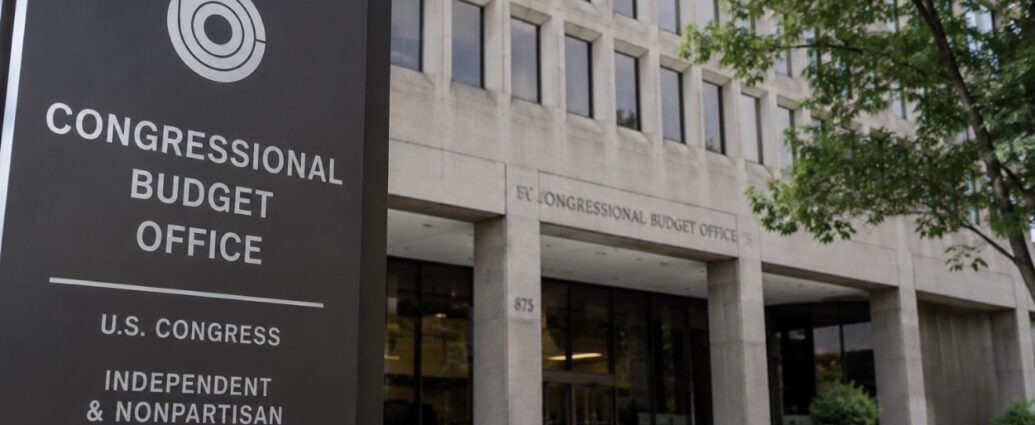
The Congressional Budget Office now projects the fiscal 2026 deficit at $2.1 trillion, according to its Monthly Budget Review released Monday — up from the $1.9 trillion forecast in February, before the court struck down President Trump’s signature tariff program. Federal spending is tracking close to the February baseline, meaning the revision is almost entirely on the revenue side.
CBO estimates tariff and customs-duty collections in 2026 will land $250 billion below earlier projections, a roughly 60% drop that traces directly to the Feb. 20 ruling that the administration lacked authority to impose tariffs under the International Emergency Economic Powers Act. Trump has since imposed new import taxes under Section 122 and later Section 301 of the Trade Act of 1974, but the shortfall stands.
The refund mechanics are the part worth understanding. Duties already collected under the invalidated authority have to be returned to importers, so Customs and Border Protection is paying money out on the same line item that was supposed to bring it in. By July the government was refunding more tariff revenue than it collected — $36 billion in refunds against $26 billion in gross collections, a net outflow of $9 billion for the month. Roughly $100 billion has now been refunded on duties collected under the struck-down authority. About $70 billion of that went out in May and June alone.
The rest of the ledger held up better. Income and payroll tax collections are running about $75 billion above the February baseline, cushioning part of the blow. Through the first 10 months of the fiscal year, federal spending rose $308 billion from a year earlier while tax receipts rose $139 billion, producing a deficit of nearly $1.8 trillion — $169 billion wider than the same stretch of fiscal 2025. Interest costs on the national debt are up 14% year over year.
July’s monthly figure carries a caveat. CBO put the July deficit at $431 billion — $765 billion in spending against $334 billion in revenue, roughly $140 billion worse than July 2025. But timing shifts pulled payments normally due Aug. 1 into July; adjusted for that, the July deficit was $333 billion, only $41 billion larger than a year earlier.
For importers and the banks financing them, the refund flow is a live working-capital event: duties paid over the past year are coming back, improving cash positions for firms that absorbed them, while replacement tariffs under different statutory authorities carry their own rates and their own litigation risk. For bond markets, the read-through is simpler — $200 billion more borrowing than planned, in a year when debt service is already the fastest-growing line in the budget.
CBO has estimated that the February reduction in tariff rates increases primary deficits by about $1.6 trillion over the 2026-2036 period, plus another $0.4 trillion in debt-service costs. That is the longer arc: the tariff program had been scored as a deficit reducer, and removing it reverses the arithmetic across the entire ten-year window.
Maya MacGuineas of the Committee for a Responsible Federal Budget said the borrowing level barely scratches the surface of the fiscal deterioration, noting the country is approaching $40 trillion in gross national debt. The national debt has already surpassed the size of the economy for the first time since World War II.
Fiscal year 2026 ends Sept. 30.
JBizNews Desk | Washington
© JBizNews.com All Rights Reserved. Reproduction or distribution without written permission is prohibited.