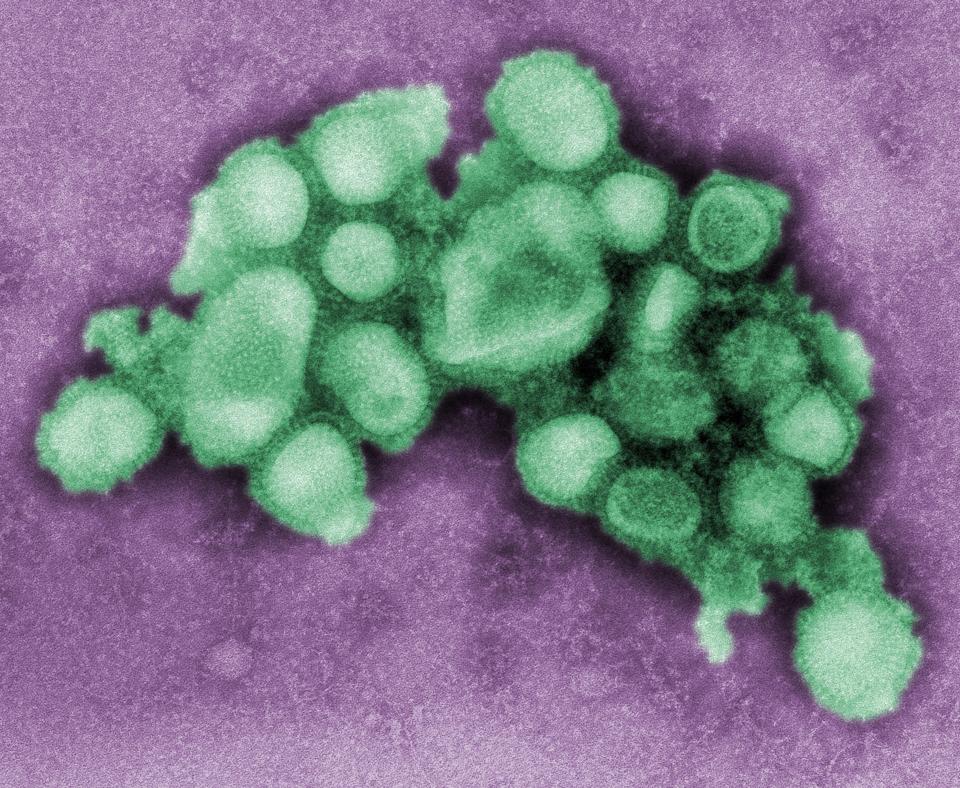
A digitally colorized CDC electron micrograph of influenza A(H1N1) virus particles from 2009. Archive image; not a specimen from the current flu season.
Photo: CDC / C. S. Goldsmith and A. Balish. Public domain.
WASHINGTON – The first pediatric flu death reported for the 2026-27 season was included in the CDC’s October 30 surveillance update, as the agency said influenza activity was increasing earlier than usual while remaining low nationally.
The child died during the week ending October 10, and the infection was associated with influenza A(H1N1), the Centers for Disease Control and Prevention said. The report does not identify the child or the location. The death was reported to the agency during the week ending October 24, underscoring the delay that can occur between a death and its appearance in national surveillance.
CDC estimates that flu has caused at least 1 million illnesses, 16,000 hospitalizations and 900 deaths across all ages so far this season. Those are preliminary estimates of the broader disease burden, not a count of individually confirmed cases.
Early increase does not predict the season’s severity
Several indicators have been rising since late August or early September, according to the CDC’s latest FluView report. The agency cautioned that an earlier rise does not necessarily mean the season will have a higher peak or be more severe overall.
Clinical laboratories reported that 7.6% of specimens tested positive for influenza during the week ending October 24. Visits to participating outpatient providers for influenza-like illness accounted for 2.4% of visits, still below the national baseline of 2.9%. That outpatient measure can include other infections that cause similar symptoms and is not a count of confirmed flu cases.
Hospitals reported 6,100 laboratory-confirmed flu admissions during the week. Adults 65 and older had the highest admission rate, followed by children younger than 5. CDC’s forecasts pointed to a likely further increase in flu admissions and flu-related emergency department visits by the week ending November 14.
H1N1 dominates tested samples
Among the influenza A viruses subtyped by public health laboratories during the week, 98.9% were A(H1N1)pdm09. These are seasonal descendants of the H1N1 virus that emerged in 2009, not evidence by themselves of a new pandemic virus. CDC said it was too early to know which viruses would dominate the season or what the findings might mean for vaccine effectiveness.
The agency encouraged people recommended for annual flu vaccination who have not yet been vaccinated to get vaccinated now. Flu vaccines are available for people 6 months and older. Prescription antiviral treatments should be started as early as possible and are especially important for patients at higher risk of complications, CDC said.
A separate pediatric death reported in the same update occurred during the previous flu season, bringing that season’s reported total to 199. It should not be counted as a second death in the current season. All of the surveillance figures remain preliminary and can change as additional reports arrive.
JBizNews Desk | Health Policy
© JBizNews.com. All rights reserved. Unauthorized reproduction or redistribution is strictly prohibited.