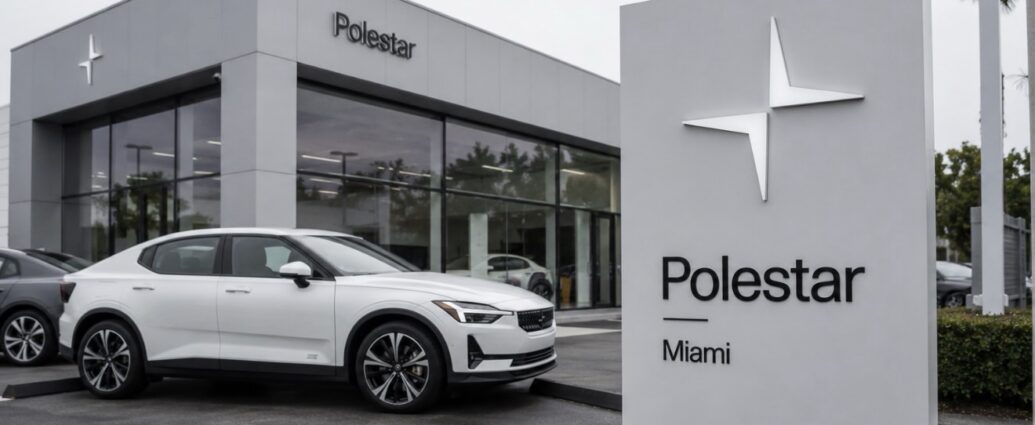
Polestar will not appeal a U.S. government decision preventing the Chinese-controlled electric vehicle manufacturer from selling future models in the United States, effectively ending its long-term presence in one of the world’s largest automotive markets and leaving dealers, customers and suppliers facing significant uncertainty. The company confirmed on Monday, July 20, that it will accept the Commerce Department’s decision rather than pursue an administrative or legal challenge, choosing instead to focus future investments on Europe and other international markets.
The decision follows the U.S. government’s implementation of national security regulations restricting connected vehicle technology tied to China and Russia. The rules prohibit certain software beginning with the 2027 model year and expand to specific hardware in later years, reflecting concerns that connected vehicles could collect sensitive information or provide foreign adversaries access to critical communications and vehicle systems.
Although Polestar is headquartered in Sweden, it is controlled by China’s Zhejiang Geely Holding Group, placing the automaker within the scope of the federal review.
The decision marks one of the most significant examples to date of how geopolitical tensions between Washington and Beijing are reshaping the global automotive industry. Rather than challenge the ruling, Polestar said it will redirect resources toward markets where it believes it can achieve stronger long-term growth.
What It Means for Americans Who Already Own a Polestar
For current owners, the news is not an immediate loss of their vehicle or its support.
Americans who already own or lease a Polestar can continue driving, registering, insuring and servicing their vehicles. The federal action does not require existing vehicles to be removed from the road, nor does it invalidate warranties.
Polestar has stated that it will continue providing:
- Warranty coverage
- Replacement parts
- Maintenance and repair services
- Software updates
- Customer support
Existing dealerships and authorized service centers are expected to continue servicing vehicles already in operation.
However, owners could face longer-term challenges.
If dealerships eventually decide it is no longer economically viable to maintain Polestar operations, some customers may need to travel farther for repairs or wait longer for specialized parts. As the vehicle population gradually declines, fewer technicians may remain specifically trained on the brand.
Another concern is resale value.
Historically, vehicles from manufacturers that exit the U.S. market often experience weaker resale prices because buyers worry about future parts availability, dealership support and long-term software updates. While Polestar remains an operating global company, uncertainty surrounding its American future could place downward pressure on used vehicle values over time.
Dealers Face the Greatest Financial Risk
The company’s 32 U.S. dealerships now face a much more immediate financial challenge.
Many invested millions of dollars in dedicated showrooms, service equipment, technician training and inventory based on expectations that Polestar would continue expanding in America.
Once existing inventory is sold, those investments may generate little or no return.
Some dealers could attempt to convert facilities to other franchises, while others may seek compensation through state franchise laws that protect retailers when manufacturers withdraw from a market.
Whether those laws apply may ultimately become a legal question because Polestar’s withdrawal follows a federal government restriction rather than a purely voluntary business decision.
A Broader Warning for the Auto Industry
The decision extends well beyond one luxury EV manufacturer.
Automakers around the world increasingly rely on software, cloud connectivity, artificial intelligence and globally integrated supply chains. Companies with significant Chinese ownership, technology partnerships or software development may now face additional regulatory scrutiny before introducing future vehicles into the U.S. market.
Manufacturers are already reviewing supply chains and software architecture to ensure compliance with the Commerce Department’s connected vehicle regulations, which are expected to reshape sourcing decisions across the global automotive industry.
For Polestar, the decision effectively closes the chapter on future vehicle sales in the United States.
For dealers, it leaves millions of dollars in investments hanging in the balance.
For American consumers, ownership continues largely unchanged today—but questions remain about resale values, long-term service availability and the future of a brand no longer competing in the U.S. market.
JBizNews Desk | New York
© JBizNews.com All Rights Reserved. Reproduction or distribution without written permission is prohibited