Narenfox / CC BY-SA 4.0
People checked for possible heart disease were more likely to get a clearer diagnosis and to start cholesterol-lowering treatment when their doctors used artificial intelligence to analyze plaque in their arteries, Cleerly said in preliminary trial results released Saturday.
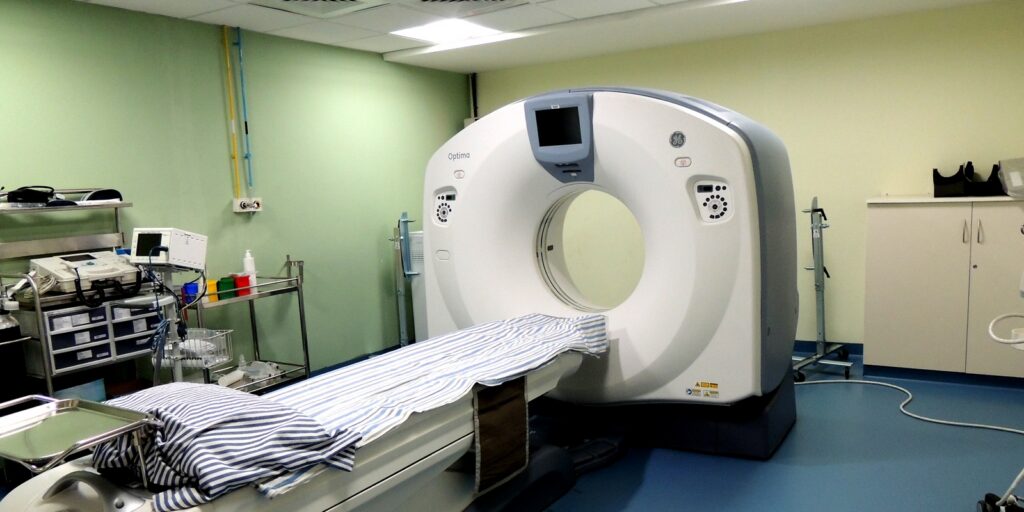
The trial, called PARAMOUNT, randomly assigned 530 patients at 21 sites to either care guided by AI analysis of coronary CT scans or to usual care guided by stress testing. All had symptoms suggesting coronary artery disease, LDL cholesterol of at least 100 mg/dL, and no prior heart disease diagnosis; results were analyzed for 523 participants. On the trial’s main 180-day measure, plaque-guided care beat usual care with a win ratio of 2.00, driven mainly by more certainty about whether a patient’s chest pain was caused by heart disease and by bigger drops in LDL cholesterol, company said.
Use of lipid-lowering therapy in the AI-guided group rose from 31 percent before testing to 75 percent after, compared with 32 to 47 percent in the usual-care group. The approach did not increase the overall rate of catheterizations or artery-opening procedures, and among patients sent for an invasive angiogram, fewer in the AI group turned out not to need an intervention. The trial did not measure whether the approach prevents heart attacks or saves lives.
“When we measure plaque directly and use it to guide care, physicians gain clearer answers and patients are far more likely to start preventive therapy,” said Dr. Todd C. Villines of the University of Virginia, a co-principal investigator. Women made up 57 percent of participants, a group often underrepresented in heart trials.
The results are preliminary, sponsored by Cleerly and not yet peer reviewed, with full publication expected in early 2027. They were presented as late-breaking science at the American Heart Association’s annual meeting in Chicago.
JBizNews Desk | Denver, Colorado
© JBizNews.com. All rights reserved. Unauthorized reproduction or redistribution is strictly prohibited.