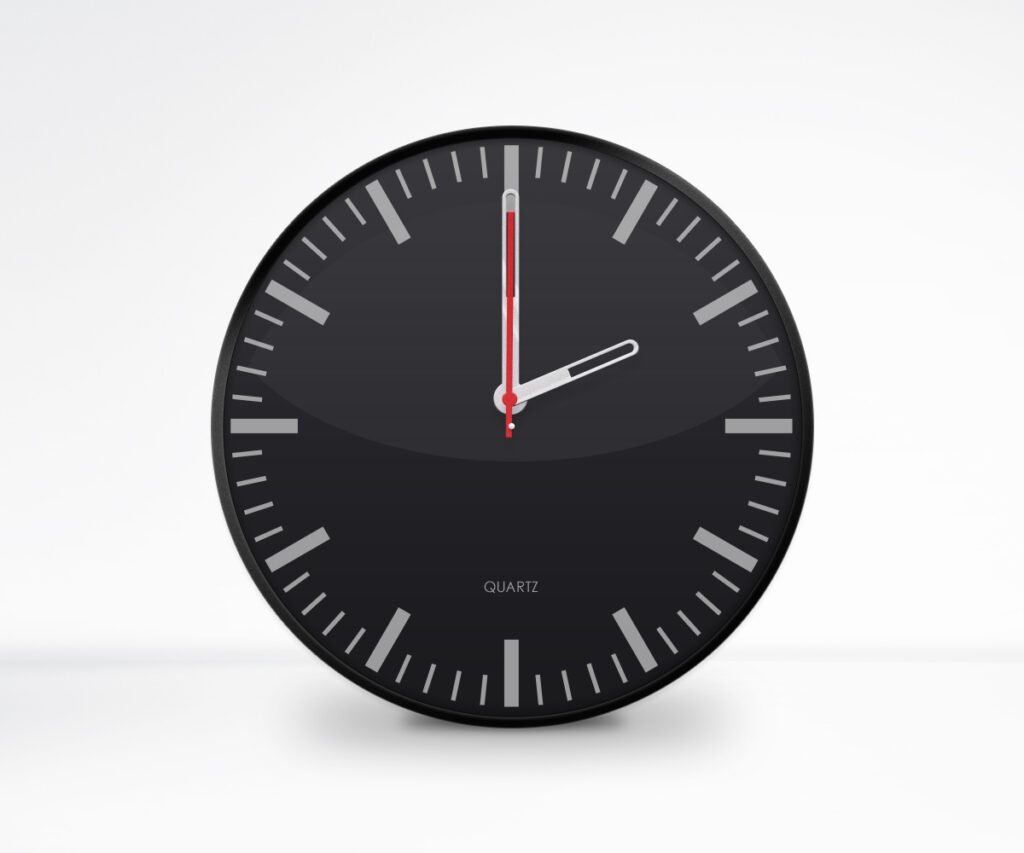
At 2 a.m. Sunday, clocks move back to 1 a.m. Illustration: Trisorn Triboon, CC BY 3.0.
Tonight is the night Americans get an extra hour of sleep. At exactly 2:00 a.m. on Sunday, November 1 – not midnight – clocks officially turn back one hour to 1:00 a.m., ending daylight saving time for 2026, according to the National Institute of Standards and Technology. That means the sun will come up earlier Sunday morning, and it will get dark about an hour earlier in the afternoon.
Phones, computers and most connected devices change on their own. Watches, wall clocks, ovens and car clocks without automatic time settings need to be set back by hand. Most of Arizona and all of Hawaii skip the change entirely. For most other Americans, the twice-a-year routine – spring forward in March, fall back in November – has been the national rule for decades.
President Trump wants to end it. His plan is to stop changing the clocks and stay on daylight saving time – the summer schedule with lighter evenings – all year long. In July, the House of Representatives passed the Sunshine Protection Act, written by Rep. Vern Buchanan of Florida, by a vote of 308 to 117, according to Congress.gov. On the day of the vote, the White House said in an official policy statement that it “strongly supports” the bill and that the President’s advisers would recommend he sign it into law.
So is the plan dead? No – but it is stuck. The bill reached the Senate on July 15 and was sent to the Commerce Committee, which has not brought it up for a vote. A matching Senate bill by Sen. Rick Scott of Florida has been sitting in the same committee since January 2025. The plan stays alive until this Congress ends in early January 2027. To become law, the Senate must pass it and Trump must sign it. Until that happens, the clocks keep changing – starting tonight.
The argument for stopping the switches is about evenings. The White House says ending the back-and-forth would save Americans hundreds of millions of dollars a year in lost time and hassle, give people about 20 extra minutes of daylight during their waking hours even in winter, prevent hundreds of traffic deaths a year by moving daylight to the busy evening hours, and cut robberies by seven percent. Supporters say lighter evenings are simply better for work and business: people shop, eat out and exercise after work when it is still light, and the drive home is safer.
The argument on the other side is about children and mornings. Keeping the summer clock all year would move winter sunrise an hour later by the clock, leaving darker mornings for school bus stops, walks to class and the trip to work. The American Academy of Sleep Medicine says morning light helps set the body’s internal clock. It supports ending seasonal switches, but favors permanent standard time – the winter schedule – rather than permanent daylight saving time.
America has tried year-round daylight time before. During the energy crisis, Congress set a trial from January 1974 to April 1975. Congress interrupted it in October 1974 by restoring standard time for four winter months; daylight saving time resumed in February 1975. When the trial ended, the country returned to seasonal clock changes. A Congressional Research Service report reviewed by JBizNews describes mixed findings on safety and energy savings, including a warning that an increase in school-age children’s morning traffic deaths during the trial could not simply be attributed to daylight saving time.
JBizNews Desk | New York
© JBizNews.com. All rights reserved. Unauthorized reproduction or redistribution is strictly prohibited.