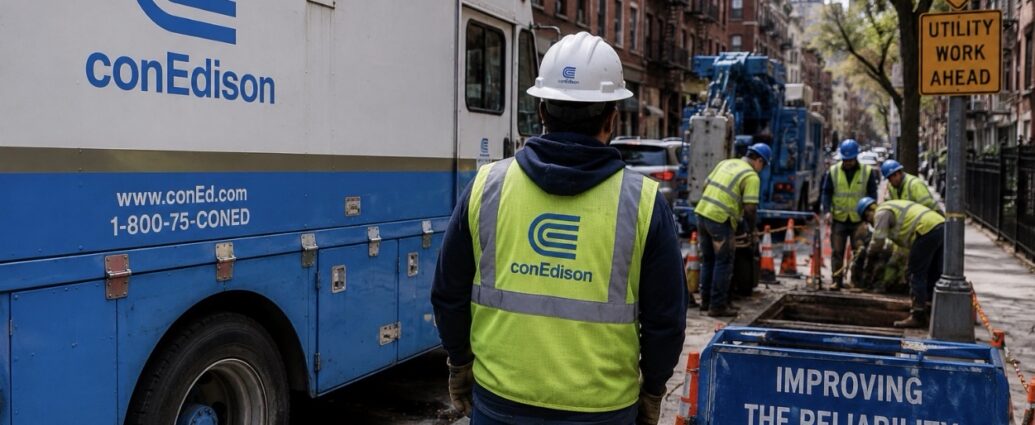
New York — May 26, 2026 — The New York State Public Service Commission has approved Consolidated Edison’s latest long-running rate case settlement, authorizing electric-rate increases averaging approximately 3.5% in 2026 alongside additional increases through 2028 as New York businesses and households continue grappling with rising utility affordability pressure.
Natural gas rates are also set to rise by roughly 4.4% under the agreement.
ConEd President Matthew Ketschke has argued the increases are necessary to fund critical grid modernization projects, reliability upgrades and infrastructure investments tied to New York State’s broader electrification mandates under the Climate Leadership and Community Protection Act.
PSC officials emphasized the approved settlement represented a substantial reduction from ConEd’s original request.
James Denn, director of public affairs at the Public Service Commission, said regulators reduced the utility’s initial proposal by approximately 87%.
Even so, the impact on commercial users is expected to be significant.
Small businesses are projected to see summer electric bills rise by approximately 8%, while larger commercial accounts with higher electricity demand profiles could face increases approaching 9.8%.
ConEd serves more than 9 million customers and approximately 350,000 businesses across New York City and Westchester County, including roughly 183,000 small businesses.
The rate case became one of the region’s most politically charged utility battles over the past year.
ConEd originally sought roughly $1.6 billion in additional electric revenue and another $440 million in gas revenue through its initial filing, prompting fierce opposition from local officials, county governments and consumer advocates across the metropolitan region.
Westchester County Executive Ken Jenkins, the Westchester County Board of Legislators and elected officials across all five boroughs publicly challenged the proposal, arguing New Yorkers were already facing unsustainable housing and living costs.
Mayor Zohran Mamdani, then mayor-elect, reportedly raised ConEd affordability concerns directly during a post-election transition discussion with President Donald Trump.
The broader financial backdrop for ratepayers remains increasingly strained.
Nearly 414,000 ConEd customers entered 2026 at least 60 days behind on utility payments, with total arrears approaching approximately $871 million according to utility filings.
ConEd also disconnected nearly 88,000 households during the first half of 2025 alone, figures consumer advocates say reflect a deepening affordability crisis across one of the country’s most expensive metropolitan utility markets.
At the same time, ConEd’s financial performance has remained strong.
The company reported nearly $13 billion in operating revenue during the first nine months of 2025, roughly 12% above comparable 2024 levels.
ConEd says it provided approximately $244 million in utility bill discounts through its Energy Affordability Program last year, assisting roughly 530,000 customers, while also planning further expansion of the program during 2026.
The infrastructure spending tied to the rate increases is substantial.
ConEd has invested more than $2.35 billion since mid-2024 into substation upgrades, transmission hardening and distribution-system modernization as New York pushes toward increased electrification of transportation, heating and data infrastructure.
The utility argues those investments are essential to maintaining reliability across a city increasingly dependent on uninterrupted electricity flows.
For businesses across the tri-state region, however, the rate hikes arrive during an already difficult operating environment.
Commercial property taxes remain elevated, wage-and-hour liabilities are increasing, labor regulations continue tightening and broader inflation pressures are still filtering through supply chains and payroll costs.
Restaurant operators, retailers and light-industrial businesses with heavy summer cooling demand are expected to absorb the largest near-term impact from the utility increases.
The settlement still awaits final procedural implementation approval by regulators, and some customers could face retroactive adjustments depending on final billing timelines.
For many small businesses already operating on compressed margins, the bigger concern is no longer whether utility costs will rise.
It is how much additional cost increases the regional economy can absorb before the pressure begins showing up in closures, staffing cuts and reduced investment.
JBizNews Desk
© 2026 JBizNews. All Rights Reserved. Reproduction or distribution without written permission is prohibited.