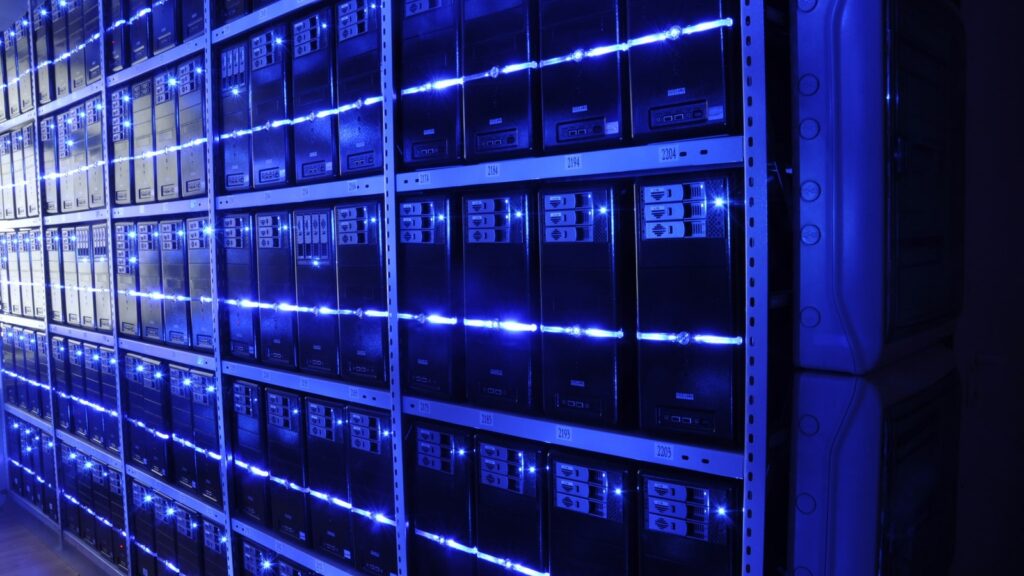
Photo: BalticServers / Wikimedia Commons
Data centers emerged from the midterm elections facing a tougher regulatory map, as Democrats who campaigned on clamping down on the energy-hungry facilities swept governors’ races and statehouses across the country.
Data center regulation was not on most ballots and was not a top issue for most voters. But hardline stances against the server warehouses were woven into many winning campaigns, often blended with affordability messaging over electricity prices. Campaigns spent more than $380 million on television ads mentioning data centers, with Democrats outspending Republicans more than three-to-one, according to AdImpact data.
Wisconsin Gov.-elect David Crowley, who hardened his position under campaign pressure, told the AP on Thursday that he is discussing proposals to require developers to disclose more about their water and energy consumption, to ensure a community supports a project before it can go forward, and to insulate ratepayers and taxpayers from projects’ energy costs. These remain proposals under discussion; no moratorium or new rules have been enacted.
Data Center Watch, a project of AI security consultancy 10a Labs, said the vast majority of winning candidates for Congress and governorships it tracked had expressed support for stronger regulation or even a moratorium.
Morgan Stanley told clients the decisive Democratic results carry “greater expectations for data center restrictions” that could “split the country into areas that are open to new data centers and those without.” The bank called Texas Gov.-elect Gina Hinojosa’s victory the “most important election result” for data center development and said Ohio Gov.-elect Amy Acton’s win “creates significant risk of data center project delays.” Hinojosa has said she would block a permit for any data center that was not a good deal for Texans or where residents had no say.
The industry is signaling concern. Data Center Coalition official Dan Diorio said developers expect newly elected leaders to try to deliver on moratorium pledges, warning that host communities could miss out on tax revenue and payments from tech companies, and that data centers are driving a broader economic expansion that encourages investment in domestic manufacturing.
OpenAI on Thursday published a framework of commitments to the communities where it builds data centers, asking policymakers to write “clear rules for how the industry builds” and saying lawmakers should “advance responsible investment, protect residents, and ensure that the benefits of AI infrastructure are broadly shared.”
The stakes extend to markets and growth. The tech-heavy Nasdaq sank 11% below its all-time high Thursday amid worries that data center construction may slow as borrowing gets costlier, and AI data center construction has been driving much of U.S. economic growth. Texas is poised to overtake northern Virginia as the largest global data center market by 2030, according to commercial real estate giant JLL.
Voters are broadly skeptical: about three-quarters of U.S. voters oppose the construction of a new data center in their community, according to the AP Voter Poll. Still, only about a quarter said AI data centers were crucial to their vote for Congress, well below the shares citing government corruption or the cost of living.
JBizNews Desk | Harrisburg
© JBizNews.com. All rights reserved. Unauthorized reproduction or redistribution is strictly prohibited.