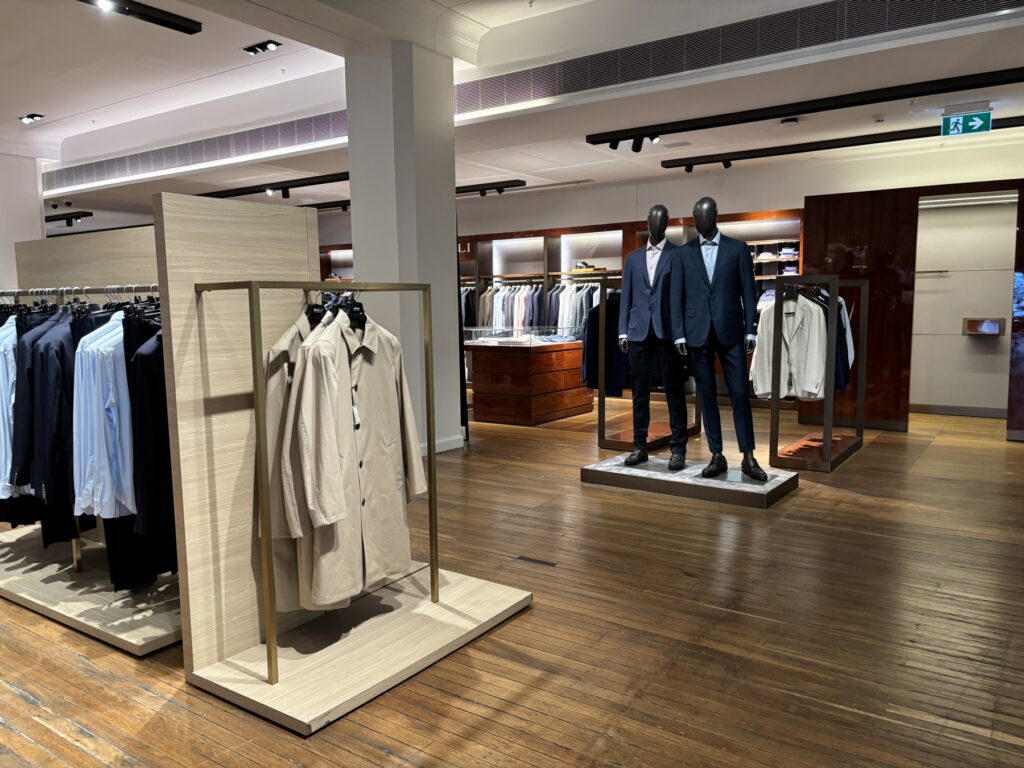
Photo: Nick-D / CC BY-SA 4.0
David Jones has entered voluntary administration, with receivers taking control of the Australian department store business while its physical and online stores continue trading and a rescue process gets under way.
The 188-year-old retailer employs more than 6,000 people across 38 stores, the Guardian reported. The appointments put the future shape of the chain in doubt, but do not mean its stores have closed or that the business has been liquidated.
For employees and suppliers, the next decisions concern which operations can be sustained and whether new capital or a buyer can be found. Customers can still shop in the physical and online stores while receivers review operations, according to Ragtrader’s report of the appointments.
Receivers take operational control
The directors appointed McGrathNicol as voluntary administrators. The companies’ secured lender appointed FTI Consulting as receivers and managers of ACP Riley Street Midco, the parent of David Jones, and associated companies, Ragtrader reported.
FTI’s Christopher Hill, David McGrath and Joanne Dunn were appointed receivers and managers. Jason Preston, Shaun Fraser, Jacinta Neilsen and Matthew Hutton of McGrathNicol were named voluntary administrators.
A process seeking proposals to recapitalise the business or sell it as a going concern will begin immediately and will be managed by McGrathNicol, according to Ragtrader. Neither report identified an agreed buyer or completed rescue deal.
David Jones chief executive Erica Berchtold said the company had a plan to reset the business and would work with the administrators, receivers and secured lender to pursue it.
Rent dispute follows years of losses
The Guardian reported that the appointments followed steep losses, underperforming stores and the failure of negotiations with Scentre Group, the Westfield owner and David Jones’ main landlord.
Scentre said David Jones had not paid rent since September, according to the Guardian. The landlord said Anchorage Capital Partners, which bought the retailer in 2023, had rejected an offer it said would have allowed continued trading.
Hill cited rising costs, an outdated store footprint and supply-chain challenges as factors behind the company’s position. Administration and receivership would provide breathing space to restructure, he said in the statement reported by Ragtrader.
The Guardian reported that store closures were expected as part of restructuring. The reports did not provide a final closure list, and continued trading should not be mistaken for a guarantee that every location will remain open.
The present process is a search for a viable future for the retailer, rather than an announced chain-wide shutdown. The extent of any store or job reductions remains to be determined.
JBizNews Desk | Sydney
© JBizNews.com. All rights reserved. Unauthorized reproduction or redistribution is strictly prohibited.