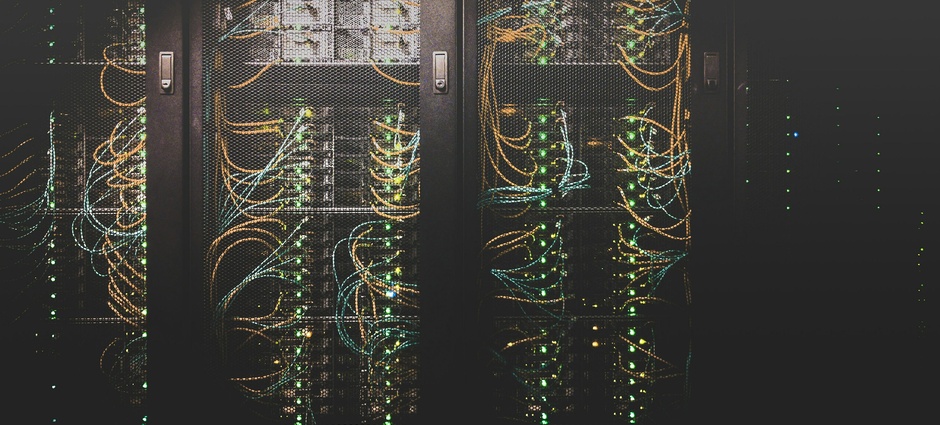
Network equipment at the University of Washington in a 2019 file photograph, not a Dyania, NVIDIA or Cleveland Clinic installation. Photo: Taylor Vick / Unsplash.
Dyania Health and NVIDIA are working together to run artificial intelligence that reviews medical records on hospitals’ own computing systems, rather than sending patient records outside their networks.
The collaboration, announced Friday, centers on Dyania’s Synapsis AI. The companies say it reads years of clinical notes, test results, imaging reports and other records, then answers clinical questions with evidence from the patient’s chart.
The arrangement is a technology collaboration, not a clinical trial showing that the system improves patient survival or makes better treatment decisions than doctors. Its use in predicting the durability of replacement heart valves still needs external validation, according to Dyania’s announcement.
Hospitals keep large amounts of information as narrative notes rather than neatly organized database fields. Reviewing those records by hand can make research and patient registries slow to build. Dyania and NVIDIA are seeking to automate more of that work while keeping the computing within hospital networks.
Dyania builds its models using NVIDIA’s NeMo tools. Its software runs on NVIDIA computing infrastructure inside the health system. The companies plan to bring the system to more health systems in the United States and internationally, publish case studies and work on further technical integration. These are plans, rather than completed deployments at every hospital.
An initial Cleveland Clinic project used records from 7,812 patients who received an aortic valve replacement between 2005 and 2021. Dyania said its system answered 88 clinical questions for each patient, collecting information about the valve, other medical conditions, medicines, follow-up heart scans and later events.
The researchers then trained a model to estimate the risk of valve failure or another procedure at three, five and 10 years. The analysis used follow-up information to revise those estimates. The companies describe that as a way to help clinicians understand how an implanted valve may perform over time.
The announcement does not establish that these predictions will work equally well in other hospitals or patient populations. Dyania says the tool requires external validation from clinicians. A model developed from past records is not, by itself, proof that using it changes patient outcomes.
Both Dyania’s November 13 announcement and NVIDIA’s own account describe the hospital-based work. Neither announcement provides a price for the system or a timetable for broad deployment.
JBizNews Desk | New York
© JBizNews.com. All rights reserved. Unauthorized reproduction or redistribution is strictly prohibited.