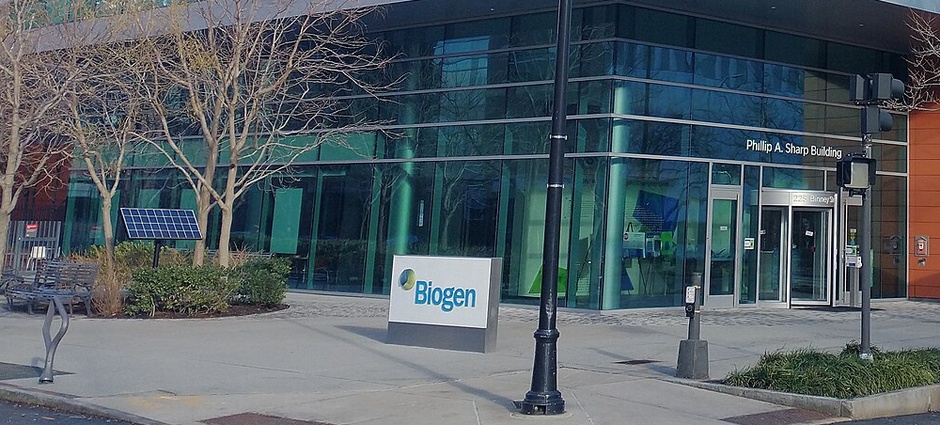
Biogen sign, 2022. Astrophobe, CC BY-SA 4.0. Cropped.
Eisai and Biogen have launched a weekly injection pen for their Alzheimer’s drug Leqembi in Japan, giving eligible patients an option that can be used at home after training and under a doctor’s guidance.
The companies announced the launch in a statement published Nov. 12, U.S. Eastern time, and said the pen had been added to Japan’s National Health Insurance drug price list. Japanese regulators approved the new injection route on Sept. 16. The latest announcement is about availability, not a new drug approval.
Leqembi, also called lecanemab, is used to slow the progression of mild cognitive impairment and mild dementia caused by Alzheimer’s disease.
Two pens a week, with medical oversight
The Japanese product uses two pens to deliver a total weekly dose of 500 milligrams under the skin. A patient or care partner may give the injections. The companies said each injection takes about 15 seconds.
That changes how the medicine is given, rather than removing the need for medical care. The first treatment must take place at a medical facility, given by a doctor or under a doctor’s direct supervision.
Before allowing home use, doctors must assess whether the patient or caregiver can reliably give the injections, provide education and training, and confirm that they understand the risks and how to respond. Home treatment remains under a physician’s management and guidance.
The pen offers an alternative to the intravenous treatment given every two weeks at a medical facility. Eisai and Biogen said home dosing could reduce travel and clinic time, but those are expected conveniences, not evidence that the pen slows Alzheimer’s more than the infusion.
Brain scans remain part of treatment
Patients still need brain MRI scans before starting treatment and at specified times afterward to monitor for amyloid-related imaging abnormalities, known as ARIA. Home injections do not remove that safety monitoring.
The companies said Japan’s approval drew on the existing Leqembi trial and additional injection studies, including data and modeling comparing drug exposure with the intravenous form. They described the overall safety profile as generally similar to intravenous treatment.
The listed Japanese insurance price is 27,141 yen per pen. That is the official drug price, not a statement of what an individual patient will pay out of pocket.
Japan is the second country to launch Leqembi’s under-the-skin formulation, after the United States, according to the companies. Eisai leads the drug’s development and regulatory submissions, and the two companies share its commercialization.
JBizNews Desk | New York
© JBizNews.com. All rights reserved. Unauthorized reproduction or redistribution is strictly prohibited.