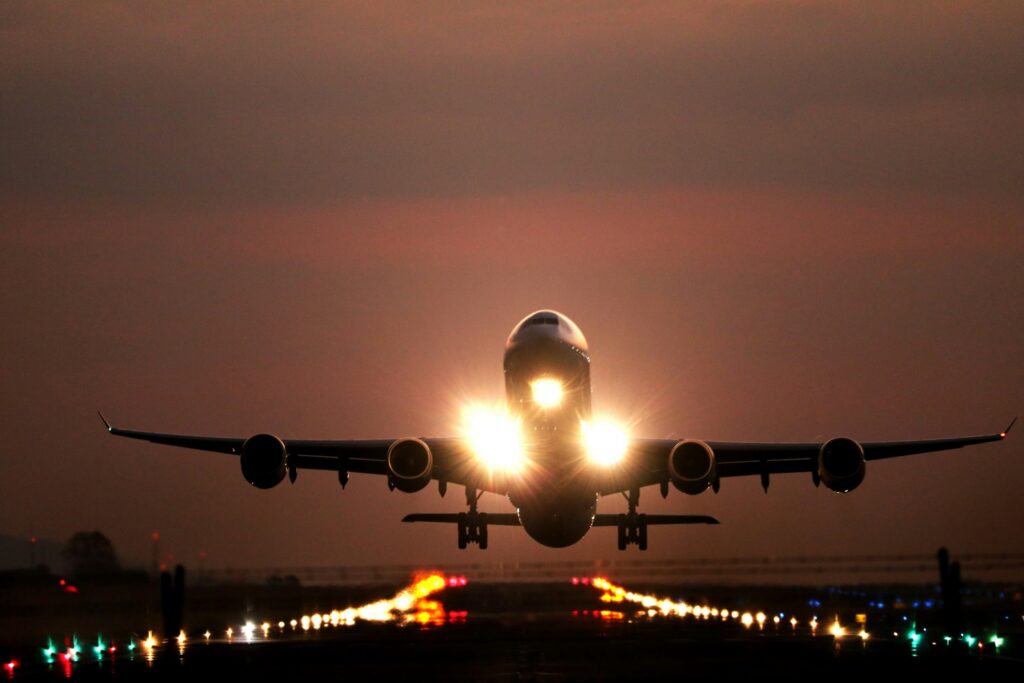
A wide-body passenger aircraft near a runway (generic image, not identified as an Emirates aircraft). Photo: Josue Isai Ramos Figueroa/Unsplash (resized).
DUBAI, Nov. 5, 2026 – Emirates airline’s profit after tax fell 66% to AED 3.3 billion ($903 million) in the first half of its 2026-27 financial year as regional airspace disruption and higher fuel prices reduced traffic and squeezed earnings, the carrier reported Thursday.
Revenue, including other operating income, declined 13% to AED 56.9 billion ($15.5 billion) for the six months from April 1 through Sept. 30. The airline remained profitable, helped by fuel-price hedging gains and stronger cargo revenue, but its earnings were sharply below the prior year’s record performance.
The figures are for Emirates airline, not the entire Emirates Group, which also includes airport-services and travel business dnata. The wider group’s profit after tax fell 66% to AED 3.6 billion, while group revenue declined 12% to AED 66.2 billion.
Fuel hedges soften a steep increase
Emirates said its fuel costs before hedging gains rose 60% from a year earlier, even though it took on 12% less fuel as operations declined. Gains of AED 7.1 billion from its fuel-price risk-management strategy reduced the net increase in fuel costs to 13%.
Hedging is a way to limit exposure to changes in fuel prices. The distinction matters here: the 60% increase describes costs before those gains, not the airline’s final net fuel-cost increase. Fuel accounted for 34% of operating costs.
Total operating costs, including fuel, declined 2% as flying activity fell. Profit before tax was AED 3.7 billion ($1.0 billion), down 68%, a separate measure from the $903 million after-tax figure.
Passengers fall as the network recovers
Emirates carried 21.8 million passengers during the half-year, down 22%. Its passenger seat factor, a measure of how full its aircraft were, fell to 72% from 79.5% a year earlier.
The carrier said intermittent airspace restrictions and closures tested its operations, while government travel advisories changed passenger choices and travel flows. By Sept. 30, it was operating 91% of its pre-disruption network, covering 150 airports in 78 countries and territories.
The network figure is a Sept. 30 snapshot. It is not a guarantee that every flight or route is operating normally today, and the results do not replace current flight-status information for travelers.
Cargo revenue rises despite slightly lower volumes
Emirates SkyCargo transported 1.2 million tonnes, down 1%, but cargo revenue rose 52%. The company said regional conflict reduced available airfreight capacity and disruption to shipping pushed customers toward air transport.
That means cargo revenue growth did not come from carrying substantially more tonnes. It helped offset weaker passenger activity, alongside demand for premium cabins, the airline said.
The cargo division received five new Boeing 777 freighters and deployed its first passenger-to-freighter converted aircraft during the period. It also added freighter destinations and services.
Investment continues despite lower earnings
Emirates received nine new A350 aircraft and completed cabin refurbishment on 12 aircraft during the half-year. It said its planned fleet retrofit investment exceeds $7 billion, while its Starlink installation program equipped 36 more aircraft, taking the installed total to 57 as of Sept. 30.
Chairman and Chief Executive Sheikh Ahmed bin Saeed Al Maktoum said the group entered the second half with measured optimism, while watching costs and geopolitical developments. Those comments describe management’s outlook rather than a guarantee of an earnings recovery.
The wider group ended September with AED 54.1 billion in cash, compared with AED 59.6 billion at the end of March. It said those reserves supported aircraft payments and debt obligations; it also paid the remaining AED 2 billion of its previously declared dividend to its owner, the Investment Corporation of Dubai.
The results show a major international airline still earning a profit through a disrupted period, but with fewer passengers and a much smaller earnings cushion. The fuel hedge gains and cargo business are important parts of that picture, rather than evidence that the disruption had little effect.
JBizNews Desk | Dubai
© JBizNews.com. All rights reserved. Unauthorized reproduction or redistribution is strictly prohibited.