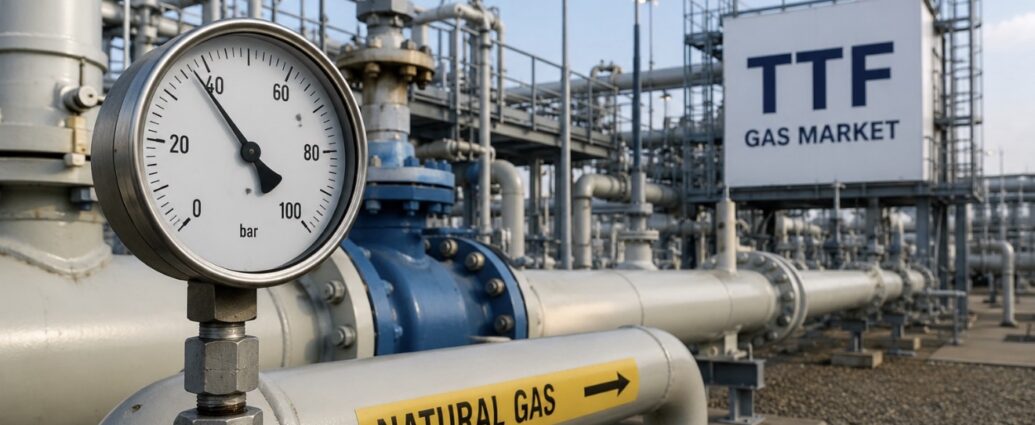
AMSTERDAM — European natural gas prices surged to their highest level in four months on Monday as traders reacted to escalating geopolitical tensions in the Middle East, adding a larger risk premium to energy markets despite Europe’s relatively healthy gas inventories. The move followed a sharp rise in crude oil prices and reflected growing concern that any prolonged disruption to global energy shipments could tighten supplies and reignite inflationary pressures across Europe.
Benchmark Dutch TTF natural gas futures, Europe’s leading wholesale gas price indicator, climbed to their highest level since March as investors reassessed geopolitical risks. Although Europe entered the summer with storage facilities well stocked, energy markets remain highly sensitive to developments that could affect global fuel transportation or liquefied natural gas trade.
Unlike crude oil, much of Europe’s natural gas supply does not move through the Strait of Hormuz. However, the global energy system remains interconnected. Any threat to shipping routes or LNG cargo movements can influence worldwide pricing as countries compete for available supplies, pushing wholesale gas prices higher even before physical shortages occur.
Monday’s rally marked a sharp reversal from the calmer conditions seen earlier this summer.
Mild weather, reduced heating demand and stronger-than-expected storage injections had eased concerns about Europe’s energy outlook. Renewed geopolitical uncertainty has now shifted investor attention back toward supply security, causing traders to build additional risk into both oil and natural gas prices.
Higher wholesale gas prices can have broad consequences for businesses.
Manufacturers, chemical producers, utilities, steelmakers, food processors and transportation companies all rely heavily on energy. If elevated natural gas prices persist, operating costs could increase across multiple industries, placing renewed pressure on corporate profit margins and eventually filtering through to consumer prices.
Financial markets are also watching closely because higher energy costs could complicate the European Central Bank’s effort to return inflation to its long-term target. If fuel prices remain elevated, policymakers may be forced to keep interest rates higher for longer than investors previously expected.
Despite the price increase, analysts note that Europe’s energy position remains considerably stronger than during the continent’s energy crisis several years ago. Storage levels remain well above seasonal averages, and governments have diversified natural gas supplies through expanded LNG imports and additional pipeline capacity.
For U.S. businesses, stronger European natural gas prices could benefit American liquefied natural gas exporters by improving overseas demand and export economics. The United States has become one of the world’s largest LNG suppliers, making European energy markets increasingly important to American producers.
Markets will now closely monitor geopolitical developments, LNG shipment patterns and storage levels throughout the remainder of the summer. While there is no indication of an immediate supply shortage, Monday’s trading demonstrated how quickly geopolitical uncertainty can reshape global energy pricing.
JBizNews Desk | Amsterdam
© JBizNews.com All Rights Reserved. Reproduction or distribution without written permission is prohibited.