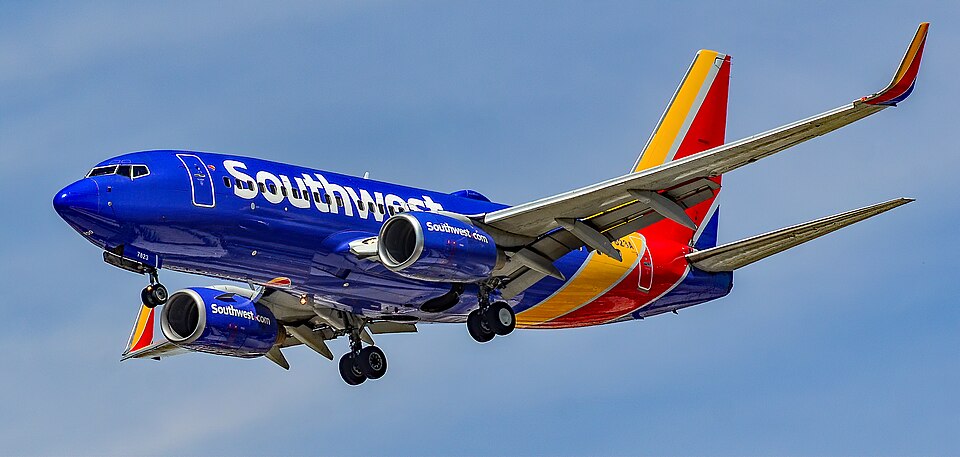
File photo: Boeing 737-800, 2021. Tomás Del Coro / Wikimedia Commons, CC BY-SA 2.0. Resized; photo remains under that license. Aircraft shown not identified as affected.
The Federal Aviation Administration has ordered fuel-seal inspections and leak tests on certain Boeing 737 aircraft, issuing two final rules Tuesday that together cover an estimated 1,463 U.S.-registered planes.
The directives address a gasket and sealant problem at an engine fuel shutoff valve access panel. The FAA said an uneven sealing surface could allow fuel to leak onto an engine exhaust nozzle and cause a fire on the ground.
Both rules take effect December 1. They require inspections, leak tests and repairs where needed under the applicable Boeing service instructions, rather than ordering an immediate fleetwide grounding. The effective date is not a blanket deadline for every inspection; the rules refer operators to the compliance schedules in the incorporated requirements bulletins.
Older 737s and MAX aircraft covered
One directive applies to certain 737-700, -700C, -800 and -900ER aircraft. The FAA estimates that it affects 1,030 planes registered in the United States.
The other covers certain 737-8, -9 and -8200 MAX models, with an estimated 433 U.S.-registered aircraft affected. Applicability is determined by the aircraft identified in the Boeing bulletins, not every aircraft bearing those model numbers.
The FAA said a leak discovered during a check prompted the action. Its investigation found thin areas in a form-in-place gasket, followed by sealant being applied after the original gasket had cured, producing an uneven sealing surface.
Checks and repairs depend on configuration
For the older models, the rule requires detailed checks of the left- and right-side gaskets for correct sealant installation and fluid leak tests. For MAX aircraft, the inspection varies by configuration and includes checking sealant installation or damage to a preformed seal.
The MAX rule requires operators to replace a leaking gasket or install a removable seal, as applicable, and repeat the leak test until no leak is found. Other repairs must follow the approved procedures specified in the directive.
The FAA estimates one work-hour at $85 for an inspection and another for a leak test. Replacement work and parts can add costs, and the agency said it could not determine how many aircraft would need those additional actions. Some costs may be covered by manufacturer warranty.
The final rules follow proposals published in March. The FAA retained separate directives for the two aircraft groups because they use different Boeing service bulletins.
JBizNews Desk | Washington
© JBizNews.com. All rights reserved. Unauthorized reproduction or redistribution is strictly prohibited.