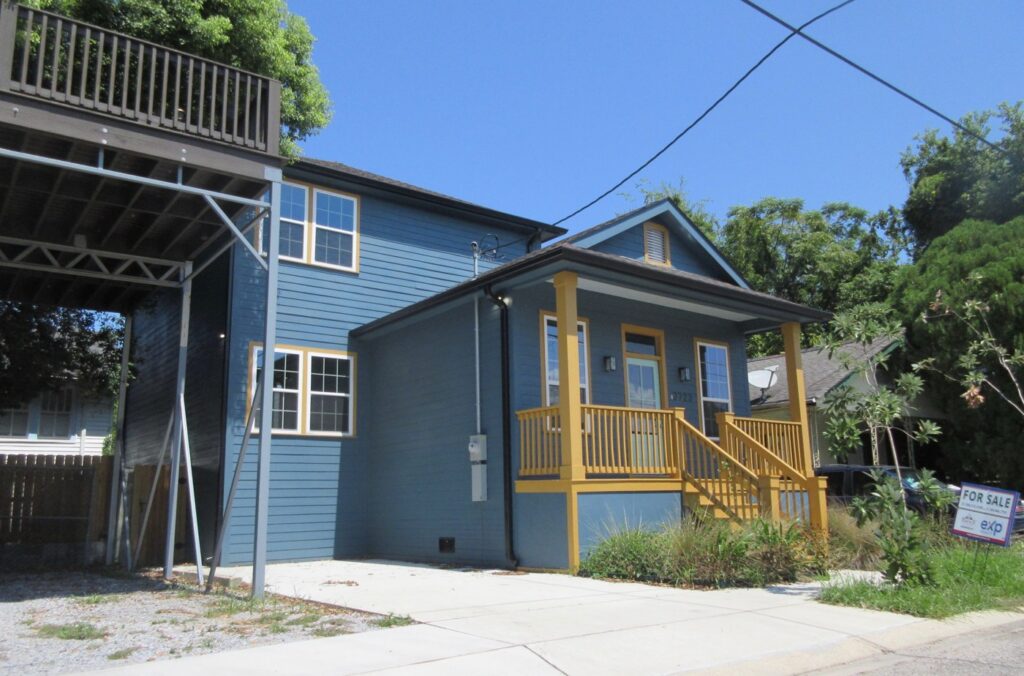
Photo: Infrogmation of New Orleans / Wikimedia Commons / CC BY-SA 4.0. A home for sale in New Orleans, September 2023. Archive photo. Resized; adaptations under the same license.
WASHINGTON – First-time buyers accounted for just 22% of U.S. home purchases in the National Association of Realtors’ latest annual survey, while a record share of those entering the market for the first time paid entirely in cash. The findings show how different the path to homeownership can be for households saving on their own and those receiving family wealth.
The median first-time buyer was 40, matching the survey’s record high. One in 10 first-time buyers paid all cash, the largest share recorded since that data series began in 2003, according to NPR’s report on the findings.
The report covers purchases completed between July 2025 and June 2026. It is a look at the past year’s buyers, not a measure of housing activity this week or a reading of current mortgage rates.
Cash buyers are older, too
Among first-time buyers who paid all cash, the median age was 54. For those who financed their purchase, it was 38. The overall first-time share edged up from last year’s record low of 21%, but remained well below the roughly 40% norm before 2008, NAR said in its release.
“Inheritances are really driving this,” Jessica Lautz, NAR’s deputy chief economist, told NPR. Among first-time all-cash buyers, 28% used an inheritance, compared with 9% of first-time buyers who financed, according to NAR. NPR also reported that 21% of the all-cash group used proceeds from selling an inherited property.
Personal savings remained the leading source of down-payment funds for first-time buyers overall. NAR said 62% used savings, while 30% used financial assets such as retirement accounts, stocks or cryptocurrency, and 25% used gifts or loans from friends and family. Those funding sources can overlap.
Existing owners retain an advantage
Repeat buyers made up 78% of purchases and had a median age of 62. Thirty percent paid all cash. The median age across all buyers was 58, down from 59 a year earlier, while sellers had typically owned their home for a record 12 years before moving.
For lenders and real estate businesses, the split matters: first-time borrowers and equity-rich repeat buyers arrive with very different financing needs. The survey does not show that inherited wealth is available to a typical aspiring buyer, or that the higher cash share alone caused affordability to worsen.
NAR received 7,125 responses from buyers of primary residences, with an adjusted response rate of 3.1%. The findings exclude investors and vacation-home buyers.
JBizNews Desk | Washington, D.C.
© JBizNews.com. All rights reserved. Unauthorized reproduction or redistribution is strictly prohibited.