
“Even though I was physically far away from Yemen, I continued to live with the psychological consequences of what had happened to me,” Ezzadin Al Awadhi, a Yemeni aid worker formerly held hostage by the Houthis, told The Jerusalem Post.
Awadhi, who now lives in Germany, worked for the Anhar Al-Firdaws Foundation in Houthi-controlled Sanaa. The organization was seized by the Houthis during the Saudi-led Operation Decisive Storm, after being subjected to multiple raids. Less than two weeks after the operation began in 2015, the Houthis took over the complex and detained all of the charity’s staff except Awadhi, derailing its efforts to build an orphanage, a hospital and a community kitchen.
“The Houthis seized the entire foundation and looted all of its property and belongings,” he said, accusing Houthi official Ibrahim Al-Sharafi of taking over the premises and turning them into his personal residence and a residence for his sister. He also accused Houthi supervisor Ahmed Mutahar Al-Shami of taking control of the land to lease it to Houthi businessman Saddam Al-Yateem for a mall, under the supervision of Houthi official Fahd Al-Ayyani.
“They took control of it, looted its belongings, occupied its buildings, and transformed parts of it into commercial facilities and spaces for their own activities,” he said. “The victims were not only the foundation’s employees, but also the vulnerable families, orphans, and marginalized people who were deprived of the humanitarian services this project was intended to provide.”
After escaping the initial raid, Awadhi knew the Houthis would continue looking for him. He eventually turned himself in, hoping to avoid the potentially deadly consequences of a manhunt. In custody, he said, the Houthis made numerous accusations against him and forced him to sign documents acknowledging them before releasing him on the condition that he help with their media operations.
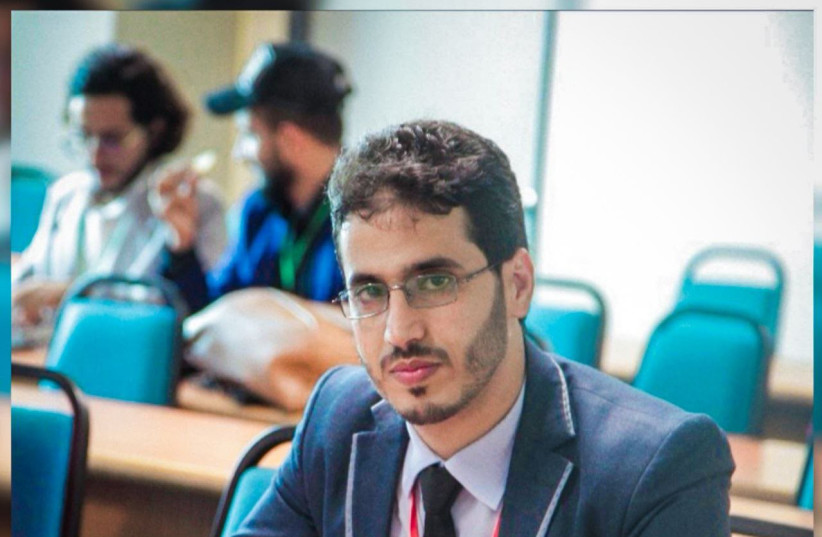
Houthis demand his cooperation, forced to live in ‘open-air prison’
Awadhi’s professional background in journalism made him a valuable asset to the group. He said the Houthis demanded that he cooperate with their cultural-awareness and mobilization programs, seeking to use his expertise to recruit fighters.
“I signed the guarantees out of fear, not because I supported their military agenda. I have always opposed war, violence, and the recruitment of people to fight,” he said. “After my release, I repeatedly tried to avoid their demands. Whenever they contacted me to participate in military mobilization or recruitment activities, I would evade them or go into hiding.”
Although he sometimes participated in cultural or public-awareness activities, he avoided recruitment campaigns and events promoting war. His cooperation did little to restore his freedom. For the next few years, the Houthis repeatedly summoned him for questioning and demanded details about his personal interactions.
“It felt like living in an open-air prison. I was not even free to meet my friends, former classmates, or colleagues from work,” he said. “Even ordinary social interactions became a source of fear. I felt that my movements, relationships, and daily activities were being constantly monitored. I was technically outside prison, but I did not feel free.”
بعد 12 سنة انتقم الله لي وللمظلومين من هذا المشرف الحوثي الذي حبسني في مغسلة الموتى وحرمني من رؤية والدتي 10 سنين 😢 الحمد الله #عزالدين_العواضي #اليمن #تعز https://t.co/jWdlKbBCjG
— عزالدين العواضي Ezzaddin Al Awadhi (@Ezzaddin2017) October 30, 2026
He identified Ibrahim Al-Mahtouri, a Houthi supervisor appointed director of Al-Wahda Police Station in the Sawaan area, and Al-Sharafi as responsible for the campaign against him. Al-Sharafi was killed in a Saudi strike around October 28, 2026, according to the Houthis.
The pressure intensified in early 2017, when the Houthis demanded that Awadhi not only cooperate with their media operations but also attend and present public events intended to mobilize support for the war.
At one such gathering in Al-Sabeen Square, organized to recruit fighters against Israel, Saudi Arabia and the US, Awadhi had a major disagreement with a Houthi organizer.
“I specifically requested that my role be limited to presenting the segments about patriotism, love for one’s country, national solidarity, and the general importance of defending the homeland… I asked them to assign another presenter to the remaining segments, particularly those related to mobilizing people for the battlefronts,” he said.
Instead, he was threatened and accused of “siding with the aggression.”
“Unfortunately, under that pressure, I felt I had no choice but to present every segment of the public event, including those I had desperately tried to avoid,” he said. “It was deeply distressing to have been forced to use my professional skills in a public event that… went against my personal convictions and my opposition to war.”
Soon after, the Houthis launched another raid, this time specifically to arrest Awadhi. When he saw three military trucks and armed men arriving at the organization where he worked, he feared for his life and hid in a facility used to wash and prepare bodies for burial. The Houthis searched the surrounding area but did not find him.
“I ask you to imagine what it means to spend nearly three months hiding in a place where deceased bodies are washed and prepared for burial, constantly fearing that armed men could discover you at any moment. The fear, terror, and psychological exhaustion were overwhelming… I could not live normally, move freely, or feel safe,” he said.
Eventually, the fear and uncertainty became unbearable. Awadhi decided to surrender, contacting Al-Sharafi before going to meet him and Al-Mahtouri. They sent him to a detention facility, where he was questioned throughout the night.
Accused of conducting espionage for Saudi strikes
The Houthis accused him of providing coordinates to Saudi aircraft to facilitate airstrikes, working as an agent for Israel, and secretly mobilizing young people to fight against the group through his youth-development and personal-strategy training programs, he said.
Awadhi denied the allegations but said he was forced to acknowledge the charges, sign documents, and guarantee that he would continue cooperating with the Houthis. Otherwise, he faced transfer to the notorious Habrah detention center, which has been condemned by numerous international organizations for torture and inhumane treatment of detainees.
“I feared that being transferred there could mean prolonged detention, severe torture, permanent disability, or even death,” he said, describing how one of his friends had been left paralyzed by abuse.
“The Houthis use a deliberate method against journalists, influential individuals, and prominent members of society: they repeatedly detain or interrogate them, fabricate accusations, and force them to sign statements acknowledging those accusations in exchange for temporary release,” he said. “Later, they arrest them again and use those previously signed documents as supposed evidence or confessions against them, despite knowing that the statements were obtained under threats and coercion.”
A respected community figure was brought in to act as Awadhi’s guarantor, but his freedom lasted only three days. He said an influential figure called to warn him that the Houthis intended to arrest him again and transfer him to Habrah.
Awadhi went into hiding once more. He changed his haircut, acquired a fake ID to pass through checkpoints unnoticed, and reached Seiyun, in Hadhramaut. From there, he traveled to Malaysia, where Yemeni citizens could relatively easily obtain visas.
“Leaving Yemen was not a choice made freely. It was the only way I could see to protect my life and my freedom,” he said.
For years after arriving in Malaysia, Awadhi continued to suffer from nightmares and recurring suicidal thoughts. On one occasion, he went to the 30th floor of a building intending to jump, he told the Post.
Fear of deportation amid changes to Malaysia’s immigration laws motivated him to travel to Europe. With no legal route to Germany, he crossed the forests of Belarus on a dangerous journey that nearly cost him his life.
“The conditions were so desperate that I was forced to eat leaves from trees and drink liquids from horse manure and urine to survive,” he said. “The smell was so foul that I would vomit almost immediately after drinking. Yet I was so desperately thirsty that I felt compelled to keep trying, simply to moisten my mouth and stay alive.”
In Germany, where he received psychological support, Awadhi began rebuilding his life among people he had been taught were his enemies.
“I want to express my gratitude for the compassion, protection, and support that countries such as Germany have provided to people like me who were forced to flee their homes… When I was in a severe mental-health crisis, its emergency services and healthcare system intervened to protect my life and help me recover,” he said.
Although he now feels more confident in the freedoms guaranteed by Western society, Awadhi said he remained afraid to speak publicly about his experiences in Yemen. The death of one of his tormentors emboldened him to break his silence.
Speaking out, however, came at a personal cost. Awadhi said many members of his family disowned him after he fled Yemen.
“I want a Yemen where people can live freely, where humanitarian work is protected, and where no one is forced into war,” he said. “I escaped Yemen to save my life, but speaking out has come at the cost of losing part of my family.”







