A driver-assistance system inside a car, a traffic app on a phone and the networks connecting powerful AI computers have something in common: each has a documented connection to engineering teams in Israel.
That contribution is easier to understand through products, research and completed business deals than through broad claims about who invented modern technology. The record shows a country with a substantial role in a global industry, working alongside employees, investors and suppliers around the world.
The scale is measurable. The Israel Innovation Authority’s 2026 report says high-tech accounted for 18.3% of Israel’s gross domestic product in 2025 and $85 billion in exports, about 58% of total exports. Those are figures for Israel’s economy, not its share of worldwide technology.
Nvidia: the connections between AI computers
AI depends on more than powerful processors. Large systems also need fast connections that let computers exchange data. That is where Mellanox became an important part of Nvidia’s business.
Nvidia completed its purchase of Mellanox on April 27, 2020, reporting a transaction value of $7 billion. The company described the combination as joining its computing expertise with Mellanox’s high-performance networking technology.
In a letter published at the time, Nvidia chief executive Jensen Huang identified Israel as one of the company’s important technology centers. The role continues beyond that historical deal: Nvidia’s Israel AI research lab describes current work on deep learning, computer vision and reinforcement learning, including research updates from October 2026.
The distinction matters. An Israeli engineering contribution to an AI network is not a claim that Israel created every component of the AI system. It is a specific part of a multinational chain of research, design and production.
Intel and Mobileye: from processors to the road
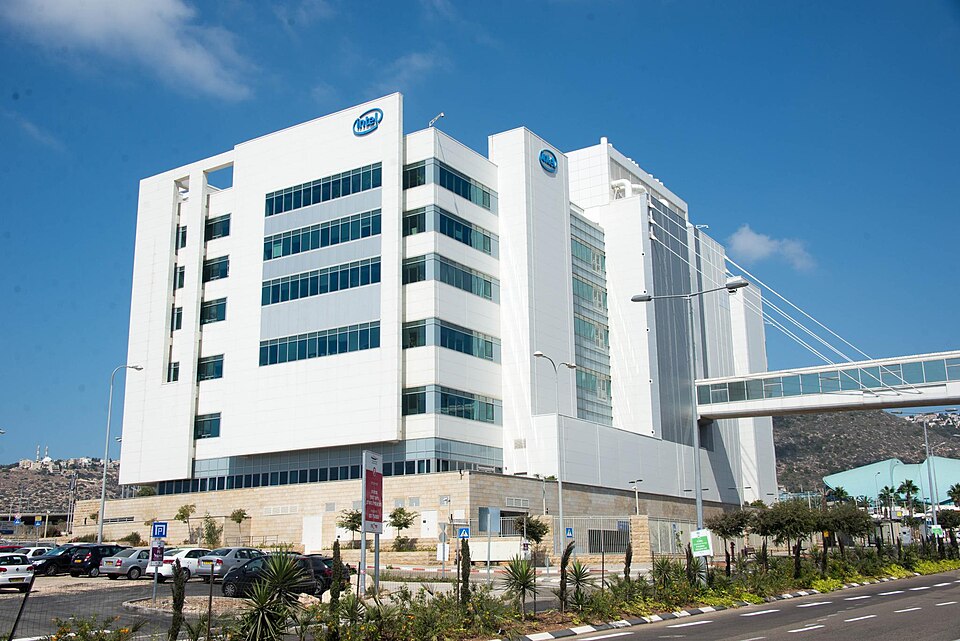
Intel’s Israel operations page identifies development work in Haifa, Petah Tikvah and Jerusalem, alongside manufacturing in Kiryat Gat. It says Israeli teams have contributed to technologies including Centrino and Intel Core processors.
One of Intel’s major Israeli technology transactions was Mobileye. The March 2017 agreement valued Mobileye’s equity at approximately $15.3 billion and the enterprise at $14.7 billion. Those are different transaction measures, not two separate purchases. Intel announced completion of its tender offer that August and said Mobileye would remain headquartered in Israel.
Mobileye’s technology gives the story a familiar connection to daily life. In its January 22, 2026 results release, the company said more than 230 million vehicles worldwide had been built with its EyeQ technology through 2025. That is the company’s cumulative figure, not a count of self-driving cars.
Mobileye develops both driver-assistance and autonomous-driving technology. Features that help a human driver and systems intended to drive without one should not be treated as the same thing.
Intel also acquired Israel-based Habana Labs for approximately $2 billion in December 2019. That purchase focused on chips designed for deep-learning work in data centers. The documented deals establish substantial investment, without requiring an unsupported claim that either was the largest acquisition in Israeli history.
A familiar app, and a longer-term research bet
Waze offers a more visible example. When Google announced that it had completed the acquisition in June 2013, it said the product-development team would remain in Israel. Google described plans to bring some of Waze’s traffic-update features to Google Maps and Google’s search capabilities to Waze.
That dated announcement ties an everyday navigation product to an Israeli development team. It does not establish the team’s current size or location, and this article makes no such claim.
Quantum computing is at a different stage. In July 2026, the Innovation Authority announced a NIS 100 million call to establish national quantum-computing research infrastructure. The proposal calls for access to at least three processing technologies so researchers and companies can compare approaches and develop applications.
It is a research program, not evidence that quantum computers have replaced ordinary chips. The authority itself said no single quantum-computing technology had demonstrated clear superiority over competing approaches.
Leadership can open doors, and policy can narrow them
Technology relationships do not depend on engineers alone. Governments shape research partnerships, investment conditions and access to public programs.
The record shows cooperation under different leaders. In September 2022, the Biden White House described a U.S.-Israel technology dialogue announced by President Joe Biden and Prime Minister Yair Lapid, including work on trustworthy AI and protecting technology ecosystems.
Under President Donald Trump and Prime Minister Benjamin Netanyahu, a July 2025 energy-and-AI memorandum set out intended cooperation on data-center electricity demand, power grids and cybersecurity. A January 2026 joint statement included AI, research security and semiconductor research. These are stated cooperation frameworks, not guaranteed company orders or profits.
Pressure on investment also has documented examples, but it should not be described as a blanket technology boycott. In August 2025, Norway’s sovereign-wealth-fund manager said it had sold its investments in Israeli companies outside its equity benchmark. It said 11 of its 61 Israeli company holdings at the end of that June were outside the benchmark. That was a defined portfolio action, not a ban on every Israeli company or product.
The Innovation Authority’s 2026 overview also describes vulnerabilities alongside growth, including dependence on overseas customers, investment concentrated in fewer companies and expansion of research employment abroad.
JBizNews Desk | Technology
© JBizNews.com. All rights reserved. Unauthorized reproduction or redistribution is strictly prohibited.