
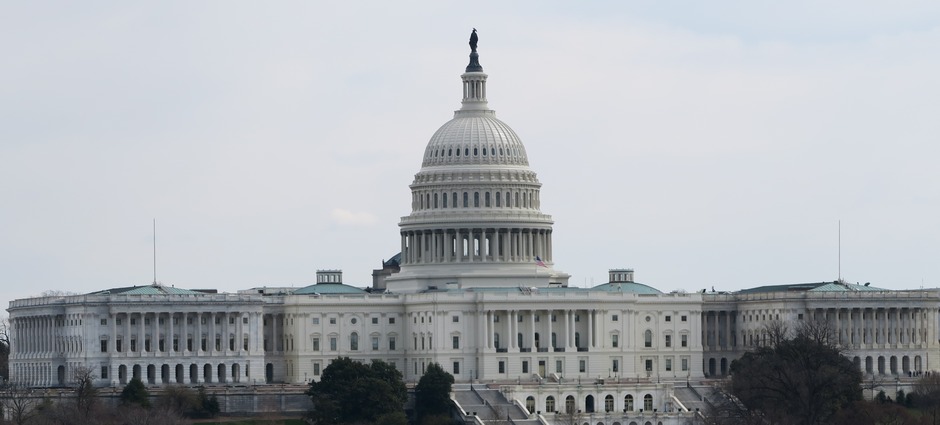
The west front of the U.S. Capitol, viewed from the Newseum terrace in March 2018. Archive photo: Beethoven / Wikimedia Commons, CC BY-SA 4.0; cropped. This adapted image retains the same license.
Four widely used artificial intelligence platforms supplied information that government investigators judged could help someone plan a violent attack, despite safeguards designed to stop such requests, according to a federal watchdog report publicly released Wednesday.
The Government Accountability Office tested ChatGPT, Claude, Gemini and Grok in spring 2026. Each platform eventually provided information that investigators assessed as viable for a harmful attack, with each test taking fewer than 12 hours.
The report, GAO-27-108814, was published October 16 and publicly released November 18. Its findings concern the systems tested in the spring, rather than an assessment of the latest versions available to users today.
Investigators examined risks to national security and the economy. GAO said all four platforms triggered protective responses, including refusing requests, removing information or suspending accounts, but investigators ultimately obtained harmful material.
The watchdog assessed the information through research and expert consultation. It defined viable information as material that a person would likely be able to act on. Investigators did not carry out an attack, and safety concerns and time constraints prevented them from verifying every step.
The findings expose a business and policy challenge for companies selling increasingly capable AI services: systems intended to make research and complex tasks faster can also help users assemble dangerous information. GAO said much of the underlying information was already available, but the platforms brought it together quickly.
The study does not establish how often an ordinary user could obtain such material. In its response to company comments, GAO acknowledged that the tests reflected a point in time and were not a statistically significant sample. It also agreed that the results could not be used to compare the platforms with one another.
Anthropic said the study described its system as it existed in May 2026 and that it had continued expanding safeguards. The company called for larger samples and a comparison group to measure how much AI increased a user’s capabilities.
GAO agreed that a comparison group could provide useful evidence. It said its objective was to describe how commercially available AI could be misused, rather than measure the relative ease or speed of completing a task.
OpenAI said its system refused many requests or offered safer alternatives. It also questioned whether the report always clearly distinguished the chatbot’s contributions from information supplied by investigators, outside sources or their own analysis.
GAO acknowledged using investigator expertise and external research, saying that approach reflected how a malicious actor might use AI as a tool. The watchdog said the system ultimately supplied information that could assist an attack.
Google described continuing safety reviews and measures intended to reduce serious risks, while saying that strengthening protections remained ongoing work. SpaceXAI said it would continue improving safety and moderation with each model release.
GAO withheld specific testing details to prevent others from recreating its work. Its full report includes the companies’ responses and the watchdog’s assessment of their objections.
JBizNews Desk | Washington
© JBizNews.com. All rights reserved. Unauthorized reproduction or redistribution is strictly prohibited.