
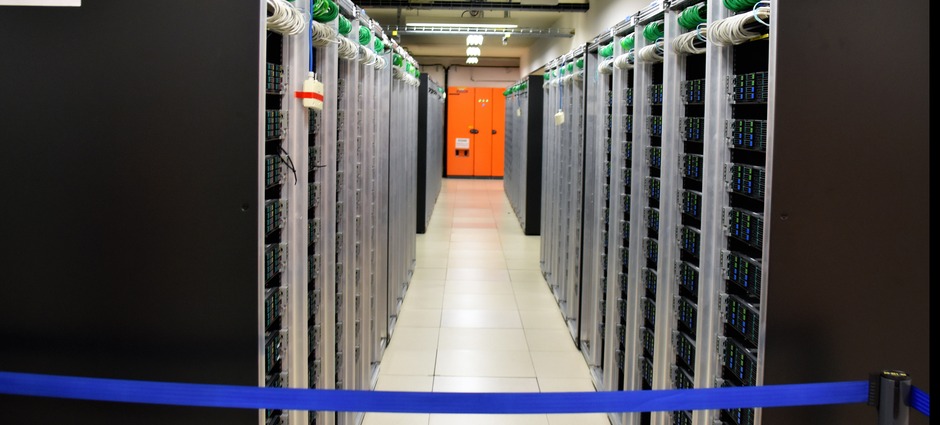
CERN Computer Centre, Meyrin, September 2019. Illustrative archive, not a Google facility or a server identified in the report. Photo: Simon Waldherr / Wikimedia Commons, CC BY-SA 4.0. Cropped and resized; adapted image under the same license.
Attackers are using artificial intelligence to compare software before and after security fixes, develop attacks against the flaws those fixes reveal and run them automatically, Google researchers reported Monday. The finding points to a shorter window for businesses to update exposed systems before attackers try to break in.
Google Threat Intelligence Group said it found an exposed staging server containing an automated vulnerability-research framework, stolen victim data and tools for activity inside compromised networks. The company described the past quarter as the first time its researchers had identified attackers using large-language-model frameworks to automate vulnerability discovery and exploitation fully, without a person directing each step.
That is a first observation by Google’s researchers, not a claim that they established the world’s first autonomous cyberattack. The report was released November 16 and describes activity observed over the preceding quarter, not an attack newly launched Tuesday.
Security fixes can give attackers a starting point
The framework, called exploit_agent, was configured to examine changes in popular web applications continuously, according to Google. It compared code around patch announcements, looked for potential vulnerabilities, drafted attacks and executed them automatically.
For a business running an older version of that software, the release of a fix does not remove its exposure until the update is applied. Google’s report says AI can make it easier to study the difference between the vulnerable and repaired versions and turn that information into an attack.
The evidence went beyond generated attack instructions. Researchers said the server also held data taken from victims and scripts capable of conducting internal reconnaissance, installing hidden access tools and carrying out other activity after a compromise.
Victim information on the server suggested the operator was particularly interested in French websites in media, entertainment and education, Google said. The report did not name the affected organizations in that account or give a total loss figure for this operation.
Observed break-ins are different from claims that code works
Google also warned that AI is producing large amounts of purported attack code that does not work. Researchers and security teams must separate working attacks from unsupported claims, adding verification work while they monitor for actual intrusions.
The distinction matters for assessing the risk. An AI system generating a possible attack is not itself proof that a victim was breached. In the staging-server case, Google cited both the automation framework and victim data, rather than relying only on an operator’s claims.
The report also said automated tools can leave conspicuous traffic and code traces. Speed and scale do not make these systems invisible or reliably successful, and AI-generated errors can undermine an attacker’s operation.
Stolen AI access creates a separate billing risk
In a separate set of investigations, Google’s Mandiant unit said attackers used compromised company cloud accounts to consume computing resources and AI-service allowances. The practice, often called LLMJacking, can leave the account owner paying for unauthorized usage.
Mandiant said some 2026 cases produced more than $100,000 in fraudulent charges in a single day. In the most severe cases, cumulative resource abuse reached $1 million before the problem was stopped. Those figures concern separate cloud-resource incidents, not an estimate of losses from the patch-comparison operation.
The findings put software-update speed, protection of cloud credentials and detection of unusual account use at the center of the business risk. Google is also a security vendor, and its report promotes its own defensive products. Those product claims are separate from the intrusion evidence the researchers described.
Neither Google’s report nor the evidence described here establishes a connection between these attacks and Tuesday’s service outages.
JBizNews Technology Desk | New York
© JBizNews.com. All rights reserved. Unauthorized reproduction or redistribution is strictly prohibited.