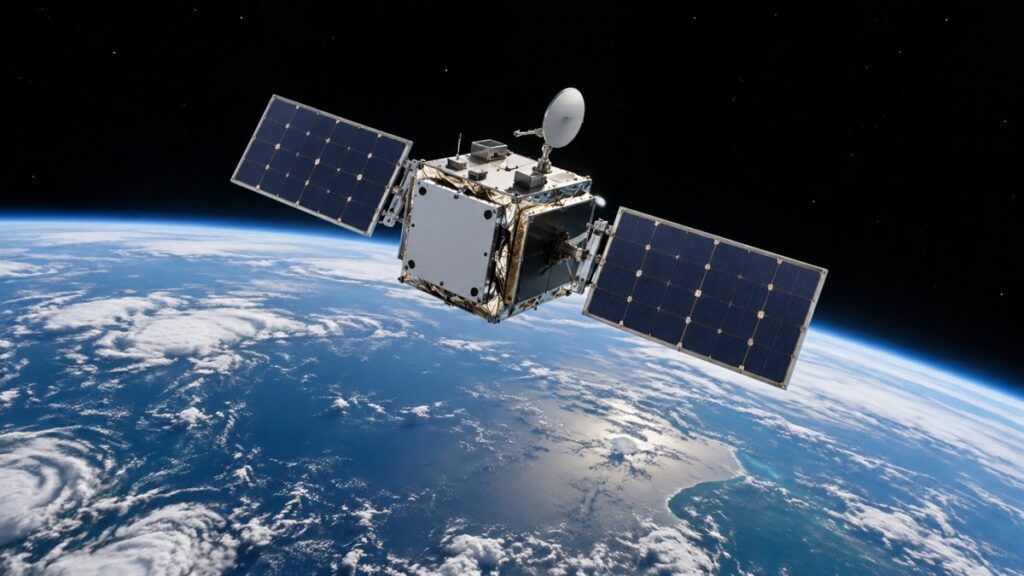
Google said Friday that its Project Suncatcher prototype satellite has generated an AI response in orbit, an early test of whether the company’s computing chips can operate beyond Earth.
The company said it sent a prompt to an onboard Gemma 4 open model asking for a haiku about being in space. The satellite transmitted the poem during a pass over Svalbard, Norway, marking what Google described as the first AI response from a data-center-class Tensor Processing Unit in orbit.
The milestone happened this week, Google said in its October 30 update. The prototype launched on October 1, not Friday.
Since launch, the team has been working through a commissioning checklist, powering up the satellite’s host and TPU trays and running early machine-learning tests. After the initial poem, researchers also tested space-themed limericks and prompts that asked the system to report the technical condition of its payload.
The work remains an experiment, not a commercial orbital data center. Google’s next tests will examine how the TPUs perform under thermal stress and radiation exposure in space.
Google calls Project Suncatcher a long-term research effort to explore powering AI computing in space. The company said the next milestone is a pair of interconnected satellites in 2027. Friday’s announcement does not mean that pair is already operating or that a large network of space-based AI computers is ready for use.
JBizNews Desk | Technology
© JBizNews.com. All rights reserved. Unauthorized reproduction or redistribution is strictly prohibited.