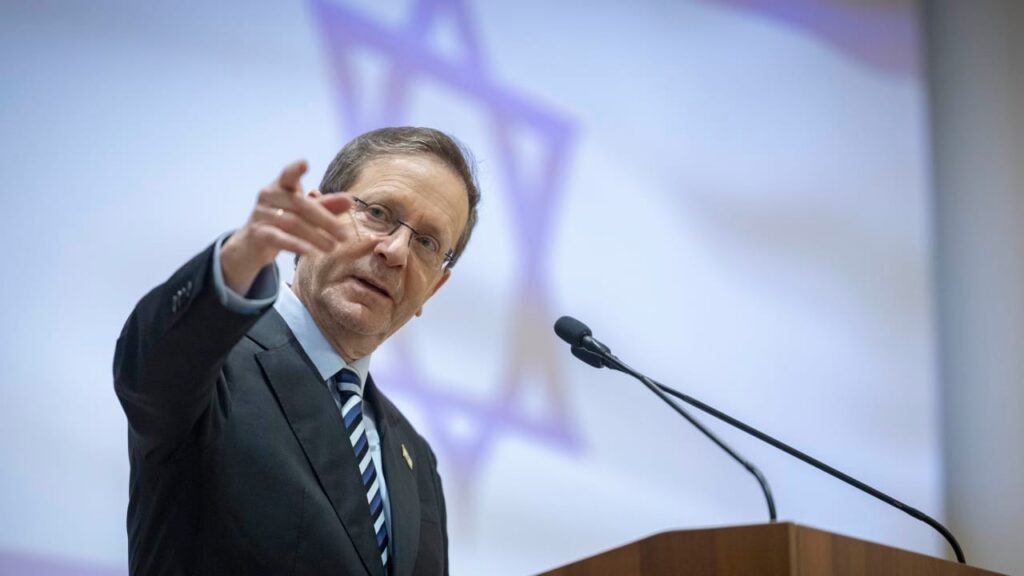
Photo: Yonatan Sindel / Flash90 (archive)
The Religious Zionist Party and Shas recommended Benjamin Netanyahu to form Israel’s next government during their meetings with President Isaac Herzog on Wednesday, as the president began consultations with Knesset factions.
The first party to meet with Herzog was the far-right Religious Zionist Party (RZP), led by Finance Minister Bezalel Smotrich. Its delegation included Minister for Settlement and National Missions Orit Strock, Itamar Eitam, and Zvika Mor.
Representatives from the haredi (ultra-Orthodox) Sephardic Shas party were next to meet with Herzog. The Shas delegation, comprised of MKs Michael Malkieli, Yinon Azoulay, Yoav Ben-Tzur, Haim Biton, and Dror Amos, also recommended Netanyahu. Shas, led by Arye Deri, had announced its intention to recommend Netanyahu on Tuesday, ahead of the consultations. The party has been a key partner in Netanyahu’s governing coalition.
By law, the president is required to consult the Knesset factions before deciding who receives the task of forming a government.
The consultations were temporarily delayed after a security screening machine at the President’s Residence triggered an alert while screening visitors, halting entry into the compound. The talks continued while Jerusalem District police officers, including bomb disposal technicians, were dispatched to the scene to investigate. A small group of demonstrators also protested outside the President’s Residence as the consultations were set to begin.
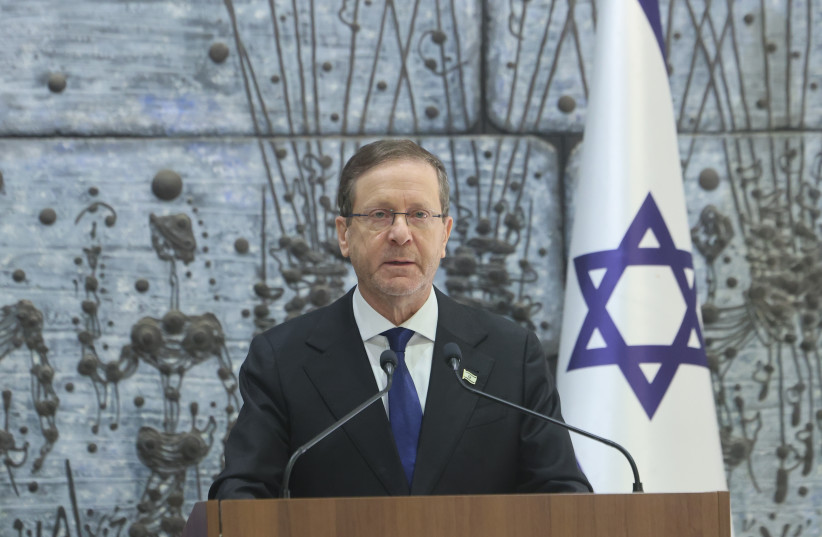
CEC approves election results given to Herzog
The CEC approved on Wednesday morning the election results given to Herzog at noon, after finding no evidence of compromised election integrity amid the ongoing Shin Bet (Israel Security Agency) investigation into suspicions that foreign entities, such as Qatar and Turkey, allegedly funneled money into Israel to influence voting in Arab communities.
Herzog has invited faction representatives in ascending order of Knesset seats, beginning with the Religious Zionist Party, Shas, Yisrael Beytenu, and Zehut on Wednesday. The consultations will continue with other parties on Thursday morning and into the evening.
Zehut party chairman Moshe Feiglin said on Tuesday he would recommend Netanyahu, but would also call for the dissolution of the newly elected Knesset and fresh elections, claiming that alleged electoral irregularities had undermined the legitimacy of Israel’s democratic process.
Meanwhile, Yisrael Beytenu leader Avigdor Liberman has announced that he would recommend prime ministerial candidate Yashar party leader Gadi Eisenkot.
Other party leaders in the opposition bloc, Naftali Bennett (B’Yachad), and Yair Golan (the Democrats) have also stated that they would recommend Eisenkot, with the aim of avoiding another election.
The election results showed that Netanyahu’s bloc maintained its lead, securing 53 seats in the next Knesset, while the opposition bloc won 48. The Arab parties, Ra’am and the Joint List, won a record-breaking 19 seats combined.
Political deadlock could lead to another election
The political deadlock could ultimately lead to another election, although the parties may still reach an agreement through coalition negotiations. Other possible outcomes include a unity government between Netanyahu and members of Eisenkot’s bloc, or a minority government.
Along with the 48 seats won by the opposition bloc, the Arab parties’ 19 recommendations would give Eisenkot 67 in total, prompting Herzog to potentially grant him the mandate over Netanyahu.
On Sunday, Herzog called on Israel’s political leaders to accept the election results and demonstrate flexibility in coalition negotiations, warning against political entrenchment that could force the country into another election.
Shir Perets contributed to this report.