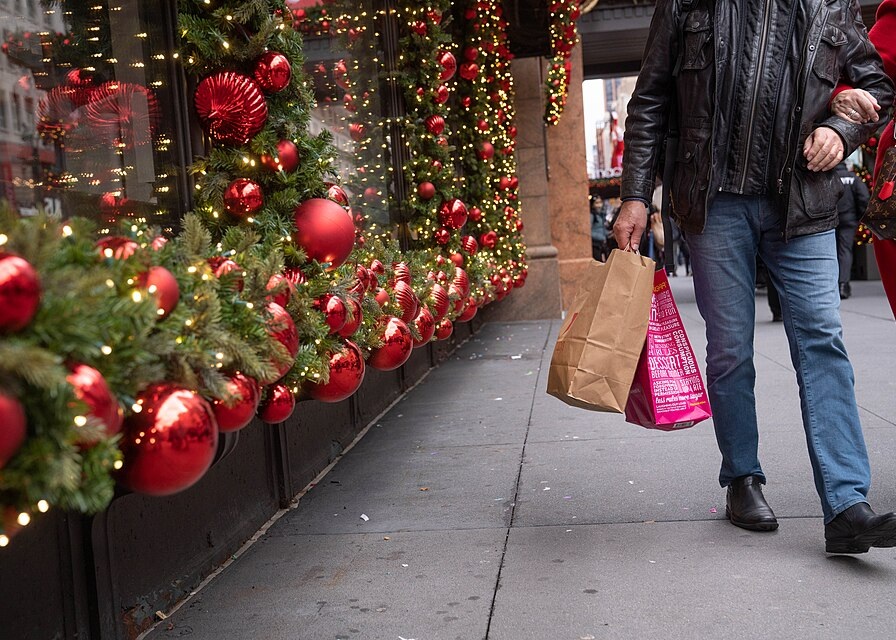
Shopping bags outside Macy’s on Black Friday in November 2021. Archival photo, cropped: Anthony Quintano, CC BY 2.0.
Analysis
Holiday shoppers are planning around deals, but a low price is not the only reason they choose a store. For retailers, the National Retail Federation’s latest survey points to a practical challenge: compete for price-conscious customers without overlooking quality, choice and delivery costs.
In its October 28 analysis, NRF said 64% of consumers were likely to wait until Thanksgiving weekend to do most of their holiday shopping, up from 51% five years ago. That is a change in the longer-term comparison, not a sudden jump this year. NRF’s October 20 survey release put last year’s figure at 63%, nearly the same as this year’s reading.
Starting early and buying later are not contradictory. The survey found 43% planned to begin browsing and buying before November, while many expected to make most purchases during Thanksgiving weekend. A customer looking in October may still be comparing prices rather than completing a gift list.
A discount is only part of the offer
Sales and discounts influenced retailer choice for 56% of shoppers. Quality of merchandise followed at 51%, selection at 46% and free shipping or shipping promotions at 37%.
The business takeaway is that a promotion needs more than a large percentage-off sign. Clear product information, useful choices and visible shipping costs can help a shopper judge the whole offer. These figures describe factors shoppers cite; they do not measure how much an individual promotion will increase revenue.
Online intentions are not online sales
Online remained the leading shopping destination, with 53% planning to buy gifts and other holiday items online. NRF said that was the lowest share since 2015.
That does not establish that online sales are falling. The measure is the share of shoppers planning to use a channel, not the dollars they will spend there. A smaller share of shoppers can still spend more money. The survey also does not show that shoppers must choose exclusively between websites and stores.
Experiences widen the gift competition
Some 27% planned to give an experiential gift, compared with 19% five years ago. For businesses selling experiences, that suggests an opportunity to explain what a recipient gets and how to redeem it. For merchandise retailers, it is a reminder that the holiday budget can go toward something other than a physical product.
The findings are plans, not completed transactions or a guarantee of demand. Prosper Insights & Analytics surveyed 8,094 adult consumers October 1-7, 2026, for NRF. The reported margin of error was plus or minus 1.1 percentage points. Retailers can use the results to frame their offers, but actual purchases will determine the season’s winners.
JBizNews Desk | Business Analysis
© JBizNews.com. All rights reserved. Unauthorized reproduction or redistribution is strictly prohibited.