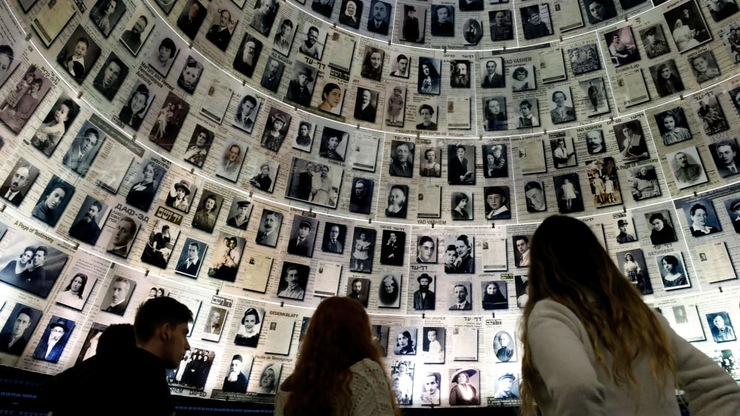
Little was known in Abraham Klajner’s family about what happened to him during the Holocaust. His relatives believed he had been imprisoned in Buchenwald concentration camp, but the details of his imprisonment remained unknown. Abraham himself didn’t speak about what he had endured until he died in 1980.
Decades later, his great-nephew Amit Baida became interested in his great-uncle’s history. Born and raised in southern Israel, Amit now lives in Germany. When he began looking into his family’s past, he discovered that asking relatives was not enough. Neither his father nor his grandmother knew much.
Research at Yad Vashem and Arolsen Archives uncovered documents previously unknown to the family. But first, it was necessary to work through incomplete biographical information and different spellings of Abraham’s surname.
Descendants of Holocaust survivors around the world are undertaking similar research today. Some are searching for relatives who were murdered, while others are trying to reconstruct survivors’ lives or discover what their families’ lives were like before the war.
Why Holocaust survivors rarely spoke about their past
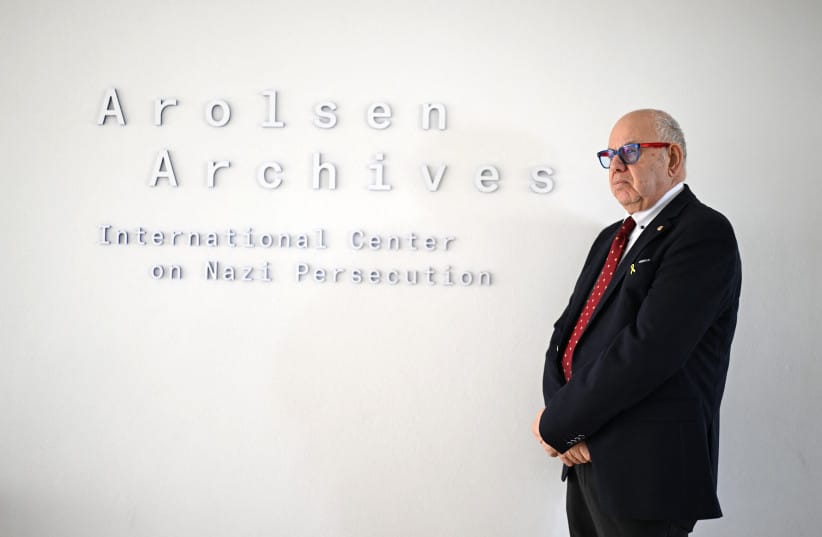
The reasons for silence vary depending on the country, generation, and circumstances of persecution, explains Giora Zwilling, Head of Digital Transformation at Arolsen Archives, a Germany-based international center documenting victims of Nazi persecution.
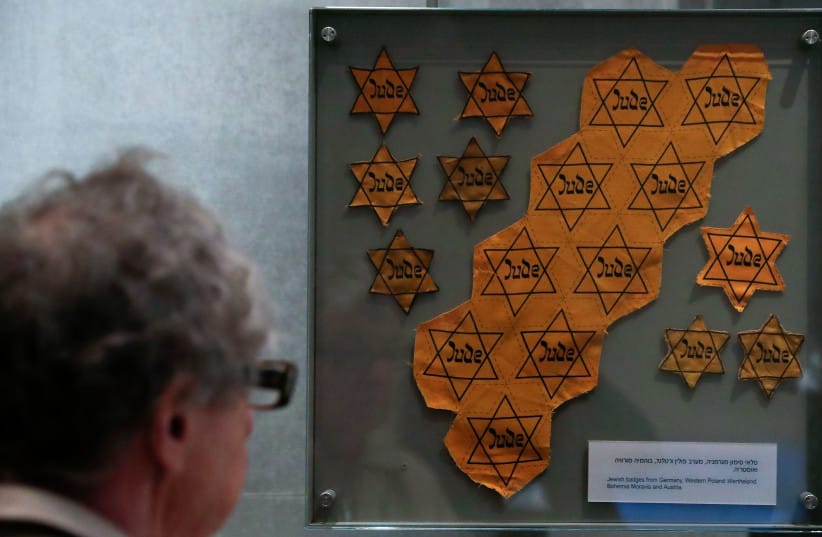
He describes the 1940s and 1950s in Israel as a period when many Holocaust survivors did not want to discuss their experiences. Attitudes later changed. The Holocaust became central to public remembrance, and survivors’ testimonies became more widely discussed.
In the former Soviet Union, the circumstances were different. People could face suspicion from the authorities, and certain groups of victims of Nazi persecution experienced stigmatization.
The silence did not always come from survivors alone. Israeli psychologist Dan Bar-On described the phenomenon of the “double wall”: parents avoided painful memories, sometimes to protect their children, while children hesitated to ask questions for fear of causing their parents’ further pain.
Today, the opportunity to hear directly from Holocaust survivors is gradually disappearing. Even those who were children at the end of the war are now over eighty.
Serafima Velkovich, Head of the Family Roots Research Section in Archival Reference and Information Services at Yad Vashem, says that the second generation – the children of Holocaust survivors – is particularly active in researching family histories today. Many have already retired or are approaching retirement age. According to Velkovich, they now have more time and a growing desire to fill gaps in their family histories.
The nature of requests to Arolsen Archives has also changed. Zwilling explains that immediately after the war, people primarily searched for missing relatives. Later, requests concerned documents needed for compensation claims. Today, a significant proportion involve family history research.
How to start researching your family’s Holocaust history
Velkovich recommends starting by collecting whatever information the family already has: relatives’ names and surnames, dates and places of birth, parents’ names, marriage records, prewar addresses, and occupations.
If older relatives are still alive, it is worth recording their recollections with their consent. Even an approximate date or the name of a small town can help archivists.
For an initial search at Arolsen Archives, Zwilling explains, a person’s name, surname, and date of birth are particularly useful. Their place of birth provides another important clue.
At Yad Vashem, five details are especially helpful for reliably identifying someone: “First name, surname, date of birth, place of birth, and parents’ names.”
If information is missing, she advises searching for birth and marriage records and working backward from known generations.
How to request records from an archive
During the research into Abraham Klajner’s history, an Excel spreadsheet was prepared for the archival inquiry. It included known dates, places of birth and residence, other relatives’ names, his occupation, every possible spelling of his name and surname, and assumptions about his fate.
Such a spreadsheet is not required, but it helps archivists understand the available information more quickly. Any uncertainty should be clearly indicated. Copies of family documents, photographs, and previous archival responses can also be attached to the request.
One difficulty in Abraham’s case was the spelling of his surname. The family had documents in Hebrew, while his biography spanned several countries and languages. Transliteration back into Latin characters produced many possible versions.
Velkovich explains that such discrepancies are common. Alexander, Alex, Sasha, and Shura, for example, may all refer to the same person. Surnames can be even more complicated: historical records often contain phonetic spellings or simple errors.
Where to find family documents
One of the main resources for researching Jewish family history during the Holocaust is Yad Vashem. Its Central Database of Shoah Victims’ Names combines information from Pages of Testimony, archival documents, and lists of victims. Other collections can help reconstruct individual biographies and establish family connections.
Arolsen Archives holds records relating to diverse groups persecuted by the Nazi regime, including concentration camp prisoners, forced laborers, displaced persons, and people searching for relatives after the war. Its history dates back to 1943, when the Allies established a tracing service for missing persons. The organization later became known as the International Tracing Service (ITS).
The choice of archive, however, depends primarily on what is known about the person’s fate. Velkovich gives several examples: if a relative was deported from France, French memorial databases may be useful. If they were imprisoned in Buchenwald, the camp’s records and Arolsen Archives are worth checking. Separate databases exist for researching Soviet military personnel.
What happens after a request is submitted
At Arolsen Archives, relatives’ inquiries are handled by the tracing service, while researchers and other interested individuals can contact the reference service. Staff first check available digital records, then consult additional card indexes and archival collections when necessary.
Giora Zwilling says Arolsen Archives holds more than 110 million digital images of documents. However, not every name appearing in those documents is searchable online. A single scanned page may contain dozens of names. Unless they have been indexed, searching by surname will not necessarily retrieve the document.
Archivists therefore continue to use the Central Name Index, which contains around fifty million cards relating to approximately 17.5 million people.
The cards help connect individuals with archival records, while the phonetic search system accounts for differences in surname spellings.
The work requires familiarity with historical archival references and the structure of the collections. According to Zwilling, even with extensive digitization, some searches still have to be conducted manually.
At Yad Vashem, researchers determine which collections to consult based on geography and the circumstances of persecution. The absence of results in a public database does not necessarily mean that the archive holds no relevant documents.
Can archival documents always be trusted?
Finding a document does not necessarily mean that all the information it contains is accurate. Velkovich explains that postwar tracing requests often included relatives’ assumptions about the fate of missing family members. People sometimes relied on rumors, accounts from other survivors, or unverified information.
An archival record may therefore reliably establish that an inquiry was made without confirming the presumed place of deportation or death.
Researchers need to establish who created a record, when, and based on what information. Errors also occur in personal details, including dates of birth, surnames, and place names. Findings should therefore be checked against other sources.
Why some family histories cannot be reconstructed
The survival of historical records varies considerably depending on the region and circumstances of the Holocaust.
In Western and Central Europe, deportations of Jews were often accompanied by lists of names. These can sometimes establish the date of a transport and identify those deported.
In the Nazi-occupied Soviet territories, Jews were frequently murdered near their homes without individual lists being compiled – a form of mass murder referred to as the “Holocaust by bullets.” Surviving reports may record the number of victims without naming them.
For research in the former Soviet Union, Yad Vashem uses, among other sources, records of the Extraordinary State Commission, which investigated crimes committed by the Nazis and their collaborators. These records, however, are also incomplete.
Auschwitz presents another difficulty. Velkovich notes that many Jews murdered immediately upon arrival were never registered as prisoners. No individual camp registration cards were created for them.
Some existing documents were also destroyed by the Nazis before their retreat.
Buchenwald, by contrast, left behind extensive documentation. In Abraham Klajner’s case, the initial information about Buchenwald helped establish where to begin. Research across several archival collections made it possible to reconstruct his journey from his arrest and deportation to Buchenwald and Mittelbau-Dora concentration camps to his liberation during a death march.
“If someone passed through Buchenwald concentration camp, you could say that’s a researcher’s stroke of luck,” Velkovich explains.
Velkovich admits she hasn’t been able to establish certain details of her family’s history because the necessary sources haven’t survived. “In a way, it’s a case of the shoemaker’s children going barefoot,” she says.
How digitization makes Holocaust records accessible
Just a few decades ago, researching family history often meant corresponding with archives, traveling, and waiting years.
Zwilling recalls that in the early 2000s, Arolsen Archives received an enormous number of requests from the former Soviet Union. Some applicants waited years for a response. There were cases where people died before receiving the documents they had requested.
Large-scale digitization has accelerated access to archival collections. Many documents can now be studied remotely. However, some archives still exist only on paper.
Velkovich recalls working with original documents at the YIVO archives in New York. Some pages were so fragile that tiny fragments of paper remained on the table after they had been examined.
At Yad Vashem, original documents can sometimes be shown to relatives, but only after conservators have assessed their condition. Families are often not permitted to handle them.
Velkovich does not consider physical contact with an original document essential for historical research. Digital copies allow materials to be examined without risking further damage.
What happens when a family receives an answer
For archivists, examining historical documents is part of their everyday work. But relatives’ reactions to newly discovered information can be emotional.
“When you work with this every day, it becomes much less emotional. But when you see the reaction of people for whom it matters, who have received information they have been searching for many years, it is always very emotional for us too,” Velkovich says.
She particularly remembers cases in which archivists managed to find relatives who had long been presumed dead. Such cases, however, are becoming increasingly rare.