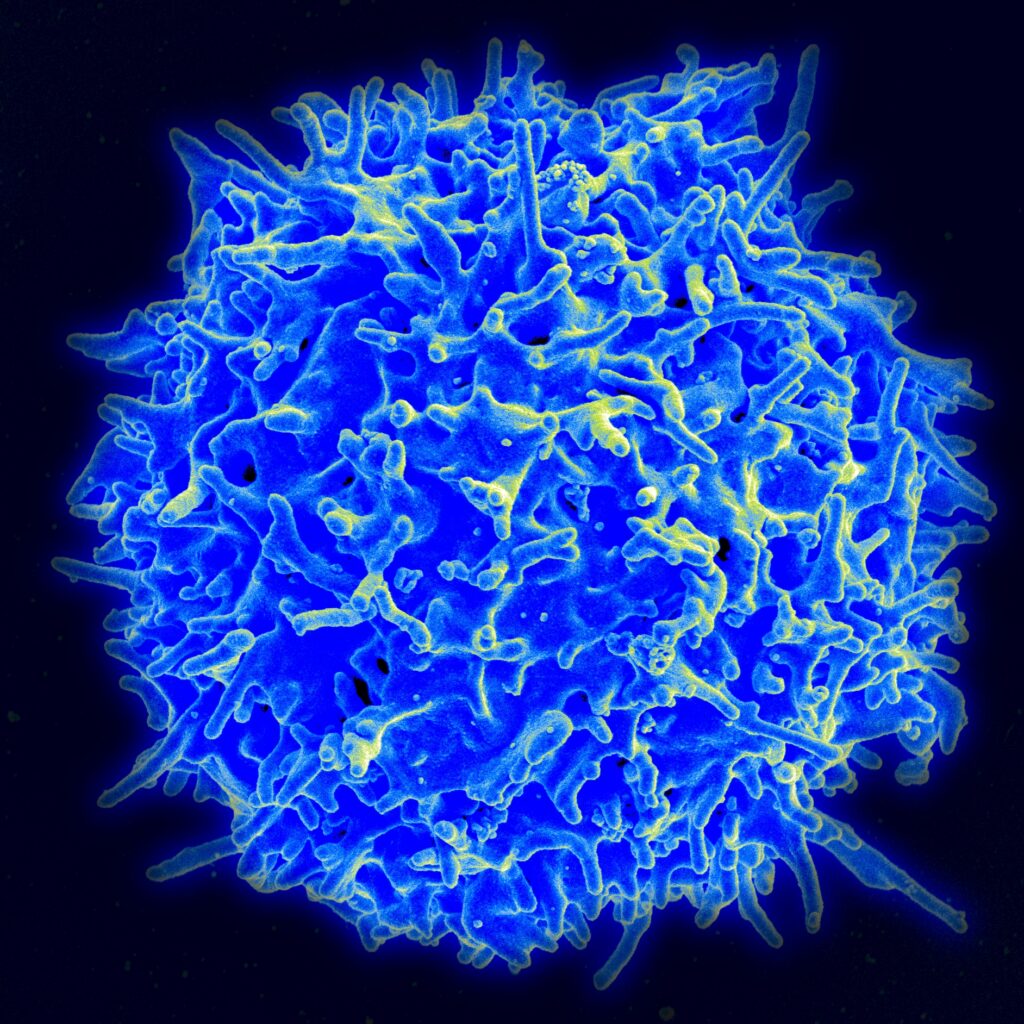
A pooled analysis from Hospital for Special Surgery found sharply lower lupus disease activity six months after CAR T-cell therapy in patients whose disease had resisted other medicines. The findings, presented Sunday, November 8, at ACR Convergence 2026, strengthen the case for larger studies, but do not establish a cure or make the investigational approach a standard lupus treatment.
The New York hospital’s researchers reviewed 31 studies involving 243 people with systemic lupus erythematosus who had previously tried at least two immunosuppressants. Most received personalized therapies that used their own immune cells and targeted CD19, a protein on B cells involved in the autoimmune response, HSS said in its study announcement.
Lower disease activity, with important limits
Average scores on the systemic lupus erythematosus disease activity index, or SLEDAI, fell from 13.0 before treatment to 2.2 at six months. That measure tracks disease activity; a lower average is not the same as proving that every patient achieved remission or that the benefit will persist indefinitely.
Lupus is an autoimmune disease in which the immune system attacks healthy tissue. It can damage the skin, joints and organs. Existing medicines have improved treatment, but some patients still do not respond adequately, according to HSS.
CAR T-cell therapy was originally developed for cancer. Researchers are now investigating whether modifying immune cells to target parts of the autoimmune response could produce longer-lasting control of lupus.
“These encouraging findings may help inform patient selection for future studies and, ultimately, clinical practice,” said Anca D. Askanase, chair of HSS’s Department of Medicine, chief of its Division of Rheumatology and the study’s senior author.
Side effects remain part of the calculation
The analysis also documented risks. Cytokine release syndrome, an inflammatory reaction associated with these therapies, occurred in 64% of participants. Low-grade cases, classified as grade 1 or 2, accounted for 61% of all 243 participants.
Five percent experienced immune effector cell-associated neurotoxicity syndrome, or ICANS, a neurological complication. Severe infections, classified as grade 3 or 4, occurred in 5%, while 6% experienced blood-related toxicity lasting more than 28 days.
Those results matter alongside the improvement in disease activity. The approach involves more than replacing one routine lupus prescription with another, and the evidence still needs to establish which patients are most likely to benefit and how long the benefit lasts.
A research signal, not a finished answer
The findings pool small individual studies rather than report one large definitive trial. HSS said larger prospective studies will be needed to clarify long-term outcomes, patient selection and the therapy’s place in lupus care.
For patients whose disease remains active despite existing medicines, the analysis offers another reason to follow the clinical research. For hospitals and drug developers working on cellular therapies, it provides a broader view of both the potential benefit and the complications that future studies must address. It is not an announcement of regulatory approval, a commercial launch or a proven cure.
JBizNews Desk | NEW YORK
© JBizNews.com. All rights reserved. Unauthorized reproduction or redistribution is strictly prohibited.