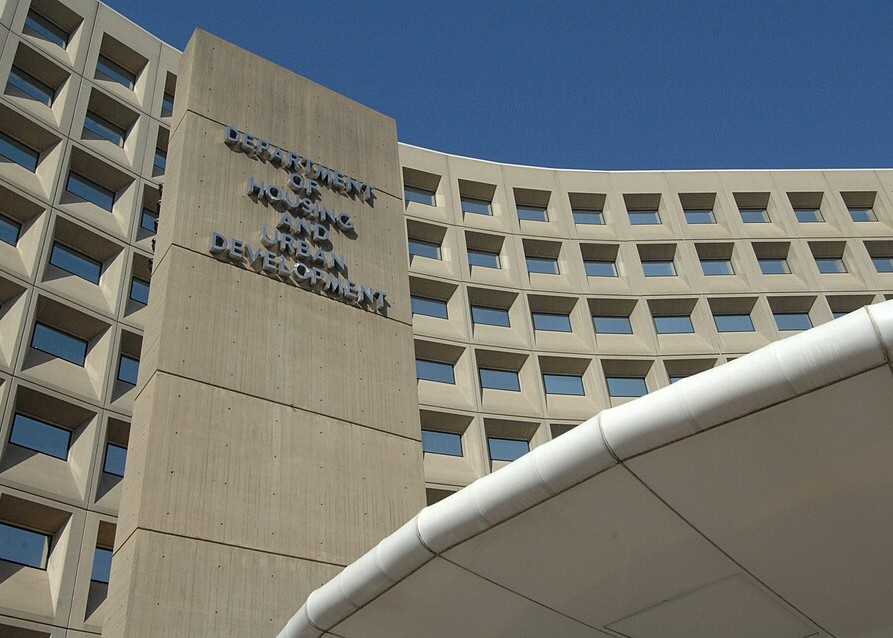
Photo: HUD (Weaver Building archive, 2009)
The Department of Housing and Urban Development has opened an expedited financing review process for qualifying affordable-housing construction projects, removing several limits that previously narrowed access to faster Federal Housing Administration processing.
The Low-Income Housing Tax Credit Express Lane Initiative took effect immediately under a mortgagee letter issued Monday, Nov. 2. The change targets experienced development teams seeking FHA-insured Section 221(d)(4) construction financing, rather than creating an automatic approval path for every tax-credit project.
According to HUD, the initiative preserves standard loan-sizing and underwriting requirements while shortening the review and closing process for eligible transactions. MBA Newslink reported the changes Monday.
Larger projects can qualify
The new process eliminates the earlier pilot’s limit of fewer than 200 units and permits both 9% tax-credit projects and 4% tax-credit transactions using tax-exempt bonds. There is no separate Express Lane limit on loan size or unit count, although projects still must meet the program’s financing standards.
HUD also removed the prior 65% to 75% loan-to-cost ceiling, returning eligible transactions to the standard 80% threshold, and dropped a requirement for developers to defer at least 25% of their fee. The tax-credit equity contribution required at initial endorsement is limited to 10%.
The agency retained a 30-day firm commitment decision timeline. That is a review target, not a promise that construction will begin or a loan will close within 30 days. Concept meetings remain required, and legal documents and other closing conditions still need approval.
Experience and financial strength required
Participation is limited to new construction with tax-credit-restricted rents. Projects with HUD Multifamily Section 8 project-based rental assistance are excluded because determining those rents does not fit the expedited timetable, the letter says.
Developer or owner principals generally must have developed, placed in service and stabilized at least three tax-credit transactions in the previous five years, including one comparable in size and scope. HUD also requires evidence of liquidity, financial strength and a stable existing property portfolio. Contractor, architect and management-agent experience requirements apply as well.
The letter makes clear that speed does not eliminate environmental review. Projects with noise above 75 decibels or contamination above unrestricted residential levels without an approved remediation plan are among those ineligible for the Express Lane. HUD can direct projects with more complex environmental issues into its standard process.
Some construction documentation can arrive later: final plans, specifications and third-party architectural, engineering and cost reports may be submitted at least 15 days before closing rather than during the earlier application review.
For affordable-housing developers, the immediate change is a different route through federal financing review, with broader project eligibility but demanding team qualifications. HUD describes the initiative as a test of faster processing. Its effect on actual closing times and completed housing supply will depend on how qualifying transactions move through that process.
JBizNews Desk | Washington
© JBizNews.com. All rights reserved. Unauthorized reproduction or redistribution is strictly prohibited.