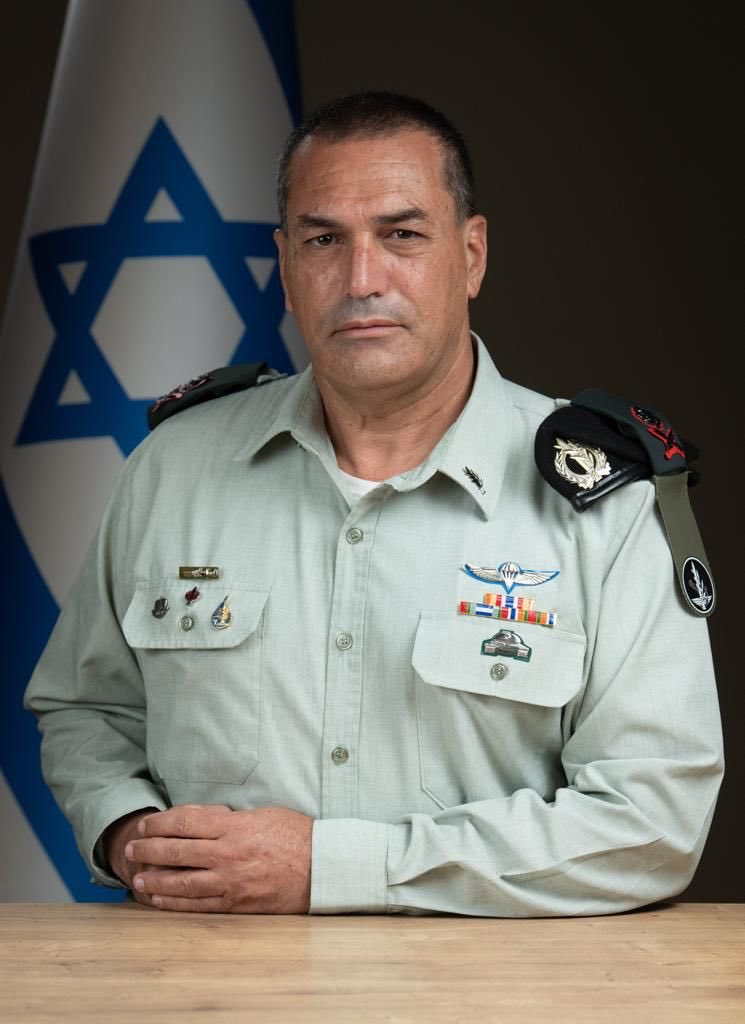
Photo: Israel Defense Forces (archive photo)
IDF Chief of Staff Lt. Gen. Eyal Zamir called Monday for Israel’s military to become a global leader in artificial intelligence and robotics, setting out a plan to deepen the use of advanced technologies and combine manned forces with unmanned systems.
Speaking at the new Communications and Cyber Defense Campus in Beersheba, Zamir told members of the General Staff Forum and brigade commanders that the changing battlefield required both new technology and a change in how commanders think and operate, according to an official IDF account of the conference.
“Artificial intelligence is a revolution that is reshaping the 21st century,” Zamir said, in remarks translated from Hebrew. He described recent changes on the battlefield as among the fastest and most far-reaching in military history.
Human-machine operations at the center of the plan
Zamir said the IDF would strengthen its concept of integrated human-machine warfare, with manned units operating alongside unmanned systems to gain an operational advantage.
The chief of staff pointed to decisions to establish a new branch for artificial intelligence and unmanned systems, as well as an AI brigade and a Spectrum Brigade within the C4I and Cyber Defense Directorate. He said those organizational steps were intended to expand the military’s freedom of action and enable new capabilities.
The military is advancing the adoption of AI across its activities under its multiyear force-building plan, known as Hoshen. The announcement described a direction for force development; it did not establish that every planned unit or system was fully operational.
From intelligence to battlefield decisions
During the forum, commanders were shown ways to integrate AI into offensive and defensive systems, process and analyze information, improve workflows and increase organizational and operational efficiency, the IDF said.
Zamir linked that work to preparations for operations in several theaters at once. He said AI was a central component of that readiness and could strengthen intelligence, decision-making and operational capabilities.
The official account did not set out a procurement budget or a detailed deployment timetable. It also did not describe specific new weapons or the decision-making safeguards for individual systems. The remarks outlined the military’s priorities rather than announcing a finished technological transformation.
A message to commanders and the Negev
Zamir stressed that new equipment alone would not deliver the change he sought. He called for leadership willing to adopt different ways of operating and a culture open to revising established thinking.
“Commanders who do not know how to make full use of technology to their advantage will not be able to accomplish their missions on the modern battlefield,” he said, in translation.
The venue also carried a message about the development of southern Israel. Zamir connected the campus in Beersheba with David Ben-Gurion’s vision for the Negev, pointing to the presence of communications, intelligence, logistics and air force organizations in the area.
“The future of the IDF and the future of the Negev are intertwined,” he said.
JBizNews Desk | Beersheba, Israel
© JBizNews.com. All rights reserved. Unauthorized reproduction or redistribution is strictly prohibited.