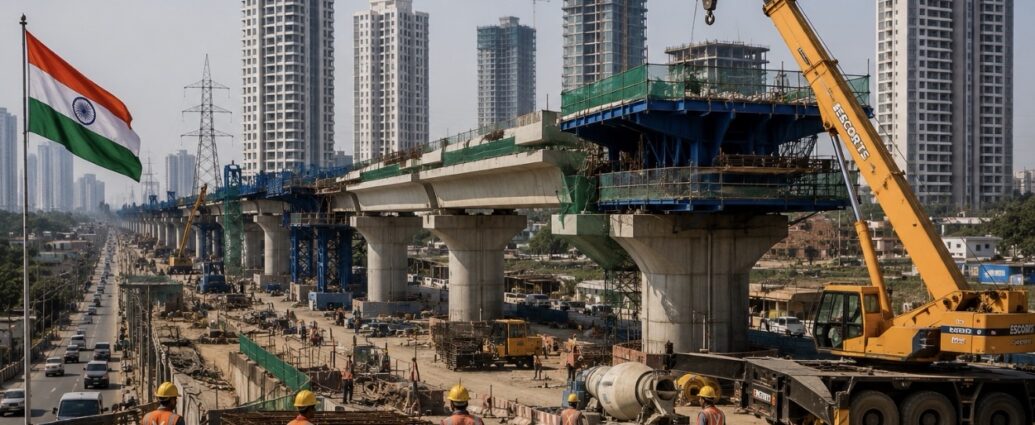
NEW DELHI — India’s core infrastructure industries expanded 5.0% in June compared with a year earlier, according to data released Monday by the Government of India, signaling that one of the world’s fastest-growing major economies continues to benefit from strong industrial investment, construction activity and government infrastructure spending. The latest figures indicate that key sectors supporting India’s manufacturing base remain resilient despite ongoing geopolitical uncertainty, higher global energy prices and slowing growth across several developed economies.
The Core Infrastructure Index measures output across eight industries that form the backbone of India’s economy: coal, crude oil, natural gas, refinery products, fertilizers, steel, cement and electricity. Together, these sectors account for approximately 40% of the country’s Index of Industrial Production, making the monthly report one of the earliest indicators of overall economic activity.
June’s growth reflected continued strength in electricity generation, steel manufacturing and cement production as large public and private infrastructure projects continued moving forward. India has invested heavily in transportation networks, logistics hubs, industrial corridors, renewable energy projects and urban development as part of a long-term strategy to strengthen domestic manufacturing and expand its position as a global production center.
The report arrives as multinational companies continue diversifying global supply chains and increasing manufacturing investment across India. Rising production in electronics, automotive manufacturing, pharmaceuticals and advanced manufacturing has created additional demand for industrial facilities, transportation infrastructure and reliable energy supplies.
Government initiatives encouraging domestic manufacturing have also helped support continued capital investment. Programs designed to attract international manufacturers and strengthen local production have accelerated development across multiple industries while creating new employment opportunities throughout the country.
For businesses, stronger infrastructure output generally signals expanding demand for construction materials, heavy equipment, logistics services, engineering firms, transportation providers and commercial financing. Higher production in steel and cement often reflects increased activity in commercial construction, manufacturing facilities, warehouses and public infrastructure projects.
The latest figures also reinforce India’s importance to the global economy. As businesses seek to diversify manufacturing beyond traditional production centers, India continues positioning itself as a leading destination for industrial investment through improved infrastructure, expanding transportation networks and a rapidly growing domestic consumer market.
While higher global energy prices and geopolitical developments continue presenting risks to international trade, India’s domestic investment cycle has remained comparatively resilient. Continued public infrastructure spending, combined with growing private-sector investment, has helped sustain economic expansion while supporting long-term industrial development.
Investors will now closely monitor upcoming industrial production, inflation and gross domestic product reports for further evidence that the momentum seen during the first half of the year is carrying into the second half of 2026. If sustained, continued infrastructure growth would strengthen India’s position as one of the world’s most significant drivers of global manufacturing, trade and economic expansion.
JBizNews Desk | New Delhi
© JBizNews.com All Rights Reserved. Reproduction or distribution without written permission is prohibited.