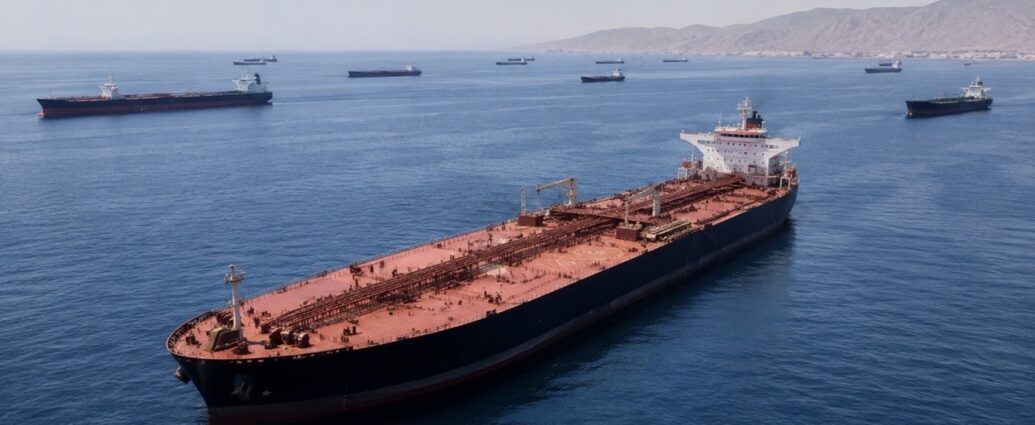
Iran has lost its hold on the waterway it shut down six months ago. More than 80% of the vessels that crossed the Strait of Hormuz over the past two weeks used the Omani route — a United Nations-authorized channel along Oman’s coast that Iran refuses to recognize — according to Kpler, which tracks ships by transponder signals and satellite imagery. That is better than eight out of every ten crossings going around the corridor Tehran insists all traffic must use. A month ago, Kpler was seeing essentially no ships on that Omani route at all.
“It increasingly looks like Iran has at least partially lost control of the strait,” said Homayoun Falakshahi, head of crude oil analysis at Kpler.
The shift costs Iran money. Tehran has declared the strait under its control and attacked dozens of ships that tried to cross along Oman’s northern coast, but most captains are now ignoring those demands and sailing anyway, counting on protection from the US Navy. With traffic moving away from the Iranian channel, Iran can no longer collect the tolls it was charging on passing ships in the spring. Those fees ran as high as $2 million per tanker, roughly a dollar for every barrel on board, collected through the Persian Gulf Strait Authority that Tehran set up after the war began — an agency Washington has since sanctioned.
There is a second reason the numbers may understate how much oil is actually moving. Kuwait, Saudi Arabia and the United Arab Emirates have been hiring the largest class of oil tanker to run out of the Persian Gulf and hand their cargo off to customers’ ships in the Gulf of Oman, past the danger zone, according to Andy Lipow of Lipow Oil Associates. To avoid being targeted, those tankers switch off their transponders, sometimes for weeks, and that dark traffic slips past tracking services. US Energy Secretary Chris Wright has said the seven-day average of oil leaving the strait has climbed to about 9 million barrels a day, well above what the trackers show.
None of this means the waterway is working normally. Before the war, roughly 130 ships a day passed through Hormuz carrying about a fifth of the world’s oil and liquefied natural gas. Kpler’s daily average for August so far is twelve. That is fewer than one ship for every ten that used to make the run.
For American households, the price is still being paid at the pump. The national average for regular gasoline was $4.06 a gallon on Monday, up 36% since the fighting started on February 28. Brent crude traded at $91.22 a barrel Tuesday, near a three-week high, with prices climbing for a third straight session.
What would actually settle the shipping lanes has not moved. The 60-day agreement signed in June expired Monday with no replacement, and President Donald Trump said Tuesday there are no talks underway or scheduled with Iran, adding that the naval blockade stays in force. Iran has been working with Oman on a joint mechanism to manage transits and says the two are close — and Trump has threatened to bomb Oman if it interferes.
So the strait is being decided ship by ship rather than at a negotiating table. Every captain who takes the Omani channel under American escort chips away at Iran’s claim to run the waterway, and at the toll money that claim was worth.
JBizNews Desk | New York
© JBizNews.com All Rights Reserved. Reproduction or distribution without written permission is prohibited.