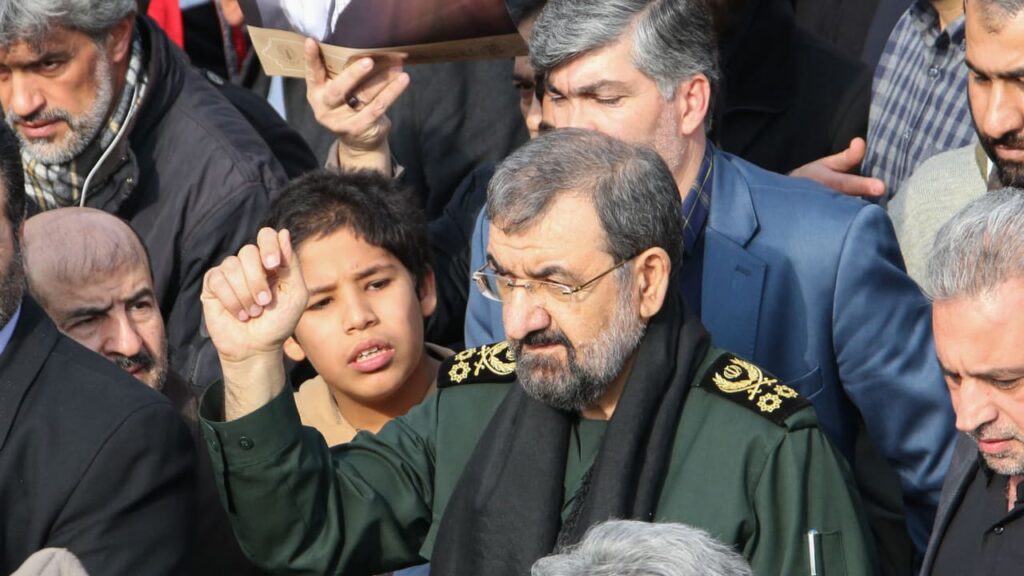
Photo: Atta Kenare / AFP / Getty (archive)
Iran’s security chief said Tuesday that Washington’s response to Tehran’s demands was “not convincing” and tied reopening the Strait of Hormuz to the United States addressing and fulfilling seven Iranian conditions. The statement set out Iran’s position in the negotiations; it did not announce an agreement or establish that talks had ended.
Mohsen Rezaei, secretary of Iran’s Supreme National Security Council, made the comments on X, according to Israel National News. Reuters separately reported the same remarks in a dispatch carried by Al Arabiya.
“America’s response to Iran’s rights and demands was not convincing, and they must fully and explicitly address Iran’s seven conditions and act upon them,” Rezaei wrote, as quoted by Israel National News. “Only in this case will the Strait of Hormuz be reopened,” he added.
Tehran links shipping access to broader demands
Iran’s reported demands extend beyond navigation through Hormuz. Anadolu listed a regional ceasefire, the release of frozen Iranian assets, relief from sanctions on the oil sector, an end to the U.S. naval blockade, war reparations, withdrawal of U.S. forces and an end to threats and interference.
Israel National News also reported that Tehran wants a permanent end to the war rather than a temporary ceasefire, with an end to hostilities including in Lebanon and Gaza. These are reported Iranian demands, not terms Washington has publicly accepted in the accounts cited here.
The distinction matters for businesses watching the waterway: a negotiating proposal is not a reopening notice. Rezaei’s comments did not provide an agreed date, operating arrangements or confirmation that normal commercial passage would resume.
Diplomacy continues despite public differences
Reuters reported that the two sides were trying to reach a deal to resume negotiations and reopen Hormuz. Anadolu placed Rezaei’s remarks amid Qatari mediation efforts. Those accounts point to continuing diplomacy, even as Tehran publicly criticized the American response.
The specific contents of Washington’s response were not set out in Rezaei’s remarks as reported by the sources. It is therefore not possible from that statement alone to determine which differences have narrowed, which remain unresolved or whether either side’s next proposal will change.
Hormuz links the Persian Gulf with the Gulf of Oman and is a major route for seaborne oil exports. Uncertainty over access matters to energy buyers, shipowners and businesses exposed to fuel and transport costs. Tuesday’s statement offers no confirmed timetable on which they can plan a return to normal passage.
The immediate development is a public Iranian condition, not a completed settlement: Tehran says Washington must meet its demands before Hormuz reopens. Whether mediation produces mutually accepted terms remains unresolved.
JBizNews Desk | Middle East
© JBizNews.com. All rights reserved. Unauthorized reproduction or redistribution is strictly prohibited.