The world is generally pleased that the United States and Iran have reached an agreement to end the latest round of fighting. Markets rallied. Oil prices fell. Politicians and businesses expressed relief.
Israel’s reaction was notably different. The stock market declined when the deal was announced. Politicians across the political spectrum voiced concern, and in some cases outright alarm.
The deal’s long-term fate is uncertain. Its strategic lesson is not.
For the United States, Iran is one foreign-policy challenge among many. For Israel, it is the central strategic threat. The latest agreement underscores a reality no Israeli government can ignore: no outside power will ever care as much about confronting the Islamic Republic as Israel does.
But that does not mean Israel should respond by depending only on itself. Quite the opposite. Iran’s greatest strategic achievement was not its missile arsenal or even its nuclear program. It was learning how to multiply its power through others. By cultivating partners and proxies across the region, Tehran amplified its influence while reducing its own costs.
If the confrontation with the Islamic Republic is likely to last decades rather than years, Israel needs a strategy built on the same principle. For too long, Israel has approached Iran primarily as a military problem.
Iran, by contrast, approached Israel as a political, regional, and strategic problem. That difference helps explain why Tehran was able to project influence so effectively despite its economic weakness and international isolation. Israel’s response must be equally comprehensive.
The war inflicted substantial damage on Iran, but it did not solve Israel’s Iran problem. As long as the Islamic Republic remains in power, Israel will continue to face a hostile regime committed to rebuilding its capabilities and pursuing confrontation.
If the source of the threat is the regime itself, Israel needs a political strategy aimed at helping an alternative emerge. Today, the Iranian opposition remains fragmented, underfunded, and organizationally weak.
Numerous opposition groups exist, but none possess the infrastructure, communications networks, financial resources, or organizational capacity necessary to seriously challenge the regime.
At the same time, Israel should be far more disciplined in how it approaches the issue. Public discussions of regime change often undermine the very forces they seek to support by allowing Tehran to portray opponents as foreign agents.
The most effective support is often the least visible.
Second, Israel must stop thinking about partnerships primarily through a Western lens.
Risk of overdependence on the US
America will remain Israel’s indispensable strategic partner. Yet recent years have demonstrated the risks of excessive dependence on any single country. The answer is not distancing Israel from the West but broadening Israel’s horizons beyond it.
India offers scale, technology, and industrial capacity. The Abraham Accords states, particularly the UAE, provide valuable regional partnerships.
But Israel needs to be more ambitious and look farther east. Countries such as Japan, South Korea, Taiwan, and Singapore are investing heavily in defense and advanced technologies while facing growing security challenges of their own. Closer cooperation would strengthen Israel’s resilience while reducing dangerous dependencies.
The third lesson comes from Tehran itself. Iran’s success was never primarily about ideology. It was about leverage. The regime repeatedly found ways to turn local grievances, regional conflicts, and shared interests into strategic assets.
For decades, Tehran extended its reach through a network of aligned actors stretching from Lebanon to Yemen.
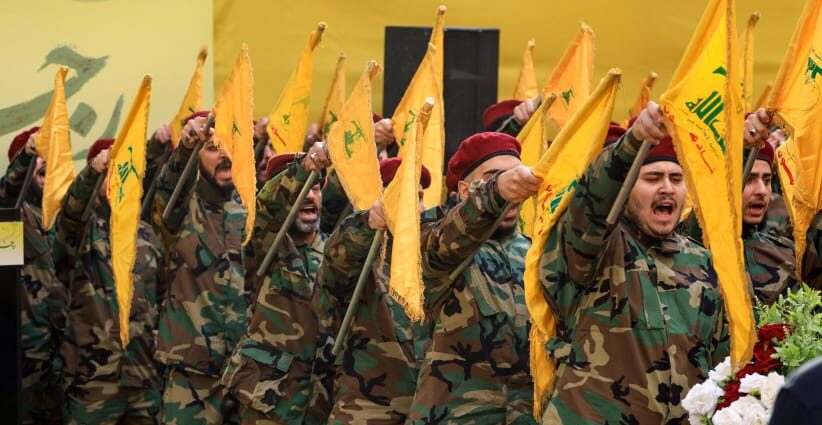
Hezbollah, Hamas, the Houthis, Iraqi militias, and Syrian allies enabled Iran to pressure its adversaries while limiting its own exposure. The result was a regional system that forced Israel to confront threats on multiple fronts simultaneously.
Israel should not replicate Iran’s proxy model. But across the region are governments, communities, and security actors whose interests overlap with Israel’s objective of limiting Iranian influence.
In Lebanon, many seek freedom from Hezbollah’s dominance. In Yemen, the internationally recognized government continues to fight the Houthis. In Iraq, many oppose militia control and Iranian interference.
These actors do not need to become pro-Israel. They need only share an interest in weakening the Islamic Revolutionary Guard Corps and the system it has built.
By helping strengthen such partners where appropriate – with intelligence, training, communications capabilities, or financial assistance – Israel can force Tehran to devote more attention to defending its regional position and less to threatening Israel.
Finally, none of this will matter unless Israel strengthens itself.
The coming years will require greater defense spending, stronger supply chains, larger military manpower pools, and a more productive economy capable of sustaining a prolonged competition. They will require difficult political decisions and a renewed focus on national cohesion.
The challenge facing Israel is not simply Iran’s missiles, nuclear ambitions, or proxies. It is learning to compete politically and strategically, not just militarily.
This will require a different kind of statecraft. Israel has built world-class military and intelligence institutions, but competing with Iran’s network strategy demands more than battlefield success.
It requires understanding local political dynamics, identifying potential partners, and cultivating relationships that advance shared interests. Building that capacity may prove essential to translating military success into lasting strategic advantage.
Tehran built its influence through patience, political organization, partnerships, and networks. Israel’s response must be equally sophisticated.
The next phase of this struggle will not be won solely by the country with the strongest military. It will be won by the country that best mobilizes a network of shared interests.
Israel has already demonstrated that it can strike Iran. The harder task is building the coalition needed to outlast it.
Wars are won by armies. Long struggles are won by strategy.