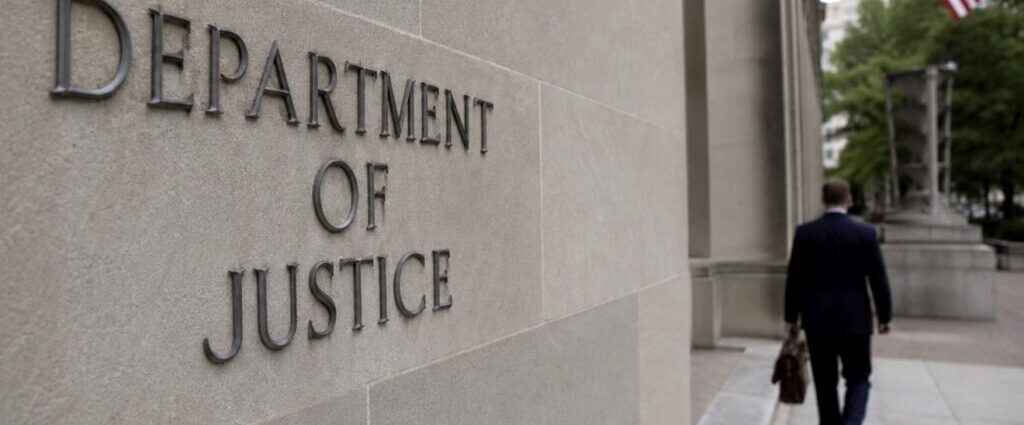
WASHINGTON — The U.S. Department of Justice’s changing approach to corporate criminal enforcement moved into the spotlight this week after new reporting showed federal prosecutors are increasingly resolving major corporate investigations without bringing criminal charges against companies themselves. Instead, the department is emphasizing voluntary self-disclosure, corporate cooperation, compliance reforms, financial penalties, and prosecution of the individual executives and employees responsible for wrongdoing. The shift reflects the Department’s 2026 Corporate Enforcement Policy, which is now becoming evident in recent enforcement decisions and represents a significant change in how the federal government pursues white-collar crime.
The policy marks one of the most consequential changes to federal corporate enforcement in years. Rather than seeking guilty pleas from companies in many cases, prosecutors are increasingly using deferred prosecution agreements, non-prosecution agreements, and, where appropriate, declinations when businesses voluntarily report misconduct, preserve evidence, fully cooperate with investigators, strengthen internal compliance programs, and promptly remediate identified problems.
Justice Department officials say the objective is to direct prosecutorial resources toward the individuals who committed criminal acts while minimizing unnecessary harm to innocent employees, retirees, shareholders, suppliers, and customers who can be affected when an entire corporation receives a criminal conviction.
Under the department’s nationwide policy, companies that voluntarily disclose misconduct before it becomes publicly known, cooperate fully throughout an investigation, and demonstrate meaningful remediation may qualify for a presumption that criminal charges against the corporation will not be pursued unless significant aggravating factors exist. Department leadership has said the policy is intended to create consistent national standards while encouraging businesses to build stronger compliance systems before misconduct escalates.
The practical effects are becoming increasingly visible. Several recent corporate investigations have concluded through negotiated resolutions requiring substantial financial penalties, enhanced compliance obligations, independent monitoring where appropriate, and admissions of misconduct without criminal convictions against the companies themselves. At the same time, federal prosecutors continue pursuing criminal cases against executives and employees whenever evidence supports individual liability.
Justice Department leadership has repeatedly stated that corporations act only through people and that prosecuting individuals provides a stronger deterrent than imposing criminal convictions on organizations whose shareholders and employees may have had no involvement in the misconduct. Officials have also emphasized that corporate cooperation does not shield culpable executives from criminal prosecution.
Supporters of the policy argue that the approach encourages companies to identify wrongdoing sooner, self-report violations, preserve evidence, compensate victims more quickly, and strengthen compliance programs without fearing that voluntary cooperation will automatically result in criminal indictment. They also contend that avoiding unnecessary corporate convictions can reduce disruption to workers, retirement funds, customers, and local economies.
Critics, however, argue that greater reliance on deferred prosecution and non-prosecution agreements could weaken corporate accountability if companies conclude they can avoid criminal convictions through cooperation after misconduct has already occurred. Some legal observers also point to the declining number of corporate criminal prosecutions over recent years as evidence that enforcement priorities are shifting.
For corporate America, the message is becoming increasingly clear. Businesses that invest in strong compliance programs, identify potential violations early, voluntarily disclose misconduct, and cooperate fully with federal investigators are more likely to receive favorable consideration under the Justice Department’s enforcement framework. Companies that fail to do so remain subject to the full range of criminal prosecution available under federal law.
JBizNews Desk | Washington
© JBizNews.com All Rights Reserved. Reproduction or distribution without written permission is prohibited.