The primary source for this development was a July 17, 2026 Truth Social statement by President Donald Trump, in which he said the United States would hold Canada responsible for wildfire smoke drifting across the border and suggested the economic cost of the pollution should be added to tariffs already imposed on Canadian imports.
Trump accused Canada of failing to properly manage its forests and brush, calling the recurring smoke “dangerous” and “totally unacceptable.” He said the cross-border pollution has become an annual problem that imposes billions of dollars in economic costs on the United States and indicated he planned to speak directly with Canadian Prime Minister Mark Carney regarding the issue.
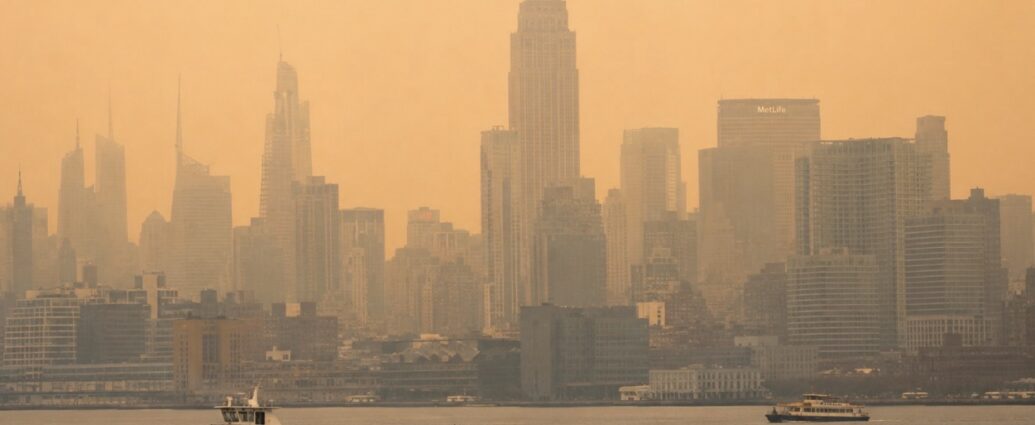
The comments come as smoke from hundreds of active Canadian wildfires spread across much of the Midwest and Northeast, triggering air-quality alerts affecting more than 100 million Americans. Health officials in numerous states advised residents, particularly children, older adults, and those with respiratory conditions, to limit outdoor activity as air quality deteriorated.
The proposed tariff response would represent an unusual expansion of U.S. trade policy by linking environmental impacts from another country to import duties. While Trump framed the proposal as compensation for pollution-related economic damage, no formal executive action or tariff order had been issued as of Friday evening. Any new tariffs would likely require additional legal and administrative steps before taking effect.
Canadian officials continue to battle one of the country’s most severe wildfire seasons in recent years, with hundreds of active fires burning across multiple provinces. Emergency crews have carried out evacuations in several communities while smoke has repeatedly crossed into the United States under prevailing weather patterns. Provincial leaders have defended Canada’s firefighting response and called for continued cross-border cooperation rather than political confrontation.
The latest dispute adds another layer to ongoing trade tensions between Washington and Ottawa, with the White House signaling that environmental consequences from Canadian wildfires could become part of broader U.S.-Canada economic negotiations if the administration moves forward with additional tariff measures.
JBizNews Desk | Washington, D.C.
© JBizNews.com All Rights Reserved. Reproduction or distribution without written permission is prohibited