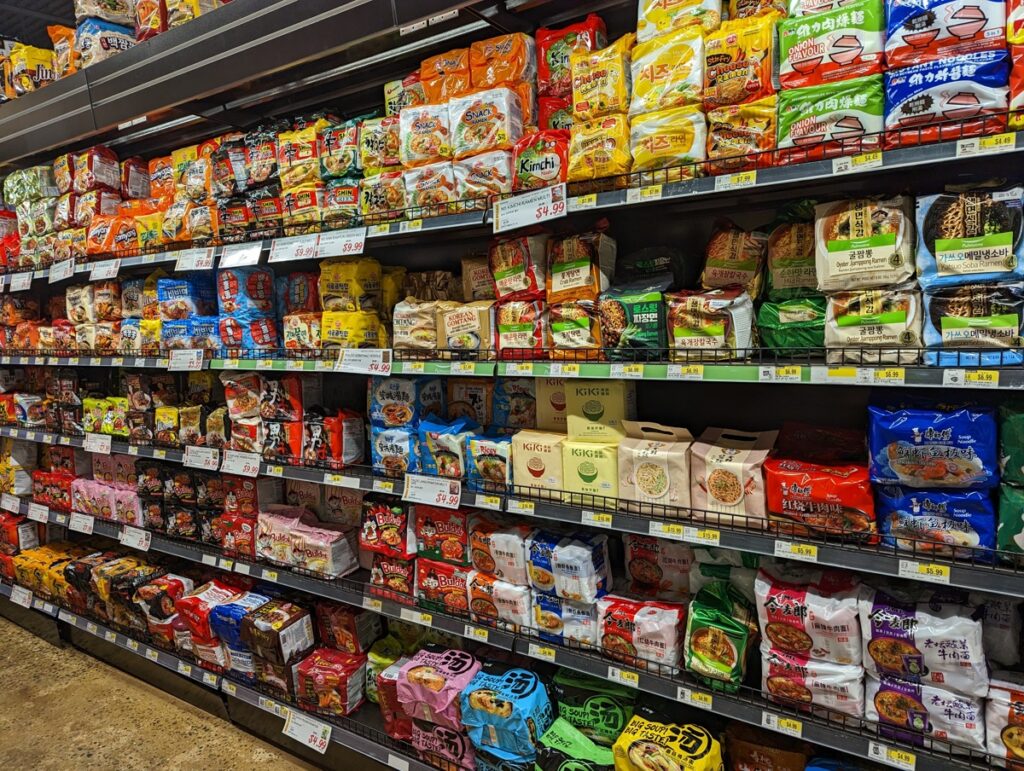
Korean noodle products on a store shelf. Archive photo: Reconrabbit / Wikimedia Commons (CC0)
Korean food manufacturers seeking wider distribution in North America and Europe should consider OU kosher certification as part of their export strategy, Steve Hong, a certification sales agent for OU Kosher, told The Korea Times in an interview published Wednesday in Korea.
Hong argued that the label has commercial value beyond shoppers who follow Jewish dietary laws. He said familiarity with OU certification among major retailers can help Korean producers introduce products to mainstream distribution channels. Those are Hong’s assessments of the label’s market role, not a guarantee that certification will secure shelf space or sales.
The main gap, he said, is awareness among small and medium-size Korean food companies. While larger exporters have already pursued certification, many smaller producers still see kosher labels only as a religious requirement rather than a potential part of overseas market access, according to the interview.
Certification requires a production review
The Korea Times described a process in which a rabbinical field inspector examines ingredients and production arrangements, including the separation of meat and dairy. Reports then go to OU headquarters for review. Hong said the assessment procedure is the same whether a facility is targeting North American or European markets.
For manufacturers, the interview points to a practical export-planning question: whether certification fits their ingredients, production process and intended retail customers. It should be considered alongside distributor requirements rather than treated as a substitute for them.
Hong said his goal is to introduce more Korean food firms to OU certification and help them pursue markets beyond Korea.
JBizNews Desk | New York
© JBizNews.com. All rights reserved. Unauthorized reproduction or redistribution is strictly prohibited.