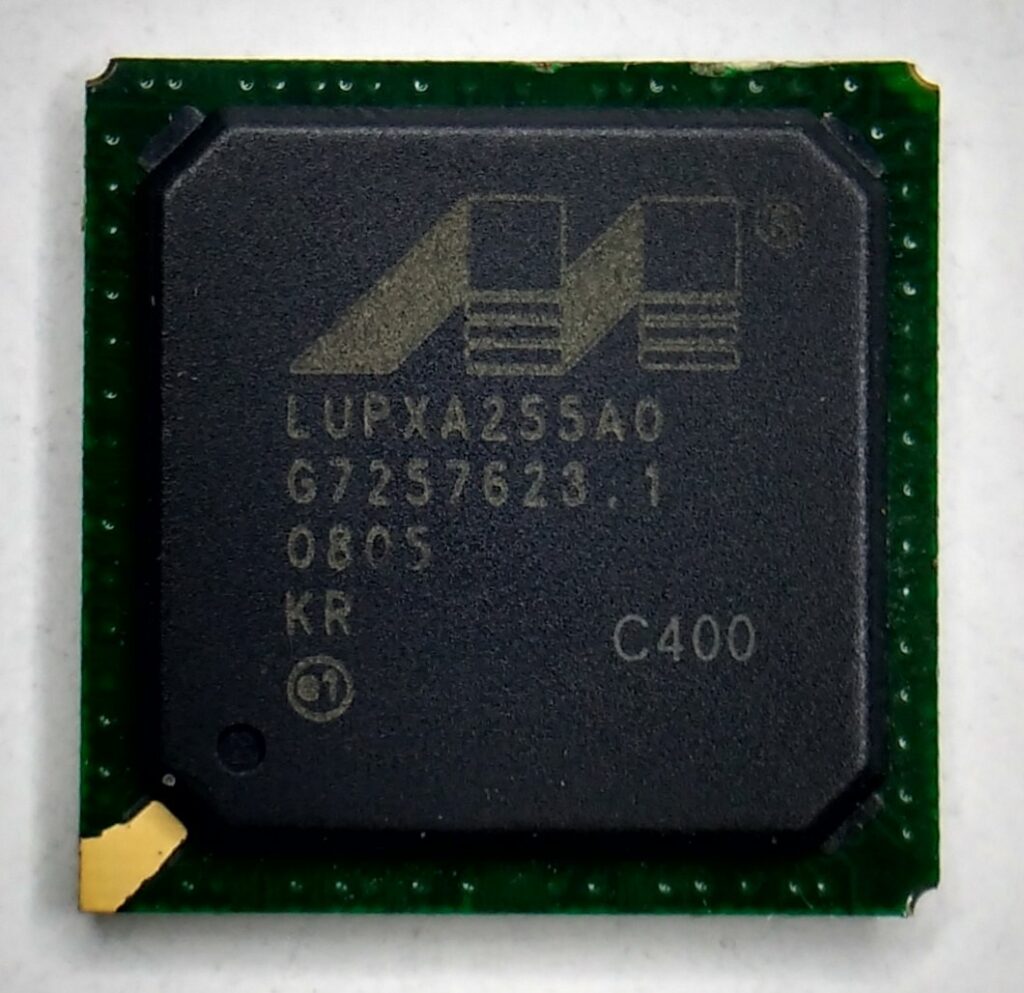
Photo: ZyMOS / Wikimedia Commons, CC BY-SA 4.0
Eran Heruti, chief executive of Marvell Israel, said in an interview published Sunday that the chipmaker’s forecasts are anchored in binding customer commitments rather than market enthusiasm, and that demand for artificial intelligence infrastructure now exceeds supply by several multiples.
Speaking at the “Seeing Beyond the Trend” conference, Heruti, who also serves as vice president of engineering for the company’s Cloud Switch business unit, addressed last week’s sharp selloff in chip stocks, in which the sector index fell 12 percent and Marvell shares dropped 16.4 percent in a single day.
“We report a forecast based on customer commitments, actual orders,” Heruti said. “What characterizes the market is that demand exceeds supply by several multiples.” He attributed the decline in part to uncertainty surrounding the U.S. midterm elections and what they may mean for the scale and timing of hyperscaler capital spending on data centers and AI.
Revenue rising on data center demand
Heruti cited company revenue of $8.2 billion last year, of which $6.1 billion came from the data center business, and said he expects about $12 billion this year and $20 billion next year, of which $18 billion would come from data centers. He stressed that the trajectory reflects a deliberate, decade-long strategic build rather than riding a passing wave.
Marvell, an American company that has operated in Israel since the 2000s and acquired the Israeli chip startup Galileo at the height of the second intifada, develops custom chips, largely for connectivity and for components tailored to hyperscalers. It currently trades at a market value of about $127 billion.
AI will deliver, pace may change
“I have no doubt that the AI revolution will realize its technological potential,” Heruti said, placing it in a line of past transformations from personal computing through the internet, mobile, data and cloud. He acknowledged, however, that regulation of AI technology could affect the pace at which hyperscalers invest, which would directly affect the company’s revenue. “I am convinced the projected capital spending will materialize, but the timing data can change,” he said.
On concerns that the sector is in a bubble, Heruti noted that operating profit is positive at most players, that valuations are growing in line with revenue growth, and that net debt relative to EBITDA remains low. “The market judges them by very strict financial models, and so far they have met them successfully,” he said.
The optical bet
Heruti described optical interconnect technology as the strategic basis for Marvell’s agreed acquisition of Lumentum. Training and running AI models, he explained, requires linking tens of thousands to hundreds of thousands of processors, and the connections between them are a decisive component of performance. Copper-based connectivity is limited in distance, he said, and the penetration of optical technology is gaining momentum.
In the AI infrastructure chip market’s three categories of computing, memory and connectivity, he said, Marvell becomes the leading connectivity player following the deal, though it is “not yet in a position to fight Nvidia.” He added that Nvidia chief Jensen Huang had complimented Marvell’s CEO, calling it “the next trillion-dollar company.”
Asked why Israel has not produced a thriving domestic chip industry, Heruti pointed to the hundreds of millions of dollars in sustained investment required and the limited ability to keep pace with hyperscaler spending, while praising local talent and singling out Mobileye and Q.ai, which was sold to Apple, as exceptional success stories.
JBizNews Desk | Tel Aviv
© JBizNews.com. All rights reserved. Unauthorized reproduction or redistribution is strictly prohibited.