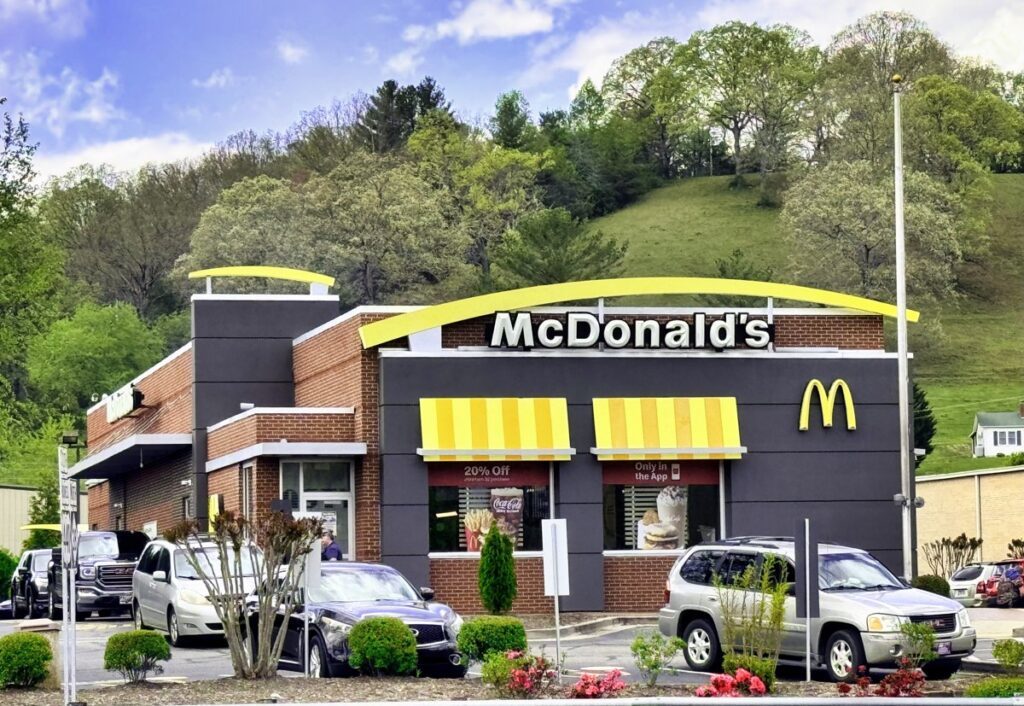
Photo: Harrison Keely / CC BY 4.0 (archive)
McDonald’s faces a new congressional demand to explain how artificial intelligence helps shape its menu prices, with Senator Elizabeth Warren and four House Democrats asking CEO Chris Kempczinski about customer data, franchisee independence and antitrust safeguards in a November 2 letter reported Tuesday.
The lawmakers want answers by November 16, according to Reuters reporting published by the New York Post. Their questions add political scrutiny to a pricing system already challenged in consumer lawsuits. They do not establish that McDonald’s has illegally coordinated prices or charged individual customers different amounts.
Warren, a Massachusetts Democrat, signed the letter with Representatives Greg Casar of Texas, Becca Balint of Vermont, Jesus Garcia of Illinois and Mary Gay Scanlon of Pennsylvania. The group questioned whether the company’s tools could push prices higher or reduce competition between independently operated restaurants.
“We are concerned that McDonald’s may be using AI to squeeze consumers into paying higher prices,” the lawmakers wrote in the letter shared with Reuters. They also raised the possibility of coordination between franchisees that should compete with one another.
What the lawmakers want to know
The questions cover whether information about individual customers in McDonald’s loyalty program feeds into the pricing tools, how the company encourages franchisees to use its recommendations, and what antitrust review preceded the system’s rollout. Those are requests for information, not confirmed descriptions of how personal data are used.
The letter follows a September 29 Reuters investigation describing machine-learning software that recommends a price for each menu item at each restaurant. Reuters reported that the recommendations consider an estimate of how much a location’s typical customers are willing to pay, alongside other inputs.
That distinction matters for diners: a tool that recommends different prices at different restaurants is not necessarily a system that gives two people different prices for the same item at the same location. The lawmakers are asking whether loyalty-program data enter the process; McDonald’s has previously said its recommendations are not based on individual customers.
Three franchisees told Reuters for its September report that the recommendations had increased price differences between nearby restaurants. Five owners told the news agency they felt pressure to use the tools. McDonald’s disputed the characterization of its practices and said its franchisees remain free to choose their own prices.
McDonald’s says owners make the final decision
Reuters said McDonald’s did not respond to its request for comment on the new letter. In statements about the earlier reporting, the company described its pricing portal as a tool rather than a mandate and said recommendations help restaurant owners make informed business decisions. It called the reporting’s claims speculative and uninformed.
The company’s position is that costs and local markets vary, including between restaurants only a few miles apart. Its defense separates central analysis and recommendations from the final pricing decisions made by franchisees.
Two consumer class-action lawsuits filed in federal court in recent weeks allege that a centralized algorithmic system unlawfully coordinates prices across franchised and company-owned restaurants, according to Tuesday’s Reuters report. Those allegations remain allegations, separate from the lawmakers’ inquiry.
In its response to the first case, covered by Reuters on October 5, McDonald’s said: “AI does not set the price of a Big Mac or any other menu item.” It said franchisees make their own pricing decisions and that pricing analytics are widely used across industries.
For customers, the dispute concerns how menu prices are recommended and whether restaurants remain genuine competitors. For franchisees, it concerns how much freedom they retain when corporate tools suggest a price. The next stated milestone is the lawmakers’ November 16 response deadline, not a court ruling or a finding of wrongdoing.
JBizNews Desk | Washington
© JBizNews.com. All rights reserved. Unauthorized reproduction or redistribution is strictly prohibited.