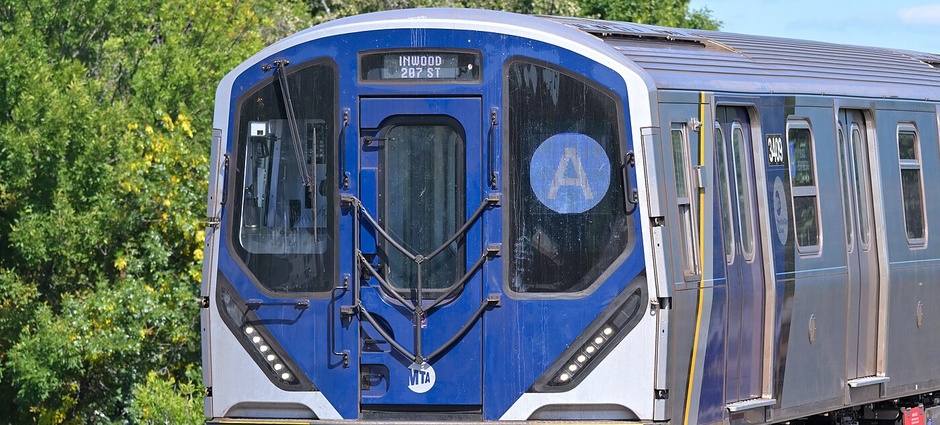
Archive: August 2025. Photo: 4300streetcar / Wikimedia Commons, CC BY 4.0. Cropped.
The Metropolitan Transportation Authority proposed a $22.9 billion operating budget for 2027 on Wednesday that still leaves a $58 million gap, even after projected savings and a one-time surplus carried over from this year. Its financial plan also retains proposed fare and toll increases, but the board has not approved new prices or an implementation date.
The November financial plan projects $676 million in savings for 2027, $26 million more than forecast a year earlier. A projected $401 million surplus in 2026, mainly from Federal Emergency Management Agency reimbursement, would help reduce next year’s shortfall.
Fare increases remain assumptions, not approved prices
The plan assumes fare and toll adjustments in 2027 and 2029 designed to increase revenue by 4%. That is a revenue target, not an announcement that every subway fare, bus fare, rail ticket or bridge toll will rise by the same percentage.
The proposed increases are not new to Wednesday’s plan. The MTA’s July financial plan already included 4% fare and toll increase assumptions for those years. The November budget documents model fare and toll yield increases in March 2027 and March 2029, but the proposed adjustments remain subject to MTA Board approval. Riders do not yet have approved new prices or a final start date from this proposal.
Health care and energy costs widen future gaps
The MTA says health care, energy and claims expenses are increasing faster than its revenues. It projects active-employee health care costs to grow an average of 6.7% a year and retiree health care costs to rise 6.4% annually.
Labor-related costs account for 59% of the proposed 2027 budget, and debt service accounts for 14%, according to the agency. Despite planned savings reaching $800 million in 2030, the MTA projects its annual deficit will approach $1 billion that year.
Revenue expectations have also weakened. The agency lowered projected toll revenue by $145 million and farebox revenue by $257 million in its November plan compared with earlier forecasts, despite continued post-pandemic ridership growth.
The savings program includes standardized maintenance work, revised train-crew schedules, health care expense audits, preventive maintenance and shared administrative services. For the remaining 2027 gap, the agency says it plans to identify further efficiencies and reduce vacancies.
For commuters and employers across the region, the plan sets out the financial pressures behind possible higher travel costs. It does not settle what individual riders or drivers would pay. Those decisions still require board action.
JBizNews Desk | New York
© JBizNews.com. All rights reserved. Unauthorized reproduction or redistribution is strictly prohibited.