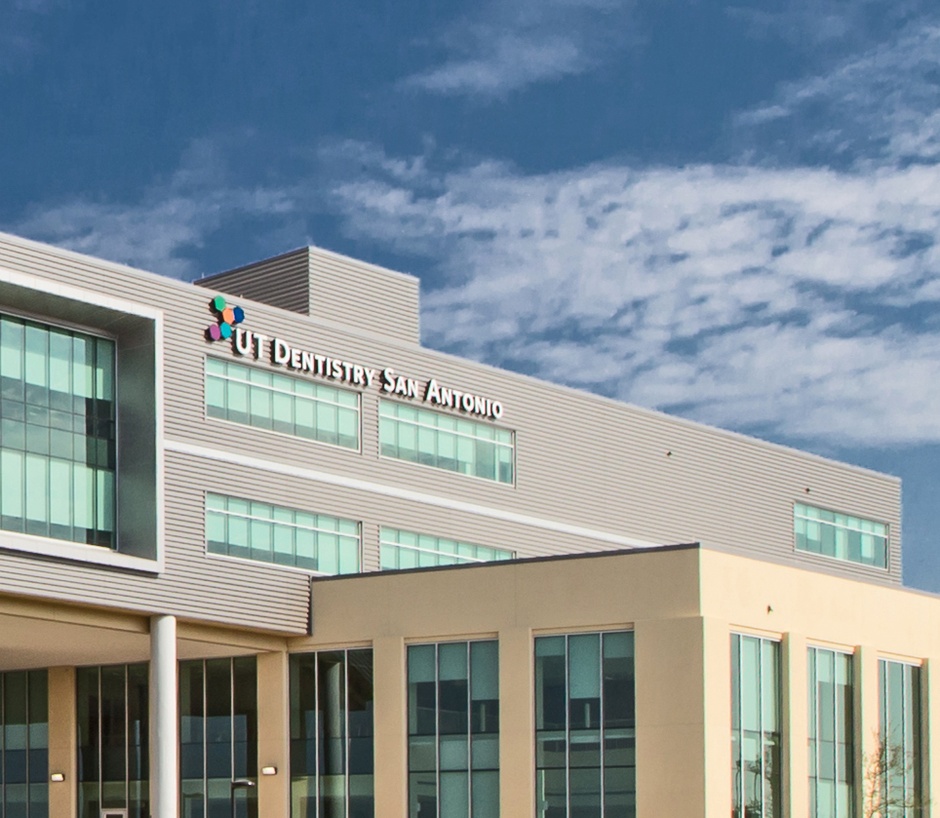
File photo: UT Dentistry’s Center for Oral Health Care & Research in San Antonio, photographed in 2015. Photo: Floresr19 / Wikimedia Commons / CC BY-SA 4.0. Cropped and resized. Adapted image: CC BY-SA 4.0.
A San Antonio dental researcher has received a five-year renewal of federal funding to study how the body forms dentin, the hard tissue beneath tooth enamel, and how that process might eventually help repair damaged teeth.
Shuo Chen, a professor of developmental dentistry at the University of Texas at San Antonio Health Science Center, will continue the work through an R01 research grant from the National Institute of Dental and Craniofacial Research, part of the National Institutes of Health.
The university announced the renewal on Nov. 12. It did not disclose the award amount.
Chen's team will use animal models to investigate the biological signals involved in dentin formation. A fully functional biological replacement tooth remains a long-term goal, rather than a treatment announced with the grant.
How teeth build their inner structure
The research centers on a protein called dentin sialophosphoprotein, or DSPP, which plays an important role in dentin formation. Changes in the gene that produces it are associated with inherited disorders that can leave teeth discolored, misshapen or without roots.
The body processes DSPP into smaller protein components. Chen's work focuses on one of them, dentin sialoprotein, and on how parts of that protein send signals that influence the behavior of cells involved in building tooth tissue.
The renewed project builds on earlier work examining links between those signals and blood vessel development. Blood vessels inside the dental pulp, the living tissue in the center of a tooth, supply oxygen and nutrients that help keep the tooth healthy.
By studying those connections, the team hopes to better understand the conditions that support dentin formation and tissue repair.
The longer-term aim is to use the body's own biological processes to restore tooth structure and function. For now, the grant supports further research into how those processes work.
Source: UT Health San Antonio
© JBizNews.com. All rights reserved. Unauthorized reproduction or redistribution is strictly prohibited.