A 9-year-old boy died on Thursday after contracting encephalitis as a result of Naegleria Fowleri, also known as the ‘brain-eating amoeba,’ the Health Ministry announced.
The ministry first announced that the boy had been hospitalized with swelling in his brain and was subsequently sedated and ventilated in intensive care at Rambam Medical Center on September 6.
A sample was sent to the Health Ministry laboratory, which confirmed the cause as the amoeba the night before.
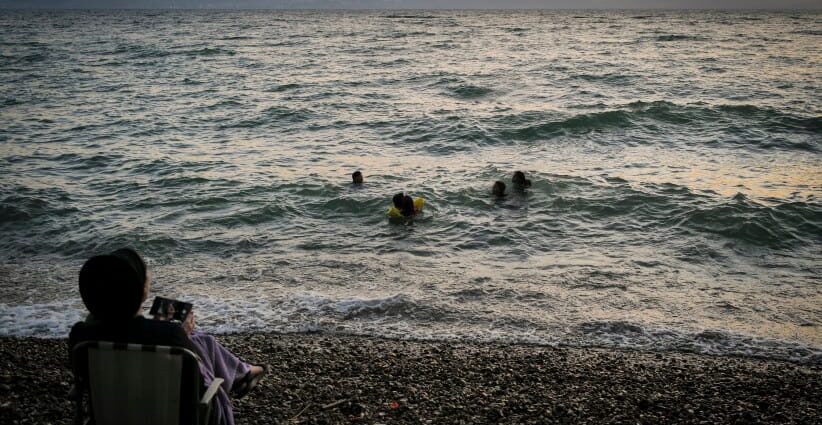
According to the ministry, an investigation found that the boy had been swimming at Kursi Beach in the Kinneret (Sea of Galilee) about a week before his hospitalization.
The microscopic amoeba is found in fresh and warm water sources and may cause an infection of the central nervous system if water containing the amoeba enters through the nose and the amoeba reaches the brain.
The ministry emphasized that the infection, while having a high mortality rate, is extremely rare and that it cannot be contracted from drinking the water or from another person.
There have been fewer than 500 cases worldwide, two of which were diagnosed in the US last year, and three of which were diagnosed in Israel in recent years.
Health Ministry advises public take care to mitigate risk while bathing in fresh, warm water
To reduce risk while bathing in fresh, warm water, it is recommended to avoid getting water in the nose as much as possible, especially when jumping, diving, or otherwise submerging one’s head in the water.
The Health Ministry recommends closing one’s nose or using a nose plug.
Additionally, avoid digging or stirring the bottom in shallow water, where the amoeba may gather in higher concentrations.
If symptoms, including fever, pain, significant headaches, nausea, or vomiting, especially combined with neck stiffness, confusion, unusual drowsiness, or a change in consciousness, appear, the public is urged to seek immediate medical attention and mention their water exposure.
Due to the amoeba’s presence in warm water, swimming sports events have been postponed until the water temperature drops below 24 degrees, at which point the proliferation of the amoeba decreases significantly.