
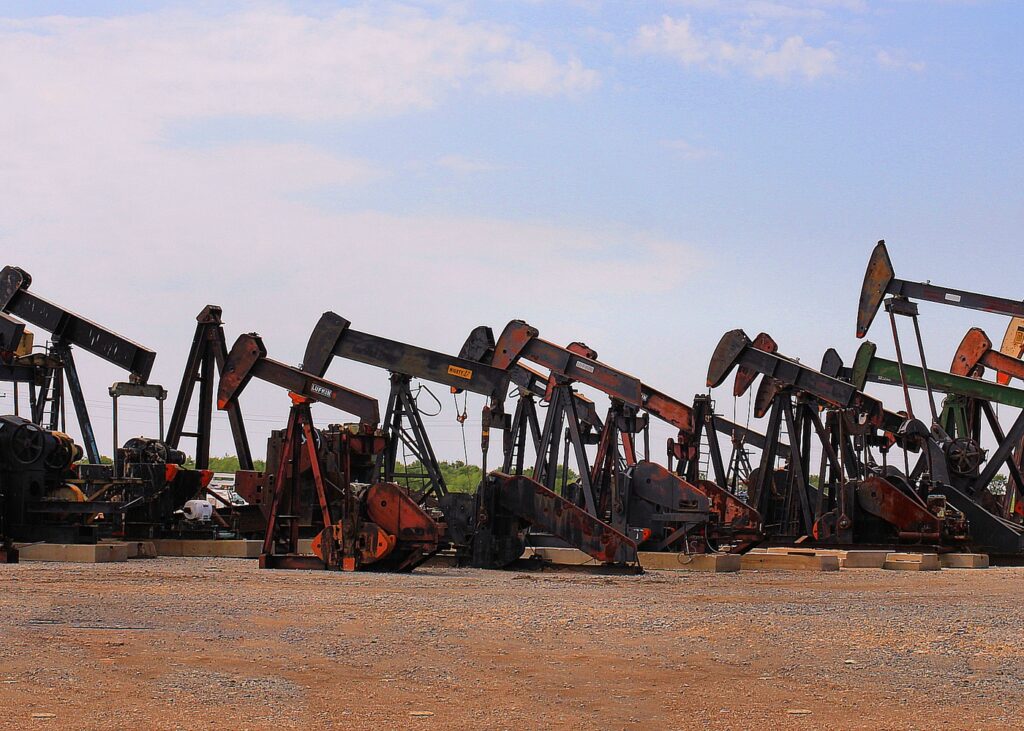
Photo: Larry D. Moore / CC BY 4.0 (archive photo)
U.S. crude futures fell below $88 a barrel Wednesday afternoon, extending a sharp selloff as energy markets weighed the election result, uncertainty over the war with Iran and U.S. supply data. The decline lowers a benchmark for fuel costs, but it is not an immediate matching cut in what drivers or businesses pay.
December West Texas Intermediate crude traded at $87.95 a barrel, down $8.14, or 8.47%, from the previous settlement of $96.09, in CME Group’s quote stamped 12:41:59 p.m. Eastern on November 4. The data are delayed at least 10 minutes; the reading was viewed around 12:51 p.m. These are intraday futures prices, not a new settlement or a retail fuel price.
The contract traded between $87.13 and $97.15 in the same CME table, showing the size of the session’s swing.
Election results do not settle the supply question
Democrats won control of the House and Senate in the midterm elections, but the result does not itself end the war or restore oil flows. Investors are watching what the change in Congress means for Washington’s next steps, alongside diplomatic efforts to end the conflict.
Qatar has stepped up mediation, but Iran and the United States remained far from an agreement on Tuesday, Reuters reported in a CNBC report. The report also described limited U.S. strikes on Iranian missile positions on Qeshm Island. Continuing military activity and talk of diplomacy leave traders facing competing signals rather than a completed peace deal.
For energy buyers, that means a lower morning quote should not be mistaken for certainty about supply. A company’s fuel budget depends on the prices it actually locks in, its contracts and delivery costs, not only the direction of a futures screen during the trading session.
Government inventories differ from the industry estimate
Commercial U.S. crude stocks fell about 900,000 barrels to 409.8 million barrels in the week ended October 30, OilPrice.com reported, citing the government’s weekly EIA release. It reported gasoline stocks down about 200,000 barrels and distillates down 3.6 million barrels, leaving distillates about 13% below their five-year average.
Those figures differ from the earlier American Petroleum Institute estimate of a 5.27 million-barrel crude draw reported by Reuters. The private industry survey and government series are separate measures. Neither a crude draw nor a single futures quote settles the wider supply outlook.
What it means for households and businesses
Crude oil is the largest component of the retail gasoline price, according to the EIA’s explanation. Taxes, refining, distribution and marketing also contribute. A drop in crude therefore does not translate dollar-for-dollar, or immediately, into cheaper gasoline at a nearby station.
Delivery companies, retailers and other fuel-intensive businesses have the same reason to watch the next steps rather than one quote: sustained lower energy costs can ease expenses, but the benefit depends on refined-fuel prices and purchasing arrangements. The key test is whether lower crude prices persist and reach the refined-fuel market.
JBizNews Desk | New York
© JBizNews.com. All rights reserved. Unauthorized reproduction or redistribution is strictly prohibited.