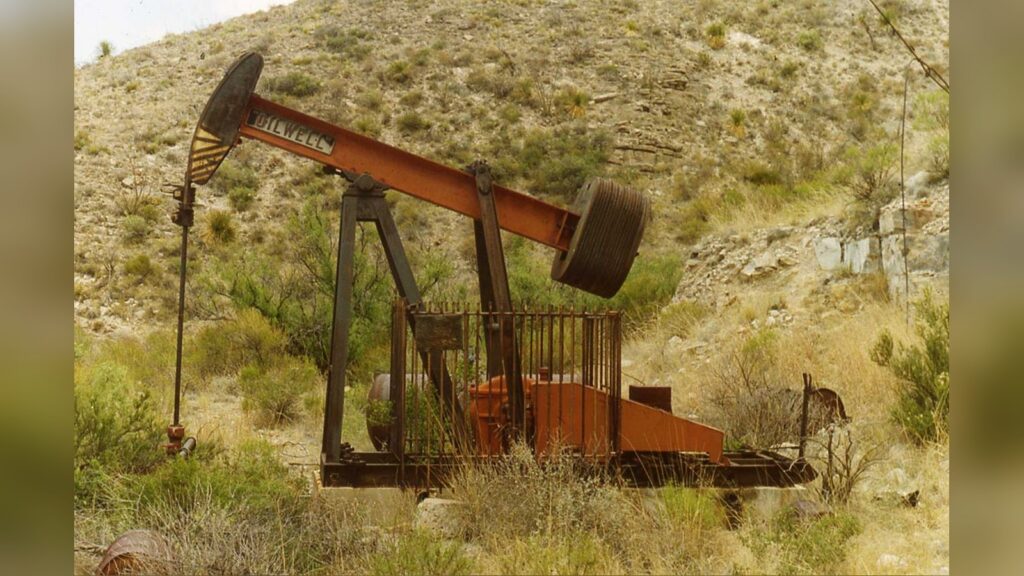
National Park Service / Public domain
NEW YORK, New York – Oil futures extended their Monday decline on November 9, with December West Texas Intermediate at $87.87 a barrel, down 3.26%, and CME’s January Brent Last Day Financial contract at $94.42, down 3.97%, in delayed exchange quotes checked around 10:40-10:41 a.m. Eastern. The slide followed President Donald Trump’s conditional comments on Sunday that renewed attacks on Iran were unlikely if negotiations made progress; the price data alone do not establish what caused the move.
The December 2026 WTI contract, CLZ6, was quoted at $87.87, down $2.96, or 3.26%, from its prior settlement of $90.83 on CME. These are futures prices for a specified delivery month, not a nationwide retail gasoline price.
CME’s January 2027 Brent Last Day Financial contract, BZF7, stood at $94.42, down $3.90, or 3.97%, from a prior settlement of $98.32 on the contract page. This is CME’s financial Brent contract, not a separate live ICE Brent quotation.
CME labels these figures as delayed by at least 10 minutes. The WTI contract row was updated at 9:30:59 a.m. Central, or 10:30:59 a.m. Eastern; the Brent financial contract row at 9:31:59 a.m. Central, or 10:31:59 a.m. Eastern. The pages were checked around 10:40-10:41 a.m. Eastern. These are intraday snapshots, not real-time prices or final settlements.
In his Sunday CNN interview, Trump made his assessment conditional on Iran signing a strong agreement. CNN’s original interview report said he repeatedly described renewed military action as unlikely, while retaining the option to strike if necessary. Those comments were not an announcement of a completed agreement, a canceled attack order or a verified reopening of the Strait of Hormuz.
Update: This article replaces the earlier morning futures snapshot with the exchange quotes above and adds Trump’s Sunday interview comments. The headline price has been updated from $88.60 to $87.87.
For households, crude matters because it is the largest component of the retail price of gasoline, according to the EIA. A lower crude price can ease one source of fuel-cost pressure, but taxes, refining costs and margins, distribution and local competition also shape what a driver actually pays.
That makes a futures decline different from a verified saving for a New York or New Jersey household. These quotes do not establish the current price at a nearby station, the size of any future pump-price change or when it would arrive. Local fuel prices can differ even between neighboring stations.
The market move also cannot, by itself, establish that a diplomatic agreement has succeeded or that an oil-supply risk has disappeared. CME identifies policy changes, conflict, production, inventories and demand among factors that can influence crude prices. The quoted prices show where the contracts stood, not which factor caused every part of the decline.
The two contracts cover different months and different crude benchmarks. Their price levels should not be treated as interchangeable, and the larger percentage decline in the Brent contract does not alone demonstrate a specific change in shipping conditions or physical supply.
What remains unknown this early is whether the declines will hold through the U.S. session and what, if any, change consumers will see in local fuel bills. For now, the morning signal is lower crude futures, with the household benefit still dependent on the rest of the fuel-supply chain.
JBizNews Desk | New York
© JBizNews.com. All rights reserved. Unauthorized reproduction or redistribution is strictly prohibited.