On September 28, 2000, then-opposition leader Ariel Sharon entered the Temple Mount and the al-Aqsa Mosque accompanied by 2,000 IDF soldiers and special operations units, kickstarting the Palestinian uprising known as the Second Intifada.
In total, more than 1,000 Israelis and between 2,000 and 5,000 Palestinians were killed during the uprising that went from 2000 to 2004, while more than 50,000 people were injured in attacks that included stabbings, car rammings, and suicide bombings.
The high number of suicide bombers was due to the absense of a security barrier that separated the West Bank from the rest of Israel’s territory, prompting the establishment of the security barrier in the region and the establishment of checkpoints for Palestinians moving through the area.
According to IDF estimates, the security barrier in the West Bank was one of the key factors in reducing Palestinian attacks against civilians, with suicide bomber attacks reduced to virtually zero, while stabbing and shooting attacks outside the West Bank were also reduced.
The end of the Second Intifada officially came in February 2005, after Sharon (who became prime minister in March 2001) and Palestinian Authority President Mahmoud Abbas agreed to stop all acts of violence at the Sharm el-Sheikh Summit.
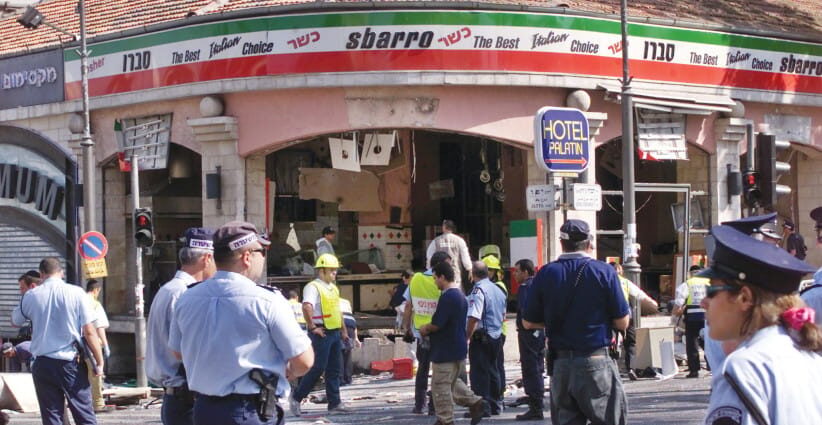
Sbarro bombing among deadliest attacks
One of the deadliest attacks during the Second Intifada happened on August 9, 2001, when Ahlam Tamimi and Izzedine Suheil el-Masri targeted the Sbarro pizzeria in downtown Jerusalem with a bomb inside a guitar case, killing 15 people (most of them children) and injuring over 100 people.
Tamimi, who survived the blast and now lives in Jordan, admitted that they scouted the place in advance and targeted the pizzeria because it attracted mostly children.
Tamimi was tracked down and captured by the Shin Bet (Israel Security Agency) and Israeli security forces, and in 2003, an Israeli court sentenced her to 16 consecutive terms of life imprisonment. She was later released under the 2011 deal that freed hostage soldier Gilad Schalit from Hamas captivity.
Other deadly bombings and attacks include the suicide bombing at the Park Hotel, Netanya, on March 27, 2002, where 30 people were killed and over 140 were injured during a Passover seder, and the Dolphinarium Discotheque Bombing in Tel Aviv, which left 21 people dead and over 120 injured on June 1, 2001.
Palestinian terrorists also attacked places outside of Israel’s central cities, with bombings in Haifa such as the Matza Restaurant, where 15 people were killed, and the Bus 37 Bombing, where 17 people were killed, also being among the deadliest attacks.