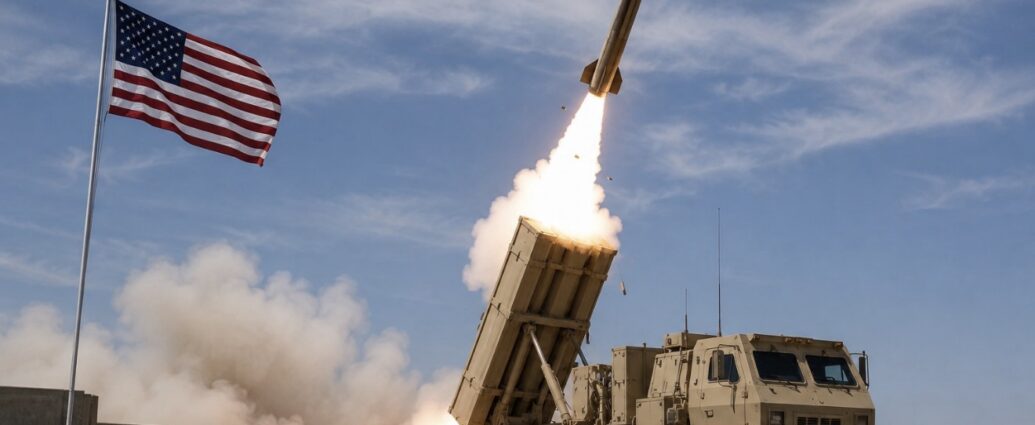
The U.S. military is about to start ordering missile interceptors by the thousands instead of by the dozens, because five months of war with Iran burned through a stockpile that took years to build and would take far longer to replace.
Army budget documents for fiscal 2027 reviewed by Fox News Digital call for a sharp increase in purchases of Patriot Advanced Capability-3 Missile Segment Enhancement interceptors, known as PAC-3 MSE, and Terminal High Altitude Area Defense interceptors, or THAAD — the two systems that shoot down incoming ballistic missiles. Patriot batteries cover troops, air bases and other high-value sites at shorter range; THAAD reaches higher and farther.
The scale of the change is easiest to see in the old numbers. Army records show PAC-3 MSE buys falling from 328 missiles in fiscal 2022 to 252 in fiscal 2023, 230 in fiscal 2024 and 214 in fiscal 2025, before the fiscal 2026 request funded 320. Meanwhile, the Army Requirements Oversight Council had quietly raised its acquisition objective for the same missile from 3,376 to 13,773 back in April 2025 — more than quadrupling what the service says it needs.
THAAD was thinner still. The Missile Defense Agency bought 11 interceptors in fiscal 2024 and 12 in fiscal 2025; the fiscal 2026 base request called for 25, with $317 million in additional mandatory funding adding 12 more for a total of 37. By fiscal 2027, with THAAD procurement shifted to the Army, the request supports 857 interceptors — 27 through regular funding and 830 through the Munitions Acceleration Council.
“The problem is 25 years of not buying enough munitions,” retired Rear Adm. Mark Montgomery of the Foundation for Defense of Democracies told Fox News Digital.
What drained the shelves was a war that leaned on air defense harder than anything since the Gulf. American interceptors have been fired repeatedly to protect Israel, U.S. forces across the Middle East and Navy ships in the Red Sea. Reuters reported the Army has used virtually all of its Army Tactical Missile System and Precision Strike Missile inventories during five months of fighting with Iran, with Patriot and THAAD stocks also drawn down and slightly under half the global Tomahawk supply expended, according to one source. President Trump has pushed back on those accounts, saying the United States has more munitions than it needs and that American defense firms are producing at record levels while expanding plants and equipment.
For American manufacturers, this is the largest demand signal in a generation. Lockheed Martin builds both the PAC-3 MSE and the THAAD interceptor. The Pentagon has struck framework agreements with Lockheed Martin and Northrop Grumman to boost THAAD and PAC-3 output, including a Lockheed contract valued at nearly $59 billion to triple PAC-3 production by 2030 — though experts caution that congressional appropriations are what turn those frameworks into actual missiles. Deputy Defense Secretary Steve Feinberg went further this month, sending arms makers a memo giving them 21 days to submit plans for faster delivery and expanded capacity on critical systems, telling industry that multi-year development cycles no longer match what the military needs.
Ordering is the easy part. Interceptors depend on specialized production lines and a supplier web turning out rocket motors, seekers, guidance sets and energetics, none of which scales in a quarter. That makes the fiscal 2027 jump less an immediate refill than an attempt to build industrial capacity that can sustain higher output for years.
The reason for the urgency sits in the Pacific. A Heritage Foundation analysis estimates current annual production capacity at 620 PAC-3 MSE missiles and 96 THAAD interceptors, and puts the minimum viable inventory for a conflict with China at 7,082 PAC-3 MSE and 1,394 THAAD — several times what it estimates the U.S. holds today, with actual stockpile levels classified. At current production rates, the report calculates it would take between roughly nine and more than 80 years to reach those numbers depending on the system, and argues the window to close the gap is narrowing.
Report author Jim Fein, a defense industrial base researcher at Heritage, told Fox News Digital the shortage was foreseeable and traces to decades of budget tradeoffs in which other programs won out — decisions made both in Pentagon requests and in what Congress ultimately appropriated.
The mismatch also shows up in cost. Senate Armed Services Committee Chairman Roger Wicker noted in March that the U.S. has been firing $4 million Patriot interceptors at Iranian drones costing a fraction of that.
JBizNews Desk | Washington
© JBizNews.com All Rights Reserved. Reproduction or distribution without written permission is prohibited.