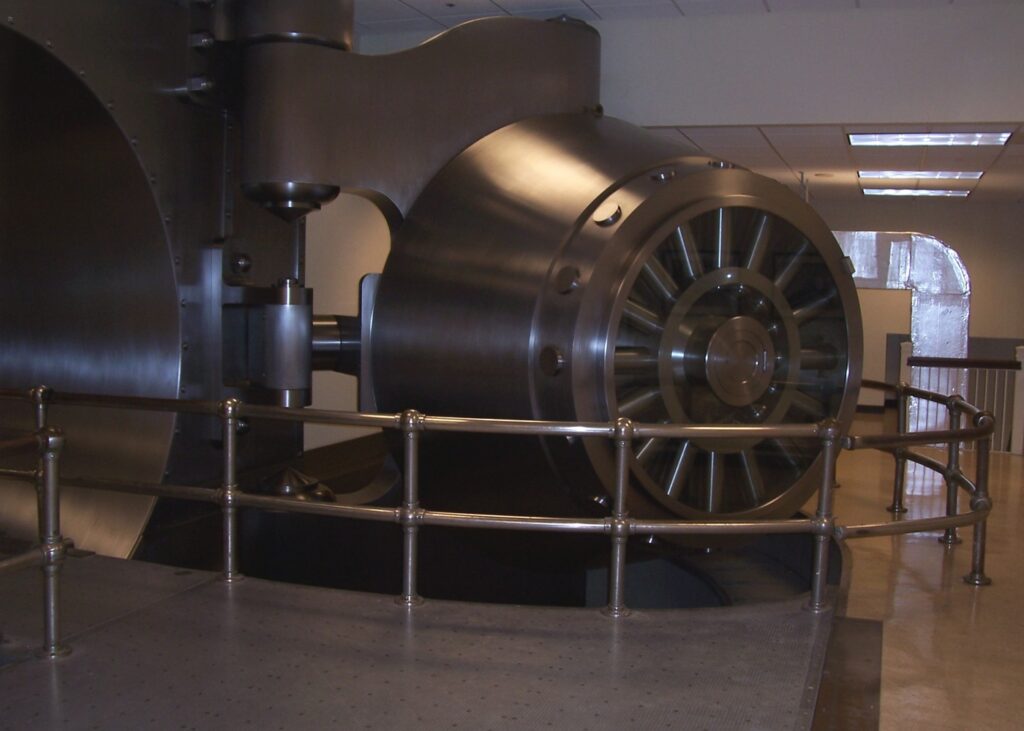
Archive photo: Vault door at the Federal Reserve Bank of Cleveland, August 11, 2006. Photo: Spamguy at English Wikipedia. Cropped. Photo source; CC BY-SA 3.0.
As Binance works to reopen withdrawals Sunday after a breach of roughly $6.3 billion, one document keeps doing the reassuring: its proof of reserves. The exchange took a new snapshot of its holdings at midnight UTC on October 31 and says the full cryptographic proof should be ready by Tuesday. In a Saturday update, Binance said it had covered 90% of the amount stolen, using replacement assets rather than announcing recovery of the stolen cryptocurrency. What that proof-of-reserves document actually proves, when it arrives, is narrower than most customers assume.
Proof of reserves is a voluntary method for showing evidence of assets held at a particular moment. The scope and methods vary: some reports involve an outside firm, while platforms may also offer cryptographic tools that let customers check inclusion of their balances. Neither approach by itself is an audit of the business.
The distinction matters to the people who scrutinize audits. “PoR engagements are not audits and, consequently, the related reports do not provide any meaningful assurance to investors or the public,” the Public Company Accounting Oversight Board’s Office of the Investor Advocate wrote in an advisory. Its advisory, a staff view rather than a Board rule, warns that the procedures may not cover what the platform owes, whether assets were borrowed to look flush for the snapshot, or what happened to the assets the day after.
The Securities and Exchange Commission’s investor office goes further in its alert on crypto asset securities: the platform’s own management often sets the terms – which wallets get checked, how often, and whether the results are even made public. A proof of reserves also does not tell customers where they would stand in a failure: whether they get paid first or “stand in line” behind other creditors.
Then there is the question of insurance. Covered deposits at an FDIC-insured bank generally have protection up to $250,000 per depositor, per insured bank, for each ownership category. Crypto assets do not have that protection. In its fact sheet on crypto companies, the FDIC states that deposit insurance does not apply to crypto assets, does not cover losses from theft or fraud, and does not protect against the bankruptcy of an exchange, broker, custodian or wallet provider. When a platform like Binance pledges to cover losses from an emergency fund – its Secure Asset Fund for Users – that is a company promise backed by company money, not a government guarantee.
So what can a customer actually check? Whether a platform publishes full audited financial statements, not just reserve snapshots. Whether its proof of reserves includes customer liabilities and how those are measured. Which legal entity holds the account, what protections apply to that service, and what the terms say about customer ownership in a failure. A processed withdrawal shows access to funds at that moment, but does not establish the solvency of the whole company.
Binance’s Saturday statement gives Sunday, November 1, as its target for resuming withdrawals and Tuesday, November 3 UTC, as the estimate for its full cryptographic proof. Targets are not completed outcomes. Even a published proof would remain narrower than a financial-statement audit: evidence about specified balances at a moment in time, not a guarantee about the company.
JBizNews Desk | New York
© JBizNews.com. All rights reserved. Unauthorized reproduction or redistribution is strictly prohibited.