Content Warning: This story contains discussion of sexual abuse, including harassment and sexual violence, and child abuse.
Israel’s rape crisis centers received more than 65,000 inquiries in 2025, a 28% increase over the previous year, according to an annual report due to be released Wednesday. The report also documents a backlog in treatment for survivors and shows that most sex-offense cases handled by prosecutors were closed without charges.
The 2026 report by the Association of Rape Crisis Centers in Israel (ARCCI) found that more than 1,500 adults were waiting for specialized treatment through the Welfare and Social Affairs Ministry as of August this year. Of the sex-offense and sexual-harassment files in which prosecutors reached a final decision in 2025, 82% were closed without an indictment, according to the association’s analysis.
‘It is unacceptable that those who found the strength to ask for help [must] wait’
For some of those turning to the centers, asking for help followed years of silence. Among people who reported abuse suffered at age 12 or younger, about 70% first sought assistance a decade or more afterward.
“It is unacceptable that those who found the strength to ask for help should have to wait for the treatment they need, and it is unacceptable that they should feel the path to justice is blocked,” Michal Herzog, the wife of President Isaac Herzog, said in a statement accompanying the report.
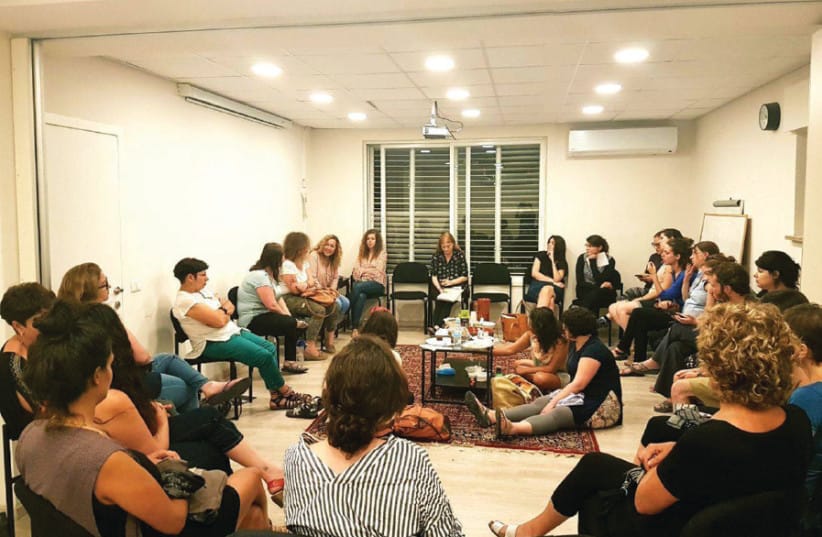
The report is scheduled to be presented Wednesday at Jerusalem’s rape crisis center, with Herzog attending, ahead of the November 25 International Day for the Elimination of Violence against Women. It brings together the centers’ own records and information obtained from law enforcement, the courts, and government ministries, largely through freedom-of-information requests.
The centers recorded 65,184 inquiries during 2025, including follow-up conversations and requests for information. Of these, 20,884 were classified as new inquiries: 16,570 requests for assistance and 4,314 approaches to AnyTeen, an anonymous service offering teenagers advice about sexuality and relationships.
The figures measure contact with services. A “new” inquiry means the first time a person approached the service during that year – while the abuse discussed may have occurred much earlier.
Oct. 7 survivors reportedly a significant factor in rape crisis center inquiry uptick
ARCCI CEO Orit Sulitzeanu linked the unprecedented rise in inquiries to the continuing effects of the October 7 massacre and the public discussion of sexual violence during the attack and in captivity.
“Many survivors experienced severe triggers and are dealing with a renewed flooding of experiences of abuse from their past,” she said.
Nearly half of the new assistance contacts for which age information was available concerned abuse suffered before adulthood: 22% at age 12 or younger, and 27% between ages 13 and 18.
In the youngest group, 73% of reported perpetrators were family members. Almost three-quarters of the abuse occurred in the survivor’s home, the perpetrator’s home, or a home they shared.
Across the records, 95% of reported perpetrators were known to the person harmed. Family members accounted for 34%, current or former partners and dates for 19%, and people from the survivor’s social circle for 16%.
For the first time, the report also includes a separate breakdown of sexual abuse reported by male survivors. Rape or attempted rape accounted for 27% of those contacts and abuse within the family for 19%. Only 4% involved a stranger. Educational or religious settings were the reported location in 19% of cases.
Another sharp increase concerned reported assaults involving date-rape drugs: the centers received 218 such contacts in 2025, compared with 110 in 2024. These are reports made to support services, not a count of cases in which drug use was established through forensic testing or a criminal conviction.
For survivors seeking specialist psychological treatment, the report identifies a backlog in the Welfare and Social Affairs Ministry’s community services for adults, which include multidisciplinary centers and treatment units in local welfare departments.
Those services treated 2,588 people in 2025, up slightly from 2,500 in 2024, but below the 3,078 treated in 2022. As of the ministry’s response to the association on August 25, 2026, another 1,525 people were waiting. The report shows that the number treated last year remained only modestly above the 2,487 recorded in 2020, despite the growing demand.
The criminal justice figures concern a different group: cases brought to the authorities. Police opened 6,678 sex-offense and sexual-harassment files in 2025, an increase of 2.5%. Within that total, rape files fell from 1,282 to 1,071, a decline of about 16%.
The association reported that a police complaint had been filed in approximately 11% of the assistance contacts it recorded.
At the prosecution stage, 623 indictments were filed against 634 defendants in 2025, compared with 667 indictments the previous year. Prosecutors closed 3,073 files without charges, while 60 ended in conditional arrangements allowing a case to be resolved without an indictment if specified conditions are met.
The association calculated its 82% closure rate from those final decisions, rather than from all files opened during the year. It also included files handled through the prosecution’s “quick closure” route, which the report says are excluded from the prosecution’s own calculation.
Insufficient evidence was the stated reason in 67% of closed files, while 18% were closed on grounds of absence of guilt. The figures do not establish that every closed complaint could or should have resulted in charges, but they do show how frequently the process ends before the allegations are tested in court.
For cases that did reach court, the picture was different: 81% of the 681 proceedings concluded in 2025 ended in conviction for a sexual offense. Plea agreements were reached in 68% of concluded proceedings.
Challenging a closure rarely resulted in an indictment in the figures reported. Of 104 appeals against case closures handled in 2025, one resulted in charges and 14 files were sent for further investigation.
The Justice Ministry’s Police Investigation Department (PID), which investigates suspected crimes by police officers, received 173 complaints concerning sex offenses or sexual harassment in 2025. The report says 69% did not proceed to a criminal investigation; 16% were closed after a preliminary examination and 53% without either an examination or an investigation.
Separately, the department recorded 177 closures and 10 indictments during the year. Those decisions may concern files opened earlier.
The report also points to the role of children and teenagers in sexual harm online. Minors made up 44% of suspects in offenses involving the recording or distribution of sexual images, compared with 16% of suspects across sex offenses generally. The largest single age group in the image-related cases was 15-year-olds.
Education Ministry figures, covering the 2025-2026 school year, recorded 6,134 consultations about sexuality and sexual harm. These included 578 cases concerning online harm, 793 concerning sexual abuse, and 112 concerning rape. The total also includes other matters, such as inappropriate sexual behavior.
Alongside the gaps, the report records a substantial expansion in access to legal representation.
The Justice Ministry’s Legal Aid Department represented 906 survivors in 2025, more than double the 427 represented in 2024. The increase followed an amendment that took effect at the end of April 2025, extending eligibility to additional sexual offenses and bringing representation forward to the police investigation stage, after a complaint has been filed.
The change means that eligible survivors can receive legal assistance while decisions about evidence and the future of their complaint are still being made, rather than waiting until an indictment. The ministry’s guidance includes representation concerning appeals against closure and requests to disclose confidential treatment records.
Among adults receiving representation in criminal matters, half of the cases were at the police investigation stage, according to the report.
The association also cites government approval for seven specialist centers intended to bring police complaint-taking together with welfare, health, and legal support for adult survivors. The report describes the decision as an achievement it helped advance, while stressing that implementation still requires follow-up.
Sulitzeanu urged the next government to make combating sexual violence a high priority and said the association had not seen the improvement in prosecution rates it had sought over years of monitoring.
For Herzog, the obligation begins with what follows the first request for assistance.
“Those who found the courage to speak need to know that their voices are heard, both in the treatment room and in the courtroom,” she said.
Support following sexual assault is available around the clock on 1202 and 1203. The lines are staffed by women and men, respectively, and survivors may choose either. Written support is also available through 1202kolmila.org.il and WhatsApp at 052-8361202.