Saudi Crown Prince Mohammed bin Salman has weapons and enough money to buy more, but the crisis with the Houthis is showing him how difficult it is to buy something else: a country willing to use force to defend him from Iran and its proxies.
Twice on the same day at the beginning of the month, bin Salman called US President Donald Trump and asked him to attack the Houthis. The American president refused, agreeing instead to provide intelligence assistance and targeting information. Ten days later, he came much closer to intervention: targets had been selected, bombs had been loaded onto American aircraft, and a strike in Yemen was about to begin. At the last moment, Trump halted it.
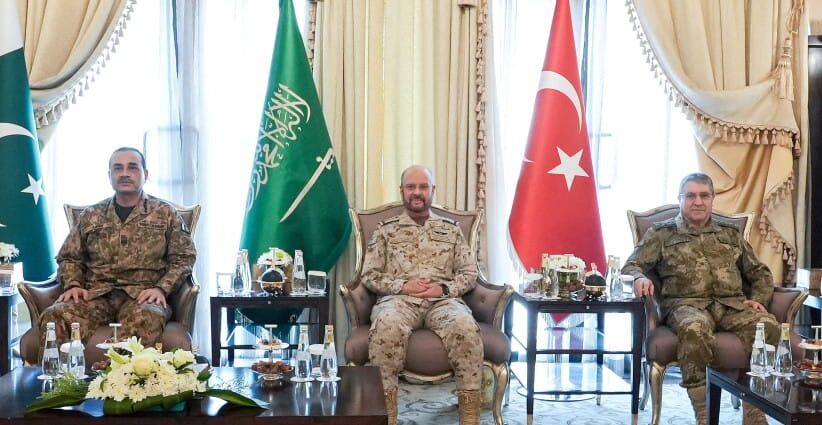
The Saudis returned to bombing Yemen. It did not solve the problem. Britain sent a refueling aircraft to temporarily support the defensive operations of the Saudi Air Force; Turkish President Recep Tayyip Erdogan’s Turkey and Pakistani Prime Minister Shehbaz Sharif’s Pakistan expressed support for Riyadh, and Ankara announced that it was prepared to assist with technical military needs under the defense agreement signed between the countries.
Riyadh has no shortage of friends willing to stand beside it. Far fewer are willing to enter a war themselves.
The limits of Saudi Arabia’s security strategy
Three and a half years ago, it appeared that bin Salman had found a formula. After years of confrontation with Iran, Saudi Arabia reached a reconciliation agreement with Tehran mediated by China. The logic was simple: since there was no certainty that the US would aid it in every crisis, Riyadh sought to reduce the number of crises it might face in the first place.
At the same time, it expanded ties with China, Russia, Turkey and Pakistan. On August 7, it signed a joint defense agreement in Mecca with Ankara and Islamabad, stating that an armed attack against any one of the three countries would be considered an attack against all three.
America remained the main security pillar. Saudi Arabia continued buying weapons from Washington and relying on it, while simultaneously acquiring several additional insurance policies of its own.
Now comes the moment of reckoning. The question is what each of these policies is worth when missiles begin falling: weapons and intelligence, air defense, soldiers, or a statement of support. During peacetime, it is easier to blur the differences. During war, they are exposed quickly.
The Houthis are targeting Saudi Arabia’s economic foundations
The reconciliation with Tehran did not stop the Houthis, and the Mecca defense agreement has so far not brought Turkey and Pakistan into the war. Riyadh is not necessarily expecting a Turkish division to race toward Sanaa. The more immediate problem is air defense: Saudi Arabia is seeking interceptors and assistance against Houthi missiles and drones from its allies, after prolonged fighting in the region has also depleted American stocks.
It also needs intelligence, early warning capabilities and protection for energy infrastructure. The practical value of its new alliances will be measured by this assistance.
For bin Salman, the insult is the less important part. The bill presented by the crisis to the kingdom is far more concerning. The Houthis threaten two of the foundations on which bin Salman has built his new Saudi Arabia: security and business.
The war brings back the old security risk precisely as the crown prince tries to convince the world that the new Saudi Arabia is a place where it is possible to invest for the long term. Ultimately, he needs investors, tourists and international company executives to continue viewing the kingdom as stable enough to invest in.
Vision 2030, the future cities, tourism, foreign investment, business centers and ports, the entire Saudi project of the past decade, is based on the assumption that the kingdom can transform itself from a country living from crisis to crisis into a place that is boring in the best sense of the word: stable, predictable and open to capital.
Missiles over Riyadh and war in Bab al-Mandab are a poor advertisement for that product.
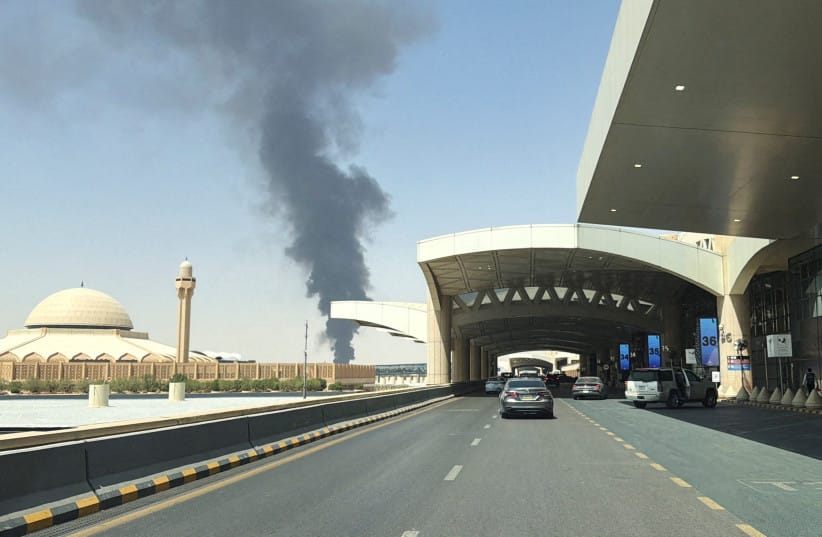
Oil also returned to remind everyone who still pays the bills. For decades, Saudi Arabia invested in the East-West Pipeline, a roughly 1,200-km route built to let the kingdom bypass the Strait of Hormuz during a crisis and transport oil from the Gulf to Yanbu on the Red Sea.
The more Riyadh used it, the more important the western route became, and the more exposure it brought. In June, 92% of Saudi crude oil exports by sea passed through the Yanbu terminal. The East-West Pipeline, which became a central artery after disruptions in Hormuz, carried four million to five million barrels per day. Until September 11, when drones arriving from Iraq struck three of its pumping stations, temporarily halting oil flows through the pipeline.
At the same time, the Houthis are pressuring the western export route. In July, they announced a naval boycott against Saudi shipping, and the multinational maritime task force warned that they had moved from threats to active attacks against vessels identified with Saudi Arabia and its interests.
Riyadh was forced to reroute oil exports destined for Asia through the Suez Canal, significantly lengthening the journey compared with passage through Bab al-Mandab.
Shipowners, insurers and trading companies do not need a sinking vessel to change course. The possibility that the Houthis will choose them as targets is enough. The risk immediately enters the price: insurance becomes more expensive, voyages become longer, and the advantage of the shorter route through the Red Sea is eroded.
Sometimes the missile can remain on the launcher. The Houthis only need to create a credible and sustained risk to cause economic damage far greater than the force they invest.
Riyadh has found itself inside an almost perfect geographical trap: Hormuz is disrupted in the east, three pumping stations on the pipeline designed to bypass it have been hit, and in the west the Houthis are threatening the export route through the Red Sea.
The alternatives Saudi Arabia built over years to spread its risk are now exposed themselves.
Saudi Arabia does not lack oil. It is harder to guarantee the route that carries it to the market. Geography does not give bin Salman any favors. Saudi Arabia can buy more aircraft and interceptors, but it cannot move Hormuz or Bab al-Mandab.
Freedom of navigation largely determines how much of its economic power it can truly realize.
The Houthis’ continued dependence on Tehran for weapons and funding still them. Control of the coast, ports and energy resources, alongside revenues and the millions of residents under their rule, would give them far greater freedom of action.
Their goals have long extended beyond another hill in Yemen. After taking control of Mocha and advancing along the coast, the fighting in Taiz is important because the province is a junction between areas controlled by the government and allows forces and supplies to move.
To the east lies Marib, a longstanding strategic target for the Houthis and one of the most important remaining strongholds held by their rivals. Yemen’s main oil and gas fields are located there. A future takeover would harm the government’s economic base and give the Houthis a more independent source of income.
Their achievements also stem from the weakness of the Yemeni forces fighting them and from Saudi Arabia and its partners’ reluctance to become entangled again in a long war.
In this asymmetric conflict, the Houthis do not need to conquer Riyadh, sink the Saudi navy, or defeat its air force. They only need to survive and exhaust their opponents. The longer the campaign continues, the more it works in their favor.
That is the story behind the renewed war in Yemen.
Israel sees an opportunity in intelligence and defense cooperation
Israel has something to offer in this situation. For years, Israel sought to convince the Saudis that the shared threat from Iran was more serious than the disagreements between them. Now Iran and its proxy in Yemen are providing a practical demonstration of that argument.
In Jerusalem, the potential is easy to identify. Saudi needs meet areas in which Israel has a clear advantage: intelligence on the Houthis, operational experience against them, detection and interception systems, and years of experience connecting intelligence with long-range strikes.
For years, a regional alliance was discussed in ceremonial terms: leaders, flags, signatures and ambassadors. In practice, it could begin in a much less ceremonial way: a system that detects a threat, an alert delivered in time, tracking a target, and an interceptor launched into the sky.
The diplomats can come later.
Jerusalem should only be careful not to fall in love with its own thesis. In Israel, there is sometimes a tendency to view every security-related convergence of interests with Saudi Arabia as a step toward diplomatic relations.
Bin Salman can benefit from Israeli capabilities against the Houthis while at the same time managing his relationship with Israel according to a much broader calculation: the Palestinians, public opinion, his standing in the Arab world and the price he seeks from Washington.
Riyadh is not simply sitting and waiting for better conditions for a deal with Israel. In recent months, it has identified more risks than opportunities in normalization.
In a poll published in August 2025, 99% of Saudi respondents described establishing “normal relations and peace” with Israel as a negative step. The Saudi leadership has also stated that it will not establish diplomatic relations with Israel without a Palestinian state along the 1967 lines with east Jerusalem as its capital.
At the same time, improved relations with the Trump administration allow Riyadh to seek significant American benefits without paying for them through normalization.
A Houthi missile could change Riyadh’s security priorities. It does not erase the political calculation.
Even if the Saudis need Israeli capabilities, that does not mean normalization will advance with it. Bin Salman could receive intelligence, warnings, or operational coordination with American assistance in the future while keeping an Israeli embassy outside Riyadh.
For him, these are two different decisions with different prices.
Israel has become accustomed to thinking about security cooperation as a corridor that ends with normalization. The route may be longer and more complicated: the Saudis may work with Israelis where interests overlap, while publicly maintaining distance as long as domestic legitimacy and the ambition to lead the Arab world require it.
Even so, Israel can accumulate long-term assets in warning systems, intelligence, air defense and freedom of navigation. In the Middle East, security establishments have already found common ground long before leaders agreed to be photographed together.
But Israel’s interest in Yemen is broader than its relationship with Riyadh.
The Houthis have managed over time to harm freedom of navigation to Eilat. Direct commercial activity at the port was severely affected, and even after Israeli strikes in Yemen, major shipping companies have not returned to the route on a significant scale.
The threat to Bab al-Mandab has intensified as the Houthis expanded their control along the western coast.
Mocha, Taiz and Marib are also connected to Israel’s strategic map. The more the Houthis hold the coast and resources, the closer they come to a situation in which they can maintain a long-term threat to the southern gateway of the Red Sea and rely more heavily on their own revenues.
Marib and Mocha are thousands of kilometers from Eilat, but the strategic distance between them has narrowed significantly. Developments there affect the Houthis’ ability to finance forces, hold territory and pressure shipping routes connecting Eilat to the Indian Ocean.
The range of missiles and drones, together with Houthi control of the coast, makes the number of kilometers less reassuring.
Stable Houthi control over the coast, ports and resources could create a problem for Israel in the far south that resembles, in some ways, the challenge it has faced in the north: an armed organization backed by Iran but with its own interests and decision-making ability, holding territory, missiles and drones, and capable of applying pressure on an economic artery without defeating the IDF on the battlefield.
The Saudi story also offers Jerusalem a less comfortable lesson.
The rejection bin Salman received in Washington could increase the value of Israeli capabilities in his eyes, but it is also worth examining what happened between Riyadh and Washington.
The debate in Washington is not theoretical. The prolonged war with Iran depleted American interceptor stocks, and Saudi Arabia itself is now seeking missile-defense systems from its allies.
Opening another campaign against the Houthis would require the US to dedicate more aircraft, munitions, and defensive systems to a theater where it is currently attempting to remain behind the scenes.
And in November, Trump faces midterm elections.
Washington is assisting Riyadh and is currently avoiding taking responsibility for the war in Yemen. It can maintain that position as long as the Saudis contain the Houthis and the economic damage remains manageable.
A more serious disruption to oil routes and energy prices would make that choice more complicated.
Israel’s position in Washington is different from Saudi Arabia’s, as are the depth of its ties and its military capabilities. The differences are significant. Still, no American president decides to use force on behalf of an ally without calculating the American interest, the cost, the duration of the campaign, and the military’s other missions.
This week, Trump met in New York with leaders and representatives from Gulf states and other countries in the region, with Iran and the regional war at the center of the diplomatic agenda.
At the same time, Qatar is pushing for a regional security framework that would include Iran, while Saudi Arabia is advancing an idea for a regional nonaggression agreement with Tehran.
After months of war and disruptions in Hormuz and Bab al-Mandab, Gulf states are seeking protection from Iran while simultaneously trying to reduce the possibility of another confrontation with it.
Jerusalem and Riyadh are looking at the same map and seeing different things.
Israel views Iran and its proxies as a threat that should be weakened as much as possible. The Saudis must add a simple fact to their calculation: Iran will remain on the other side of the Gulf even the day after.
The détente with Tehran did not provide them with security, but the channel itself remains useful. Therefore, they can fight the proxies when necessary while continuing to speak with Tehran.
One battlefield, different calculations
Riyadh has operated this way for several years. It does not want to place all of its security in the hands of a single party, and it has no interest in living in a permanent confrontation with all of its rivals.
Bin Salman is maintaining the alliance with Washington, speaking with Tehran, and expanding his circle of partners so that he is not dependent on one actor.
In practice, each relationship serves a different need: America provides weapons and security, China is an economic partner and mediator, Turkey and Pakistan add military depth, and the channel with Iran is intended to lower tensions.
Israel may also have a place on that list in areas where it has capabilities that Saudi Arabia needs.
This gives bin Salman more options. The past few weeks have reminded him what those options are worth when he truly needs them.
Bin Salman is still searching for those who will protect Saudi Arabia. Israel could find itself part of the answer he assembles. However, Jerusalem should be at least as interested in understanding why he is forced to assemble that answer in the first place.