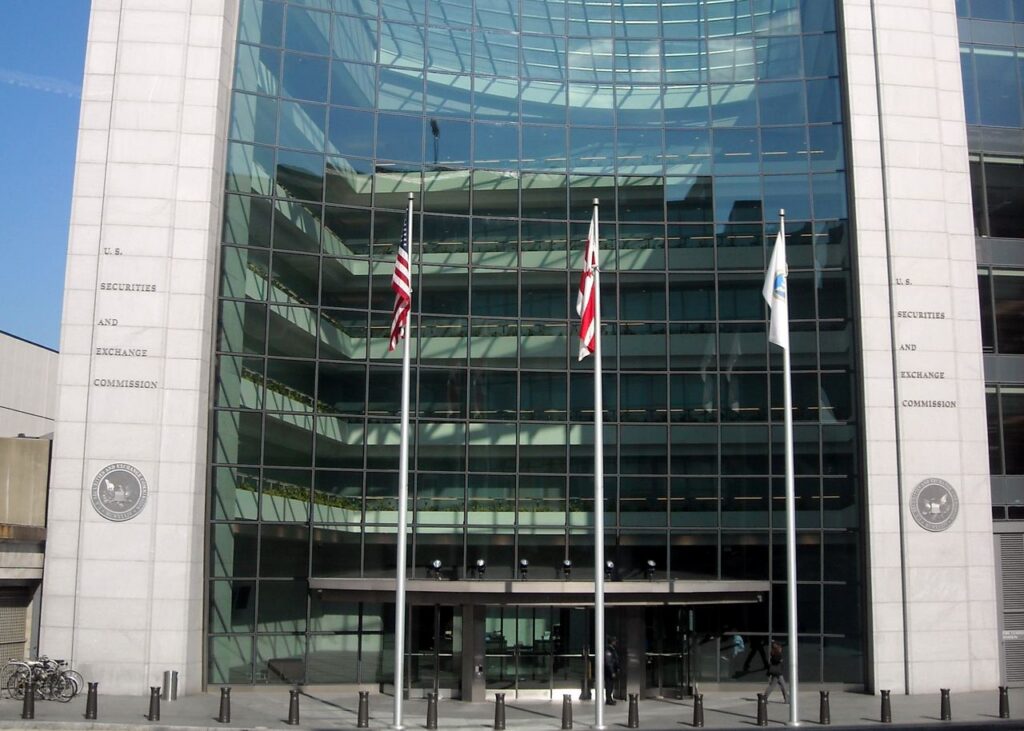
Archive photo: SEC headquarters in Washington, October 2009. AgnosticPreachersKid / Wikimedia Commons, CC BY-SA 3.0; cropped.
The Securities and Exchange Commission charged BG Wealth Sharing Ltd and DSJ Exchange Pty Ltd on Thursday with running an alleged crypto-investment fraud that raised more than $130 million from tens of thousands of retail investors, using false regulatory filings to make the operation look legitimate.
The two entities are incorporated in Colorado but operated from abroad, the SEC said in its October 29 announcement. Its civil complaint was filed in the U.S. District Court for the Northern District of California. The allegations have not been established by a court, and the amount the SEC says the program raised is not a finding of investor losses.
False filings used as a sales pitch
According to the complaint, the defendants recruited investors from at least October 2025 through June 2026 into what they called a “wealth-sharing program.” Investors were promised extraordinary, risk-free returns from purported trading signals for crypto assets. Many participants were in more than 40 U.S. states and multiple U.S. territories.
BG Wealth claimed to be the world’s largest hedge fund, registered with the SEC as an investment adviser and partnered with a licensed, secure crypto-trading platform called DSJ Exchange, the agency said. The SEC says those claims were false.
The complaint alleges the defendants submitted false Form ADV and Form D filings that were publicly visible on the SEC’s website, then shared those filings with investors as supposed evidence that the regulator had licensed or approved the businesses. The SEC said the filings have since been removed from its website.
The case draws a distinction between a document appearing in a regulatory filing system and the regulator endorsing the person or investment behind it. The alleged scheme used the first to suggest the second, according to the agency.
What the SEC is seeking
Laura D’Allaird, chief of the SEC Enforcement Division’s Cyber and Emerging Technologies Unit, said the defendants reached investors through social media, encrypted messaging channels, weekly live videoconferences and a mobile app.
They also displayed fake certificates carrying the SEC’s seal and made periodic payments to some investors while misappropriating remaining funds, she said. D’Allaird described those payments as a “Ponzi-like tactic.” Those statements are part of the SEC’s allegations, not a court judgment.
The complaint charges both entities with violating antifraud provisions of the Securities Act of 1933 and the Securities Exchange Act of 1934. It also charges BG Wealth with violations of Sections 204(a) and 207 of the Investment Advisers Act of 1940.
The agency is asking for permanent injunctions, disgorgement with prejudgment interest and civil penalties against both defendants, as well as conduct-based injunctions against BG Wealth. Those are requested remedies, not amounts already awarded or a promise that investors will recover their money.
The SEC also pointed to investor alerts about scammers using exempt reporting adviser filings to create a false impression of legitimacy. It encouraged investors to check the background of anyone offering or selling an investment through Investor.gov.
JBizNews Desk | Washington
© JBizNews.com. All rights reserved. Unauthorized reproduction or redistribution is strictly prohibited.