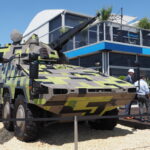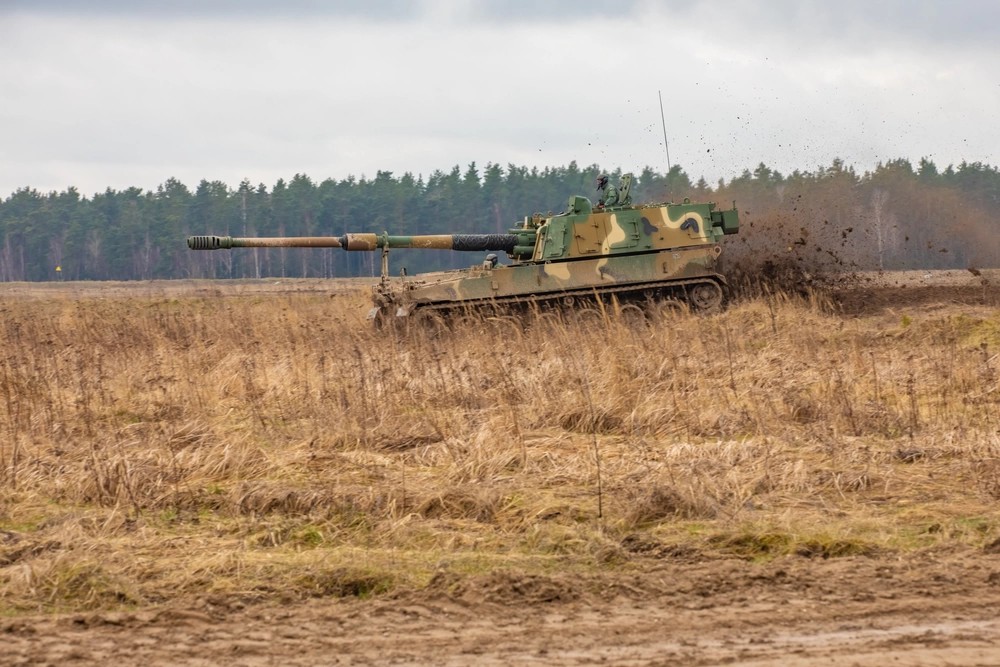
Photo: A Polish army K9 Thunder self-propelled howitzer, built by South Korea’s Hanwha / Staff Sgt. Matthew Foster, U.S. Army via Wikimedia Commons / public domain
South Korea’s arms makers rode a two-year boom as global rearmament sent buyers their way. Now the rally has reversed, and investors are asking whether the drone era has changed the game.
The combined market value of the country’s top four defense companies — Hanwha Aerospace, LIG D&A, Hyundai Rotem and Korea Aerospace Industries — stood at about 62 trillion won at the end of October, down from a 52-week peak of about 170 trillion won, broadcaster SBS reported, per CNBC. That snapshot predates this week’s trading.
The war in Ukraine has shown how cheap drones can threaten expensive tanks and artillery, and Iranian drone strikes have drained costly air-defense missile stocks. “Modern warfare is being fought with less traditional weaponry, which Koreans are positioned for,” Peter Kim of KB Securities told CNBC. Analysts are not saying tanks and artillery are obsolete, but procurement priorities are shifting toward drones, counter-drone systems and air defense.
The sell-off is not all about new warfighting technology. Investors are weighing disappointing earnings, a stronger won, delayed export orders, high valuations and money rotating into chip stocks. Hanwha Aerospace’s third-quarter operating profit fell more than 46% from a year earlier on delivery-schedule changes and one-off costs, and its shares are down more than 28% this year. Hyundai Rotem’s profit fell more than 11.1%, with shares down almost 60%. Korea Aerospace Industries was the bright spot: sales up about 52%, operating profit up 32%, limiting its share decline to just over 8%.
For defense investors and suppliers, the takeaway: bigger military budgets don’t guarantee fast orders or rising share prices.
JBizNews Desk | Global
© JBizNews.com. All rights reserved. Unauthorized reproduction or redistribution is strictly prohibited.